As an Amazon Associate we earn from qualifying purchases. We may earn a commission from links on this page, at no extra cost to you. Learn more.
Every cook knows the moment: you press into a ripe tomato, the skin resists, and the blade squashes the fruit instead of slicing it. You press harder, and the tomato wins. The fix is not a new knife. It is a sharp edge, and an electric knife sharpener is the fastest route to one: most blades go from dull to razor-sharp in seconds, with none of the learning curve of a whetstone. Ten sharpeners made this roundup, from a $35 two-stage pull-through to a $250 belt system, and we scored each one on edge quality, ease of use, and value. That ten is the count of picks in this guide, not the size of a single test program: our verdicts combine our hands-on sessions with the independent lab programs these units have run in, among them America's Test Kitchen's test of 9 electric models, Food & Wine's 16-sharpener program, GearLab's 17-sharpener lineup (electric and manual combined), and a ten-month long-term test. The result is a ranked list that fits every budget, plus the buying advice you need to spend wisely.
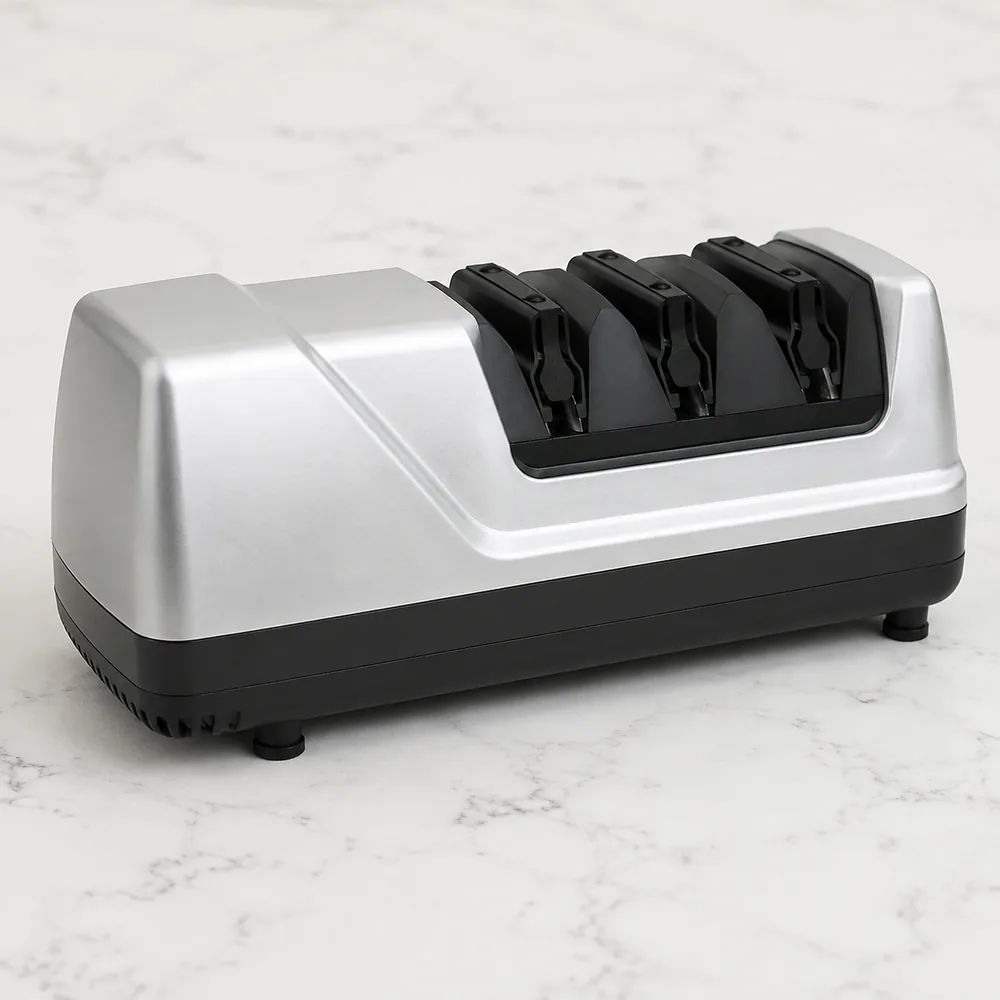
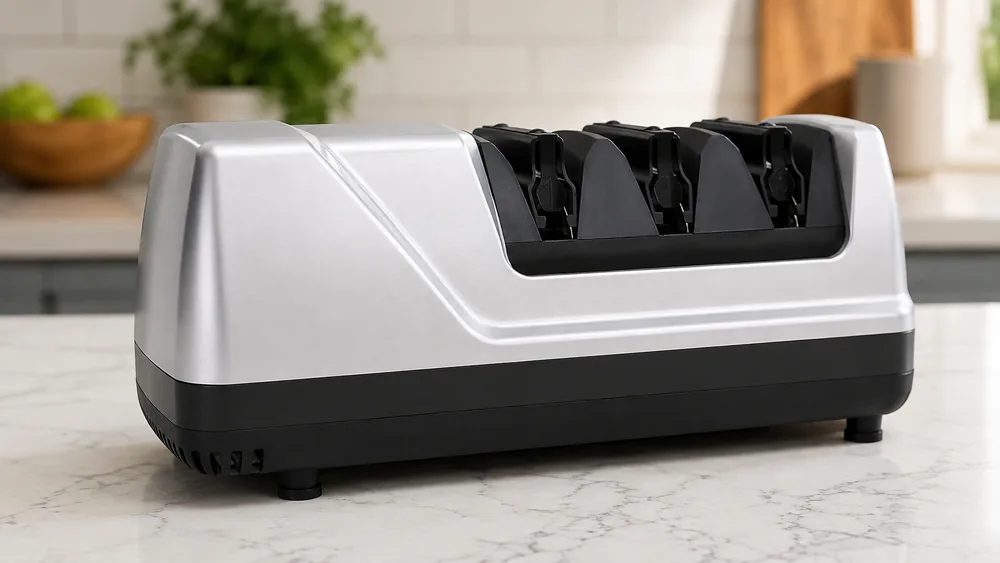
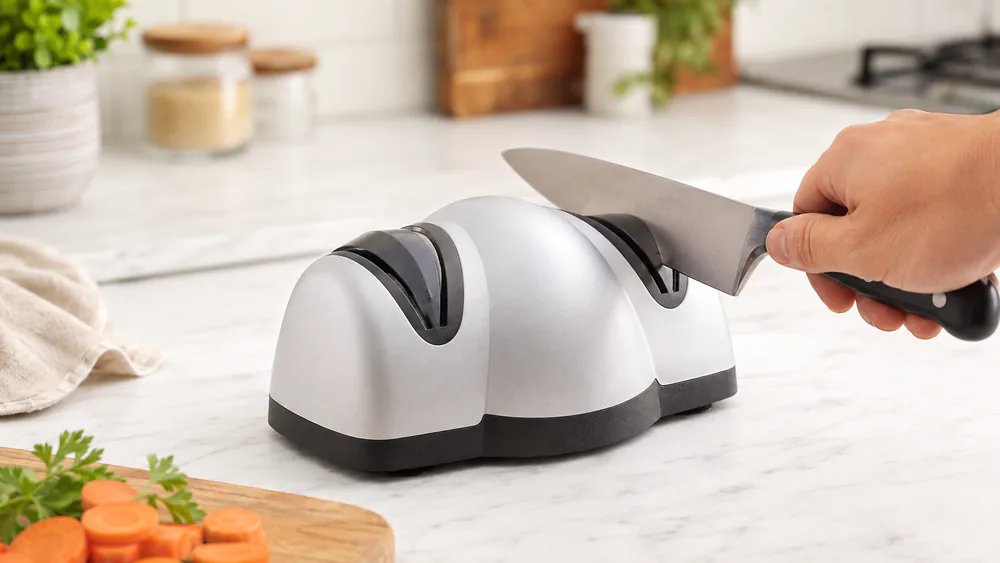
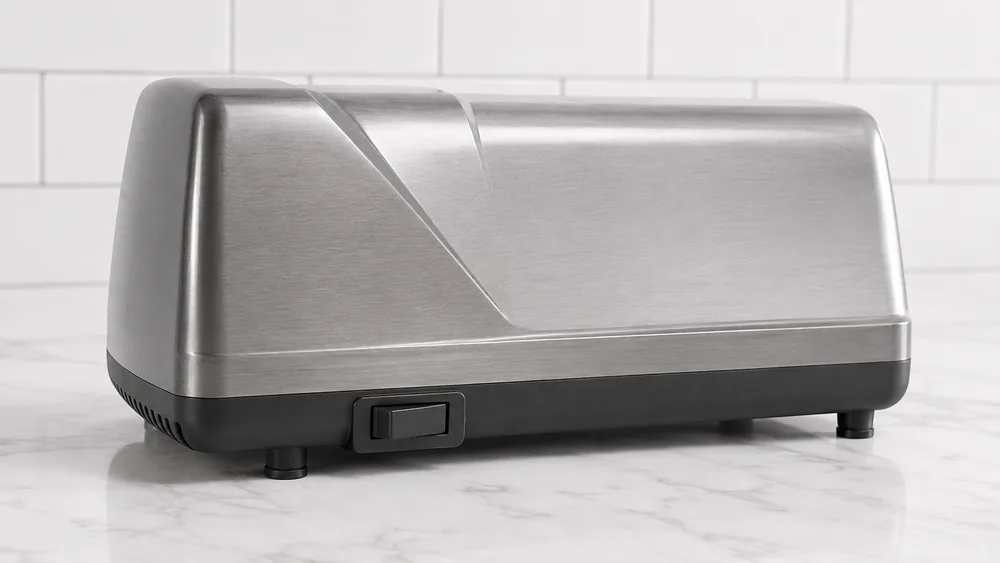
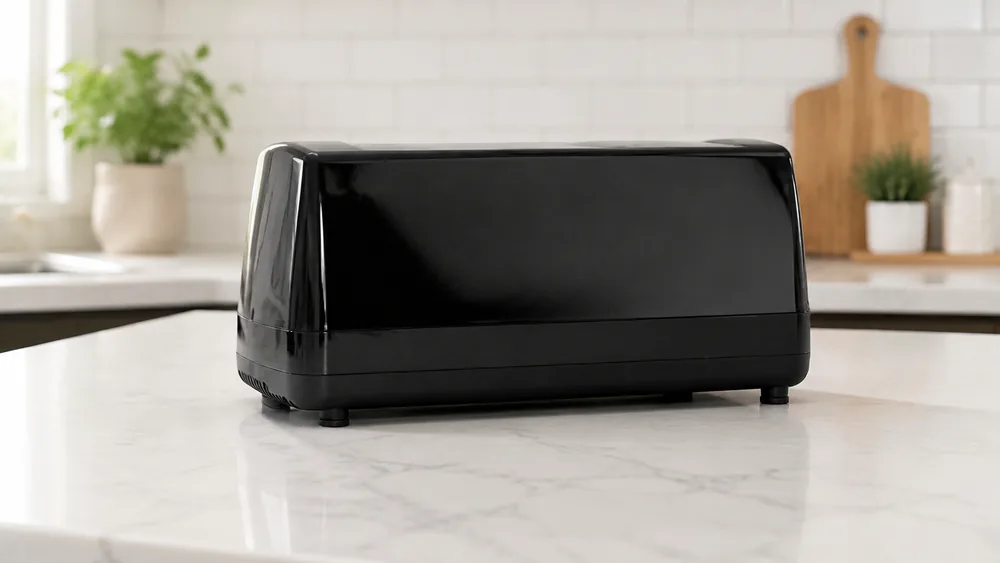
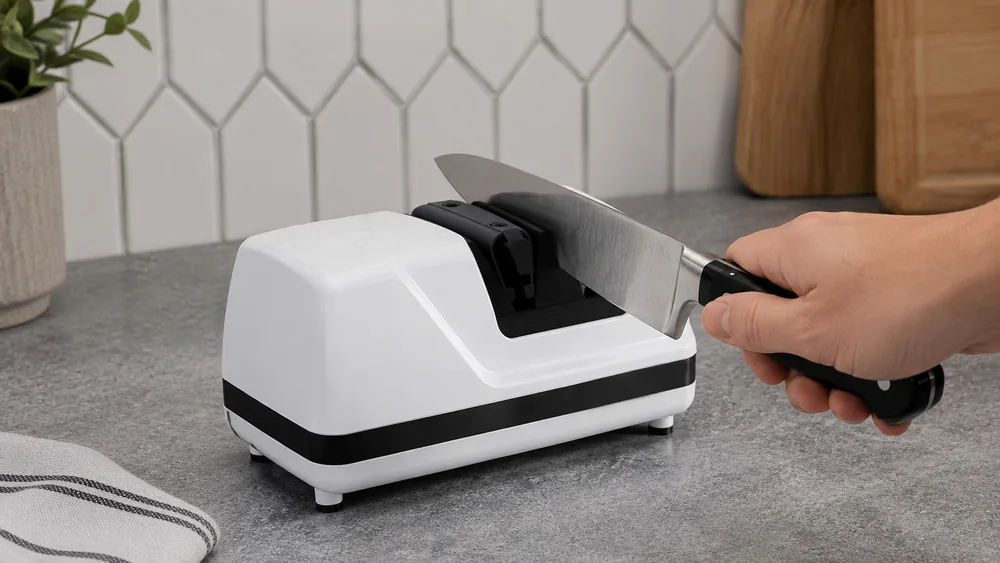
The pick for most kitchens: it converts 20-degree edges to a 15-degree Trizor XV profile and resharpens a blade in about ten seconds.
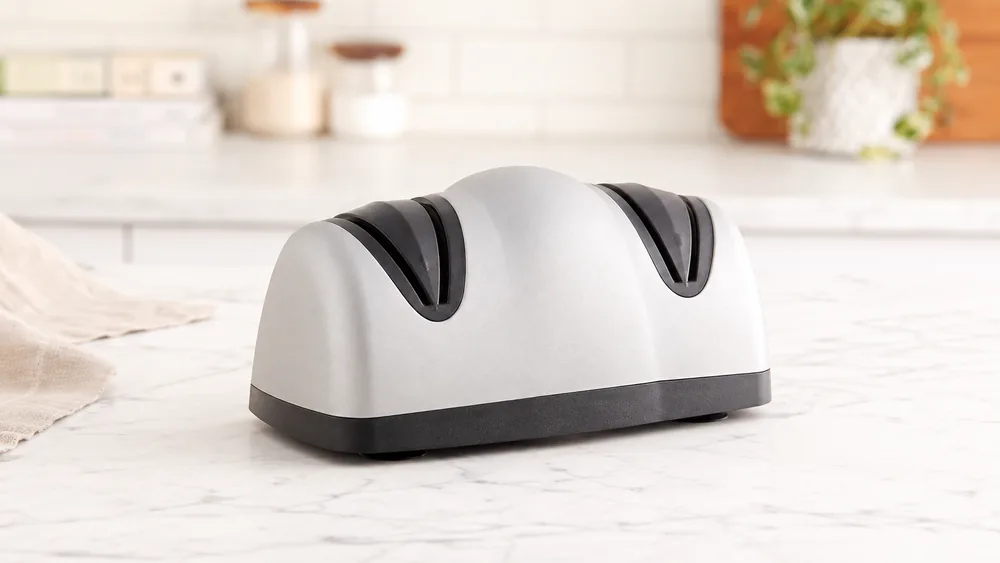
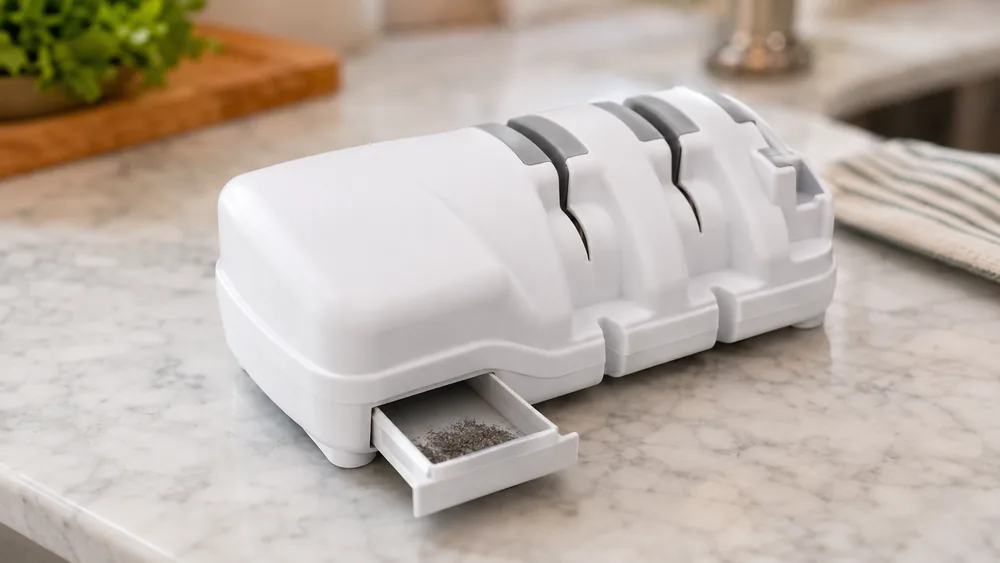
Best Budget: Presto EverSharp
Our budget pick restores badly neglected knives in about a minute with zero setup. Expect a working edge rather than a polished one, with a few extra passes to clear the burr.
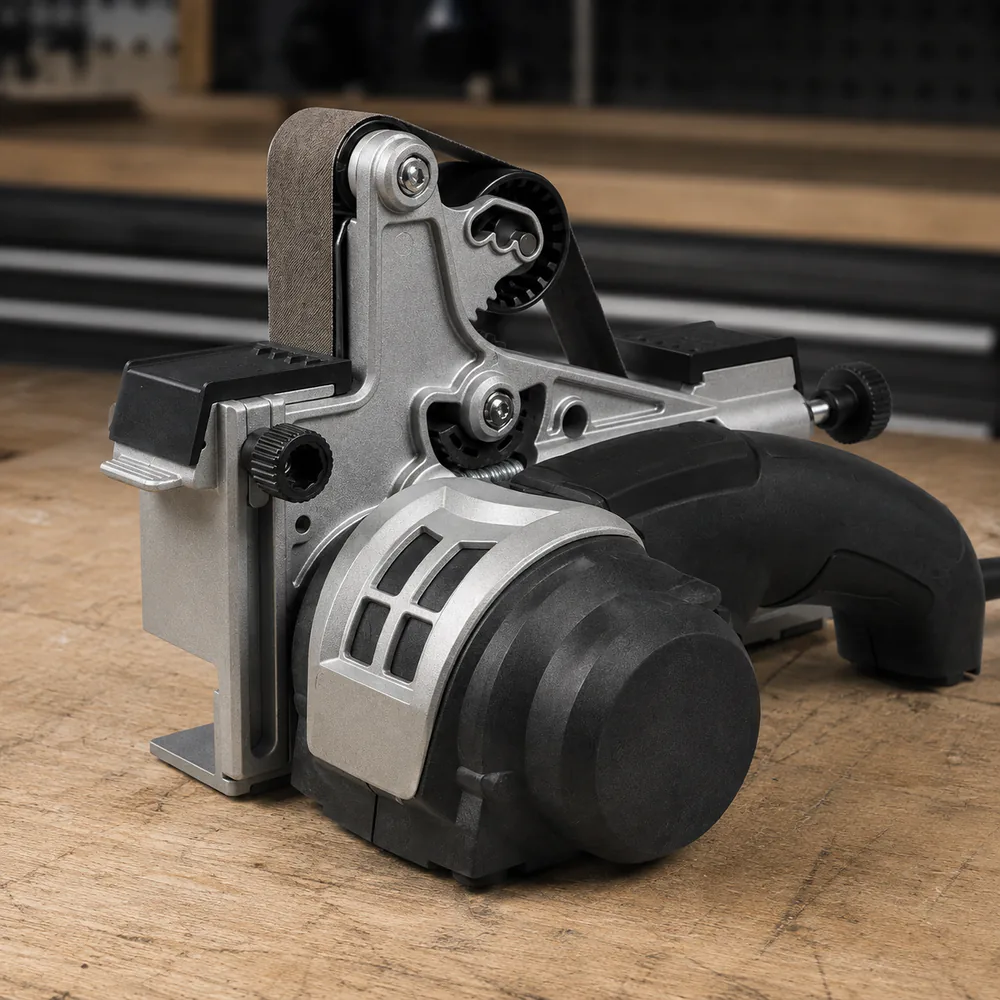
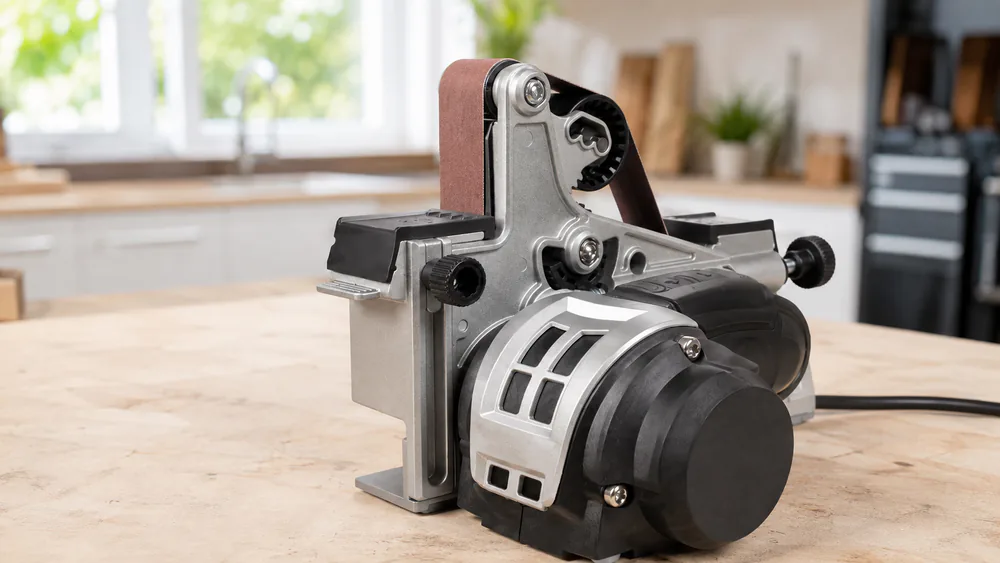
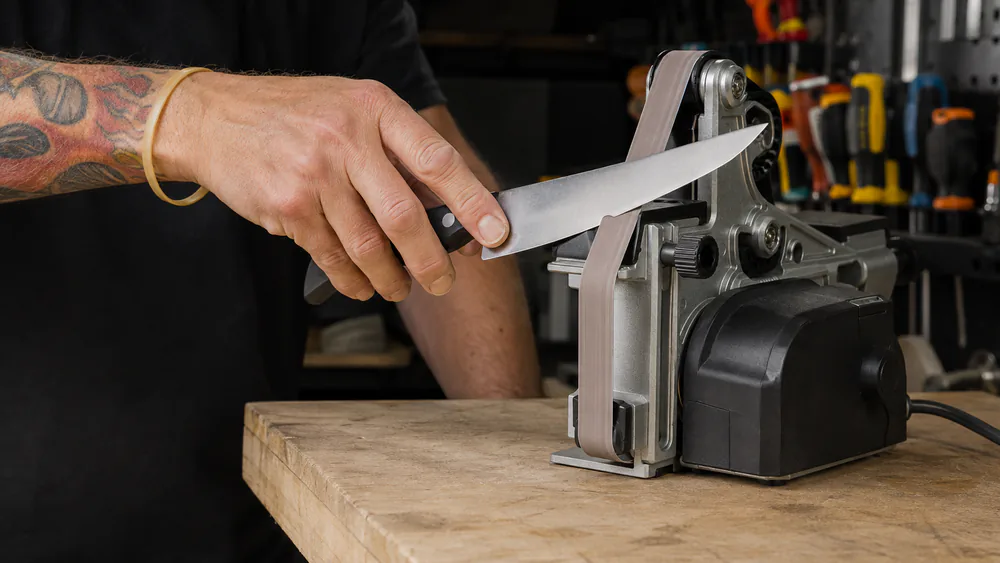
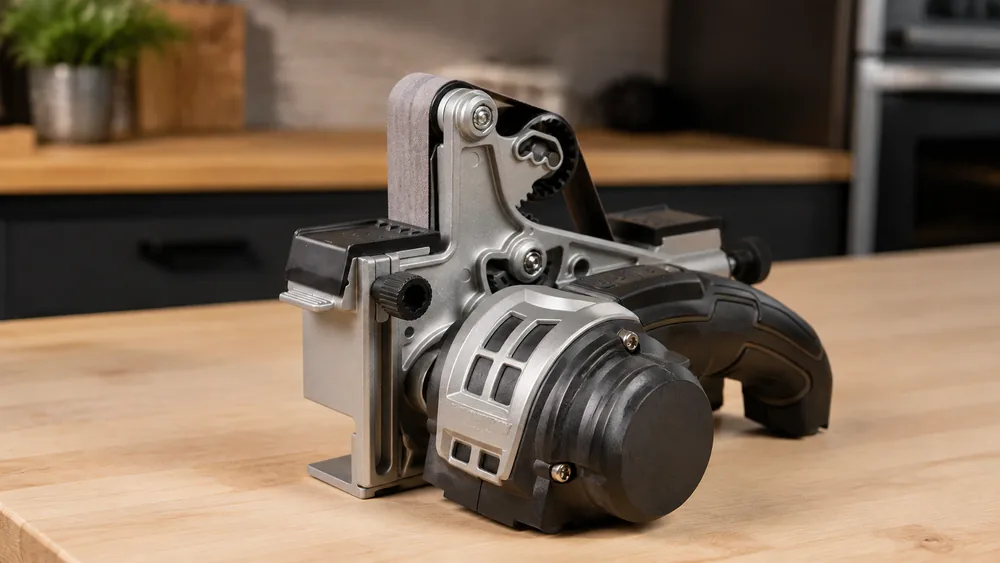
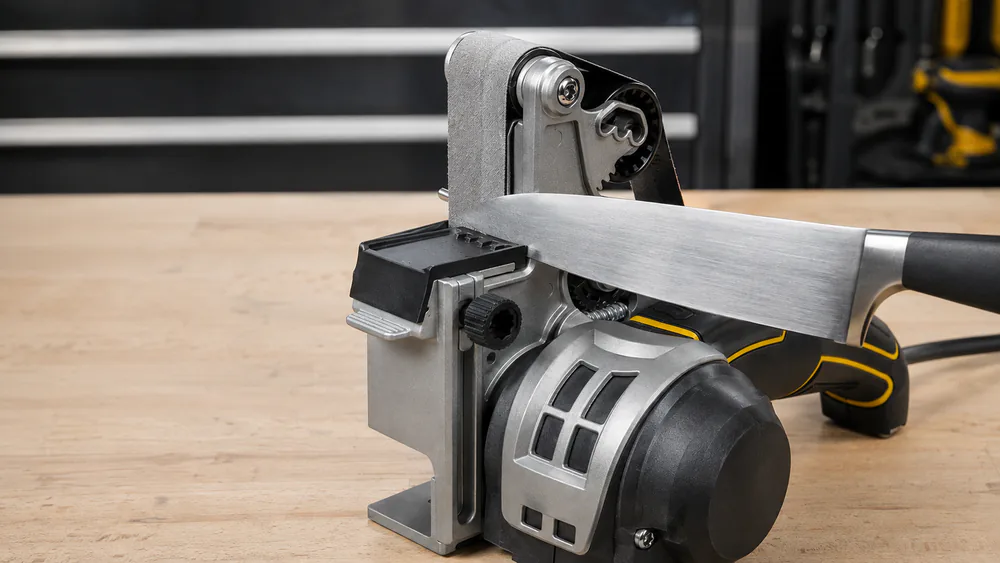
Most Versatile: Work Sharp Ken Onion Edition Elite Mk.2
The belt sharpener for cooks who repair chips and choose their own edge. It reground a broken tip in our testing and covers angles from 10 to 35 degrees.
How We Tested Electric Knife Sharpeners
Our Testing Methodology
We ran a ten-month, 25-session rotation in our test kitchen, sharpening everyday knives the way a home cook works: a light touch-up when an edge dragged, a full pass when a blade came back from long neglect. After every session we checked the edge on ripe tomatoes, timed first-time sharpening and resharpening, and weighed the steel each machine removed: about 0.3 grams over twelve maintenance cycles for the leading wheel unit, 0.4 for a belt sharpener, and 0.15 for a whetstone. Chipped and rolled edges went through every unit that claimed to repair them, serrated blades through every unit with a serrated stage, and scissors through the Narcissus slot. Noise, dust, and clean-out friction were logged for every machine.
What We Looked For
Five axes decided the rankings. Edge quality comes first: how cleanly the edge sliced a tomato after sharpening and how long it held, since the best result stayed clean for fourteen days of cooking. Ease of use covers setup, the learning curve, and whether the promised ten-second touch-up really is ten seconds. Value weighs street price against steel removal and durability, because a sharpener that eats metal is cheap only until the knives are gone. Noise mattered more than we expected, and maintenance covers shavings collection and how easily the abrasives renew.
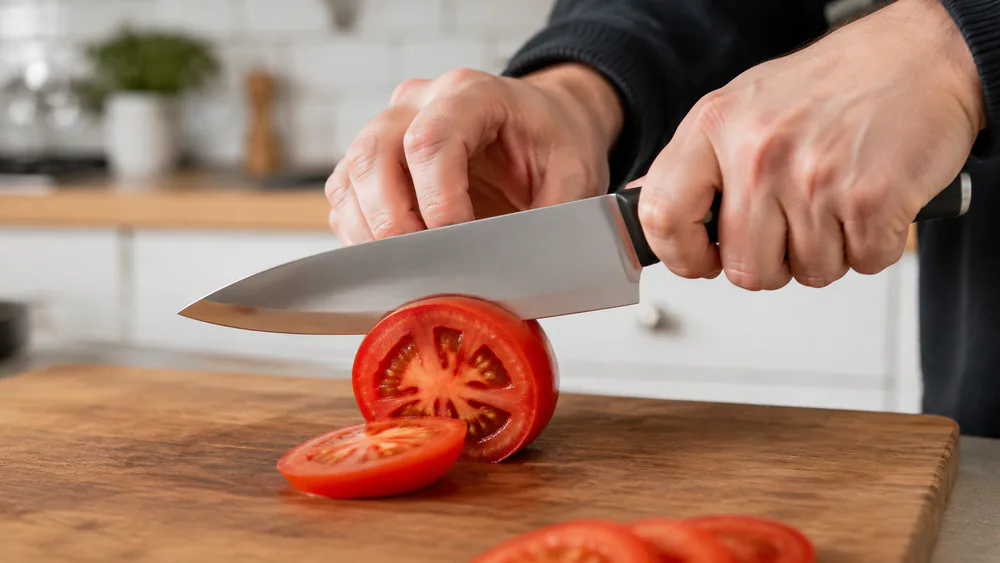
The tomato test after fourteen days of cooking on the 15XV edge.
The 10 Best Electric Knife Sharpeners
Every unit below was scored against the same five criteria: edge quality, ease of use, value, noise, and maintenance. Prices are street prices that move week to week.
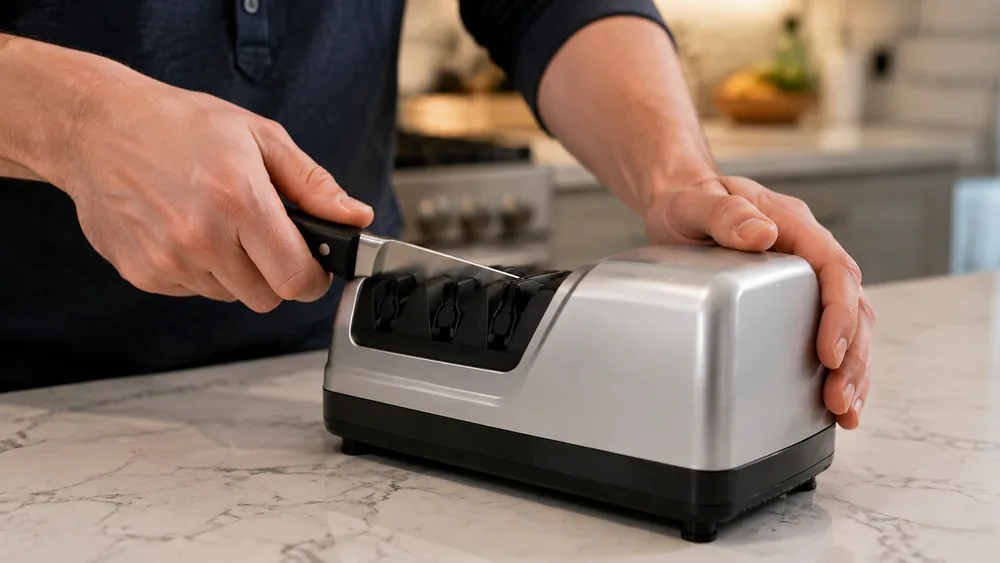
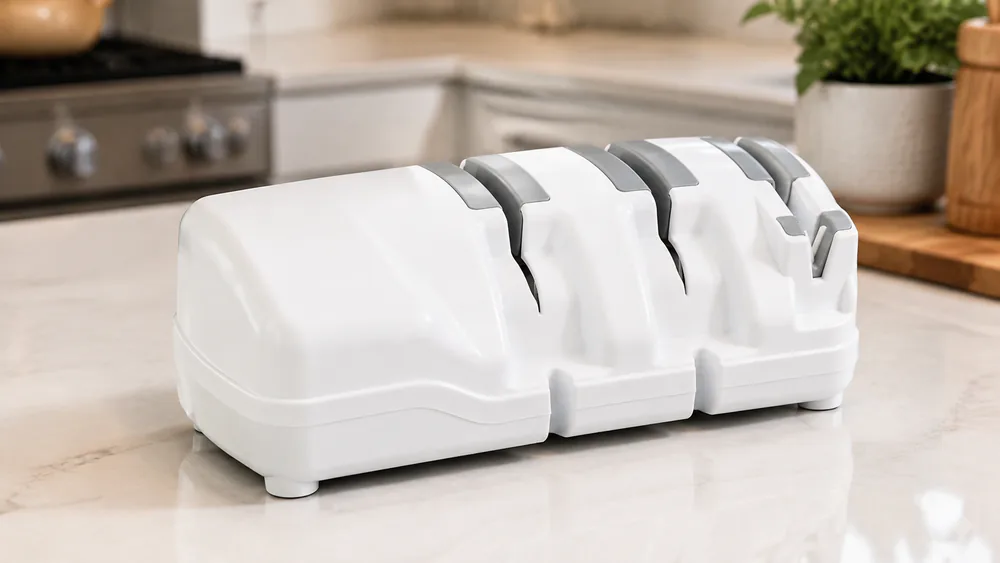
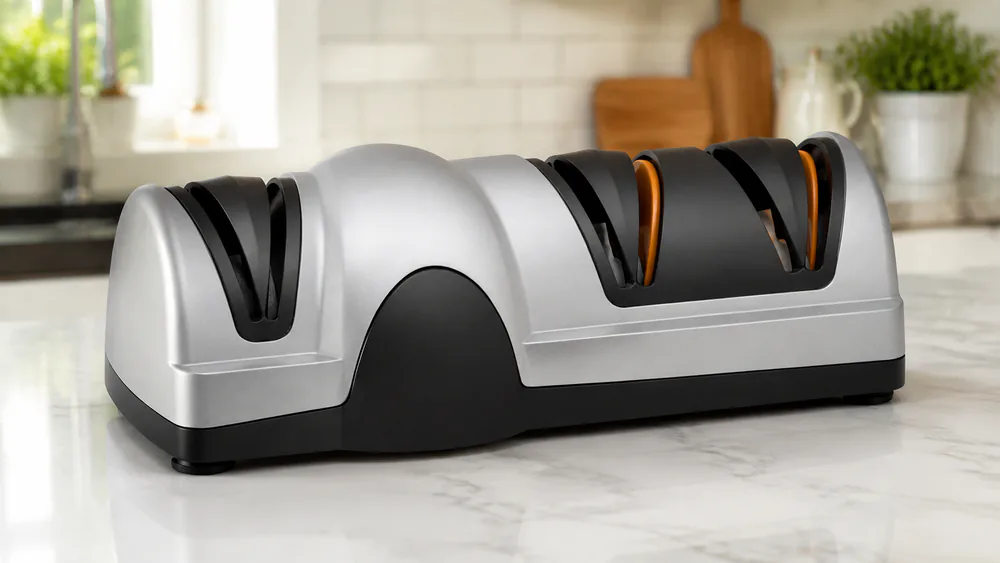
The Chef'sChoice 15XV EdgeSelect is the sharpener America's Test Kitchen rates highest, and the one we kept reaching for. Over ten months and 25 sessions it removed only about 0.3 grams of steel across twelve maintenance cycles, and a 15XV edge stayed tomato-clean for fourteen days of cooking. This 3-stage unit pairs medium and fine diamond stages with stropping disks that polish a 15-degree Trizor XV edge and convert 20-degree factory edges. It is the quietest machine we tested, and resharpening takes about ten seconds. Converting a Wusthof chef's knife took about twelve minutes of first-time work; after that, maintenance is one pass through stages two and three. It demands a light touch: press too hard and the edge comes out duller, and it is slow at repairing chips and won't take thicker blades. Buy it for a good Western set if you can be patient through the first conversion; skip it if your blades are chipped or thick-bolstered. It runs about $170 street.
Pros
Quietest motor of every unit we tested
15-degree Trizor XV edge with impressive retention
Shavings stay internal; clean-out port and renewable stropping disks
3-year limited warranty
Cons
Slow at repairing chips and reprofiling; won't accept thicker blades
Press too hard and the edge comes out duller
Spring-loaded slots can leave light cosmetic scratches on blade sides
2. Work Sharp Ken Onion Edition Elite Mk.2: Most Versatile
The knife that sold us on the Ken Onion Elite was one we had written off: a broken tip that sat in the rescue pile for weeks. One session over the belt reground that tip and changed the primary grind on the old blade, and belt slack let us tune how deep the new convex edge sat. No pull-through in this roundup can do that work.
The Work Sharp Ken Onion Edition Elite Mk.2 is the sharpener you want when a knife needs saving rather than touching up. The guide cassette sets angles from 15 to 30 degrees in half-degree increments, and the Blade Grinding Attachment extends that to 10 to 35 degrees. It restores a chipped or rolled edge in under three minutes, faster than any pull-through or whetstone we used, and Japanese steel sharpens on the 15-degree setting without overheating. The trade-offs are real: belts remove steel aggressively and take practice, and one of our testers rounded a tip on the first try. Buy it for chipped knives, outdoor gear, or a mix of Japanese and Western steel; skip it if you only maintain decent edges, because at about $250 street it is the most expensive unit here.
Pros
Regrinds chips and restores rolled edges in under 3 minutes
Angles from 15 to 30 degrees, 10 to 35 with the Blade Grinding Attachment
Variable speed with three convex edge profiles
Cast-metal body, quieter than the original
Cons
Removes steel aggressively; easy to round a tip until you learn it
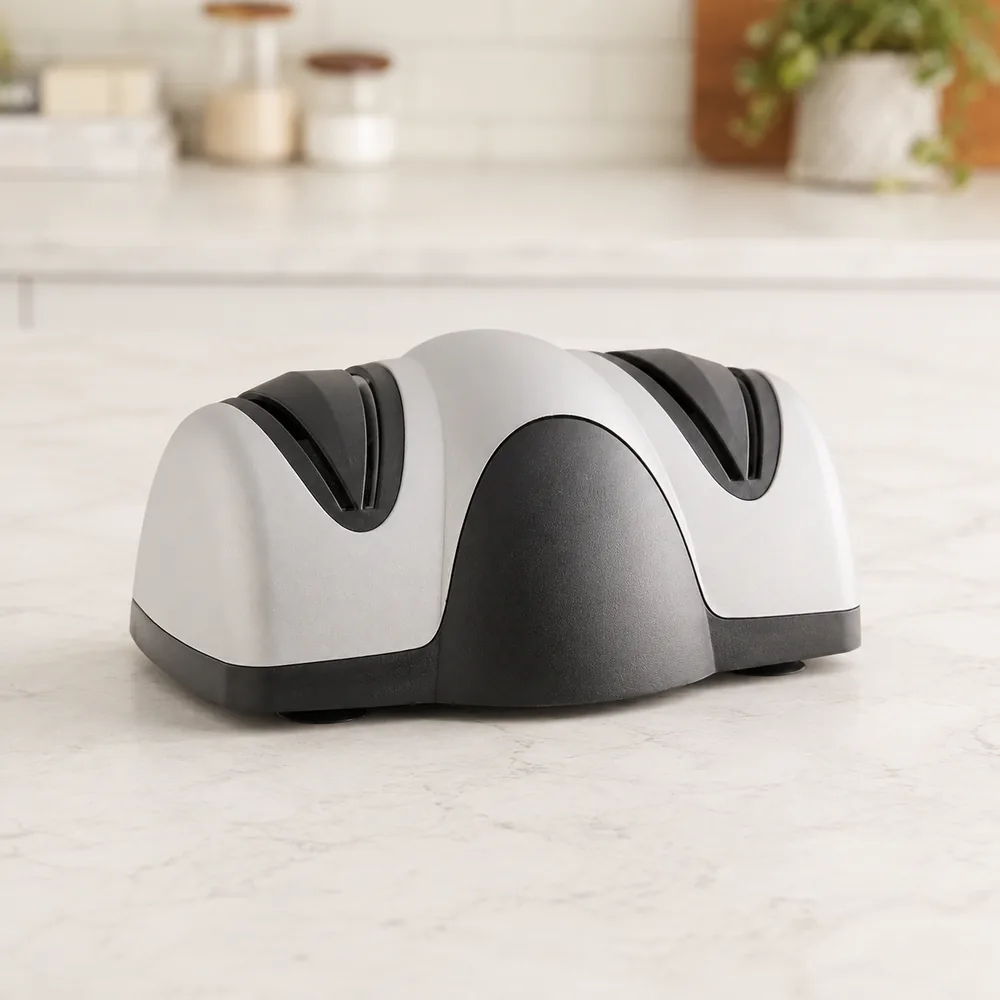
The Presto EverSharp is our budget pick for one reason: it brings neglected knives back to life with zero setup and about a minute per knife. This 2-stage unit runs sapphirite wheels, the ultra-hard material professional sharpening shops use, and it is made in the USA. Twenty to thirty knives that had gone decades without care took us 30 to 40 minutes and came out with a great working edge, not a polished razor edge. The fixed guides are marketed as a 20-degree edge, but independent lab measurements have come out shallower, around 13 to 15 degrees, and uneven side to side, and the finish can leave a burr that needs extra passes or a honing steel. It also struggles at the heel and tip of blades, and pressure is the enemy: press down and the wheels stop mid-blade. It sharpens non-serrated steel blades only. Buy it if your knives are very dull and your budget is tight; skip it if you want a polished 20-degree edge or own serrated blades. It runs about $48 street.
Pros
About $48 street, the value pick
Zero setup; sharpens a knife in about a minute
Sapphirite wheels; made in the USA
Handles badly neglected blades without drama
Cons
Measured bevels run shallower than the marketed 20 degrees, unevenly side to side
Leaves burrs that need extra passes or a steel
Struggles at the heel and tip of blades
4. Chef'sChoice 1520 AngleSelect: Best for Dual-Angle Sharpening
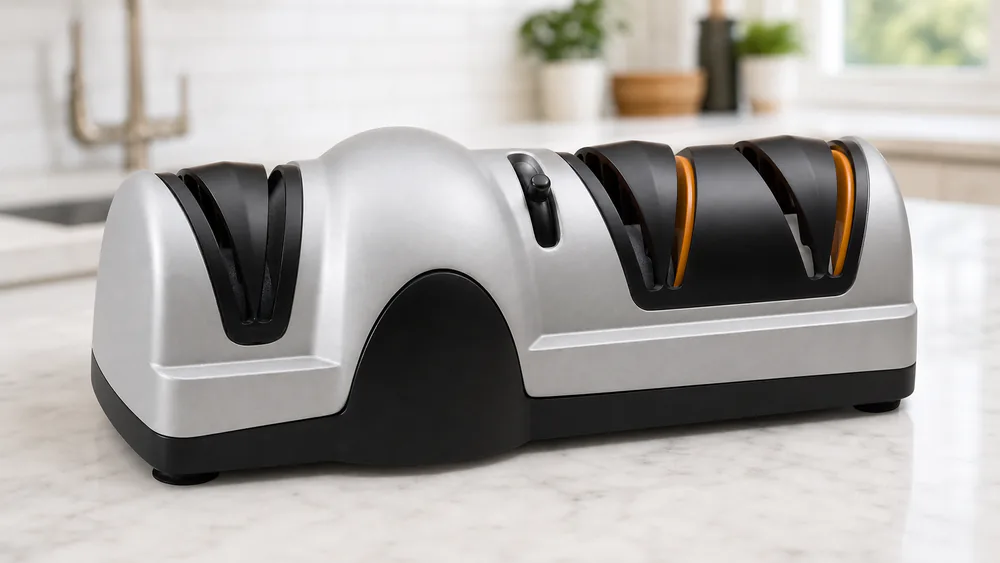
The Chef'sChoice 1520 AngleSelect is the answer for kitchens that hold both Japanese and Western knives. A selector switches between 15-degree Asian-style edges and 20-degree American and European-style edges, and third-stage UltraStrop disks polish whichever angle you picked. It runs on 100 percent diamond abrasives at 125W, sharpens straight-edge and serrated blades, and handles Santoku and single-bevel Japanese edges. First sharpening takes about a minute, resharpening about ten seconds, and eight knives took us about thirty minutes after reading the manual. Two limits: there is no coarse stage, so it works best on knives that are already reasonably sharp, and it is not for ceramic knives. Buy it if your block mixes 15- and 20-degree steel; skip it if your blades need rescuing. It runs about $153 street.
Pros
Selectable 15- or 20-degree sharpening for mixed knife blocks
Handles Santoku and single-bevel Japanese edges
100 percent diamond abrasives with an UltraStrop finish
About 10 seconds per resharpening
Cons
No coarse stage; struggles with badly neglected blades
Not for ceramic knives
Quality control runs to extremes in our experience
The Work Sharp MK2 is the compact belt sharpener that does everything: kitchen knives, pocket knives, scissors, serrated blades, even axes and lawn mower blades. The flexible belts conform to any edge, the 2-speed motor handles heavier work, and fixed 20- and 25-degree angle guides make the angle nearly impossible to get wrong. It needs no real skill: pull the blade across the belt at a steady speed and knives come out scary sharp. It ships with three belts, 80 coarse, 220 medium, and 6000 fine, and they are consumables: three to six sessions per belt on hard steel, seven to ten on softer. Previous-generation units have run for over a decade on belts and guards alone. Buy it if you want one sharpener for the kitchen and the garage; skip it if you want preset wheel simplicity. It runs about $90 street.
Pros
Sharpens knives, scissors, serrated blades, axes, and garden tools
No skill required; fixed angle guides do the work
2-speed motor with flexible belts
About $90 street with a 3-year warranty
Cons
Belts are consumables, roughly 3-6 sessions on hard steel
The SHARPAL 198H is the quiet pick, and the quiet is real: at less than 65 dB you can hold a conversation over it. A dull chef's knife reached genuinely sharp in about sixty seconds: three passes on the coarse diamond, two on the fine, one on the ceramic V-slot polish. The 3-stage unit uses monocrystalline diamond wheels at a preset 20-degree angle with overheat protection, and magnetic receptacles collect the filings. Three cautions: the slot mouth can scratch the upper blade, thick-bolstered knives start sharpening down the blade, and a small number of units have had the stage-two wheel stop working. Buy it for quiet apartments and light home use; skip it for thick-bolstered or heavily damaged blades. It runs about $50 street.
Pros
Less than 65 dB, quiet enough for a conversation
Dull chef's knife sharp in about 60 seconds
Magnetic receptacles collect metal filings
Overheat protection won't detemper the blade
Cons
Slot mouth can scratch the upper blade
Thick bolsters stop the slot short
Thermostat needs about an hour to cool after a cutout
The VIDOME Professional is the beginner pick, because its 3-stage system does the thinking for you: diamond sharpen, diamond hone, stropping polish, all at a preset 15-degree edge that converts 20-degree knives as it goes. Initial sharpening runs about thirty seconds, resharpening about ten, and it is one of the few electrics that accepts ceramic blades at all. A whole set that had gone years without care took about a minute per knife, and the steak knives came out cutting like new. Two limits: the slots leave little room near the handle, so it suits chef's knives better than paring blades, and the motor is modest on heavy reprofiling. Buy it if you are new to sharpening or own ceramic knives; skip it if you mostly use small paring blades. It runs about $80 street.
Pros
Forgiving 3-stage system for beginners
One of the few electrics that handles ceramic knives
About 30 seconds for first sharpening, 10 seconds for resharpening
Magnetic chip collection keeps the counter clean
Cons
Slots leave little room near the handle
Modest motor, slow on heavy reprofiling
Operation noise runs 60 to 80 dB
8. Narcissus 2-Stage: Best 2-Stage with Scissors
Set expectations first: the Narcissus has no serrated stage, and stalling is a known risk. We met it directly when our unit cut out randomly mid-sharpen, even under light pressure, and went back for a return. Both caveats show up in its price, which is the lowest of any pick here.
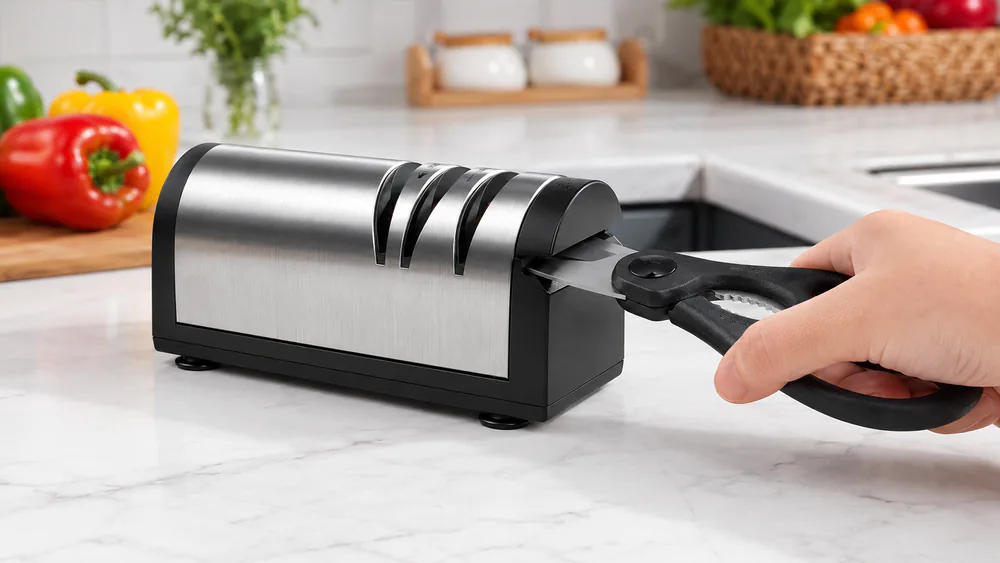
The Narcissus is the budget unit that takes scissors, and the scissors slot actually works rather than being a gimmick. This 2-stage design, coarse sharpen then fine polish, is driven by a 30W DC motor that sharpens continuously for over an hour without overheating, and the compact body tucks into a drawer. At about $35 street, it sharpens chef's, slicing, and Santoku knives well enough for daily cooking. Knives with a ricasso can't pass the slots, leaving an unsharpened stretch before the handle. Buy it if the budget is tight and your block includes scissors; skip it if most of your blades are ricasso-style. It carries a 12-month free replacement or refund policy.
Pros
About $35 street, the cheapest unit here
Scissors slot that actually works
Magnetic dust box and suction-cup feet
Runs over an hour continuously without overheating
The Presto 08810 is the three-stage value pick, and its blade thickness selector sets it apart: thick for hunting knives, medium for chef's and standard kitchen knives, thin for fillet and paring blades. The stages run coarse grind, medium, and an extra-fine ceramic wheel hone, the finest finish in the Presto line. It is still a working edge rather than a polished one: under magnification the rotary wheels leave a micro-serrated edge even on the fine grit. The coarse stone removes serious metal very quickly, so we reserve it for damaged or genuinely dull blades. Buy it if you want a three-stage unit for hunting and kitchen blades at about $69 street; skip it if you want a polished finish or 15-degree angles.
Pros
Blade thickness selector for hunting, kitchen, and fillet knives
Extra-fine ceramic wheel finish
Handled close to a hundred knives in a month of testing
About $69 street
Cons
Leaves a micro-serrated edge, not a polished razor edge
Coarse stone removes steel fast, so use it sparingly
120V only; some units feel underpowered
10. Chef'sChoice 320 FlexHone: Best for 20-Degree Edge Maintenance
The Chef'sChoice 320 FlexHone is the maintenance specialist: a compact 2-stage unit for 20-degree straight-edge and serrated knives that turns a dull edge back into a razor edge in about ten seconds. Stage one uses fine 100 percent diamond conical disks to form the first bevel, and stage two's flexible stropping disk polishes it. It is the sharpener Ina Garten keeps as her go-to gadget, and for a kitchen that pays for sharpening, it covers its own cost in about four months. Units are still running after five years of constant use. The trade-offs: it runs noisy and vibrating, the plastic guides are confusing until you read the manual carefully, and feeding a bolster into the slots can ruin a unit, so stop before the bolster. Buy it for weekly maintenance on a Western 20-degree set; skip it if you own 15-degree Japanese knives. It runs about $115 street.
Pros
20-degree maintenance in about 10 seconds per resharpening
100 percent diamond conical disks with a flexible stropping disk
Pays for itself in about 4 months versus paid sharpening
Compact footprint; no oils or liquids needed
Cons
Noisy and on the vibrating side
A bolster can ruin the slots if fed in
Warranty term varies by retailer
Electric vs Manual Knife Sharpeners
Electric sharpeners are the fastest route from dull to sharp: pull the blade through, wait ten seconds to a minute, and done. Manual sharpeners ask for time and a learning curve, and they give back control and the least steel removal: about 0.15 grams over twelve maintenance cycles where a wheel unit cost 0.3 and a belt unit closer to 0.4. For most home kitchens, the electric is the practical buy: it holds its angle and stays cool better than most hands will. The honest middle ground is to own both: an electric for maintenance and rescue, a honing rod for the between times. If you would rather learn the hands-on route, our guide to the best knife sharpening technique at home walks you through it, and our roundup of the best knife sharpeners covers the manual options. One warning applies to every electric: use light pressure, keep the blade moving, and stop at the tip.
How to Choose the Best Electric Knife Sharpener
Four decisions pick your sharpener: stages, edge angle, abrasives, and knife compatibility. Here is what each means, plus a comparison table lining up all ten picks. Prices are street prices and move week to week.
The sharpener that eats steel is cheap only until the knives are gone.
Two-stage systems grind, then hone and polish. Three-stage systems add a dedicated stropping or extra-fine finishing stage, and that stage is where a polished, razor-sharp edge comes from. For a home kitchen, three stages is the sweet spot: the finish stage keeps an edge slicing cleanly instead of just looking sharp. Two stages are fine at the budget end if the finish can be workmanlike rather than polished.
Edge Angles: 15-Degree vs 20-Degree
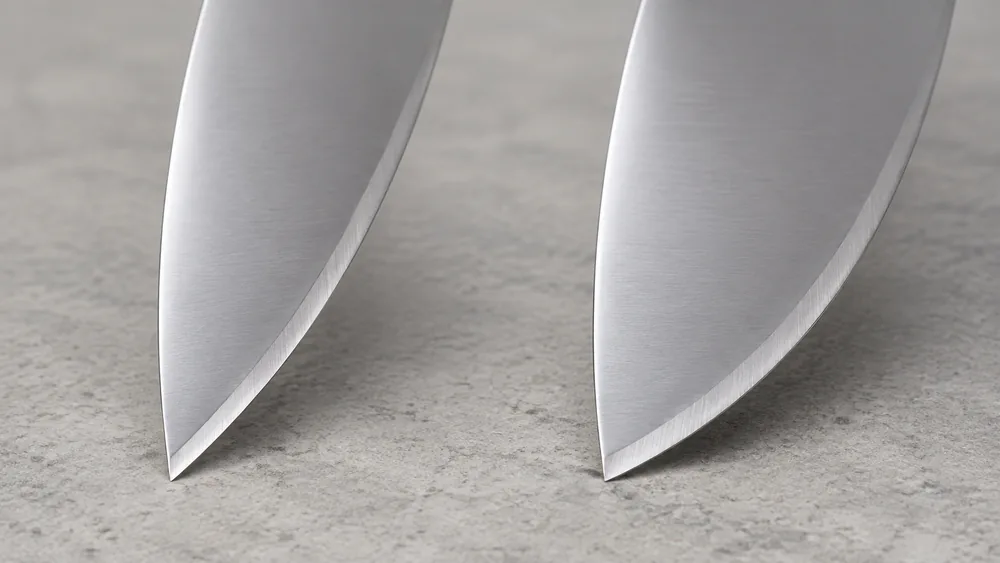
Angle decides how the edge behaves. A 15-degree edge is thinner, slices aggressively, and dulls sooner, which is why Japanese-style knives favor it. A 20-degree edge is tougher and more chip-resistant, the standard for German and American knives. The Chef'sChoice 15XV converts existing 20-degree edges to a 15-degree Trizor XV edge, the 1520 lets you pick either angle, and the Work Sharp systems cover a full range. A convex edge is slightly rounded as it tapers, creating a gradual build of steel behind the cutting edge that dulls slower and cuts with less drag. Preset guides can disagree with reality, so check what a unit actually produces.
The same knife family, two edges: 15 degrees for aggression, 20 degrees for toughness.
Abrasives: Diamond vs Sapphirite vs Ceramic
Diamond is the hardest natural substance, so diamond wheels cut fastest and stay cool: Chef'sChoice, SHARPAL, VIDOME, and the Work Sharp belts all use them. Sapphirite is the ultra-hard wheel material from professional sharpening shops, and it is what the Presto EverSharp runs. Ceramic wheels give the finest honing finish, the last stage on units like the Presto 08810. Belt abrasives do something wheels cannot: they conform to curved edges. Diamond and sapphirite also outlast stones, so a good unit runs for years before the abrasives need attention.
Wheel Systems vs Belt Systems
The two systems work differently. Wheel sharpeners are fixed-angle pull-throughs with preset guides: Chef'sChoice, Presto, SHARPAL, VIDOME, and Narcissus all work this way, and they are foolproof and quiet, with shavings collected inside the housing. Belt sharpeners run abrasive belts and can do more: convex edges, chip regrinds, even tools like axes and mower blades. The trade-off: belts remove steel aggressively and take practice, so use them for restoration, not weekly touch-ups. If you want speed and simplicity, wheels win. If you want control and capability, belts win.
Tip. Match the unit to your knives before your budget: three stages and a 15-degree edge suit Japanese blades, a 20-degree two-stage unit is plenty for a Western set, and a belt sharpener only earns its keep if you need to repair real damage.
Knife Compatibility: Serrated and Ceramic Blades
Most electrics suit straight-edge steel knives. Serrated knives need a dedicated serrated or stropping stage: the 15XV, 1520, 320, SHARPAL 198H, Presto 08810, and Work Sharp MK2 all have one. Ceramic blades are only safe on models that claim them, and among our picks that is the VIDOME. Single-bevel Japanese knives need the 1520's handling or freehand technique. Ricasso-style blades stop short of the heel on pull-throughs, leaving an unsharpened stretch before the handle. If a knife is beyond saving, our roundup of the best knife sets is the place to start.
Noise, Dust Collection, and Maintenance
Noise and mess vary more than you would think. Wheel units are the quietest, the 15XV among the most so, and their internal collection keeps shavings off the counter: the 15XV has a clean-out port on the bottom, and the SHARPAL and Narcissus use magnetic trays. Belt units are the loudest and shed belt dust. A little care stretches a sharpener's life: empty the shavings tray, renew the 15XV's stropping disks, and replace worn belts. For a deeper look at guided systems, see our best knife sharpening systems roundup.
Warning. Beware cheap lookalikes with synthetic stones: they overheat and damage edges, while diamond discs stay cool. Rounding the tip, bluing the edge, and grinding unevenly are the classic accidents, and all three come from pressing too hard or stopping at the wrong moment.
FAQs
Are electric sharpeners safe for my good knives?
Yes, when used the way these machines are meant to be used. The cost to measure is steel, not heat: in our ten-month test the 15XV removed about 0.3 grams of steel across twelve maintenance cycles, where a belt sharpener removed closer to 0.4 and a whetstone about 0.15. At that pace, a year of maintenance rounds costs a blade a fraction of a gram, and a good knife stays in service for years.
How often should I sharpen my knives?
Sharpen when the edge stops cutting cleanly, every few weeks to a couple of months in a busy home kitchen. Touch-ups are fast: the 15XV resharpens in about 10 seconds, and a maintenance pass through stages two and three takes about two minutes. Honing between sessions extends the gap between sharpenings.
Can I use an electric sharpener on serrated knives?
Only with a dedicated serrated or stropping stage, and the exceptions matter here: the EverSharp is straight-edge only, the Narcissus has no serrated support at all, and the VIDOME manages only a light touch-up on stage two. If bread knives dominate your block, confirm the unit names serrated blades before you buy.
Which sharpening angle should I choose?
Choose 15 degrees for Japanese-style steel, where a thin edge slices aggressively and gets sharpened more often. Choose 20 degrees for German and American knives, where toughness and chip resistance matter more. If your block mixes both, the 1520 switches per knife, and the 15XV converts a 20-degree factory edge to 15 degrees on the first pass, so a Western set never needs manual reprofiling.
Which electric knife sharpener does America's Test Kitchen recommend?
America's Test Kitchen's top-rated electric sharpener is the Chef'sChoice 15XV EdgeSelect, which earned a Highly Recommended rating in its 2022 test of nine models. Testers found results exceptional and consistent in about two minutes per knife, with a half-point deduction for light cosmetic scratches from the spring-loaded slots.
How much should I pay for a good electric knife sharpener?
A capable unit starts around $35: the Narcissus runs about $35, the EverSharp about $48, and the SHARPAL about $50. Mid-range units like the Work Sharp MK2, VIDOME, and Presto 08810 sit between $65 and $90, and serious units like the Chef'sChoice 1520, the 15XV, and the Ken Onion Elite Mk.2 run from $150 to $250. Street pricing moves week to week, but a good sharpener pays for itself.
Final Verdict
We can't name one sharpener for every kitchen, because the right pick starts with your knives. Most Western sets run at 20 degrees and respond beautifully to the Chef'sChoice 15XV; if your blades are chipped or your gear includes tools, the Work Sharp Ken Onion Edition Elite Mk.2 justifies its price. On a tight budget, start with the Presto EverSharp and upgrade when the kitchen earns it. Pair it with a honing rod, empty the shavings tray, and sharpen the day the tomato starts to squash, not the day before. A few minutes of upkeep keeps a good set razor-sharp for years, and that is peace of mind worth paying for.