As an Amazon Associate we earn from qualifying purchases. We may earn a commission from links on this page, at no extra cost to you. Learn more.
We judge a knife the way a butcher counter does: by what the edge feels like after a full session of prep, not by the box it came in. Onions, tomatoes, potato slices, and long sashimi pulls tell you more about a blade than any spec sheet. We pay attention to how the handle feels once the work gets long, and to how willingly the steel comes back on a stone.
High end Japanese knives are thinner, harder, and sharper than most Western blades. That is why they are worth the investment, and it is also why they ask for a gentler hand. Here we cut through the hype and cover the gyuto, santoku, yanagiba, kiritsuke, and petty knives we would actually put in a serious cook's block. If you want the full lineup of makers we cover, browse our Japanese knife reviews.
Four things decided the scores. The first was out-of-the-box sharpness and how long the edge lasted. The second was comfort and balance when a prep session ran long. The third was how much care the steel demanded, from drying to board choice. The fourth was how willingly the blade came back on a whetstone.
We score each knife on those four points and give it one rating out of 5. The notes below come from what each blade did on onion, tomato, potato, and fish, and from how it handled long stretches of prep.
Tilting a blade under bright light shows rolling, chips, and wear at a glance.
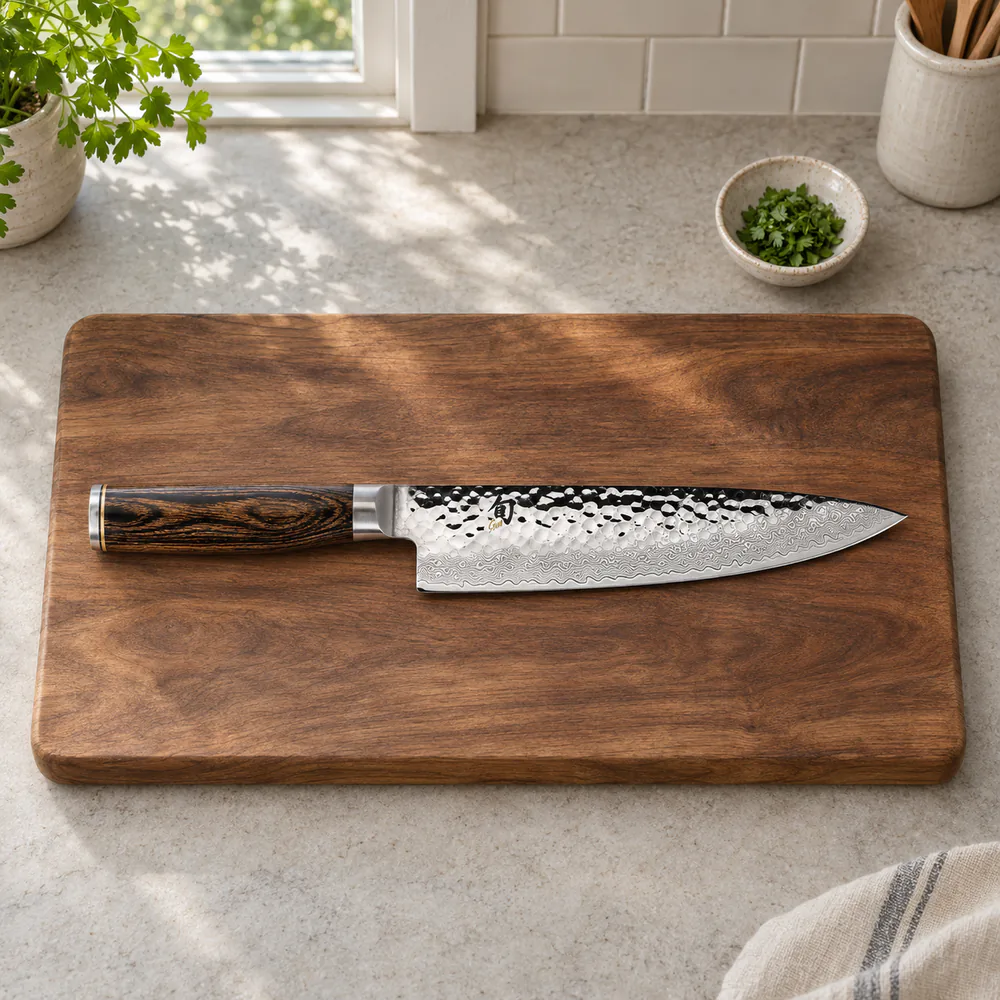
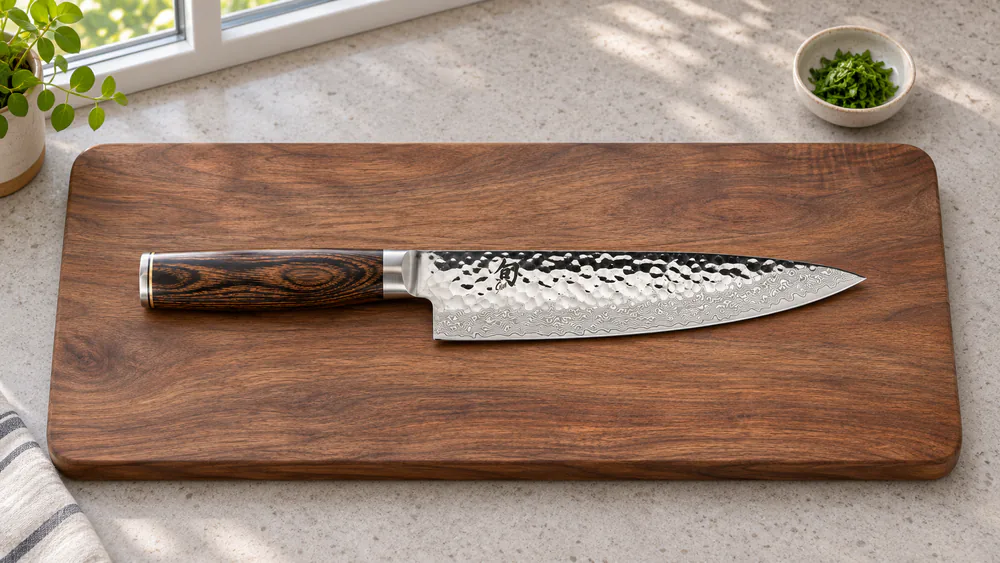
1. Best Overall High End Gyuto: Shun Premier 8" Chef's Knife (VG-MAX)
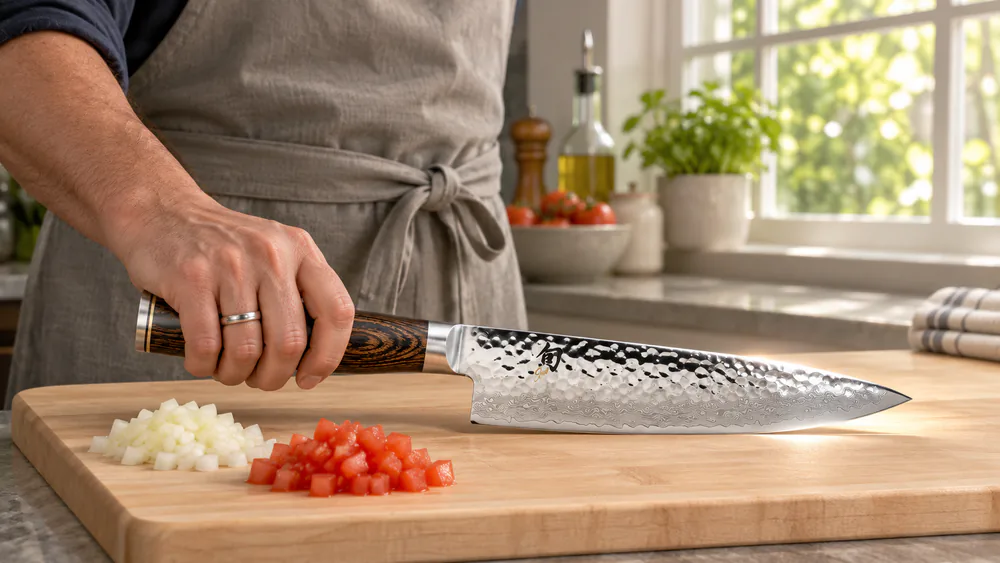
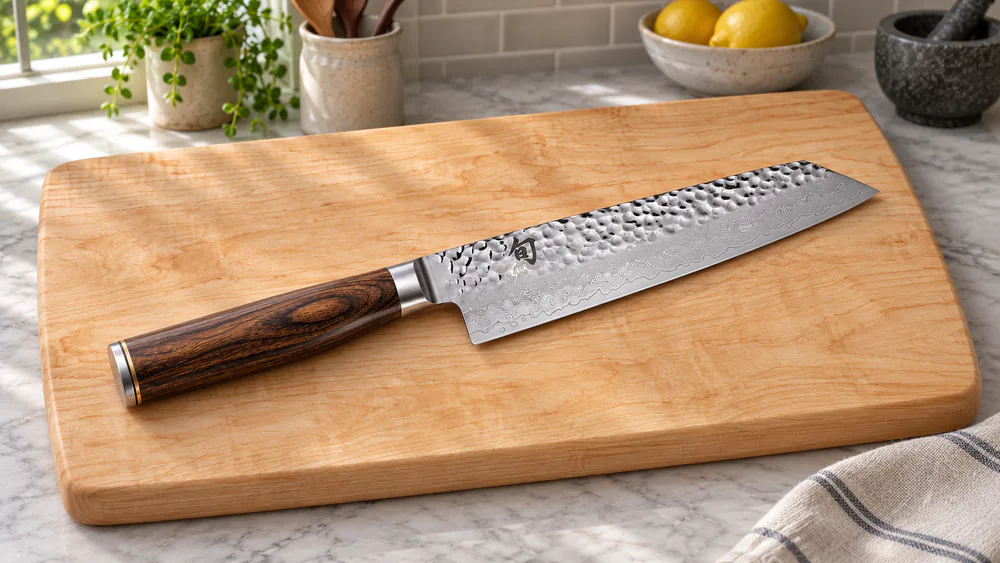
The Shun Premier was razor sharp out of the box, and the slim tapered blade glided through onion without effort. Ripe tomatoes came apart in clean slices, and the contoured Pakkawood handle stayed comfortable as the session wore on. It holds an edge well and rocks nicely on the board, which makes it the workhorse we would pick first. The tip is the price of that slimness: knocking it on a sink while washing can snap off about a millimeter.
Pros
VG-MAX core with 68-layer Damascus cladding
Razor-sharp out of the box on tomatoes and onions
Comfortable contoured Pakkawood handle
Free sharpening and honing service from Shun
Cons
The very thin tip can snap off about a millimeter if it knocks the sink
Chipping is possible on bone, hard boards, or a twist
The hammered finish does little to stop potato slices sticking
Who It Suits and Who Should Skip It
This is the knife for a cook who wants a first high end gyuto without a steep learning curve. The 8-inch blade handles everything from onions to roasts. Skip it if you tend to hack through bone or twist the blade in the cut, because the thin edge rewards a light push-cut.
Steel, Edge and Maintenance Notes
The 16-degree edge per side sits between a Western and a hard Japanese bevel. A sharpening session repairs a small tip snap. Shun does not publish a Rockwell figure for this knife, so we will not quote one. Hand wash and dry it right away.
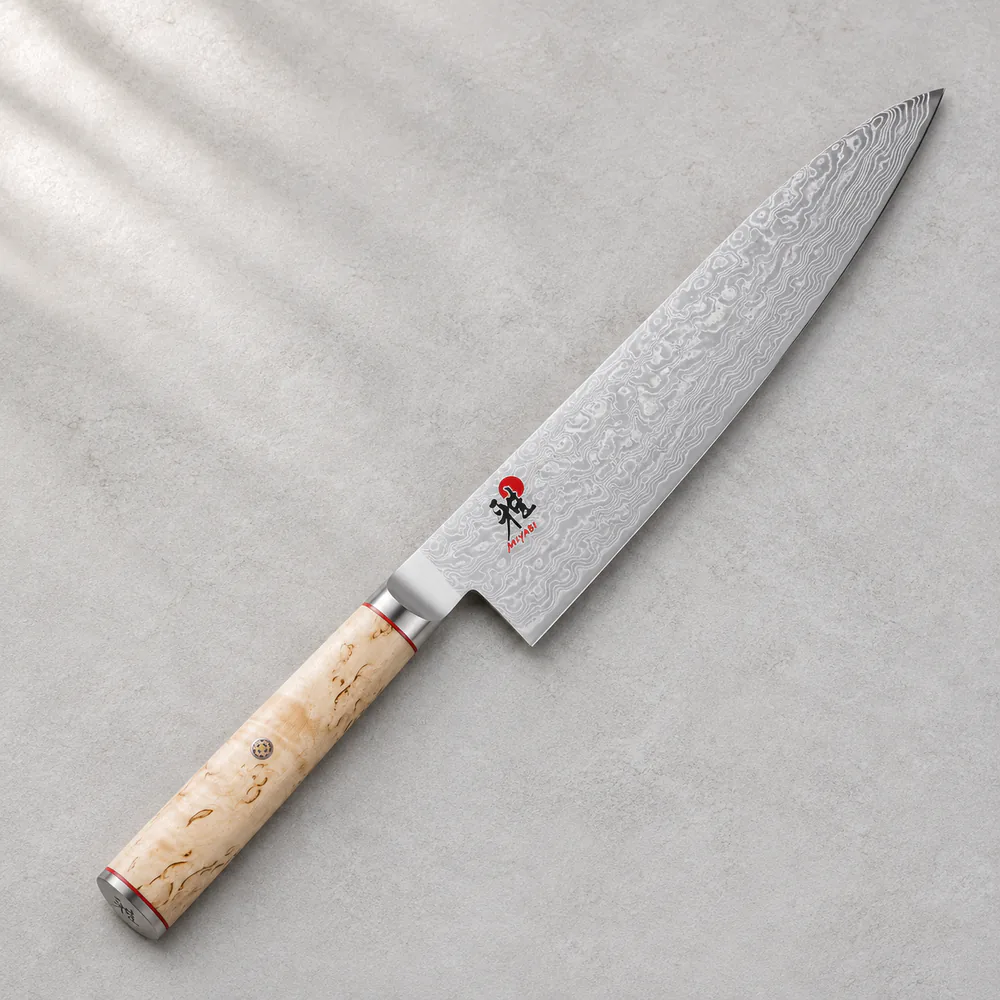
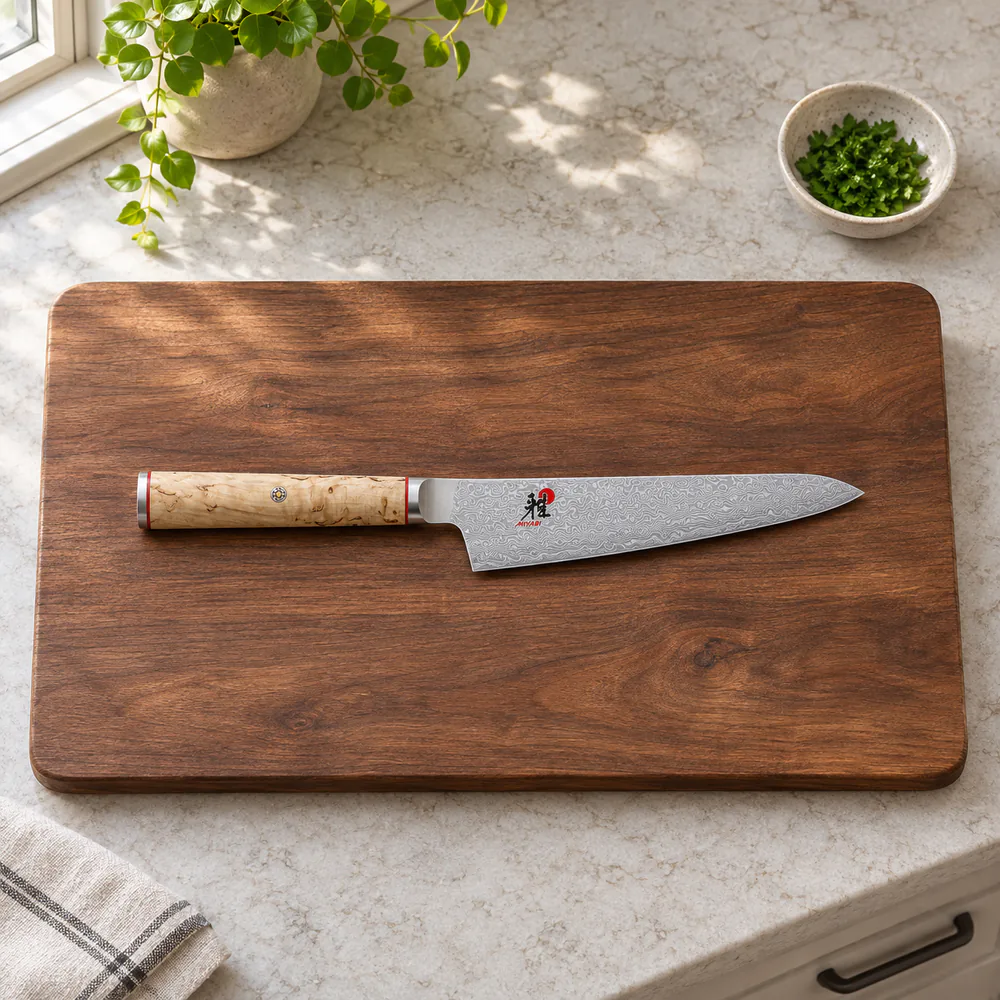
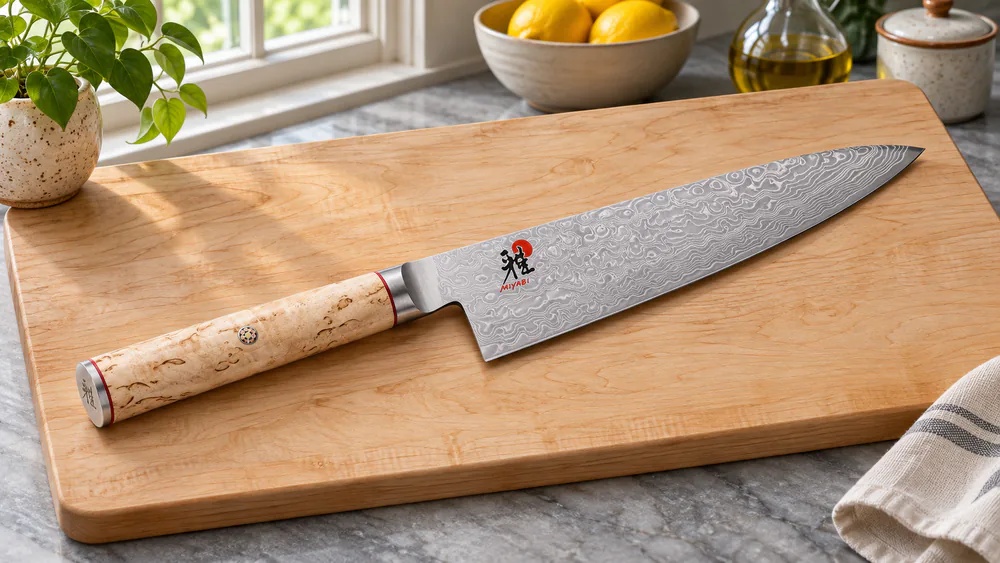
2. Best Powder-Steel (SG2) Chef Knife: Miyabi Birchwood SG2 8"
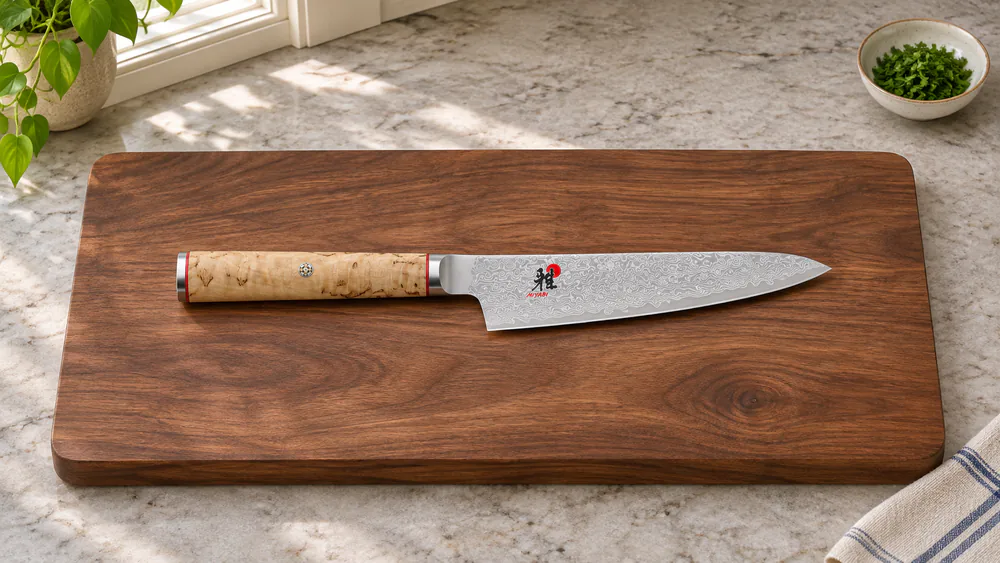
The Birchwood is perfectly balanced at the bolster and glides through meats and vegetables. The 12-degree edge bites into everything, and it sliced a hanging wet washcloth. The handle is lightweight and silky smooth, and the choil sits comfortably in a pinch grip. Next to a typical German chef's knife, this blade feels almost weightless, and the edge keeps its bite through months of frequent home use.
Pros
SG2 micro-carbide powder steel keeps an edge through months of frequent use
100-layer flower Damascus, handcrafted in Seki
Karelian birch handle is light and comfortable
Honbazuke hand honing to a 9.5 to 12 degree edge
Cons
Ships without a sheath, so a saya or guard is worth adding
Hard steel can chip on a knock against a hard board
Sharpening needs good stones and patience
Who It Suits and Who Should Skip It
Where the Shun is forgiving, the Birchwood rewards stone skill. Buy this if you cook daily and want the edge to last. It suits cooks who like a light blade and a pinch grip. Skip it if you have never used a whetstone and do not plan to learn, since SG2 needs skill to sharpen.
Steel, Edge and Maintenance Notes
The steel is SG2, and the Honbazuke three-step hand honing sets the edge. The maker's listing for this model gives no Rockwell number, so we point to the 62 to 64 HRC range typical of SG2. The 5.39-inch handle suits most hand sizes. Keep it on a gentle board and dry it after washing.
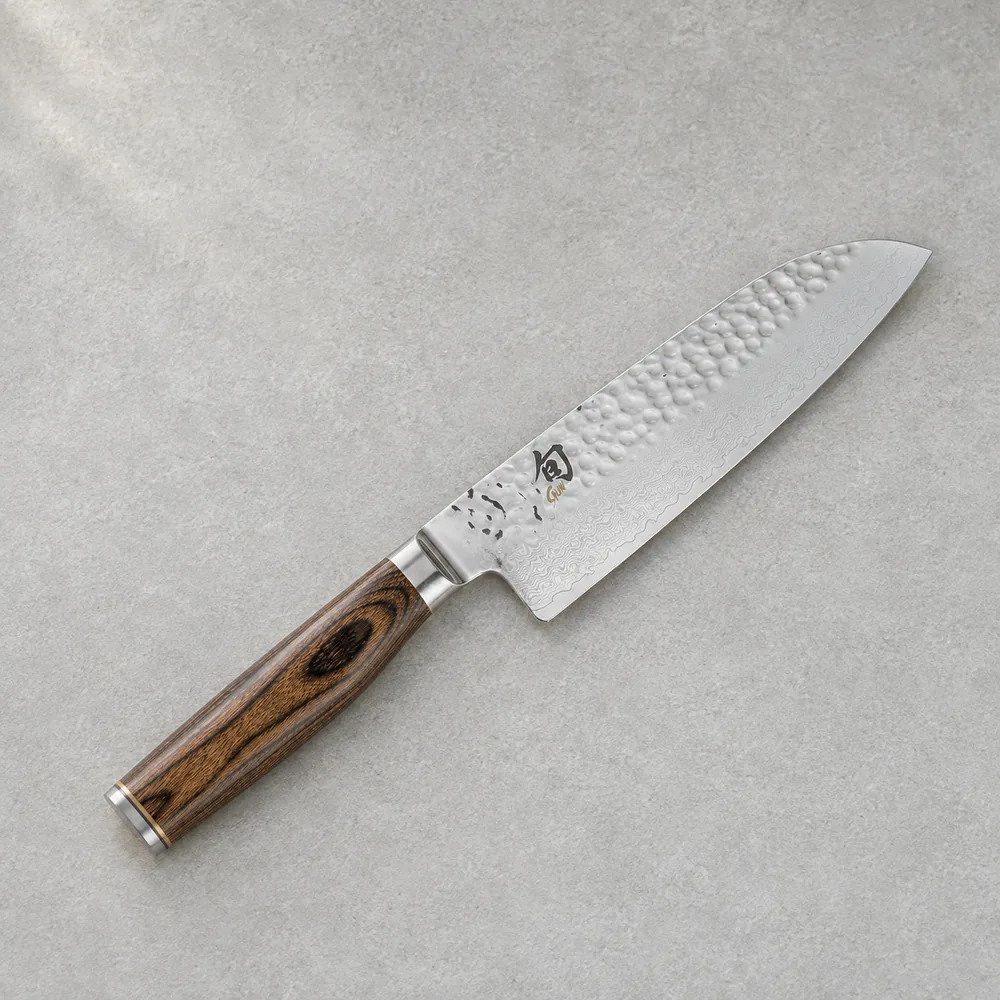
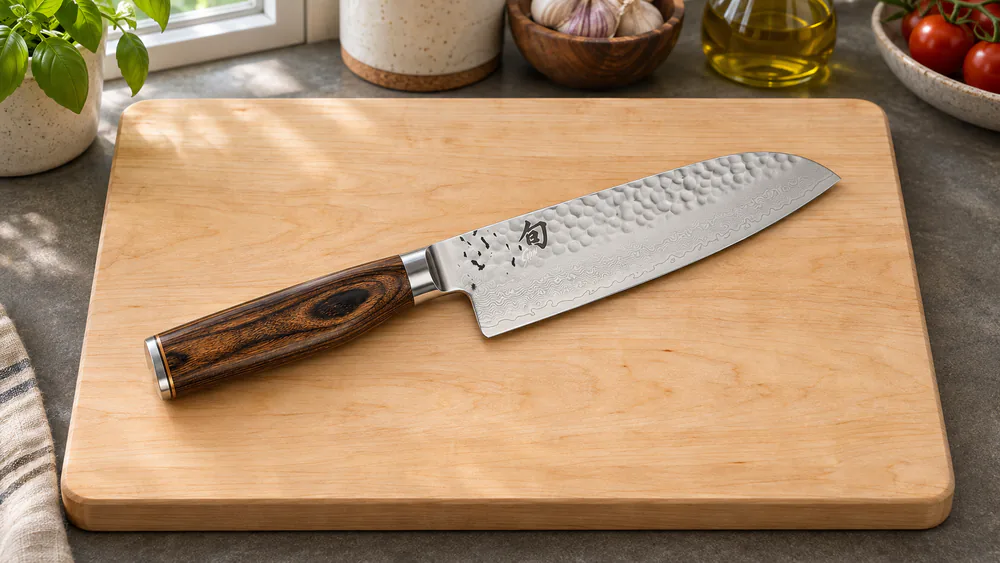
The Premier santoku shares the family traits we liked on the chef's knife: a very sharp edge, a slim blade, and a contoured Pakkawood handle. For cooks who find an 8-inch gyuto long, this is the better fit.
Pros
VG-MAX core with 68 layers of Damascus cladding
16-degree edge cuts vegetables cleanly
Short 7-inch blade is easy to control
Free sharpening and honing from Shun
Cons
The hammered finish does little against starchy slices clinging
The thin edge can chip if twisted or used on bone
Shorter than a gyuto for big roasts
Chopping onions, peppers, and herbs with it went quickly and with little pressure. Green onions, parsley, and cilantro came out clean, and tomatoes were finely chopped instead of mashed. Its light, compact feel and narrow handle made the short blade easy to control, though the handle may feel narrow in bigger hands.
Compared with the gyuto, this is the pick for cooks who mostly slice, dice, and chop produce on a modest board. Skip it if you want a rocking knife for large cuts of meat. The VG-MAX core and 16-degree edge match our top pick, so the same care applies: wash by hand, dry promptly, avoid hard boards, and use a light push-cut.
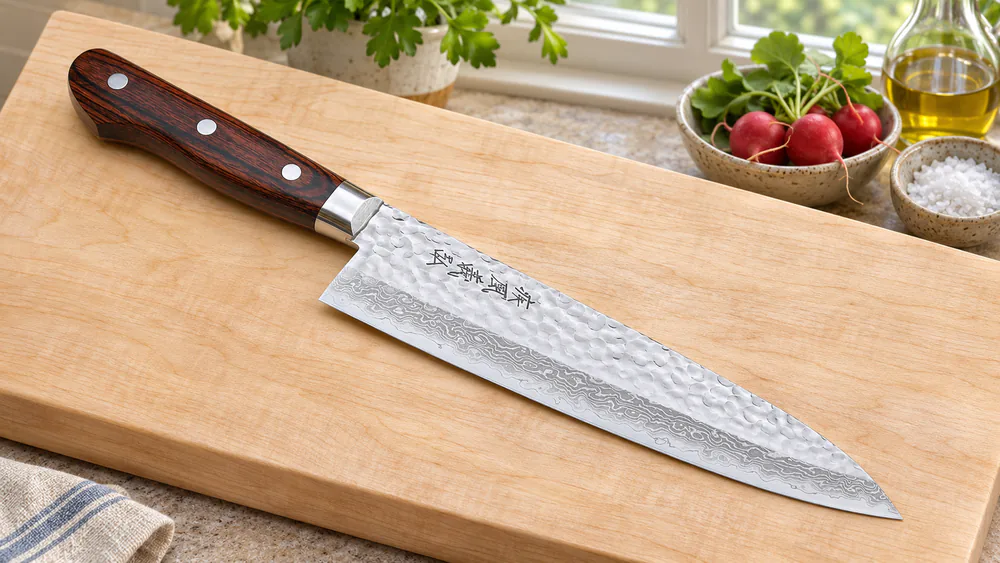
4. Best Value Hammered Damascus Gyuto: Yoshihiro VG10 210mm
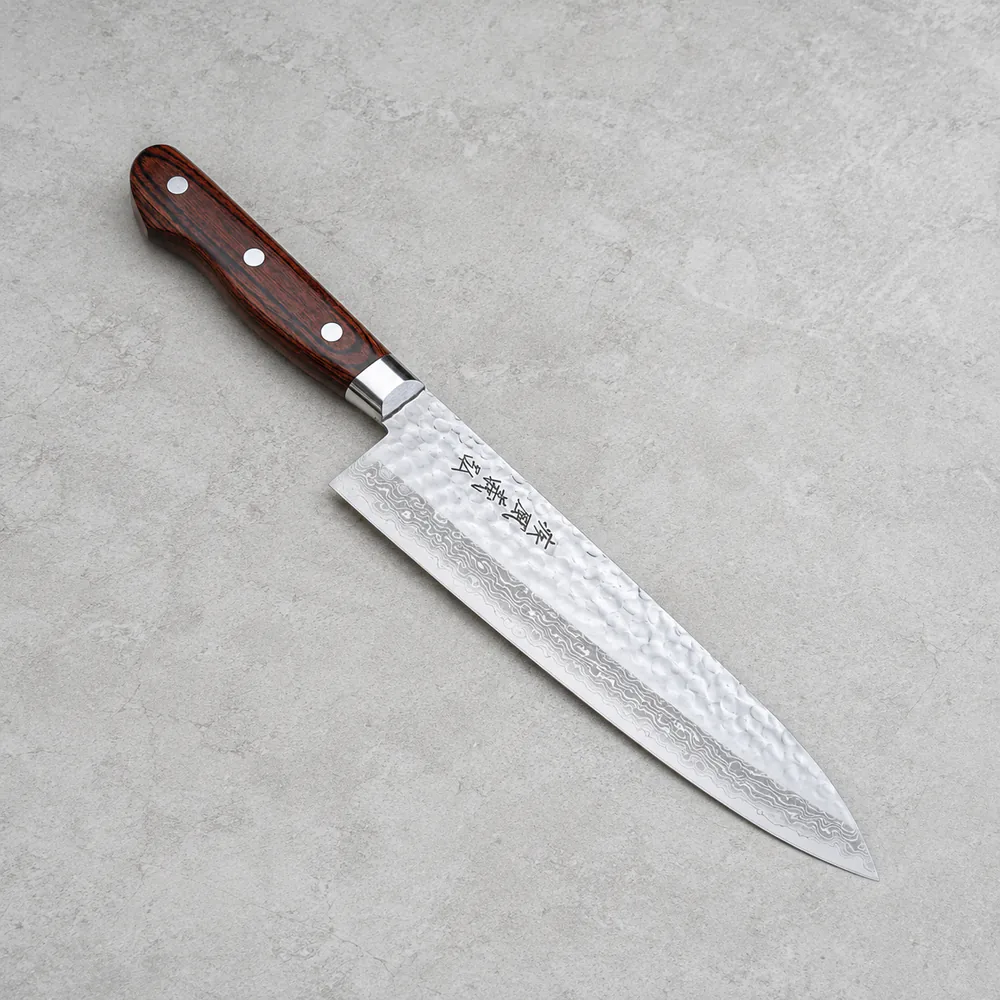
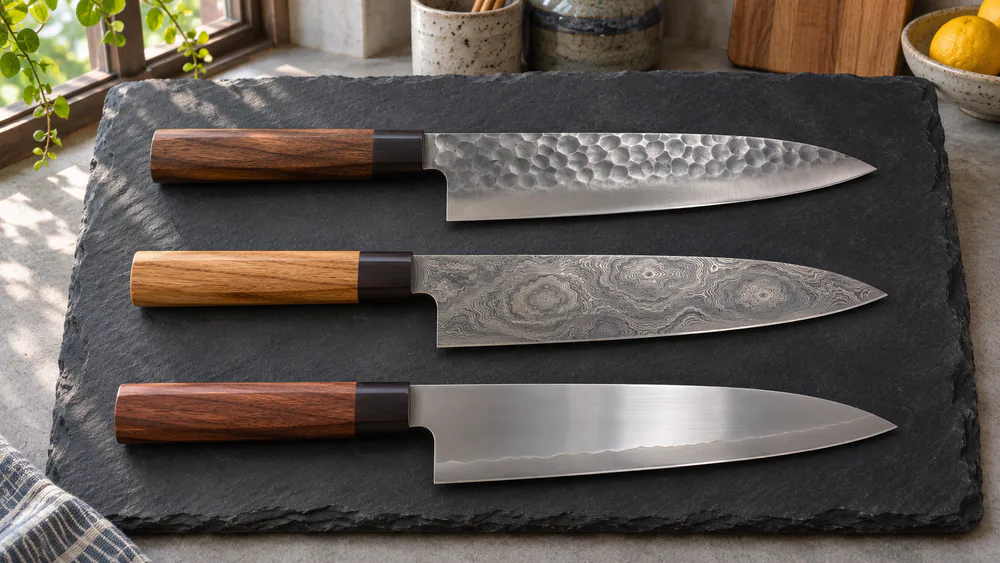
The Yoshihiro was very sharp out of the box and handled sushi, meat, and vegetables with equal ease. It showed no rust through a four to five hour prep session, as long as we dried it promptly after washing. It stays sharp after a year of daily use if you skip the steel rod and use a ceramic rod or strop between stone sessions. Letting the knife do the work matters more here than with any German blade.
Pros
VG10 core, HRC 60, 16-layer hammered Damascus
Very sharp from the box and easy to touch up
Western mahogany handle is comfortable
Budget-within-high-end tier
Cons
A slight gap at the handle-to-tang joint can trap food bits
The polished blade scratches under a rough sponge
Steel honing rods are too harsh for this edge
This is our value pick for a cook stepping up from a Western chef's knife, and at 210mm it feels familiar. Skip it if you want a hand-forged carbon steel blade, since this one is stainless. The VG10 core at HRC 60 is hard enough to hold a keen edge and soft enough to forgive a mistake. When it dulls, 600 to 8000 grit stones bring it back sharper than new, and wiping food from the handle joint after use keeps the gap clean.
Warning. Carbon steel (blue or white steel) is very hard and holds an edge longer, but it chips if misused and rusts if you leave it wet. If you step up to one later, wipe it dry after every cut.
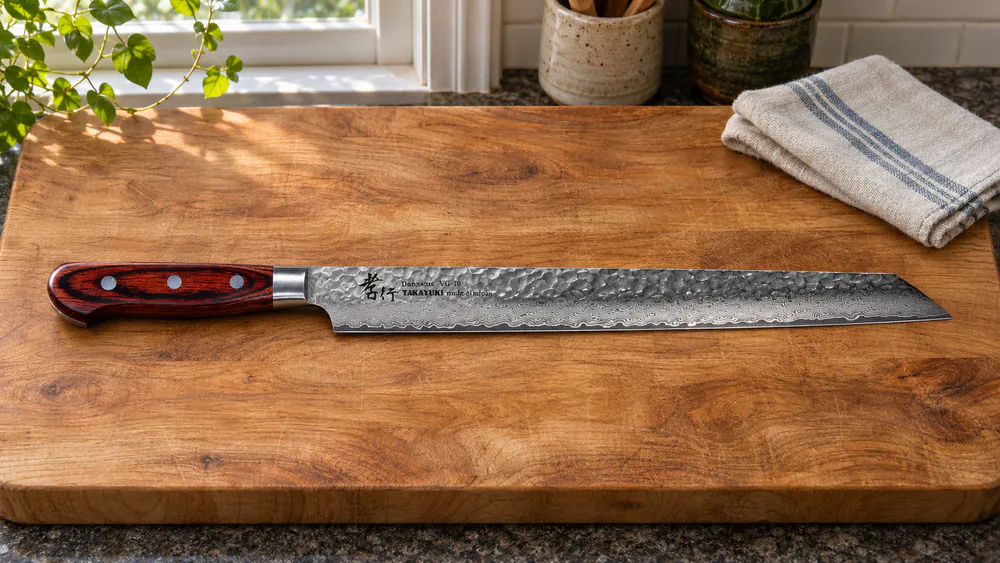
5. Best Yanagiba for Sashimi: Sakai Takayuki Damascus Yanagiba 10.5"
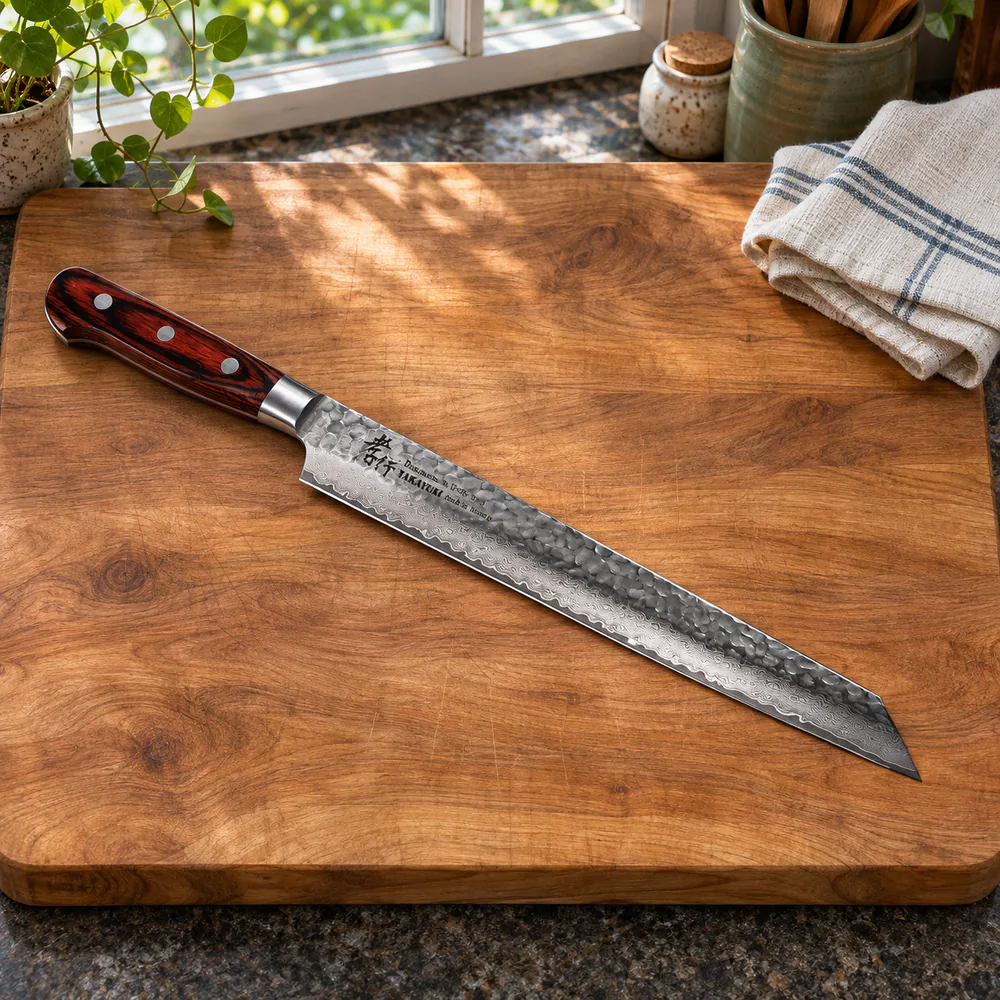
The 270mm blade finishes a sashimi slice in one unbroken pull, leaving clean faces on the fish where a shorter blade needs a second stroke. The Sakai-forged yanagiba was very sharp out of the box, light and balanced in hand, with a Western mahogany handle. It comes in a paulownia gift box, which tells you who it is aimed at.
Pros
Long 270mm blade finishes a slice in one pull
Stainless Damascus resists rust better than carbon yanagiba
Western mahogany handle, light and balanced
Sakai-forged
Cons
Needs water-stone sharpening
May be more knife than a home cook needs
Not a general prep knife
Who It Suits and Who Should Skip It
After the all-purpose gyuto picks, this one does a single job. Buy it if you slice raw fish regularly and want a traditional tool. Skip it if you want one knife for everything, because a yanagiba does one job superbly.
Steel, Edge and Maintenance Notes
The listing describes stainless Damascus over V Gold No. 10 steel. It also calls the blade double-edged, though a traditional yanagiba is single-bevel, so confirm the bevel on the product page before you buy. We could not verify a Rockwell figure. Plan on water stones for sharpening and keep the blade dry.
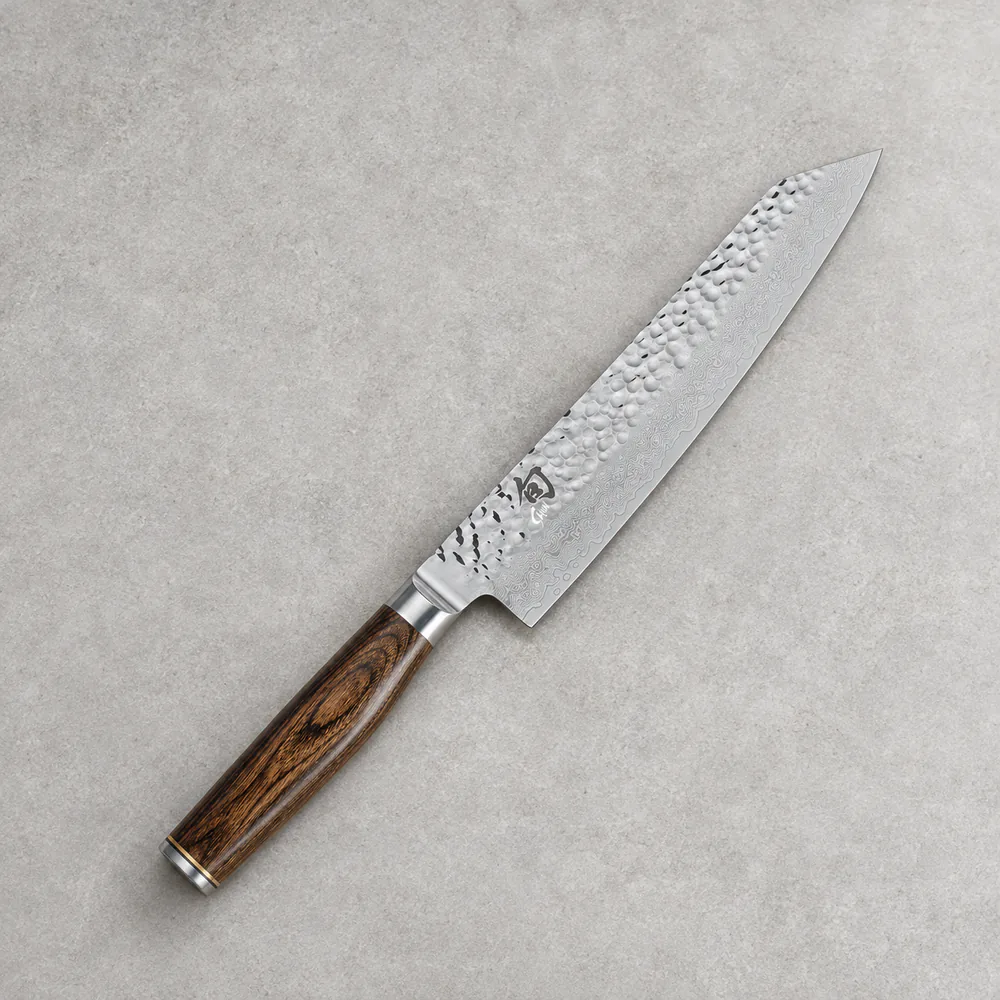
The Kiritsuke came very sharp, and the thin blade slid through onion, herbs, and potatoes with almost no effort. It is built for julienning, dicing vegetables, and portioning boneless meat, with a tsuchime finish and Pakkawood handle. The flat spine sweeps cleanly across the board, making chopped vegetables easy to scoop. Dense root vegetables feel a bit tight, and bone or frozen food is off limits. Balance is nearly spot on, light with enough heft in the handle for tougher cuts, and the contoured handle suits a long prep session. The tip is the weak point and can break off within weeks if mishandled, so tip work needs a light touch.
Pros
Flat edge makes full board contact
VG-MAX core, 68-layer Damascus, 16-degree edge
Good for vegetables and boneless portioning
Pakkawood handle matches the rest of the Premier line
Cons
Pointed tip needs care
Less versatile than a gyuto
Same thin edge as the Premier line, so chip risk on hard boards
Unlike the rocking gyuto, a flat nakiri-style edge slices in a single push, so this suits cooks who enjoy precise vegetable work. Skip it if you rock the blade a lot. It shares the steel and edge of our top pick, so the same habits apply: hand wash, dry at once, cut on wood or soft composite, and use the free Shun sharpening and honing service.
7. Best Petty Knife: Miyabi Birchwood SG2 5.5" Prep Knife
A petty knife of 120 to 150mm is the ideal second knife once a gyuto or santoku is in hand, and the 5.5-inch Birchwood is that knife in SG2. It gives you the same Karelian birch handle and flower Damascus look as the 8-inch, in a size that suits peeling, trimming, and delicate slicing.
Pros
SG2 steel, Cryodur ice-hardened to Rockwell 63
101-layer flower Damascus
Honbazuke edge, handcrafted in Seki
Small blade is ideal for fine work
Cons
Hard steel can chip on a hard board
A premium tier for a small knife
Sharpening needs good stones
Light and very sharp out of the box, it sliced peppers, onions, and tomatoes cleanly, and the blade was easy to steer, with more control than a larger knife gives. It also handled light boning around a chicken and its joints with little effort.
It suits cooks who already own a good gyuto and want a precise companion; skip it if you have only one knife budget, because the first purchase should be a chef's knife. Harder SG2 holds an edge for months but turns brittle, so keep this one away from bones and frozen food, and sharpen it on a fine stone.
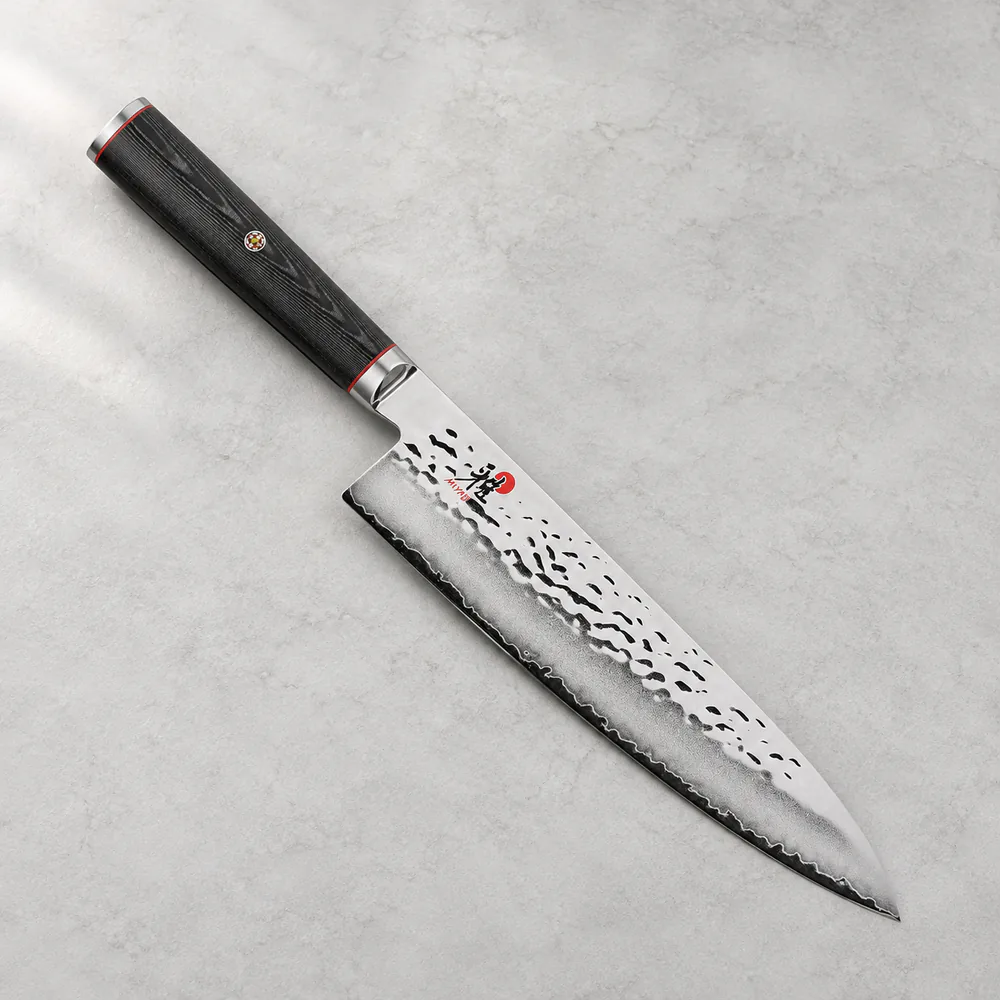
8. Best Splurge Pick: Miyabi Mizu SG2 9.5" Chef's Knife
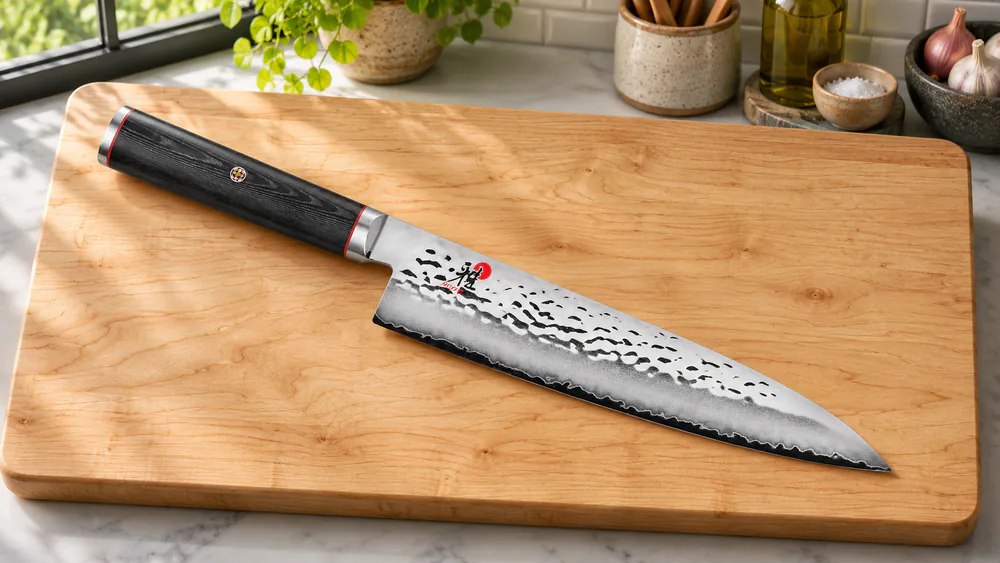
On the board the Mizu is razor sharp and cuts so cleanly it nearly falls through most foods, taking meat with minimal effort. Despite its length, it feels light, slim, fast, and well balanced. The matte Micarta handle is comfortably sized. The edge is very thin and can chip or lose its tip against bone or a hard board, and some units arrive with a bent tip or uneven grind, so check the blade when it arrives.
Pros
SG2 steel at 63 Rockwell
12-degree Honbazuke edge
Micarta handle and hammered Damascus finish
Limited Lifetime Warranty
Cons
Highest tier here
Long blade needs board space
Hard steel chips if knocked
It suits cooks who want a long blade and the hardest steel here; skip it if you have a small board or a tight budget, since the Birchwood 8-inch delivers a similar edge at a lower tier. The edge comes back easily on good stones, and we leave the honyaki tier to the buying guide below.
How to Choose a High End Japanese Knife
A premium Japanese knife is a set of trade-offs among hardness, toughness, weight, and upkeep. Know which trade-offs suit you before you shop.
Steel Types: VG-10, SG2, Blue and White Steel
VG-10 and VG-MAX are stainless steels that balance edge life and toughness. They sit around HRC 60 and forgive a beginner. SG2 is a powder steel, typically 62 to 64 HRC, that holds an edge for months but needs whetstone skill. Blue and white steel are very hard and hold an edge longer, but they chip if misused and rust if not dried.
Softer stainless steels around HRC 57 to 59 flex a little and shrug off board contact. That makes them the forgiving choice while you build technique.
Tip. Hardness is not the same as better. A harder blade holds an edge longer but is more brittle, so match the steel to your technique.
Construction: San-Mai, Damascus, Honyaki
San-mai wraps a hard core in softer cladding. Damascus layers add looks and some drag reduction. Honyaki blades are forged from one piece of high-carbon steel, not laminated, and can exceed 61 HRC. Water-quenched white #2 can reach 65 or more. They are the splurge tier, and they ask the most of you.
Handles: Wa vs Yo
Wa handles are lighter, often D-shaped or octagonal, and put the balance toward the blade. Yo handles are Western style, heavier, and often full-tang. Pick the one that feels like an extension of your hand. Our Birchwood picks use a wa-influenced D-shape, and the Shun Premier uses a contoured Pakkawood handle.
Price Tiers: What You Pay For
We think in tiers rather than numbers. The budget-within-high-end tier gets you VG10 and hammered Damascus. The mid-priced tier adds Cryodur ice-hardened VG10, such as the Miyabi Kaizen at Rockwell 60. The premium tier brings SG2 powder steel and hand honing. The splurge tier covers honyaki and master-forged blades. You pay for steel, hand finishing, and edge geometry, not for the logo.
A sharp knife is the cheapest upgrade in a kitchen, and a high end Japanese blade is the sharpest one you can buy.
Care and Sharpening
Hand wash, dry immediately, and cut on wood or soft composite boards. Avoid steel honing rods on hard Japanese steel, and use a ceramic rod or strop between stone sessions. Learn the whetstone: 600 to 8000 grit stones bring a dull edge back sharper than new. Store the knife in a saya or on a magnetic strip, and keep it away from bones and frozen food.
Note. Buy through a retailer with a return path, since counterfeit and knock-off Damascus knives exist. A real maker's name, a stated steel, and a warranty are good signs.
Are Expensive Japanese Knives Worth It?
For a cook who prepares food daily, yes. A premium Japanese blade cuts with less force, holds an edge longer, and rewards technique with clean results. Japanese blades need a gentler touch than German knives, so the cutting feels different, and you have to adapt to it.
They are not worth it for a cook who tosses knives into a dishwasher or hacks through bones. For that cook, a tougher Western knife is the smarter buy. If you are in between, start with the VG10 value pick or the Shun Premier, and learn to sharpen before you step up to SG2.
Frequently Asked Questions
What is the best high end Japanese knife brand?
Shun and Miyabi are the core names here, and both make excellent chef's knives. Our top pick is the Shun Premier 8" chef's knife, with the Miyabi Birchwood SG2 close behind for edge retention.
How much should I spend on a Japanese chef knife?
Pick the tier that fits your skill. The budget-within-high-end tier is a fine start for most home cooks, and premium SG2 knives pay off if you sharpen on stones and cook daily. Splurge honyaki blades are for experienced cooks.
Miyabi vs Shun: which is better?
Miyabi leans to harder SG2 steel, thinner blades, and wa-influenced handles. Shun leans to VG-MAX with a more forgiving feel and free sharpening service. We would pick Shun for comfort and Miyabi for edge life.
Do premium Japanese knives need special sharpening?
Yes. Harder steel takes a fine edge but needs good whetstones and patience. Use stones from 600 to 8000 grit, and avoid steel honing rods. Shun also offers a free sharpening and honing service.
Final Verdict
For most cooks, the Shun Premier 8" chef's knife is the one to buy. If you want longer edge life and do not mind learning stones, step up to the Miyabi Birchwood SG2 8". A petty knife and a santoku fill out a kit nicely, and the value Yoshihiro lets you try Japanese steel at the lowest tier. Spend on the knife you will use daily, learn ten minutes of sharpening, and buy a board that will not dull it.