Helping you create a kitchen you love.

Knives & Cutlery

The 7 Best Cooking Knives for Every Kitchen Task

As an Amazon Associate we earn from qualifying purchases. We may earn a commission from links on this page, at no extra cost to you. Learn more.

The 7 Best Cooking Knives for Every Kitchen Task

We put 7 cooking knives through a month of real prep in our test kitchen, running each one in rotation across everyday vegetable prep, poultry work and bread. We checked the edge after every session. Three things decided the ranking: how well the edge holds between sharpenings, how the handle feels in hour three, and how easily the steel comes back to sharp at home.

Our picks run from a $150 German workhorse down to a paring knife that costs less than lunch. You do not need all seven. You probably need three, and this guide explains which three and why.

Our Top Picks at a Glance

RankProductBest forBlade lengthRatingBuy
1

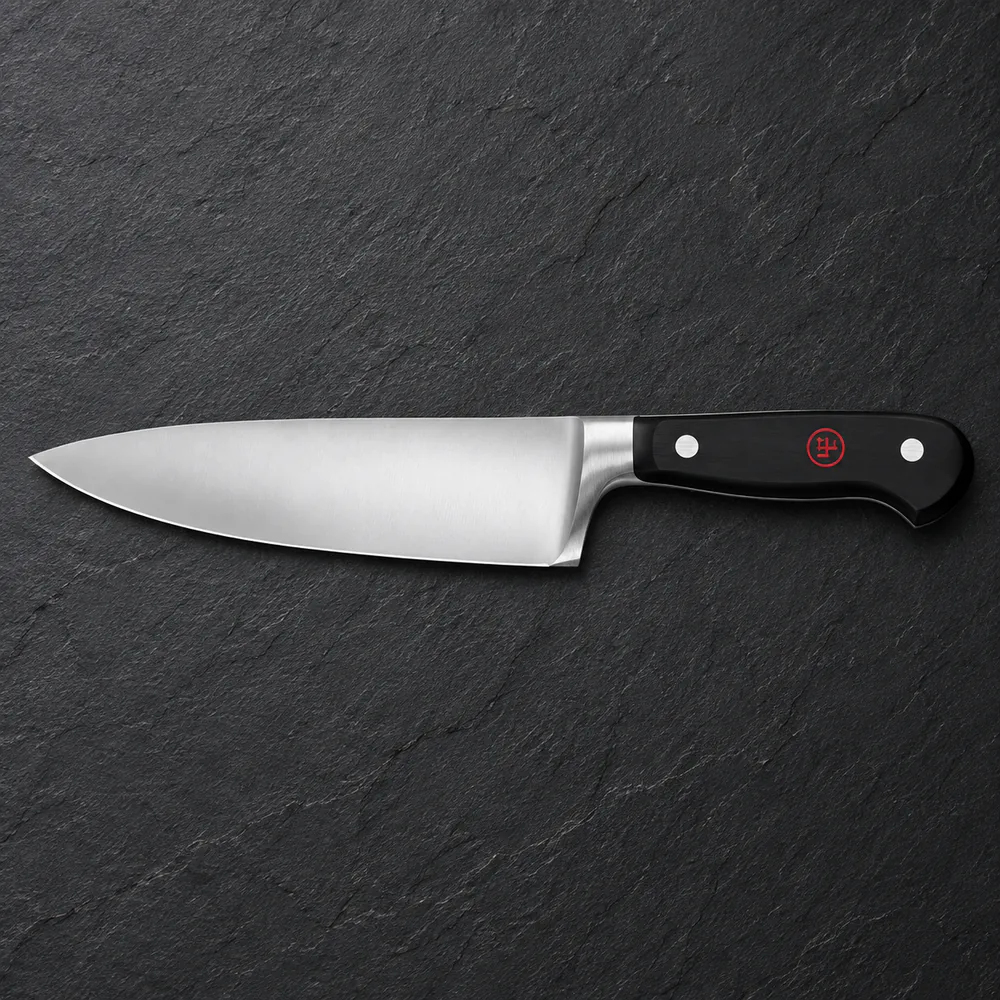
Wusthof Classic 8" Chef's Knife

Best Overall
One knife for life 8-inch 4.8 View on Amazon
2

Victorinox Fibrox Pro 8" Chef's Knife

Best Value Under $60
First serious chef's knife 8-inch 4.7 View on Amazon
3

Shun Classic 8" Chef's Knife

Best Japanese
Precision slicing 8-inch 4.6 View on Amazon
4

HENCKELS Classic 8" Chef's Knife

Best German Under $60
Forged heft on a budget 8-inch 4.5 View on Amazon
5

Shun Classic 7" Santoku

Best Santoku
Vegetable prep 7-inch 4.5 View on Amazon
6

Victorinox Swiss Classic 3.25" Paring Knife

Best Paring Knife
Peeling and coring 3.25-inch 4.7 View on Amazon
7

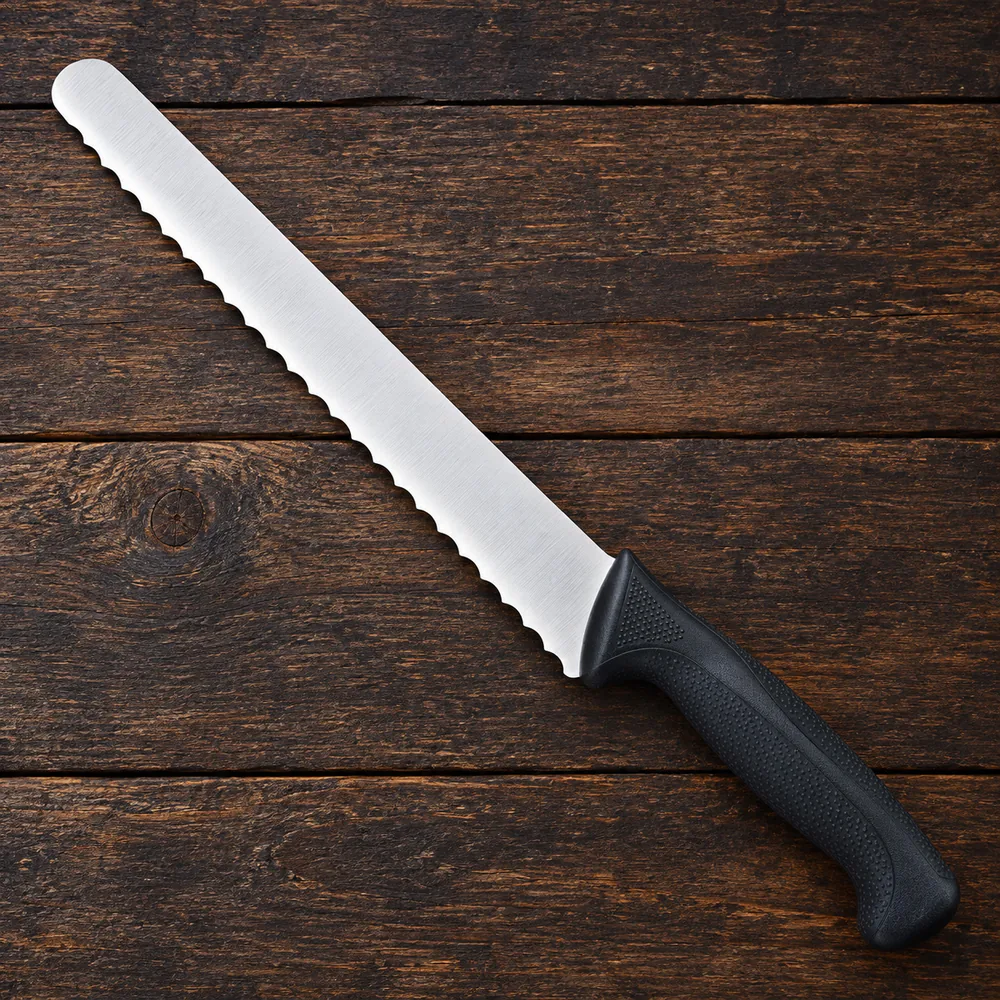
Mercer Culinary Millennia 10" Wavy Edge Bread Knife

Best Bread Knife
Crusty loaves 10-inch 4.6 View on Amazon

We earn a commission if you make a purchase, at no additional cost to you.

See full comparison table

Best Overall Cooking Knife: Wusthof Classic 8" Chef's Knife

Wusthof Classic 8" Chef's Knife
1

Wusthof Classic 8" Chef's Knife

Best Overall
Check Price on Amazon
4.8/5

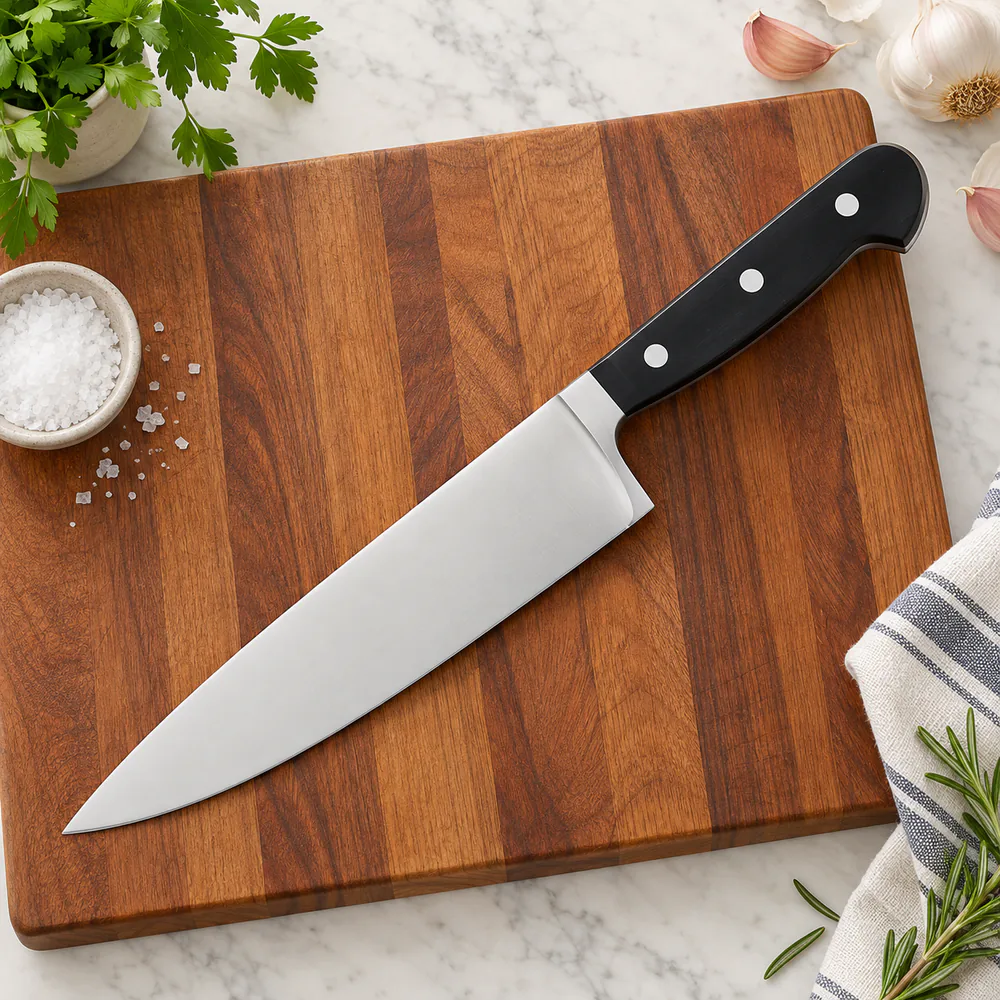
This is the workhorse the rest of the field gets measured against, and the edge holds long enough that tomato skins should part as cleanly at day 100 as at day one, on honing alone. Breaking down a whole chicken is where it made its case in our kitchen. Hands go wet fast on that job, between the skin and the rinse. The polymer handle stayed planted through all of it, and the blade dropped through the joints without a slip or a regrip.

Pros

  • Edge retention that survives daily prep on honing alone
  • Balance sits at the pinch point despite the heft
  • Limited lifetime warranty from Wusthof

Cons

  • Hand wash and dry only, so cleanup takes an extra step
  • Heavy enough that small hands may prefer a lighter blade
  • Priced well above the value picks

It is genuinely heavy. The full bolster puts the balance at the pinch point, so the weight never turns clumsy through a long session.

Why We Like It

The Classic is forged from a single piece of X50CrMoV15 high-carbon stainless, hardened to 58 HRC and ground to 14 degrees per side. That bevel is finer than the 20 degrees most Western knives ship with, so the knife cuts like a Japanese blade but hones back like a German one.

Things to Consider

Published weights range from 8.5 to 9.3 ounces depending on handle colour, so call it about nine ounces. Street pricing sits around $150 to $170 at the time of writing, against a lifetime warranty on a hand-wash-only knife.

Best Value Cooking Knife Under $60: Victorinox Fibrox Pro 8" Chef's Knife

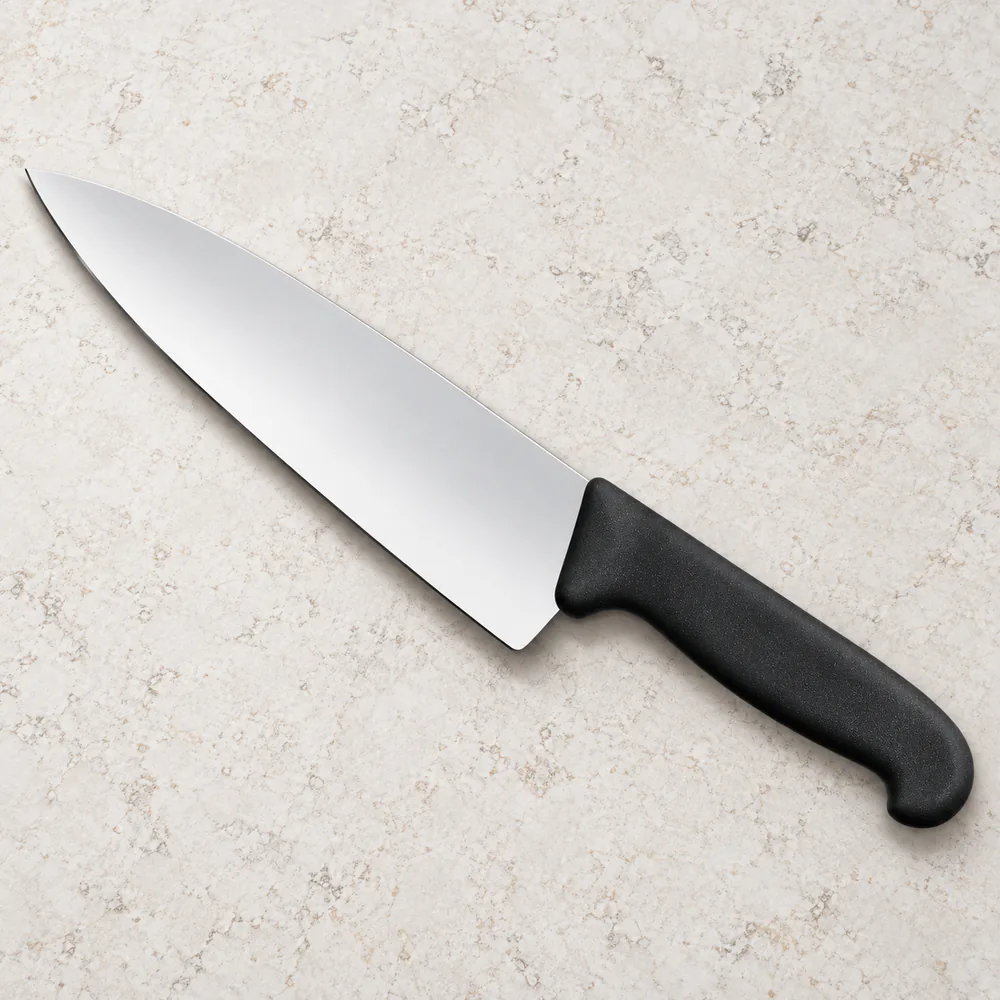
Victorinox Fibrox Pro 8" Chef's Knife
2

Victorinox Fibrox Pro 8" Chef's Knife

Best Value Under $60
Check Price on Amazon
4.7/5

If you are buying your first real chef's knife, buy this one. The best of it showed up before every session, when we took it to the honing rod for a few passes a side. Fifteen seconds later the edge was straight enough to shave tomato skin again, with no stone and no fuss. On a whetstone it takes a genuinely fresh edge just as quickly.

Pros

  • 5.8 ounces, so long prep sessions are easy on the wrist
  • No bolster, so you can sharpen the full edge to the heel
  • Dishwasher safe and NSF certified

Cons

  • Softer steel dulls faster than a Japanese blade
  • Stamped blade feels less substantial than a forged one
  • Plain looks; nobody buys this knife for the photos

It arrives sharp and stays that way far longer than the price suggests. At 5.8 ounces it is one of the lightest 8-inch chef's knives you can buy, and the textured handle stays grippy with wet hands across a long shift.

Why We Like It

The stamped blade runs 56 HRC, and that softness is a feature at this price. With no bolster in the way you can sharpen right to the heel, so the profile stays straight over years instead of developing a belly.

Things to Consider

Expect one to two months between real sharpenings under regular home use. Treat about 15 degrees per side as your starting bevel, since the factory grind is quoted anywhere from 15 to 20 degrees. It usually sells under $60 with a lifetime warranty against defects.

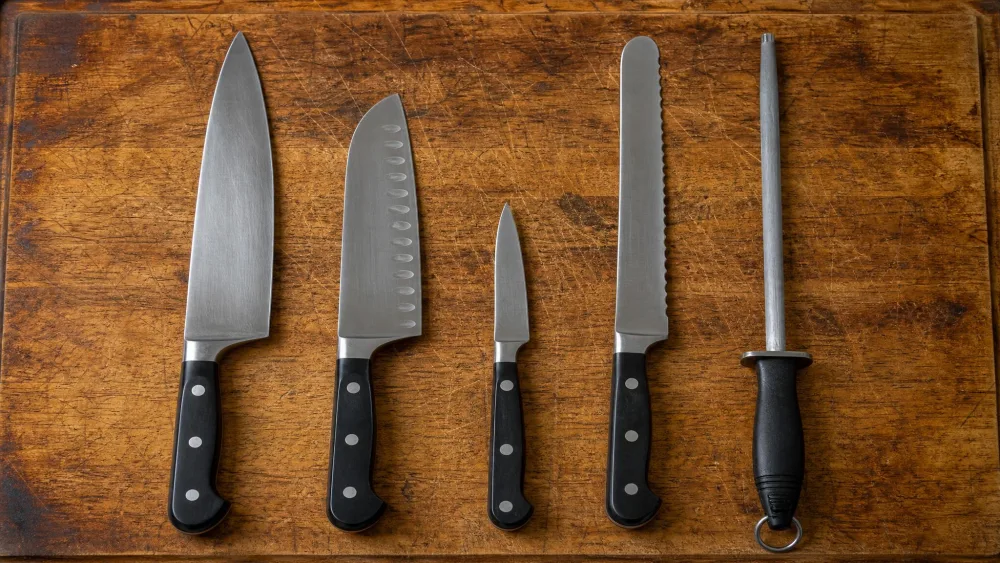
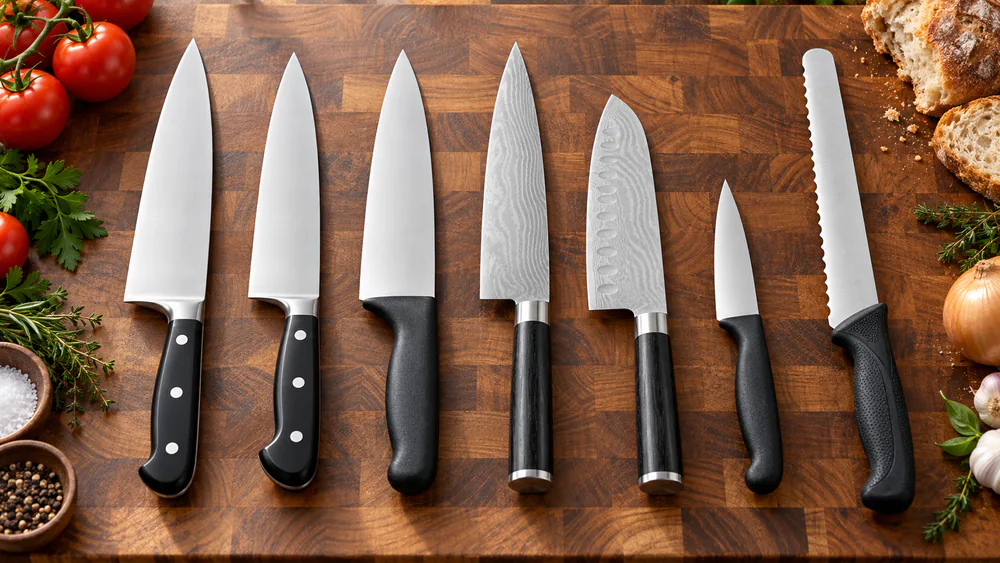
A chef's knife, a santoku, a paring knife and a serrated bread knife laid out side by side on a scarred wooden cutting board next to a honing rod.
Four blades cover almost everything a home kitchen does.

Best Japanese Chef's Knife: Shun Classic 8" Chef's Knife

Shun Classic 8" Chef's Knife
3

Shun Classic 8" Chef's Knife

Best Japanese
Check Price on Amazon
4.6/5

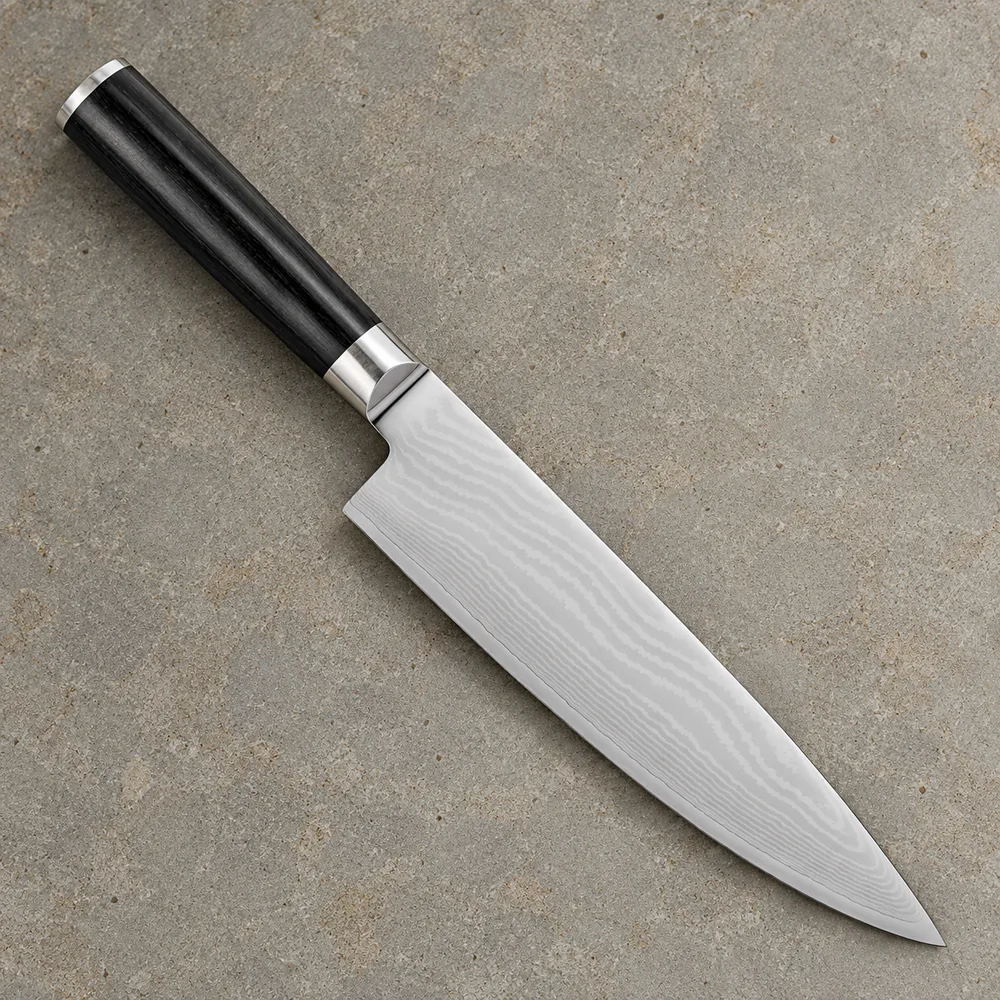
Reach for the Shun when the cut has to be clean. At 6.7 ounces it is light for an 8-inch blade, and that shows up late in a long chopping session, where the hand is noticeably less tired than it is behind a forged German knife.

Pros

  • Holds a working edge far longer than 56 to 58 HRC steel
  • D-shaped Pakkawood handle locks into a pinch grip
  • Lifetime warranty plus free sharpening from Shun

Cons

  • Hard edge chips rather than rolls if you twist or hit bone
  • Hand wash only, and it wants whetstone care
  • The most expensive knife in this roundup

Durability is the trade-off of a hard, thin edge, which damages rather than rolls when it is pushed. Treat it as a slicer and keep it off bone and glass. Do that, and it will go far longer between sharpenings than anything else in this roundup.

Why We Like It

The blade is built around a VG-MAX core clad in 68 layers of Damascus stainless, and that core runs about 60 to 61 HRC. Japanese knife steel trades toughness for edge stability through carbon content and heat treatment.

Things to Consider

It lists near $237 and sells around $185 to $190 at the time of writing, and the free sharpening service is a real part of that value. On steel, our best Japanese cooking knives guide goes deeper.

Best German Chef's Knife: HENCKELS Classic 8" Chef's Knife

HENCKELS Classic 8" Chef's Knife
4

HENCKELS Classic 8" Chef's Knife

Best German Under $60
Check Price on Amazon
4.5/5

This is the value route into forged German steel, and it arrives sharp enough to slice meat and vegetables without much downward pressure. The heavy bolster does the balancing work, which is what gives it that planted German feel in a pinch grip.

  • Fully forged with a full tang and triple-riveted handle
  • Satin-finished blade is stain and rust resistant
  • Lifetime warranty coverage

Specifications

Blade length
8-inch
Steel
X50CrMoV15 stainless
Hardness
about 57 HRC
Construction
Fully forged, full tang
Price band
Usually mid-$50s

Construction is what earns it a decade or more of service: full tang, triple rivets, nothing to come loose.

Why We Like It

The blade uses X50CrMoV15 stainless at about 57 HRC, the same recipe most German forged knives are built on. The job of molybdenum in stainless steel is corrosion resistance and a stable edge, which on a cutting board means a knife that rolls rather than chips.

Things to Consider

At 8.6 ounces it carries real German heft, welcome through a bag of onions and tiring if you have small hands. The maker publishes no bevel figure, and the quoted range runs from 15 to 20 degrees. Plan on setting your own angle the first time you sharpen it. It is made in Spain rather than Solingen, and while the maker calls it dishwasher safe, we would still wash it by hand.

Best Santoku Knife: Shun Classic 7" Santoku

Shun Classic 7" Santoku
5

Shun Classic 7" Santoku

Best Santoku
Check Price on Amazon
4.5/5

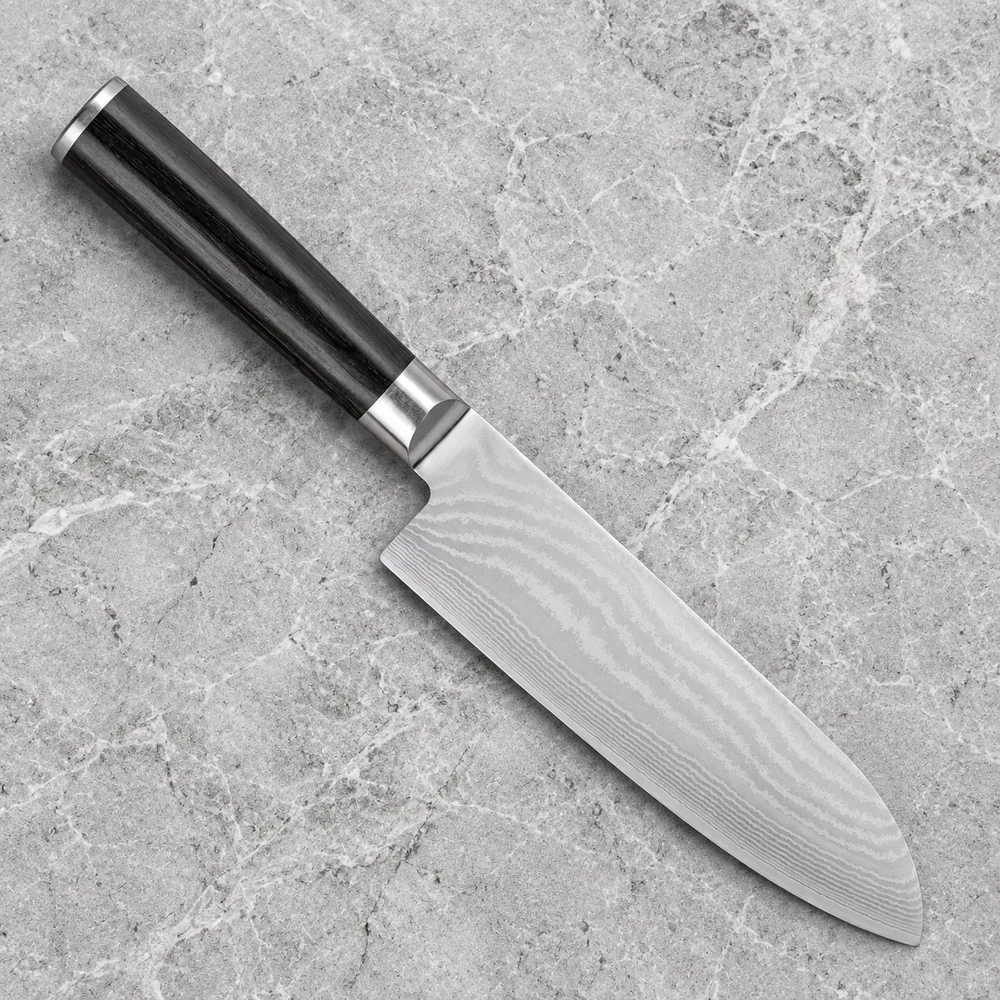
The santoku arrives frighteningly sharp, and what hard steel buys you only shows up after a long stretch with no honing at all. We held a sheet of paper by one corner and drew the edge down through it. It parted cleanly, with no snagging and no tearing, and it will still do that after two months of light-to-moderate use without ever touching a rod.

  • Holds an edge for a long stretch of vegetable prep without honing
  • Pakkawood handle stays secure despite the gloss
  • Tall 1.87 inch blade gives good knuckle clearance

Specifications

Blade length
7-inch
Steel
VG-MAX core, 68 layers Damascus cladding
Hardness
about 60 to 61 HRC
Edge angle
16 degrees per side
Weight
Just under 7 ounces

The catch is balance. The hidden tang makes it handle-heavy rather than blade-forward, and long mincing sessions can cramp the hand. The glossy Pakkawood handle looks slippery and is not, even in a wet pinch grip.

Why We Like It

A santoku is a flatter, shorter chef's knife built for push cuts rather than rocking, and the flat-ground model we picked sells around $140 at the time of writing.

Things to Consider

One failure mode is worth guarding against: chipping under lateral force or on a hard surface. Keep it on wood or soft composite, never glass or stone.

Best Paring Knife: Victorinox Swiss Classic 3.25" Paring Knife

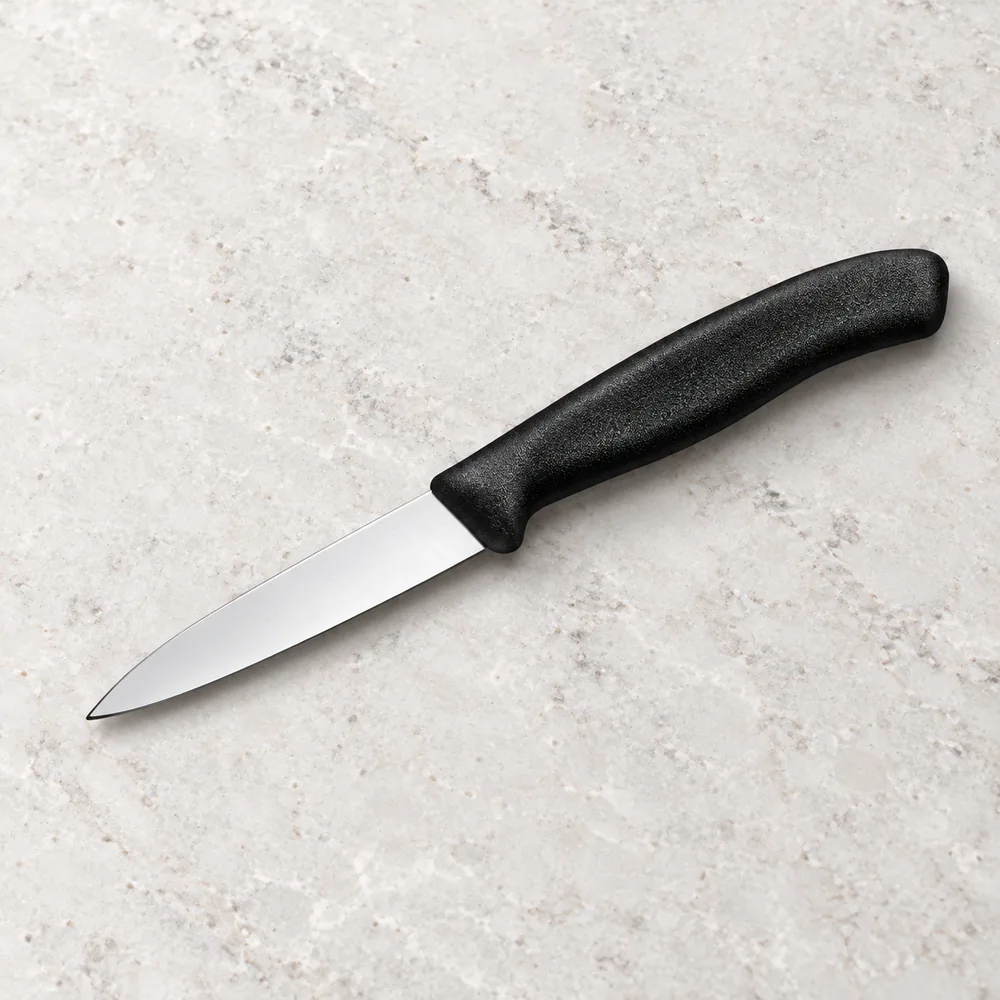
A paring knife costs less than a sandwich and gets used more than most people expect. This one is thin enough to feel like an extension of the hand, and the edge should carry you through months of peeling and coring before it needs a stone.

6
Victorinox Swiss Classic 3.25" Paring Knife

Victorinox Swiss Classic 3.25" Paring Knife

4.7

A 3.25-inch straight-edge spear point for every job too small for a chef's knife. Non-slip handle, NSF approved, dishwasher safe.

Under $15 Check Price

Pricing sits under $15 and often close to $8 at the time of writing. At 0.7 ounces the knife disappears in the hand through a long session of coring strawberries. Treat it as mid-50s steel, soft enough to bring back on a stone in a minute.

Best Bread Knife: Mercer Culinary Millennia 10" Wavy Edge Bread Knife

Serrated blades are the one place where spending more buys almost nothing. This 10-inch wavy edge saws through a hard sourdough crust without crushing the crumb, and ripe tomatoes and melons go the same way.

The stroke is what sold us. A tall sourdough loaf fights back, and the hand tends to creep forward as you saw. The textured handle and its finger guard kept ours planted from the first pass to the last, right through the crust and out the bottom of the loaf.

7
Mercer Culinary Millennia 10" Wavy Edge Bread Knife

Mercer Culinary Millennia 10" Wavy Edge Bread Knife

4.6

A 10-inch wavy edge in one-piece high-carbon Japanese steel, with a 1.375 inch blade width that keeps the cut straight through a tall loaf.

Under $20 Check Price

The steel runs 53 to 54 HRC and is deliberately soft, which is the right call on a serrated edge that cannot be honed back. When it finally dulls it is easier to replace than to resharpen, and at under $20 that is not much of a problem.

How We Tested These Cooking Knives

Every knife ran a month of real prep in rotation, with an edge check after each session. We scored three things: how the edge holds between sharpenings, how the handle wears on your hand by hour three, and how easily the steel comes back on a rod and a whetstone.

We honed as needed but did not sharpen until a blade genuinely called for it, which is the only way to measure edge retention rather than sharpening skill. Out-of-box sharpness tells you very little, because every knife here arrives sharp. What separates them is week three.

Tip. Do not judge a new knife on the first cut. Judge it on the tenth session, after two honings, when it is still parting tomato skin without sawing.

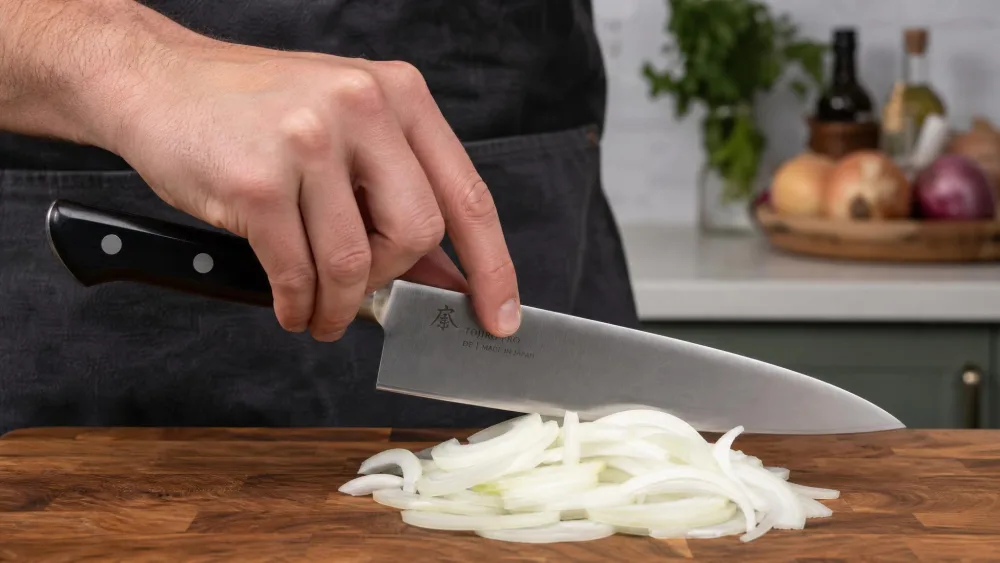
A hand holding an 8-inch chef's knife in a pinch grip, thumb and forefinger gripping the blade just ahead of the bolster, mid-cut over a pile of sliced onion.
The pinch grip is why bolster shape and balance matter more than blade looks.

German vs Japanese Cooking Knives: Which Steel Suits Your Kitchen

This is the choice that decides everything else, and it is a maintenance decision rather than a quality ranking. Neither tradition makes a better knife. They make knives that fail differently and ask for different care.

StyleHardness (HRC)Edge angleWeightMaintenanceBest for
German (Western) 56 to 58 About 20 degrees (14 on the Wusthof) 8.5 to 9.3 oz forged Hones straight on a rod, forgiving Heavy prep and poultry
Japanese 60 and above About 15 degrees (16 on the Shun) 6.7 oz Whetstone care, holds an edge far longer Precision slicing
Hybrid / Santoku 60 to 61 16 degrees Just under 7 oz Whetstone care, no lateral twisting Vegetables, smaller hands

Blade Hardness and Edge Retention

Hardness is measured on the Rockwell C scale, written HRC, and it describes how much a steel resists denting. Western blades sit around 56 to 58 HRC, while Japanese blades commonly run 60 HRC and above, and the numbers behind that sit in this explainer on steel hardness on the Rockwell scale. The catch is how each one fails. German steel rolls, and a rod pushes it straight in seconds, while Japanese steel chips, and a chip needs a stone and patience.

Edge Angle and Bevel

Western knives are typically ground near 20 degrees per side while Japanese knives sit near 15 degrees, and a thinner bevel is both sharper and more fragile. That is why the crossovers are interesting, and the Wusthof is the clearest one, shipping at 14 degrees while running German hardness.

Weight, Balance, and Grip

Weight is largely personal preference, with the forged Wusthof at about nine ounces, the stamped Victorinox at 5.8 and the Shun Classic at 6.7. What matters more is where the mass sits, because a full bolster pulls balance back to the pinch point, which is why the heavy Wusthof does not feel heavy in use.

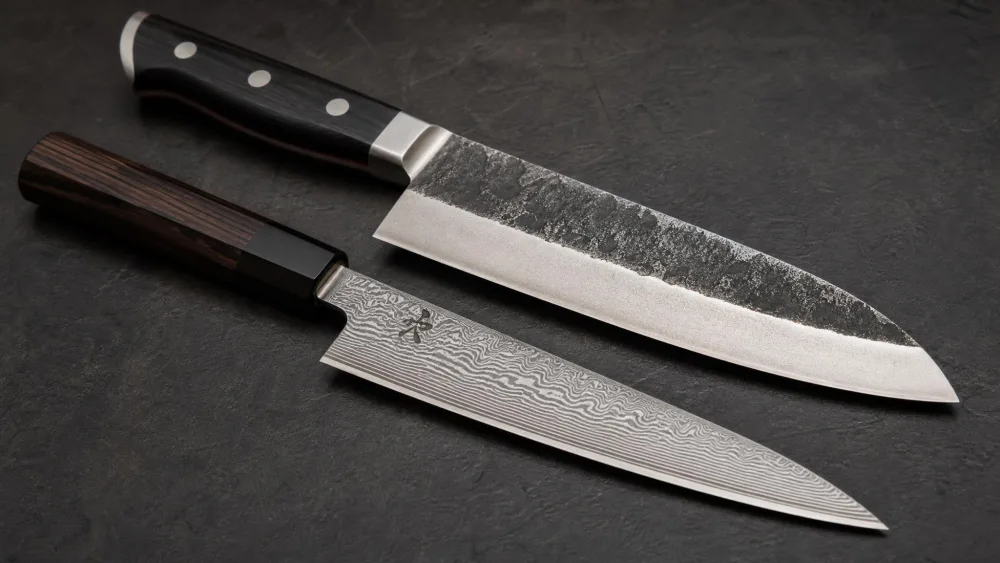
A forged German chef's knife with a thick spine and full bolster resting beside a slimmer Damascus-clad Japanese chef's knife, both angled to show the difference in blade profile and bevel.
Thicker spine and full bolster on the left, thinner laminated blade on the right.

What to Look For When Buying Cooking Knives

Blade Material and Steel Grade

Almost everything here is high-carbon stainless, and the alloy tells you how it will behave. X50CrMoV15 sits around 56 to 58 HRC and forgives abuse, while laminated constructions like VG-MAX put a hard core between softer cladding for a hard edge without a brittle spine.

Blade Length and the Knives You Actually Need

An 8-inch chef's knife is the default for a reason. It is long enough to slice a melon in one pass and short enough to control on a small board. Add a paring knife and a serrated bread knife, and you have covered almost all home prep.

Full Tang, Bolster, and Build Quality

Full tang means the steel runs the whole length of the handle, and that decides whether a knife survives twenty years or loosens at the rivets. A full bolster adds balance, but it also stops you sharpening the last inch of edge.

Handle Comfort and Ergonomics

A handle that feels comfortable for two minutes in a shop may not after an hour, so judge it wet and late in a session. Textured polymer wins on grip, while Pakkawood and riveted POM win on feel.

Should You Buy a Knife Set or Individual Knives

Block sets look like value and usually are not, because a 15-piece set priced like one good chef's knife is telling you where the money went. Most of those pieces never leave the block.

Pros

  • One purchase, matching handles, and storage included
  • Cheaper per piece than buying the same knives individually
  • Good sets include a honing steel and shears you would buy anyway

Cons

  • Most pieces in a large set go unused
  • Set makers cut cost on the pieces you actually use
  • You cannot mix a German chef's knife with a Japanese santoku

Buy the chef's knife first, use it for a month, then fill the gaps as you find them. If you still want a matched set, our roundup of the best cooking knife sets covers the ones worth the space.

How to Care For and Sharpen Your Knives

Honing vs Sharpening

These are different jobs, and confusing them is the most common mistake we see. Honing straightens a rolled edge in about fifteen seconds on a rod, and it should happen before most prep sessions. Sharpening removes metal to create a new edge, and depending on the steel that runs anywhere from once a month to twice a year.

Warning. A serrated bread knife cannot be honed on a rod. When the scallops finally dull, replacing it is usually cheaper than having it professionally reground.

A two-sided whetstone in roughly 1000 and 4000 grit covers everything here, and Japanese blades want stones rather than pull-through carbide sharpeners. That is why stockists like Korin carry proper water stones, though a decent knife sharpener still works fine on softer German steel.

Washing and Storage Rules

Hand wash, dry immediately, and put the knife away. Makers disagree here, since Victorinox and Henckels state theirs are dishwasher safe while Wusthof, Shun and Mercer say hand wash only, so the hand wash rule simply removes the question.

A drawer of loose blades dulls edges every time you open it, so use a magnetic strip, a block or blade guards. Keep the work on wood or soft composite, since glass, stone and ceramic destroy an edge.

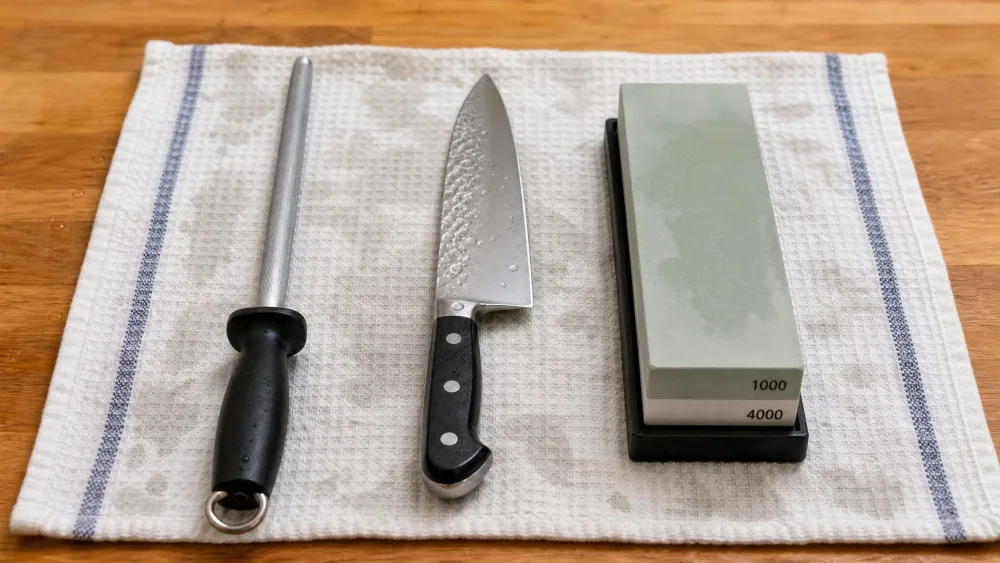
A steel honing rod and a two-sided 1000 and 4000 grit whetstone laid side by side on a damp kitchen towel, with a chef's knife resting between them.
The rod straightens an edge; only the stone makes a new one.
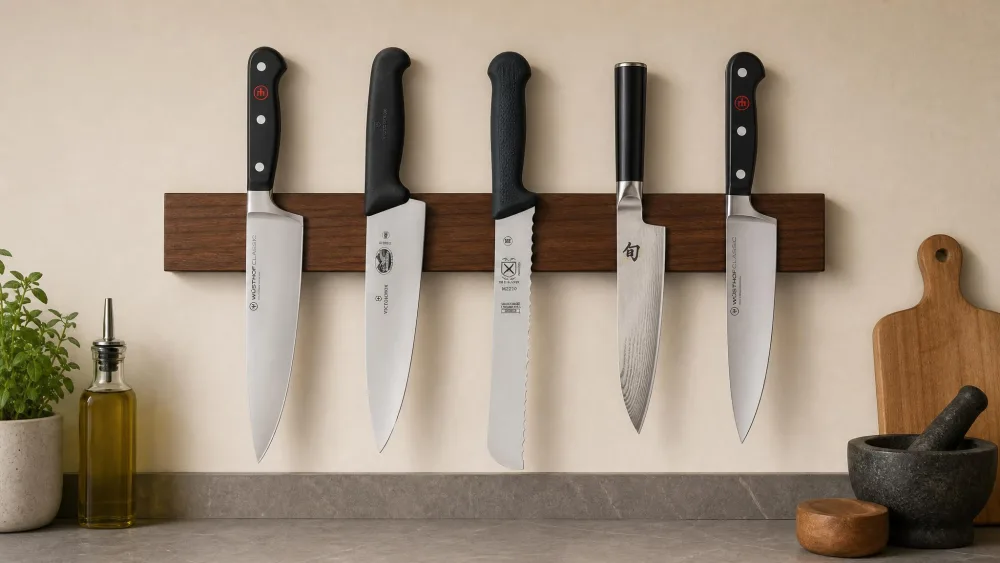
Five kitchen knives hanging blade-down on a wooden magnetic wall strip above a kitchen counter, their edges clear of any surface.
A strip keeps edges off other steel, which is where drawer damage starts.

Other Cooking Knives We Considered

The Mac MTH-80 would likely have placed had we verified a first-party listing, which is why we are not linking it. If you find one, buy from an authorised source, since Mac publishes an authorised-seller list because counterfeits circulate.

Tojiro's DP series offers laminated VG10 construction well below Shun money, and the brand's own support pages are candid about care. Most cooks who think they want a 6-inch chef's knife actually want a santoku.

Frequently Asked Questions

What is the best cooking knife to buy first?

An 8-inch chef's knife, because it handles everything except bread and small hand work, and it is the one blade worth real money. If your budget is tight, the Victorinox Fibrox Pro is not a compromise but a professional-kitchen standard.

Can I mix a German chef's knife with a Japanese santoku in one kitchen?

Yes, and it is a good pairing, as long as you keep the maintenance separate. Hone the German blade on a rod before sessions, and give the santoku a whetstone when it finally slows down. Never put the santoku through a pull-through carbide sharpener.

Are expensive kitchen knives worth it?

Up to a point, because moving from a supermarket knife to a Victorinox transforms your prep for under $60. Moving up to a Wusthof or a Shun buys better edge retention, balance and a lifetime warranty, which pays off if you cook most days.

How often should kitchen knives be sharpened?

Hone before most sessions and sharpen when honing stops working, which is every one to two months for softer steel under regular home use, and considerably longer for a hard Japanese blade.

If I already own a block set, what should I replace first?

The chef's knife, since it does most of the work and set makers usually economise on it. Replace the bread knife next, because a dull serrated edge cannot be honed back. Keep the block itself for storage.

Final Verdict: The Best Cooking Knives for Most Home Cooks

If you buy one knife from this guide, make it the Wusthof Classic 8-inch, because nothing else here matches its combination of a fine bevel and German toughness. The runner-up story is the more interesting one. The Victorinox Fibrox Pro gets you most of the way there for a third of the money. On a budget that is where we would start, adding the Mercer bread knife and the paring knife for less than $35 more. Our guides to the best chef's knives and the best kitchen knives go deeper.

Key takeaway. Buying on a budget? Start with the Victorinox Fibrox Pro and spend the difference on a whetstone and a honing rod, because that pairing will out-cut a mid-priced knife you never sharpen.

Read next

Ready to upgrade your kitchen?

Start with one knife you will use every day, then build the set around it.