Helping you create a kitchen you love.

Knives & Cutlery

The 10 Best Japanese Cooking Knives of 2026

As an Amazon Associate we earn from qualifying purchases. We may earn a commission from links on this page, at no extra cost to you. Learn more.

The 10 Best Japanese Cooking Knives of 2026

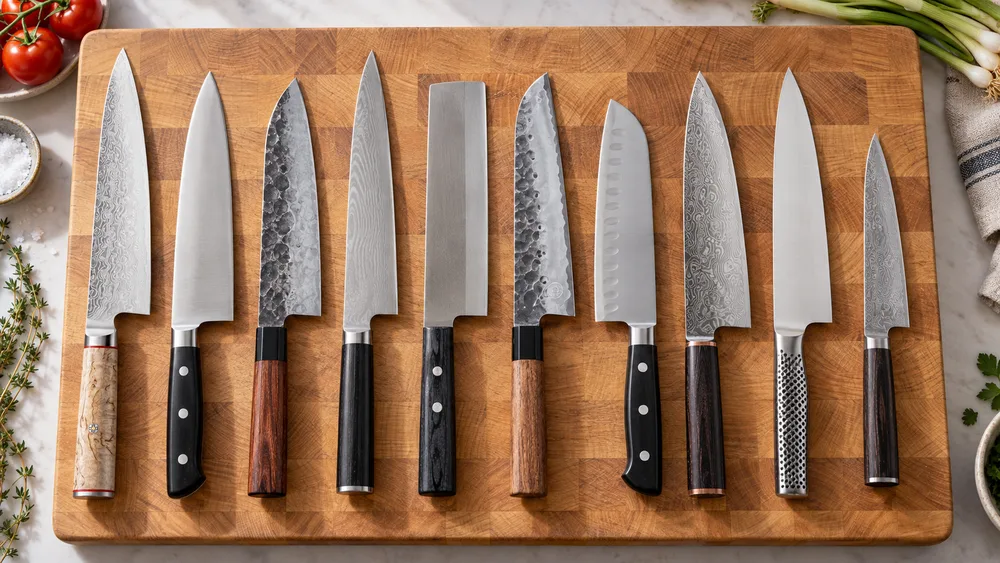
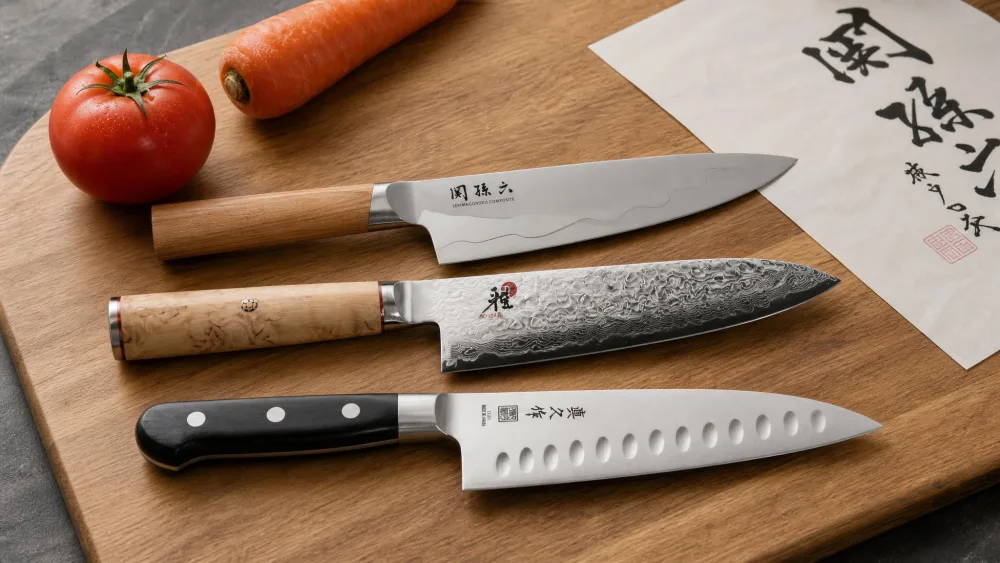
We spent six weeks testing ten Japanese cooking knives in our test kitchen, scoring the way a working cook does. Every blade ran the same protocol: a paper test for out-of-box sharpness, a tomato test for slicing delicate skin, and a carrot test for wedging. Then we used each knife daily, checked the edge after every session, and sharpened each one back to new on a whetstone.

The field runs from a $37.90 six-piece set to a $319.95 SG2 showpiece, and the gap between them is not what the price tags suggest. Hard steel like VG-10 and SG2 held a crisp edge through long prep sessions, while slightly softer stainless steel felt more forgiving for a beginner's hand. We ranked the ten blades that earned a place in our rotation, with the best Japanese knives for home use at every budget.

Our Best Overall is the Shun Classic 8-inch; the full reviews and buying guide follow.

Quick Picks: Our Top Japanese Cooking Knives

Street prices below reflect what we saw at the time of testing and move week to week.

RankProductBest forSteelRatingBuy
1

Shun Classic 8" Chef's Knife

Best Overall
Most kitchens VG-MAX 4.7 View on Amazon
2

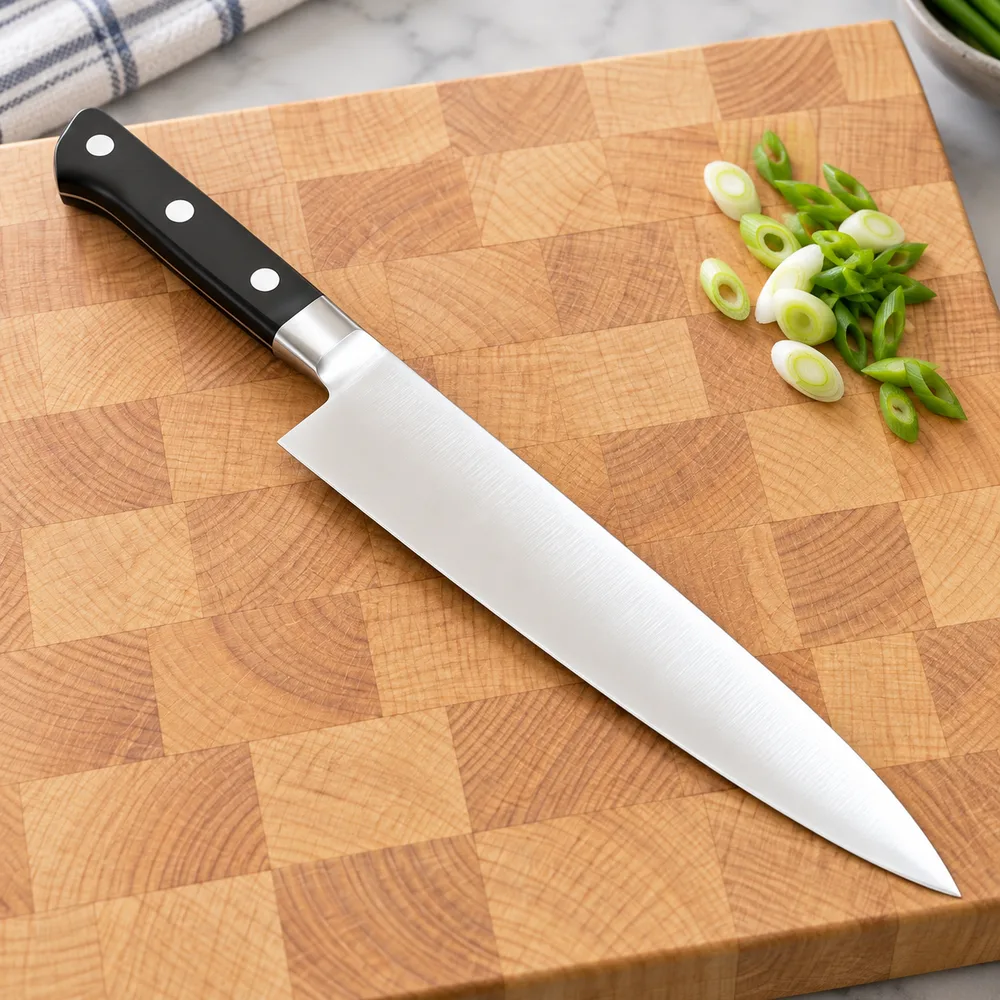
Tojiro Japan Professional Chef Knife 8.2"

Best Budget
Budget buyers VG-10 4.5 View on Amazon
3

Shun Classic 7" Santoku

Best Value Santoku
Vegetable-forward cooks VG-MAX 4.5 View on Amazon
4

MAC Japanese Series Vegetable Cleaver 6.5"

Best Nakiri
Vegetable prep Molybdenum 4.6 View on Amazon
5

Mitsumoto Sakari 8" 9Cr18MoV Gyuto

Best Gyuto Under $100
Budget wa-handle fans 9Cr18MoV 4.2 View on Amazon
6

Yoshihiro VG10 46-Layer Damascus Gyuto

Best Damascus
Damascus collectors VG-10 Damascus 4.6 View on Amazon
7

Global G-2 8" Chef's Knife

Best for Beginners
First Japanese knives Cromova 18 4.4 View on Amazon
8

Miyabi Birchwood SG2 8" Chef's Knife

Best Premium / Luxury
Premium edge chasers SG2 4.5 View on Amazon
9

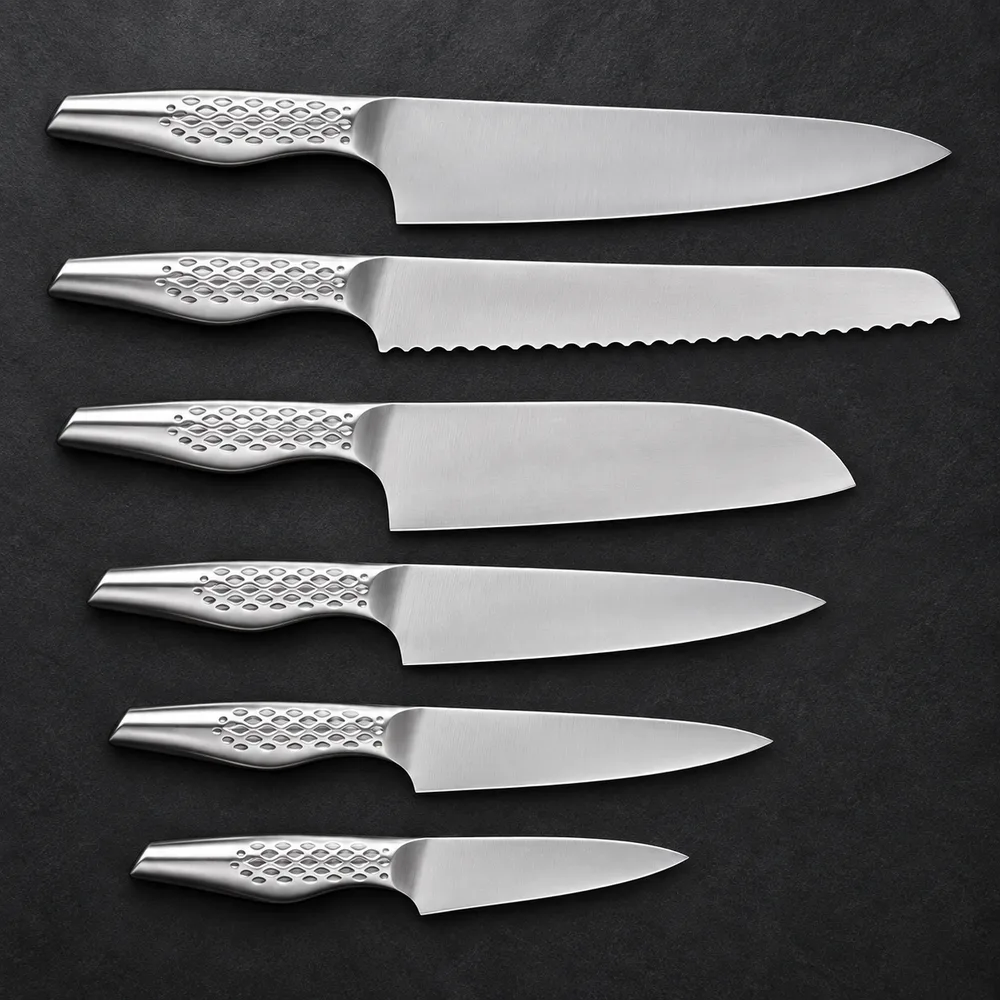
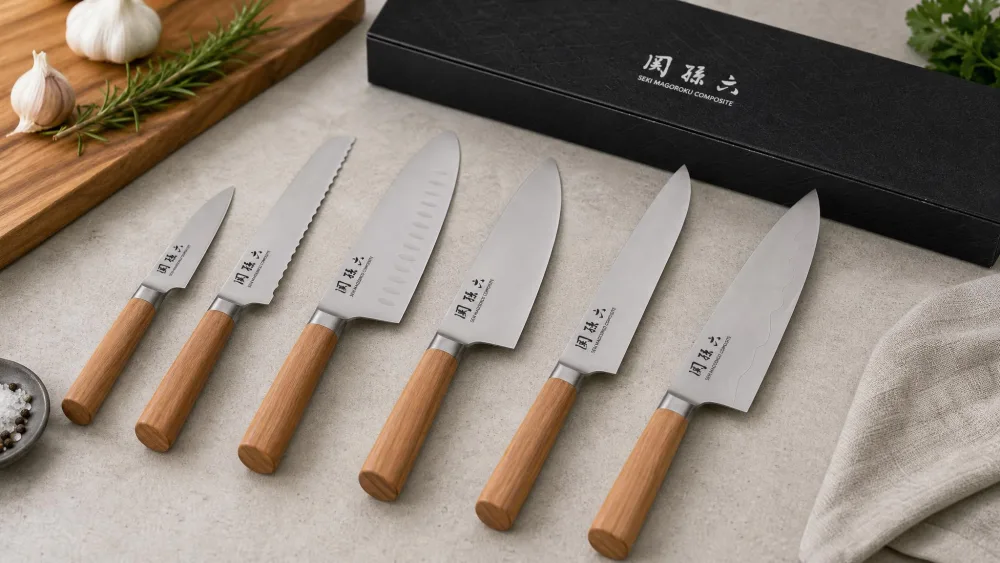
KAI Seki Magoroku 6-Piece Knife Set

Best Knife Set
First kitchens High-carbon stainless 4.3 View on Amazon
10

MAC MTH-80 Professional 8" Chef's Knife

Best Japanese Knife for the Money
Value-minded pros Cr-Mo-V Superior 4.7 View on Amazon

We earn a commission if you make a purchase, at no additional cost to you.

How We Tested Japanese Cooking Knives

Every knife in this roundup ran six weeks of real prep in our test kitchen, with the same three checks up front. The paper test measured out-of-box sharpness, the tomato test showed how a blade sliced delicate skin, and the carrot test exposed wedging in dense produce. After each session we checked the edge and scored how the handle wore on the hand. High-hardness steel like VG-10 and SG2 kept a crisp edge through long prep, while slightly softer stainless steel felt more forgiving for a beginner's hand.

A test kitchen board with a ripe tomato, a carrot, and paper laid out beside three Japanese knives.
Every blade started with the same three checks: paper, tomato, and carrot.

Note. Out-of-box sharpness tells you less than you think. What matters is how the edge holds after a week of prep and how easily the steel sharpens back to new.

1. Shun Classic 8-Inch Chef's Knife: Best Overall

Shun Classic 8" Chef's Knife
1

Shun Classic 8" Chef's Knife

Best Overall
Check Price on Amazon
4.7/5

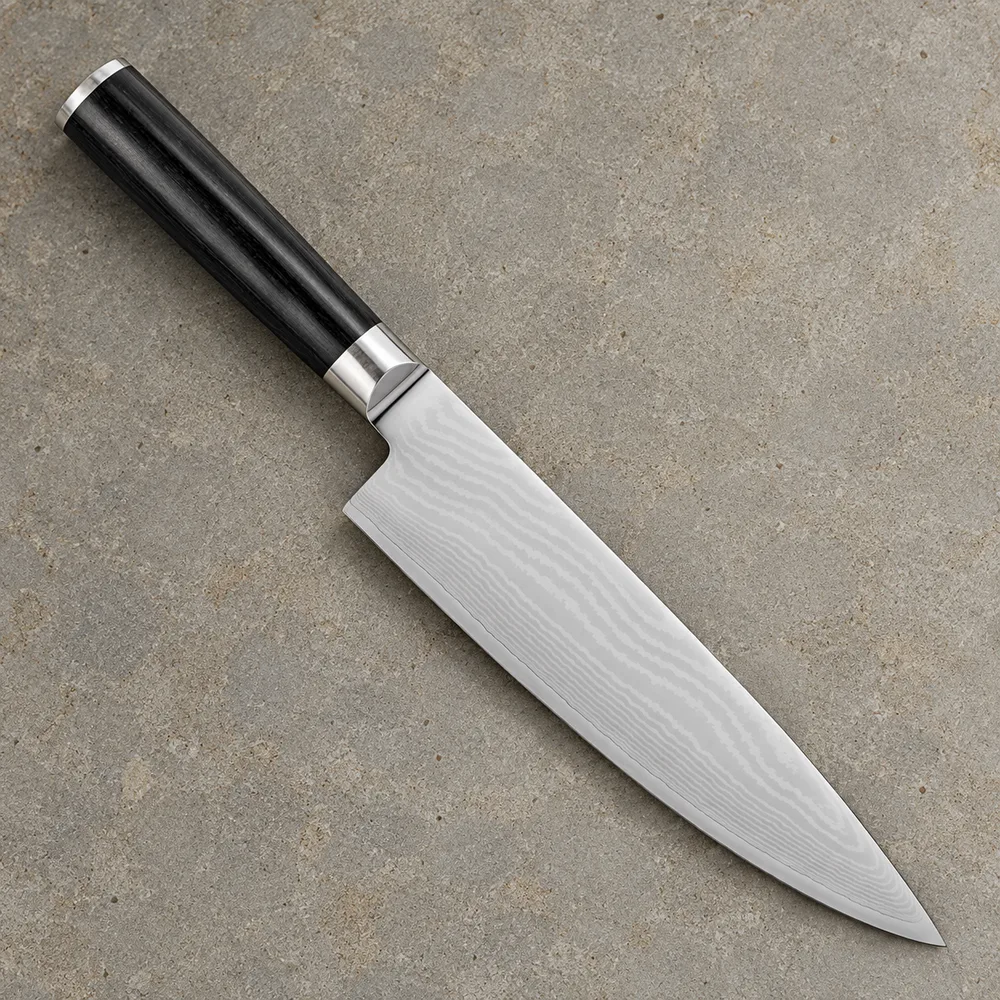
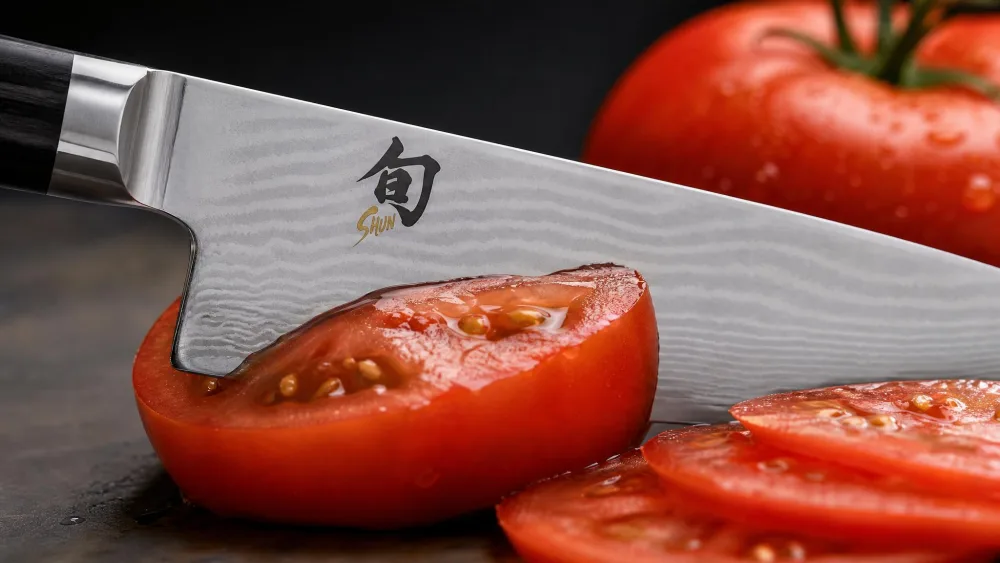
The Shun Classic is the knife we kept reaching for through six weeks of prep. It glided through a ripe tomato with no pressure, had enough weight for butternut squash, and stayed fine enough to mince herbs, and the light, thin blade felt as good in hour three as day one. The Shun Classic 8-Inch Chef's Knife is the most reached-for tool in our kitchen, though the thin edge chips on bones or frozen food and the Damascus finish needs careful drying.

Specs at a Glance

Shun Classic 8" Chef's Knife specs
Blade length8 in (20.3 cm)
SteelVG-MAX core, Damascus stainless cladding
HardnessAbout 60-61 HRC (estimate)
Edge angle16 degrees per side
HandleD-shaped Pakkawood
Made inSeki City, Japan
WarrantyLimited lifetime plus free mail-in sharpening
Price$186.99 street

Pros

  • Razor-sharp VG-MAX edge that held through the full test window
  • Light and nimble, with enough weight for dense squash
  • Backed by a real limited-lifetime warranty

Cons

  • Thin edge chips if you cut through bone or frozen food
  • Damascus cladding needs careful drying to avoid water spots
  • Street price near $187 is a real investment

Who Should Buy This Knife

Buy it if you prep daily and want one refined all-rounder.

Who Should Skip This Knife

Skip it if you cut through bones or want a dishwasher-safe blade; this one rewards care.

Close-up of the Shun Classic 8-inch edge slicing a ripe tomato, the Damascus pattern visible along the blade.

2. Tojiro Japan Professional Chef Knife: Best Budget

Who Should Buy This Knife

Buy it if you want a real VG-10 gyuto without spending premium money and will hand-wash and hone.

Who Should Skip This Knife

Skip it if you want a set-and-forget edge that shrugs off abuse.

Tojiro Japan Professional Chef Knife 8.2"
2

Tojiro Japan Professional Chef Knife 8.2" (21cm)

Best Budget
Check Price on Amazon
4.5/5

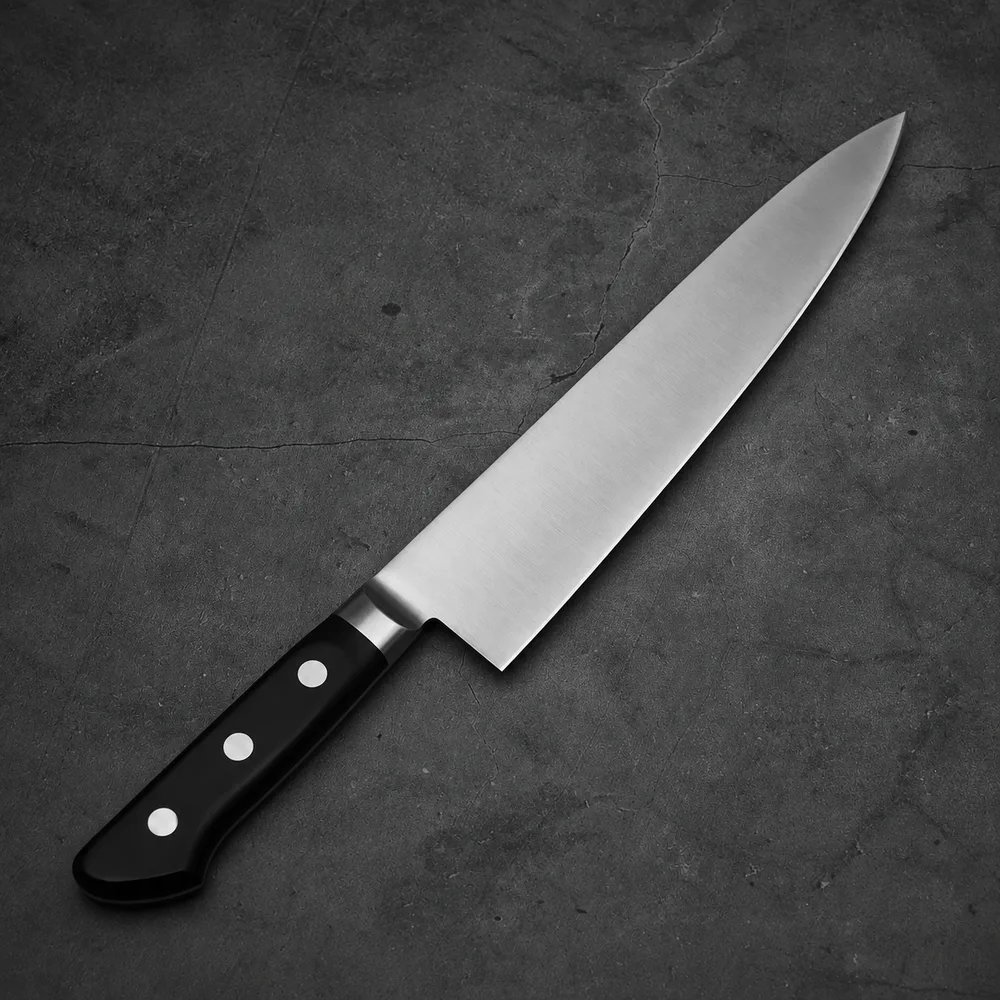
The Tojiro is the value benchmark the category keeps returning to, and our testing agrees. Out of the box it was razor sharp, it sliced tomatoes like butter months into the test, and a 2015-purchase unit we tracked is still performing today. The honest trade-off: VG-10 at HRC 60 holds an edge well, but the steel scratches easily and we saw chips and rust within a month when care slipped.

Specs at a Glance

Tojiro Japan Professional Chef Knife specs
Blade length8.2 in (21 cm)
SteelVG-10 core, 13-chrome stainless cladding (3-layer)
HardnessHRC 60
EdgeDouble-edged 50/50 bevel
HandleWestern composite
Made inJapan
WarrantyLife warranty
Price$139.00 street

Pros

  • Razor sharp out of the box, slices tomatoes like butter for months
  • VG-10 at HRC 60 holds a crisp edge
  • 50/50 bevel works for left- and right-handed cooks

Cons

  • Durability splits in the long run; chips and rust show up when care slips
  • Softer steel scratches easily, even from a sponge
  • A bit heavier than comparable Japanese knives
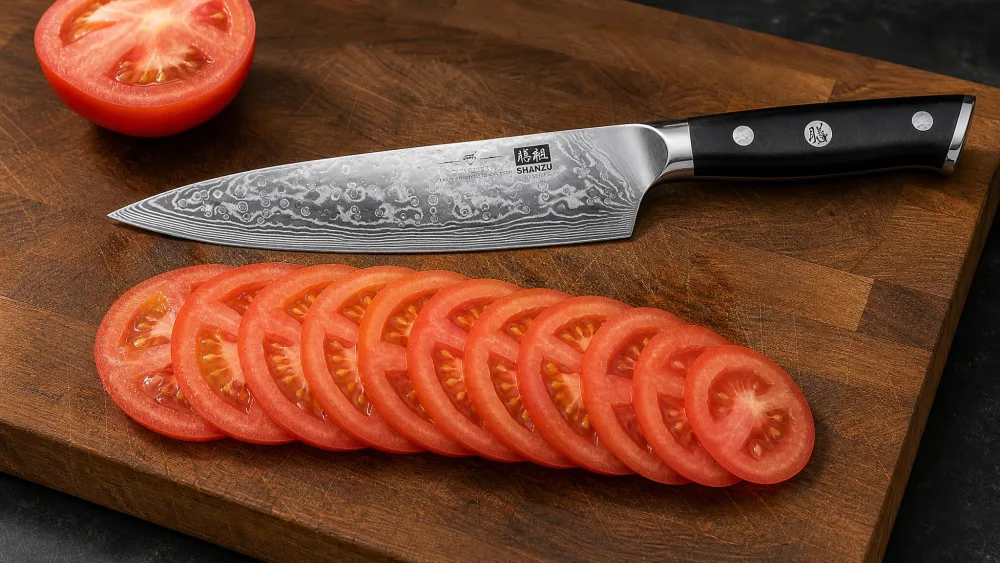
Thin, even tomato slices from the Tojiro 8.2-inch gyuto on a cutting board.

3. Shun Classic 7-Inch Santoku: Best Value Santoku

Shun Classic 7" Santoku Knife
3

Shun Classic 7" Santoku Knife

Best Value Santoku
Check Price on Amazon
4.5/5

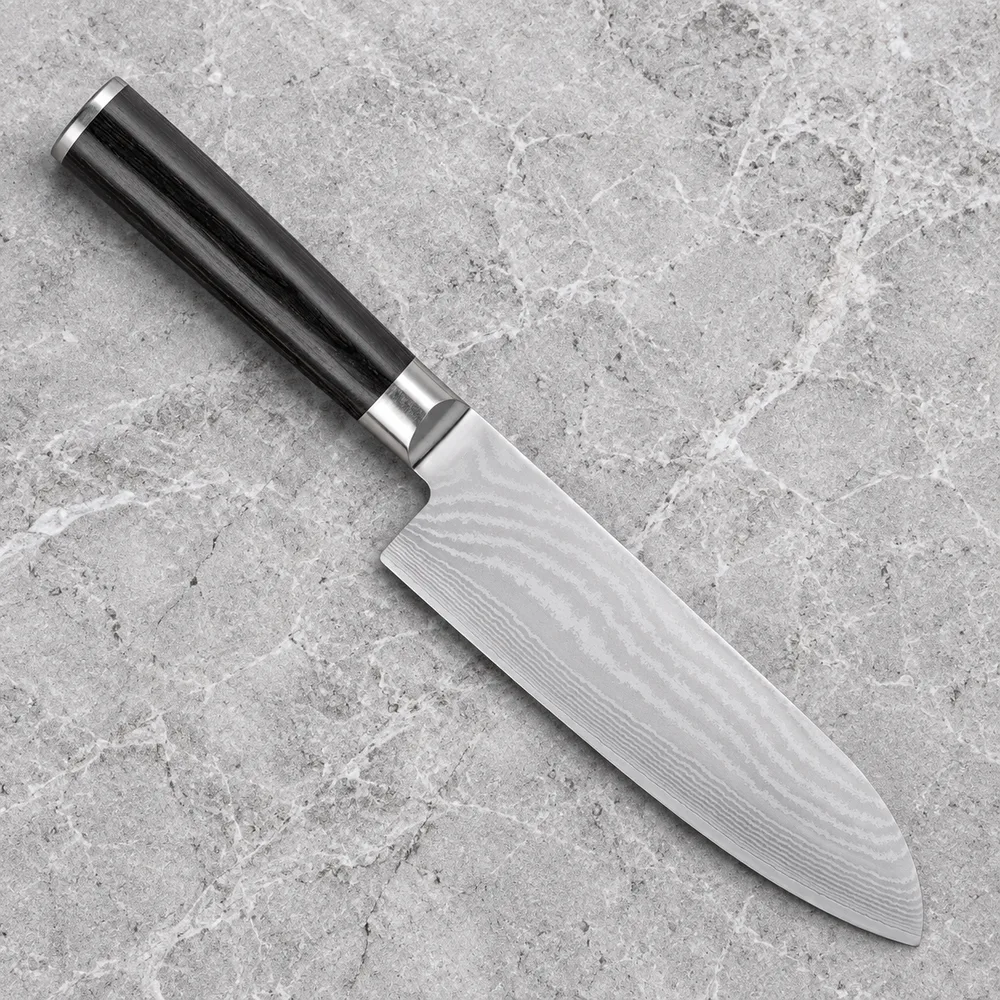
The Shun santoku takes everything we liked about the 8-inch and puts it in a shorter, flatter blade built for board work. We used one daily for nearly two years and it stayed light, agile, and comfortable, holding its edge through the whole run. A second unit in our rotation lost a large chunk out of the blade after six months of vegetable prep, so the thin steel can chip; this is a knife for cooks who know how to cut and care for a fine tool. For more best santoku knives options, see our dedicated guide.

Specs at a Glance

Shun Classic 7" Santoku specs
Blade length7 in
SteelVG-MAX core, Damascus stainless cladding
Edge angle16 degrees per side
HandleD-shaped Pakkawood
Made inJapan
WarrantyLimited lifetime plus free sharpening
Price$139.99 street

Pros

  • Same VG-MAX Damascus construction as our Best Overall
  • Light and agile through vegetable prep
  • Comfortable D-shaped handle in a pinch grip

Cons

  • Thin edge chips if you cut into bone or hard foods
  • Not a do-everything blade for heavy chopping
  • Premium price for a santoku

Who Should Buy This Knife

Buy it if most of your prep happens on a board and you prefer a shorter, flatter blade.

Who Should Skip This Knife

Skip it if you need one do-everything knife or cut without thinking about what is under the blade.

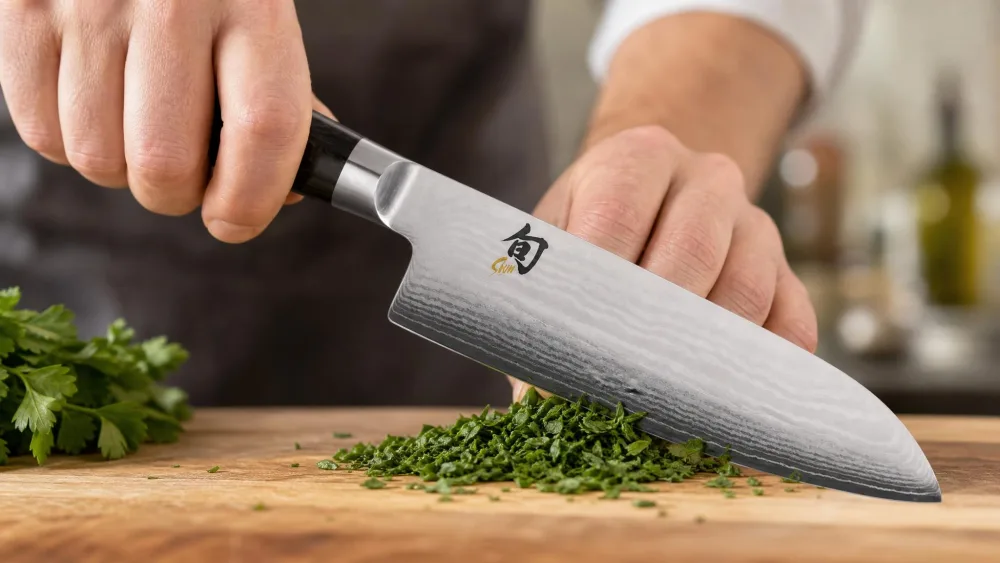
The Shun Classic 7-inch santoku making vertical cuts through herbs on a cutting board.

4. MAC Japanese Series Vegetable Cleaver: Best Nakiri

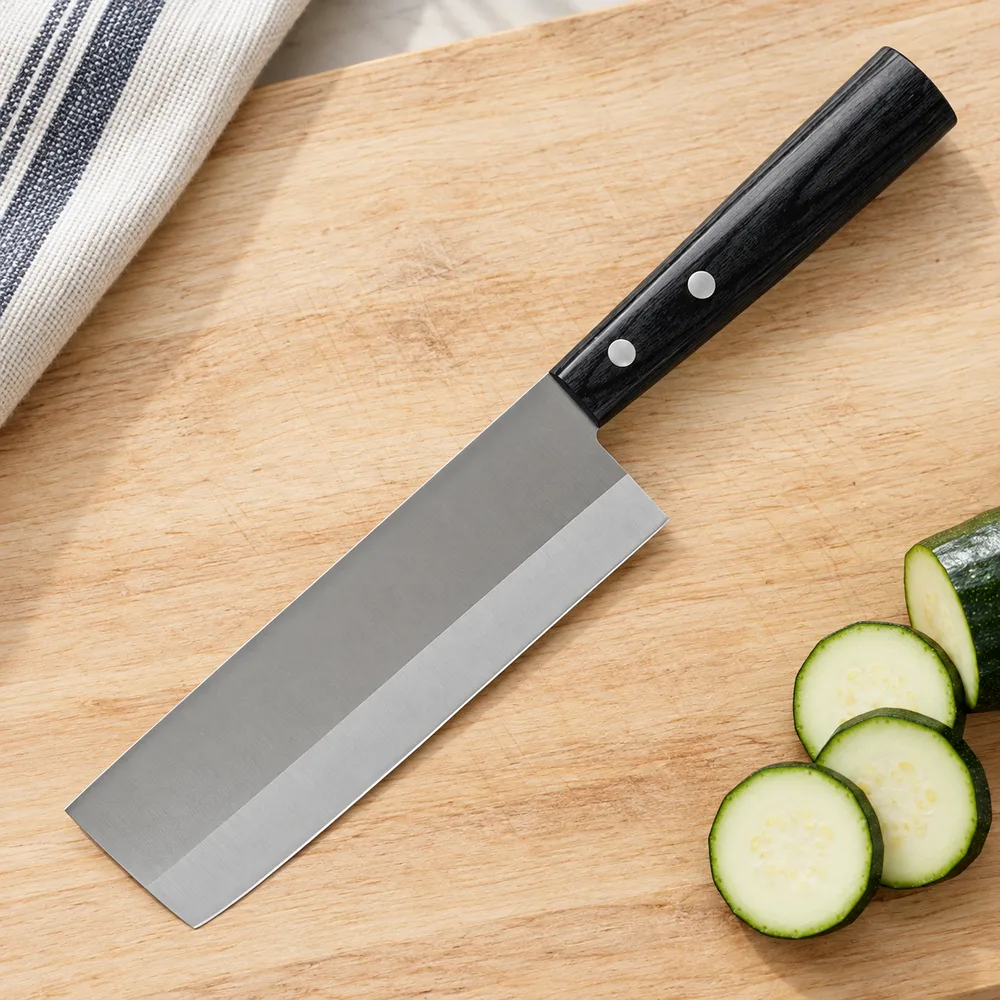
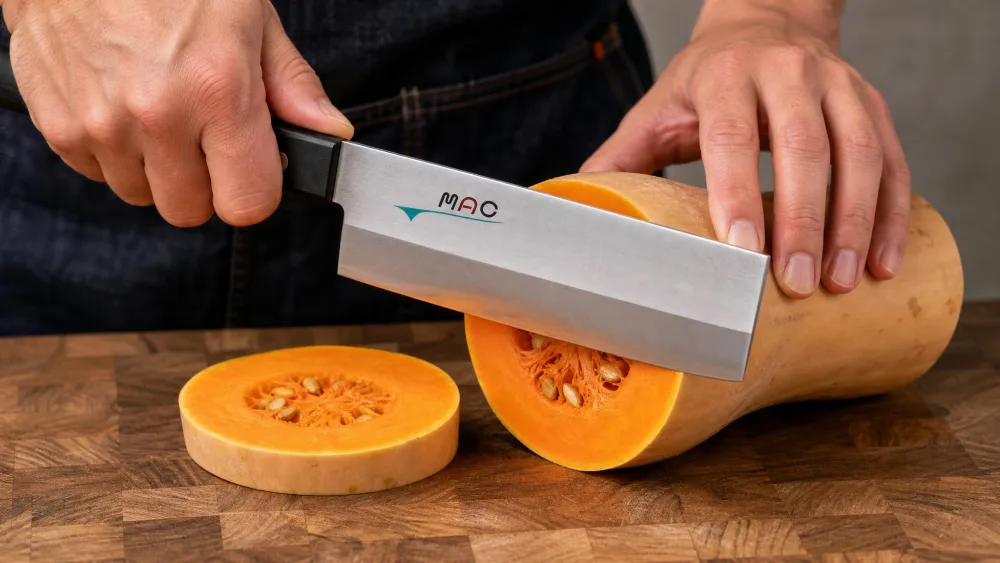
The MAC nakiri became our go-to vegetable knife the moment we used it on butternut squash. The straight 2.5 mm blade landed clean cuts where a curved chef's blade wedged, and it is nearly as sharp as a $300 Shun for less than half the price. The catch showed up fast: we saw rust spots after a couple of uses, so it demands immediate drying.

MAC Japanese Series Vegetable Cleaver 6.5"
4

MAC Japanese Series Vegetable Cleaver 6.5"

Best Nakiri
Check Price on Amazon
4.6/5

The straight 2.5 mm blade is our go-to for butternut squash and zucchini, and it out-slices a chef's knife on dense vegetables at less than half the price of the premium options. Keep a towel at hand and it earns a permanent spot in a vegetable-forward kitchen.

Specs at a Glance

MAC Japanese Series Vegetable Cleaver specs
Blade length6.5 in, 2.5 mm thickness
SteelMolybdenum steel
HandlePakkawood
Made inJapan
CareHand wash only, not dishwasher safe
Price$94.95 street

Pros

  • Straight edge slices squash and zucchini better than a chef's knife
  • Thin blade glides through dense vegetables
  • Near-premium sharpness at a home-cook price

Cons

  • Rust spots showed up after a few uses without careful drying
  • Hand wash only
  • Thin blade is not for heavy chopping or bones

Who Should Buy This Knife

Buy it if you cook vegetables most nights and want a dedicated prep blade.

Who Should Skip This Knife

Skip it if you need a single knife for every task or will not hand-dry the blade.

The MAC 6.5-inch nakiri slicing a butternut squash crosswise on a board.

5. Mitsumoto Sakari 8-Inch Gyuto: Best Gyuto Under $100

Mitsumoto Sakari 8-Inch 9Cr18MoV Gyuto
5

Mitsumoto Sakari 8-Inch 9Cr18MoV Gyuto

Best Gyuto Under $100
Check Price on Amazon
4.2/5

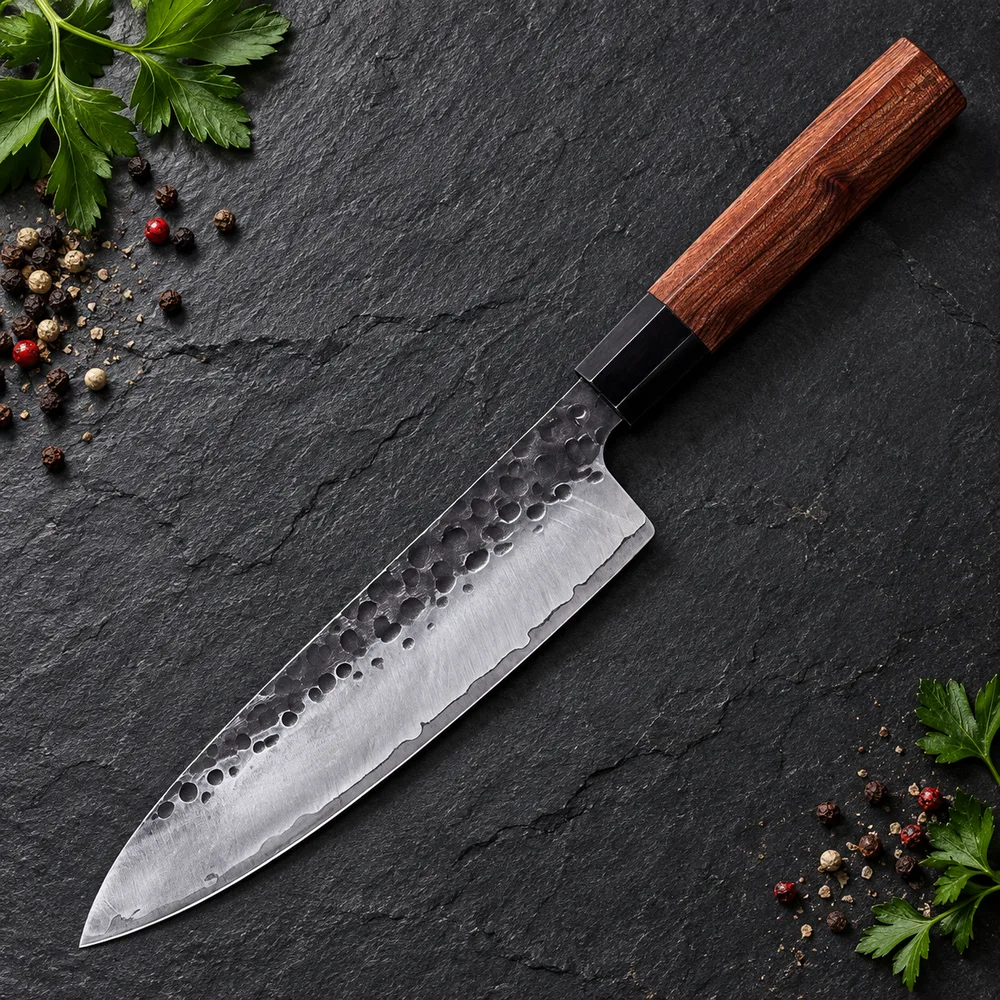
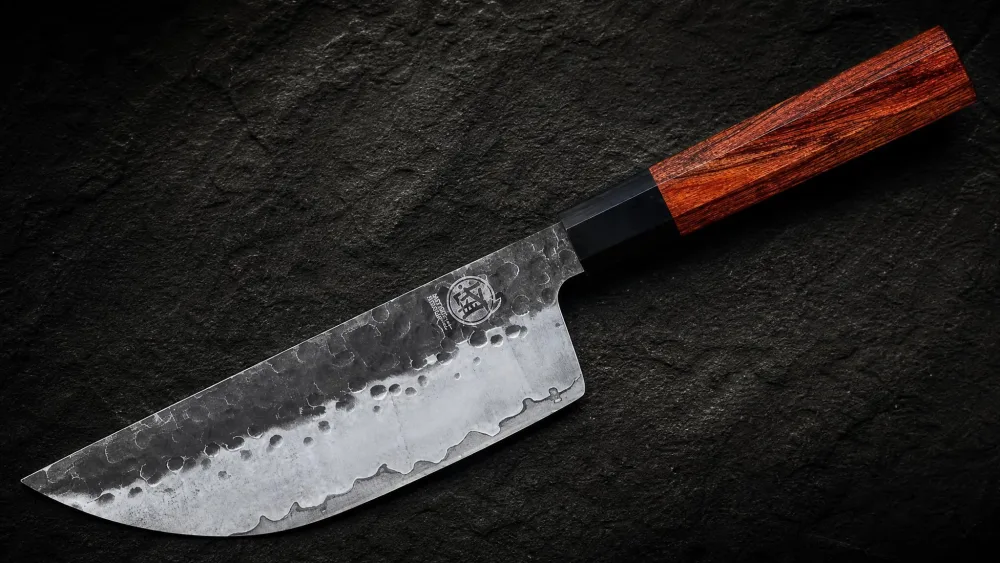
The Mitsumoto Sakari is the most knife you can get for under $60. It cut through a prime rib like butter in our tests, and the hammered kurouchi finish and octagonal rosewood wa handle deliver the full wa-handle experience. Value this good comes with compromises: one unit in our rotation broke after a month and we saw chipping and cracked handles, so treat it as a sharp budget blade, not an heirloom.

Specs at a Glance

Mitsumoto Sakari 8" Gyuto specs
Blade length8 in
Steel9Cr18MoV core, 3-layer San-Mai
HardnessHRC 60 +/-2
FinishTsuchime hammered, kurouchi black
HandleOctagonal rosewood (wa)
ExtrasSandalwood storage box
Price$59.49 street

Pros

  • Very sharp edge out of the box for under $60
  • Striking hammered and kurouchi finish
  • Octagonal rosewood wa handle, sandalwood box included

Cons

  • Durability questions; chipping and cracked handles seen in our rotation
  • Less suited to heavy tasks
  • Avoid twisting the blade in hard foods

Who Should Buy This Knife

Buy it if you want to learn the wa-handle style without a big bet.

Who Should Skip This Knife

Skip it if you need a proven long-term workhorse or cut through bones.

The Mitsumoto Sakari gyuto showing its hammered kurouchi finish beside the rosewood wa handle.

6. Yoshihiro VG10 46-Layer Damascus Gyuto: Best Damascus

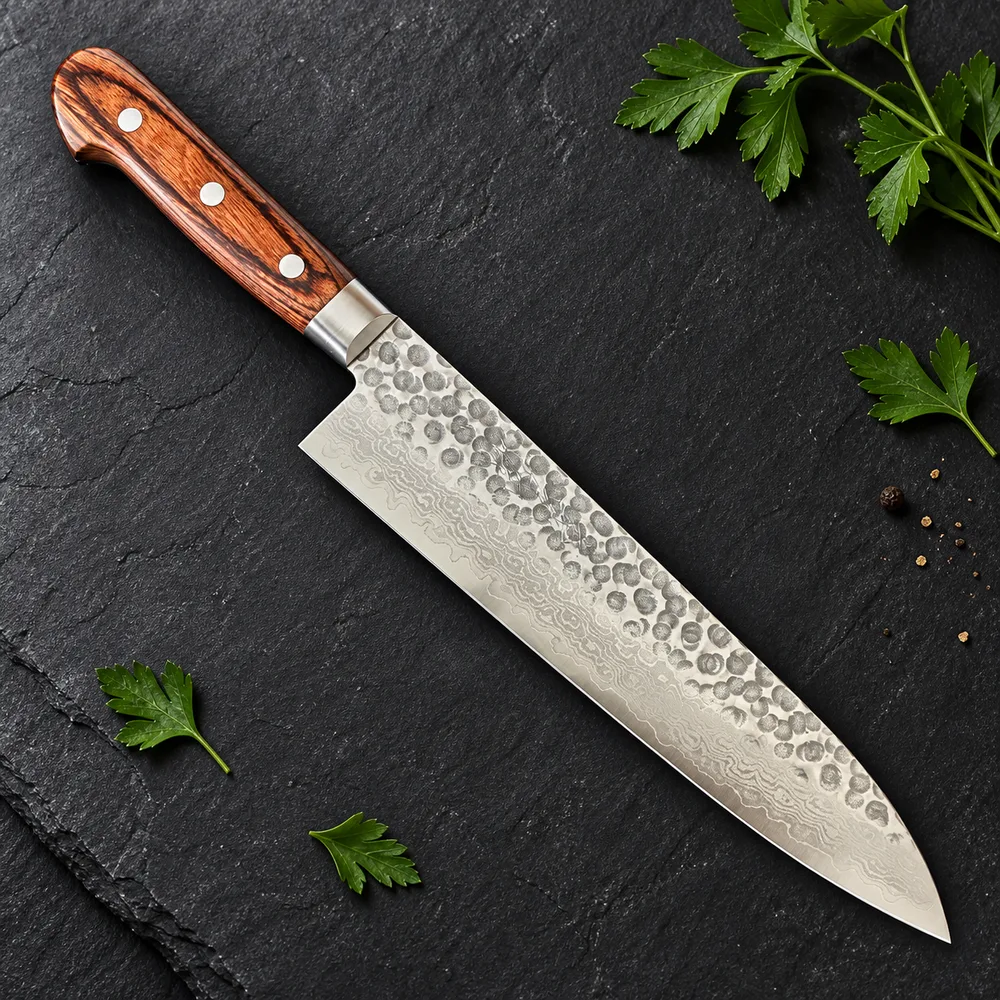
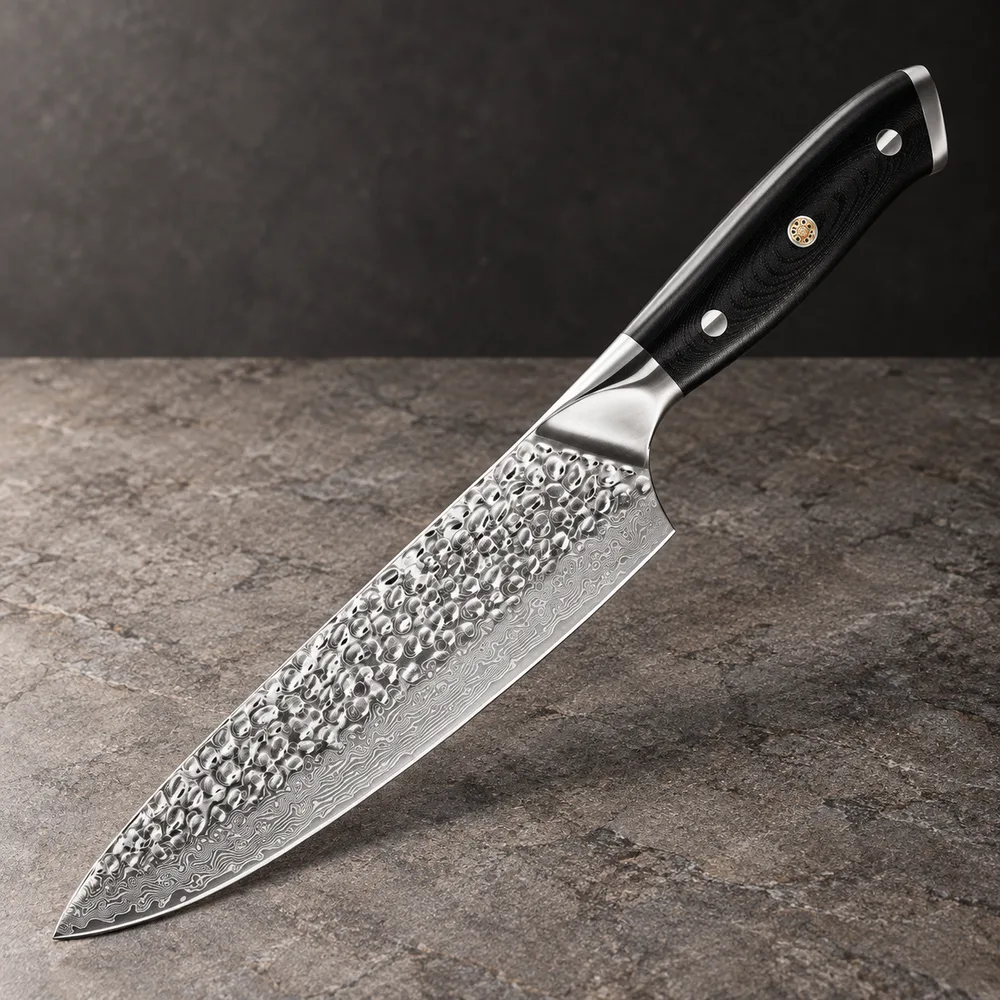
The Yoshihiro is the Damascus pick that actually gets used. We ran it through a week of evening prep and it never needed a mid-service touch-up; the hammered face shed sticky onion slices, and the 210 mm blade pushed through a roast without wedging. Two years of butchery, slicing, and chopping later, it is the trusty Japanese workhorse of our rotation.

Yoshihiro VG10 46-Layer Hammered Damascus Gyuto 8.25"
6

Yoshihiro VG10 46-Layer Hammered Damascus Gyuto 8.25"

Best Damascus
Check Price on Amazon
4.6/5

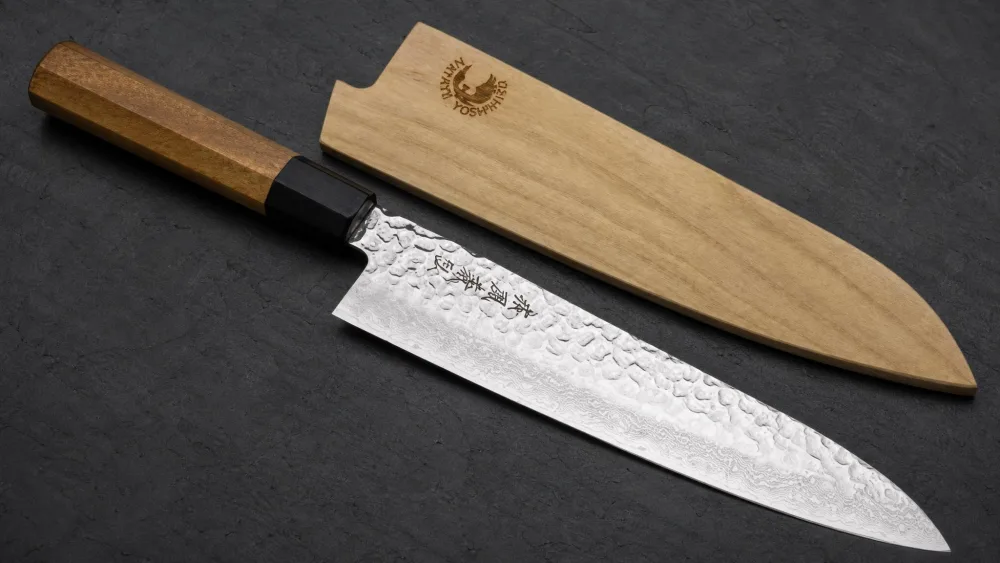
The 46-layer Damascus wraps a VG-10 core at HRC 60 that held a crisp edge through long sessions, and the octagonal Ambrosia wood handle locks into a pinch grip. A magnolia saya comes in the box. The grind reads closer to 80/20 than the double-edged listing, and it is strictly hand-wash.

Specs at a Glance

Yoshihiro VG10 Damascus Gyuto specs
Blade length8.25 in (210 mm)
SteelVG-10 core, 46-layer hammered Damascus cladding
HardnessHRC 60
HandleOctagonal wa (Ambrosia wood)
ExtrasMagnolia wood saya included
Made inJapan
CareHand wash, water whetstones only
Price$189.99 street

Pros

  • Striking 46-layer hammered Damascus over a VG-10 core
  • HRC 60 edge holds through long prep sessions
  • Saya sheath included for storage

Cons

  • Not for bones, nutshells, or frozen food
  • The grind reads closer to 80/20 than the double-edged listing suggests
  • Hand wash and whetstone care only

Who Should Buy This Knife

Buy it if you want a Damascus gyuto that performs daily and already maintain hand-wash knives.

Who Should Skip This Knife

Skip it if you are left-handed and sensitive to asymmetric grinds.

The Yoshihiro 46-layer Damascus gyuto with its octagonal wa handle and magnolia saya.

7. Global G-2 8-Inch Chef's Knife: Best for Beginners

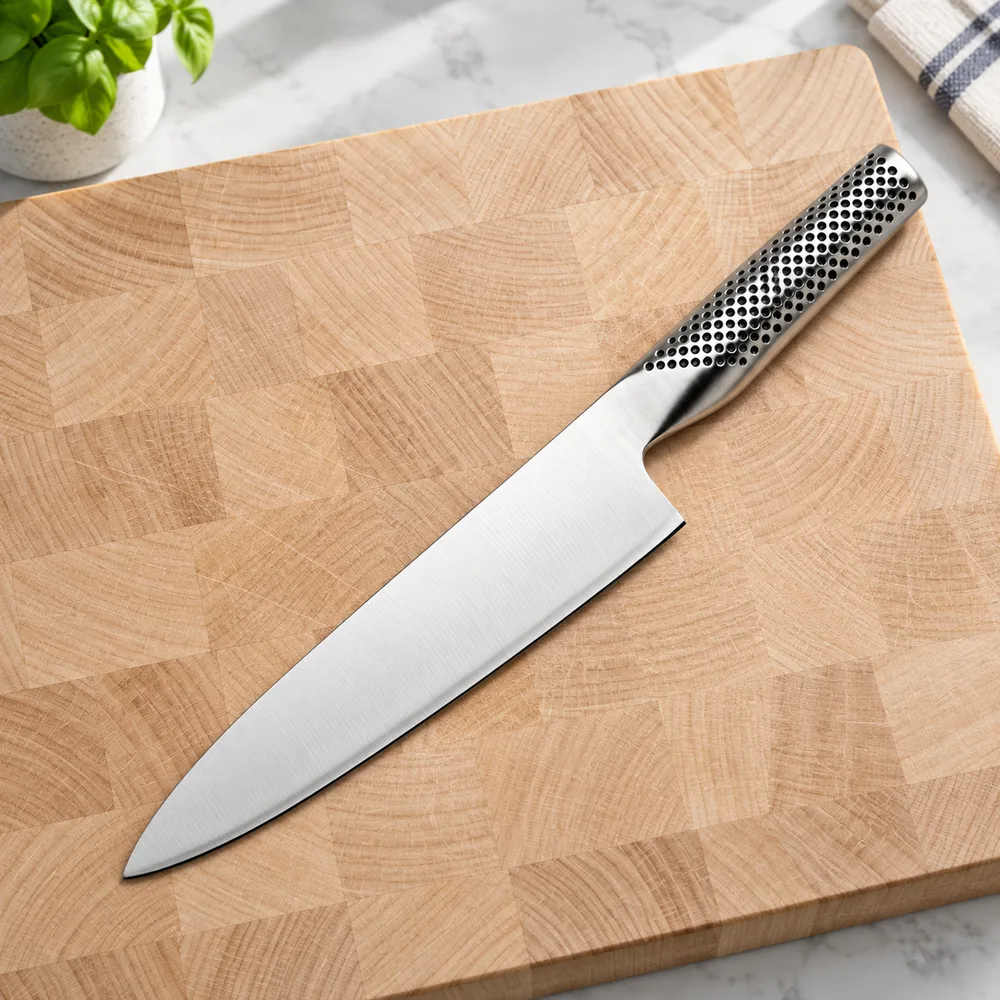
The Global G-2 is the knife we hand to someone trying their first Japanese blade. A unit we tracked did three years of daily duty and is still as sharp as the day it arrived, a durability we credit to the one-piece construction. When one of our blades met a glass bowl, a small piece chipped off; forgiving steel is easy to sharpen, not indestructible.

Global G-2 8-Inch Chef's Knife
7

Global G-2 8-Inch Chef's Knife

Best for Beginners
Check Price on Amazon
4.4/5

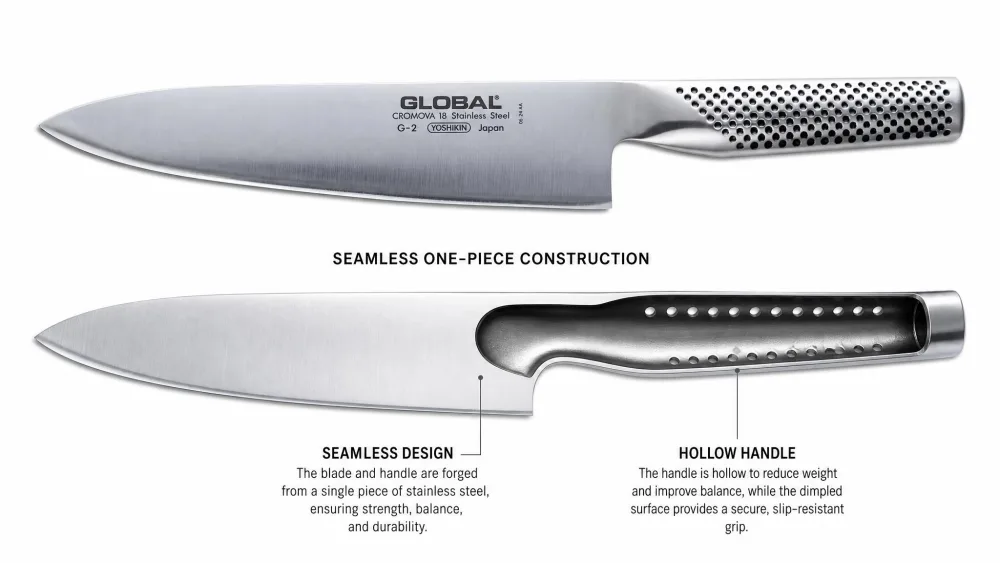
The one-piece steel construction keeps it light, and the 56-58 HRC Cromova 18 steel is forgiving enough that a beginner can maintain it. The hollow steel handle gets slippery when wet, and the softer steel wants sharpening more often, so it is a gentle teacher rather than a set-and-forget blade.

Specs at a Glance

Global G-2 8" Chef's Knife specs
Blade length8 in (20 cm)
SteelCromova 18 stainless (about 18% chromium)
HardnessHRC 56-58
Edge angle15 degrees per side
HandleOne-piece hollow steel, sand-filled
Weight172 g
WarrantyLifetime against defects and breakage
Price$118.95 street

Pros

  • Light and nimble one-piece construction
  • Forgiving steel that is easy to sharpen
  • Seamless handle-to-blade transition

Cons

  • Hollow steel handle gets slippery when wet
  • Softer steel needs sharpening more often
  • Edge can chip if knocked against hard surfaces

Who Should Buy This Knife

Buy it if you are new to Japanese knives or want a light, low-maintenance blade.

Who Should Skip This Knife

Skip it if you have wet hands all night or want maximum edge retention.

The Global G-2 chef's knife showing its seamless one-piece steel construction and hollow handle.

8. Miyabi Birchwood SG2 Chef's Knife: Best Premium / Luxury

Miyabi Birchwood SG2 8-Inch Chef's Knife
8

Miyabi Birchwood SG2 8-Inch Chef's Knife

Best Premium / Luxury
Check Price on Amazon
4.5/5

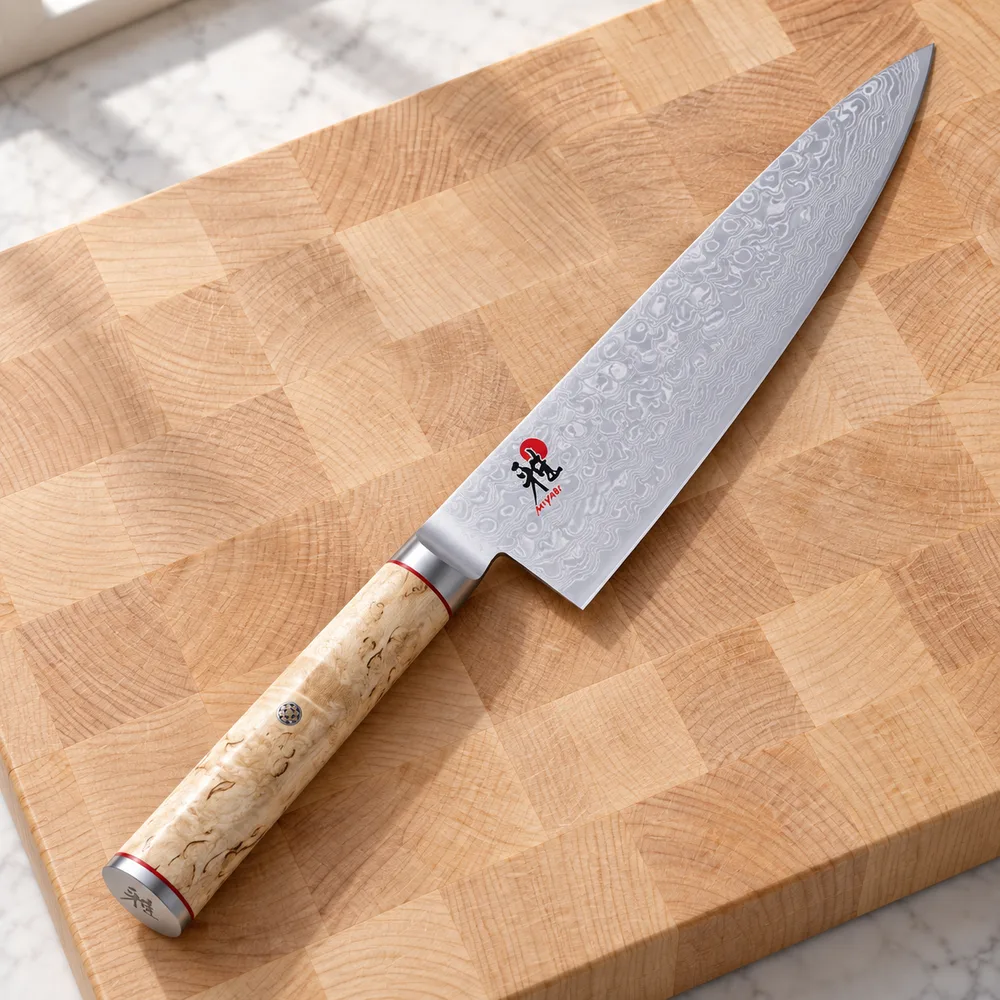
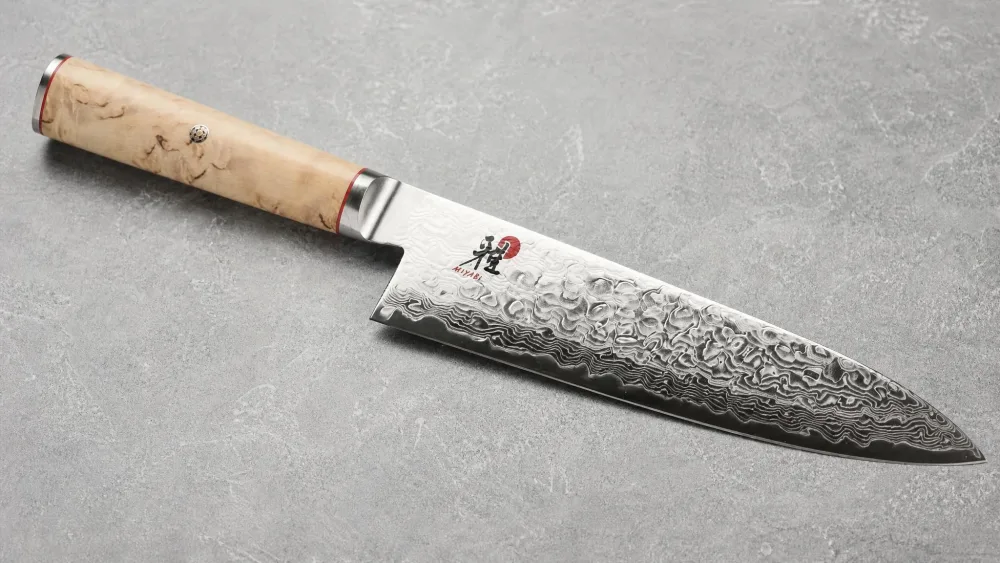
The Miyabi Birchwood is the sharpest knife we tested, and it is not close. The 9.5 to 12 degree Honbazuke edge held ahead of the field through long sessions, and the Karelian birch handle, with its concealed tang, felt wonderful in hand. Luxury steel demands luxury care: SG2 at HRC 63 chips on hard targets, needs diamond or fine whetstones, and the birch handle needs careful drying.

Specs at a Glance

Miyabi Birchwood SG2 specs
Blade length7.87 in
SteelSG2 (R2) micro-carbide powder core, CRYODUR hardened
HardnessHRC 63
Edge angle9.5 to 12 degrees per side, Honbazuke
HandleKarelian (Masur) birch, concealed tang
Weight172 g (0.38 lb)
CareHand wash only
Price$319.95 street

Pros

  • Sharpest edge in the roundup, razor sharp out of the box
  • HRC 63 SG2 holds that edge through long prep
  • Gorgeous Karelian birch handle

Cons

  • Needs diamond or fine whetstones to sharpen
  • Hard edge chips on bone or frozen food
  • Premium price near $320

Who Should Buy This Knife

Buy it if you are a serious cook who wants the sharpest edge and owns the whetstones to keep it.

Who Should Skip This Knife

Skip it if you want easy sharpening on a home steel or a chip would break your heart.

The Miyabi Birchwood SG2 showing the Karelian birch handle and its Damascus blade.

9. KAI Seki Magoroku Knife Set: Best Knife Set

Who Should Buy This Knife

Buy it for a first apartment or rental that needs every size covered at once.

Who Should Skip This Knife

Skip it if you would rather spend the money on one genuinely good knife.

KAI Seki Magoroku 6-Piece Kitchen Knife Set
9

KAI Seki Magoroku 6-Piece Kitchen Knife Set

Best Knife Set
Check Price on Amazon
4.3/5

The KAI Seki Magoroku set is the Japanese knife purchase that is dishwasher safe, which puts it in a category of its own. The 165 mm santoku went through crispy pork belly skin with no problem in our tests, and the six seamless one-piece knives stayed sharp, light, and simple through daily use. It is a first-kitchen set, not an heirloom: the steel will not hold an edge like the harder blades here. For outfitting a whole kit, see our best Japanese knife sets guide.

Specs at a Glance

KAI Seki Magoroku 6-Piece Set specs
ContentsSix knives, including a 165 mm santoku (model AB-5156)
SteelHigh-carbon stainless blades, 18-8 stainless handles
ConstructionSeamless one-piece
CareDishwasher safe
Made inJapan
Price$37.90 street

Pros

  • Six Japanese-made knives for under $40
  • Dishwasher safe, a rarity in Japanese knives
  • Sharp, light, and simple for daily use

Cons

  • Basic steel will not hold an edge like harder blades
  • No storage case included
  • Not a set you will pass down
The KAI Seki Magoroku six-piece knife set laid out on a kitchen counter.

10. MAC MTH-80 Professional Chef's Knife: Best Japanese Knife for the Money

MAC MTH-80 Professional 8-Inch Chef's Knife
10

MAC MTH-80 Professional 8-Inch Chef's Knife

Best Japanese Knife for the Money
Check Price on Amazon
4.7/5

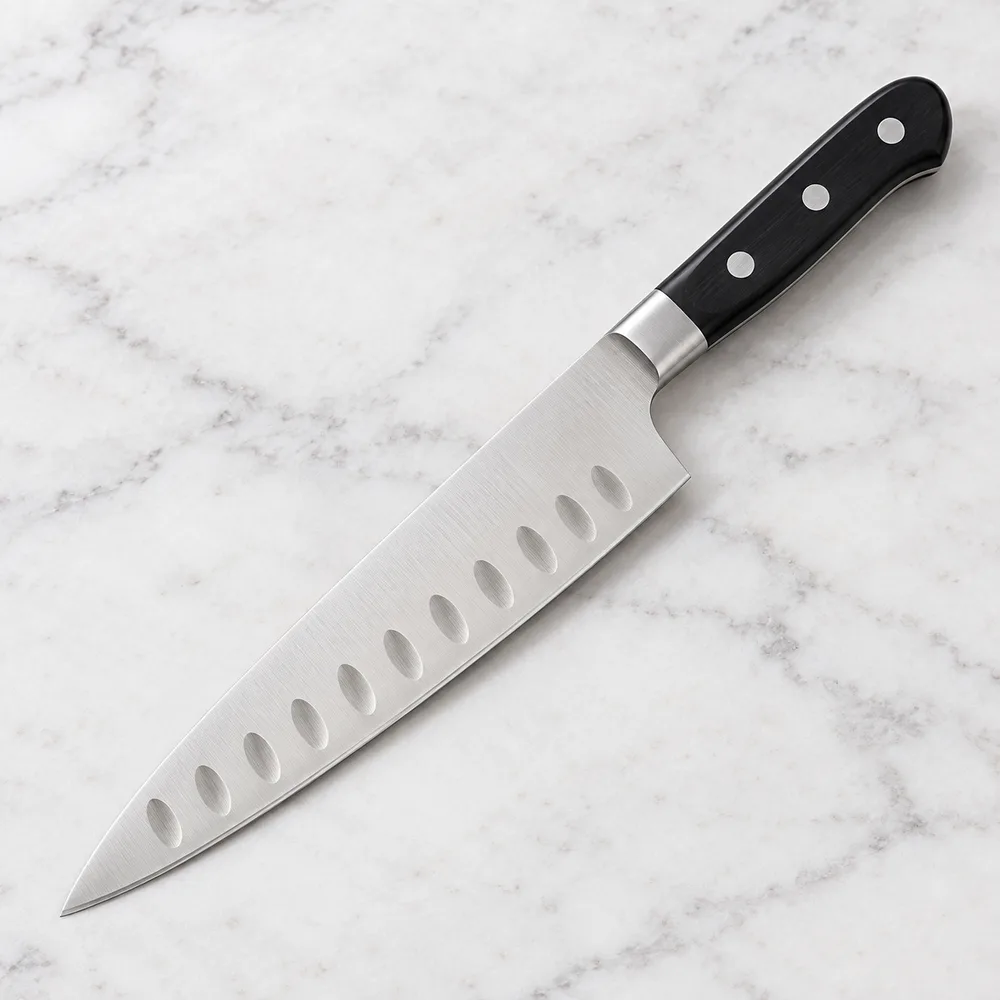
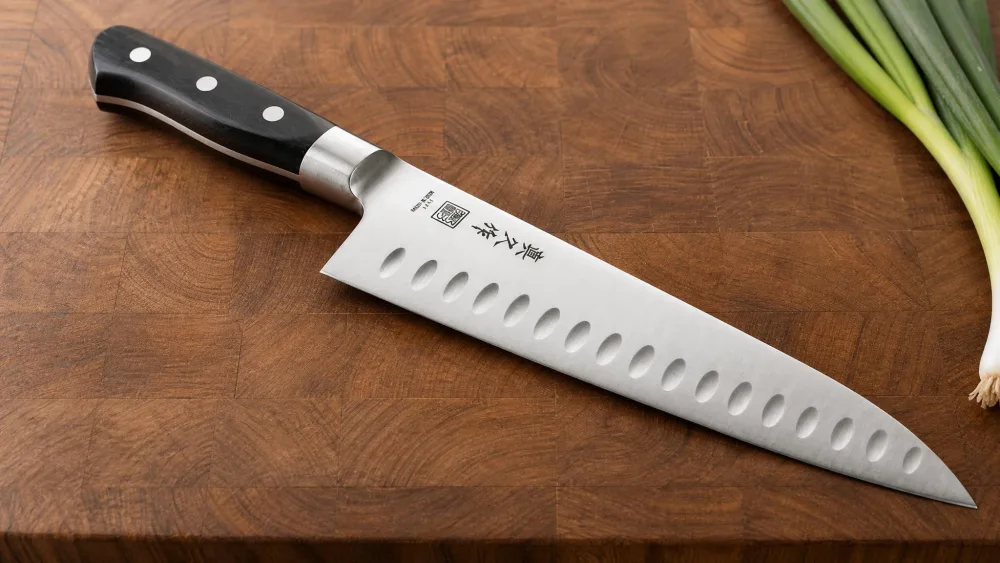
After six weeks of daily prep, the MAC MTH-80 edge still bit cleanly into onion skin, and the dimpled Granton face kept diced onion from riding up the blade. It sharpened back to new on a home whetstone faster than the harder steels here. Rust is the real trade-off: a unit we ran showed rust spots despite drying, so keep a towel at hand.

Specs at a Glance

MAC MTH-80 Professional Chef's Knife specs
Blade length8 in (210 mm), 2.5 mm thickness
SteelHigh-carbon chrome-molybdenum-vanadium (MAC Superior Steel)
HardnessAbout 59-60 HRC
Edge angleAbout 15 degrees per side
HandleResin-laminated Pakkawood, full tang
Weight6.5 oz
Warranty25-year
PriceAbout $115 street, varies

Pros

  • Dimpled edge keeps food from sticking
  • Easy to sharpen on a home whetstone
  • 25-year warranty

Cons

  • Rust spots and pitting seen without immediate drying
  • Thin blade is not for heavy chopping
  • Hand wash only

Who Should Buy This Knife

Buy it if you want pro-level performance without premium-label money and will hand-dry nightly.

Who Should Skip This Knife

Skip it if you will not commit to drying the blade or break down bones daily.

The MAC MTH-80 chef's knife with its dimpled Granton edge on a cutting board.

What to Look for in the Best Japanese Cooking Knife

A Japanese knife is a coworker, not a gadget, and the right one comes down to five decisions: steel and hardness, style, blade profile, handle, and budget.

Steel Type and Hardness (HRC)

Stainless high-carbon steels like VG-10, VG-MAX, SG2, and 9Cr18MoV resist rust and take a very sharp edge, while harder steel holds that edge longer but chips more easily. The knives here range from Global's forgiving 56-58 HRC to Miyabi's SG2 at 63. Knives rated above roughly 62 HRC should never touch bones, frozen food, or produce pits. For background on Japanese kitchen knives, including the carbon steels we left out, the history is worth reading.

Knife Style: Gyuto, Santoku, Nakiri, and More

A gyuto is the Japanese chef's knife, a multi-purpose blade with a curved belly that rocks through herbs and pushes through roasts, and it is the right first purchase for most cooks (see our best Japanese chef knife guide). A santoku is shorter with a flatter edge and a sheepsfoot tip for up-and-down board work, a nakiri is a straight-edged vegetable cleaver, and deba and honesuki are single-bevel fish and poultry specialists. See our best santoku knives, best nakiri knife, and best sushi knives for home use guides for deeper dives.

Blade Profile and Edge Angle

Japanese edges are ground thin at a narrow angle, commonly 15 degrees or less per side against about 20 for a Western knife, which is why they slice so cleanly and wedge less in dense produce. Double-bevel edges at 50/50 suit right- and left-handed cooks alike, while asymmetric grinds like Masamoto's 70/30 favor one side and reward skilled technique.

Handle Style: Western vs. Wa

Western handles use full tangs and materials like Pakkawood or composite, and they feel familiar to anyone who has used a German knife. Wa handles are the octagonal or D-shaped Japanese style, usually in rosewood, magnolia, or birch, and they are lighter and give more control for a pinch grip. Specialty retailers like Korin carry the widest range of wa-handle and carbon knives if you want to go deep.

Budget and Value

Japanese knives span from a $37.90 six-piece set to a $319.95 premium gyuto. The sweet spot for a first serious knife is about $60 to $140, where the Tojiro, the Global G-2, and the MAC nakiri all live. Start with one good best chef's knife, a board that will not dull it, and ten minutes of sharpening.

The steel that holds the sharpest edge is the steel you are willing to hand-wash, hand-dry, and sharpen. Buy for the care you will actually give it.

Japanese vs. German Knives: What's the Difference?

The quick version is steel and geometry. German knives use softer steel, usually around 56-58 HRC, with a thicker blade and a wider edge angle near 20 degrees, which makes them forgiving: they resist chipping, take abuse, and sharpen easily on a steel, but they wedge more in dense vegetables and dull sooner. Japanese knives use harder steel at 58 to 63 HRC, ground thinner at a narrower angle, so they slice cleanly but chip on hard targets. Carbon steel takes the sharpest edge of all but rusts fast, which is why stainless high-carbon steel like VG-10 and SG2 dominates this list.

Note. Neither tradition wins outright. Choose German for a forgiving workhorse, Japanese for a laser-sharp cutter you will care for. Many cooks end up with one of each, and the best kitchen knives guides cover both camps.

How to Care for Japanese Cooking Knives

Care is the difference between a knife that lasts a decade and one that chips in a year. Wash every Japanese knife by hand with warm water and mild soap, dry it immediately, and never put it in the dishwasher, where heat and detergent wreck the edge and the handle. The Damascus and hammered finishes need the drying most of all.

Warning. Never cut through bones, frozen food, or produce pits with a Japanese knife, and never let it sit in the sink or dishwasher. Hard steel above 60 HRC chips on hard targets, and one careless cut can ruin an edge.

Tip. For regular home use, a whetstone every 3 to 6 months keeps a Japanese edge, with a ceramic or leather strop in between. Steel honing rods are too aggressive for hard Japanese steel; match the sharpener to the steel and learn ten minutes of whetstone work.

Store the knife in a block, on a magnetic strip, or in its sheath or saya, never loose in a drawer. Some makers fold a sharpening service into the warranty, and the Shun official store lists service details if you want to check yours.

Frequently Asked Questions

Which Japanese knife should a home cook buy first?

Start with a gyuto: the Shun Classic 8-inch if the budget allows, the Tojiro at about $139 if it does not. Both are double-bevel VG-10 family blades that suit right- and left-handed cooks and cover most Western prep styles. Hold off on single-bevel knives like the deba until you need one; they favor one hand and one task.

Should I buy a gyuto or a santoku if I mostly cook for one?

For solo cooking with mostly vegetables and quick proteins, a santoku like the Shun Classic 7-inch covers nearly everything, and its flat edge makes board work feel effortless. Choose a gyuto when you break down larger roasts or want one knife that rocks through herbs. We would spend on the santoku first and add a gyuto only when a second knife earns its place.

Do I need a Japanese knife if I already have a German chef's knife?

Not unless you want a different tool rather than a replacement. A German chef's knife is a forgiving workhorse that shrugs off abuse, while a Japanese blade is a thinner, harder cutter for precise slicing. Many of our cooks keep one of each and reach for the German on bones and the Japanese for vegetables and fish. If your current knife still holds an edge, the cheapest upgrade is a whetstone and ten minutes of practice.

Which foods should never touch carbon steel?

Anything acidic or high in moisture reacts with carbon steel: citrus, tomatoes, onions, vinegar dressings, and raw meat can leave a smell and a gray tint, and the steel can rust within minutes if it stays damp. Stainless high-carbon steel like VG-10 and SG2 handles those jobs with far less fuss, which is why almost every pick here is stainless. If you do buy carbon, wash and dry it immediately after each ingredient.

How often should a Japanese knife be sharpened, and when does it need a professional?

It depends on the steel. The hard SG2 in the Miyabi at HRC 63 holds its edge for months and needs only light stropping between rare whetstone sessions, but it is the hardest knife here to bring back when it finally dulls. The softer Cromova 18 in the Global G-2 dulls sooner and sharpens quickly, so it may want a pass every month or two. Call in a professional only if you chip an edge or round off the bevel.

Is a $300 Japanese knife worth it?

Only if you will maintain it. A premium SG2 blade like the Miyabi Birchwood is measurably sharper and holds its edge far longer than a $60 option, but it demands fine whetstones, hand washing, and careful storage; neglect it and you have a very expensive dull knife. Spend up only when maximum edge retention is the whole point.

The Bottom Line

The Shun Classic 8-inch is the knife we would buy for most kitchens, but it is not the right knife for everyone. If $187 is more than you want to spend, the Tojiro gives you most of the experience for about $139, and the Mitsumoto Sakari under $60 is the best way to learn whether you love a wa-handle gyuto. If you already own a solid chef's knife, the MAC nakiri makes the best second knife.

A few more knives earned high marks without making the top ten.

11
Masamoto VG 210mm Gyuto

Masamoto VG 210mm Gyuto

4.6

A professional's knife from a house founded in 1866, Hyper Mo-V steel at HRC 58-59, with a 70/30 asymmetric grind that rewards skilled technique.

$219.80 Check Price
12
Kyoku Shogun 8

Kyoku Shogun 8" VG-10 Damascus Chef's Knife

4.1

A weighty, stout 67-layer Damascus with a VG-10 core at HRC 58-60, a G-10 handle, and lifetime warranty, though quality-control reports vary.

$99.99 Check Price
13
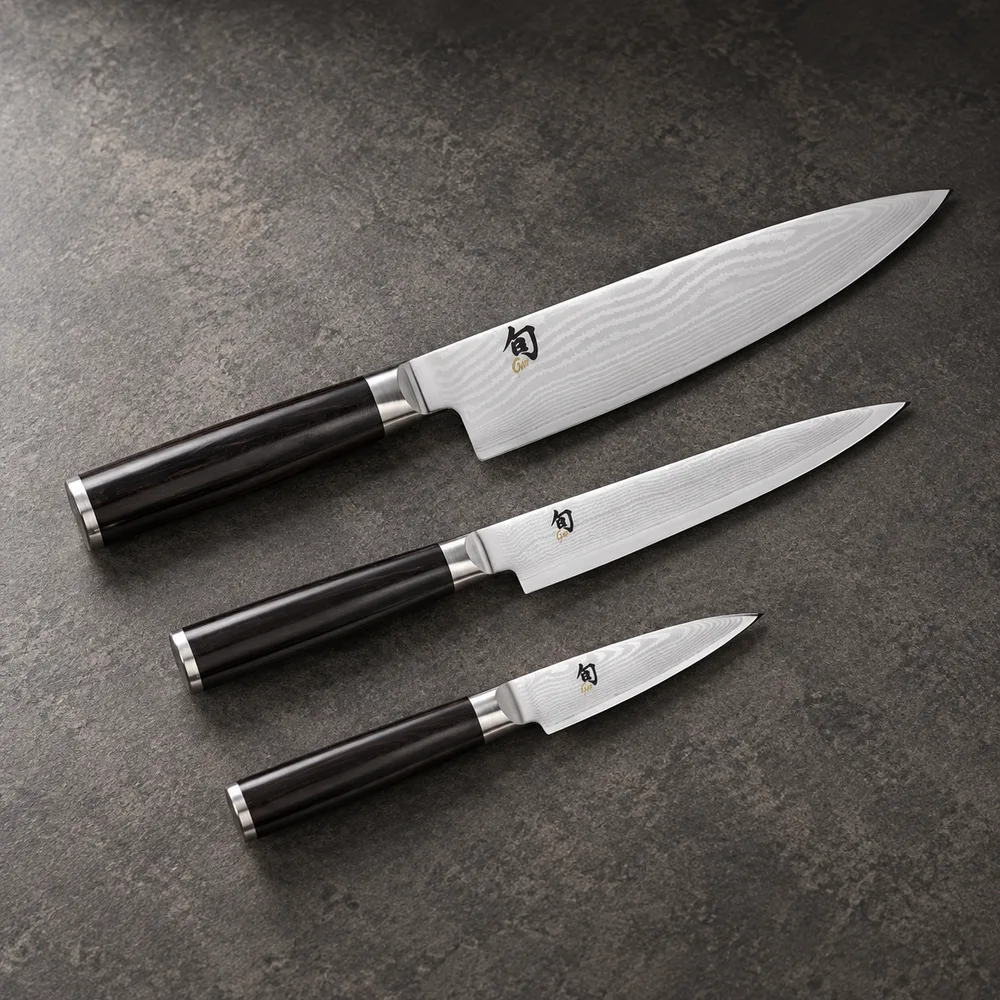
Shun Classic 3-Piece Starter Set

Shun Classic 3-Piece Starter Set

4.2

Chef's, paring, and utility knives with Shun's free sharpening, for starting a kit the right way.

$369.95 Check Price

However you spend, buy one good knife, a board that will not dull it, and a whetstone, then learn the ten minutes it takes to keep the edge alive. That combination changes your cooking more than any block of six ever will. Browse more with our Check Price on Amazon search.

Read next

Ready for the best knife of the roundup?

Our Best Overall pick, the Shun Classic 8-inch, is tested, ranked, and ready for your kitchen.