As an Amazon Associate we earn from qualifying purchases. We may earn a commission from links on this page, at no extra cost to you. Learn more.
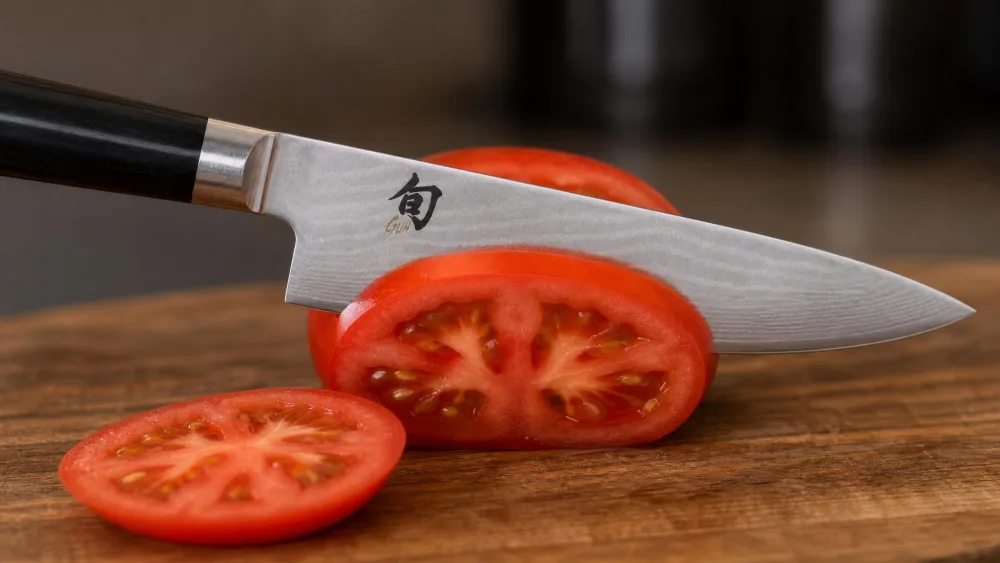
There is a moment every serious cook remembers: the first time a great gyuto glides through a ripe tomato with no pressure at all. No sawing, no squished pulp. Just a clean, effortless drop, and suddenly the drawer full of dull steel feels wrong.
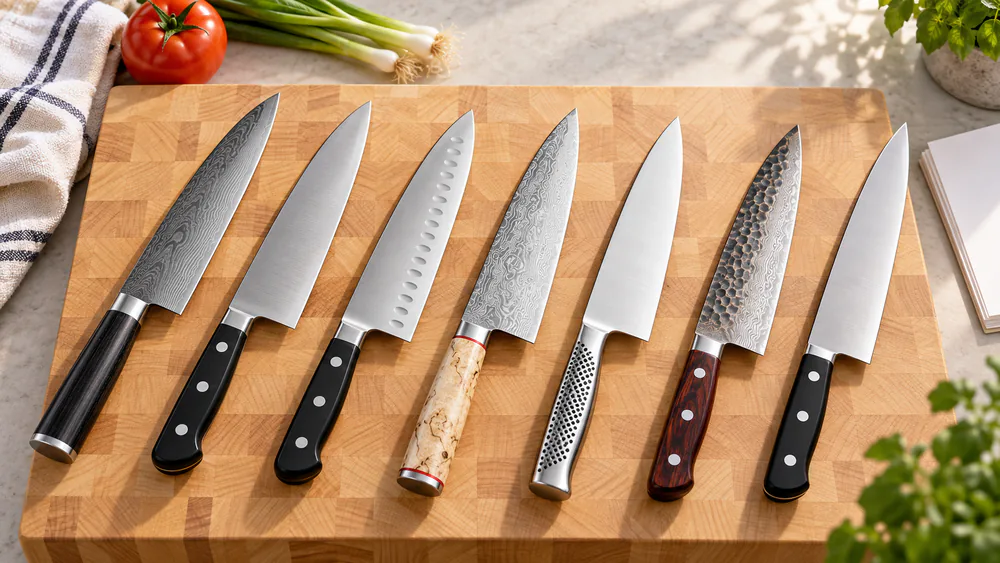
That moment is the whole argument for a Japanese chef knife, and it is the standard we test against. We bought seven of the best Japanese chef knives and ran them through a month of real dinner prep in rotation, checking the edge after every session. We scored how the handle felt in hour three, how long each edge stayed true through a week of cooking, and how easily the steel sharpened back on a home whetstone.
Every pick below earned its place on the strength of that testing, not its spec sheet. Read the quick picks for the short version and the full reviews for the details.
Quick Picks: The Best Japanese Chef Knives at a Glance
Here is the short version of our rankings. All seven knives scored well in our month of testing; the differences come down to edge retention, feel, and value. You can shop all 7 picks on Amazon to check current prices.
We bought all seven knives and ran them through a month of real dinner prep in rotation. Each knife worked the same menu: slicing tomatoes, mincing herbs, dicing onions, and breaking down chicken. After every session we checked the edge with a series of timed cuts, then sharpened each blade on a whetstone to see how easily the steel came back.
Our Testing Criteria
We scored every knife on three things. Edge retention, how long the factory edge stayed true through repeated prep. Feel, which covers balance, handle comfort in hour three, and how the grip wore on our hands. Value, what you get for the price, including the warranty and any sharpening support.
How We Scored Edge Retention, Feel, and Value
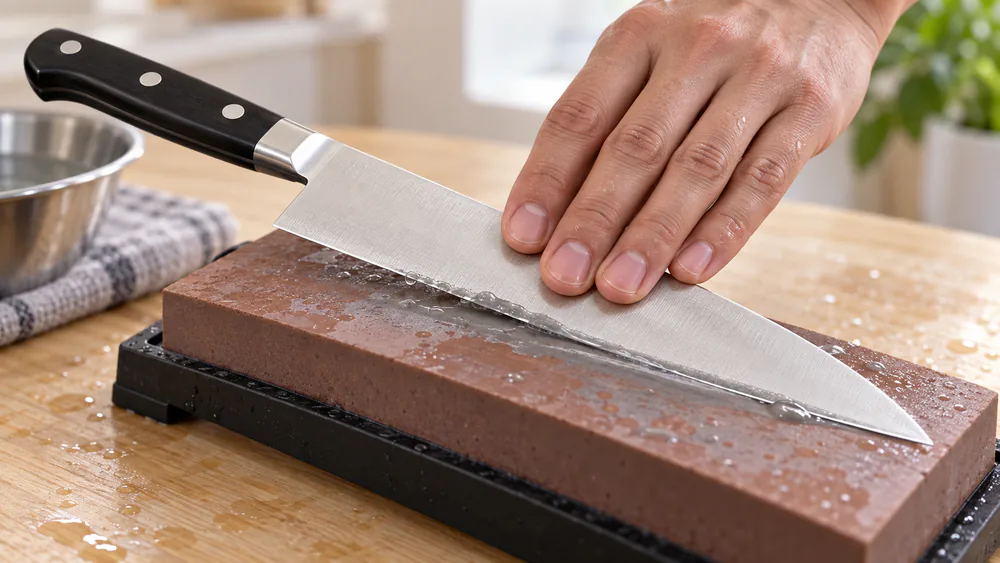
Each knife ran the same battery. We sliced ripe tomatoes on day one and again after a week of prep, timed onion dicing, and sharpened every blade on a 1000 grit stone followed by a 4000 grit finisher, recording how many passes it took to raise a fresh edge. Knives that held their edge longest and sharpened back easiest scored highest. We also noted food release, rust resistance, and how forgiving each edge was around bones and hard squash.
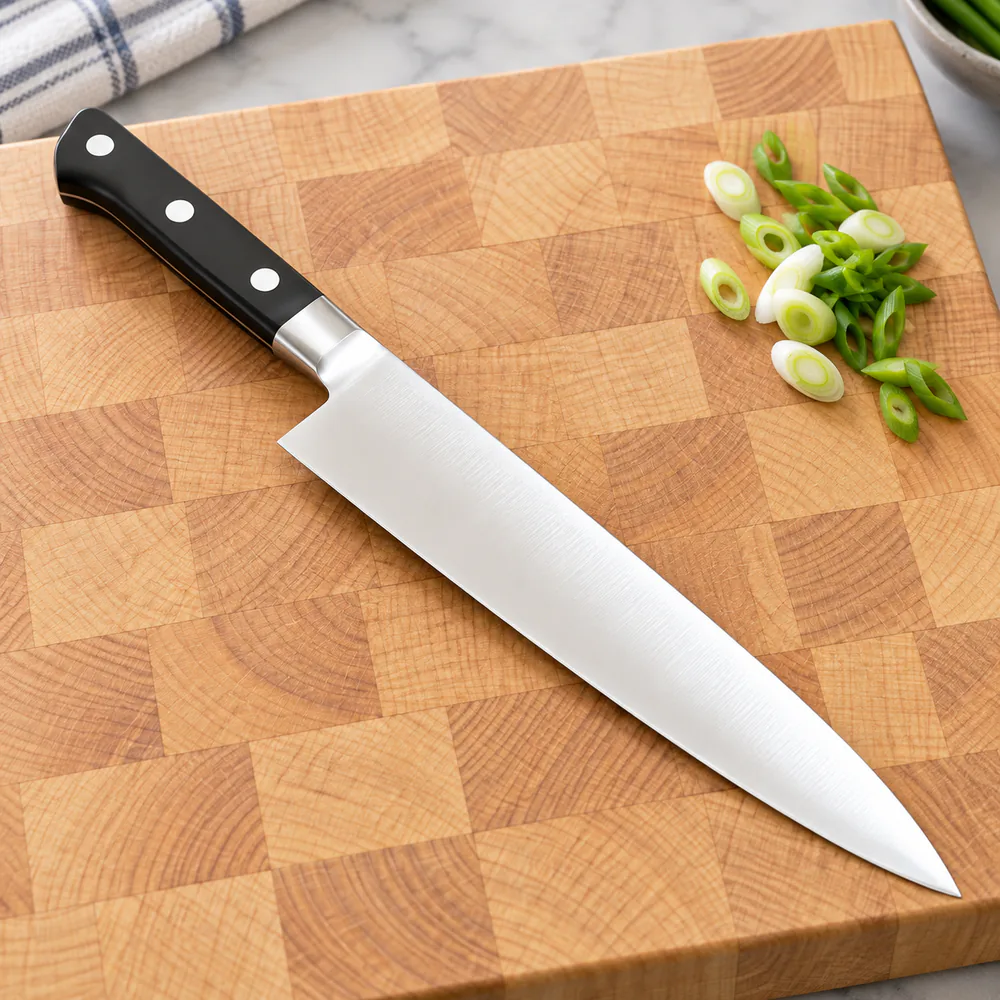
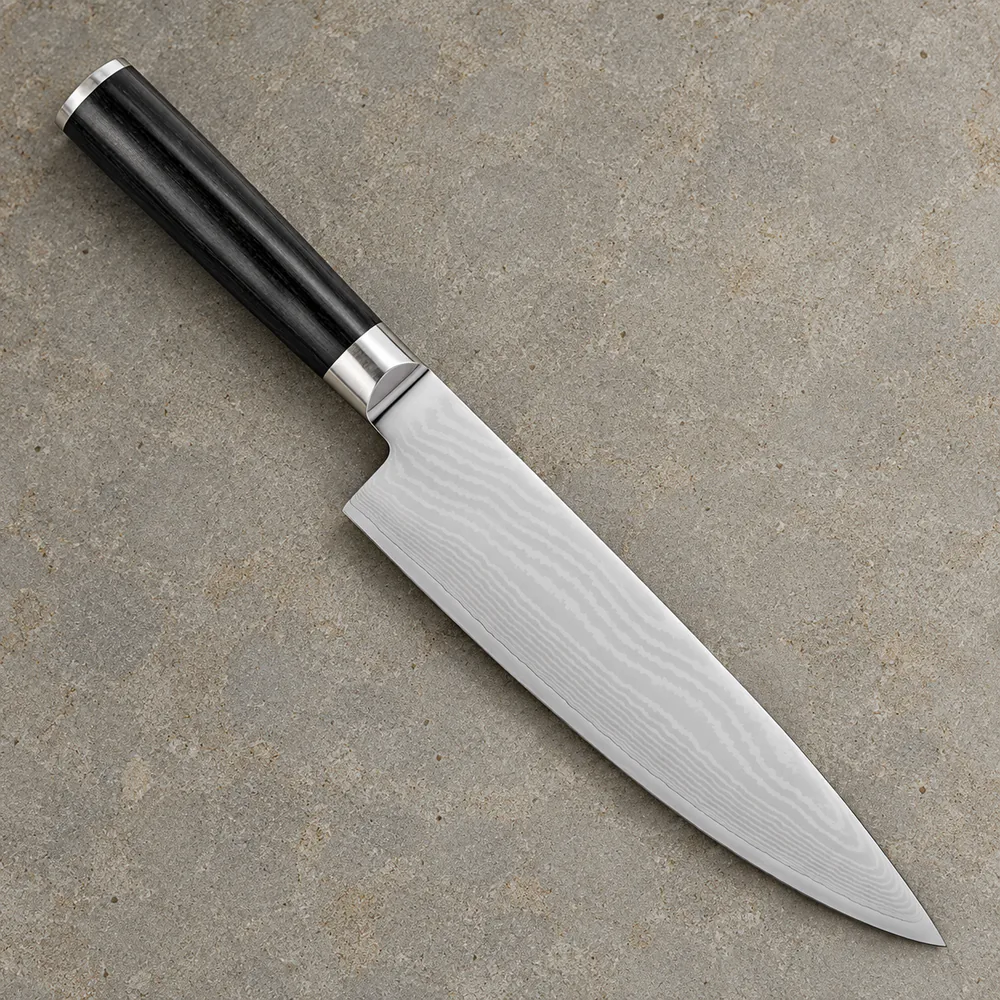
The Shun Classic is the knife we reached for first after a month of prep, because it does everything well, and it is the rare blade that earns that label without asking you to forgive a weakness. The 16 degree edge glides through a ripe tomato with no pressure, and it held its keenness for weeks of home cooking before it needed any attention. The D-shaped Pakkawood handle suits a pinch grip and fits average and smaller hands comfortably, and at about 240 g it is a light-feeling 8-inch blade. It is best for cooks who want one reliable knife with a brand behind it.
The best all-rounder gyuto for most kitchens
Gift-worthy brand name and a Damascus finish
Comfortable across a wide range of hand sizes
Specifications
Steel
VG-MAX core, 68-layer Damascus cladding
HRC
60 to 61
Edge angle
16 degrees per side
Blade
8 in (203 mm)
Handle
D-shaped Pakkawood
Weight
about 240 g
Origin
handcrafted in Japan
Warranty
free lifetime sharpening and honing
The first-good-knife tomato test.
Pros
Razor sharp out of the box
Edge holds for weeks of home prep
Well-balanced and light for an 8-inch knife
Cons
Chips on bones, frozen food, or hard squash
Hand-wash only
Key takeaway. Sharpness 9.5, Edge Retention 9.0, Value 8.5 out of 10. The Shun Classic earns Best Overall because it pairs a superb edge with a warranty that covers you for life.
Who Should Buy It
Buy the Shun if you want one knife that does everything well, with a respected brand behind it. It is the easiest single recommendation we make, and Shun has earned that reputation for good reason.
Who Should Skip It
Skip it if you regularly cut bones, frozen food, or butternut squash. The hard VG-MAX edge is genuinely unforgiving.
The Tojiro DP costs less than half of what the premium knives on this list do, and after a month of prep we kept forgetting it was the budget pick. For about $139 you get a VG-10 core wrapped in stainless cladding, ground to an 11 to 12 degree edge that arrived razor sharp and stayed that way through our whole testing month. It sharpens back quickly on a whetstone, and it feels lighter and more agile than a German knife in the same size. Best for budget buyers who want a real Japanese edge without the premium price.
Budget buyers who want a real gyuto
Home sharpeners who already own a whetstone
Anyone learning to maintain an edge
Specifications
Steel
VG-10 core, stainless san-mai cladding
HRC
60
Edge angle
11 to 12 degrees per side
Blade
210 mm (8.2 in), 1.9 mm spine
Handle
Western molded handle, full tang, no bolster
Weight
about 5.6 to 7.2 oz
Origin
made in Japan
Pros
Razor sharp out of the box
Light and agile for a budget gyuto
Punchy VG-10 edge for the price
Cons
Cladding scratches under an abrasive sponge
Squared heel can nick large hands
A few passes on a 1000 grit stone and the edge is back.
Who Should Buy It
Buy the Tojiro if you want the best edge for the least money and you already own or plan to buy a whetstone. It teaches the VG-10 edge most Japanese knives share.
Who Should Skip It
Skip it if you have large hands, since the squared heel has no bolster to protect your index finger.
3. MAC MTH-80 Professional Gyuto: Best Everyday Workhorse
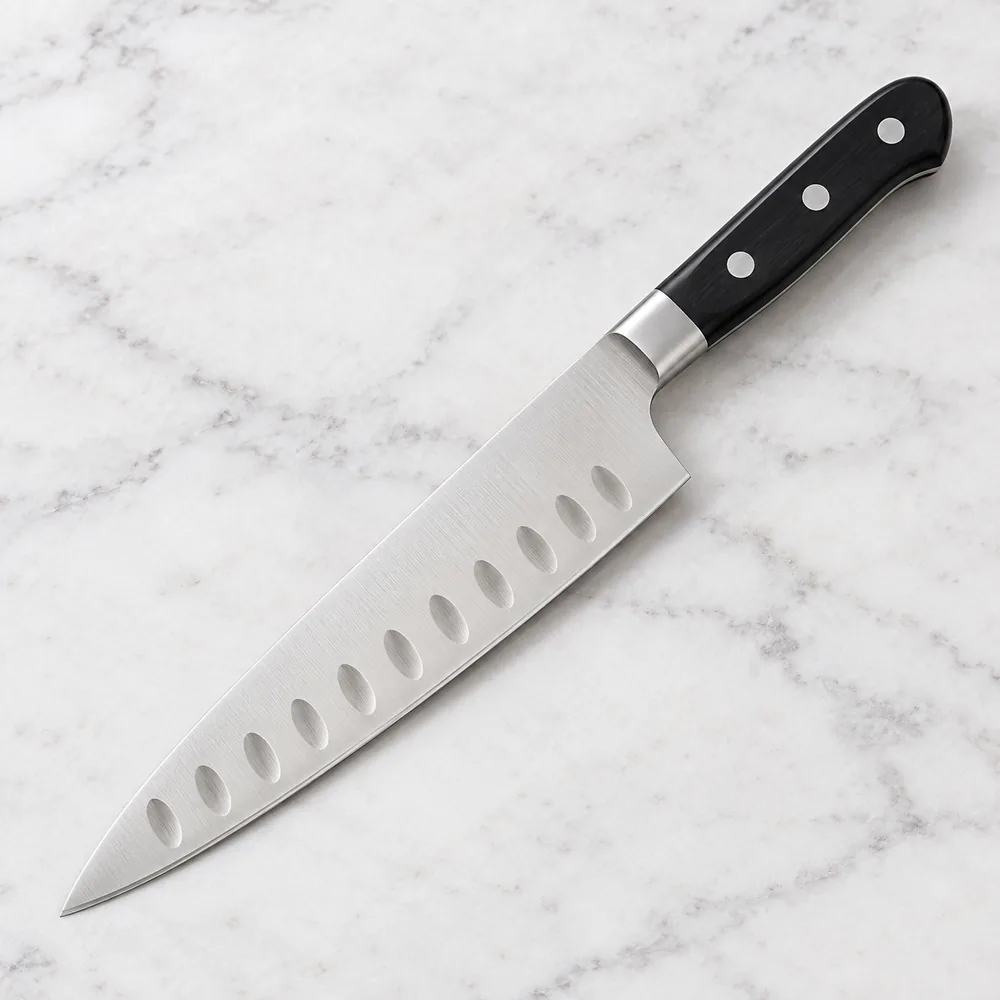
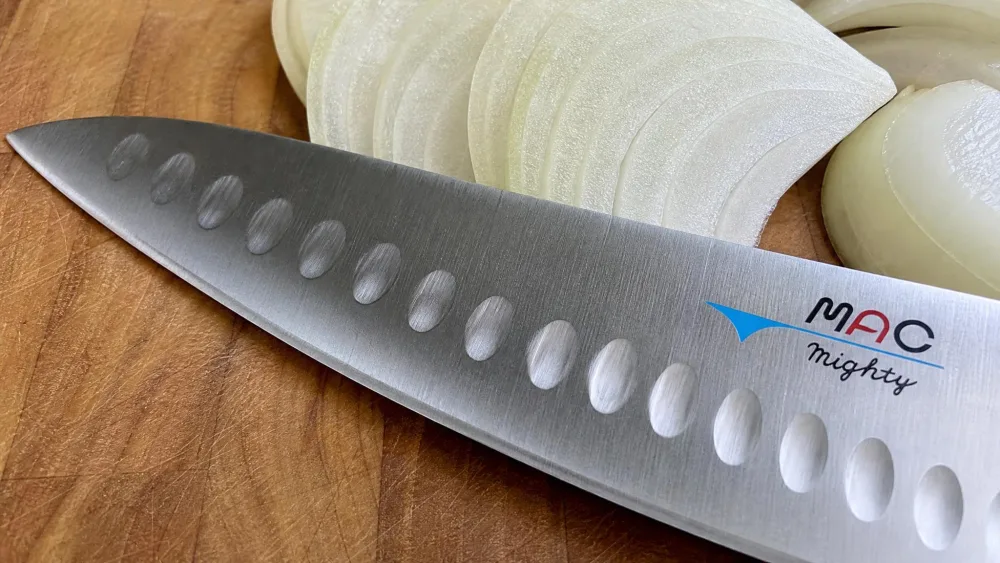
The first time we sliced a pile of roasted beets, the MAC's dimpled blade let each piece fall away clean while a flat knife beside it dragged and stuck, and that moment sums up why this is the workhorse of the lineup. The hollow-edge dimples genuinely release food when you slice root vegetables and chicken breast. It dulls a bit faster than the harder steels here, but a quick pass on a stone brings the edge straight back, which is the trade a busy cook makes gladly. Best for cooks who put one knife through heavy daily prep and want easy re-sharpening.
Heavy everyday prep and high-volume home cooks
Anyone who values easy re-sharpening
Cooks who prefer a pinch grip
Specifications
Steel
high-carbon chrome molybdenum vanadium
HRC
57 to 61
Edge angle
15 degrees per side
Blade
210 mm (8.2 in), the listing reads 200 mm
Handle
Pakkawood, Western style
Weight
about 6.4 oz
Warranty
25 years
Origin
made in Japan
Pros
Hollow-edge dimples reduce food sticking
Sharpens back easily on a whetstone
Pakkawood handle that favors a pinch grip
Cons
Dulls faster than the harder steels here
Rusts if you do not dry it immediately
The granton dimples that release food.
Who Should Buy It
Buy the MAC if you want one knife that disappears into daily prep and asks nothing fancy of you in return. It is built to be used hard and taken for granted, and that is a compliment.
Who Should Skip It
Skip it if you will not dry a knife the moment you wash it; a damp blade left overnight will spot.
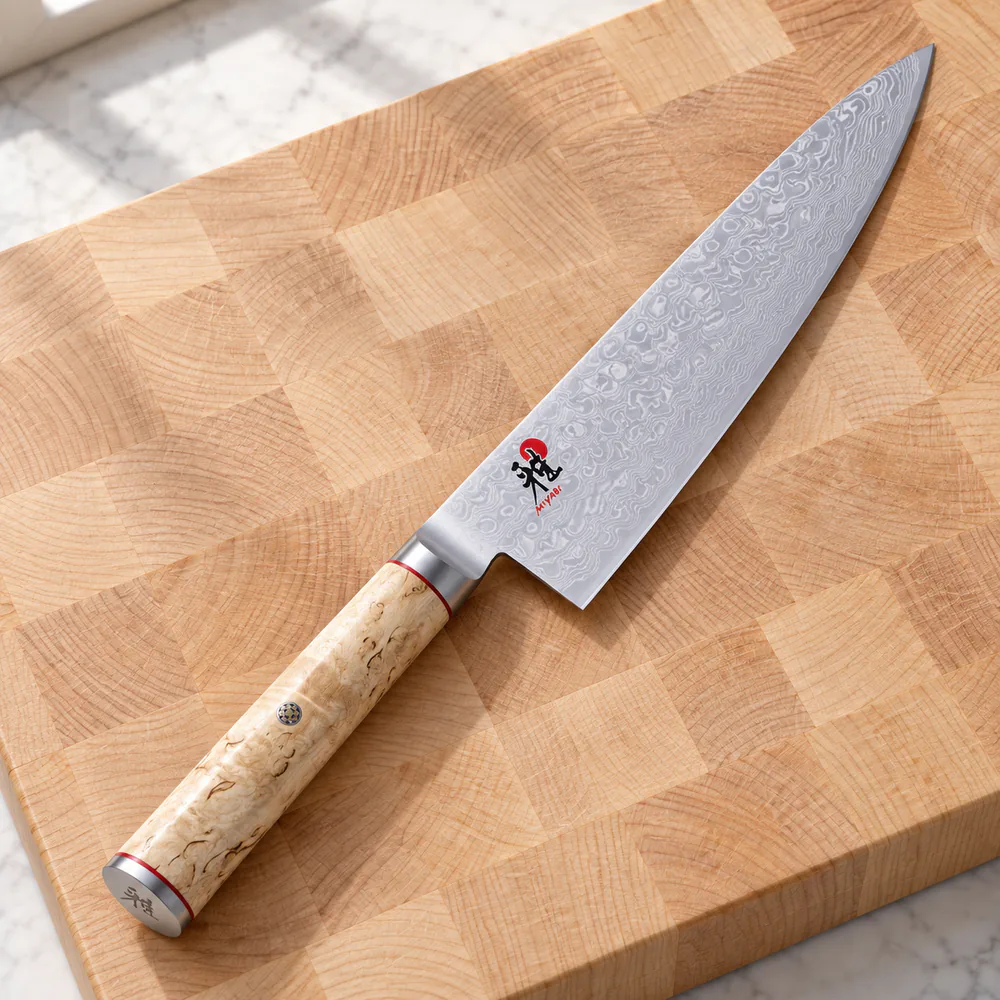
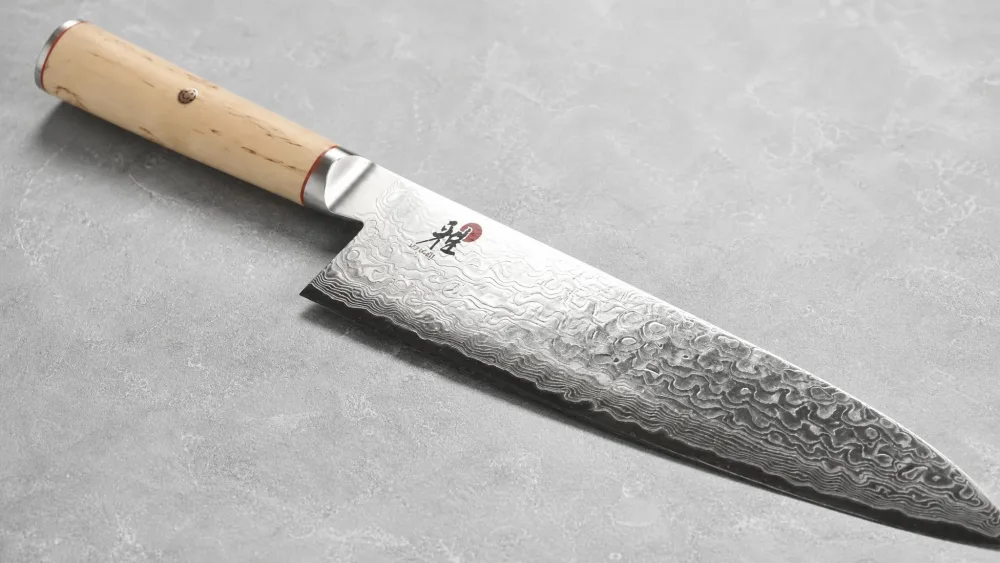
The night we unpacked the Miyabi, it passed through a tomato skin like it was not there, and a month later it still had not met the whetstone, which tells you everything about what this knife is. The SG2 powder steel holds a 63 HRC edge that stays sharp for months, and the hand-honed 9.5 to 12 degree bevel is the sharpest factory edge we tested. The Karelian birch handle is light and beautiful, though it stains if you set it down in meat residue, so you will pamper it. Best for enthusiasts who want a precision instrument and already own a fine whetstone.
Enthusiasts who want the hardest edge here
Cooks who already own a fine whetstone
Buyers who will hand-wash and pamper it
Specifications
Steel
SG2 micro-carbide powder core, 100-layer Damascus
HRC
about 63, CRYODUR ice-hardened
Edge angle
9.5 to 12 degrees per side
Blade
7.87 in (200 mm)
Handle
Karelian birch
Weight
about 6.1 oz
Origin
handcrafted in Seki, Japan
Pros
63 HRC edge holds for months
Superb hand-honed factory edge
Karelian birch handle is light and balanced
Cons
Micro-chips on bones and hard squash
Needs a fine whetstone, not a pull-through
Costs more than every other pick here
The 100-layer flower Damascus over the SG2 core.
Who Should Buy It
Buy the Miyabi if you want the sharpest edge and the finest handle we tested and you are comfortable maintaining it. In our testing it stayed shaving-sharp through long stretches of daily use.
Who Should Skip It
Skip it if you sharpen with a pull-through or cut bones and hard squash. The birch handle also stains on meat residue.
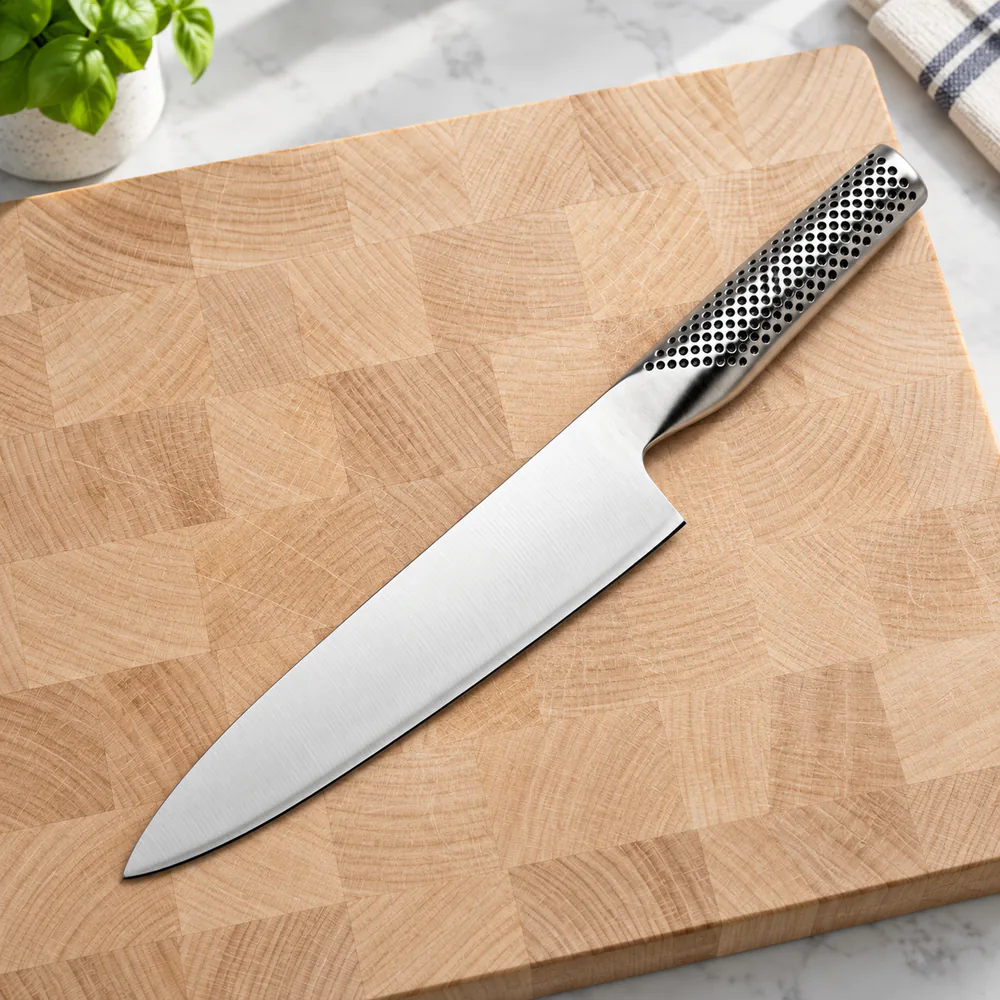
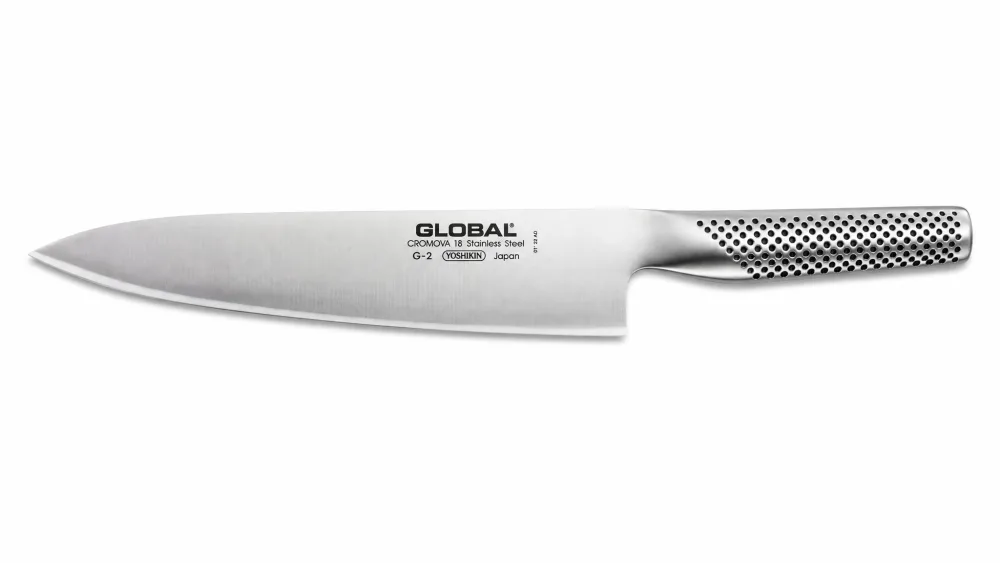
The Global G-2 is the most rust-proof blade on this list; the CROMOVA 18 stainless shrugs off moisture better than any of the other steels here, and for a first Japanese knife that peace of mind is exactly right. The night we put in a long prep session on vegetables, the Global was the knife that never wore on our wrists; at about 170 g it stays feather-light well into hour three. The dimpled steel handle is nearly indestructible, and at 56 to 58 HRC the edge dulls a little sooner than the harder picks but forgives the mistakes a new cook makes. The one catch is the convex grind, which is genuinely hard to sharpen freehand; budget for a whetstone or a professional, not a pull-through. Best for new cooks who want low maintenance.
First-timers who want low maintenance
Cooks who prefer a light knife
Anyone who wants a rust-proof blade
Specifications
Steel
CROMOVA 18 stainless
HRC
56 to 58
Edge angle
15 degrees per side
Blade
8 in (20 cm)
Handle
one-piece dimpled steel, sand filled
Weight
about 170 g
Warranty
lifetime against defects
Origin
made in Japan
Pros
Feather-light and perfectly balanced
About as rust-proof as a knife gets
One-piece handle never loosens
Cons
Slim steel handle runs thin in large hands
Convex grind is tricky to sharpen freehand
The seamless steel handle, sand filled for balance.
Who Should Buy It
Buy the Global if you want a light, rust-proof knife that will not intimidate a new cook. It stays sharp through years of daily use.
Who Should Skip It
Skip it if you have large hands, because the slim steel handle runs thin for a bigger grip, or if you plan to sharpen freehand. The convex grind needs a whetstone or a professional, not a pull-through.
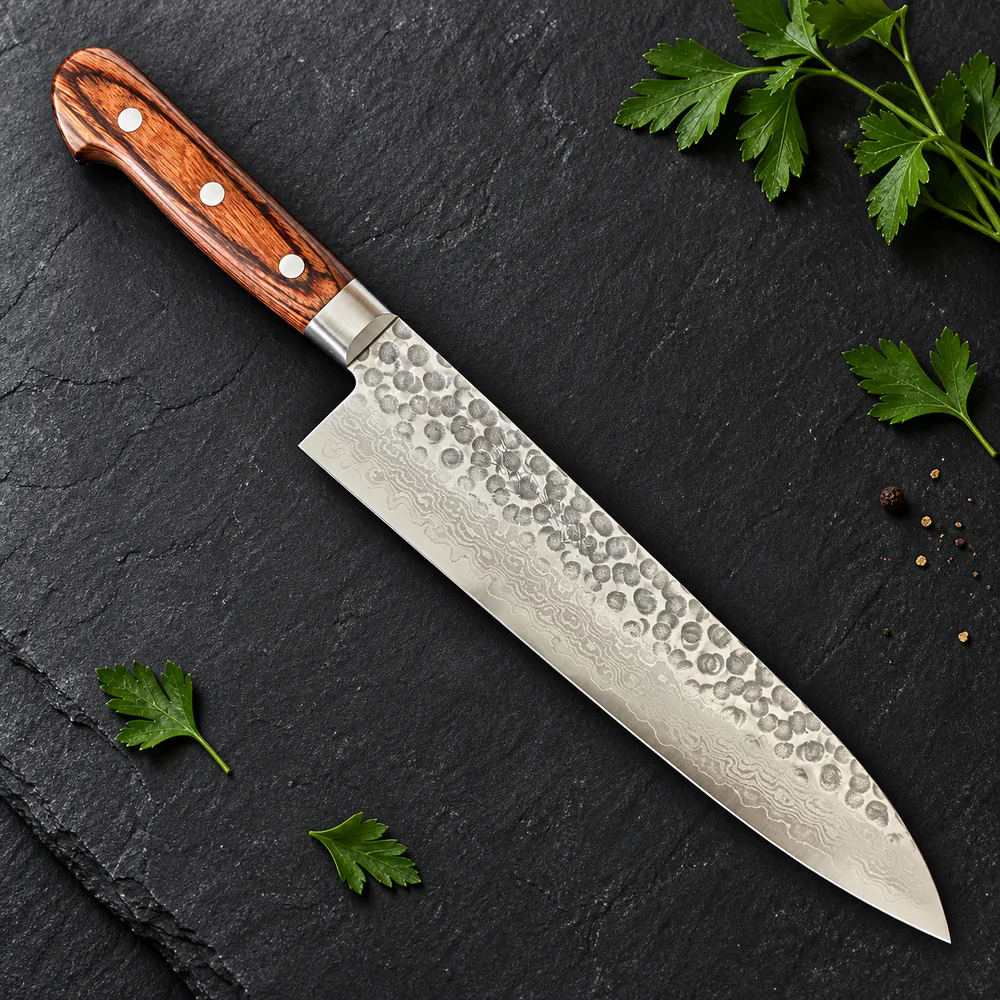
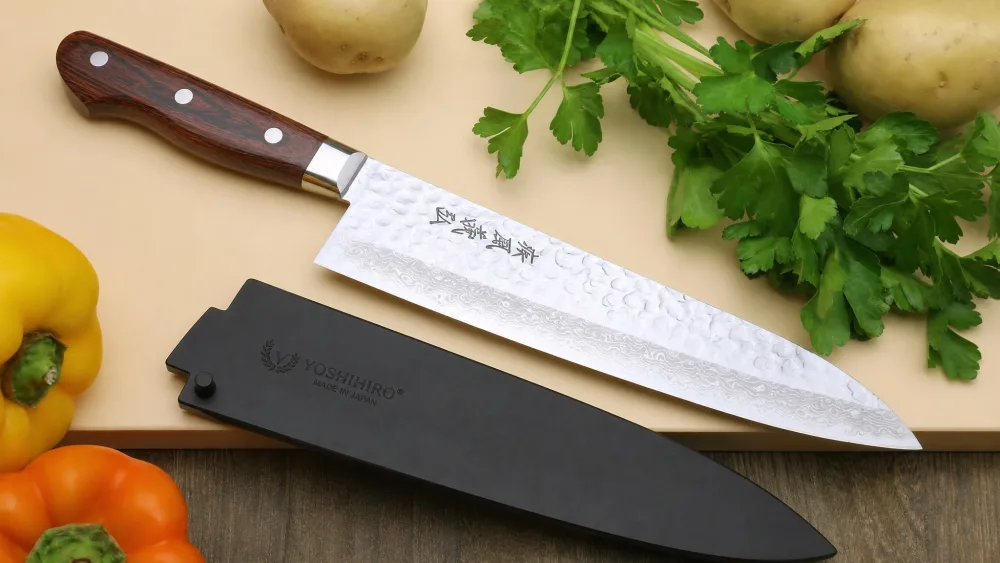
The Yoshihiro is the knife guests notice first, but it earned its place the night we diced a kilo of onions and the hammered face never once gummed up. The 60 HRC VG-10 edge held well with a light 1000 and 3000 grit touch-up, and the look and the cut both deliver. It is forged in Japan with a handsome Western mahogany handle, smooth enough to slide in a saya you will want to buy separately. Best for cooks who want a showpiece that still cuts like a daily driver.
Cooks who want a showpiece Damascus blade
Anyone who likes good food release
Home sharpeners comfortable with a whetstone
Specifications
Steel
VG-10 core, 16-layer hammered Damascus
HRC
60
Edge
double bevel, stain-resistant
Blade
210 mm (8.25 in)
Handle
Western full-tang mahogany
Weight
not stated, thin blade
Origin
forged and handcrafted in Japan
Pros
Stunning hammered Damascus finish
Hammered face releases sticky produce
Holds its edge with a light touch-up
Cons
Smooth handle gives limited grip when oily
Ships without a blade guard
Budget for a separate 210 mm saya.
Who Should Buy It
Buy the Yoshihiro if you want a Damascus showpiece that earns its place on the wall and the board. Few blades turn as many heads for as little compromise.
Who Should Skip It
Skip it if you do not want to buy a blade guard, since the knife ships without one, or if your hands get very oily while you cut.
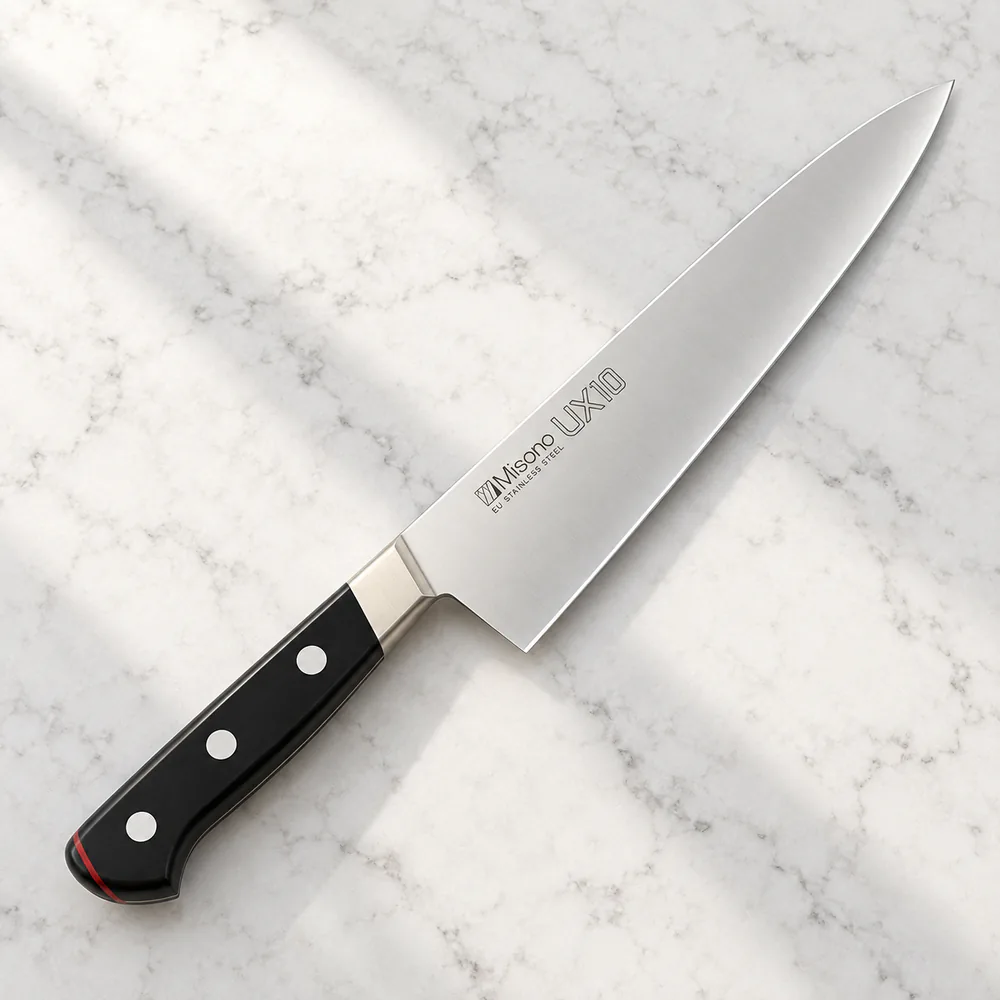
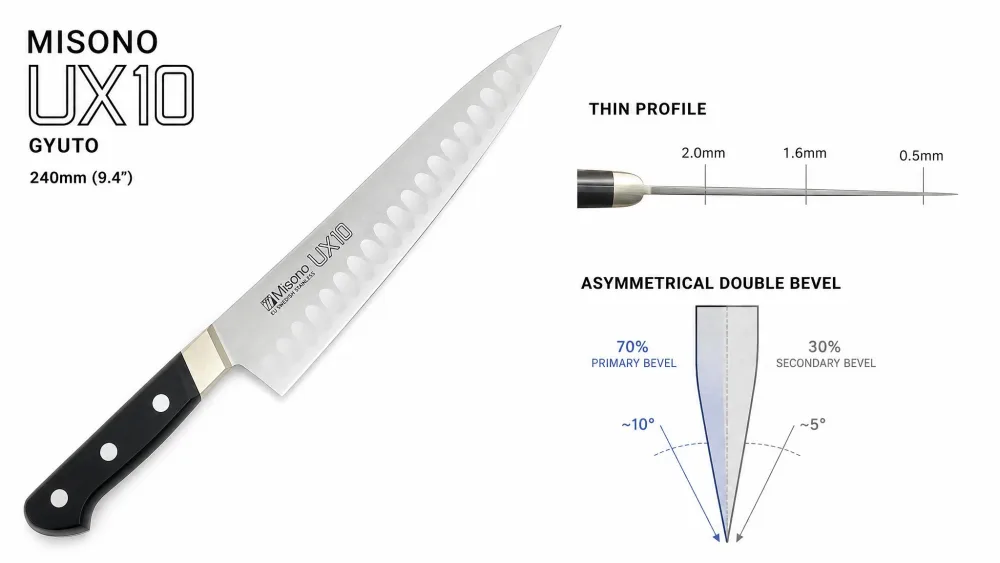
The first time we put the Misono on the 1000 grit stone, it shed steel like a carbon knife and came off the finisher shaving-sharp, which is the reason sharpening enthusiasts pay for it. The monosteel Swedish stainless blade is ground to an asymmetrical 70/30 bevel that is incredibly sharp and holds an edge longer than knives that cost two to three times as much. It stays stain-free while it sharpens almost like a carbon steel, and the slim profile rewards a practiced pinch grip. Best for sharpening enthusiasts who already know their way around a whetstone.
Enthusiasts with whetstone experience
Cooks who want a stain-free pro blade
Anyone who appreciates a monosteel design
Specifications
Steel
high-purity Swedish stainless, monosteel
HRC
reported 59 to 62
Edge
asymmetrical 70/30 double bevel
Blade
210 mm (8.2 in)
Handle
Western pakkawood, silver-filled rivets
Weight
about 159 to 170 g
Origin
made in Japan
Pros
Holds an edge like a far pricier knife
Sharpens almost like a carbon steel
Stain-free monosteel construction
Cons
Squared spine digs into the index finger
Offset bevel needs a skilled whetstone hand
The Misono's 70/30 edge and thin profile.
Who Should Buy It
Buy the Misono if you already sharpen on a whetstone and want a professional stainless gyuto that rewards that skill. The offset 70/30 bevel is a joy once you learn it, and specialty retailers like Korin also stock it.
Who Should Skip It
Skip it if you are new to sharpening. The offset 70/30 bevel behaves differently from a standard edge, and the squared spine will annoy a pinch grip until you get used to it.
Japanese Chef Knife Buying Guide
Choosing a Japanese chef knife comes down to four decisions: steel, hardness, blade shape, and handle. Most buyers overthink the brand and underthink those four.
Steel Type: Stainless vs. Carbon
Japanese knives come in two steel families. Stainless steels like VG-10, SG2, and CROMOVA 18 resist rust and need no special care beyond drying. Carbon steel takes a sharper edge and sharpens faster, but it rusts within minutes if you do not dry it. The craft of the Japanese kitchen knife descends from samurai sword making, and the Japan Times explains that high-carbon hagane steel takes an extreme edge but dulls, chips, and rusts if not maintained daily. For a first knife, stainless is the sensible call.
Hardness (HRC) and Edge Retention
Hardness predicts edge retention, and it separates a $30 knife from a $300 one. Our picks range from 56 to 58 HRC on the Global to about 63 HRC on the Miyabi. A harder edge holds longer but chips on bones or hard squash; a softer edge dulls sooner but forgives mistakes. Match the hardness to how you cut.
Warning. Never cut bones, frozen food, or butternut squash with these thin, hard edges. A careless stroke into a chicken bone can chip the blade visibly, and glass or ceramic boards carry the same risk.
Blade Profile: Gyuto vs. Santoku vs. Nakiri
The gyuto is the Japanese chef's knife, the all-rounder with a curved belly built for the rocking chop and for push-cutting. The santoku is shorter and flatter, built for vegetables, meat, and fish, and it is often the friendlier choice for home cooks. A typical home-cook santoku runs 165 to 180 mm with a VG-10 core, flatter than a gyuto and easier to control. The nakiri is the specialist: a flat, square-tip blade made almost entirely for vegetables. Around them sit the deba for fish butchering, the yanagiba for slicing raw fish, the bunka, and the petty. Brands like Masamoto build each of these to a professional standard. If you want a dedicated vegetable blade, see our best santoku knife and best nakiri knife guides.
Handle Style: Western vs. Wa
Western handles, like the Shun's D-shaped Pakkawood or the Misono's riveted Western handle, fill the palm and feel familiar. Wa handles are the traditional Japanese style, light octagonal or D-shaped wood over a hidden tang, and they shift the balance forward toward the blade, rewarding a pinch grip. If you already use a pinch grip, a wa handle can feel like an upgrade; otherwise, stick with Western.
Budget: What to Spend on a Japanese Chef Knife
Street prices move week to week, so treat these as starting points. The Tojiro DP gyuto delivers a real VG-10 edge for about $139. Around $119 to $187, the Global G-2, MAC MTH-80, Yoshihiro, and Shun Classic add better handles and more forgiving grinds. Above $300, the Miyabi Birchwood buys a 63 HRC edge and a Karelian birch handle. If you are weighing several blades, our best Japanese knives for home use and best Japanese cooking knives guides cover the alternatives.
Tip. Hand-wash every Japanese knife, dry it immediately, and learn a whetstone. A 1000 grit stone sets the edge and a 4000 or 6000 grit stone finishes it, which covers nearly everything on this list.
Japanese Chef Knife FAQ
Is a Japanese chef knife worth it?
For most cooks who cut vegetables, meat, and fish regularly, yes. A Japanese knife takes a sharper edge and holds it longer than a comparably priced German knife, and the difference shows up most in precise work. If you mostly cut soft food and sandwiches, a cheaper Western knife may be all you need.
Gyuto or santoku: which should a home cook pick?
Start with how you cook rather than the blade name. If you do a bit of everything, the gyuto's curved belly makes it the better single knife, and it handles a chicken breast as easily as an onion. If you mostly prep vegetables and want a shorter, flatter blade, the santoku is easier to control. If you slice a lot of fish, our best sushi knife for home use guide covers the more specialized blades.
Are Japanese chef knives hard to maintain?
Not with the right habits. Hand-wash every knife, dry it immediately, and store it on a magnetic strip or in a saya. Hone regularly and give the edge a whetstone pass every few months. Carbon steel demands more than stainless, but every pick here is stainless and only asks for a towel dry.
What's the best Japanese chef knife for beginners?
We would send most new cooks to the Global G-2 or the Tojiro DP gyuto. The Global is light and about as rust-proof as a knife gets, so it forgives the care mistakes a new cook makes; just know its convex grind needs a whetstone or a professional when the edge finally goes. The Tojiro costs less, sharpens back quickly, and teaches the VG-10 edge most Japanese knives share.
How often should you sharpen a Japanese chef knife?
Hone with a steel or ceramic rod every few sessions, and give the edge a real whetstone pass every few months depending on how much you cook. In our testing the 63 HRC Miyabi held for months before it needed work. A 1000 grit stone sets the edge and a 4000 or 6000 grit stone finishes it.
Are Japanese chef knives dishwasher safe?
No. The heat, detergent, and jostling dull the edge, and constant moisture is the fastest way to rust even a stainless blade. Every pick here is hand-wash only. Dry immediately and the edge stays truer than any shortcut.
Final Thoughts
After a month of real prep, the Shun Classic is the knife we would buy first for most kitchens: it balances a superb edge, a comfortable handle, and the kind of all-round competence that makes a knife disappear into your work. The knife that surprised us most was the Misono UX10, a professional stainless gyuto that holds an edge like a much more expensive blade and sharpens almost like a carbon steel. Whichever pick you land on, spend what you save on a good whetstone and a board that will not dull the edge. Your cooking will thank you.