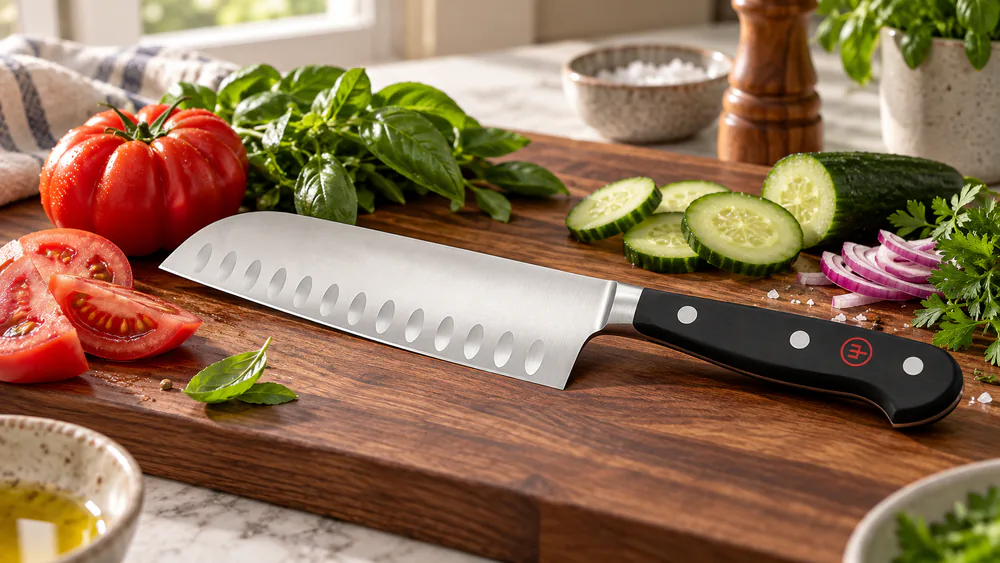
Helping you create a kitchen you love.

Knives & Cutlery

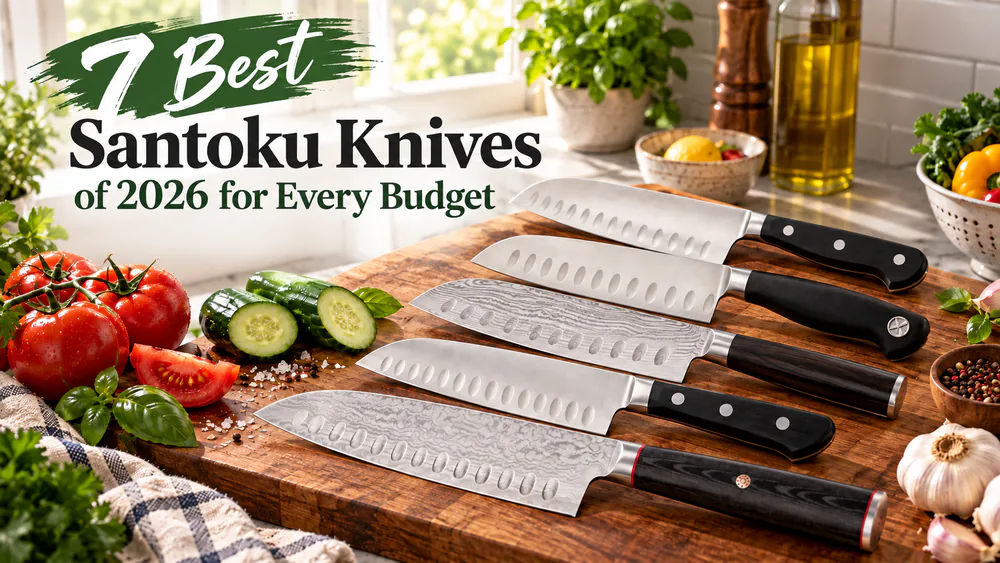
7 Best Santoku Knives of 2026 for Every Budget

As an Amazon Associate we earn from qualifying purchases. We may earn a commission from links on this page, at no extra cost to you. Learn more.

7 Best Santoku Knives of 2026 for Every Budget

If you are tired of wrestling a full-size chef's knife through a pile of vegetables, the answer might be shorter than you think. A santoku is a Japanese-style blade whose name means "three virtues," a nod to meat, fish, and vegetables. We tested 7 santoku knives through a week of daily prep, scoring edge retention, food release, handle comfort, and how easily each steel sharpens. Prices run from about $40 to $190, and the Wüsthof Classic took the top spot.

How We Chose the Best Santoku Knives

What We Tested

We put 7 santoku knives on our boards for a week of daily prep: onion and potato dice, carrot julienne, herb mincing, tomato slices, and light chicken breakdown. Every winner earned its spot against knives that cost five times as much. We also watched how each blade behaved through a long prep session, where a so-so handle shows.

How We Evaluated

We scored each knife on the same six criteria. Out-of-box sharpness matters less than how an edge holds after a week of prep, so we checked edges after every session. Food release came next; we counted how often potato and cucumber slices stuck. Then handle comfort, weight and balance, and how easily the steel took a fresh edge.

Why You Should Trust Us

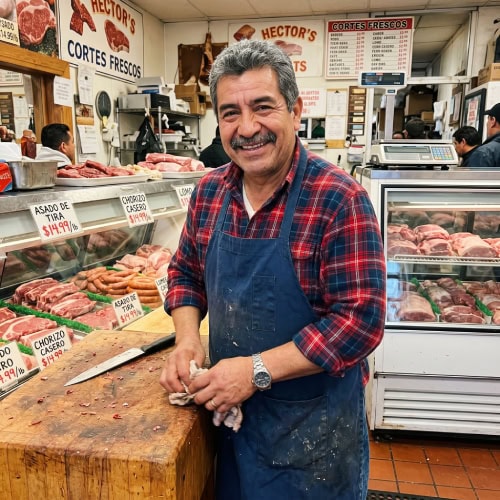
Frank Delgado, our knives and cutlery lead, spent 20 years behind a butcher counter and apprenticed under the master sharpener who serviced his neighborhood's restaurants. That is the perspective we bring: a knife is not a gadget but a coworker. We judge edges the way working kitchens do, which is why each review leans on edge retention and handle wear.

The Best Santoku Knives at a Glance

Here are the three we would put in a working kitchen today, and the comparison table below lines up all 7 picks. If budget is all that matters, the best affordable knife sets is a good place to look, and the best Japanese knife sets covers the family.

RankProductBest forKey specRatingBuy
1

Wüsthof Classic 7-Inch Santoku Knife

Best Overall
The premium do-everything blade for most kitchens 7 in, 58 HRC 4.8 View on Amazon
2

Mercer Culinary Genesis 7-Inch Santoku Knife

Best Budget
Forged performance for less than $40 7 in, 56 HRC 4.7 View on Amazon
3

Shun Classic 7-Inch Hollow Ground Santoku Knife

Best Japanese
Hard Damascus steel and free lifetime sharpening 7 in, 61 HRC 4.7 View on Amazon

We earn a commission if you make a purchase, at no additional cost to you.

See full comparison table
ProductBest forBlade materialBlade lengthHandle materialHardness (HRC)Edge typeRating
Wüsthof Classic 7" Santoku Best Overall Forged X50CrMoV15 7 in (180 mm) POM, triple-riveted 58 Hollow-edge (Granton) 4.8
Mercer Genesis M20707 Best Budget forged pick Forged high-carbon German steel 7 in Santoprene, full bolster 56 Granton 4.7
Shun Classic 7" Hollow Ground Best Japanese VG-MAX Damascus 7 in (178 mm) D-shaped Pakkawood 61 Hollow-ground 4.7
MAC Professional MSK-65 Best for slicing Sub-zero tempered AUS-8 6.5 in (170 mm) Pakka wood, steel bolster ~59 Dimpled (Granton) 4.6
Victorinox Fibrox 7" Granton Best Value Stamped X50CrMoV15 7 in (17 cm) Fibrox Pro TPE 55-56 Granton (fluted) 4.7
Miyabi Kaizen 7" Hollow Edge Best Luxury VG10 flower Damascus 7.09 in D-shaped linen Micarta 60 Hollow edge 4.6
imarku 7" Santoku Best hollow-edge value High-carbon stainless 7 in (17.8 cm) Pakkawood 56 ± 2 Hollow (scalloped) 4.5

1. Wüsthof Classic 7-Inch Santoku Knife - Best Overall

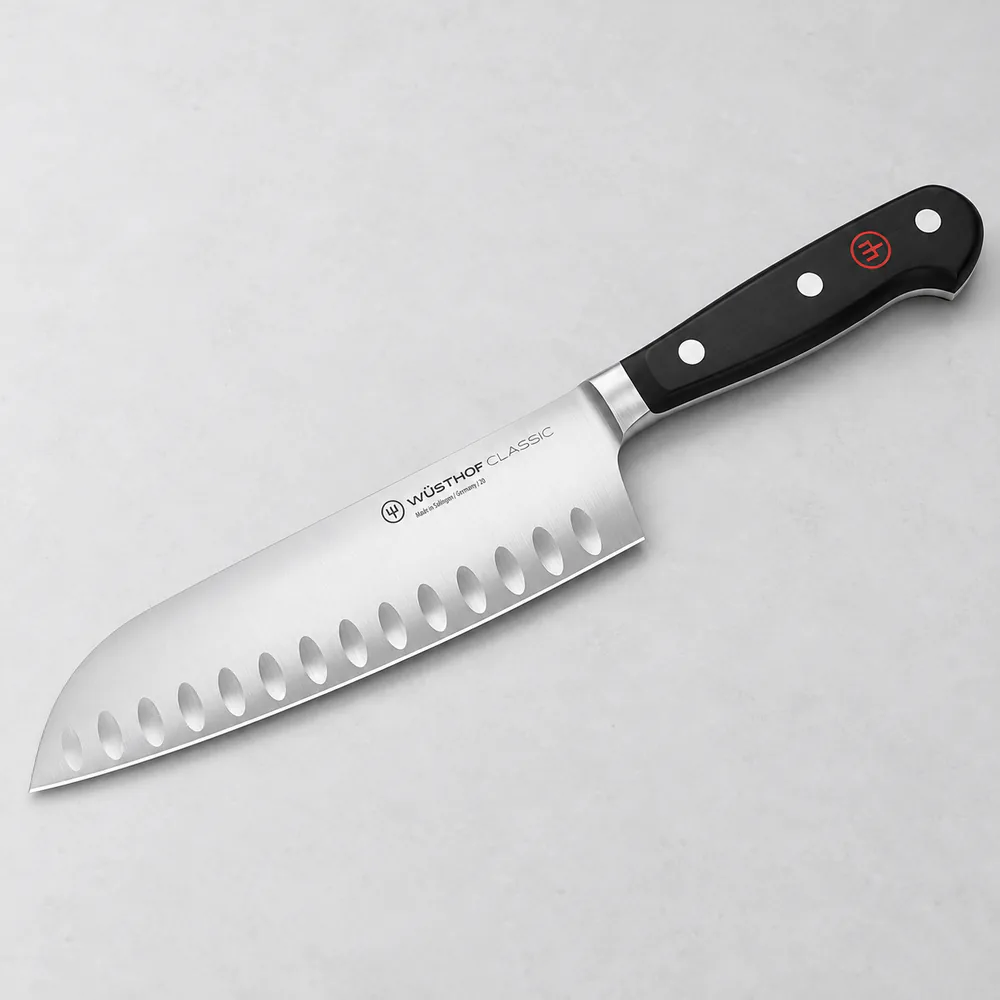
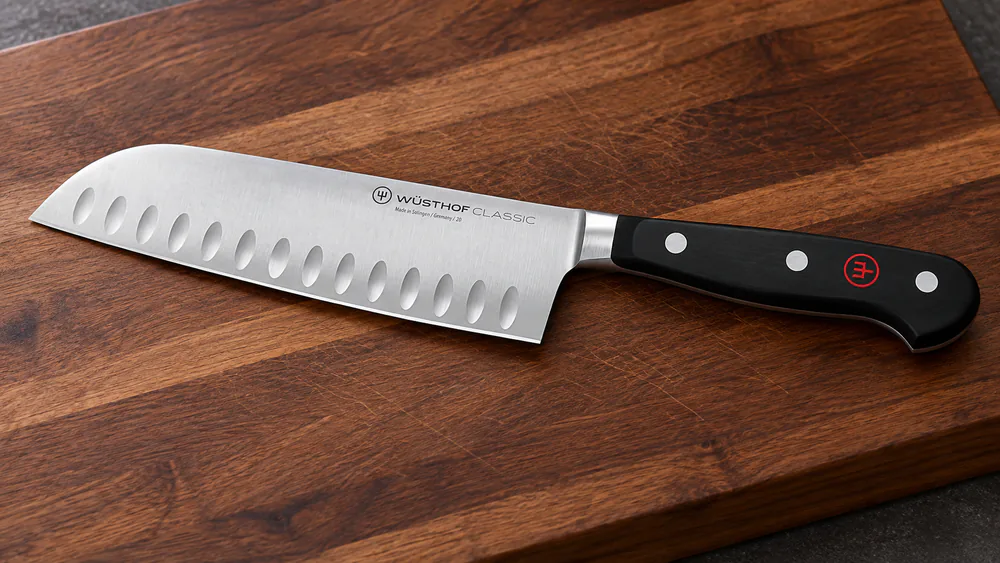
The Wüsthof Classic 7-inch santoku knife with a forged German steel blade and triple-riveted POM handle on a wooden cutting board.
The knife we kept reaching for all week.

Wüsthof Classic 7" Santoku Knife, Forged German Steel

Wüsthof Classic 7-Inch Santoku Knife
1

Wüsthof Classic 7-Inch Santoku Knife

Best Overall
Check Price on Amazon
4.8/5

The Wüsthof Classic 7-Inch Santoku is the knife we kept reaching for all week. Its forged X50CrMoV15 blade at 58 Rockwell rode a triple-riveted POM handle, and at about $170 it is the most expensive knife here. It came out of the box razor sharp and held that edge for a week.

Pros

  • Razor sharp out of the box and held its edge through a week of daily prep
  • The hollow-edge indentations keep sliced food from sticking to the blade
  • Weight and balance feel right to cooks of different hand sizes

Cons

  • The price is hard to swallow next to knives that cost a fraction as much
  • It is harder to sharpen at home than a softer German steel

Specs at a Glance

Wüsthof Classic 7-Inch Santoku Knife specs
Blade length7 inches (180 mm)
Steelforged X50CrMoV15 high-carbon stainless, 58 HRC
Handletriple-riveted POM, full tang and bolster
Edgehollow-edge (Granton) indentations, about 10 degrees per side
Weightabout 6.4 ounces (182 g) in most listings, though retailer figures vary (one store lists the 17 cm scalloped variant at 121 g), so treat it as approximate
Price tierpremium, about $170

Who Should Buy It

For the serious home cook who wants one premium knife that lasts. Wüsthof forges it in Solingen, Germany, which has made knives since 1814, with a limited lifetime warranty. Check the latest price on Amazon or browse Wüsthof's official site.

Who Should Look Elsewhere

If $170 feels like too much, the Mercer Genesis does 80 percent of the job for a quarter of the price. Want harder Japanese steel? Try the Shun Classic.

2. Mercer Culinary Genesis 7-Inch Santoku Knife - Best Budget Forged Pick

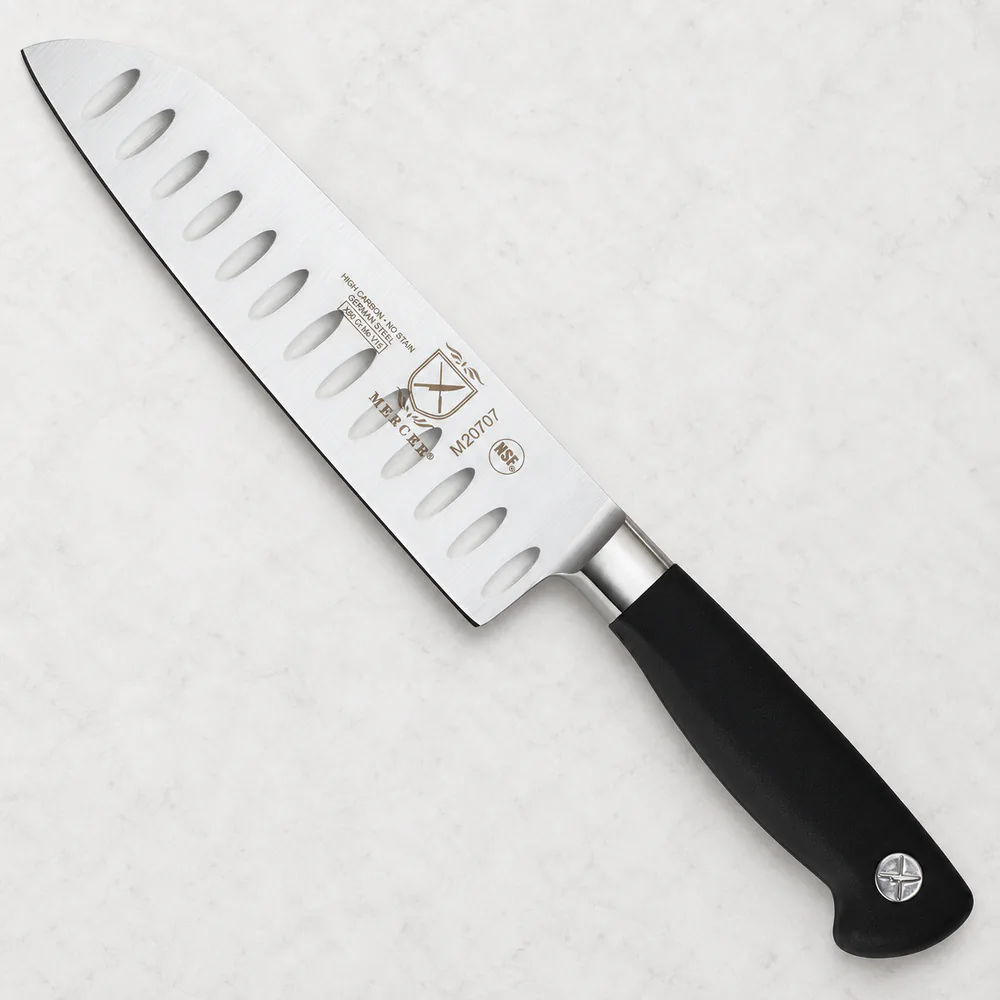
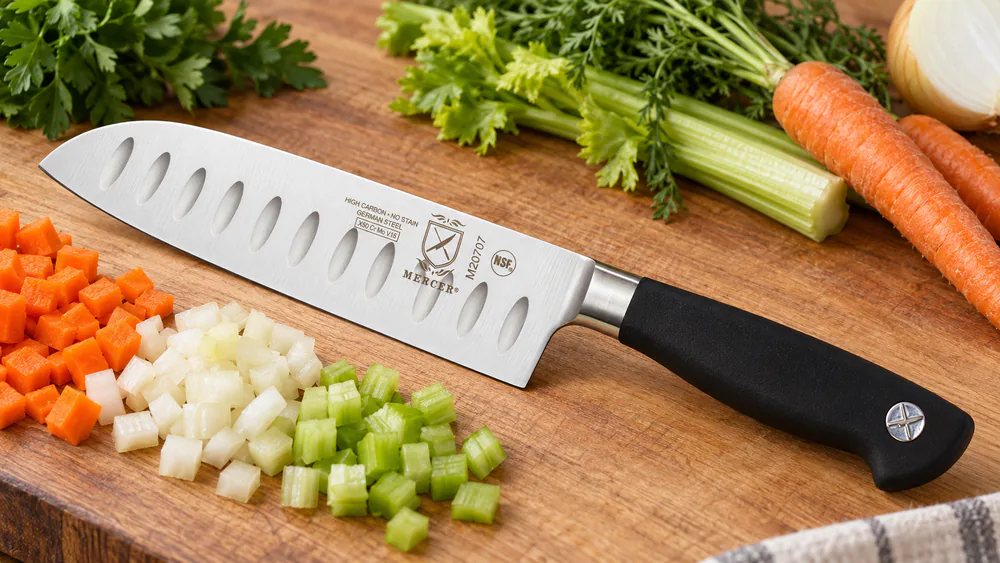
The Mercer Culinary Genesis 7-inch santoku knife with a black Santoprene handle and scalloped Granton blade beside a pile of diced vegetables.
Punches well above its $40 price.

Mercer Culinary M20707 Genesis 7-Inch Santoku Knife

Mercer Culinary Genesis 7-Inch Santoku Knife
2

Mercer Culinary Genesis 7-Inch Santoku Knife

Best Budget
Check Price on Amazon
4.7/5

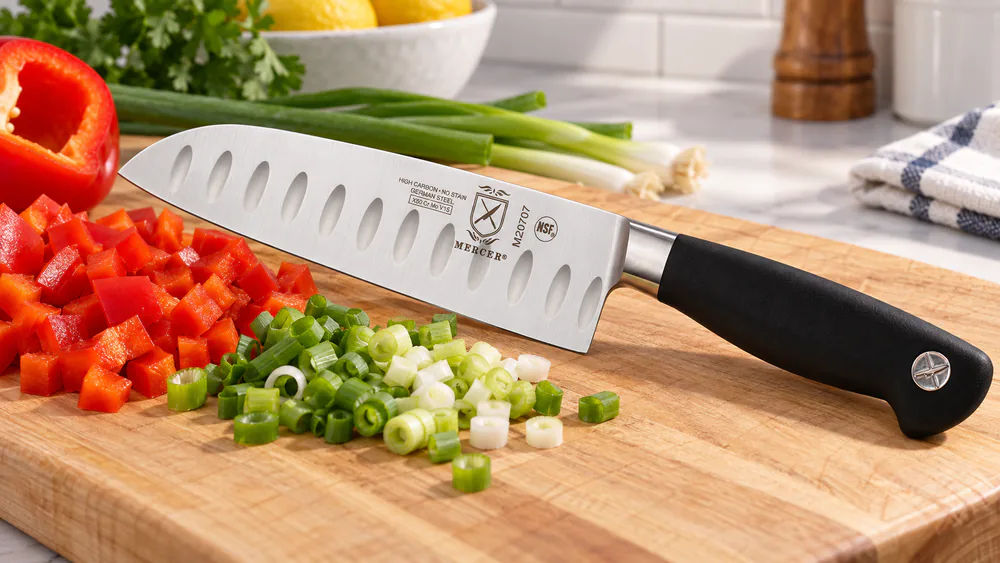
The Mercer Genesis M20707 is the best budget forged pick we tested. For about $40 you get a precision-forged high-carbon German steel blade and a Santoprene handle that stays grippy when wet. It is thin enough to be a great slicer, and the Granton scallops keep potato and cabbage from clinging.

Pros

  • Forged German steel at a price that makes it an easy daily driver
  • The non-slip handle stays grippy when wet
  • Takes a quick pass on a honing steel and comes right back

Cons

  • A bit handle-heavy until you get used to the balance
  • Hand wash recommended; skipping the towel can invite rust

Specs at a Glance

Mercer Culinary Genesis 7-Inch Santoku Knife specs
Blade length7 inches, 11.5 inches overall
Steelforged high-carbon no-stain German steel, 56 HRC
Handleblack Santoprene non-slip, full tang and bolster
EdgeGranton (scalloped), about 15 degrees per side
Weightabout 0.52 pound
Price tierbudget, about $40

Who Should Buy It

Recommend this to anyone starting a kitchen or upgrading a dull block set. It is NSF certified with a limited lifetime warranty for consumers and 25-year commercial coverage. Keep a honing steel nearby: five quick strokes brings the edge right back. Check prices on Amazon.

Who Should Look Elsewhere

If you want a lighter, more precise blade for fine vegetable work, step up to the MAC or the Shun. Never want to hand wash? The Victorinox Fibrox is one of the few santokus you can run through the dishwasher.

3. Shun Classic 7-Inch Hollow Ground Santoku Knife - Best Japanese

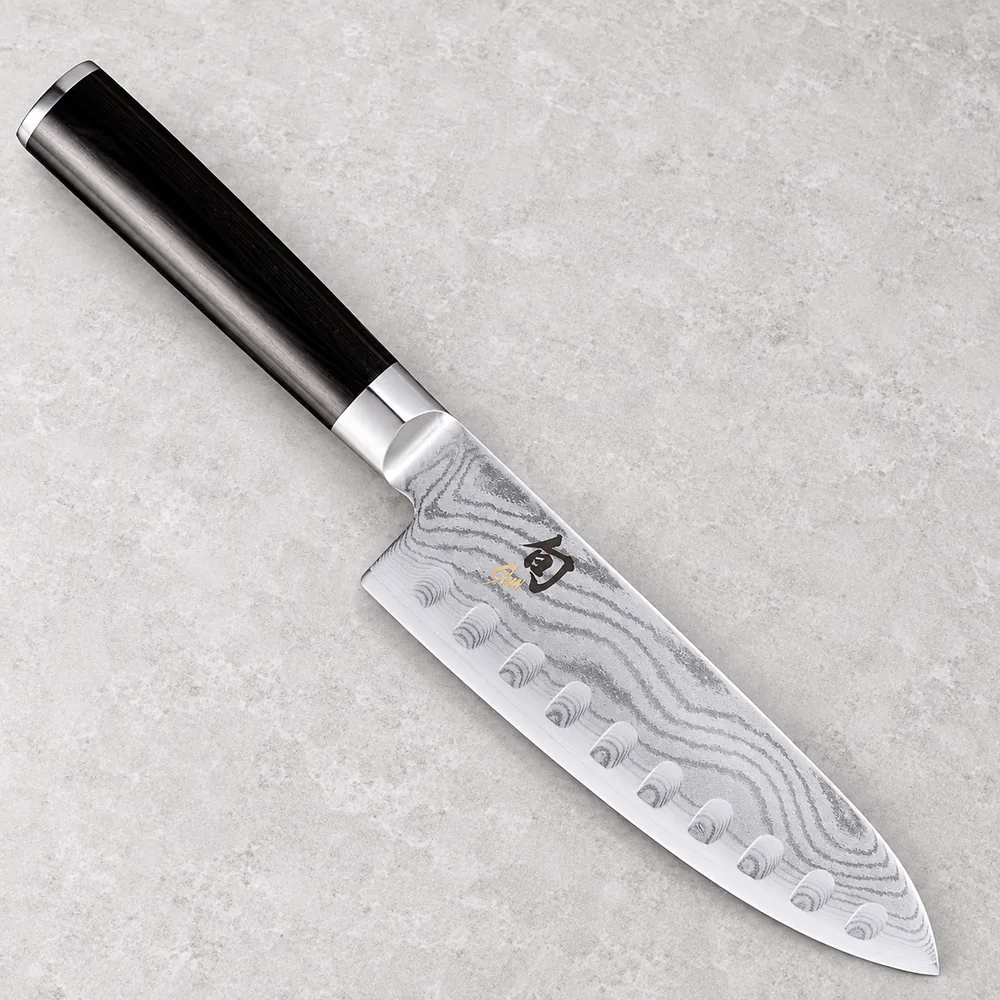
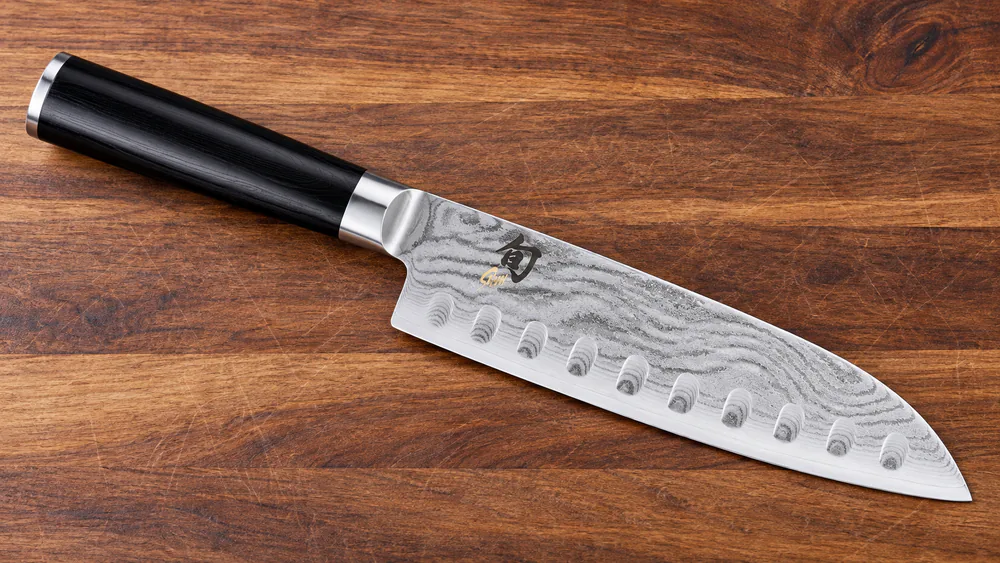
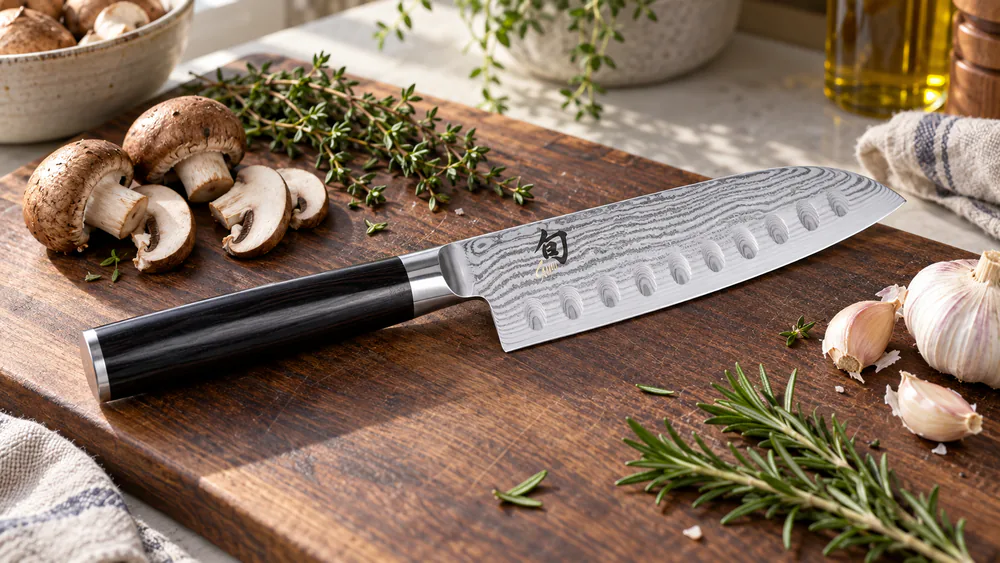
The Shun Classic 7-inch hollow ground santoku knife with a Damascus-pattern blade and D-shaped Pakkawood handle.
Genuine Japanese sharpness and free lifetime sharpening.

Shun Classic 7" Hollow Ground Santoku Knife

Shun Classic 7-Inch Hollow Ground Santoku Knife
3

Shun Classic 7-Inch Hollow Ground Santoku Knife

Best Japanese
Check Price on Amazon
4.7/5

The Shun Classic 7-Inch Hollow Ground Santoku is the best Japanese knife here, a handcrafted blade that feels a full tier sharper than the Germans. Its VG-MAX core is hardened to 61 Rockwell, the hardest edge in this roundup, and the 16-degree bevel sails through carrots that stop softer knives cold.

Pros

  • Razor-sharp 61 HRC edge that glides through hard vegetables
  • The hollow-ground scallops really do keep food from sticking
  • Free lifetime sharpening program, just pay shipping

Cons

  • Hard, brittle steel can chip if you abuse it
  • Pricier than comparable German knives, and it needs a careful hand

Specs at a Glance

Shun Classic 7-Inch Hollow Ground Santoku Knife specs
Blade length7 inches (178 mm)
SteelVG-MAX core with Damascus cladding (the layer count is stated inconsistently on official Shun pages, spec tab 69 and About text 68, so we do not assert a specific number)
HandleD-shaped ebony-finish Pakkawood, composite tang
Edgehollow-ground, 16 degrees per side
Weight7.1 ounces (about 201 g)
Price tierpremium, about $160

Who Should Buy It

Buy the Shun if you want a genuine Japanese blade and cook mostly vegetables, fish, and boneless meat. It is handcrafted in Japan, and the free lifetime sharpening (you pay shipping) is the standout perk. Honed at 15 degrees, it keeps an edge very well, especially on hard vegetables like carrots and potatoes. See the price on Amazon or browse Shun's official site.

Who Should Look Elsewhere

The trade-off with 61 HRC steel is brittleness. The edge can nick and chip if it bangs against other steel in a drawer, so do not rattle it around cheap steel. For hard use, the MAC below is tougher, and the Miyabi is the luxury upgrade.

4. MAC Professional Series 6.5-Inch Santoku Knife - Best for Slicing

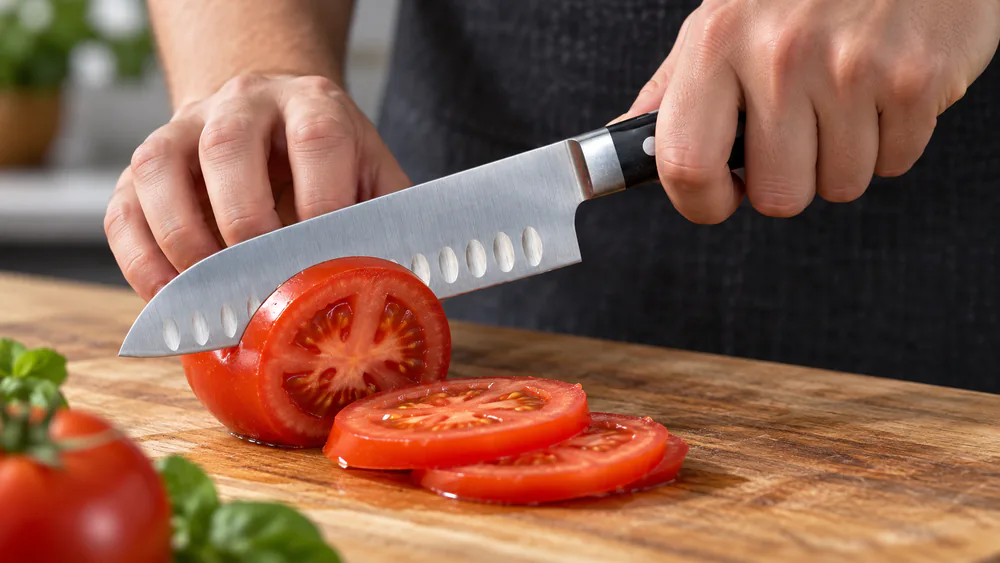
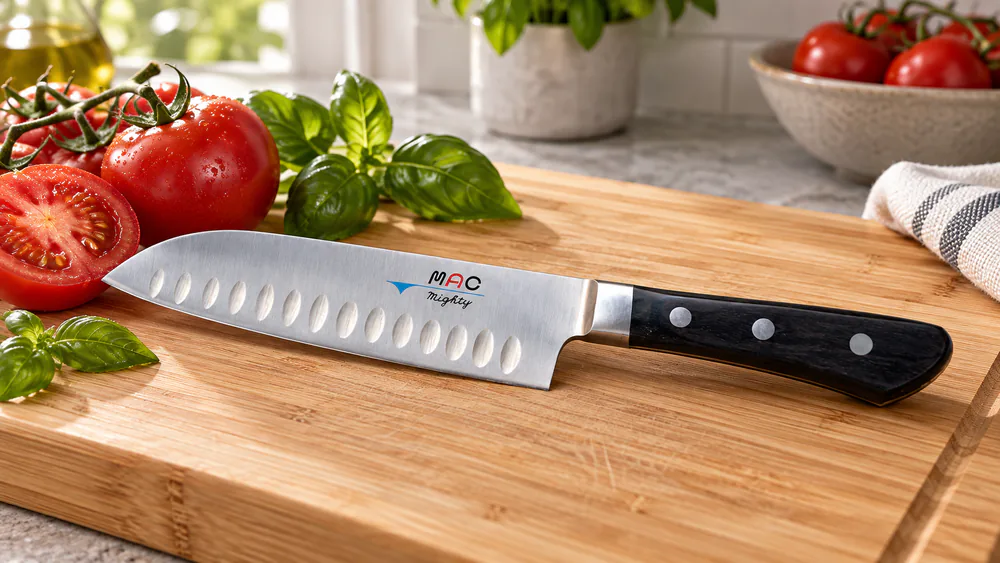
The MAC Professional Series 6.5-inch santoku knife with a dimpled blade and black Pakka wood handle slicing a tomato.
The thinnest, most precise blade in this lineup.

MAC Knife Professional Series 6.5" Santoku with Dimples, MSK-65

MAC Professional Series 6.5-Inch Santoku Knife
4

MAC Professional Series 6.5-Inch Santoku Knife

Best for Slicing
Check Price on Amazon
4.6/5

The MAC MSK-65 is the slicer of this group, a sub-zero tempered high-carbon stainless blade that cut paper-thin tomato slices all week. At 6.5 inches and 6.0 ounces it is the shortest here. It is the blade our butcher reached for during fine work.

Pros

  • Genuinely excellent slicing, with the best food-release edge here
  • Hard steel that holds an edge for a week of prep without honing
  • Made in Japan and backed by a 25-year warranty

Cons

  • The tip is fragile; this is not a bone knife
  • Hand wash and dry immediately or the edge can show rust

Specs at a Glance

MAC Professional Series 6.5-Inch Santoku Knife specs
Blade length6.5 inches (170 mm)
Steelsub-zero tempered high-carbon stainless, about 59 HRC
Handleblack Pakka wood, steel bolster, riveted full tang
Edgedimpled (Granton), double bevel
Weight6.0 ounces (about 166 g)
Price tiermid, about $129

Who Should Buy It

This is the santoku for cooks who do a lot of fine prep: julienne, chiffonade, paper-thin citrus, precise dice. MAC bills it as the knife of three virtues, and it earns that name with fruit, vegetables, and fish. The 25-year warranty and factory sharpening make it a sensible buy. Check the current price on Amazon or browse MAC Knife's official store.

Who Should Look Elsewhere

The 6.5-inch blade is shorter than the rest of this lineup, so cooks who want maximum blade for bigger vegetables should look at a 7-inch option. The steel is hard and the tip is thin, so no bones, no frozen food, no dishwasher. If you want something tougher, the Mercer or Victorinox is the safer call.

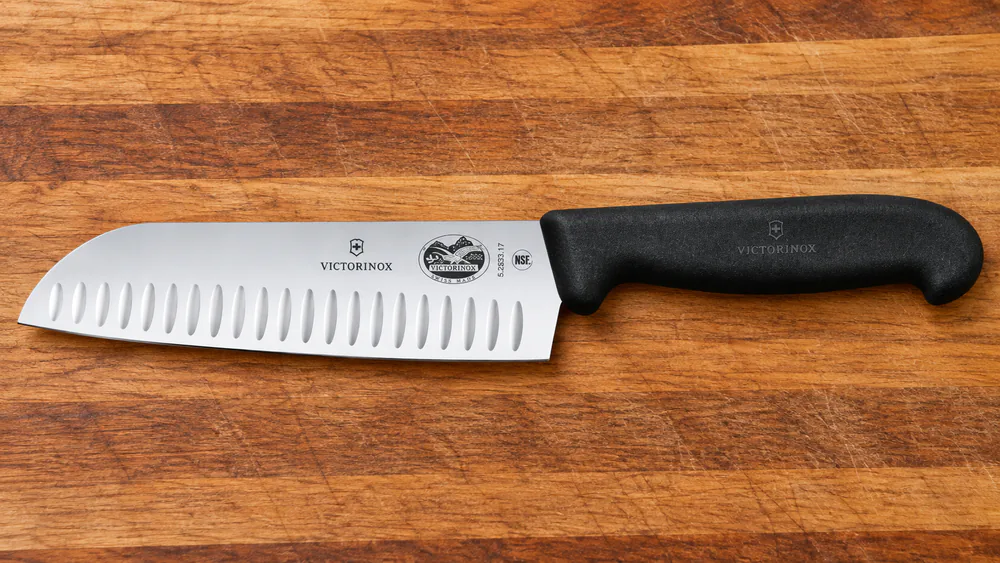
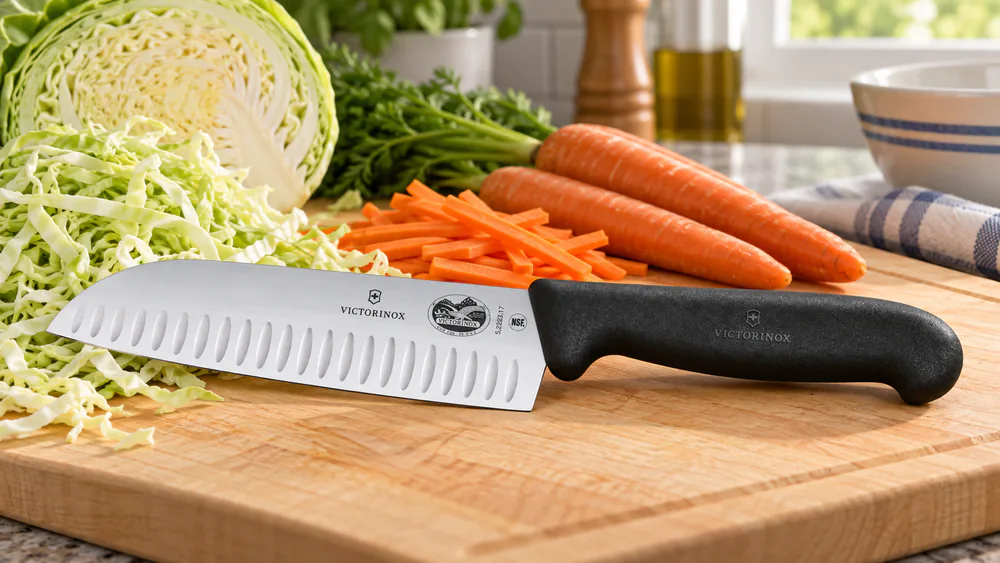
5. Victorinox Fibrox 7-Inch Santoku Knife - Best Value

The Victorinox Fibrox 7-inch Granton santoku knife with a fluted blade and black textured Fibrox handle on a cutting board.
A chip-proof daily driver that outlasts its price.

Victorinox Fibrox 7-In. Santoku Knife, Granton Blade

Victorinox Fibrox 7-Inch Santoku Knife
5

Victorinox Fibrox 7-Inch Santoku Knife

Best Value
Check Price on Amazon
4.7/5

The Victorinox Fibrox 7-Inch Granton Santoku is the value pick that quietly outlasts knives costing three times as much. Its stamped X50CrMoV15 blade is soft at 55 to 56 Rockwell, so it dulls faster than hard Japanese steel but is chip-proof. The fluted Granton edge makes food fall away.

Pros

  • Chip-proof, easy-to-maintain steel that takes a beating
  • One of the few santokus that is dishwasher safe
  • Lightweight with a grip that holds up through a long shift

Cons

  • The softer steel needs more frequent honing than a hard Japanese blade
  • The handle runs large for smaller hands, and the plastic grip feels cheap

Specs at a Glance

Victorinox Fibrox 7-Inch Santoku Knife specs
Blade length7 inches (17 cm)
Steelstamped X50CrMoV15 high-carbon stainless, 55 to 56 HRC
HandleFibrox Pro TPE, non-slip, NSF certified
EdgeGranton (fluted), about 15 degrees per side
Weightabout 0.3 pound (167 g)
Price tiervalue, about $56

Who Should Buy It

This is the knife for the home cook who wants a no-fuss daily driver that will live on the board for a decade. Victorinox makes it in Ibach, Switzerland, backs it with a lifetime warranty, and the NSF rating suits a professional kitchen. It survives years of dishwasher use without rust or handle wear. Check the price on Amazon and you will see why it is a best-seller.

Who Should Look Elsewhere

If you prefer a harder edge that stays sharp for weeks instead of days, the MAC or the Shun fits better. Cooks with smaller hands often find the Fibrox handle too bulky; the Mercer's slimmer grip is more comfortable. The fluted edge helps food release, but it is not a magic bullet.

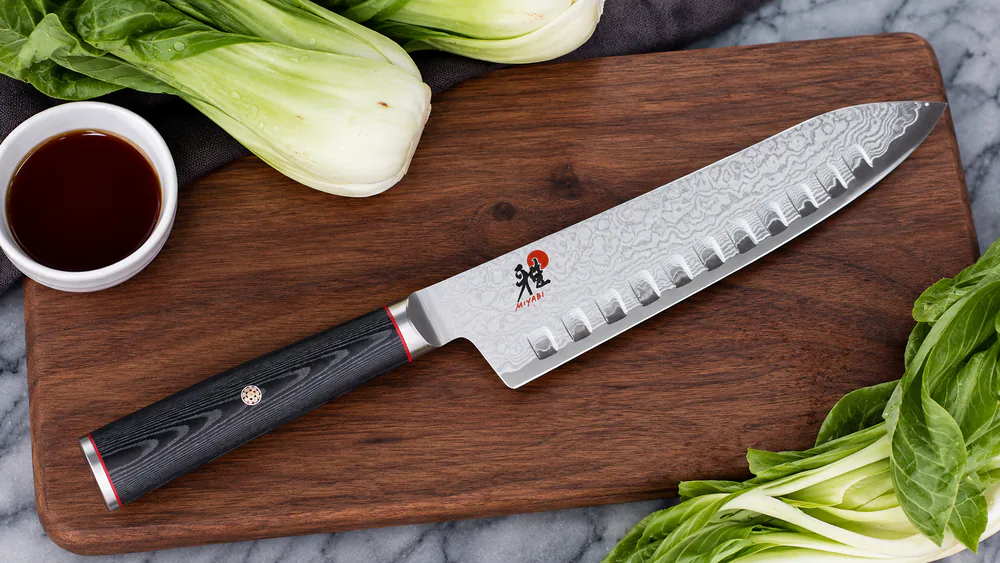
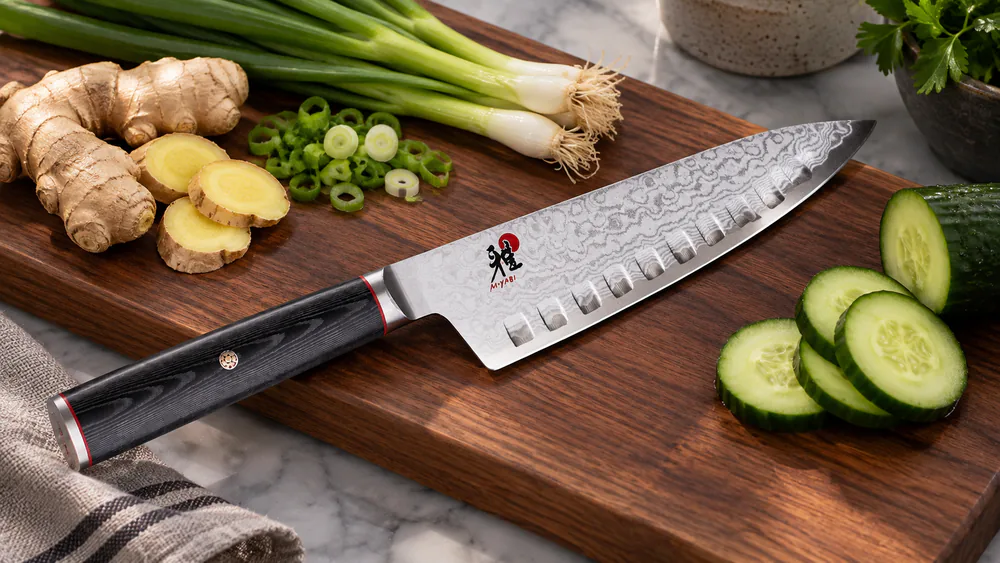
6. Miyabi Kaizen 7-Inch Hollow Edge Santoku Knife - Best Luxury

The Miyabi Kaizen 7-inch hollow edge santoku knife with a Damascus-pattern blade and D-shaped black linen Micarta handle.
A showpiece edge for cooks who want the best.

Miyabi Kaizen 7-Inch Hollow Edge Rocking Santoku Knife

Miyabi Kaizen 7-Inch Hollow Edge Santoku Knife
6

Miyabi Kaizen 7-Inch Hollow Edge Santoku Knife

Best Luxury
Check Price on Amazon
4.6/5

The Miyabi Kaizen is the luxury pick, and it earns the label. Its VG10 super-steel core is CRYODUR ice-hardened to 60 Rockwell, then hand-honed to a 9.5 to 12 degree edge, the thinnest here. It came out of the box the sharpest knife in this lineup.

Pros

  • Razor-sharp, thin edge that held for weeks without a sharpening
  • Beautiful Damascus finish and a comfortable, moisture-repellent handle
  • Handcrafted in Seki, Japan, with a limited lifetime warranty

Cons

  • Expensive, and the hard thin edge needs respect around bones and frozen food
  • The handle runs small and thin for larger hands

Specs at a Glance

Miyabi Kaizen 7-Inch Hollow Edge Santoku Knife specs
Blade length7.09 inches (7 inches)
SteelVG10 (CMV60) super-steel core, 64-layer Damascus cladding
HandleD-shaped black linen Micarta, concealed tang
Edgehollow edge, Honbazuke 9.5 to 12 degrees
WeightZwilling lists 0.45 pound, but measured figures run closer to 0.7 pound, so treat the weight as approximate
Price tierluxury, about $190

Who Should Buy It

For the cook who wants a centerpiece knife and is willing to treat it like one. Cook mostly vegetables, fish, and boneless proteins? The Miyabi will out-sharpen everything here. It is handcrafted in Seki, Japan, with a limited lifetime warranty. See the latest price on Amazon when you are ready to splurge.

Who Should Look Elsewhere

The Miyabi is a knife for food, not frozen blocks or bones; the hard, thin edge will chip if you abuse it. If the price gives you pause, the Shun Classic delivers most of the same Japanese sharpness for less. Cooks with large hands may find the handle small, so try one first.

7. imarku 7-Inch Santoku Chef Knife - Best Hollow-Edge Value

The imarku 7-inch santoku knife with a scalloped hollow edge and Pakkawood handle slicing a cherry tomato.
The hollow-edge experience for less than $40.

imarku Santoku Chef Knife 7 Inch, Hollow Edge, Pakkawood Handle

imarku 7-Inch Santoku Knife
7

imarku 7-Inch Santoku Knife

Best Hollow-Edge Value
Check Price on Amazon
4.5/5

The imarku 7-Inch Santoku is the budget hollow-edge pick, and it feels like a much more expensive knife. Its high-carbon stainless blade arrives razor sharp out of the box, with a hand-polished 15 to 18 degree hollow edge. The Pakkawood handle is comfortable across hand sizes.

Pros

  • Razor sharp out of the box and light in the hand
  • The hollow edge and scallops keep food from sticking
  • Gift-boxed, with a 3-month refund and 1-year exchange policy

Cons

  • Edge retention trails the premium Japanese steels
  • The smooth Pakkawood handle gets slippery when hands are greasy
  • Quality control can be spotty; check the blade and handle when it arrives

Specs at a Glance

imarku 7-Inch Santoku Knife specs
Blade length7 inches (17.8 cm), 2.5 mm thick
Steelhigh-carbon stainless, 56 HRC (listing copy disagrees on the exact grade, described as Japanese high-carbon in some listings and 7Cr17MoV "German HC" in others, so treat the grade as unconfirmed)
Handleergonomic Pakkawood, forged
Edgehollow (scalloped), 15 to 18 degrees per side
Weightabout 0.43 pound (6.9 oz)
Price tierbudget, about $40

Who Should Buy It

For the cook who wants the hollow-edge experience without spending Shun or Miyabi money. It is genuinely sharp, outperforms blades costing twice as much, and a few passes on a steel keeps it working. The 3-month refund and 1-year exchange policy takes the risk out of the purchase. Check it on Amazon.

Who Should Look Elsewhere

The softer steel needs more frequent honing than a hard Japanese blade, so cooks who want a week of edge retention should get the MAC or the Shun. Cooks with oiled hands should prefer the Mercer or Victorinox grips.

How to Choose the Best Santoku Knife: Buying Guide

Blade Steel and Hardness

Steel is the heart of any knife, and hardness tells you how the edge behaves. Harder steel holds a sharper edge longer but is harder to sharpen. Budget blades sit around 56 HRC, dulling faster but coming right back on a steel. Premium Japanese blades reach 60 to 61 HRC, staying sharp for weeks but chipping more easily. Our guide to which knife steel is best for a santoku goes deeper.

Blade Length and Weight

Most santokus run 6.5 to 7 inches, and that short, tall blade makes the shape nimble. The 7-inch blades here handle big vegetables and long slices; the 6.5-inch MAC trades a little length for lighter, more precise control. Stamped blades like the Victorinox come in around 0.3 pound, while forged blades feel heavier. There is no right answer, only what feels balanced to you.

Handle Material and Design

You will grip this knife for hours, so the handle matters more than most shoppers expect. Santoprene and TPE handles like the Mercer and Victorinox stay grippy when wet. Pakkawood and Micarta handles like the Shun and Miyabi look better and feel warmer, though they get slippery when oily. A full tang and a D-shaped grip help your hand find the same spot.

Edge Type: Hollow vs. Granton vs. Standard

This is the santoku's signature feature, and the terms all describe the same idea: small indentations that create air pockets so food does not stick. Hollow ground edges, like the Shun, have long scalloped hollows. Granton and fluted edges, like the Mercer and Victorinox, use oval dimples. None are a magic fix, but they cut down on how often you push a stuck potato off the blade. Our guide to the right sharpening angle for a santoku has more.

Forged vs. Stamped Blades

Forged blades start as a single bar of steel heated and hammered into shape, producing a denser, heavier blade with a pronounced bolster. Stamped blades are cut from a sheet of steel, then heat-treated and ground; they are lighter, cheaper, and often more flexible. Forged is not automatically better, and the stamped Victorinox is one of the most reliable knives here.

Care and Maintenance

A good santoku will outlive you if you treat it right, and a bad habit will kill one in a year. Hand wash and dry immediately; even the dishwasher-safe Victorinox loses its edge faster in the machine. Store it in a block or on a magnetic strip, never loose in a drawer. Hone regularly, sharpen a few times a year, and never use it on glass, stone, or frozen food.

Santoku vs. Chef's Knife: Which Is Better?

The short answer is that a santoku does most of what a chef's knife does, in a shape many home cooks find easier to handle. A Western chef's knife has a curved belly that encourages rocking and typically runs 8 to 10 inches. A santoku has a flatter profile and usually stops at 7 inches, so it is nimble for precise work.

The two overlap more than they differ. A santoku handles vegetables, herbs, boneless meat, and fish, which covers most daily kitchen work. A chef's knife pulls ahead when you need extra length and curve for big jobs like breaking down a chicken.

If you already own a chef's knife you love, a santoku is a natural second blade. If you are choosing your first good knife, start with the one that fits your hand and cutting style; our guide to the best chef's knife covers that side. And for the flatter, more vegetable-focused family, the best Japanese chef knives are worth a look.

Frequently Asked Questions

What is a santoku knife used for?

A santoku is a multipurpose blade named for its three virtues: meat, fish, and vegetables. Its broad, thin blade and flat profile excel at slicing, dicing, and mincing.

What is the difference between a santoku and a nakiri knife?

A santoku is a general-purpose blade for meat, fish, and vegetables, while a nakiri is a dedicated vegetable knife with a straight edge and a flat tip. Mostly produce? Our roundup of the best nakiri knives is worth a look.

What are the dimples on a santoku knife for?

The dimples sit on the flat side of the blade, not the cutting edge, so they do not change how the knife sharpens. They trap a cushion of air that keeps starchy slices like potato from clinging to the steel, but they will not save a dull edge.

Can you use a santoku knife to cut meat?

Yes, and it is one of the knife's three virtues. A 7-inch santoku handles boneless meat, poultry, and fish well. Skip bones and frozen blocks on hard Japanese steel, which can chip.

Is a 5-inch or 7-inch santoku better?

For most cooks, 7 inches is the sweet spot: it handles bigger vegetables and longer slices while staying nimble. A 5-inch santoku is handy for quick tasks but will not cover the same range.

How do you sharpen a santoku knife?

Hone before each use and sharpen on a whetstone when the edge goes dull, usually a few times a year. Match the angle to the blade: most German santokus sit around 15 to 20 degrees per side, with the Wüsthof Classic the low-angle exception at about 10 degrees; hard Japanese blades run about 9.5 to 16 degrees. Our guide to how to sharpen a santoku at home has the full routine.

Final Thoughts

A good santoku is the closest thing to a one-knife kitchen. The Wüsthof Classic earns the top spot because it does everything well and feels like it will outlive you, but the best knife depends on your budget and cooking. The Mercer gives you 80 percent of the experience for $40, the Shun brings genuine Japanese sharpness, and the Victorinox will live in your dishwasher for a decade. Pick the one that fits your hand and learn ten minutes of sharpening.

Read next

Ready to upgrade your kitchen?

Browse our tested santoku picks for every budget and cutting style.