
Knives & Cutlery
Best Knife Steel: The Complete 2026 Buying Guide

As an Amazon Associate we earn from qualifying purchases. We may earn a commission from links on this page, at no extra cost to you. Learn more.
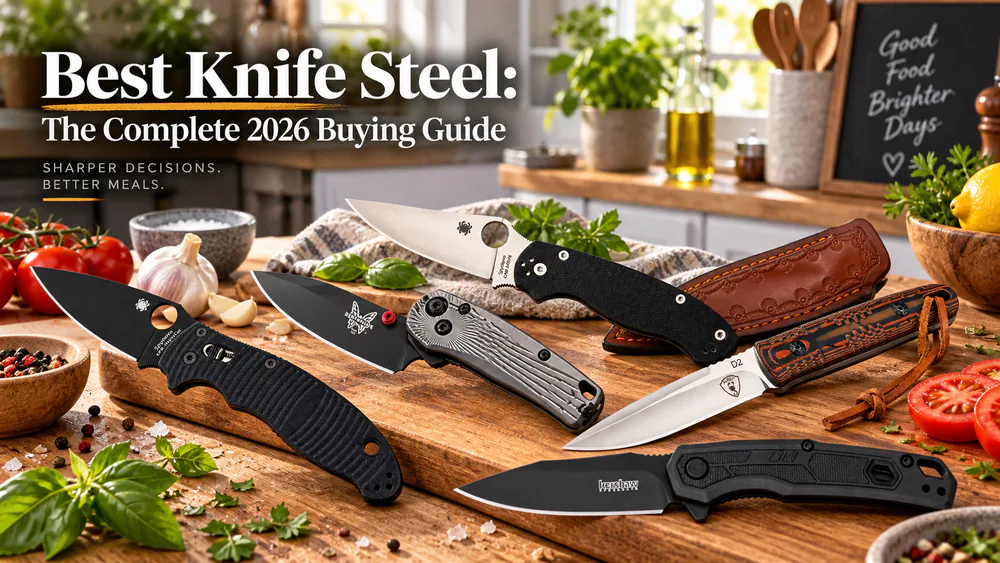
Steel is an alloy of iron and carbon, and that simple recipe is where the clarity ends. The carbon content, the other elements melted in with it, the way the blade is heat treated, and the geometry it is ground to all decide how a knife actually performs. Two blades forged from the same alloy can behave completely differently, because the composition is only part of the story.
The best knife steel is the one whose properties match the work you do. For most people, the answer is CPM MagnaCut, which balances edge retention, toughness, and corrosion resistance better than any other mainstream alloy. In this guide, we compare 22 steels across the five properties that matter, rank them by tier from budget to cutting edge, and name the best steel for the kitchen, the pocket, the field, saltwater, and a tight budget. We also cover heat treatment, the half of the story that turns an alloy into a knife, and we finish with the pick that works for most buyers.
Top Picks at a Glance
Five steels cover the main jobs a knife does, and each pick links to a production knife in that alloy so you can see the steel in the flesh. The ratings are our overall scores on a five-star scale; the comparison chart below scores each individual property from 1 to 10.
| Rank | Product | Best for | Hardness | Rating | Buy |
|---|---|---|---|---|---|
| 1 |
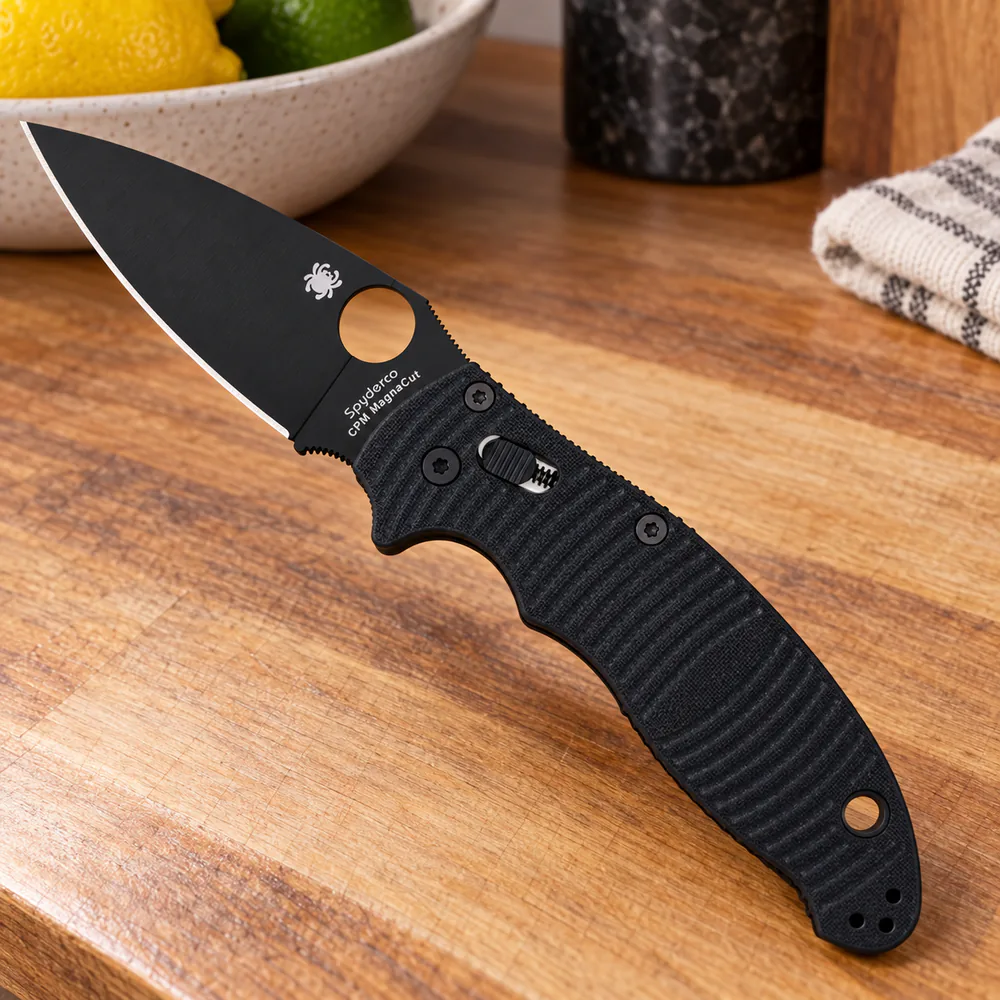
CPM MagnaCut Best Overall |
Balanced all-round use, from EDC to kitchen to field | 60-64 HRC | 4.8 | View on Amazon |
| 2 |
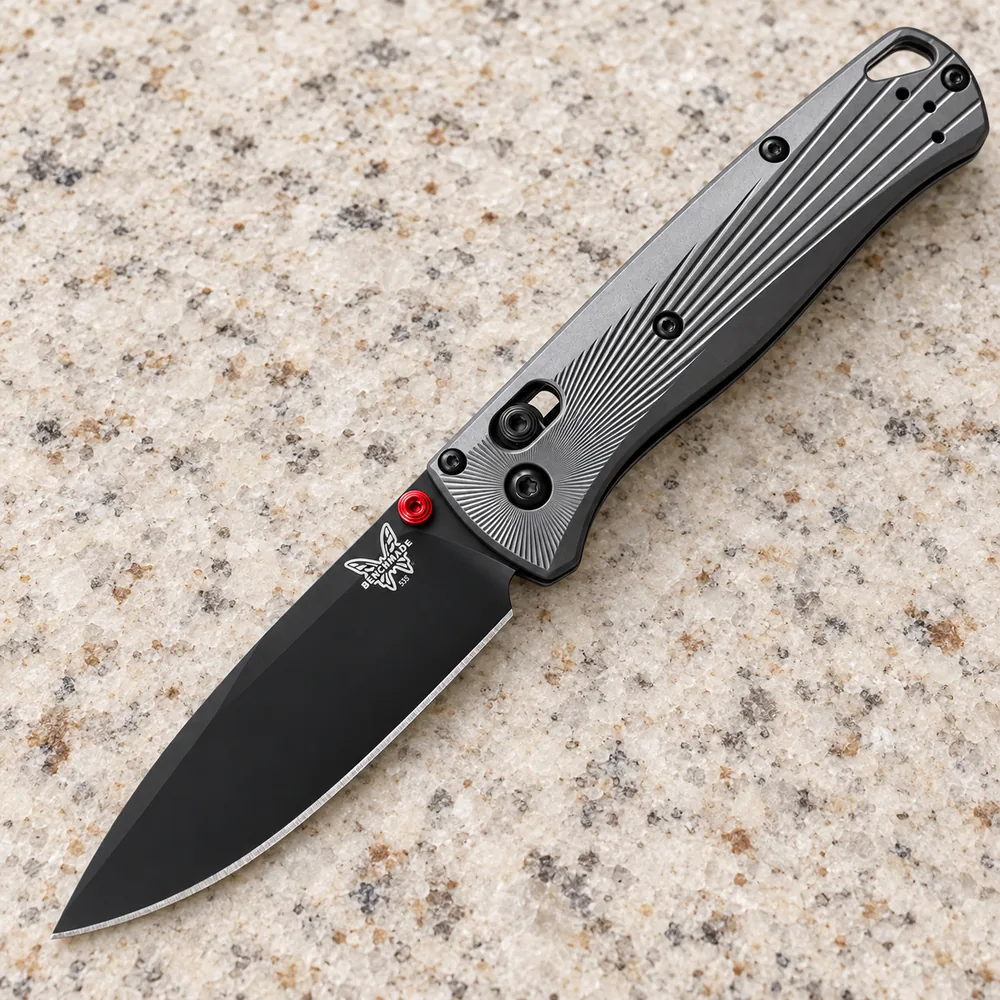
M390 / 20CV / 204P Best Kitchen |
Premium kitchen and light-duty slicing | 60-62 HRC | 4.5 | View on Amazon |
| 3 |
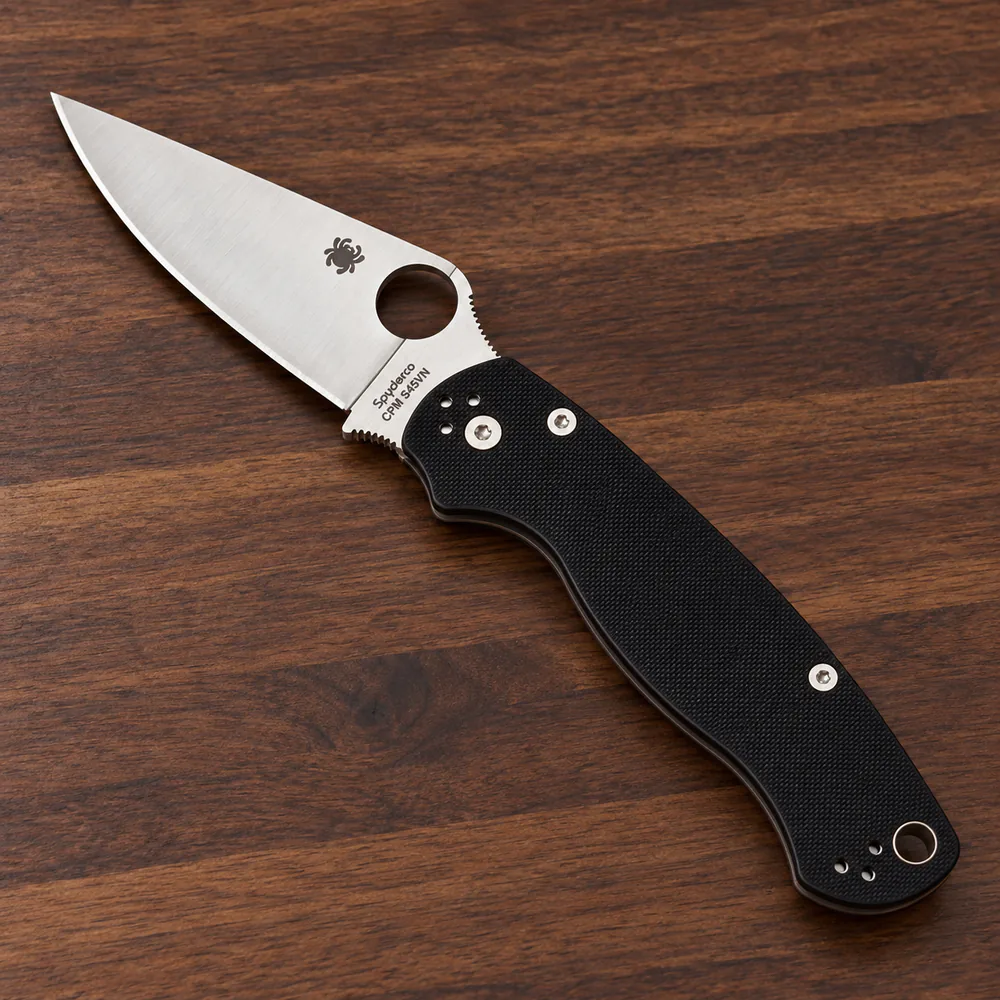
S45VN Best EDC |
Premium everyday-carry folders | 59-61 HRC | 4.6 | View on Amazon |
| 4 |
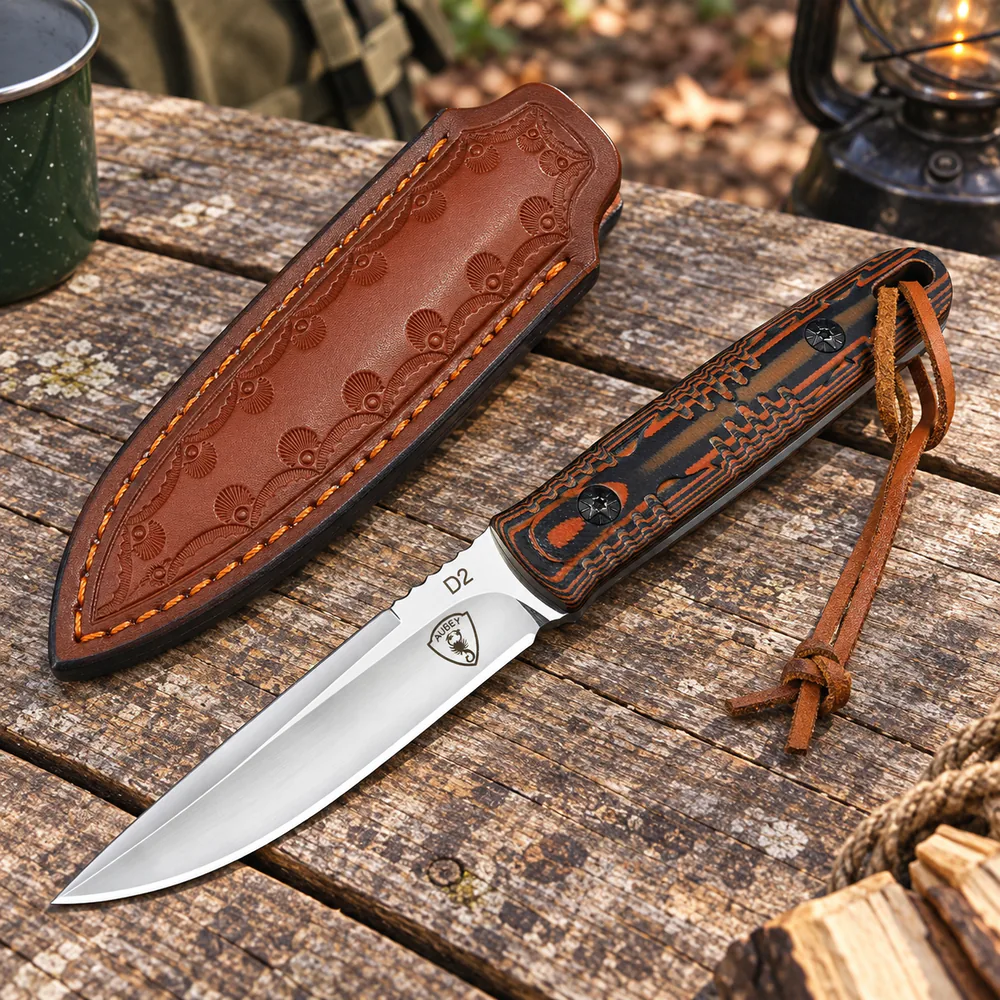
D2 Best Hunting and Survival |
Tough budget field blades in dry carry | 58-61 HRC | 4.3 | View on Amazon |
| 5 |
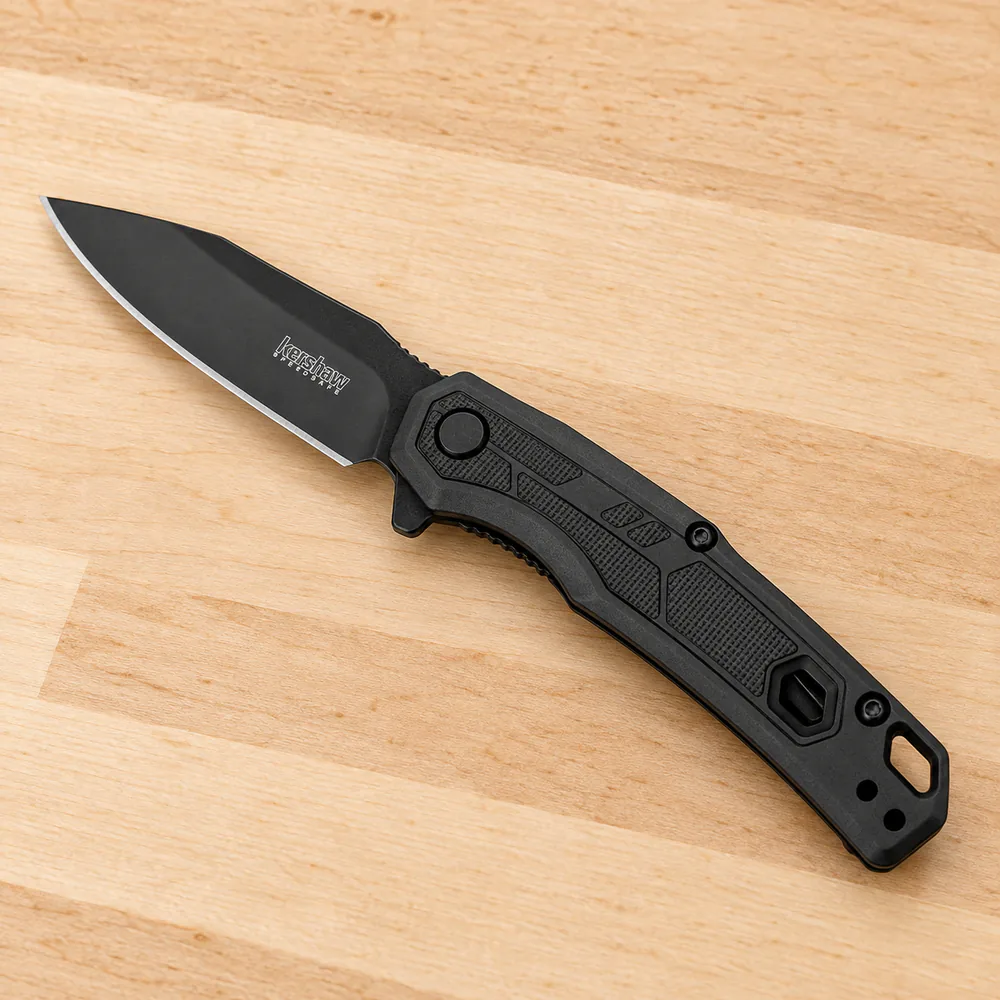
14C28N Best Budget |
Value EDC and thin kitchen blades | 58-62 HRC | 4.4 | View on Amazon |
We earn a commission if you make a purchase, at no additional cost to you.
See full comparison tableHow to Choose the Best Knife Steel: The 5 Properties That Matter
The picks above are only five of the 22 steels in this guide, but the differences between all of them come down to the same five properties: hardness, edge retention, toughness, corrosion resistance, and ease of sharpening. There is no such thing as a steel that scores a 10 in both toughness and edge retention, so manufacturers tune each alloy for a job. When it comes to buying a knife, the first step is understanding the five properties and the trade-offs between them, because every strong point buys a weakness somewhere else.
Hardness (HRC)
Hardness is measured on the Rockwell C scale, abbreviated HRC. The test presses a diamond cone into the steel and measures the indentation it leaves, and most production knives fall between 56 and 67 HRC. It is the number quoted most often on knife listings and understood least.
A 66 HRC blade may hold an edge almost forever, but it chips easily. Hardness without toughness creates a fragile blade, and most good knives balance at 58-62 HRC. The extremes make the trade-off visible: ZDP-189 runs 64-67 HRC, Maxamet reaches 66-70 HRC, and CPM MagnaCut aims for 60-63 HRC, rising past 64 HRC with cryogenic treatment. Hunting knives find their best balance at 60-62 HRC. When you compare steels, read the HRC number as one input among five, not as a ranking.
Edge Retention
Edge retention is how long an edge lasts under real cutting. The industry benchmark is the CATRA test, which slices a controlled material and counts cuts until the edge degrades, and results are usually quoted as a percentage of 440C, the old baseline stainless. The spread is wide: S90V holds about 195%, 20CV about 155%, S45VN about 140%, MagnaCut about 135%, S35VN about 130%, and 154CM about 120%.
Retention comes mostly from hard carbides in the steel, especially vanadium carbides. More carbides mean more wear resistance, and they also make the steel harder to sharpen, because the abrasive has to work through the same hard particles that resist the cutting material. The pattern to remember is that the steels holding an edge the longest are the hardest to bring back, which is why edge retention never wins a ranking by itself.
Toughness
Toughness is a steel's resistance to chipping, cracking, and breaking at the edge. It matters when a blade meets bone, frozen food, knots in wood, or a careless drop onto concrete, and it is the property that separates field knives from shelf queens. The standard measure is a Charpy impact test, which swings a weighted pendulum into a notched sample and records the energy absorbed in foot-pounds.
CPM MagnaCut recorded 38 foot-pounds at 62.5 HRC and still 30 foot-pounds at 64 HRC, beating 154CM, S35VN, S45VN, S90V, and 20CV at comparable hardness. The tough crowd is familiar: AEB-L, 14C28N, and the carbon steels 1095, 52100, 5160, and 80CrV2 all score 7/10 or better. The soft-spoken truth of the chart is that the toughest steels are often the cheapest, because toughness comes from simple, fine-grained alloys rather than exotic carbide chemistry.
Corrosion Resistance
Corrosion resistance is a steel's ability to shrug off moisture, acid, and salt. The chemistry is simple at first: a steel needs about 13% chromium to count as stainless. The phrase "in solution" is the catch, because chromium locked inside carbides does not protect the surface. D2 carries 11-13% chromium, but much of it is tied up in carbides, so it is called semi-stainless and will spot with moisture despite the respectable percentage.
The saltwater standard is strict. In a 3.5% saltwater solution test, only Vanax SuperClean and LC200N came through free of corrosion, and MagnaCut came close but not equal. For kitchen use, the middle of the scale matters more than the extreme: a steel that survives a wet board, acidic tomatoes, and a week of prep without spotting earns its keep. Nitrogen plays an unusual role here, adding both hardness and corrosion resistance in steels like 14C28N and Vanax.
Ease of Sharpening
The fifth property is how easily a steel takes a fresh edge. The niche scores it on a 1-10 scale where 9-10 means very easy and 1 means extremely difficult. The easiest steels to sharpen are the budget stainless grades like 420HC and 440A, the fine-grained AEB-L and 14C28N, and the plain carbon steels. The hardest are the high-vanadium and ultra-hard grades: S90V, S110V, and ZDP-189 sit at 1/10, and Maxamet is effectively beyond the scale.
If you sharpen at home, ease of sharpening matters more than raw retention. A steel you can keep sharp outperforms a steel you cannot, which is why our kitchen rankings weigh sharpening so heavily. A good rule: match the sharpening effort you are willing to invest to the edge life you need, and buy a steel a notch easier to sharpen than you think you need.
Knife Steel Comparison Chart (At-a-Glance)
Every property in this chart is scored from 1 to 10, with higher meaning stronger, and ease of sharpening is scored so 9-10 means very easy and 1 means extremely difficult. The values follow the relative scale used across the industry's reference charts. For the rankings, we weight the five properties the way a working user would: about 45% to hardness-driven edge performance, 30% to toughness and edge stability, 10% to sharpenability and deburring, 10% to corrosion resistance, and 5% to heat-treat reliability. That model is close to the published weighting used by the niche's ranking sites, and it is why a steel with 8/10 toughness can outrank a steel with 9/10 edge retention in our verdicts. Grouped rows, such as S45VN/S35VN/S30V, share the family's flagship values.
| Steel | Family | Hardness (HRC) | Edge Retention | Toughness | Corrosion Resistance | Ease of Sharpening | Best For |
|---|---|---|---|---|---|---|---|
| CPM MagnaCut | PM stainless | 60-64 | 6 | 8 | 9 | 6 | Balanced EDC, hunting, kitchen |
| M390/20CV/204P | PM stainless | 60-62 | 8 | 4 | 8 | 3 | Premium folders, kitchen flagships |
| MagnaMax | PM stainless, high-wear | 62-65 | 9 | 5 | 9 | 3 | High-edge-retention stainless |
| S45VN/S35VN/S30V | PM stainless | 58-62 | 6 | 6 | 8 | 5 | Premium EDC folders |
| S90V/S110V | PM stainless, high-vanadium | 59-62 | 9-10 | 3 | 6 | 1 | Long edge life on light-duty slicing |
| Elmax | PM stainless | 60-62 | 7 | 5 | 7 | 4 | Balanced premium folders and outdoor |
| K390 | High-wear tool steel | 62-65 | 9 | 4 | 2 | 2 | Abrasive cutting, hard-use folders |
| ZDP-189 | High-carbon stainless | 64-67 | 8 | 3 | 4 | 1 | Hard slicers, Japanese folders |
| VG-10 | Japanese stainless | 59-61 | 5 | 4 | 7 | 6 | Kitchen knives, Japanese folders |
| SG2/R2 | Japanese PM stainless | 61-64 | 7 | 4 | 7 | 4 | High-end kitchen knives |
| AEB-L | Fine-grained stainless | 60-63 | 3 | 8 | 6 | 8 | Kitchen, razors, meat processing |
| 14C28N | Fine-grained stainless | 58-62 | 4 | 7 | 7 | 6 | Value EDC, kitchen, budget knives |
| Nitro-V | Fine-grained stainless | 58-61 | 4 | 7 | 7 | 7 | Kitchen, EDC, thin blades |
| D2 | Semi-stainless tool steel | 58-61 | 6 | 4 | 3 | 3 | Budget folders, hunting, survival |
| 440C | Classic stainless | 57-60 | 4 | 5 | 5 | 6 | Traditional folders, budget outdoor |
| 420HC | Budget stainless | 56-59 | 3 | 8 | 8 | 9 | Work knives, multi-tools |
| 1095 | Carbon steel | 56-60 | 3 | 7 | 2 | 8 | Field and survival |
| 52100 | Carbon bearing steel | 58-62 | 4 | 7 | 2 | 7 | Fine edges, custom knives |
| 5160 | Spring steel | 56-59 | 3 | 8 | 2 | 8 | Choppers, camp knives |
| 80CrV2 | Carbon tool steel | 58-61 | 4 | 8 | 2 | 8 | Bushcraft, survival |
| LC200N | Nitrogen stainless | 58-60 | 3 | 7 | 10 | 7 | Saltwater, fishing |
| Vanax SuperClean | Nitrogen PM stainless | 59-61 | 5 | 5 | 10 | 5 | Saltwater, wet EDC |
Knife Steel Families, Explained
The chart scores each steel, but the scores come from composition, and composition follows families. Beyond the brand names, every knife steel belongs to a family defined by composition and by how the steel is made. All of them are built from the same handful of elements, and each element has a specific job in the finished blade:
| Carbon | Drives hardness and edge retention |
|---|---|
| Chromium | Drives corrosion resistance; about 13% makes steel stainless |
| Vanadium | Adds wear resistance and keeps grain fine |
| Nitrogen | Adds hardness and corrosion resistance |
| Molybdenum | Adds toughness |
| Cobalt | Adds hardness |
These roles explain most of what you see in the chart: chromium buys corrosion resistance, vanadium buys wear resistance, and carbon is the engine behind hardness.
Carbon Steels
Carbon steels are the old guard: mostly iron and carbon with small amounts of other elements. The names you see most are 1095, 52100, 5160, and 80CrV2. They are among the toughest steels available, take a very sharp edge, and sharpen easily on a basic stone, which is why they still dominate field knives, survival blades, and custom kitchen work.
The price is corrosion resistance. 1095 has no chromium at all, so lemon juice alone will dull it and neglect brings rust. 52100 is a ball-bearing steel that is phenomenally tough, happy to soak up batoning, prying, and heavy chopping, and dead simple to sharpen on a field stone; rust is the price of that toughness. 5160 is a spring steel for large choppers and camp knives, and 80CrV2 is the budget bushcraft favorite. If you carry carbon, you maintain it: wipe the blade dry, oil it, and keep it out of wet sheaths.
Stainless Steels
Stainless steels add chromium, about 13% or more, to resist corrosion, and the budget end of the market lives here: 420HC, 440A, 440C, AUS-8, and 8Cr13MoV. Stainless is not tougher than carbon; the chromium exists for corrosion resistance, and the trade is usually a little edge retention or toughness for easier care.
The threshold is not absolute. D2 sits just below the useful chromium line and is called semi-stainless: it resists rust better than a true carbon steel but still spots if carried wet. The stainless label is about chemistry, not character, so shop for the whole package rather than the family name.
Tool Steels
Tool steels were built to cut other metals, and knife makers adopted the tough ones. D2 is the classic example, a budget-premium tool steel with excellent edge retention for the price, great in dry use, and genuinely demanding to sharpen: getting a fine edge on D2 is real work, and the powder version CPM-D2 is tougher than ingot D2.
K390 is a high-wear tool steel with 9/10 edge retention at 62-65 HRC and very low corrosion resistance. Tool steels reward the user who keeps them dry, maintains the edge with patience, and mostly uses the blade as a tool rather than a showpiece.
Powder Metallurgy (PM) Steels
Powder metallurgy, abbreviated PM, changes how steel is made rather than what is in it. The molten alloy is atomized into a fine powder and then hot-isostatic-pressed into solid steel, which produces a uniform, fine distribution of carbides. That uniformity translates into better toughness and wear resistance than ingot steel of the same composition, because the carbides do not clump into weak spots.
Most of the premium and cutting-edge steels are PM: the S30V family, M390, MagnaCut, MagnaMax, and Vanax. CPM, as in CPM MagnaCut, is Crucible's particle metallurgy process. PM is the reason a steel can now be both very hard and reasonably tough, the pairing that used to be the central trade-off in knife making.
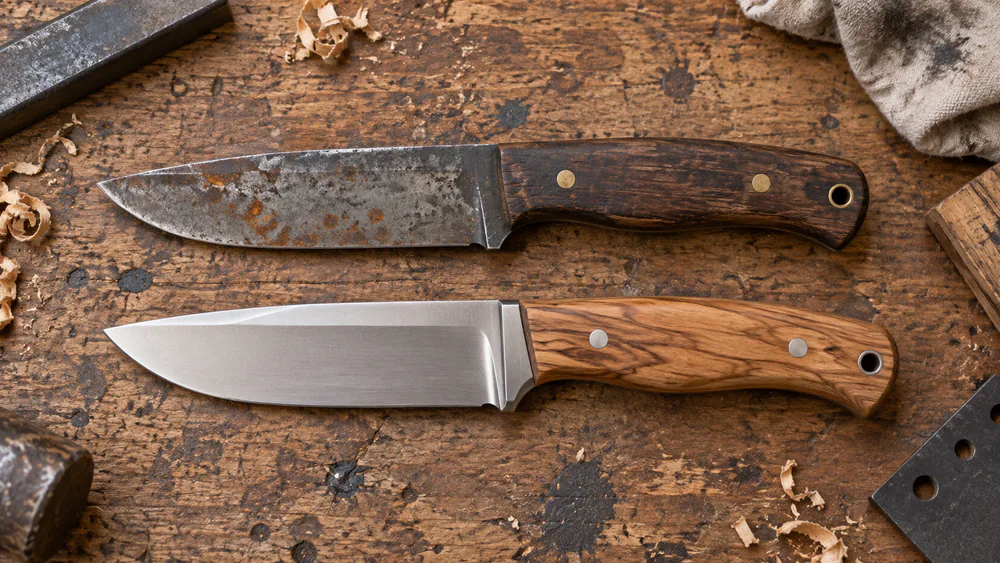
The Most Popular Knife Steels, Ranked by Tier
If the families are the anatomy of knife steel, the tiers are its price ladder. Steels fall into four rough tiers by price and performance. The tiers are not a straight quality ladder, because the right steel still depends on the job, but they are the fastest way to orient yourself in the market and the first filter most buyers use.
Budget Steels (420HC, 440A, 440C, AUS-8, 8Cr13MoV, 14C28N)
Budget steels power most knives under $50, and the best of them punch well above their price.
420HC is the workhorse of the budget tier, a 13% chromium stainless with modest carbon that lands at 56-59 HRC. It is one of the most corrosion-resistant budget blades and sharpens about as easily as any steel you will meet. Edge retention is the weak point, so you will sharpen often, and heat treat quality varies sharply by maker; Buck is the benchmark for 420HC.
440A is entry-level stainless at 55-58 HRC, very easy to sharpen, with low edge retention. It belongs on utility blades and inexpensive steak knife sets rather than knives that work hard.
440C is the classic stainless that used to be the cool kid on the block. At 57-60 HRC it offers good rust resistance, decent edge retention, and easy sharpening, and it remains at home in steak knives and budget outdoor blades. In our kitchen, 440C steak knives have survived the dishwasher and nightly dinner service without fuss.
AUS-8 is a Japanese budget stainless at 57-59 HRC. It sharpens very easily, carries low edge retention, and resists corrosion only modestly. 8Cr13MoV is the sub-$30 folder staple, a Chinese stainless at 56-59 HRC with the same character: easy to sharpen, quick to dull, and at home only in dry pockets.
14C28N is the standout of the budget tier. Sandvik's fine-grained stainless descends from the AEB-L lineage and adds nitrogen, about 0.11% of it, which boosts hardness and corrosion resistance, per the 14C28N material datasheet. At 58-62 HRC it carries 7/10 toughness on the relative scale, among the better stainless grades. In rotation, a small 14C28N folder sharpened easily to a razor edge and kept it through 10 to 12 daily uses. For the money, it is arguably the best budget knife steel and quite possibly the best steel you will find on a sub-$30 production knife.
Mid-Range Steels (VG-10, AEB-L, SG2/R2, Nitro-V, D2, 154CM)
The mid-range is where kitchen knives and working EDC blades live, and the steels here are defined by easy sharpening as much as by performance.
VG-10 is the classic Japanese kitchen stainless, 59-61 HRC, with roughly 1% carbon and 14.5-15.5% chromium plus a touch of cobalt. Corrosion resistance is high and sharpening is easy, and VG-10 cutlery has a reputation for surviving long, busy shifts with a sharp edge in food service, a reputation our own prep work backs up.
AEB-L is a fine-grained stainless that knife makers favor for kitchen blades. Its roughly 0.7% carbon stays in fine solution, peak hardness reaches 62.2-64 HRC with cryo, and the tiny carbides give high edge stability, which lets it take a very thin, very acute edge that cuts better in practice than its raw retention suggests. Slicing retention is only about 55-75% of 440C, but you trade that for razor sharpness and fast touch-ups; in long meat-processing sessions, an AEB-L blade comes back to a working edge in a few passes between carcasses.
SG2, also sold as R2, is a Japanese powder-metallurgy stainless built for high-end kitchen knives. At 61-64 HRC it suits thin slicers and fine edges, and it is the premium pick for cooks who want a Japanese PM steel without paying the M390 price.
Nitro-V is built on the AEB-L composition with nitrogen and vanadium added, making it a close cousin of AEB-L and 14C28N. Exact composition varies by source, but the character is the same: easy to sharpen, good corrosion resistance, fine grain, and budget pricing.
D2 is the budget-premium tool steel, typically 58-61 HRC, with a spread that runs roughly 55-62 HRC across sources because heat treat varies so widely. Edge retention for the price is excellent, which is why it fills hunting knives and budget folders. It is not truly stainless: much of its 11-13% chromium sits locked in carbides, so it demands dry carry and maintenance. And it is very hard to get a fine edge on D2; you really have to work for it. Powder CPM-D2 is tougher than ingot D2.
154CM is the American premium steel of the 1970s, 58-62 HRC, still common on production folders. Its powder version, CPM-154, is tougher than the ingot form.
Premium Steels (S35VN, S45VN, S30V, S90V, Elmax, M390 / 20CV / 204P)
The premium tier is where edge retention takes over, and it is also where sharpening starts to cost you.
S30V and S35VN defined the premium folder market before MagnaCut. Both run 59-61 HRC, and S35VN adds niobium and a finer grain to S30V's formula, with slightly better toughness as the result. In real-world use the two are near-indistinguishable, with excellent edge retention, strong corrosion resistance, and moderate sharpening difficulty. Dollar for dollar, the S30V family is generally regarded as one of the finest knife blade steels ever made.
S45VN is Crucible's 2019 update to S35VN, adding extra chromium, 16% against 14%, for a modest corrosion-resistance gain. In a head-to-head we ran, the S45VN blade kept its edge while a same-price S30V knife dulled disappointingly quickly; the S45VN was harder to sharpen, but once sharp it stayed that way.
S90V is the high-edge-retention favorite, holding roughly 195% of 440C in CATRA testing, about 750-800 cards, with decent toughness for its class. On the relative scale it sits at 9/10 edge retention, and it is famous for demanding the patience of a saint at the sharpening stone. S110V pushes wear resistance to 10/10, the ultimate in mainstream production: it holds an edge for a ridiculous amount of time, sharpening it can drive you nuts, and it trades some toughness for corrosion resistance. Both belong in the hands of buyers with diamond stones and time.
Elmax is Uddeholm's PM stainless, 60-62 HRC, with balanced performance similar to S35VN and slightly better corrosion resistance. It is the easiest of the super-steels to sharpen while keeping healthy rust resistance, which is why we rate it the most well-rounded steel in the top tier.
M390, 20CV, and 204P are the same composition produced by three mills: Böhler, Carpenter, and CTS, and the knife industry treats them as interchangeable. M390 carries about 1.9% carbon and a full 20% chromium, runs 60-62 HRC, and holds roughly 155% of 440C in CATRA edge retention, so it will cut longer than almost any other steel. Corrosion resistance is strong, and the grade is approved for food and beverage contact, which is why premium chef's knives use it. The trade-off is sharpening: on the 1-10 ease scale M390 sits at 3/10, and bringing a dulled edge back requires serious equipment and patience. Böhler M390 Microclean is the mill page for the alloy.
Cutting-Edge Steels (MagnaCut, MagnaMax, Maxamet, K390, ZDP-189, Vanax)
The newest steels push edge retention and corrosion resistance past what the premium tier can do, usually at the cost of sharpening ease.
CPM MagnaCut is the first powder-metallurgy stainless designed specifically for knives, by metallurgist Larrin Thomas. Its composition, 1.15% carbon, 10.7% chromium, 2.0% molybdenum, 4.0% vanadium, 2.0% niobium, and 0.20% nitrogen, leaves zero chromium carbides, so it resists corrosion almost like a nitrogen steel while keeping the wear resistance of a premium alloy. CATRA testing roughly matches S35VN in edge retention, and its Charpy toughness beats 154CM, S35VN, S45VN, S90V, and 20CV at comparable hardness. Aim hardness is 60-63 HRC, rising past 64 HRC with cryo. In field use, MagnaCut edges have lasted a full elk without a touch-up and wiped clean without rust.
MagnaMax is Larrin Thomas' 2025 follow-up, with roughly double the carbide content of MagnaCut and production hardness running 62-65 HRC, with a measured sample just over 63.5 HRC. The official composition is still under patent, so published batch analyses differ slightly. It is very new, and the production story is still settling.
Maxamet is the extreme of wear resistance: 66-70 HRC, with edge retention rated above the 10 scale by a metallurgist. It is not stainless, it is nearly impossible to sharpen, and it belongs to careful users as a specialist slicer, not as an all-rounder.
K390 is a high-wear tool steel at 62-65 HRC with 9/10 edge retention and very low corrosion resistance. It suits abrasive cutting and hard-use folders carried in dry conditions, and it sharpens slowly when the time comes.
ZDP-189 carries 3.0% carbon and 20% chromium, so edge retention is superb at 64-67 HRC. Heavy carbide formation leaves little free chromium, which makes it one of the worst stainless grades for corrosion, and it is brutal to sharpen at 1/10 on the ease scale.
Vanax SuperClean replaces most of the carbon with nitrogen, 1.55% nitrogen against 0.36% carbon, forming hard carbonitrides. It runs 59-61 HRC in production, deliberately capped there, because pushing harder would cost corrosion resistance. In a 3.5% saltwater test, Vanax and LC200N were the only steels that came through free of corrosion.
Best Knife Steel by Use Case
The tier system tells you the class of a steel; the use case tells you which member of the class to buy. Here are our picks for the jobs knives actually do.
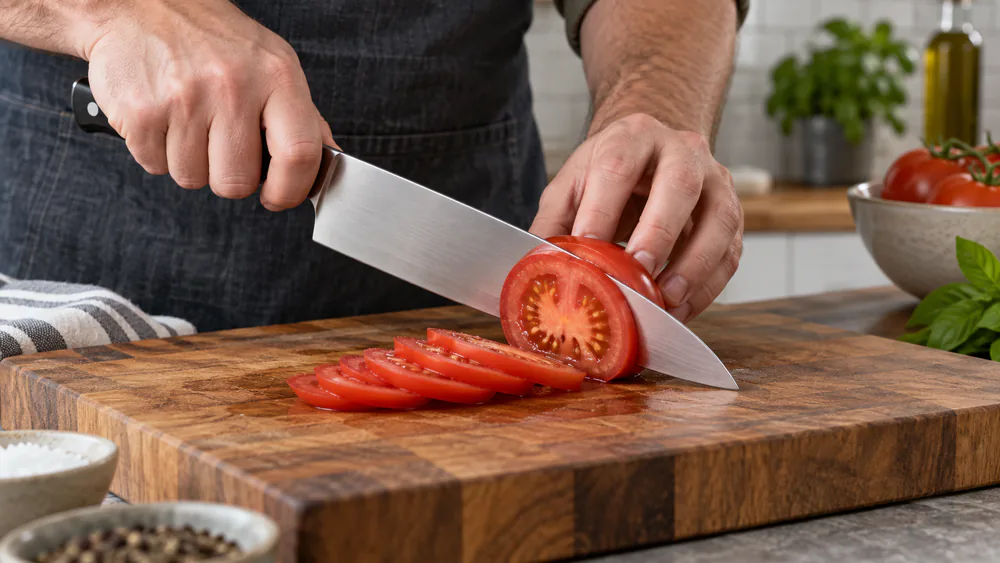
Best Knife Steel for Kitchen Knives
Kitchen knives have different priorities than pocket knives. The edge must stay sharp through a week of prep, the steel must shrug off moisture and acid, and the cook must be able to bring the edge back at home. That points to AEB-L, SG2/R2, CPM MagnaCut, and VG-10 first, with 14C28N and Nitro-V as the budget kitchen steels and 52100 for carbon-steel traditionalists.
We judge kitchen steels the way working kitchens do. Every knife runs a month of real prep in rotation, with edge checks after each session, and we score how the edge holds after a week of work and how easily the steel sharpens back. In that rotation, VG-10 holds its edge through long, busy sessions, AEB-L sharpens back to razor sharp in a few passes between tasks, and 14C28N held a razor edge through daily use on a budget blade. A thin MagnaCut edge on a good chef's knife carries a week of prep and wipes clean without a trace of rust. For the knives themselves, see our best chef's knife roundup.
One caution on premium kitchen steel: cheap M390 kitchen knives are almost certainly mislabeled steel, and credible M390 kitchen knives are rare at honest prices. The steel is the recommendation, so our Best Kitchen pick links to a folder in the same alloy.
Best Knife Steel for EDC
Everyday carry favors balance over extremes: an edge that lasts, corrosion resistance for pockets and rain, and toughness for accidental drops. CPM MagnaCut, M390, 20CV, S45VN, and S35VN lead the list, with 14C28N, Nitro-V, and D2 at budget.
We also weigh sharpening reality, because a folder that lives in a pocket is usually sharpened at a kitchen counter rather than a bench. D2 will disappoint in wet carry, while 14C28N sharpens easily and holds its edge through everyday cutting. Two small things we have learned in rotation: a DLC-coated blade can feel stiff out of the box and loosens as it breaks in, and if you ever disassemble a folder to adjust pivot tension, expect the screws to loosen over time; a drop of thread-locker is the standard fix.
Best Knife Steel for Hunting and Survival
Hunting blades meet bone, gristle, and field conditions, and the best balance for hunting is 60-62 HRC. CPM MagnaCut, Elmax, S35VN, and S45VN lead the list, with 14C28N, 80CrV2, and 1095 at budget.
MagnaCut edges have lasted a full elk without a touch-up in field use. AEB-L is a favorite for meat processing because it sharpens fast enough to touch up between carcasses. 52100 soaks up batoning, prying, and heavy chopping and sharpens dead simple on a basic field stone, with rust the price you pay. D2 is the budget hunting favorite, and it is honest about its limits: a D2 fixed blade rusts up if you do not keep up with it, it holds up through rain, cold, and snow when maintained, and the leather sheath is the weak point of the package, wearing loose after a few years.
Best Knife Steel for Saltwater and Fishing
Saltwater is the harshest environment a blade can live in. Vanax SuperClean and LC200N are the only steels that came through a 3.5% saltwater test free of corrosion, so they are the fishing and saltwater picks, joined by H1 and H2, nitrogen-alloyed steels built for saltwater, and, for most anglers, MagnaCut, which came close but not equal. Around salt, avoid plain 1095, 52100, and O1; they rust fast with any neglect.
Best Budget Knife Steel
14C28N is our budget pick, and it often shows up on knives around $16, though street pricing moves week to week. Nitro-V and D2 sit just above it in price, and 420HC is the corrosion-friendly budget option. Below them sit AUS-8 and 8Cr13MoV, which sharpen easily but dull quickly and resist corrosion only modestly.
Steels to Avoid in the Kitchen
Some excellent steels do not belong in a kitchen. Ultra-hard high-HRC steels such as S110V, Maxamet, and ZDP-189 chip when they meet bones, frozen food, and twisting cuts, and they are nearly impossible to sharpen at home. D2 is a poor kitchen steel, because wet counter duty defeats its semi-stainless nature. K390 and other low-corrosion tool steels spot on damp boards. Save the super steels for the jobs they are built for.
How Heat Treatment Affects Knife Steel Performance
The alloy is only half the story. Heat treatment matters as much as steel selection: the same steel with different heat treatments performs completely differently, and a well-heat-treated budget steel will beat a poorly treated premium steel every time.
What the HRC Number Really Tells You
The HRC number is a snapshot of one property. It tells you how hard the steel is after its final temper, and nothing else. It does not tell you how tough the edge is, how the steel resists corrosion, or how it sharpens.
Most good knives balance at 58-62 HRC. Hunting knives sit between 58 and 64 HRC, and the best balance for hunting is 60-62 HRC. A blade pushed to 66-67 HRC, like ZDP-189, holds an edge superbly and chips accordingly. Read the number as one input among five, not as a verdict.
Heat-Treat Quality, Cryo, and Edge Stability
Three parts of the heat treat matter most: the austenitizing temperature, the tempering cycle, and whether the blade receives a cryo treatment.
Austenitizing temperature is specific to each steel. CPM MagnaCut calls for 2050F, followed by a double temper at 350F for two hours per pass. AEB-L austenitizes at 1975F for peak hardness with cryo, and you should not go above 2000F or toughness drops.
Cryo, the deep-freeze step, converts retained austenite and adds roughly 1-2 HRC in steels like 14C28N. A home freezer works only if the blade goes in immediately after quench, which is why makers run the step professionally.
Tempering temperature changes the corrosion story too. Tempering MagnaCut above 750F decreases its corrosion resistance, so the low-temper cycle is part of why the steel stays clean in the kitchen.
Edge stability is the hidden benefit of good heat treatment. AEB-L's tiny carbides and stable edge support very thin, acute edges, which is why it cuts so well despite modest CATRA numbers. Steel selection and heat treat together decide what a blade can be.
Which Knife Steel Is Best for You?
With the chart, the families, and the tiers covered, the remaining question is which steel to buy. Match the steel to the work first, then to the sharpening you are willing to do. The five properties answer two questions: how hard the blade will work, and how much maintenance you accept. If you need the short version, start here.
- Choose CPM MagnaCut if you want one steel for everything: EDC, kitchen, and field, with corrosion resistance close to the saltwater grades.
- Choose M390, 20CV, or 204P if you want maximum edge retention and own a real sharpening setup; they cut longer than almost anything and ask the most in return.
- Choose S45VN or S35VN if you want a proven premium folder steel with easy maintenance and moderate sharpening.
- Choose AEB-L or SG2/R2 if you cook and value razor sharpness and fast touch-ups over raw edge retention.
- Choose 14C28N if you are on a budget; it is the best edge life per dollar in the tier.
- Choose D2 or 80CrV2 if you hunt or work outdoors and will keep a blade dry and maintained.
- Choose Vanax or LC200N if your knife lives around saltwater.
- Skip S110V, Maxamet, and ZDP-189 unless you want a specialist slicer and own diamond sharpening gear.
One more rule of thumb: buy the best heat treat you can afford. A maker with a proven heat-treat process is worth more than the next tier of steel.
How We Ranked and Rated These Steels
The scale and the weighting behind every score in this guide are spelled out above the comparison chart: the niche's relative 1-10 scale, with the largest share of our ranking weight on hardness-driven edge performance. What follows is how the verdicts were earned in practice. In the kitchen, every steel runs a month of real prep in rotation, with edge checks after each session. We score how the edge holds after a week of prep, how the blade behaves on wet boards and acidic produce, and how easily the steel sharpens back to a working edge. Field grades run the same edge-check method under heavy outdoor use. No steel is a 10 in both toughness and edge retention, and that is the point: the best steel is the one matched to the job.
Frequently Asked Questions
Is a Higher HRC Always Better?
No, and the reason is worth knowing before you buy. HRC reports one thing only: how deeply a diamond cone pressed into the steel, which is a measure of resistance to indentation, not of edge performance. It says nothing about how the edge cuts, chips, or rusts, which is exactly why the number dominates knife listings: it is easy to print and easy to inflate. When a brand leads with an extreme HRC claim, ask whether it publishes the heat treat behind it, the austenitizing temperature and temper cycle, or a datasheet for that specific blade. A number with no heat-treat story is a marketing number.
Is Stainless Steel Tougher Than Carbon Steel?
The label is about chemistry, not toughness, and it leads plenty of buyers to overestimate what a stainless blade can take. Stainless means roughly 13% chromium added for corrosion resistance, and on the relative scale the tough carbon grades still lead most stainless steels: 1095, 5160, and 80CrV2 all score 7/10 or better. But a few fine-grained stainless grades break the pattern. AEB-L scores 8/10 toughness, 14C28N and Nitro-V sit at 7/10, and all three keep the corrosion advantage while matching the carbon crowd in abuse resistance.
Does MagnaCut Really Outperform M390?
In most uses, yes. MagnaCut trades some raw edge retention for much better toughness and corrosion resistance that beats 20CV. If the job is pure long slicing on light-duty work, M390 still holds the edge crown; for everything else, MagnaCut is the more balanced steel.
What Is the Easiest Knife Steel to Sharpen?
It depends on the stones you own. The budget stainless grades, 420HC and 440A at 9/10 on the ease scale, take a working edge on plain stones, and so do the fine-grained 14C28N and AEB-L grades with a little patience. The split that matters is at the top: the high-vanadium and ultra-hard grades, S90V, S110V, and ZDP-189 at 1/10, plus Maxamet, really want diamond plates, because ordinary stone abrasives slide over the hard carbides that give those steels their edge life. Geometry matters too: a thin blade with an acute edge touches up faster than a thick edge in the same steel.
What Is the Best Budget Knife Steel?
14C28N, but budget comes in three flavors. Entry-level 14C28N knives commonly list around $16, though street pricing moves week to week, and nothing near that price matches its sharpening ease. Nitro-V costs a little more and leans kitchen: same fine-grained character, with ease of sharpening a step better on the chart at 7/10 against 14C28N's 6/10. D2 sits above both and is the budget choice only for dry carry: it holds an edge longer but rusts in a damp pocket and takes real work to sharpen. If corrosion matters more than edge life, 420HC is the cheap option that shrugs off moisture but dulls quickly.
What Is the Best Knife Steel for Kitchen Knives?
Match the steel to how you cook. If you do fine dicing and filleting and touch up often, AEB-L or SG2/R2 give razor-sharp edges that come back fast. If you are a heavy home cook who wants one blade for everything, CPM MagnaCut carries a week of prep and wipes clean. If you work at pro-kitchen pace, VG-10 holds its edge through long, busy sessions. On a budget, 14C28N and Nitro-V are the kitchen values, and 52100 serves cooks who want carbon and will maintain it.
Final Verdict: The Best Knife Steel Overall
After weighing the evidence, CPM MagnaCut is the best knife steel overall for most people. It is the only mainstream steel that scores 8/10 toughness and 9/10 corrosion resistance while keeping solid edge retention, with a Charpy result that beats the premium stainless crowd and CATRA numbers that match S35VN.
The runners-up matter by use. M390 still owns raw edge retention and the premium kitchen space. 14C28N is the budget steel that will surprise you. Vanax and LC200N are the saltwater specialists. A well-heat-treated D2 or 80CrV2 remains a genuine hunting value.
And remember that the alloy is only half the equation. Buy the best heat treat you can find, keep the blade dry and maintained, and learn ten minutes of sharpening. A good edge on a modest steel will outperform a dull edge on a super steel every time.
Read next
Ready to upgrade your kitchen?
Browse our tested knife guides for every blade, sharpener, and budget.