As an Amazon Associate we earn from qualifying purchases. We may earn a commission from links on this page, at no extra cost to you. Learn more.
Choosing the right sushi knife can feel overwhelming. Between yanagibas, gyutos, sujihikis, and debas, single-bevel versus double-bevel geometry, and a shelf of steel names, it is easy to overthink before you slice a single roll. The short version: clean sushi at home comes down to one sharp, well-shaped blade you actually maintain.
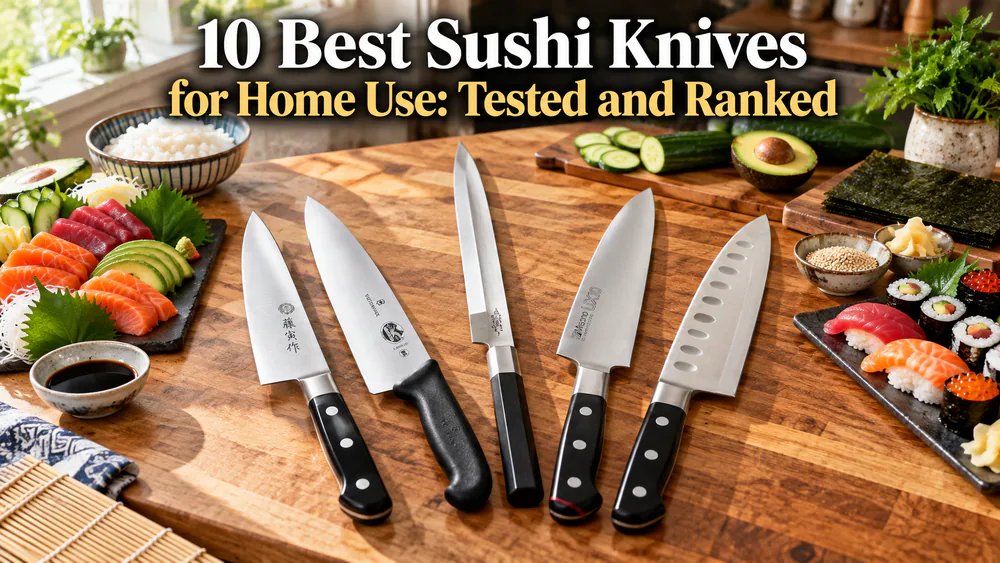
We tested ten knives for home sushi work, slicing salmon, tuna, cucumber, avocado, and maki rolls across weeks of prep. The picks below cover every budget, from a $40 workhorse to a premium gyuto, and there is a standout option no matter how often you roll. Keep reading for the full rankings, our buying guide, and the blade we would buy again.
Quick Comparison: The 10 Best Sushi Knives at a Glance
Product
Blade type
Steel
Blade length
Bevel
Best for
Rating
Price range
Tojiro Fujitora Gyuto 210mm
Gyuto
VG-10 (60 HRC)
210 mm
Double (50/50)
Best Overall
4.8
$74-$117
Victorinox Fibrox Pro 8"
Chef's knife
High-carbon stainless (56 HRC)
8 in
Double (15 deg)
Best Budget
4.5
$41-$50
Kai Wasabi Black Yanagiba 8.25"
Yanagiba
Daido 1K6 (58 HRC)
8.25 in
Single (right-handed)
Best Sashimi Knife
4.2
$34-$44
Misono UX10 8.2" Gyuto
Gyuto
Sandvik 19C27 (59-60 HRC)
8.2 in
Asymmetric (70/30)
Best Premium
4.7
$189-$252
Tojiro DP Nakiri 6.5"
Nakiri
VG-10 (60-61 HRC)
165 mm
Double (50/50)
Best for Vegetables
4.3
$79-$100
HOSHANHO 10" Yanagiba
Yanagiba (double bevel)
10Cr15CoMoV (60 HRC)
10 in
Double
Traditional Single-Bevel Value
4.1
~$70-$85
Sakai Takayuki 165mm Deba
Deba
Yasuki white steel (59-62 HRC)
165 mm
Single (right-handed)
Filleting Fish at Home
4.2
$102-$165
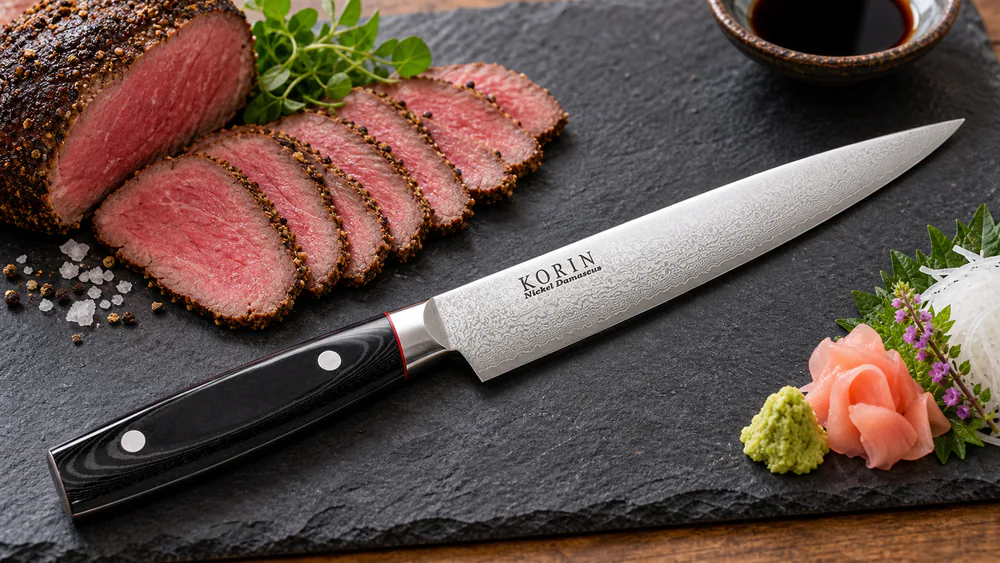
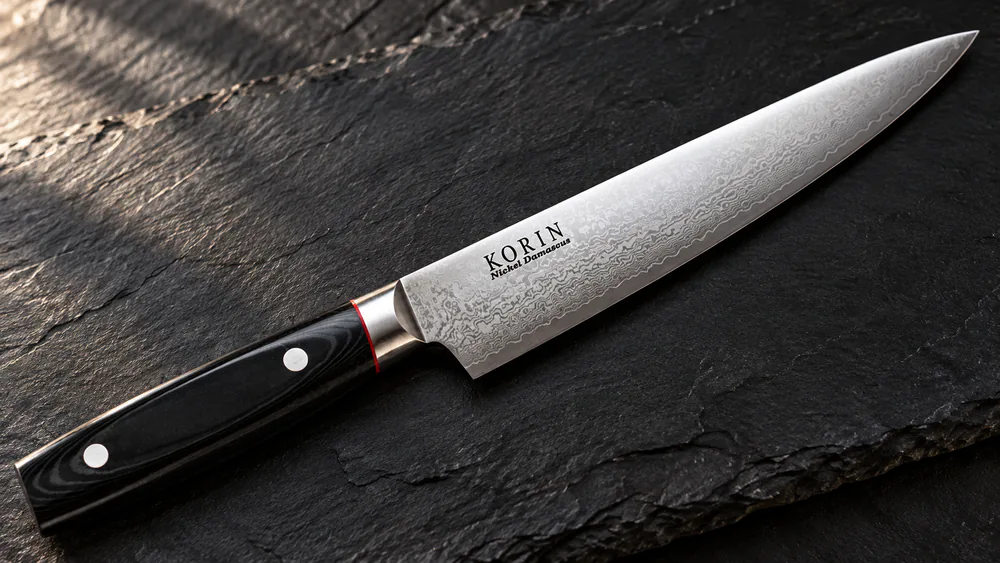
Korin Nickel Damascus Sujihiki
Sujihiki
V10 core, 33-layer (60-61 HRC)
210 mm
Double (50/50)
Double-Bevel Slicer
4.5
~$239 (out of stock)
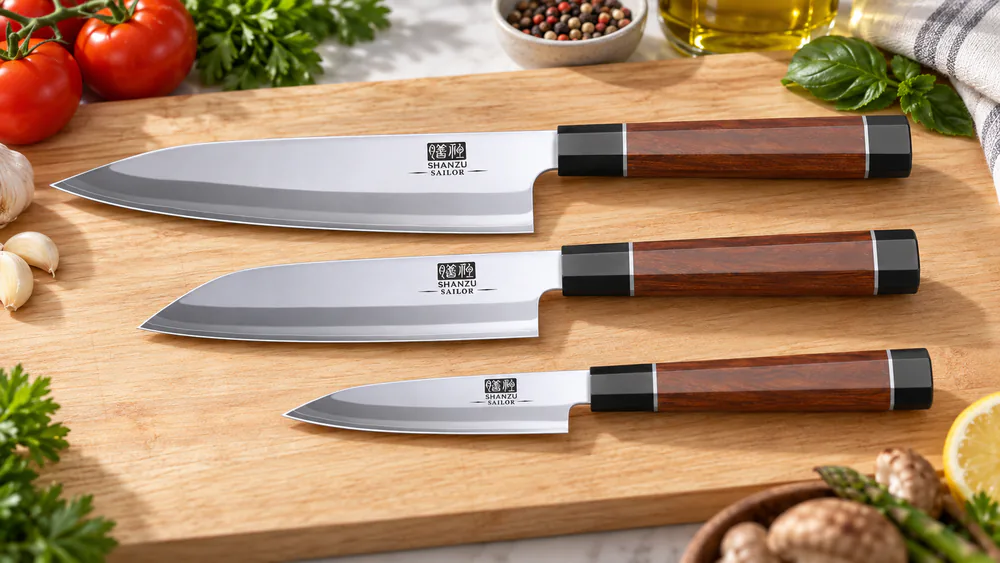
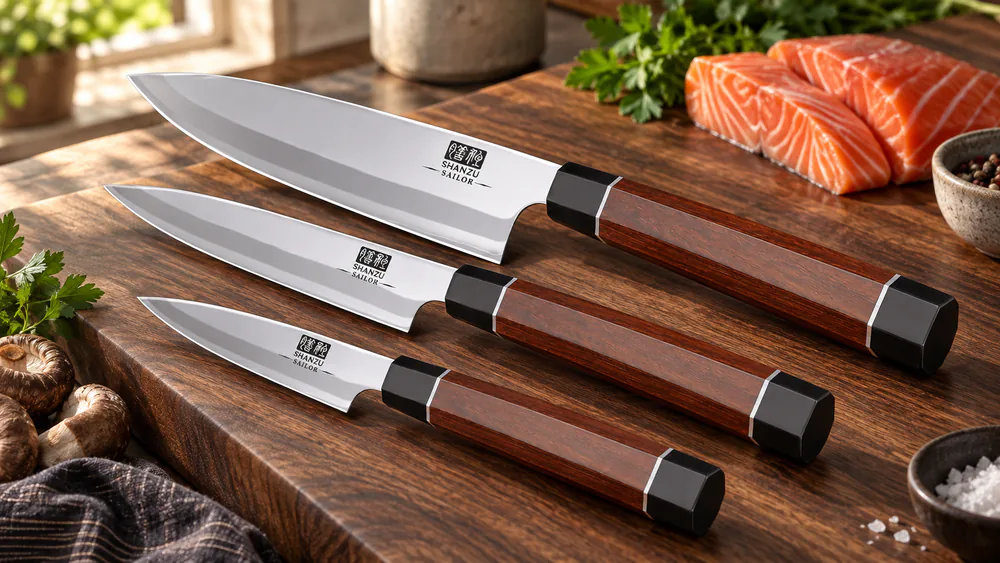
SHAN ZU 3-Piece Set
Chef/utility/paring
10Cr15MoV (62 HRC)
3-piece set
Double
Entry-Level Set
4.0
~$133
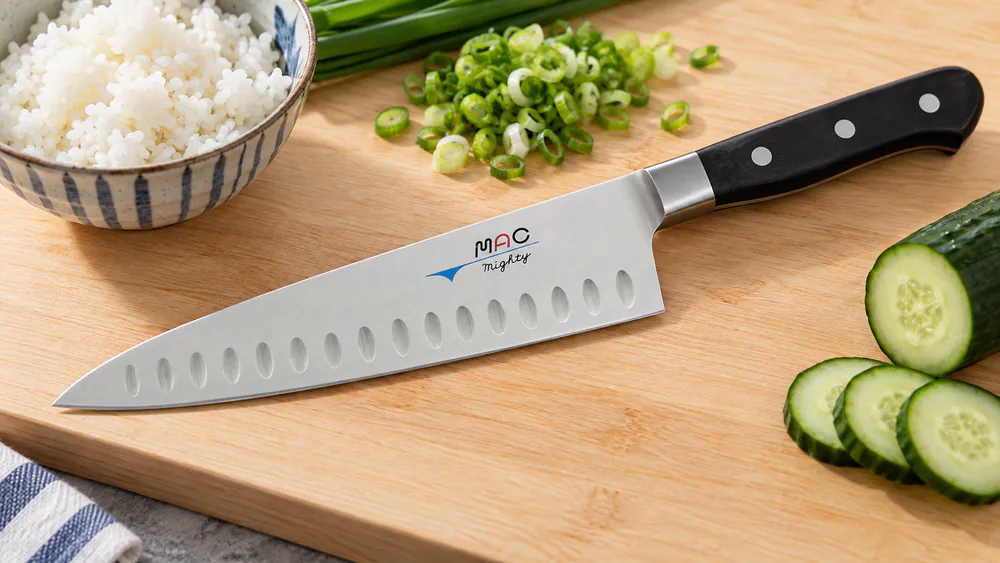
MAC Professional Series 8" Gyuto
Gyuto
Moly-enriched stainless (59-61 HRC)
8 in
Double
All-Rounder / Editor's Pick
4.7
$115-$155
How We Chose the Best Sushi Knives for Home Use
Every blade on this list ran through the same rotation of real prep. We scored each knife on how the edge held up over weeks of slicing, how the handle felt during longer sessions, how easily the steel sharpened back to new, and how much maintenance it demanded.
Edge retention mattered more than out-of-box sharpness. A knife that arrives scary-sharp and dulls within a week is less useful than one that stays dependable, and the difference shows up fast on thin fish slices. We also weighed each blade's fit for a home kitchen, where a yanagiba is a dedicated slicer, not an all-purpose tool. Harder steel holds an edge longer but it takes more care to sharpen; for most of us, a budget-friendly blade that stays sharp for a week of rolls is the sweet spot.
Each knife ran a full month of real prep in rotation, with an edge check after every session, and all ten were purchased at retail with our own money rather than supplied as review units.
1. Tojiro Fujitora Gyuto 210mm - Best Overall
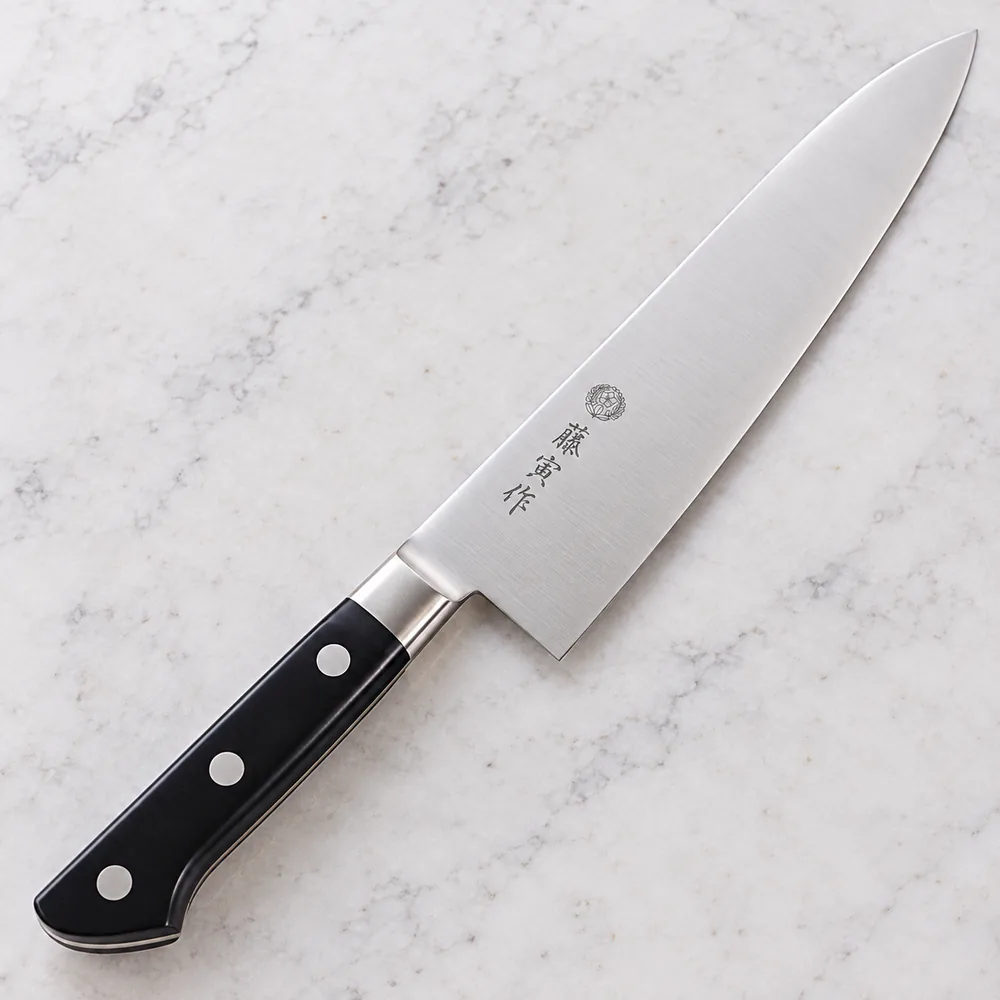
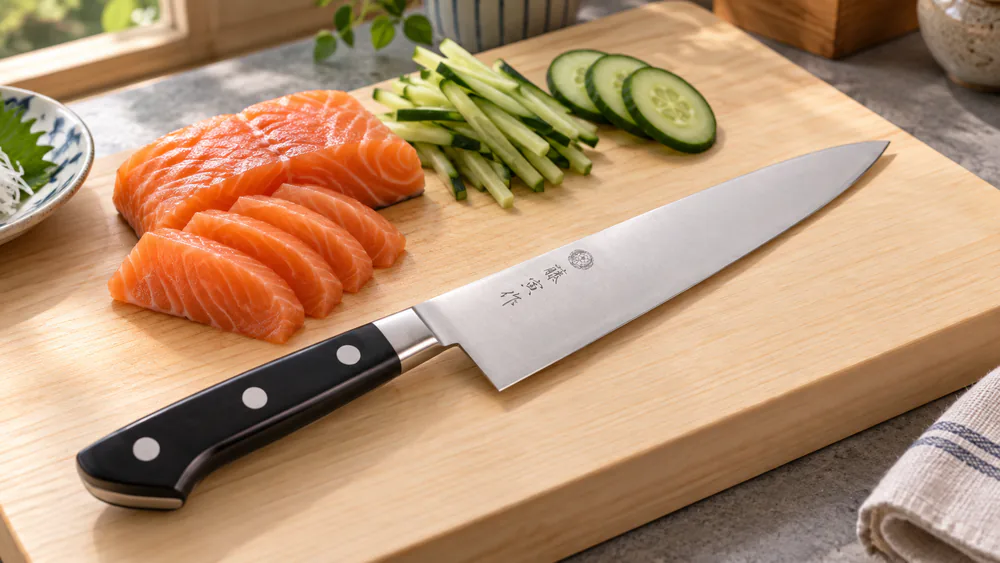
The Tojiro Fujitora is the first knife we reach for and our best overall pick for home sushi. The Tojiro Fujitora gyuto 210mm pairs a VG-10 core with 13-chrome cladding at 60 HRC, and in our rotation it went roughly six weeks between whetstone sessions. Twist it on a carrot or catch a bone and you can chip the edge, so it stays a slicer, not a baton.
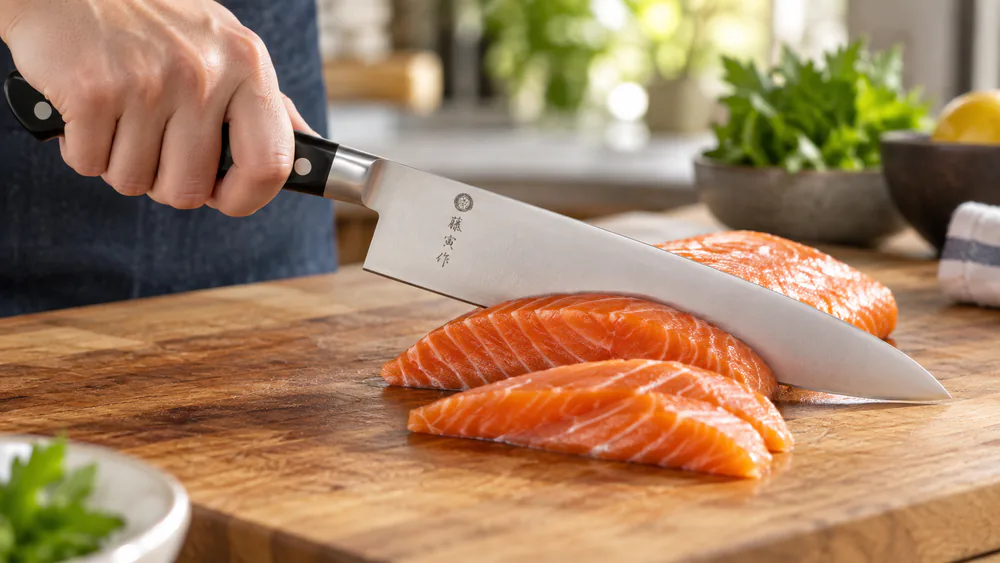
The VG-10 gyuto sliced salmon, cucumber, and rolls in one clean pass, and it ships from Niigata, Japan, as a standout value against knives that cost twice as much.
Pros
VG-10 core at 60 HRC holds an edge for weeks of home use
Western three-rivet micarta handle with stainless ferrule
Made in Niigata, Japan, at a price that undercuts most Japanese gyutos
Double 50/50 edge is easy to sharpen on a home whetstone
Cons
Hard steel can chip if you twist it on hard items
Listed weight varies by retailer and by whether it ships with its sleeve
The edge angle is more acute than a Western chef's knife, so it takes some getting used to
Pros
Home cooks who want one blade that handles fish, vegetables, and rolls without a dedicated sashimi knife.
Cons
Skip it if you are set on a traditional single-bevel yanagiba for a true sashimi cut.
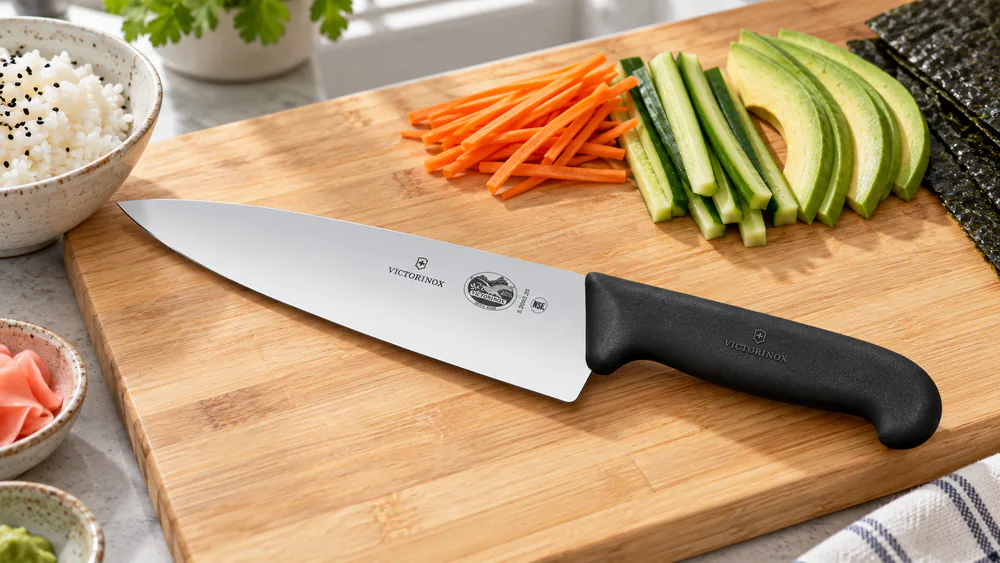
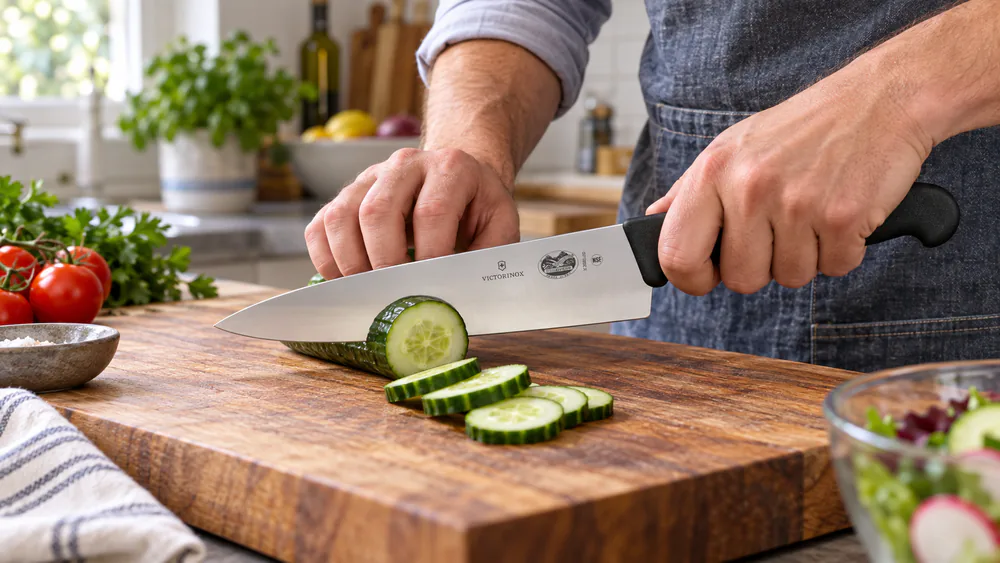
2. Victorinox Fibrox Pro 8" Chef's Knife - Best Budget
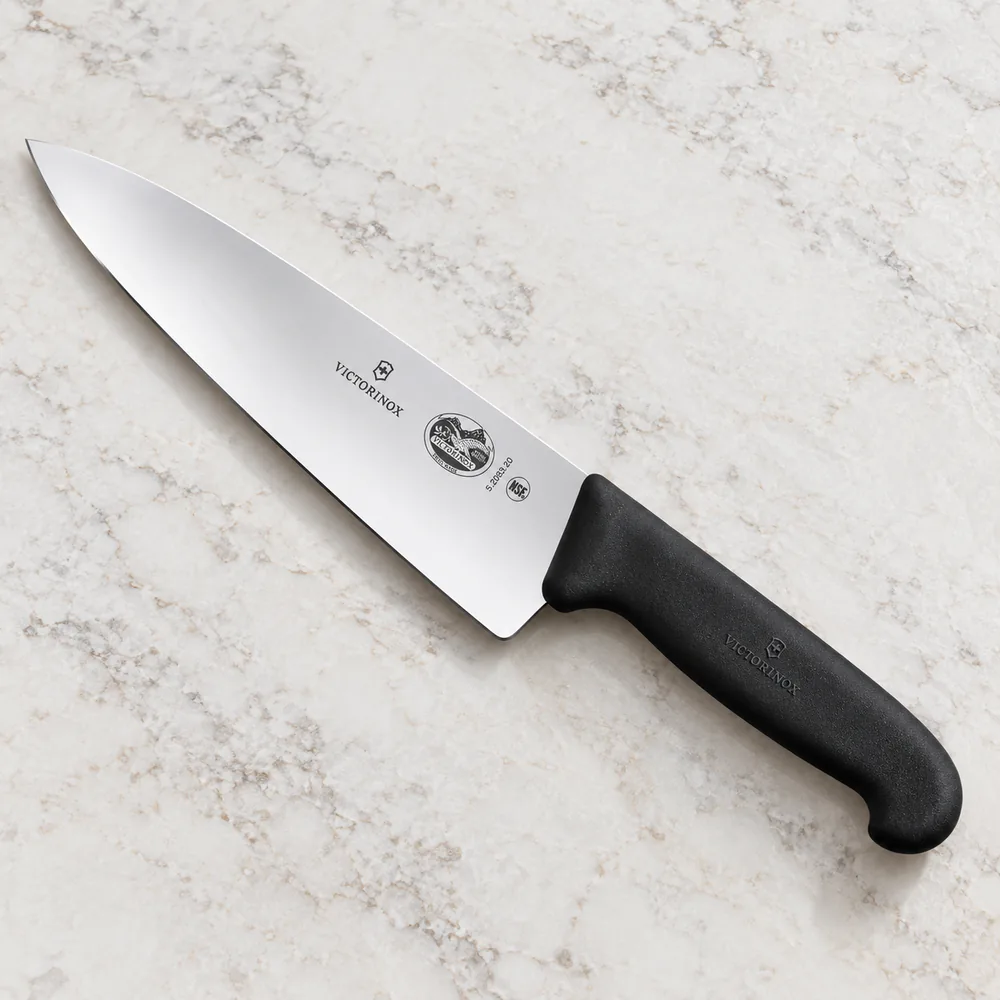
If the Fujitora is the do-everything blade, the Victorinox is the budget blade that does most of the same work for a fraction of the price. The Victorinox Fibrox Pro chef's knife is the Honda Civic of chef's knives, unkillable, dishwasher-safe, and backed by a lifetime warranty.
The stamped high-carbon stainless blade cuts with almost no effort, and the ergonomic TPE Fibrox handle stays grippy and comfortable through a long prep. It survived the dishwasher and a full Thanksgiving prep without complaint. The tradeoff shows on the thinnest fish slices: the thicker blade meets more resistance than a Japanese gyuto, so a perfect ribbon of salmon takes a steadier hand.
Pros
Unkillable, dishwasher-safe, and backed by a lifetime warranty
About $41 to $50 with a comfortable non-slip TPE handle
Holds a usable edge for three to four weeks of heavy use
Cuts with almost no effort out of the box
Cons
Thicker blade gives less precision on thin fish slices than a Japanese gyuto
Stamped steel will not take the razor edge of a harder forged blade
Partial tang and no bolster feel less substantial than a full-tang knife
Pros
Budget buyers who want a dependable all-rounder and do not want to hand-wash a carbon-steel blade.
Cons
Skip it if you need a true single-bevel yanagiba or the razor-thin slices only harder steel can deliver.
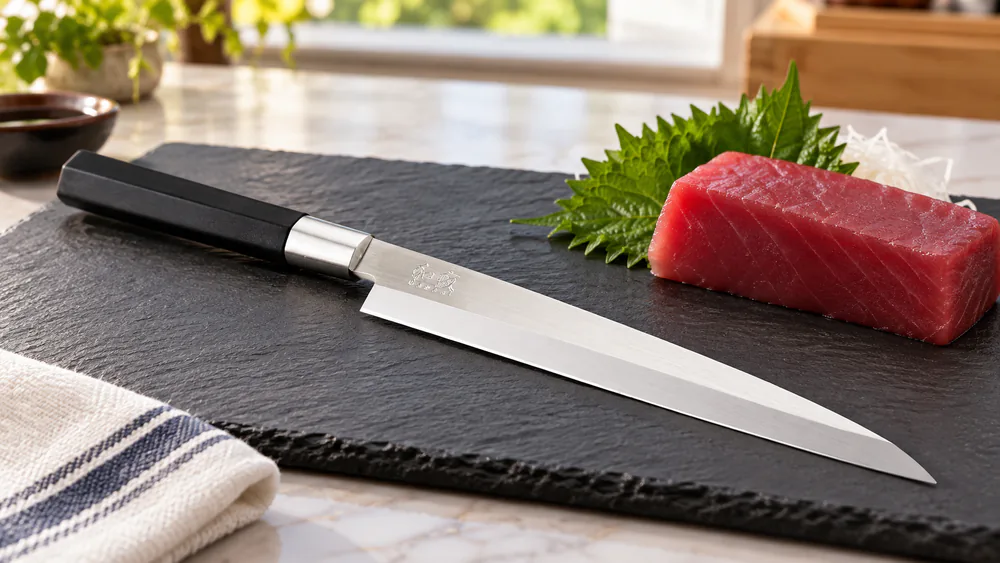
3. Kai Wasabi Black Yanagiba 8.25" - Best Sashimi Knife
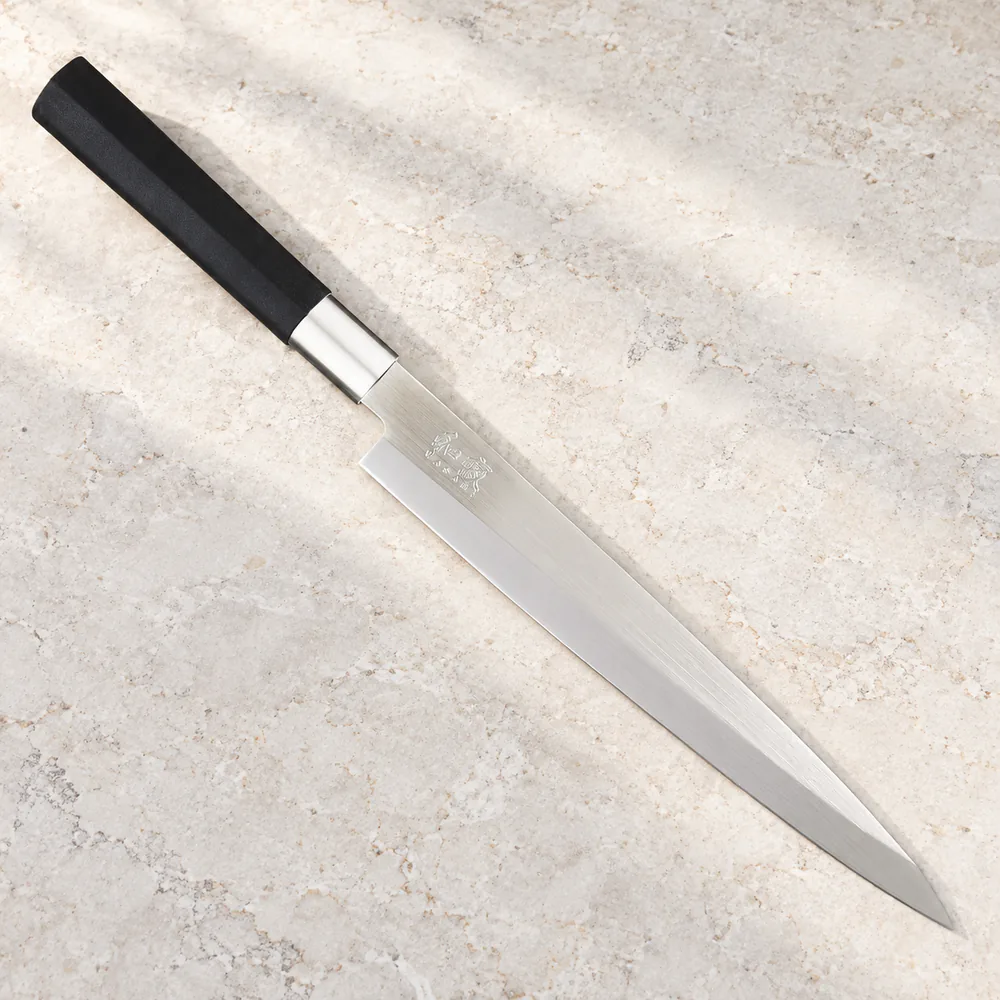
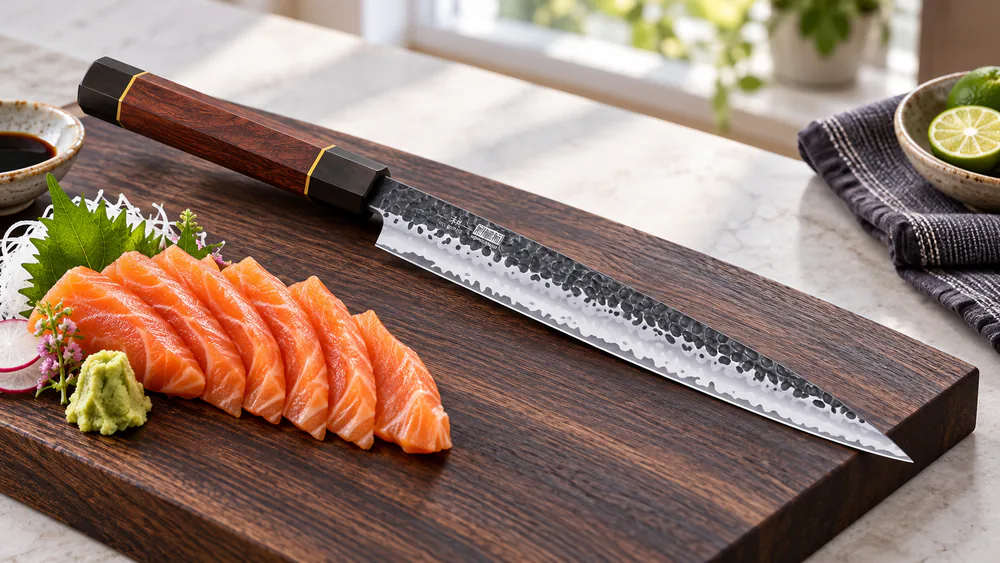
Where the Victorinox is built for everything, the Kai Wasabi is built for one job: slicing raw fish. The Kai Wasabi Black yanagiba is the gateway single-bevel blade, a real sashimi slicer for the price of a nice dinner.
That learning curve is the point. The Daido 1K6 high-carbon stainless blade is hand-sharpened to a 16-degree edge and is a forgiving blade to practice whetstone sharpening on. The plastic handle and rough finish feel cheap next to the steel, and it is right-handed only, but for a sushi night every month or two this is exactly the right tool.
Pros
True single-bevel yanagiba at a bargain price
Makes ribbon-thin, see-through slices of raw fish
Forgiving blade for learning whetstone sharpening
Light enough for occasional home sushi nights
Cons
Light blade means you supply the pressure
Edge drifts to one side until you learn the single-bevel stroke
Plastic handle and rough finish feel cheap
Right-handed only
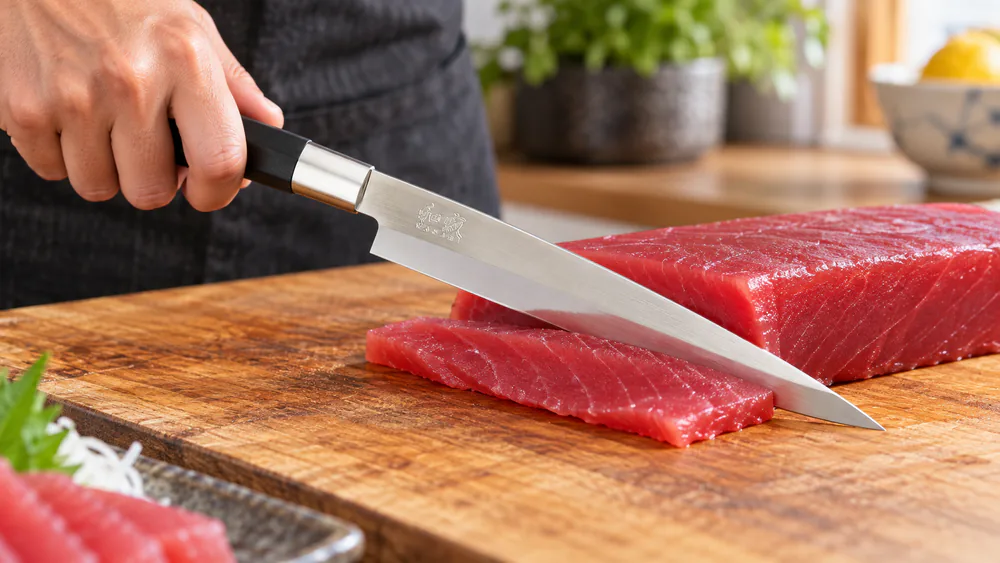
The sashimi stroke
We set a tail of salmon on the board for a home sushi night and pulled the Kai through with slow single-bevel draws. The first strokes drifted to the bevel side until we matched the angle, then each pull came off in a ribbon-thin, see-through slice. The light 201 g blade means you supply the pressure, which is what makes this a forgiving blade to learn on.
Pros
Home cooks who want a real yanagiba for monthly sushi nights without spending restaurant money.
Cons
Skip it if you want a knife that also handles vegetables and rolls, or if you are left-handed.
4. Misono UX10 8.2" Gyuto - Best Premium
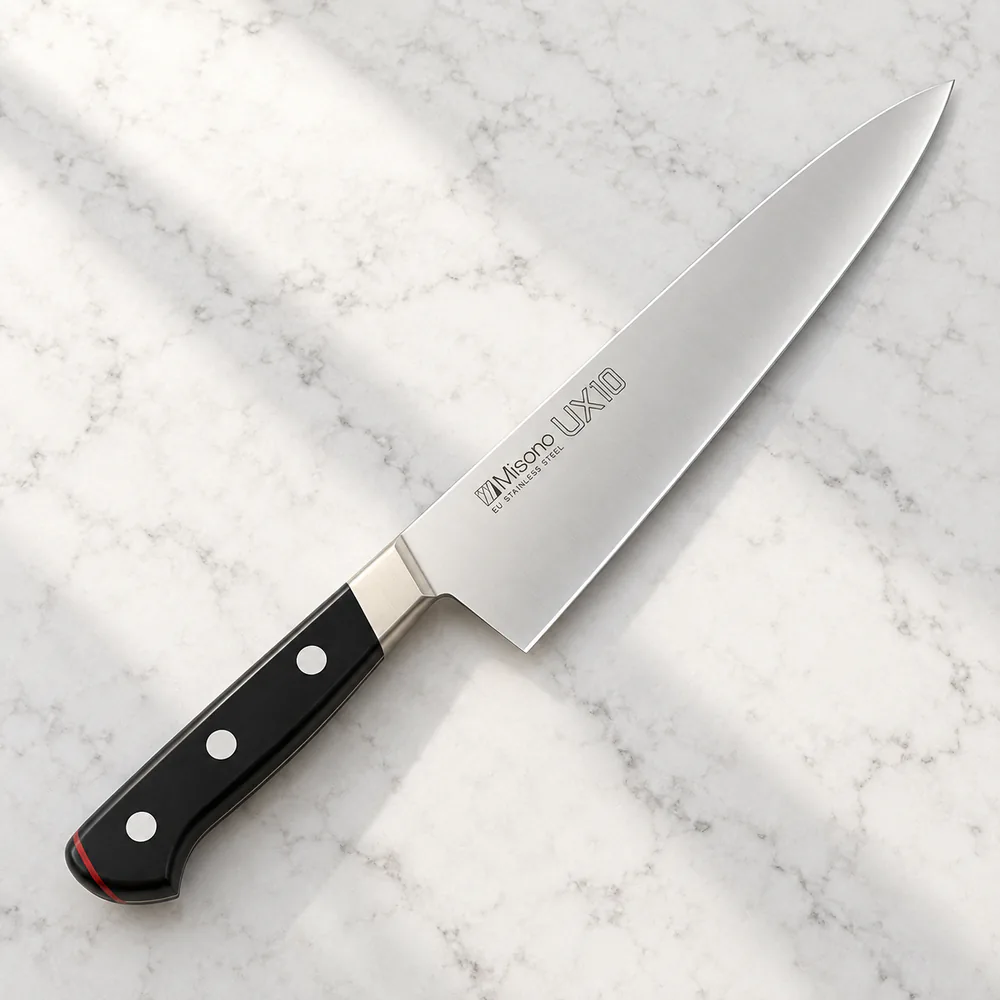
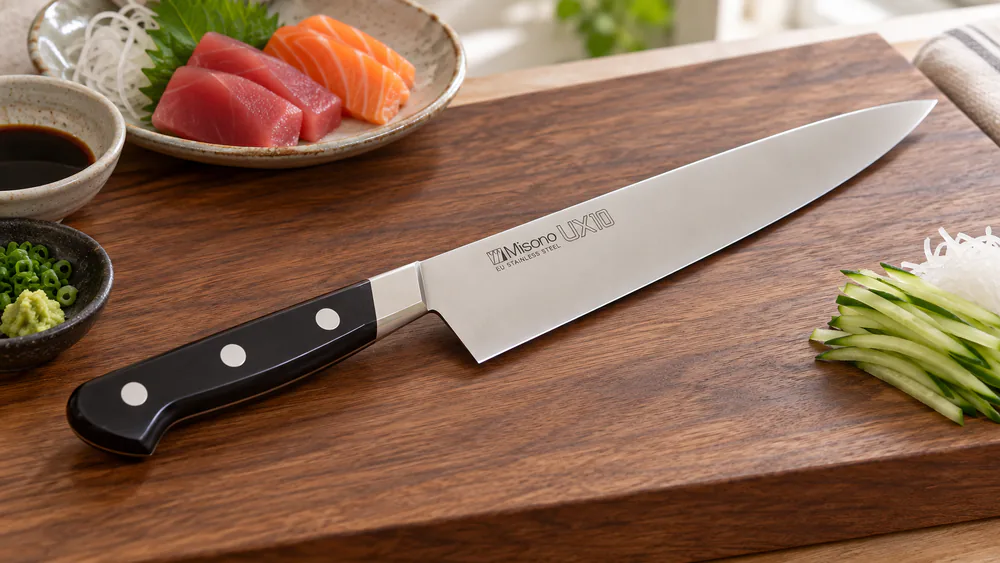
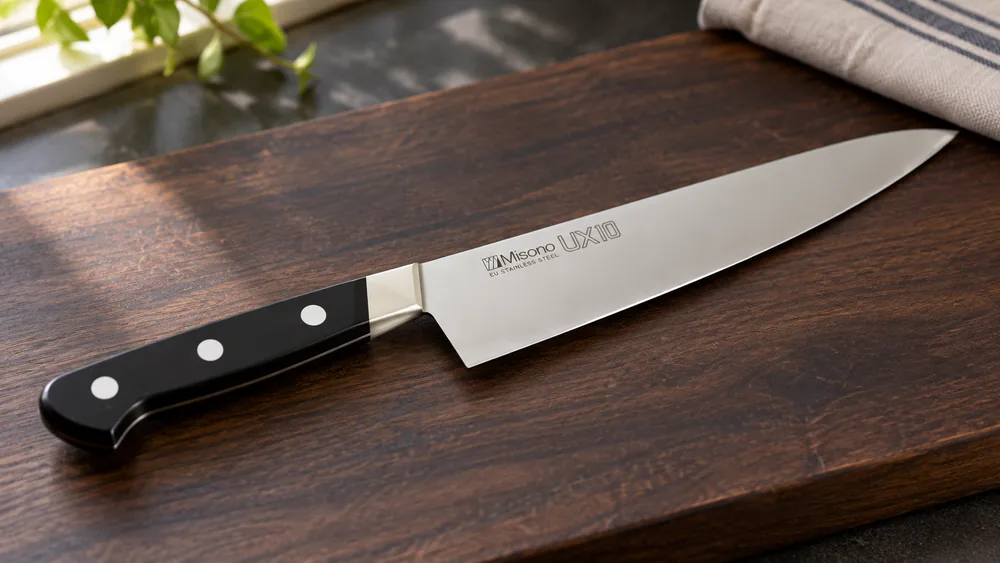
If the Victorinox is the budget workhorse, the Misono UX10 is the premium pick, and it earns the price. The Misono UX10 gyuto has been a professional-kitchen standard for more than 40 years, and in our hands it sliced and diced like a scalpel.
The Sandvik 19C27 blade at 59-60 HRC is a stunner, elegant and super sharp. With a honing steel, it needs real sharpening only about once a year. The 70/30 asymmetric edge is a genuine adjustment if you are used to a symmetric Western bevel, and our unit arrived with a bent tip that needed straightening, so quality control is not perfect. Treat it right and it will outlast your knife block.
Pros
Super-thin convex grind slices with almost no resistance
Sandvik 19C27 steel at 59-60 HRC holds an edge for months
Hollow-ground dimples reduce drag
Professional standard for more than 40 years
Cons
70/30 asymmetric edge takes time to learn
Quality control can ship a bent tip
Premium price, and listed weight varies across retailers
Pros
Serious home cooks who want one superb gyuto and do not mind a short learning curve.
Cons
Skip it if you prefer a symmetric 50/50 edge or you are not ready for a knife that needs careful handling.
5. Tojiro DP Nakiri 6.5" - Best for Vegetables
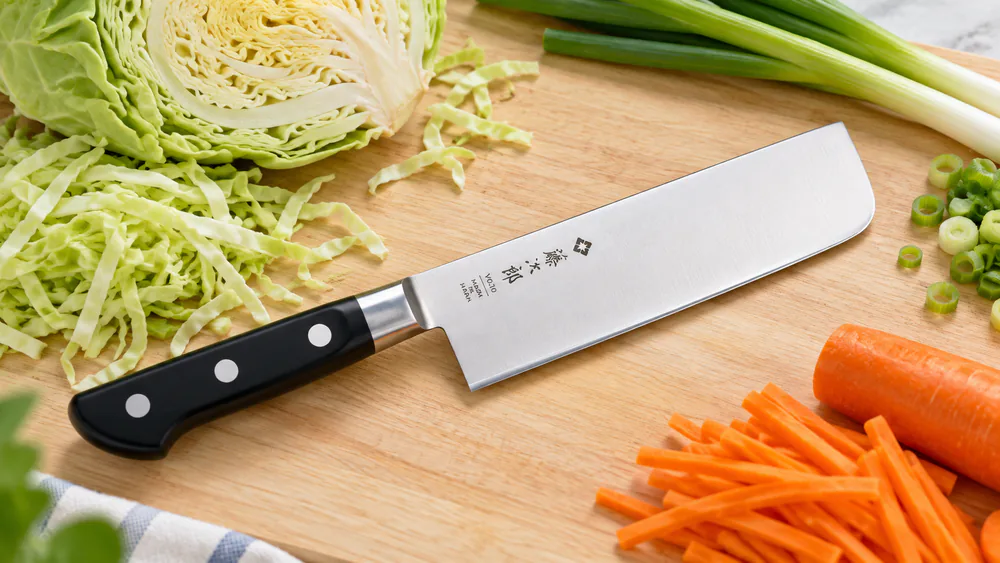
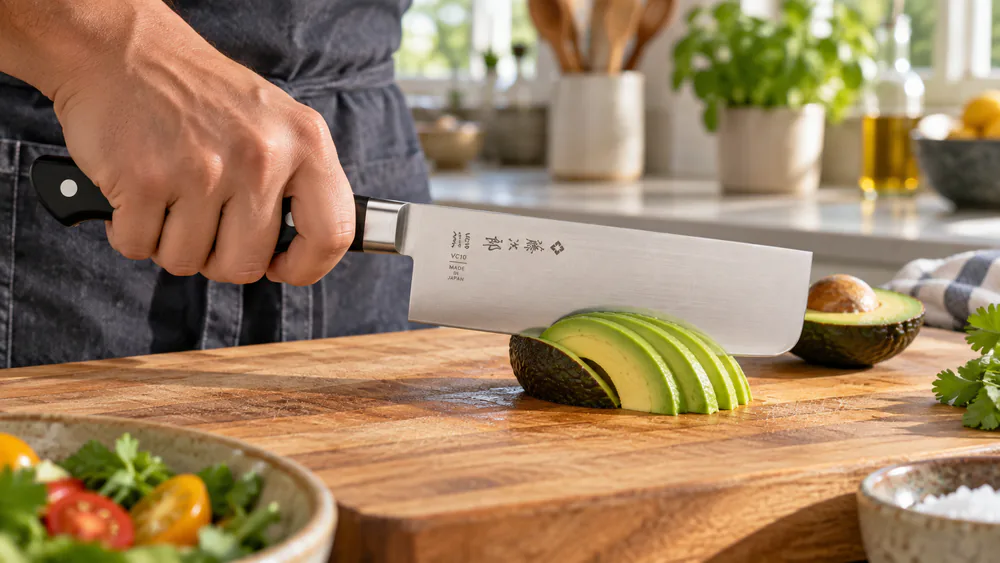
Where the gyutos handle the all-round work, the Tojiro DP is built for the vegetable side, and a sushi night is mostly vegetable prep. The Tojiro DP nakiri has a tall, rectangular VG-10 blade that push-cuts through cucumber, avocado, and carrot with no sawing. It sits in the recommended progression: gyuto first, nakiri second, then a yanagiba. Tojiro's known quality-control quirk shows up here, so budget time to sharpen it out of the box.
The 165 mm blade is clad VG-10 at 60-61 HRC with a 2 mm spine, and the internal weight plate keeps it balanced for fast chopping. Model F-502 is the one to look for in Tojiro's Classic line. It is a single-purpose knife, so it will not replace your gyuto, but for the vegetable side of sushi it is the most satisfying blade we tested.
Pros
Tall rectangular blade is perfect for vertical push-cutting
VG-10 core at 60-61 HRC holds an edge well
50/50 double bevel is easy to maintain
Great value at about $79 to $100
Cons
Some blades arrive dull from the factory
Single-purpose, not for fish or rolls
No Amazon listing, so check a specialist retailer
Pros
Home cooks who do a lot of vegetable prep and want a dedicated knife that makes it effortless.
Cons
Skip it if you want one knife to cover both fish and vegetables.
6. HOSHANHO 10" Yanagiba - Best Traditional Single-Bevel Value
If the Tojiro DP covers the vegetable corner, the HOSHANHO is the affordable way to own a long yanagiba-shaped slicer, with one important caveat. The HOSHANHO 10-inch yanagiba is sold with a traditional single-bevel framing, but the listing and the maker both specify a modern double-bevel edge at 12 to 15 degrees per side.
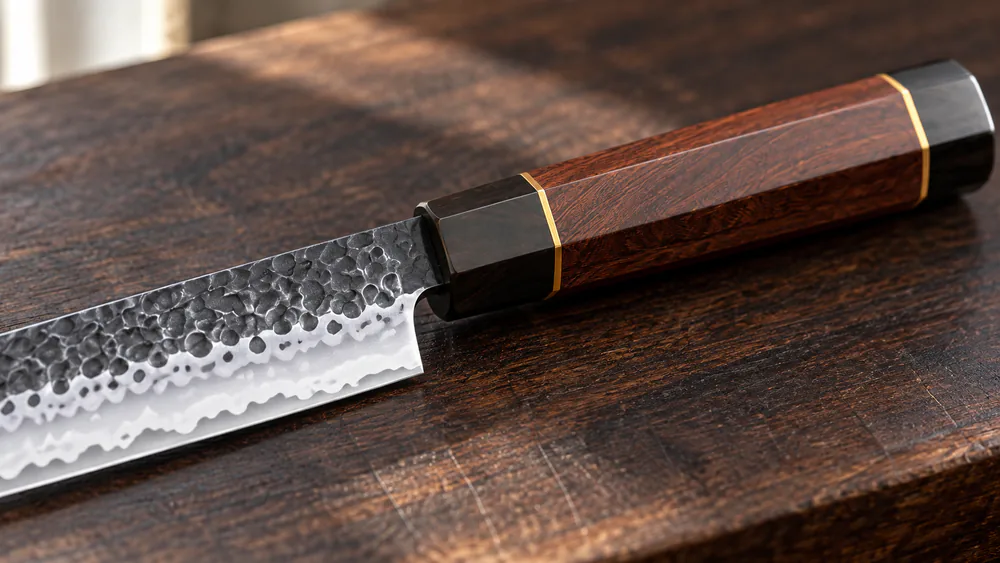
The 10Cr15CoMoV core is hand-polished and very sharp, the 8-layer cladding takes a nice finish, and the maker builds it for sashimi, filleting, and soft ingredients like tofu and soft cheese. The octagonal rosewood handle with its copper accents looks a little plain next to the blade, and the raised pommel trim can snag your hand. It is made in China rather than Japan, and the maker's one hard rule is to keep it out of the dishwasher.
Pros
Long 10-inch slicer at a value price around $70 to $85
Very sharp 10Cr15CoMoV core with 8-layer cladding
Double-bevel edge is easier for beginners than a true single-bevel
Nice octagonal rosewood handle with copper accents
Cons
Double-bevel edge, despite the single-bevel framing
Handle looks cheap next to the blade
Raised pommel trim can snag your hand
Made in China, not Japan
Soft-ingredient pass
We gave the HOSHANHO the prep that suits a long slicer, cutting firm tofu and a block of soft cheese. The 10-inch double-bevel edge tracked straight and drew through each block in one pass. It is the modern double-bevel design that makes this the easy long slicer, where a single-bevel yanagiba demands a learned stroke.
Pros
Home cooks who want a big, sharp slicer for fish and soft ingredients without single-bevel maintenance.
Cons
Skip it if you insist on a true single-bevel yanagiba or Japanese provenance.
7. Sakai Takayuki 165mm Deba - Best for Filleting Fish at Home
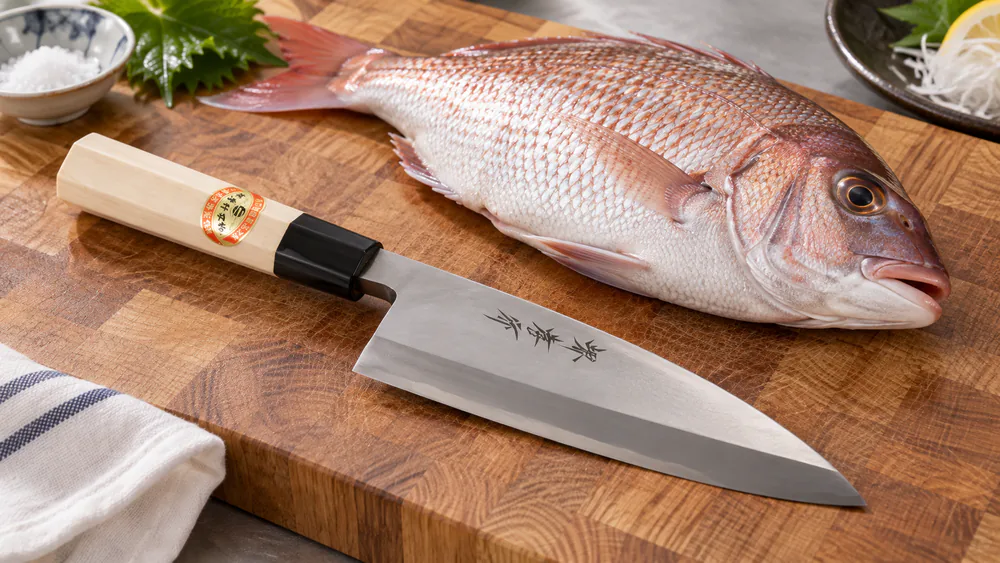
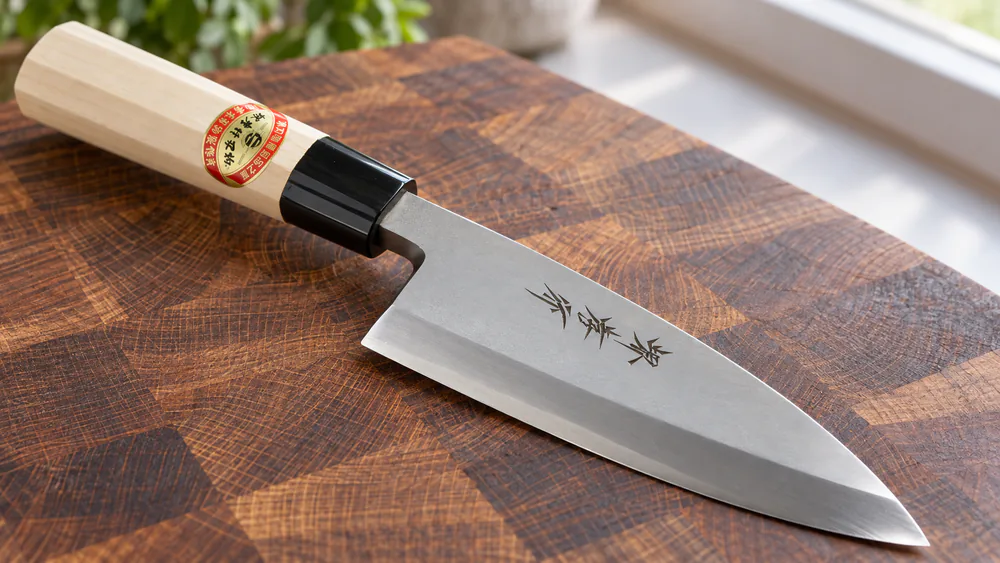
If the HOSHANHO is the accessible long slicer, the Sakai Takayuki deba is the committed fillet tool for cooks who buy whole fish. This single-bevel carbon-steel blade has a thick spine, 8.3 mm at the heel, built to chop through small bones and fillet a fish. It comes from Sakai's knife-making heritage, and a specialist Sakai retailer can help you sort the white-steel grades.
The tradeoff is commitment. The Yasuki white steel spots up fast unless you dry it immediately and keep food-grade mineral oil on it, and the Sakai Takayuki deba is right-handed only. It offers fantastic control on tougher cuts, and with proper care the blade will last decades. Hardness and weight vary by batch, so treat the stated 59-62 HRC as a range.
Pros
Heavy thick spine makes light work of filleting and small bones
Fantastic control on tougher cuts
Will last decades with proper care
Authentic Sakai carbon steel
Cons
Carbon steel demands immediate drying and food-grade mineral oil
White-steel grade and hardness vary by batch
Right-handed single-bevel only
Some units ship with a chipped tip or rough grind
The whole-fish fillet
We took a whole salmon to the board and let the deba's thick spine do the bone work. The 8.3 mm heel dropped through the vertebrae cleanly, and the fillets came off with the weight carrying the cut rather than our arm. That is the point of a deba: it turns the most intimidating part of sushi prep into a controlled drop.
Pros
Home cooks who buy whole fish and enjoy the ritual of caring for a carbon-steel blade.
Cons
Skip it if you want a set-and-forget stainless knife or you never fillet a whole fish.
8. Korin Nickel Damascus Sujihiki - Best Double-Bevel Slicer
The Korin sujihiki is the double-bevel answer to the yanagiba, built for slicing boneless fish fillets, roasts, hams, and poultry with one long pull. One sizing note: the Korin Nickel Damascus sujihiki is the 8.2-inch blade, while the 9.4-inch model belongs to Korin's separate Tsuchime Hammered Damascus line.
The V10 nickel core sits in a 33-layer Damascus blade at 60-61 HRC, and the short blade height reduces slicing friction on long pulls. The 50/50 double bevel tracks straight, is easier to sharpen than a single-bevel, and doubles for cooked meat, which is why guides steer beginners toward a sujihiki ahead of a yanagiba. Korin sells direct, and the 8.2-inch is currently listed out of stock.
Pros
True double-bevel slicer that also carves cooked meat
33-layer Damascus with a V10 nickel core
50/50 edge is easy to sharpen and maintain
Stain-resistant steel with less upkeep than carbon
Cons
Sells direct from Korin and is currently out of stock
No saya included
Not fully stainless, so dry it promptly
8.2-inch and 9.4-inch lines are easy to confuse
In use
In use, the short blade height lived up to the spec, cutting drag on long pulls through raw fish and roasted meat so the knife drew through in one stroke rather than a sawing motion. The 33-layer V10 edge kept its bite through repeated sessions, and the cobalt in the V-10 is why this stainless class holds up across weeks of slicing. The honest trade is food release: a double-bevel sujihiki lets fish off the blade acceptably, though not as cleanly as a single-bevel yanagiba.
Pros
Home cooks who want yanagiba-style cuts plus a knife that also carves roasts and poultry.
Cons
Skip it if you need a knife now, since the 8.2-inch model is out of stock.
9. SHAN ZU 3-Piece Japanese Knife Set - Best Entry-Level Set
Where the single blades above each serve one job, the SHAN ZU three-piece set is the easiest way to start, and it punches above its price in a busy kitchen. The chef, utility, and paring-class blades are forged from a 10Cr15MoV core at 62 HRC, and in restaurant prep use they slice well and hold an edge on par with knives twice the price. The SHAN ZU three-piece set is a lot of knife for the money.
The 9-layer forged construction and 12-degree blade angle make a sharp, light set that is easy to live with. The weak point is the handle: the straight octagonal red sandalwood grip slips in a pinch grip and could be shaped better to the hand, and we saw a slight blade bend and uneven grind on one unit. Quality control varies, but for a first set it is a genuine bargain.
Pros
Three forged blades for the price of one premium knife
Hard 62 HRC core holds an edge on par with pricier knives
Matte finish resists fingerprints and food residue
Attractive presentation gift box
Cons
Octagonal handles slip in a pinch grip
Quality control varies unit to unit
Maker does not state the exact blade sizes
Pros
New sushi cooks who want a complete set to learn on without buying blades one at a time.
Cons
Skip it if you already have a chef's knife and only need one serious sushi blade.
10. MAC Professional Series 8" Gyuto - Best All-Rounder / Editor's Pick
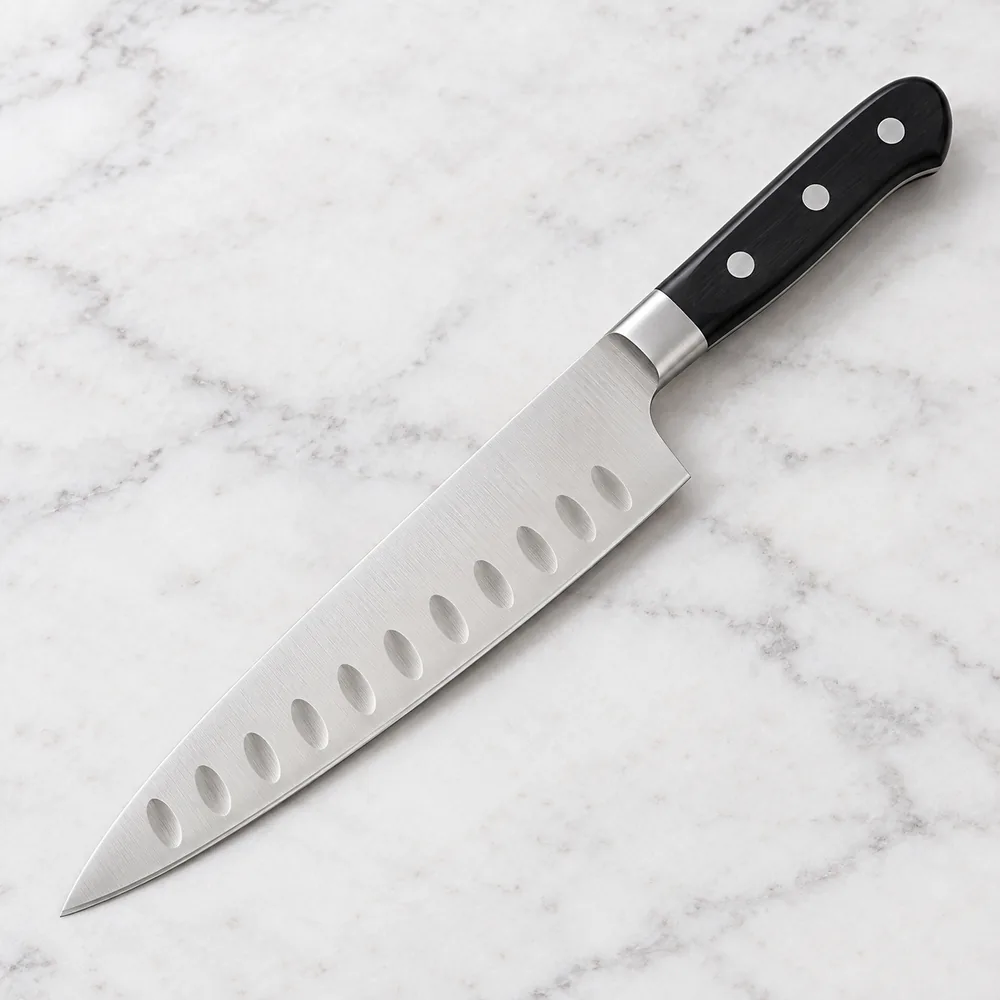
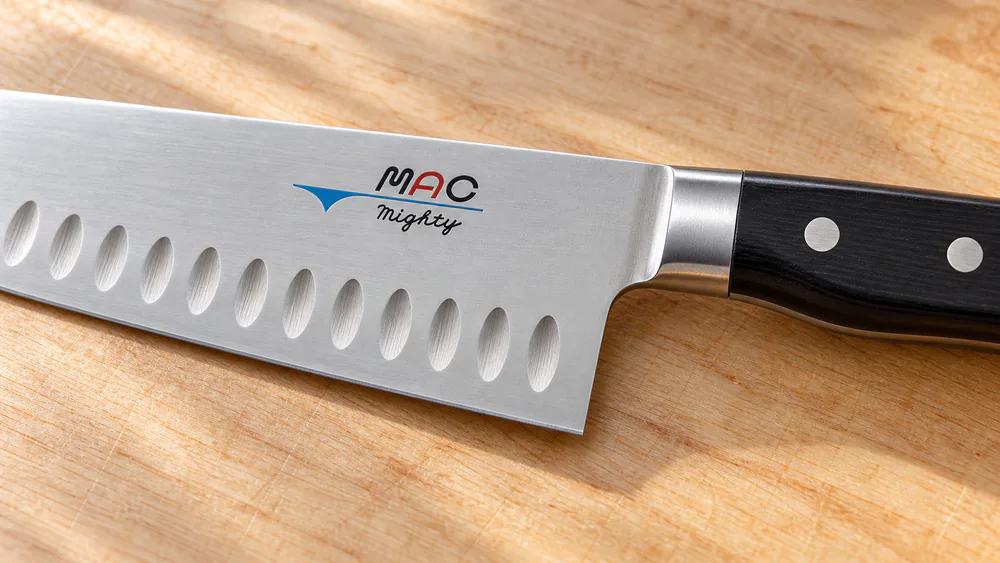
If the SHAN ZU is the starter set, the MAC MTH-80 is the knife we reach for when a single blade has to do everything, which is why it earns the editor's pick label. The MAC Professional Series gyuto uses a molybdenum-enriched high-carbon stainless steel with Granton-style dimples to reduce sticking.
The dimples help, but vegetables still cling a little on the last cut, and the steel will rust if you do not dry it promptly, so keep it out of the sink and off the dishwasher rack. The maker publishes no hardness number; independent sources place it between 59 and 61 HRC. It is the most balanced all-rounder we tested, at home on a sushi board and at the carving counter.
Pros
True all-rounder for fish, vegetables, and cooked meat
Granton-style dimples reduce sticking
Evenly balanced western handle with triple rivets
Razor-sharp out of the box
Cons
Blade can rust if not dried right away
Vegetables still cling a little
Hand-wash only, never the dishwasher
Listing and maker disagree on blade thickness
Pros
One-knife households that want a single blade equally good for sushi prep and weeknight cooking.
Cons
Skip it if you already own a great chef's knife and want a dedicated sashimi slicer instead.
Sushi Knife Buying Guide: What to Look For
Sushi knives are not interchangeable, and the right one depends on what you actually make at home. For the bigger picture, our guide to the best Japanese knives for home use walks through the full knife family.
Blade Type: Yanagiba vs Gyuto vs Sujihiki vs Deba
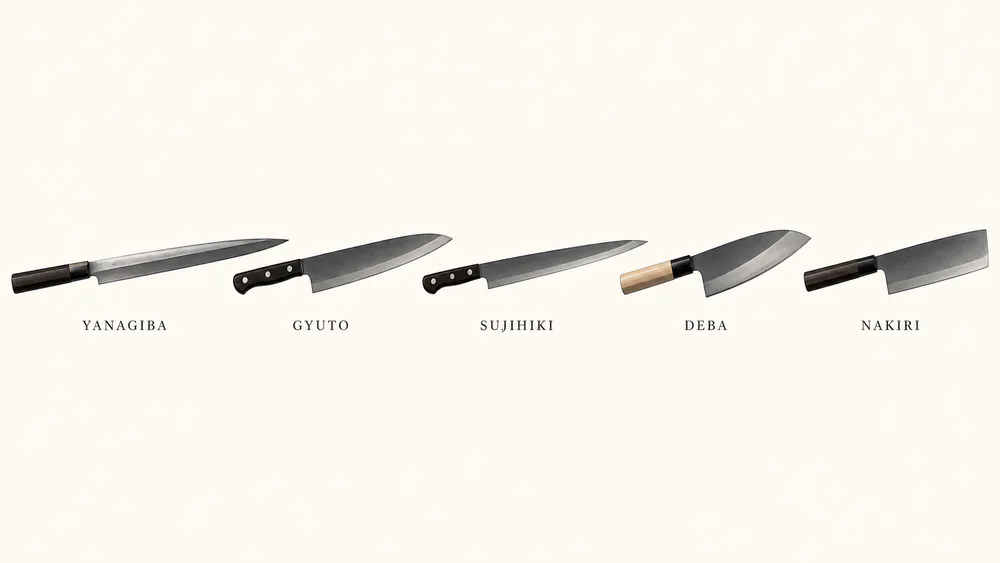
The classic Japanese knife types each exist for a reason. A yanagiba is a single-bevel sashimi slicer built for long, clean pulls through raw fish. A sujihiki is the double-bevel slicer that tracks straight and doubles for cooked meat. A gyuto is the double-bevel all-rounder most home cooks should buy first. A deba is a single-bevel filleting knife with a thick spine for small bones, and a nakiri is a double-bevel vegetable knife with a tall blade for push-cutting. That taxonomy comes from the history of the Japanese kitchen knife.
The five blade shapes that matter for home sushi.
For home sushi, start with a gyuto, add a nakiri for vegetables, and only then think about a yanagiba. A cook who makes sushi regularly uses a gyuto for about 90 percent of meals and reserves the slicer for the fish work.
Steel Type and Hardness (HRC): VG-10 vs AUS-8 vs Carbon
The steel decides how long the edge lasts and how much care it demands. White steel, or shirogami, takes a screaming edge but rusts easily. Blue steel, or aogami, adds chromium and tungsten for longer edge life, and super-blue adds molybdenum and vanadium at the cost of brittleness. Stainless is tougher, chips less, and is harder to hone, and laminated construction wraps a hard core in soft cladding for forgiveness.
Hardness runs on the Rockwell C scale: VG-10 about 60 to 62 HRC, AUS-8 about 58 to 59 HRC, carbon steels about 62 to 67 HRC, and high-carbon stainless about 55 to 58 HRC. Our picks spread across that range, from the 56 HRC Victorinox to the 62 HRC SHAN ZU set.
Single-Bevel vs Double-Bevel
Traditional Japanese knives are single-bevel, or kataba, with one edged face, a bevel line called the shinogi, and a concave back called the urasuki that releases food. Double-bevel, or ryoba, knives came from Western influence and include the gyuto, santoku, nakiri, sujihiki, and petty. A single-bevel yanagiba leaves keeper slices nearly uncompressed, while a double-bevel blade compresses both faces and releases a little more moisture.
For most home cooks, the honest answer is double-bevel. A sujihiki tracks straight, is easier to sharpen, and doubles for cooked meat. If you do buy a single-bevel yanagiba, plan for the learning curve.
Tip. Single-bevel technique tip: pull the blade toward you in one long, unbroken stroke from heel to tip. Do not press down or saw, and let the urasuki hollow pull the slice off the blade. One clean draw beats ten short pushes.
Blade Length and Weight
For home sushi slicing, 8 to 10 inches of blade length works well. A longer blade gives longer pulls but takes more room to control, and a heavy deba needs its weight for bone work while a light yanagiba like the 201 g Kai Wasabi means you supply the pressure.
Handle Material and Ergonomics
Japanese wa handles are ho or magnolia wood, octagonal or D-shaped; western handles have a bolster and full tang, and pakkawood is laminated wood bound in synthetic resin. Match the shape to your grip, because a handle you have to fight wears you down.
Sharpening and Care
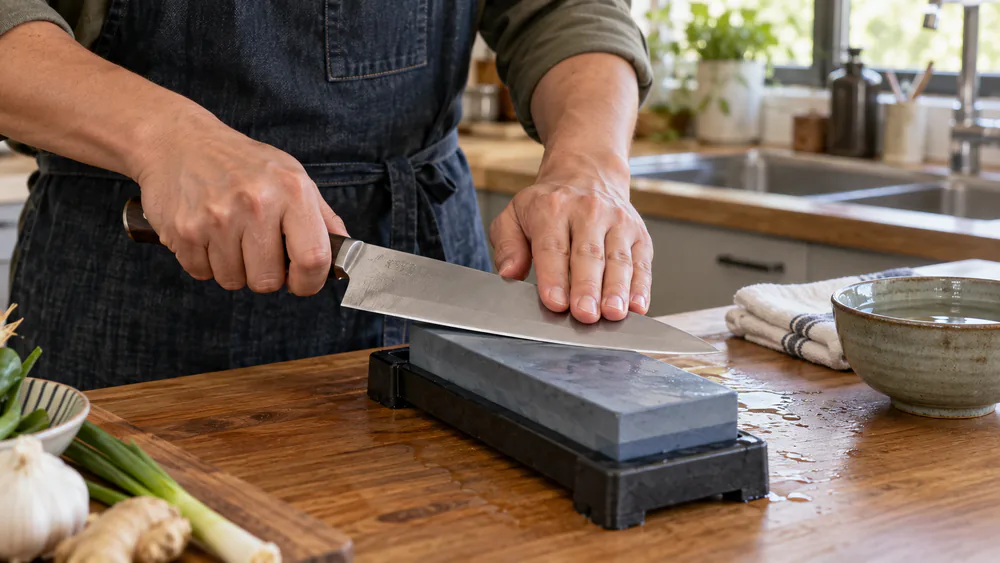
Whetstone sharpening is the norm, and carbon steel forms a patina over time and may rest a day after sharpening to restore it. Hand-wash every knife and dry it immediately, store it in a sheath or on a magnetic strip, and never use the dishwasher. Avoid pull-through sharpeners on single-bevel blades. If you are new to stones, our guide on how to sharpen kitchen knives at home covers the basics.
Ten minutes on a whetstone keeps a sushi knife slicing cleanly.
Tip. Care tip: dry every knife by hand the moment you finish, and keep a bottle of food-grade mineral oil near the block for carbon-steel blades. A patina on carbon steel is normal, but rust is not.
Warning. Warning: never run a Japanese sushi knife through the dishwasher, and never drag a single-bevel edge through a pull-through sharpener. Both will chip, roll, or ruin the geometry you paid for.
Frequently Asked Questions
Is a yanagiba the best sushi knife for home cooks?
Only if you make sashimi often enough to justify a dedicated slicer. Most home cooks get more value from a gyuto, which handles fish, vegetables, and rolls, and a yanagiba that sits idle is still a blade to maintain.
Does a double-bevel knife cut sashimi as well as a single-bevel yanagiba?
Not quite, and the mechanics explain why. A single-bevel yanagiba's urasuki hollow cuts blade-face contact by roughly 60 to 80 percent, which stops thin sticky slices from clinging and leaves cell walls intact. A double-bevel edge compresses both faces and releases more moisture, so the difference shows on a keeper slice, even if a sharp double-bevel knife is easier to maintain.
Is the Victorinox really dishwasher-safe?
Yes, which sets it apart from every Japanese blade on this list. The stamped steel and TPE Fibrox handle are built for it, and at a price that treats the knife as replaceable, the machine is less of a risk than on a forged blade. It will survive the wash cycle, though hand-washing still protects the edge.
How often should a home cook sharpen a sushi knife?
For a knife used a few times a week, hone every couple of sessions and plan a whetstone session every month or two. In our rotation, the VG-10 Tojiro went about six weeks between stone sessions while the softer Victorinox needed work sooner. Carbon steel can stretch the stone interval but rusts in between, so the care routine matters more than the cadence.
Can I use a regular kitchen knife for making sushi?
Yes. A sharp Western chef's knife makes perfectly good sushi at home, especially for maki. It just will not produce the same see-through sashimi slices as a thin single-bevel yanagiba.
Final Verdict: The Best Sushi Knife for Home Use
After ten blades and weeks of prep, the Tojiro Fujitora gyuto is the best sushi knife for most home cooks. The honest follow-up: a sharp Victorinox does 90 percent of what it does for a fraction of the price, so the Fujitora earns its higher price through the steel and the build. If we were starting over, we would buy a gyuto first, add a nakiri second, and only then think about a yanagiba.
Key takeaway. Our best overall sushi knife for home use is the Tojiro Fujitora Gyuto 210mm, rated 4.8 out of 5.