As an Amazon Associate we earn from qualifying purchases. We may earn a commission from links on this page, at no extra cost to you. Learn more.
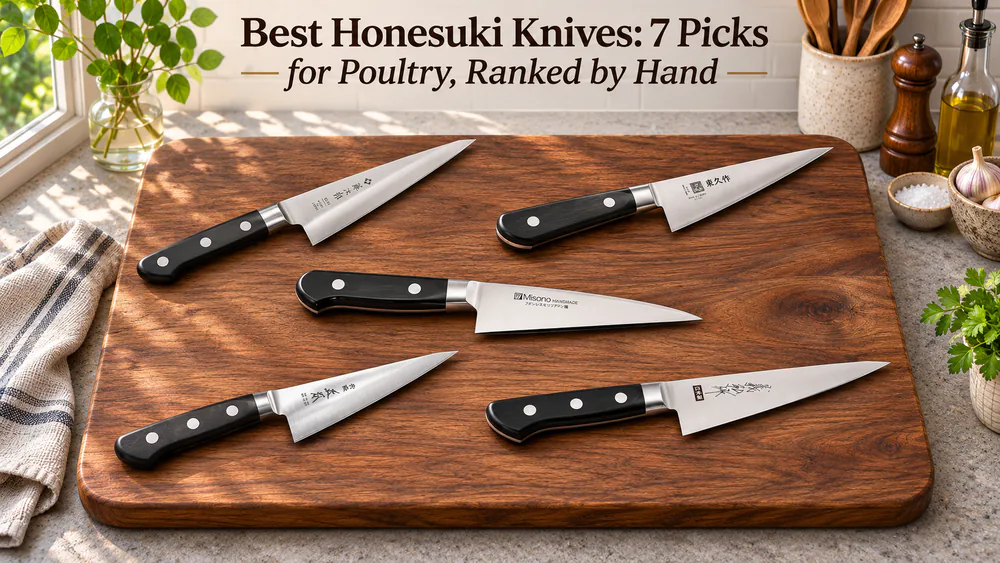
A honesuki is a Japanese boning knife with a short, stiff, triangular blade and a sharp point. It is built to break down whole chickens, following the bones and slipping into joints without tearing the meat.
If you cut up poultry at home and your chef's knife keeps skidding off the joints, a honesuki is the tool that fixes it. We lined up seven of the best, from a forgiving budget knife to a hand-forged carbon blade, and judged them on how they handle a whole bird.
Every pick below is a knife we would put in a kitchen. If you want to see how these fit into the wider category, our Japanese knives hub covers the rest of the family.
Quick Picks: Best Honesuki by Use
Here is the short version. Tier words describe where each knife sits on cost, and every pick links to its buy page.
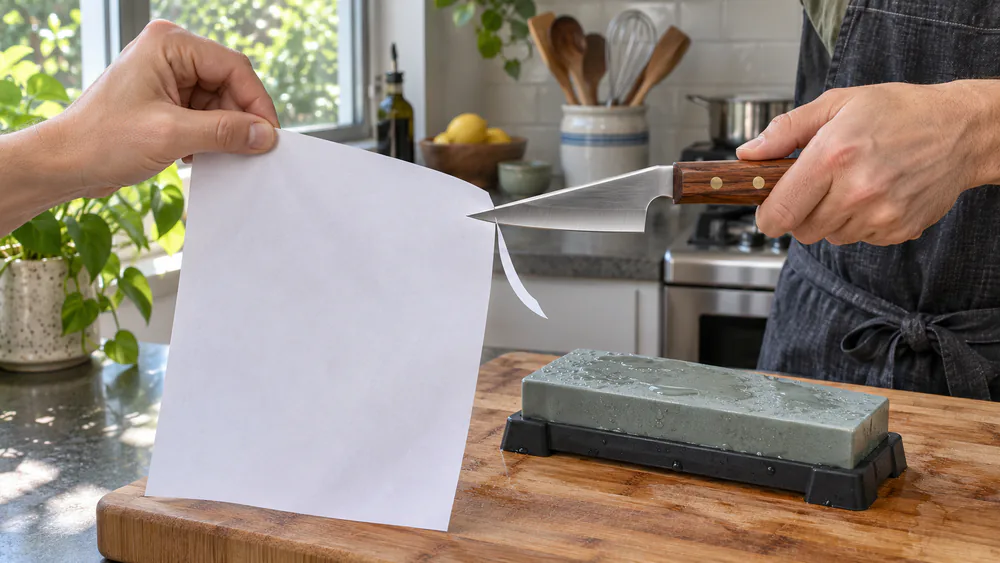
We rate a honesuki on five things: how cleanly it follows a chicken's joints, how sharp it arrives, how the handle feels when your hands are slick, how much upkeep the steel demands, and how forgiving it is for a new user. Our approach to testing is simple. We use each knife for regular home prep, check the edge by feel and on paper, and sharpen it back on stones.
We left out cleavers, heavy hankotsu and anything marketed as a "boning knife" with a flexible blade, because those do a different job.
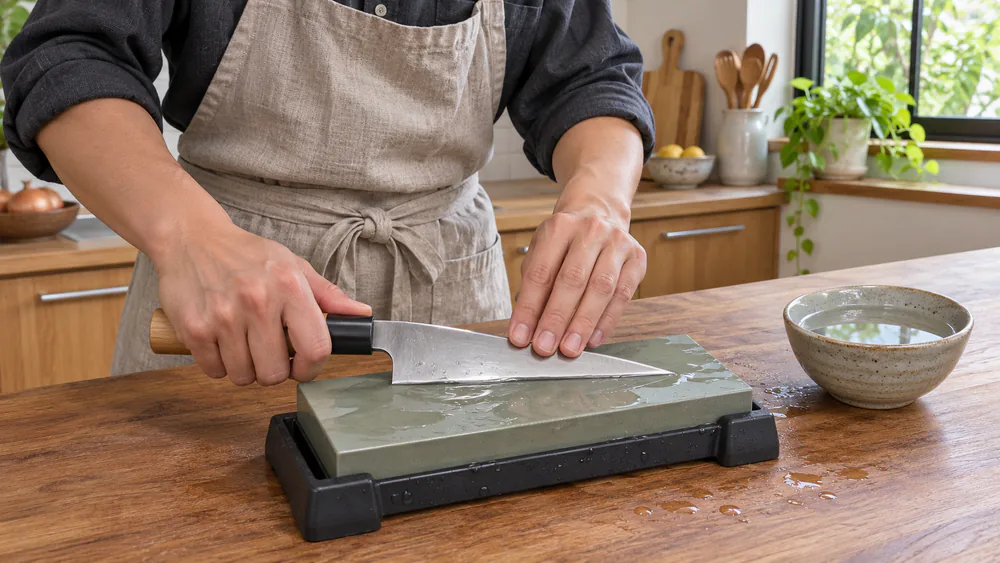
Checking each edge on paper before and after sharpening.
The Reviews
Seven knives, ranked. Each review closes with who it suits and what to watch for.
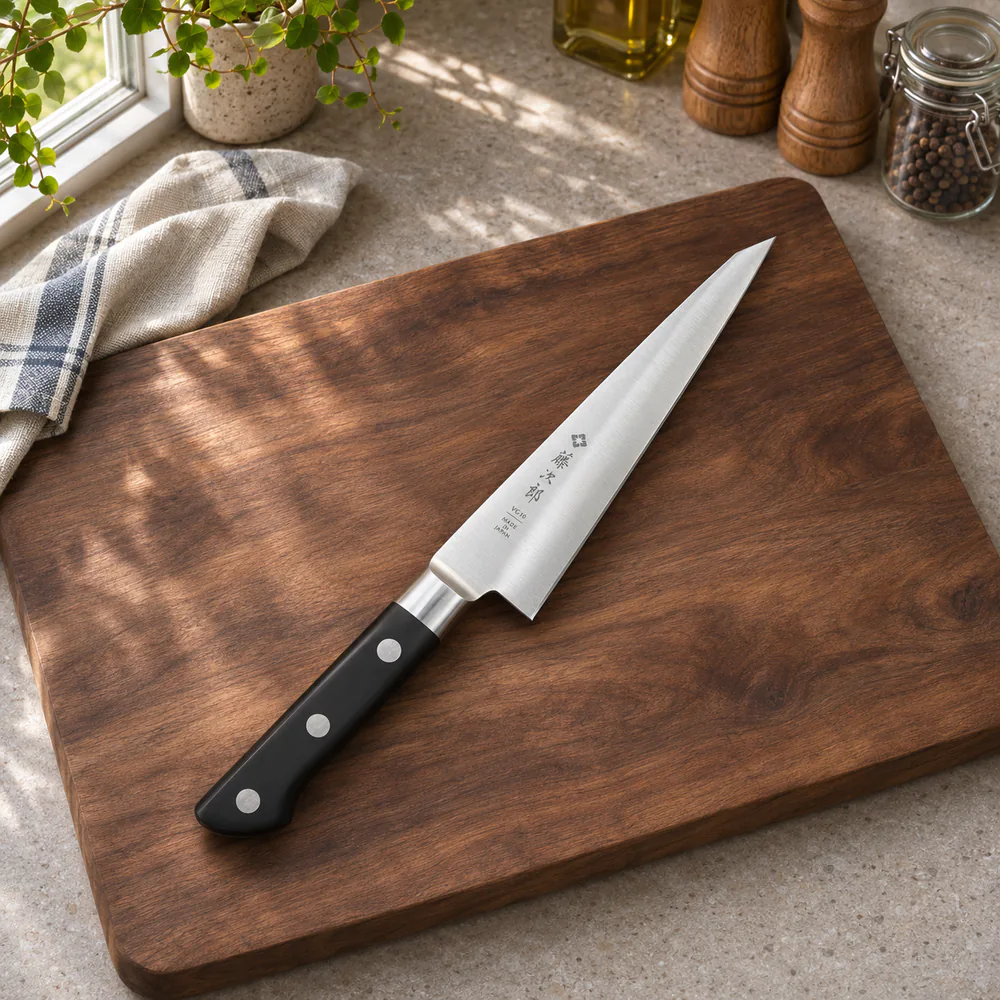
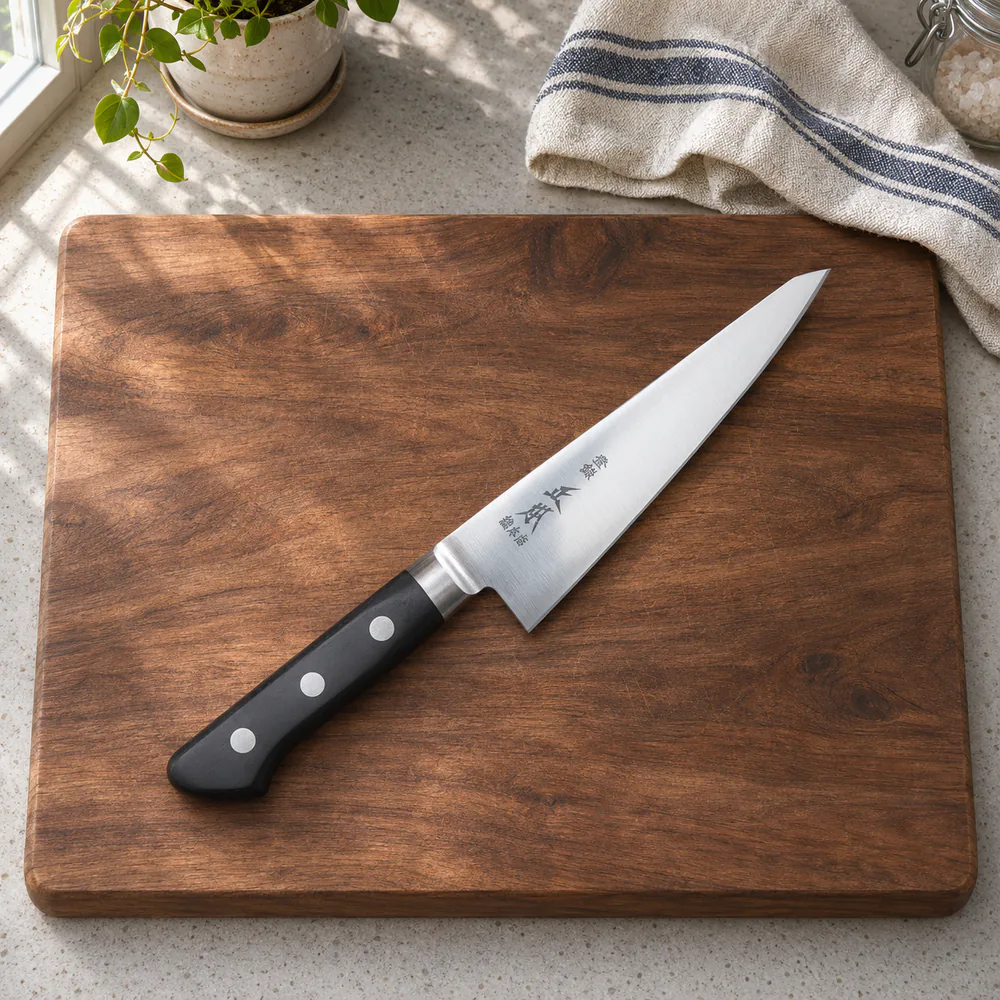
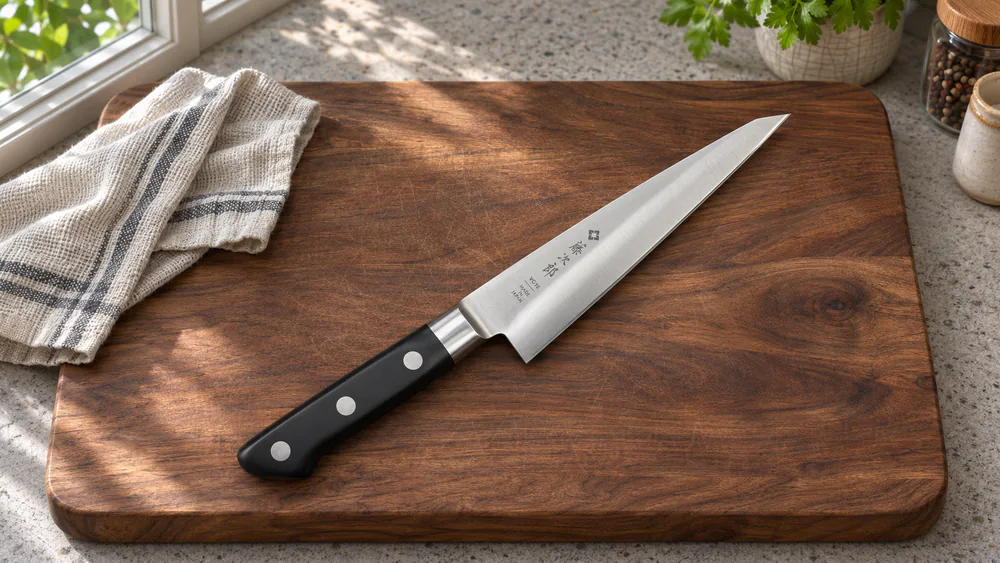
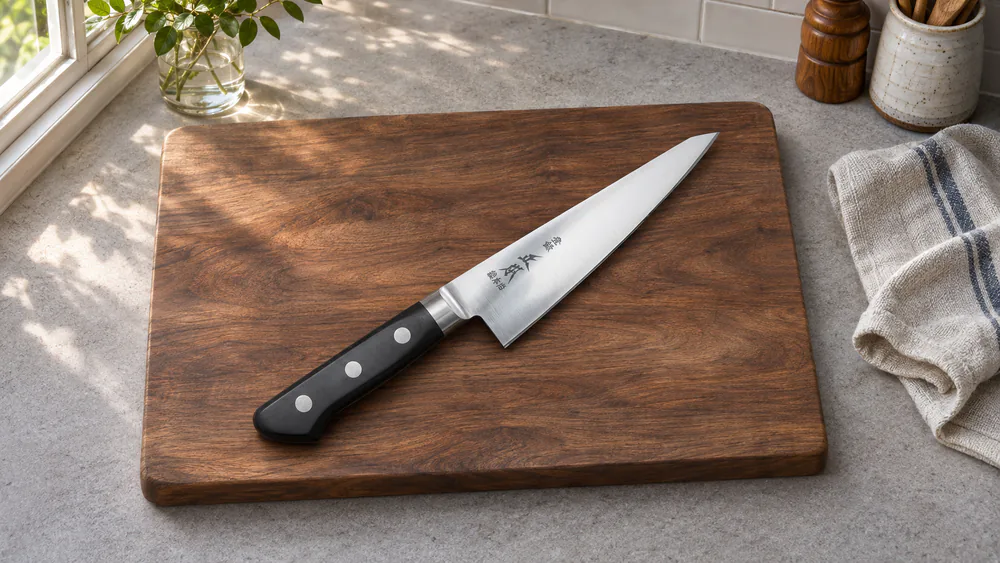
The Tojiro is the honesuki we would hand to most home cooks. On a chicken, the stiff triangular tip found the socket gaps without any fishing around, and the joints parted cleanly. At 150mm and 170 g, it feels a bit heavy and larger than the photos suggest, but that heft keeps cuts controlled. Sharpened to about 45 degrees total, it turns scary sharp. For the price tier and the performance, this is the one we would buy again.
Pros
Sharp out of the box and cuts through poultry joints cleanly
Stiff triangular tip finds socket gaps
Hygienic ferrule and ECO wood handle that is easy to wipe down
Mid-priced for the performance
Cons
Right-hand only
Feels heavy for its size
A small gap can show where the handle meets the bolster
Who it suits
Home cooks who break down chicken regularly and want one honesuki that works without drama. It is a stainless clad blade, so there is no rust routine to learn.
Drawbacks
The small gap where the handle meets the bolster is cosmetic, but we noticed it. Retailers also disagree on the grind. Most describe it as a single bevel, but some list a 50/50 edge, so check the listing before you buy.
2. Mac Knife Japanese Boning 6-inch: Best Western-Style Pick
Like the Tojiro, the Mac BON-60 pairs a Japanese blade with a Western-style handle. The blade measures 6.13 inch and 3.0 mm thick, with a stiff pointed tip and a single bevel on a molybdenum steel edge of about 15 degrees.
Pros
Stiff, pointed tip suits poultry joints
Western-style handle feels familiar
Fine 15-degree edge angle
Premium tier, with the finish to match
Cons
Single bevel has a learning curve
Weight is roughly 6.5 to 7 oz depending on the source
Costs more than the Tojiro
On a chicken, the BON-60 has enough spine to drive through joints. Its stiff, pointed tip works meat free from around the bones with good control. The Pakkawood handle is riveted to a stainless bolster that adds weight and balance. It is hand-wash only and not meant for frozen food or hacking through bone, so joint work yes, bone no.
Who it suits
Cooks coming from a Western boning knife who want a thinner, sharper edge without changing grip habits.
Drawbacks
The edge is single bevel, so it pulls sideways in the cut until you adjust your angle. It also sits in the premium tier without clearly beating the Tojiro on poultry.
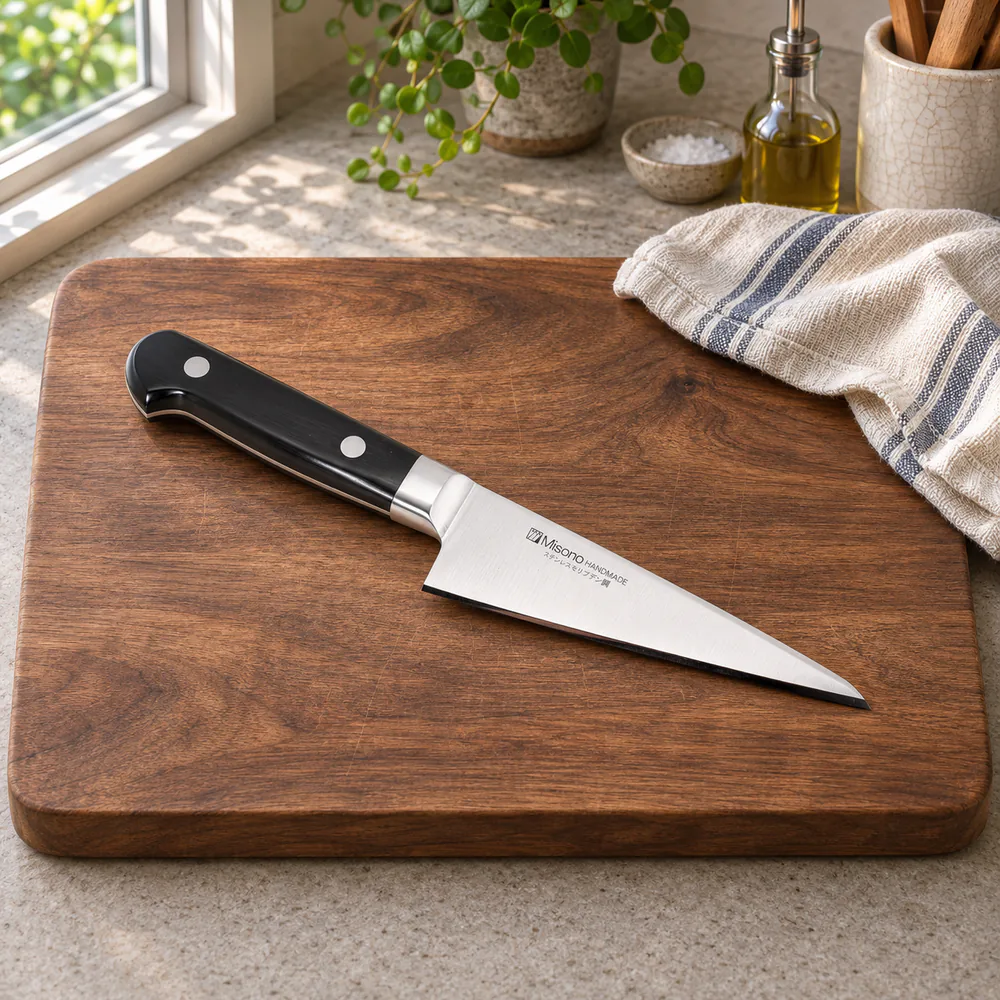
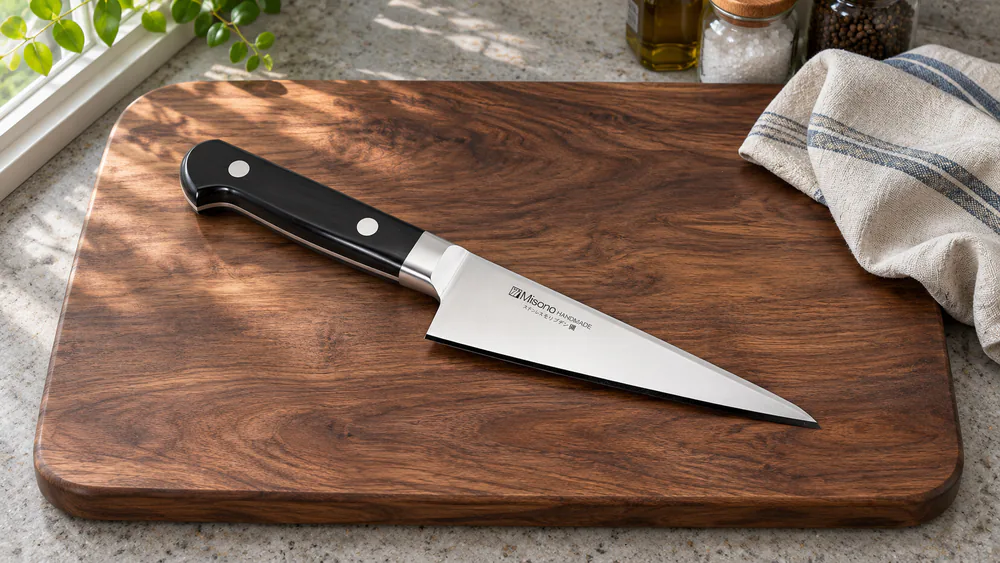
Step up from the Mac and you get the Misono, a heavier knife built for volume. It stayed razor sharp after chopping through chicken joints, and the molybdenum stainless is easy to sharpen back up. The larger handle stayed secure on oily chicken skin. At a 14.5 cm blade and 180 g, with a 2.6 mm spine, it feels slightly blade-heavy, but it holds up to daily trimming of striploin, tenderloin and whole birds. Years between sharpenings are possible on this steel.
Pros
Razor-sharp out of the box and holds an edge
Easy to sharpen on stones
Secure handle on slippery poultry
Kanto-style profile with a chin (ago) for control
Cons
Single-bevel sharpening takes some learning
Hard steel can chip if twisted against bone
Premium tier
Serious home cooks and working butchers who trim daily will get the most from it. Keep it away from frozen food and bones: twisting it against bone can chip the hard steel. New users also need patience when sharpening the single bevel on stones.
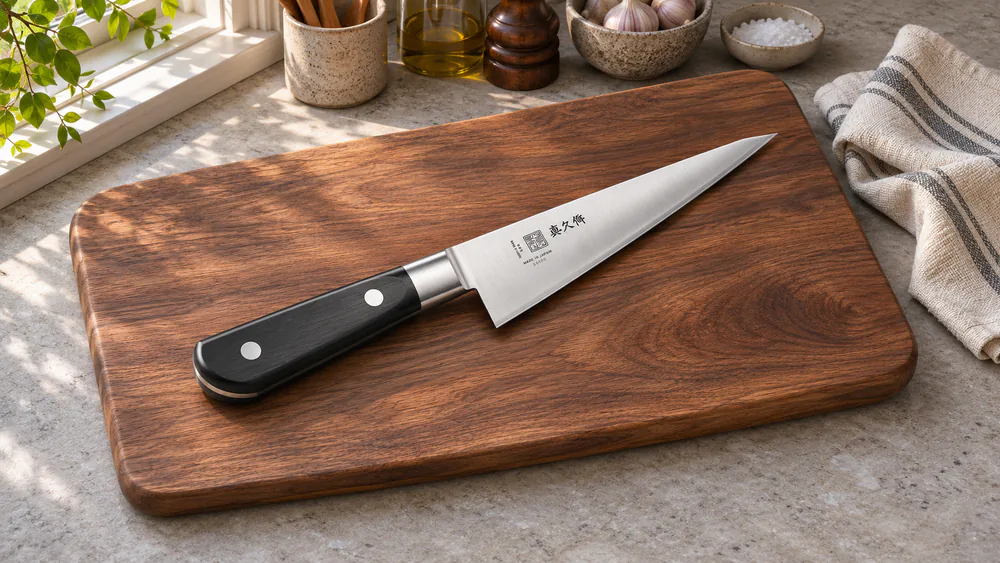
4. Masamoto VG Honesuki 150mm: Best Stainless Workhorse
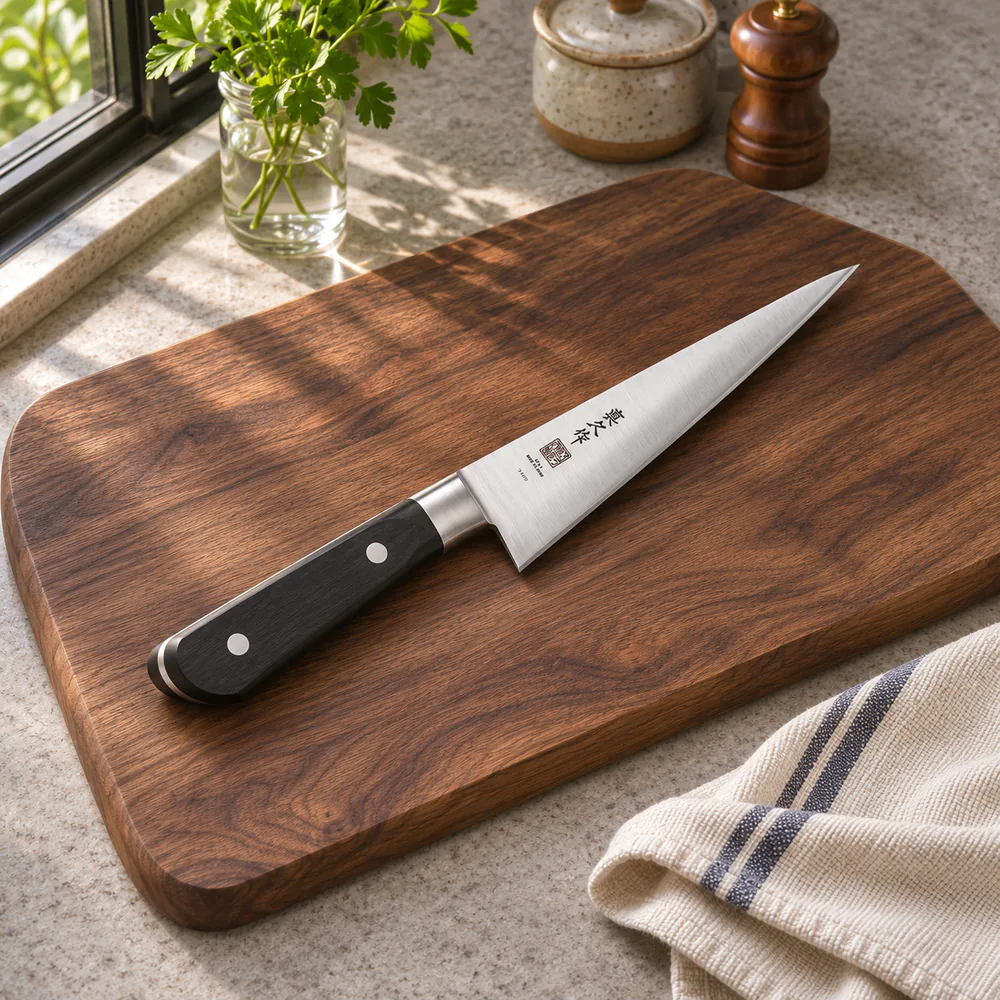
Where the Misono rewards daily trimming, the Masamoto VG is the workhorse for a wet, busy kitchen. A stainless honesuki like this one lets you skip the fussy drying routine, which makes it easy to live with. The edge measures 145mm, and the full-tang POM handle and polished finish wipe clean. We found that VG steel will not hold an edge as long as Aogami or Shirogami carbon steel, so plan on touching it up more often.
Pros
Stainless, so no rust routine
Stiff triangular blade suits poultry
Full-tang POM handle is easy to clean
Weighs roughly 175 g
Cons
Does not hold an edge as long as carbon steel
Mid to premium tier
Bevel details come from retailer listings
It suits cooks who prefer a Western-style handle, rinse the knife between tasks and do not want a carbon steel routine. The steel type and hardness are described differently across sellers, so we kept the claims qualitative. Expect to sharpen more often than you would with the Misono or the Yoshihiro.
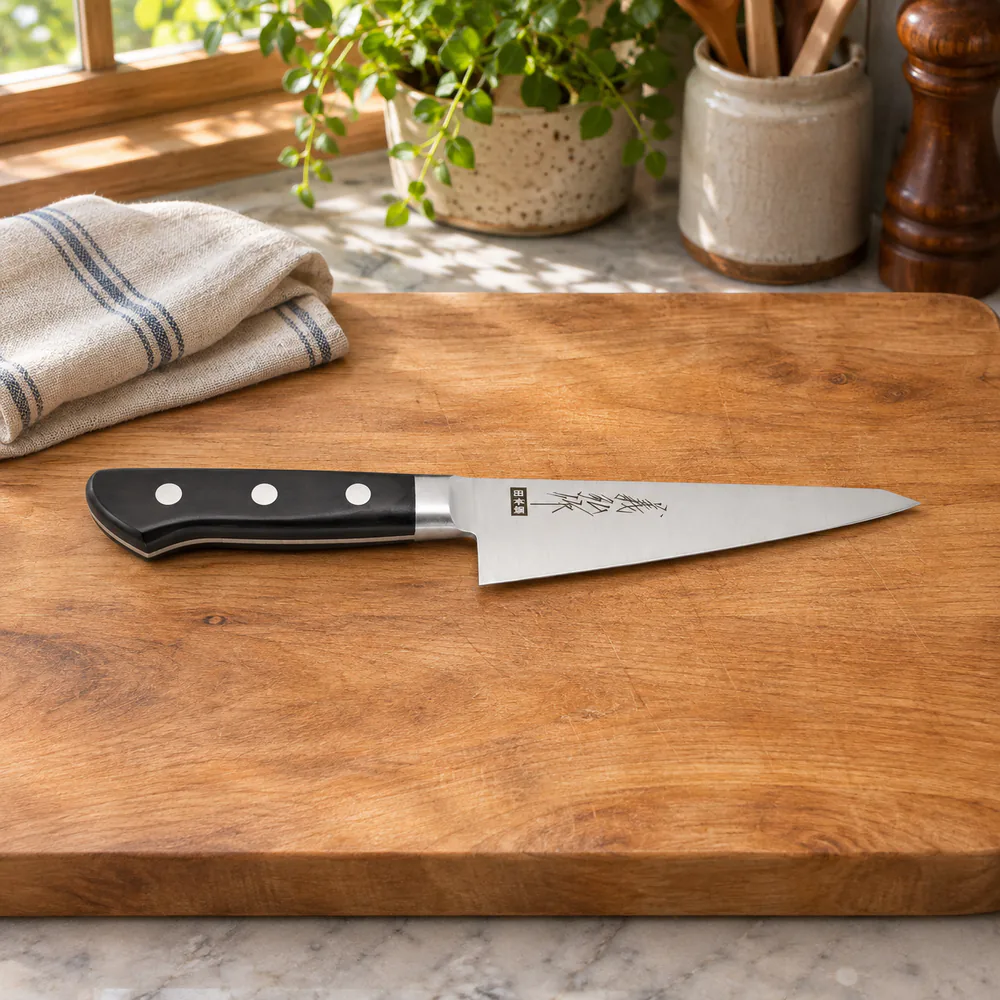
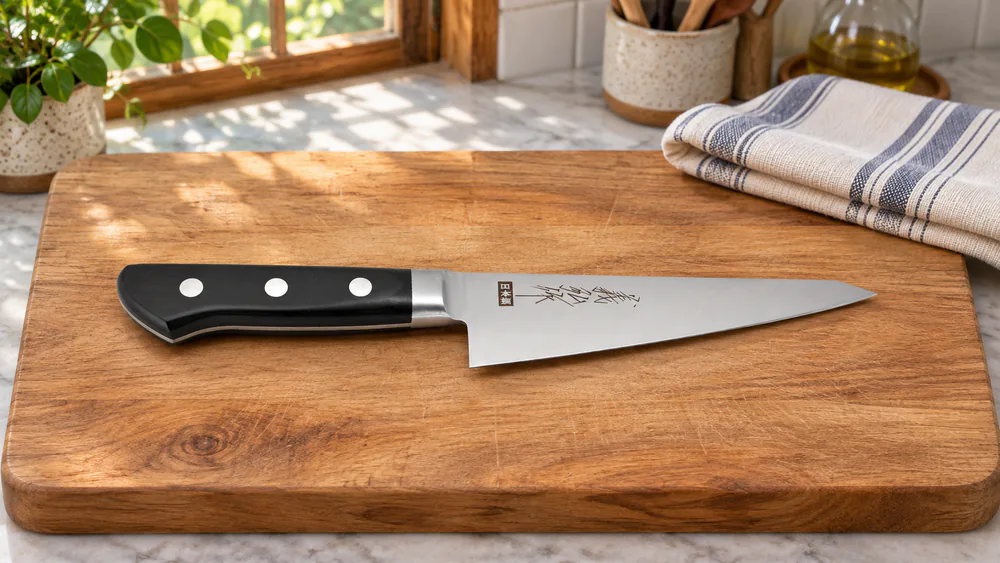
The Yoshihiro comes with a ritual: dry it, oil it, and accept the patina. Unlike the stainless Masamoto, it is the pick for people who enjoy caring for a knife. The 150mm forged blade is SK-4 high-carbon steel, and carbon steel like this glides through tendons. The trade is upkeep. You must dry it and oil it to prevent rust, and over time it builds a patina. The HGA150 model has a black composite-wood Western handle with three rivets and a metal bolster, plus a strongly right-biased double bevel.
Pros
Hard high-carbon steel takes a very fine edge
Glides through tendons
Black composite-wood handle with metal bolster
Cons
Reactive steel: needs drying and oiling
Develops a patina that some cooks dislike
No maker hardness figure to check against
Who it suits
Cooks who already own a carbon steel knife, or who like a tool that rewards a little ritual.
Drawbacks
Leave it wet and it will rust. If you want a knife you can forget about, go with the Tojiro or the Masamoto instead.
6. Shun Kanso 5-inch Asian Multi-Prep: Best Compact
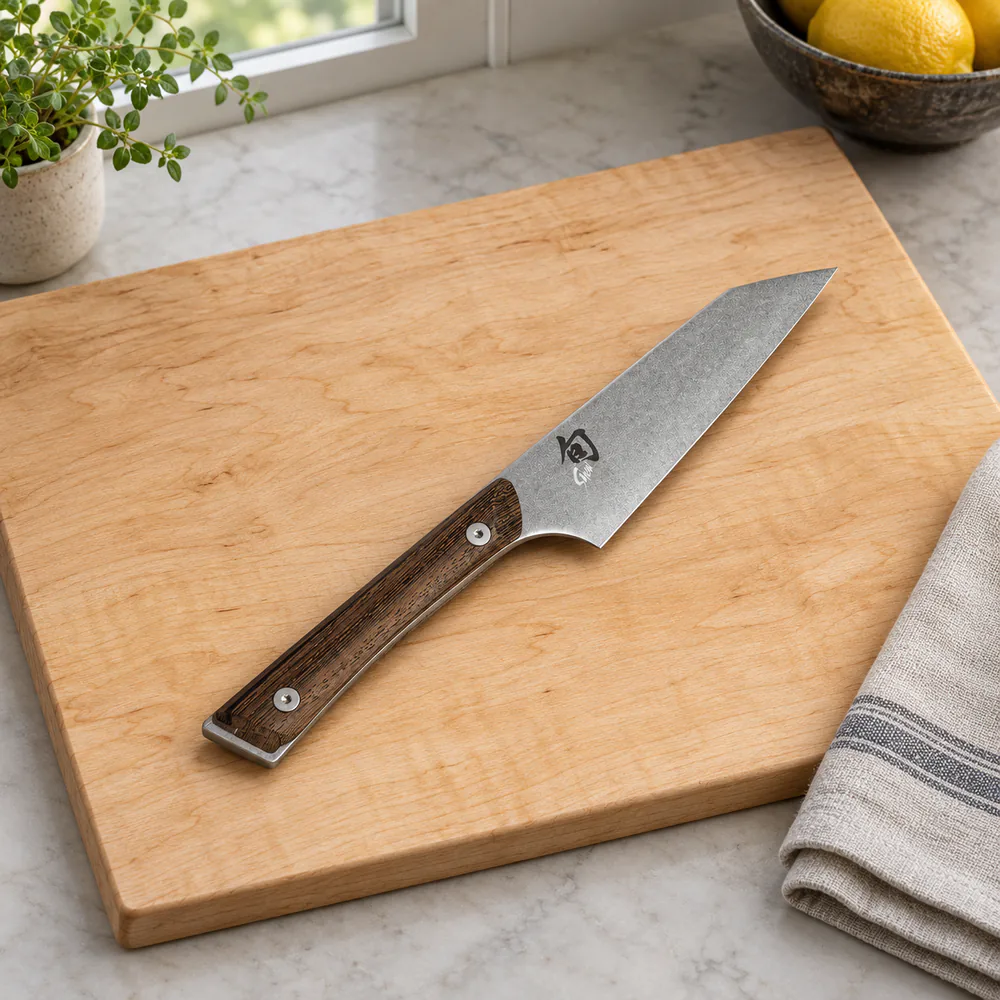
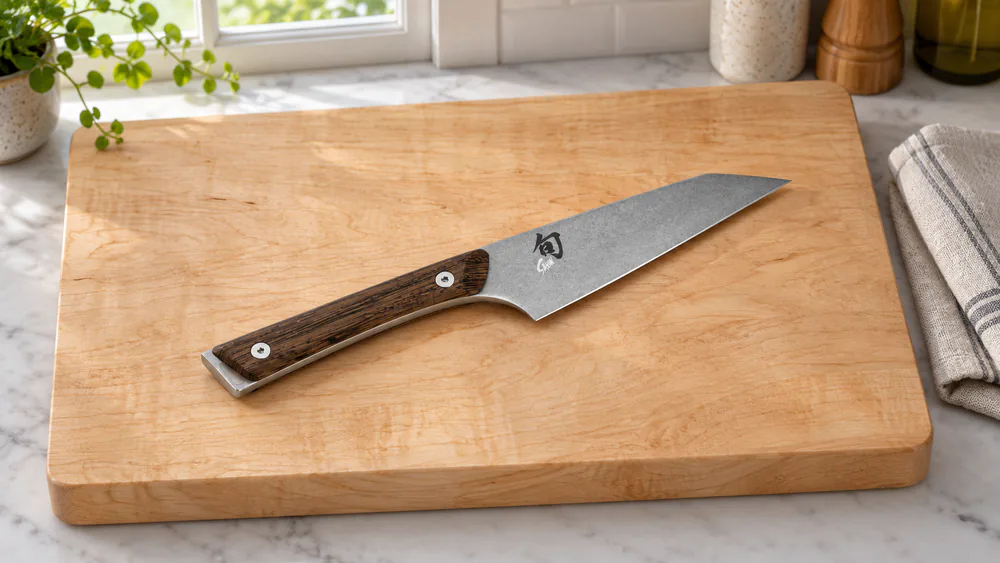
Smaller and lighter than the Yoshihiro, the Shun Kanso is nimble on chickens. The 5-inch blade is AUS10A high-carbon stainless refined with vanadium, with a 16-degree edge and a double bevel, so there is no sideways pull and left-handed cooks are covered. It is light and quick in the hand, at just over 3 oz. The catch is the handle. Ours felt rough and needed fine sandpaper before we were happy with it, and the shape divides cooks.
Pros
Wicked sharp and nimble on chickens
Double bevel suits left and right hands
Light and quick in the hand
Contoured tagayasan wood handle
Cons
Very thin blade and fine tip can bend if misused
Handle can splinter or have rough rivet holes
Handle shape is not for everyone
It suits cooks with smaller hands, left-handers, and anyone wanting a gentle step into honesuki shapes. Do not pry with it, because the thin blade bends if misused.
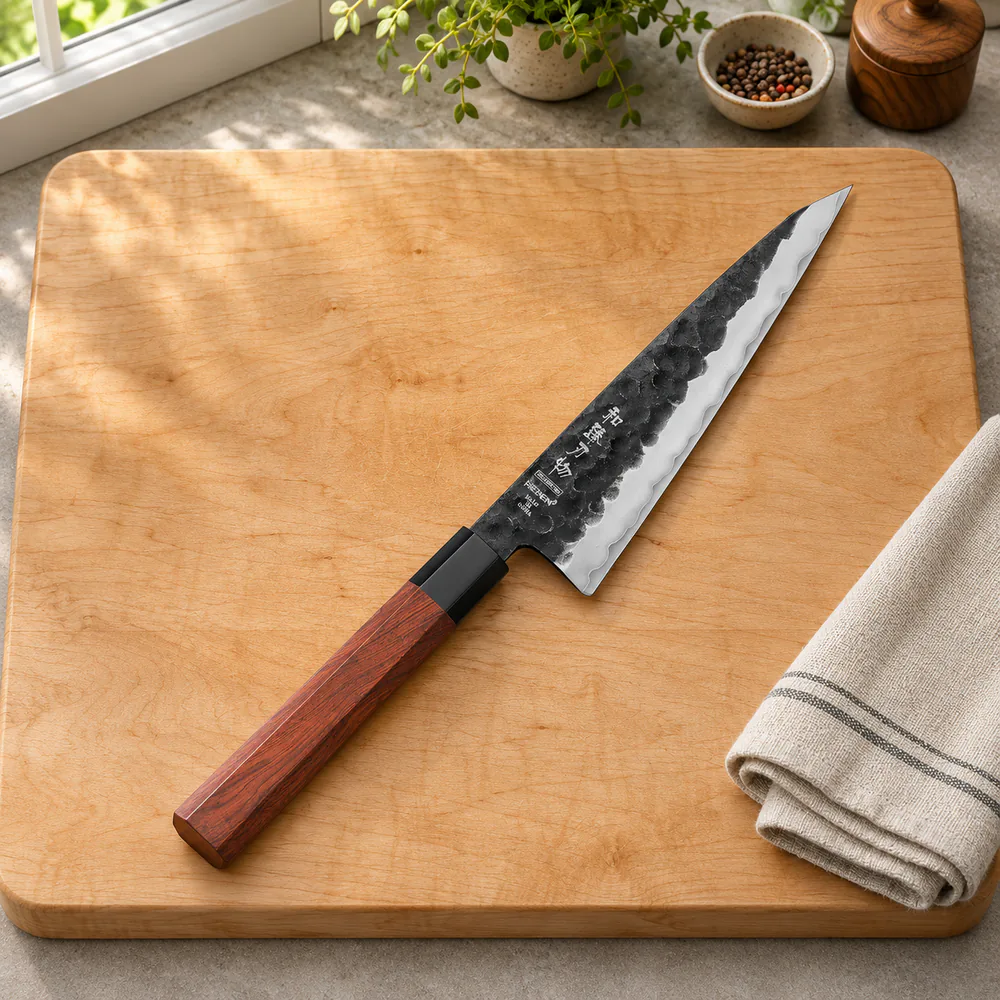
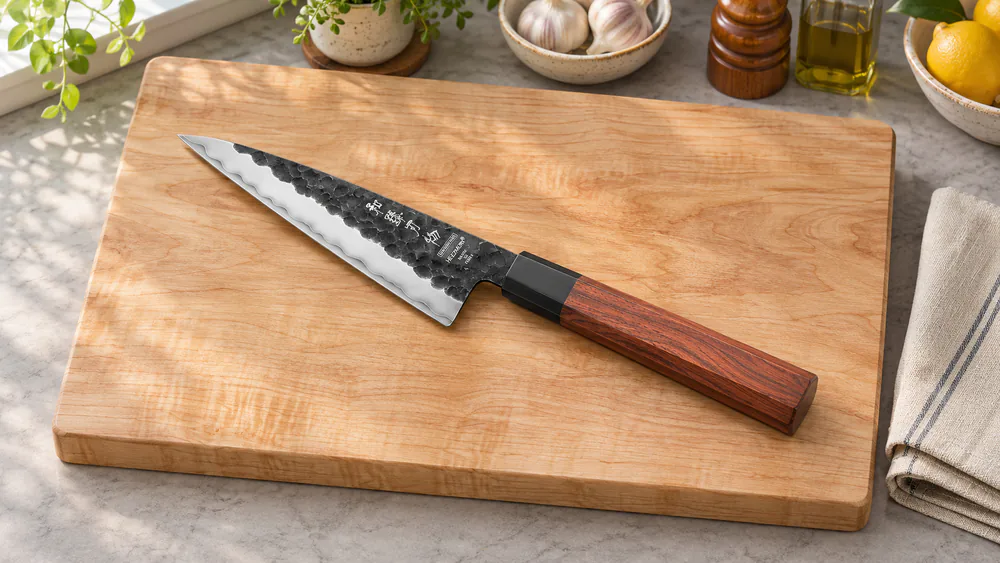
The HEZHEN has real limits: its fit and finish trail every Japanese maker here, and the handle varies from knife to knife. In exchange it is the cheapest pick. The 5.8 inch blade is a 10Cr15CoMoV core in triple-layer clad steel, ground to 15 degrees per side. It gets the tip into tight places and breaks down poultry, beef and pork. The fit is a step below the Japanese makers, but strong for the money. The octagonal handle suits left and right hands.
Pros
Very sharp out of the box
Double bevel, ambidextrous, easy to sharpen
Tip reaches tight spots
Cheapest pick here
Cons
Fit and finish trail the Japanese makers
Epoxy finish and grain vary from the photos
Lifetime warranty is a seller claim
This suits first-time buyers who want to learn the honesuki shape before spending more, though we would not expect the lasting fit and finish of the premium picks.
Comparison Table: Steel, Length, Bevel, Weight
Product
Steel
Blade length
Bevel
Handle
Weight
Best for
Tojiro Honesuki
Stainless clad
150mm
Single (most listings)
Black ECO wood
170 g
Most home cooks
Mac BON-60
Molybdenum
6.13 inch
Single
Western-style
About 6.5 to 7 oz
Western-handle fans
Misono 541
Molybdenum stainless
14.5 cm
Single
Black reinforced wood
180 g
Daily trimming
Masamoto VG
VG stainless
145mm
70/30 double bevel
POM, full tang
About 175 g
Wet kitchens
Yoshihiro SK-4 HGA150
SK-4 carbon
150mm
Strongly right-biased double bevel
Black composite wood, metal bolster
Not confirmed
Carbon steel fans
Shun Kanso
AUS10A
5-inch
Double
Tagayasan
Just over 3 oz
Small hands
HEZHEN
10Cr15CoMoV
5.8 inch
Double
Octagonal redwood
About 3.2 oz
Tight budgets
How to Choose a Honesuki
Most buying mistakes come down to steel, bevel and handedness. Sort those three out and the rest is preference.
Honesuki vs Western Boning Knife, Deba and Hankotsu
A Western boning knife is long, thin and flexible, made to slide along a bone and trim. A honesuki is short, stiff and triangular, which is why it is better for poultry joints. A hankotsu is a narrower, stiffer boning knife for trimming hanging beef and pork. A deba is a thick fish knife that can handle small bones, but it is too heavy for fine joint work.
Carbon vs Stainless Steel
Carbon steel takes a finer edge and glides through tendons, but it rusts if you leave it wet and develops a patina. Stainless is the easier life. If you rinse and dry as you go, carbon is a pleasure. If you do not, pick stainless.
Tip. Hard steel is brittle on bone. Cut around the joint, not through it, and your edge will last much longer.
Single vs Double Bevel (and Left-Handed Cooks)
Most Japanese honesuki are single bevel with a right-handed grind. They cut well but pull sideways, and they take a learning curve. Double bevels, like the Shun Kanso and the HEZHEN, are more forgiving. Left-handers should check the grind or choose a 50/50 double bevel. Some double bevels are about 70/30, so check the listing.
Kaku vs Maru Shape
A kaku honesuki has a squared, angular profile with a sharp triangular point. A maru honesuki has a rounded, softer profile that is a bit more forgiving on the skin. Kaku suits precise joint work, and maru suits mixed prep. The picks here lean kaku, with the stiff triangular tips you want for poultry.
Blade Length and Handle Style
A blade between 5 and 6 inches is the sweet spot for chickens. Shorter is nimbler, longer reaches more. Wa (Japanese) handles are light and slip into the hand, and Western handles are heavier and more familiar. A handle that stays secure on oily skin matters more than its shape.
Care and Sharpening
Wash the blade by hand and dry it right away. Carbon blades need a thin coat of oil. Store the knife in a sheath or a block slot so the fine tip does not take knocks.
Single-bevel honesuki pull sideways in the cut, so sharpen them on a 1000 to 3000 grit stone progression and work mostly on the beveled side. A double bevel can be sharpened like any Western knife. Keep your angle consistent. That is the whole trick.
Frequently Asked Questions
What is a honesuki used for?
Breaking down whole chickens and other poultry. The stiff triangular blade follows the bone and the sharp tip finds joint gaps, and it also trims small cuts of pork and beef.
Honesuki or western boning knife?
Pick a honesuki for poultry and joints, where stiffness gives you control. Pick a Western boning knife for long trimming along large bones, where flexibility helps.
Can a beginner use a honesuki?
Yes. Start with a double bevel such as the HEZHEN or the Shun Kanso, which does not pull sideways, then move to a single bevel later.
What size honesuki should I get?
Between 5 and 6 inches suits most home cooks. Smaller hands often prefer the 5-inch Shun, and the 150mm Tojiro suits most others.
What is the difference between a honesuki and a deba?
A deba is thicker and heavier, made for fish heads and bones. A honesuki is thinner and built for the finer joint work on poultry.
How do I sharpen a single-bevel honesuki?
Lay the beveled side flat on a 1000 grit stone, work up the burr, then finish on a 3000 grit stone. Take just a touch off the flat back to remove the burr.
Final Verdict
The Tojiro wins for most kitchens, but the right pick depends on how you cook. If you break down birds daily, the Misono is the one to spend on. Choose the Yoshihiro if you want to work with carbon steel. If you are left-handed or on a tight budget, consider the Shun Kanso and the HEZHEN.