
Helping you create a kitchen you love.

Knives & Cutlery

Best Japanese Knife Brands for Your Cooking Style

As an Amazon Associate we earn from qualifying purchases. We may earn a commission from links on this page, at no extra cost to you. Learn more.

Best Japanese Knife Brands for Your Cooking Style

A Japanese knife brand is defined by how its blades cut, how much care they ask for, and which steel sits in the core. Most are thinner and harder than Western knives, allowing cleaner slices but requiring gentler handling at the board.

Choosing a brand really means choosing a trade-off between sharpness, upkeep, and handle feel. This guide covers ten brands through one representative chef knife each, and you can browse our Japanese knife reviews for the wider range.

Note. The numbering below is not a ranking. A brand is not a model, and each profile below judges one representative knife, so its steel, handle, and care notes do not describe everything the brand sells. Ownership, place of manufacture, and Japanese-style design are three separate questions, and we flag which applies as we go.

Japanese Knife Brands at a Glance

Brand / representativeVerified originDocumented steelMaintenanceHandle fitIntended user / value
Tojiro / CLASSIC F-808 210mmJapanVG10 coreHandwash, dry; learn waterstonesFull-tang Western laminatePractical first upgrade; budget
MAC / MTH-80 8-inchSeki, JapanMolybdenum high-carbon stainlessHandwash, dry; routine edge careWestern Pakkawood, bolsterVersatile daily prep; mid-priced
Shun / current DM0706 8-inchSeki, JapanVG-MAX coreHandwash, dry; protect thin edgeD-shaped Pakkawood; try in handRock chopping and gift appeal; premium
Global / G-2 20cmJapanCROMOVA 18Handwash, dry; no soakingNarrow dimpled steel; wet grip variesLight all-metal option; mid-priced
Miyabi / Birchwood 8-inchSeki, JapanSG2 coreDry natural wood; condition as neededBirch, rounded spine and heelFinish and fine cutting; splurge
Misono / UX10 No.712 210mmSeki, JapanHigh-purity EU stainlessMaintain asymmetrical edgeCompact Western compositeExperienced daily prep; premium
Yoshihiro / 16-layer 210mmJapan; exact workshop not verifiedVG10 coreHandwash, dry; waterstonesWestern mahoganyDecorative everyday gyuto; mid-priced
Sakai Takayuki / 33-layer 210mmJapan; exact blade workshop not verifiedVG10 coreHandwash, dry; waterstonesWestern handle; material variesSeries-conscious buyer; mid-priced
Masamoto Sohonten / VG 210mmJapan; brand based in TokyoHyper Molybdenum Vanadium stainlessConfirm handedness; maintain original bevelCurved Duracon POMPractical professional-style prep; premium
Takamura / Migaki R2 210mmEchizen, JapanSG2 / R2 coreLight pressure, waterstones; avoid twistingWestern rosewoodExperienced precision cutter; premium

How We Tested Japanese Knife Brands

We judge knives the way a working kitchen does: how the edge behaves during prep, how the handle feels once your hand tires, and how easily the steel takes a fresh edge on a home stone.

We score each representative knife on the same three questions, using the maker's documented specifications alongside handling findings on tomatoes, onions, herbs, carrots, and boneless meat and fish. We make no claim about a fixed test duration or a shared prep log across the ten.

Each profile pairs the knife's documented specifications with the handling findings we weigh for it. Where a finding depends on the batch, the generation, or the seller, we say so rather than promise a result.

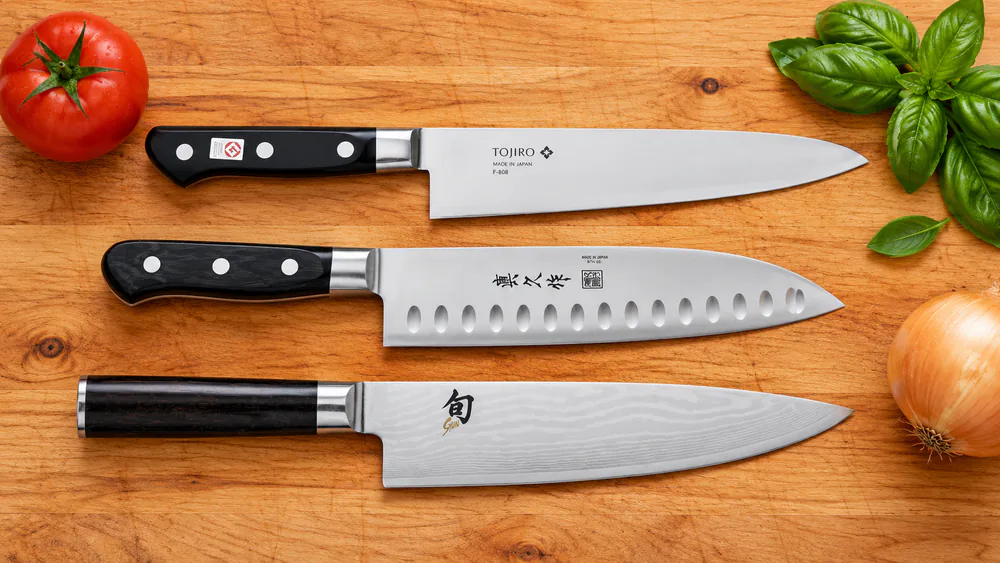
Several Japanese gyuto and chef knives laid in a row on a maple cutting board beside a tomato, an onion, and a bunch of basil
The kind of prep session we use to compare edges and handles.

1. Tojiro

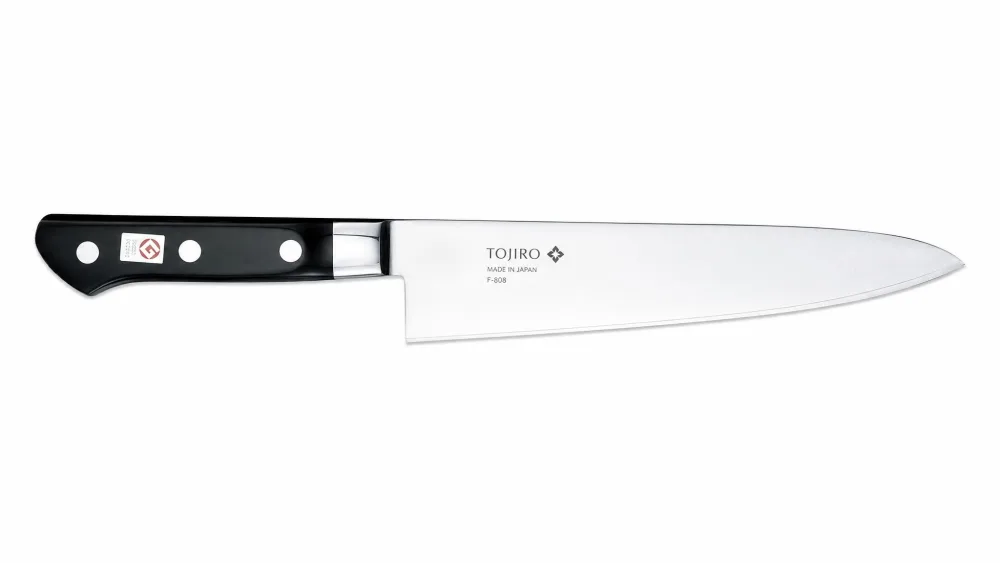
Tojiro suits a cook who wants a real Japanese edge without a splurge. The DP / CLASSIC F-808 is a 210mm gyuto, 335mm overall, with a VG10 stainless core, a double bevel, a full tang, and a metal bolster. Production is in Japan.

Tojiro DP / CLASSIC F-808 gyuto
1

Tojiro DP / CLASSIC F-808 gyuto

Best Budget Entry
Check Price on Amazon

The Tojiro combines a familiar Western grip with good balance. It slices ripe tomato cleanly, handles carrots without a heavy chopping stroke, and feels comfortable when cutting thin beef slices or everyday vegetables.

Pros

  • Familiar full-tang Western handle with good balance
  • Budget tier for a VG10 core

Cons

  • Plain handle finish
  • Heavier than thin Japanese alternatives
  • Minor chips can appear with prolonged use

The plain handle finish is less refined than the cutting performance, and the knife feels heavier than some thin Japanese alternatives. Minor edge chips can develop through prolonged use, so handwash, dry it, and learn to touch it up on a waterstone.
2. MAC

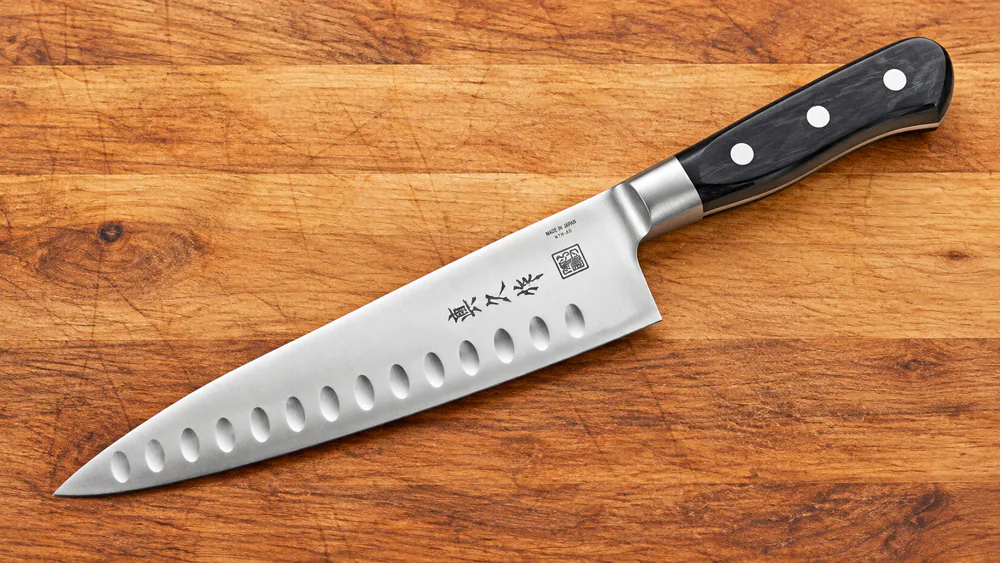
MAC is the pick for a cook who wants one knife for most daily prep. The Professional MTH-80 is sold as an 8-inch chef knife, 2.5mm thick, made in Seki from rust-resistant molybdenum high-carbon steel with a dimpled blade and Pakkawood handle. The official page describes a bolster, but generic listings mix bolstered and bolster-free designs, so check the exact model you receive.

MAC Professional MTH-80
2

MAC Professional MTH-80

Best for Daily Prep
Check Price on Amazon

The MTH-80 feels balanced and controllable through the tip, with a secure handle for medium-to-large hands. It cuts tomato skin cleanly, gives useful knuckle clearance, and has enough flex for light carving while keeping a substantial chopping feel.

Pros

  • Controllable tip and useful knuckle clearance
  • 25-year USA warranty for defects

Cons

  • Delicate herbs can bruise
  • Heel can chip if dropped on tile
  • Bolster detail varies in generic listings

Very delicate basil can bruise during mincing, and dropping it onto tile can chip the heel. MAC's 25-year USA warranty covers original-purchaser defects but excludes accidental damage and staining.

3. Shun

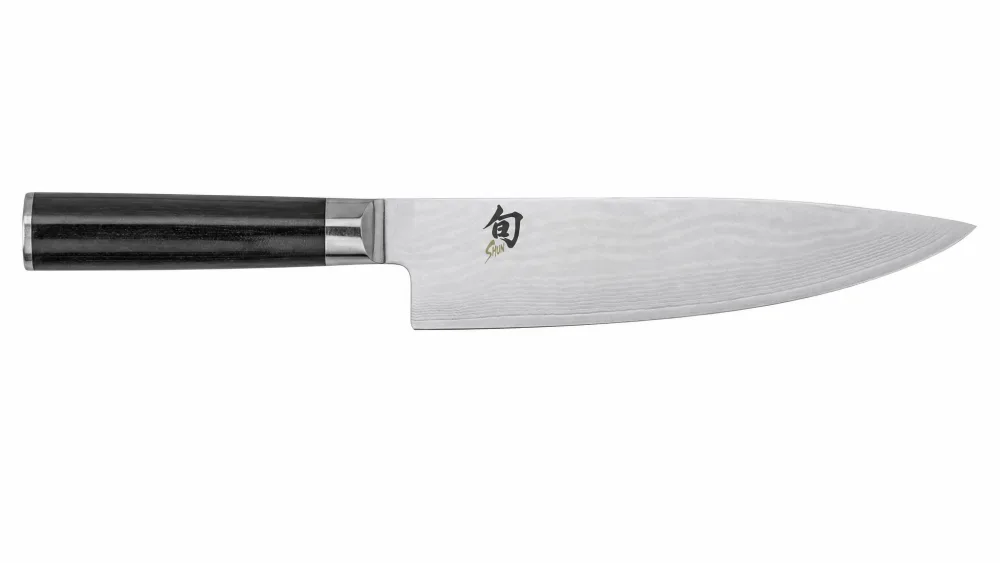
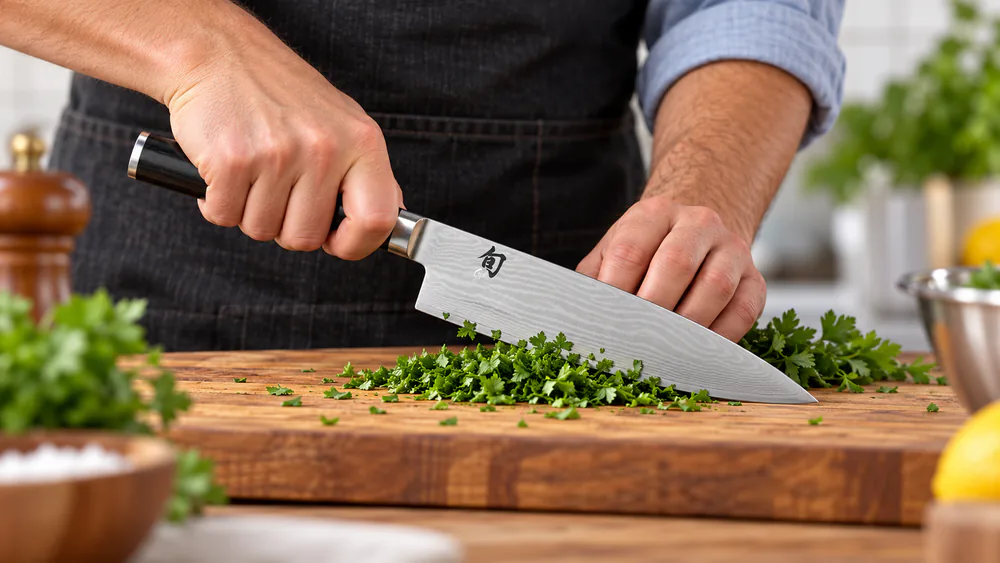
Shun fits cooks who like a curved belly for rock chopping and a handsome handle. The current Classic DM0706 is an 8-inch chef knife with a VG-MAX core, Damascus cladding, and a 16-degree edge per side. It is made in Seki. Older Classic descriptions list VG10, so confirm you are comparing the current generation.

A Shun Classic 8-inch chef knife rocking through a pile of chopped parsley on a wooden board
The curved belly of the Shun Classic suits a gentle rocking cut.
Shun Classic DM0706 chef knife
3

Shun Classic DM0706 chef knife

Best for Rock Chopping
Check Price on Amazon

The Shun cuts tomato, tender herbs, and dense sweet potato cleanly when sharp, and the curved belly makes gentle rock chopping easy. It can also take a fresh edge readily.

Pros

  • Clean cuts through tomato, herbs, and sweet potato
  • Curved belly suits rock chopping
  • Takes a fresh edge readily

Cons

  • Hard edge can chip if mishandled
  • Handle can feel large in smaller hands
  • Needs careful washing and storage

That hard edge can chip if mishandled, and it can dull during demanding prep, so no fixed sharpening interval applies. The handle can feel large in smaller hands, and the knife needs deliberate washing, drying, and storage.

4. Global

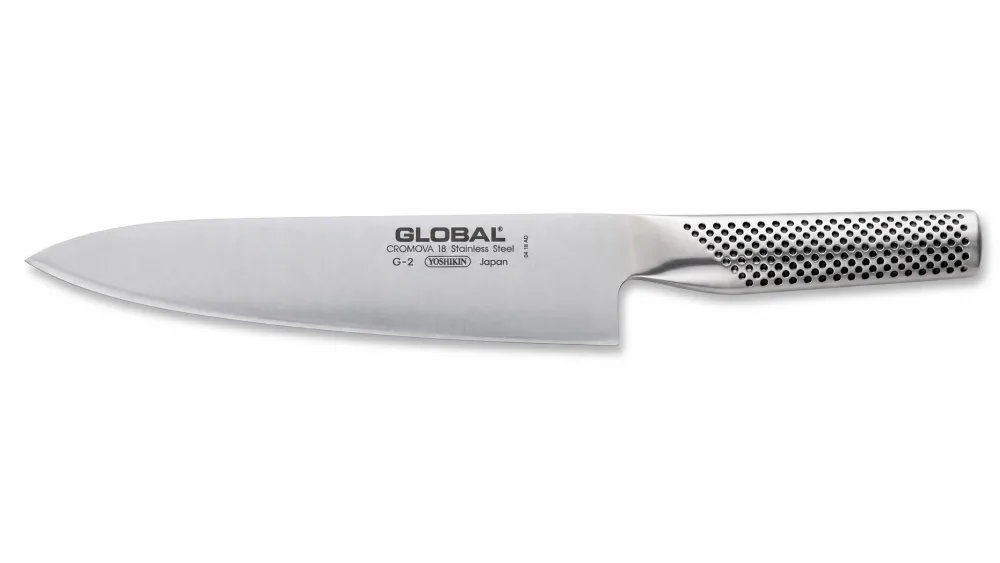
Global is the all-metal option for cooks who prefer a light knife. The Classic G-2 has a 20cm blade, marketed as 8-inch, in CROMOVA 18 stainless at 56-58 HRC. The hollow handle is sand-weighted with a dimpled grip and a seamless exterior, and it is made in Japan.

Global Classic G-2
4

Global Classic G-2

Best Light All-Metal Knife
Check Price on Amazon

The G-2 feels light and precisely balanced for basil chiffonade, tomatoes, and other delicate cuts. It lessens the heavy-knife feel during repetitive vegetable prep and allows a close grip near the blade.

Pros

  • Light and precisely balanced
  • Seamless handle with easy cleanup

Cons

  • Narrow handle can slip when wet or greasy

Cleanup takes little fuss, since a quick handwash reaches the smooth exterior with no wooden handle junction. The narrow metal handle can feel slippery when wet or greasy, and comfort depends on hand size.

5. Miyabi

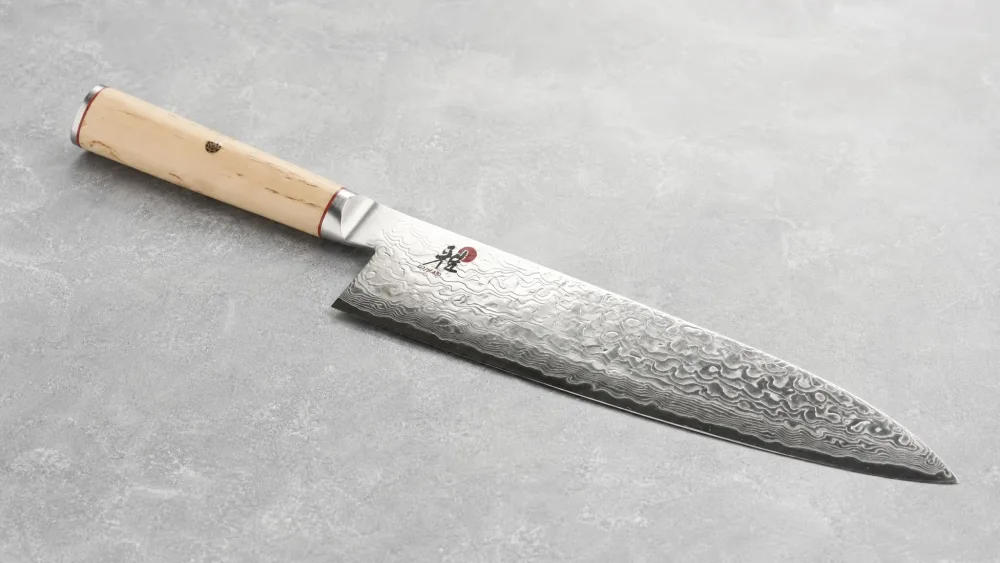
Miyabi suits the buyer who values finish and fine cutting. It belongs to ZWILLING and the Birchwood SG2 8-inch is made in Seki. The core is SG2 powder stainless at 63 HRC under Damascus cladding, with a Karelian birch handle and a rounded spine and heel. It is handwash only.

Miyabi Birchwood SG2 8-inch chef knife
5

Miyabi Birchwood SG2 8-inch chef knife

Best for Finish and Fine Cutting
Check Price on Amazon

The Birchwood has a thin cutting profile, and the rounded spine and heel reduce pressure points in a pinch grip. It feels balanced around the bolster and cuts meat, fish, and vegetables with little resistance.

Pros

  • Thin profile cuts meat, fish, and vegetables with little resistance
  • Rounded spine and heel ease a pinch grip

Cons

  • Splurge tier
  • Wood handle needs conditioning
  • No easy sheath

Clean the wood handle gently with mild soap and a nonabrasive cloth, and condition it occasionally with mineral or camellia oil. There is no easy on-and-off sheath, so plan a separate storage solution.

6. Misono

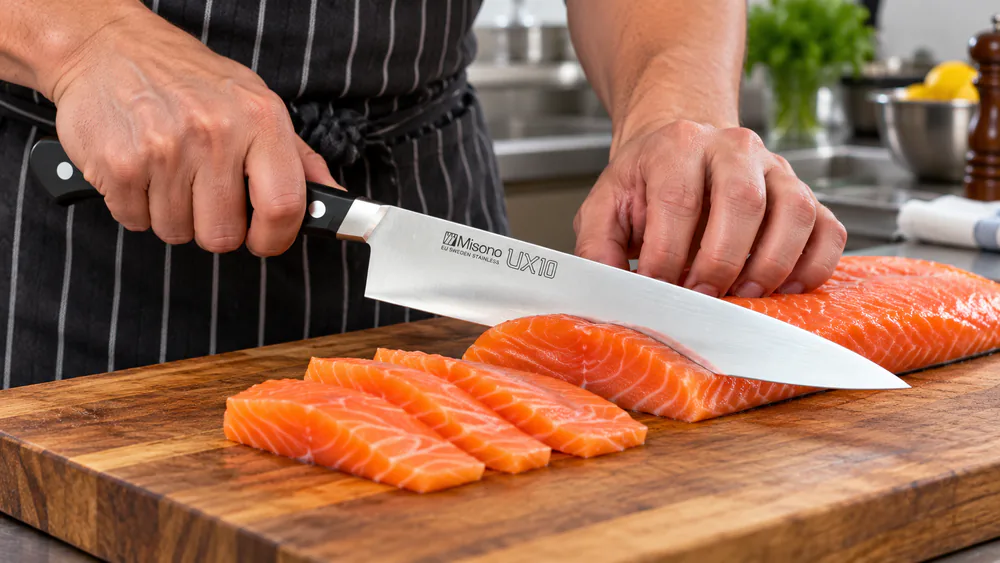
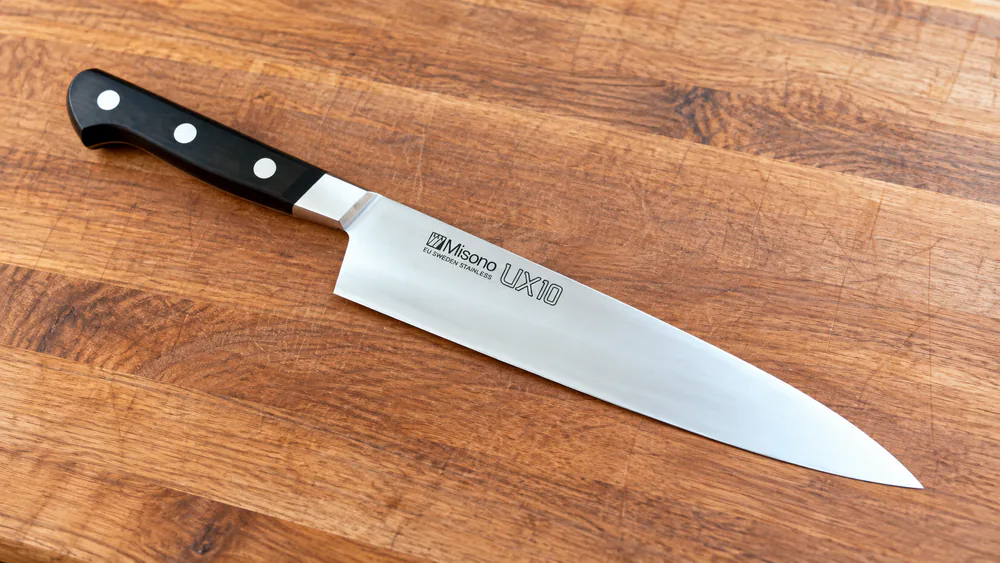
Misono is for experienced cooks who want precision from daily prep. The UX10 No.712 is a 210mm gyuto from a Seki factory at 59-60 HRC. The manufacturer now describes the steel as high-purity EU stainless; older descriptions called it Swedish steel, so we retain the current, broader wording. It has a compact Western composite handle and an asymmetrical edge.

A Misono UX10 210mm gyuto slicing a raw fish fillet on a cutting board
The UX10 stays comfortable through long boneless-meat and fish prep.
Misono UX10 No.712 gyuto
6

Misono UX10 No.712 gyuto

Best for Experienced Cooks
Check Price on Amazon

The UX10 feels light and controlled, and its edge stays useful through frequent prep. It remains comfortable during extended boneless-meat and fish preparation.

Pros

  • Light and controlled in long prep sessions
  • Edge stays useful through frequent use
  • Responds well to light stone maintenance

Cons

  • Offset bevel takes adjustment
  • Rewards existing sharpening skill

The offset bevel takes adjustment when cutting and sharpening, and the asymmetrical edge rewards established technique. It responds well to light waterstone maintenance and careful deburring, which is why we would not hand it to a beginner.

7. Yoshihiro

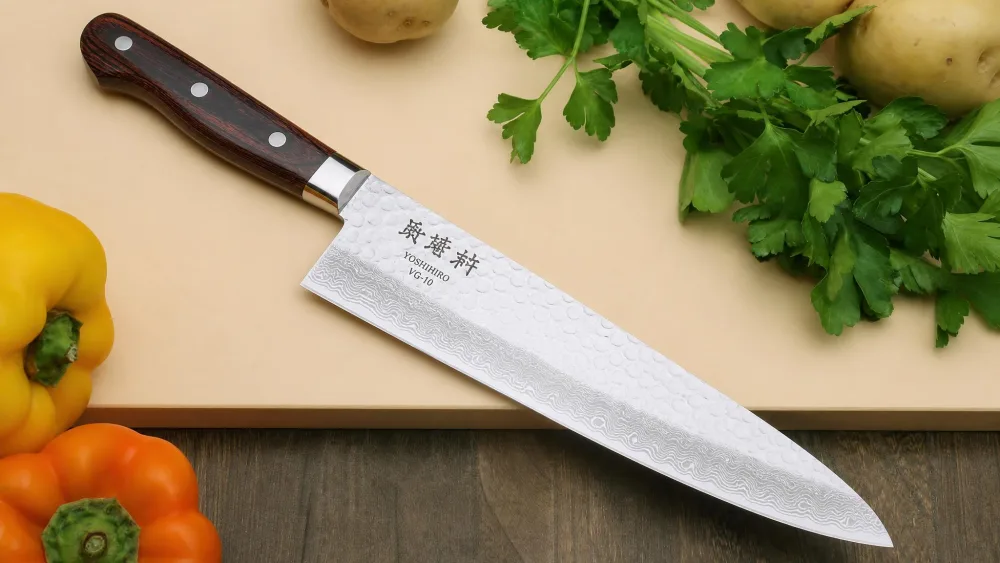
Yoshihiro is a decorative everyday gyuto for the cook who likes hammered Damascus. The 16-layer model is a 210mm gyuto with a VG10 core at 60 HRC and a Western mahogany handle. It is made in Japan, though we could not verify the exact workshop. Tang construction varies by version, so confirm it with the seller before assuming anything.

Yoshihiro VG10 16-layer 210mm gyuto
7

Yoshihiro VG10 16-layer 210mm gyuto

Best Decorative Everyday Gyuto
Check Price on Amazon

The Yoshihiro feels well balanced and easy to direct in general prep. It slices tomato readily and has a manageable size and weight for routine cooking.

Pros

  • Balanced and easy to direct
  • Flush handle fit simplifies cleanup

Cons

  • Exact workshop and tang construction not verified

The mahogany grip is solid, and the flush handle-to-metal fit makes cleanup easier. Handwash and dry it, sharpen on waterstones, and avoid bones and frozen food.

8. Sakai Takayuki

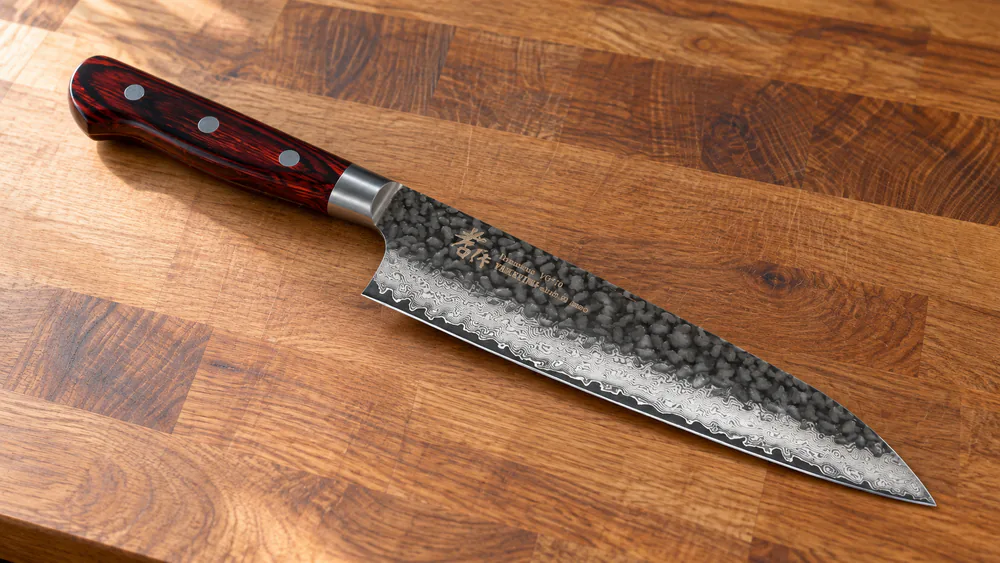
Sakai Takayuki is for the series-conscious buyer. The brand is made and sold by Aoki Hamono in Sakai. Our representative is the 33-layer VG10 210mm gyuto with hammered Damascus cladding and a Western handle. It is made in Japan, but we could not confirm which workshop forged the blade.

Sakai Takayuki 33-layer VG10 210mm gyuto
8

Sakai Takayuki 33-layer VG10 210mm gyuto

Best for Series-Conscious Buyers
Check Price on Amazon

The 33-layer gyuto retains a useful edge and responds to waterstones followed by careful stropping. It also resists ordinary corrosion with routine kitchen care.

Pros

  • Useful edge that responds to stones and stropping
  • Resists ordinary corrosion with routine care

Cons

  • Handle material varies by production

Handle material changes on a rolling basis between mahogany-derived pakka and Pakkawood, so check the delivered model. Wa-handle and Western-handle versions are separate products. Independent long-term evidence on this model is thin, so we make no longevity claim.

9. Masamoto Sohonten

Masamoto Sohonten suits cooks who want practical professional-style prep. This is Masamoto Sohonten, not Tsukiji Masamoto. The VG gyuto is 210mm at 58-59 HRC, in Hyper Molybdenum Vanadium stainless with a full tang, stainless bolster, and Duracon POM handle. The brand is based in Tokyo, but that does not identify every production step.

Masamoto Sohonten VG 210mm gyuto
9

Masamoto Sohonten VG 210mm gyuto

Best for Professional-Style Prep
Check Price on Amazon

The VG bites into vegetables with light pressure and returns to a keen edge with brief stone touch-ups. The smooth Western grip is comfortable, and it offers a usable hold for both smaller and larger hands sharing one kitchen.

Pros

  • Keen initial edge and light-pressure cutting
  • Comfortable grip for different hand sizes

Cons

  • Sold as a right-handed model
  • Handwash only

The selected model is sold as right-handed, so confirm handedness before ordering. Wash it by hand and dry it right away, even if a listing shows a dishwasher icon.

10. Takamura

Takamura is for experienced cooks chasing precision. The Migaki R2 is a nominal 210mm gyuto with an SG2 / R2 powder stainless core, softer stainless cladding, a thin polished blade, and a Western rosewood handle. It is made in Echizen, Japan. We found no verified Amazon listing for it, so there is no buy button here. Look for an authorized specialty seller.

It feels exceptionally light and nimble, and cuts onion layers and carrot slices smoothly. Small factory-edge microchips can appear, but they sharpen out, and the thin edge responds readily to waterstones.

The polished cladding shows scratches readily even while cutting performance stays good. Thin geometry also does not guarantee perfect food release, as potato slices can still cling to the blade. Use light pressure, avoid twisting, bones, and frozen food, and handwash and dry it.

How to Choose a Japanese Knife Brand

Start with an all-purpose chef knife that fits your hand and your board. Add specialist shapes only when a task calls for them.

Budget and the Specific Knife Series

Value depends on the series more than the brand name. Tojiro is the budget entry here, MAC, Global, Yoshihiro, and Sakai Takayuki sit in the middle, and Shun, Misono, Masamoto, and Takamura are premium. Miyabi is the splurge.

Steel, Edge Geometry, and Maintenance

The stainless picks here need no special rust routine, but all of them reward handwashing and prompt drying.

Harder steels such as SG2 take a keen edge but chip if you twist or hit bone. Reactive carbon-steel alternatives need faster drying and more rust prevention. Patina and rust are different things. Do not assume every high-carbon alloy is non-stainless, because that varies by series.

Blade Shape, Handle Fit, and Handedness

The Shun can feel large in small hands, and the Global's narrow steel handle can slip when wet.

Japanese Brand vs. Japanese-Made Knife

Japanese ownership, Japanese manufacture, and Japanese-style design are different questions. Miyabi belongs to ZWILLING yet its representative is made in Seki. Masamoto Sohonten is based in Tokyo, though headquarters does not identify every production step.

Where to Buy and What to Check

Authorized Sellers, Origin, and Model Details

Check the series name, blade length, steel, handle material, and handedness against the maker's page. Shun's Classic changed steel between generations, Misono's steel wording changed, and Sakai Takayuki's handle material changes without notice.

Warranty, Returns, and Sharpening Support

MAC publishes a 25-year USA warranty for defects, and Shun offers sharpening for qualifying knives with shipping and processing charges. We did not establish comparable terms for the other brands, so confirm the seller, importer, exclusions, and return eligibility. Broad lifetime marketing is not proof of damage coverage.

Frequently Asked Questions

Which Japanese Knife Brand Is Best for Beginners?

Tojiro is our easiest starting point because its F-808 pairs a familiar Western handle and balanced feel with a budget-tier cost. MAC is the step up if you want more control through the tip. Misono and Takamura suit people who already sharpen.

Which Japanese Knife Brands Do Professional Chefs Use?

Misono and Masamoto Sohonten are built around professional-style prep, and Global and MAC are common in working kitchens.

Is Shun or Miyabi the Better Choice?

Shun is the more practical choice for rock chopping with a curved belly. Miyabi is the finish-first choice, with a thin SG2 blade and birch handle, and it sits in the splurge tier. Choose Shun for use and Miyabi for craftsmanship.

How Do Tojiro and MAC Compare?

Both are made in Japan and suit daily prep. Tojiro's VG10 gyuto is the budget pick with a plain handle, while MAC's MTH-80 is a mid-priced 8-inch with more tip control and a 25-year USA warranty. Choose MAC for control and Tojiro for value.

Are Expensive Japanese Knife Brands Worth It?

They are worth it when the extra cost buys something you will use, such as a finer edge, thinner geometry, or a handle that fits. They are not worth it if you will not hand wash, dry, and store the knife carefully.

Is Global a Japanese Knife Brand?

Yes. The G-2 is made in Japan, from CROMOVA 18 stainless with an all-metal handle.

Should You Buy a Knife Set or One Knife First?

Buy one chef knife first. Our guide to the best Japanese knife sets covers the multi-knife route.

How Should You Care for a Japanese Knife?

Handwash with mild soap, dry it immediately, and never soak it or use a dishwasher. Use a suitable cutting board and protect the edge in storage. Avoid bones, frozen food, and sideways force, and dry any reactive carbon-steel knife at once to prevent rust.

Final Verdict: Choose the Brand That Fits Your Cooking

If you want one pick to start with, choose Tojiro for value or MAC for control. Reach for Shun if you rock-chop, Global if you want a light all-metal knife, and Misono or Takamura once you sharpen on stones. Miyabi is the finish-first indulgence, and Yoshihiro, Sakai Takayuki, and Masamoto Sohonten reward buyers who confirm the exact model.

Read next

Final Verdict: Choose the Brand That Fits Your Cooking

Explore more buying guides to find the knife and care tools that fit your kitchen.