Helping you create a kitchen you love.

Kitchen Appliances

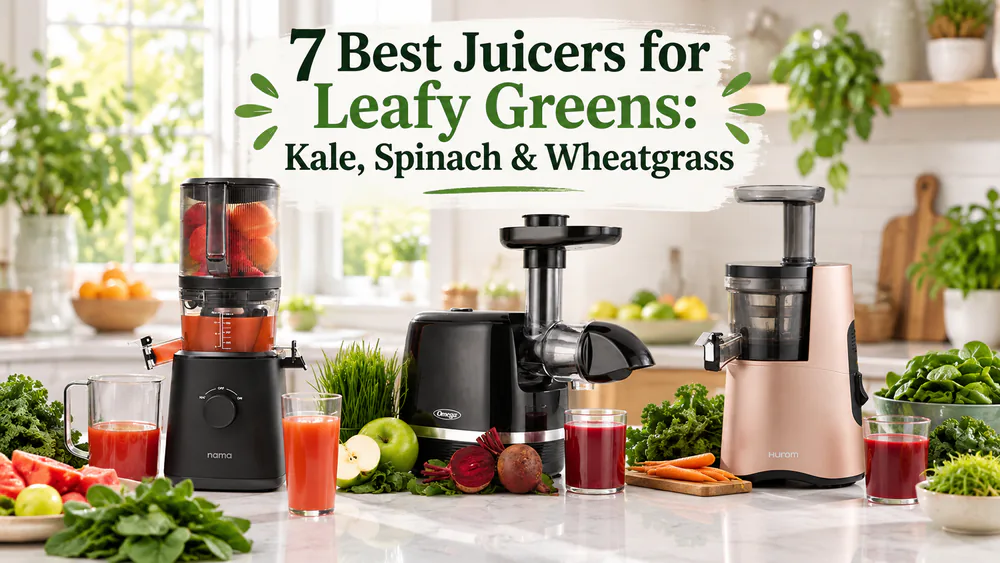
7 Best Juicers for Leafy Greens: Kale, Spinach & Wheatgrass

As an Amazon Associate we earn from qualifying purchases. We may earn a commission from links on this page, at no extra cost to you. Learn more.

7 Best Juicers for Leafy Greens: Kale, Spinach & Wheatgrass

Leafy greens are the hardest thing a juicer will ever process. Kale and spinach are fibrous and low in water, so a fast centrifugal machine flings them around and leaves most of the juice in the pulp. Cold press juicers are built for this job, but only when the feed system, auger, and strainer are up to it.

We tested seven cold press juicers on kale, spinach, and wheatgrass, weighing every batch and timing every cleanup; the ranking below is for yield, pulp dryness, cleaning, and noise, with a pick for every budget.

Our Top Picks at a Glance

RankProductBest forSpecRatingBuy
1

Nama J2 Cold Press Juicer

Best Overall
Hands-free daily batches 50 RPM, self-feeding hopper 4.8 View on Amazon
2

Omega H3000D Cold Press 365

Best Budget
Cold press on a budget 90-110 RPM, about $70 4.2 View on Amazon
3

Hurom H-AA Slow Juicer

Best Premium
Quiet, long-lived daily use 43 RPM, 150W 4.7 View on Amazon
4

TUUMIIST 6.5-Inch Chute Cold Press Juicer

Best Wide Feed Chute
Whole-fruit feeding 6.5 in chute, 350W 4.3 View on Amazon
5

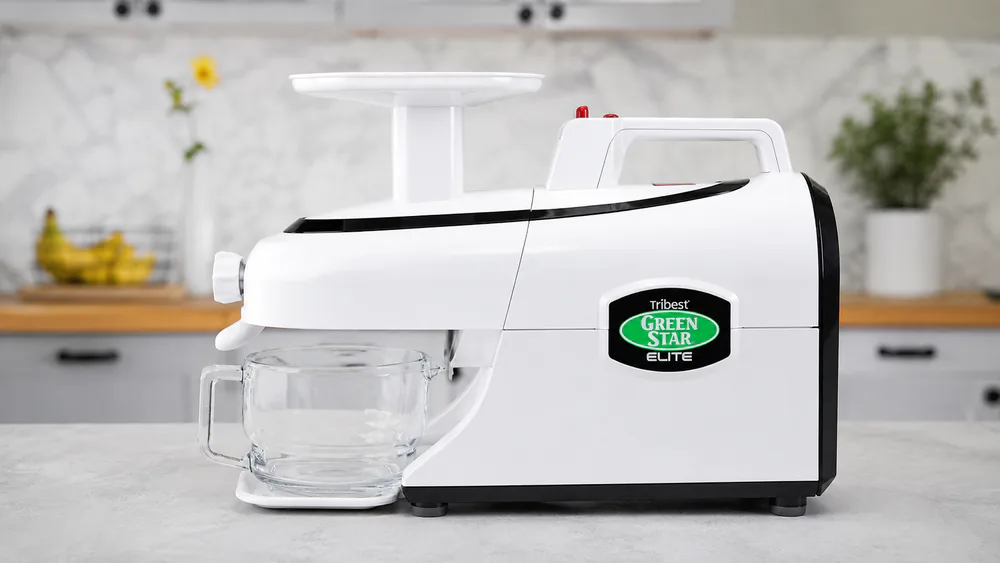
Tribest Greenstar GSE-5000 Elite

Best Twin-Gear
The driest possible pulp 110 RPM, twin-gear 4.6 View on Amazon
6

Brecious Cold Press Juicer

Best Compact & Quiet
Small counters and early mornings 95-110 RPM, under 60 dB 4.2 View on Amazon
7

ORIGINAL Healthy Juicer (Lexen GP27)

Best Manual for Wheatgrass
Wheatgrass and travel Hand crank, no power 4.3 View on Amazon

We earn a commission if you make a purchase, at no additional cost to you.

See full comparison table

The 7 Best Juicers for Leafy Greens

The seven machines below earned their spots through these tests, and the order reflects what daily green juicing rewards.

1. Nama J2 Cold Press Juicer: Best Overall

Nama J2 Cold Press Juicer
1

Nama J2 Cold Press Juicer

Best Overall
Check Price on Amazon
4.8/5

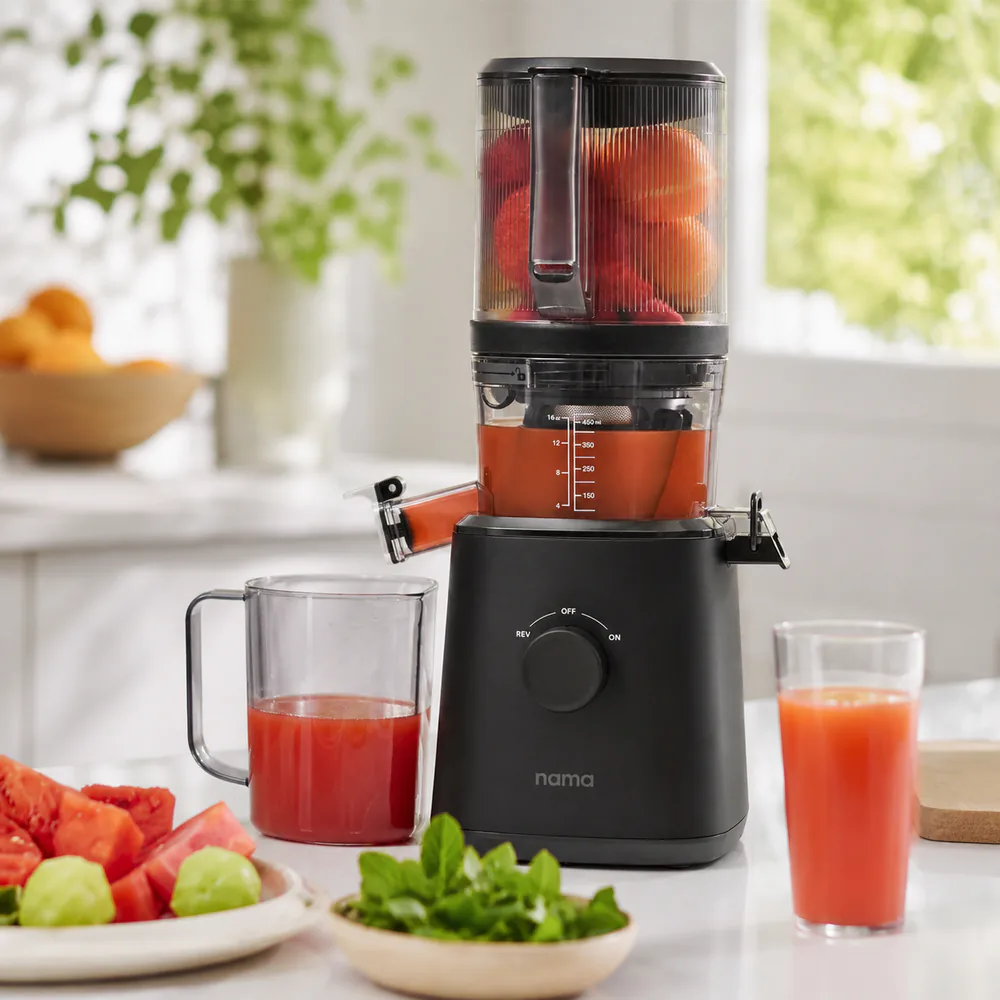
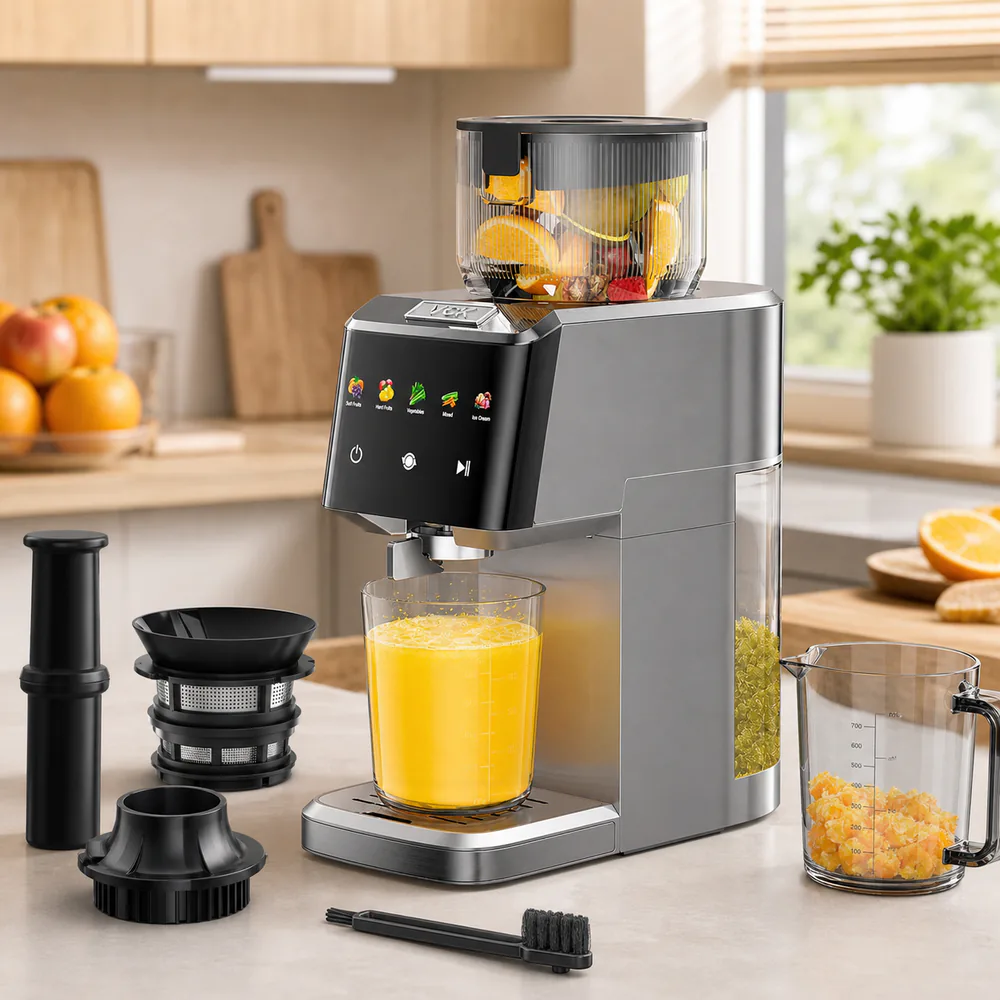
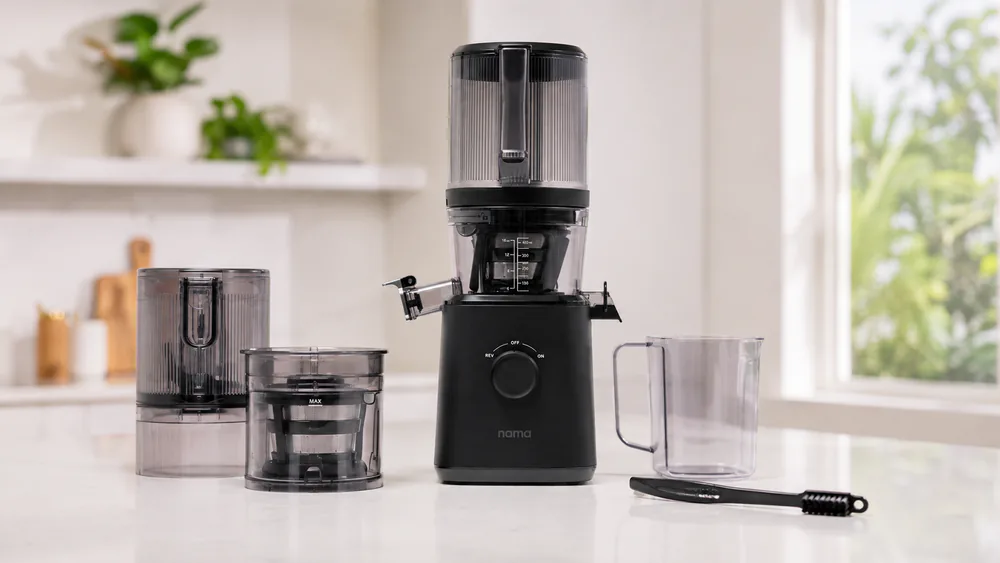
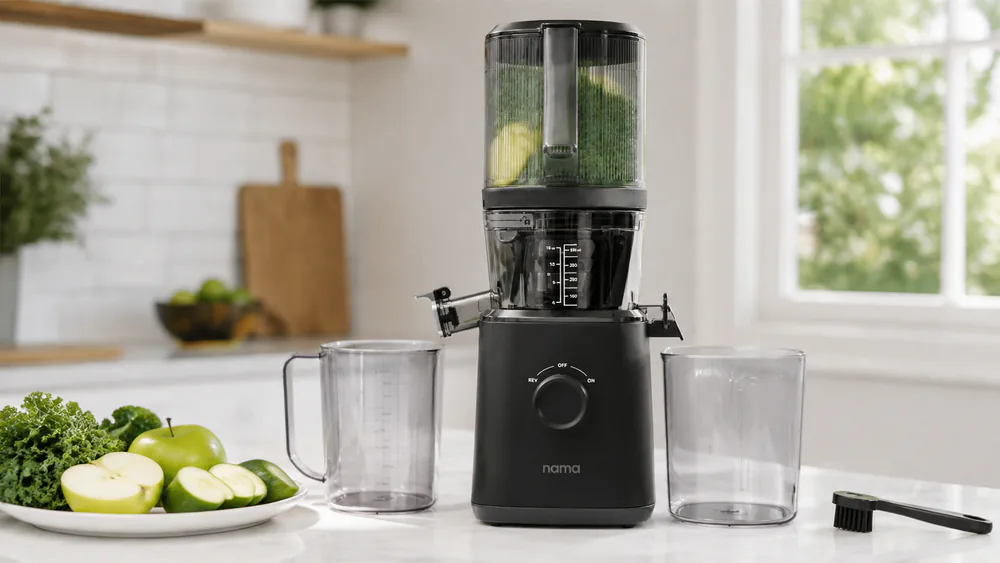
The Nama J2 Cold Press Juicer is our top pick for one reason: the self-feeding hopper. We loaded whole recipes into the top, walked away, and came back to a full jug with pulp dry enough to crumble. The same recipe that gave us under 5 ounces on our reference feeder juicer produced about 9 ounces here.

Pros

  • Self-feeding hopper runs recipes hands-free
  • Very dry pulp, higher yield than feeder juicers
  • 15-year warranty on all parts

Cons

  • Around 13 parts to assemble
  • Premium price of about $599
  • Must be cleaned right after use

Who should buy it: anyone who has skipped juicing because of prep. It's an investment, and street pricing moves week to week, so check the current price first.

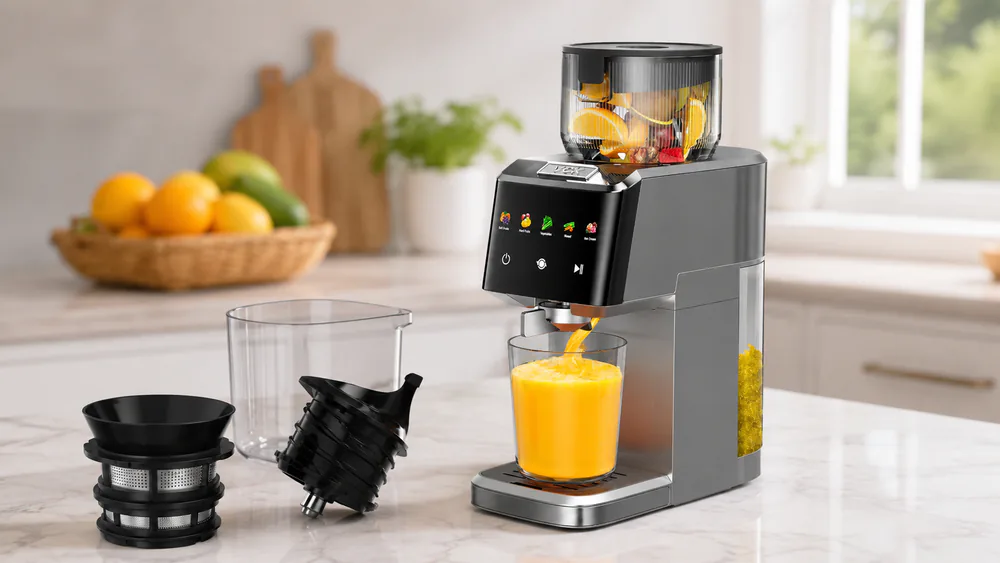
The Nama J2's clear self-feeding hopper loaded with whole kale leaves and apple wedges, auger chamber below.
Load the hopper, walk away, and come back to a full jug.

2. Omega H3000D Cold Press 365: Best Budget

Omega H3000D Cold Press 365
2

Omega H3000D Cold Press 365

Best Budget
Check Price on Amazon
4.2/5

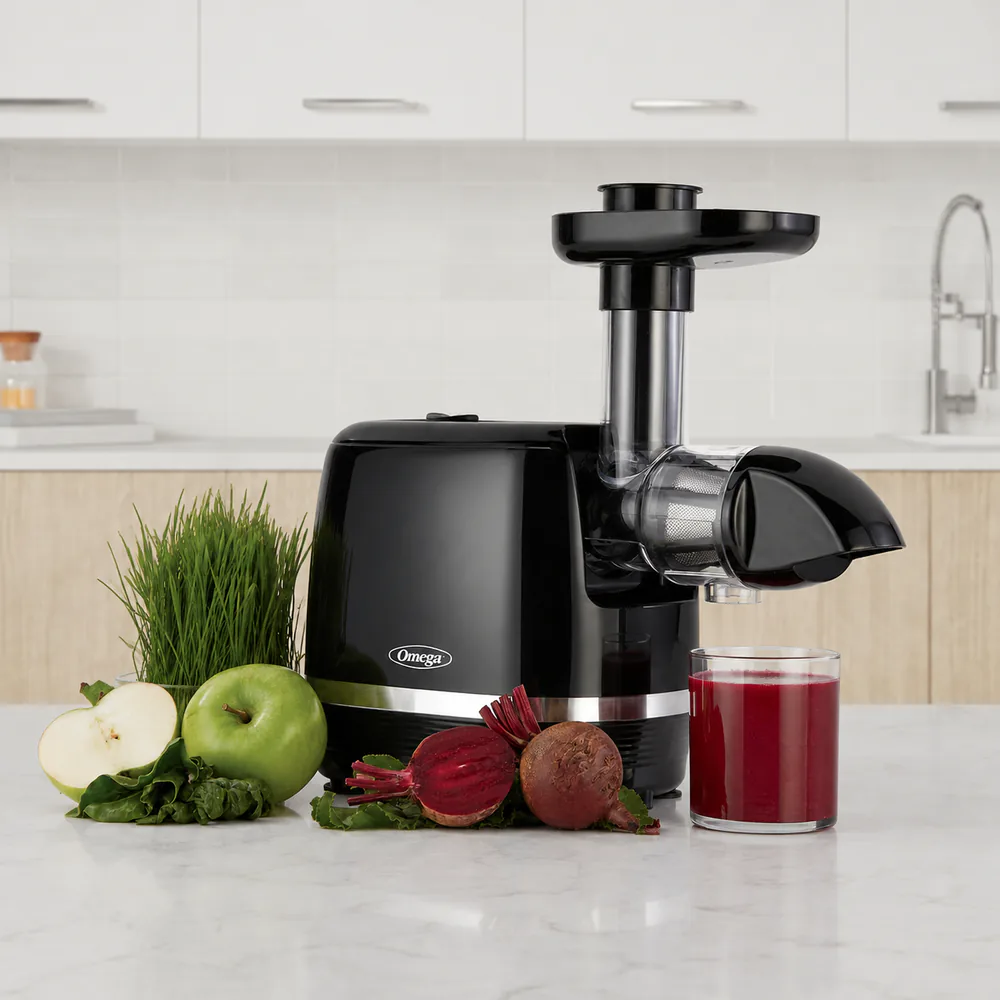
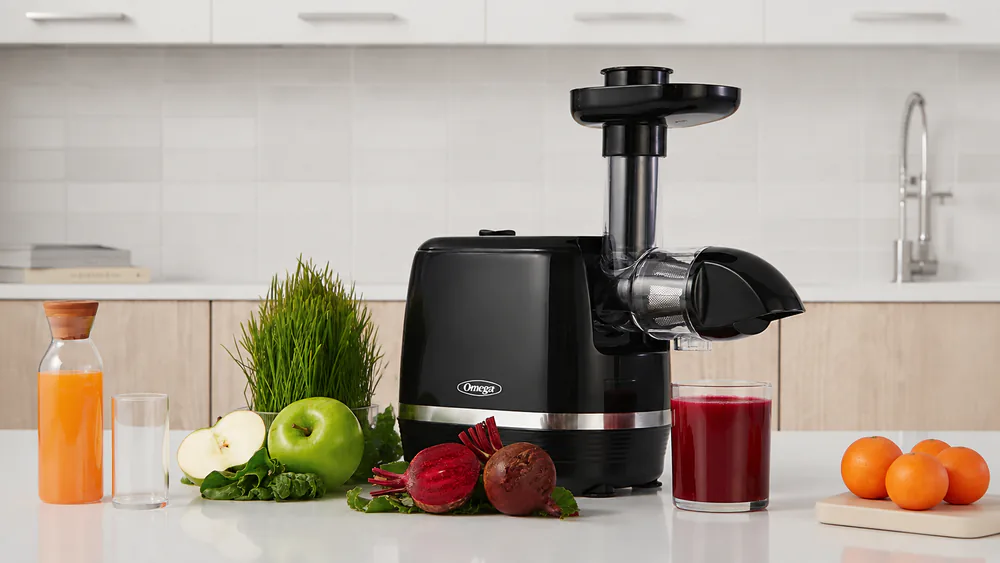
If the Nama J2 removes the work, the Omega H3000D Cold Press 365 just gets it done cheaply. At about $70 it's the least expensive electric cold press juicer we tested, and its 150W triple-stage auger still pulled dry pulp from kale, quietly.

Pros

  • Real cold press extraction at a budget price
  • Dry pulp and quiet running
  • Dishwasher-safe parts and a reverse function

Cons

  • Plastic feed chute is its weak point
  • End cap can pop off the drum under pressure
  • Clear parts stain orange after carrot batches

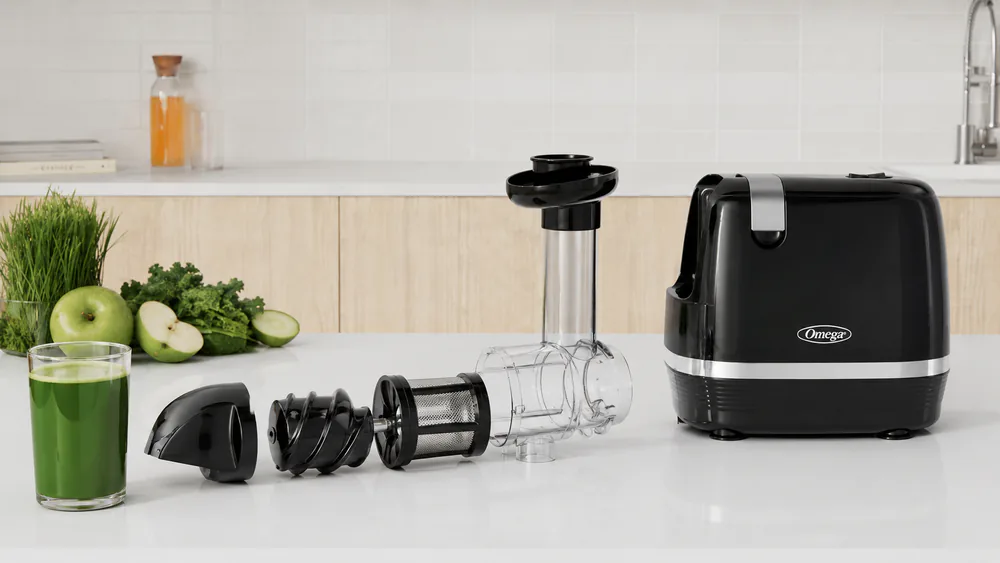
The honest caveat is durability: the plastic feed chute cracked for us after about six weeks of daily use, and replacement parts are hard to find. Rinse parts immediately and it will serve for years; View on Amazon.

A glass of green juice beside a disassembled Omega H3000D juicer, its parts laid out for a quick rinse.
Rinse the parts right after use and the budget Omega keeps working for years.

3. Hurom H-AA Slow Juicer: Best Premium

Hurom H-AA Slow Juicer
3

Hurom H-AA Slow Juicer

Best Premium
Check Price on Amazon
4.7/5

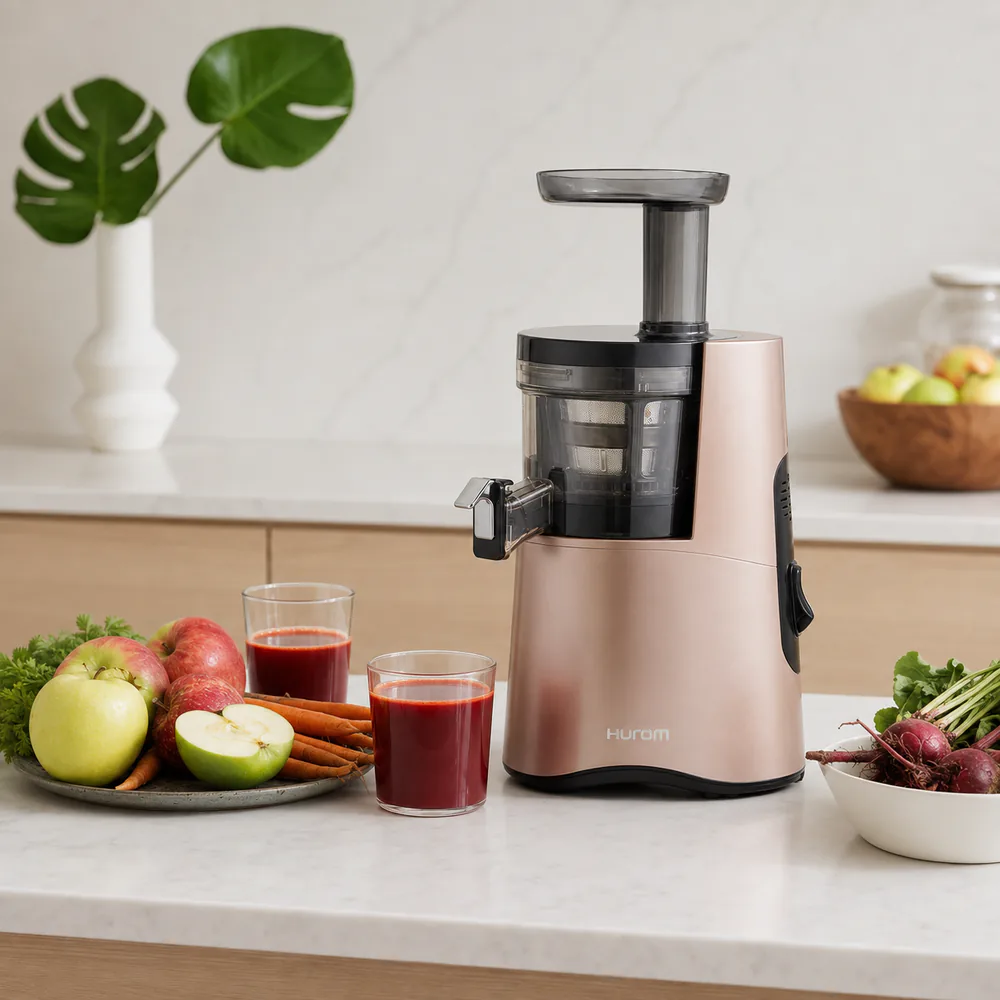
Where the Omega is the budget entry point, the Hurom H-AA Slow Juicer is the long-haul machine. At 43 RPM with a 150W motor, it's the quietest vertical juicer we tested, and our spinach-kale batches measured about 520-530 ml of juice per kilogram of greens with bone-dry pulp. The crescent 2 inch feed opening still needs greens pre-cut to 1-2 inch pieces, the real prep cost here.

Pros

  • Rinses clean in under 5 minutes
  • 10-year motor warranty, 2 years on other parts
  • Fine, coarse, and ice cream strainers plus a pulp control lever

Cons

  • Premium-tier price
  • Harder produce needs half-inch pieces, about 15 minutes of prep per batch

Expect about $399, and street pricing moves week to week, so Get the Latest Price first; warranty claims run through Hurom's support page.

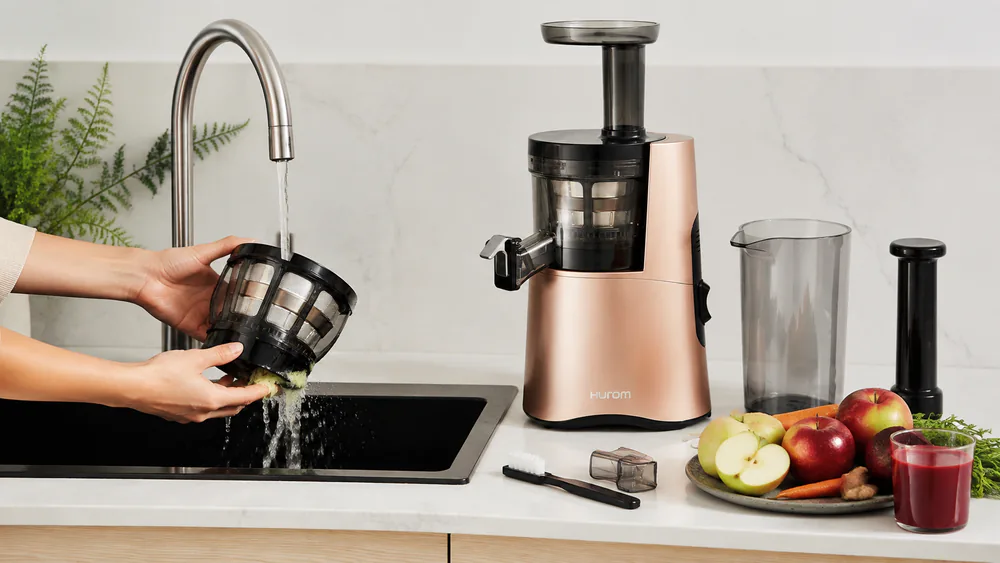
The wide filter basket and strainer of a Hurom H-AA slow juicer under a running kitchen tap, pulp rinsing off the mesh.
A wide filter basket and few parts keep Hurom cleanup under 5 minutes.

4. TUUMIIST 6.5-Inch Chute Cold Press Juicer: Best Wide Feed Chute

TUUMIIST 6.5-Inch Chute Cold Press Juicer
4

TUUMIIST 6.5-Inch Chute Cold Press Juicer

Best Wide Feed Chute
Check Price on Amazon
4.3/5

Where the Hurom asks for prep, the TUUMIIST 6.5-inch chute cold press juicer eliminates it. The 6.5-inch chute swallows whole apples, and the 100 oz hopper made hands-free morning batches practical; we skipped the cutting board for most runs.

Pros

  • 6.5-inch whole-fruit chute ends most of the chopping
  • 100 oz hopper for hands-free batches
  • About $114, squarely budget-mid

Cons

  • Pulp dryness varied between our batches
  • Handle is the weak point to watch

The catches are survivable: watch the handle over years of use, and the quick-release parts detach in seconds for rinsing.

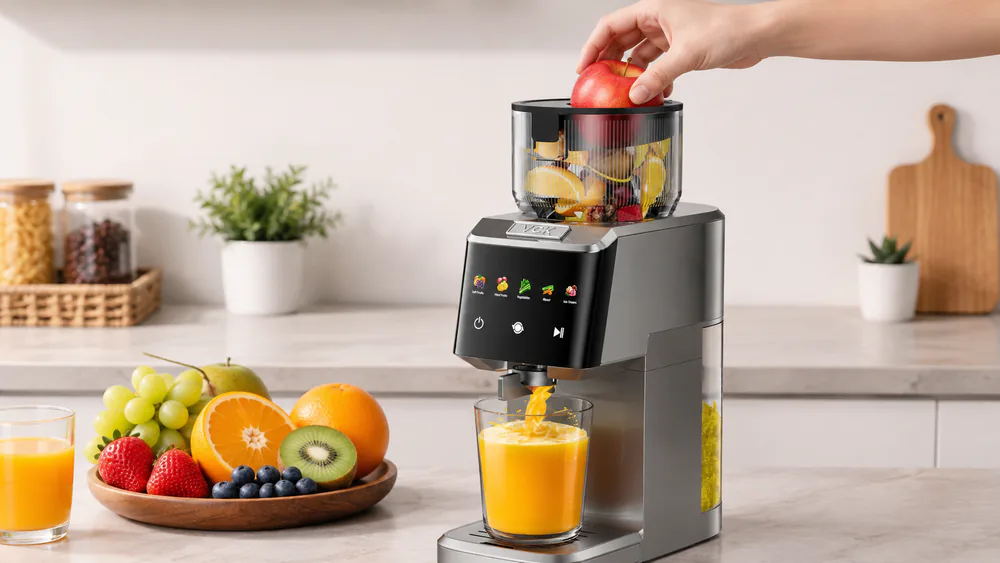
A whole apple being fed into a wide 6.5-inch feed chute on a vertical cold press juicer, no cutting board in sight.
A wide chute removes the biggest prep bottleneck in leafy green juicing.

5. Tribest Greenstar GSE-5000 Elite: Best Twin-Gear

Tribest Greenstar GSE-5000 Elite
5

Tribest Greenstar GSE-5000 Elite

Best Twin-Gear
Check Price on Amazon
4.6/5

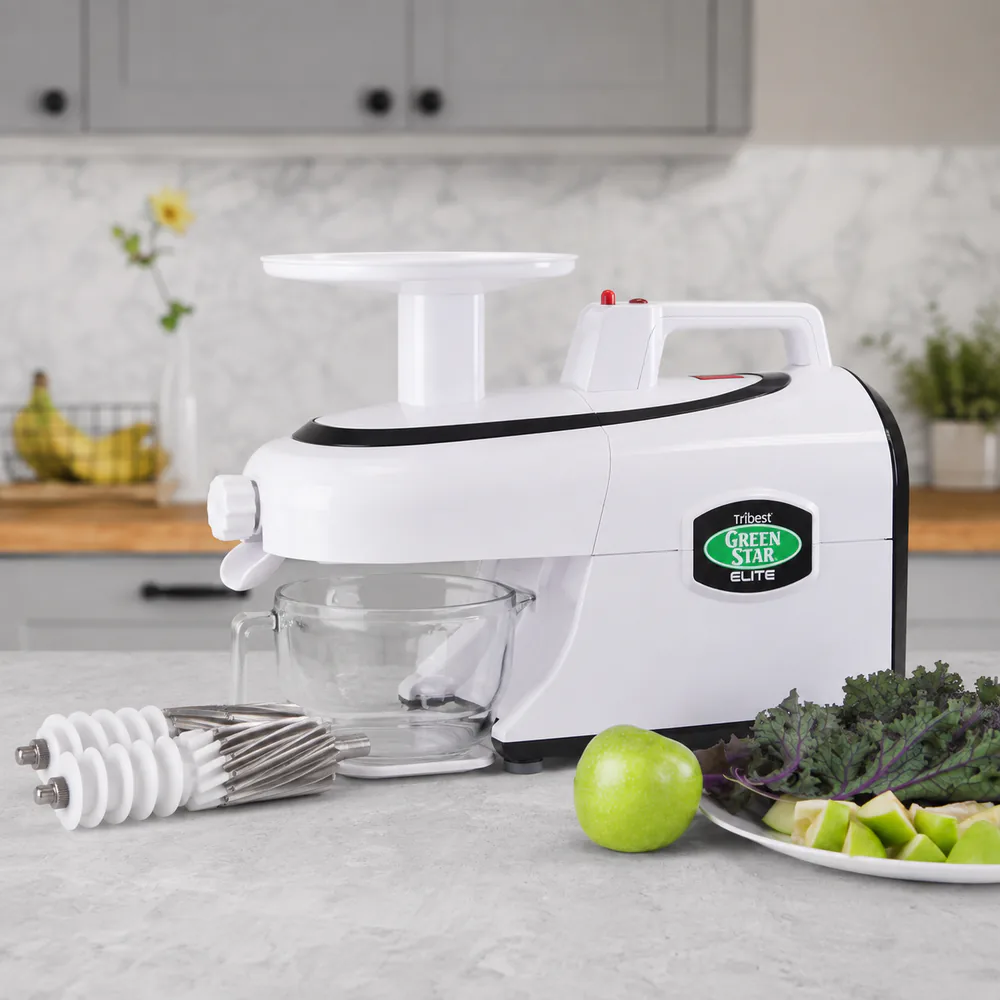
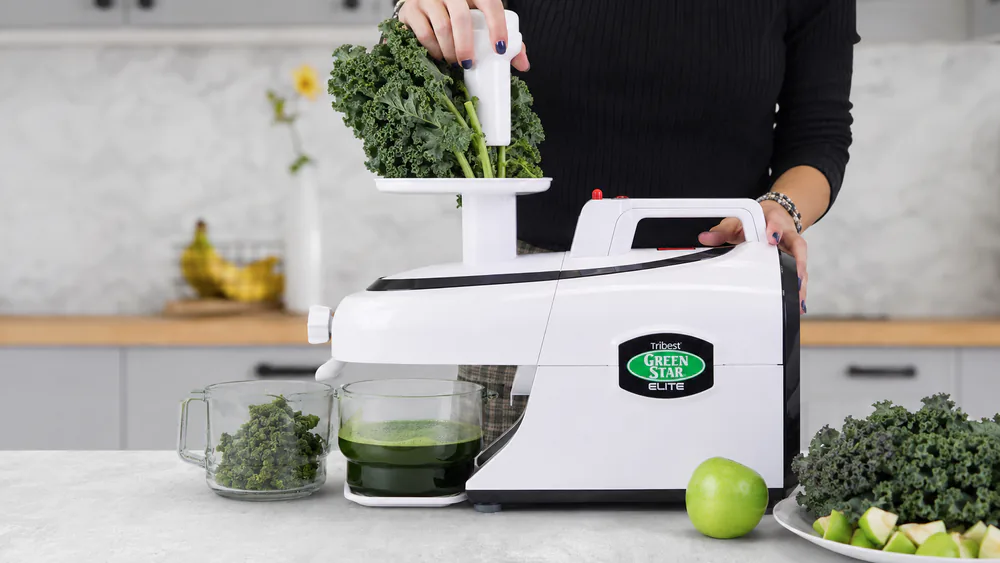
The TUUMIIST is about speed; the Tribest Greenstar GSE-5000 is about extraction. Its twin stainless steel gears grind at 110 RPM, and we fed kale completely untrimmed, stem end first, with a light push from the tamper. The pulp came out dry as bone.

Pros

  • Dry-as-bone pulp, even on untrimmed kale
  • 12-year household warranty
  • Full twin-gear set and 23 pieces in the box

Cons

  • Hardest cleanup in this test
  • Green juice foams noticeably
  • Pressure knob has a learning curve

Cleaning is the price of admission, at 12-15 minutes per session, the most here; it lists around $550-600, and street pricing moves week to week.

Whole kale leaves, stems intact, being fed into a Tribest Greenstar twin-gear juicer with the tamper.
The Greenstar takes kale untrimmed, stem end first.

6. Brecious Cold Press Juicer: Best Compact & Quiet

Brecious Cold Press Juicer
6

Brecious Cold Press Juicer

Best Compact & Quiet
Check Price on Amazon
4.2/5

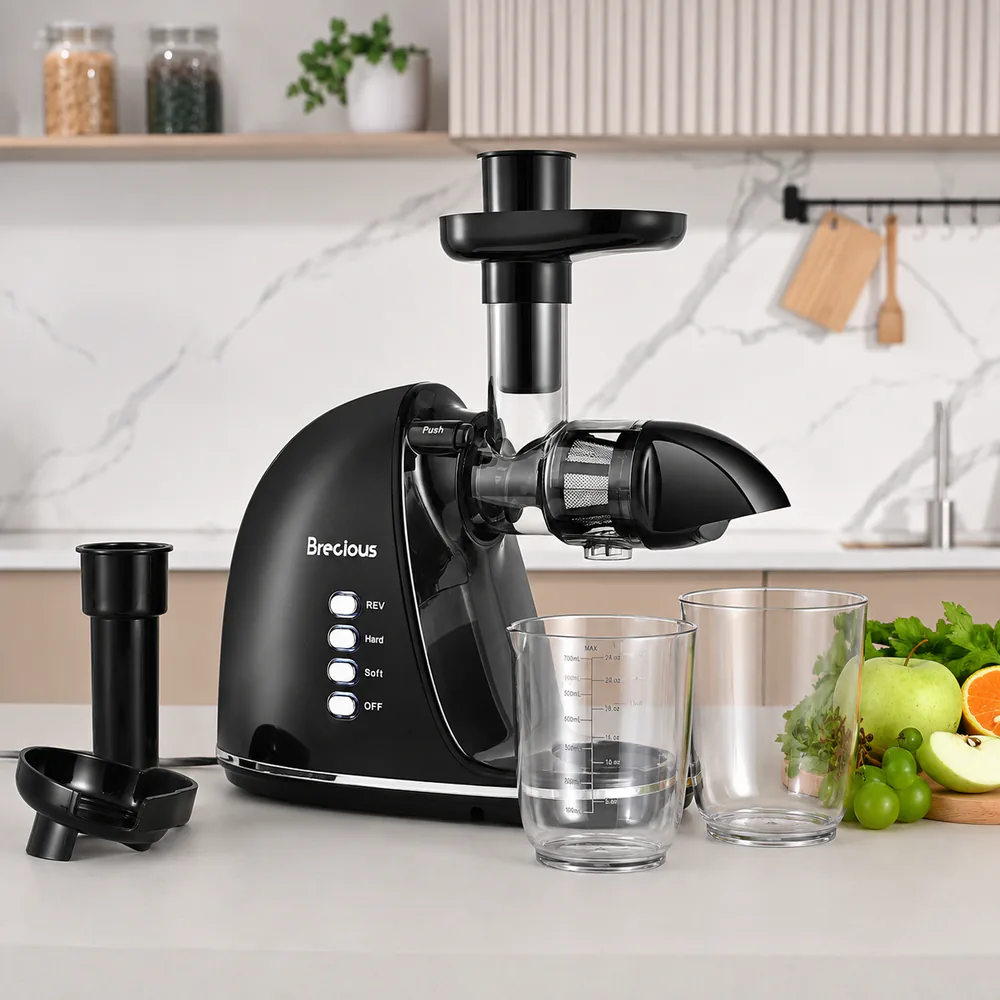
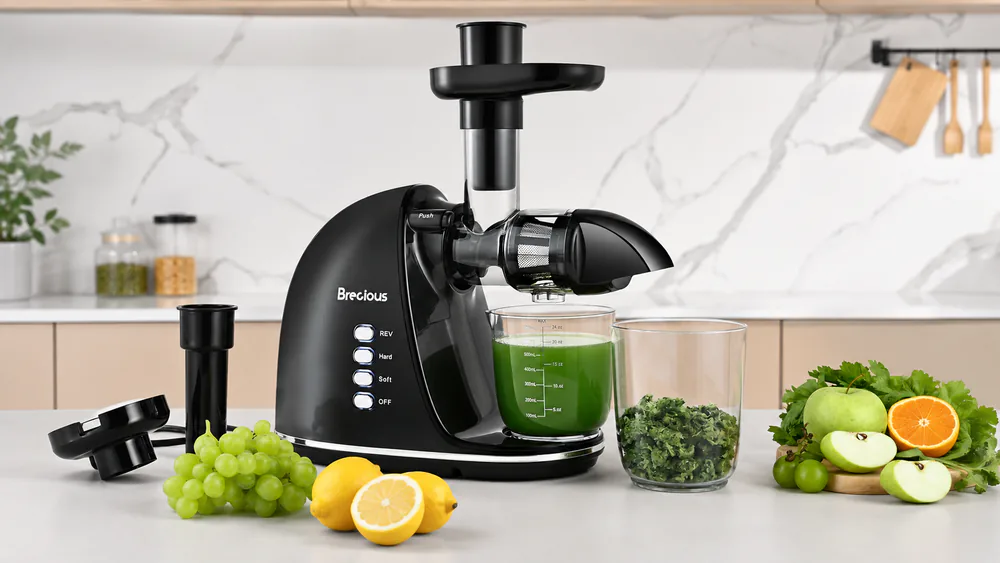
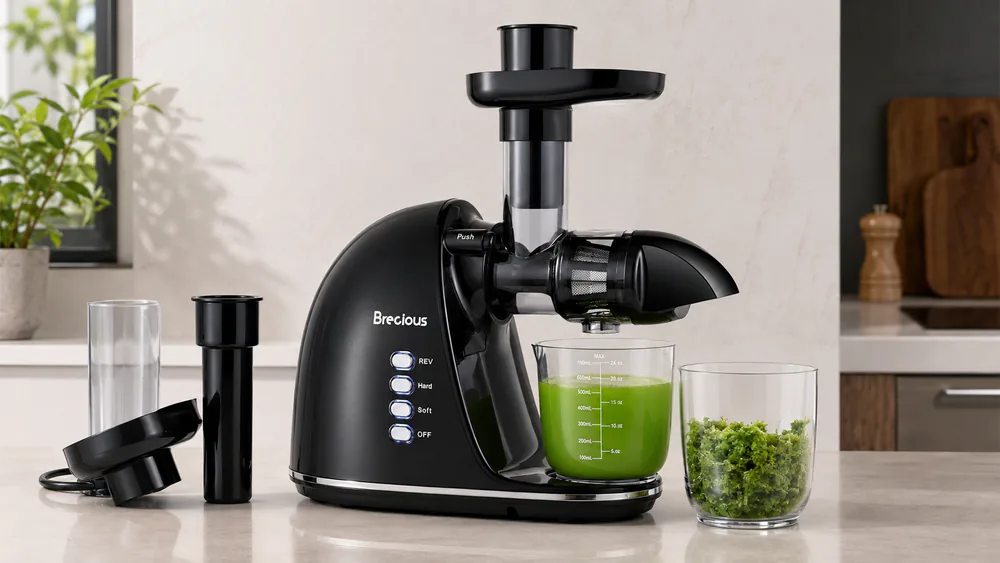
The Greenstar is the biggest time commitment here; the Brecious cold press juicer is the smallest machine. It stayed quiet even on the hard setting, it won't dominate your counter space, and the 24 oz cup fits a personal batch, with two speeds plus reverse.

Pros

  • Quiet even on the hard setting
  • Most compact footprint in the test
  • Soft and hard speeds plus reverse
  • 1-year after-sales service

Cons

  • 1.8-inch chute demands bite-size prep
  • Pulp runs wetter than the top picks
  • Over-packing jams the tube until you reverse

It sits in the budget tier with honest limits: the 1.8-inch chute means bite-size prep, so budget time at the cutting board.

A compact Brecious cold press juicer on a narrow kitchen counter with a 24-ounce juice cup.
The Brecious fits small counters and still handles daily green batches.

7. ORIGINAL Healthy Juicer (Lexen GP27): Best Manual for Wheatgrass

ORIGINAL Healthy Juicer (Lexen GP27)
7

ORIGINAL Healthy Juicer (Lexen GP27)

Best Manual for Wheatgrass
Check Price on Amazon
4.3/5

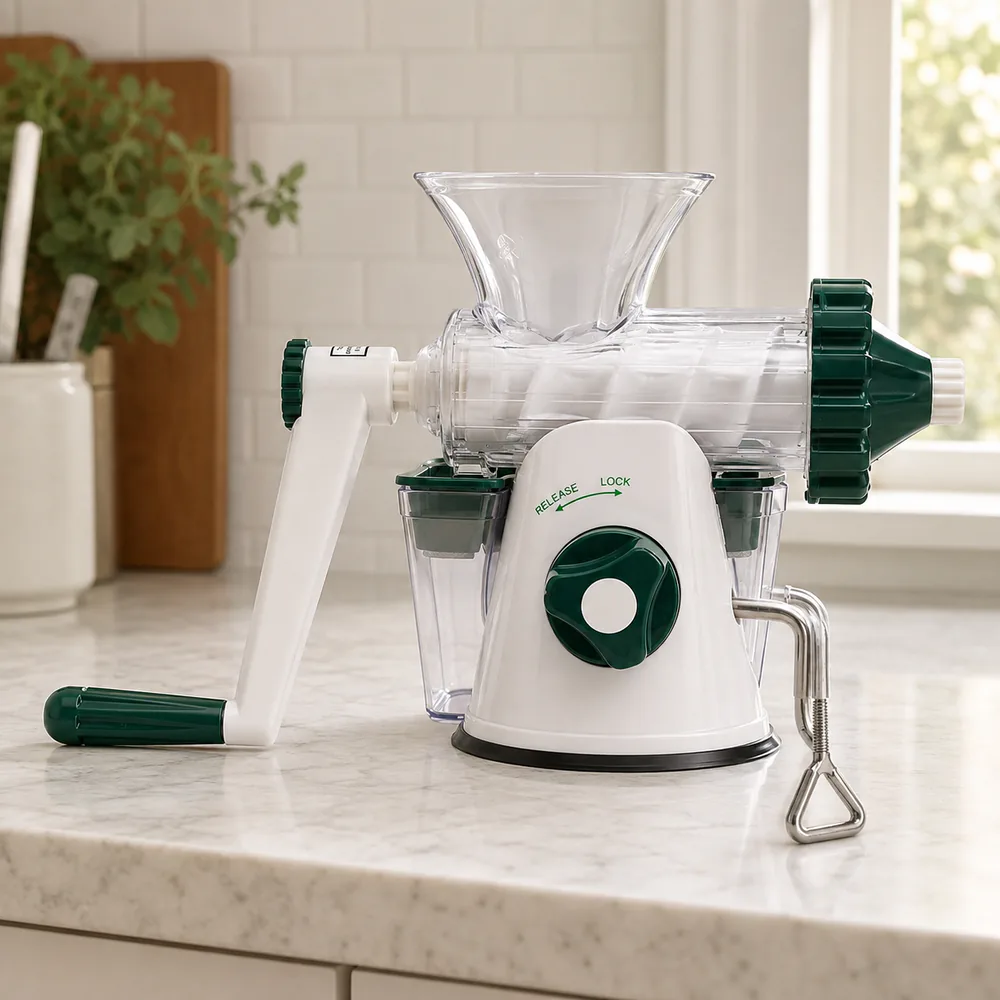
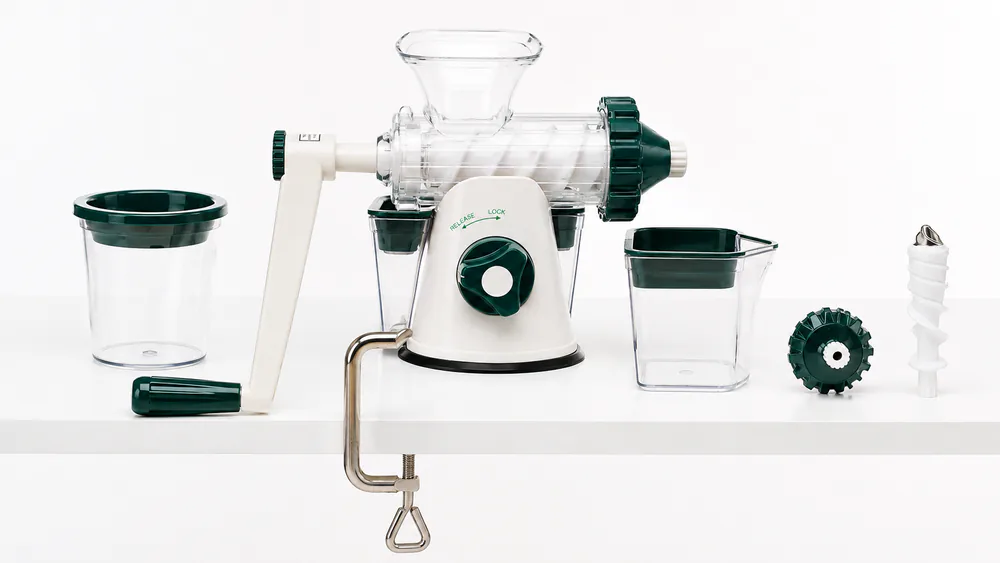
Every other pick plugs in; the ORIGINAL Healthy Juicer doesn't, so crank for about 15 minutes and you get a glass of bright green juice with nearly dry pulp, no noise, no power cord, in a package small enough for a carry-on. The brand has been selling since 2004, and the suction base is rated to hold over 100 lb, though it pops off the counter if you crank too hard.

Pros

  • No electricity, no noise, carry-on portable
  • Nearly dry pulp with a real glass of wheatgrass
  • One of the most affordable juicers around
  • 1-year limited parts warranty

Cons

  • About 15 minutes of cranking per glass
  • Spinach and lettuce need a fibrous partner
  • The extra drying nut causes clogs; most owners leave it off

Soft greens are different: spinach and lettuce alone yield almost nothing without a fibrous partner to push against, so we alternated greens with apples, oranges, or carrots. Clean it right after use and it's a one-minute job; leave it and the plastic stains.

Quick Comparison Table

ProductTypeRPMFeed chuteYieldPulp drynessCleaning easePrice tier
Nama J2 Vertical, hands-free hopper 50 RPM Whole-recipe hopper 20-30 oz per load Very dry Easy, 13 parts $599, premium
Omega H3000D Horizontal 90-110 RPM Narrow, pre-cut High, dry pulp Dry Easy, monthly soak About $70, budget
Hurom H-AA Vertical 43 RPM 2 in, crescent 520-530 ml/kg greens Bone-dry Easy, under 5 min About $399, premium
TUUMIIST 6.5 in Vertical 60 RPM 6.5 in, whole fruit High, mixed pulp reports Mixed Easy, quick-release About $114, budget-mid
Greenstar GSE-5000 Twin-gear 110 RPM 1.5 in, pre-cut Excellent, super-dry Dry-as-bone Hardest, 12-15 min About $550-600, premium
Brecious Vertical 95-110 RPM 1.8 in, bite-size High Fairly wet Easy, dishwasher safe Budget tier
Healthy Juicer GP27 Manual Hand crank Small hopper About 1 cup spinach per lb Very dry Very easy, 1-2 min Budget tier

Prices are street estimates and move week to week.

How We Tested These Juicers

We ran every machine through the same green gauntlet: kale, spinach, wheatgrass, and a mixed batch with apple and celery. Each unit logged weeks of daily batches on our counter, long enough for the patterns that decide a purchase to show up: a chute that cracks under daily feeding, clear parts that stain, a motor that stays quiet month after month.

We weighed every batch, pressed the pulp, and timed cleanup from last drop to dry rack; four scores moved the rankings: yield, pulp dryness, cleaning, and noise.

Yield is the measurable one, recorded as milliliters per kilogram of greens; dry, crumbly pulp means the juice ended up in the glass, and cleaning times decided daily use or counter dust more than any other score. Every machine here is cold press, masticating, or manual, because centrifugal models don't make the cut for greens: they fling thin leaves out unshredded.

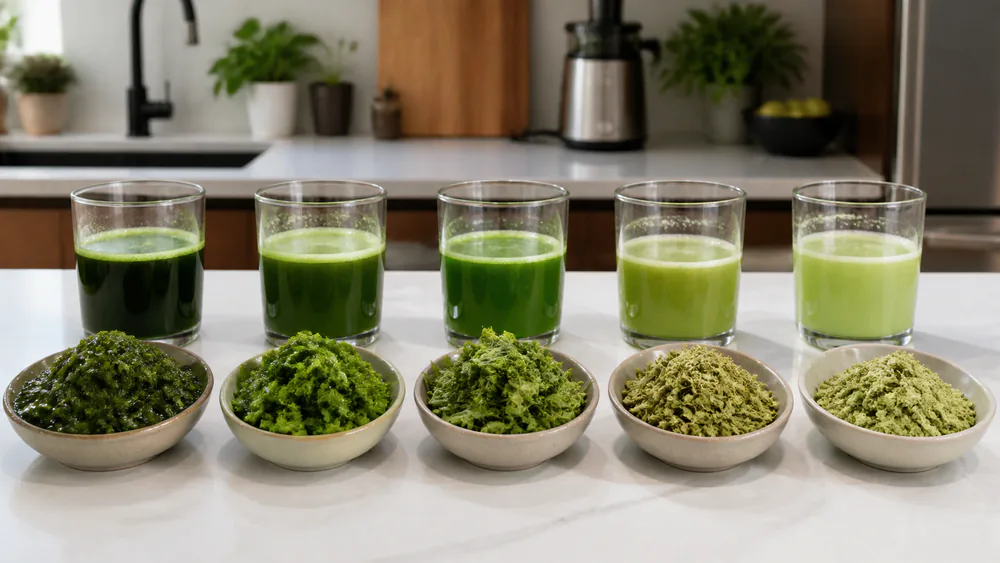
A test batch of leafy green pulp held over a juicer pulp bin, dry and crumbly, with a measuring jug of bright green juice beside it.
Dry, crumbly pulp means the juice ended up in the glass, not the bin.

How to Choose the Best Juicer for Leafy Greens

Here's what actually matters when you shop.

Masticating vs Centrifugal vs Twin-Gear: Which Type Wins for Greens?

Slow masticating juicers, also called cold press, crush and press at low speed, and they're the only type that properly shreds fibrous greens. Centrifugal juicers spin a fast blade that flings thin leaves around without tearing them, which is why kale mostly rides through unjuiced. Twin-gear (triturating) machines press between two interlocking gears for the highest extraction, and they're also the hardest type to clean. For most kitchens, a single auger is enough; twin-gear pays off only if you want the driest pulp and don't mind cleanup.

Feed Chute Size and Prep Time

Feed chute size decides how much time you spend at the cutting board. The Hurom's crescent 2-inch opening means cutting greens into 1-2 inch pieces, while the TUUMIIST's 6.5-inch chute swallows whole fruit. Vertical juicers need greens in 1-2 inch pieces to avoid clogging, so if you juice before work, buy the widest chute you can afford. The cheapest wide-chute route we found is a no-name 5.12-inch model, but its output was too unpredictable for a main-list slot, so Check Price on Amazon only if you're comfortable with that risk.

RPM and Nutrient Preservation

Lower RPM is the whole point of cold press juicing: the machines here run from 43 to 110 RPM, slow enough that juice never heats, and heat plus air start oxidation. A finer strainer cuts pulp but can lower nutrient content, so pick the filter to match how much texture you want.

Ease of Cleaning

Cleanup is where good juicers go to die, and in this test the gap between the easiest and hardest cleanup ran to ten minutes a session, the difference between daily and weekly juicing. Look for few parts, a wide filter basket, and dishwasher-safe strainers, and rinse within minutes of the last drop.

Noise Level

Masticating juicers run quiet, generally under 60 dB, about a normal conversation, and the Hurom and the Nama J2 are quiet enough to run while someone sleeps in the next room. If you juice before dawn, rank noise high.

Budget vs Premium

You can spend about $70 on the Omega H3000D or $599 on the Nama J2, and both juice kale well. The extra money buys build quality, a self-feeding hopper, quieter operation, longer warranties (15 years on the Nama versus one year on most budget models), and parts that actually exist. Spend on the machine you'll use daily. The goal is more vegetables in your day, per USDA's vegetable guidance.


Tips for Juicing Leafy Greens Like a Pro

Getting the most from any of these machines comes down to habits we picked up during testing.

  • Cut greens for vertical machines into 1-2 inch pieces and feed steady handfuls.
  • Alternate soft greens with fibrous produce: spinach and lettuce barely yield on their own, so run an apple, celery rib, or carrot through between handfuls.
  • Expect foam: spinach produces an enormous amount in any juicer, so let the jug settle a minute and skim; it's not a sign of failure.
  • Run a lemon or lime through at the end of every session; it cleans the strainer and brightens the juice.
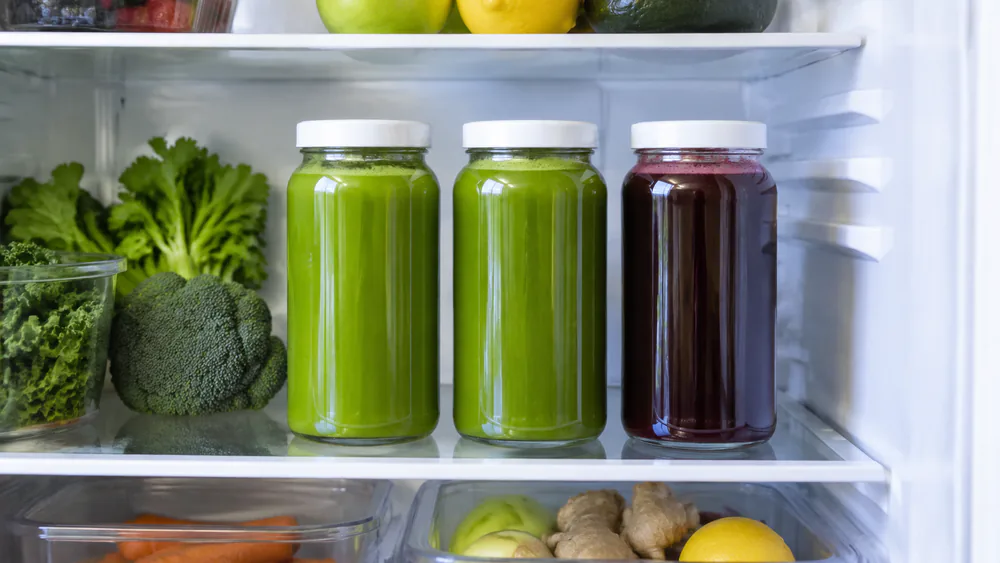
  • Store juice in airtight glass jars filled to the top; it keeps about three days, and beets stain plastic.
  • Clean right after use, every time; the units that served us longest were the ones we rinsed immediately.
  • The payoff is worth the effort: Harvard's Nutrition Source on vegetables and fruits and WHO's healthy diet guidance both put produce at the center of a healthy diet; what green juice does for your body is a good plain-English rundown.
Two glass jars of bright green juice in a refrigerator, filled to the top, with a third jar of darker juice beside them.
Airtight glass jars, filled to the top, keep green juice fresh for days.

Frequently Asked Questions

Can I juice leafy greens in a centrifugal juicer?

You can, but it's the wrong tool. Centrifugal juicers spin at high speed and fling thin, lightweight greens out unshredded, so you get thin juice and mostly unjuiced leaves. If you juice greens regularly, buy a slow masticating machine.

Are masticating and cold press juicers the same thing?

Yes. The terms describe the same slow extraction method: crushing and pressing rather than spinning. A twin-gear (triturating) machine is a masticating juicer with two gears instead of one auger. It presses harder for slightly higher yield, but it's the hardest type to clean, so single-auger is the right default for most kitchens.

What is the best juicer for kale and spinach?

Any slow masticating juicer handles them well. Our top pick, the Nama J2, is the one we'd buy because the self-feeding hopper removes the prep grind; the Omega H3000D is the best value on a budget. Skip centrifugal machines for these greens.

How often should I clean my juicer?

After every use, without exception: pulp dries onto plastic fast, and dried-on pulp turns a quick rinse into a big job.

How do I stop green juice from oxidizing?

Oxidation starts the moment juice meets air, so store juice in airtight glass jars filled to the top, drink it within about three days, and keep beets out of plastic; they stain.

Is a manual juicer good enough for wheatgrass?

For wheatgrass, yes: a manual juicer like our Best Manual pick is ideal, with no electricity and a nearly dry pulp puck. For spinach-heavy batches, no: soft greens barely yield alone, so alternate with apples, carrots, or citrus.

The Bottom Line

If you juice greens daily, the Nama J2 is the machine we'd spend on; nothing else made green batches as painless. If the budget is tight, the Omega H3000D is the best first juicer for greens. If wheatgrass is the whole point, the Healthy Juicer needs no plug at all. Every pick here is slow masticating or manual, the only way to get real juice from fibrous greens.

Read next

Ready to upgrade your kitchen?

Browse our tested juicer picks, from the $70 Omega to the hands-free Nama J2.