
Helping you create a kitchen you love.

Kitchen Appliances

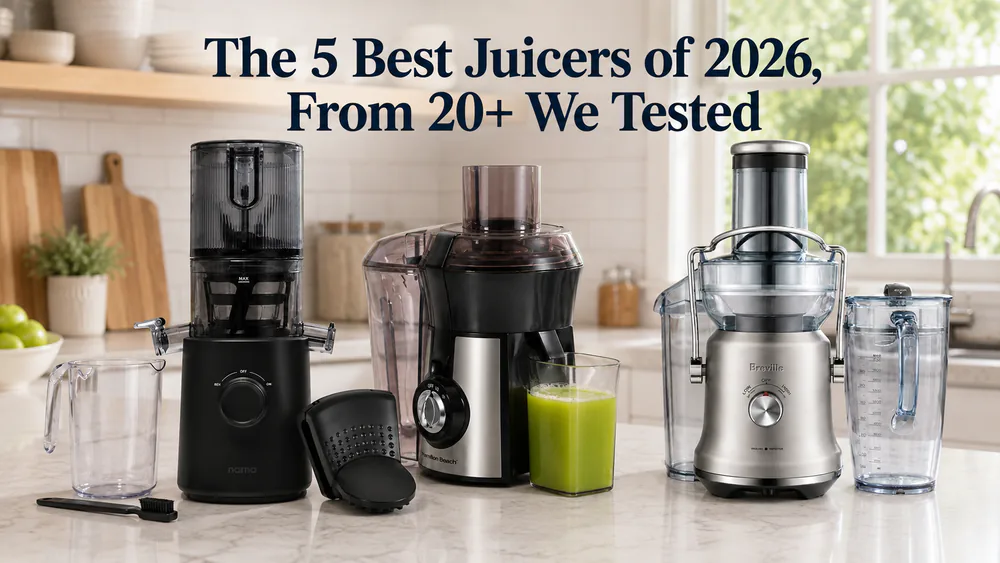
The 5 Best Juicers of 2026, From 20+ We Tested

As an Amazon Associate we earn from qualifying purchases. We may earn a commission from links on this page, at no extra cost to you. Learn more.

The 5 Best Juicers of 2026, From 20+ We Tested

Fresh juice tastes like a different food than anything in a bottle: brighter, cleaner, and gone within two days. Getting it at home comes down to one appliance, and the machine you actually use is the one that does not punish you at cleanup time.

Our test kitchen juiced pounds of apples, carrots, citrus, and leafy greens through 20+ cold press and centrifugal models over weeks of daily use. Five machines earned a place in this roundup.

We test the way home cooks live: real batches, real schedules, real cleanup, and honest notes on what breaks. The top picks at a glance, the full reviews, a comparison chart, and a buying guide built from the data we collected all follow.

Before the reviews, a quick note on method. We scored every machine on six data points: yield, pulp dryness, cleanup time, noise, motor speed, and time per batch. Yield was measured separately for leafy greens and hard produce. Two reference numbers frame the type debate. On leafy greens the centrifugal class gave back about 11.4 fl oz per pound, versus 13.8 to 14.1 oz for cold press, a gap of about 18 percent. A green juice took about 90 seconds on the fast machines; the slow machines needed about two minutes.

Our Top Picks at a Glance

RankProductBest forPriceRatingBuy
1

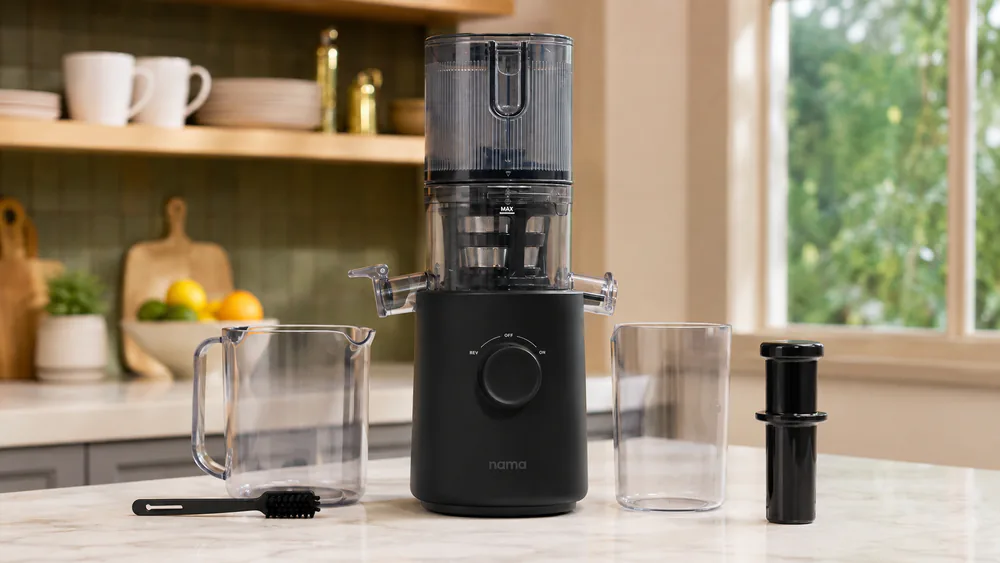
Nama J3 Cold Press Juicer

Best Overall
Most kitchens $499 4.7 View on Amazon
2

Hamilton Beach Easy Clean Juice Extractor

Best Budget
Tight budgets n/a (discontinued) 4.2 View on Amazon
3

Breville Juice Fountain Cold Plus

Best Centrifugal
Speed-first mornings $329.95 4.4 View on Amazon
4

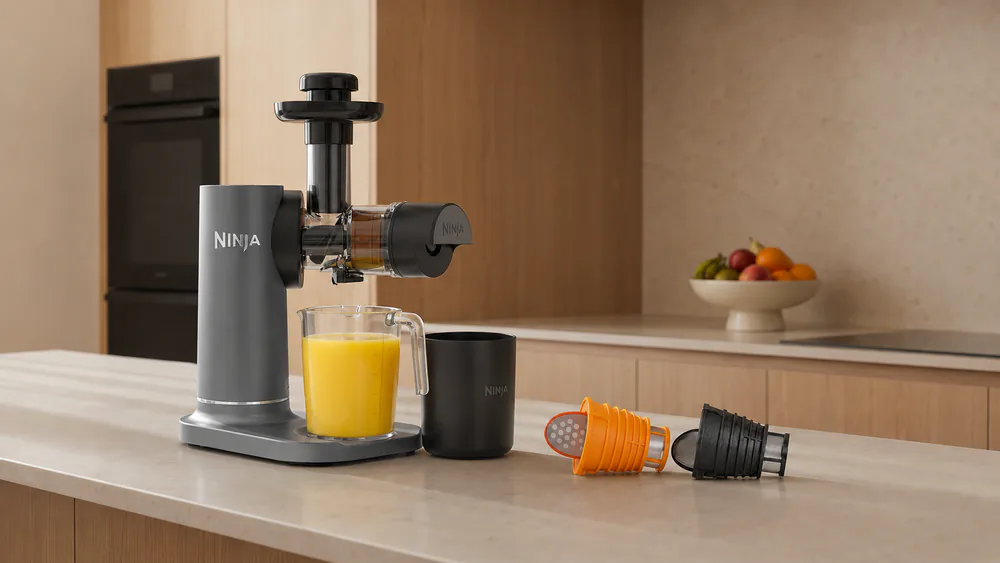
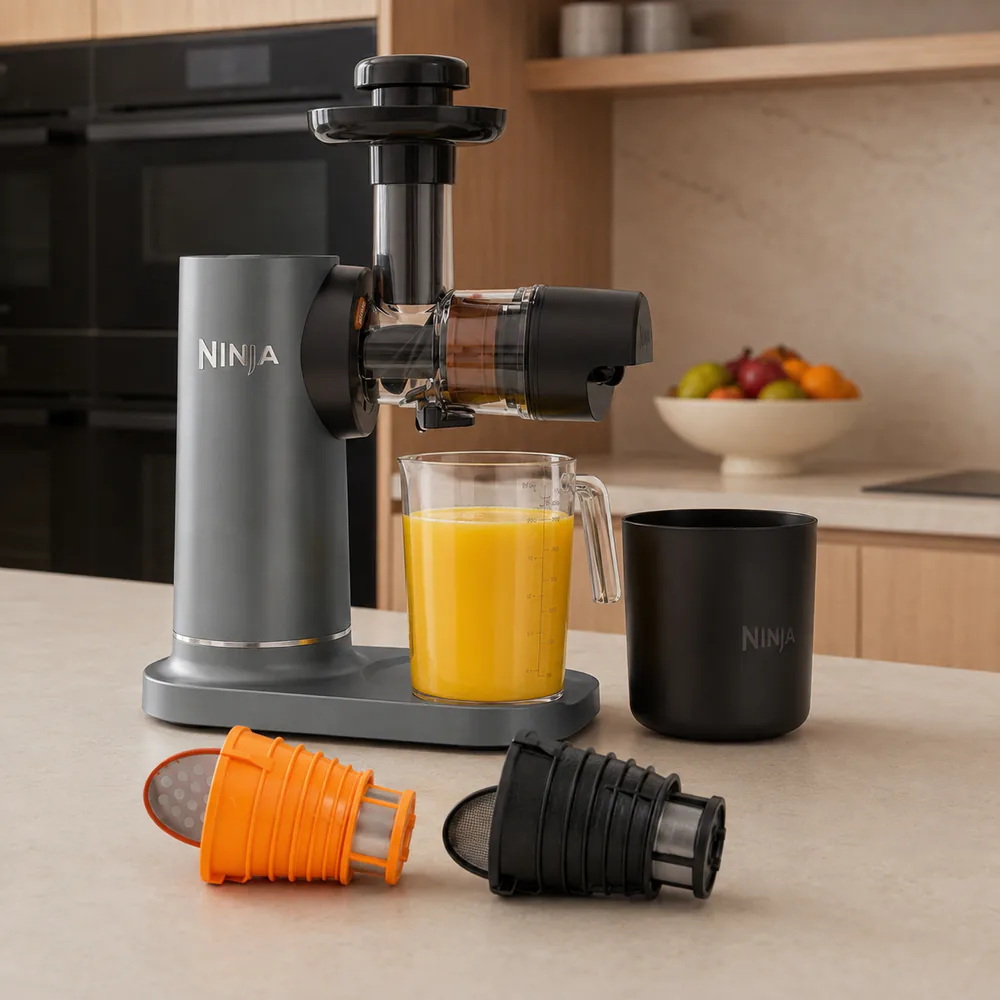
Ninja NeverClog Cold Press Juicer

Best for Leafy Greens
Green-juice drinkers $149.95 list 4.5 View on Amazon
5

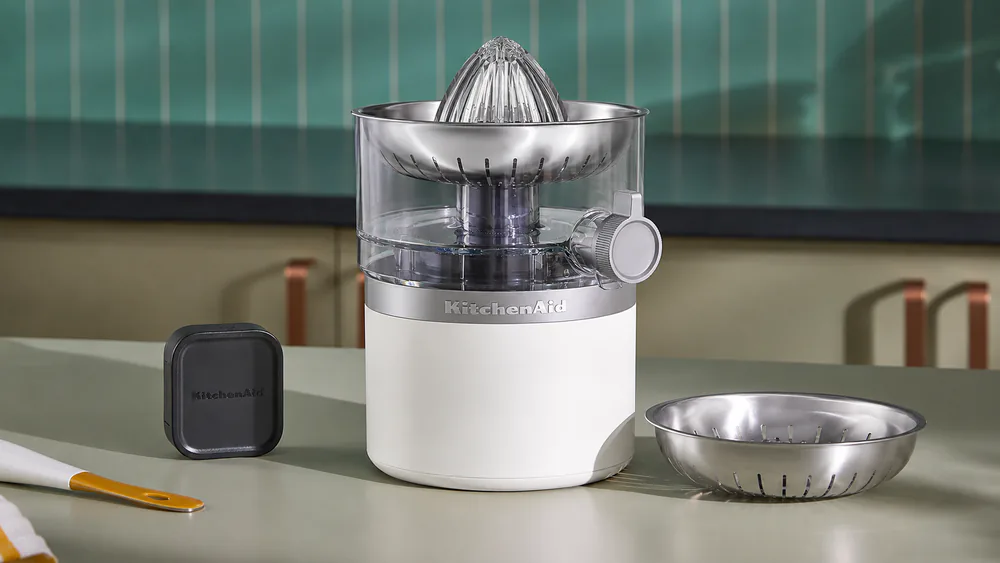
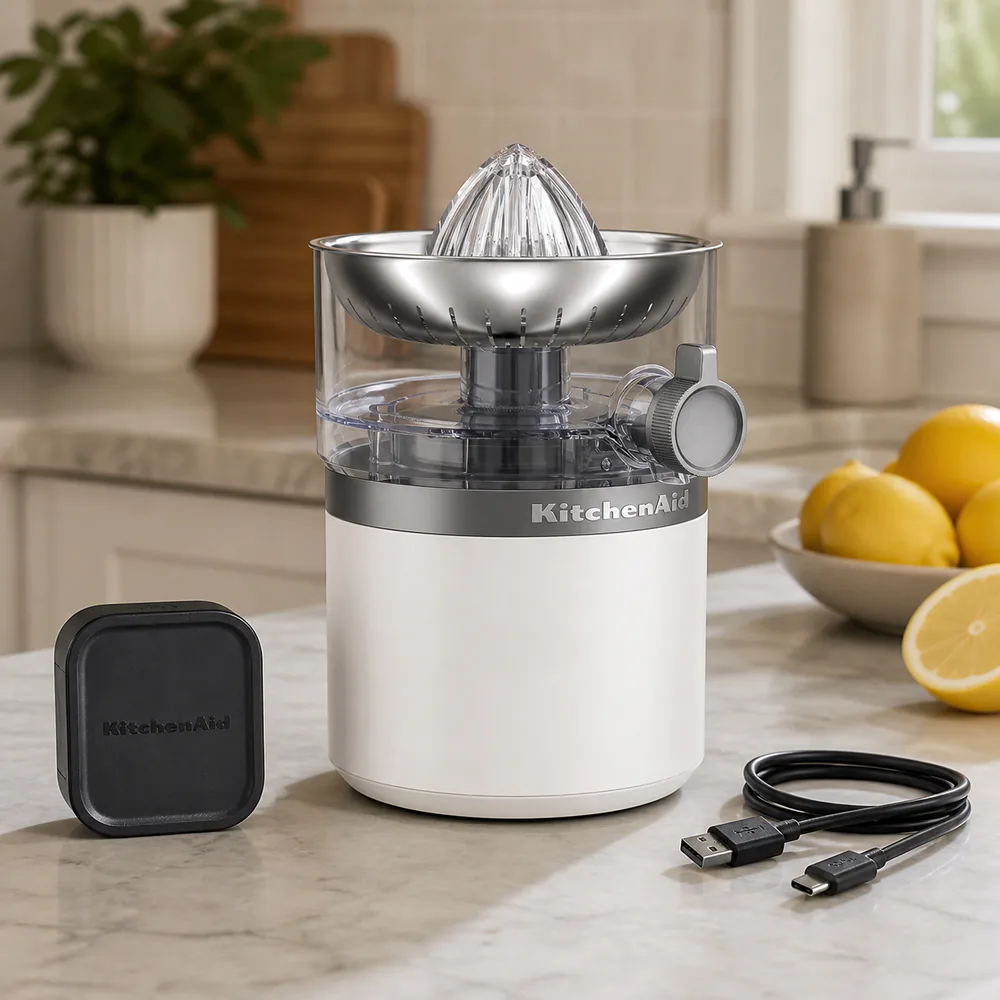
KitchenAid Go Cordless Citrus Juicer

Best Citrus
Citrus lovers $99.99 4.3 View on Amazon

We earn a commission if you make a purchase, at no additional cost to you.

See full comparison table

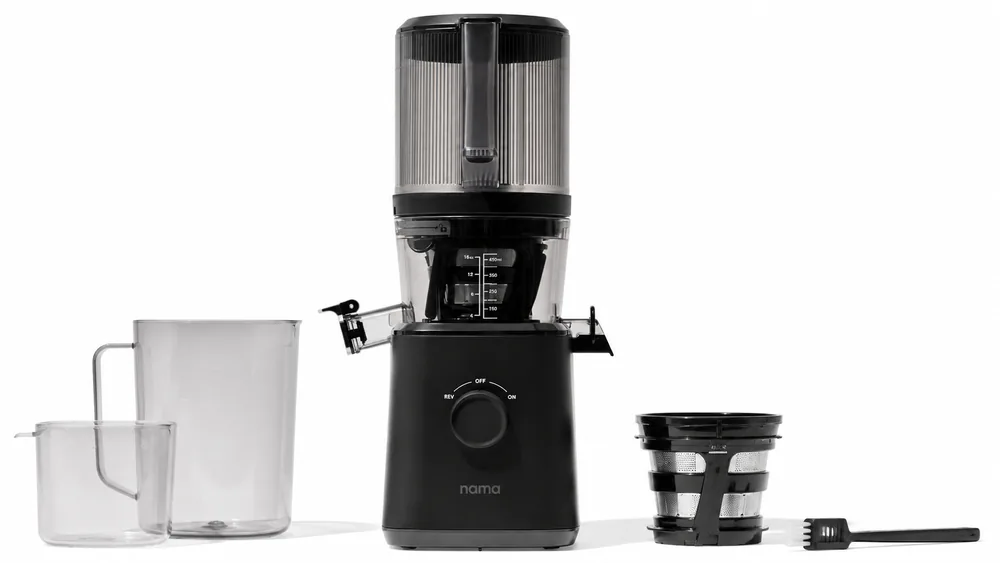
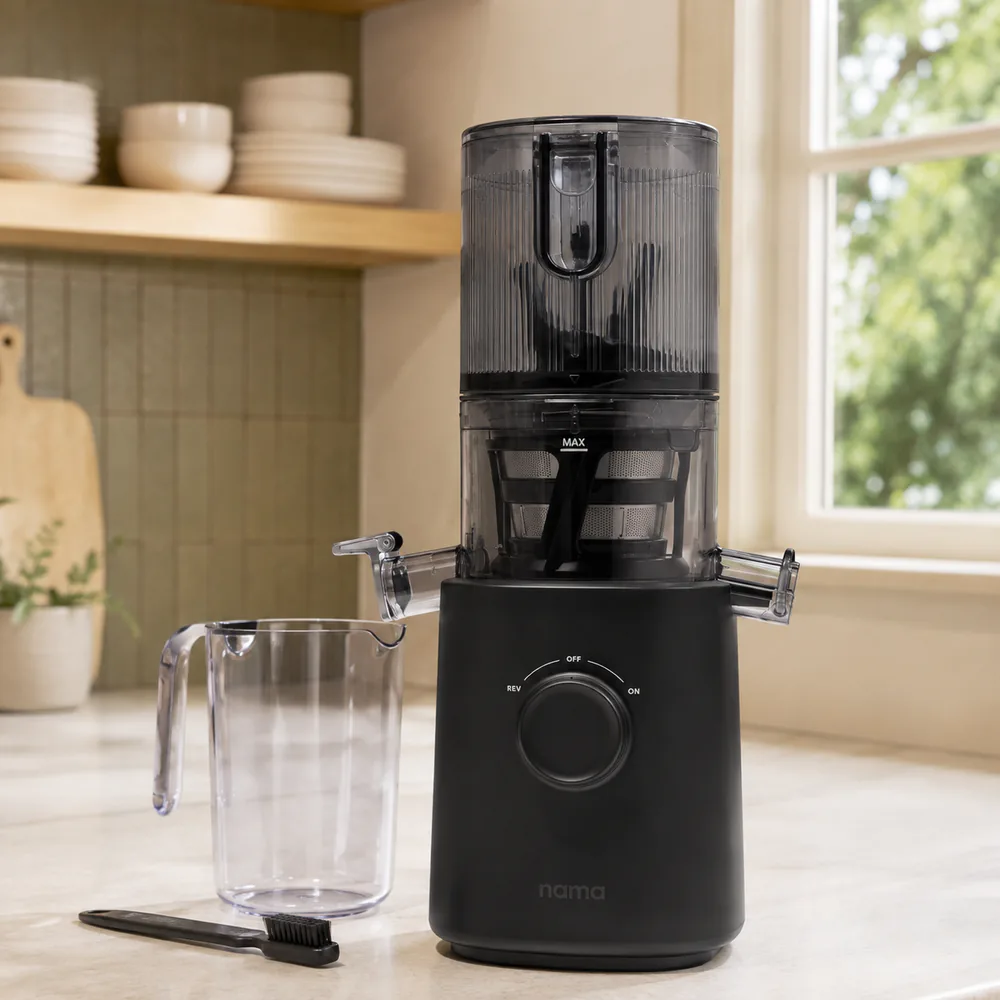
Best Juicer Overall: Nama J3 Cold Press Juicer

Nama J3 Cold Press Juicer
1

Nama J3 Cold Press Juicer

Best Overall
Check Price on Amazon
4.7/5

The J3 made the best-tasting juice for the best value in our testing, and it became the machine we reached for on weekday mornings. It is quiet for a cold press and fast for one.

Pros

  • 15-year warranty on all parts, with a 30-day satisfaction guarantee
  • Hands-free self-feeding hopper loads a full recipe
  • Under 10 lb, with dry pulp and a genuinely quiet run

Cons

  • Hand wash only, about 13 parts with an assembly learning curve
  • Downsized auger leaves a little more pulp behind than bigger machines
  • Parts service is the weak spot: lose the small pulp-outlet gasket and replacement support can take follow-up

Specifications

Type
Vertical masticating cold press
Power
130W, 50 RPM
Dimensions
8.9 x 6.5 x 15.4 in
Weight
9.7 lb
Capacity
Self-feeding hopper, about 8-16 oz per load
Warranty
15-year parts

Kale, lemon, cucumber, ginger, and celery went from whole leaves to fairly dry pulp in about two minutes. The same celery, cucumber, parsley, and orange combo produced about 9 ounces here, where an older feeder-type machine managed under 5 ounces. The self-feeding hopper takes a full recipe, so you walk away while it works. We had it disassembled and packed away in under ten minutes, though the parts are hand wash only, so we rinse within minutes. Expect a learning run on assembly, pre-cut fibrous roots like whole ginger, and yield that swings with what you feed it, 8 to 16 ounces per load.

Check the current price of the Nama J3 Cold Press Juicer on Amazon, or see the Nama J3 on Nama's site.
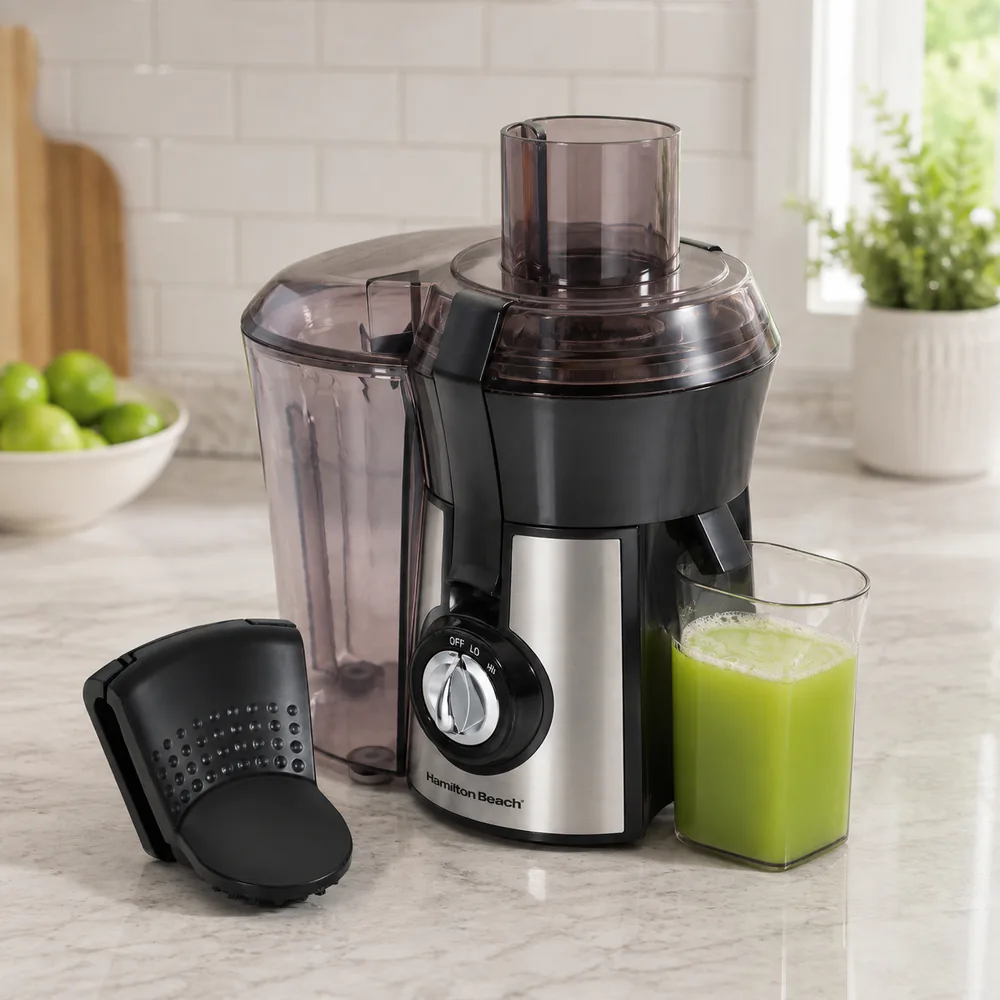
Best Budget Juicer: Hamilton Beach Easy Clean Juice Extractor

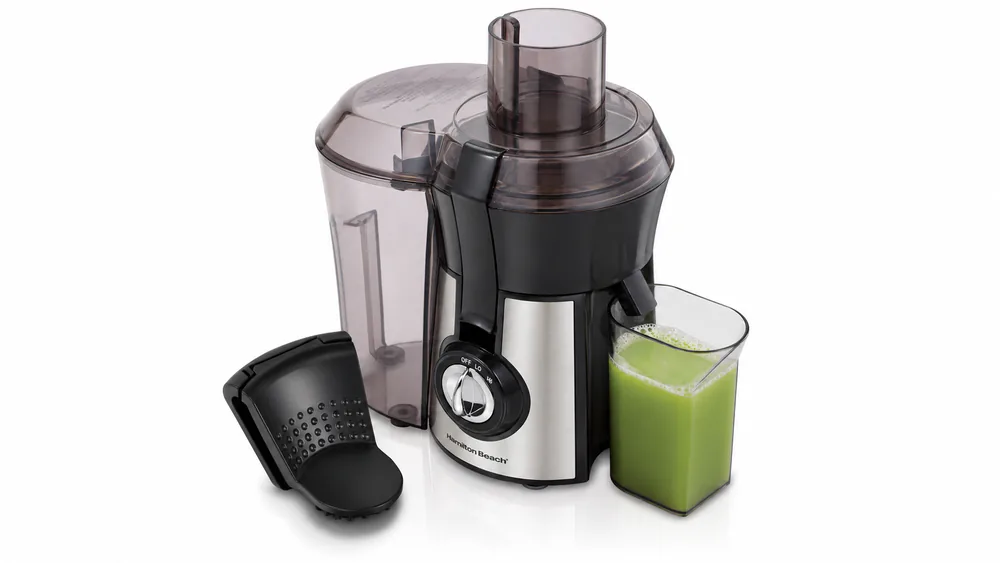
If the J3's $499 price tag gives you pause, the Hamilton Beach Easy Clean is the counterpoint. It is a centrifugal extractor that costs a small fraction and asks almost nothing of you at setup.

Hamilton Beach Easy Clean Juice Extractor
2

Hamilton Beach Easy Clean Juice Extractor

Best Budget
Check Price on Amazon
4.2/5

For a first juicer on a tight budget, this is the one we point people to. Assembly is genuinely simple, the 3-inch chute swallows a whole apple, and the 80 oz pulp bin means you are not emptying it mid-batch.

Pros

  • Extra-large 3-inch feed chute takes a whole apple
  • Dishwasher-safe parts plus the Easy Sweep cleaning tool
  • 80 oz pulp bin and a 3-year limited warranty

Cons

  • Loud, with noticeable vibration while running
  • Wetter waste than slow juicers, standard for the type
  • Being phased out, so stock and links can change

Specifications

Type
Centrifugal extractor
Power
800W dual-speed
Dimensions
14.4 x 11.5 x 7.8 in
Weight
7.8 lb (about 3.54 kg); 10.15 lb packaged
Capacity
3-inch chute, 80 oz pulp bin
Warranty
3-year limited

Three small apples nearly filled the juice cup. The machine refuses to start until it is locked on both sides, a safety interlock we appreciate. At 7.8 lb it is light for a centrifugal and easy to lift one-handed. It is loud and vibrates while it runs, and soft fruit like watermelon can squirt juice through a seam at the back. The Easy Sweep tool and dishwasher-safe parts keep the strainer quick; a bag in the pulp bin makes cleanup almost too easy. Ginger gums up the blade quickly on multi-serving batches. The dual-speed motor has a Hi for apples and carrots and a Lo for greens.

One honest warning: this exact model (67735) is being phased out, and availability varies by retailer. Hamilton Beach's current slow juicer, the 67951, is a different machine, so compare specs rather than assuming a like-for-like replacement. Buy Now at Walmart for the 67951, check the current price of the Hamilton Beach Easy Clean Juice Extractor, or read the official product page for the 67735.

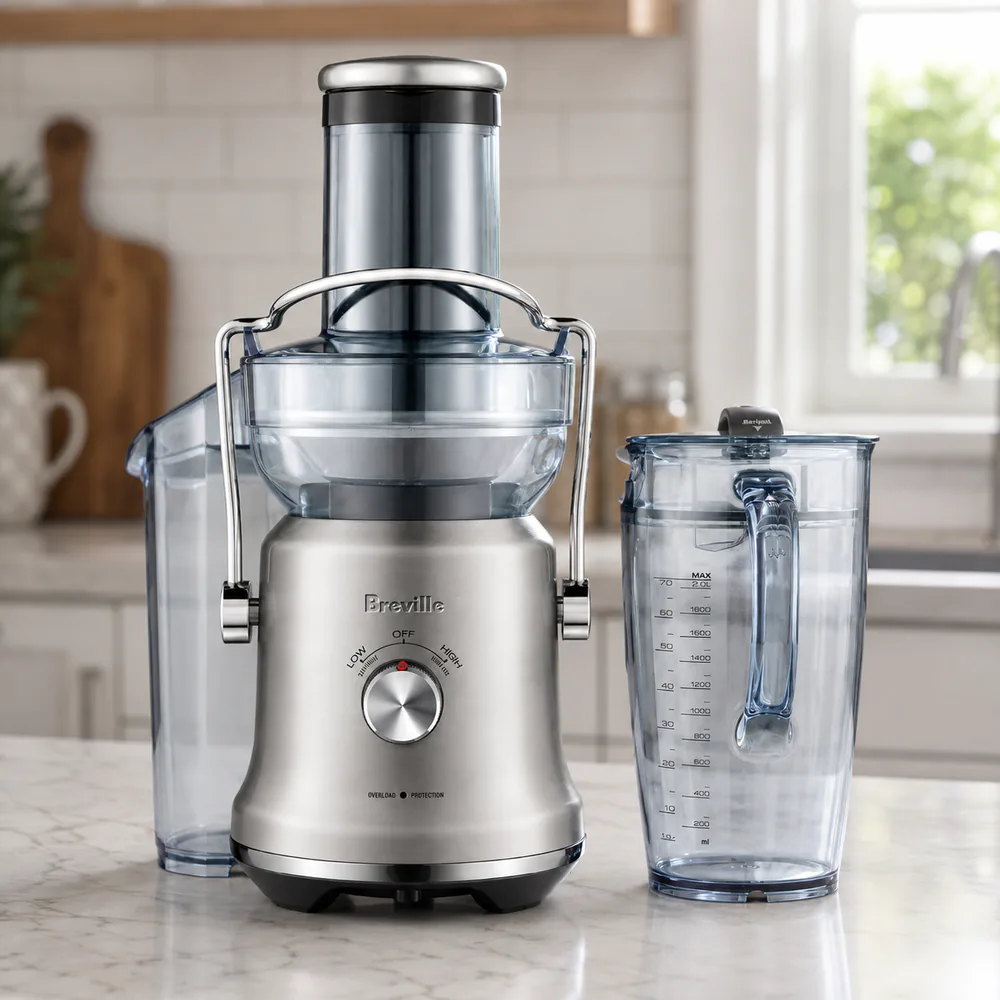
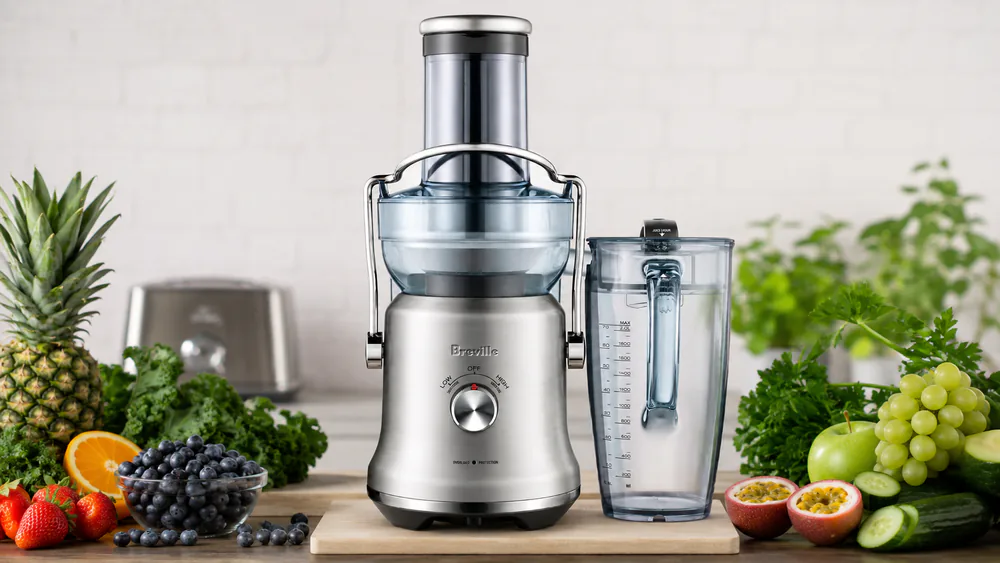
Best Centrifugal Juicer: Breville Juice Fountain Cold Plus

Where the Hamilton Beach is the budget entry point, the Breville is the centrifugal we would buy when speed is the whole point.

Breville Juice Fountain Cold Plus
3

Breville Juice Fountain Cold Plus

Best Centrifugal
Check Price on Amazon
4.4/5

If your mornings run on a timer, this is the machine that keeps up. The 3.5-inch chute swallows a whole apple, and a green juice is done in about 90 seconds, with Cold Spin keeping the juice under 80F.

Pros

  • 3.5-inch chute takes whole fruit without pre-cutting
  • Cold Spin keeps the juice under 80F
  • 70 fl oz jug with froth separator, juice keeps up to 3 days

Cons

  • Loud at high speed, the setting you use most
  • Trails cold press machines by roughly 18% on leafy greens
  • Mesh basket needs prompt scrubbing, and the drain spout leaves an ounce behind

Specifications

Type
Centrifugal
Power
1000W, two speeds
Dimensions
13.1 x 8.7 x 17.6 in
Weight
About 11 lb as tested
Capacity
70 fl oz jug, 3.9 qt pulp container
Warranty
1-year limited

The payoff is real, and so is the trade. Leafy greens gave up about 18 percent less juice than the slow machines in our pound-per-pound runs. Hard produce like carrots and apples closed that gap to a few percent. Pick it for fruit-heavy mornings, not for a kale habit. The mesh basket needs scrubbing within about five minutes of use, or the pulp dries on. The drain spout leaves about an ounce of juice behind. It is loud at high speed, the setting you use most. Durability is genuinely split in our notes: some units fail early, others run for years. The 1-year warranty matters.

Check the current price of the Breville Juice Fountain Cold Plus on Amazon, or the specs on Breville's product page.

Best Slow Juicer for Leafy Greens: Ninja NeverClog Cold Press Juicer

If the Breville is the speed pick, the Ninja NeverClog is the leafy-green pick. Its proof came at the sink: we held the pulp container upside down over the drain and not a drop fell out.

Ninja NeverClog Cold Press Juicer
4

Ninja NeverClog Cold Press Juicer

Best for Leafy Greens
Check Price on Amazon
4.5/5

This was the best leafy-green machine in our lineup, and the two Total Pulp Control filters let you choose between a little pulp and a lot.

Pros

  • Best leafy-green yield of the roundup, with very dry pulp
  • NeverClog auger plus a reverse button clears rare jams
  • All juice-contact parts are dishwasher safe, with two pulp filters

Cons

  • Fine mesh strainer needs prompt rinsing and brushing
  • Squeaks loudly on dense produce unless pre-chopped
  • Plastic chute wear at about six months, and a 12-minute duty cycle

Specifications

Type
Masticating (cold press)
Power
150W, max 116 RPM
Dimensions
12.11 x 7.15 x 15.93 in
Weight
About 7.9 lb
Capacity
24 oz jug, 36 oz pulp container
Warranty
1-year limited

Kale and spinach went through without a jam. The NeverClog auger lived up to its name on everything we fed it, and the reverse button cleared the rare block. It crushed lemon and pomegranate seeds into the pulp without jamming; strawberries and tomatoes needed extra drain time. On dense produce like carrots and beets it squeaks loudly unless you chop them smaller, so we fed 1-to-2-inch pieces, alternating hard and soft. The fine mesh strainer demands prompt rinsing and brushing after every use, and pulp does not always fully enter the pulp container. One long-term unit developed a crack on the plastic chute near the peel spout at about six months. The chute assembly runs about $70, and Ninja replaced it free under warranty.

The list price is $149.95, and street pricing swings with sales, with recent lows near $100. Check the current price of the Ninja NeverClog Cold Press Juicer on Amazon.

Best Citrus Juicer: KitchenAid Go Cordless Citrus Juicer

Twenty-five oranges in under fifteen minutes, about 28 oz of juice, and only rind left behind. That showing is why the citrus pick this year is a cordless machine, not another full-size juicer.

KitchenAid Go Cordless Citrus Juicer
5

KitchenAid Go Cordless Citrus Juicer

Best Citrus
Check Price on Amazon
4.3/5

A cordless citrus juicer that runs off a 12V MAX battery, the KitchenAid Go replaces a full-size machine when citrus is most of what you juice.

Pros

  • Cordless, so it works at the table or the patio
  • Only 3 parts to wash, all dishwasher safe
  • Auto-reversing reamer extracts every drop and leaves only rind

Cons

  • Battery sold separately, so budget for it
  • Needs regular charging; no power cord as a fallback
  • Small citrus needs a firm grip, and the 16 oz bowl runs small for a crowd

Specifications

Type
Cordless citrus reamer
Power
12V MAX lithium-ion battery (sold separately)
Dimensions
10.35 x 7.87 x 6.46 in
Weight
About 4 lb
Capacity
16 oz reservoir bowl
Warranty
1-year limited (battery separate)

There is no power button. You press fruit onto the auto-reversing reamer, and it spins, changes direction, and spins again. Small citrus like lemons needs a firm grip. Only three parts to wash, all dishwasher safe. It wobbles slightly with off-center pressure and needs regular charging. And here is the gotcha: the battery is sold separately for about $59. The 16 oz reservoir bowl suits a household of two but runs small for a crowd.

Check the current price of the KitchenAid Go Cordless Citrus Juicer on Amazon, or the specs on KitchenAid's product page.

Juicer Comparison Chart

Street prices reflect mid-August 2026 and swing around major sale events.

ProductTypePowerYield/hopperCleanupPrice rangeRating
Nama J3 Cold Press Juicer Masticating (cold press) 130W, 50 RPM Self-feeding hopper, 8-16 oz per load Rinse and brush, hand wash $499 4.7
Hamilton Beach Easy Clean 67735 Centrifugal 800W dual-speed 3-inch chute, 80 oz pulp bin Dishwasher-safe parts, Easy Sweep tool n/a (discontinued) 4.2
Breville Juice Fountain Cold Plus Centrifugal 1000W dual-speed 3.5-inch chute, 70 fl oz jug Dishwasher-safe parts, mesh needs prompt scrub $329.95 4.4
Ninja NeverClog Cold Press Juicer Masticating (cold press) 150W, max 116 RPM 24 oz jug, 36 oz pulp, 2 filters Dishwasher-safe parts, strainer needs brushing $149.95 list 4.5
KitchenAid Go Cordless Citrus Juicer Cordless citrus reamer 12V battery (sold separately) 16 oz bowl, auto-reversing reamer 3 dishwasher-safe parts $99.99 4.3

Other Juicers We Tested

Eight more machines completed the field. Each did enough right to earn a note, and each has a reason it did not make the top five.

6
Kuvings Whole Slow Juicer

Kuvings Whole Slow Juicer

4.1

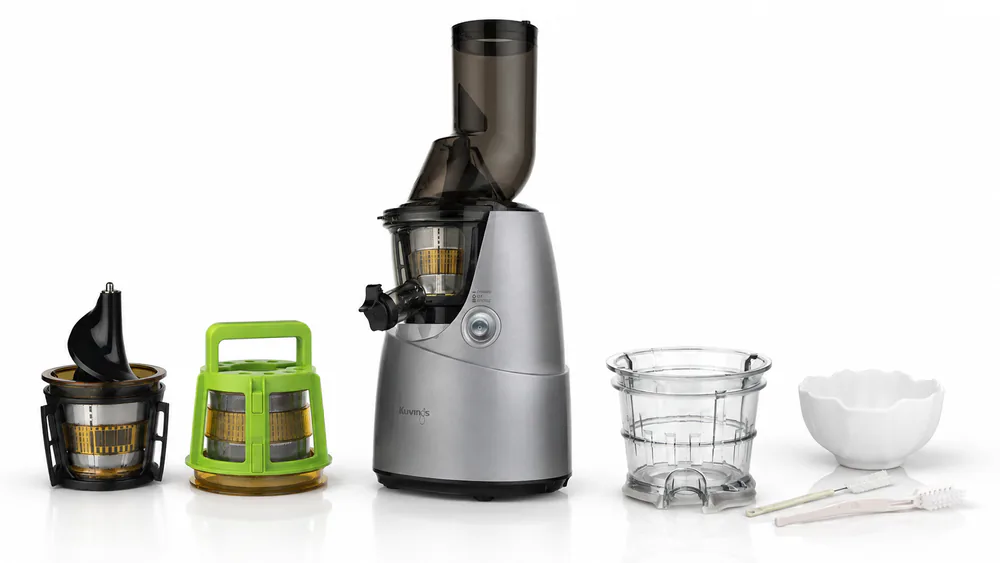
A 3-in-1 slow juicer that also does sorbet and smoothies, quiet enough for midnight batches and backed by a 10-year warranty; plastic-part durability kept it out of the top five.

about $400 Check Price
7
Hurom H70 Easy Clean Slow Juicer

Hurom H70 Easy Clean Slow Juicer

4.2

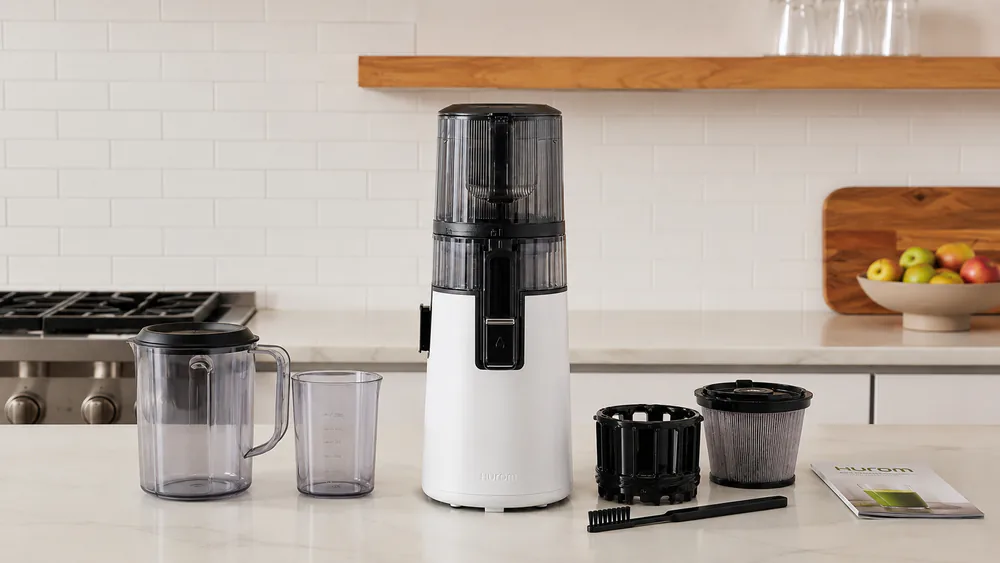
A strainer-free two-part design with no mesh filter to scrub, and components that spray clean in under a minute; the juice comes out thick with pulp, and disassembly can fight back.

about $530 to $650 Check Price
8
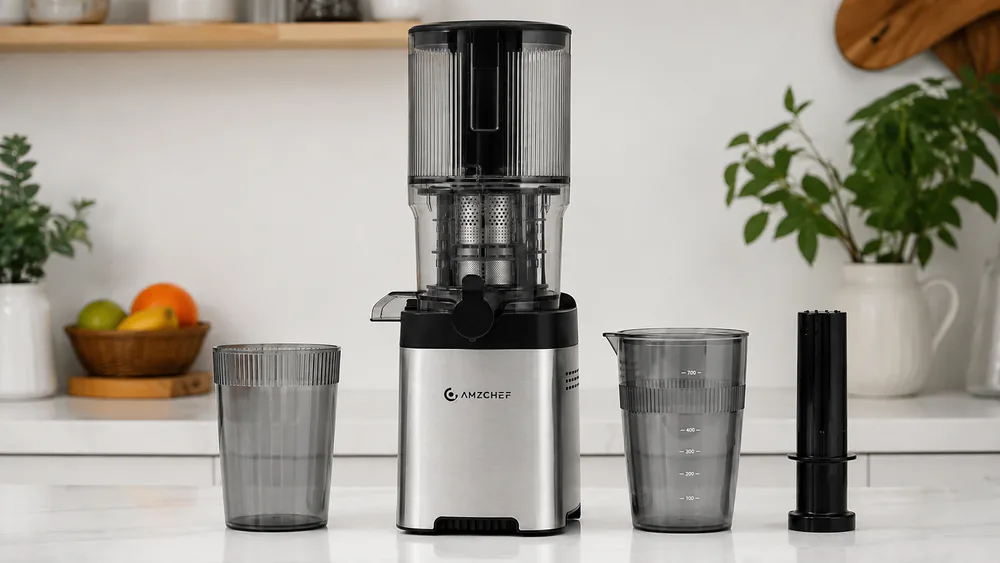
AMZCHEF Cold Press Juicer ZM1902

AMZCHEF Cold Press Juicer ZM1902

3.9

A vertical cold press with a big mouth chute and easy rinse-and-air-dry cleanup for well under $150; durability is a gamble and warranty parts can take weeks to arrive from overseas.

about $70 to $120 Check Price
9
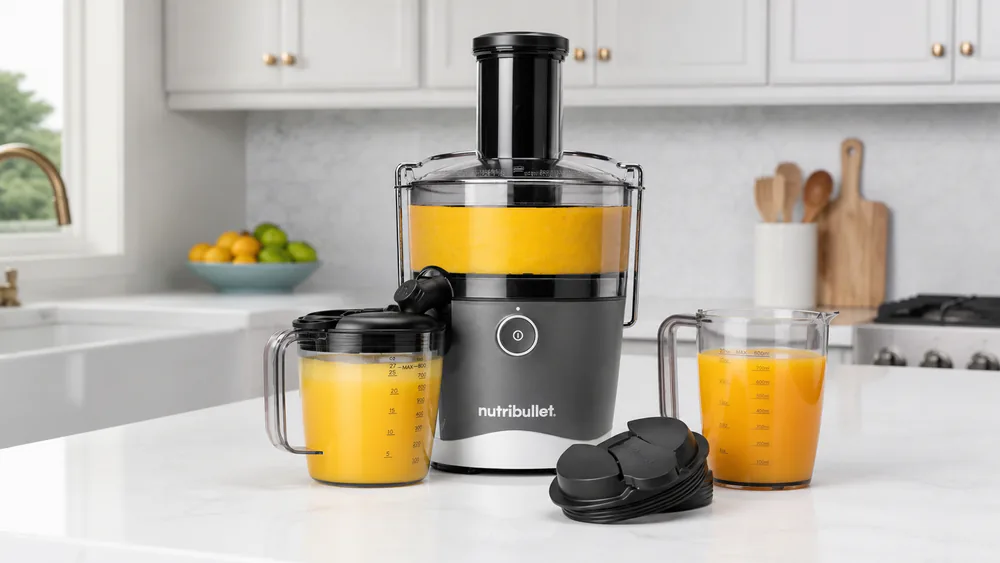
Nutribullet Juicer

Nutribullet Juicer

3.8

An 800W centrifugal with a 27 oz sealing pitcher that stores juice up to 48 hours; it is big and tall on a small counter, and durability did not convince us.

about $80 Check Price
10
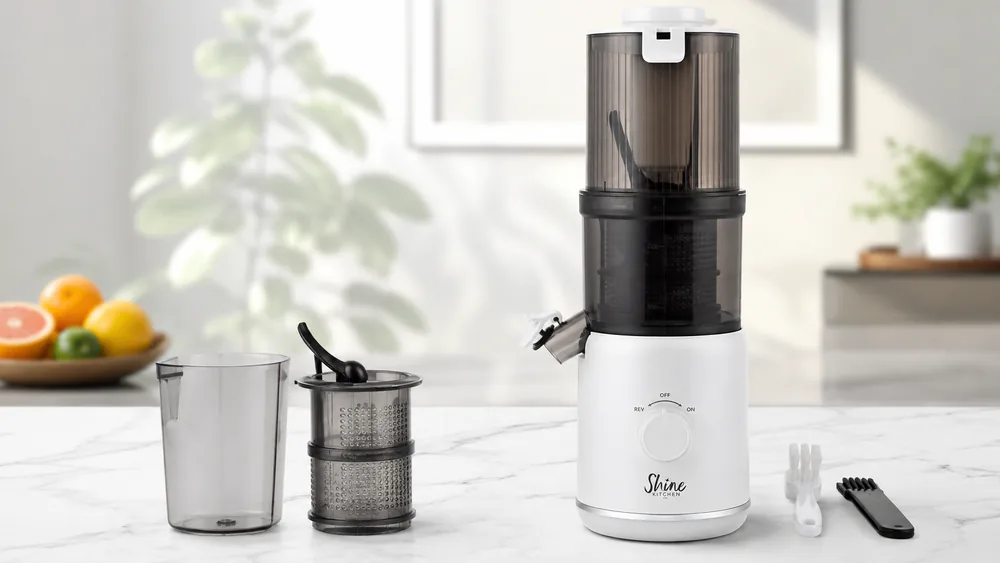
Tribest Shine Compact Multi-Batch Juicer

Tribest Shine Compact Multi-Batch Juicer

3.2

A hands-free compact slow juicer that fits under cabinets in about 5 inches of depth, but breakage and disassembly friction kept it off our list.

$149.95 Check Price
11
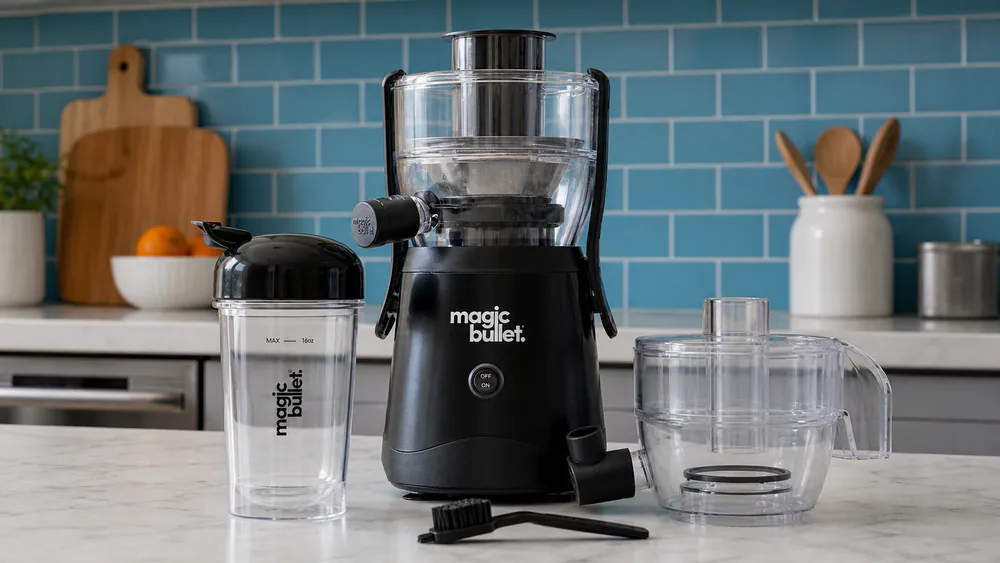
Magic Bullet Mini Juicer

Magic Bullet Mini Juicer

4.0

A 400W single-serve centrifugal with a 16 oz to-go cup, ideal for quick single glasses; not the machine for leafy greens or heavy daily use.

about $45 Check Price
12
Nama J2 Cold Press Juicer

Nama J2 Cold Press Juicer

4.6

The J3's bigger sibling: load a full recipe and walk away, 16 to 32 oz per hopper load, about double the J3's capacity, same 15-year warranty.

about $599 Check Price
13
Cuisinart CSJ-300 Easy Clean Slow Juicer

Cuisinart CSJ-300 Easy Clean Slow Juicer

3.8

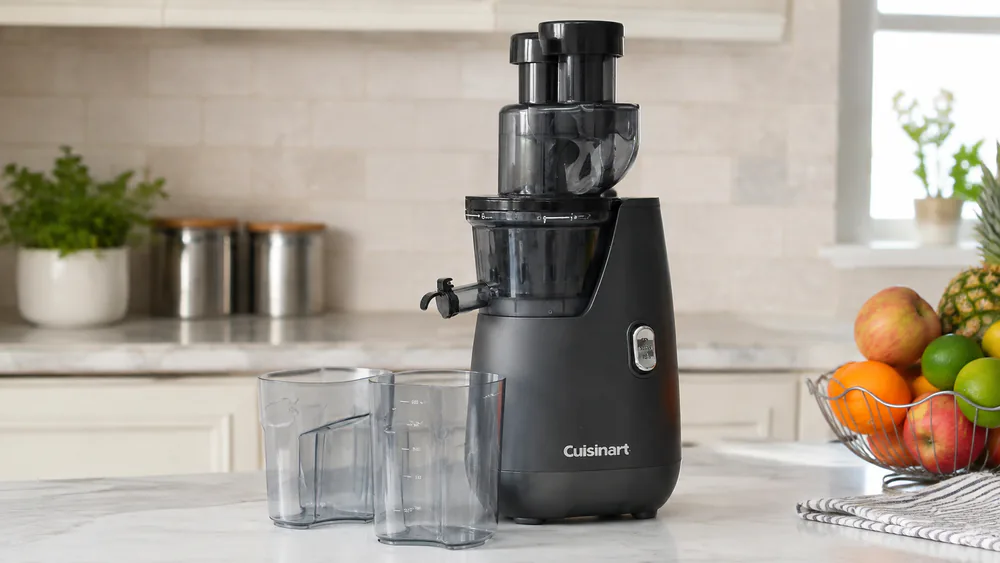
A quiet masticating juicer with very dry pulp and a mesh-free filter; a juice bowl that cracked after about six weeks of daily use and hard-to-find parts kept it off the list.

about $140 to $170 Check Price

Before you buy, official pages are worth a look. Start with the Hurom H70, the Nama J2 on Nama's site, or the Kuvings Whole Slow Juicer at Williams-Sonoma. The Nutribullet Juicer and the Tribest Shine pages are there too.

How We Tested Juicers

We evaluated 20+ juicers for this guide, buying every machine at retail, and we do not accept money from brands to feature a product. Every unit ran the same menu over weeks of daily use. We fed it apples and carrots for hard produce, leafy greens for yield, citrus for speed, and soft fruit for the messy stuff.

Durability is the part of testing that spec sheets miss. We logged what broke or wore over the weeks: a crack on a plastic chute, a gasket that changed the cleanup routine, parts that never arrived. We also checked whether replacement parts exist, because a juicer you cannot repair is a juicer you replace.

Our 20+ machine sample is in line with the big testing labs. Consumer Reports juiced 10 pounds of produce across eight machines, Serious Eats has run 19, and Food & Wine more than 50.

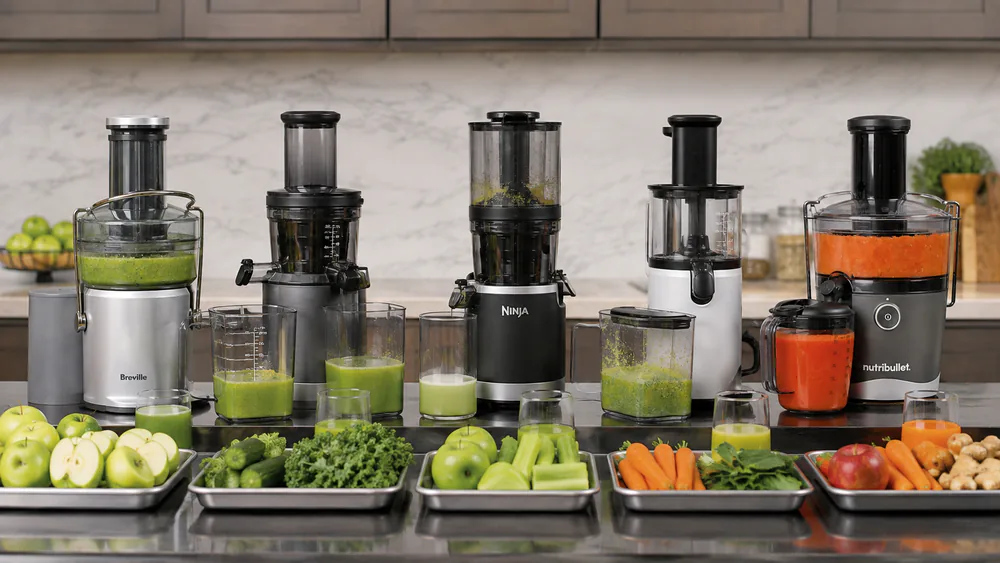
Our test bench with five juicers lined up mid-evaluation, trays of apples, carrots, and leafy greens at different stages of juicing.
Every unit ran the same menu: apples, carrots, citrus, and leafy greens.

What to Look for When Buying a Juicer

Every machine on this list turns an orange into juice. Five specs separate a keeper from a counter ornament, in roughly this order.

Motor power and speed

Speed is the first fork in the road. Centrifugal models spin in the thousands of RPM, so a glass is done in seconds. Cold press machines turn at 40 to 80 RPM, crushing instead of shredding. Wattage tells you less than speed: a 130W cold press can out-yield an 800W centrifugal on leafy greens. Buy higher speed for faster batches, lower speed for higher yield from greens.

Chute size

A wider chute means less pre-cutting, and pre-cutting is where juicing momentum dies. Our centrifugal picks take whole apples without pre-cutting, while many slow juicers want 1-to-2-inch pieces. On busy mornings, chute width beats almost every other feature.

Ease of cleaning

Cleanup decides whether a juicer survives its first month. Count the parts and check what is dishwasher safe before you buy. Mesh filters demand prompt rinsing or they dry into a scrubbing job. That is why mesh-free designs like the Hurom H70 exist. Pulp dries fast, so rinse within minutes of finishing.

Tip. Rinse the strainer and filters within a few minutes of finishing and dry them upside down. Dried pulp is the single biggest reason juicers end up in the cabinet.

Noise level

Noise is the spec nobody lists. The loudest unit we measured was loud enough to dominate a kitchen; the quietest cold press units whisper in comparison. If you juice before the household wakes, or in an apartment, noise moves up your list. Slow machines win this category almost every time.

Warranty and price

Warranties run from one year (Breville, Ninja, KitchenAid) to fifteen (Nama, Hurom), a spread that tells you how the brand views the machine's lifespan. Prices run from about $45 for a single-serve centrifugal to about $650 for a flagship slow juicer. The sweet spot sits between $100 and $500. Read warranty terms as carefully as wattage: 15 years says more about build confidence than any spec sheet.

Note. Don't throw the pulp out. It makes a fine base for vegetable soup, muffins, or compost, and lining the pulp bin with a bag makes the whole process faster.

Centrifugal vs. Masticating vs. Cold Press Juicers: What's the Difference?

The buying-guide specs above separate keepers; the type underneath them decides the trade-off. Centrifugal juicers shred produce with a fast-spinning blade and strain it through a mesh basket. They finish a glass in seconds and take whole fruit through wide chutes. They cost less, but the spinning aerates the juice, foams more, and leaves more behind in leafy greens.

At retail, cold press and masticating describe the same machines: slow auger designs that crush and press at 40 to 80 RPM. They yield more, especially from fibrous greens, foam less, and run quieter. They oxidize slower, in exchange for slower throughput and more parts to wash. Speed and convenience against yield and gentleness, in one line.

Which type for which fruit? Whole apples, carrots, and morning speed point to a centrifugal like the Breville. Leafy greens, wheatgrass, and maximum yield point to a slow machine like the Ninja NeverClog. Citrus is its own category: a dedicated reamer gets more from oranges and lemons than either full-size type.

One health note. A 2025 review in Nutrition Bulletin found that turning fruit into 100% juice reduces fiber, vitamins, and antioxidants. It also converts intrinsic sugars into free sugars and lowers satiety versus whole fruit, while whole-fruit fiber and polyphenols feed the gut microbiome. The authors argue dietary guidance should emphasize whole fruit over juice. That makes whole fruit the baseline and juice the treat.

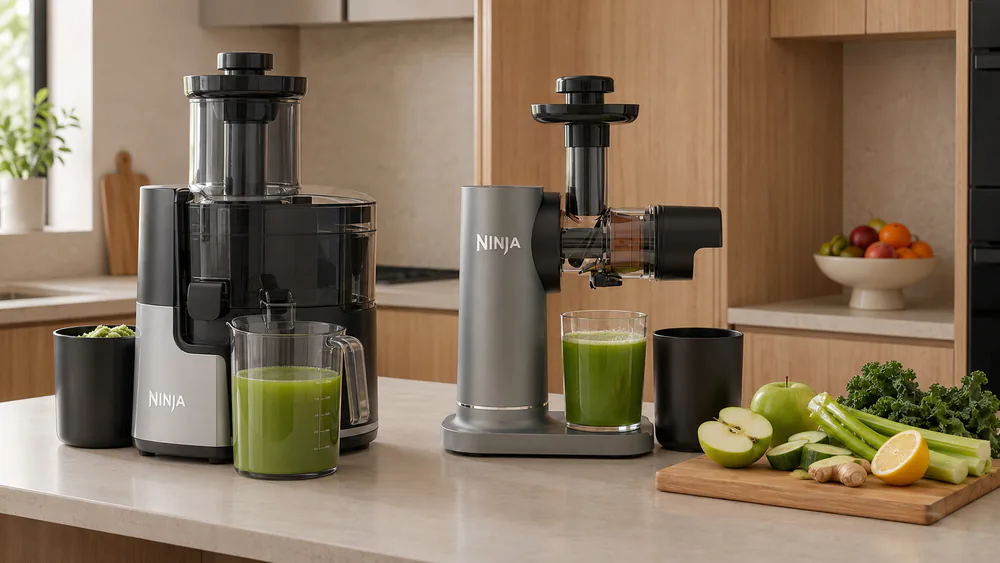
A centrifugal juicer and a vertical masticating cold press juicer side by side, showing their different extraction paths.
Centrifugal juicers shred at high speed; cold press machines crush and press.

Why Trust Mr. Kitchen Adviser?

Independence is what makes the health note above worth reading. Mr. Kitchen Adviser is an independent kitchen-gear testing site, and the team behind this guide tests the way home cooks live. For this roundup we evaluated 20+ juicers, from a $45 single-serve centrifugal to a $650 slow juicer. Each machine was scored on the same six points, plus warranty terms, over weeks of daily use. The rankings are ours alone; a commission has never changed a verdict.

Longevity is the lens we bring to every machine we review. A crack in a plastic chute at six months. A bowl that splits after daily use. A gasket that changes the whole cleanup routine. Those observations tell us more than any spec sheet.

Juicer FAQ

Is cold-pressed juice healthier than centrifugal juice?

Both extract the same vitamins; the difference is what gets left behind and how fast the juice ages. Cold press machines yield more from leafy greens and oxidize slower, so the juice keeps its color and flavor longer in the fridge. The health gap between the types is small; the bigger decision is juice versus whole fruit. The Mayo Clinic notes that juicing keeps most vitamins and phytonutrients but loses the fiber that aids fullness and digestion.

Do juicers destroy nutrients?

No, but time does the damage. Fast centrifugal spinning adds heat and air, breaking down delicate vitamins; a slow machine is gentler. Oxidation keeps working, so drink juice the day you make it. There is no strong proof that juice cleanses remove toxins or produce lasting weight loss. The trade you cannot undo is fiber, left behind either way, and fruit-heavy juice is high in sugar.

What's the best juicer for leafy greens?

A masticating or cold press machine, without much debate. Slow crushing extracts more from fibrous leaves than centrifugal spinning, which is why the Ninja NeverClog had the driest pulp and the best green yield in this roundup. If kale and spinach are the point of your juicer, skip the centrifugal aisle.

How do I clean a slow juicer?

Rinse and brush every part right after you finish; dried pulp turns a five-minute rinse into a scrubbing job. The Nama J3 runs about thirteen hand-wash-only pieces, while the Ninja's parts are dishwasher safe but its fine strainer needs prompt brushing. If scrubbing mesh is your pet peeve, look at strainer-free designs like the Hurom H70, which spray clean in under a minute.

What's the best juicer for beginners?

Start with a centrifugal with a wide chute, like the Breville Juice Fountain Cold Plus: whole fruit without pre-cutting, fast batches, and no assembly puzzle. The budget alternative, the Hamilton Beach, costs far less and is simple to assemble, in exchange for noise and wetter pulp. If you want to start slow, the Nama J3 is the friendliest machine we tested, but it is a serious first-juicer budget.

The Bottom Line

Most kitchens should start with the Nama J3 if juice is a daily habit and the best glass for the money matters. If speed beats yield, the Breville Juice Fountain Cold Plus is the faster path to whole apples. If greens are the point, take the Ninja NeverClog. Citrus-only households can skip full-size juicers and take the KitchenAid Go, battery included in the mental math.

Two practical notes. The Hamilton Beach budget pick is being phased out. If it is out of stock, treat the brand's current slow juicer as a different machine. And budget for a cleanup habit: the juicer that rinses out in minutes is the one you will still own next year.

One pattern held across all 20+ machines. The winners were quiet, quick to clean, and backed by warranties that matched their price. Buy along those three lines and you will land on the same picks we did.

Read next

Ready to upgrade your kitchen?

Start with the pick that matches how you juice, from cold press to cordless citrus.