
Helping you create a kitchen you love.

Knives

Best Kiwi Chef Knife: Which Model Should You Choose?

As an Amazon Associate we earn from qualifying purchases. We may earn a commission from links on this page, at no extra cost to you. Learn more.

Best Kiwi Chef Knife: Which Model Should You Choose?

A Kiwi chef knife is a thin, light, stainless Thai kitchen knife with a wooden handle, built for quick vegetable and boneless-meat prep rather than heavy work. Unlike Japanese knives, Kiwi knives are not Japanese-made, but they share the thin, agile feel that makes slicing so pleasant.

In our kitchen the pattern is clear: the thin blade glides through onions and tomatoes, and asks for care in return. Four models matter here: No. 21, No. 22, No. 171 and No. 172.

Which Kiwi Chef Knife Should You Buy?

If you want one Kiwi to do most of your cooking, buy the No. 21. Its larger tapered, pointed blade moves easily through vegetables and boneless meat, and it handles general prep better than the others.

Choose the No. 22 if you mostly cut vegetables and like a broad blade that carries chopped food across the board. Choose the No. 171 for small hands and fine fruit work, or the No. 172 for compact rectangular slicing.

None of them replaces a sturdy main chef's knife for large squash or bones. Treat them as light, sharp prep tools.

Note. Size labels are inconsistent across the range. Sellers round blade lengths differently, so check the blade measurement separately from overall length before you order.

Kiwi Chef Knife Models Compared

ProductBlade profileBlade length (not overall)HandleIntended taskLimitationPack contents
Kiwi No. 21 Larger tapered pointed blade About 7.5 to 8 inches; labels differ Wood General vegetable and boneless-meat prep Thin blade needs protection from bending Single knife
Kiwi No. 22 Larger broad rectangular blade About 7.5 inches; sometimes rounded to 8 Natural wood Vegetable push cuts and moving chopped food Handle comfort; possible factory burr Single knife
Kiwi No. 171 Compact pointed flexible blade About 6.25 to 6.5 inches; 28cm overall Double-riveted wood Small fruit, vegetables and precise tip work Flexible tip; rough or loose handle possible Single knife
Kiwi No. 172 Compact rectangular blade About 6.5 inches Double-riveted wood Compact vegetable slicing and chopping Flexible blade and basic handle finish Single knife

How We Evaluated the Kiwi Knives

We assess how readily each knife takes an edge on a stone, how it feels when cutting vegetables, how its handle holds up, and how much its blade flexes. The evaluation is qualitative, with no numeric scores. Steel grade and hardness are not established for these four listings, so we make no claims about them.

Kiwi Chef Knife Reviews

Kiwi No. 21

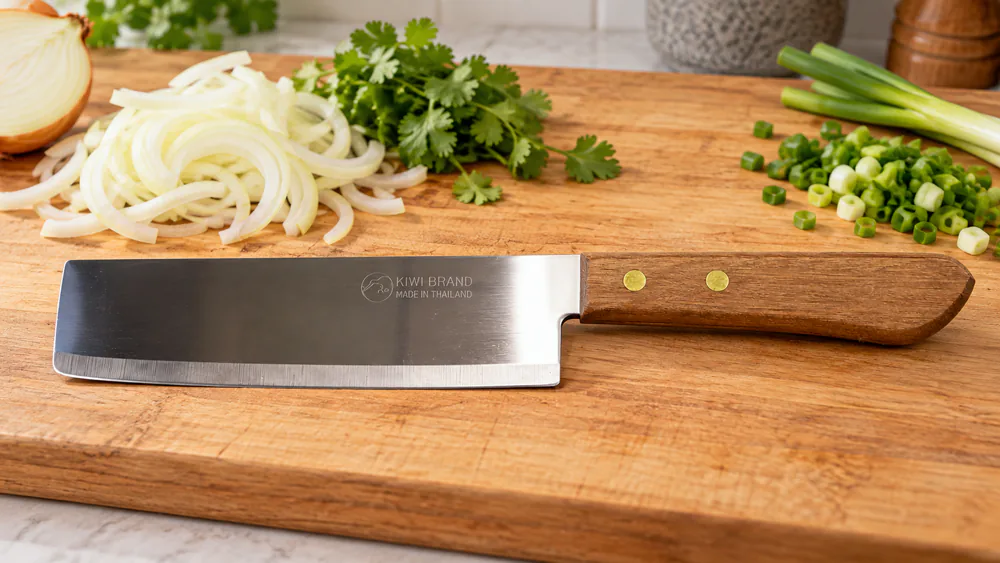
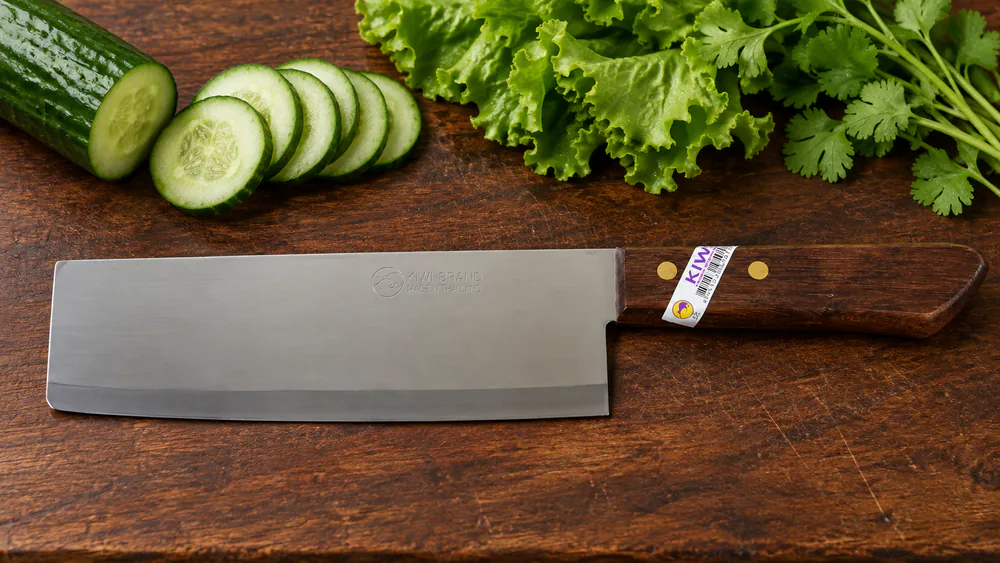
Kiwi No. 21 pointed tapered chef knife with wooden handle lying flat on a wooden cutting board
Kiwi No. 21
1

Kiwi No. 21

Best All-Purpose Kiwi
Check Price on Amazon

The No. 21 is the Kiwi we would hand to someone who wants a single knife. It moves easily through vegetables and boneless meat, slices tomatoes thinly, and its tapered shape suits general preparation. Sharpening it is forgiving, which helps because the edge wants regular care.

The catch is that the thin blade can bend in a knife bag without protection, and it needs more frequent attention than some cooks want to give it.
Pros

  • Tapered pointed shape handles general prep
  • Takes a fresh edge readily on a stone
  • Slices tomatoes thinly and chops fine vegetables well

Cons

  • Thin blade can bend without a guard
  • Needs regular honing to stay at peak sharpness

Kiwi No. 22

Kiwi No. 22
2

Kiwi No. 22

Best for Vegetable Prep
Check Price on Amazon

The No. 21 has a pointed blade for general prep, while the No. 22 suits forward push cuts and offers more blade height than a compact utility knife. It makes quick work of cucumbers, greens and celery, though carrots take more effort, and the thin blade can still wedge in dense carrots and potatoes.

Expect a little tuning. A factory wire burr can need deburring before it cuts cleanly, and the original handle can feel uncomfortable enough that some cooks reshape it. The wooden handle can also crack while the blade stays usable.

Pros

  • Broad blade suits push-cutting vegetables
  • More blade height than a compact utility knife
  • Quick through cucumbers, greens and celery

Cons

  • Can arrive with a stubborn wire burr
  • Wedges in carrots and potatoes
  • Handle comfort and cracking are weak points

Kiwi No. 171

Kiwi No. 171
3

Kiwi No. 171

Best for Small Hands
Check Price on Amazon

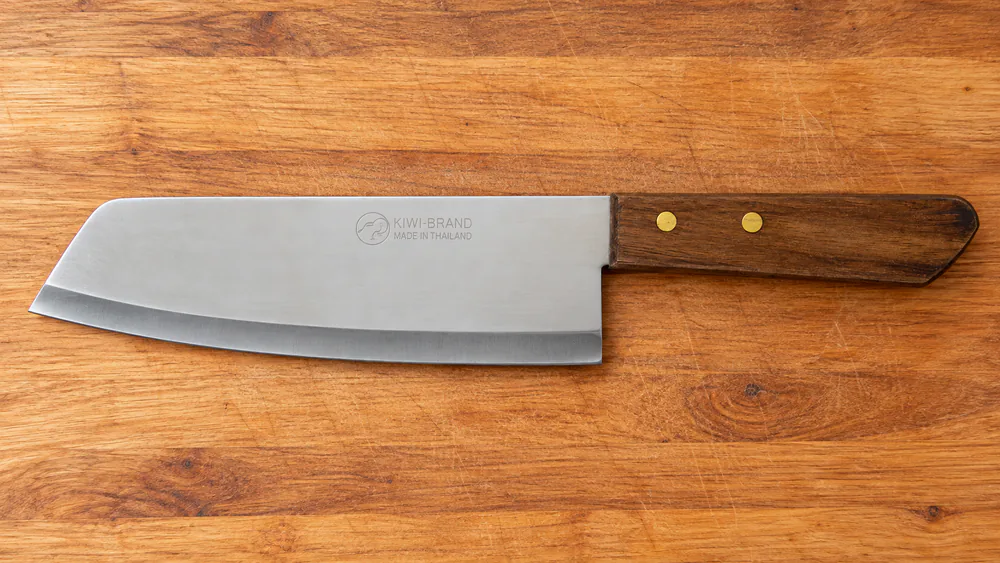
Smaller and lighter than the No. 22, the No. 171 is compact enough to feel nimble for small fruit and vegetable preparation. It is the model we would pick for precise tip work.

Sideways loading is its weakness: the tip can bend if you twist the blade through an onion. The rough wooden handle can become splintery when wet, so inspect the handle joint as well as the edge.

Pros

  • Light and nimble for small fruit and vegetables
  • Responds readily to sharpening
  • Pointed flexible blade suits tip work

Cons

  • Tip can bend under sideways loading
  • Rough handle can splinter when wet
  • Handle can loosen with use

Kiwi No. 172

Kiwi No. 172
4

Kiwi No. 172

Best Compact Slicer
Check Price on Amazon

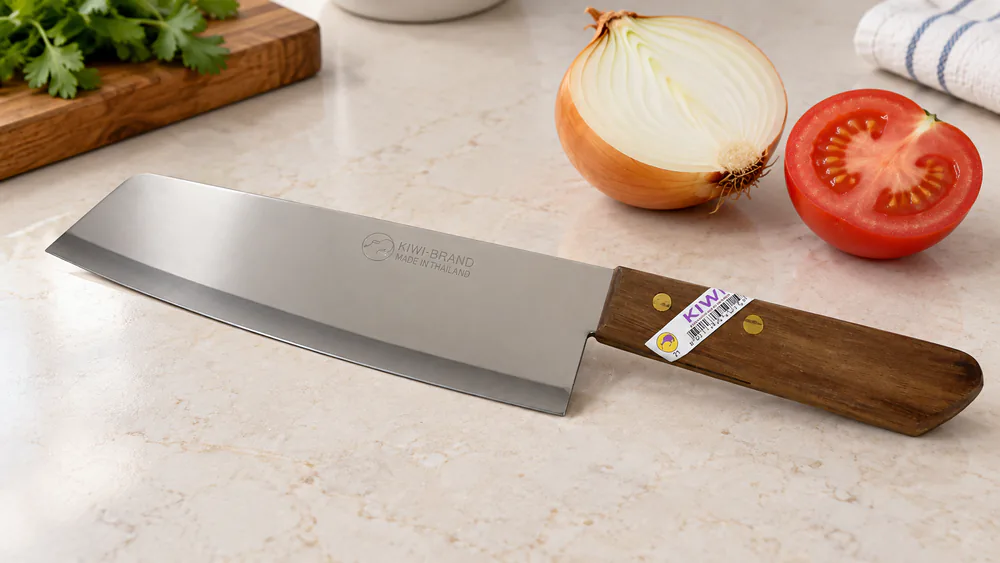
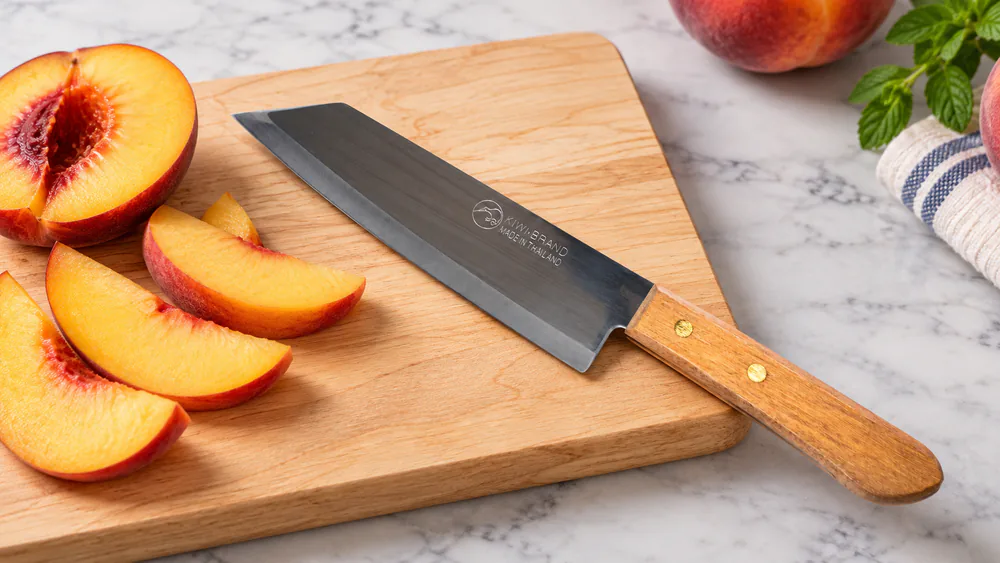
Unlike the pointed No. 171, the No. 172 cuts thin slices of onion, herbs and delicate fish well, and its compact rectangular profile stays out of the way on a small board. The blade is notably flexible, and the thin spine can feel sharp against a finger in a pinch grip.

The basic handle can feel cheap, though careful refinishing makes it smoother. It is a good slicer and a modest all-rounder.

Pros

  • Cuts thin slices of onion, herbs and delicate fish
  • Compact rectangular profile
  • Easy-to-maintain edge

Cons

  • Flexible blade
  • Basic handle can feel cheap
  • Thin spine can feel sharp in a pinch grip

What Kiwi Knives Do Well and Where They Fall Short

Everyday Slicing and Vegetable Prep

Light blades reduce the effort of repetitive prep, which helps small hands. The two compact models feel light when cutting apples, broccoli, peaches and cheese, and they handle repeated onion prep well.

The same low weight can feel flimsy in larger hands.

Blade Flex, Edge Retention and Cutting Limits

Warning. Hard bones, nutshells and solid chocolate are poor matches for these thin, flexible blades. Large hard squash and cabbage are also uncomfortable work for the compact pair.

Edge maintenance is easy, but the interval between touch-ups depends on your board, your technique and how sharp you want the knife. Inspect the edge when it arrives, since factory burrs happen.

How to Choose the Right Kiwi Knife

Blade Shape, Size and Handle Fit

Pick the pointed blade (No. 21 or 171) for tip work and general slicing, and the rectangular blade (No. 22 or 172) for push cuts and scooping food off the board.

A Single Knife or a Set?

Buy one knife first. Our guides to chef knife sets for home cooks and chef knife vs santoku cover the next step up. A mixed 171 and 172 set or a pair of identical knives is fine once you know the profile suits you, but match the model, handle and quantity before you click buy.

How to Care for a Kiwi Knife

Cleaning, Drying and Storage

Hand wash the blade and the wooden handle, dry them straight away, and never soak them. Dishwashing dulls the handle's finish and gloss, even when the knife keeps working.

Store the knife in a guard or a secure holder so the edge does not rattle against other utensils, and so the thin blade does not bend.

Tip. Slip each Kiwi into a sheath before it goes in a drawer or knife bag. It protects the edge and prevents bent blades.

Honing and Sharpening

A honing steel restores cutting feel between full sharpenings, and the No. 21 takes a fresh edge readily on a stone. A simple two-stone kit is plenty.

Kiwi Chef Knife Questions Answered

Are Kiwi knives worth buying?

Yes, as light prep knives. They are thin, sharp and easy to maintain, but expect handle and finish compromises and protect the blade from bending.

Can a Kiwi replace your main chef's knife?

Not for heavy work. The No. 21 comes closest for general prep, but bones, hard squash and big cabbages call for a sturdier knife.

Where can you buy Kiwi knives?

Asian grocery and kitchenware stores, specialist importers and online retailers all sell them. Check the model number, handle and quantity so you get a single knife rather than a set.

Final Verdict

Choose the No. 171 over the No. 21 if your hands are small or most of your work is fruit and tip work; its compact, flexible blade is easier to control, though you must avoid twisting it through an onion. Pick the No. 22 only if push-cutting greens and cucumbers is your daily routine, and check the handle on arrival.

Skip Kiwi entirely if you chop hard squash, split bones or want a knife that tolerates rough handling. These are thin, light prep tools that reward care, and a sturdier chef's knife suits that work better.

Read next

Ready to upgrade your kitchen?

Explore more knife buying guides and get practical kitchen advice in our newsletter.