As an Amazon Associate we earn from qualifying purchases. We may earn a commission from links on this page, at no extra cost to you. Learn more.
If your knife drags through a roast instead of slicing it, the problem is usually the blade, not your technique. A dull or wrong-shaped knife tears meat, crushes the fibers, and leaks the juices that keep brisket and roast beef moist. We tested eight knives for cutting meat, from long carving slicers to heavy cleavers, to find the blades that glide through the cuts you actually cook.
Each knife spent a month in our test kitchen running real prep: whole briskets, bone-in chickens, roasts, and long slicing sessions. We tracked which edges held and which dulled fast, and we scored every handle in hour three, not minute one. The eight picks below cover raw meat, cooked roasts, bone-in cuts, and budget kitchens, and each one earns its place in a working kitchen. We may earn a commission if you buy through our links, at no extra cost to you.
We earn a commission if you make a purchase, at no additional cost to you.
The 8 Best Knives for Cutting Meat in 2026
These eight blades, in the order we would buy them, are reviewed below. We scored each knife on the four things a working kitchen cares about: edge retention after a week of use, how the handle feels in hour three, how easily the steel takes a fresh edge on a home sharpener, and how well the blade fits the cuts it is built for.
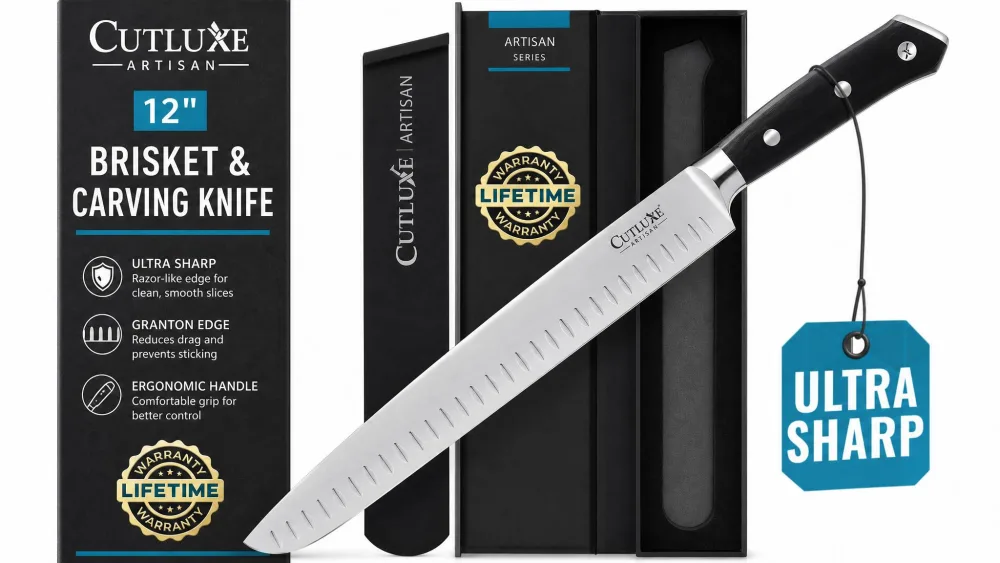
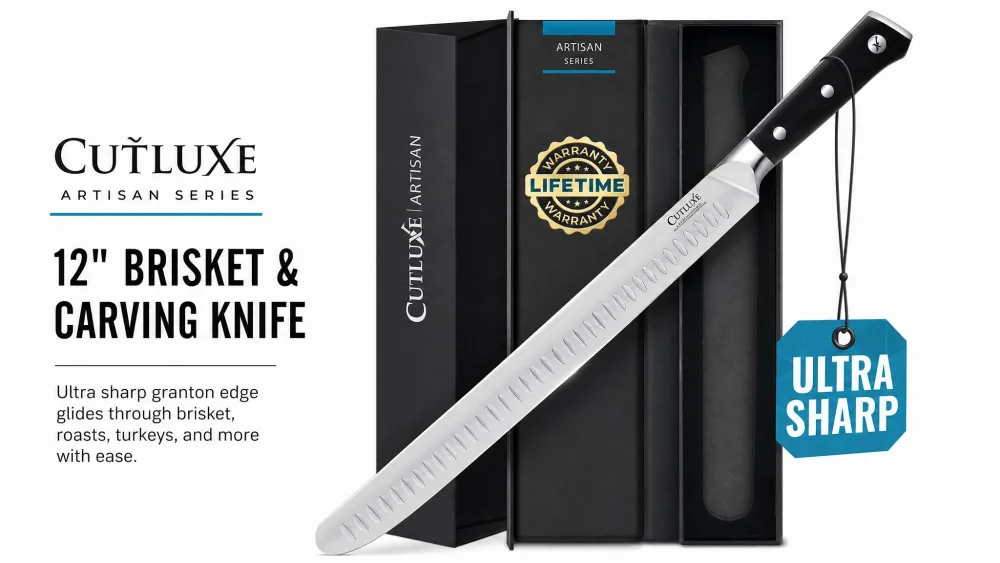
1. Best Overall: Cutluxe 12" Brisket & Carving Knife
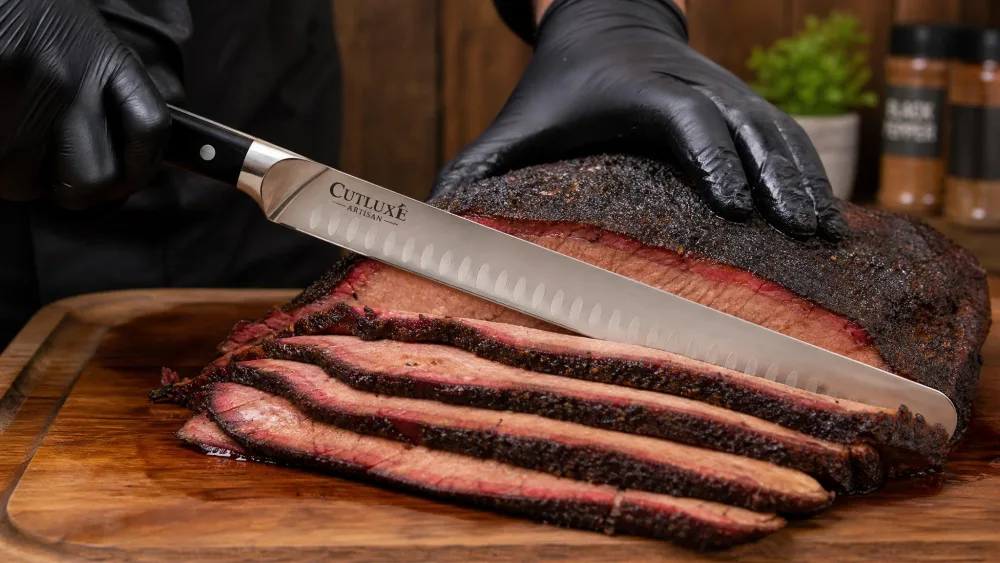
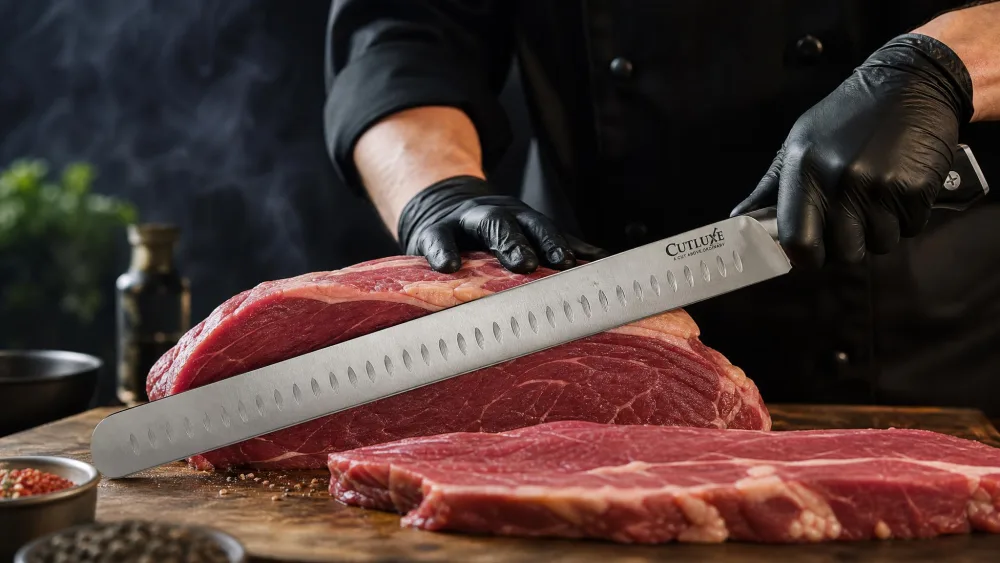
The Cutluxe handled a 21-pound brisket in a single effortless pass, slicing through fat and meat with ease right out of the box. That moment is why it takes the Best Overall spot. The 12-inch high-carbon German stainless blade carries a hand-sharpened granton edge at 14 to 16 degrees per side, so it glides through a smoked brisket without shredding the bark or dragging the fibers. We kept reaching for the Cutluxe 12-inch brisket knife whenever a roast needed clean, even slices.
Hand-sharpened granton edge at 14 to 16 degrees per side reduces friction and stops meat sticking
Full-tang, triple-riveted pakkawood handle with a balanced, comfortable grip
12-inch high-carbon German stainless blade with 56+ Rockwell hardness
Sheath and storage box included for safe keeping
Lifetime warranty against material or workmanship defects
Specifications
Blade length
12 inches
Steel
High-carbon German stainless
Hardness
56+ HRC
Edge angle
14-16 degrees per side
Handle
Full-tang, triple-riveted pakkawood
Warranty
Lifetime
Price
About $45 (street pricing moves week to week)
The edge held through a full brisket cook and stayed sharp for six months before it needed a fresh edge. That kind of edge retention is why a working kitchen trusts a blade. The trade-off is the length. A 12-inch blade feels awkward on smaller pieces of meat and needs clear counter space behind the board, so this is a slicing knife first and an everyday knife second.
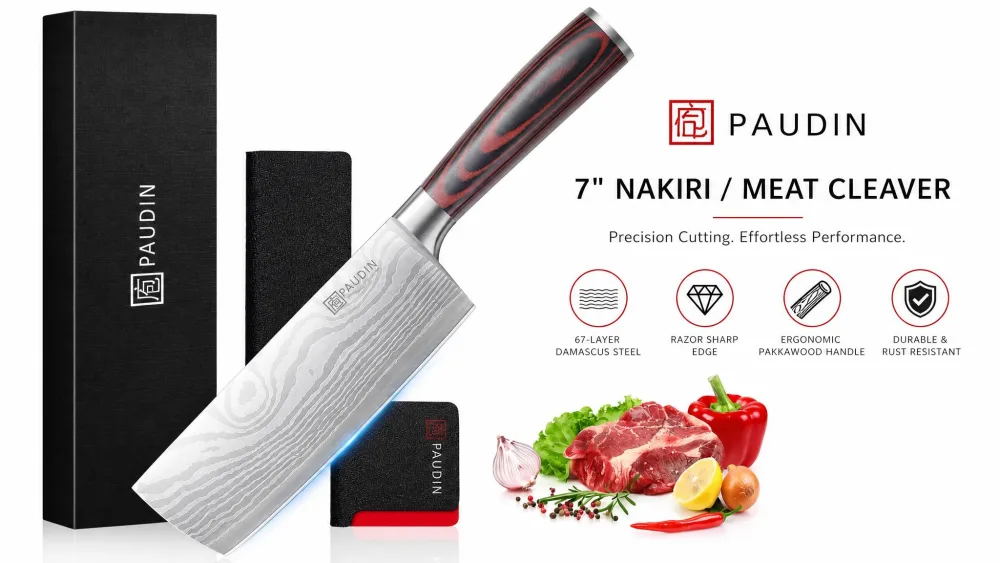
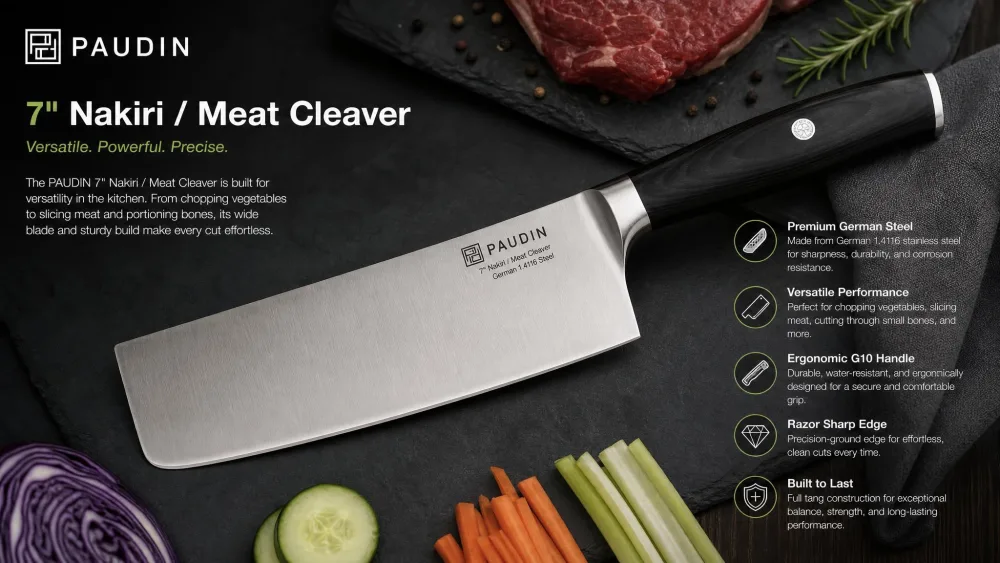
2. Best All-Rounder: PAUDIN 7" Nakiri / Meat Cleaver
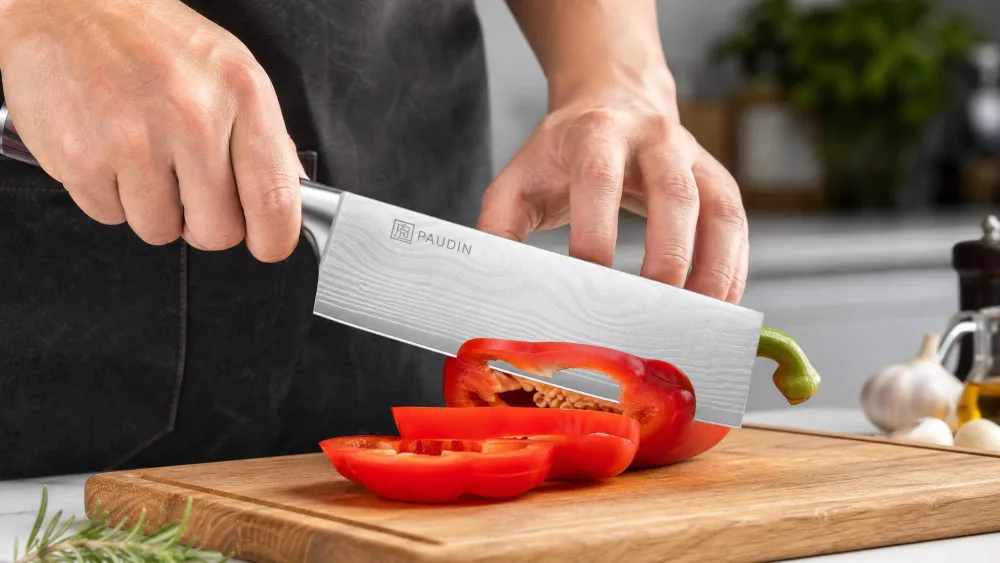
Where the Cutluxe is a specialist slicer, the PAUDIN is the all-rounder that made us smile. It arrived razor sharp and push-cut a large butternut squash standing upright with relative ease, something a six-times-priced chef's knife could not do. The flat nakiri profile slices vegetables without the accordion effect where the slices stay connected, and the blade handles thawed chicken and everyday meat prep with the same confidence. The PAUDIN 7-inch nakiri is the blade you grab when you are not sure what is coming next.
7-inch 5Cr15MoV high-carbon stainless blade with 56+ Rockwell hardness
Flat nakiri profile push-cuts vegetables clean with no accordion effect
Ergonomic pakkawood handle balanced at the pinch point
At about 225 grams it is light enough to feel nimble all evening, but that lightness means it does not feel sturdy for watermelon rind or dense squash. Durability reports split sharply across owners, so we treat this as a dependable everyday knife rather than a beater. The 5Cr15MoV steel is easy to re-sharpen, though it can develop rust spots after a few weeks if you do not dry it immediately after washing. It is best for everyday vegetables and thawed chicken, and it gets the job done without fuss.
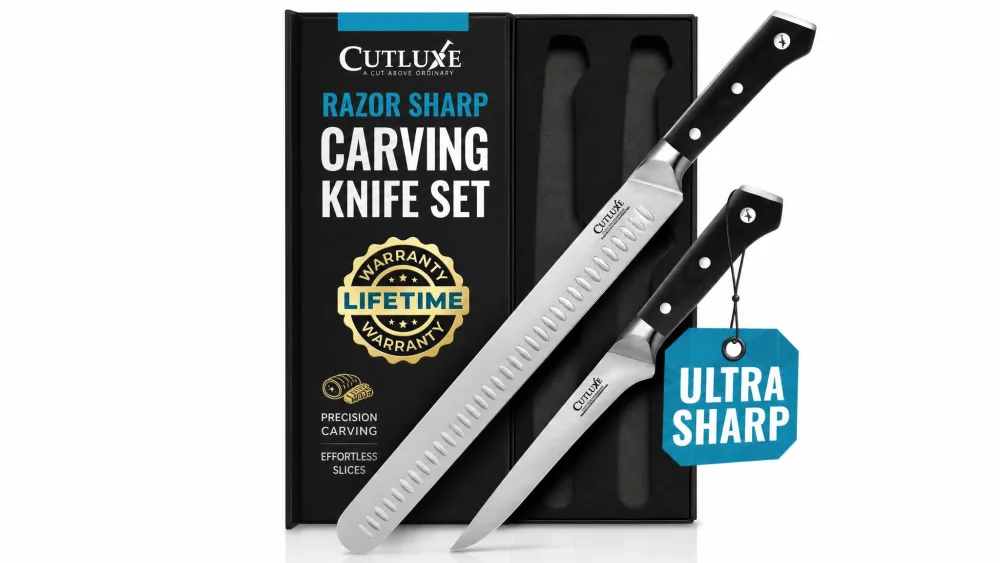
3. Best Knife Set: Cutluxe Razor Sharp Carving Knife Set
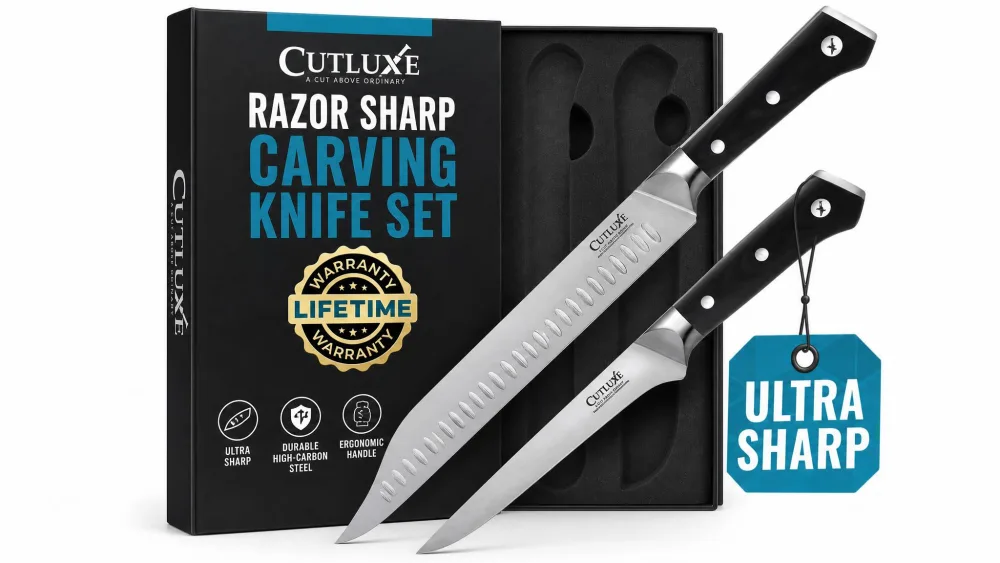
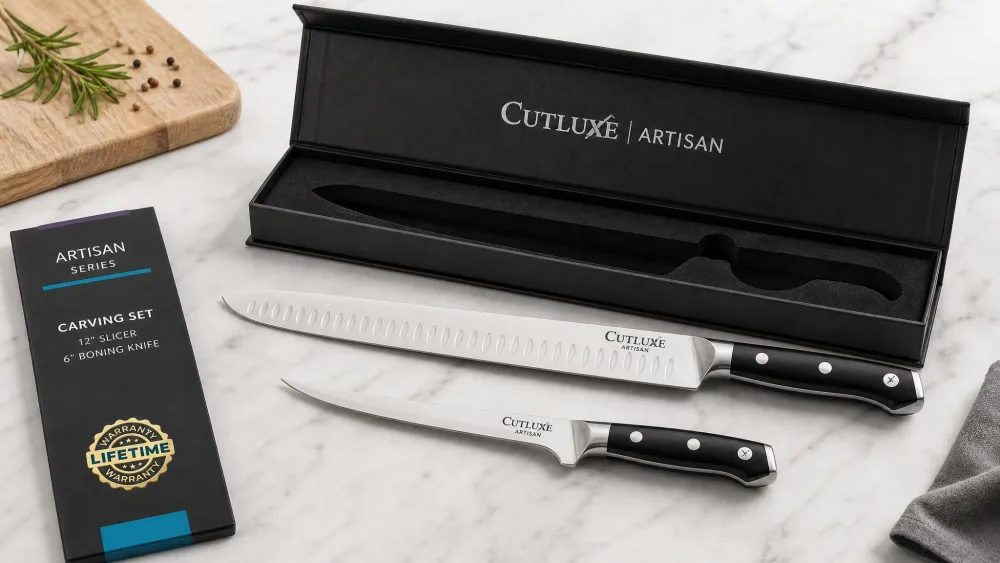
If you cook whole birds and big roasts, this two-piece set pairs the right blade with the right job. The 12-inch brisket slicer and the 6-inch boning knife both carry razor-sharp granton edges, and the pair sliced raw and smoked brisket, turkey, and prime rib like butter while the smaller knife handled trimming with real finesse. The Cutluxe Razor Sharp Carving Knife Set earns its award by covering carving and trimming in one purchase.
12-inch brisket slicer plus 6-inch boning knife in one set
Razor-sharp granton edges on both blades reduce friction and stop meat sticking
Full-tang, ergonomic pakkawood handles
Velvet-lined storage box and carving fork included
Lifetime warranty
Specifications
Blade length
12 inches plus 6 inches
Steel
High-carbon German stainless
Hardness
56+ HRC
Edge angle
Granton, 14-16 degrees per side
Handle
Full-tang, ergonomic pakkawood
Extras
Velvet-lined storage box, carving fork
Warranty
Lifetime
Price
About $55 (street pricing moves week to week)
The velvet-lined storage box keeps the long 12-inch blade safe in a deep cupboard, which matters because a blade this long needs clear space behind the board. Two honest gripes stand out. The square-cut top of the blade can dig into your finger if you press down on it, and the blades can develop tarnish spots if they sit dirty overnight. A quick wipe-down after use solves the second, and a little caution solves the first.
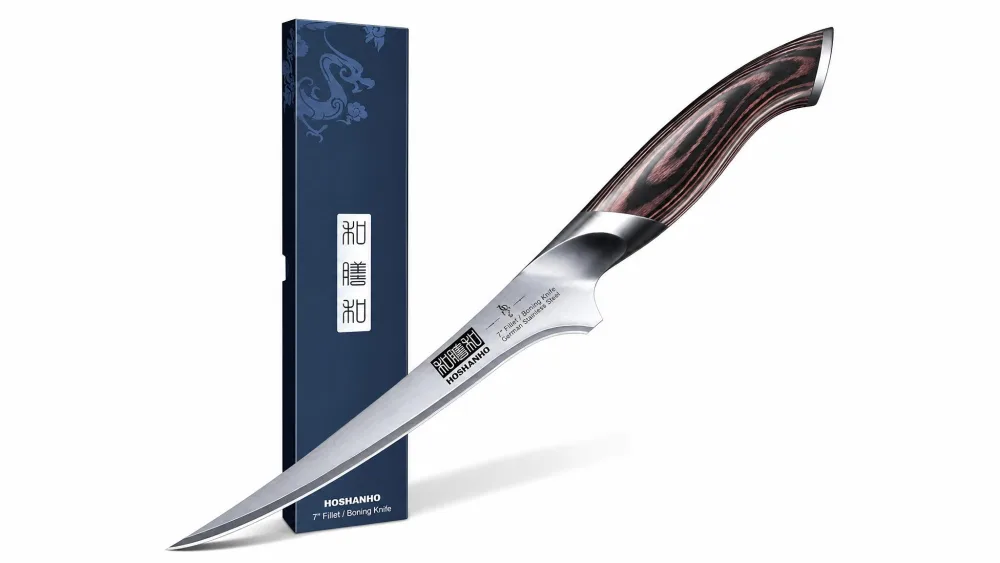
4. Best Boning Knife: HOSHANHO 7" Fillet / Boning Knife
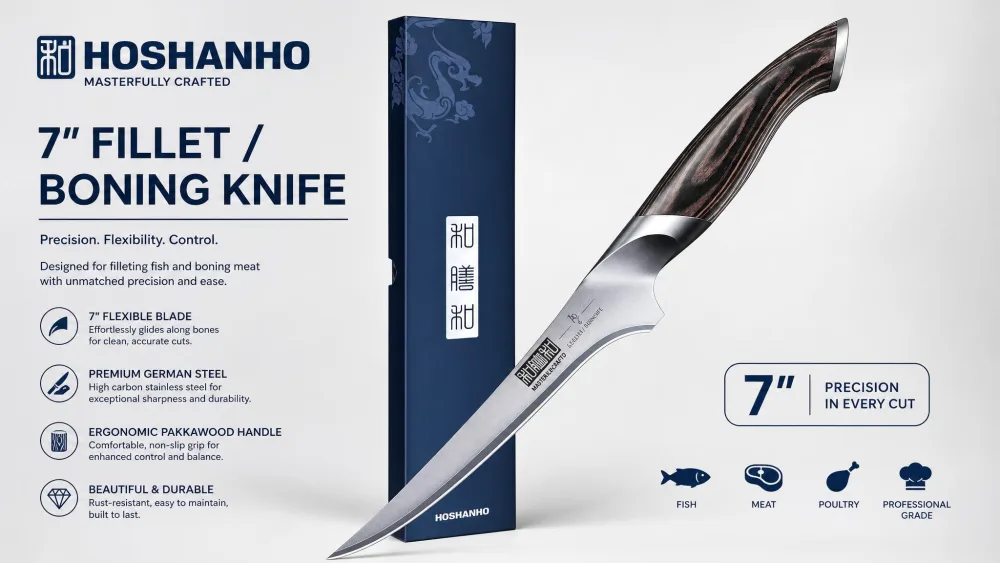
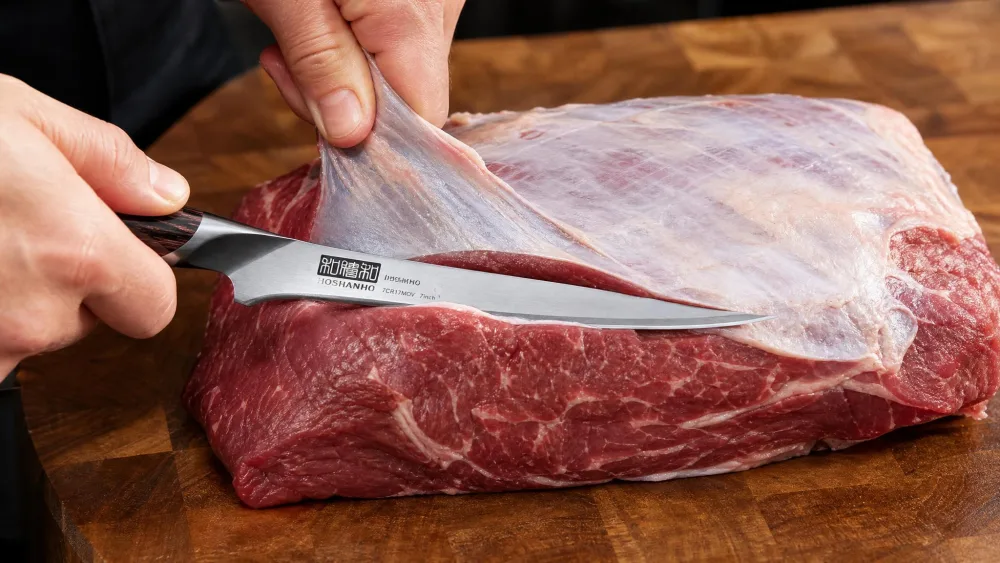
Where the carving set handles cooked roasts, the HOSHANHO is the blade for raw meat and bones. It arrived razor sharp and rivals far more expensive Japanese knives, holding the edge through repeated use. At about 6.3 ounces it carries a nice heft and balance without feeling unwieldy, and it became our go-to for poultry work and clean trimming.
7-inch thin flexible blade that adapts to poultry, fish, and curved bones
Japanese 10Cr15CoMoV high-carbon stainless steel with a 60 HRC core
Hand-polished edge at 15 degrees per side
Ergonomic pakkawood handle with frosted-texture blade
Lifetime warranty against manufacturing defects
Specifications
Blade length
7 inches
Steel
Japanese 10Cr15CoMoV high-carbon stainless
Hardness
HRC 60
Edge angle
15 degrees per side
Weight
About 6.3 ounces
Handle
Ergonomic pakkawood
Warranty
Lifetime
Price
About $66 (street pricing moves week to week)
The moment that won us over
We spent an hour one afternoon breaking down two whole chickens for the week. The HOSHANHO walked through each joint with a clean slice instead of a saw, lifted the breasts off the carcass without tearing the meat, and then moved straight on to trimming a big beef roast for stew. It is the rare blade that handles both jobs in one sitting and still feels balanced at the end.
The 7-inch blade is flexible enough to work a fillet cleanly, though a few of us found it a touch stiff for skinning a fish flat on a board. The Japanese 10Cr15CoMoV steel takes a hand-polished edge at 15 degrees per side, and the 60 HRC core holds it well. One nitpick: the wooden handle does not sit flush where it meets the steel at the bolster, so gloves help if you choke up high.
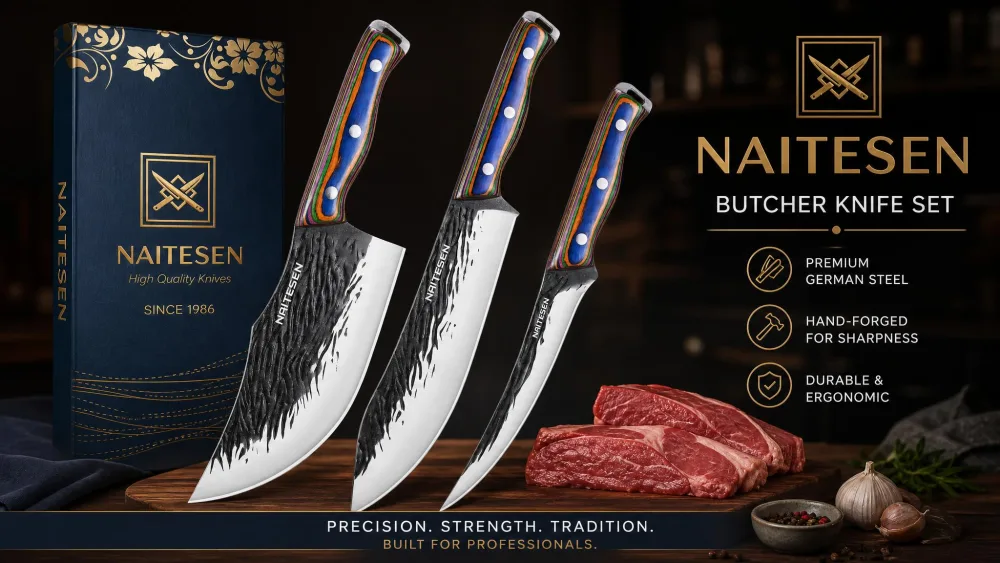
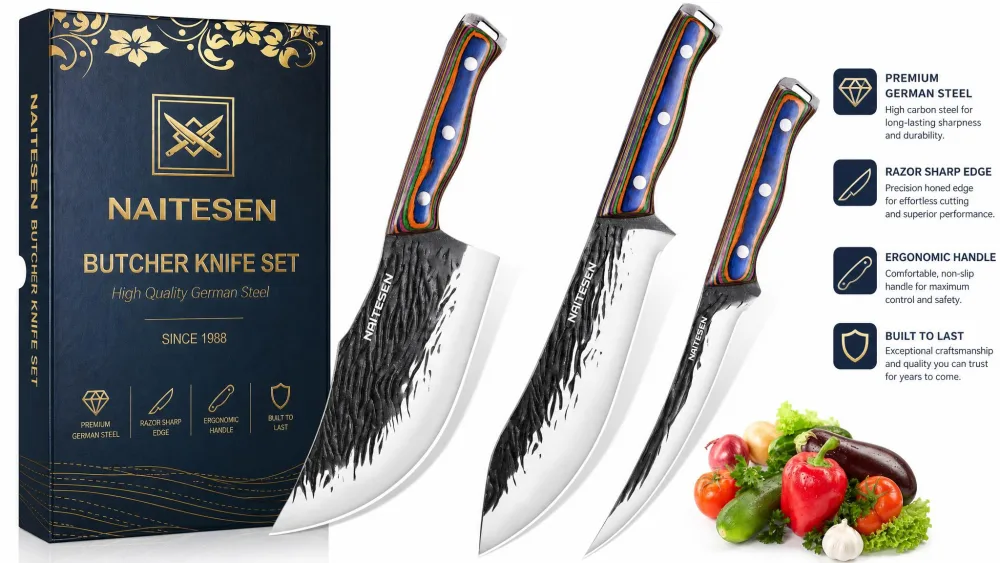
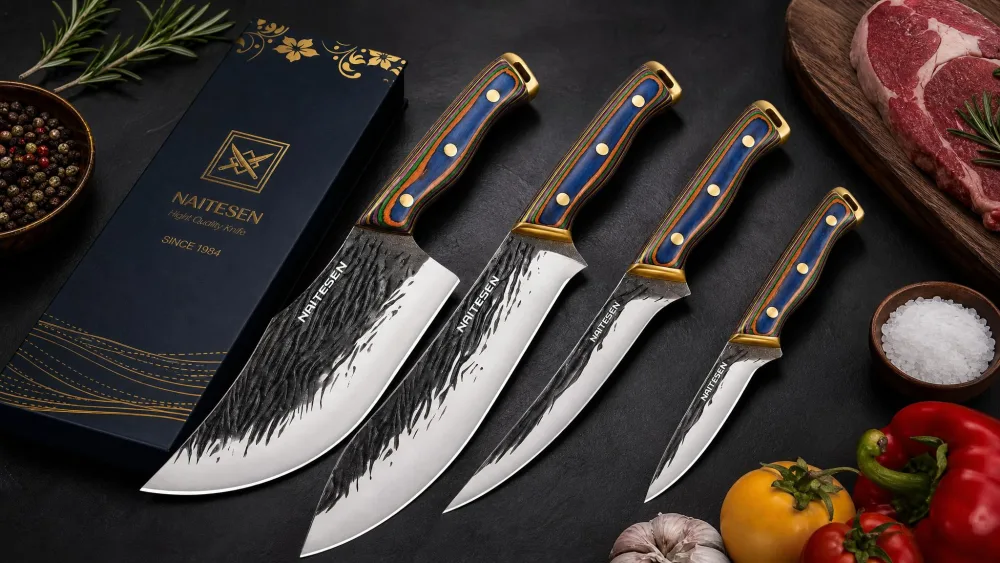
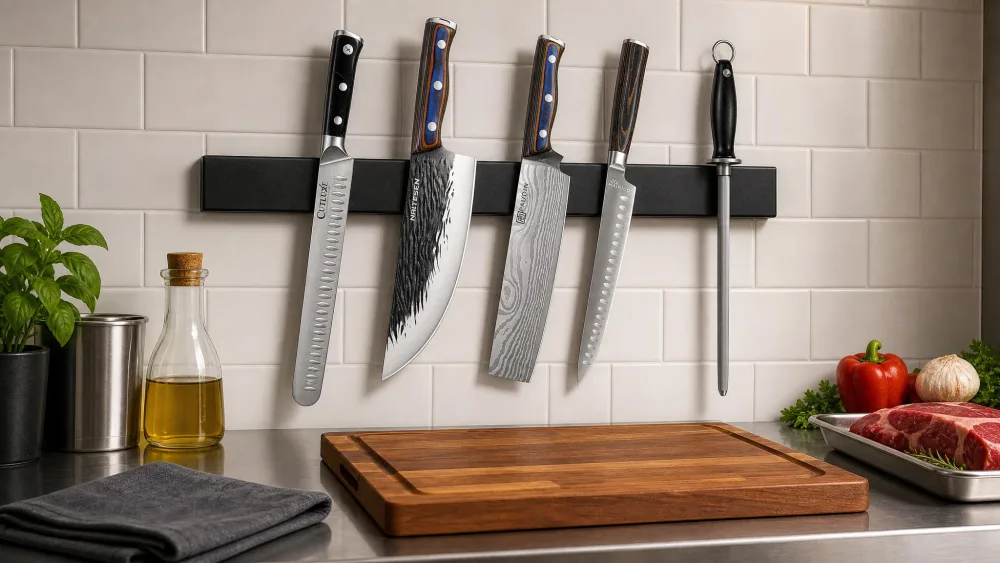
For breaking down whole animals rather than a single roast, the Naitesen set is the heaviest kit in this test. It is heavy and very sharp out of the box, and the weight helps push through big cuts of meat. The raised hammered forged texture keeps meat from sticking to the blade, which is exactly what you want when you portion a whole rib section. The Naitesen Butcher Knife Set carries a cleaver, a breaking knife, a Serbian chef knife, and a boning knife, so it covers breaking, trimming, and slicing in one kit.
4-piece set: 8.5-inch cleaver, 9-inch breaking knife, 8-inch Serbian chef knife, 6.5-inch boning knife
5Cr15MoV high-carbon steel with 56+ Rockwell hardness and a 15-degree edge
The trade-off is weight and care. These are thick, heavy blades that can feel tiring during long sessions, though they are perfect for barbecue and breaking work. Rust resistance is a gamble across units, so we dry these blades after every wash and oil them occasionally. If you mostly cook for a family and rarely face a whole pig, this set is more knife than you need.
6. Best Breaking Knife: Cutluxe 10" Cimeter Breaking Knife
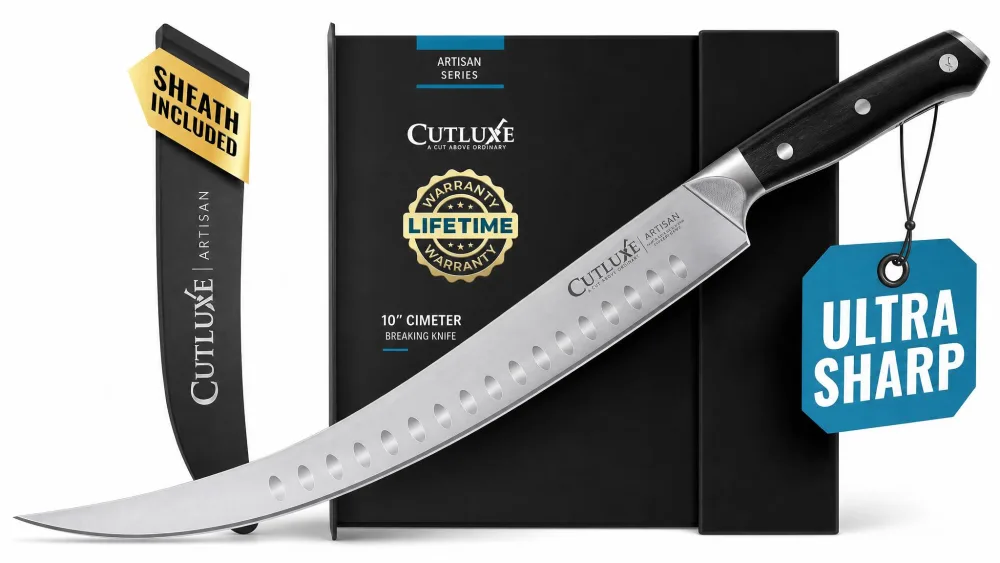
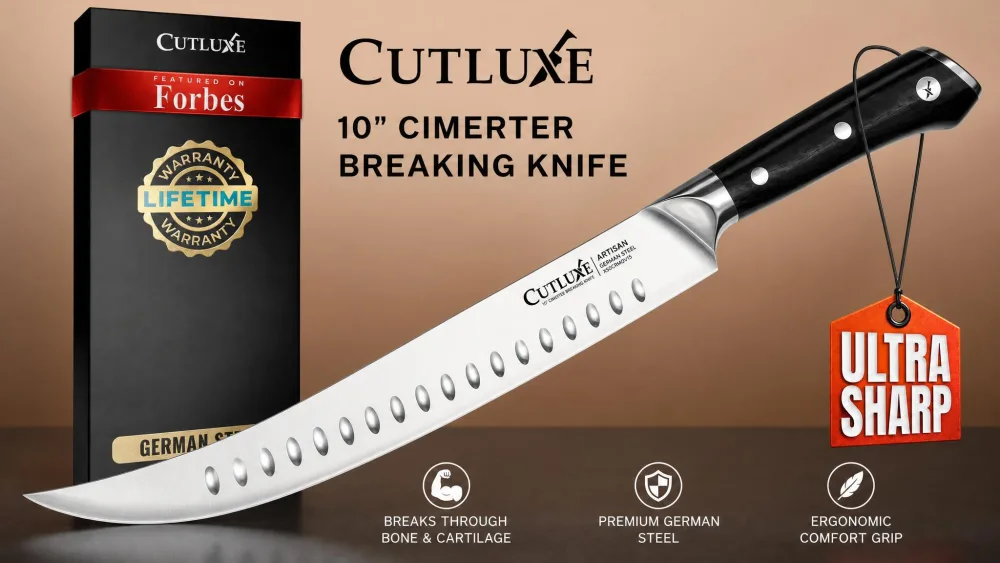
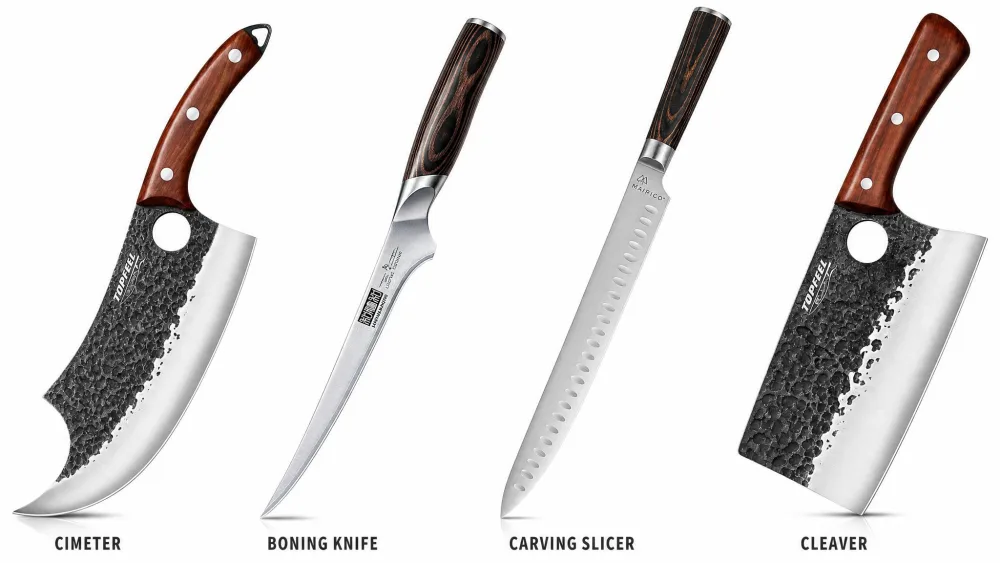
The Cutluxe cimeter takes the breaking idea further with a single dedicated blade. It survived nine months of daily use in a commercial kitchen and still looked brand new, holding its edge through heavy use. The curved 10-inch cimeter belly is built for long pull strokes, and it cut through 20-pound slabs of brisket like butter while trimming and portioning large cuts. The Cutluxe 10-inch cimeter breaking knife is a genuine workhorse for anyone who buys primals.
10-inch high-carbon forged German steel blade with 56+ Rockwell hardness
Curved cimeter belly for long pull strokes when breaking down primals
Hand-sharpened granton edge at 14-16 degrees per side
Full-tang, triple-riveted pakkawood handle
Sheath and lifetime warranty included
Specifications
Blade length
10 inches
Steel
High-carbon forged German steel
Hardness
56+ HRC
Edge angle
14-16 degrees per side
Handle
Full-tang, triple-riveted pakkawood
Warranty
Lifetime
Price
About $33 (street pricing moves week to week)
It is also easy to put a fresh edge on, which matters when a knife works this hard. The honest complaints are finish-related. The rivets, bolster, and tang are not flush with the handle scales, which creates hot spots in the hand until you wet-sand them smooth, and the included sheath is poor quality even though the knife itself is excellent.
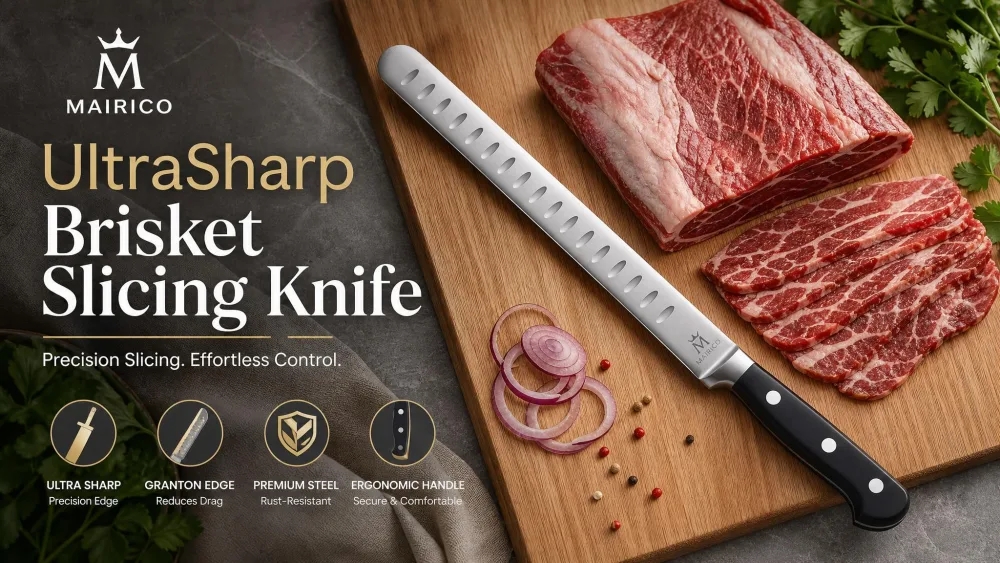
7. Best for Roasts: MAIRICO UltraSharp Brisket Slicing Knife
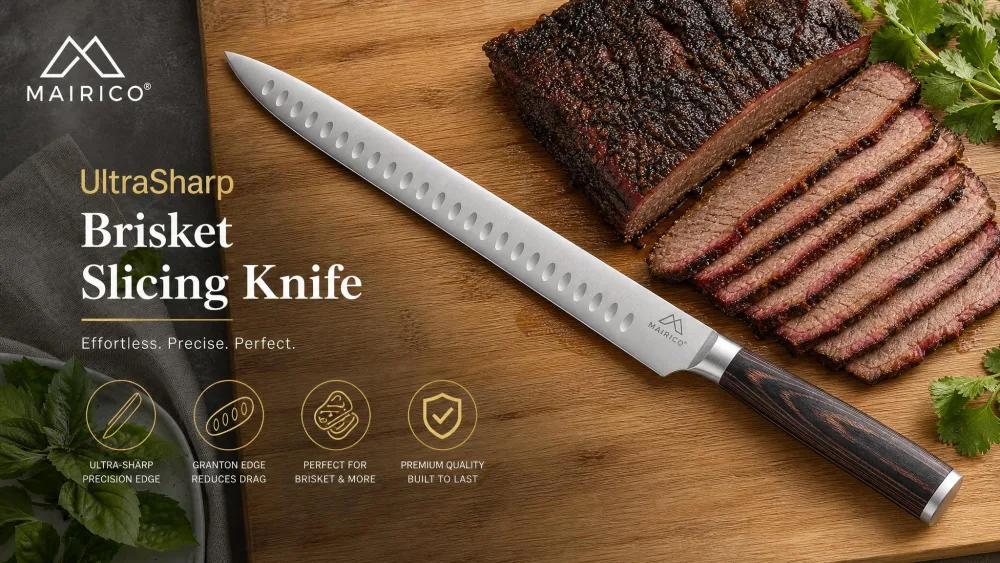
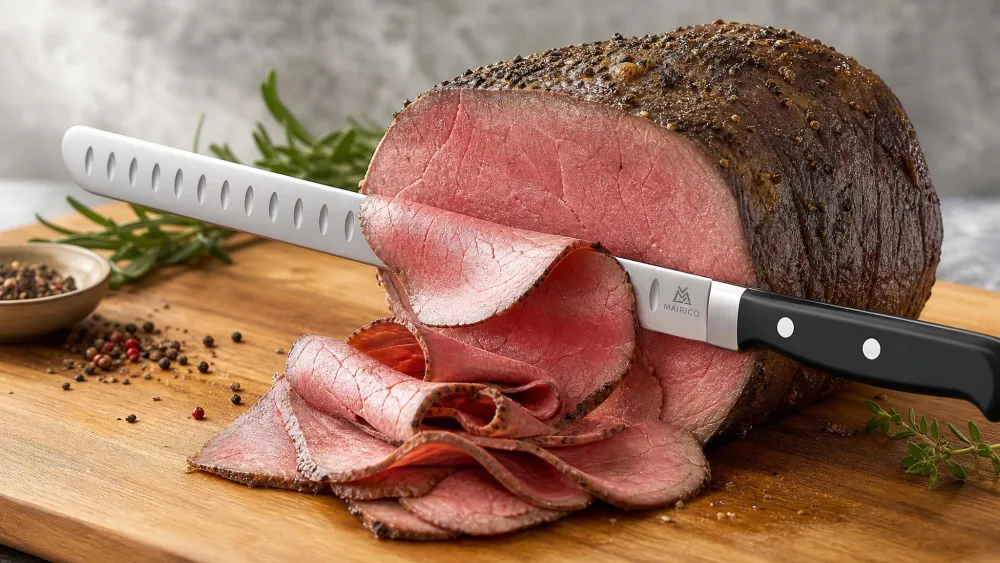
If the cimeter is for breaking, the MAIRICO is the pure carving specialist. The 11-inch blade sliced brisket and roast beef paper-thin, even straight from a sous-vide bag, and it is great for cold-slicing sandwiches the next day. The blade is thin enough to get through a dense rare roast yet stiff enough not to flex, and at about 0.9 pound it is light for a slicer this long. The MAIRICO UltraSharp Brisket Slicing Knife is the go-to for a clean Sunday roast.
11-inch ultra-sharp stainless steel blade for brisket, pork loin, turkey, ham, and salmon
Ergonomic handle with well-balanced weight distribution
Lightweight at about 0.9 pound
Storage box included
Specifications
Blade length
11 inches
Steel
Premium stainless
Weight
About 0.9 pound
Handle
Ergonomic, secure grip
Extras
Storage box, no sheath
Warranty
Not stated
Price
About $20 (street pricing moves week to week)
Sharpness out of the box is the one variable. Most units arrive razor sharp and ready, but a few need a first sharpening before they slice the way they should. It is lightweight and easy to clean, and it ships in a storage box with no sheath for transport, so plan your drawer space.
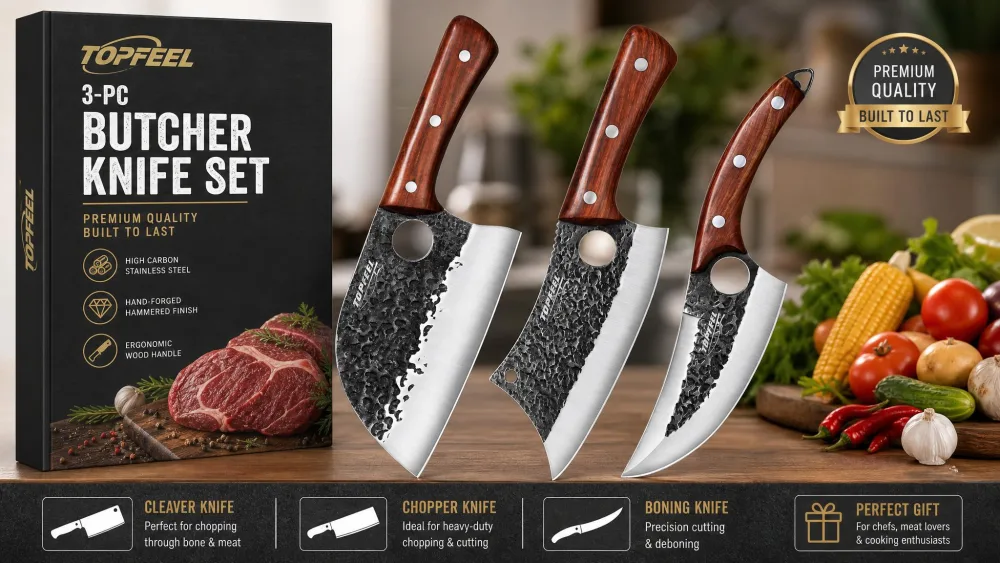
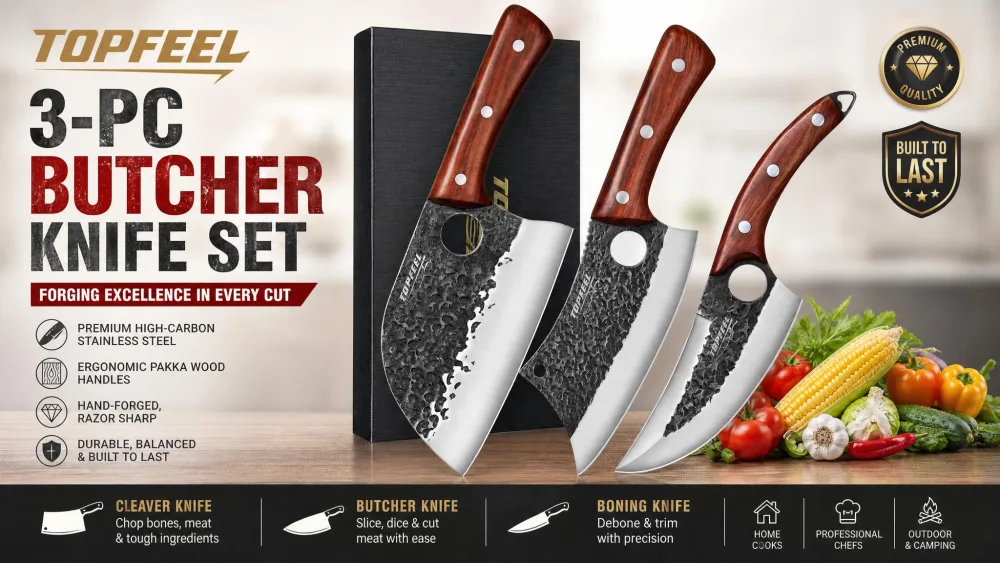
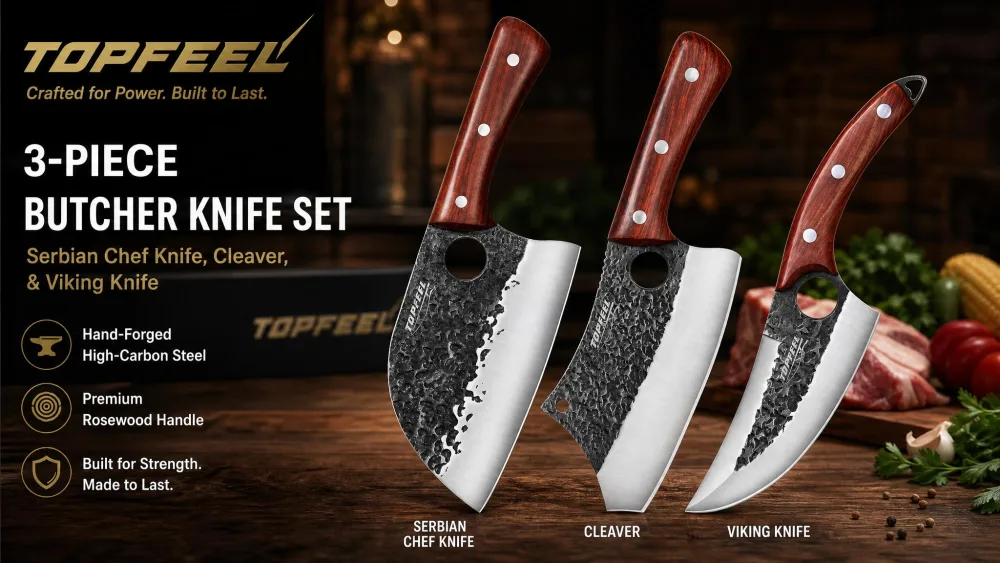
On the other end of the price scale, the Topfeel set is the budget option that still cuts like a much pricier kit. The hand-forged high-carbon blades cut a cooked steak like ice cream, and the set covers a Serbian chef knife, a meat cleaver, and a viking knife for about the price of one mid-range chef's knife. The Topfeel 3-piece butcher knife set is the budget pick that genuinely gets the job done.
3-piece set: 7-inch Serbian chef knife, 7-inch butcher cleaver, 6.5-inch viking knife
Hand-forged 5Cr15MoV high-carbon steel with 56+ Rockwell hardness and anti-rust cladding
Rosewood handles with full tang, three rivets, and a large finger hole
Oxidation blackening and hammering add an anti-stick effect
How to Choose the Best Knife for Cutting Meat: A Buying Guide
Now that the field is ranked, here is how to match a blade to the cuts you actually cook. A great meat knife comes down to a few decisions, and each one trades something off.
Blade Type
Different cuts call for different blades. A breaking or cimeter knife, with a 10 to 14 inch curved blade and a rounded tip, makes the long sweeping cuts that break down primal cuts. A boning knife, usually 5 to 7 inches with a narrow blade, is the single most important butcher knife for trimming and working around bones; get a stiff version for beef and a flexible one for poultry and curved bones. A carving or slicing knife uses a long, thin blade for thin, even slices of cooked roasts and turkey without tearing fibers. A cleaver chops through poultry, ribs, and softer bones with its thick rectangular blade.
Warning. A cleaver will not get through hard beef or pork leg bones. Save those for a bandsaw, and keep the cleaver for poultry, ribs, and softer bones.
If you mostly carve brisket, our best brisket knife guide goes deeper on long slicers.
Blade Material
Blade steel sets the ceiling on edge retention and sharpening ease. High-carbon stainless steel is the sweet spot for most kitchens: it holds an edge well and resists rust. Cutluxe's German high-carbon steel carries a 56+ Rockwell hardness across the brisket knife, carving set, and cimeter. PAUDIN, Naitesen, and Topfeel use 5Cr15MoV, a workhorse steel that is easy to re-sharpen at home. HOSHANHO steps up to 10Cr15CoMoV at a 60 HRC core, which holds a fine edge longer and asks for a steadier hand when sharpening. Higher hardness generally means longer edge life and slightly harder sharpening.
Handle and Grip
A full-tang handle, where the steel runs through the whole grip, gives a knife the balance that makes it feel like an extension of your hand. Look for rivets that sit flush and an ergonomic shape that fills your palm without slipping. We found finish matters as much as shape. The cimeter's rivets needed wet-sanding to sit flush, the HOSHANHO's bolster has a small gap, and Topfeel's bulky rosewood handles take adjustment. A comfortable handle is what keeps a blade usable in hour three, not just minute one.
Size and Weight
Blade length should match the job. Long blades, 11 and 12 inches, glide through a whole brisket but need clear counter space behind the board. Shorter blades, 6 to 7 inches, give you control for boning and trimming. Weight is a balance, not a race. The 225-gram PAUDIN feels nimble but light for heavy work, the 6.3-ounce HOSHANHO finds a nice middle, and the 0.9-pound MAIRICO is light for an 11-inch slicer. Heavier blades power through big cuts but tire the wrist over a long session.
Maintenance and Care
High-carbon steel rewards a simple routine. Hand-wash with warm water and soap, dry immediately, and store on a magnetic strip, in a block, or in the included sheath or box. Several blades in this guide, including the PAUDIN, Naitesen, and Topfeel, can develop rust spots if left wet, and the carving set tarnishes if left dirty overnight. A honing rod before each session keeps the edge true, and a whetstone or guided sharpener brings a dull edge back.
Tip. A honing rod is not sharpening. Use it before each session to keep the edge true, and save the whetstone for when the edge actually dulls.
Published knife sharpness research supports what we see in the kitchen: a genuinely sharp edge is a safer edge. A good maintenance routine extends the life of any blade you own.
Budget and Value
Meat knives range from about $20 to about $66, and the right price depends on what you cut. A single slicer like the MAIRICO at about $20 or the all-rounder PAUDIN at about $33 gives you the most value per dollar if you only need one blade. A set makes sense if you break down whole birds and big roasts regularly; the Cutluxe carving set at about $55 pairs a slicer with a boning knife, and the Naitesen at about $50 covers breaking, trimming, and slicing. A lifetime warranty, which Cutluxe and Naitesen both offer, is worth real money. Street prices move week to week, so check current pricing before you commit.
How We Tested the Best Knives for Cutting Meat
We tested these eight knives the way a butcher actually works, not on a lab bench. Each blade went through whole briskets, bone-in chickens, roasts, and long slicing sessions, and we checked the edge after every round of prep. We scored on four things: how the edge holds after a week of use, how the handle feels in hour three, how easily the steel takes a fresh edge on a home sharpener, and how well the blade handles the specific cuts it is built for.
We bought all eight knives at retail with our own money, and no brand paid for a slot, so every unit here ran the same test with no special treatment. After each session we checked the edge and noted how it felt, then rechecked every knife at the end of the week.
The best meat knife is not the sharpest out of the box. It is the one that still holds a clean edge after a week of prep.
Frequently Asked Questions
What is the best knife for cutting raw meat?
A boning knife is the best tool for raw meat that still has bones and silver skin, because its narrow, flexible blade works around joints and tight curves. For trimming a whole primal into steaks, a breaking or cimeter knife gives you the long strokes you need. If you only want one blade, a 7-inch all-rounder like the PAUDIN nakiri handles most raw meat prep.
What is the best knife for slicing cooked meat and carving roasts?
A long carving or slicing knife, ideally 10 to 12 inches, is built for cooked roasts. The length lets you draw one clean, even slice from edge to edge without sawing, which keeps the fibers and juices intact. For a whole turkey or roast chicken, though, a flexible boning knife like the HOSHANHO 7-inch fillet is the better tool for working the legs and breasts off the carcass before you carve.
Should I use a cleaver or a boning knife to break down a whole chicken?
Both work, but they split the job differently. A boning knife follows the joints, so you can separate the thighs, wings, and legs cleanly and lift the breasts off the carcass with almost no waste. A cleaver chops straight through the bone when you want to split the bird in half or spatchcock it. For most home cooks, the boning knife is the better everyday choice because it is easier to control and leaves more meat on the plate.
How often should I sharpen a meat knife instead of just honing it?
Hone before every session, and that alone will carry most of these blades for weeks. You will know it is time to sharpen when honing no longer brings the bite back. For the softer 5Cr15MoV workhorses in this guide, that usually lands around every month or two of steady cooking. The harder blades hold longer; the Cutluxe brisket knife we tested stayed sharp for six months before it needed a fresh edge.
Can I use the same knife for meat and vegetables?
Yes. A versatile blade like the PAUDIN nakiri handles both, and its flat profile push-cuts vegetables cleanly. The practical rules are to wash between tasks to avoid cross-contamination and to keep hard vegetables and bone-in meat off blades that are thin or light, since those are the jobs that chip edges.
What is the difference between a cleaver and a butcher knife?
A butcher knife, or cimeter, has a curved edge, a rounded tip, and a roughly 30-degree edge angle, and it is lighter, which suits long slicing strokes for trimming and portioning. A cleaver has a thicker, rectangular blade, a heavier feel, and a blunter 40 to 50 degree edge, and it chops, hacks, and splits. Choose the butcher knife for slicing work and the cleaver for bone and heavy chopping.
The Bottom Line
Pick the blade that matches the cut, and you will stop fighting your meat. For raw meat, trimming, and deboning, reach for the HOSHANHO fillet knife or the boning knife in the Cutluxe carving set. For cooked roasts and carving, the Cutluxe 12-inch brisket knife and the MAIRICO slicer give the cleanest slices. For bone-in poultry and ribs, the cleavers in the Naitesen and Topfeel sets do the heavy work. On a budget, the Topfeel set and the PAUDIN nakiri deliver the most value for the money. If you only add one blade this year, start with the Cutluxe 12-inch brisket knife and let its long, clean stroke do the talking at your next cookout.