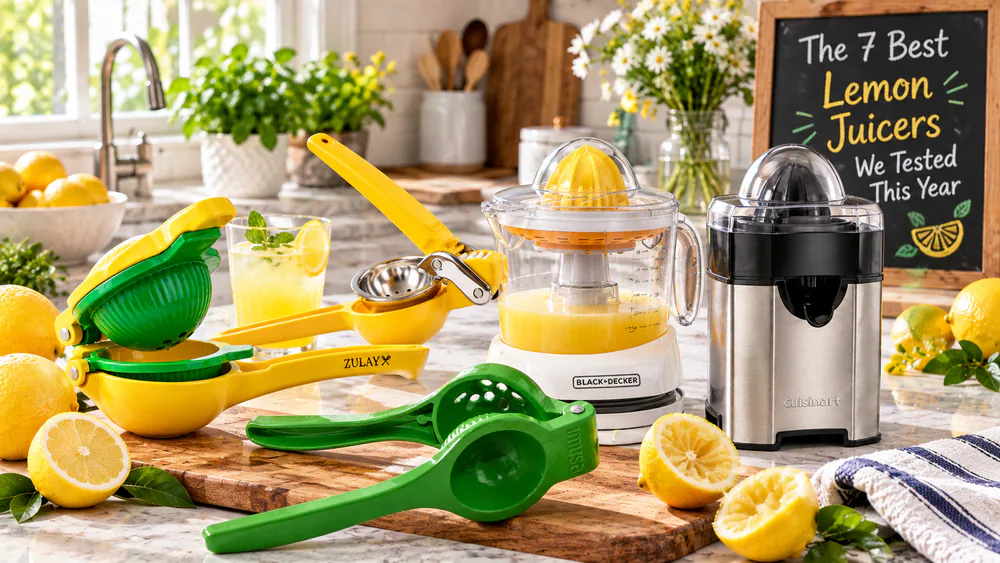
The best lemon juicer for you depends on how much you juice, what else you squeeze, and how much counter space you can spare. Here is how we weigh the factors that actually change your day-to-day experience.
Manual vs. Electric
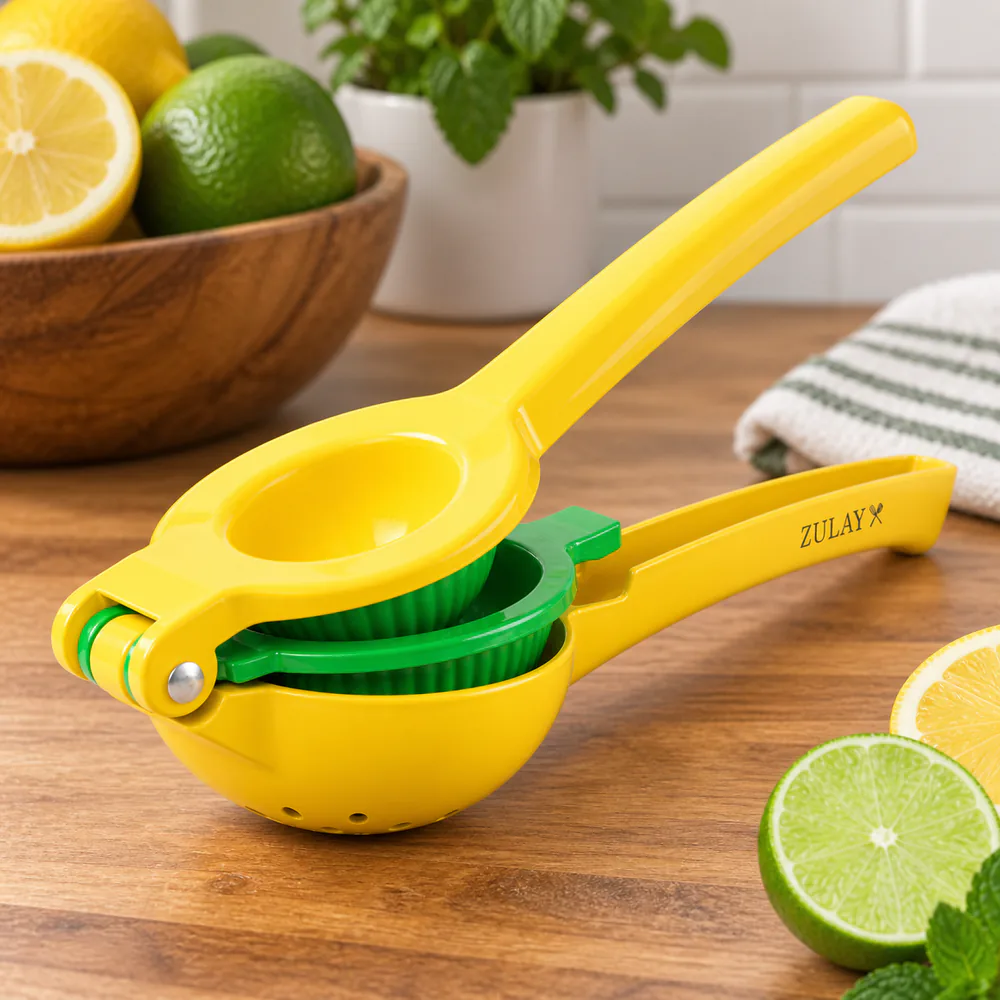
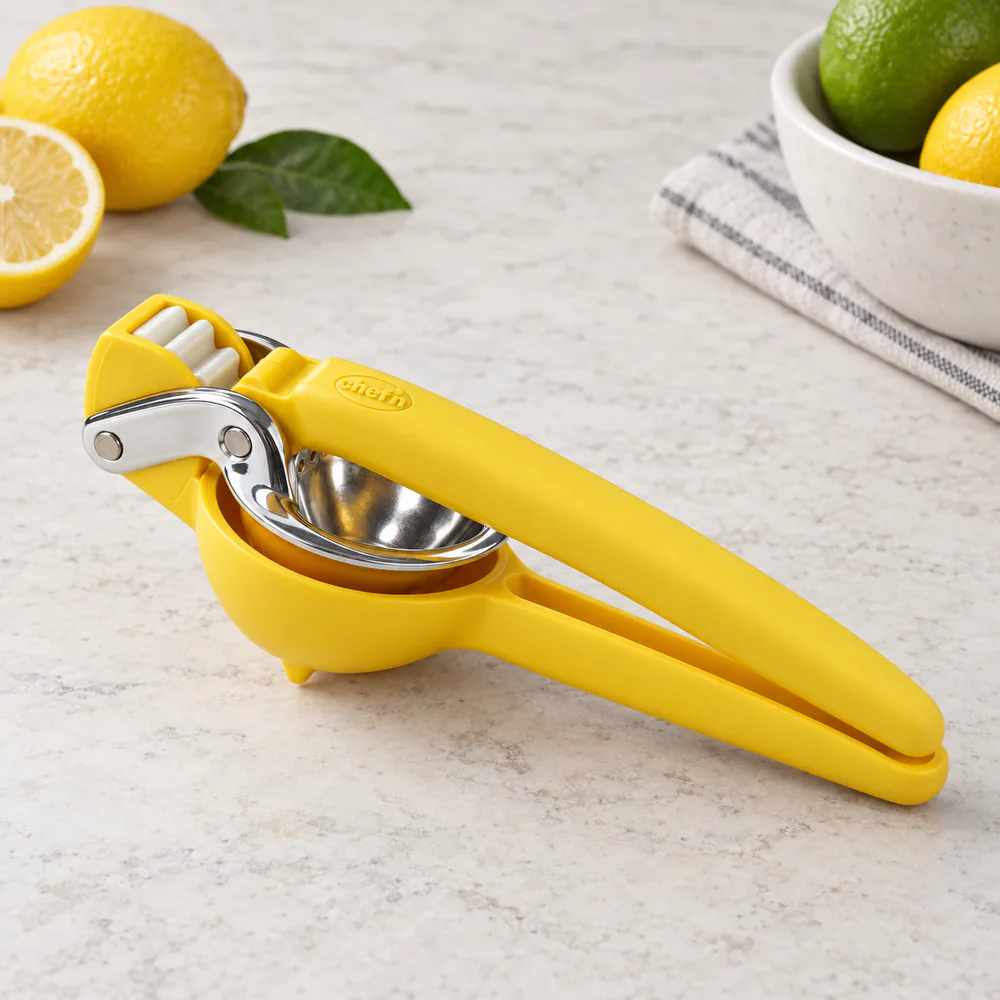
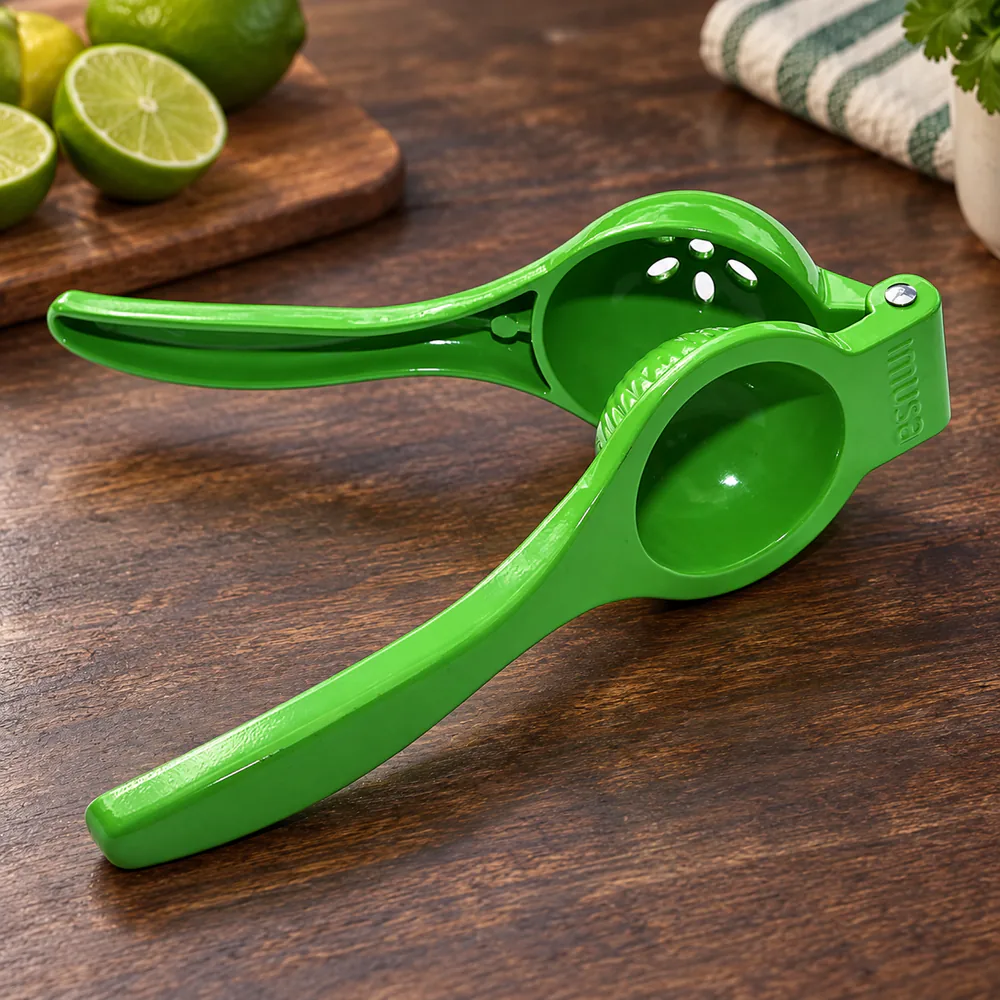
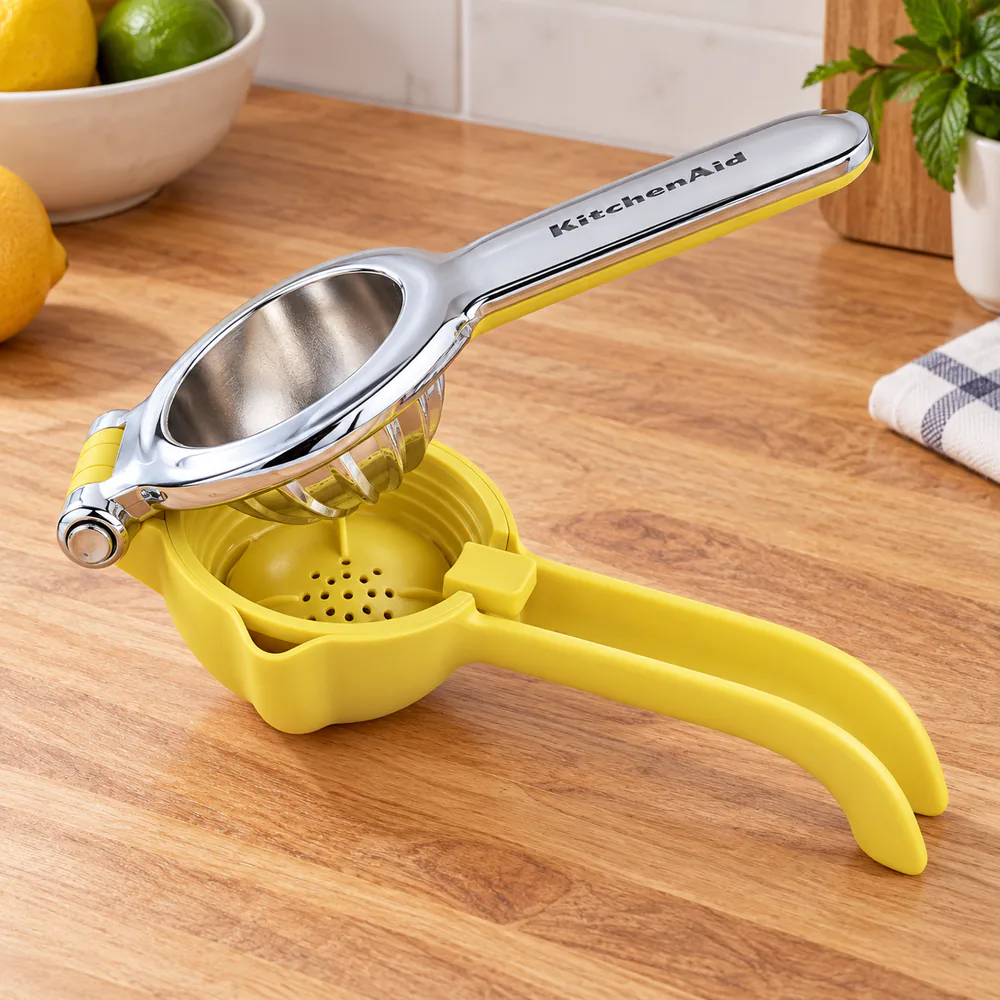
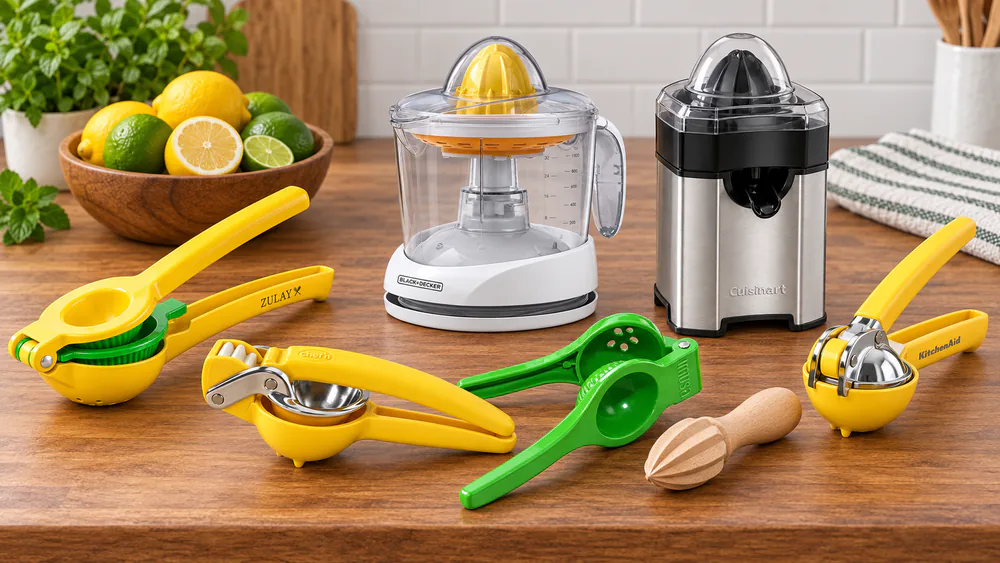
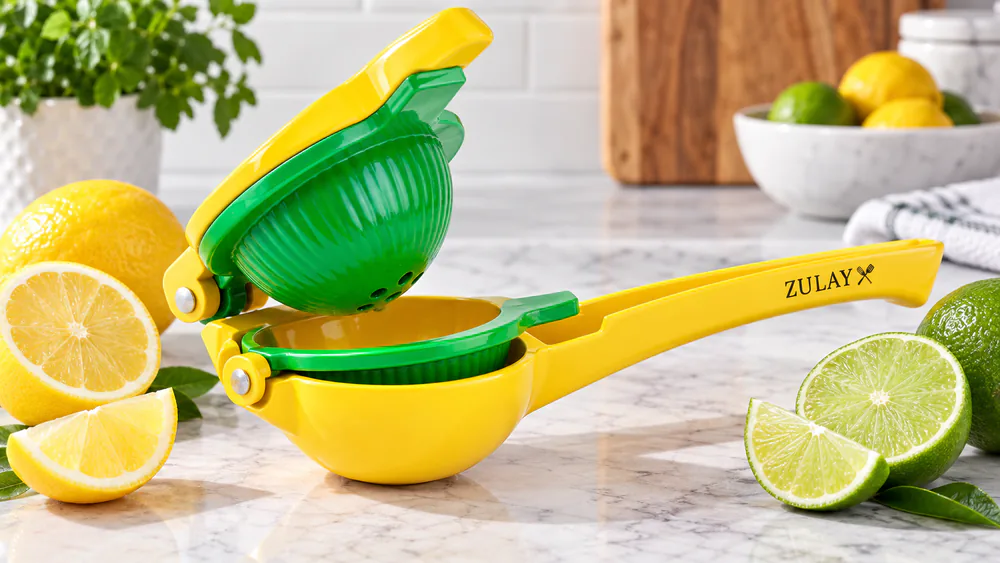
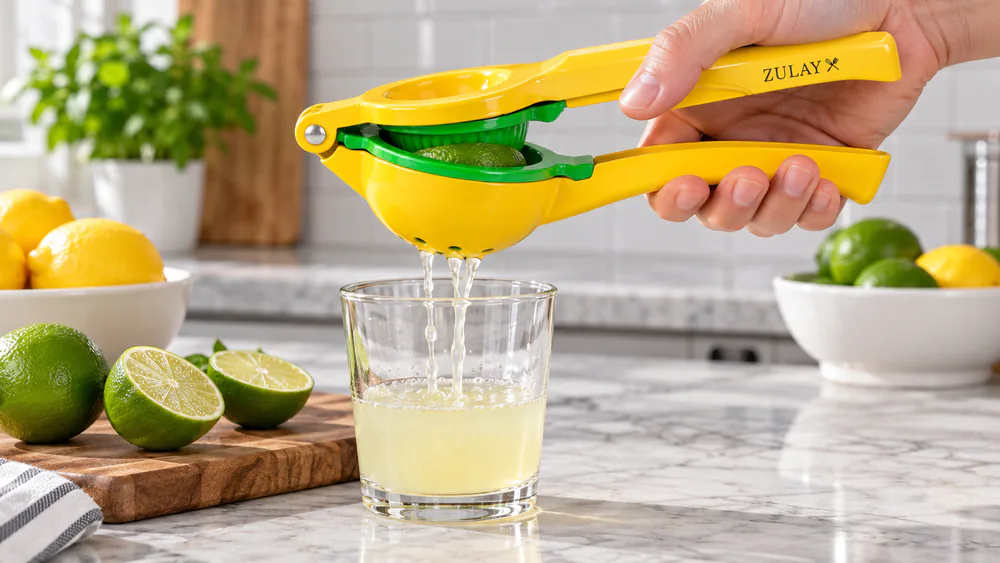
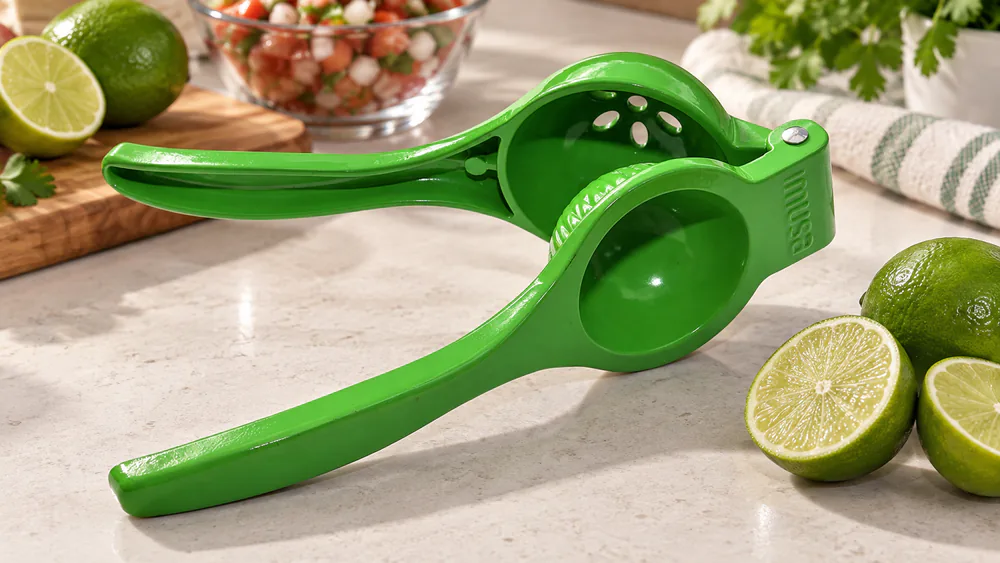
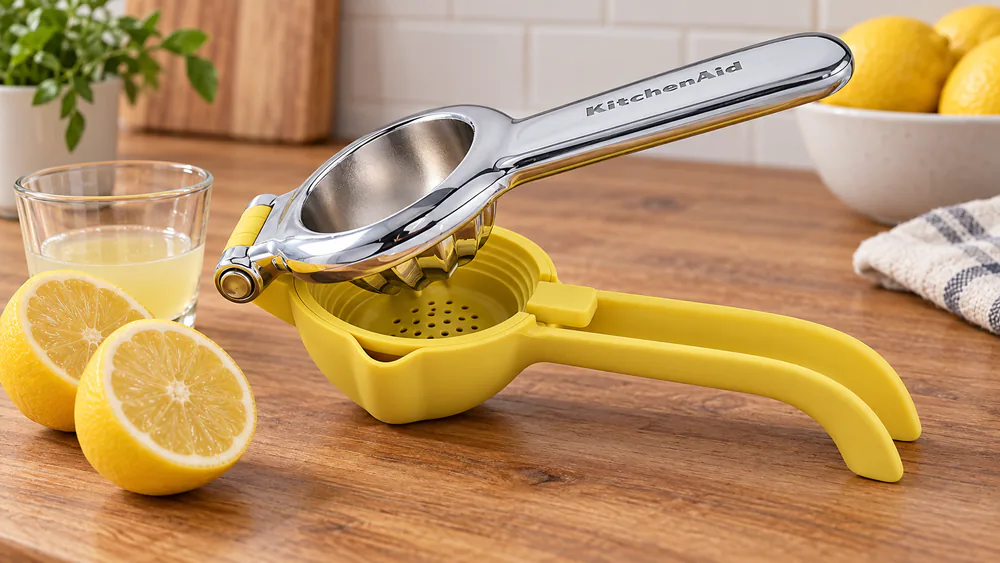
A handheld two-piece squeezer, the press style, is the most commonly recommended type for lemons, and for good reason. It is cheap, fast, stores in a drawer, and pulls plenty of juice with a single squeeze. For most kitchens, a manual press like our top pick is all you will ever need.
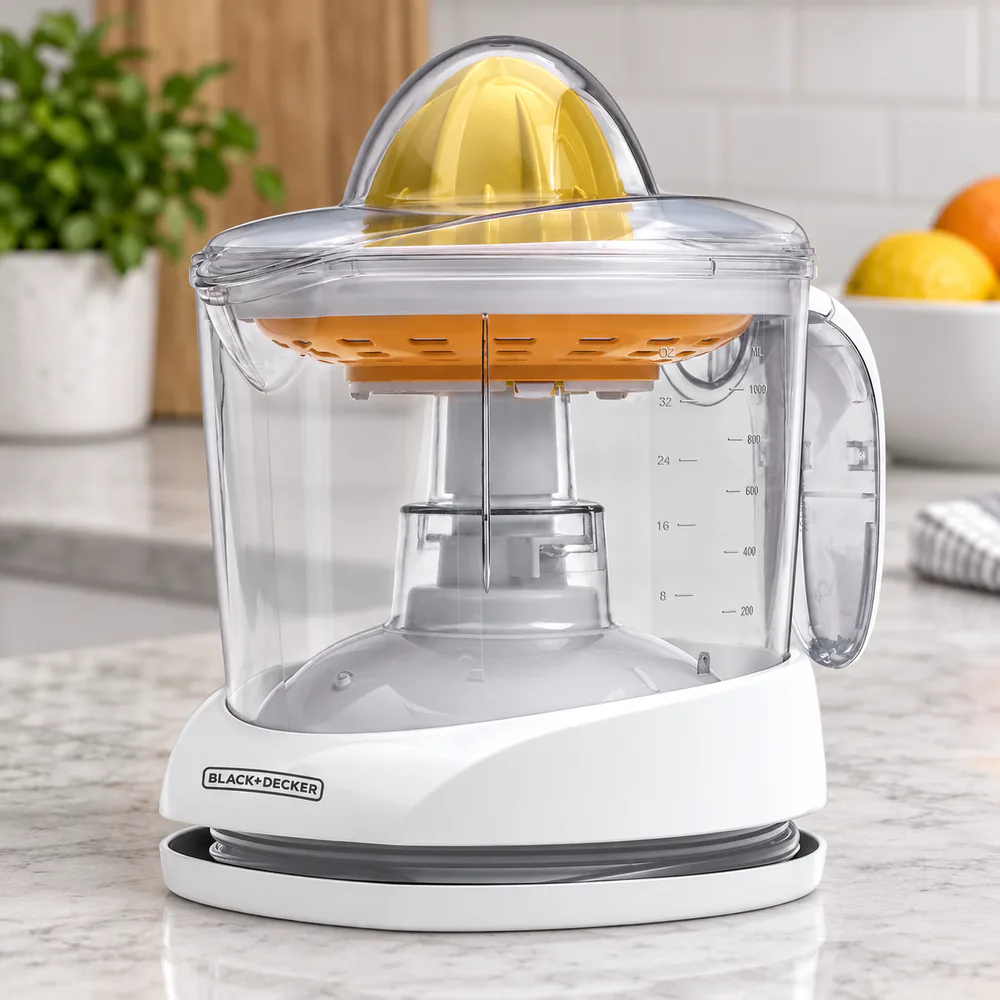
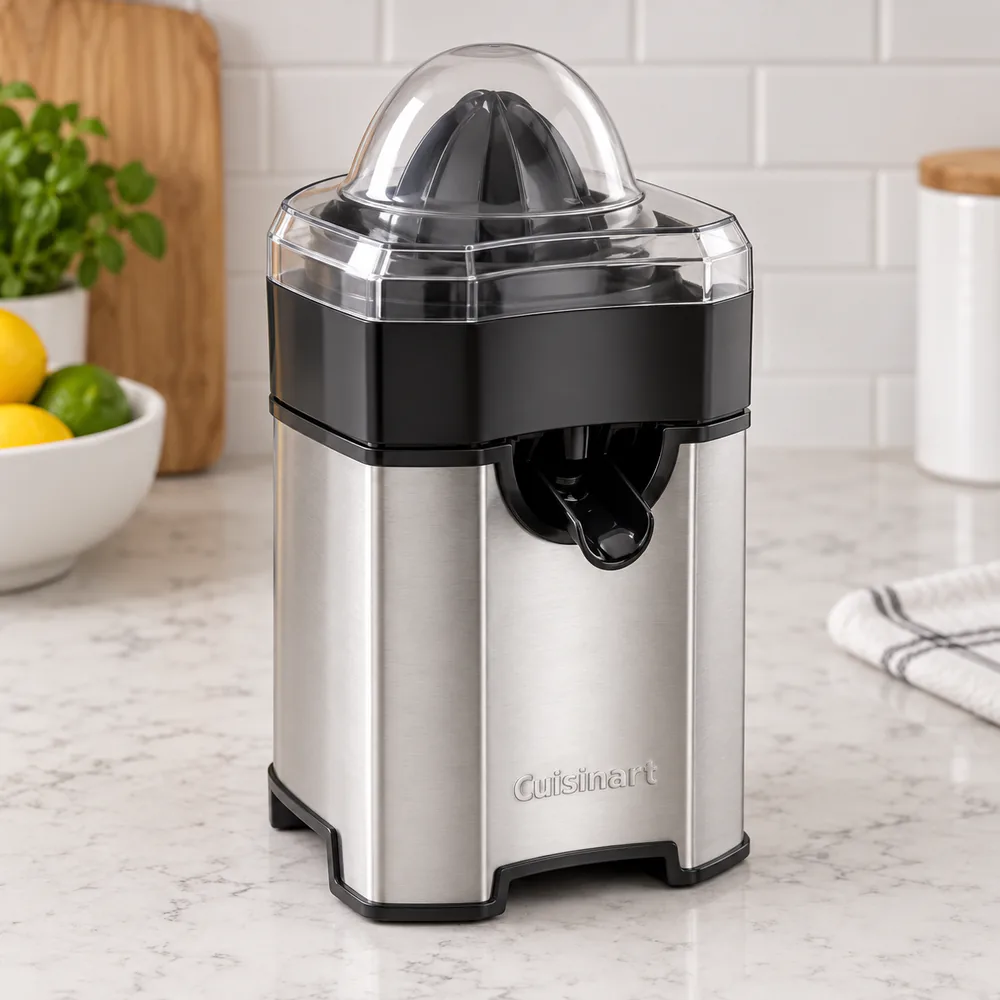
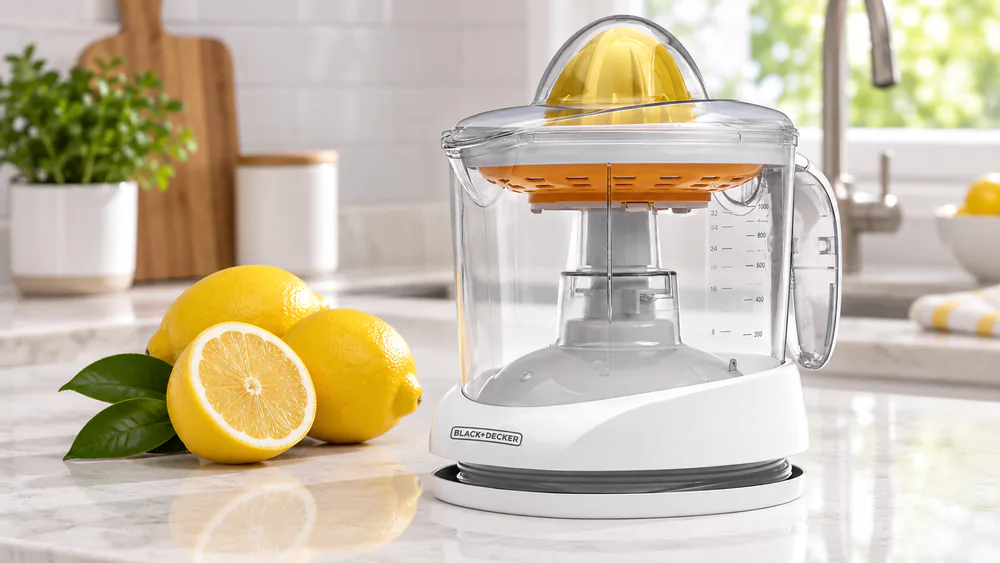
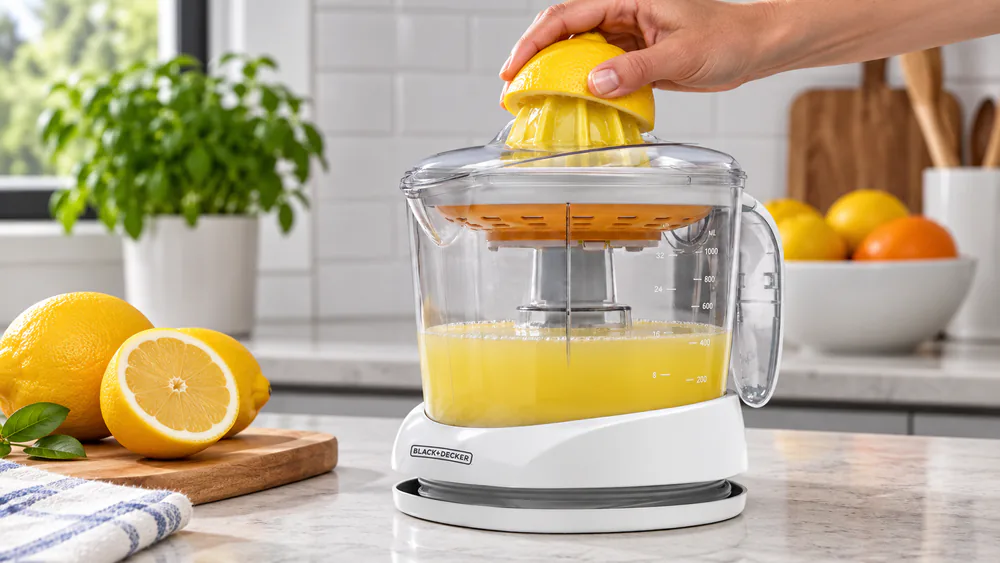
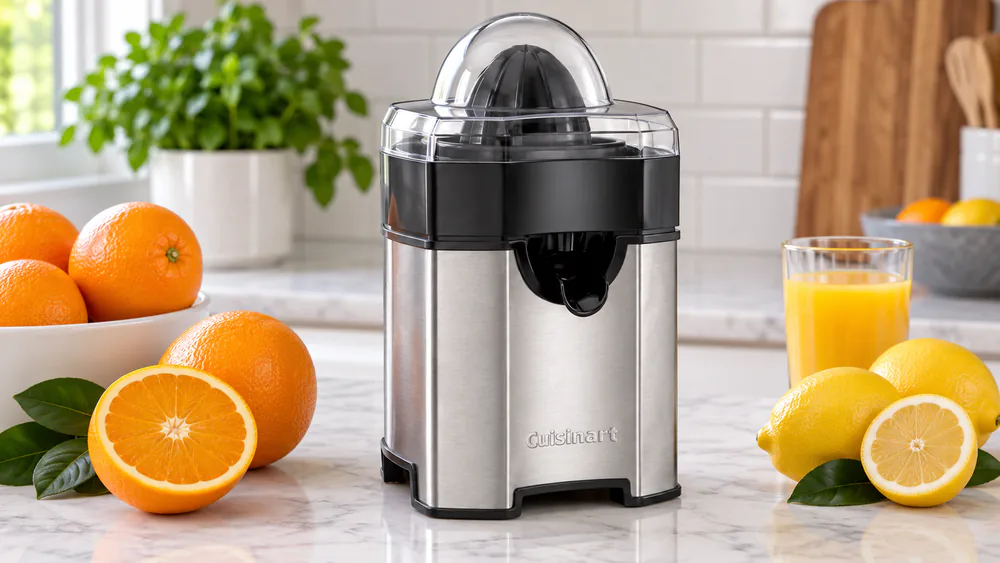
Electric models earn their place in two situations. If you juice large batches often, or if hand strain or arthritis makes squeezing painful, resting fruit on a spinning cone is a real relief. The trade-off is counter space, a higher price, and more parts to clean and eventually replace. Here is how the two styles stack up in our kitchen.
Extraction Efficiency and Yield
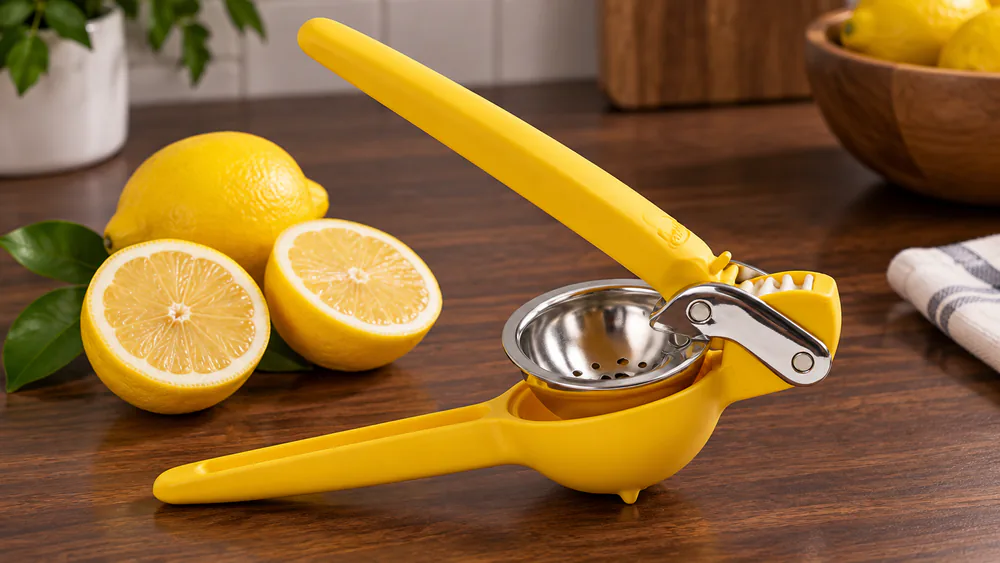
Yield is the whole point. A good squeezer should pull close to twice what your bare hands can, and the best geared and electric models push that further by reaching juice trapped near the rind. Look for a design that inverts the fruit or reams it thoroughly rather than just pinching the middle.
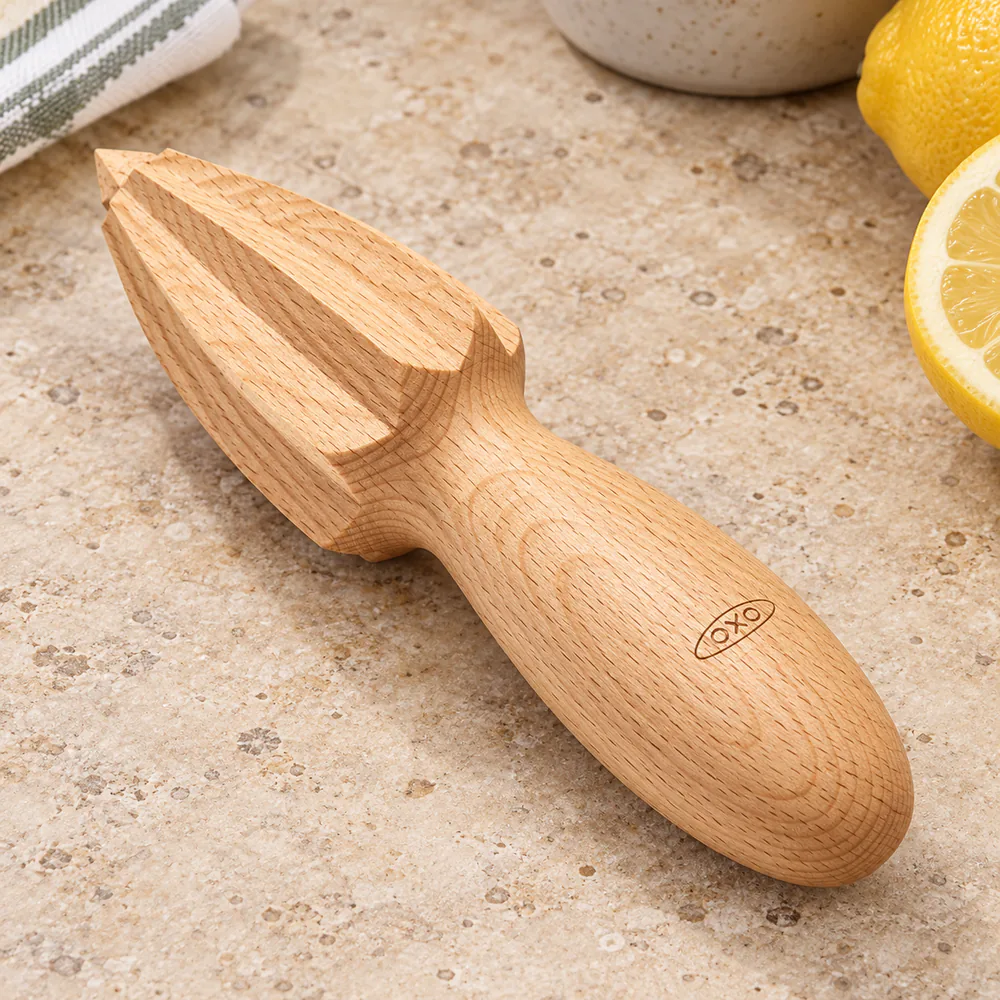
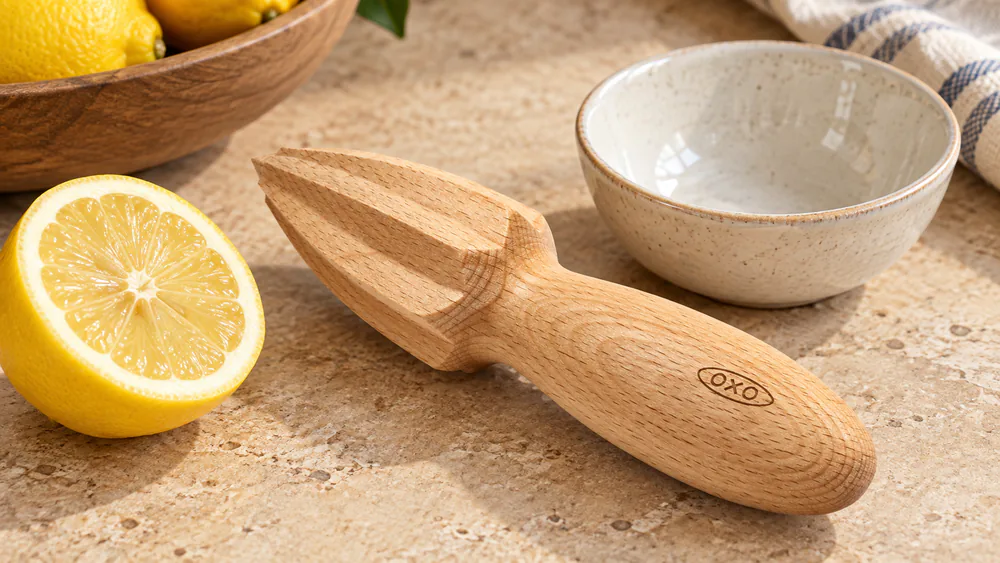
Reamers extract beautifully, right down to the last drop, but they leave pulp and seeds in the juice for you to strain. Presses and electrics build in strainers that do that filtering for you, which is why they win for hands-off convenience.
Build Quality and Materials
Materials decide how long your juicer lasts and whether it reacts with acidic juice. Bare aluminum can react with acidic citrus, which is why coated or enameled squeezer bowls are common; stainless steel avoids the concern entirely. Coated and enameled finishes work well, but the coating can chip or flake over years of hard scrubbing, so wash them gently.
Nylon, stainless steel, and solid beechwood all held up well in our testing. On electric models, the weak point is usually the small reamer cone, which is the first part to crack under heavy use, so check that replacements are available.
Ease of Cleaning
Cleanup is the test that decides whether a juicer stays on the counter or gets shoved to the back of a cabinet. Most of our picks are dishwasher safe, some top-rack only, and that convenience matters more than almost any other feature for daily use.
Reamers are the exception: wooden ones like the OXO need prompt hand-drying and should never go in the dishwasher. Electrics come apart into several pieces, so factor in the extra rinse time even when the parts are dishwasher safe.
Size and Storage
Counter space is precious, so match the tool to your kitchen. Manual squeezers and reamers tuck into a drawer and disappear when not in use. Electric juicers claim permanent counter real estate or a dedicated shelf, so only buy one if you will use it enough to justify the footprint.
Bowl size matters too. Several of our favorite squeezers have small bowls that fit limes and medium lemons perfectly but force you to cut large lemons into pieces. If you buy big lemons, size up or choose a press with a roomier hopper.