As an Amazon Associate we earn from qualifying purchases. We may earn a commission from links on this page, at no extra cost to you. Learn more.
A manual juicer is a hand-powered press, reamer, or squeezer that pulls the juice out of citrus without a motor or a cord. It is the tool for anyone who wants fresh orange, lemon, or lime juice without parking another machine on the counter. The best ones do the job in seconds and clean up under the faucet.
If you juice a couple of oranges or limes a day, a manual model beats an electric one on price, noise, cleanup, and counter space. That is the cook these tools are built for.
We spent 30 days pressing oranges, lemons, and limes through all seven models, timing every fruit and measuring the yield in ounces.
The table below gives the quick verdict; the full reviews follow.
Our Top Picks at a Glance
The Zulay Metal 2-In-1 Lemon Squeezer takes the top spot, with the Zulay Kitchen Cast Iron Orange Squeezer close behind for daily orange drinkers. Here is the whole field, ranked.
We ran all seven models through a 30-day stretch of daily use, working through boxes of oranges, lemons, and limes plus the occasional grapefruit and pomegranate. Every fruit was timed from cut to press, and every yield was measured in ounces. We scored on juice yield per fruit, cleaning time, and wrist effort.
For a wider benchmark, Serious Eats juiced 300 lemons and limes in its own comparison and chose winners for efficiency and ease on the wrists. Prices below are street prices, and they move week to week.
We measured every yield in ounces over the full 30-day test.
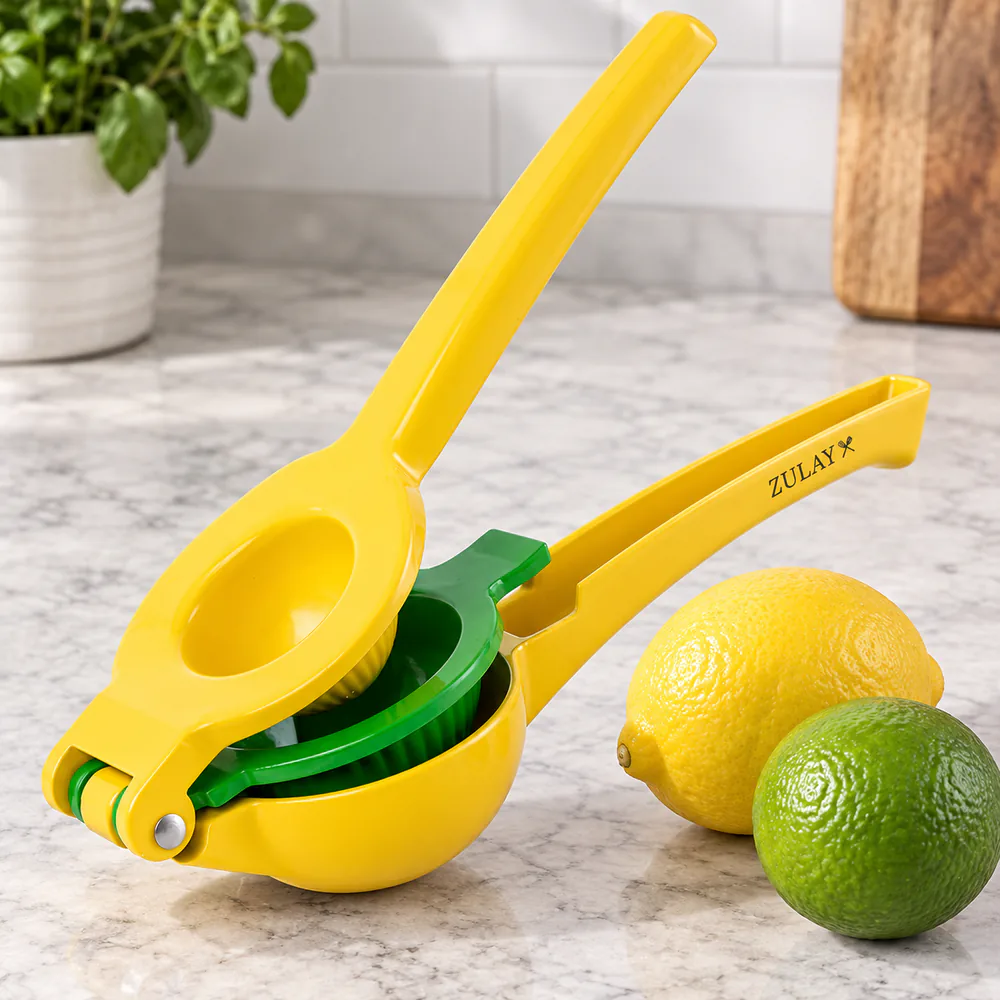
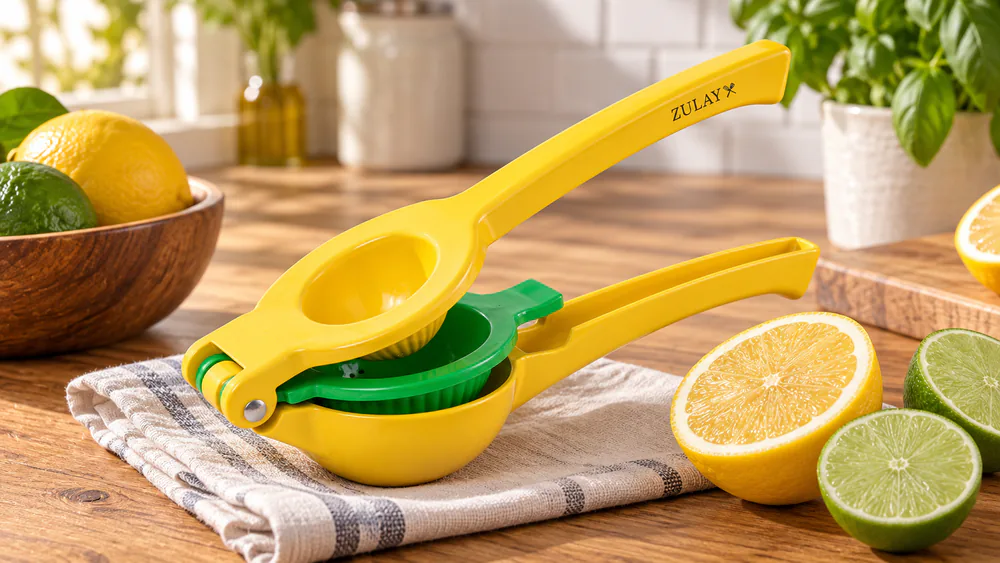
The Zulay Metal 2-In-1 Lemon Squeezer is our top pick because it turns juicing into a two-part ritual: drop a lemon half in the yellow cup, pull the handles together, and rinse the cups under the faucet. The tight fit between fruit and cup drives the yield, and it squeezed roughly twice the juice we got by hand. It asks for real hand strength, but 150 limes in one heavy stretch never broke it.
Pros
Two sized cups for lemons and limes
Bowl holes filter out seeds and pulp
Rinses clean in seconds
Lifetime guarantee from Zulay
Cons
Needs real hand strength to squeeze
Coated bowls can bubble in the dishwasher
Only small oranges fit
The build is simple: aluminum bowls with a food-grade protective coating, a yellow cup for lemons, a green one for limes, and bowl holes that filter seeds and pulp. Cleanup is a rinse, and that is the whole story; the coated bowls can bubble in the dishwasher, so we hand-wash them. A lifetime guarantee backs it at about $15 street price.
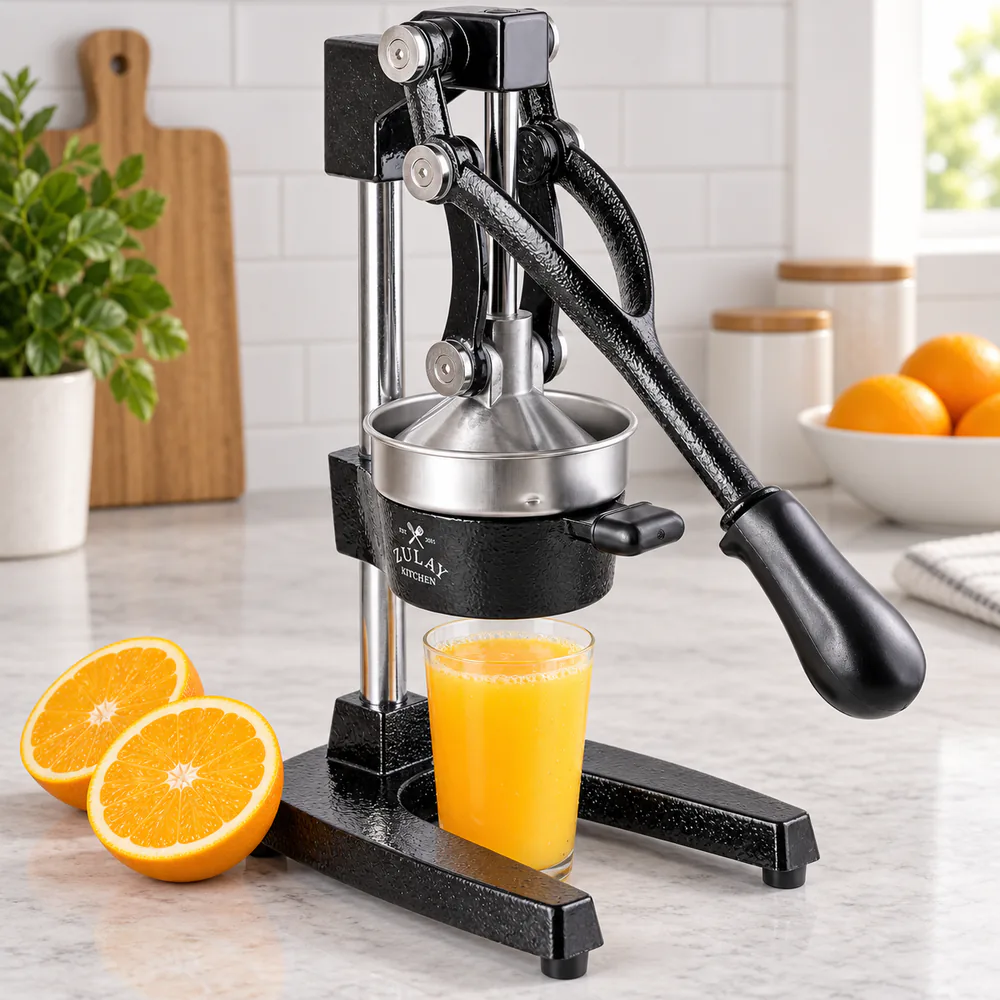
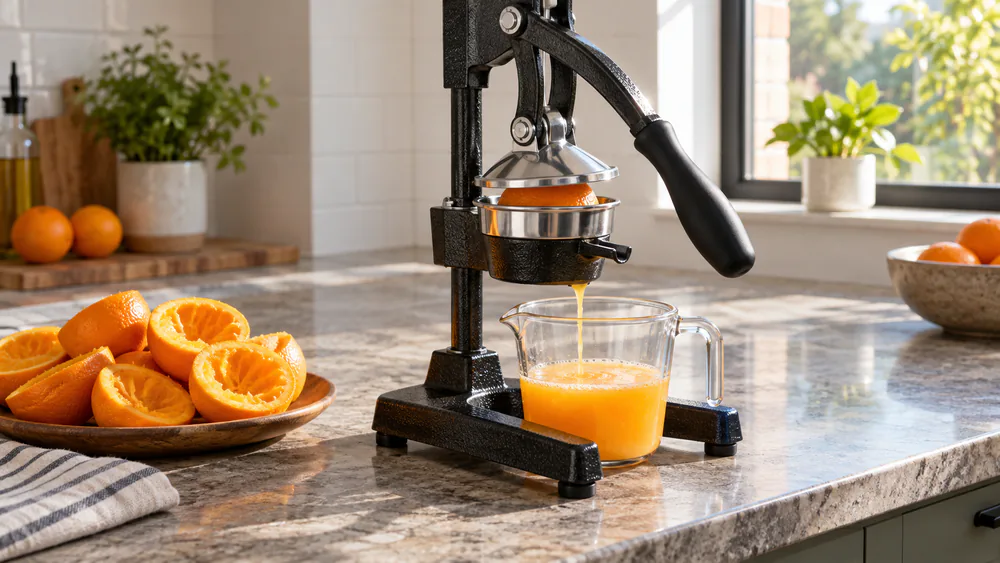
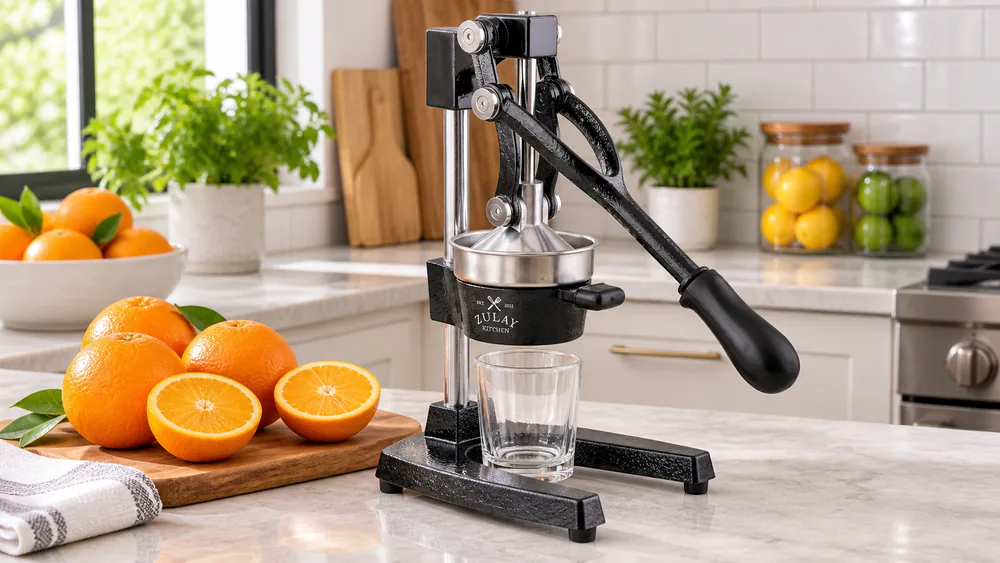
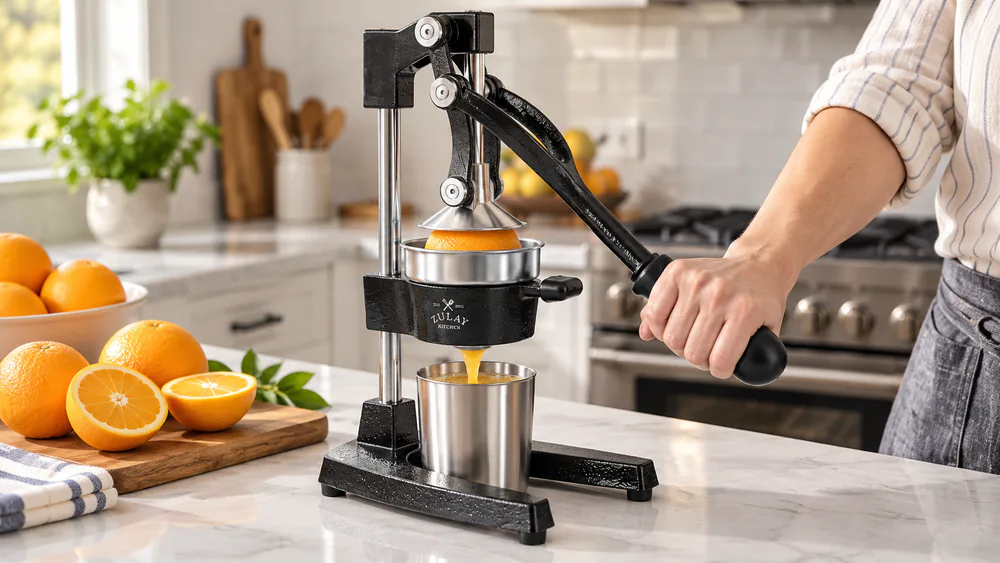
Where the 2-in-1 squeezes by hand, the cast iron press does the work with a lever, and it is the yield king of this test. Over a 30-day run it averaged 3.5 ounces of juice per medium orange at about 12 seconds per fruit, and it survived a drop onto tile without a dent. The catches: the spout sits low, and it slides on smooth counters when you bear down.
Pros
Highest yield of the group
Heavy frame that never tips over
Bowl and cone detach for quick cleanup
Lifetime guarantee
Cons
Low spout is awkward with tall cups
Body rusts if not dried right after washing
Slides on smooth counters under pressure
It is a lever press with real mechanical advantage: a cast iron frame, a stainless steel filter cone and cup, and a 5-inch bowl that handles limes, lemons, oranges, grapefruits, and even pomegranates. Cleaning took about three minutes with the bowl and cone off, and both are dishwasher safe. It measures roughly 7 x 11.25 x 15.75 inches, weighs around 15 pounds, with listings varying from about 14 to 15.5, and street price sits near $90.
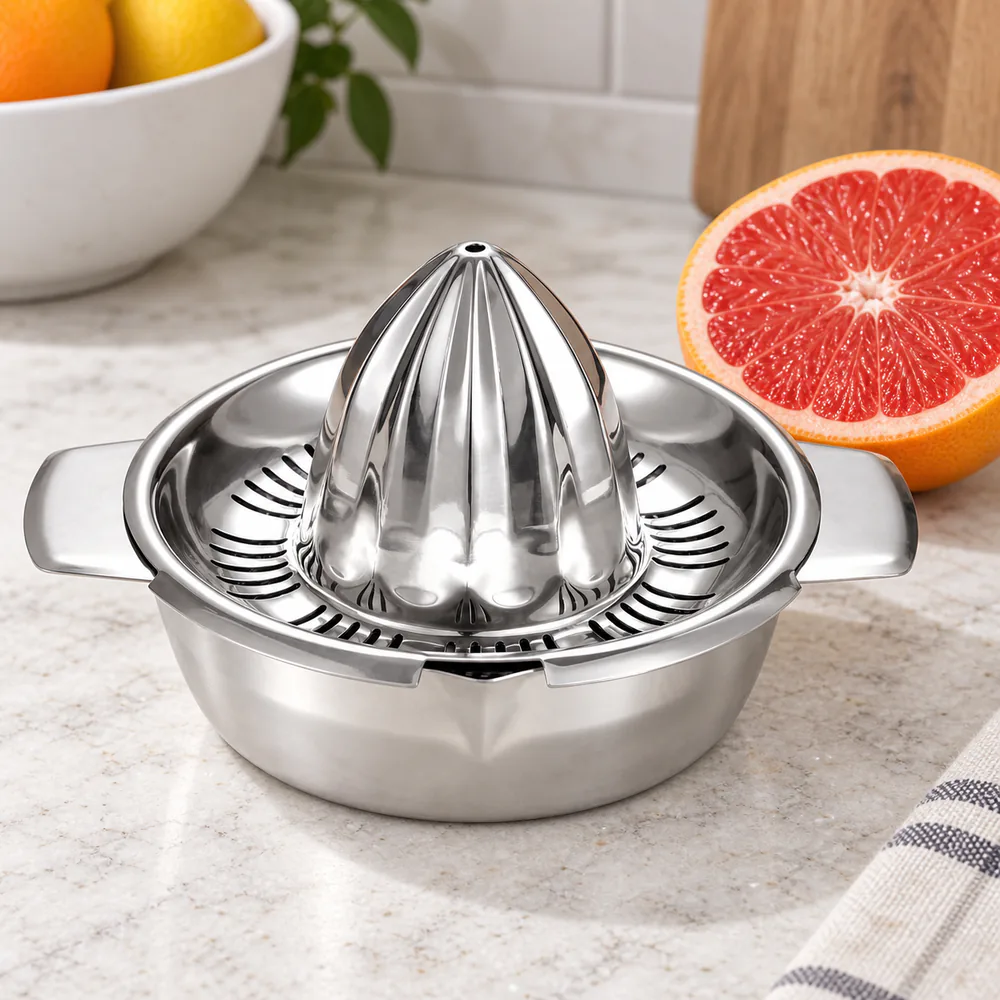
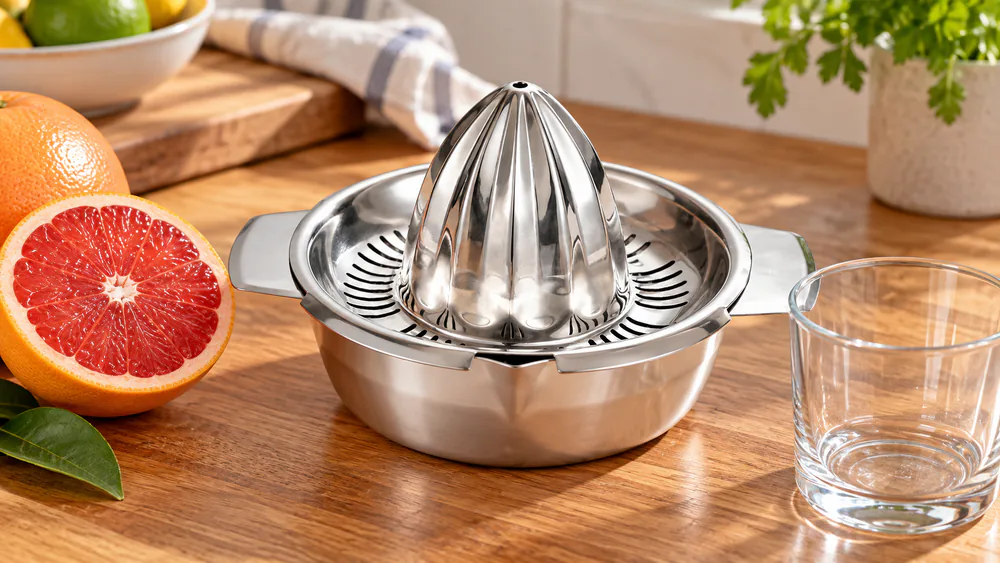
If the cast iron press is the heavyweight, the Etinslant reamer is the everyday value pick: the whole stainless package at about $18. A pointed cone with an 11-tooth reamer sits over a 10 oz catchment bowl, and the slotted sieve filters seeds while it drains fast. It took less effort than the plastic reamer it replaced in our kitchen.
Pros
304 stainless through and through
11-tooth reamer presses several citrus sizes
Slotted sieve keeps seeds out and cleans easily
Cons
Sharp rim edges can scrape a careless grip
Twisting a reamer takes more effort than pulling a lever
10 oz bowl fills fast for big batches
The 304 stainless resists citric acid and rust, it is dishwasher safe, and a 12-month full warranty with a 60-day return window backs it up. The bowl holds juice from 2 to 4 lemons at once, and the pulp catch is easier to clean than most. Watch the rim, though: the stainless edges can scrape a careless grip.
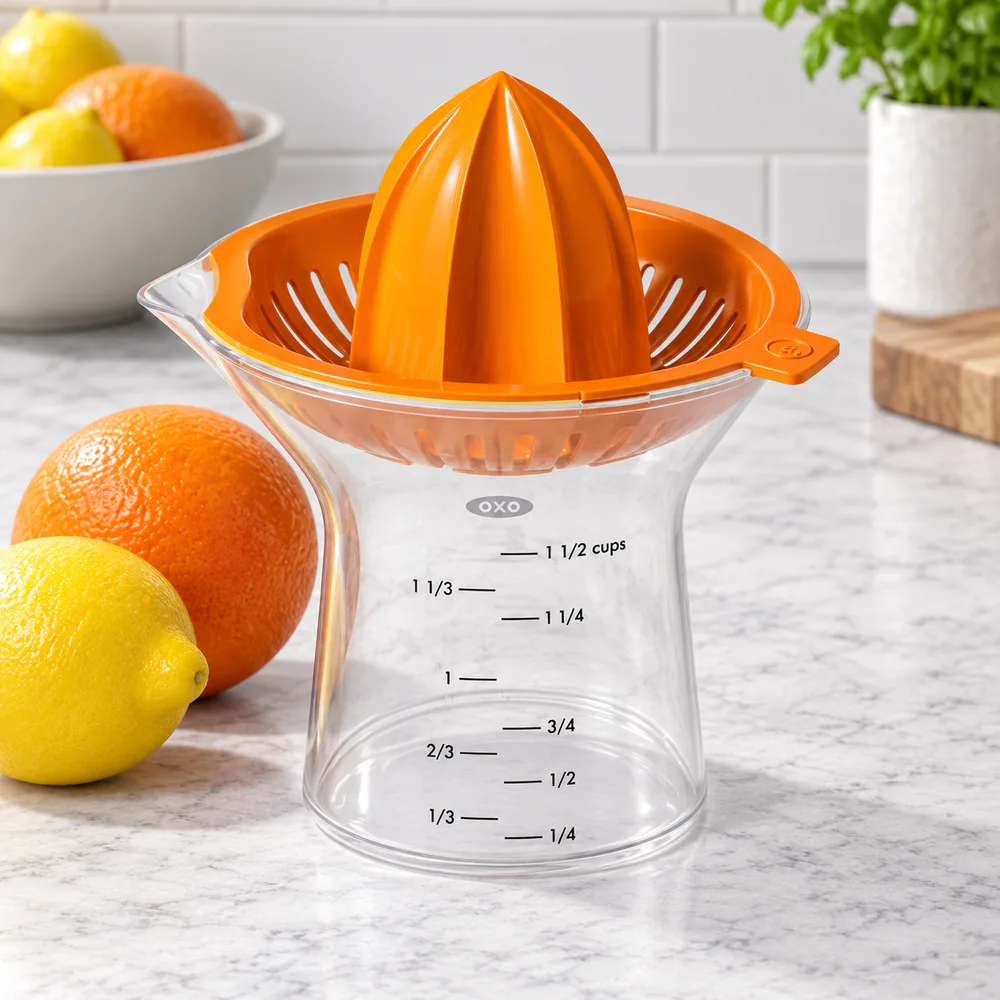
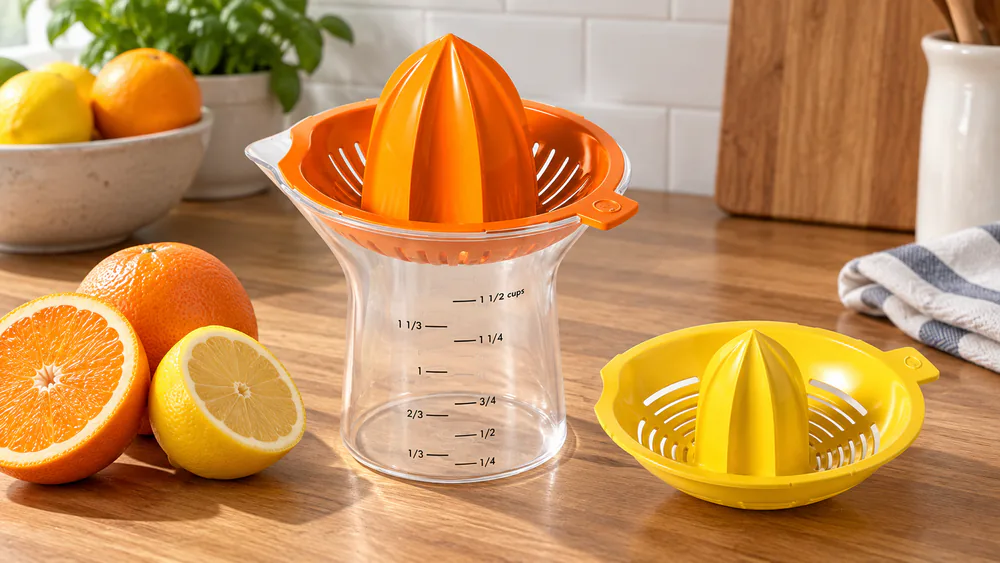
Where the Etinslant twists for its juice, the OXO 2-in-1 earns a permanent counter spot, mostly because of the measuring cup nobody wants to give back. The small snap-on reamer crushes limes thoroughly, the large one covers oranges and grapefruits, and the cup marks up to 1.5 cups (350 ml) with a drip-free spout. We pressed up to six lemons at once into that cup.
Pros
Two snap-on reamers cover lime to grapefruit
Measuring cup with markings and a drip-free spout
Reamers nest for storage
Cons
Clear cup clouds in the dishwasher
Pulp screens need a soak to come clean
Not the sturdiest reamer build we handled
It is not the sturdiest reamer we have handled, but it extracts juice well, and the two cones nest for storage. The clear cup clouds in the dishwasher, so we hand-wash it, and the pulp screens need a soak plus a dishwasher run to come fully clean. Street price is about $20.
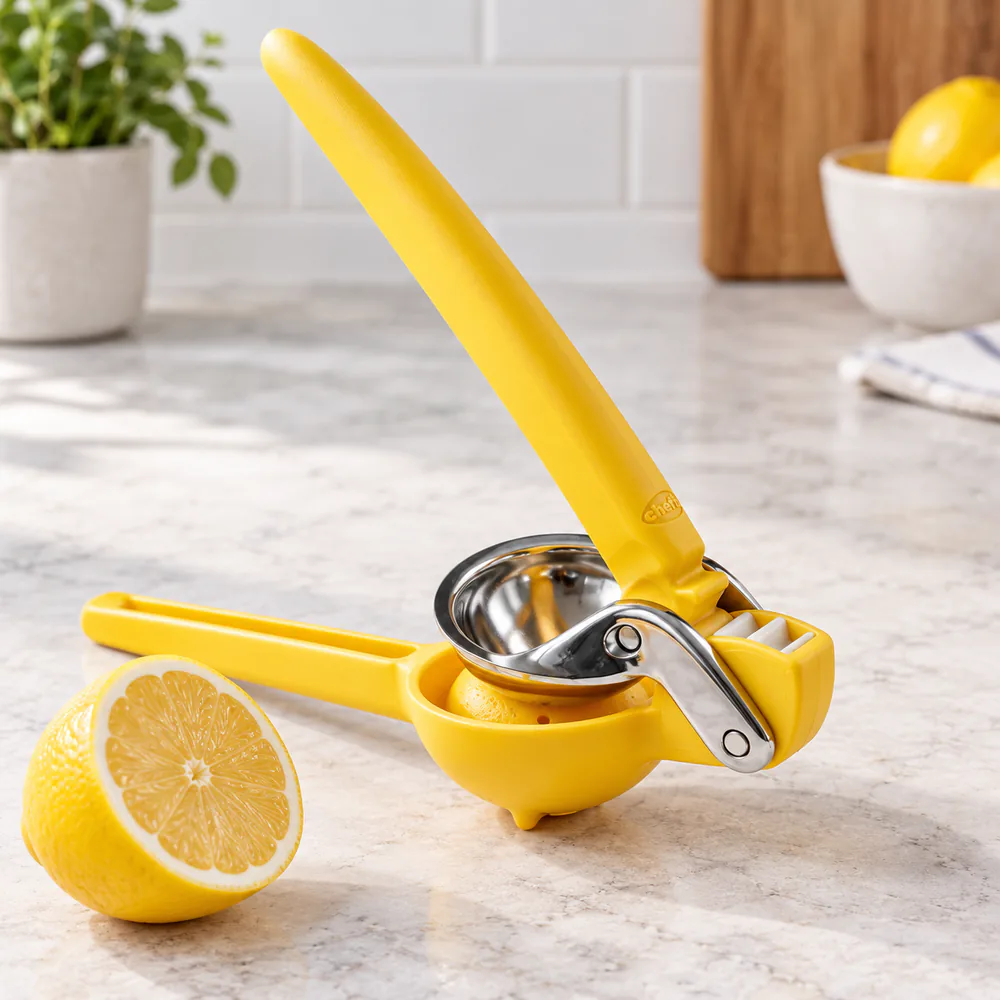
Where the OXO is a countertop reamer, the FreshForce is the handheld squeezer that carried our lemon-heavy sessions. Its patented dual gears press in stages and delivered up to 20% more juice than a standard squeezer. We worked through many lemons in a sitting without sore hands, and the two parts rinsed clean under the faucet. The catch is size: it is built for lemons, key limes, and small citrus, not oranges or grapefruit.
Pros
Geared squeeze cuts hand strain noticeably
Yields more than a plain squeezer
Basket catches pulp and pits
Cons
Built for lemons and key limes only
Cannot handle oranges or grapefruit
It pairs a durable nylon body with stainless steel squeezer parts, non-slip ergonomic handles, and a basket that catches pulp and pits. It is top-rack dishwasher safe, compact enough for a drawer, and runs about $16 for the lemon version.
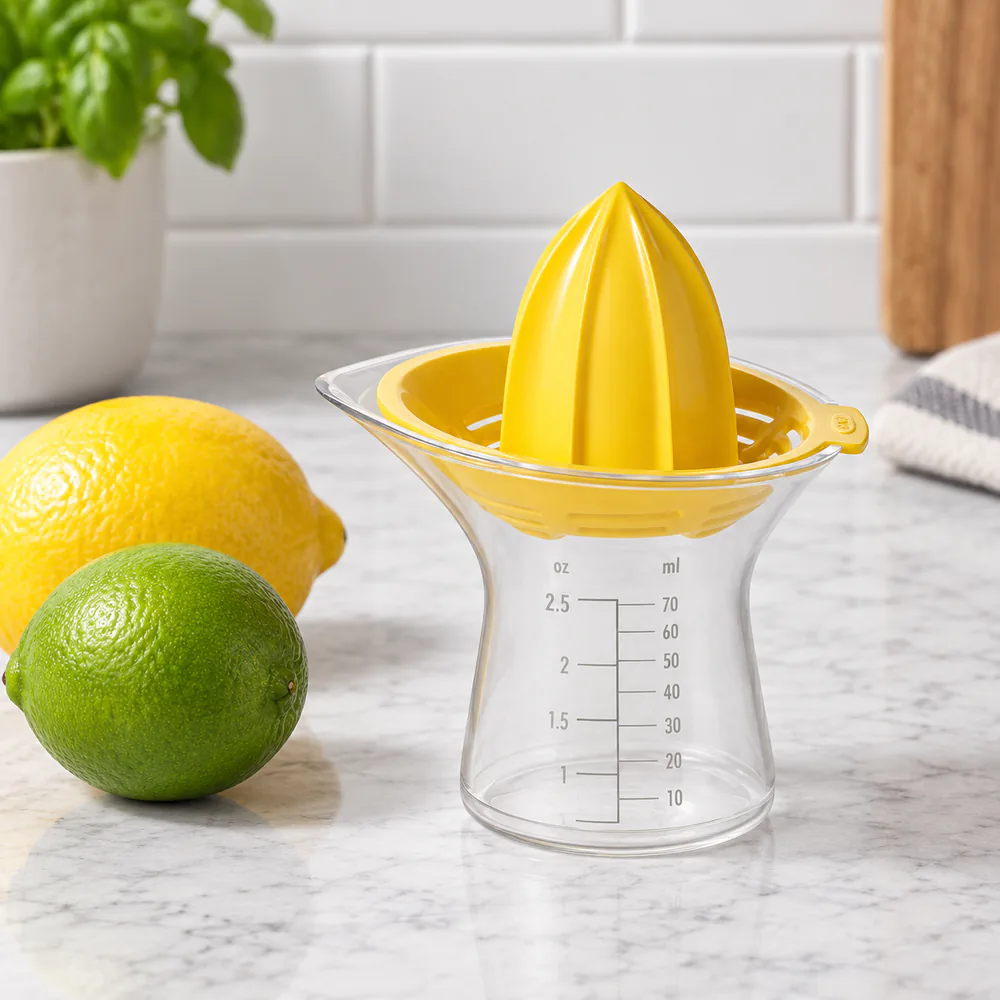
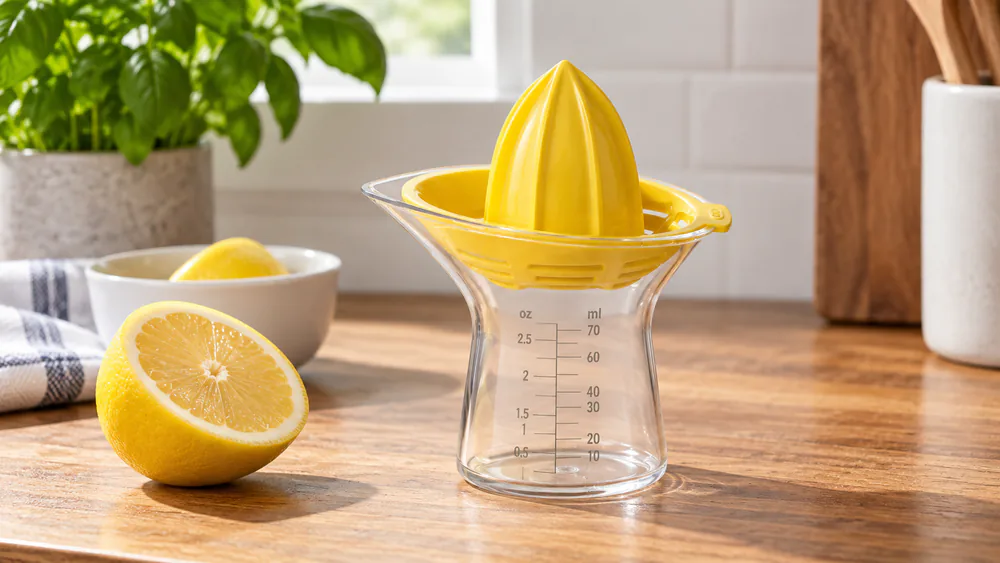
Where the FreshForce squeezes by hand, the OXO Small reams, and it is the lightest pick here: a handheld reamer with a strainer built into the cone and a 2.5 oz cup underneath. It is the tool for one glass at a time: a lemon for lemon water, a lime for a single cocktail. The limits are real: the cup is small for oranges and grapefruit, seeds can slip into your container when you pour, and the shape is fiddly to clean.
Pros
Perfect for single servings and recipes
Strainer built into the reamer
Measured cup with a drip-free spout
Cons
Too small for oranges and grapefruit
Seeds can slip past when pouring
Shape is fiddly to clean
Tips over in the fridge when storing juice
The reamer dish fits securely onto the cup, a drip-free pour spout tops it, and the whole unit is BPA-free. Our cleaning routine was rinse the reamer dish, pick the pits out of the strainer, give it a quick scrub, and air dry. It disassembles for cleaning and costs about $15.
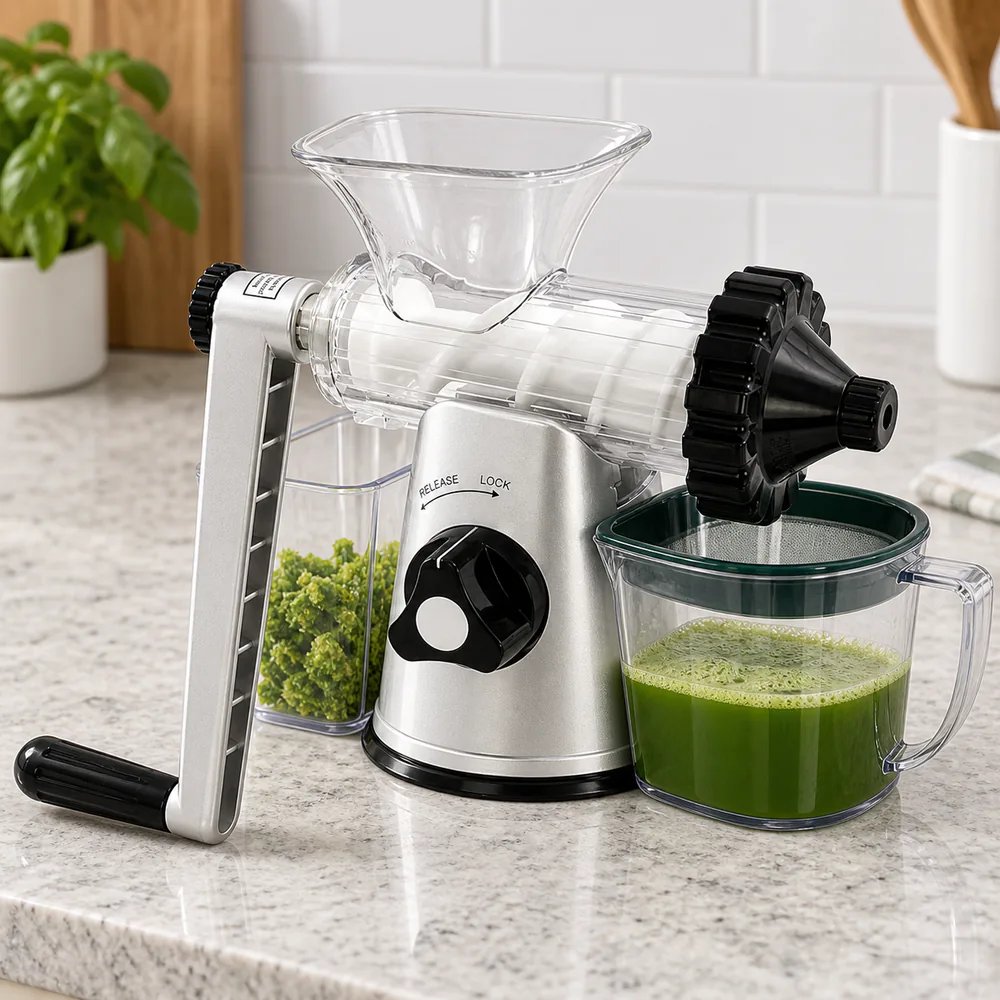
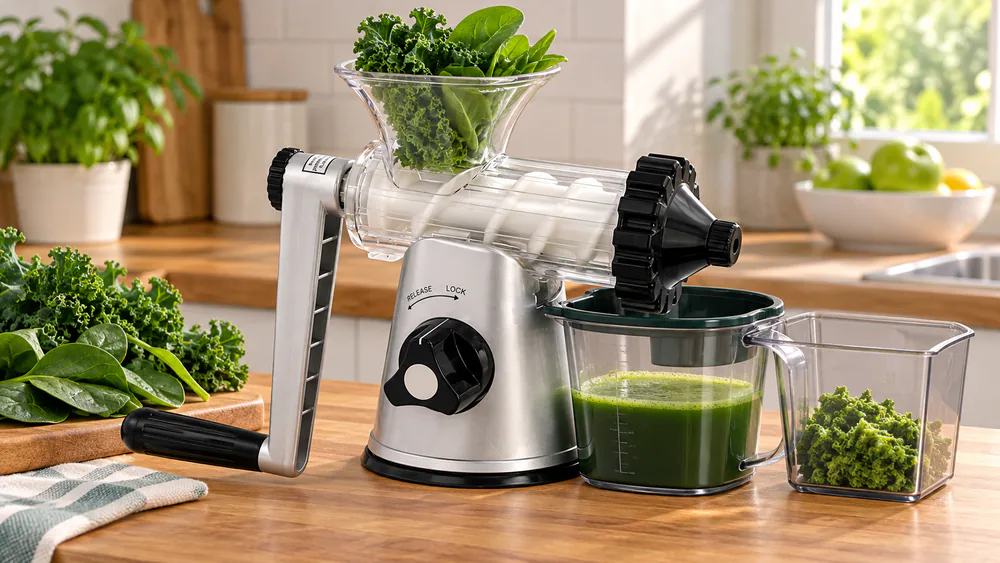
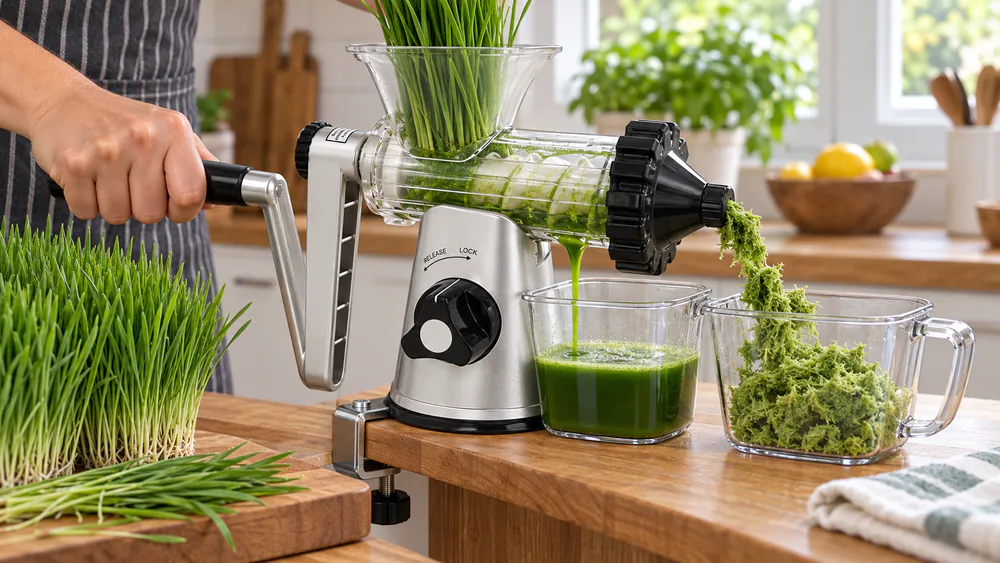
The Lexen GP27 is the odd one out in this roundup, and that is exactly the point. It is a manual masticating juicer, a slow auger turned by a long handle, and the only pick here that genuinely presses greens. In our kitchen, a hand-cranked session with wheatgrass shoots, celery, and kale produced real green juice where no other model in this test produced a drop. Even a few small batches tired the arm, so we kept those sessions to a glass or two at a time.
Pros
Presses wheatgrass, celery, and kale that citrus juicers cannot
No motor, no cord, silent operation
Fits small kitchens without a power outlet
Cons
A few small batches tire the arm
Slow going for anything beyond a glass or two
The whole unit is hand-cranked, with no motor and no cord, which keeps it silent and portable. Because listings vary in price, check the current price before you commit.
Manual Juicer Buying Guide
The right manual juicer depends on how you juice. Let's walk through the four main types, then the specs that actually matter. If you are building a hand-powered morning routine, our guide to the best manual coffee grinders pairs well with this one.
Types of Manual Juicers
Manual juicers split into four types.
Handle Press Juicers
A handle press is the heavy artillery of the group: a metal frame, a long arm, and a cup that crushes a fruit half against a strainer cone. The mechanical advantage means big yield with modest effort, which is why the cast iron press led our yield test.
Countertop Citrus Reamers
A countertop reamer is a cone on a pedestal with a bowl or cup underneath. You press a fruit half onto the cone, twist, and the juice runs into the cup. Reamers are easy on the hands and quick to clean, and most come with a measuring cup.
Handheld Squeezers
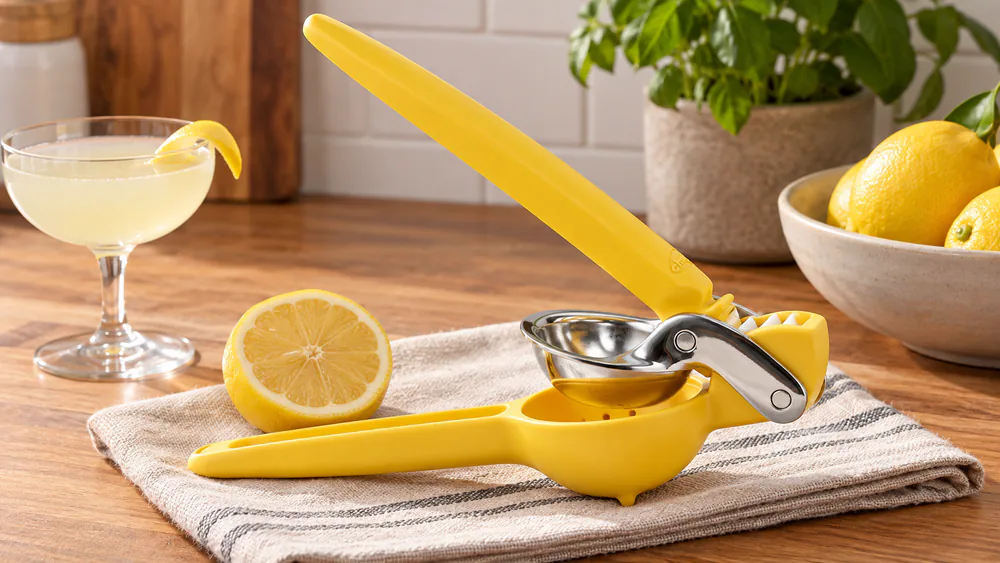
A handheld squeezer is the clamshell type: two hinged handles that press a fruit half in a small cup or basket. It is the smallest, cheapest, easiest-to-store option, and grip strength sets the ceiling on yield.
Manual Masticating & Wheatgrass Models
A manual masticating juicer replaces the motor with an auger turned by a long handle, and it is the only type that genuinely presses wheatgrass, celery, and kale. Expect small batches and a tired arm.
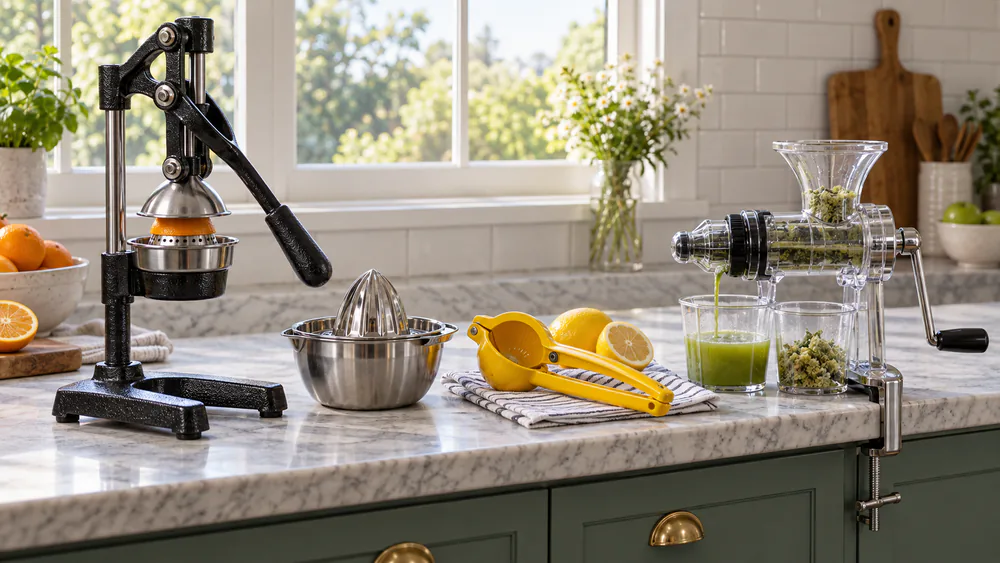
The four types of manual juicers: press, reamer, squeezer, and masticating.
What to Look For in a Manual Juicer
The specs that matter most are juice yield, wrist effort, cleaning, materials, size, and budget.
Juice Yield
How much juice you get per fruit is the whole game. Lever presses extract every last drop of juice, reamers come close with a good twist, and handheld squeezers live and die by the fit between fruit half and cup.
Ease of Use & Wrist Effort
Squeezing is work, so pick a tool that matches your grip. Handheld squeezers need real hand strength, geared squeezers like the FreshForce cut the strain, and lever presses turn the job into a motion you can brace against.
Cleaning & Dishwasher Safety
Cleaning is where manual juicers win: most rinse clean in under a minute, and the cast iron press takes a few minutes with its detachable parts. Watch the materials: painted metal can bubble in the dishwasher, and cast iron needs a towel dry right after washing.
Tip. Dried pulp is what turns a fast cleanup slow: it sets into the strainer holes, so rinse the fruit-touching parts first.
Durability & Materials
Cast iron and stainless steel are the materials that age well. The cast iron press survived a drop onto tile without a dent, and 304 stainless resists citric acid, which makes it the obvious choice for anyone moving away from plastic. A lifetime guarantee on both metal picks says the maker expects them to be built to last.
Size & Storage
Size decides where a juicer lives. The cast iron press measures roughly 7 x 11.25 x 15.75 inches and weighs around 15 pounds, so it earns a permanent counter spot. Handheld squeezers and small reamers fit in a drawer.
Budget
Street pricing moves week to week, but most of our picks sit between about $15 and $20, with the cast iron press the big spender near $90. A squeezer in that range that lasts years beats a cabinet-bound electric machine on cost per glass.
Manual vs. Electric Juicers: Which Should You Choose?
Manual juicers are cheaper, silent, portable, and easier to clean, with fewer parts and no motor to wear out. Electric juicers are faster for volume and handle leafy greens, which no standard citrus press can do. Where manual presses hold the edge is citrus flavor and control: you decide exactly how much pressure each fruit gets.
Leafy greens and wheatgrass need a masticating model, not a citrus press.
Manual juicer
Electric juicer
Price
About $15 to $90
Generally higher
Speed
About 12 seconds per orange
Minutes for a full pitcher
Noise
Silent
Motor hum
Cleaning
Rinse or a few minutes
Several parts to wash
Leafy greens
Masticating models only
Most models handle greens
Storage
Drawer or a small counter spot
Needs counter space and an outlet
It comes down to how you juice: a full pitcher of juice points to the electric machine, a single fresh glass to the manual press.
Frequently Asked Questions
How do I clean a manual juicer?
Rinse the detachable parts right after pressing so citric juice does not dry into the strainer holes. For most models, that rinse is the whole routine.
Are manual juicers better than electric juicers?
For a few citrus fruits a day, yes. For liters of juice or regular greens, an electric machine earns its motor. For our money, flavor is the other reason to press by hand: we set the pressure on every half.
Is a manual masticating juicer worth the effort?
For a glass or two of green juice a day, yes. Beyond that it is slow going, so this is a tool for the enthusiast, not the batch maker. Prices vary by listing, so check the current asking price before you order.
How much juice will I get from one orange?
About 2 to 4 ounces from a medium orange, depending on the fruit. Fresh oranges yield more than older ones, and a lever press beats a reamer.
Do manual juicers remove seeds?
Most do, through strainer holes, slotted sieves, or catch baskets. Pour slowly and nearly all seeds stay out of the glass, though a few small ones can slip through on the simplest models.
Conclusion
If you want one manual juicer to live on the counter, the Zulay Metal 2-In-1 Lemon Squeezer is our top pick: it squeezes well, rinses clean, and costs less than a week of store-bought juice.
If your kitchen runs on orange juice, step up to the cast iron press for the best yield. On a strict budget, the Etinslant stainless reamer delivers most of the OXO experience for a few dollars less.
One habit we would carry forward: hand-wash the coated parts and dry the cast iron right after use. That is the whole maintenance routine, and it is the difference between a juicer that lasts years and one that does not.