As an Amazon Associate we earn from qualifying purchases. We may earn a commission from links on this page, at no extra cost to you. Learn more.
A microwave rice cooker is a vented, microwave-safe vessel with a lid that holds rice and water while your microwave supplies the heat. There is no heating element and no cooking program, so the model, the lid, and the cleanup decide how easy the whole thing feels. In a house where dinner has to feed seven, we care about how much a cooker holds, how it behaves when it boils, and whether a kid can carry it to the sink. Below are five we cooked with, and if you want a plug-in option, our rice cooker reviews cover those too.
Best Microwave Rice Cookers at a Glance
Here is the shortlist in one place. Vessel volume and rice yield are different numbers, so we list them separately.
Product
Best use
Documented rice capacity
Vessel volume
Dimensions and material
Key limitation
Joseph Joseph M-Cuisine
All-in-one rice prep with a rinsing colander
Maximum cooked yield not established
2 L
13.5 x 22 x 18 cm (H x W x D), plastic
Pale pot can stain
Sistema Microwave Rice Cooker
Simple locking clips
Maximum cooked yield not established
2.6 L nominal (copy varies)
216 x 195 x 161 mm (L x W x H), polypropylene
Tall body, no rinsing insert
Lekue Rice, Grain and Quinoa Cooker
Compact cooking and serving
Up to four servings (cup basis disputed)
About 1 L
About 18 cm across, 12 cm tall, plastic with silicone lid
Needs water and time adjustment
PrepSolutions Rice and Pasta Cooker
Family batches and pasta
Up to 8 cups of prepared rice
12-cup
About 9 x 9 x 7 in, BPA-free plastic
Many pieces to store
HARIO XRCN-2-B
Small portions in glass
1-2 go of uncooked rice
Omitted (published figures disagree)
195 x 162 x 140 mm (W x D x H), heatproof glass
Soaking and resting add time
How We Tested These Microwave Rice Cookers
We cooked with these cookers the way a busy family would: rinse, cook, rest, fluff, serve, and wash up. We watched four things the most. How the rice came out, how the lid handled boiling, how easy the cooker was to rinse and wash, and whether it fit the microwave without a fight.
We did not score on a made-up number. Where a model has a documented capacity, we quote it. Where the brand only gives vessel volume, we say so and never turn it into a cooked-rice promise. We also followed each cooker's own water and timing guidance, because no single ratio works across models.
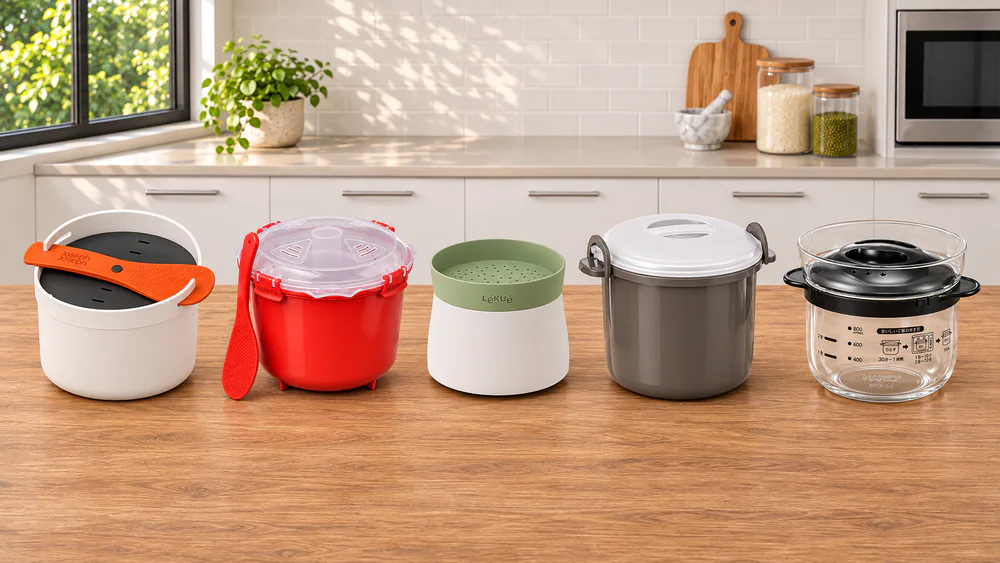
The five cookers we compared, from the compact glass HARIO to the 12-cup PrepSolutions.
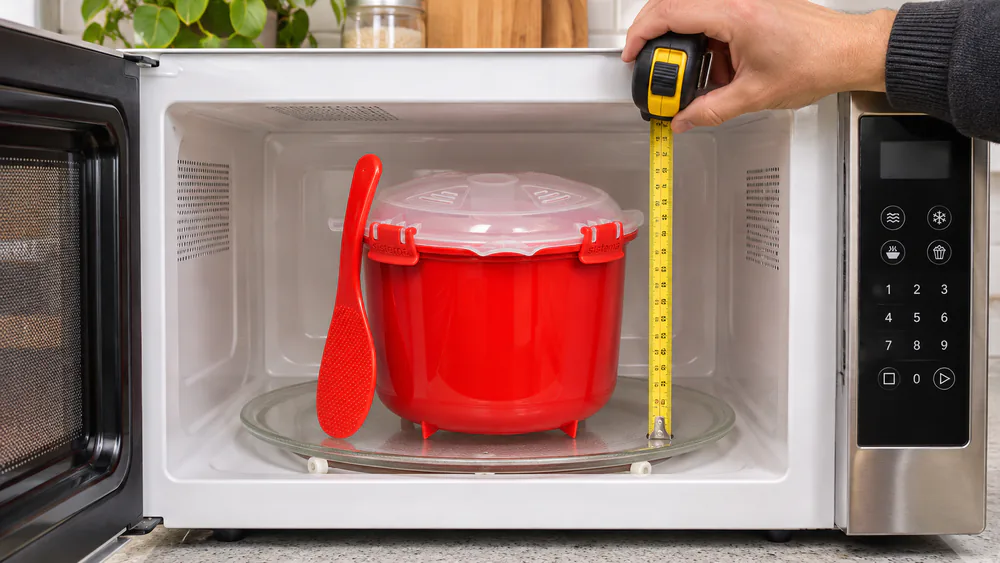
Tip. Measure the inside of your microwave before you buy. A cooker that clears the turntable by a hair will still bind on a small oven.
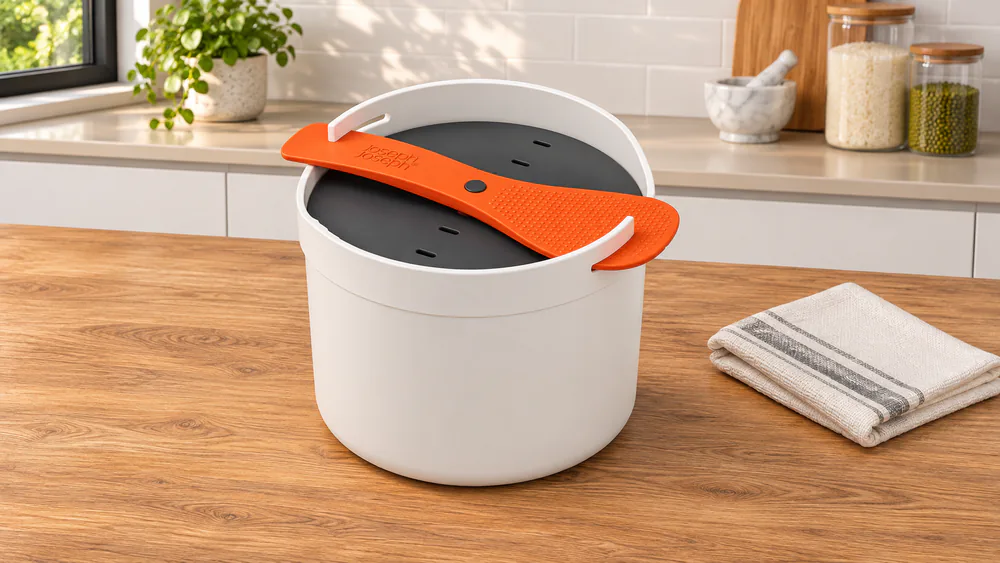
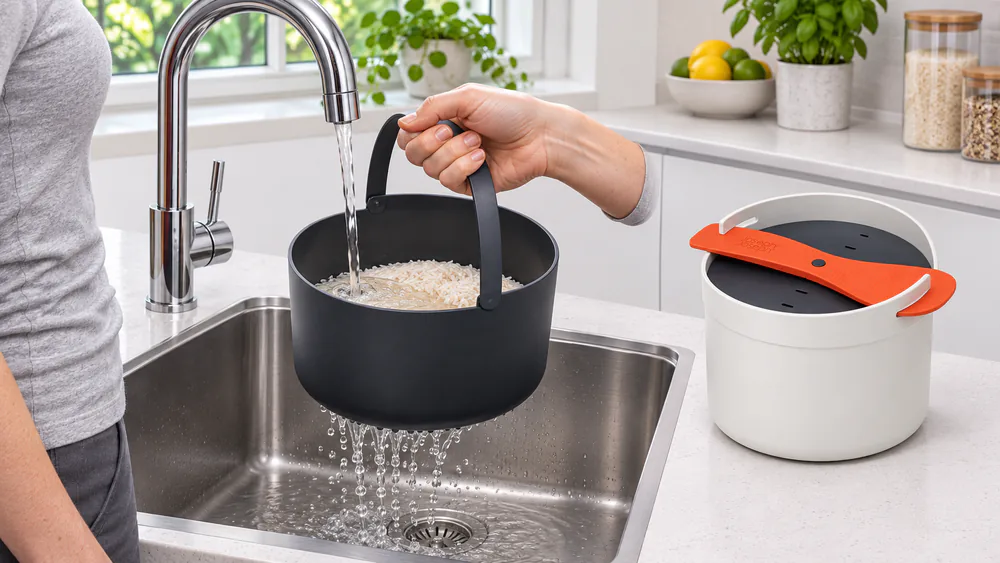
The M-Cuisine is the cooker we would hand to most people, because it handles the rinse as well as the cook. The removable colander means rinsed rice never has to move between bowls, and the paddle that locks the lid doubles as a carrying handle, which made the trip to the sink easy even with a hot pot. After 5 minutes rest the rice fluffed easily, and every part went into the dishwasher.
Rinsing colander removes a bowl from the routine
Paddle locks the lid and works as carrying handles
Nested parts store compactly
Dishwasher safe
Specifications
Vessel volume
2 L
Dimensions
13.5 x 22 x 18 cm (H x W x D)
Material
Plastic pot and lid
Included
Colander, measuring cup, paddle
It is not perfect. The pale outer pot can stain, the lid can let liquid escape, and starch splatter still sometimes meant wiping the microwave. The printed instructions are small, so read the booklet before the first batch. The brand points to 900 watts, so adjust time to your own microwave.
Rinsing in the colander keeps the wet rice in one piece of equipment.
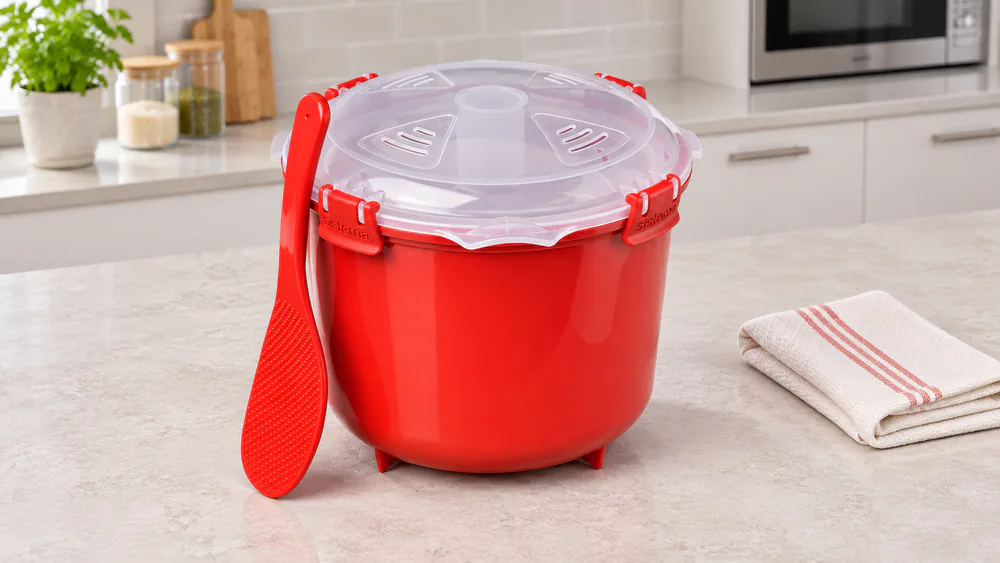
Where the Joseph Joseph bundles a colander, the Sistema keeps things simple: clip the lid down, set the chamber plate, and cook. Rice releases readily from the bowl, which makes serving and washing quick, and even after frequent rice nights the bowl stayed easy to clean with no persistent staining or sticking. The chamber plate keeps rice moist, though batch size and microwave power still affect splashing.
Locking clips and a chamber plate to control steam
Rice releases readily from the bowl
Top-rack dishwasher, fridge, and freezer safe
Cooks couscous and polenta as well as rice
Specifications
Nominal volume
2.6 L (copy varies with 2.4 L)
Dimensions
216 x 195 x 161 mm
Material
BPA-free polypropylene
Included
Rice spoon, chamber plate
Rinsing needs a separate colander, so you wash one more item. Boilover can lodge rice between the lid layers and leave that portion tougher, so keep the batch modest. The body is tall, and it can fail to clear a small microwave, so check your height. We would not choose it for the budget tier, since it costs more than the Joseph Joseph and the PrepSolutions.
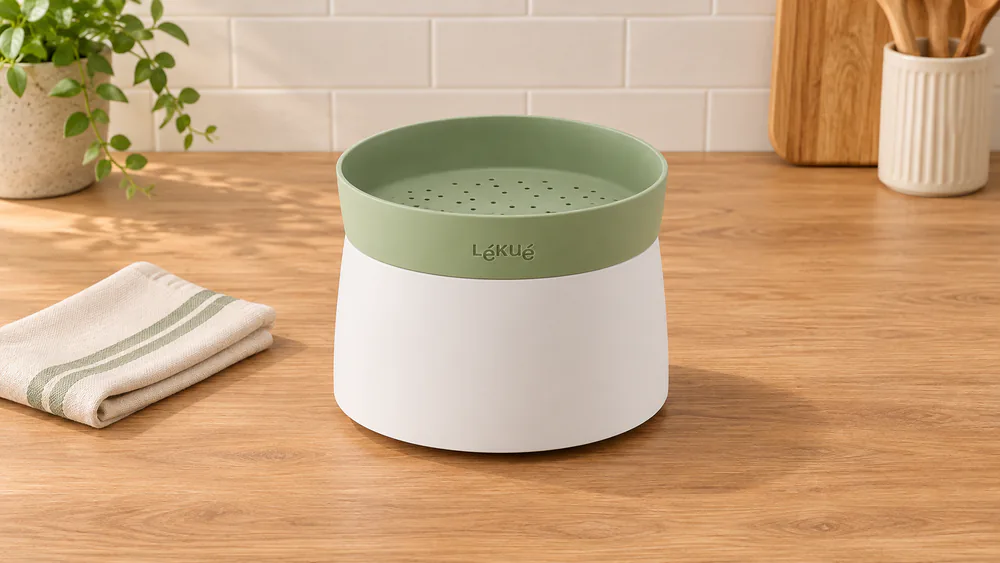
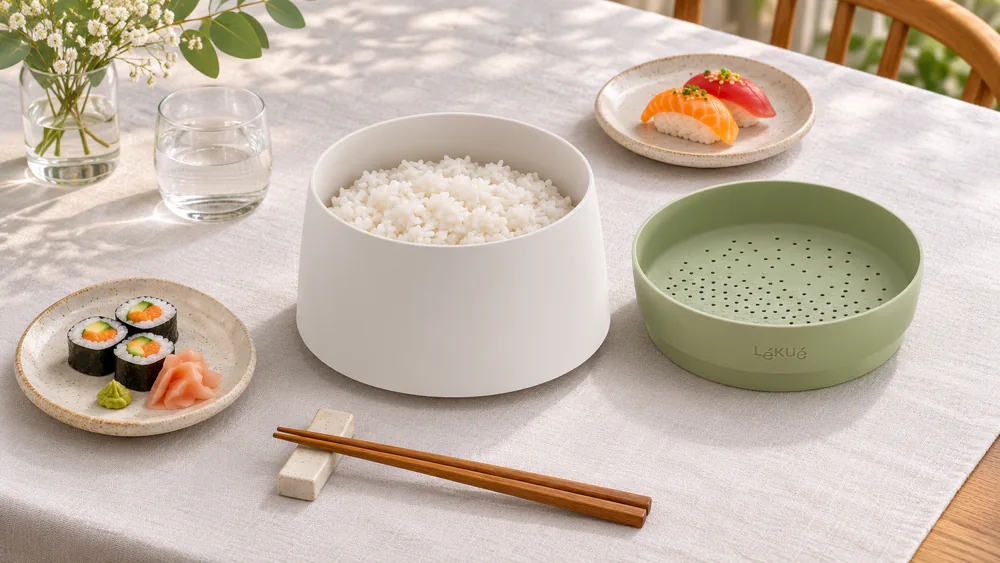
After two full-size cookers, the Lekue is the one we reached for when dinner needed a side for two or three, not a pot for seven. The double-wall bowl works as a serving bowl, so the table gets the cooker itself, and the perforated silicone lid helps contain bubbling and can drain surplus liquid. Sushi rice, semolina, and bulgur all cook well in it.
Double-wall bowl that serves at the table
Perforated silicone lid contains bubbling and drains liquid
Cooks sushi rice, semolina, and bulgur
Dishwasher-safe construction
Specifications
Vessel volume
about 1 L
Capacity
up to four servings
Dimensions
about 18 cm across, 12 cm tall
Material
Plastic body, silicone lid
Texture takes some tuning. Good texture may require longer cooking and less water than the starting instructions suggest, so expect to adjust. The imperial-unit instructions are also confusing at first. Do not load it with four uncooked cups; think in servings. The lid sits in place without a lock, and recesses can hold dishwasher water, so drain it after washing.
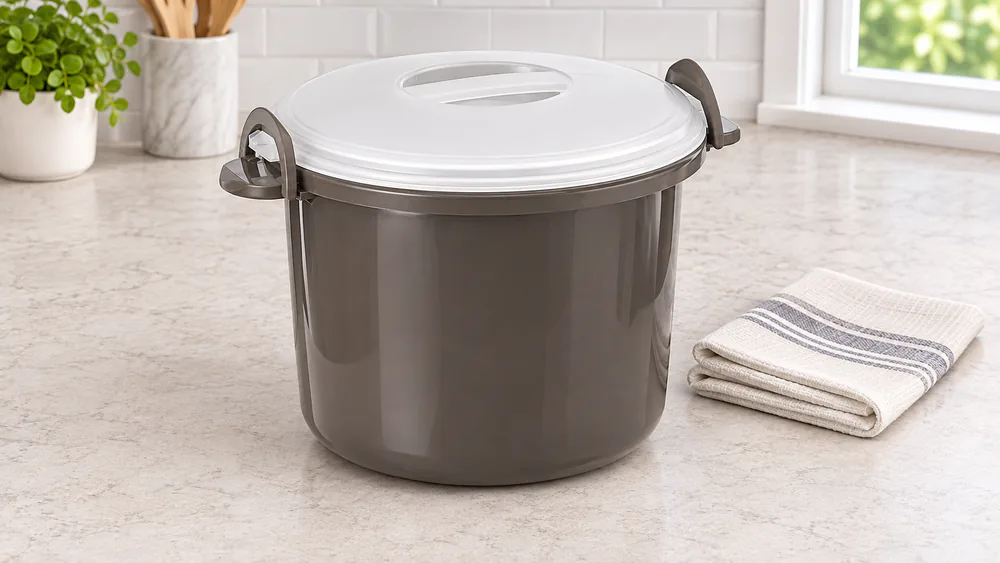
For a big family table, the PrepSolutions gives the most room. Its 12-cup vessel makes up to 8 cups of prepared rice. That yield describes cooked rice, not the amount of dry rice to add. Locking the lid helps contain splashes, and the measuring cups and spoons make setup simple. Even so, it is not meant to feed seven by itself, because appetite decides portions.
Highest documented prepared-rice yield of the five
Locking lid and measuring tools
Pasta-draining and vegetable steaming inserts
Dishwasher safe
Specifications
Vessel volume
12-cup
Rice yield
up to 8 cups prepared
Dimensions
about 9 x 9 x 7 in (verify orientation)
Material
BPA-free plastic
The extras are a mixed blessing. The pasta insert and vegetable steamer are handy, and the lift-out basket makes moving steamed vegetables to a serving bowl easier. The shallow vegetable insert limits how many vegetables fit, even when the main bowl has room. Pasta can also boil over with the lid secured. All those pieces also take cabinet space.
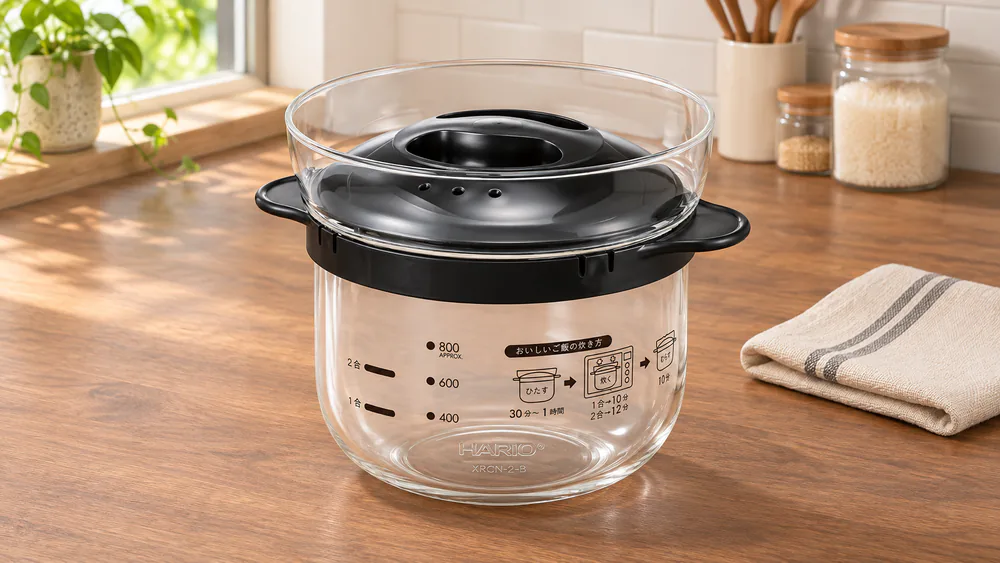
The HARIO is the one for people who like glass. Small soaked-rice batches cook well in it, and the glass bowl is lighter to wash than a heavy electric-cooker insert. It is rated for 1-2 go of uncooked rice, a Japanese measure rather than a US cup, so check the conversion before you pour. It suits one or two portions, not a crowd.
Heatproof glass bowl does not hold odors
Compact enough for small microwaves
Lighter to wash than an electric cooker insert
Good for small soaked-rice batches
Specifications
Rice capacity
1-2 go uncooked
Dimensions
195 x 162 x 140 mm (W x D x H)
Material
Heatproof glass, polypropylene lid
Made in
Japan
It asks for attention. You soak first, cook, then rest, so the full preparation is noticeably longer than the microwave stage alone. At the larger batch size rice can collect between the lid layers and add cleanup work. The supplied instructions are in Japanese, so budget time for translation before the first batch.
How to Choose a Microwave Rice Cooker
Most of the buying decision comes down to five things. None of them is the brand.
For us the cleanup question matters more than the cooking. A cooker that rinses, cooks, and washes without a second bowl gets used on a Tuesday night, and one with eight loose pieces tends to stay in the cabinet. Ask yourself who will be washing it and how much room your shelves have, then read the details below.
Capacity: Uncooked Rice, Cooked Rice and Container Volume
Three numbers get mixed together on product pages: vessel volume, uncooked rice, and cooked yield. A 2 L vessel is not a promise of 8.5 cups of cooked rice, and rice expands, so the container must leave headroom for boiling. Look for a stated uncooked-rice load or a prepared-rice yield, and treat anything else as a ceiling you should never fill to.
Think about who you are feeding. The PrepSolutions makes up to 8 cups of prepared rice, which covers a family side dish, while the HARIO suits one or two people. For a household of seven, plan on cooking in two rounds or picking the biggest vessel.
Vessel volume tells you how big the pot is, not how much rice you can cook in it.
Cooker Dimensions and Microwave Fit
Width decides whether the turntable can spin, and height decides whether the lid clears the roof. The Sistema is the tallest of the group at 161 mm, and the HARIO is the most compact at 140 mm. Measure the inside of the microwave, including the turntable, and add room for steam and for handles you will grab while hot.
Materials and Care Instructions
Plastic is light and tough, and most of these are dishwasher safe. Glass resists odors and is easy to wash, but it is heavier, and care instructions differ by seller, so follow the manual for each part. Always lift the lid away from you, and use oven mitts, because steam is the main burn risk.
Warning. Never use a microwave rice cooker on the stovetop or in a convection or conventional oven. Keep the lid vents uncovered, and never cook dry.
Lid Design, Steam Vents and Overflow Handling
The lid is where these cookers differ most. Locking clips, a paddle that locks the lid, a perforated silicone lid, and a chamber plate all handle steam in different ways. None of them is a pressure-tight seal, and a vented lid does not stop every spill. Starch, water, fill level, and microwave power all change the outcome, so keep batches below the fill line.
Accessories and Other Uses
A colander saves a bowl, a vegetable insert adds options, and measuring cups remove guesswork. They also add pieces to store and wash, which matters in a kitchen where several kids put things away. Pieces that nest or lock together, like the Joseph Joseph paddle, are far less likely to go missing. Decide whether you will really use a pasta insert before paying for one. Several of these cook couscous, polenta, quinoa, or bulgur too.
Checking height and turntable clearance before the first batch.
How to Use a Microwave Rice Cooker
Follow the Model's Water, Wattage and Timing Instructions
Skip the universal ratio. Water, timing, and power vary by cooker and by grain, and the Lekue's starting instructions, for one, can mean more water than the rice needs. The Joseph Joseph guidance is built around 900 watts, so a weaker microwave needs more time. Write the setting that works on the lid of your own booklet and use it every time.
Prevent Overflow, Sticking and Uneven Results
Rinse first, and do not fill past the line. A tall pot with room to boil over is better than a full pot with a lid. Use the cooker on a plate if your microwave is picky, and keep batches modest, since rice trapped in the lid layers can turn tough. If you do see boilover, stop, wait for the steam to settle, and wipe out the microwave.
Rest the Rice, Then Clean and Store the Cooker
Let the rice stand. Joseph Joseph says to leave it for 5 minutes before fluffing, and the HARIO method builds in a resting stage as well. Fluff with the paddle, then rinse the cooker while any starch is still soft. A quick rinse right after serving is a breeze compared with soaking a dried-on bowl the next morning. Dry recesses fully before storing, and nest the parts if the cooker is designed to nest.
Which Microwave Rice Cooker Should You Buy?
Start with the Joseph Joseph M-Cuisine, since it is the best all-rounder. Beyond that, the right pick depends on your table. Choose the PrepSolutions for the biggest family batches and the best accessory value, or the Lekue for a compact cooker that serves at the table. The Sistema suits cooks who want simple locking clips and have a roomy microwave. Choose the HARIO if you prefer glass and small portions. If you are watching the budget, the Joseph Joseph and the PrepSolutions are the cheaper of the five, and the Lekue is the splurge.
Microwave Rice Cooker FAQs
Can You Cook Brown Rice and Other Grains?
Often yes, but follow your model's own instructions. Brown rice needs more water and time than white, so a universal ratio does not exist. Some models list couscous, polenta, quinoa, or bulgur, so check the booklet first.
Can You Steam Vegetables While Cooking Rice?
Only if your cooker's instructions say so. The PrepSolutions comes with a steaming insert, but an insert does not mean rice and vegetables share a timing. Use a recipe written for your model before combining them.
Can an Ordinary Microwave-Safe Bowl Replace a Rice Cooker?
It can work, but a dedicated cooker gives you a vented lid and headroom for boiling. A plain bowl will need its own timing, and you will have to watch for boilover, so test a small batch first.
How Does a Microwave Rice Cooker Compare With an Electric One?
A microwave cooker is a passive vessel. It has no heating element, no program, and no keep-warm mode, and the microwave does the work. An electric cooker handles timing and warming for you, but it takes more counter and cupboard space.