As an Amazon Associate we earn from qualifying purchases. We may earn a commission from links on this page, at no extra cost to you. Learn more.
If you only need rice for one or two people, or a small side batch on a busy Tuesday, a full-size cooker wastes counter space and leaves a week of leftovers. We judged every cooker here on capacity accuracy, cleanup, how easy it is to store, and whether a kid can use it safely. Browse our rice cooker reviews if you want larger models.
We score each cooker on five things: the accuracy of its stated rice yield, the quality of the cooked grains, cleanup time, ease of storage in a small kitchen, and safety around kids. Rice quality carries the most weight, followed by cleanup, because a cooker we dread washing ends up in a cabinet.
We pay close attention to the same family-kitchen details every time: whether rice sticks after a stretch on keep warm, whether brown rice and quinoa cook as well as white, and whether the pot rinses clean in a minute or needs a soak. Those patterns shaped the scores below, and we note where a pot needs hand washing or a soft utensil.
Capacity gets a hard look because the word "cup" means different things on different boxes. We compare cooked-bowl yield rather than the label, and you will see why in the buying guide below. Keep-warm behavior matters as well, since rice that sticks to the pot after an hour on warm is a cleanup problem waiting to happen.
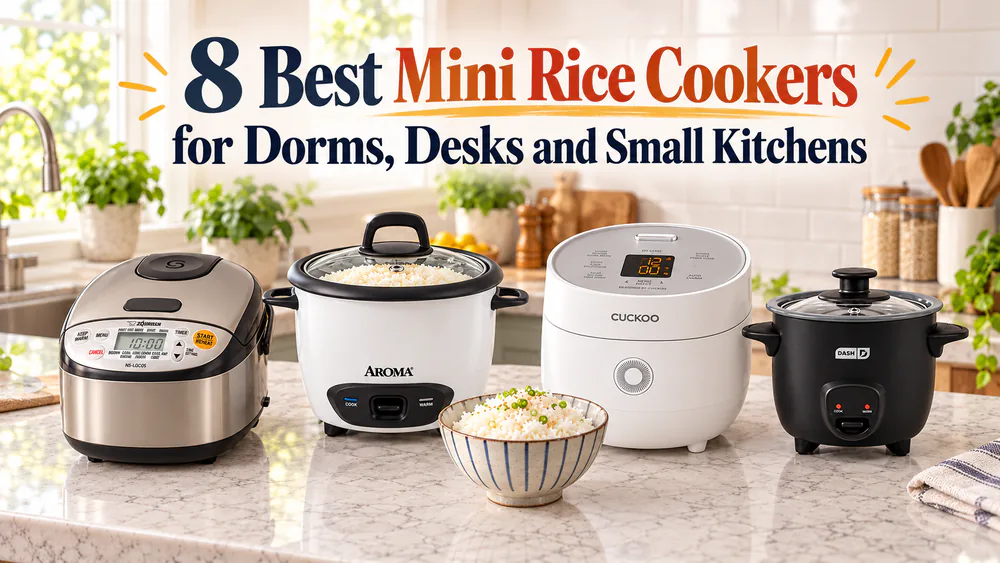
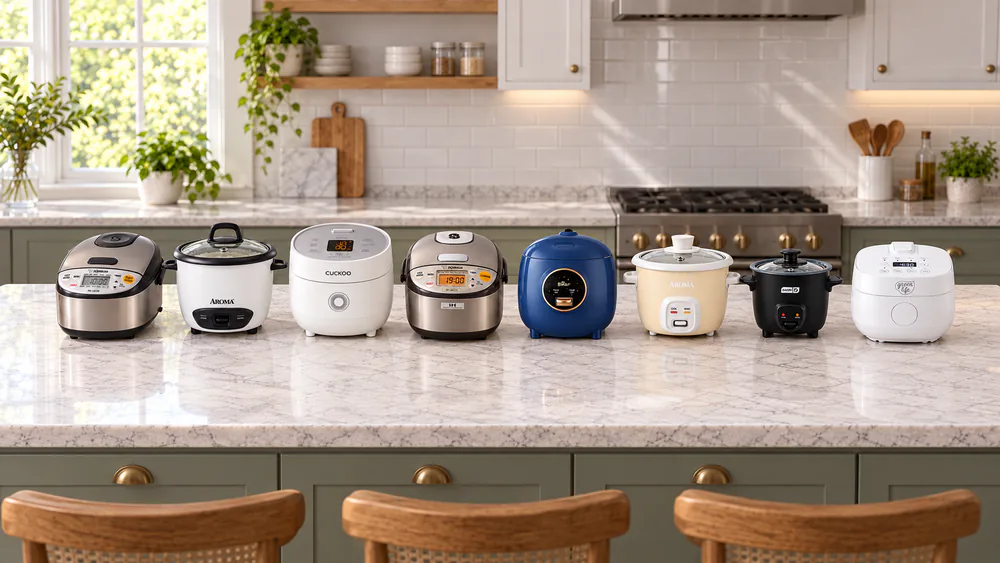
The full lineup, from a dorm-sized 1-cup cooker to a 3-cup induction model.
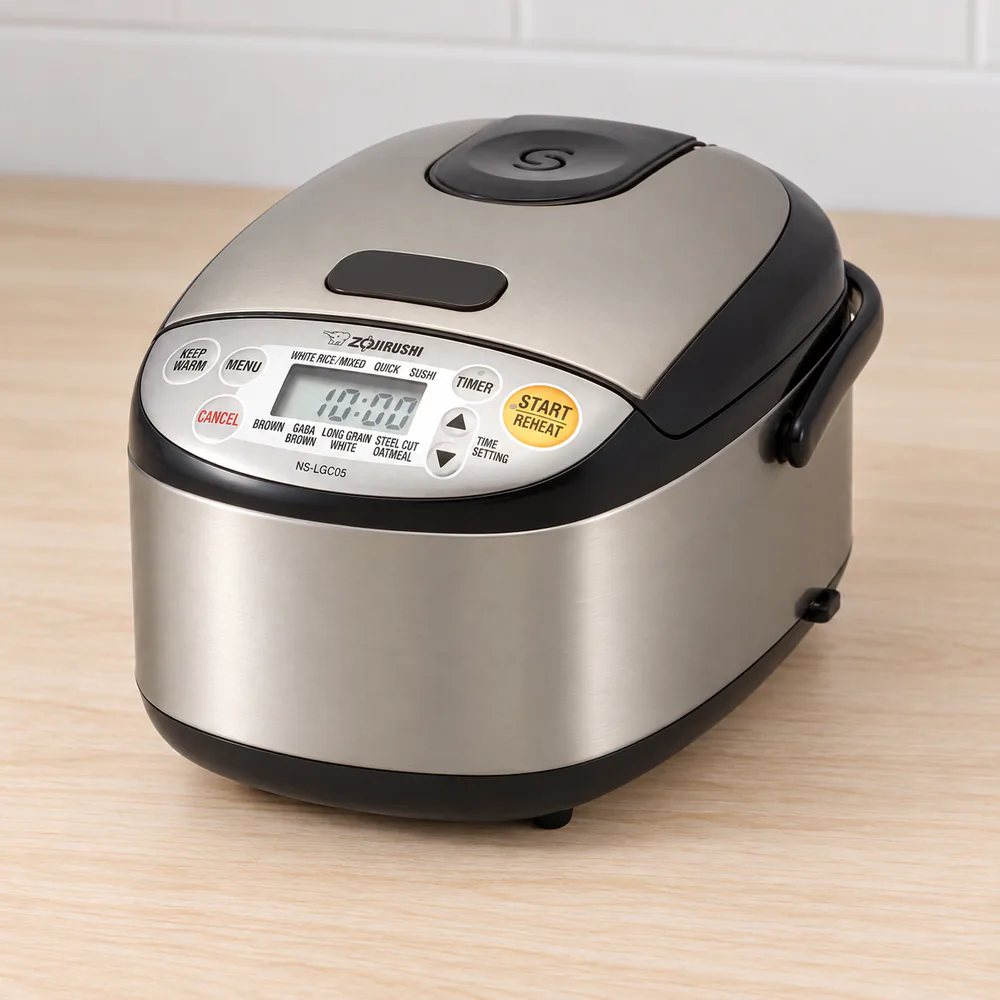
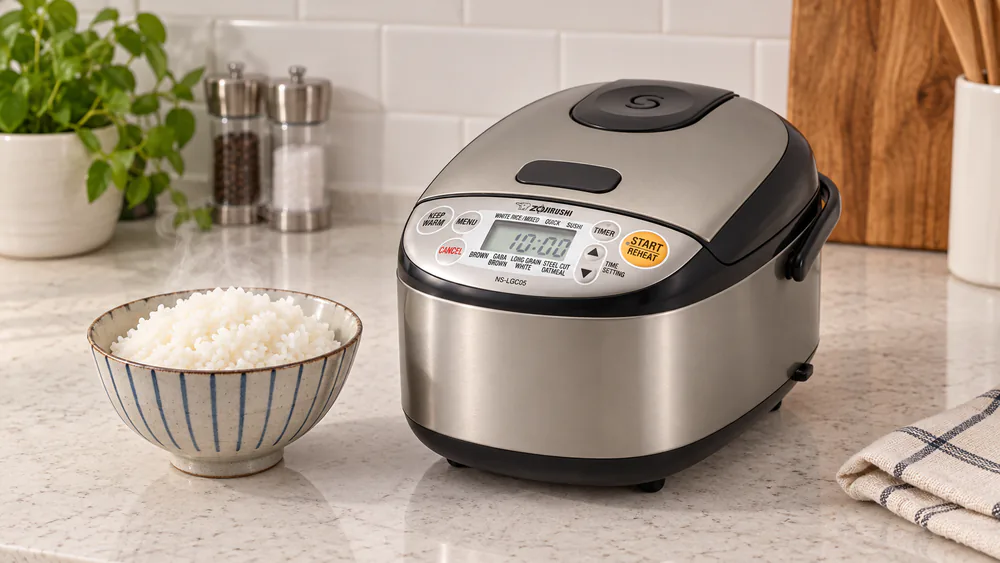
This is the mini cooker we would buy again. It cooks small batches as well as a 10-cup Zojirushi, which is not something you can say about most compact models, and it can handle as little as 1/2 cup of rice without scorching or drying out.
Pros
Cooks tiny and full 3-cup batches with equal care
Fuzzy logic handles white, brown, GABA brown and oatmeal
Retractable cord and fold-down handle simplify storage
Wipes clean easily
Cons
Costs several times more than a basic cooker
Internal clock battery will need replacing
Too large for a dorm desk
The fuzzy logic micom adjusts heat as it cooks, so you get fluffy rice without the fuss of babysitting the water ratio. Settings cover long-grain white, brown, GABA brown and steel-cut oatmeal. Cleanup is a breeze because the stainless exterior wipes down easily and the inner pot rinses quickly.
Storage is where it beats the competition. The retractable cord tucks away and the fold-down handle makes it easy to carry from a cabinet to the counter. It draws 450W, comes with a 1-year warranty, and measures roughly 9.1 x 11.9 x 7.5 inches, so it needs a real shelf rather than a desk corner. The downsides are the price and an internal clock battery that will eventually need replacing.
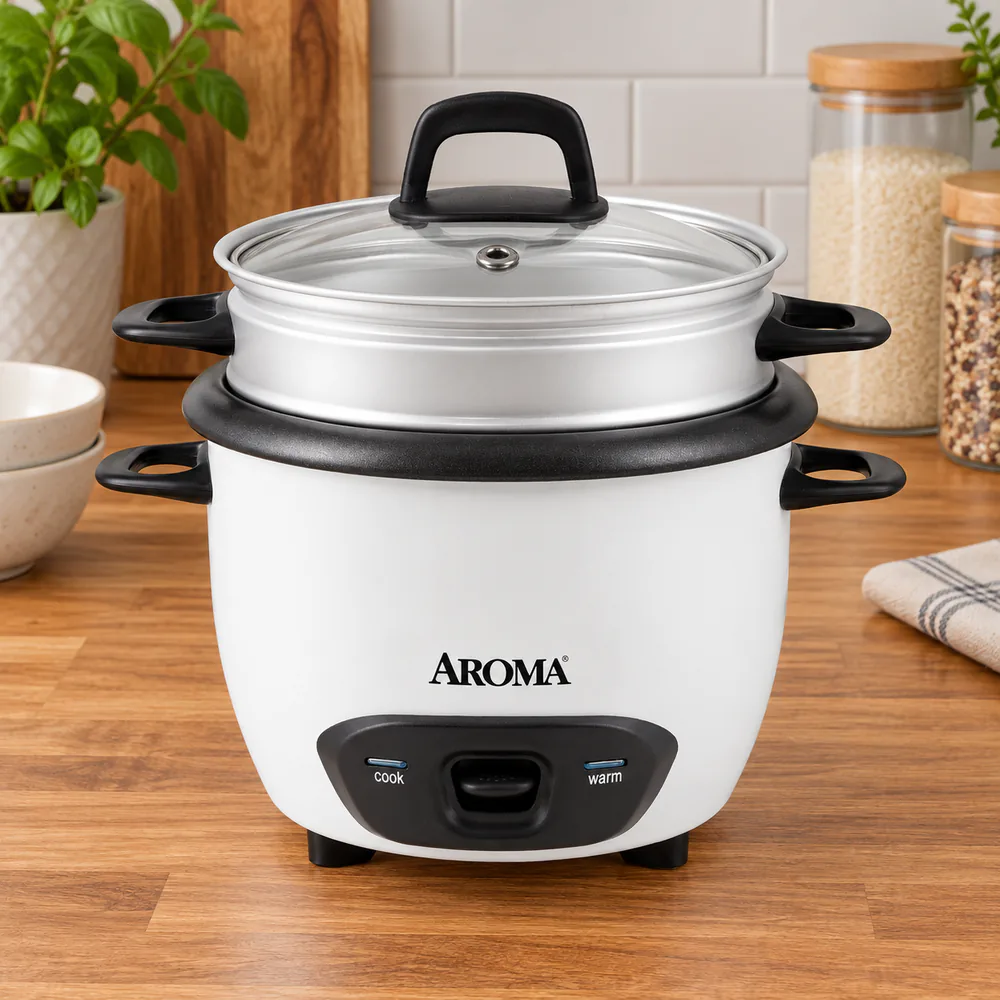
The Aroma 3-Cup is a simple starter cooker whose size works for two people, and it makes a good first-apartment appliance. It is rated for 3-Cup uncooked, which means about six cups cooked, enough for two generous dinners.
Pros
Real 3-cup uncooked capacity at a very low price
Steam tray cooks vegetables or protein above the rice
Dishwasher-safe pot and glass lid
Measuring cup and spatula included
Cons
Rice sticks if left on keep warm too long
Basic on/off cooking with no fuzzy logic
Nonstick coating needs gentle utensils
White rice finishes in roughly 15 to 20 minutes, which is quick for a basic cooker. The catch is keep-warm: rice sticks to the pot if you leave it on warm too long, so serve it soon after the switch clicks over. That one habit is the difference between a pot that rinses clean and one that needs a soak.
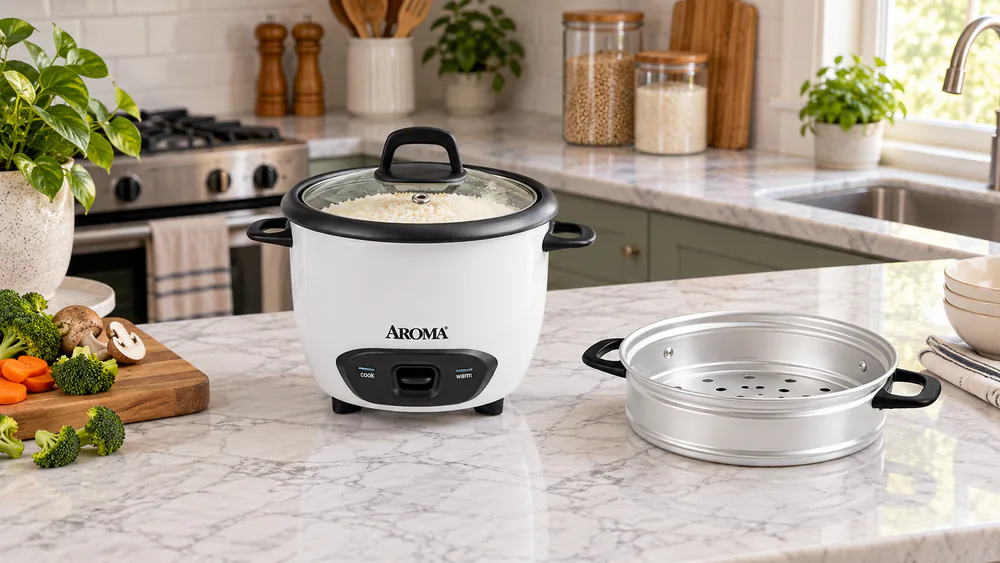
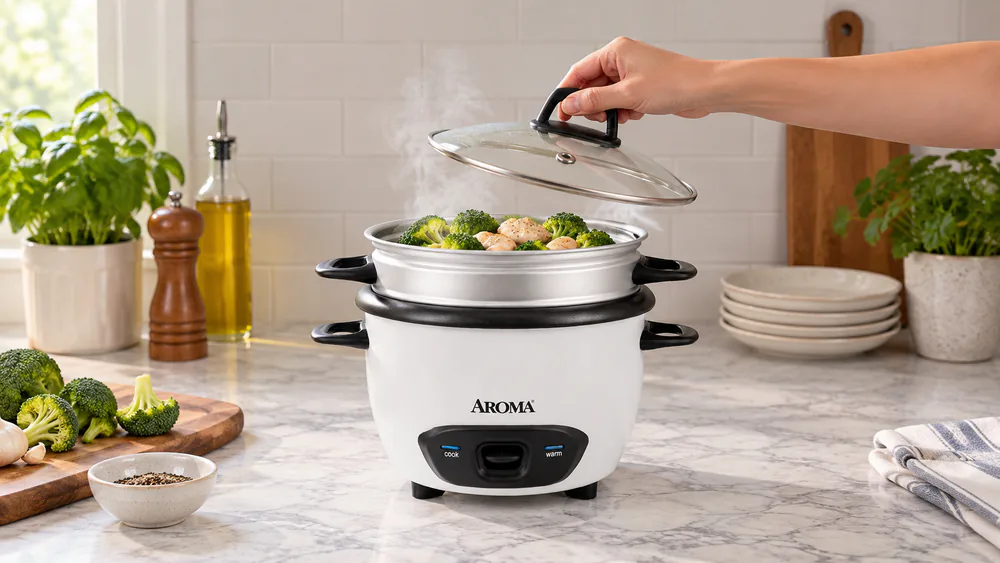
The steam tray is the feature that earns this cooker its spot. Vegetables or protein steam above the rice, so a two-person dinner comes out of a single pot. The nonstick pot is dishwasher safe, the tempered glass lid lets you watch progress, and a measuring cup and spatula come in the box. It is the cheapest way to get a real 3-cup capacity.
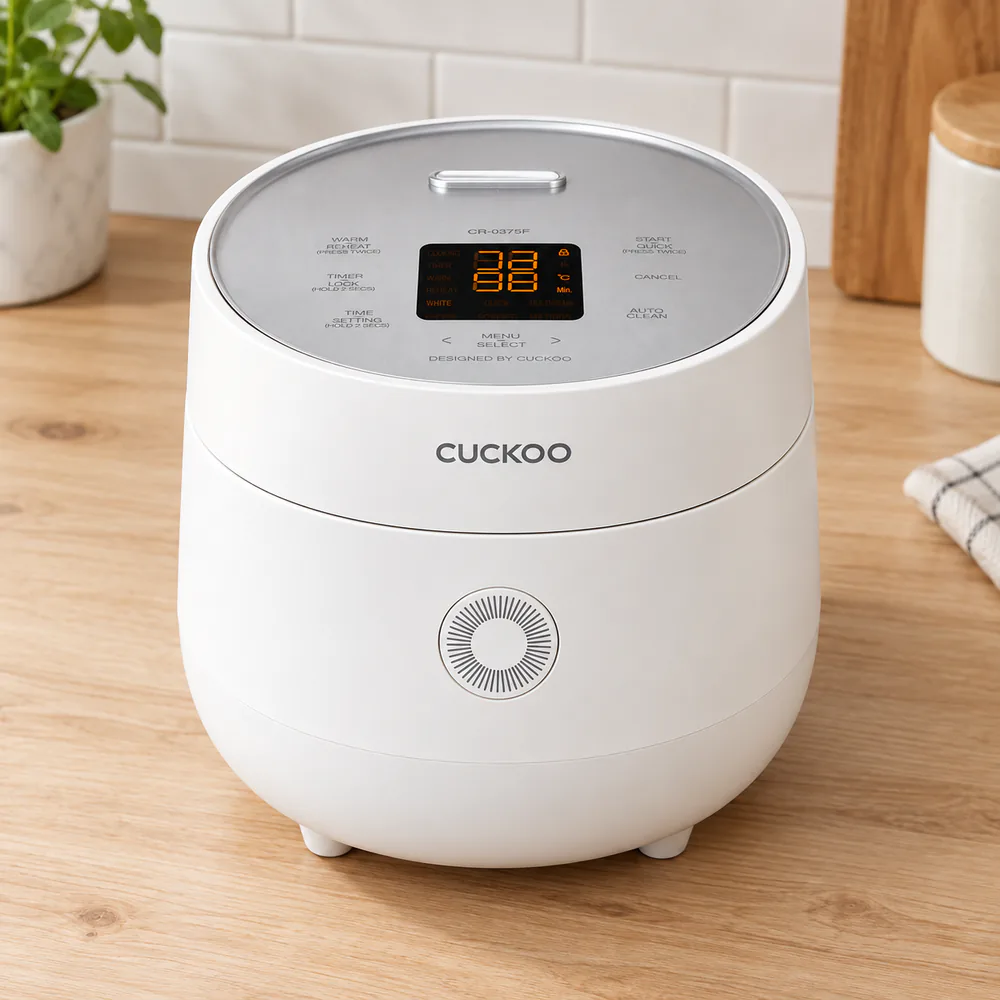
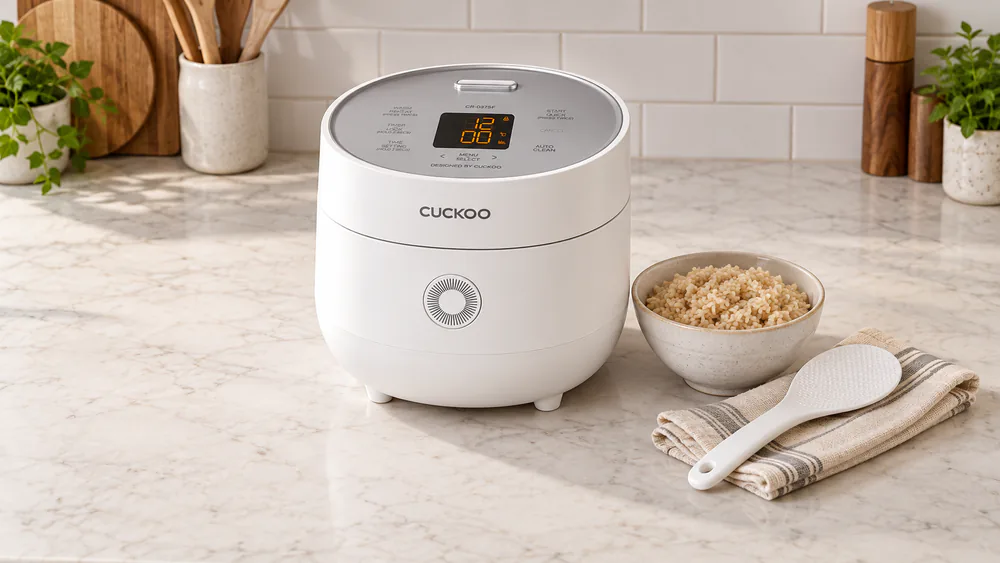
The Cuckoo CR-0375FW makes fluffy, even rice with micom controls and holds 3 cups uncooked or 6 cups cooked; the Aroma above uses a basic switch and tends to stick on keep warm. It takes little counter space, and all the pieces nest back inside the unit for storage, which small kitchens will appreciate.
Pros
Fuzzy logic produces fluffy, even rice
Keep warm does not scorch the bottom layer
Timer, self-clean and baby food settings
All pieces nest inside for storage
Cons
Nonstick pot needs a soft utensil
Wattage is not listed
Price is well above basic cookers
Keep warm holds without scorching the bottom layer, a clear step up from budget cookers where the base turns crusty. It is roomy enough for a family of four's side rice, so it works as a small second cooker next to a big one. Settings cover quick white rice, glutinous, brown, oats and baby food, and a timer lets you set dinner before work.
The self-clean setting helps with the washing-up, and the lid is removable for a proper rinse. It costs far less than the Zojirushi models while delivering most of the fuzzy logic benefit. We take a point off because nonstick pots always need gentle care. Keep the condensation catch emptied and dry, because a cooker left with water sitting in it for months can grow mold, and the smaller Cuckoo can break within 6 to 7 months. Pick this over the Aroma ARC-743 if you cook rice several times a week.
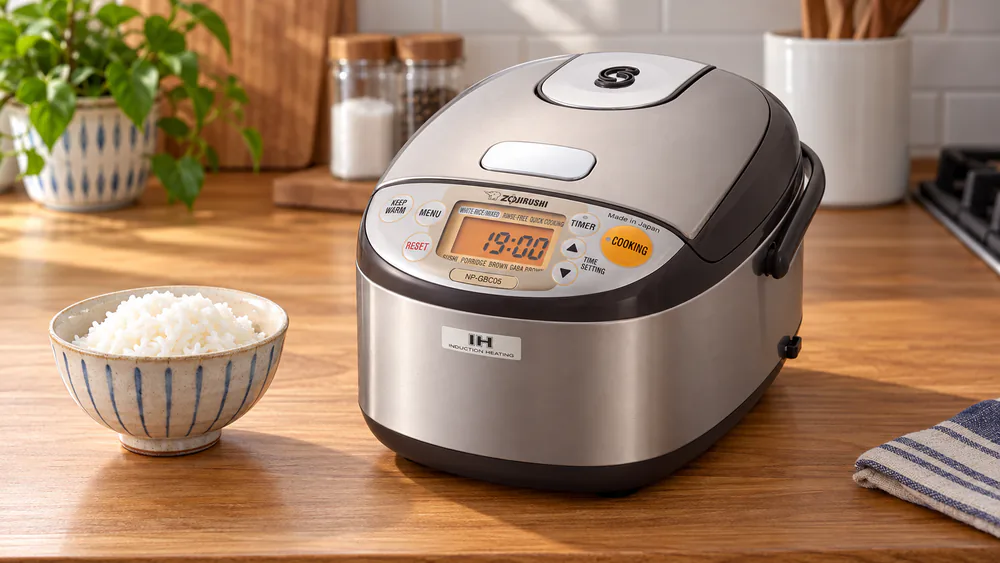
The induction Zojirushi NP-GBC05XT costs more than the Cuckoo, but its compact size is welcome after years of big-batch cookers and suits cooking for one. It is also a luxury buy. The standard micom NS-LGC05 is close in rice quality, so you are paying for refinement rather than a new level of fluffiness.
Pros
Induction heating with the widest set of rice presets
Detachable inner lid and cord simplify cleaning
Compact for a premium cooker
Carry handle for moving it around
Cons
Very expensive for a 3-cup cooker
Pot is hand-wash only
Rice quality is close to the cheaper NS-LGC05
Induction heating runs at 700W and heats the pot itself, which is why this model offers presets other minis skip: white or mixed, sushi, porridge, brown, GABA brown, rinse-free and quick cook. Capacity is up to 3 cups, or 0.54 L, measured in the included 180 mL cup of raw short-grain rice. The footprint is 9.12 x 11.87 x 7.5 inches.
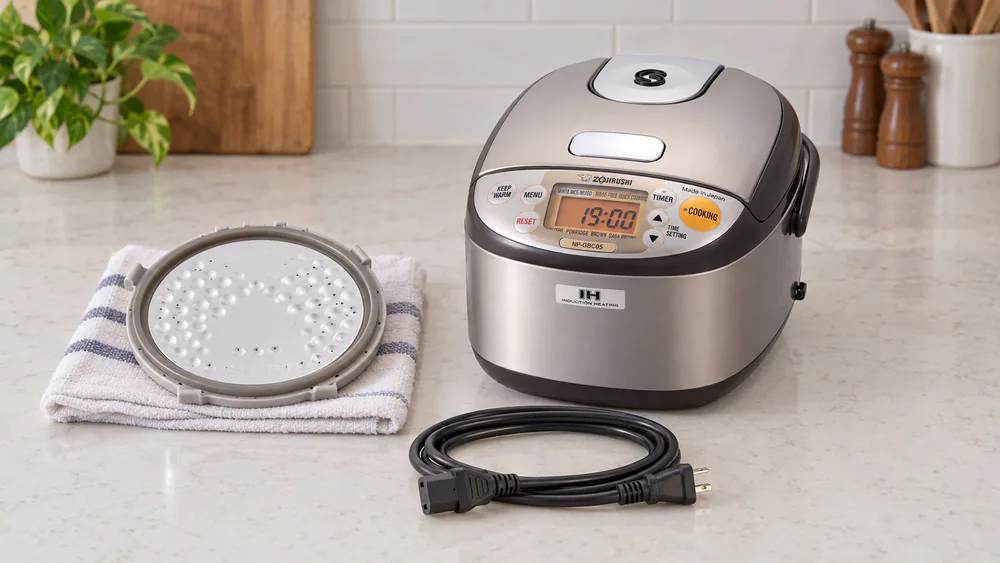
Cleanup is thoughtful, with a detachable washable inner lid and a detachable cord, plus a carry handle. The pot needs hand washing, so budget a minute at the sink. A spatula and cup come in the box.
The detachable lid and cord make this premium model easier to clean.
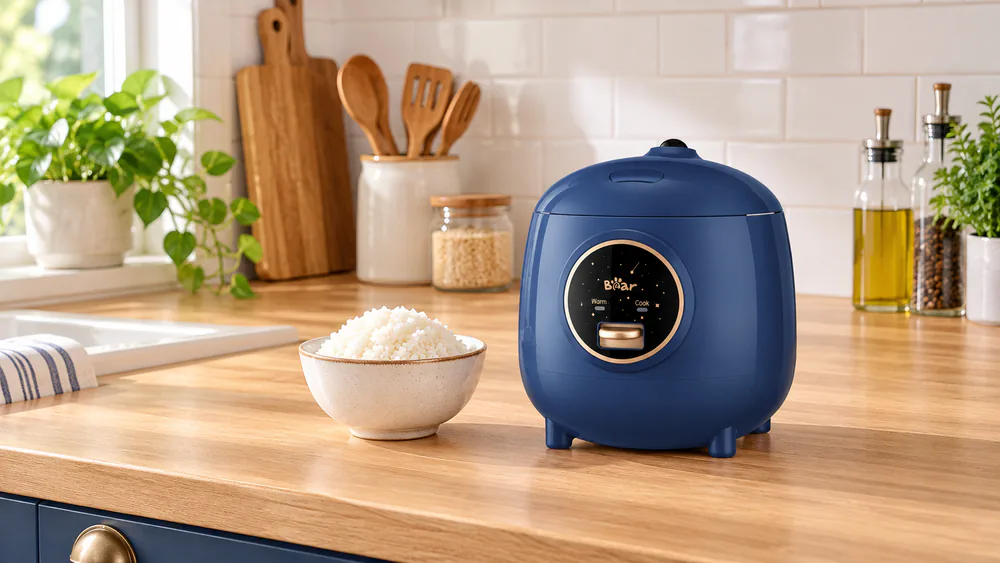
The Bear Mini costs far less than the induction model: this one-button, 2-cup cooker suits a solo dinner with some left over for lunch. A 2-cup model gives about two bowls of cooked rice, not a family side, so shop it for one or two people.
Pros
One-button operation is simple for kids and guests
25 min quick-cook mode
Detachable inner lid rinses clean
365-day warranty
Cons
Only about two cooked cups, so no leftovers
Nonstick pot needs a gentle touch
Cup is 150 mL, smaller than a US cup
Bear lists a 25 min quick-cook mode, which suits a rushed breakfast or a weeknight when everyone is hungry. The thickened curved liner is meant to spread heat evenly, and the extended steam port directs steam away from the lid edge. That matters in a house with kids reaching for the counter. The detachable inner lid comes off for rinsing.
A 150 mL cup and paddle are included, and the BPA-free build comes with a 365-day warranty, longer than you usually get at this price. The pot is nonstick, so keep metal spoons away.
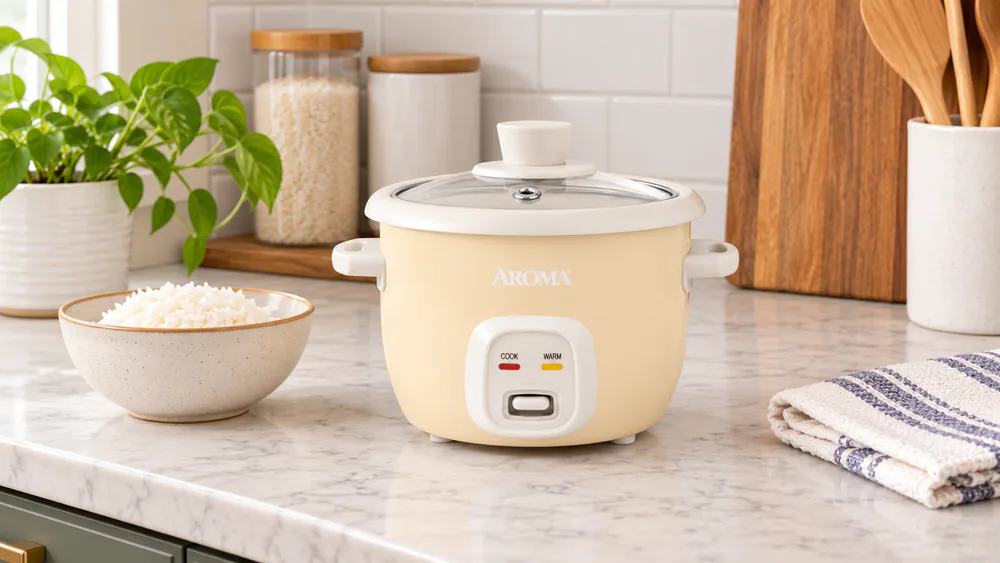
Cleanup comes with a trade-off here. The Aroma ARC-302 is tiny with few parts, and every part that touches food goes in the dishwasher, so washing up is quick, yet its nonstick pot should be hand-washed rather than run through the dishwasher. Unlike the Bear, it also needs a different rice-to-water ratio for brown rice than for white. If you want to avoid traditional nonstick coatings, this is the easiest way in.
Pros
PFAS-free ceramic-coated pot
Few parts, all dishwasher safe
Handles soup and oatmeal as well as rice
Low price
Cons
No fuzzy logic, so measure water carefully
Not enough capacity for three or more people
Ceramic coatings still need gentle utensils
It is rated 2-cup uncooked, or 4-Cup cooked, which covers a couple's dinner or a solo meal with lunch the next day. The CoreCoat ceramic pot is PFAS-free, and the one-touch control with auto keep warm keeps things simple. Beyond rice, it handles soup and oatmeal, and a cup and spatula come in the box. You can register for a 17-recipe booklet.
It costs almost the same as the bigger ARC-743, so decide whether you want the smaller footprint and ceramic pot or the extra capacity and steam tray. We like it for a desk or a narrow shelf.
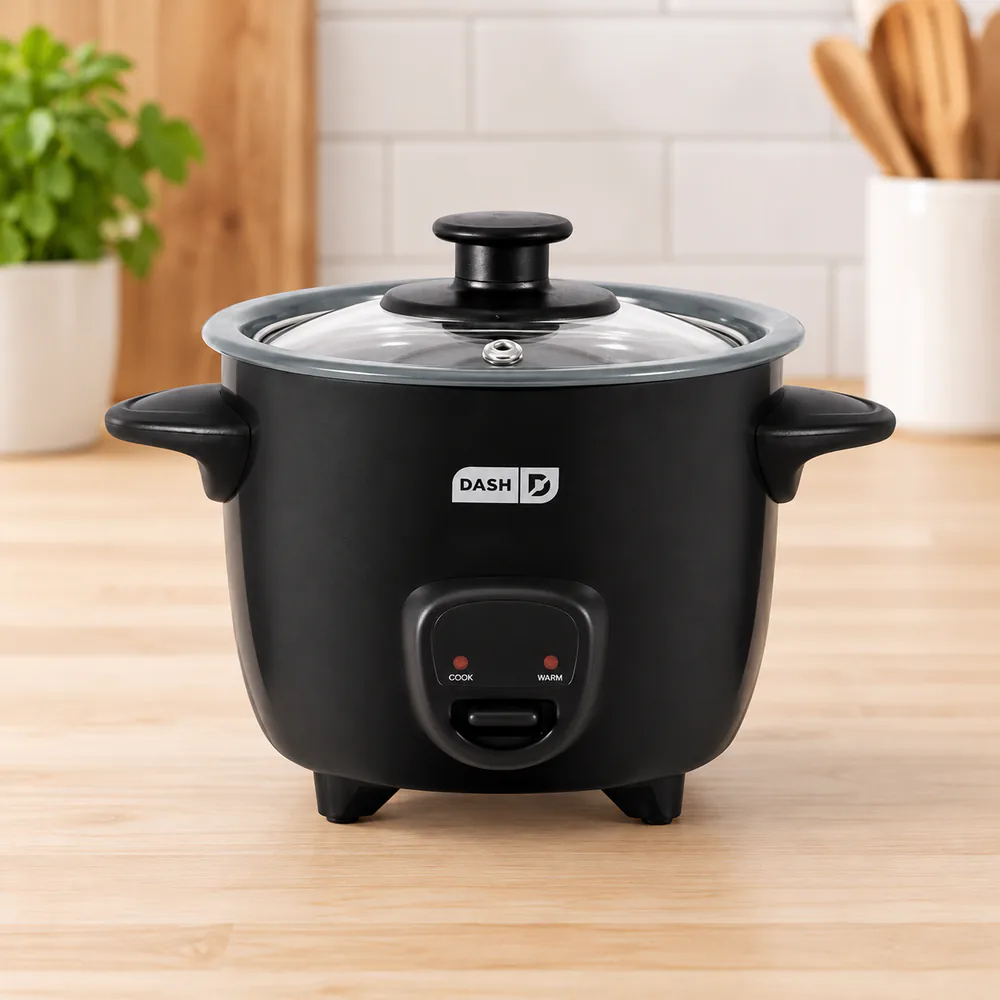
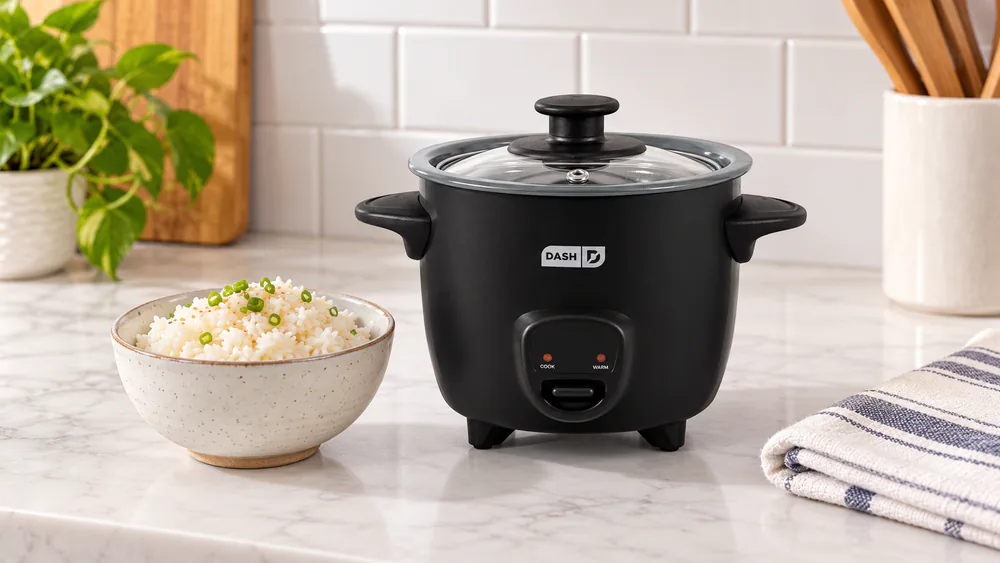
The limitation to know first on the Dash Mini 2-Cup is that it is the smallest cooker in this roundup, far smaller than the ARC-302 before it. It makes 2 cups of cooked rice from 1 cup uncooked, which handles a solo or two-person portion, and its footprint fits a dorm shelf. Do not be fooled by the "2-cup" label, since the real input is only one cup.
Pros
Smallest footprint here, fits a dorm shelf
Ceramic pot with glass lid
Handles oatmeal, quinoa and brown rice
Suitcase-friendly
Cons
Rice can turn dry or overcooked without careful measuring
Only one cup uncooked per batch
Basic switch with no presets
The ceramic CleanCoating pot, glass lid and one-switch control keep it simple, and an indicator light tells you when it has switched to automatic keep warm. It is suitcase-friendly, and it handles oatmeal, quinoa and brown rice as well as white.
The trade-off is precision. Rice can come out dry or overcooked if the water is not measured carefully, because a basic switch cooker has no sensor to correct for you. Measure with the cup, keep a small notebook of ratios, and the results settle down. Our rice cooker water ratios by rice type guide is a good starting point.
Where the Dash leaves you guessing, the GreenLife has digital presets, and its brown preset made fluffy brown rice three times in a row. Its water lines do not match US cup measures, though, so measure carefully. It fits one or two people without a week of leftovers and stores easily, which counts in a small kitchen. The build feels good but not heavy-duty for daily use, so it suits an occasional cook better than a nightly one.
Pros
Digital presets for white, brown, quinoa and oats
Delay timer and LED display
Dishwasher-safe PFAS-free ceramic pot
Cool-touch exterior
Cons
Build is not heavy-duty for daily use
Brown rice takes about 50 minutes
Cooked-cup rating can mislead
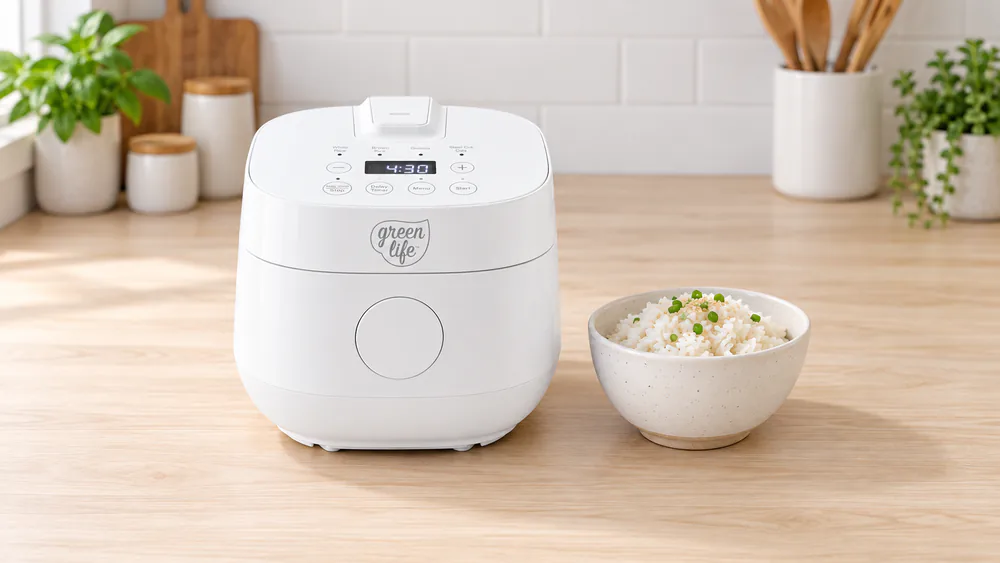
Its 4-Cup cooked rating works out to about 2 cups uncooked. The four presets cover white, brown, quinoa and steel-cut oats, and the LED display and delay timer let you set dinner ahead. White rice runs about 25 minutes and brown about 50, so plan for the longer wait.
The PFAS-free ceramic nonstick pot is dishwasher safe and the exterior stays cool to the touch, a real plus around children. Fuzzy logic adjusts the cook without much attention. It sits in the middle of our price range and is the most versatile mini here.
How to Choose a Mini Rice Cooker
Most buying mistakes with small cookers come down to the same few details. These five decide whether a mini model earns its space.
Capacity: What Do "Cups" Really Mean?
A "one cup" mini cooker means one standard uncooked cup, so a 2-cup model gives about two bowls of cooked rice, not a family side. Brands also count cups differently. Zojirushi uses a 180 mL cup, Bear includes a 150 mL cup, and the Dash is labeled 2-cup but turns 1 cup uncooked into 2 cups cooked.
Compare cooked-bowl yield, not the label. One uncooked cup of rice roughly doubles, so a 3-cup uncooked cooker makes about six cups of cooked rice. That is plenty for two people and workable for a family of four's side dish.
If you routinely feed three or more people, a mini model will leave you cooking twice, so consider a larger cooker instead. For a solo cook, the opposite problem applies: a 3-cup cooker makes more rice than one person eats, and leftovers dry out in the fridge by the second day.
Portability follows capacity. A 1 to 2 cup cooker slips into a suitcase or a dorm cabinet, while a 3-cup micom wants a permanent home on a shelf.
Fuzzy Logic vs Basic On/Off
A basic cooker has one heating element and a switch that pops when the pot runs dry. It works, but you must measure water carefully, and keep-warm can dry out or stick the rice. Fuzzy logic, sometimes called micom, adds a small computer that adjusts heat through the cycle.
For tiny batches, fuzzy logic matters more than you would expect, because small amounts of rice overcook fast. If you cook rice a few times a week, the Cuckoo or the Zojirushi earns the extra money. If you cook it now and then, a basic cooker with a steady habit is fine.
Inner Pot Material: Nonstick, Ceramic, Stainless
Most pots here are nonstick, which releases rice easily and rinses fast, but needs plastic or wooden utensils. Ceramic-coated pots, like those on the Aroma ARC-302, Dash and GreenLife, are PFAS-free and wipe clean the same way. No pot is truly scratch-proof, so a soft spatula is the best protection you can buy.
Pros
A mini cooker uses far less counter space and storage than a 10-cup model
Small batches stay fresh instead of sitting in the pot for days
Most models cook rice in 15 to 25 minutes
Cons
Capacity tops out around six cups cooked
Cheap mini models offer little control over texture
Very small cookers need careful water measuring
Keep-Warm, Presets and Cleanup
Keep warm is useful for dinner that waits, but not for hours. Rice that sits too long sticks to the pot and gets hard to wash. Presets for brown rice, oatmeal and quinoa add real value if you cook more than white rice.
Cleanup is where mini cookers shine. Dishwasher-safe pots, like those on the Aroma and GreenLife models, take almost no effort, and a detachable inner lid is far easier to rinse than a fixed one. Rinse the pot soon after cooking and the rice will not set.
Tip. Rinse rice in a bowl until the water runs mostly clear before it goes in the pot. It helps the grains cook up separate and fluffy, and the pot stays cleaner.
Footprint and Storage
Small cookers still take up more room than most people expect, and a cooker you cannot store gets used less. Think about where it will live between meals, whether that is a cabinet, a pantry shelf or a dorm closet, and whether the cord and handle make it easy to move.
Measure your shelf before you buy. The Zojirushi minis are about 9.1 x 11.9 x 7.5 inches, so they need a real spot, while the Dash and Aroma 2-cup models fit a dorm shelf. A retractable or detachable cord, as on the Zojirushi models, keeps the cabinet tidy.
Nesting parts help too. The Cuckoo's pieces tuck back inside the unit, so it takes little counter space even when it is out.
Warning. Check the lid and steam vent before giving a mini cooker to a child. Some 2-cup travel cookers have a cool carry handle but a very hot lid, which matters around kids.
What Else Can You Cook in a Mini Rice Cooker?
A mini rice cooker is more than a rice pot. Several of our picks handle steel-cut oatmeal, quinoa, soup and brown rice, and the Aroma ARC-743 steams vegetables or protein above the rice for a two-person dinner in one pot.
Oatmeal is the best place to start for a rushed breakfast, since the Zojirushi NS-LGC05, GreenLife and Aroma ARC-302 all list it. Quinoa works on the GreenLife preset and on the Dash. For timing and ratios, see cooking quinoa in a rice cooker and our general guide on how to use a rice cooker.
Note. Cooked rice should not sit at room temperature for long, so use keep warm for dinner and refrigerate leftovers promptly rather than leaving them in the pot.
The Aroma steam tray turns one pot into a two-person dinner.
Mini Rice Cooker FAQ
Can a mini rice cooker make just a half cup of rice?
It depends on the model. The Zojirushi NS-LGC05 handles as little as 1/2 cup without scorching or drying out, while basic switch cookers tend to overcook very small amounts.
Is a ceramic pot better than nonstick?
Ceramic-coated pots are PFAS-free and wipe clean about as easily, but neither type is scratch-proof. Use a soft spatula either way, and check whether your pot is dishwasher safe, since the Aroma ARC-302's nonstick pot should be hand-washed.
Is a mini cooker worth it compared with a full-size one?
For one or two people, a small kitchen or a dorm, yes. You skip the week of leftovers and the counter space a 10-cup model claims. For three or more eaters, a larger cooker saves you from cooking twice.
Can I leave rice on keep warm overnight?
We would not. Rice sticks to the pot after too long on warm, and cooked rice should not sit at room temperature for long, so refrigerate leftovers promptly.
Will a mini cooker fit in a dorm room?
The Dash Mini 2-Cup is built for it, with a footprint that fits a dorm shelf. Check your school's rules on appliances with heating elements first, since policies vary.
Final Verdict: Which Mini Rice Cooker Should You Buy?
The top review above names our overall pick, so here is how the rest of the lineup divides up. For fuzzy logic at a lower price, the Cuckoo is the value pick, and if the budget is tight, the Aroma ARC-743 gives you real 3-cup capacity.
For a dorm or a suitcase, go with the Dash or the Aroma ARC-302. Skip the induction Zojirushi unless you love rice enough to pay for the refinement, because the cheaper micom is close in quality.