As an Amazon Associate we earn from qualifying purchases. We may earn a commission from links on this page, at no extra cost to you. Learn more.
A pressure cooker traps steam in a locked pot, which raises the temperature well above boiling and softens tough cuts, dried beans, and stews in a fraction of the usual time. On a busy weeknight that means pulled pork, chili, or a pot of rice can be ready while the kids finish homework. The catch is that the right model depends on how you cook, how many mouths you feed, and how comfortable you are watching a stovetop burner.
We compared seven models on capacity, cleanup, and release usability. We also asked how safely a busy household can use each one. Rice, beans, stew, and pulled pork were the weeknight meals that shaped our judgments. If you want to browse the wider category after reading, our pressure cooker reviews cover more models.
Best Pressure Cookers at a Glance
Here is the full lineup in one table, with each pick's award, type, capacity, pot material, and biggest tradeoff. Every capacity listed is total vessel volume, not the amount you can safely fill.
Model
Award
Type
Capacity
Pot material
Main tradeoff
Instant Pot Pro 6-Quart
Best Electric
Electric
6-quart
Stainless steel
Many settings to learn
T-fal Clipso 6.3-Quart
Best Stovetop
Stovetop
6.3-quart
Stainless steel
Heavy, tall lid
Instant Pot Duo 6-Quart
Best Budget Electric
Electric
6-quart
Stainless steel
Insert can rotate while sauteing
Presto 01362 6-Quart
Best Budget Stovetop
Stovetop
6-quart
Stainless steel
Manual heat and timing
Instant Pot Duo Mini 3-Quart
Best for Small Households
Electric
3-quart
Stainless steel
Limited batch size
Instant Pot Duo Plus 8-Quart WhisperQuiet
Best for Large Families
Electric
8-quart
Stainless steel
Bulky to store
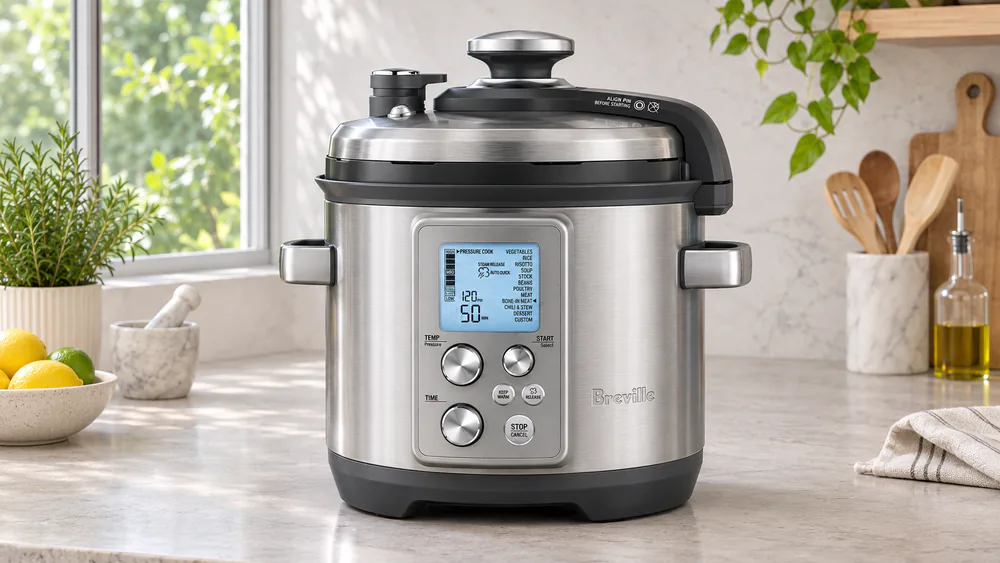
Breville Fast Slow Pro
Best Premium
Electric
6-quart
Ceramic-coated
Lid alignment, narrow bowl
How We Tested These Pressure Cookers
We judge each cooker by the demands of a family week: a full-size Tuesday dinner, a rushed breakfast of oatmeal or hard-boiled eggs, and children of different ages reaching for the counter. Performance matters, but capacity, noise, cleanup, and whether a young cook can use it safely count just as much.
We weighed each cooker against the dishes a family leans on most. We scored every pick on the same four criteria: capacity, cleanup, release, and safety.
Evidence sources and selection criteria
We started from what a family actually needs. The pot has to be big enough for the meal, and the lid has to lock without a fight. The release method should be easy to follow, and the parts should survive the dishwasher. Each pick then earned its award for a distinct buyer, whether that is a cook who wants set-it-and-forget-it control, someone who prefers a stovetop pot, or a household of seven that needs batch room.
Ratings in this article are our buyer-fit judgments on a five-point scale. They reflect how well each cooker serves the buyer named in its award, not a lab measurement, so a budget pick can score well for its job without claiming to beat a premium one at everything.
Note. Capacity here means total vessel volume, not the safe pressure-cooking fill line or a guaranteed number of portions. We did not measure noise with a meter, so where we mention sound it is a plain description of what we heard.
How we compared cooking performance, usability and value
We looked at how evenly each pot browned onions and meat, how tender pork and chicken came out, how rice and beans behaved, and how long the end-of-cooking release added to dinner. We then looked at the parts: lids, sealing rings, valves, and handles.
Value here is a tier, not a number. We call a pick budget, mid-priced, or premium relative to the others, and we weigh that tier against warranty length, cleanup, and how much attention the cooker demands.
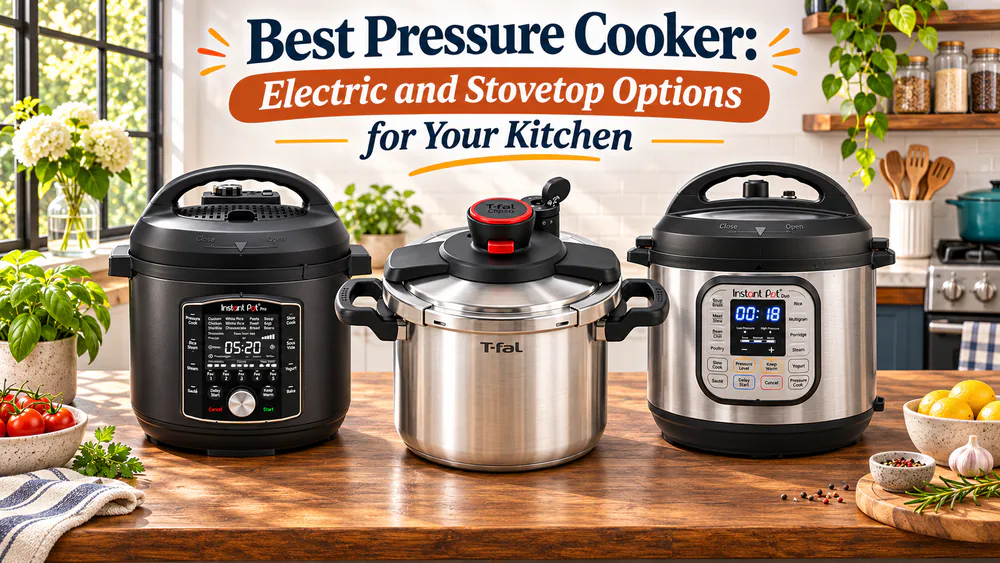
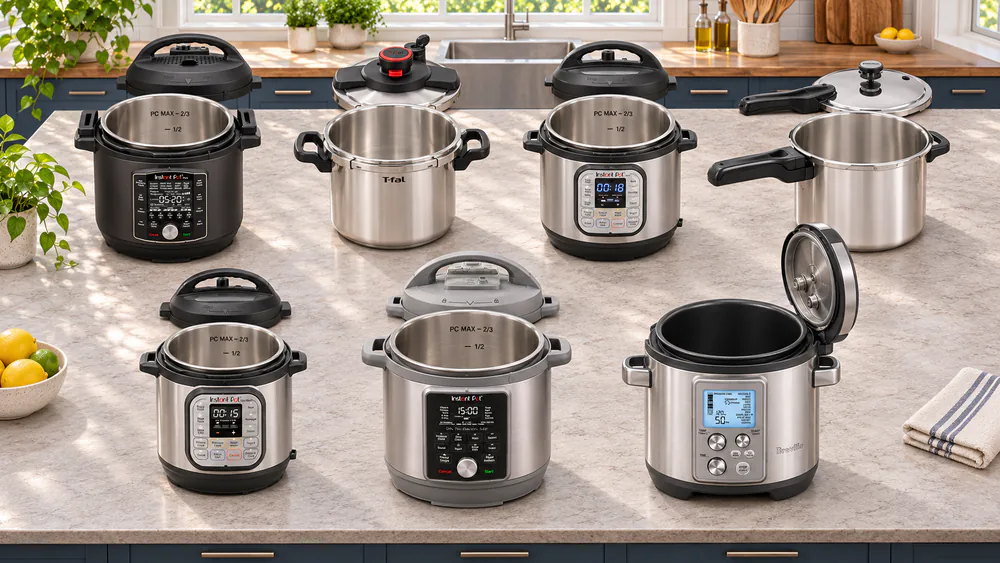
The seven cookers in this roundup, from the 3-quart Mini to the 8-quart Duo Plus.
1. Best Electric Pressure Cooker: Instant Pot Pro 6-Quart
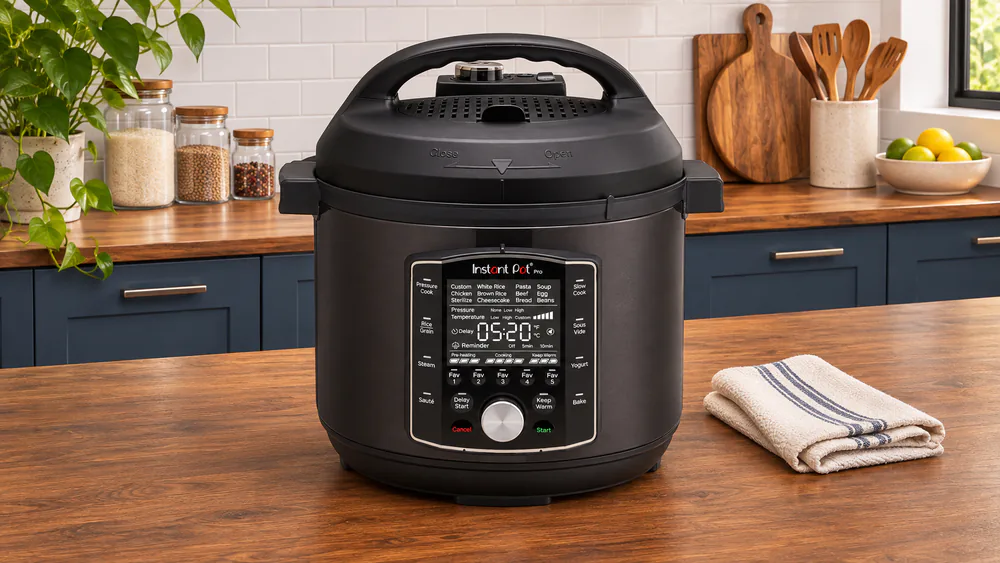
The Instant Pot Pro is the electric cooker we would hand to most busy families, especially those with older kids who can follow a display.
Pros
Handles on the inner pot keep it from spinning while you stir
Progress display makes each cooking stage easy to follow
Adjustable saute heat holds gravy at a gentle simmer
Dishwasher-safe lid and pot, with a spare sealing ring and steam rack included
Cons
Short-grain rice can leave a starchy film that takes extra cleaning
Cleaning around the lid silicone takes more effort than washing the insert
The interface can feel crowded to a first-time user
The Pro has a 6-quart total capacity and a 1200W electrical rating. It offers 28 customizable programs and 5 favorites, and it covers pressure cooking, slow cooking, sous vide, sauteing, steaming, yogurt, rice, baking, sterilizing, and keeping warm. It carries a 1-year limited warranty for eligible US and Canada purchases.
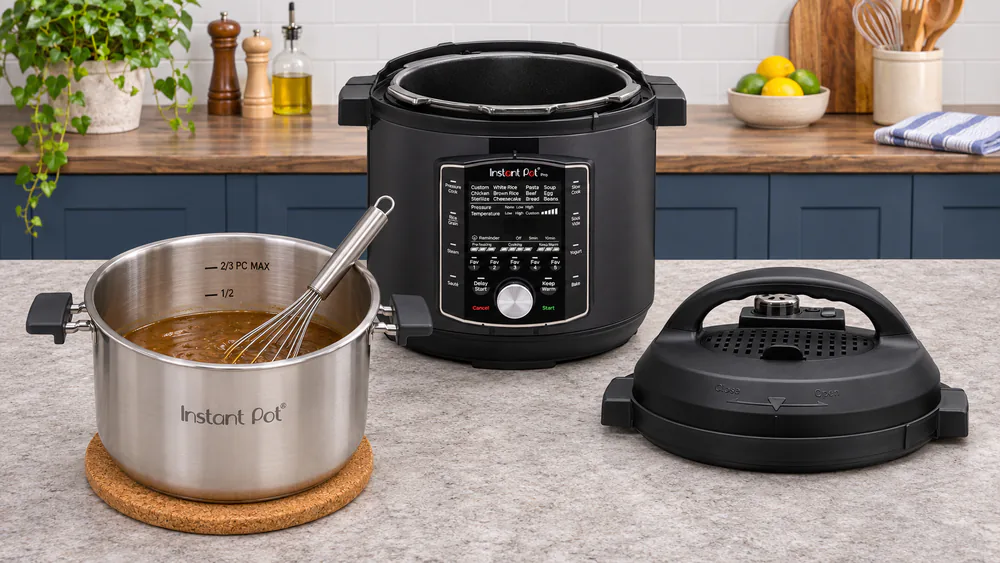
The handled insert stays put while you stir.
Performance and everyday use
Browning is where an electric cooker often disappoints, so we paid attention to it. Onions browned well in the Pro, while large pieces of meat stuck and needed more searing space than the base offers. We brown meat in smaller batches and deglaze before locking the lid. Once we turned to gravy, we dialed the saute heat down, set the whisk in the handled insert, and stirred without the pot shifting.
A large whole chicken may need breaking down to fit, so plan for parts rather than a whole bird.
Cleanup was mostly easy, but the gasket needs its own attention. Strong curry and spice smells can linger around the seal, so we pull the ring after a spicy dinner and wash it separately before making plain rice. The official dimensions are 13 x 12.7 x 12.8 inches, but published measurements differ, so allow extra clearance for opening the lid and venting steam.
Who should buy it and who should skip it
Buy it if: you want one pot that handles weeknight stews, rice, and yogurt, and you like a clear display that shows where the cooker is in its cycle. It also suits families with older kids who can follow a display.
Skip it if: you want a bare-bones pot with only a few buttons. The long function list is a plus for experienced cooks and a distraction for anyone who only wants to cook beans.
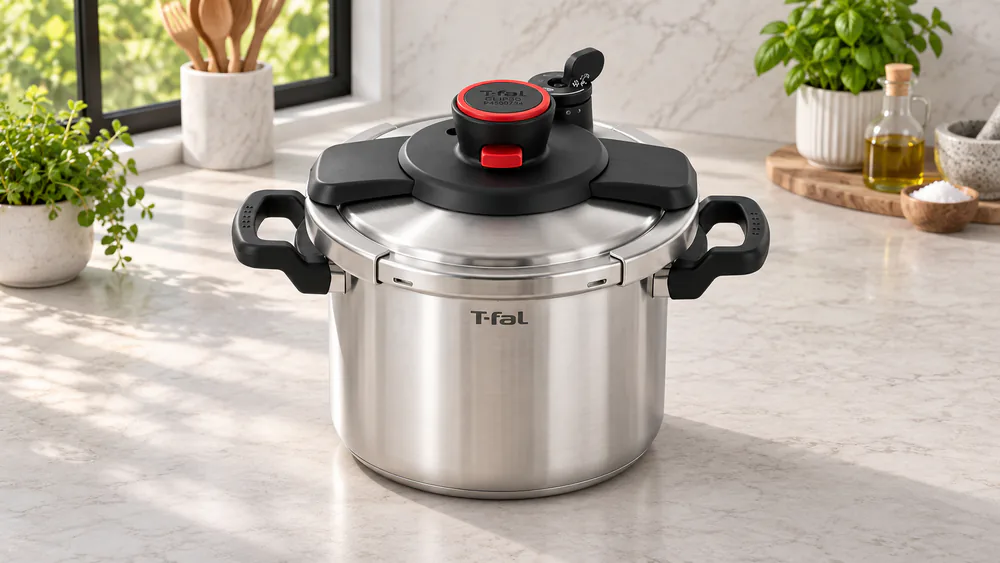
2. Best Stovetop Pressure Cooker: T-fal Clipso 6.3-Quart
The Pro offers automatic control; for stovetop cooking, we reach for the Clipso because its lid closes easily. It suits cooks who like burner control.
Pros
Push-button lid avoids twist-lock alignment fuss
Heavy flat base browns evenly and doubles as a stockpot
Cooks quietly compared with rattling weighted regulators
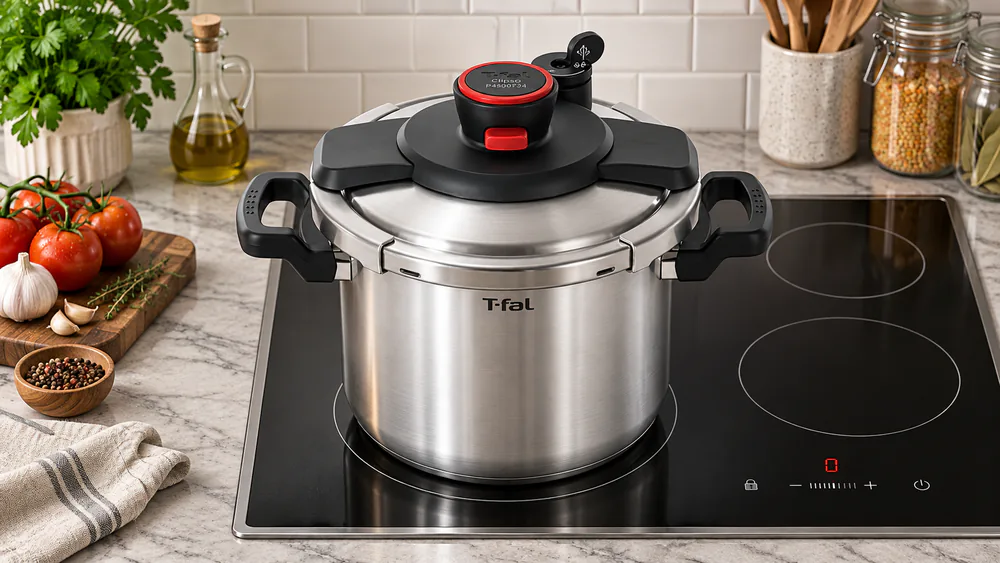
Induction compatible, with a steam basket, stand, and recipe booklet included
Cons
The prominent lid mechanism adds storage height
The heavy pot is less convenient to lift
The lid can feel loose before pressurizing, even when it seals correctly
The Clipso has a 6.3-quart total capacity and runs at a 12 psi maximum operating pressure. It is an uncoated stainless steel vessel with a rotary steam valve, and it can go in the dishwasher after you remove the gasket and pressure valve.
Performance and everyday use
On the stove, we browned onions and meat first, then sealed the lid and brought the pot up to pressure. It ran quietly once there, though venting still releases hot steam, and we kept little hands well clear.
The lid takes some getting used to. It can feel loose before it pressurizes even when it is sealed correctly, which made us double-check the first time. After that it was a breeze to close, and we liked skipping the twist-and-align routine.
Storage is the honest drawback. The lid mechanism sticks up, and the heavy pot is less convenient to lift when full. Published dimensions differ between sources, so check the exact model and lid clearance before planning cabinet space. The warranty terms also vary by listing, so confirm what applies to the unit you buy.
Who should buy it and who should skip it
Buy it if: you cook on induction or a smooth-top range, want a pot that doubles as a stockpot, and prefer a quiet cooker with a lid that is easy to close.
Skip it if: you want hands-off electric control, or your cabinets are short. A busy household that wants dinner started and forgotten will be happier with an electric model.
The push-button lid on an induction burner.
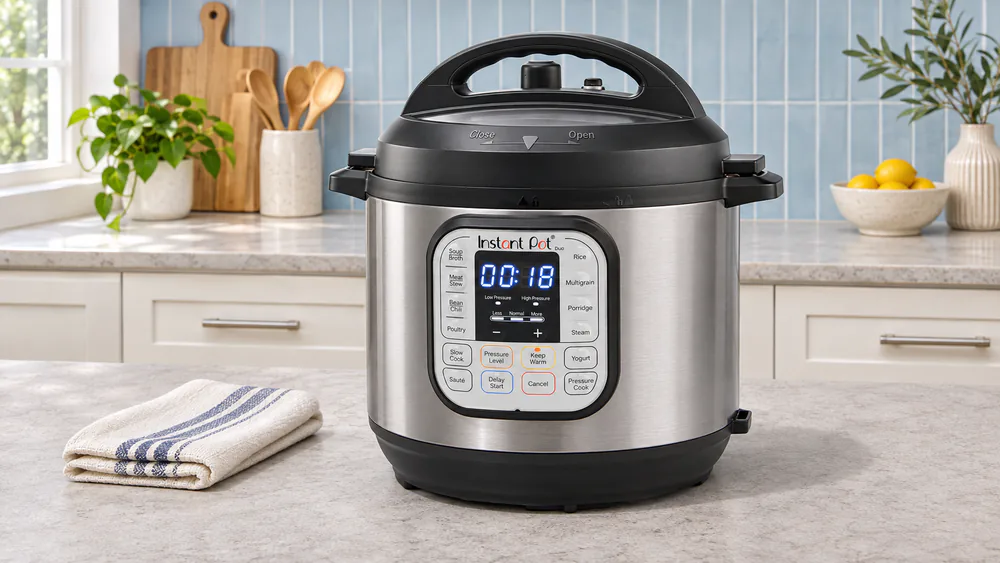
3. Best Budget Electric Pressure Cooker: Instant Pot Duo 6-Quart
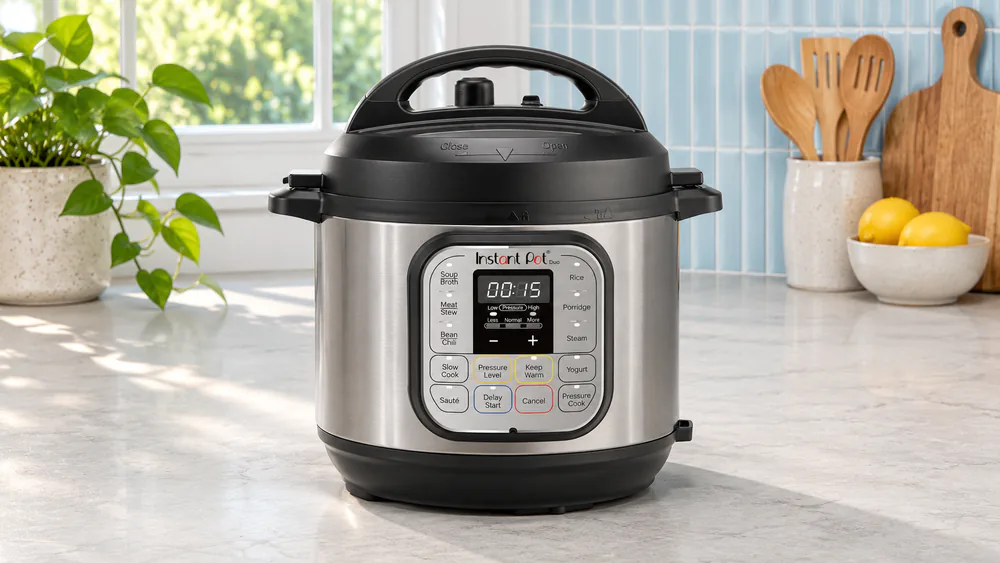
Where the Pro adds sous vide and a long program list, the Duo strips back to the basics. It is the pick for a family that wants rice, beans, and stew without paying for extras.
Pros
Straightforward controls for rice, stew, and beans
Rice cooks evenly, and stew works in pressure and slow-cook modes
Lid and insert are easy to wash
Tri-ply stainless pot with a steam rack included
Cons
The insert can rotate during sauteing
Browning is less even than on the upgraded Duo Plus
The wire rack does not hold small loose vegetables like a basket
The Duo has a 6-quart total capacity, a 1000W electrical rating, and 13 customizable programs. It comes with a 1-year limited warranty for eligible purchases. It does not do sous vide or air frying, and the pot is uncoated stainless steel with a tri-ply base.
Performance and everyday use
On a night with a main and two sides, we start the Duo, turn to the stove, and leave it be. It asks the least of you of any electric cooker here.
Sauteing is where the budget shows. We held the insert steady with one hand while stirring with the other. Brown in small batches and the results are fine.
Natural depressurization can be a noticeable part of the wait for dinner, so count it into your timing. The sealing ring can also hold curry aromas that show up in plain rice, which is why we keep a separate ring for savory dishes if we cook rice often. Release controls vary by generation, with the current version using an Easy-Release switch, so follow the instructions that come with your unit. The Duo measures about 13.4 inches on its longest side, so measure the cabinet before you buy.
Who should buy it and who should skip it
Buy it if: you want a reliable budget electric cooker for rice, beans, and stew, or this is your first pressure cooker and you do not want a crowded control panel.
Skip it if: you sear a lot of meat on the cooker itself or want sous vide. Step up to the Pro, or the Duo Plus if you want a steadier insert while sauteing.
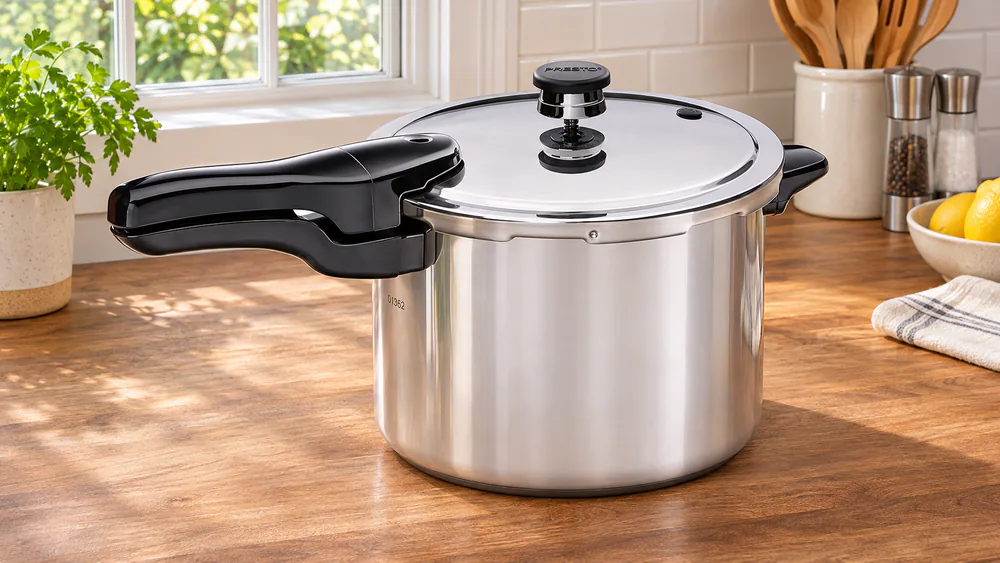
4. Best Budget Stovetop Pressure Cooker: Presto 01362 6-Quart
Where the Clipso brings a push-button lid, the Presto 01362 keeps things basic. It is the budget stovetop pick for cooks who do not mind adjusting the heat by hand and want a long warranty.
Pros
Locking lid feels secure during cooking
Works on gas, electric, smooth-top, and induction cooktops
12-year limited warranty
Dishwasher-safe body and cover after removing the ring and plate
Cons
Weighted regulator and manual heat adjustment make it more hands-on
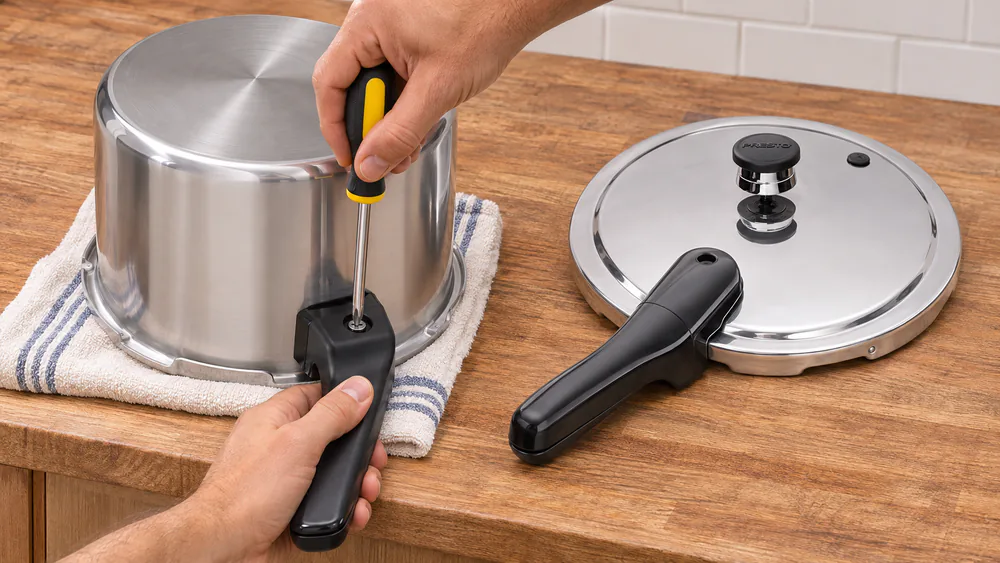
Handles need assembly with a screwdriver, and fastenings can loosen with use
Long handle makes it awkward to store
The 01362 is the stainless steel model, not the aluminum 01264. It has a 6-quart total liquid capacity and cooks at 15 psi regulated stovetop pressure. The pot is uncoated stainless steel with an aluminum-core tri-clad base, and it includes a weighted regulator, a cover-lock indicator, a helper handle, and a rack. The dimensions are 17.31 x 9.12 x 8.75 inches including the long handle.
Handles, regulator and what to expect
Setup comes first. We fastened the main and helper handles with a screwdriver, tightening until snug and no further, since overtightening can crack the handles or strip the screws. Handle fastenings can loosen with use, so check them periodically.
Once it is running, you bring the pot to pressure, turn the burner down until the regulator settles into a gentle rock, and watch the clock yourself. It is not a set-it-and-forget-it pot, and cooking results are workable rather than standout.
Follow the manual's rules for foods. It prohibits pressure-cooking pasta, cereals, split peas, applesauce, cranberries, rhubarb, and dried soup mixes, and it has special methods for rice and beans. We would skip it in a house where kids might handle the cooker unsupervised, and buy it if you want one pot that works on every kind of cooktop.
Handle assembly takes a screwdriver and a light touch.
5. Best Pressure Cooker for Small Households: Instant Pot Duo Mini 3-Quart
Where the Presto asks for a watchful eye, the Duo Mini is the small-kitchen answer. It suits one or two people, and it makes a handy second pot for a big family that wants a side of rice or beans.
Pros
Small body is easy to store
Suits side dishes and modest meals
Removable gasket simplifies cleaning the seal and its seat
Dishwasher-safe lid and tri-ply stainless pot
Cons
Rice residue may need soaking before scrubbing the insert clean
Oil can leave stubborn marks on the stainless base
The changing screen indication makes remaining time harder to check at a glance
The Mini has a 3-quart total capacity and a 700W electrical rating, with a 1-year limited warranty under the brand's appliance warranty. Program counts differ between descriptions and generations, so choose by the actual control panel on the unit.
Living with the 3-quart size
We fill the pot with warm water right after serving, because the insert needs a soak before scrubbing. The removable gasket helps, since the seal and its seat are simple to wash.
Scaling is the real limit. Recipes written for larger pots may need adjustments beyond halving the ingredients. Meat results vary by recipe, too.
The screen changes as the cooker moves through stages, which makes remaining time harder to check at a glance. When we are busy, that is a small annoyance rather than a dealbreaker. Published dimensions differ by generation, so confirm cabinet clearance for your version. A family of five or seven will outgrow this pot quickly, so treat it as a supporting cooker there.
6. Best Pressure Cooker for Large Families: Instant Pot Duo Plus 8-Quart WhisperQuiet
Where the Mini is built for two, the 8-quart Duo Plus is built for a crowd. It is the pick for families who feed five or more and have cabinet space to spare.
Pros
Large pot adds room for batches
Guided display is easy to navigate during routine cooking
Anti-spin insert stays put while sauteing and cleans easily
One-touch WhisperQuiet release
Cons
Bulky to store
Heavy to move when loaded
Results can vary by recipe and generation
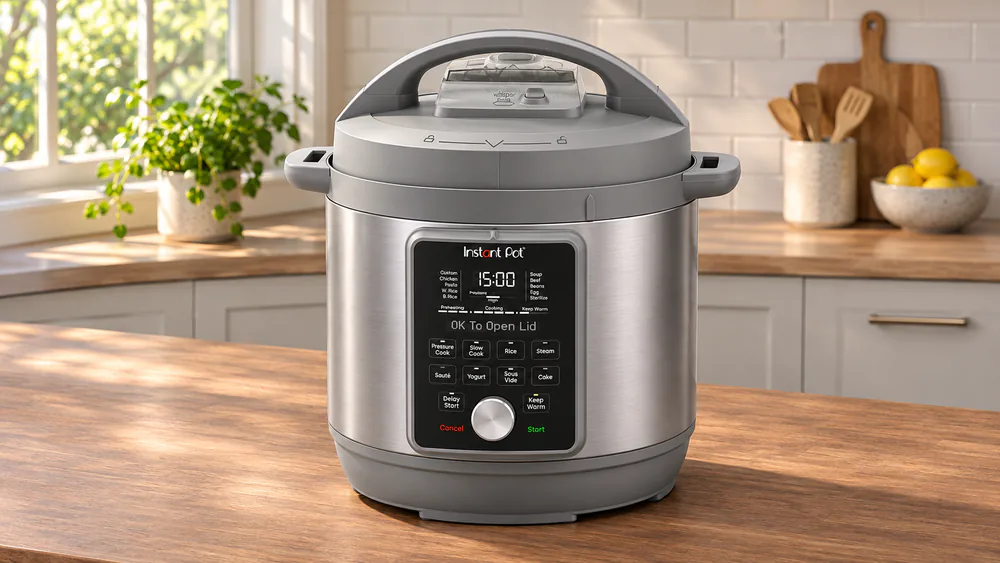
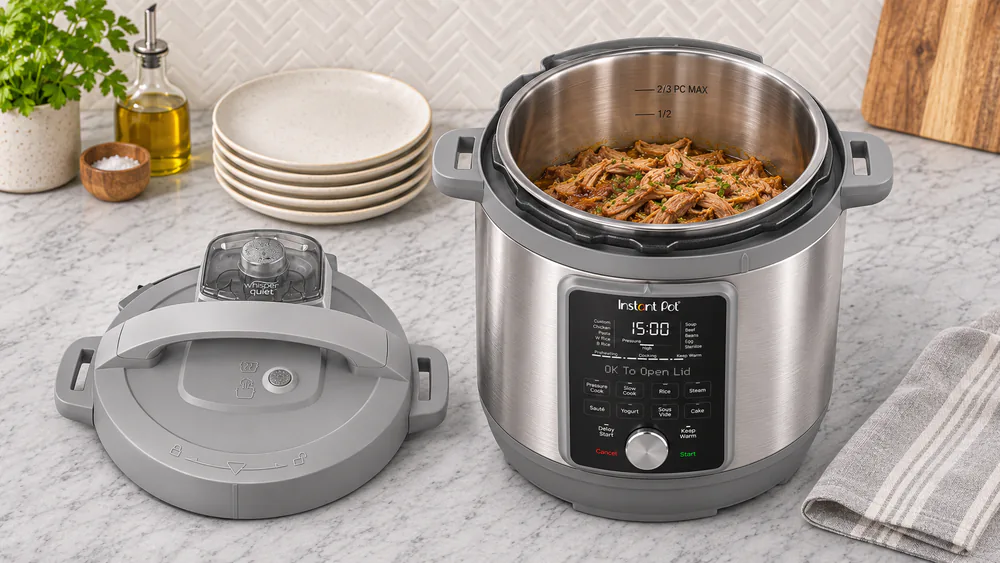
The Duo Plus has an 8-quart total capacity, a 1200W electrical rating, and 25 recipe presets on the WhisperQuiet version. It offers pressure cooking, slow cooking, steaming, sauteing, sous vide, rice, yogurt, cake, and keep-warm functions, plus a dial control and an angled display with cooking progress and instructions. The 1-year limited warranty covers eligible purchases.
Cooking for seven
For a household of seven, a larger pot gives more headroom, though portion sizes and the recipe still decide whether a complete meal fits. A teenager can follow the guided display step by step, which frees us to set the table.
A bigger pot is also a heavier one, and loaded with a stew it needs generous cabinet and counter room. Dimensions differ across generations, so use the figures for the exact 8-quart WhisperQuiet version when you plan storage. The quiet-release feature belongs to that named variant, so check the product title before you buy.
Who should buy it and who should skip it
Buy it if: you regularly feed five or more people, batch cook for the week, and have cabinet space to spare.
Skip it if: you cook for two or three, or if you struggle to lift heavy pots. The Duo or Pro in 6-quart will serve most smaller families better.
Batch room is the reason to choose the 8-quart.
7. Best Premium Pressure Cooker: Breville Fast Slow Pro BPR700BSS
Where the Duo Plus is about volume, the Breville Fast Slow Pro is about precision. It is the splurge for cooks who want finer control and automatic release.
Pros
Eight pressure levels give finer control than other picks here
Automatic quick, pulse, or natural release
Risotto turns creamy without scorching
Ceramic coating rinses clean, and the hinged lid is dishwasher safe
Cons
The lid pin needs careful alignment before the cooker will seal
The relatively narrow bowl limits how much meat browns in one layer
Costs the most of the seven
The Fast Slow Pro has a 6-quart total capacity and a 1100W electrical rating, with 8 pressure levels from 1.5 to 12 psi and 11 pressure-cooking presets. Dual top and bottom sensors, a ceramic-coated bowl, an LCD, and a hinged removable lid round out the design. The warranty is a 1-year replacement warranty in US product copy.
Hands-off release and its limits
On a night when we were helping with homework, we started a risotto and walked away. Quick, pulse, and natural release all happen without a hand on the valve, so there was no standing at the steam.
The lid pin needs careful alignment before the cooker will seal, so we line it up before locking. The narrow bowl means we brown in two rounds. The published dimensions differ between sources, so allow additional room above the hinged lid. The Fast Slow Go is a different, simpler model, and it is not this one.
Who should buy it and who should skip it
Buy it if: you want precise pressure control, like to cook risotto or delicate dishes, and want the cooker to handle release for you.
Skip it if: you want the lowest cost, or you cook mostly rice and stew. The Duo does those jobs for far less, and the Breville's strengths will go unused.
Electric vs. Stovetop Pressure Cookers
Electric cookers manage heat and timing for you. Stovetop cookers give you burner control and a pot that can double as a stockpot, but they ask you to watch the heat. The best choice depends on whether you want a cooker that runs itself or a pot you run yourself.
Criterion
Electric
Stovetop
Heat and control
Programmed heater and timer
Burner adjustment and manual timing
Searing
Limited by heater and base area; model-dependent
Direct burner control; pot geometry still matters
Pressure behavior
High and low on many models; the Breville offers finer control
Regulator-dependent; do not assume every model reaches the same pressure
Release usability
Manual switches, or automatic release on selected models
Valve or manual-approved cooling method
Compatibility
Needs electrical supply and a dry, stable counter
Match the pot to the burner; selected steel models support induction
Intended user
Busy cooks who want automatic control
Cooks comfortable monitoring heat and timing
In our family kitchen, the electric models win on busy nights because they free up a hand and a burner. The Duo family in particular reduces the attention needed while another dish cooks on the stove. A stovetop cooker earns its place when you want a quiet pot, direct heat for browning, or a stockpot that does double duty.
Safety shapes the choice as well. An electric base must stay dry and sit on a stable counter. A stovetop cooker must match your burner and needs steady supervision. Neither is a good fit for unsupervised young cooks, and we cover the rules in the safety section below.
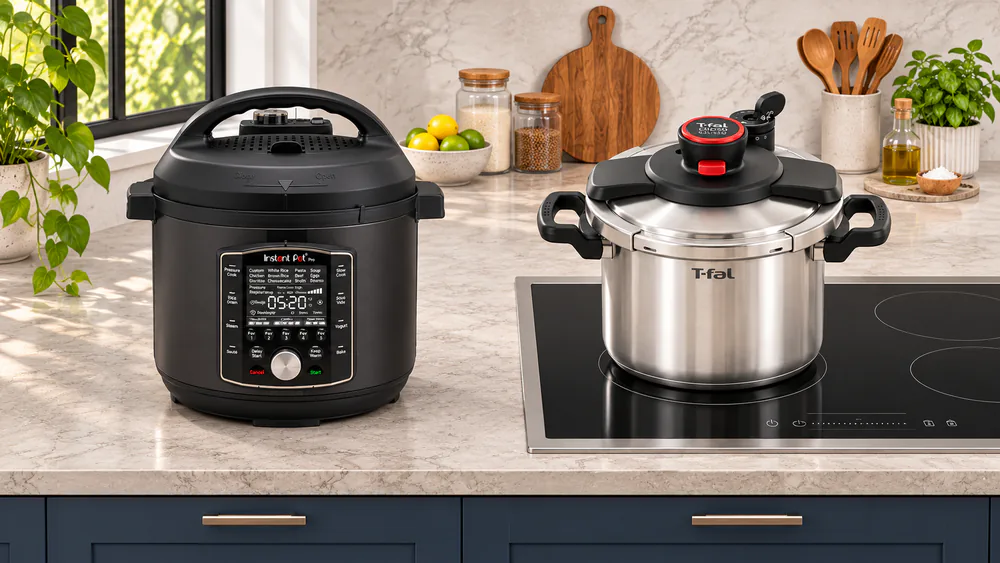
Electric on the counter, stovetop on the burner.
How to Choose a Pressure Cooker
Start with who you feed and how you cook, then work down this list. The sidebar summarizes the five criteria, and the sections below explain why each one matters.
Capacity and usable cooking space
A 6-quart cooker is the sweet spot for a family of four. The 3-quart Mini suits one or two people, and the 8-quart Duo Plus suits a big household. Remember that the stated capacity is total volume. The manual rule for ordinary pressure cooking is to fill no more than 2/3 of the vessel, and expanding foods, soups, and stews should stay at 1/2 full including liquid.
That means a 6-quart pot holds far less usable food than its label suggests. If you cook for five or more, go up a size, and think about whether you will batch cook beans or stock.
Pot material, cooking surface and cooktop compatibility
Every pot here except the Breville uses uncoated stainless steel, which browns well and survives scrubbing. The Breville uses a ceramic coating that rinses clean. Coatings are gentler to clean but need gentler tools.
For stovetop models, match the pot to your burner. The Clipso supports induction, and the Presto works on gas, electric, smooth-top, and induction ranges. For electric models, the only compatibility question is whether you have a dry, stable counter and the clearance to vent steam.
Pressure settings, controls and steam release
Most electric models offer high and low pressure, and the Breville adds eight levels from 1.5 to 12 psi. The Clipso reaches 12 psi, and the Presto runs at 15 psi regulated. Higher pressure is not automatically better, so follow your recipe.
Release is the part of pressure cooking that new cooks find scary. Natural release waits for pressure to fall as the contents cool. Quick release vents steam actively. If you want fewer decisions, an automatic-release cooker like the Breville reduces the time you spend at the valve.
The best pressure cooker is the one whose lid you will actually lock and whose release you will actually follow every time.
Cleaning, replacement parts and warranty
Look for dishwasher-safe lids and pots, and a gasket that pulls out without a fight. Every cooker here asks you to remove the sealing ring or valve before a dishwasher cycle. Use correctly matched replacement seals and valves, and inspect them before cooking. No universal replacement interval is established for all these models, so a worn or damaged seal is the signal.
Warranty length varies. The Presto carries 12 years, the Instant Pot models carry 1-year limited warranties, and the Breville has a 1-year replacement warranty. The Clipso's coverage depends on the guarantee that comes with your unit, so read the supplied terms.
Tip. Keep a second sealing ring for savory dishes. Curry and spice smells can linger around the seal and show up in plain rice.
Pressure Cooker Safety and Care
Modern pressure cookers have lid locks and release valves designed to prevent accidents, but those features only work when you use them as the manual describes. Read the manual for your exact model before the first cook.
Lid locks, fill limits and pressure release
Never force a pressurized lid open. Keep children away from hot steam, use handles and appropriate heat protection, and stay clear of the valve when venting. Respect the fill limits: no more than 2/3 full for ordinary cooking, and 1/2 for expanding foods, soups, and stews.
Follow the recipe and the model manual for release. Foaming or starchy foods need extra care, and if liquid spurts from the valve, stop venting and wait. Presto's manual also lists foods you should not pressure cook at all, including pasta, split peas, and applesauce.
Warning. A pressure cooker is not a toy for young cooks. Teens can use one with supervision once they have read the manual, but little kids should stay out of the steam zone entirely.
Sealing rings, valves and routine cleaning
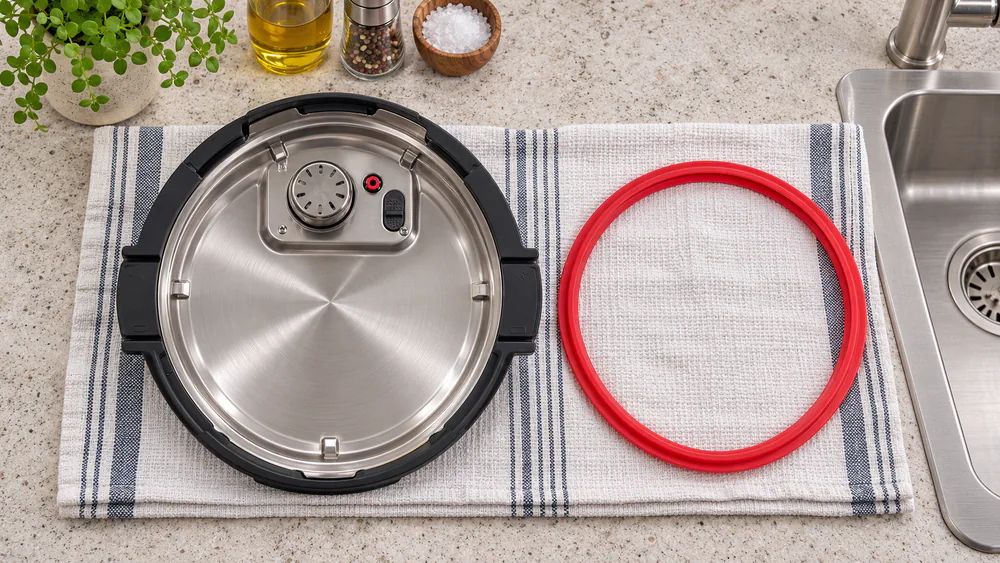
Before each cook, check that the seal is seated and the vent is clear. Wash the lid, ring, and valve after every use, following each manual for what can go in the dishwasher. A worn or damaged seal needs replacement, and you should use the correct matched part for your model.
For electric cookers, keep the base dry and never submerge it. On the Presto, check the handle fastenings now and then, because they can loosen with use. A few minutes of routine care is the cheapest form of peace of mind a pressure cooker offers.
Pull the ring and valve for washing, and inspect the seal first.
Which Pressure Cooker Should You Buy?
Match the cooker to the kitchen, not the other way around. For most busy families, the Instant Pot Pro is the easy call. If you want a stovetop pot, the Clipso is the one we would buy, and the Presto is the one to buy if you also want a long warranty.
If money is the first filter, the budget tier is the place to look, and the Duo handles everyday rice, beans, and stew without the extras. For one or two people, the Duo Mini saves space. For seven at the table, the Duo Plus 8-quart gives batch room, and the Breville is for the cook who wants precision and automatic release.
Pressure Cooker FAQs
How much time does pressure cooking actually save?
Less than the timer alone suggests. Total time includes preheating, the timed pressure phase, and depressurization, so the countdown is not your dinner time. Tough cuts, beans, and stews still save a lot of time versus braising, but savings depend on the recipe and the load.
Is an Instant Pot the same as a pressure cooker?
Not exactly. Instant Pot is a brand of electric multicookers, and pressure cooking is one function alongside slow cooking, sauteing, steaming, and others. An Instant Pot is a type of electric pressure cooker, but a stovetop pressure cooker is a different kind of pot.
Can a pressure cooker replace a slow cooker?
Partly. Electric multicookers like the Duo can slow cook, but settings and evaporation differ from a dedicated slow cooker. Use recipes written for your model rather than carrying over timing from a slow cooker recipe.
Can you use a pressure cooker for canning?
No, not safely. The National Center for Home Food Preservation's guidance on canning in electric multicookers says USDA pressure-canning processes are not supported in electric multicookers, and reaching a pressure reading alone does not establish safe jar processing. The tested processes were developed for stovetop pressure canners that hold at least 4 quart jars upright, and small cooking pots are not substitutes. None of the seven cookers here is a pressure canner.