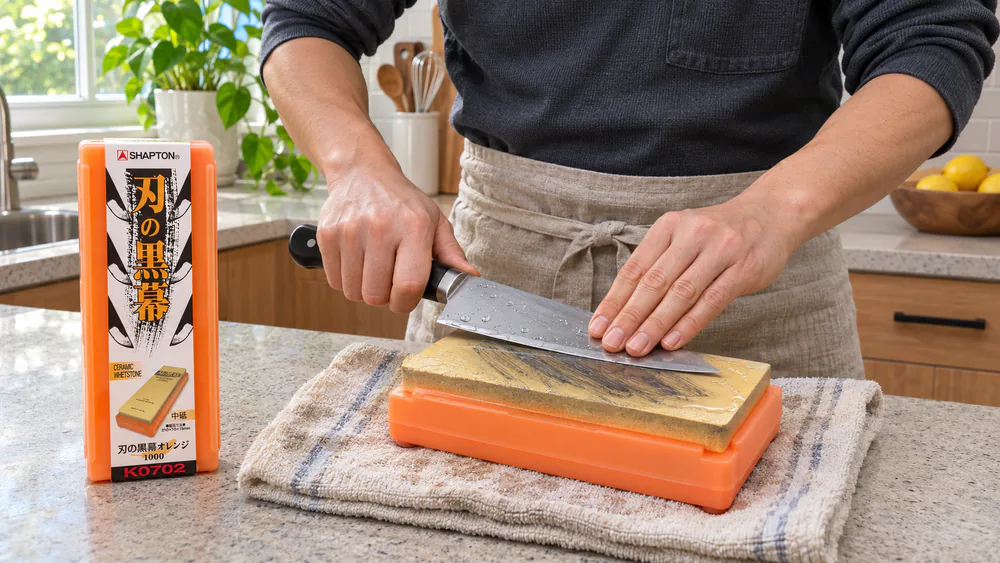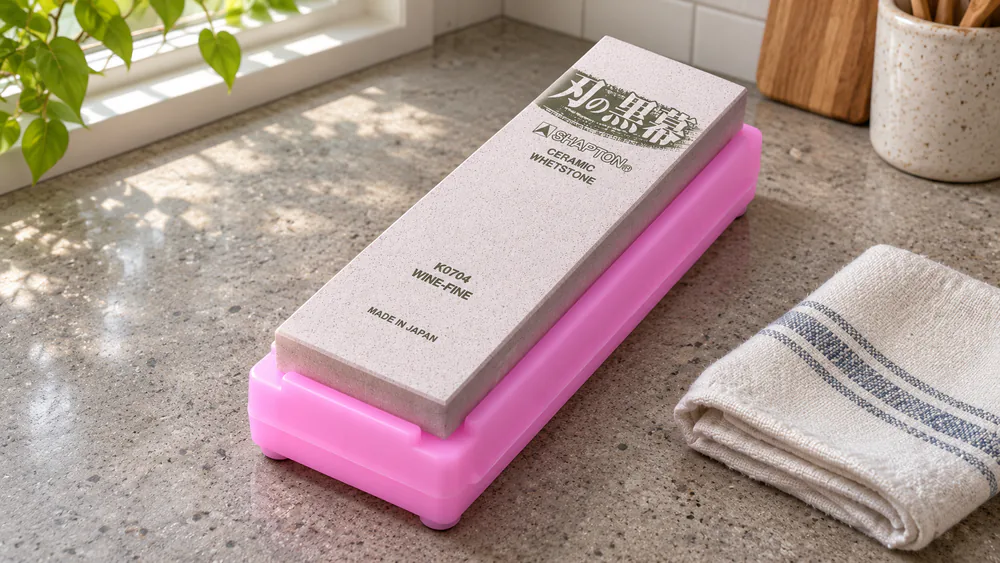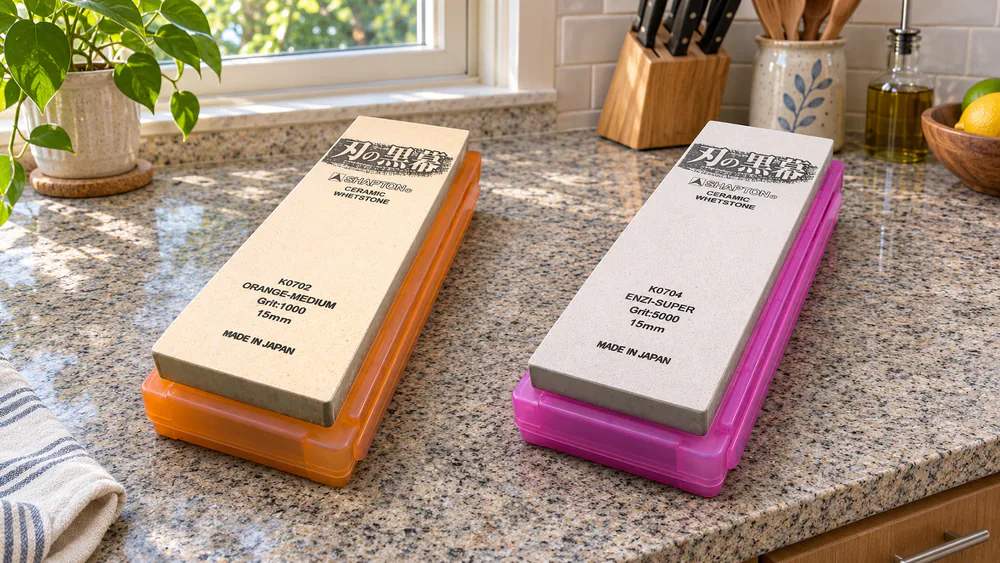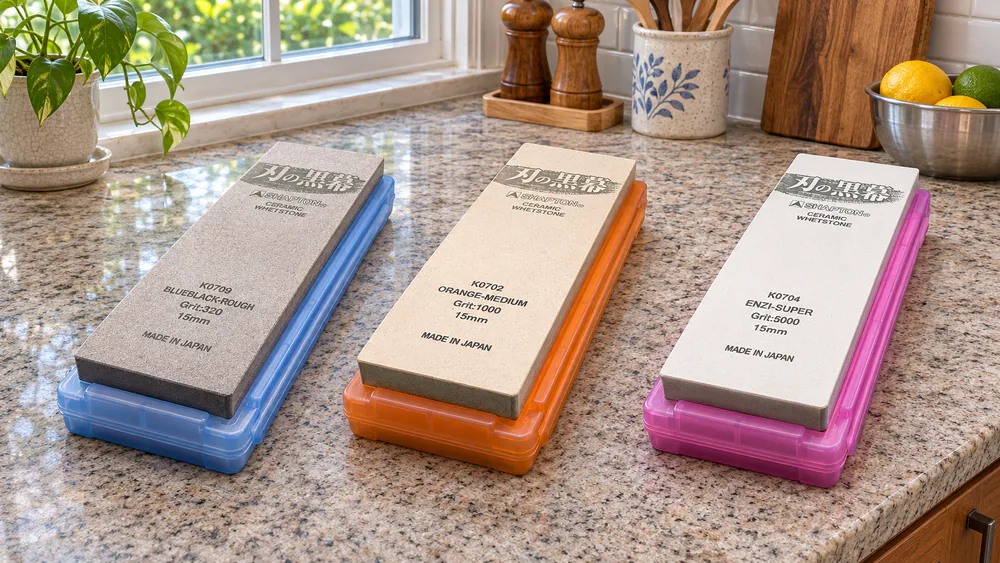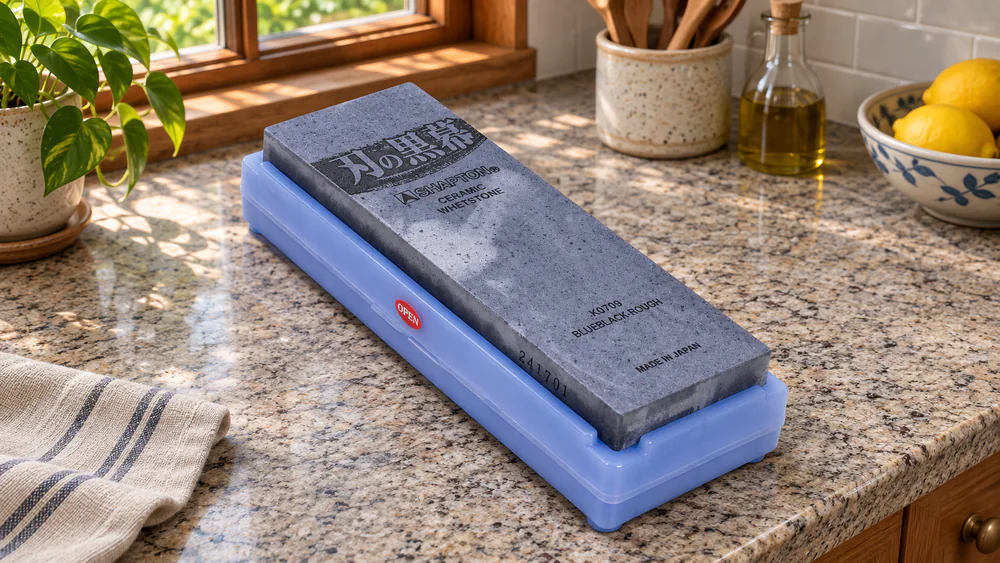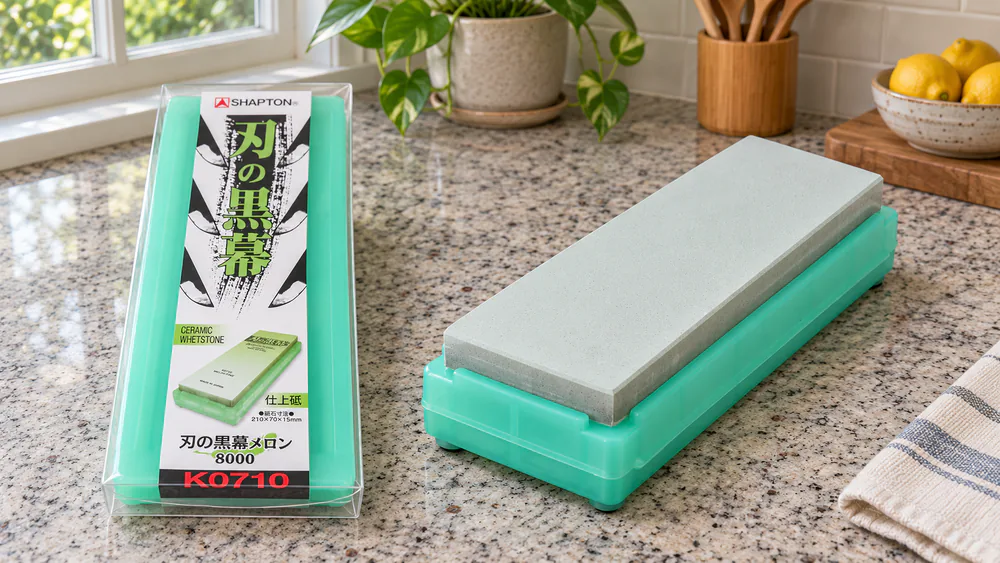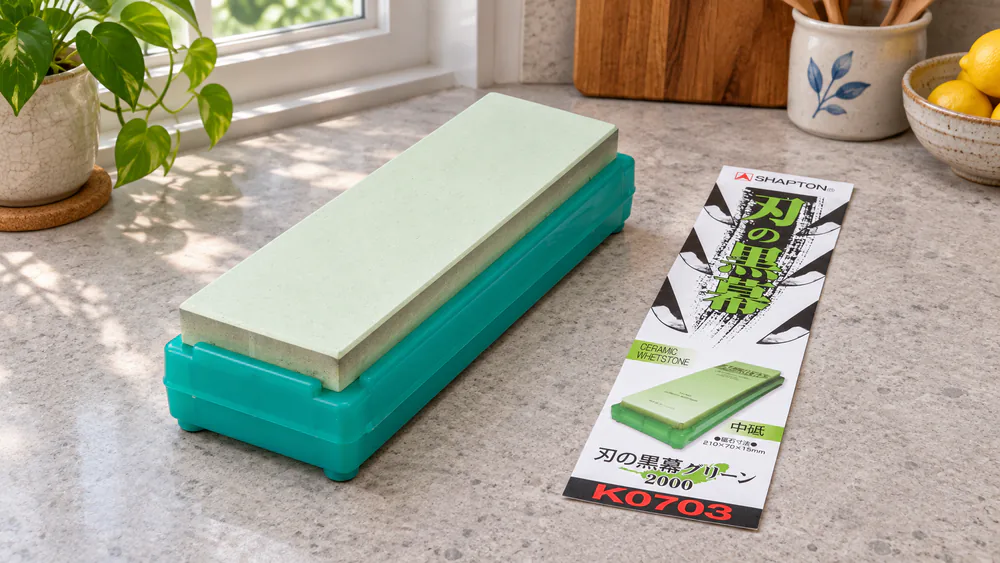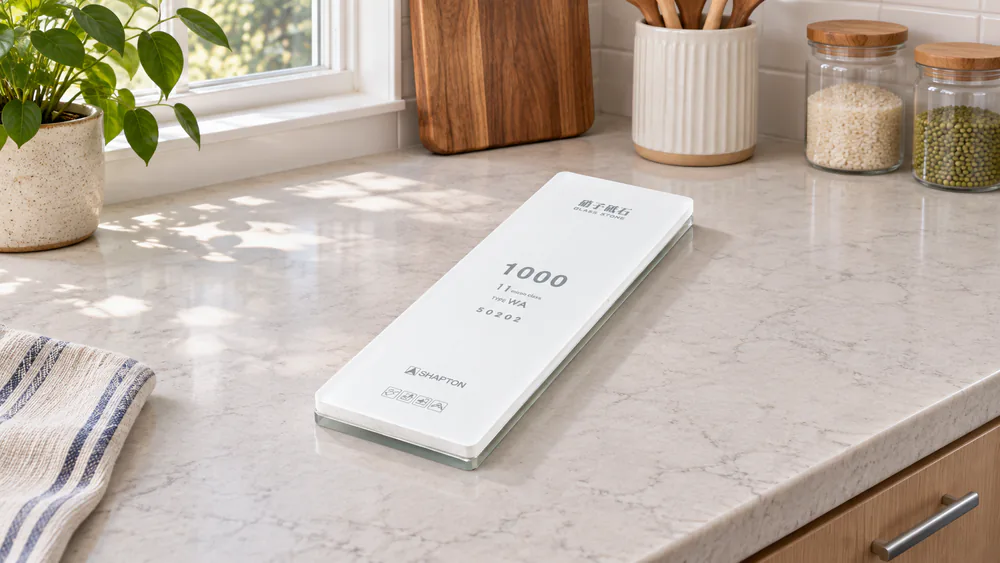

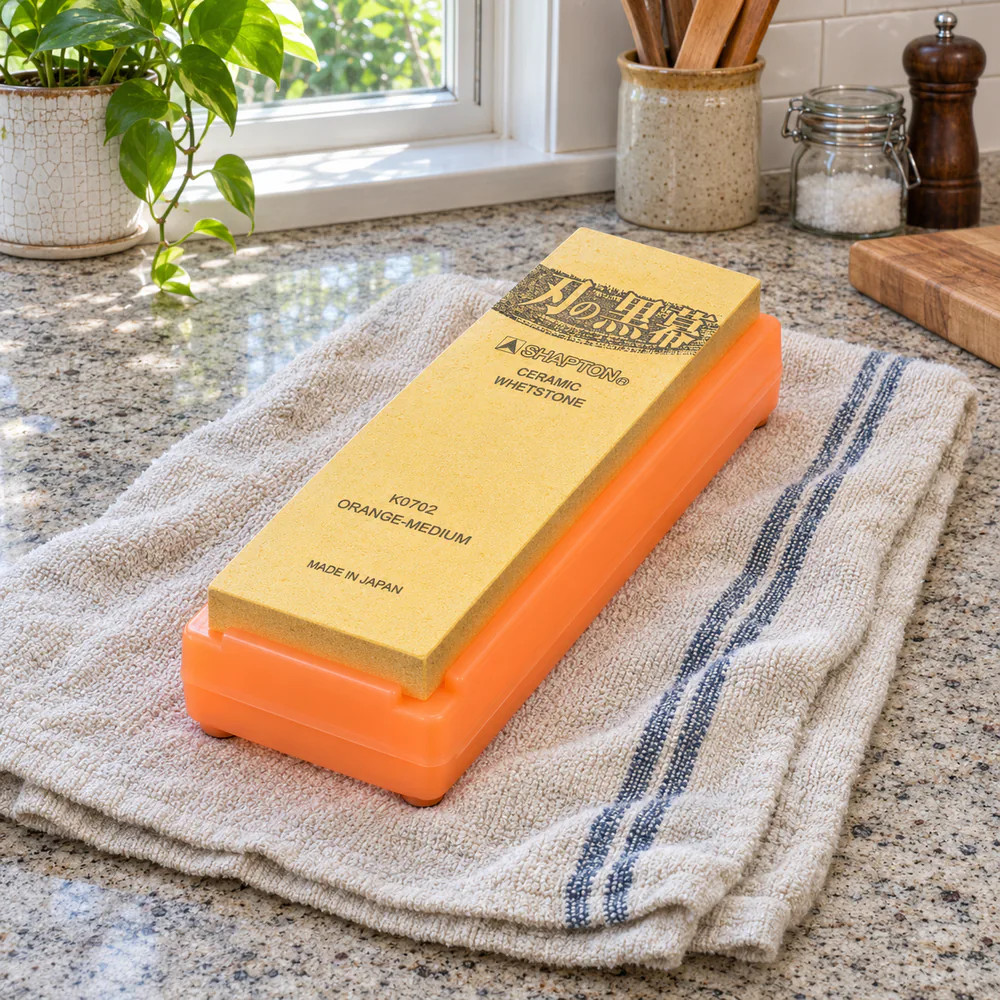
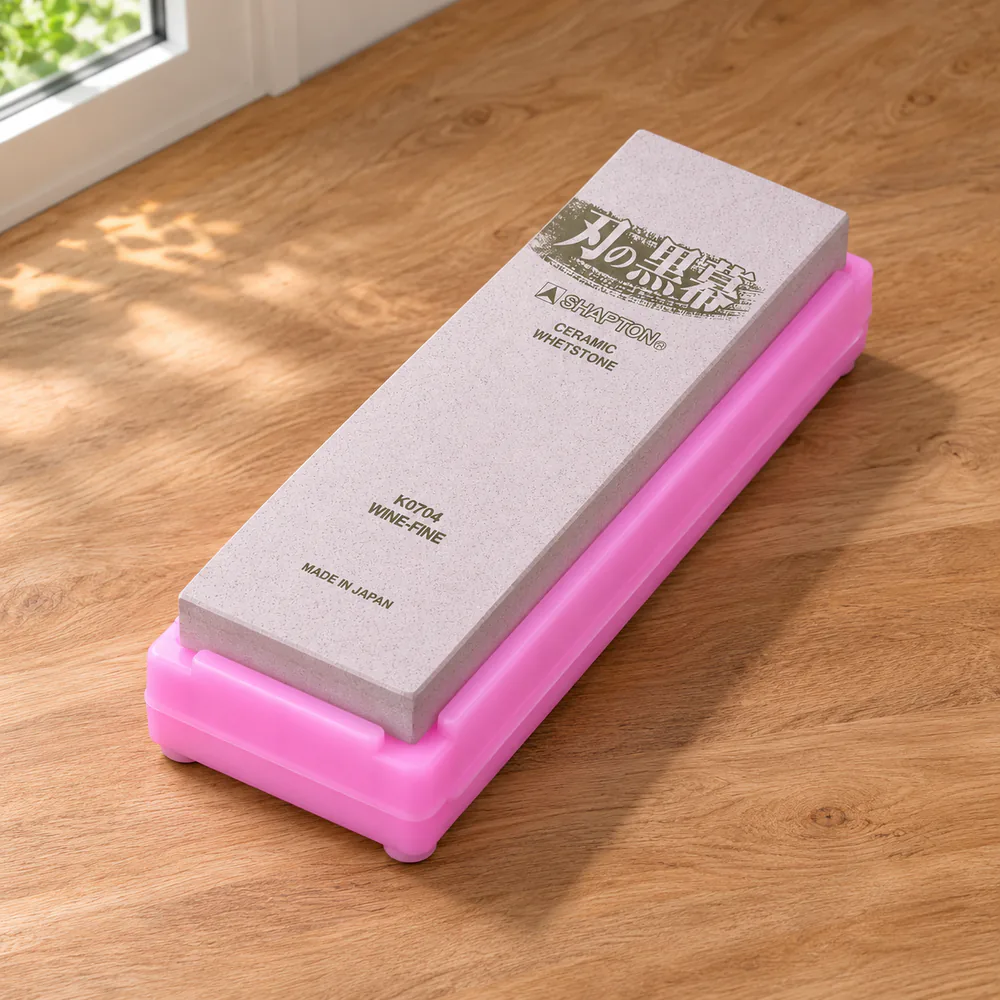
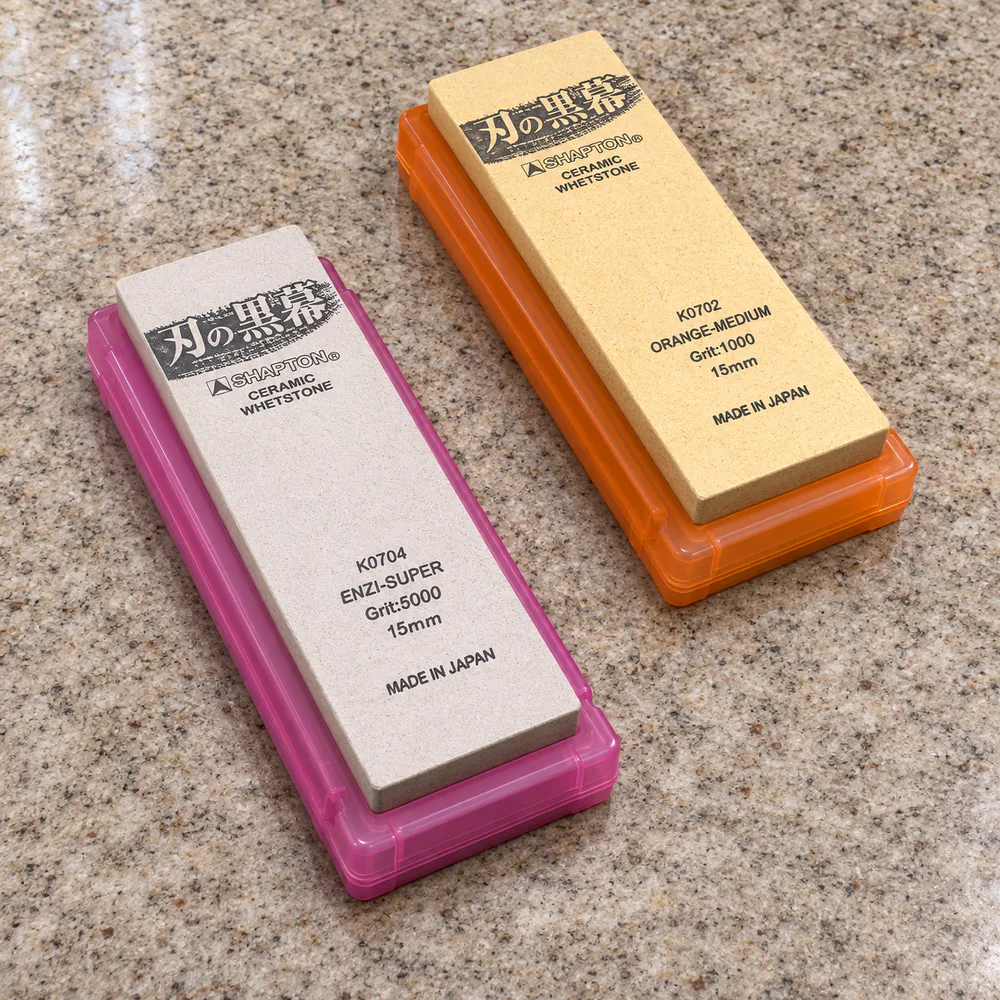
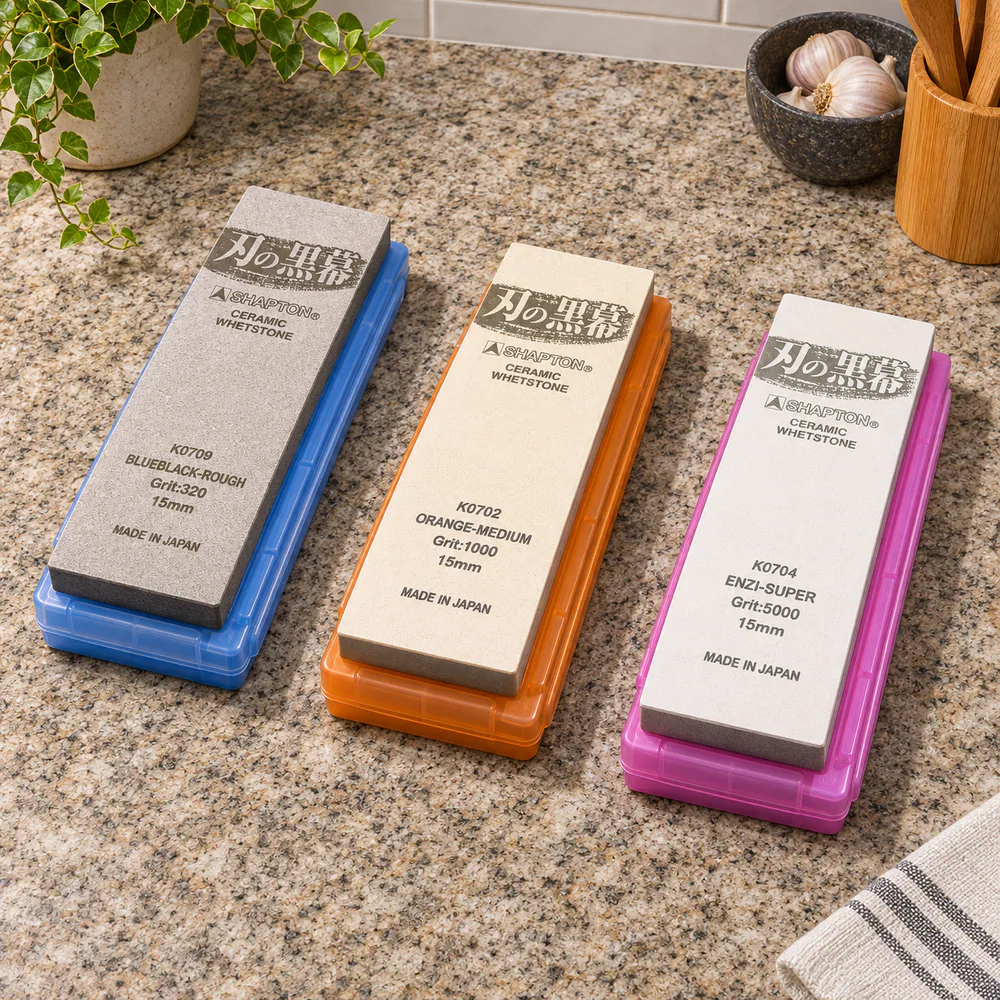
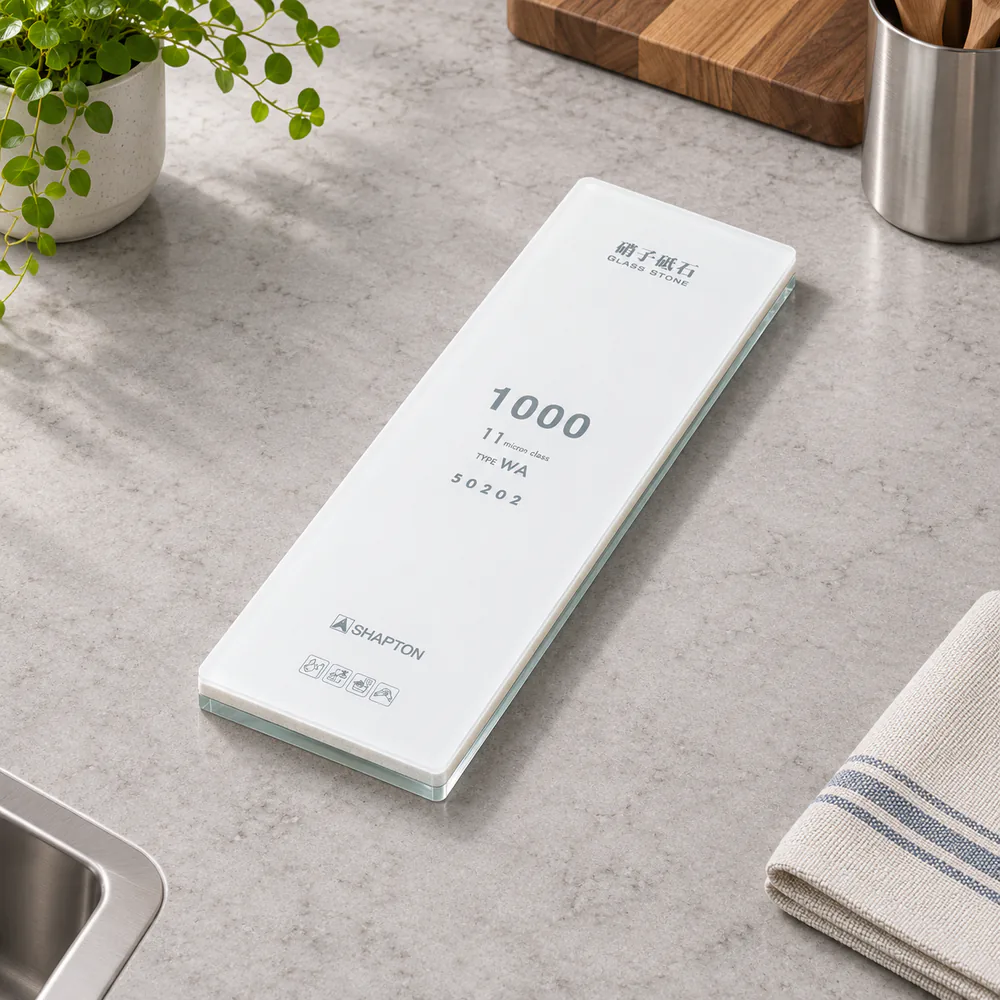
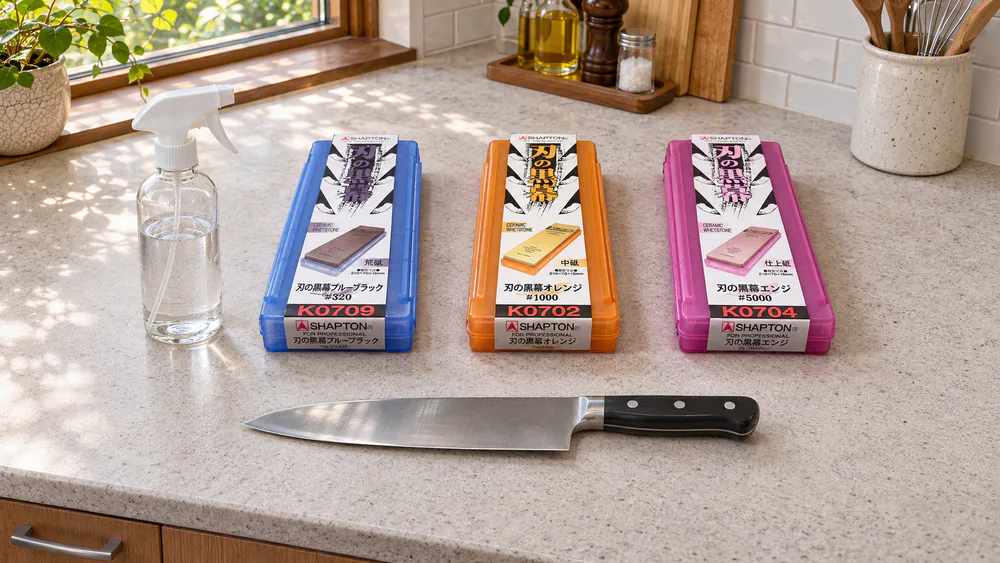
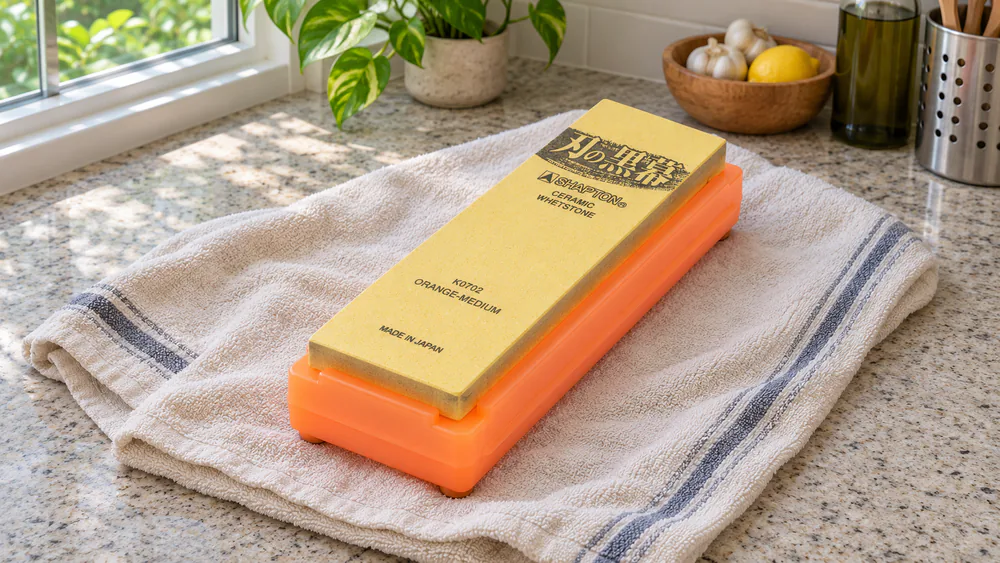
The Kuromaku #1000 is the workhorse that earns the top spot, and it is the one stone we would tell anyone to buy if they are only buying one. The dense stone sheds little slurry and needs only a splash of water before you start sharpening on its case. It cuts older German kitchen steel as well as hard Japanese steels like V10, which is rare for a single medium stone.
Pros
- Dense and low-slurry, so cleanup is a rinse
- Cuts both German and hard Japanese steels well
- Wears very slowly and flattens quickly when it does dish
- Case works as a stable, non-slip holder
Cons
- Takes practice to hold a consistent angle
- Instructions are in Japanese only
- Too fine to repair chips quickly
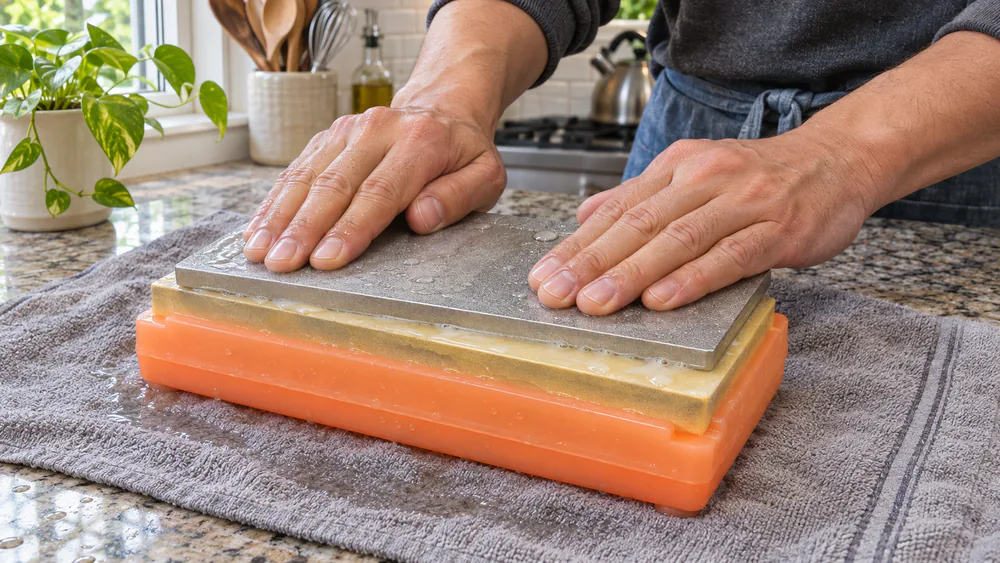
The case doubles as a non-slip stand while you sharpen, and the dark marks left by the steel wipe off with water. For us, this is the stone that made razor-sharp edges a quick, repeatable habit: a knife was ready for the next stone after thirty seconds to a minute, and setup got quicker after the first use. When the surface does dish, flattening on a diamond plate is quick.
It is not effortless. A whetstone gives a keener edge than a pull-through sharpener or a guided system, but it takes some practice, and the instructions in the box are in Japanese. Learn the angle on a cheap knife first. Skip it only if you need to repair chips, where the #320 is the better starting point.