As an Amazon Associate we earn from qualifying purchases. We may earn a commission from links on this page, at no extra cost to you. Learn more.
If you have ever watched a centrifugal juicer foam up half your spinach and spit out soggy pulp, you know why slow juicers are taking over the category. They crush and press produce at low speed instead of spinning it, which means higher yield, drier pulp, less foam, and a quieter kitchen. The trade-off is price, since the good ones cost noticeably more than a basic centrifugal machine. We tested the 10 best slow juicers of 2026 to find out where that money actually goes.
Every machine went through the same protocol in our test kitchen: the same green juice recipe and carrot-apple-ginger batch, with yield weighed, pulp checked, and decibel readings taken. Each of the ten ran three weeks of daily use before any ranking was locked in, and the strongest performers stayed on the counter afterward to see how they age.
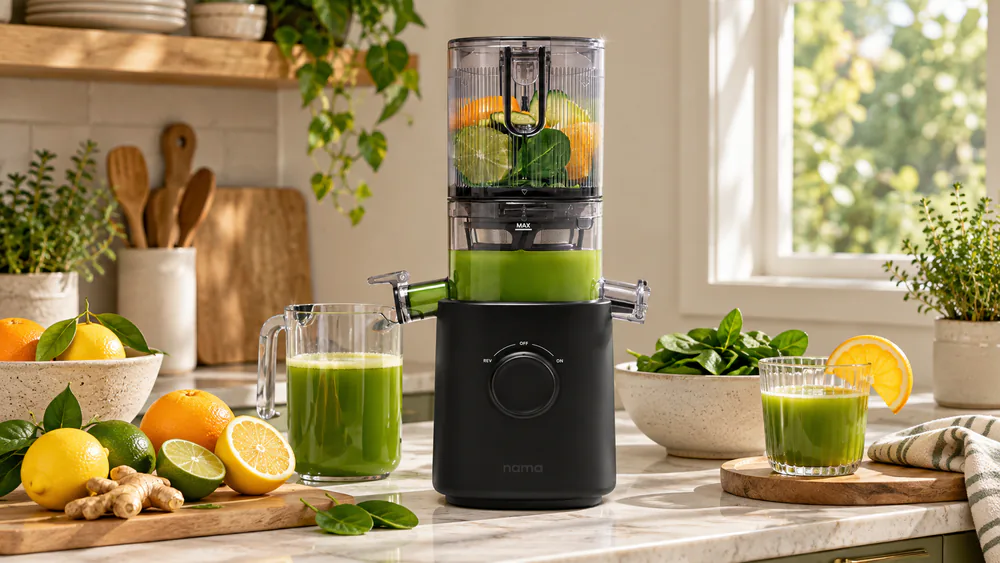
The Nama J2 Cold Press Juicer stands out as our best overall pick. Its 2-liter self-feeding hopper turns juicing into load-and-walk-away, it is quiet enough to run while someone sleeps, and the 15-year warranty covers every part. The picks behind it are ranked for specific budgets and habits, from best value to best for greens.
Testing a juicer is mostly about the juice, but not only about the juice. We ran every machine through the same green juice recipe (apple, carrot, celery, cucumber, and leafy greens) plus a carrot-apple-ginger batch, so soft fruit, hard roots, and fibrous greens all got covered. Each run was weighed, juice and pulp on the scale, with froth noted before it settled. We took decibel readings from counter height, timed full teardown and cleanup, and ran torture tests: uncut ginger, peel-on lemons, and frozen bananas, loaded the way an in-a-hurry person actually would. We have put more than 20 juicers through this protocol, buying every machine at retail, the same way a reader would. None of the ten came from a brand, and none will: our product testing is funded by affiliate income, and we do not accept money from brands to feature their products. When a maker offers a sample, we buy it outright or return it after testing, so it never sits on our counter as a sponsored pick.
What We Look For
Five things decided the ratings. Yield came first, because it is the whole point: we weighed output on identical loads and checked the pulp, because wet pulp means the machine left juice behind. Noise came second, against our 65 dB polite-conversation baseline, because a juicer you dread turning on collects dust. Cleaning time came third, since the gap between a two-minute rinse and a fifteen-minute scrub is usually the difference between daily and weekly use. Feed chute and prep came fourth, and build and warranty closed it out.
The 10 Best Slow Juicers of 2026
Ten machines made the final cut, and each earned its slot for a specific reason, from hands-free convenience at the top to cleanup, greens, value, batch juicing, and speed below.
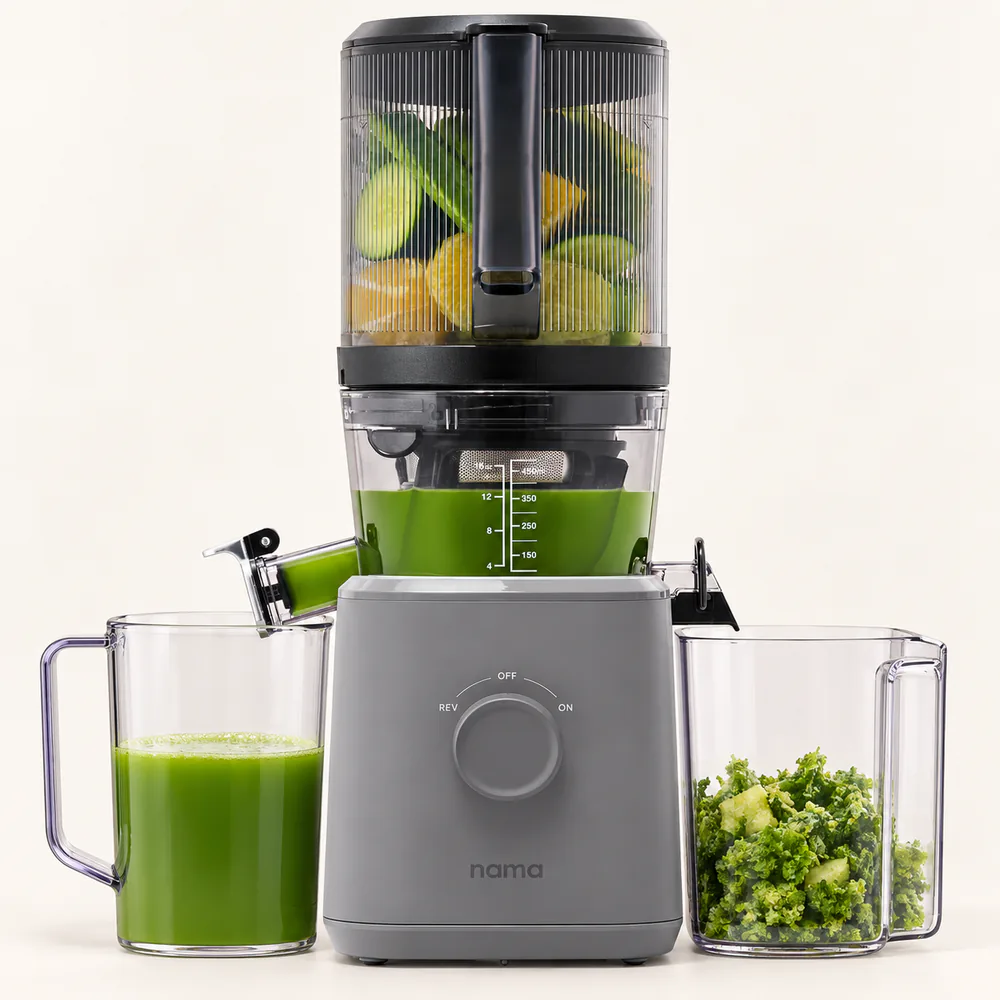
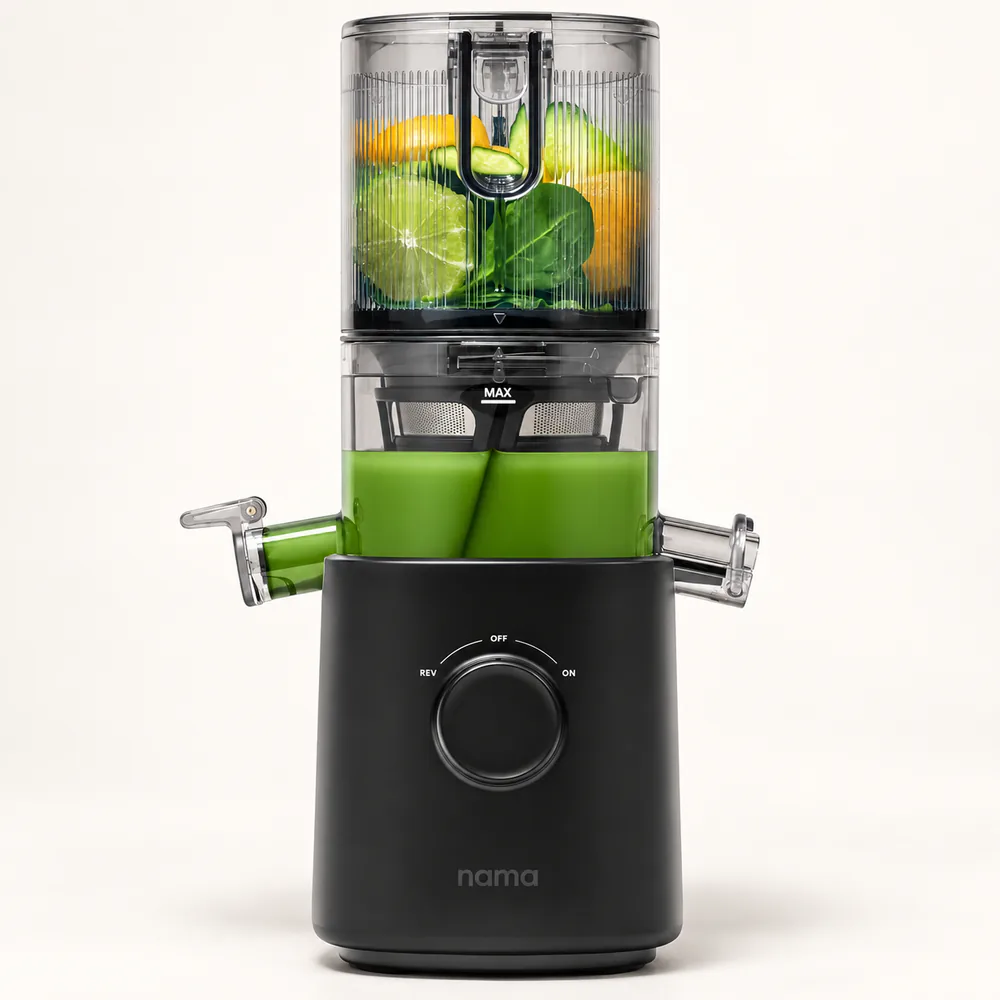
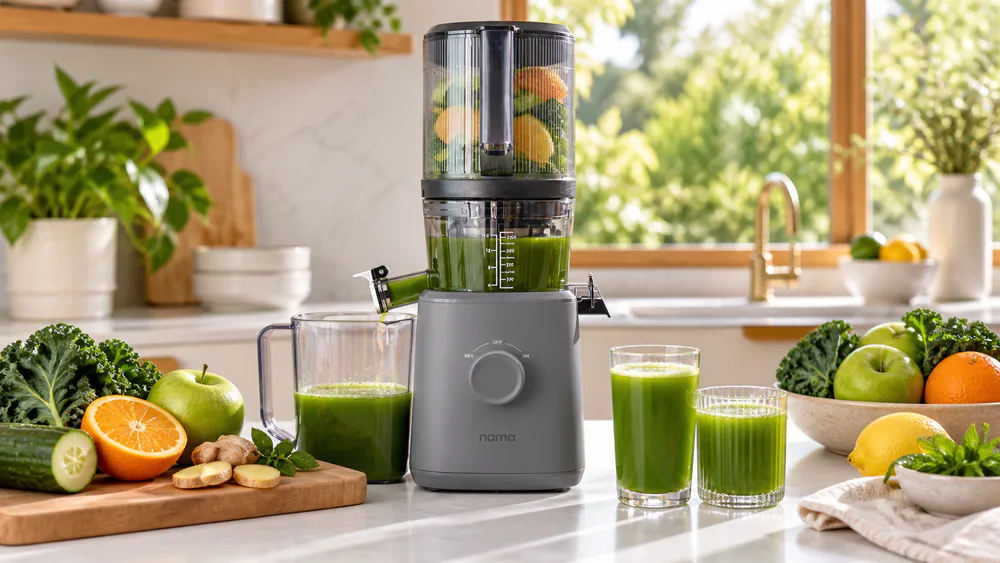
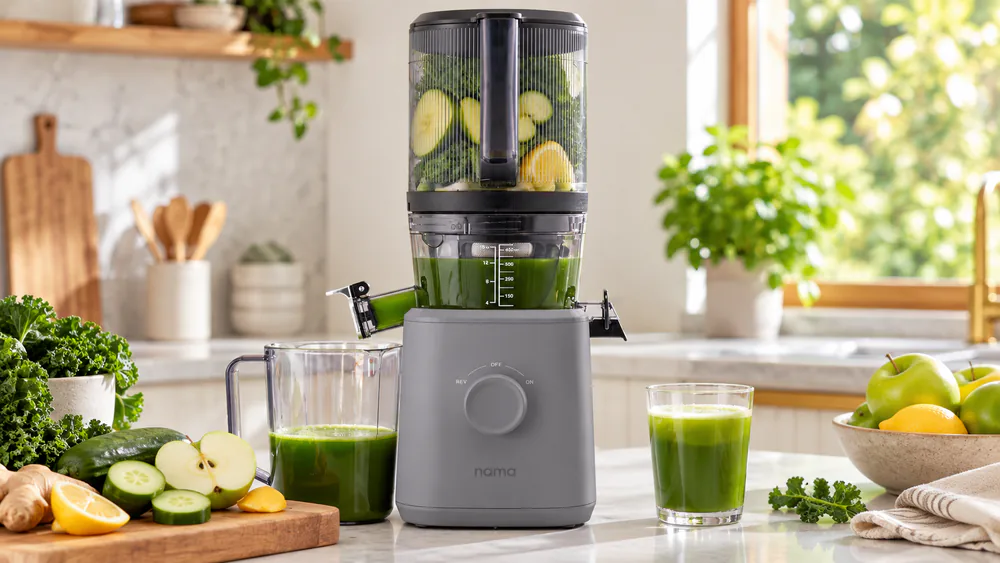
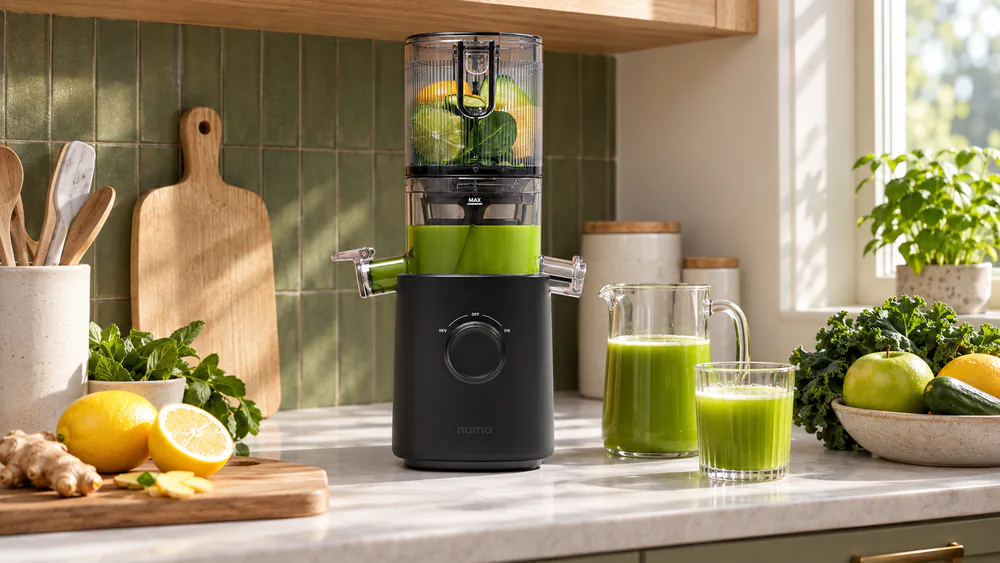
If we had to pick one slow juicer for most households, this is it. The J2's 2-liter self-feeding hopper turns juicing into load-and-walk-away, it runs quiet enough to juice while someone sleeps, and the 15-year warranty covers every part.
The learning curve is real: roughly 13 parts, and it refuses to turn on unless every one is seated exactly right. Once it clicks, the payoff shows in the jug: a load of celery, cucumber, parsley, and an orange gave us about 9 ounces, more than our old feeder-style machine managed on the same recipe. The mesh strainer needs brushing, per Nama's spec sheet, and dried pulp hardens if you wait.
Pros
Quiet 50 RPM operation with a 200W motor
Optional sorbet strainer and citrus reamer; 30-day trial
Cons
$599 is the steepest price here
Mesh strainer needs brushing; cleaning is more work than strainer-free rivals
13-part assembly with a learning curve
2-L self-feeding hopper takes a whole recipe at once
20-30 oz of juice per hopper load; fine and coarse strainers
Specifications
Motor
200W
RPM
50
Hopper
2 L self-feeding
Warranty
15-year on all parts
Price
$599
The J2's hopper takes a whole recipe at once.
2. Hurom H400 Easy Clean Slow Juicer: Best Easy Cleanup
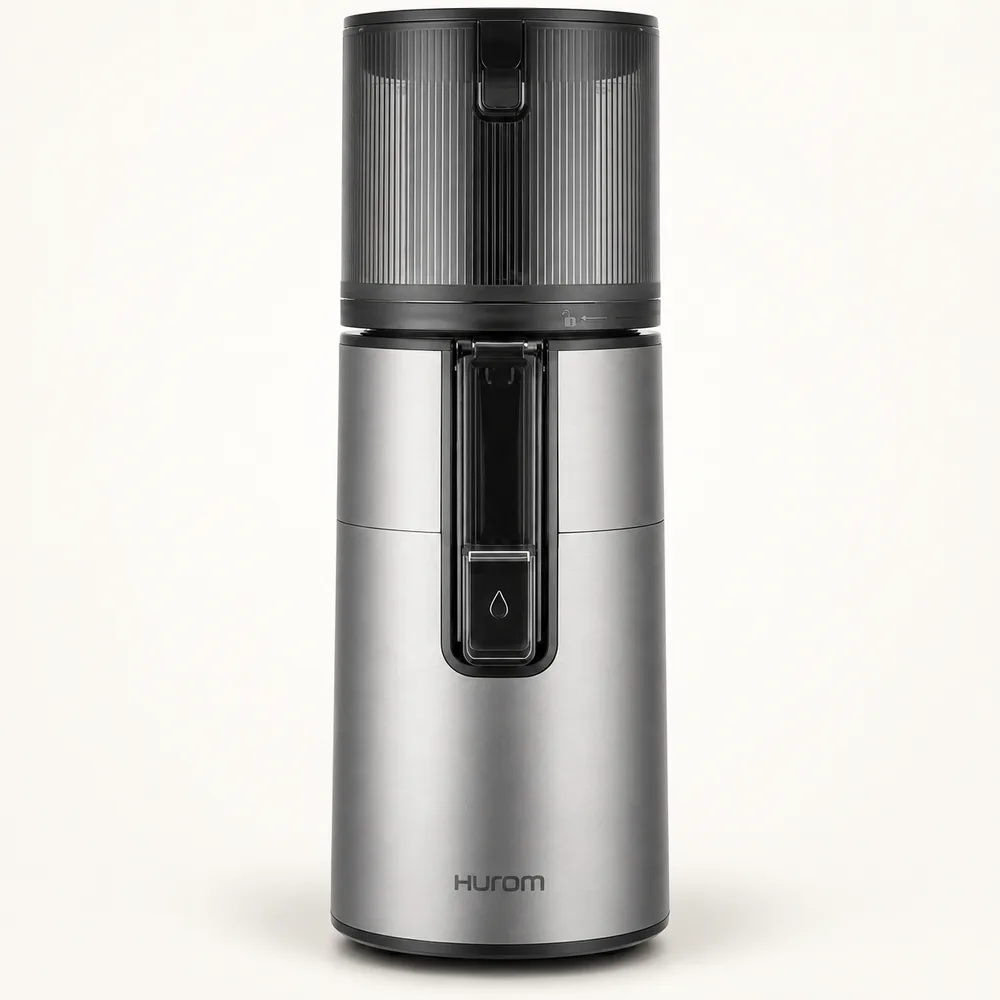
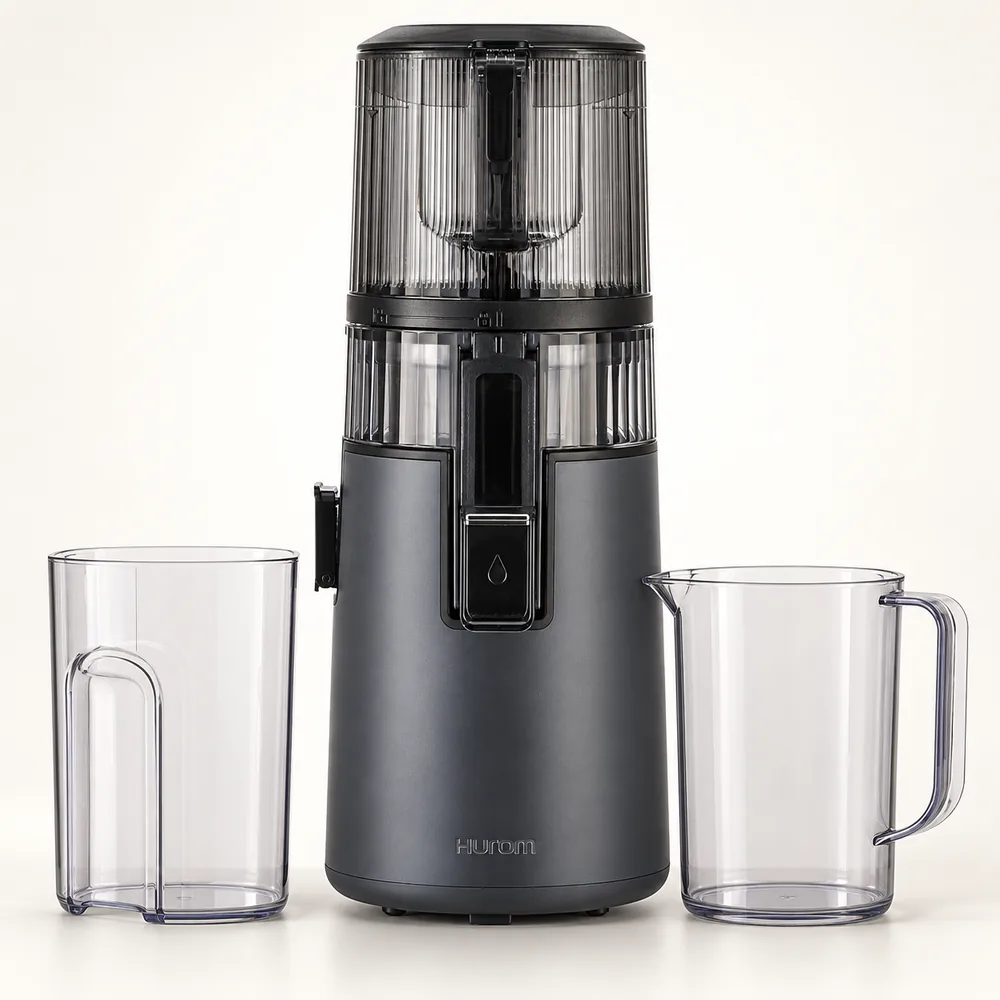
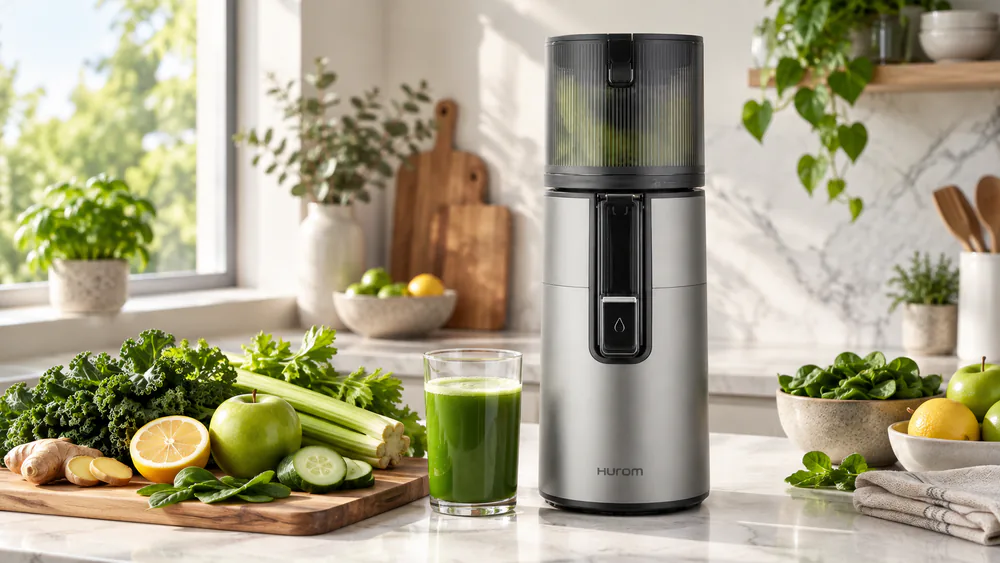
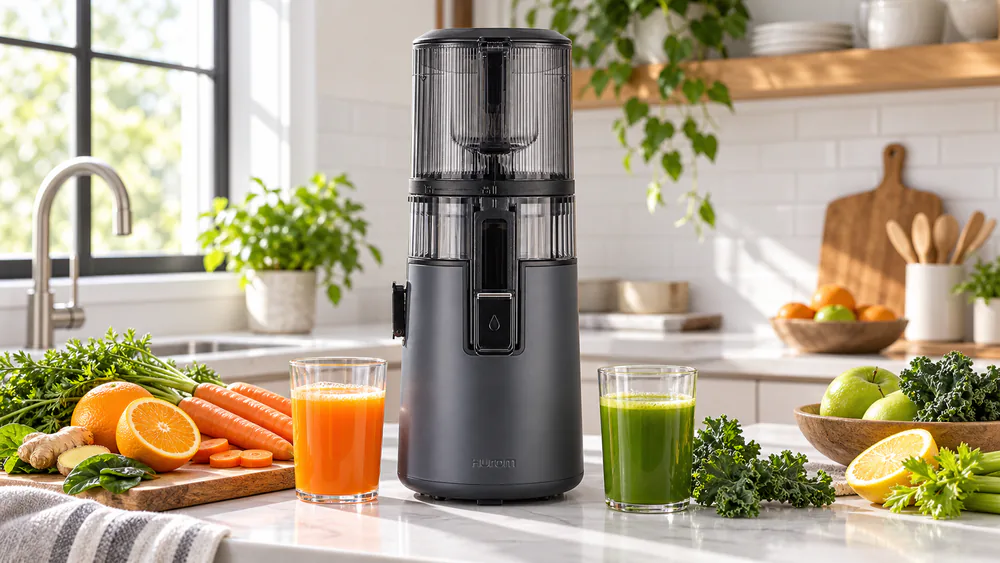
Where the Nama J2 wins on hands-free volume, the Hurom H400 wins on the part of juicing most people dread: cleaning. It became the lowest-maintenance juicer we have used, and that is what keeps it on the counter.
550 mL chamber with gauge window; 45 mm hopper opening
150W motor at 90 RPM, up to 30 minutes of continuous use
Specifications
Motor
150W AC
RPM
90
Chamber
550 mL (18.6 oz)
Warranty
15-year
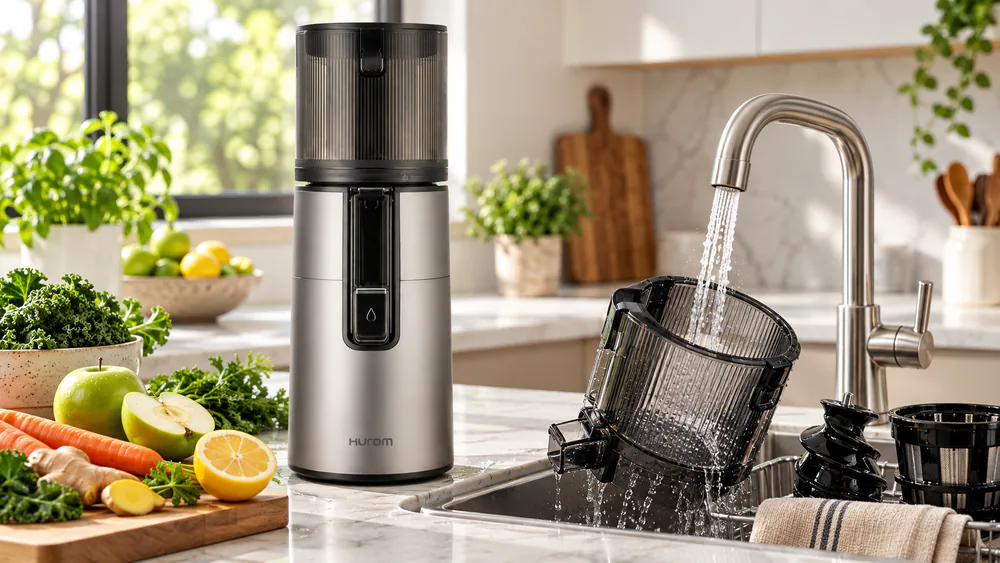
The strainer-free chamber removes the mesh screen entirely, so the two-part auger rinsed clean under warm running water, no scrubbing. At 90 RPM it is quiet enough to live on the countertop, and pulp came out impressively dry in our sessions. Celery clogged the pulp outlet chamber once, and the spout seal needs occasional attention. At $749 you are paying for the easiest cleanup in the category.
The H400's strainer-free chamber rinses clean in seconds.
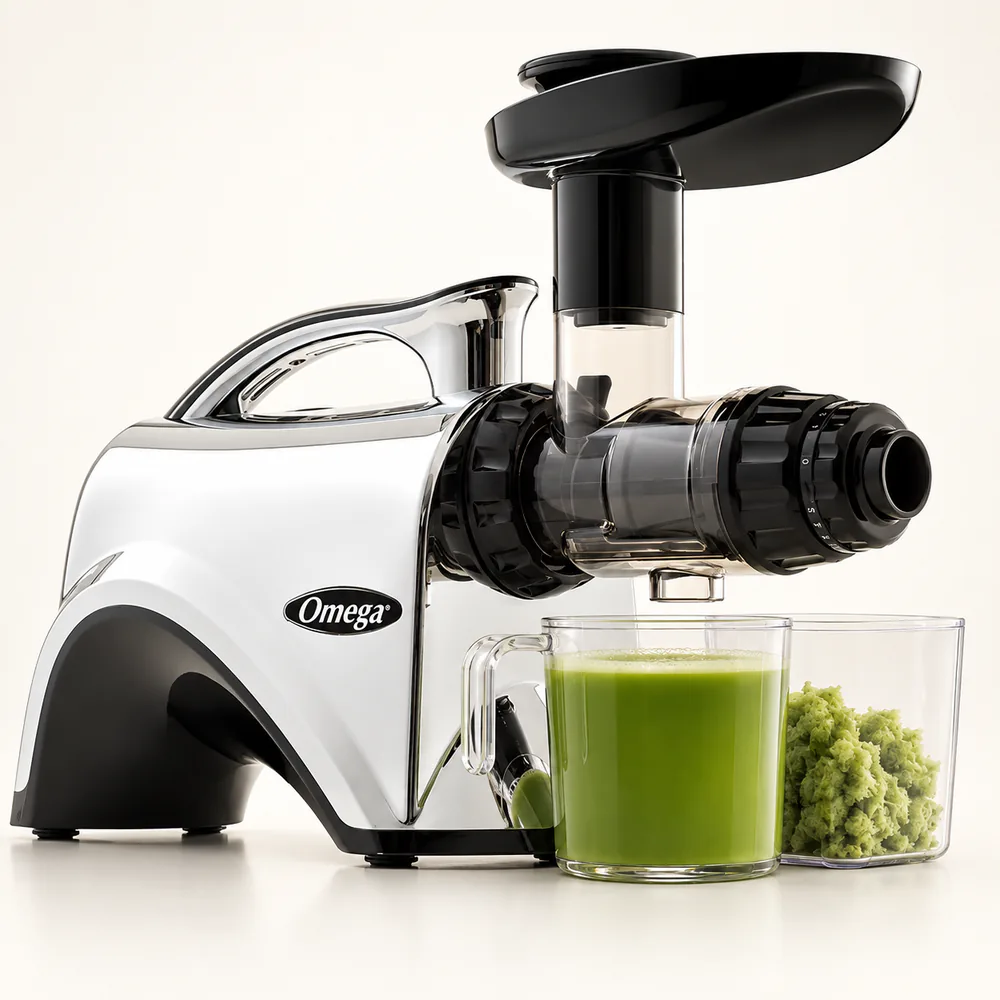
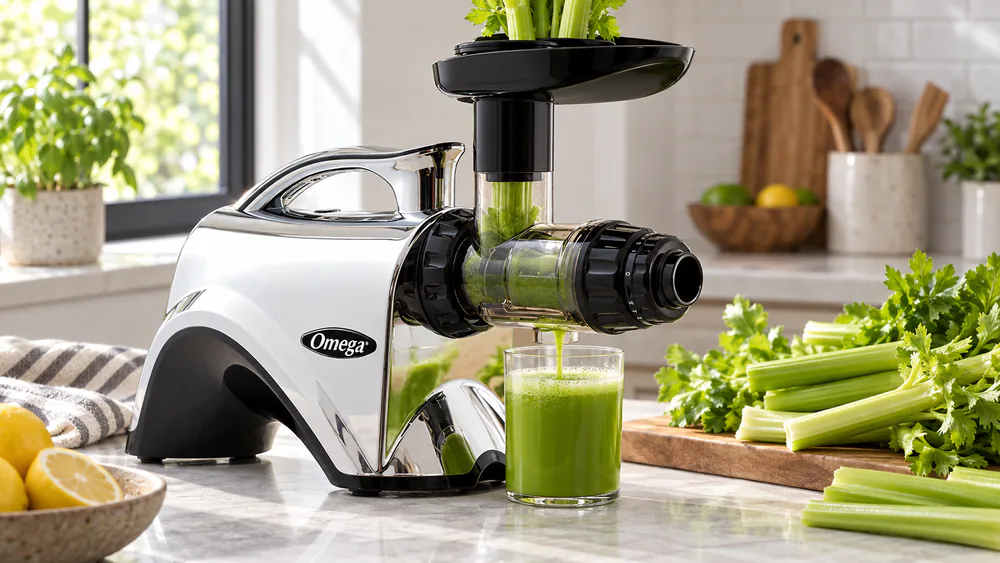
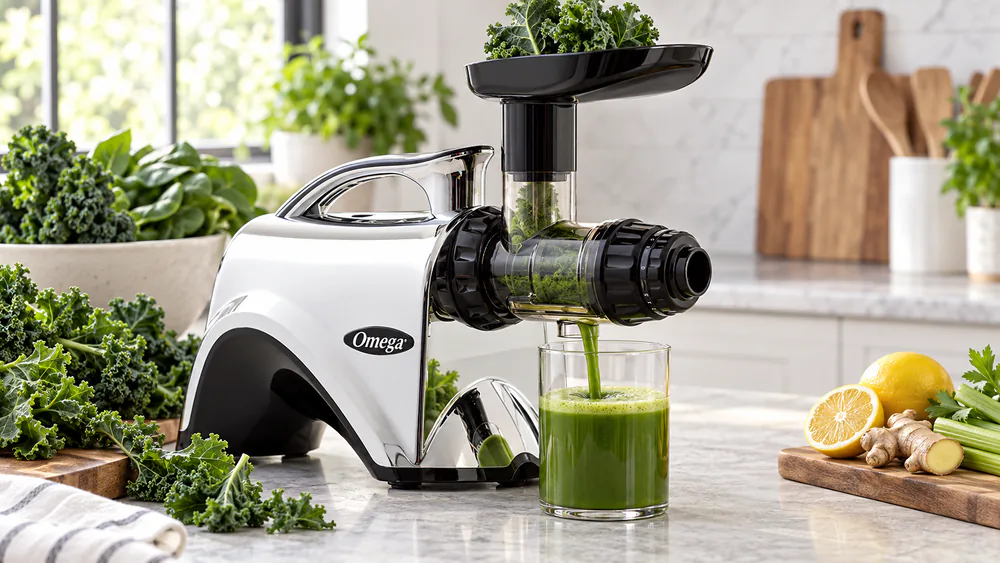
Where the machines above lean on self-feeding hoppers, the Omega NC900HDC is the specialist for a harder crop: leafy greens and wheatgrass. Its horizontal layout means nothing gets stuck in the drum, and it powered through celery, ginger, and carrots that stalled several vertical machines in our lineup.
5 adjustable pressure settings on the end cap
Automatic pulp ejection; 6 nozzles for nut butter and frozen desserts
Specifications
Motor
150W with gear reduction
RPM
80
Feed chute
2 x 1.5 in oval, chopping needed
Warranty
15-year limited (USA and Canada)
It is notably quiet, with a soft grinding note rather than the whine of a centrifugal, and on identical produce it pulled roughly 30 percent more juice than a high-speed Breville we ran alongside it. Our unit has logged years of weekly use, and we bought a second one for a second kitchen; that is the durability vote that matters. The 2-inch oval feed chute means real prep work, because produce must be chopped to fit.
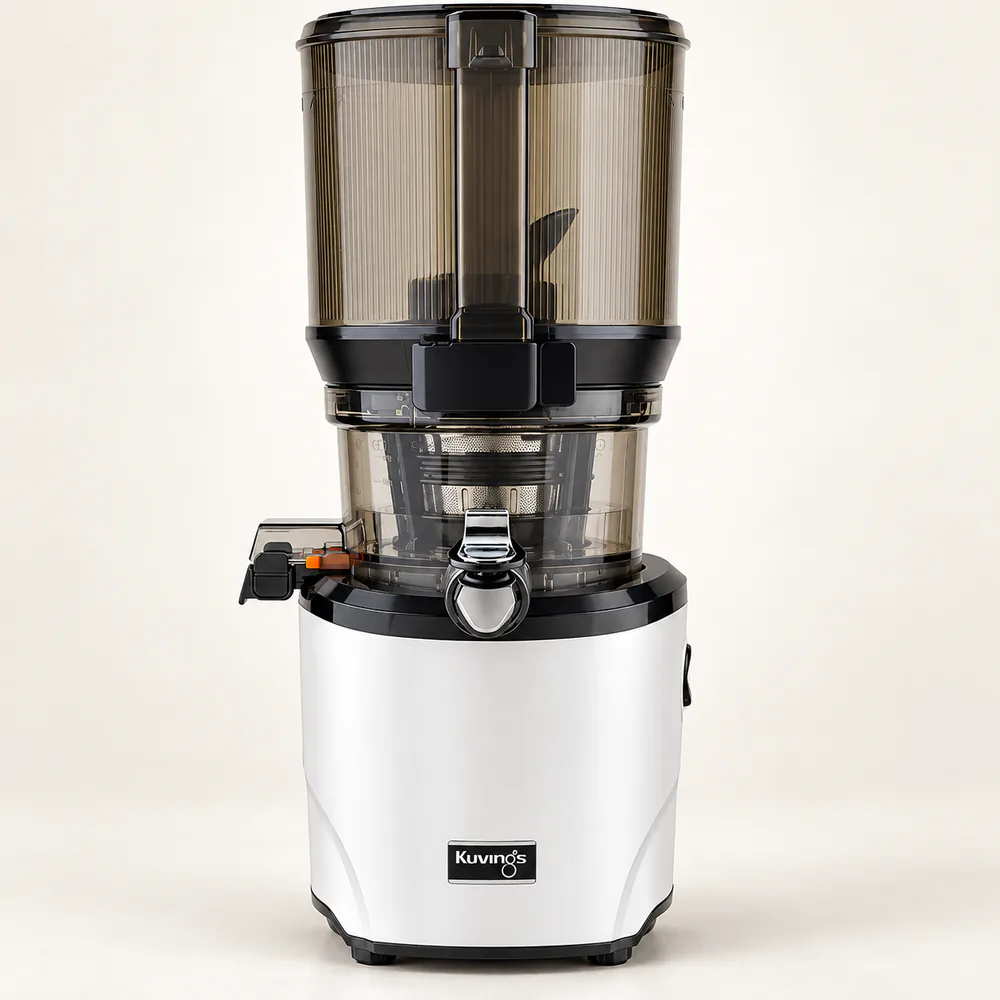
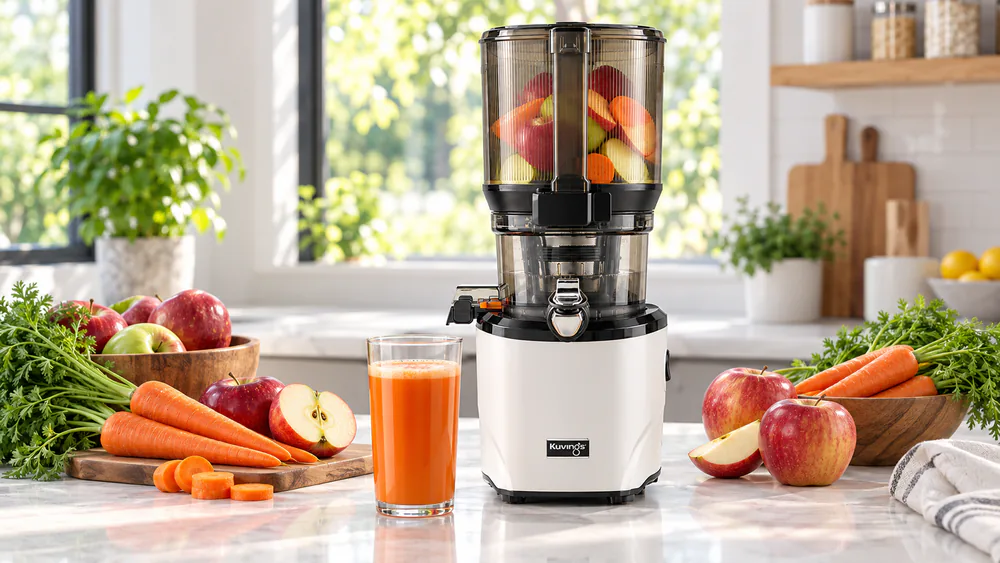
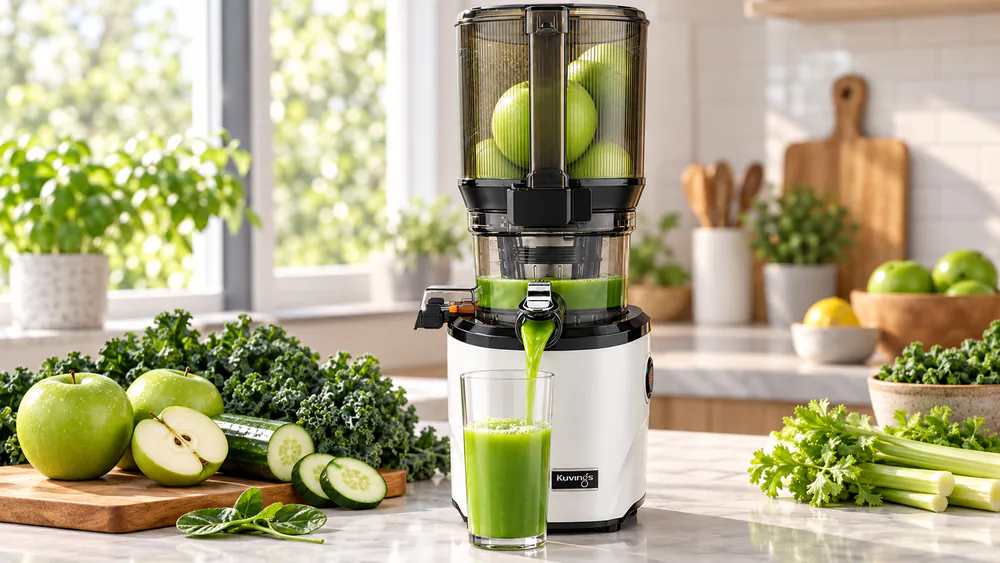
Where the Omega demands a cutting board, the Kuvings REVO830 is the luxury take on the vertical masticator, and its party trick is the 3.5-inch flip-gate chute: whole apples and beets drop straight in, no cutting. The juice from our runs was sweet and clean-tasting.
The durability record is why it is not ranked higher: a unit in our rotation stopped powering on after seven months, and a whole beet eventually snapped the machine after about two years of good service. The 15-year warranty quoted by US retailers varies by market and seller, and turmeric resin cakes onto the lid if not rinsed quickly.
Pros
3.5-inch flip-gate chute takes whole apples and beets
Sweet, clean-tasting juice; 3 strainers for juice, smoothies, and sorbet
240W motor at 50 RPM; made in South Korea
Cons
About $650, with durability that keeps it off the top spot
Warranty terms vary by market and seller
Turmeric resin cakes onto the lid if not rinsed quickly
Dual chutes: 3.5-in flip-gate plus 1.7-in auto-cut
400 mL juice and pulp cups; 3 interchangeable strainers
Specifications
Motor
240W
RPM
50
Chutes
3.5 in + 1.7 in
Cups
400 mL juice and pulp
Origin
Made in South Korea
Price
about $650
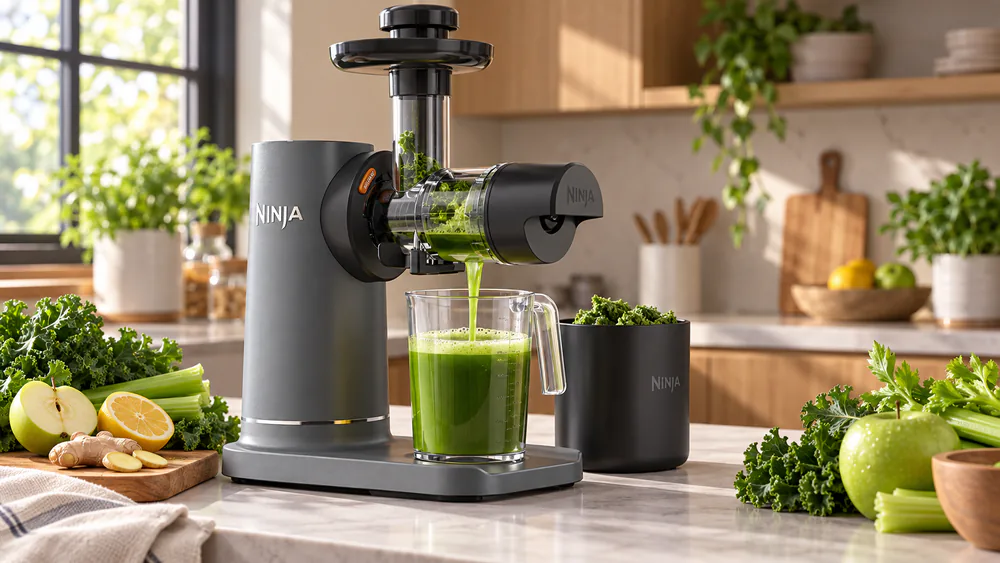
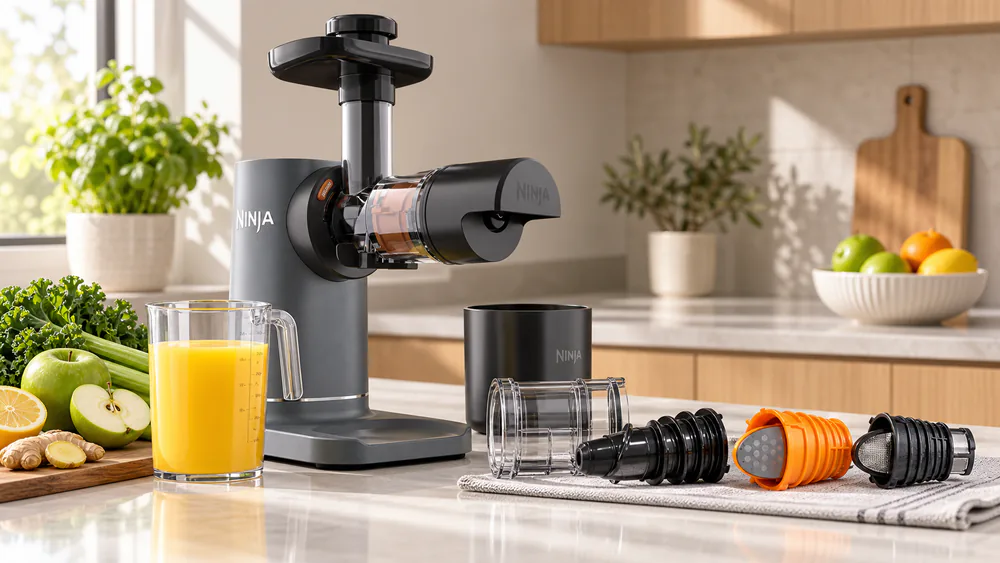
5. Ninja JC151 NeverClog Cold Press Juicer: Best Value
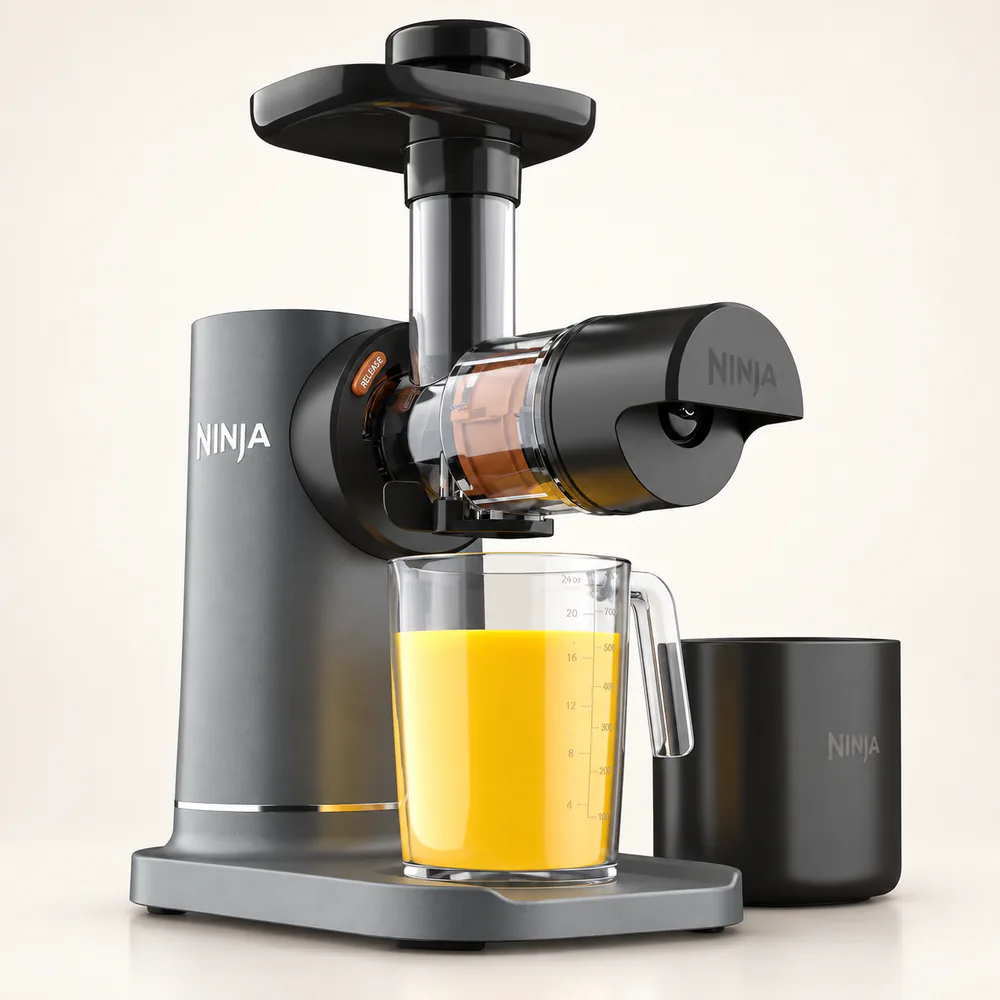
The first four picks cost $276 to $750; the Ninja JC151 proves you do not need to spend that much. At about $150 it is the best value slow juicer we tested, and every juice-contact part, from the 24-ounce jug to the pulp filters, is dishwasher-safe.
Every juice-contact part is dishwasher-safe
Total Pulp Control: two interchangeable filters
Specifications
Motor
150W high-torque
Capacity
24 oz jug, 36 oz pulp container
Warranty
1-year limited
Programs
start/stop and reverse
It is not the quietest machine here: apples occasionally produced a loud squeal on our runs, and clogging was a mixed bag, with some greens sessions running clean and others jamming fast. The feed opening is small, so most produce needs cutting first, and our long-term unit developed a hairline crack near the peel spout after about six months; Ninja's support replaced the part quickly.
Where the Ninja trades quiet for value, the Hurom H70 trades size for nothing. It shares the strainer-free Easy Clean design with the H400 in a smaller, more affordable package, and teardown is the fastest of the ten.
Under two minutes from full juicer to parts drying
The hot-water rinse really is enough most days, which is the deciding factor for daily use. The chute and auger feel virtually jam-proof: we ran uncut ginger roots, quartered peel-on lemons, and frozen bananas through it, and it never stalled. One carrot batch came out pulpy enough to feel like a blender drink, and the first two disassemblies took a 15-to-20-minute fight with the unlock mechanism.
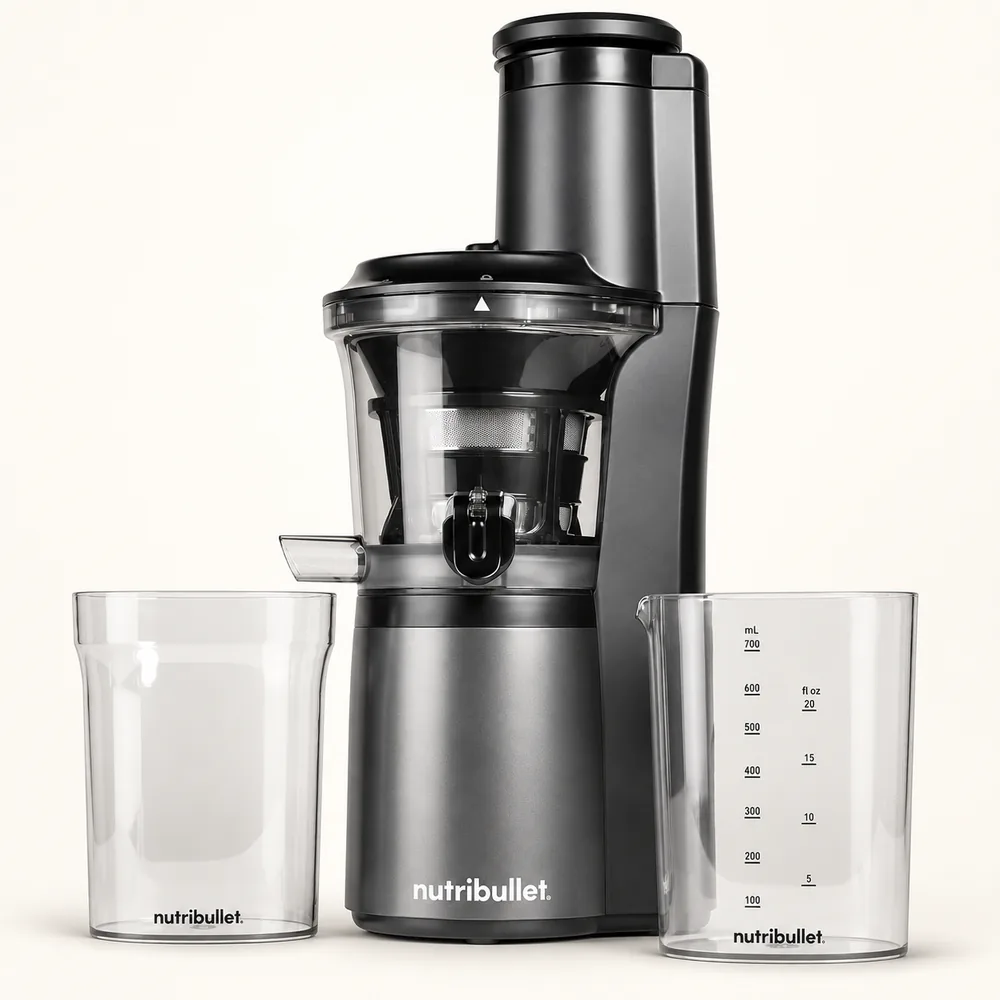
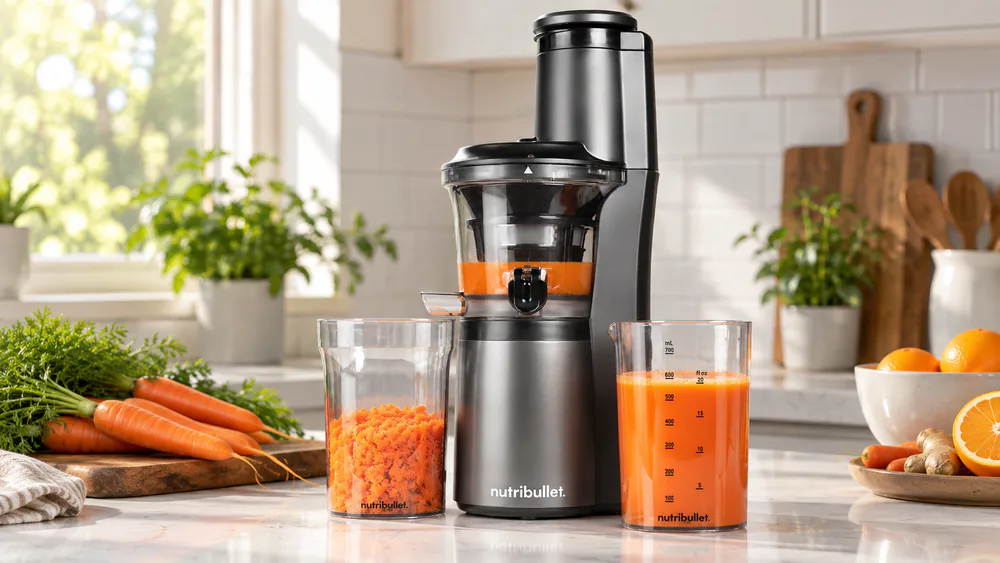
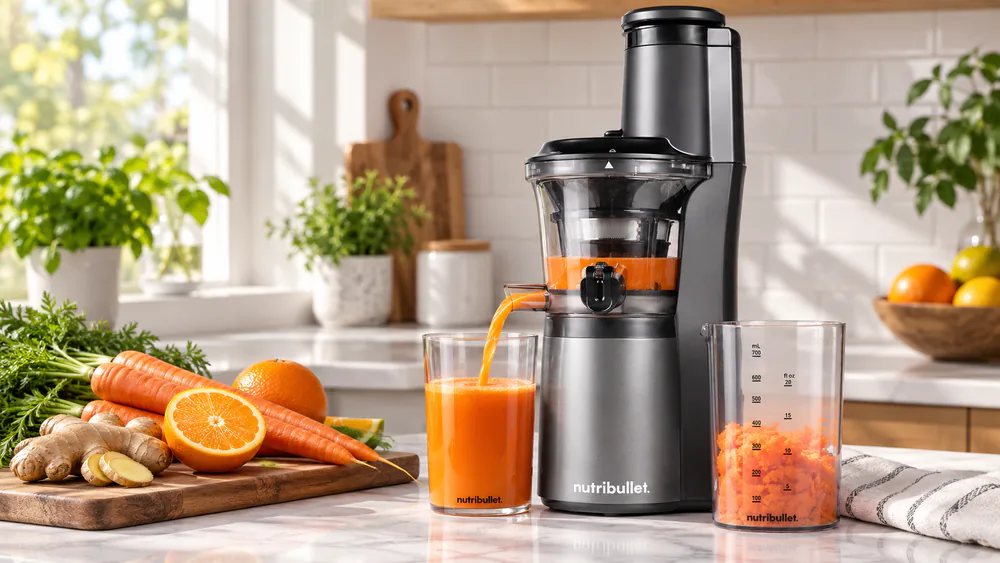
The Ninja shows how far about $150 goes; the NutriBullet Slow Juicer is the honest budget pick at a similar price. It makes tasty juice and costs about $152, but it is the most entry-level machine in this guide, best matched to soft fruit and simple recipes.
The mesh sieve is awkward to rinse, and the included brush fell apart after about two cleanings. Celery and ginger clog the chute, which overheats and auto-shuts off, and once clogged, it is very hard to open. One hard apple batch snapped a plastic part clean off, which we suspect was a faulty unit rather than the design. Its record under frequent use is the weakest of the ten.
Pros
About $152: the cheapest true slow juicer here
Tasty juice; 3-inch chute; 24-oz container
Cons
Slower and noisier than the premium machines
Celery and ginger clog the chute; hard to open once jammed
Weakest durability record of the ten under frequent use
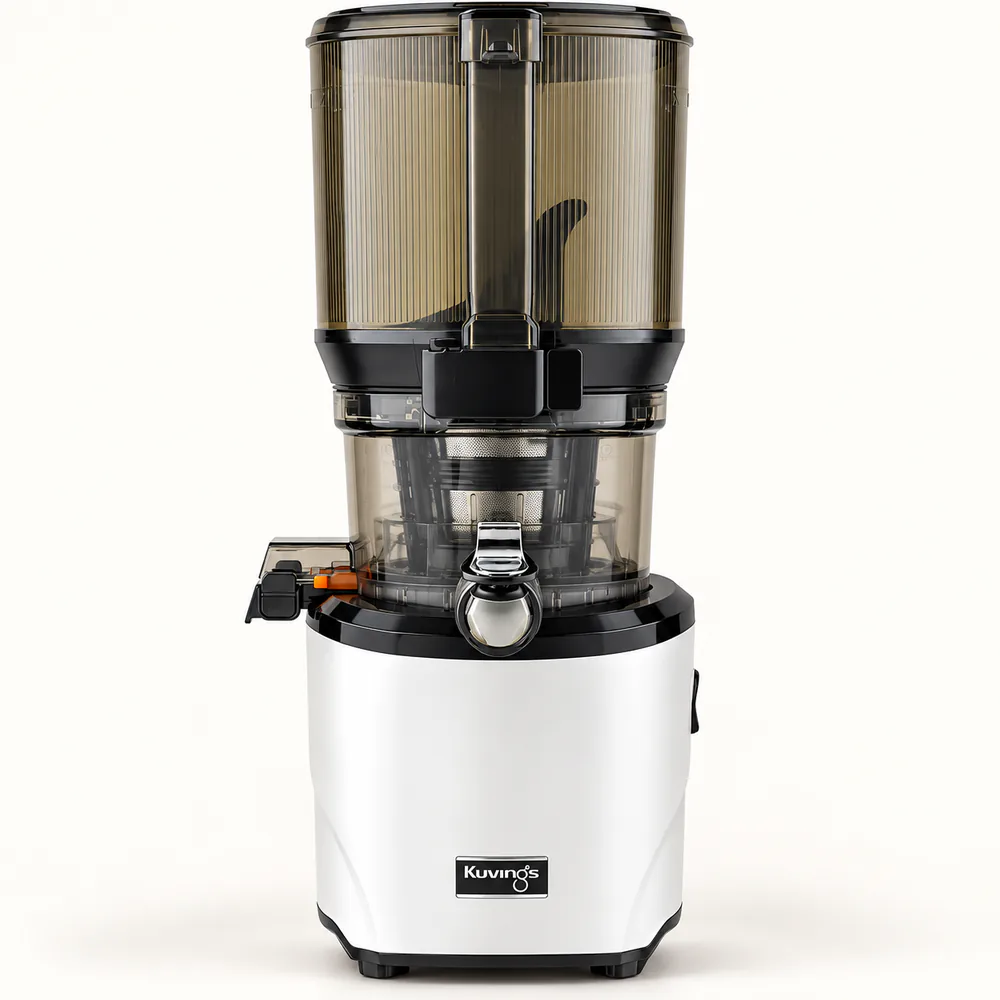
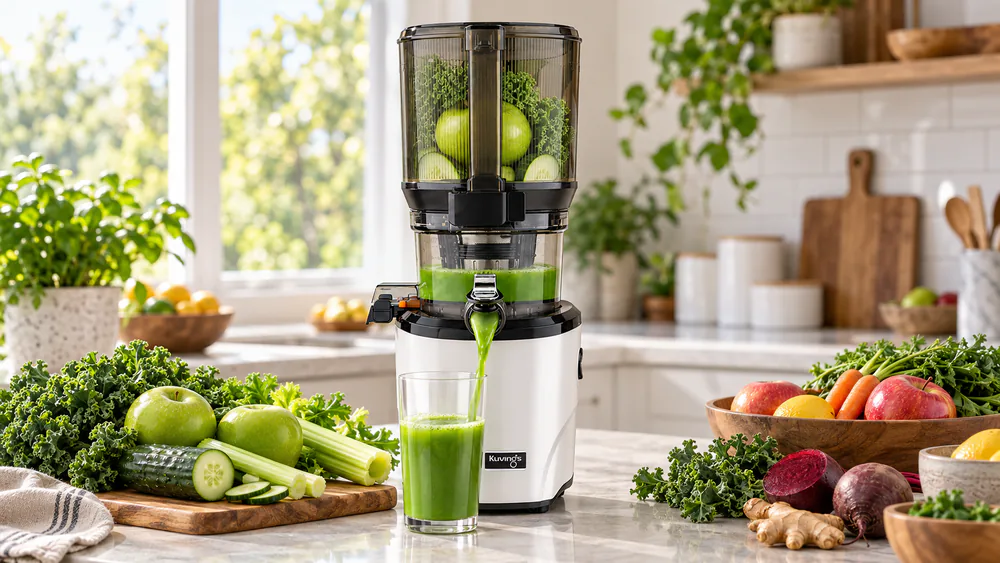
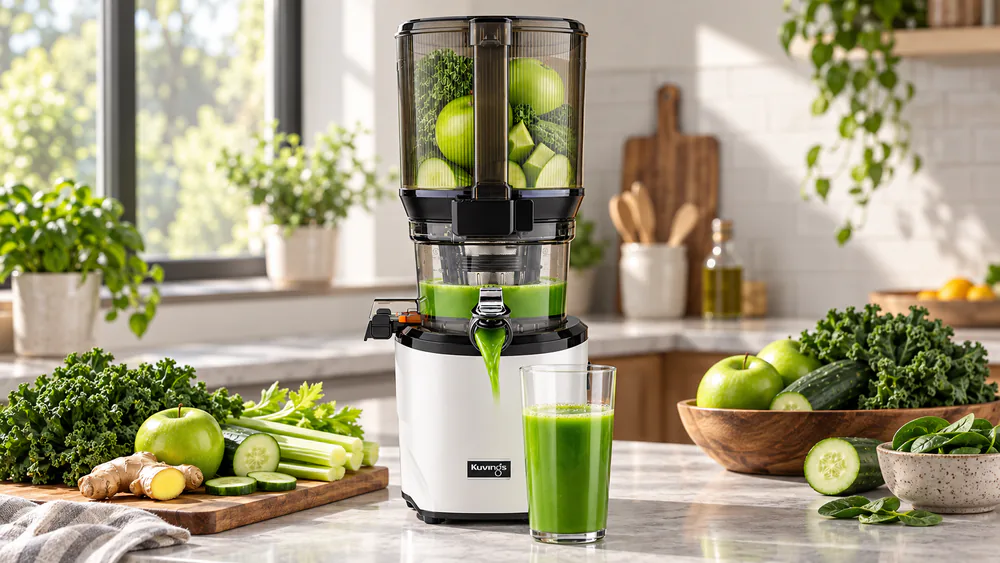
Where the NutriBullet keeps the entry cheap, the Kuvings AUTO10 buys volume. It carries the largest self-feeding hopper on the market, 3 liters or about 100 ounces, and the auto-cut auger chews through it hands-free at 50 RPM.
3-liter self-feeding hopper, the largest on the market
88 mm feed chute; 30-minute continuous run time
Specifications
Motor
240W
RPM
50
Hopper
3 L (100 oz)
Warranty
15-year on US listings; varies by market
Pulp came out almost bone dry in our runs, and for a 240W machine it runs very quiet. The hopper makes the whole unit tall and heavy at 16.5 pounds, a tough fit on most counters, which is why it lands at about $730 as a batch tool. It did need mid-session cleanouts often enough that it sometimes felt like more work than the yield justified.
9. Nama J3 Cold Press Juicer: Best Small-Space Pick
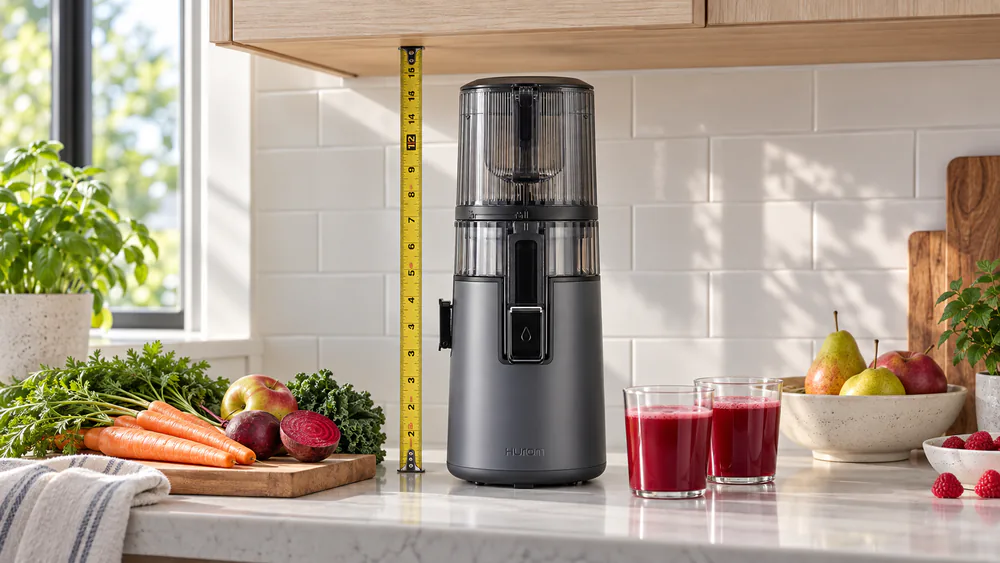
Where the AUTO10 needs a whole counter, the Nama J3 is the only true masticating juicer here that tucks under standard cabinets and travels. At 15.4 inches tall and 9.7 pounds, it carries the same brand DNA as the J2 in a small-kitchen footprint.
15.4 in tall and 9.7 lb: fits under cabinets and travels
1-liter set-and-forget hopper; fine and coarse strainers
Specifications
Motor
130W
RPM
50
Hopper
1 L
Warranty
15-year
A single hopper load nets about a glass or two, and the fine and coarse strainers cover everything from citrus to greens. It bogs down on fibrous or hard roots like uncut ginger, and it leaves a bit more fruit in the hopper than the bigger J2, so it rewards smaller batches. The 15-year warranty matches the J2 at $499, a hundred dollars less, but big-batch households will find the hopper makes it a second machine rather than the main one.
10. Breville Juice Fountain Cold XL: Best Fast Alternative
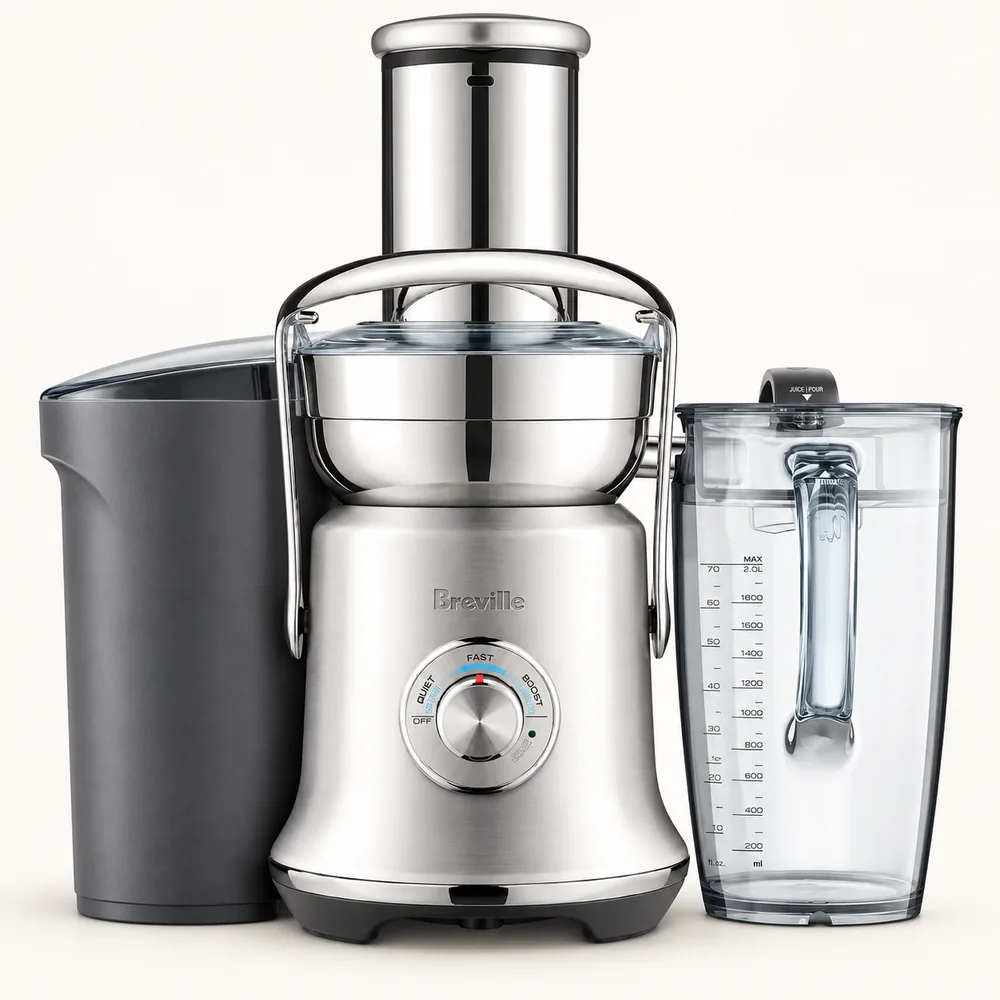
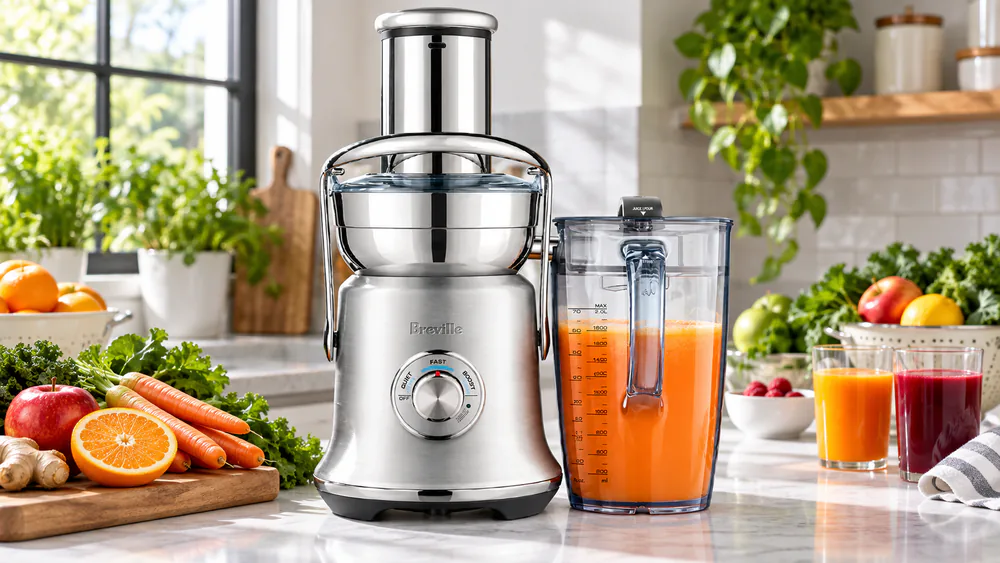
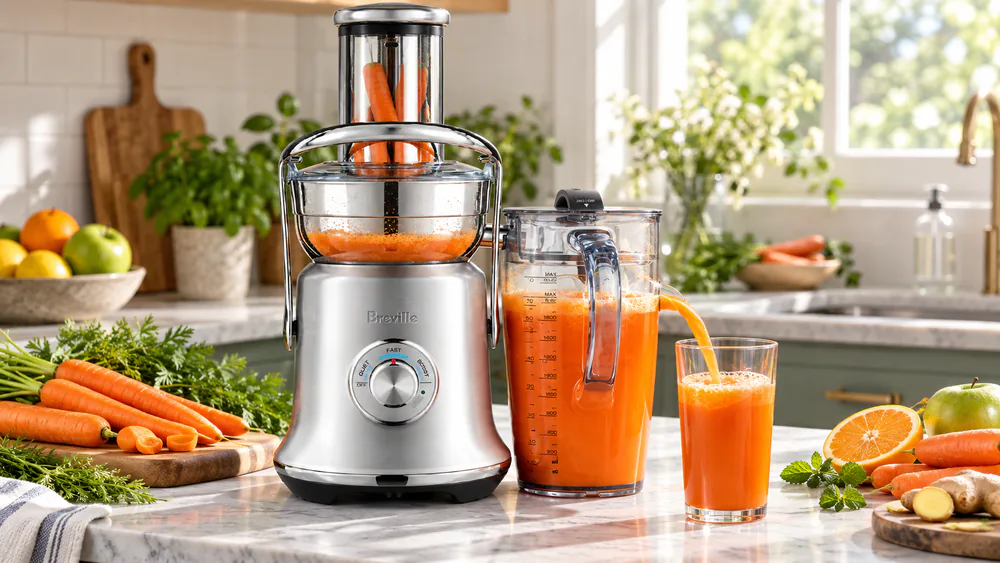
The odd one out is last for a reason: the Breville Juice Fountain Cold XL is a centrifugal juicer, here for the people who will never accept a slow machine's speed. A pint of carrots in under a minute, whole fruit, no cutting.
The 1200W motor spins at 13,000 RPM, pulp came out very dry even at high speed, and the 70-ounce Seal and Store jug means one session covers the week. The trade-offs are the same ones that keep it out of the top five: soft-fruit yields drop, the juice comes out frothier, and it is loud, tall, and bulky. At about $400 with a 1-year warranty, it is a different tool for a different habit.
Pros
A pint of carrots in under a minute, whole fruit, no cutting
70 oz Seal and Store jug with froth separator
Very dry pulp even at high speed
Cons
Louder, taller, and bulkier than every slow juicer here
Soft-fruit yields drop and the juice is frothier
1200W motor at 13,000 RPM; Cold Spin Technology
3.5-in extra-wide chute; 70 oz Seal and Store jug
Specifications
Motor
1200W
RPM
13,000
Chute
3.5 in
Capacity
70 oz jug
Warranty
1-year limited
Price
about $400
How to Choose a Slow Juicer: What to Look For
Shopping for a slow juicer comes down to five decisions: yield, feed chute, cleaning, noise, and price.
Juice Yield and Nutrient Preservation
The machines that won on yield also produced the driest pulp, which is the honest visual test: wet, fluffy pulp means the machine left juice behind. In our runs, the vertical hopper models (the Nama J2 and Kuvings AUTO10) produced the driest pulp, and the horizontal Omega squeezed roughly a third more juice than a high-speed centrifugal on the same produce.
Feed Chute Size and Prep Time
The feed chute decides your prep time. A 3.5-inch opening like the Kuvings REVO830's swallows whole apples and carrots, while the Omega's 2-inch oval tube needs every stalk cut. The bigger divide is chopping versus not: self-feeding hoppers, on the Nama J2, J3, and Kuvings AUTO10, take an entire recipe at once and feed themselves. If you juice before work, a hopper model pays for itself.
Ease of Cleaning and Maintenance
The single biggest factor in whether a juicer gets used is how it gets cleaned. Strainer-free machines like the Hurom H400 and H70 rinse clean in minutes. Mesh strainers like the Nama J2's extract the finest pulp but need brushing, and dishwasher-safe builds like the Ninja JC151 take the decision out of your hands. Whatever you buy, clean it right after juicing, because dried pulp hardens into a much bigger job.
Tip. Rinse the auger and strainer immediately after juicing, and the whole routine stays under five minutes.
Warning. Motor parts are hand-wash only on nearly every model; only the parts the manual marks dishwasher-safe belong in the rack.
Noise Level and Placement
Every slow juicer here is quieter than a typical centrifugal. The loudest budget centrifugal we have measured hit nearly 90 decibels, motorcycle territory, while the slow machines stay well below that. The Nama J2 and Hurom H400 are quiet enough to run while someone sleeps, and the Ninja JC151 is the exception, with runs that swung from civil to a loud squeal on apples. Placement matters too: the J2 at 17.7 inches is borderline under cabinets where the J3 and H70 fit.
Price, Warranty, and Value
Slow juicers run from about $150 to $750, and the price buys four things: motor quality, cleaning convenience, build, and warranty. The 15-year warranties on the Nama, Hurom, Omega, and Kuvings machines signal a motor the maker expects to outlast the decade; the 1-year warranties on the Ninja, NutriBullet, and Breville are typical of cheaper builds. Street pricing moves week to week, so treat these prices as starting points. If this is your first slow juicer, do not start at the top: the Ninja JC151 proves the value tier is credible, and you can upgrade when the habit sticks.
What Is a Slow Juicer?
A slow juicer, also called a masticating or cold press juicer, crushes produce between an auger and a screen instead of shredding it against a fast-spinning disc. The auger turns at 40 to 100 RPM, so the juice comes out in one slow, even pass.
Masticating vs. Centrifugal vs. Cold Press
The three names get used interchangeably, which causes real confusion. Masticating describes the mechanism: a single auger chews the produce. Cold press is the marketing umbrella for masticating machines, mostly the vertical ones with hoppers, named for the minimal heat and oxidation of slow extraction. Centrifugal is the alternative: a fast-spinning basket at thousands of RPM (the Breville here tops out at 13,000). Horizontal masticators like the Omega process greens and wheatgrass best; vertical models like the Nama and Hurom take less counter space and usually self-feed.
Why Slow Juicers Extract More Nutrients
The case for slow extraction shows up in the research. A study of juicing methods and broccoli polyphenols found slow-juiced broccoli carried 1,226.24 milligrams per liter of total polyphenols against 724.37 for the centrifugal model, with DPPH radical scavenging of 52 percent versus 17 percent. A comparison of fresh and commercial fruit juices found most fresh juices contained no sucrose, while commercial juices mostly carried 3 to 112 grams per liter. None of that makes centrifugal juice unhealthy; it means a slow machine squeezes more out of what you feed it.
Slow Juicer vs. Centrifugal Juicer: Which Is Right for You?
Choose a slow juicer if you juice greens, care about yield, or juice before anyone wakes up; choose a centrifugal if you juice hard fruit in a hurry and the froth does not bother you.
Criterion
Slow (masticating) juicer
Centrifugal juicer
Motor speed
40-100 RPM
up to 13,000 RPM
Motor power
130-240W
up to 1,200W
Feed system
1.7-3.5 in chutes or self-feeding hoppers
up to 3.5 in, whole fruit
Noise
Quiet, near conversation level
Loud, up to about 90 dB
Cleaning
More parts, but rinse-only or dishwasher-safe designs
Fewer parts, big basket and froth to manage
Juice yield
Higher yield, drier pulp, less foam
Lower yield on greens and soft fruit, frothier
Best for
Daily greens, high yield, quiet mornings
Speed and whole fruit, occasional sessions
Price
About $150 to $750
About $50 to $400
The split in practice is simple. If your recipes lean on greens, if you juice before anyone wakes up, or if you hate watching froth form, buy slow. If you mostly juice carrots, apples, and citrus in a hurry, a centrifugal like the Breville Cold XL is a legitimate machine rather than a compromise. The slow machines here start at about $150 and climb past $700.
Frequently Asked Questions
How much juice can I expect from a slow juicer vs. a centrifugal?
In a published study of tomato juicing, a low-speed masticating juicer yielded 79.1 percent of the fruit as juice against 45.0 percent for a high-speed centrifugal model. Expect 20 to 30 ounces per full hopper load on the Nama J2 and 8 to 16 ounces on the compact J3; the Ninja and NutriBullet fill their 24-ounce jugs.
Are slow juicers worth the extra cost?
If you juice most days, yes. The extra money buys motor quality, easier cleaning, and a 15-year warranty on the Nama, Hurom, Omega, and Kuvings machines; the yield gap shows up in your produce spending. If you juice a couple of times a week, the Ninja JC151 keeps the entry cost low at about $150; upgrade when the habit sticks.
Can I juice leafy greens and wheatgrass in a slow juicer?
Yes, and it is the category's biggest advantage over centrifugal machines. Vertical masticators handle spinach, kale, and celery well, and horizontal models like the Omega NC900HDC are the strongest of all for wheatgrass and fibrous stems. On the Ninja JC151, kale left wetter, fluffier pulp, though the juice stayed clean.
How long does a full teardown take, machine by machine?
The fastest is the strainer-free Hurom H70: under two minutes from full juicer to parts drying, with a hot-water rinse enough most days. The Nama J2 takes longer, because the mesh strainer needs a brushing pass with the included dual-ended tool, and its roughly 13 parts refuse to turn the machine on until every one is seated exactly right, so plan extra time for the first few reassemblies.
Do slow juicers make nut milks and sorbets?
Most of them, yes. The Kuvings REVO830 ships with a blank strainer for sorbet and ice cream, the Omega NC900HDC includes nozzles for nut butter and frozen desserts, the Hurom H70 makes juice and sorbet without switching screens, and the Nama J2 takes an optional sorbet strainer. Nut milks need a fine strainer and a slower feed, but every machine here except the centrifugal Breville can do the job.
The Bottom Line
Here is how we would spend the money. With an open budget, the Nama J2 at the top of this guide is the one, full stop; with about $150 in hand, the Ninja JC151 is where we would start, because a cheap machine is the honest way to learn whether the habit sticks. The Omega NC900HDC remains the specialist's machine. What we would do differently on a second pass: buy for the habit you want, not the habit you have. Rushed mornings call for a hopper, cleanup-phobia calls for a strainer-free design, and speed wins accept the froth.