
Helping you create a kitchen you love.

Knives & Cutlery

Best Takamura Chef Knife: Which Line to Buy (2026)

As an Amazon Associate we earn from qualifying purchases. We may earn a commission from links on this page, at no extra cost to you. Learn more.

Best Takamura Chef Knife: Which Line to Buy (2026)

Takamura is a small family workshop in Echizen, Japan, that makes thin-ground gyuto from hard powder steel and VG10 for home cooks and professional chefs. For most kitchens, the best Takamura is the SG2 (R2) Migaki gyuto in 210mm. We rate the lines on grind, edge life and care to show which one earns its place on your board.

The catalogue spans polished and hammered finishes, three main steels and two handle styles, and many models are sold out at any moment. This guide sorts it out. If you are still deciding whether a Japanese knife suits you at all, our Japanese knife reviews give the wider picture.

Quick Picks: Best Takamura Chef Knife by Need

RankProductBest forLengthRatingBuy
1

Takamura R2 (SG2) Migaki Gyuto 210mm

Best Overall
Edge life and a very thin grind 210mm 4.8 View on Amazon
2

Takamura Chromax Gyuto 210mm

Best Value Under the R2
Cooks who want a sturdier feel 210mm 4.5 View on Amazon
3

Takamura VG10 Gyuto 210mm

Best for First-Time Japanese Knife Buyers
Your first Takamura 210mm 4.3 View on Amazon
4

Takamura R2 (SG2) Migaki Gyuto 180mm

Best for Compact Prep
Small boards and small hands 180mm 4.4 View on Amazon
5

Takamura Santoku 170mm

Best for Smaller Boards
A flatter profile on a tight counter 170mm 4.2 View on Amazon

We earn a commission if you make a purchase, at no additional cost to you.

See full comparison table

How We Rate These Takamura Knives

We rate each knife the way a home cook would use it: onions, dense vegetables, herbs and a lot of everyday slicing. Our ratings draw on the maker's specifications, specialist retailer data and our knowledge of how these steels sharpen; a knife needs to regain a fine edge to remain useful over time.

We rate four things: thin, straight cuts; edge retention; tolerance of hard boards and awkward cuts; and ease of sharpening.

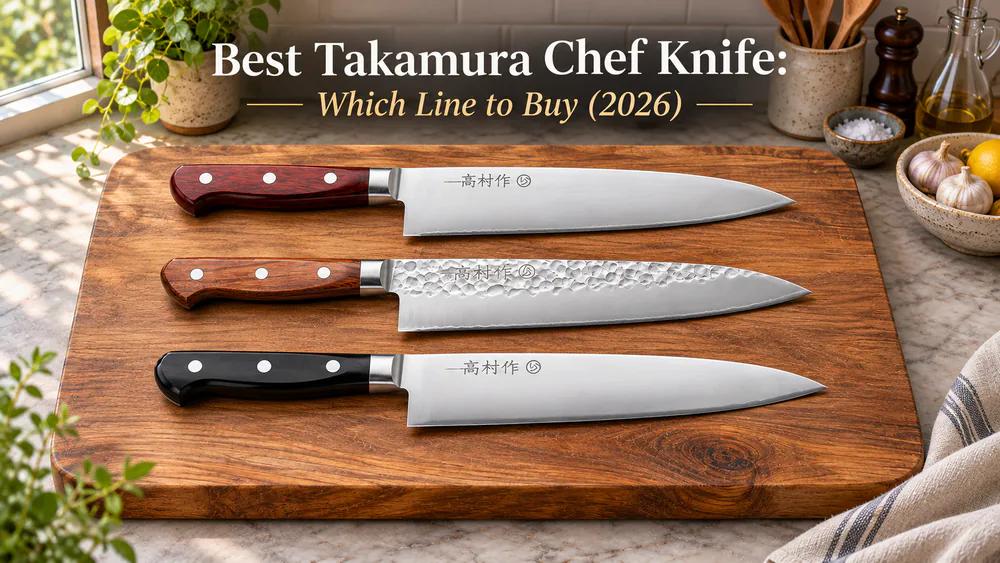
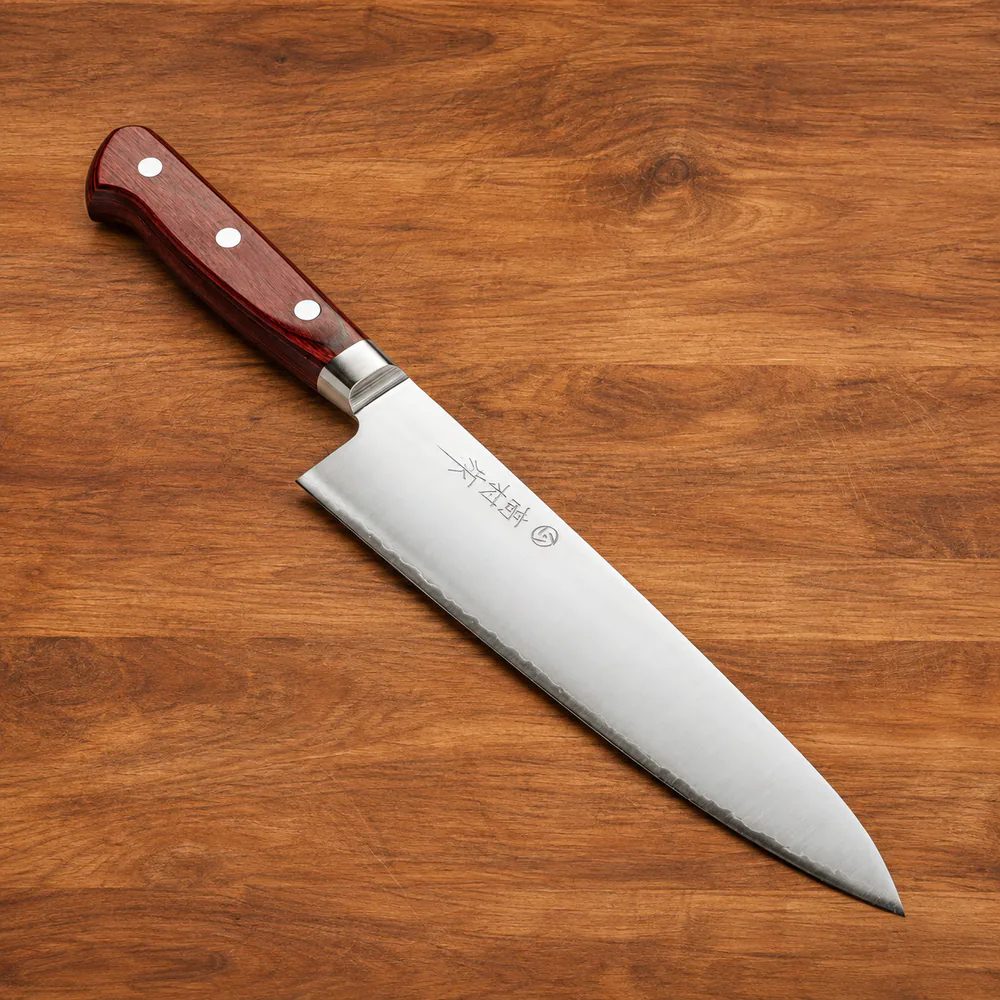
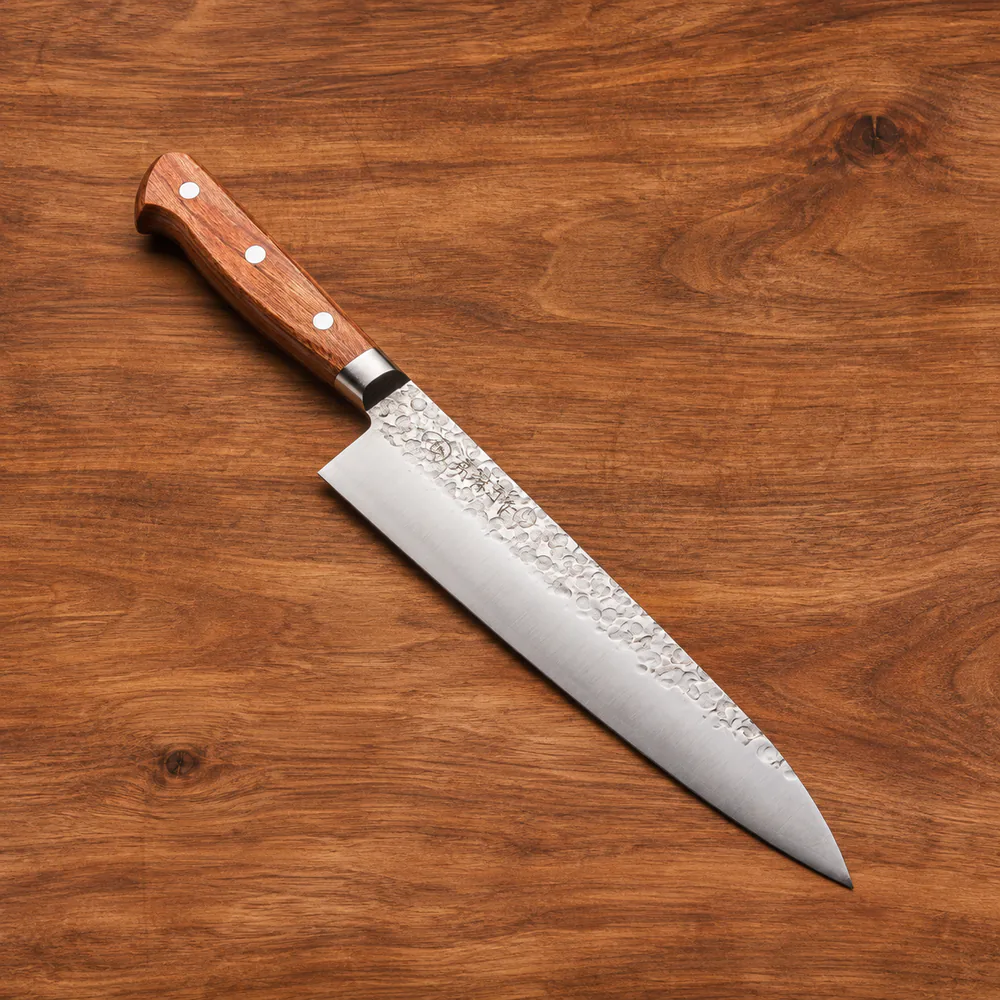
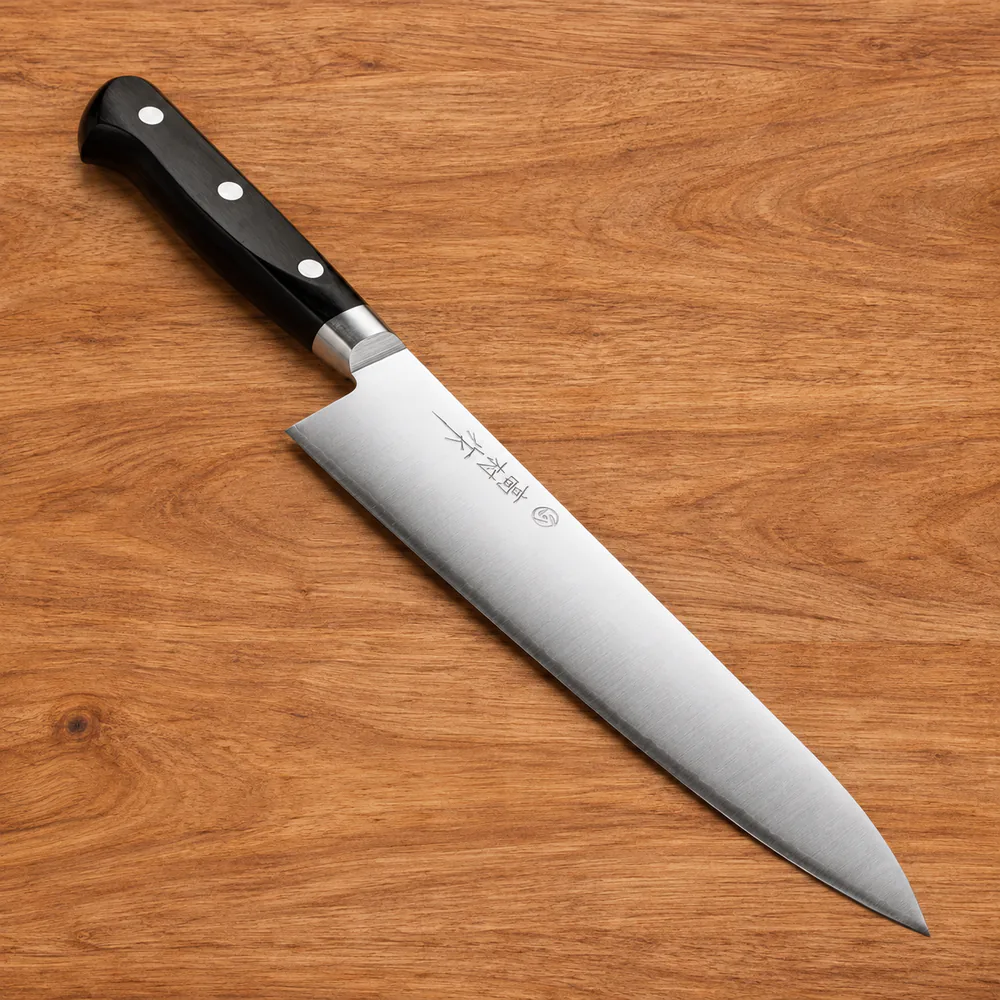
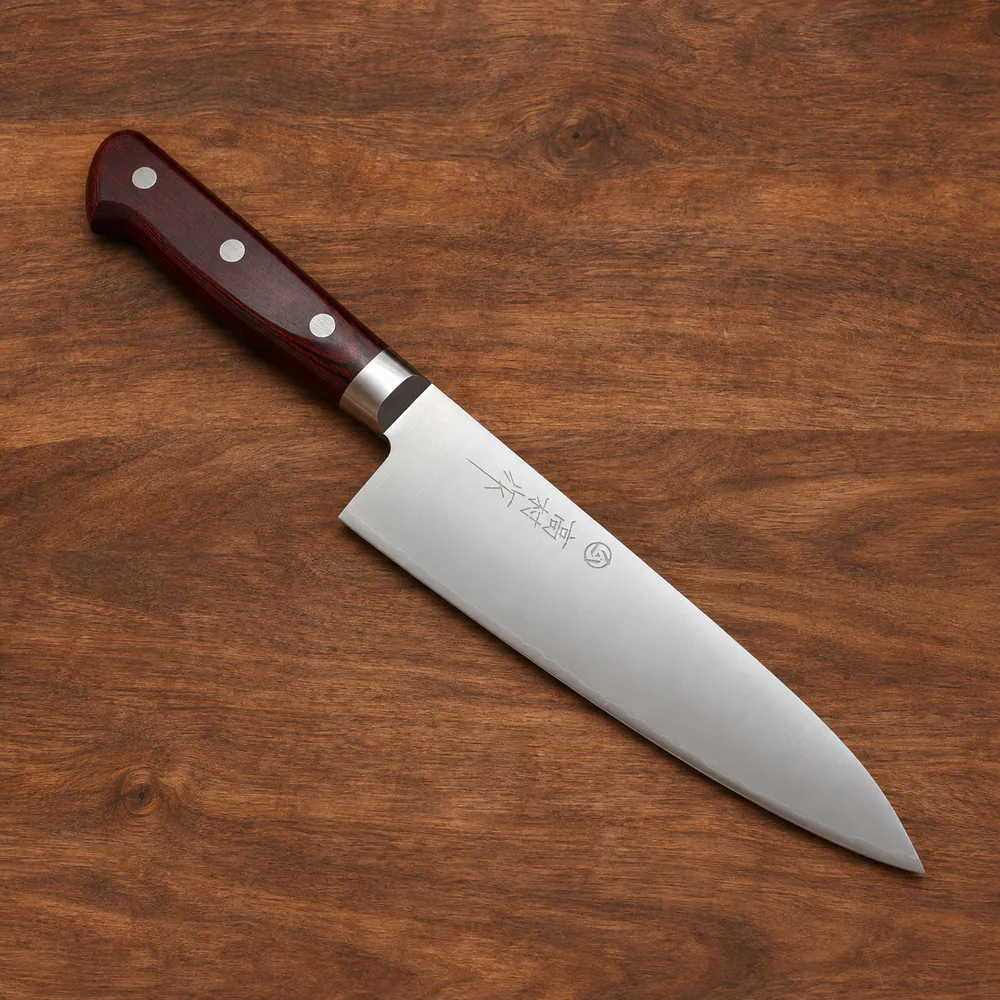
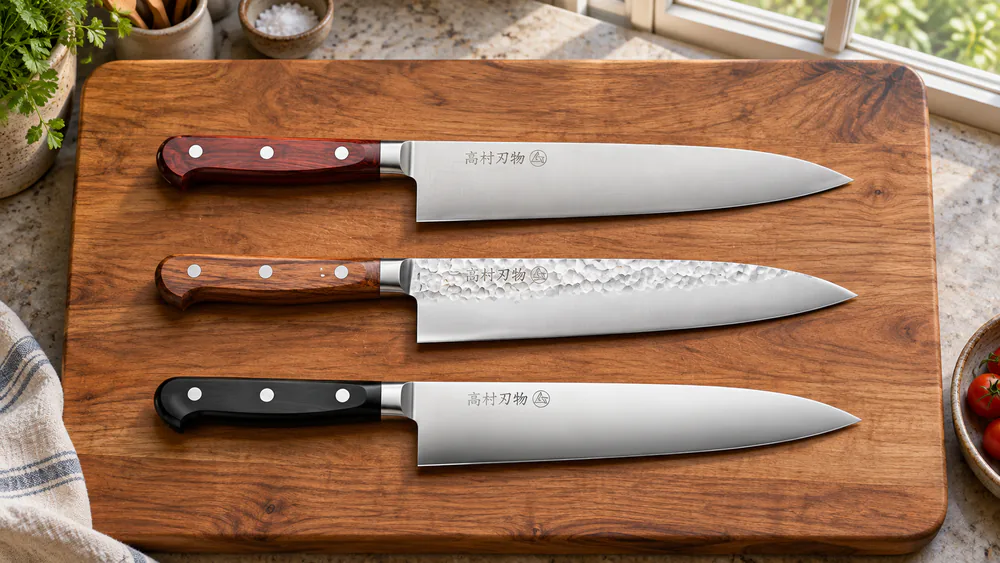
Takamura R2, Chromax and VG10 gyuto laid side by side on a wooden board showing the different finishes and handles
The three main Takamura lines differ in finish as well as steel.

Key takeaway. Every Takamura here is thin and hard. That is why it cuts so well, and also why it needs a gentler hand than a German knife.

The Reviews

Five picks follow, each with pros and cons beneath.

1. Takamura R2 (SG2) Migaki Gyuto 210mm: Best Overall

Takamura R2 (SG2) Migaki Gyuto 210mm
1

Takamura R2 (SG2) Migaki Gyuto 210mm

Best Overall
Check Price on Amazon
4.8/5

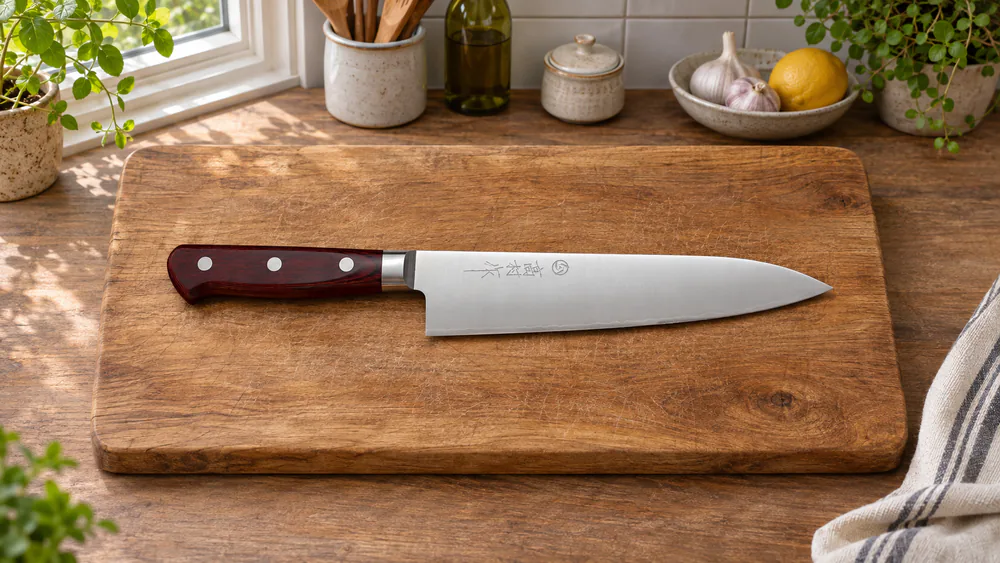
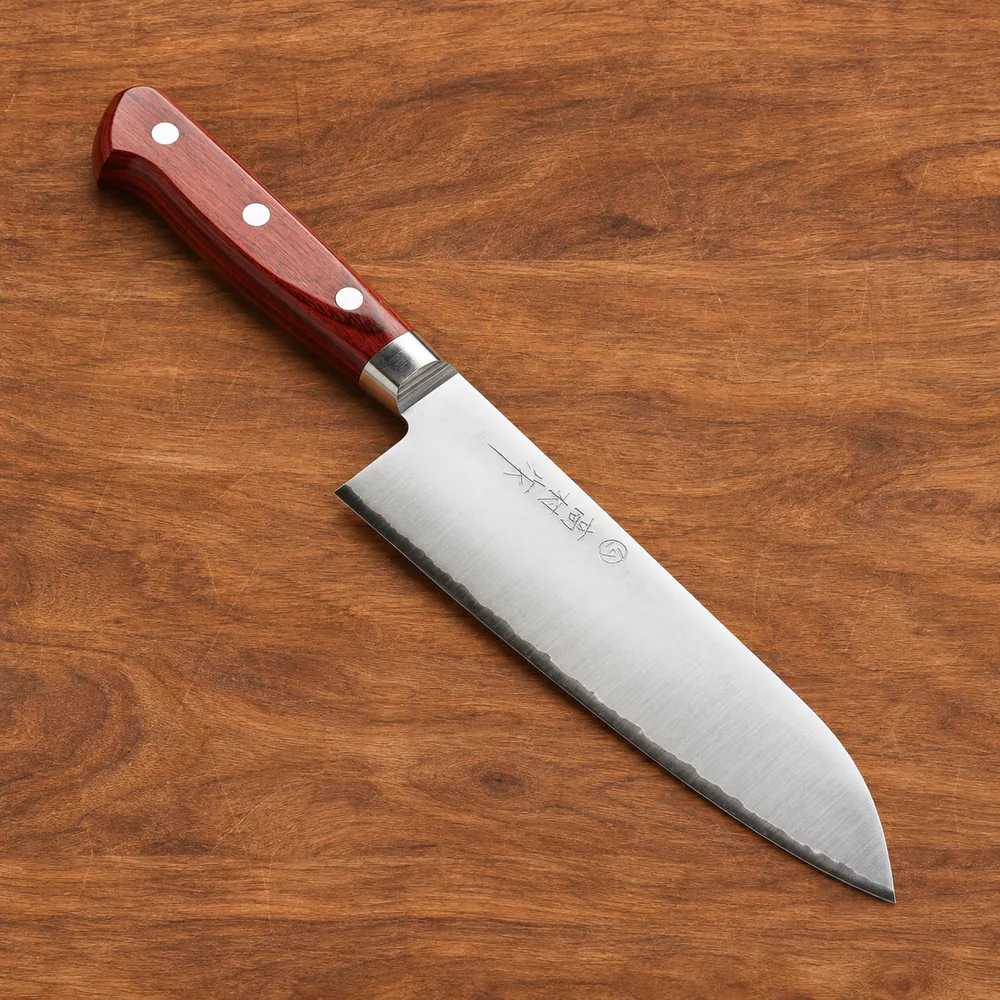
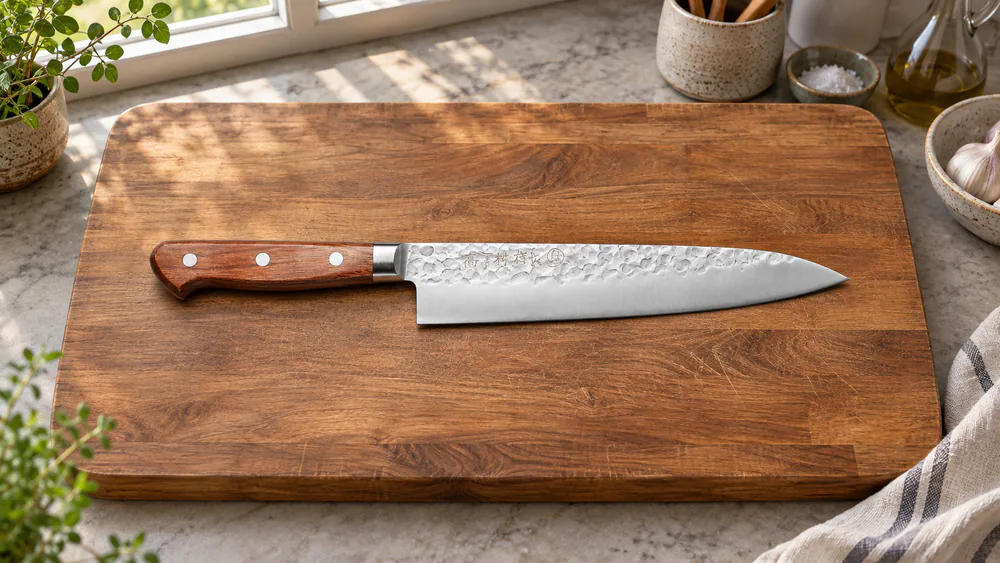
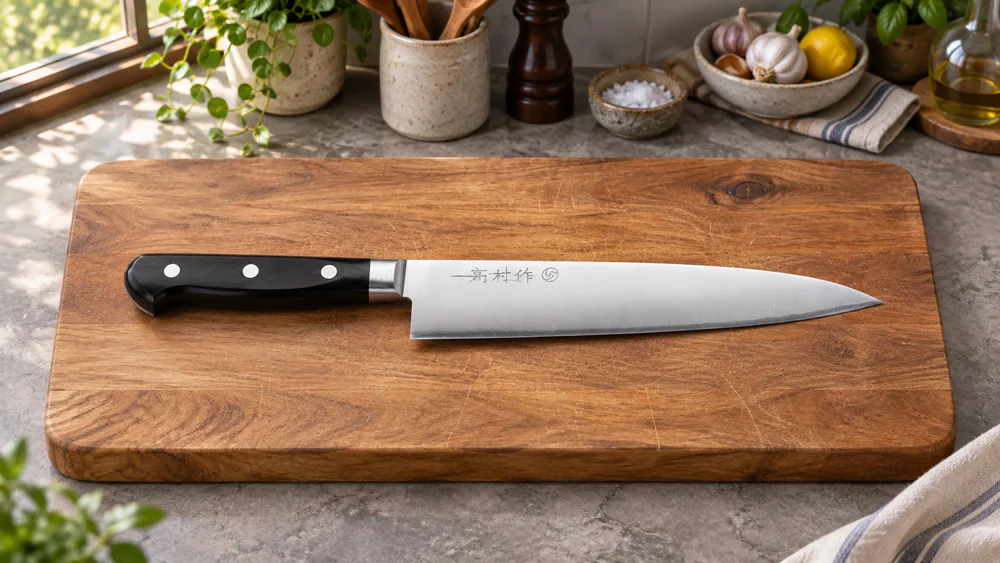
This is the Takamura we would buy again. It goes through an onion or a dense vegetable with unusually little resistance and tracks straight, because so little steel sits behind the edge. The edge arrives genuinely sharp, hand-finished in the workshop, and the fit at the handle and spine is clean, with a lightly rounded spine and choil. At under about 150 g it feels featherlight, so a cook coming from a heavy German knife has to adjust technique and stop rocking through every cut.

Specifications

Length
210mm edge, about 338mm overall
Steel
SG2 (R2) powder stainless in san mai cladding
Hardness
about 62 to 64 HRC
Weight
roughly 150 g
Handle
Western

The steel also helps it win, but its delicate edge needs proper whetstones and careful handling. For most cooks who want one Takamura, this is it.
Pros

  • Longest edge life of the Takamura picks
  • Polished finish with clean fit and finish
  • Cuts with very little resistance

Cons

  • Slower to sharpen and wants whetstones
  • Chips if you lever, twist or hit bone
  • Often sold out, so expect a restock list

2. Takamura Chromax Gyuto 210mm: Best Value Under the R2

Takamura Chromax Gyuto 210mm
2

Takamura Chromax Gyuto 210mm

Best Value Under the R2
Check Price on Amazon
4.5/5

Where the R2 asks for whetstones and care, the Chromax is the knife we would hand to a cook who wants the Takamura grind without the R2's price tier. It feels a little sturdier and less dainty in the hand, while the R2 is the finer, more delicate edge. The core is semi-stainless, clad in stainless.

Specifications

Length
210mm
Steel
Chromax semi-stainless core in stainless cladding
Hardness
about 63 to 64 HRC, similar to the R2
Weight
roughly 155 g
Handle
Western or wa, depending on the batch

The trade-off is upkeep. The exposed core at the edge will patina, though more slowly than blue steel, so wipe it dry after use. If you cook acidic foods and then walk away from the board, this is not your knife.

Pros

  • Easy to sharpen and deburr
  • Feels sturdier in hand
  • Better value than the R2

Cons

  • Patinas and needs wiping dry after use
  • Less fine an edge than the R2
  • Handle type varies by batch

3. Takamura VG10 Gyuto 210mm: Best for First-Time Japanese Knife Buyers

Takamura VG10 Gyuto 210mm
3

Takamura VG10 Gyuto 210mm

Best for First-Time Japanese Knife Buyers
Check Price on Amazon
4.3/5

VG10 needs less care than Chromax, making it a good starting point if you have only used German or entry-level knives. It is the budget pick of the three 210mm gyuto, and it still delivers the thin grind that makes Takamura worth talking about. A VG-10 core sits in soft stainless san mai, hammer forged and polished, at 60-61 HRC.

Specifications

Length
210mm blade, about 335-340mm overall
Steel
VG-10 core in soft stainless san mai
Hardness
60-61 HRC
Weight
light, around 155 g
Handle
Western

That lower hardness is a feature for beginners. VG10 gives up some edge life to R2, but it is easier to sharpen and less brittle, so a first chip is less likely to be a disaster.

Pros

  • Most forgiving of the 210mm picks
  • Lowest cost of entry into Takamura
  • Easy to bring back to sharp

Cons

  • Shorter edge life than R2
  • Still thin, so no bones or twisting
  • Less refined than the R2

4. Takamura R2 (SG2) Migaki Gyuto 180mm: Best for Compact Prep

Takamura R2 (SG2) Migaki Gyuto 180mm
4

Takamura R2 (SG2) Migaki Gyuto 180mm

Best for Compact Prep
Check Price on Amazon
4.4/5

The trade-off here is reach. We planned a larger 240mm R2 for this slot, but no specialist retailer lists a Takamura R2 gyuto in that size, so the 180mm takes the spot after the VG10.

Specifications

Length
180mm
Steel
SG2 (R2) powder stainless
Handle
Western
Weight
not confirmed

It carries the same steel and thin geometry as our top pick in a shorter, more nimble blade that is easier to control on a small board. For large squash and cabbages, the 210mm is the better tool.

Pros

  • Same steel as the Best Overall pick
  • Nimble on small boards
  • Good fit for smaller hands

Cons

  • Less reach for big vegetables
  • Same chip risk as every thin Takamura
  • Limited production, so stock comes and goes

5. Takamura Santoku (R2 or VG10): Best for Smaller Boards

Takamura Santoku 170mm
5

Takamura Santoku 170mm

Best for Smaller Boards
Check Price on Amazon
4.2/5

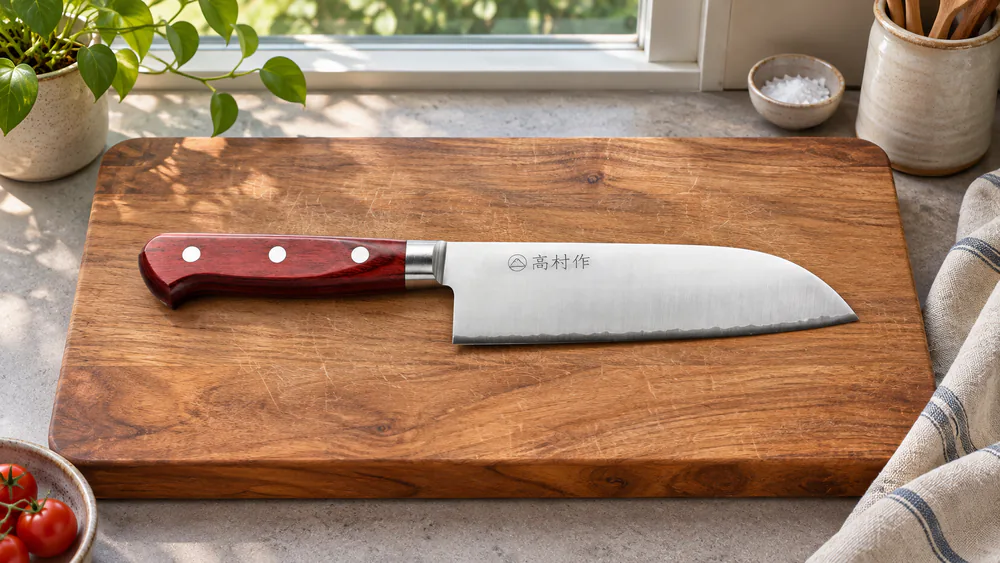
After the gyuto, the Takamura santoku in 170mm is the pick for anyone who prefers a flatter profile and a shorter blade. It comes in SG2 Migaki with a red pakkawood handle, VG-10 in polished or hammered finish, and Chromax in plain or hammered. The SG2 Migaki version is closest to the R2 gyuto in steel and feel, so that is the one we would choose if budget allows.

Specifications

Length
170mm
Steel
SG2, VG-10 or Chromax, by model
Handle
Western (pakkawood)
Weight and hardness
varies by line

We rank it last only because the gyuto offers more reach and range. If you already know you like santoku, our guide to chef knife vs santoku explains the difference.

Pros

  • Handy size for small boards
  • Choice of three steels
  • Familiar santoku shape

Cons

  • Less reach than a gyuto
  • Fewer specs confirmed across variants
  • Shares the thin-edge fragility of the range

Side-by-Side Comparison

ProductSteelHardnessLengthWeightHandleOur rating
R2 (SG2) Gyuto SG2/R2 powder stainless about 62-64 HRC 210mm roughly 150 g Western 4.8
Chromax Gyuto Chromax semi-stainless about 63-64 HRC 210mm roughly 155 g Western or wa by batch 4.5
VG10 Gyuto VG-10 60-61 HRC 210mm around 155 g Western 4.3
R2 (SG2) Gyuto SG2/R2 powder stainless about 62-64 HRC 180mm not confirmed Western 4.4
Santoku SG2, VG-10 or Chromax per line 170mm not confirmed Western 4.2

Who Makes Takamura Knives

Takamura Hamono Seisakusho is a family workshop in Echizen, in the Takefu area of Fukui Prefecture. Three brothers of the third generation run it. The business began shortly after the war making vegetable and farm blades, moved on to stainless kitchen knives, and was early to adopt powder steels.

Every step happens in-house, and the final sharpening is mainly done by one of the brothers. That hand-finishing is part of why the edge arrives so sharp. It also explains the limited production: a small workshop cannot flood the market, so popular models sell out and buying often means joining a restock list.

Steel Explained: R2/SG2 vs VG10 vs Chromax

R2 and SG2 are the same steel for practical purposes. Retailers use the names interchangeably for Takamura's powder stainless line, which is Takefu Special Steel's Super Gold 2. The workshop's own catalogue says "forged powder stainless," so R2/SG2 is retailer shorthand. It has the longest edge life and the slowest sharpening.

VG10 is the approachable choice. At 60-61 HRC it is softer than the powder steels, easier to sharpen and less brittle. It gives up edge life to R2 but forgives more.

Chromax is a semi-stainless core in stainless cladding. It feels sturdier than R2, raises a burr easily and deburrs readily, but the exposed core will patina if left wet.

Pick the steel by how you sharpen and clean, not by the hardness number on the listing.

Hardness figures vary between retailers, so treat any single number as a range.

Why Takamura Knives Are Called "Lasers"

A laser is a knife ground so thin behind the edge that it slices with almost no wedging. That is the Takamura signature. Food parts instead of splitting, and the blade tracks straight through dense vegetables.

The same thinness makes it chip-prone. Levering through a squash, hitting a chicken bone or twisting in the cut will chip the edge where a thicker blade would just roll. A laser rewards a clean push or pull cut and punishes brute force.

Takamura vs Tojiro, Shun and German Knives

Takamura vs Tojiro is the classic comparison. Tojiro DP is a Tsubame-Sanjo VG-10 knife: affordable, tough and easy to sharpen. It is the forgiving all-round choice. Takamura is the thin-grind specialist step up, with a harder edge and a lighter feel.

Shun Classic uses VG-MAX and is easier to find, with more forgiving geometry. MAC Professional is a lower-cost VG-10 knife with a Western handle. Takamura has the thinner grind and the harder edge of the group.

German knives are heavier and thicker, and they tolerate rocking and rougher boards. For a workhorse, buy German. For precision and a light hand, buy Takamura.

How to Choose a Takamura: Size, Handle and Profile

Start with how much board you have, then choose steel by how willing you are to sharpen on stones.

210mm vs 240mm Gyuto

The 210mm is the standard and the one we recommend first. It handles most vegetables and proteins on a normal board. We could not find a Takamura R2 gyuto in 240mm at any specialist retailer, so a longer blade is not really the choice here. If you want less length, the 180mm is the alternative.

Wa Handle vs Western Handle

The Migaki SG2 and VG-10 gyuto come with Western handles, in rosewood or red or wine pakkawood depending on batch. Chromax handle types vary by batch, so check the listing. A wa handle moves the balance forward and suits a pinch grip.

Warning. These knives are thin and hard. No bones, no frozen food, no levering or twisting, no glass or stone boards, no dishwasher and no pull-through sharpeners.

Care and Sharpening

Hand wash and dry the blade right after use, and use a wood or soft synthetic board.

Sharpen on whetstones. Pull-through sharpeners remove too much steel and spoil the angle. Keep the factory bevel: changing the angle on a san mai Takamura alters the structure of the blade and it loses its sharpness. R2 will take longer on the stones than VG10 or Chromax, but it rewards the effort.

Tip. Wipe a Chromax dry after every use, even mid-prep. A quick pass with a towel is enough to slow patina.

Where to Buy and How to Spot a Genuine Takamura

Specialist Japanese knife retailers are the most reliable source, and many carry restock alerts. Popular models sell out often, so join a list rather than refreshing the page.

A genuine Takamura shows the model, the steel and the line by name, and it is sold with the correct finish and handle. Be wary of unbranded knives using Takamura's name or photos, and be cautious of any listing that names no steel and no finish.

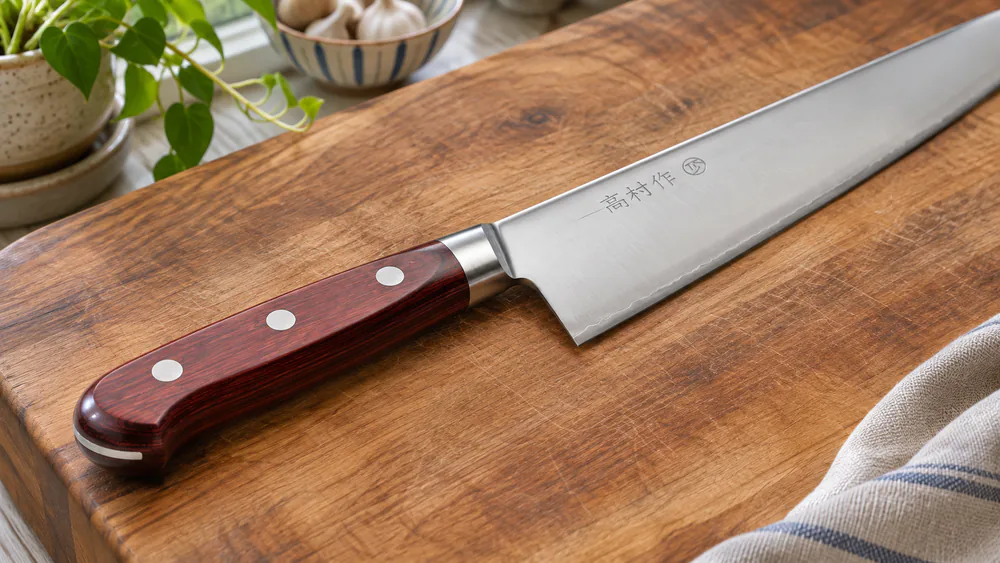
Close-up of a Takamura gyuto heel and spine showing the lightly rounded spine, clean handle joint and the maker's engraving
Clean fit at the handle and spine is one sign of a genuine knife.

Frequently Asked Questions

Are Takamura knives good for beginners?

Yes, if you pick the right line. The VG10 gyuto is the most forgiving and the easiest to sharpen. Beginners should avoid levering, twisting and bones, since every Takamura is thin and chips when mistreated.

What steel does Takamura use?

The main lines are SG2/R2 powder stainless, VG-10 and Chromax, a semi-stainless core in stainless cladding. Rarer lines use other steels, but these three cover most of what is sold.

Where are Takamura knives made?

In Echizen, in the Takefu area of Fukui Prefecture, Japan, by a family workshop. Takamura is made in Echizen, Fukui Prefecture, not Niigata.

Are R2 and SG2 the same steel?

Effectively yes. Retailers use the names interchangeably for Takamura's powder stainless line, which is Takefu Special Steel's Super Gold 2. The workshop itself calls it forged powder stainless.

Takamura or Tojiro?

Choose Tojiro DP for a tough, affordable all-rounder that forgives mistakes. Choose Takamura for a thinner grind, a harder edge and a lighter feel, and only if you will sharpen on stones.

How do I spot a genuine Takamura?

Buy from a specialist retailer that names the model, steel and finish. Check for clean fit at the handle and spine, and avoid listings that give no steel or line name.

Why are Takamura knives so often sold out?

Production is limited, so popular models sell out regularly. Restock alerts at specialist retailers are the normal way to buy.

Final Verdict

If one Takamura is all you will own, buy the R2 gyuto in 210mm. If the stones make you nervous, start with the VG10 and move up later. Chromax suits cooks who want a sturdier feel and do not mind wiping the blade dry, while the 180mm and the santoku are for small boards. Whichever you choose, keep it off bones and glass, and sharpen it by hand.

Read next

Ready to upgrade your kitchen?

Pick the Takamura line that matches how you sharpen and cook, then keep it sharp by hand.