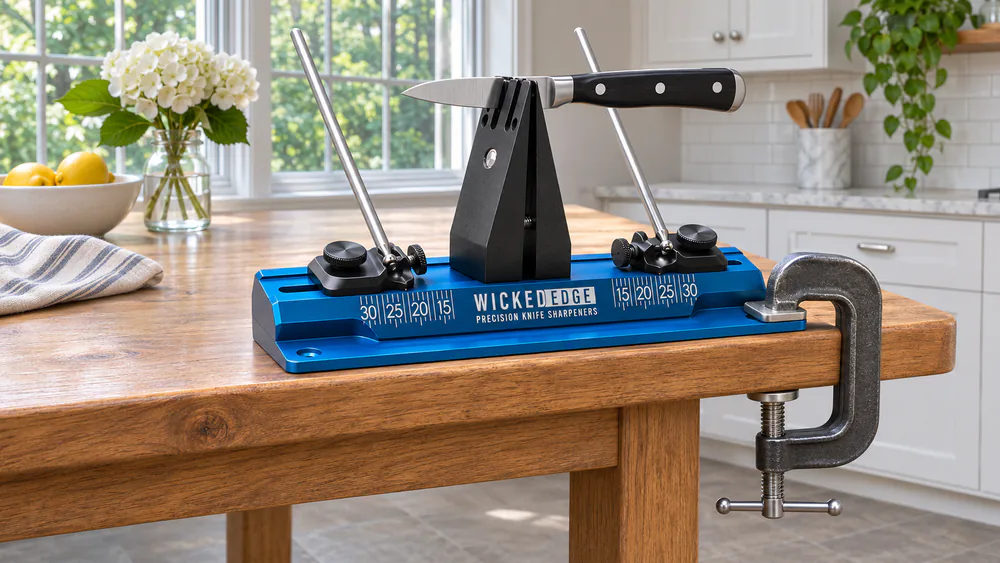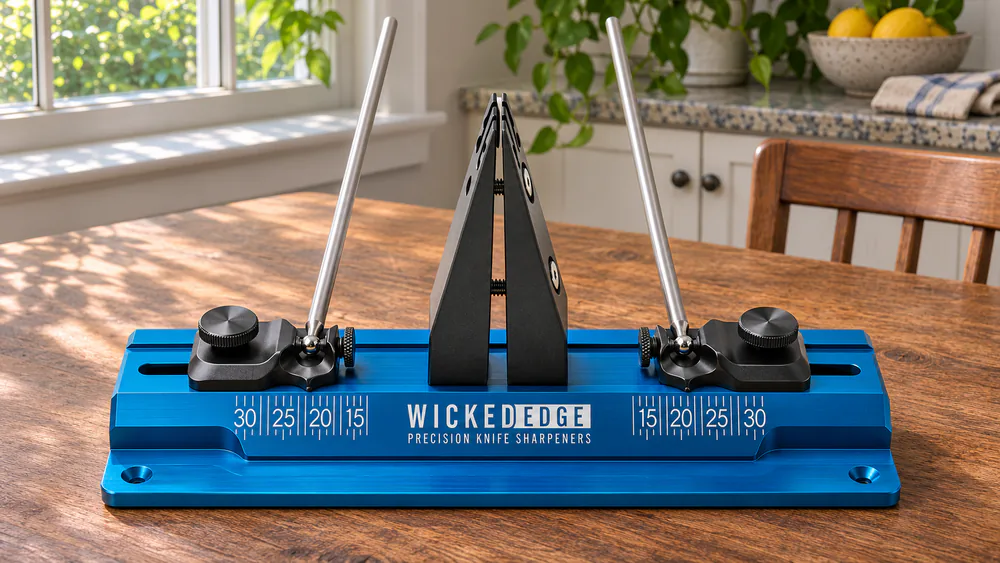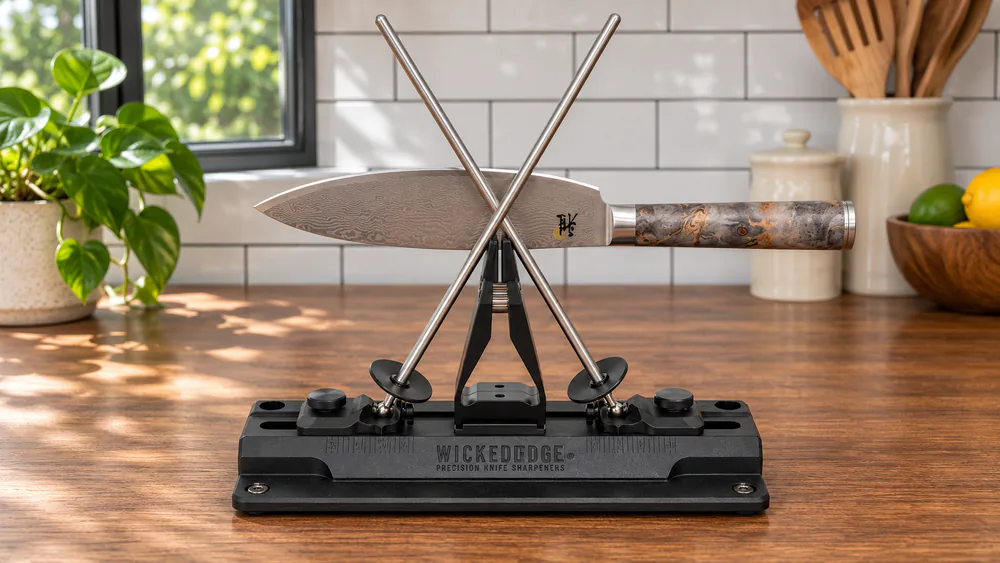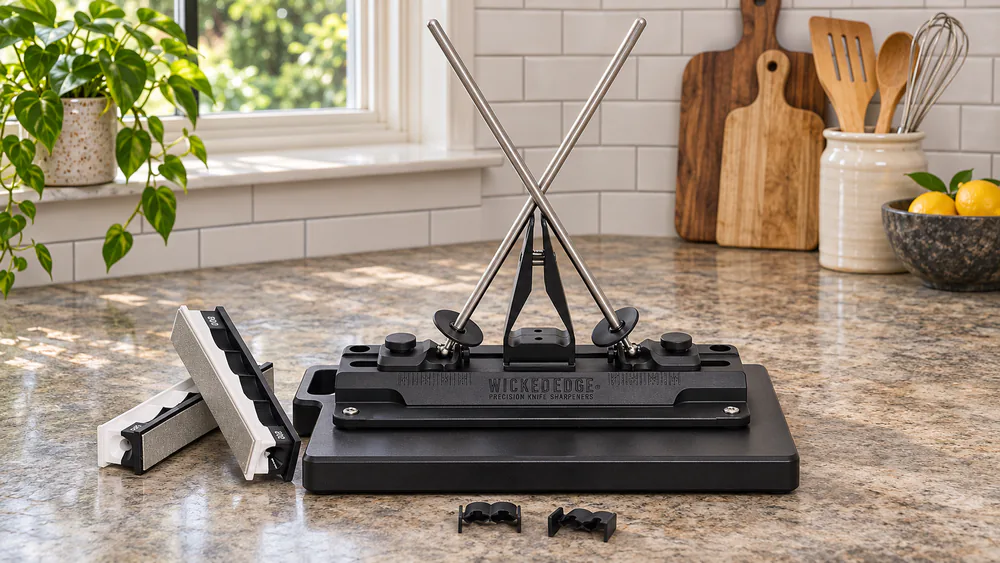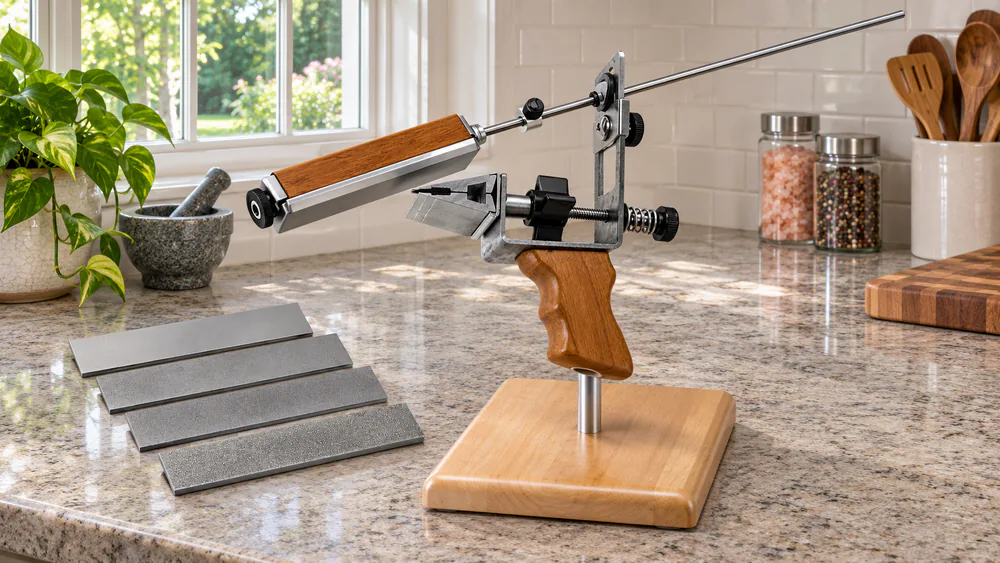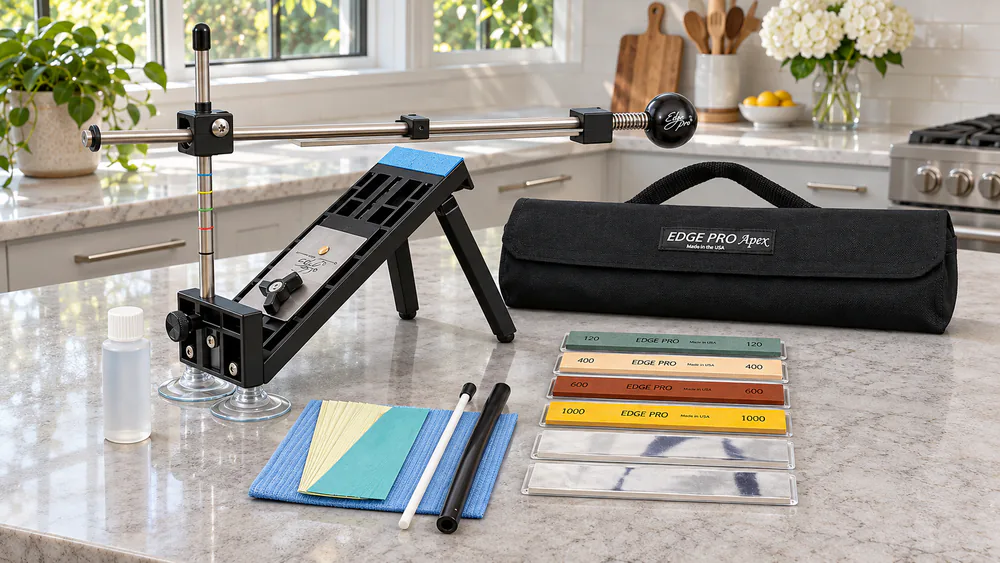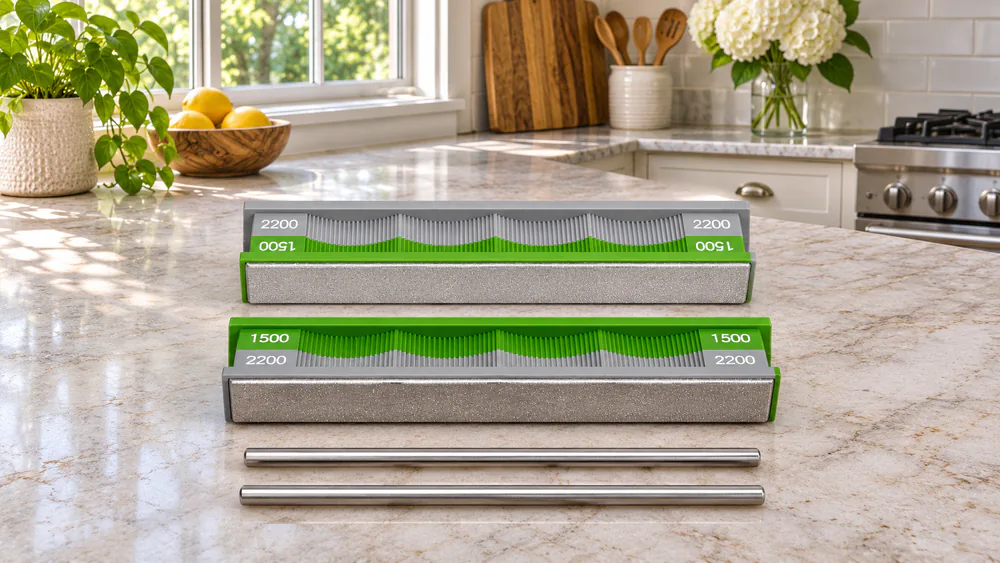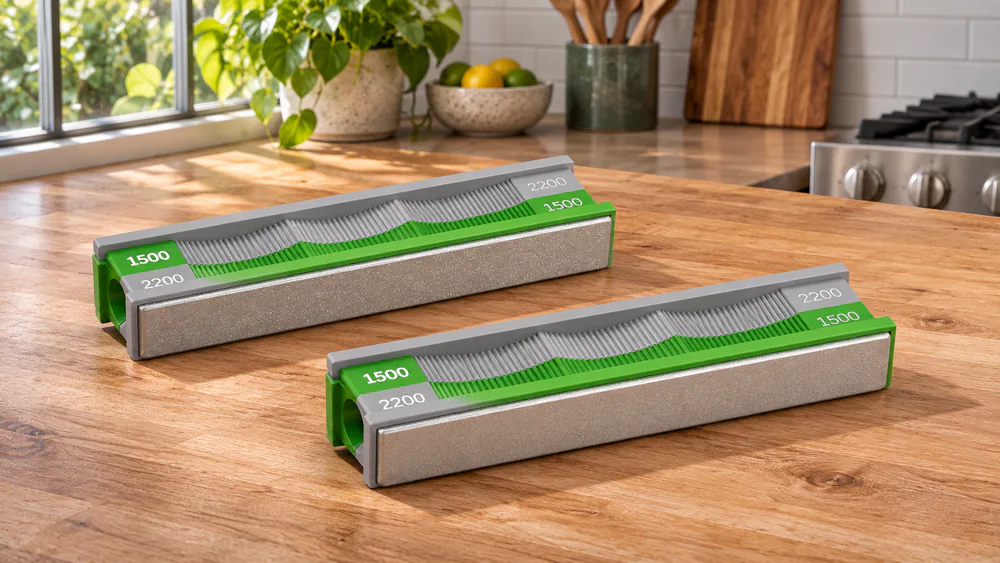

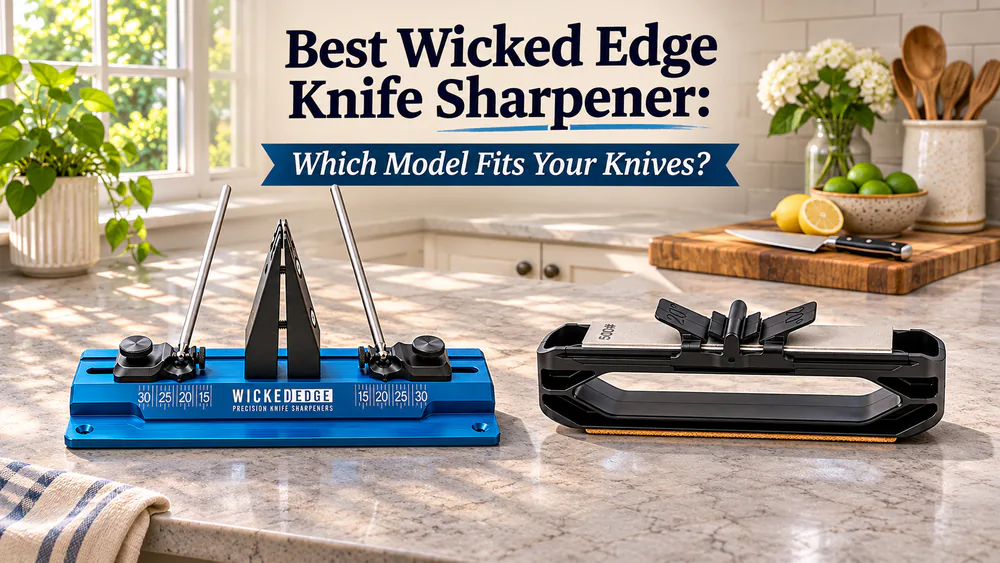
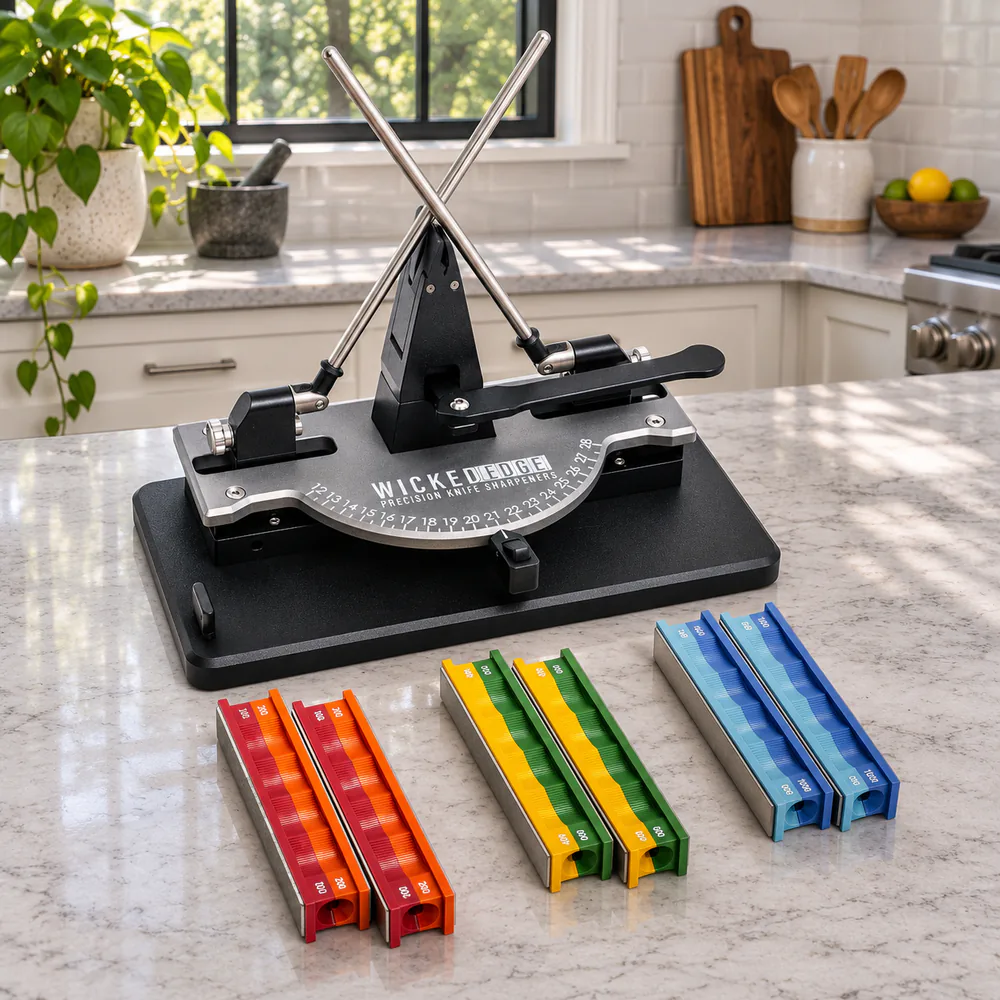
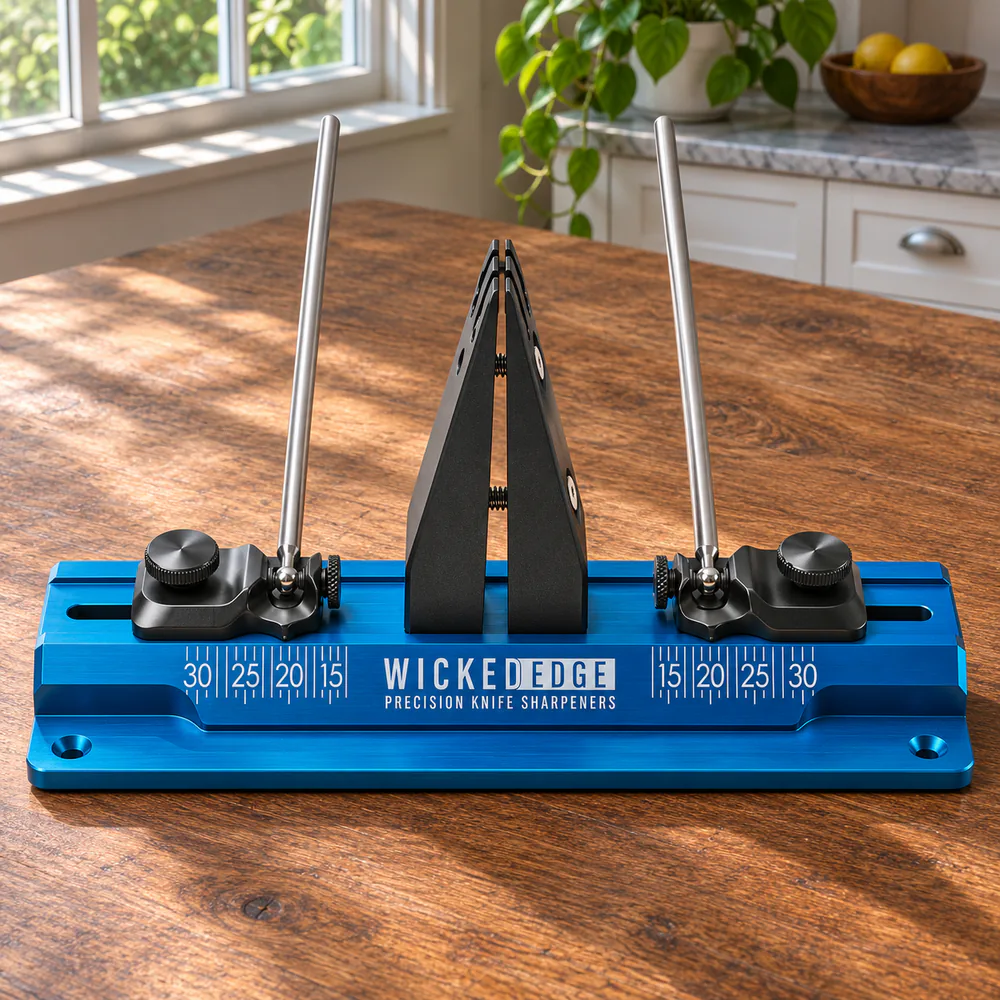
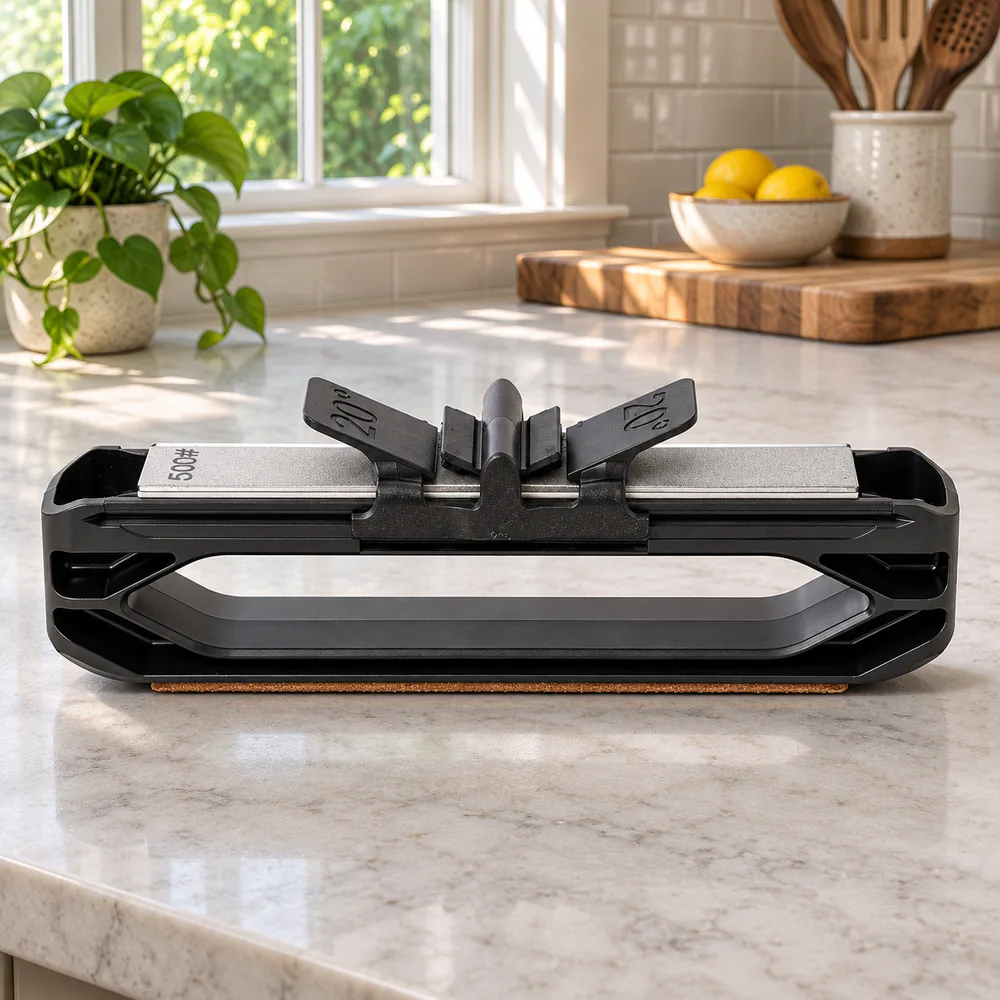
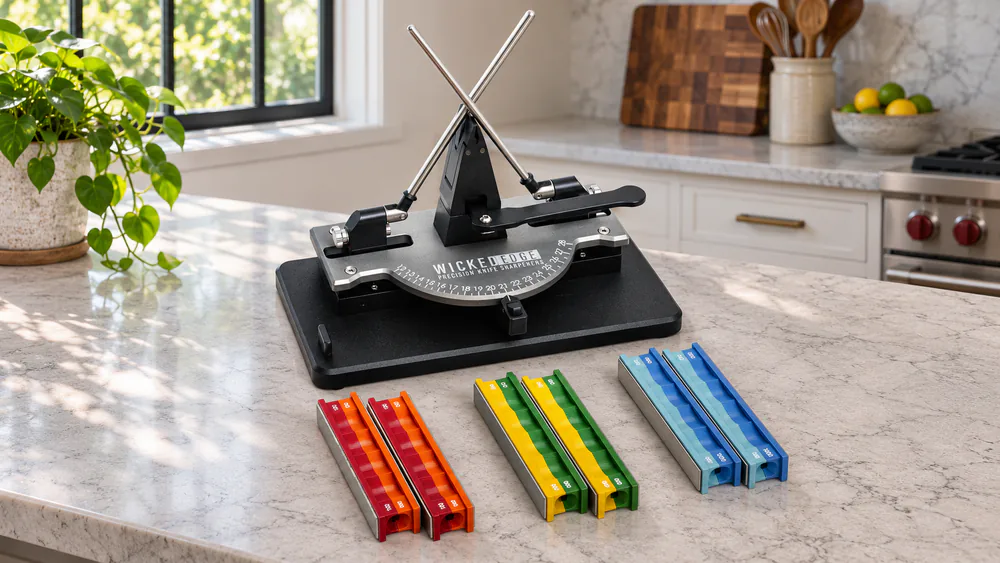
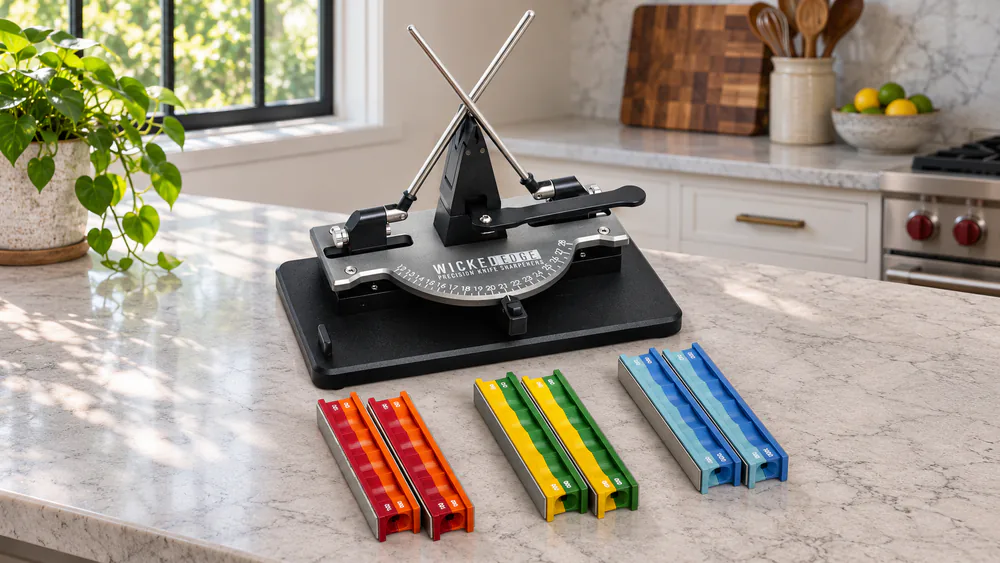
The Generation 4 Pro is the Wicked Edge we reach for when the knife matters. It sharpens both sides of the blade at once, holds the angle with guide rods, and comes with 100/200, 400/600 and 800/1000 grit diamond stones, so you can go from a neglected edge to a razor sharp finish without buying anything else. It lets you reproduce the same edge each time you sharpen a good chef's knife.
Pros
- Both sides of the edge sharpened at once with a repeatable guide-rod angle
- 12-28 degrees per side, with 12-33 available through Micro-Adjust
- Three diamond stone pairs included, from 100/200 to 800/1000
- Drifts less at the tip than most guided systems because of its pivot placement
- Optional cabinet, polishing stones, strops and low-angle kit let it grow with you
Cons
- Premium-tier base unit, and accessories add substantially
- Clamp tops out at 3/16 inch thick, so heavy blades and tools do not fit
- Shallow Japanese edges need the low-angle kit and extra setup
- Full regrinds on super-hard steel are slow compared with a belt system
Resharpening is where it shines. Even very hard steels come back quickly, and routine cutlery takes little time at the clamp. A full regrind on super-hard steel is slower than it would be on a belt system, so this is a precision tool rather than a fast one. We sharpened a 64.5 HRC ZDP-189 knife in about 25 minutes, and the mirror edge it left would whittle hair and pop hair off the arm.
The angle range is 12-28 degrees per side, stretching to 12-33 with the optional Micro-Adjust. That covers nearly every western kitchen knife and most folders. One honest caution: the real edge angle drifts with how far the blade sticks out of the clamp, so a 30-degree setting can read about 34 degrees at the tip. The Gen 4 drifts less than most because its pivots sit far from the clamp, but it is why we mark the bevel with a Sharpie before the first stroke. If the marker disappears across the whole edge, the angle is right.
The clamp holds blades up to 3/16 inch thick, and the footprint is roughly 7 x 11 x 11.5 inches, so it wants a permanent spot on a bench or a shelf rather than a drawer. With longer guide rods it handles blades up to 15 inches.
Thick, heavy blades such as khukuris may not fit, and chisels or wood-turning tools are all but off the table. Shallow-angle Japanese knives are awkward without the low-angle kit, an angle finder and possibly longer guide rods.