
Recipes
Soft, Chewy 4-Ingredient Peanut Butter Cookies (No Eggs)

As an Amazon Associate we earn from qualifying purchases. We may earn a commission from links on this page, at no extra cost to you. Learn more.
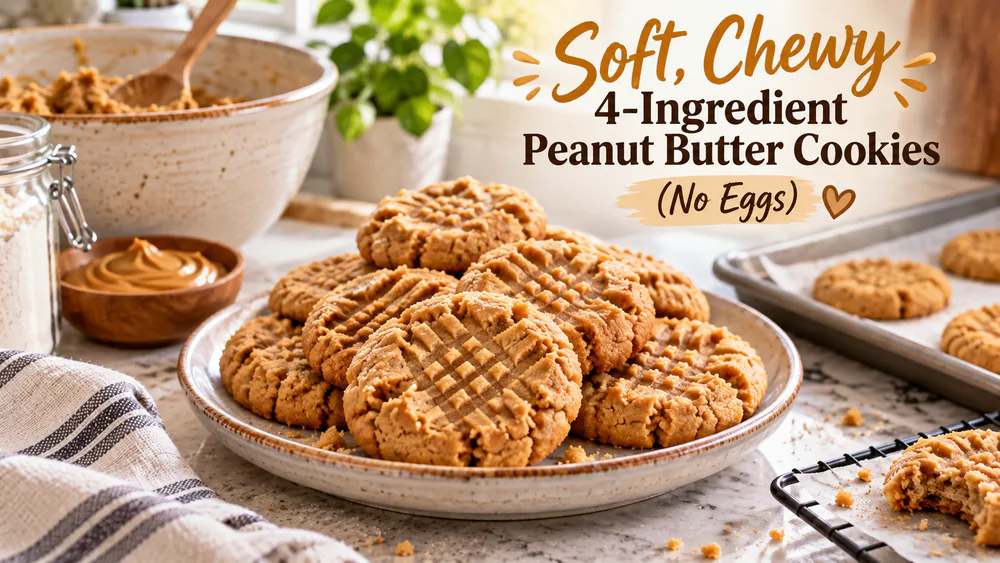
These are the soft, chewy peanut butter cookies we make when we want something homemade in the next twenty minutes and the egg carton is empty. They lean on four pantry staples, come together in one bowl, and skip the mixer entirely. No eggs, no flax egg, no fuss. The first time we pulled a batch this simple from the oven, we were a little suspicious that something so short could taste this much like the classic. It does.
Why You'll Love These Eggless Peanut Butter Cookies
We keep coming back to this recipe for one simple reason: it is almost impossible to mess up. There is no creaming stage that can go wrong, no eggs to overbeat, and no chilling step to plan around. You stir, you scoop, you press, you bake.
The payoff is a cookie with a genuinely soft, chewy center and lightly crisp edges. The tops carry that familiar fork crisscross, and the flavor is pure roasted peanut butter, just like you remember from a bakery counter. Because the binding comes from milk and the peanut butter itself, the recipe is also vegan-friendly and dairy-free the moment you reach for a plant milk.
It is fast, too. From pulling out the bowl to sliding the first tray in, we are usually done in well under thirty minutes. That speed is a big part of why this has become our default weeknight cookie.
Ingredients for Peanut Butter Cookies Without Eggs
The heart of this recipe is four everyday ingredients: creamy peanut butter, granulated sugar, all-purpose flour, and milk. A splash of vanilla and small pinches of baking powder and salt round things out, but the four staples above are what carry the cookie.
Here is what one standard batch calls for:
- 1 cup creamy peanut butter (regular no-stir, not natural separated-oil)
- 3/4 cup granulated sugar
- 1/4 cup milk (dairy or plant based)
- 1 teaspoon vanilla extract
- 1 cup all-purpose flour
- 1/2 teaspoon baking powder
- A pinch of salt
A quick word on the peanut butter, because it matters more than anything else on this list. We reach for regular no-stir creamy peanut butter, the kind that stays smooth and thick in the jar. When we tested a batch with natural, separated-oil peanut butter, the dough turned greasy and the cookies spread thin and threatened to fall apart. The no-stir jar behaves far more predictably, and it is the single biggest factor in whether these hold together.
Note. The "4 ingredients" refers to the four staples that do the heavy lifting. The vanilla, baking powder, and salt are seasoning-level extras most bakers already keep on hand, so we count them separately from the core four.
How to Make Peanut Butter Cookies Without Eggs (Step by Step)
One bowl, one spoon, one fork. That is the whole toolkit. Below is exactly how we work through a batch in our kitchen, with the small notes that keep the texture soft.
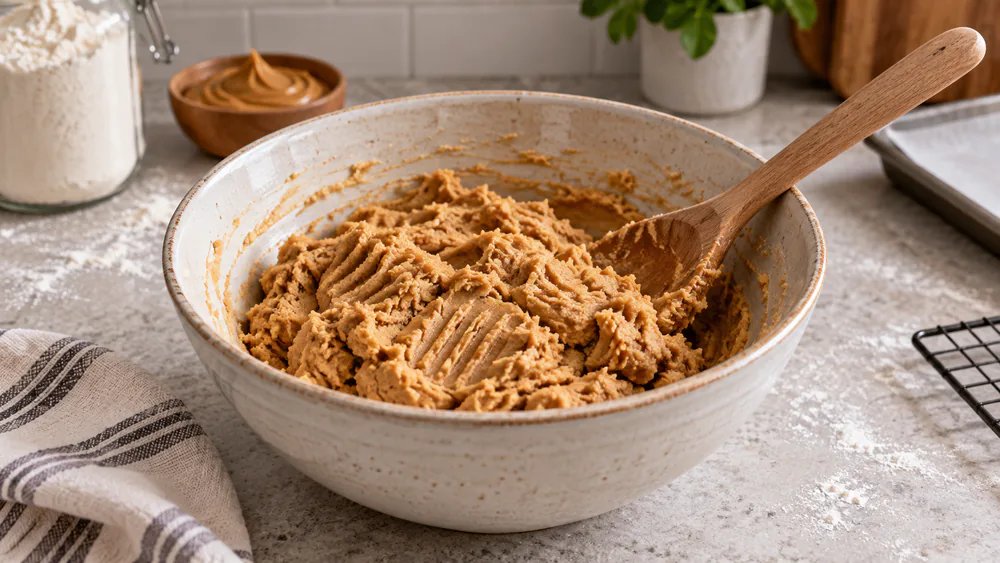
Step 1: Cream the Peanut Butter and Sugar
Add the peanut butter and granulated sugar to a large bowl and stir them together until the mixture looks thick, sandy, and evenly combined. You do not need a mixer here; a sturdy spoon or spatula does the job in a minute or two. Room-temperature peanut butter stirs together much more easily than a jar straight from a cold pantry, so we let ours sit out for a few minutes first.
Step 2: Add the Milk and Vanilla
Pour in the milk and vanilla, then stir again. This is the moment the dough starts to come alive. The milk loosens the stiff peanut butter and sugar into something scoopable, and along with the peanut butter's own oils it takes over the binding job an egg would normally handle. The dough should look glossy and hold together when you press it.
Step 3: Mix in the Dry Ingredients
Add the flour, baking powder, and salt. Fold everything together just until no dry streaks remain, then stop. Overmixing at this stage develops the flour and firms the cookies up, and firm is the opposite of what we want. The dough will be thick and a little stiff, closer to modeling clay than to a pourable batter. That is exactly right.
Tip. Spoon the flour into your measuring cup and level it off with a knife rather than scooping the cup through the bag. Scooping packs in extra flour, and even a couple of tablespoons too much is the fastest route to dry, crumbly cookies.
Step 4: Shape and Fork-Press the Cookies
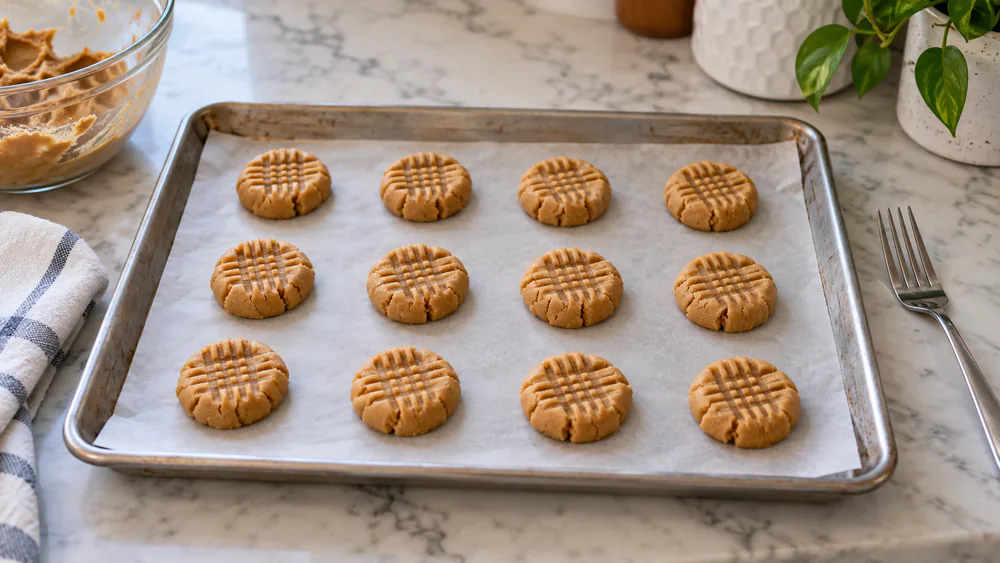
Roll the dough into balls about the size of a walnut and set them on a lined baking sheet. These cookies barely spread in the oven, holding close to their pre-baked shape, so we flatten each ball ourselves rather than waiting for them to melt out. Press each one with a fork, then again crosswise, to make the classic crisscross. That press is not only for looks; it evens out the thickness so the thick dough balls bake through uniformly.
Step 5: Bake Until Lightly Golden
Bake at 350 degrees F for 10 to 12 minutes, until the edges are set and just barely golden. Here is the part that trips people up the first time: the centers will look underbaked and almost raw when the tray comes out. Trust it. Pulling them while the middles still look soft is exactly what keeps the finished cookie tender.
Warning. Do not wait for the centers to look fully baked, and do not add "just one more minute." Leaving them in too long is the single most common way these go from soft to dry and dense. They firm up as they cool.
Step 6: Cool Before Serving
Let the cookies rest on the hot baking sheet. This is where they finish. Over the next 30 to 60 minutes they set up from that soft, raw-looking state into a cookie that lifts cleanly and holds its shape. Moving them too soon, while they are still fragile, is how they break. A little patience on the tray is the difference between a soft cookie and a crumbled one.
Expert Tips for Perfect Egg-Free Peanut Butter Cookies
A few small habits separate a good batch from a great one, and they cost nothing but attention.
Weigh or at least spoon-and-level your flour. Over-packing the flour or leaving the tray in a minute too long are the two fastest ways to a dry, crumbly result instead of a soft center. Both are easy to avoid once you know to watch for them.
Mind your scoop size, because it drives everything downstream. One larger-than-planned batch we baked came out about one and a half times bigger than expected and needed extra oven time to brown through. Bigger dough balls mean fewer cookies and a longer bake, so pick a scoop and stay consistent across the tray.
If you want to nudge the texture toward extra chewy, swap part of the granulated sugar for brown sugar. A mix of white and brown noticeably boosts chewiness compared with all white sugar, thanks to the molasses and its extra moisture.
The centers look almost raw when the tray comes out. That is not a mistake to fix. It is the whole secret to a soft cookie.
Serve them slightly warm with a glass of cold milk, or let them cool fully and sandwich two around a spoonful of jam or chocolate spread. They also make a sturdy base for an ice cream sandwich, since they hold their shape so well.
Ingredient Substitutions (Vegan, Gluten-Free, Dairy-Free)
This is a forgiving recipe, and most of the swaps people ask about work beautifully. Here is how we adjust it.
Egg Replacers That Work (and Why You Don't Need One)
The best part of this recipe is that there is nothing to replace. Milk plus the peanut butter's own oils and proteins do the egg's binding job, so you do not need a flax egg, a chia egg, or a commercial replacer. If you ever want extra structure, a spoonful of cream cheese or applesauce works in richer versions of the recipe, but the milk-bound method here stands on its own. If you want to read more about how egg substitutes work in baking, the short version is that binding, moisture, and structure can all come from other sources, which is exactly what is happening in this dough.
Dairy-Free Milk Options
Any milk works as the liquid binder, dairy or plant based. We have had clean results with almond, oat, and soy milk, and the cookies stay just as soft. Choose an unsweetened, unflavored variety so it does not compete with the peanut butter, and the recipe becomes fully dairy-free and vegan-friendly without any other changes.
Different Nut Butters
Crunchy peanut butter works and gives you little pockets of texture, though it changes the smooth chew slightly. Other no-stir nut butters, like almond or cashew, will also bind, since they bring the same oils and proteins to the party. The one jar we steer around is natural, separated-oil peanut butter, for the greasy, spread-thin dough it produced in our tests.
How to Store and Freeze Eggless Peanut Butter Cookies
Once cooled, keep the cookies in an airtight container at room temperature. They stay soft for roughly 4 to 7 days, though room-temperature freshness varies with how rich the batch is and how airtight the container seals. If yours edge toward dry, tuck a slice of sandwich bread into the container to keep them tender.
For longer storage, the freezer is your friend. You can freeze the baked cookies or the raw dough balls for up to 3 months. We like freezing shaped dough balls on a tray, then bagging them once solid, so we can bake off a few at a time. Bake frozen dough balls straight from the freezer, adding about 2 extra minutes to the time; there is no need to thaw first.
Tip. Freeze the dough already fork-pressed and portioned. Future-you gets fresh cookies on demand with zero mixing, straight from frozen with just a couple of extra minutes in the oven.
Recipe Card: Peanut Butter Cookies Without Eggs
| Prep time | about 10 minutes |
|---|---|
| Bake time | 10 to 12 minutes |
| Total time | about 20 to 25 minutes |
| Oven temperature | 350 degrees F (175 to 180 C) |
| Yield | about 12 to 24 cookies, depending on scoop size |
| Method | no-mixer, one bowl |
Ingredients
- 1 cup creamy no-stir peanut butter
- 3/4 cup granulated sugar (or half white, half brown for extra chew)
- 1/4 cup milk, dairy or plant based
- 1 teaspoon vanilla extract
- 1 cup all-purpose flour
- 1/2 teaspoon baking powder
- Pinch of salt
Instructions
- Heat the oven to 350 degrees F and line a baking sheet.
- Stir the peanut butter and sugar together until thick and sandy.
- Stir in the milk and vanilla until the dough is glossy and holds together.
- Fold in the flour, baking powder, and salt just until no dry streaks remain.
- Roll walnut-sized balls, space them on the sheet, and press a fork crisscross into each.
- Bake 10 to 12 minutes, until the edges are set and the centers still look soft.
- Cool on the sheet 30 to 60 minutes so the cookies set before you move them.
Nutrition: these numbers move around a lot with your scoop size, sugar amount, and exact ingredients, so treat them as approximate. For our 4-ingredient milk-bound recipe at a 12-cookie yield, expect about 115 calories per cookie. A representative eggless batch works out to roughly 4g protein, 24g carbohydrates, 13g fat, and 15g sugar per cookie. Roll bigger dough balls or add mix-ins and those figures climb, so let your own batch be the final word.
Frequently Asked Questions
What can I use instead of eggs in peanut butter cookies?
For this recipe, nothing extra. Milk plus the oils and proteins in the peanut butter handle the binding an egg would normally do, so there is no flax egg or commercial replacer needed. If you want more structure in a richer version, a spoonful of cream cheese or applesauce also works. If you want to explore the topic further, here are some common egg substitutes for baking.
Why do these cookies hold together without eggs?
Peanut butter is doing double duty. Its natural oils and proteins act as a binder, and the milk brings just enough moisture to pull the dough into a cohesive, scoopable mass. That combination gives you the same hold an egg would, which is why no replacer is required.
Why did my eggless cookies crumble or spread too much?
Crumbling usually comes from too much flour or overbaking, so spoon and level your flour and pull the tray while the centers still look soft. Excess spreading almost always traces back to natural separated-oil peanut butter, which makes the dough greasy. Switch to a no-stir jar and both problems tend to disappear.
Can I use natural peanut butter instead of no-stir?
We do not recommend it. In our tests, natural peanut butter with separated oil made the dough greasy and the cookies spread thin or fell apart. No-stir creamy peanut butter behaves far more predictably and is the more reliable choice for this recipe.
How do I store them and how long do they stay soft?
Keep them in an airtight container at room temperature, where they stay soft for several days depending on the batch and the seal. For longer storage, freeze baked cookies or raw dough balls for up to 3 months.
Can I freeze the dough?
Yes, and it is our favorite shortcut. Freeze fork-pressed dough balls on a tray, then bag them once solid, for up to 3 months. Bake them straight from the freezer and add about 2 extra minutes; there is no need to thaw.
Final Thoughts
If you only bookmark one no-egg cookie, make it this one. It is fast, it is nearly foolproof, and it delivers that soft, chewy, melt-in-your-mouth center every single time, using four pantry staples and a fork. The two things worth remembering are to reach for no-stir peanut butter and to pull the tray while the centers still look underbaked. Nail those, let the cookies cool on the sheet, and you will have a batch that tastes just like the classic, no eggs required.
Read next
Ready to bake your next batch?
Browse more one-bowl recipes and honest kitchen guides from our test kitchen.