
Recipes
Easy Orange Chicken Recipe (Better Than Takeout)

As an Amazon Associate we earn from qualifying purchases. We may earn a commission from links on this page, at no extra cost to you. Learn more.

Orange chicken is crispy fried chicken bites tossed in a glossy, sweet-tangy citrus sauce. It is the dish most of us reach for when the takeout craving hits, and the good news is that the homemade version beats the drive-through by a wide margin.
We make this on repeat for our family of five, and it comes together in about 30 to 35 minutes start to finish. The sauce leans on fresh orange juice, soy, ginger, and garlic, so it tastes brighter than anything that has been sitting under a heat lamp. Best of all, you control the crunch and the sweetness.
This is a weeknight dinner that feels like a treat. Here is exactly how we make it, plus the small moves that keep the coating crispy right up to the last bite.
Why You'll Love This Orange Chicken
It is genuinely better than takeout, and not by a little. Fresh orange juice gives the sauce a clean citrus snap that bottled sauces never quite land.
The whole thing is a real weeknight dinner. You need about 30 minutes, one pan for frying, and a handful of pantry staples you probably already have.
It also scales well. This recipe serves about 4, and we routinely double it for our house without any drama at the stove. The chicken fries up crackly, the sauce turns glossy, and everyone at the table is happy.
You stay in charge of the details, too. Want it spicier, leaner, or a little less sweet? Every one of those knobs is yours to turn.
Ingredients You'll Need
We split the shopping list into two parts: the crispy chicken coating and the orange sauce. Nothing here is hard to find, and most of it lives in the pantry already.
For the Crispy Chicken
- 1.5 pounds boneless chicken, thighs or breast, cut into bite-size pieces
- 1 large egg
- About 3/4 cup cornstarch, with 2 tablespoons all-purpose flour
- Salt and black pepper
- A pinch each of onion powder, ginger powder, and paprika
- Neutral oil for frying, such as vegetable or canola
We lean cornstarch-heavy in the dredge on purpose. A cornstarch-dominant coating with just a little flour absorbs less oil and fries up noticeably crispier than an all-flour version.
For the Orange Sauce
- 3/4 cup fresh orange juice, plus 1 teaspoon orange zest
- 3 tablespoons low-sodium soy sauce
- 2 tablespoons rice vinegar or white vinegar
- 1/3 cup brown or white sugar, to taste
- 1 tablespoon fresh grated ginger
- 3 cloves garlic, minced
- 2 tablespoons cornstarch mixed with 2 tablespoons water, for the slurry
- Optional: a pinch of chili flakes for heat
Tip. Use fresh-squeezed orange juice if you can. Bottled works in a pinch, but fresh is what gives the sauce that bright, just-picked citrus flavor. You will taste the difference.
How to Make Orange Chicken
The method breaks into three clean steps: fry the chicken, build the sauce, then toss and serve. Read the fry step closely, because a couple of small habits are what separate crispy from soggy.
Step 1: Coat and Fry the Chicken
Pat the chicken pieces completely dry first. This is the step people skip, and it matters: patting the chicken bone-dry is what makes the coating grab on, while wet chicken gives you soggy, patchy bits.
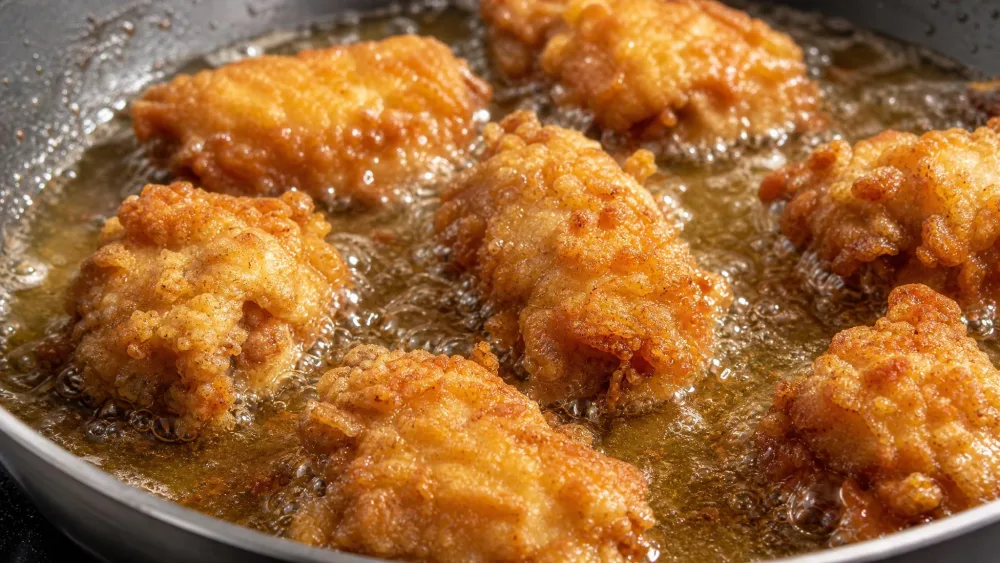
Beat the egg, toss the chicken through it, then dredge in the seasoned cornstarch. Press each piece firmly into the coating. Pressing hard creates craggy edges, and those craggy edges are what crisp up extra crunchy in the hot oil.
Heat your oil to 350 to 365 degrees F, hot enough that a piece sizzles the moment it goes in. Fry in small batches for about 2 to 3 minutes, turning halfway, until golden. Do not crowd the pan.
Warning. Overcrowding the pan drops the oil temperature and steams the coating instead of crisping it. Fry in small batches and let the oil climb back to temperature between them.
For extra crunch, give the pieces an optional second fry of 1 to 2 minutes at a slightly higher heat. That second pass drives out residual moisture and gives you an exterior that holds up far better once the sauce hits. Rest the fried chicken on a wire rack, not paper towels, so the bottoms stay crisp instead of going soft.
Step 2: Make the Orange Sauce
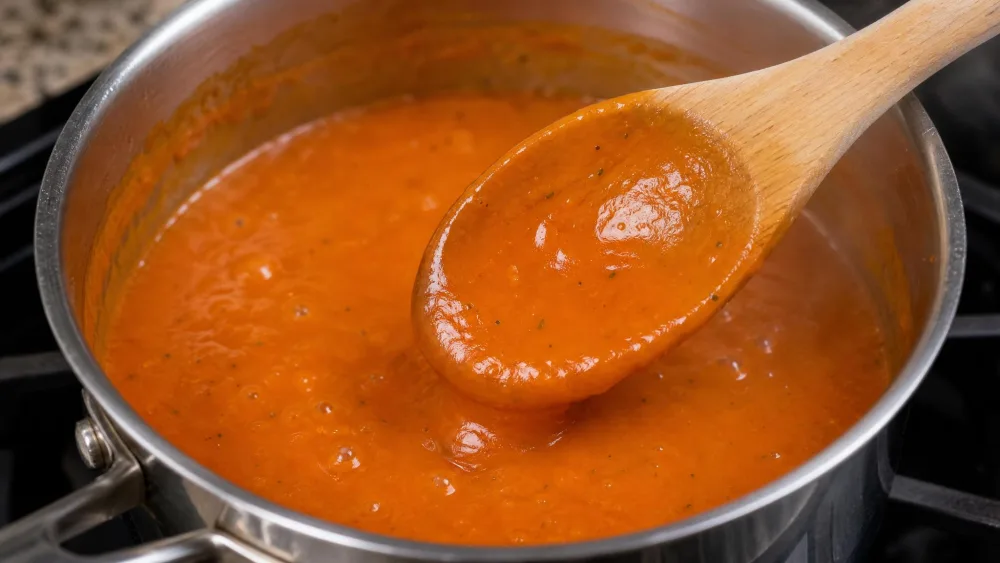
While the chicken rests, build the sauce in a separate pan. Combine the orange juice, zest, soy sauce, vinegar, sugar, ginger, and garlic, then bring it to a gentle boil.
That sugary sauce scorches fast over high heat, so bring it up gently and then drop it to a simmer to thicken. Stir the cornstarch slurry, then add it gradually. Stop the moment the sauce coats the back of a spoon.
You often will not need all the slurry, and overshooting turns the sauce gluey. Go slow here.
Now taste it. Fresh orange juice varies in sweetness batch to batch, so adjust at the end: more vinegar for tang, a little more sugar to round it out. This last taste-and-tweak is what makes it yours.
Step 3: Toss and Serve
Here is the single most important move in the whole recipe: sauce right before serving, not a minute sooner. The biggest cause of soggy orange chicken is saucing too early.
Add the crispy chicken to the warm sauce, toss to coat, and serve immediately over rice. That way every piece stays crackly under the glaze instead of steaming soft in a bowl.
The single biggest cause of soggy orange chicken is saucing too early. Toss it right before it hits the table, never ahead of time.
Tips for the Crispiest Orange Chicken
A few habits earn their keep every single time we make this.
Cornstarch over flour is the foundation. It absorbs less oil, so the coating stays light and shatters when you bite it. A little flour in the mix helps it cling, but cornstarch should lead.
Dry chicken, firm pressure. Pat the pieces dry, then press them hard into the dredge for those craggy, crunchy edges. Wet chicken and a gentle hand both give you a patchy coating.
Mind your cut. Thighs and breast both work here. Thighs stay juicier and take a second fry beautifully, while breast is leaner if that is what you prefer.
The wire rack is not optional in our kitchen. Resting fried pieces on a rack lets the oil drip off the bottom, so they never go soft underneath while the rest of the batch finishes.
Tip. Want restaurant-style crunch? The optional second fry is the move. Two quick minutes back in hotter oil is what gives the coating the backbone to survive the sauce.
Variations (Spicy, Air Fryer, Baked)
This recipe bends easily to whatever you are in the mood for.
Spicy orange chicken is the easiest tweak. Stir a pinch of chili flakes into the sauce, or more if your table likes heat. The citrus and the chili play well together.
For an air fryer version, coat the chicken the same way, mist it with oil, and air-fry until golden and cooked through, shaking the basket partway. You lose a little of the deep-fried crackle, but you save on oil and cleanup.
Baked orange chicken follows the same logic. Arrange the coated pieces on a rack over a sheet pan and bake until crisp and golden. Either way, whatever chicken is safe at an internal temperature of 165 degrees F is done. Sauce it right before serving in every version.
What to Serve With Orange Chicken
Steamed white rice is the classic partner, and for good reason: it soaks up every drop of that sauce. Jasmine rice or plain long-grain both work.
Noodles are a great swap if you want something different. Lo mein or a simple pile of buttered noodles carries the sauce just as well as rice.
Round out the plate with something green. Steamed broccoli, snap peas, or a quick stir-fried bok choy add crunch and balance the sweetness. A scatter of sliced scallions and sesame seeds on top makes it feel like the real thing.
How to Store and Reheat
Leftovers keep 3 to 4 days in an airtight container in the fridge. We usually store the chicken and any extra sauce together, since by leftover-day the crackle has softened anyway.
The reheat method matters more than most people think. Skip the microwave, which leaves the coating limp. Warm the chicken in a 375 degree F oven for 10 to 15 minutes, stirring halfway, and it revives far closer to fresh.
For make-ahead, fry the chicken and make the sauce separately, then keep them apart until you are ready to eat. Toss them together only at serving time, and even day-two orange chicken stays respectable.
Frequently Asked Questions
Can I use bottled orange juice, or is fresh better?
Fresh is better. Fresh-squeezed juice gives the sauce a brighter, cleaner citrus flavor that bottled cannot match. Bottled will work in a pinch, but taste and adjust the sugar and vinegar at the end, since sweetness varies.
How do I get the chicken really crispy, and can I bake or air-fry it?
Pat the chicken dry, use a cornstarch-heavy coating, and fry in small batches so the oil stays hot. An optional second fry adds real crunch. You can bake or air-fry it with a light mist of oil, but deep frying gives the crispiest result.
How do I store and reheat leftovers?
Keep leftovers in an airtight container in the fridge for 3 to 4 days. Reheat in a 375 degree F oven for 10 to 15 minutes, stirring halfway, to bring back the crispness. The microwave leaves the coating soft.
Can I make it spicy?
Yes. Add a pinch of chili flakes to the sauce, or more to taste. The heat balances nicely against the sweet-tangy orange.
What should I serve with orange chicken?
Steamed white rice is the classic choice, with noodles as an easy swap. Add a green vegetable like broccoli or snap peas, and finish with scallions and sesame seeds.
Orange Chicken Recipe
| Prep time | About 15 minutes |
|---|---|
| Cook time | About 15 minutes |
| Total time | 30 to 35 minutes |
| Servings | About 4 |
| Fry oil temperature | 350 to 365 degrees F |
Ingredients: bite-size boneless chicken, egg, cornstarch with a little flour, salt, pepper, onion and ginger powder, paprika, and neutral frying oil for the coating; fresh orange juice and zest, low-sodium soy sauce, vinegar, sugar, fresh ginger, garlic, and a cornstarch slurry for the sauce.
Instructions: Pat the chicken dry, coat in egg then seasoned cornstarch, pressing firmly. Fry in small batches at 350 to 365 degrees F for 2 to 3 minutes until golden, with an optional second fry for extra crunch, and rest on a wire rack. Simmer the sauce ingredients gently, then add the slurry gradually until it coats a spoon. Toss the chicken in the sauce right before serving and plate over rice.
Notes: Cornstarch-heavy coating fries up crispiest. Taste the sauce at the end and adjust sugar or vinegar to your batch of oranges. Sauce only at the last moment to keep the coating crisp.
Read next
Ready to upgrade your kitchen?
Get more test-kitchen recipes and honest gear guides straight from our team.