
Recipes
The Best Homemade Hummus

As an Amazon Associate we earn from qualifying purchases. We may earn a commission from links on this page, at no extra cost to you. Learn more.

Hummus is a Middle Eastern dip built from a short, honest list: chickpeas, tahini, lemon, garlic, and good olive oil, all blended into a smooth spread. That is the whole idea, and it is why the store-bought tubs feel like such a letdown once you have made your own. We tested batch after batch in our kitchen, and the gap between homemade and packaged is not small.
Here is what surprised us most. The difference between grainy, stiff hummus and the silky, whipped kind is not a secret ingredient. It comes down to a few small moves in how you blend, and once you know them, you will not go back. Our method turns canned chickpeas into hummus in about 5 to 10 minutes, with better flavor than any packaged version we have tried.
We are a meal-prep kitchen at heart, so we care about the batch that still tastes good on day four, not just the photogenic first bowl. This recipe is the one we keep making on repeat.
Why You'll Love This Homemade Hummus
This is the hummus we reach for when we want something creamy and bright without a trip to the store. It uses pantry staples, comes together fast, and scales up beautifully for a week of lunches.
We love that it is genuinely better than store-bought. The texture is lighter and fluffier, the lemon tastes fresh, and you can adjust the garlic and salt to your liking.
It is also forgiving. Once you understand what each ingredient does, you can nudge the recipe toward your own taste, thicker or thinner, tangier or milder, without breaking anything.
Hummus Ingredients
The core of a classic hummus is short: chickpeas, tahini, fresh lemon juice, garlic, extra-virgin olive oil, salt, and a little water or ice. Ground cumin is optional and adds a warm, earthy note. That is it, and each one earns its place.
- Chickpeas. The body of the dip. Canned works beautifully; a standard can of chickpeas is 15-oz, and one can makes a generous bowl.
- Tahini. Ground sesame paste, and the ingredient that turns a bean puree into hummus. It brings richness and that signature nutty depth.
- Fresh lemon juice. Brightness and lift. Bottled juice tastes flat here, so squeeze it fresh.
- Garlic. Sharpness and backbone. One clove is gentle; go up from there if you like a bite.
- Extra-virgin olive oil. For blending and for drizzling on top. A good oil shows up in the finish.
- Salt and water or ice. Salt sharpens everything, and cold water is the trick that whips the texture light.
Ingredient Notes & Substitutions
Tahini quality matters more than any other single choice. Cheap or bitter tahini shows up straight in the finished dip, and no amount of lemon will hide it. A fresher, smoother tahini was the single biggest driver of a good-tasting batch in our tests, so buy a jar that pours easily and tastes mellow on a spoon.
Most recipes use somewhere between a third of a cup and a half cup of tahini per can of chickpeas. We land near the higher end for a richer dip, but tune it to taste. If you are out of tahini entirely, the result is more of a chickpea puree than true hummus; a spoonful of smooth peanut or sunflower butter can stand in for a similar body, though the flavor shifts.
Canned chickpeas are our default for speed. Dried chickpeas, soaked and cooked, give you a bit more control over softness, but the yield varies by source, so treat any dried-to-cooked conversion as approximate. For thinning, reserved aquafaba, the liquid from the can, works just as well as plain cold water and adds a touch more body.
How to Make Hummus from Scratch
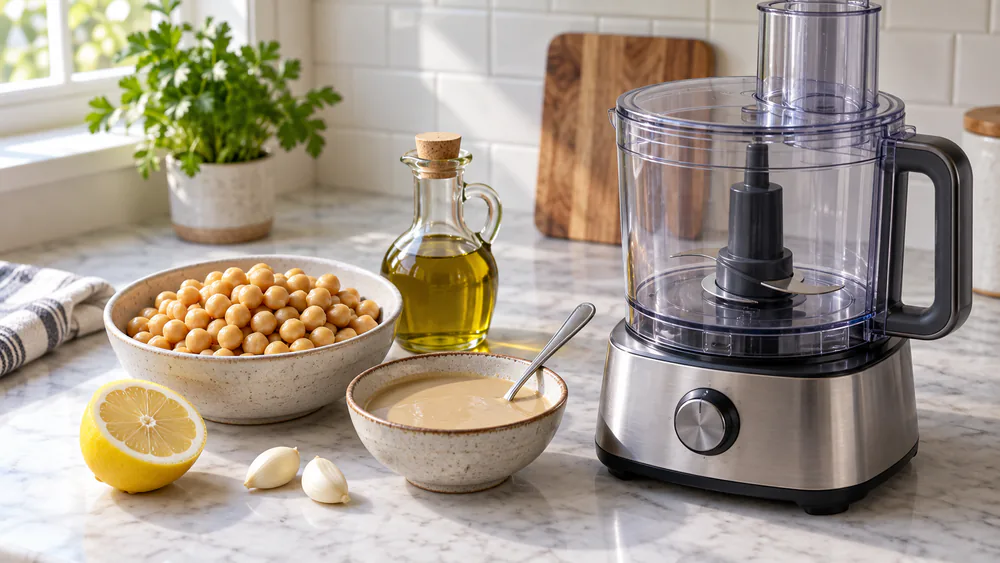
The method is simple, but the order of operations is where the magic hides. Do not just dump everything in the food processor at once. Build the base first, then bring in the chickpeas, then lighten it with cold water at the end.
Step-by-Step Instructions
- Whip the tahini and lemon first. Add the tahini and fresh lemon juice to the food processor and run it alone for 1 to 2 minutes, scraping down once. The mixture will turn pale and thick.
- Add garlic, salt, and olive oil. Blend again until smooth and combined. This builds a flavored base before a single chickpea goes in.
- Add the chickpeas. Drain and rinse them, then add to the processor. Blend, scraping down the sides, until the mixture looks thick and a little stiff.
- Stream in ice-cold water. With the machine running, add cold water a tablespoon at a time until the hummus loosens and lightens. This is the step that changes everything.
- Blend longer than you think. Let the food processor run 4 to 5 minutes total for a truly smooth, fluffy result. Taste, adjust salt and lemon, and serve with a drizzle of olive oil.
Tip. Process the tahini and lemon juice by themselves first, before any chickpeas go in. In our kitchen this was the step that most reliably transformed the texture from grainy to silky, and it takes under two minutes.
Secrets to the Creamiest, Smoothest Hummus
After testing many batches, we found four techniques that consistently made hummus creamier. None of them are hard, but together they are the whole game.
1. Start with soft (or peeled) chickpeas
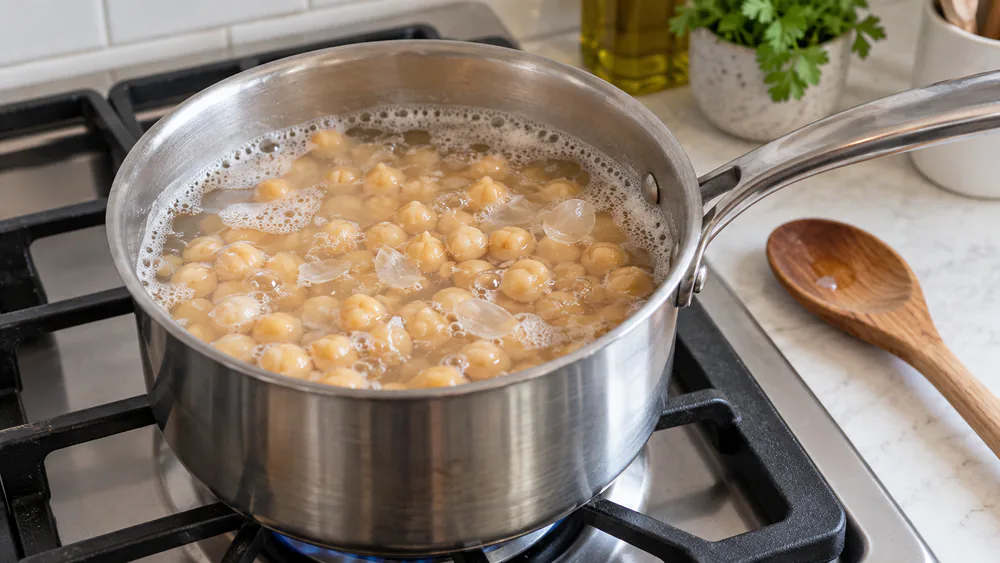
Softer chickpeas blend smoother, full stop. You can peel them by hand, but that is about ten minutes of tedious work. The shortcut we prefer: simmer canned chickpeas with 1/2 teaspoon of baking soda for about 20 minutes, then drain. The skins break down on their own and blend away, no peeling required.
2. Use good tahini
We will keep saying it because it is true. Fresh, smooth tahini makes the batch, and stale or bitter tahini sinks it. If your tahini has been sitting in the back of the pantry for a year, buy a new jar before you buy anything else.
3. Add ice-cold water
Adding a couple of ice cubes or a splash of ice-cold water while the processor runs whips the hummus lighter and fluffier. The texture we got was closer to freshly churned ice cream than a dense paste. It feels almost too simple to matter, but it is dramatic.
4. Blend longer than you think
Under-blending is the most common miss we see. People stop too early and get a stiff, gritty result. Running the machine a full four to five minutes is what yields that fluffy, whipped texture, so set a timer and walk away.
The difference between grainy and silky hummus is not a secret ingredient. It is cold water and two more minutes of blending.
Hummus Variations (Roasted Garlic, Roasted Red Pepper, Spicy)
Once you have the classic down, the flavors open up. These three are the ones we make most, and each starts from the same base recipe above.
- Roasted garlic hummus. Swap the raw garlic for a whole head of roasted garlic. The sharpness mellows into something sweet and deep, and it is our favorite for a crowd.
- Roasted red pepper hummus. Blend in a couple of jarred or freshly roasted red peppers, patted dry. It turns the dip a warm coral and adds a gentle sweetness.
- Spicy hummus. Stir or blend in harissa, a spoonful of chili paste, or a pinch of cayenne. Start small, taste, and build the heat to where you want it.
Hummus Garnishes & Toppings
Presentation is half the pleasure with hummus, and the toppings are where you make it your own. We swoosh the hummus into a shallow bowl with the back of a spoon, then load the well.
A generous drizzle of good olive oil is non-negotiable in our kitchen. From there, a dusting of paprika or sumac, a scatter of whole chickpeas, chopped parsley, toasted pine nuts, or a spoonful of harissa all earn their keep. A few make it look finished; do not feel you need all of them at once.
What to Serve with Hummus
Hummus is a workhorse, which is exactly why we batch it. Serve it with warm pita and raw vegetables like carrots, cucumbers, and peppers for the classic spread.
Beyond the dip bowl, we smear it on sandwiches and wraps in place of mayo, spoon it into grain bowls as a creamy base, and use it as a landing pad for roasted vegetables or falafel. A finishing drizzle of olive oil ties any of these together.
How to Store Hummus
Homemade hummus keeps well, which makes it ideal for meal prep. Store it in an airtight container in the fridge, where it stays good for roughly 5 days to a week depending on how fresh your ingredients were.
One thing to expect: hummus firms up in the fridge. It thickens overnight, so give it a stir and a splash of water to loosen it back to a scoopable consistency before serving.
Note. To freeze hummus, pack it in an airtight container, smooth a thin layer of olive oil over the top, and freeze for up to about 1 month. Treat that window as an estimate; the texture can loosen after thawing, so let it come to room temperature and stir well before serving.
More Dip Recipes You'll Love
If you enjoy making hummus, try a few of our other fresh recipes that are easy to prepare ahead. We like a bright chimichurri for grilled vegetables and meats, a plant-forward pasta for easy weeknights, and a make-ahead chicken salad for lunches. All of them share the same batch-and-store logic that makes hummus so easy to live with.
Recipe Card: Hummus
The Best Homemade Hummus
A silky, creamy classic hummus from canned chickpeas, better than store-bought and ready in minutes.
- Prep time: 10 minutes
- Cook time: 0 minutes (or 20 minutes for the baking-soda simmer)
- Total time: about 5 to 10 minutes for the quick method
- Yield: one 15-oz can makes roughly 1.5 cups, about 6 servings, though final yield shifts with how much water and tahini you blend in
Ingredients
- 1 (15-oz) can chickpeas, drained and rinsed
- 1/4 to 1/2 cup tahini
- 1/4 cup fresh lemon juice (about 1 large lemon)
- 1 to 2 cloves garlic
- 2 tablespoons extra-virgin olive oil, plus more for serving
- 1/2 teaspoon salt, to taste
- 2 to 4 tablespoons ice-cold water
- Optional: 1/2 teaspoon ground cumin
Instructions
- Process the tahini and lemon juice alone for 1 to 2 minutes until pale and thick.
- Add garlic, salt, olive oil, and optional cumin; blend until smooth.
- Add the chickpeas and blend until thick, scraping down the bowl.
- With the machine running, stream in ice-cold water a tablespoon at a time until light and creamy.
- Blend a full 4 to 5 minutes total. Taste, adjust, and serve with a drizzle of olive oil.
Frequently Asked Questions
How long does homemade hummus last in the fridge?
Stored in an airtight container, it keeps for roughly 5 days to a week. Sources differ a little, so lean toward the shorter end if your ingredients were not super fresh. It firms up as it sits, so stir in a splash of water before serving.
Can you freeze hummus?
Yes. Pack it airtight, add a thin layer of olive oil on top, and freeze for up to about 1 month. The texture can loosen after thawing, so let it warm up and stir it well before you serve it.
Do you have to peel the chickpeas?
No, it is optional. Peeling makes hummus smoother, but a 20-minute simmer with baking soda softens the chickpeas and slips the skins for you, which we find far less tedious than peeling by hand.
How do you make hummus without a food processor?
A high-speed blender works, though you will need to stop and scrape more often and may need extra cold water to keep it moving. In a pinch, a potato masher gives a rustic, chunkier dip.
How do you make hummus extra creamy?
Use soft chickpeas, good fresh tahini, and blend the tahini with lemon first. Then stream in ice-cold water while the machine runs and blend a full 4 to 5 minutes. Those steps together are what whip it light.
Can I use dried chickpeas instead of canned?
Yes. Soak and cook them until very soft first. The exact yield varies by source, so measure roughly one to one and a quarter cups of dried chickpeas per batch and adjust water and tahini to taste.
Read next
Ready to upgrade your kitchen?
Get more test-kitchen recipes and honest gear picks that make everyday cooking easier.