
Helping you create a kitchen you love.

Knives

Horl 3 Rolling Knife Sharpener Review: Our Hands-On Results

As an Amazon Associate we earn from qualifying purchases. We may earn a commission from links on this page, at no extra cost to you. Learn more.

Horl 3 Rolling Knife Sharpener Review: Our Hands-On Results

A dull chef's knife slides off a tomato and mashes the flesh underneath. After a few minutes on the Horl 3, the same knife cut printer paper on the first attempt and slid through tomato skin without any pressure. It takes the guesswork out of holding an angle, and it is the easiest way we know to keep a good knife sharp without a whetstone.

It sits at the premium end of rolling sharpeners, so its value depends on your knives and sharpening habits. We wrote this review to answer that. It sits alongside the rest of our knife sharpener reviews, and we cover where the Horl 3 shines and where it falls short.

What the Horl 3 Is and How It Works

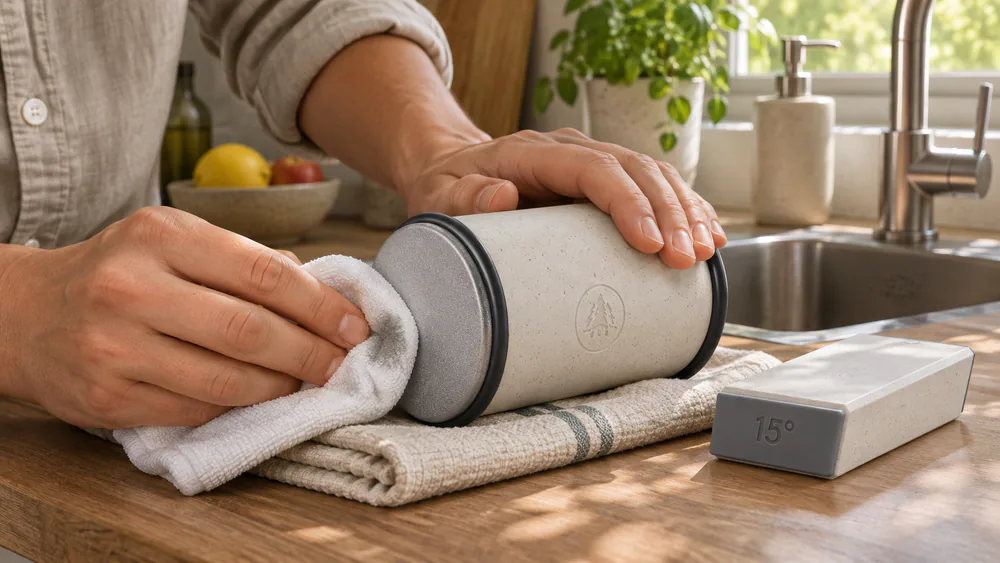
The Horl 3 is a manual rolling sharpener made in Germany. HORL was founded in 1993 and introduced its rolling sharpener in 2016, and the third generation refines that original idea. You rest the knife against a magnetic angle block, then roll a diamond-coated cylinder along the edge. The block fixes the angle, so your wrist has no say in it.

HORL 3 Cruise
1

HORL 3 Cruise

Our Pick for Easy Angle Control
Check Price on Amazon
4.3/5

On a deliberately dulled 7-5/8 inch chef's knife, about five minutes per side plus a few strokes on the honing disc and a leather strop gave us even tomato slices where it had mashed them before. The roller glides straight on its rubber rings, the edge stays in view the whole time, and the magnet holds the knife firmly. Tips and small blades take more care, and the quick-lock discs on other HORL 3 versions can pop off mid-stroke, but for full-size kitchen knives it is the most foolproof manual sharpener we would reach for.

  • Magnetic block with 15 and 20 degree sides
  • Quiet and tidy, with no motor whine or slurry
  • Straight sections finish in about five minutes
  • Works best on chef's knives of 6 inches and longer
  • Needs a strop or ceramic hone for a keener finish

Specifications

Angles
15 and 20 degrees
Abrasive
Diamond disc plus stainless honing disc
Body
Recycled ocean plastic with stainless steel
Discs
Fixed on the Cruise
Roller size
2.25 in diameter, 5.25 in tall
Weight
1 lb 1 oz with discs

Magnetic angle block and rolling disc

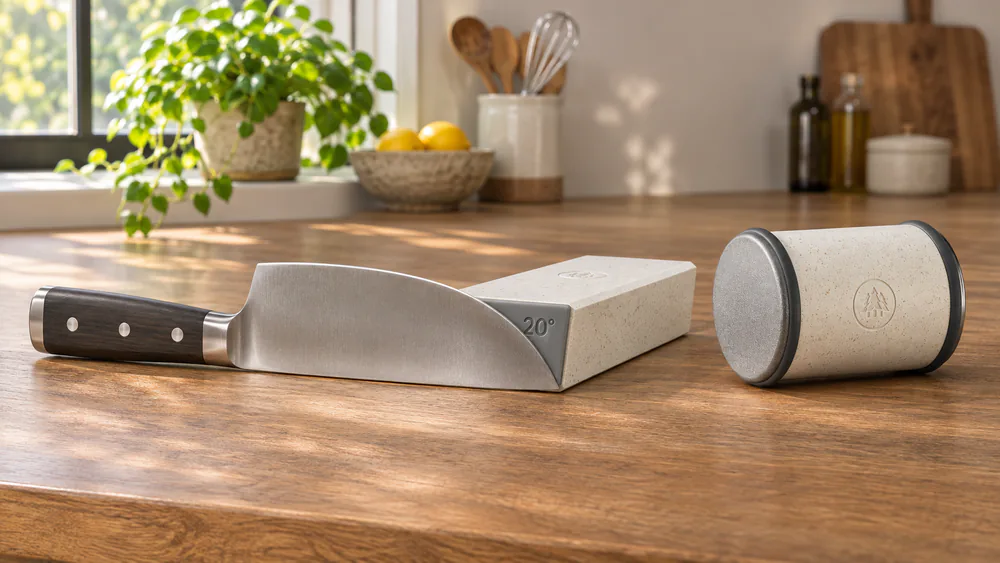
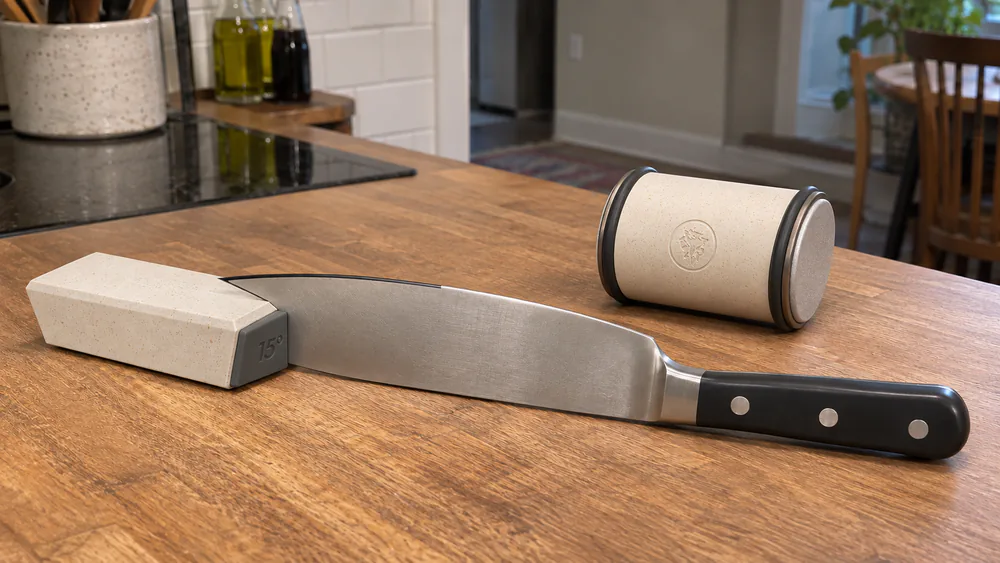
The block has a grip pad and neodymium magnets. It offers a 15 degree side for thin, hard Japanese-style edges and a 20 degree side for robust Western blades. The cylinder rides on two rubber rings, and the diamond disc is the working surface. Horl says the block diamond disc removes up to 80% more steel than the Horl 2 disc.

A chef's knife resting spine-down against the magnetic angle block of a HORL 3 Cruise with the diamond roller beside it on a wooden counter
The magnet grips the blade so the angle stays put.

Cruise vs Pro: what is in the box

The Cruise we link to is the version most buyers can find. Its diamond and stainless steel discs are fixed in place. The wood Classic HORL 3 uses removable Quick Lock discs and adds a ceramic honing disc. The Pro goes further with six angles (10, 13, 15, 20, 22 and 25 degrees) and a planetary gear with a 3:1 ratio, so the disc spins three times faster than your hand moves. Disc swappability differs between versions, so check which one you are buying.

The box holds the block, roller, discs, a manual, a QR video card and a marker-test guide. A leather strop is sold separately.

How We Rate the Horl 3

We judge a sharpener the way a working kitchen does: how sharp the edge gets and whether the process is easy enough that you will actually use it. We score edge results, ease of use, mess and noise, knife compatibility, and build.

Most of our scoring focused on full-size chef's knives, which gave the best results. Paring knives and other small blades sat poorly on the block, which shaped how we scored knife compatibility.

The marker test is our baseline. We colour the edge, roll until the ink is gone, then cut paper and tomato.

A chef's knife edge coloured with black permanent marker, half of the ink rubbed away by the HORL 3 diamond roller to show even contact
Marker on the edge shows exactly where the disc is cutting.

Sharpening Results

The steel made the biggest difference in our sharpening results. A hard Japanese-style chef's knife came up very sharp, nearly passing the paper test on its own. A cheap, soft stainless knife barely improved after six minutes, because soft steel simply does not hold a fine edge no matter who sharpens it.

Sharpness and edge retention

Knives we sharpened on the Horl 3 cut printer paper on the first attempt. The first sharpening to a new 20 degree edge takes a long while, because the disc has to reshape the bevel. After that, touching the edge up is quick and the angle is easy to hold, which is where this tool earns its keep.

The stainless honing side only polishes modestly. A ceramic hone or a leather strop afterward gives a noticeably keener edge, and the manual itself advises a strop (not included) as a final burr-removal step. The diamond disc is also on the coarse side for lightly dull knives, so touch up with the hone in between. The maker does not publish grit numbers, so any figure online is approximate.

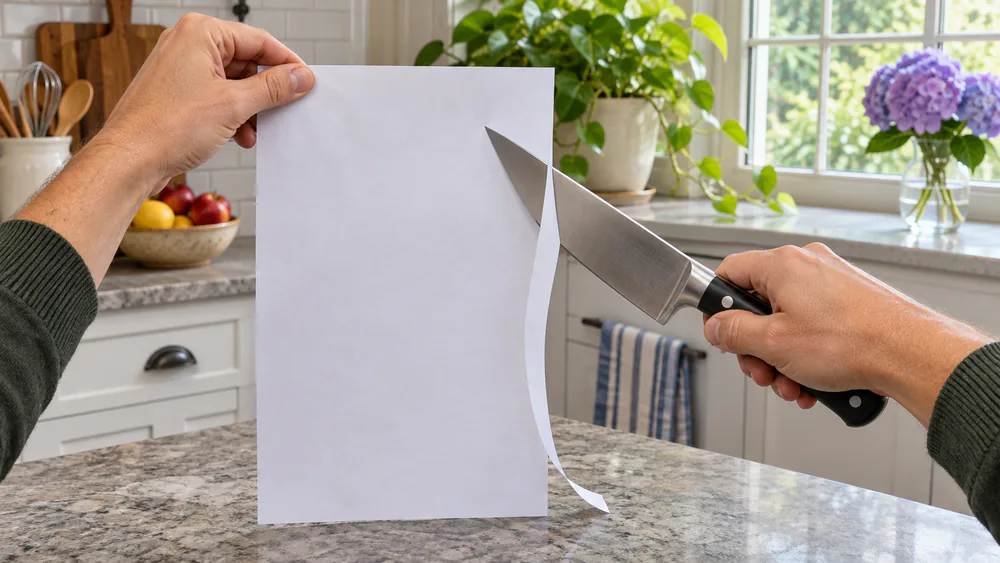
A freshly sharpened chef's knife cutting a clean strip from a sheet of printer paper on a kitchen counter
The first-attempt paper test after about five minutes per side.

Cutting performance on paper and tomato

After sharpening, the knife sliced tomato skin cleanly and gave even slices instead of crushing the fruit.

A sharpened chef's knife cutting thin even slices of ripe red tomato on a wooden cutting board

Ease of Use, Noise and Cleanup

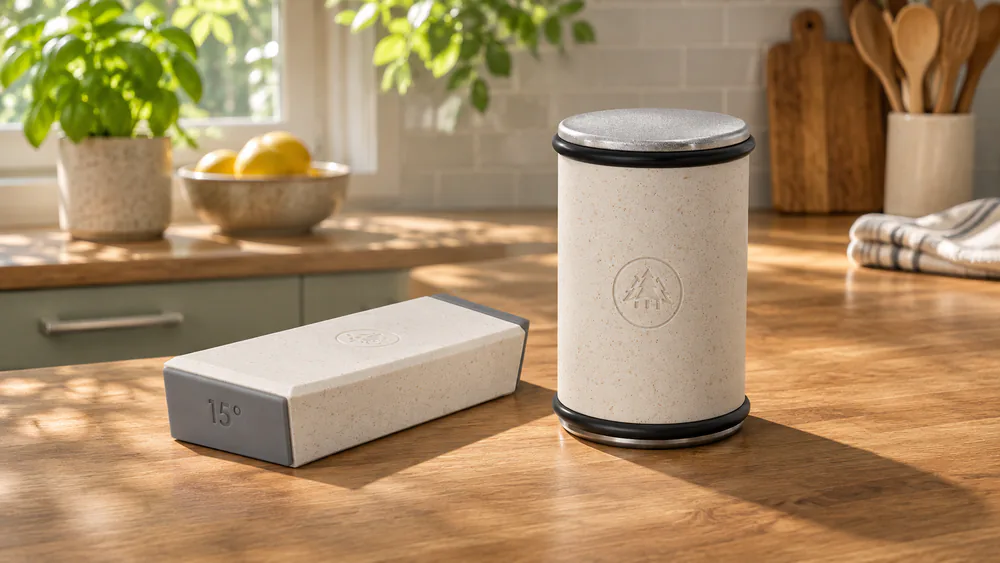
A light sand HORL 3 Cruise roller standing beside its matching magnetic angle block on a wooden counter
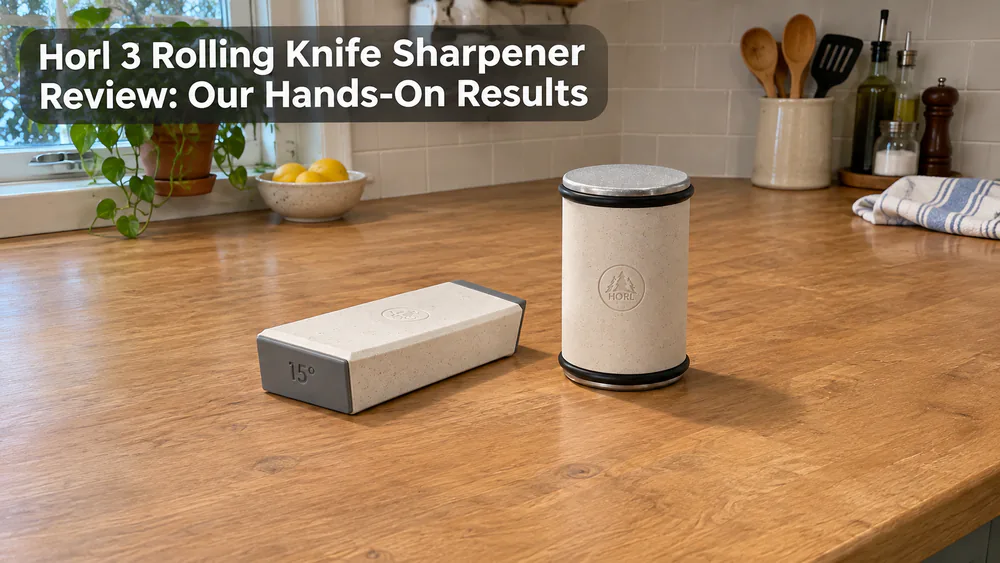
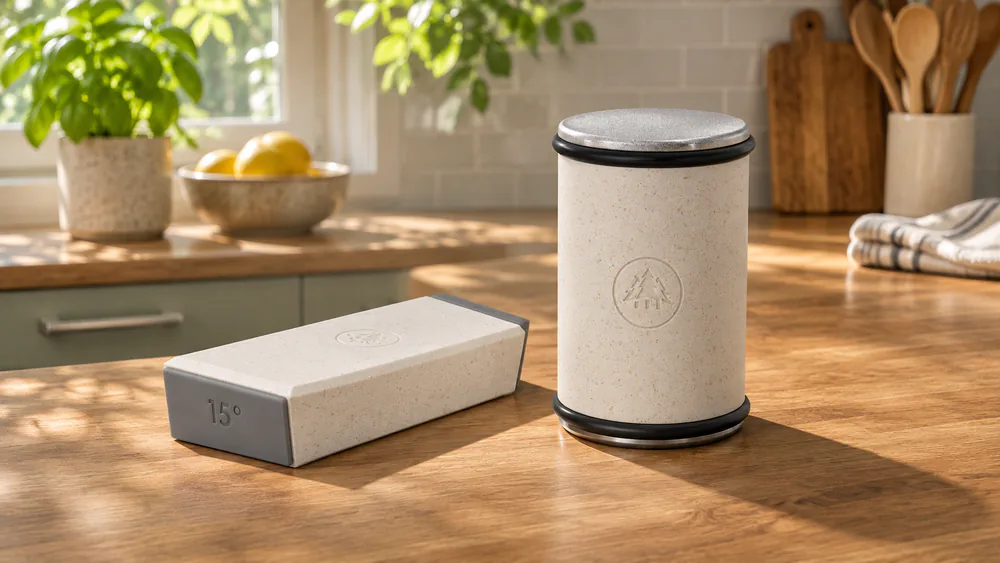
The HORL 3 Cruise roller and magnetic angle block.

The roller glides straight and smooth, and because the edge stays visible, you can see what you are doing, unlike a pull-through slot. That exposed edge means hand position needs attention, so keep your fingers behind the spine.

The magnet is strong. It grips a large chef's knife, a folding pocket knife and an OTF knife firmly, and it will pull nearby loose knives toward the block, so keep other blades clear while you work.

It is quiet and tidy. There is no motor whine and no slurry, only fine metal dust to wipe off the disc and blade. Noise sits in the high 60 dB range, well under the Work Sharp belt sharpener. Dark metal dust can stain the plastic Cruise body, so wipe it down after each session.

Tip. Colour the edge with a marker before you start. Roll until the ink is gone along the straight section, then stop. It is the simplest way to know you have sharpened the whole edge without over-grinding.

It is easy enough that you will sharpen more often, which keeps knives safer and more efficient.

A hand wiping fine grey metal dust off the HORL 3 diamond roller with a damp cloth beside a kitchen sink

Angle and Grit Options

The standard HORL 3 and the Cruise give you 15 and 20 degrees. Use 15 on thin, hard knives and 20 on thicker Western blades. The Pro widens that to six angles, which suits a varied knife block.

The Classic and Pro accept finer 3000 and 6000 grit discs sold separately. The Cruise relies on its honing side plus a strop.

Limitations

Straight blades only

Knife tips are the hard part. The roller flexes away near the curve, so ease off pressure or slide the magnet block toward the tip. Long curved blades like a cimeter need repositioning, and full bolsters can block the roller at the heel. With a marker on the edge, straight sections finish in about five minutes while the tips take longer and need a little learning. The block works best on 6 inch and longer chef's knives, while thin boning and fillet knives and small blades sit poorly on it.

Not a repair tool for chipped edges

It restores a dull edge. It does not repair chipped or broken blades. Rust restoration worked easily.

Safety

The upward-facing edge and the strong magnet are the two things to respect. Keep fingers behind the spine, store the block away from other knives, and know that the quick-lock discs on other HORL 3 versions pop off the roller now and then mid-stroke. It is annoying but not a safety problem, and the older screw-on discs felt more secure.

Horl 3 vs Horl 2

The Horl 3 adds stronger magnets in the block and finer-tuned discs, and its discs twist-lock where the Horl 2 discs screw on. The Horl 2's original discs were still working after more than 50 knives sharpened, and a Horl 2 is a fair find if you prefer screw-on discs, but the Horl 3 is the better new purchase.

Horl 3 vs Tumbler, Work Sharp and Whetstones

ProductAngle controlDisc attachmentNoiseMessLearning curve
HORL 3 Cruise15 / 20 magneticFixed (Quick Lock on Classic)High 60 dBLight dustLow
HORL 215 / 20 magneticScrew-onQuietLight dustLow
Tumbler OriginalFixed 15 / 20 magneticFixedQuietLight dustLow
Work Sharp MK2Adjustable guideBelts77 dB or moreMetal dustModerate
WhetstoneBy hand, about 15 degreesNot applicableSilentSoaking waterHigh

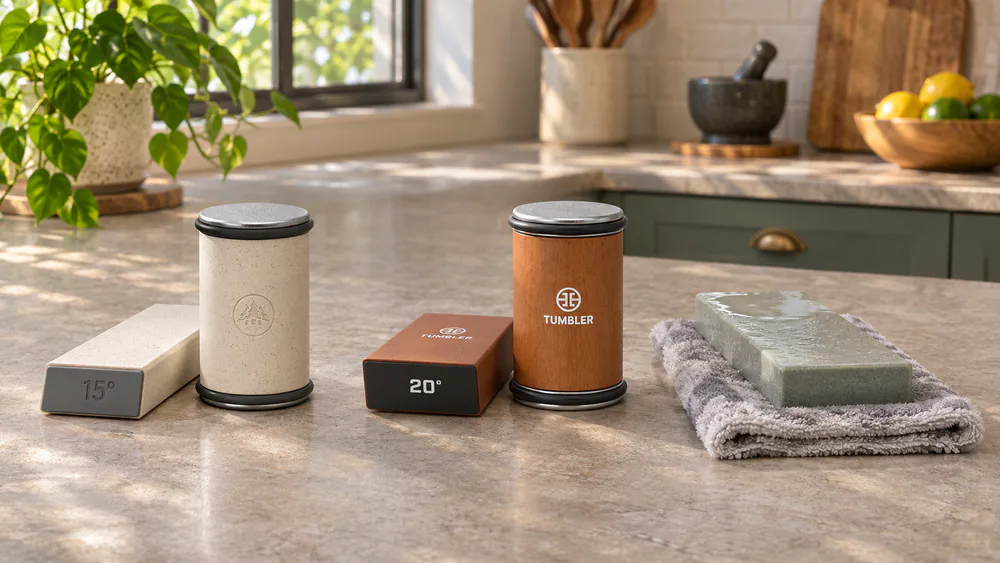
The Tumbler is the closest rival. It has the strongest magnet of the rolling group, but the holder sits too tall for steak-knife-size blades, and its single fixed disc wears out in roughly six months of occasional use with no way to replace it. It takes about six minutes per side of patient rolling to revive a neglected knife.

The Work Sharp MK2 is fast and gets knives paper-cutting sharp, but it throws metal dust, runs loud, and needs finer belts or a strop for a finer edge.

A decent whetstone costs a fraction of the Horl and sharpens any knife, but it needs soaking, practice and angle control. The Horl removes the angle guesswork, which is the whole point. If you already hold 15 degrees by hand confidently, a stone is better value.

HORL 3 Cruise, a Tumbler rolling sharpener and a soaked whetstone laid side by side on a kitchen counter

Who Should Buy the Horl 3

These trade-offs make the Horl best suited to a specific kind of kitchen. Buy it if you own one or two good chef's knives and want repeatable results without a learning curve. It suits beginners, busy cooks and anyone who has been put off by whetstones.

Skip it if you mostly use small paring knives, thin fillet knives, serrated blades or curved scimitars. Skip it too if your knives are chipped.

Pros and Cons

Pros

  • Magnetic block holds a repeatable 15 or 20 degree angle
  • Edge stays visible, unlike a pull-through slot
  • Quiet and tidy, with only fine dust to wipe up
  • Gets hard chef's knives paper-cutting sharp

Cons

  • Premium among rolling sharpeners
  • Tips, curved blades and small knives need extra care
  • The first sharpening takes a long while
  • Stainless honing side polishes only modestly
  • Cannot repair chipped edges

Frequently Asked Questions

Does the Horl 3 work on Japanese knives?

Yes. A hard Japanese-style chef's knife came up very sharp, nearly passing the paper test, and the 15 degree side suits thin Japanese edges. Use a strop afterward for a keener finish.

Can it sharpen serrated or pocket knives?

Not serrated knives. The magnet grips a folding pocket knife firmly, so straight-edged pocket knives work, but small blades sit poorly on the block.

How long do the discs last?

The maker does not publish a disc life for the Horl 3. The Horl 2 discs were still working after more than 50 knives, which is a reasonable guide. The Cruise discs are fixed, so factor that in.

How often should I sharpen with it?

Touch up the edge with a few strokes on the roller and the honing disc as soon as it stops cutting paper cleanly. Wait until it is properly dull and you are back to a full five minutes per side.

Final Verdict

The Horl 3 suits full-size, straight knives in decent steel, so the buying question is mostly about what else you own. If you already hold 15 degrees by hand confidently, a whetstone is the better value and the runner-up we would point you to. If your block is mostly paring, fillet or serrated knives, skip the Horl and look at the Work Sharp MK2 instead.

Read next

Ready to upgrade your kitchen?

Browse our tested buying guides and keep every knife in your block cutting like new.