
Helping you create a kitchen you love.

Knives & Cutlery

Jikko Nishiki Damascus Gyuto 210mm: SG2 Edge, Honest Verdict

As an Amazon Associate we earn from qualifying purchases. We may earn a commission from links on this page, at no extra cost to you. Learn more.

Jikko Nishiki Damascus Gyuto 210mm: SG2 Edge, Honest Verdict

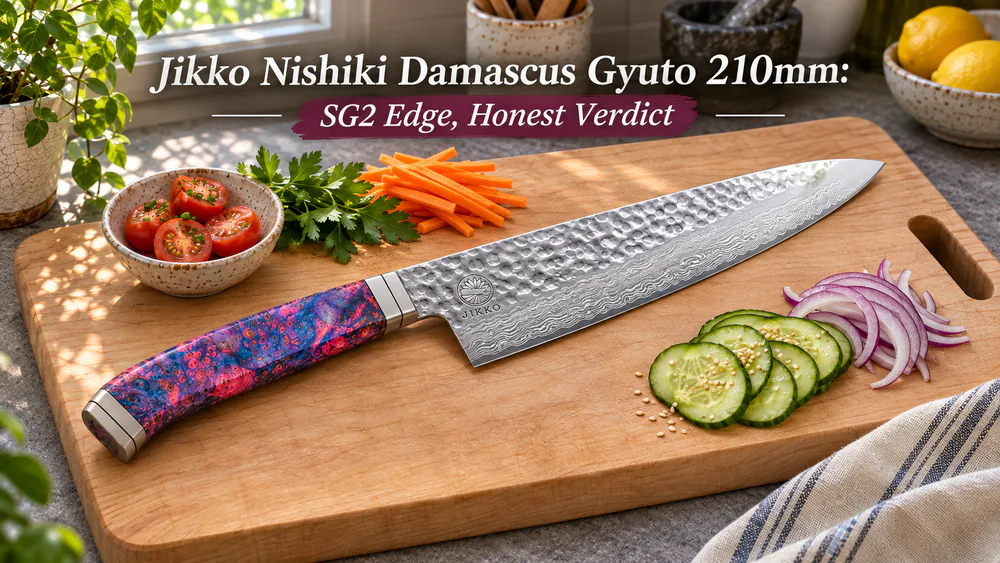
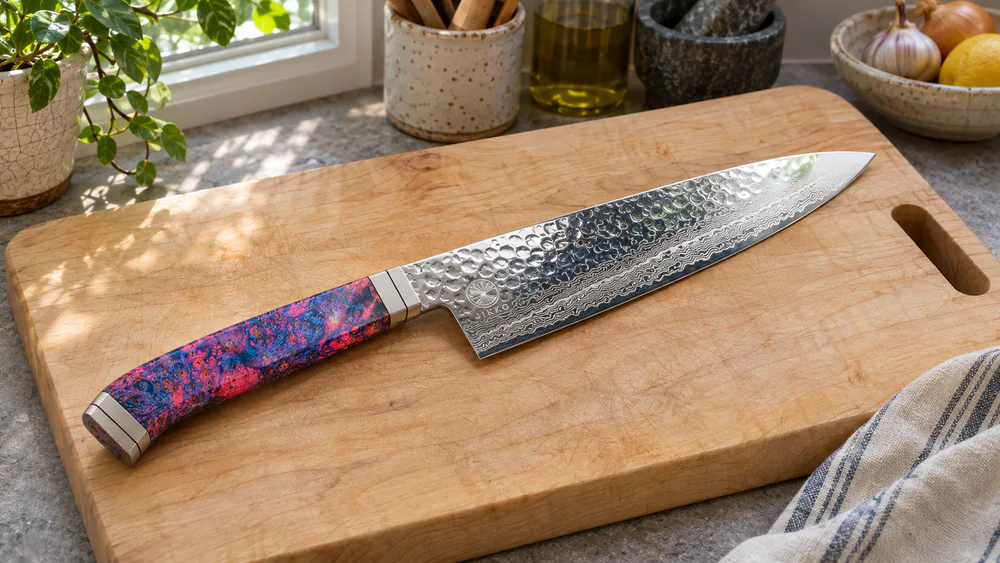
The Jikko Nishiki Damascus SG2 gyuto is a 210mm Japanese chef's knife with a hard SG2 powder-steel core, a rippled Damascus cladding, and a stabilized wood handle. It sits among the nicer Japanese knives we handle. Our verdict is simple: it cuts beautifully and holds an edge, and it asks for a careful cook in return.

We judge a knife the way a working butcher does: edge hold, how the handle feels once the prep list gets long, and how easily the steel comes back on a stone. We assess the Nishiki against those three criteria below.

Quick Verdict

Key takeaway. Our rating is 4.4 out of 5, and the full verdict is in the review below.

Jikko Nishiki Damascus SG2 Gyuto 210mm
1

Jikko Nishiki Damascus SG2 Gyuto 210mm

Our Pick
Check Price on Amazon
4.4/5

This is a knife that rewards good habits. The SG2 core takes a keen edge and holds it, and the blade has enough weight to cut without pressing. Keep it for careful boneless work and it should stay sharp for years.

  • SG2 powder-steel core with Damascus cladding
  • Hammered scallops that help release food
  • Stabilized wood handle with stainless bolster
  • Compact 210mm length for smaller boards

Specifications

Length
210mm (8.3 inch)
Steel
SG2 (R2)
Handle
Stabilized wood
Edge
Double edge

Specs at a Glance

The maker publishes the basics and leaves out a few numbers. We list what is confirmed and say plainly what is not.

Jikko Nishiki Damascus SG2 Gyuto 210mm specs
Length210mm (8.3 inch), also sold in 240mm
SteelSG2 stainless powder steel (also called R2)
CladdingDamascus ripple pattern
HardnessAround HRC 61 (class figure, not published by the maker)
EdgeDouble edge (symmetric)
HandleStabilized wood with stainless bolster
WeightNot published by the maker
OriginMade in Japan by Jikko

The hardness number is a class figure for SG2 gyutos, not a Nishiki spec. Treat it as a guide to how the steel behaves rather than a promise.

Design, Fit and Finish

Damascus Cladding and Blade Profile

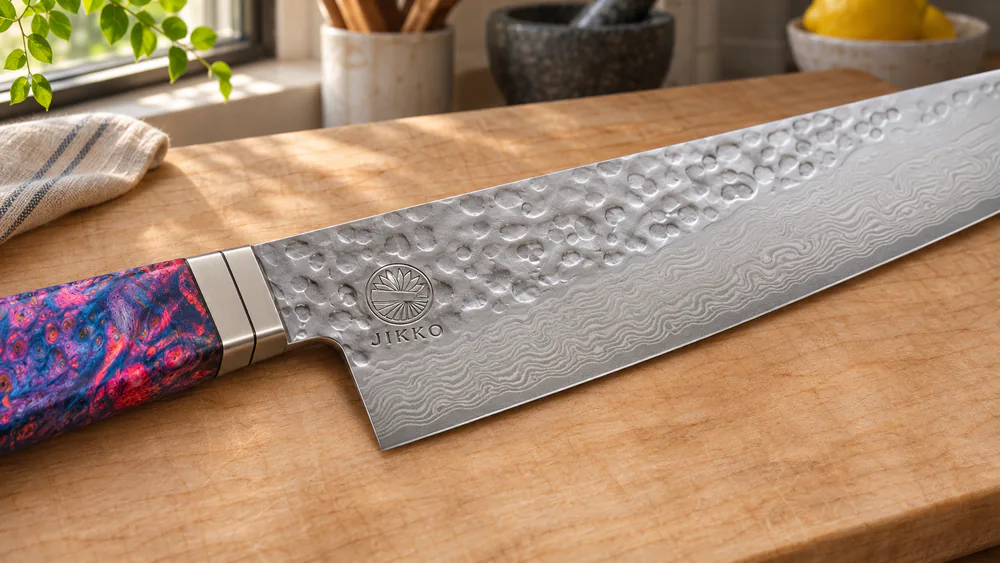
The Damascus ripple is the first thing you notice. Softer laminated steel surrounds the hard SG2 core, adding a visible pattern more than a performance benefit. The cutting edge is the SG2 itself.

The gyuto profile is built for boneless meat, fish, and vegetables. It has a flat run near the heel for push-cuts and a curve toward the tip for rocking. The maker does not publish blade thickness or the layer count, so we will not guess at either.

Close-up of the Damascus ripple pattern and hammered scallops on a Jikko Nishiki SG2 gyuto blade lying on a maple cutting board
The ripple pattern and hammered scallops along the blade flat.

Handle and Balance

The stabilized wood handle ends in a stainless bolster. Stabilized wood resists moisture better than raw wood, which suits a knife that sees daily washing.

In use, the 210mm has enough blade weight to cut without pressing. It is less tiring on the wrist across a long prep session. The maker does not publish a balance point, so our assessment of comfort comes from using the knife rather than measuring its balance.

Performance in the Kitchen

Edge Out of the Box

The cutting edge is the SG2 core itself, and SG2 takes a keen edge. Everything the knife does well starts there.

Slicing, Chopping and Push-Cutting

This is where the thin, hard blade earns its place. The weight of the blade does most of the work, so you cut without pressing.

The 210mm length suits a compact board. A cook who takes long, sweeping strokes will probably prefer the 240mm version, which the maker also offers.

Food Release and Wedging

The hammered scallops stop ingredients sticking to the flat, which keeps your rhythm steady. That is a real advantage over a smooth-sided blade.

SG2 Steel: Edge Retention and Sharpening

Performance comes back to the steel. SG2 is a powder-metallurgy stainless steel prized for edge retention that still sharpens readily. In practice the Nishiki keeps its working sharpness for about two weeks of professional kitchen use before it wants the stone. A home cook will get noticeably longer.

The same steel stays easy to bring back on whetstones. You do not need a special setup to restore the edge.

That is the standing advice we give anyone buying a good knife: learn the stone. With SG2 the learning curve is gentle.

Care and Maintenance

Good steel still needs good habits. Hand wash and dry the knife right after use. Store it in a saya, a magnetic strip, or a block with a slot that does not drag the edge. Keep the Damascus finish clean and the handle dry.

Warning. Hard thin SG2 edges chip if you twist the blade, use it on bone or frozen food, or run it on a hard board. Use a soft wood or plastic board, and reach for a cleaver or a heavier knife for the rough jobs.

Pros and Cons

Pros

  • Keen SG2 edge that holds working sharpness well
  • Steel is easy to bring back on whetstones
  • Hammered scallops help food release
  • Enough blade weight to cut without pressing
  • Stabilized wood handle that tolerates daily washing

Cons

  • Thin, hard edge can chip if twisted or misused
  • Not for bone, frozen food, or hard boards
  • Weight, thickness, and hardness are not published
  • Warranty terms depend on the seller

How It Compares to Other 210mm SG2 Gyutos

The closest comparison we can make with confirmed numbers is the Musashi SG-2 Damascus 210mm. It matches the Nishiki on length and steel. Its ebony handle weighs in at a published 148g with HRC 61 to 63, while the Nishiki publishes neither weight nor hardness.

That gap matters if you buy by the spec sheet. The Nishiki uses a stabilized wood handle, sits at the premium end of Jikko's SG2 line, and costs more than the entry-level options. If a published weight and hardness are important to you, the Musashi is easier to evaluate on paper. If you want Jikko's finish and the scalloped release, the Nishiki is the one we would pick.

Who Should Buy It

These care requirements make the Nishiki best suited to a particular kind of cook. Buy it if you cook often, own a whetstone or plan to, and use a soft board. It suits home cooks who want a compact 210mm blade and a keen edge that lasts.

Skip it if you break down poultry on the bone, cut frozen food, or want a knife you never have to think about. A softer, tougher steel forgives more.

Frequently Asked Questions

Is 210mm big enough to be my only chef's knife?

It suits a compact board well. If you take long, sweeping strokes, the 240mm version the maker also offers may fit your hand better.

Do I need a saya?

No. A saya is one storage option, and a magnetic strip or a block with a slot that does not drag the edge works as well.

How do I tell which Jikko line this is?

Look for Nishiki Damascus with an SG2 core, which the maker also calls R2. It has a rippled Damascus cladding and a stabilized wood handle with a stainless bolster.

Where is Jikko made, and what is the warranty?

Jikko is a Sakai-based maker, and the Nishiki is made in Japan. Warranty terms differ by seller and storefront, and the maker's Nishiki page publishes none, so check the seller's return terms before you buy.

Final Verdict

If the Nishiki's missing numbers bother you, buy the Musashi SG-2 Damascus 210mm instead, since its weight and hardness are published. If 210mm feels short for your stroke, look at the Nishiki in 240mm before you look at another brand.

Read next

Ready to upgrade your kitchen?

Browse our tested buying guides and find the knife that fits your hand.