
Kitchen Appliances
Juicing for Beginners: How to Start, With Easy Recipes

As an Amazon Associate we earn from qualifying purchases. We may earn a commission from links on this page, at no extra cost to you. Learn more.
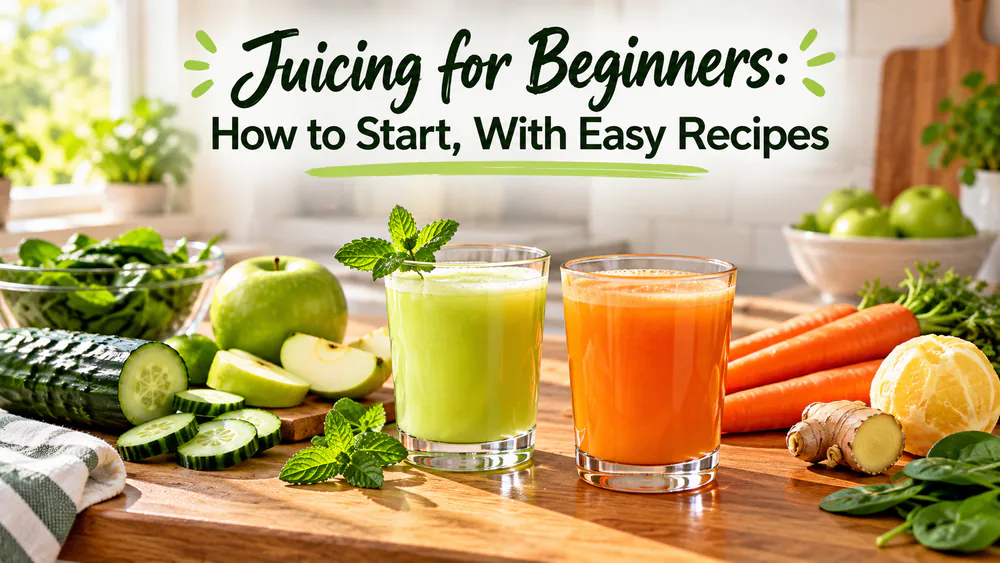
Juicing means pulling the liquid out of fresh fruit and vegetables and leaving most of the fiber behind in the pulp. You don't need much to begin: a juicer or a blender, a handful of mild produce, and about fifteen minutes. This guide walks you through four gentle recipes, the equipment choices, safe storage, and cleanup, so your first glass tastes good and doesn't feel like a project.
Start Here: Make Your First Juice
Pick one recipe from the next section and make a single small glass. That's the whole plan. A small batch keeps the produce bill low, keeps cleanup short, and lets you learn how your machine behaves before you commit to a bigger routine.
Here is the short version of the process:
- Wash your hands with soap and warm water for at least 20 seconds, and wash the produce under running water.
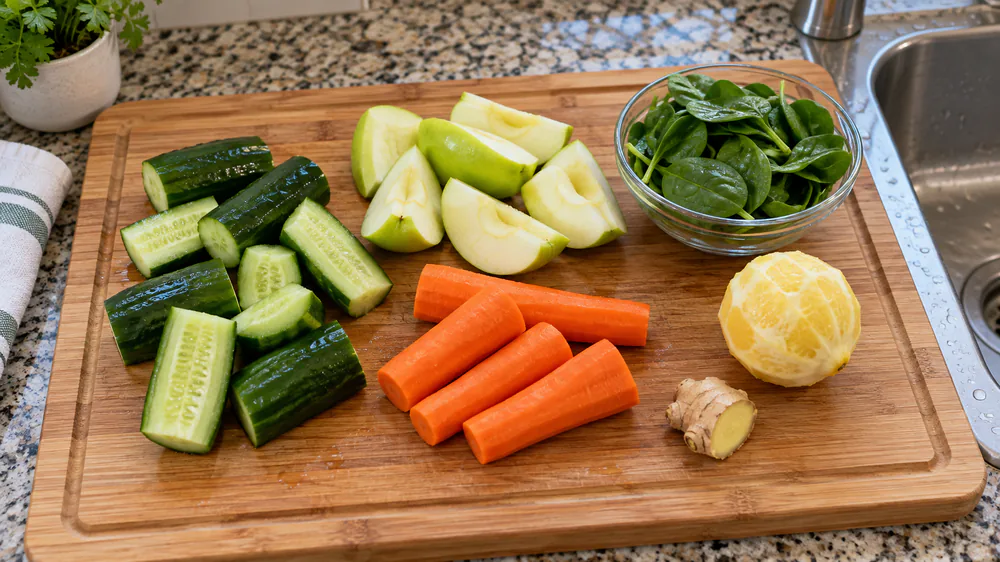
- Cut everything small enough to fit your feed opening.
- Juice the softer, juicier items first and finish with something firm, like apple or carrot.
- Drink it fresh, and rinse your juicer right away.
Start with mild flavors. Cucumber makes a juicy, gentle base, and apple adds sweetness and fruit flavor without any added sugar. Peeled citrus and a little ginger finish things off. Strong greens and big pieces of ginger can wait until you know what you like.
Four Easy Juicing Recipes for Beginners
We adapted these published recipes into simple, step-by-step instructions. Batch sizes vary with the produce and the machine, so we don't promise a fixed number of glasses. Make the recipe once, measure what you get, and adjust from there.
Gentle Green Juice With Spinach, Cucumber, and Apple
Baby spinach gives a softer green flavor than a more assertive leafy-green mix, which makes this a good first green juice.
Ingredients: 2 packed cups baby spinach, 2 celery stalks, 1 medium cucumber, 1 cored green apple, 1 peeled lemon.
Method: Wash everything and cut the cucumber, celery and apple into pieces that fit your chute. Feed the spinach in between pieces of cucumber and apple so the leaves get pushed through instead of sticking. Finish with the peeled lemon. In a blender, process everything until smooth, add a splash of water if the mixture is too thick to circulate, then strain.
Flavor adjustments: Cucumber supplies most of the liquid. If the juice tastes too grassy, add another half apple. If it tastes flat, add a little more lemon.
Carrot, Apple, and Ginger Juice
Ingredients: 5 carrots, 2 medium apples, 1/2 inch fresh ginger, 1/4 peeled lemon.
Method: Scrub the carrots and trim the ends. Cut the carrots and apples to fit the chute, then run the carrots and apples through, adding the ginger partway so it gets carried along with the juicier pieces. Finish with the lemon and stir before pouring.
Flavor adjustments: Carrot and apple sweetness softens ginger's heat. If you're nervous about the bite, start with a thinner slice of ginger and add more next time.
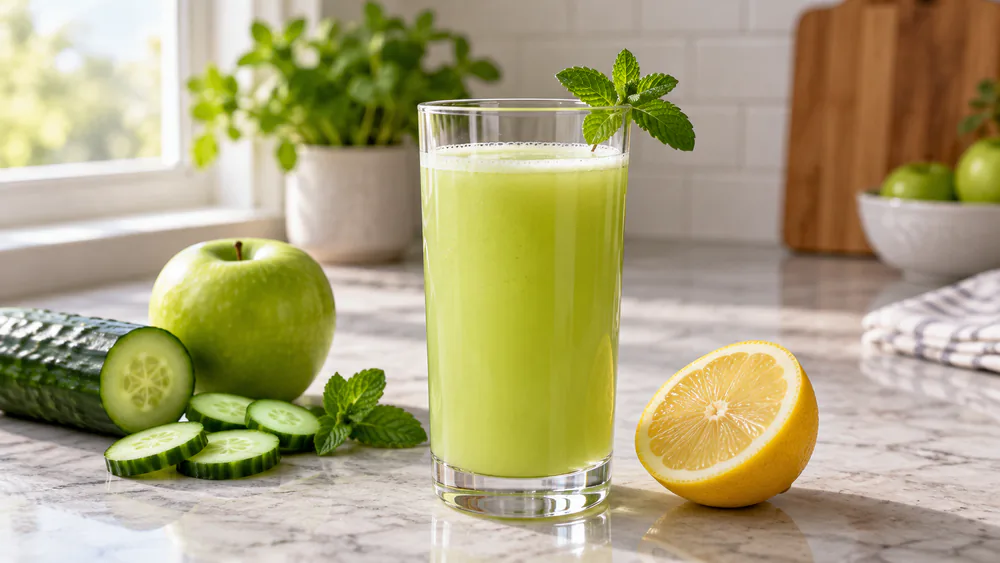
Cucumber, Apple, and Lemon Juice
Ingredients: 1 large English cucumber, 2 cored green apples, 1/2 peeled lemon. The published formula also uses 1 inch of peeled ginger; we treat it as optional here for a milder drink, which makes this our adaptation rather than the source recipe.
Method: Cut the cucumber and apples into pieces that fit your machine and juice them, finishing with the lemon. For a blender, add 1 cup of water, blend until smooth, and strain through a clean nut-milk bag or cheesecloth.
Flavor adjustments: This is the lightest recipe of the four. Add the ginger back in if you want some warmth, or swap one apple for a sweeter variety if the lemon feels sharp.
Pineapple, Cucumber, and Mint Juice
Ingredients: 2 1/2 cups fresh pineapple chunks, 1 cucumber, 1 peeled lime, 10 mint leaves. The published formula includes 2 inches of peeled ginger; we cut it back or leave it out for a gentler starter drink, which is an adaptation.
Method: Core and cut the pineapple, removing the tough skin. Juice the mint leaves between pieces of pineapple and cucumber so they don't clump, then finish with the lime.
Flavor adjustments: A small amount of mint gives a cucumber-based juice a fresher finish without needing another big piece of fruit. If the pineapple makes it too sweet, add more cucumber.
What Is Juicing, and How Is It Different From Blending?
Juicing separates liquid from the fibrous part of produce. Blending grinds the whole thing, so a blended drink keeps its fiber unless you strain it. That's the main difference, and it's why the two drinks feel different. Juice is thin and drinks quickly. A smoothie is thicker and more filling.
What Happens to the Pulp and Fiber?
Most of the fiber goes out with the pulp. Juice isn't healthier than eating the whole fruit or vegetable, and the type of juicer you buy doesn't change that. If you want to keep more fiber, blend edible produce and leave the mixture unstrained.
Where Juice Fits Alongside Whole Foods
Think of juice as an addition to meals, not a replacement for them. Juice-only diets don't provide adequate nutrition, and weight lost during a cleanse can return when normal eating resumes. If you do drink juice, keep to small amounts. UK guidance caps the combined daily total of fruit juice, vegetable juice and smoothies at 150ml, and suggests drinking it with meals to reduce the risk of tooth decay. That figure is a limit, not a target to build toward.
A practical way to think about it: juice is a quick, light drink, and a plate of whole produce is a meal. If you enjoy a glass with breakfast next to eggs and toast, that fits comfortably. If you are hoping a few days of juice will reset your weight, set that expectation aside, because the evidence does not support it.
Choose Your Equipment
Understanding how juicing differs from blending makes it easier to choose your equipment. You have three realistic options, and none of them is wrong for a beginner. For a wider look at the category, see our juicer reviews.
Centrifugal and Masticating Juicers
A centrifugal juicer spins produce against a fast mesh filter. It's generally the faster and noisier entry point, and it does best with soft fruit and firm vegetables. Leafy-green results depend on the machine. The loud, high-speed motor is worth thinking about in a busy house where someone is napping or doing homework.
A masticating (slow) juicer crushes and presses produce. These tend to be quieter and are often better with leafy greens. Chute size, hopper design and washing requirements vary a lot by model. Some are compact but fiddly to clean because their parts are hand-wash only. Others have removable parts and fewer grooves where fiber can collect, which makes rinsing easier but may mean topping up the hopper during larger batches. Some augers are hard to pull out, so check how the machine comes apart before you buy.
Whichever type you pick, use the supplied pusher, never your fingers or a utensil. Stop and unplug the machine before you clear a blockage or take it apart, and keep children away from moving parts.
Making Juice With a Blender and Strainer
If you already own a blender, you can begin without buying anything. Blend chopped produce with enough water to keep it moving, then strain it through a clean nut-milk bag or cheesecloth over a pitcher. The tradeoff is an extra handling and washing step, and straining removes the pulp.
Tip. Not sure which route to take? Make the cucumber and apple recipe in a blender first. If you enjoy the drink and don't mind the straining, you've learned something useful before spending on a juicer.
Choose and Prepare Your Ingredients
Once you have a machine or a blender and strainer in mind, the next decision is what goes into it.
Mild Fruits and Vegetables to Start With
Stick with cucumber, apple, carrot, celery and pineapple for your first few batches, plus baby spinach if you want some green. Citrus is a good seasoning, but the peel makes juice more bitter, so peel lemons and limes first. Small amounts of mint and ginger add interest without taking over.
Leafy greens and beets are high in oxalates, so people who are prone to kidney stones should get advice first. We cover that in the questions below.
Washing, Peeling, Removing Pits, and Cutting
Wash produce under running water before you cut it, even if you'll peel it afterward. Scrub firm produce with a clean brush, cut away bruised spots, throw out anything rotten, and dry it with a clean towel. Don't use soap or detergent on produce.
Then prep for the machine. Remove hard pits and tough rinds, core the apples, and cut pieces to suit your feed opening. Wash your hands again after prep, for at least 20 seconds.
How Much Produce to Buy and What It Costs
Buy for one small batch first and measure what comes out. Yield depends on the ingredients, their size and freshness, and how efficient your machine is. A cucumber-heavy batch and a leafy-green batch won't give you the same volume from the same weight, and local produce prices vary too.
Juicing uses a lot of produce for a small amount of liquid, so plan around what's already in your weekly grocery order. Choosing ingredients you'll also eat whole cuts waste and keeps the experiment affordable.
Store Fresh Juice Safely
The safest approach is to make only what you can drink right away. Raw homemade juice can contain harmful bacteria, and bacteria can grow quickly in fresh juice.
If you can't finish a glass immediately, get it into the refrigerator. Perishable food should be chilled within 2 hours, or within 1 hour if the room is hotter than 90 F. Keep the refrigerator at 40 F or below. Refrigeration slows bacterial growth, but it doesn't sterilize juice, so a sealed bottle doesn't buy you a fixed number of safe days. Published storage advice varies, and the conservative choice is to treat fresh juice as a drink for right now.
Warning. Children, pregnant people, older adults and people with weakened immune systems face greater risk from untreated juice. For these groups, choose pasteurized or otherwise safety-treated juice. Washing produce is not the same as pasteurization.
Clean Your Juicer After Each Use
Cleanup often determines whether you stick with juicing, so include it in your routine from the start.
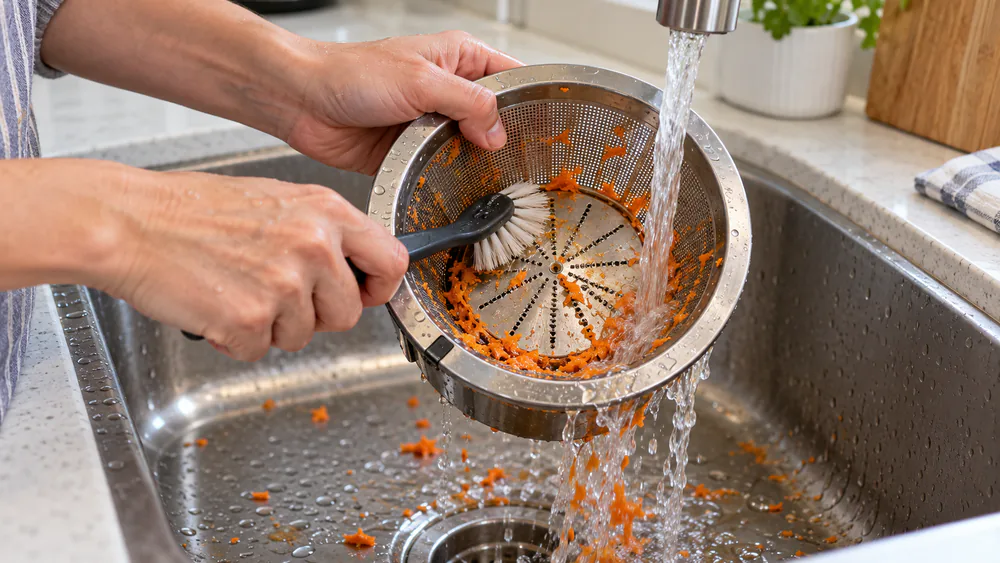
Unplug the machine first. Rinse the removable parts promptly, wash them in warm soapy water, and use the brush that came with it on the filter. Wipe the motor base with a damp cloth and never immerse it. Check the manual before you put anything in the dishwasher.
Tip. Rinse right away. Pulp is easy to remove before it dries onto the strainer, and an immediate rinse cuts down on scrubbing later.
Fix Common Beginner Juicing Problems
Juice Tastes Too Bitter, Sweet, or Strong
Bitter juice usually points to citrus peel or too much leafy green, so peel your lemons and limes and go back to baby spinach. If it's too sweet, add more cucumber or celery and cut back on apple or pineapple. If the ginger is too strong, use a thinner slice next time. Change one thing at a time so you know which adjustment helped.
Low Yield, Wet Pulp, and Clogs
Wet pulp and poor flow often mean the mesh is blocked. Stop the machine, unplug it, and clean the filter. Feed produce gently rather than packing the chute, and alternate soft and hard pieces where your manual allows it. Soft fruit goes through many machines more smoothly than tough greens, so if a recipe is struggling, check the order you're feeding it in before blaming the juicer.
For busy households, juicing adds preparation and cleanup to an already crowded morning. Choose a machine whose parts you can reach and rinse easily, pick a quiet moment to run it, and keep the batch small. A routine you can repeat on a rushed weekday beats an ambitious one you abandon after two tries.
Beginner Juicing Questions
Here are answers to common beginner questions.
How much juice should I start with?
Start with one small glass of a mild recipe, and keep to the daily limit described earlier. For a first week, try it two or three times with a meal, changing one ingredient each time, rather than juicing daily from the start.
Do I need a juice cleanse?
No. Cleanse claims usually leave out that detox diets lack convincing research for removing toxins, and restrictive diets can leave nutritional gaps. A single recipe alongside normal meals gets you started without any of that.
Can juice replace a meal?
We wouldn't make it a habit. Most of the fiber leaves with the pulp, so a glass is a light drink rather than a full plate of whole produce. If you want something more filling, blend edible produce and leave it unstrained.
What can I do with leftover pulp?
Compost it, or use it in pulp-cracker recipes instead of throwing it out. Match the pulp's flavor to its next use, since carrot-apple pulp suits something different than spinach-celery pulp.
Who needs individual advice before juicing regularly?
People with diabetes should talk to their care team before making big dietary changes. People prone to kidney stones need advice about high-oxalate ingredients such as leafy greens and beets. For medication questions, ask a pharmacist or clinician.
Your Next Step: Repeat One Simple Recipe
Pick the recipe that sounded best, make it three times over the next couple of weeks, and change one ingredient each time. By the third batch you'll know your machine, your prep rhythm, and the flavors you want more of. Then add a second recipe.
Read next
Your Next Step: Repeat One Simple Recipe
Explore more kitchen guides and get practical ideas for your next batch.