Helping you create a kitchen you love.

Appliances

KitchenAid Stand Mixer Review: Is It Worth It After Real-World Testing?

As an Amazon Associate we earn from qualifying purchases. We may earn a commission from links on this page, at no extra cost to you. Learn more.

KitchenAid Stand Mixer Review: Is It Worth It After Real-World Testing?

We put the KitchenAid Artisan 5-quart tilt-head through the tasks that punish a mixer: stiff bread dough, delicate meringue, and a full run of cake batter. Those are the jobs that separate a machine built to last from one that shakes, stalls, or leaves a puddle of butter at the bottom of the bowl. Our test kitchen leans on stand mixers every week, so we wanted a clear answer to the question shoppers keep asking: is a KitchenAid actually worth the money in 2026?

The short version is that it earns its reputation for most home bakers, with real caveats around heavy daily dough. Over repeated batches the Artisan handled everyday cookie dough, cake batter, and whipped cream cleanly, and its bowl-lock felt solid and easy to seat. It is heavy, it can shake under stiff dough, and there are cheaper mixers that do the basics nearly as well. This review walks through how it performed, where it struggled, how it stacks up against Bosch, Cuisinart, and Ankarsrum, and who should buy which model.

We bought our test unit ourselves and ran it the way a home baker actually would, across weeks of ordinary baking rather than a single showpiece bake.

Quick Verdict: Our KitchenAid Stand Mixer Rating

The KitchenAid Artisan 5-quart tilt-head is the mixer we recommend to most home bakers, and it is the one we reach for when a recipe calls for cookies, cake, buttercream, or a small batch of enriched dough. It mixes cleanly, locks down solidly, and the whole family of bowls and beaters wipes up fast. The trade-offs are weight, price, and a motor that is happier with occasional bakes than with daily bread marathons.

If you bake a few times a week and want a machine that can sit on the counter and simply work, this is the one. If you knead multiple loaves of stiff whole-grain dough every day, read the durability and alternatives sections closely before you buy, because a Bosch or an Ankarsrum may serve you better.

Key takeaway. For most home bakers, the KitchenAid Artisan 5-quart is worth it: it handles cookies, cake, and buttercream with ease, cleans up in minutes, and has a genuine built-to-last track record. Heavy daily bread bakers should size up or look at a Bosch instead.

KitchenAid Artisan 5-Quart Tilt-Head Stand Mixer
1

KitchenAid Artisan 5-Quart Tilt-Head Stand Mixer

Best for Most Home Bakers
Check Price on Amazon
4.6/5

Across weeks of ordinary baking, the Artisan tilt-head handled everyday cookie dough, cake batter, and whipped cream cleanly, and its bowl-lock felt solid and easy to seat every time we dropped the head. The 5-quart bowl held a batch of cookies without slinging flour, meringue whipped up glossy on the 6-wire whip, and the coated flat beater creamed butter and sugar in a couple of minutes. Our one steady gripe: the flat beater rides high enough that ingredients pool at the very bottom of the bowl and need a manual scrape unless you adjust the beater-to-bowl clearance. At around 26 pounds it is heavy enough that we left it parked on the counter rather than lifting it in and out of a cabinet.

  • Cleanly mixes cookie dough, cake batter, and whipped cream in a normal home batch
  • Bowl-lock seats solidly and releases without a fight
  • Bowls and coated flat beater are dishwasher safe; body wipes clean with a damp cloth
  • Runs 10 speeds with a smooth slide control
  • Long built-to-last track record among owners

Specifications

Capacity
5-quart stainless steel bowl
Motor
325W AC motor
Speeds
10
Weight
about 26 pounds
Warranty
1-year limited replacement warranty

How We Tested (Why Trust This Review)

We test mixers the way a pastry station does: with recipes that punish equipment rather than flatter it. That means stiff bread dough to load the motor, delicate meringue to check whip control at low and high speed, and a full bowl of cake batter to watch how evenly the beater reaches the sides and bottom. A mixer that whips cream nicely but bogs down on dough has only passed half the exam.

For each machine we scored power under load, mixing action and bowl coverage, capacity in real batches, cleanup friction, noise, and how planted the unit stayed on the counter. We also weighed value: what you actually get for the price against what a cheaper competitor delivers. We bought the gear ourselves, so nothing here is a loaner tuned for a good review.

Where our hands-on time was short, we leaned on the durability patterns owners report over years of use, because a mixer's real story is told across a decade, not a week. We flag those long-run findings as owner reports rather than our own bench time.

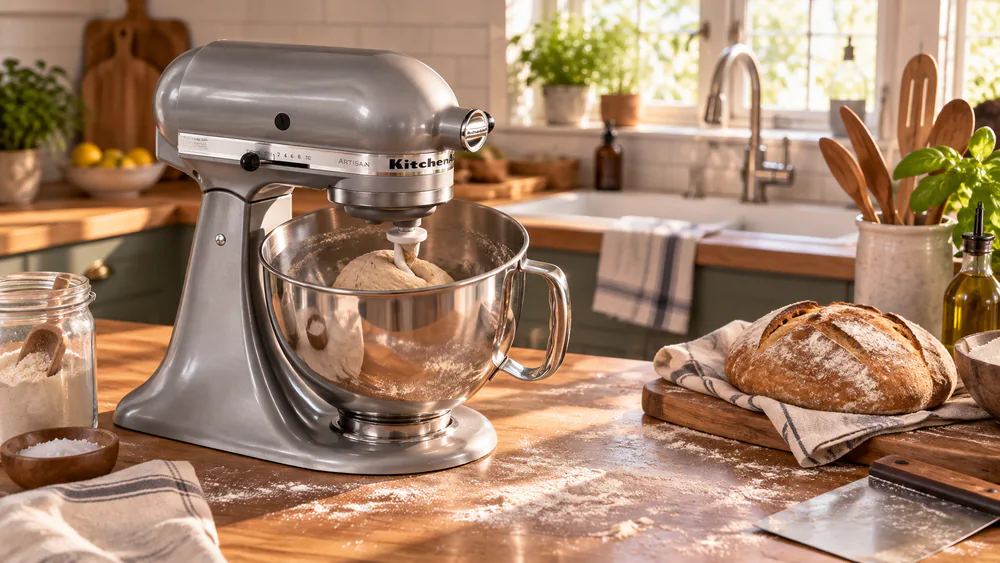
A KitchenAid tilt-head stand mixer with a dough hook kneading a stiff ball of bread dough in a stainless bowl, flour dusted on the counter.
Stiff dough is the test that tells us the most about a mixer's motor and stability.

What Is a KitchenAid Stand Mixer? Overview & Specs

A stand mixer is a countertop machine that turns a beater, whisk, or dough hook through a fixed bowl so your hands stay free. KitchenAid is the name most people picture, and for good reason: the design has barely changed in decades, and the hub on the front accepts a long list of add-ons. If you are new to stand mixers, the core promise is simple. It creams, whips, and kneads faster and more evenly than you can by hand, and it does it while you measure the next ingredient.

The reviewed Artisan pairs a 5-quart stainless steel bowl with a 325W AC motor and a 10-speed slide control. In the box you get a coated flat beater, a coated dough hook, and a 6-wire whip, plus a pouring shield. It makes up to 9 dozen cookies per batch, which covers most home baking without a second run.

KitchenAid Artisan 5-Quart (KSM150PS) key specs
Capacity5-quart stainless steel bowl
Motor325W AC motor
Speeds10
Batchup to 9 dozen cookies
Weightabout 26 pounds
Cord36 inches
Warranty1-year limited replacement warranty

Tilt-Head vs. Bowl-Lift Designs

KitchenAid sells two body styles, and the choice matters more than color. A tilt-head mixer, like the Artisan, hinges back so you can lift the head and swap beaters or scrape the bowl. It is lighter, more compact, and easier to store under a cabinet, which suits most home kitchens. The trade-off shows up under heavy dough, where a tilt-head can shake and the bowl can work loose.

A bowl-lift design, like the 7-quart, locks the bowl into two arms and raises it to the beater with a lever. It is heavier and taller, but it holds steadier under stiff dough and swallows bigger batches. If you bake bread often or in volume, the bowl-lift is the more stable platform. If you mostly bake cookies, cakes, and the occasional loaf, the tilt-head is the friendlier daily tool.

Key Models at a Glance (Classic, Artisan, Artisan Plus, Pro/Commercial)

The Classic is the entry point, with a 4.5-quart bowl, a 10-speed control, and capacity for up to 8 dozen cookies in a single batch. It costs less and does the everyday jobs, but the smaller bowl and lighter build show up on big or stiff batches.

The Artisan steps up to the 5-quart bowl and adds color choices and a pouring shield, which is why it is the model most home bakers land on. Above it, the bowl-lift 7-quart brings a 500W AC motor, 11 distinct speeds including a slow folding speed, and the muscle for up to 13 dozen cookies or 8.5 pounds of bread dough per batch. The commercial and Pro tiers push capacity and duty cycle further for people who bake constantly. For most kitchens, the Artisan sits in the sweet spot between the cramped Classic and the counter-hogging 7-quart.


KitchenAid Stand Mixer Features & Real-World Performance

This is where a mixer earns or loses its keep. On paper the Artisan reads modest next to some competitors, but the numbers only tell part of the story. What matters is how it behaves with a real bowl of batter or dough in front of you.

Motor & Power

The Artisan runs a 325W AC motor, and in everyday use that was plenty. It creamed butter and sugar, whipped meringue, and mixed cookie dough without complaint. Where you feel the limit is stiff bread dough. With the springless beater shaft, the head visibly shakes under heavy dough, and the bowl can work loose. We monitored it and reseated the bowl during long kneading sessions.

It is worth setting expectations against the bigger machines. The bowl-lift 7-quart uses a 500W AC motor for roughly twice the bowl power, and a Cuisinart or Bosch also list 500W. Raw wattage is not apples-to-apples across drive types, but the takeaway holds: the Artisan is tuned for regular home baking, not daily bread production. Heavy home bakers have reported burning out two KitchenAid motors on frequent bread mixing before switching to a Bosch or Ankarsrum for dough.

Mixing Action & Attachments

KitchenAid's planetary action, where the beater spins one way while orbiting the bowl the other, is the heart of the design. It reaches most of the bowl on its own, though as noted the flat beater leaves a small pool at the very bottom that wants a scrape. The 6-wire whip pulled good volume into egg whites and cream, and swapping beaters on the tilt-head took seconds.

The front hub is the quiet superpower. It accepts more than ten attachments sold separately, from pasta rollers to meat grinders, an ice cream bowl, and a spiralizer. None come in the box, and they add up in cost, but they are the reason a KitchenAid can slowly replace a drawer of single-use gadgets. Buy them as you need them, not all at once.

Capacity & Batch Sizes

The 5-quart bowl makes up to 9 dozen cookies per batch, which is more than enough for most weekends. It handled a double batch of cookie dough and a tall bowl of buttercream without slinging. Where it runs out of room is big bread or a large celebration cake, and that is exactly the gap the 7-quart bowl-lift fills. The 7-quart model can mix batter for a 10-inch cheesecake or a large pound cake and handle up to 8.5 pounds of dough. Owners also report that it runs more quietly than expected at low speed.

If your baking is cookies, cakes, and small-batch bread, 5 quarts is the right size. If you routinely double bread recipes or bake for a crowd, size up rather than fighting a bowl that is too small.

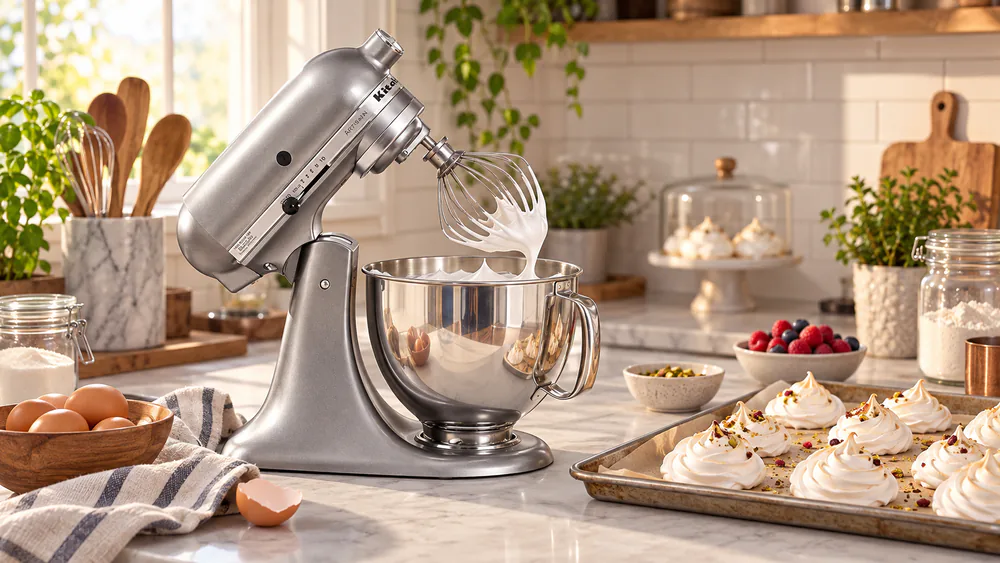
Glossy whipped meringue peaks on a wire whip lifted from a stainless KitchenAid mixing bowl.
The 6-wire whip pulled good volume into egg whites at high speed.

Pros and Cons: What We Loved and What Could Be Better

No mixer is all upside, and the honest picture matters more than a sales pitch. Here is where the Artisan won us over and where it tested our patience.

Pros

  • Mixes cookie dough, cake batter, and whipped cream cleanly in normal home batches
  • Bowl-lock seats solidly and releases easily
  • Bowls and coated flat beater are dishwasher safe; the body just needs a damp wipe
  • Front hub accepts 10-plus attachments to grow with your cooking
  • Long built-to-last reputation, with owners reporting the same unit running after 30-plus years

Cons

  • Head shakes and the bowl can work loose under stiff bread dough
  • The flat beater leaves a pool at the very bottom unless you adjust clearance
  • At about 26 pounds it is heavy to lift in and out of a cabinet
  • The coated beater finish can chip or flake over time with regular use
  • Attachments and the glass bowl cost extra, and the glass bowl breaks more easily than stainless

Durability, Cleaning & Maintenance

Durability is the most divided part of the KitchenAid story, and we will not paper over it. On one side, owners routinely report the same tilt-head unit still running after 30-plus years, which is the core of its built-to-last reputation. On the other, a notable cluster of 7-quart owners had the motor simply stop minutes into mixing icing or a first batch of bread dough, sometimes on only the second use. The bowl-lift model can also shut down during heavy kneading when its thermal protection activates. It then needs roughly half an hour to cool before restarting. Both experiences are real, which is why we recommend matching the model to your workload.

Cleanup, by contrast, is a clear win. All the KitchenAid bowls and the flat beater are dishwasher safe, and the body just needs a damp wipe, so cleanup is low friction. Two care notes worth knowing: the coated beater finish can chip or flake over time with regular use, and the optional glass bowl, prized for watching the mix, is fragile and breaks more easily than the stainless one. For upkeep, the wire whip and dough hook are best hand-washed to preserve their finish, and a periodic check of the beater-to-bowl clearance keeps mixing even. KitchenAid publishes its own official care and repair guidance covering cleaning, maintenance, and service options if something does go wrong.

Warning. If your mixer starts to shake hard or the head bounces during a stiff dough, stop and reseat the bowl or drop to a lower speed. Pushing through is how the head works loose and how motors get stressed on heavy loads.

Price, Warranty & Value: Is It Worth It?

The Artisan lands at around $399.99, though street pricing moves week to week and swings with color and sales. For that you get a 1-year limited replacement warranty. The entry Classic sits lower, at around $299.99 with the same week-to-week movement, while the bowl-lift 7-quart runs from around $580 to $650, with a 1-year limited warranty and a 60-day return window when bought direct.

So is it worth it? For a baker who uses it weekly, yes. The mixing quality, the cleanup, the attachment ecosystem, and the odds of a very long service life add up to real value even at the premium price. The honest asterisk is that a Cuisinart does the same everyday jobs for far less, and a dedicated bread baker gets more dough muscle from a Bosch or Ankarsrum. Value depends on how you bake, not on the badge.

Tip. Buy the model that matches your busiest bake, not your average one. Most people are happiest paying for the 5-quart Artisan and skipping the 7-quart unless they genuinely bake in volume.

How It Compares to Alternatives (Bosch, Cuisinart, Ankarsrum)

The Artisan does not exist in a vacuum, and a few rivals beat it on specific jobs. The Cuisinart 5.5-quart pairs a 5.5-quart bowl with a 500W motor and 12 speeds, and it carries a limited 3-year warranty, three times the KitchenAid's coverage. At around $215 to $230 it undercuts the Artisan sharply. It runs quietly, feels substantial, and accepts its own attachments. One owner reported using it for two years before reselling it easily, suggesting that its lower price does not necessarily mean poor build quality.

The Bosch Universal Plus is the bread baker's answer. Its 6.5-quart BPA-free bowl and 500W belt-driven bottom-drive motor knead up to 14 loaves, or 15 pounds, of whole-grain bread. It stays planted with suction feet and does not walk on the counter, and bakers cite nine years of daily bread with no motor trouble. The downsides: the center drive tube is awkward to clear dough from, and the bowl lacks a carry handle for emptying stiff dough. It runs around $499.

The Ankarsrum Original is the premium specialist. Its 7-quart drum design, priced around $800, is among the quietest mixers and shines on huge bread batches, but it has a real learning curve before results click. Against all three, the KitchenAid is the most versatile all-rounder and the easiest to live with day to day, while each rival wins a narrower fight.

ProductCapacityMotorSpeedsHead stylePrice
KitchenAid Artisan 5-Qt 5 qt 325W AC 10 Tilt-head ~$399.99
KitchenAid 7-Quart Bowl-Lift 7 qt 500W AC 11 Bowl-lift ~$580-$650
Cuisinart 5.5-Qt 5.5 qt 500W 12 Tilt-back head ~$215-$230
Bosch Universal Plus 6.5 qt 500W belt-driven variable Bottom-drive ~$499

What Other Owners Are Saying

Long-run owner reports line up with what we found on the bench, split neatly by how hard the machine gets worked. Casual and weekly bakers overwhelmingly love their KitchenAids, and the standout theme is longevity: plenty of owners report the same tilt-head still running after 30-plus years, passed down and still creaming butter. That track record is the single strongest reason people pay the premium.

The counter-story comes from heavy users. Some 7-quart owners had the motor stop minutes into a first bread dough or a batch of icing, and heavy bread bakers report burning out two KitchenAid motors before moving to a Bosch or Ankarsrum. Owners also note the machine gets loud at high speed and that heavy dough makes it vibrate and creep on the counter. Read those reports as a workload signal, not a verdict: the same design that lasts decades for a weekend baker can struggle under daily bread.

Who Should Buy a KitchenAid Stand Mixer?

Buy the Artisan 5-quart if you bake a few times a week, want one machine for cookies, cakes, buttercream, and the occasional loaf, and value cleanup and a long service life. It is the workhorse most home kitchens should own, and it will likely outlast several cheaper appliances.

Consider a different tool if your baking runs to extremes. Volume bread bakers should look at the 7-quart bowl-lift or step outside the brand to a Bosch or Ankarsrum built for stiff dough. Budget-focused bakers who mostly want cookies and cakes can get most of the experience from a Cuisinart for far less. And if counter space or lifting weight is a real constraint, the lighter Classic covers the basics without the bulk.

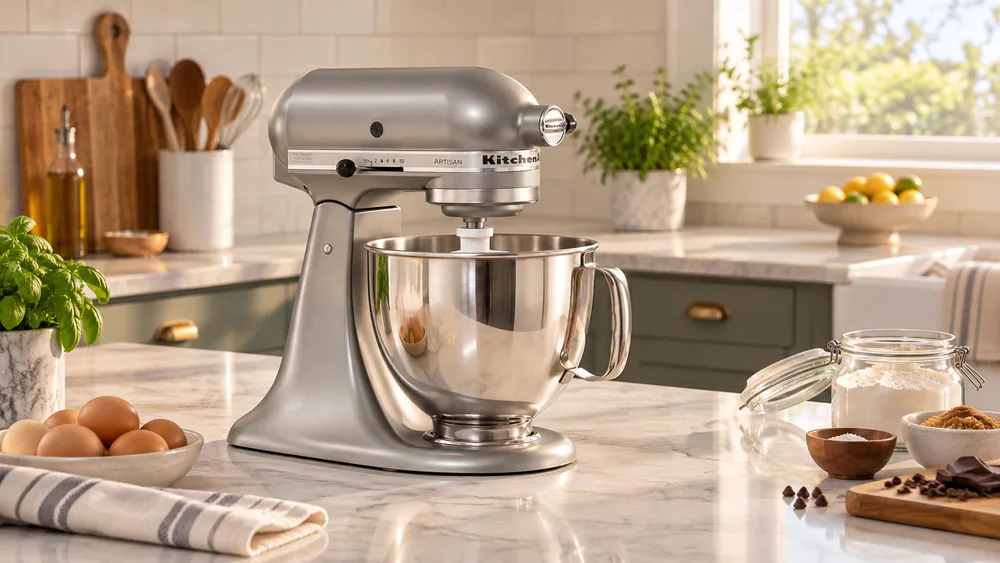
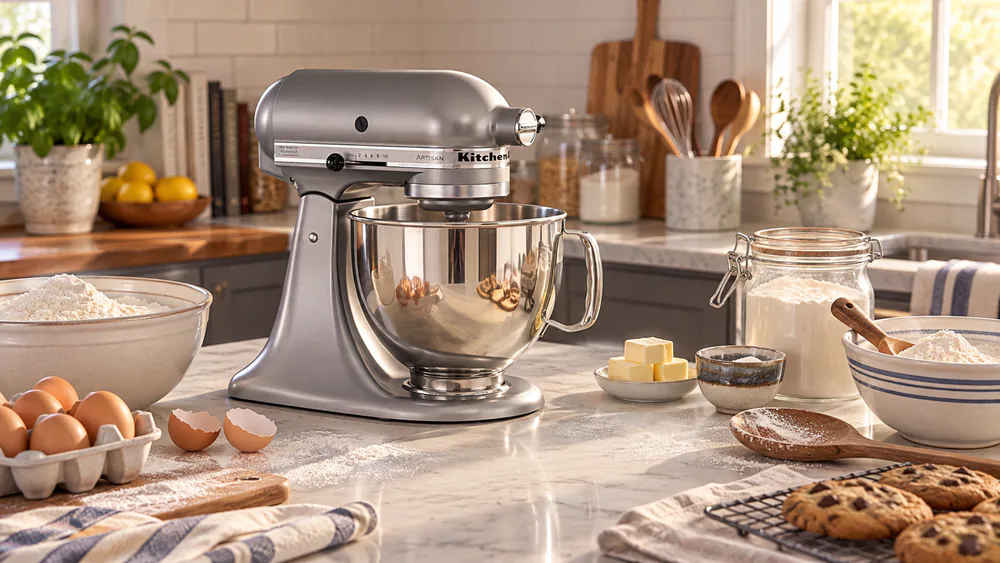
A KitchenAid Artisan tilt-head stand mixer parked on a home kitchen counter next to a bowl of flour and eggs.
At about 26 pounds, the Artisan tends to live on the counter rather than in a cupboard.

Frequently Asked Questions

Is a KitchenAid stand mixer worth the money?

For most home bakers, yes. It mixes cookies, cakes, and buttercream cleanly, cleans up fast, and has a strong record of lasting decades. If you knead multiple loaves of stiff bread daily, a Bosch or Ankarsrum may serve you better for the money.

Which KitchenAid model should I buy, tilt-head or bowl-lift?

Pick the tilt-head Artisan 5-quart for everyday baking; it is lighter, more compact, and easier to store. Choose the bowl-lift 7-quart if you bake bread often or in volume, since it holds steadier under stiff dough and handles up to 13 dozen cookies per batch.

How long does a KitchenAid stand mixer last?

Many owners report the same unit running after 30-plus years, though that is anecdotal longevity rather than a guaranteed figure. Lifespan tracks how hard you work it: occasional baking treats the motor gently, while daily heavy dough can wear one out early.

What size do I need, the Artisan 5-quart or the 7-quart?

The 5-quart makes up to 9 dozen cookies per batch and suits cookies, cakes, and small-batch bread. Step up to the 7-quart if you routinely double bread recipes or bake for a crowd, since it handles up to 8.5 pounds of dough at once.

Are the attachments worth buying?

The front hub accepts more than ten attachments, from pasta rollers to grinders and an ice cream bowl. They are sold separately and add up, so buy them as your cooking calls for them rather than all at once. Used regularly, they can replace a drawer of single-use gadgets.

Final Verdict: Should You Buy a KitchenAid Stand Mixer?

The KitchenAid Artisan 5-quart earns its place as the mixer we recommend to most home bakers. It mixed everyday cookie dough, cake batter, and whipped cream cleanly, its bowl-lock felt solid and easy to seat, and the whole system wipes up in minutes. Weighed against the price, the mixing quality, the attachment ecosystem, and the odds of decades of service make it a genuine value for anyone who bakes weekly.

The honest limits keep it from being a blanket buy. It shakes under stiff dough, the beater leaves a pool without a clearance tweak, and a cluster of owners have seen motors give out under heavy loads. If you bake bread in volume, size up to the 7-quart or look to a Bosch or Ankarsrum; if you mostly want cookies and cakes on a budget, a Cuisinart does most of the job for less. For the broad middle of home bakers, though, the Artisan is worth it, and it is the one we would buy again.

Read next

Ready to upgrade your kitchen?

See how the KitchenAid Artisan stacks up, then browse our tested guides to find the right tool for the way you bake.