
Recipes
Stromboli vs. Calzone: Shape, Filling, and Origins

As an Amazon Associate we earn from qualifying purchases. We may earn a commission from links on this page, at no extra cost to you. Learn more.
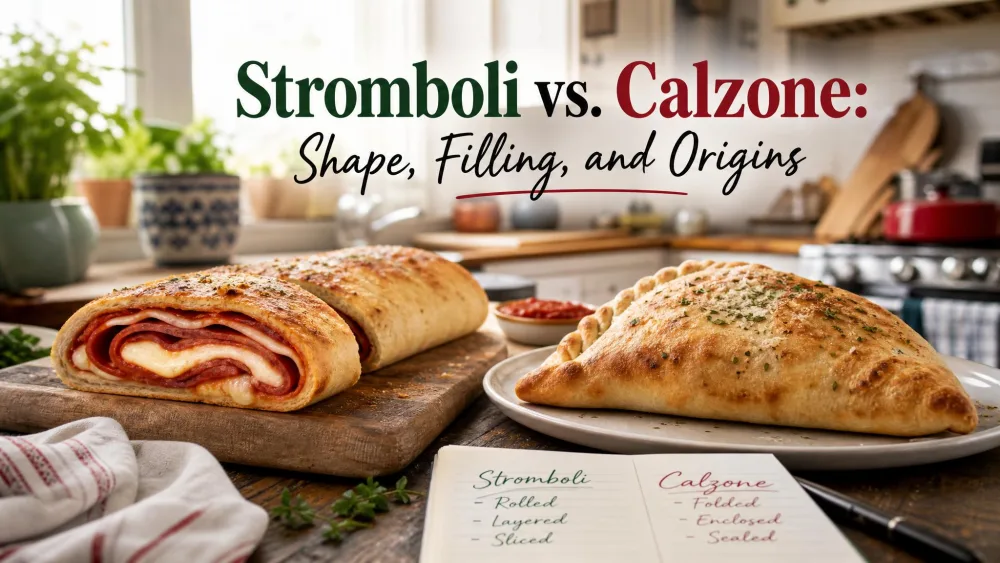
Order a stromboli and a calzone side by side and the confusion makes sense. Both start from the same pizza dough. Both are stuffed with cheese, cured meat, and a little sauce. Both come out of the oven golden and steaming. Yet they are not the same thing, and the difference is not just a matter of what your local pizzeria decides to call it.
The real split comes down to shape and how each one is closed. A stromboli is rolled like a log and sliced into spirals. A calzone is folded like a half-moon and eaten as one handheld piece. Those two moves change the cheese you reach for, where the sauce goes, and who you can feed from a single batch.
We batch-cook for a family of five, and both of these show up on our meal-prep rotation for good reason. They travel well, reheat cleanly, and stretch a pound of dough a long way. Over many weekend baking sessions we have rolled our share of strombolis and crimped our share of calzones, so this guide is built on what actually works on a busy kitchen counter, not just what the definitions say.
Stromboli vs. Calzone at a Glance
If you only remember one thing, make it the shape: rolled log versus folded half-moon. Everything else follows from that. The table below lines up the two dishes on the points that actually matter when you are deciding which to make.
| Feature | Stromboli | Calzone |
|---|---|---|
| Shape | Rolled cylindrical log, sliced into spirals | Folded half-moon crescent |
| How it's sealed | Rolled jelly-roll style, seam pinched, egg-washed | Folded like a taco, edges crimped shut |
| Cheese | Low-moisture mozzarella | Ricotta, plus mozzarella |
| Sauce | Often baked inside; marinara also served hot alongside | None inside; marinara served on the side for dipping |
| Origin | Italian-American, Essington near Philadelphia, 1950 | Neapolitan, Southern Italy |
| Cooking method | Baked at 400 to 450F, roughly 20 to 30 minutes | Baked as a single crescent, cooks faster, roughly 10 to 15 minutes |
| Best served | Sliced to feed a small crowd of three to six | Individual, single-serving handheld meal |
Note. Shape is the honest tell. A calzone is folded and closed on a curve, like a taco. A stromboli is rolled around its filling and pinched along one seam, like a burrito. Get the fold right and the name takes care of itself.
The 5 Key Differences Between Stromboli and Calzone
The two dishes overlap enough to blur together, so it helps to separate them into five clean distinctions. Each one builds on the last, starting with the move that defines everything else.
1. Shape: Rolled Log vs. Folded Half-Moon
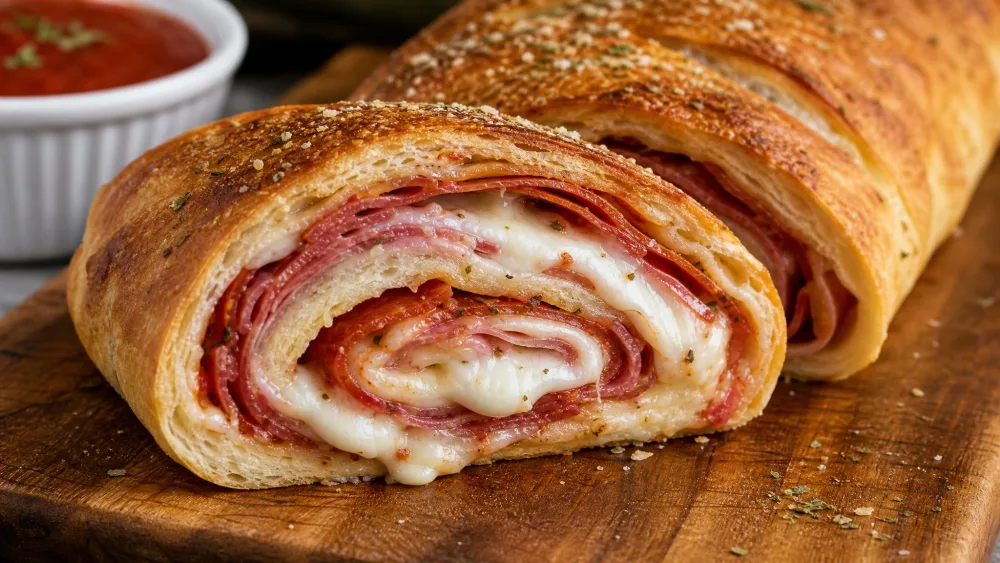
Stromboli is rolled. You spread the filling across a rectangle of dough, roll it into a cylindrical, jelly-roll log, and slice it into spiral pieces after baking. Every slice shows a swirl of dough, cheese, and meat.
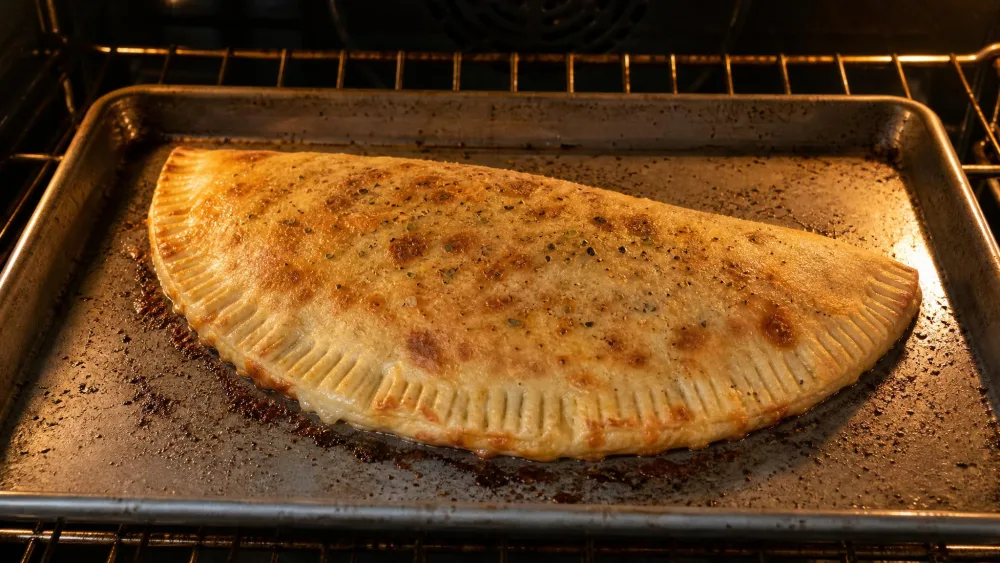
Calzone is folded. The dough goes down as a round, the filling piles onto one side, and the other half folds over into a crescent, or half-moon. It stays whole and gets eaten as a single portion rather than sliced into rounds.
2. Sealing: Rolled and Pinched vs. Folded and Crimped
Because a stromboli is rolled, it has one long seam running its length. You pinch that seam closed and tuck the ends under so nothing unravels in the oven. Brushing the dough border with egg wash before you roll seals that seam tight, and in our kitchen it is the single step that keeps filling from leaking out during the bake.
A calzone has a curved edge instead of a straight seam. You fold the dough over and crimp that edge shut, either by pressing it with a fork or folding and pinching by hand. Both work, but the edge has to be pinched tightly. A loose crimp splits open and leaks filling out the side before the crust is even done.
3. Fillings and Cheese: Mozzarella vs. Ricotta
This is where the two really part ways. Stromboli leans on mozzarella, and specifically low-moisture mozzarella. We learned the hard way that fresh, wet mozzarella releases too much water inside a rolled log and leaves the middle soggy. Low-moisture mozzarella bakes far cleaner and keeps the spiral intact.
Calzone is built around ricotta. That soft, creamy cheese is what gives a calzone its gooey, almost lasagna-like interior, usually paired with a little mozzarella and sometimes Parmesan or pecorino. Both dishes welcome cured meats such as salami, capocollo, or prosciutto, but the cheese base is the giveaway: mozzarella says stromboli, ricotta says calzone.
4. Sauce: Inside vs. on the Side
Stromboli often carries its sauce inside. A thin layer of tomato sauce gets spread on the dough and baked right in, with extra marinara served hot alongside for dipping the slices.
A calzone keeps the sauce out. Traditionally there is no tomato sauce sealed inside; instead a cup of warm marinara comes on the side for dunking. Keeping the sauce out is partly practical, since too much liquid inside a folded pocket makes the bottom crust go soft.
5. Origins: Italian-American vs. Neapolitan
For all their Italian flavor, only one of these is actually Italian. The stromboli is an Italian-American invention, created in 1950 by Nazzareno Romano at his restaurant in Essington, Pennsylvania, just outside Philadelphia, and named after a Roberto Rossellini film of the same year. You can read more about stromboli's mid-century Italian-American roots if you want the full backstory.
The calzone is the old-world dish of the two. It comes from Southern Italy and is closely tied to Naples, where folded, oven-baked pizza pockets have long been street food. Its name literally means "stocking" or "trouser" in Italian, a nod to the folded shape. The calzone's Naples origins are why you will see it on traditional Neapolitan menus while the stromboli stays a Philadelphia story.
What Is a Stromboli?
A stromboli is a rolled, stuffed bread built on pizza or Italian bread dough. The filling, typically low-moisture mozzarella with Italian cold cuts such as salami, capocollo, and bresaola, plus vegetables, is layered across the dough and rolled up into a tight cylinder. After baking, the whole log is sliced into pieces so a spiral of cheese and meat shows in every cut.
Because it bakes as one loaf and then gets sliced, a stromboli is naturally a sharing dish. One rolled log typically feeds three to six people, depending on how thick you cut the slices. That is exactly why it earns a spot in our meal-prep rotation: one batch of dough becomes a tray of portions that hold up for lunches all week.
The dictionary definition of calzone frames it as a stuffed turnover of pizza dough, and a stromboli is close kin, just rolled instead of folded. The rolling is what sets it apart on the plate.
What Is a Calzone?
A calzone is a folded, oven-baked pocket of pizza dough, shaped like a crescent and sealed around its curved edge. Inside you will usually find ricotta and mozzarella, often with prosciutto or salami, sometimes Parmesan or pecorino, and in traditional versions even an egg. It is baked from salted bread or pizza dough until the shell is golden.
Unlike a stromboli, a calzone is meant to be personal. It is an individual, single-serving, handheld portion, the kind of thing Italian lunch counters and street vendors sell one at a time. You do not slice it and share it; you pick it up and eat it, marinara on the side for dipping.
There is one common point of confusion worth clearing up. Fried versions of this folded pocket are called panzerotti, usually filled with tomato and mozzarella. The two are so alike that people mix them up constantly, but a calzone is baked while a panzerotti is fried.
How Stromboli and Calzone Are Cooked
Both go into a hot oven, but they do not bake for the same length of time, and the shape is the reason. A stromboli is a dense, layered log, so it needs longer. We bake ours at 400 to 450F for roughly 20 to 30 minutes, until the outside is deep golden. Exact temperature and time shift with the thickness of your dough and how full the log is.
A calzone is a single folded crescent with less mass in the middle, so it cooks faster, often in the range of 10 to 15 minutes. If you bake a calzone as long as a stromboli, you end up with an overbaked, hard shell. Watch the color rather than the clock.
A few habits make either one come out better. We always bake on a fully preheated pizza stone or metal sheet pan, which blasts the bottom with heat so the crust crisps instead of staying pale and soft. And with a stromboli, we cut four to six small steam vents in the top before it goes in. As the cheese melts, that trapped steam has to escape somewhere, and the vents keep the log from bursting open along its seam.
Overstuffing is the number one cause of leaks and blowouts. Keep the layers even and restrained, and both the log and the crescent roll up cleaner and bake without splitting.
How to Serve Each
Serving style follows straight from shape. A stromboli comes to the table as a sliced loaf, cut into spiral rounds that everyone shares, with hot marinara alongside for dipping. It is a natural centerpiece for a family dinner or a party spread, and the slices travel well in a lunch box.
A calzone is a plate of its own. Each person gets a whole folded pocket, with a small dish of marinara for dunking. It suits a personal meal, a quick lunch, or anytime you want portions that are already sized and sealed. In practice we let the occasion decide: a stromboli when we are feeding a crowd off one loaf, a calzone when everyone wants their own.
Both pair well with the same simple sides. A crisp green salad, a few marinated vegetables, or a bowl of extra marinara rounds out either one without much effort.
Which One Should You Make?
Start with how many people you are feeding. Stromboli scales beautifully to a group because one rolled loaf slices into three to six portions. If you are cooking for a family or a gathering, or prepping lunches for the week, the log is the efficient choice.
Reach for a calzone when the meal is individual. It is single-serving by design, so it shines when everyone wants their own hot pocket, or when you want to freeze portions to bake off one at a time. It is also the move when you love that creamy, ricotta-forward interior that a stromboli does not really deliver.
Flavor preference can settle it too. If you want mozzarella-melty spirals with a little sauce baked in, make a stromboli. If you want a gooey ricotta filling with the marinara kept on the side, make a calzone. There is no wrong answer, and since they share a dough, you can make both from one batch.
Key takeaway. The fastest way to choose: stromboli to feed a group off one sliced loaf, calzone for an individual, ricotta-rich, handheld meal. Same dough, different shape, different job.
Frequently Asked Questions
What is the main difference between a stromboli and a calzone?
Shape and sealing. A stromboli is rolled into a log and sliced into spirals, while a calzone is folded into a half-moon and eaten whole. That difference also drives the cheese choice and where the sauce goes.
Which is healthier, stromboli or calzone?
There is no clear winner, and it depends more on portion size and fillings than on the shape. A calzone is single-serving, which can help with portion control, while a stromboli is sliced so you choose how much to take. Ricotta and mozzarella differ in richness, and stromboli often bakes sauce inside while a calzone keeps it on the side. Lean meats and more vegetables help either one.
Do both have sauce inside?
Not usually. A stromboli often has a thin layer of tomato sauce baked in, with more served alongside. A calzone traditionally keeps the sauce out and serves warm marinara on the side for dipping, which helps the crust stay crisp.
Can I use the same dough for both?
Yes. Both are built on ordinary pizza dough, so one batch can become strombolis and calzones. Roll part of it into a log to slice, and portion the rest into rounds to fold. No separate recipe is needed.
What is the difference between a calzone and a panzerotti?
A calzone is baked in the oven, while a panzerotti is fried, usually filled with tomato and mozzarella. The two look alike and get confused often, but the cooking method sets them apart.
Final Verdict
Stromboli and calzone are cousins, not twins. They share a dough and a spirit, but a stromboli is a rolled, sliceable log built on mozzarella with sauce baked in, and a calzone is a folded, single-serving half-moon built on ricotta with the sauce kept on the side. One is a Philadelphia invention from 1950, the other a Neapolitan classic.
For our meal-prep kitchen the choice is almost always about the crowd. When we need to feed the whole table or stock a week of lunches, we roll a stromboli and slice it. When everyone wants their own hot, handheld pocket, we fold calzones. Because they come from the same batch of dough, the smartest move is often to stop choosing and make both.
Read next
Ready for pizza night?
Explore more recipes and kitchen guides to make your next bake even better.