
Recipes
Authentic Chimichurri Recipe (Argentina & Uruguay)

As an Amazon Associate we earn from qualifying purchases. We may earn a commission from links on this page, at no extra cost to you. Learn more.
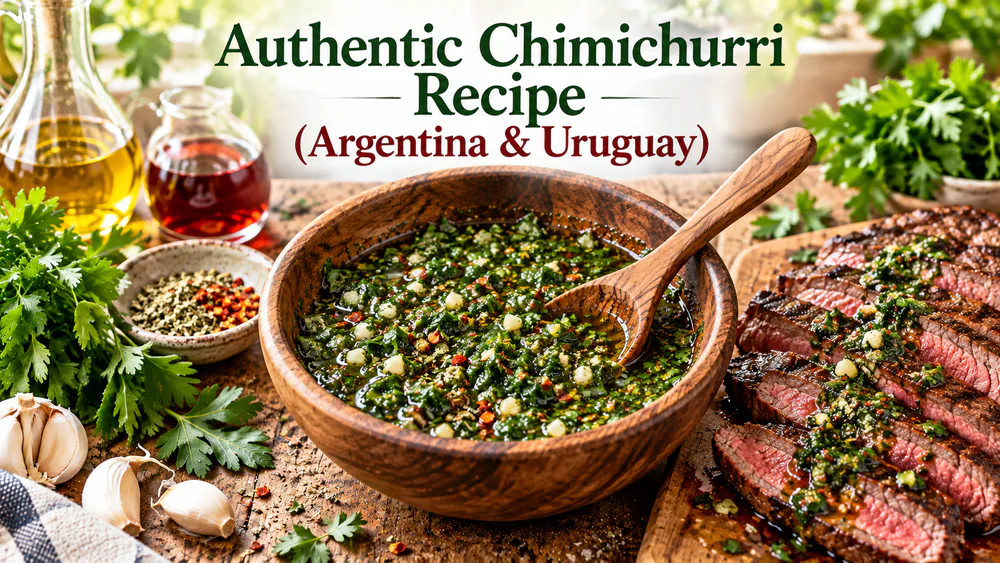
Chimichurri is a loose, herb-packed sauce of finely chopped parsley, garlic, oregano, red wine vinegar, and olive oil, and it comes together in about 10 minutes. It is the green condiment you see spooned over grilled steak across Argentina and Uruguay, bright and tangy and just a little spicy. Once you make it at home, you tend to keep a jar going all week.
We batch-cook for a family of five, so we make this sauce constantly, and we have chopped a lot of parsley figuring out what actually matters. The short answer: a sharp knife, good oil, and a little patience while it rests. This guide covers the ingredients, the hand-chopped method we prefer, and how to store a big batch.
What Is Chimichurri?
Chimichurri is a fresh, uncooked herb sauce that originated in Argentina and is also traditional in Uruguay, Paraguay, and Brazil. It shows up most often as a finishing sauce for grilled meats, though it wanders far beyond steak in a real kitchen. There is a green version, called verde, and a red version, called rojo, and the bright green one is what most people picture.
The name likely traces to Basque roots, from a word that roughly means "hodgepodge." Basque settlers came to Argentina and Uruguay in the 19th century, and the sauce grew up alongside the region's grilling culture. If you want the backstory, the origins of chimichurri in Argentina and Uruguay are worth a read.
Chimichurri Ingredients
The ingredient list is short, which is exactly why each one counts. Here is what goes in and what each part does.
- Flat-leaf parsley. The backbone of the sauce, and cleaner-tasting than curly. About half a cup, finely chopped.
- Garlic. Three to four cloves, minced, for heat and bite. Push toward five when you want it punchier.
- Olive oil. Half a cup to two thirds of a cup of good extra-virgin oil carries the flavor and softens the sharp edges.
- Red wine vinegar. Two to three tablespoons for the tang. It is the traditional choice; lemon juice works in a pinch.
- Oregano. About a teaspoon. Dried matches Argentine tradition here.
- Chili or red pepper flakes. A pinch to taste for gentle heat.
- Salt and pepper. To season and tie everything together.
Note. Dried oregano is the traditional pick, but fresh works if that is what you have. If you swap in fresh, roughly double the amount, since 1 tablespoon of dried equals about 2 tablespoons of fresh.
How to Make Chimichurri
The whole thing takes about 10 minutes, and it is mostly knife work. We hand-chop ours, and the steps below reflect that. No blender required.
Step 1
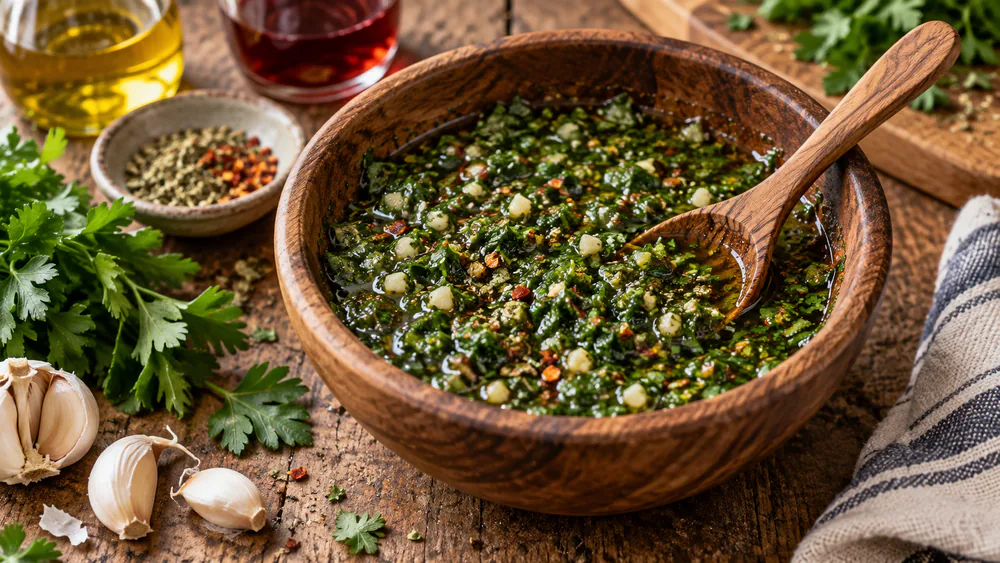
Rinse and dry the parsley, then pick the leaves off the thickest stems and chop them finely. You want small, even flecks, not a paste. When we hand-chop, the sauce stays coarse and spoonable, and the flavor reads brighter because the leaves are not bruised.
Step 2
Mince the garlic as finely as you can and add it to a medium bowl. Stir in the oregano and a good pinch of red pepper flakes. Getting the garlic fine matters, because you want its bite in every spoonful rather than in one hot pocket.
Step 3
Add the chopped parsley, then pour in the red wine vinegar and olive oil. Stir until loosely combined. It should look loose and oily, not smooth. Season with salt and pepper, taste, and adjust. We often find the default oil ratio a touch high and add a little more parsley to keep it herb-forward.
Step 4
Let it rest. This is the step people skip and later regret. Give it at least a few minutes on the counter, and longer if you can spare it.
Tip. Chop by hand and stop while the sauce is still coarse. Over-mixing or blending collapses it into a smooth green liquid that ends up closer to salad dressing than chimichurri. The visible flecks of herb and garlic are the whole point.
Food Processor vs Hand-Chopped: Which Is Better?
You can make chimichurri in a food processor, and plenty of recipes do. But traditionally it is hand-chopped, not blended, for a real reason. A food processor turns the sauce into a puree instead of the loose condiment it is meant to be. Run it through the machine and it emulsifies into a heavier, dressing-like sauce that loses the individual herb and garlic notes and can pick up a faint bitterness. Hand-chopping keeps each element distinct.
Pros
- Coarse, spoonable texture with visible herb flecks
- Brighter, fresher flavor with distinct herb and garlic notes
- The traditional Argentine and Uruguayan method
Cons
- Slower, with more knife work than a few pulses
- Requires a sharp knife and a little practice
For a weeknight batch, we still reach for the knife. The extra few minutes buy a noticeably better sauce.
Variations & Substitutions
Chimichurri is forgiving, which makes it a great sauce to make your own. A few swaps we lean on:
- Cilantro. Swap it for the parsley, or use a mix of the two.
- More garlic. When we want it punchier, we push toward five cloves.
- Fresh oregano. Works fine in place of dried, just use about double.
- Heat level. Dial the red pepper flakes up or down, or leave them out.
One thing worth knowing: chimichurri is best used as a finishing sauce or a baste, not as a raw marinade. The acid and raw garlic shine when they hit the food at the end, so spoon it on after grilling rather than soaking meat in it beforehand.
What to Serve With Chimichurri
Grilled steak is the classic partner, and for good reason. But in real weeknight cooking this sauce goes on nearly everything. We spoon it over grilled meat, eggs, roasted vegetables, and sandwiches without thinking twice. It also works beautifully on chicken thighs, pork, lamb, and seafood. When in doubt, drizzle it over everything on the plate.
Make one bowl on Sunday and you will find an excuse to spoon it over something every single day of the week.
Storage, Make-Ahead & Freezing
Chimichurri is a make-ahead cook's friend. It actually improves with a little time, so a batch made in advance is a feature, not a compromise. A batch we left for 48 hours in the fridge tasted even better than day one.
Stored in an airtight container in the fridge, it keeps roughly 4 days to a week, with the best flavor in the first few days. The herb green dulls a bit after the first day, which is completely normal and not a sign that anything has gone wrong.
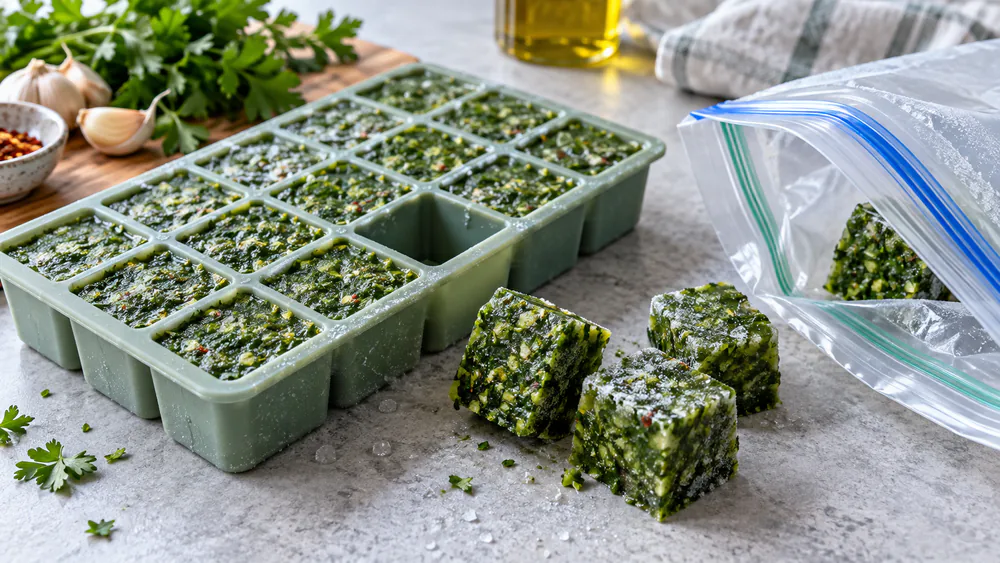
For longer storage, it freezes well. Spoon it into ice cube trays, freeze, then transfer the cubes to a bag and use them within about 1 to 3 months, with quality best sooner. Thaw a cube in the fridge instead of the microwave to keep the texture intact.
Note. Let the sauce rest before serving, ideally a few minutes at minimum and a couple of hours if you have the time. As it sits, the garlic mellows and the flavors integrate, and it keeps intensifying, especially when the garlic or red pepper flakes are prominent.
Frequently Asked Questions
Where is chimichurri from, Argentina or Uruguay?
Both. Chimichurri originated in Argentina and is also traditional in Uruguay, along with Paraguay and Brazil. The name likely comes from Basque roots.
Can I use cilantro instead of parsley?
Yes. Parsley is traditional, but you can swap in cilantro or use a blend of the two. It shifts the flavor, so start with a mix if you are unsure.
Should I use a food processor or chop by hand?
Hand-chopping is traditional and gives a coarse, spoonable sauce with brighter flavor. A food processor is faster but purees the sauce into something heavier that can turn faintly bitter.
What can I use instead of red wine vinegar?
Red wine vinegar is the traditional and most common choice. Lemon juice is a fine substitute, and some cooks use white wine vinegar.
How long does chimichurri keep, and can I freeze it?
In the fridge it keeps about 4 days to a week. It also freezes well in ice cube trays for roughly 1 to 3 months; thaw the cubes in the fridge.
Why let it rest before serving?
Resting lets the garlic mellow and the flavors integrate. Even a few minutes helps, and a couple of hours is better if you can spare the time.
Final Thoughts
Chimichurri rewards the simplest approach. Chop good herbs by hand, use a decent olive oil, let it rest, and you end up with a sauce that outshines almost anything you can buy. Make a big batch and freeze the extra in cubes so you always have a burst of fresh flavor within reach.
Recipe Card
Authentic Chimichurri (Argentina & Uruguay)
Prep: about 10 minutes. Rest: at least a few minutes, ideally 2 hours. Makes about 1 cup.
Ingredients
- 1/2 cup finely chopped flat-leaf parsley
- 3 to 4 garlic cloves, minced
- 1/2 to 2/3 cup extra-virgin olive oil
- 2 to 3 tablespoons red wine vinegar
- About 1 teaspoon dried oregano
- Red pepper flakes, to taste
- Salt and pepper, to taste
Method
- Finely chop the parsley and mince the garlic.
- In a bowl, combine the garlic, oregano, and red pepper flakes.
- Stir in the parsley, then the vinegar and olive oil until loosely combined.
- Season with salt and pepper, taste, and adjust.
- Rest at least a few minutes before serving, longer if you can.
Read next
Ready to upgrade your kitchen?
Whip up a fresh batch tonight, then browse our tested guides and recipes for what to serve it with.