As an Amazon Associate we earn from qualifying purchases. We may earn a commission from links on this page, at no extra cost to you. Learn more.
A ceramic honing rod is a hard, fine-grained rod that realigns and lightly refines a knife edge, where a steel rod only pushes the edge back into line and a stone removes real metal. In our kitchen, a good ceramic rod brings a tired edge back to razor-sharp in a handful of strokes, and it does so without the chipping steel can cause. Our top pick is the Green Elephant 11-inch rod, and the rest of this guide shows which of the other six suits your knives.
We score each rod on how quickly it restores a worn edge, how steady the stroke feels, and how well it withstands everyday kitchen mishaps. Here is how we score each one.
Our ratings weigh five things: how well the rod realigns an edge, how consistent the stroke is, whether the length fits the knives in the block, how well the handle and guard protect your hand, and how well the rod survives the knocks of a busy kitchen. We scored drop protection separately, because ceramic is brittle and that single trait decides whether a rod lasts.
Two limits shape every pick here. Fine ceramic realigns and refines an edge, and it cannot repair a chipped or truly dull one. If your blades need that, our knife sharpener reviews cover the tools that remove metal.
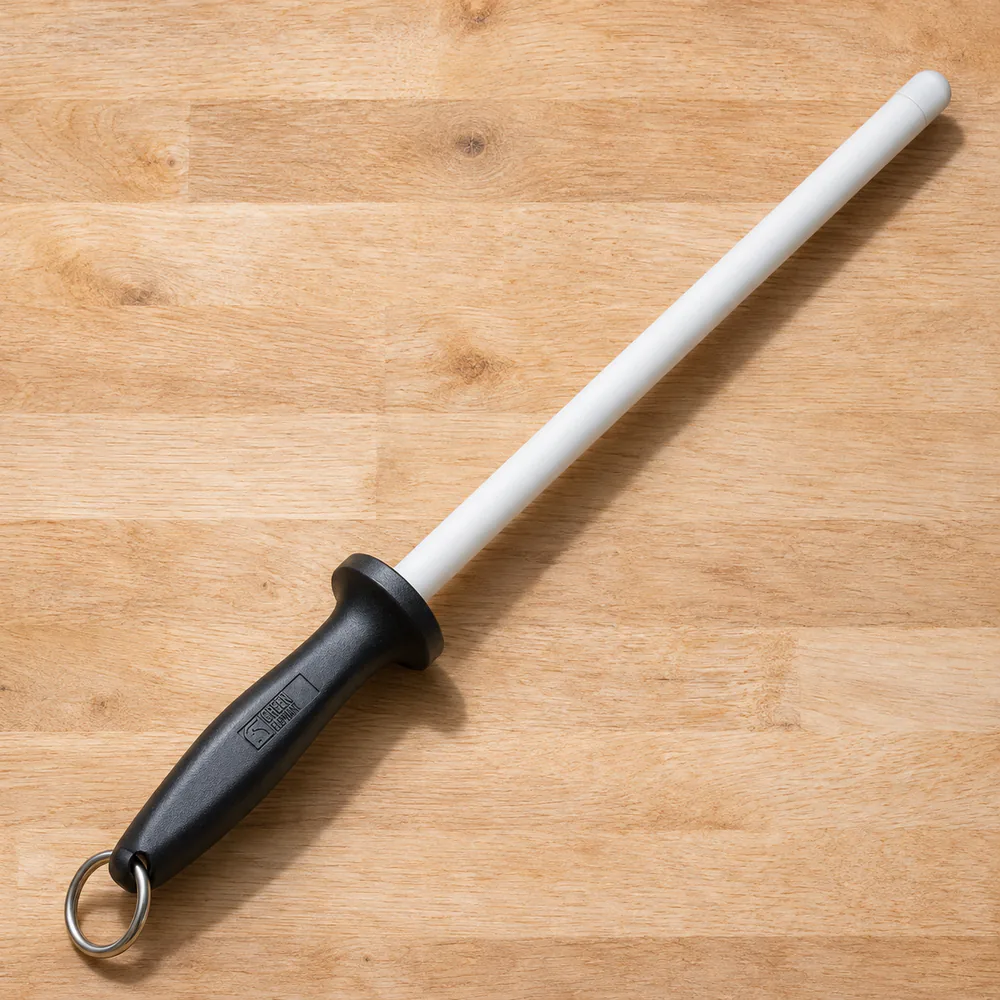
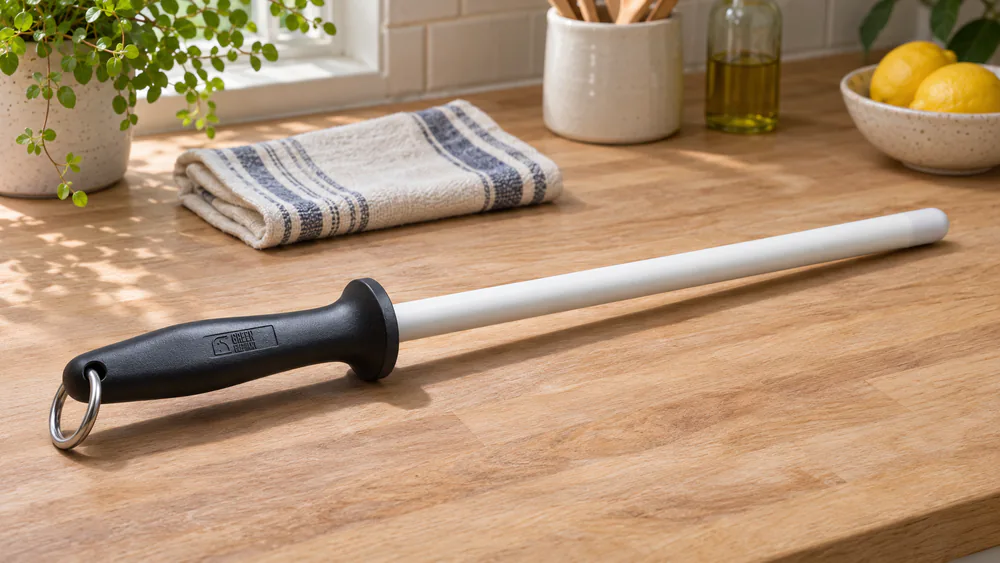
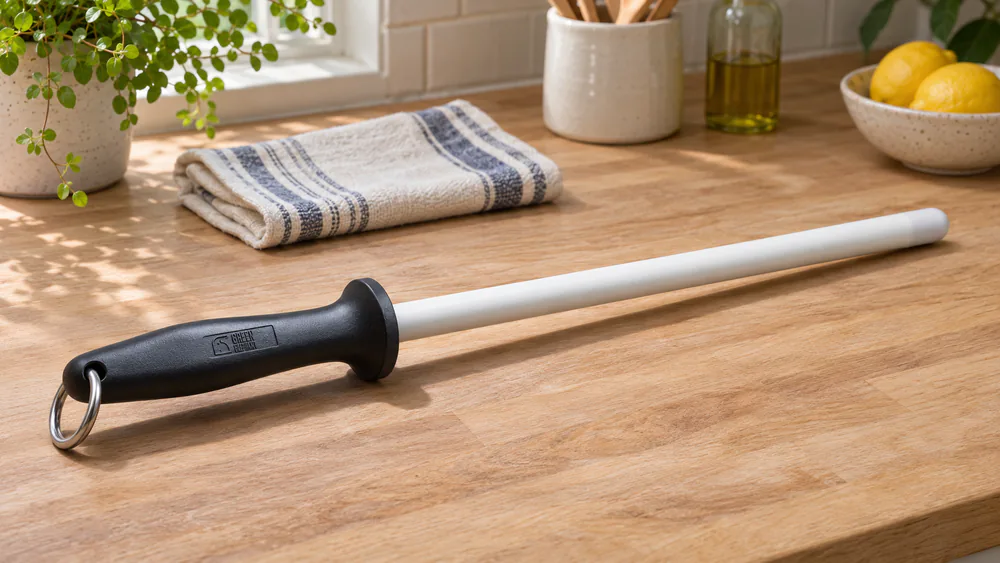
The Green Elephant 11-inch rod is one of the models compared in this guide.
The Green Elephant is the rod we would hand to most home cooks. Its 1500-grit, 9 Mohs ceramic works better than a metal rod on Japanese knives, it feels sturdy in the hand, and the 11-inch length handles large blades without running out of rod. A silicone seal between handle and ceramic plus a plastic end cap absorb drop shock, which makes it far more drop-tolerant than most ceramic rods.
Pros
Silicone seal and end cap absorb drop shock
11-inch length suits large blades
Works well on Japanese knives
Lightweight handle that stays comfortable
Cons
No storage sleeve
Hand wash only
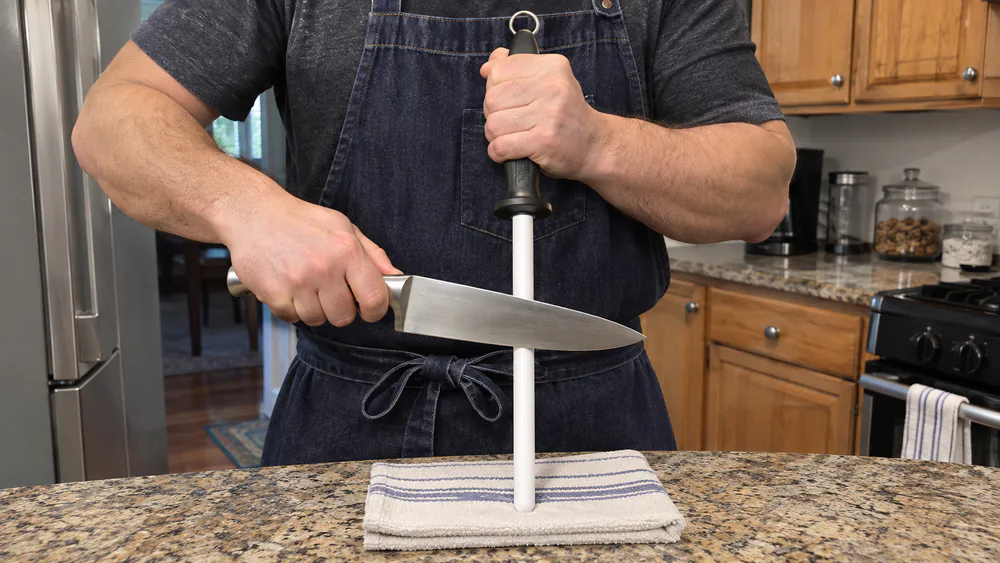
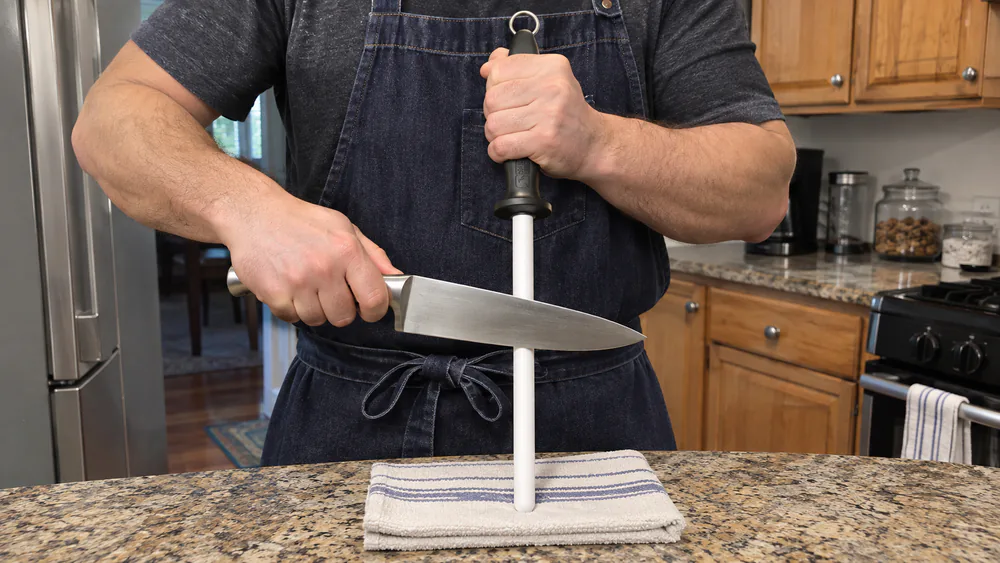
We held the rod tip-down on a folded towel, laid a tired chef's knife against it and drew the blade down heel to tip. Five to ten strokes per side was all the edge needed to come back. The one common annoyance is the lack of a sleeve, so it needs a drawer slot or a knife-roll pocket of its own. Wash it by hand and let it air dry.
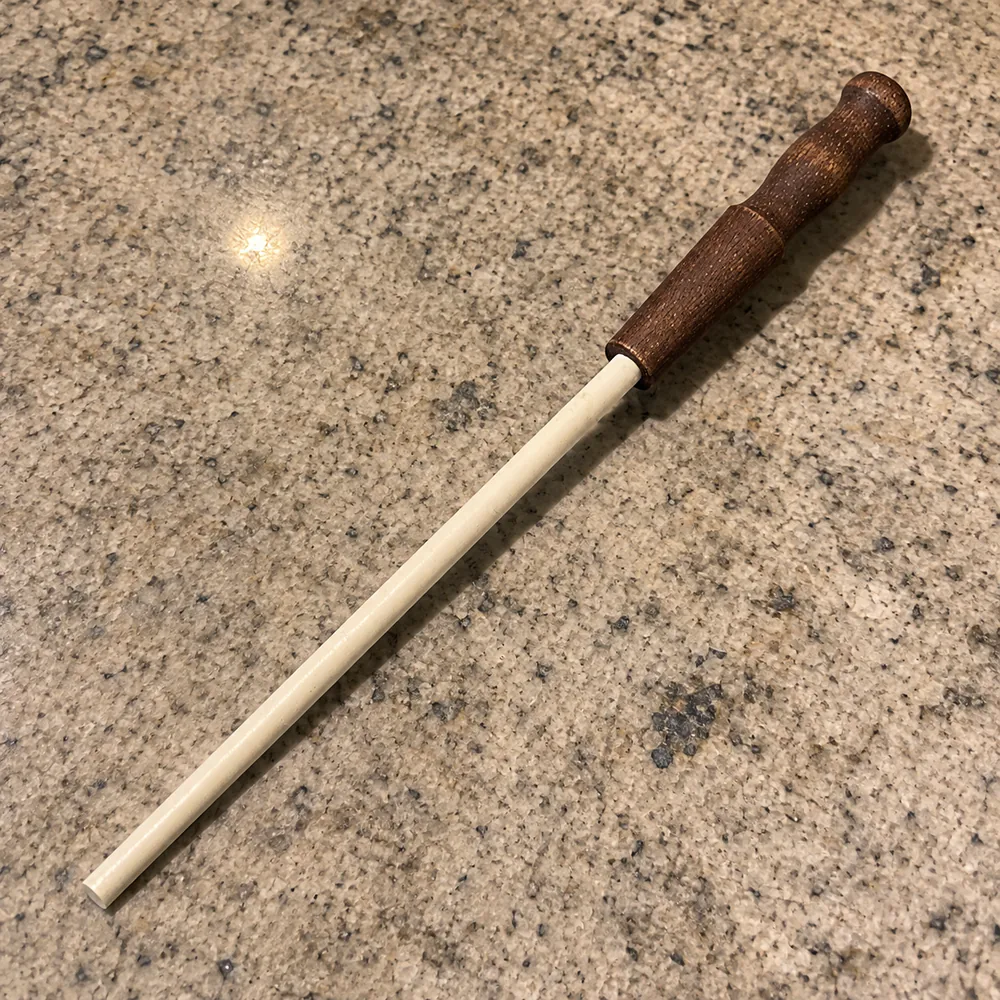
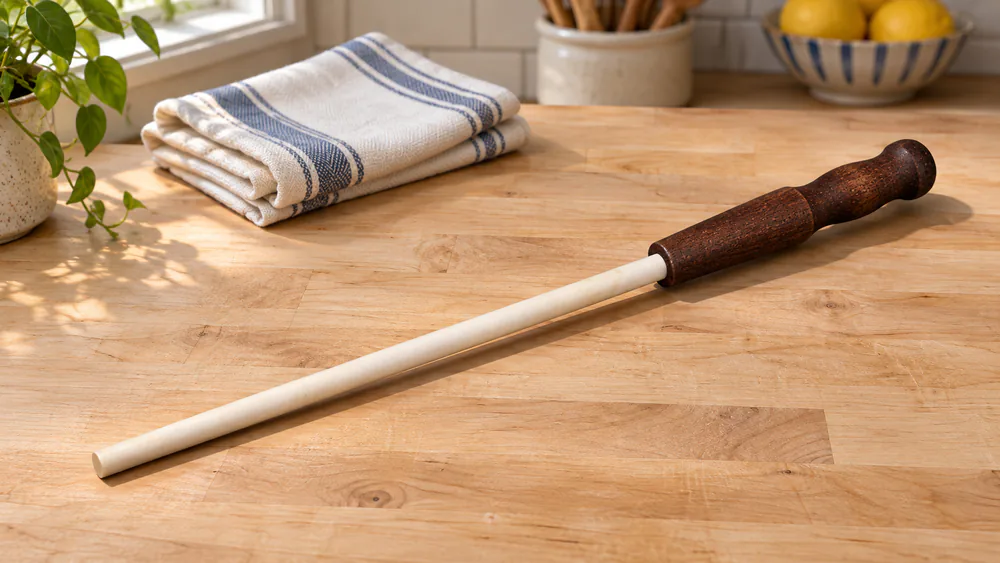
The AC46 is the budget pick, and it touches up an edge in a few strokes per side. The wood handle is pleasant, and the rod is made in the USA. At 11.5 inches overall, only 7 inches of that is ceramic, so the short rod feels cramped on large knives.
Pros
Lowest cost of the seven
Wood handle feels good in the hand
Short rod suits paring and serrated knives
Made in the USA
Cons
Short 7-inch rod feels cramped on large knives
Breaks if dropped
Grit not published
We would buy it for paring knives, utility knives and serrated blades. The maker does not publish a grit, so we treat it as a fine ceramic. It breaks if dropped, so keep it away from the counter edge.
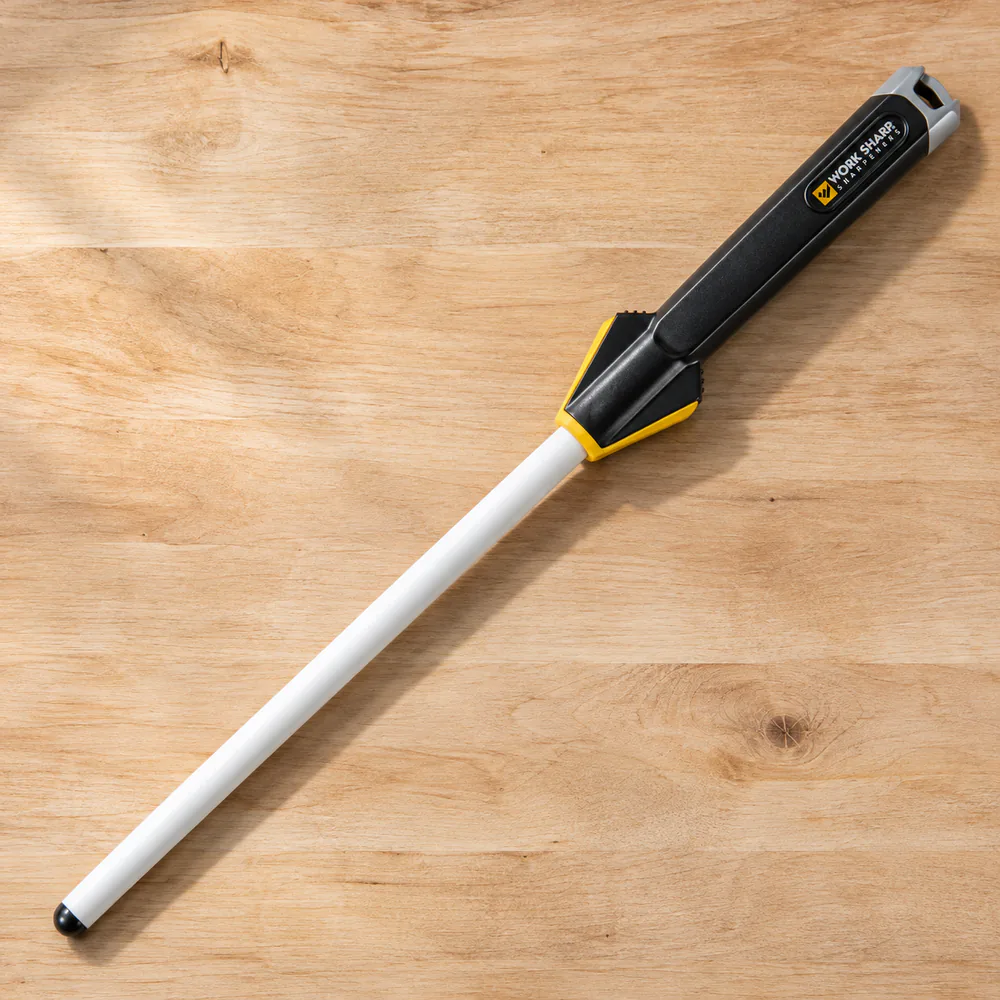
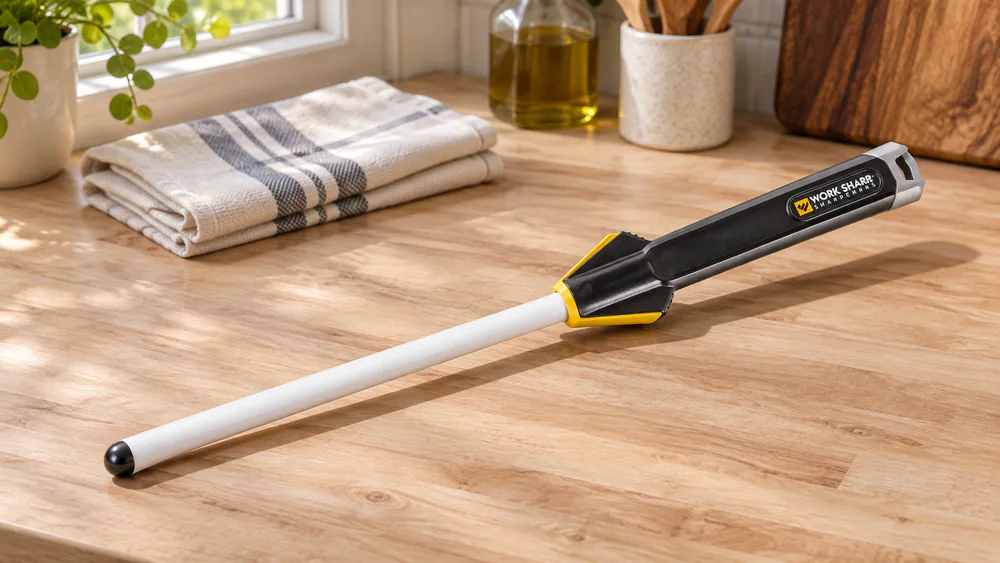
The built-in 20-degree handle guide is the reason to buy this rod. The guide helps you repeat the same angle without the uncertainty of freehand honing, especially if you have unknowingly used the wrong angle for years.
Pros
20-degree guide builds the right angle into every stroke
Handles chef, santoku, paring, utility and serrated knives
Quick for pre-meal touch-ups
Cons
Length and grit are not published
Guide locks you into one angle
It copes with serrated and paring knives as well as chef's knives and santokus, and it is quick enough for a pre-meal touch-up. Work Sharp does not publish a length or grit, so we describe it only as a guided ceramic rod.
Warning. Ceramic chips and snaps when dropped on a tile floor or stone counter. Every rod here carries that risk, so hone over a folded towel and store the rod flat.
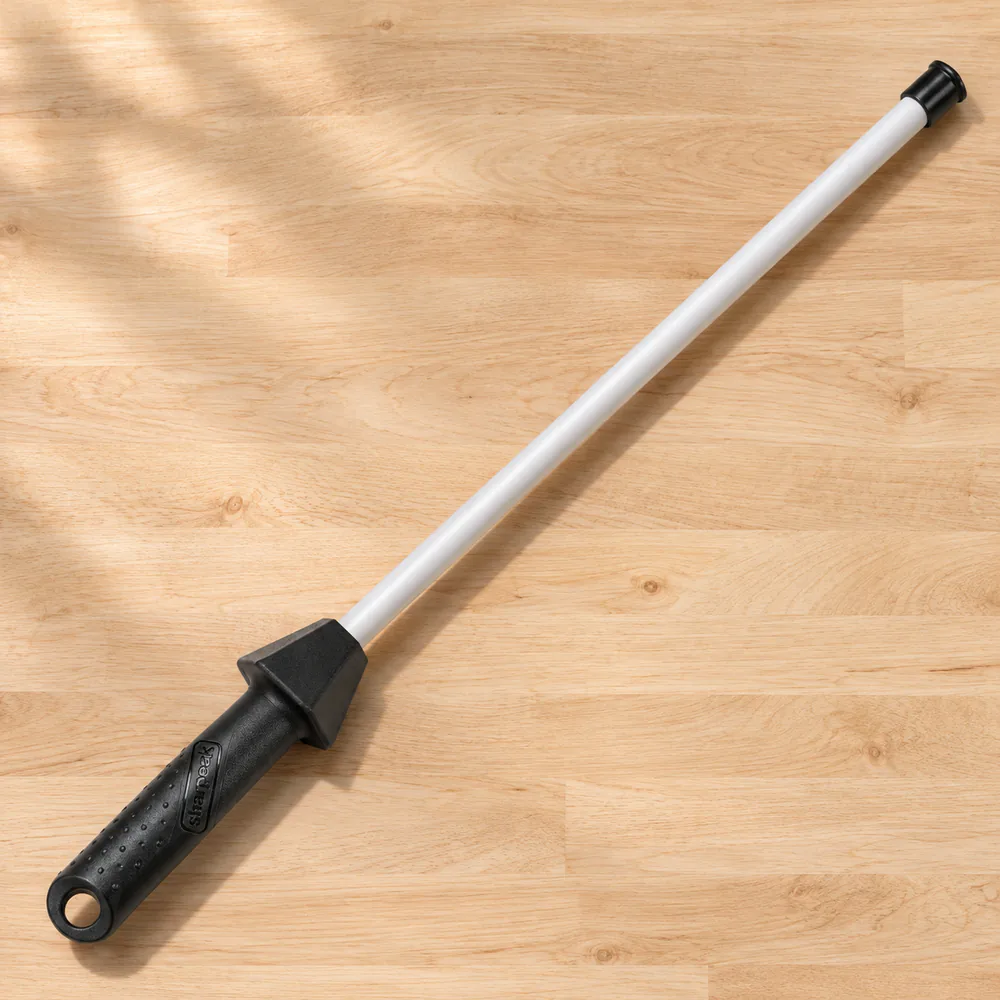
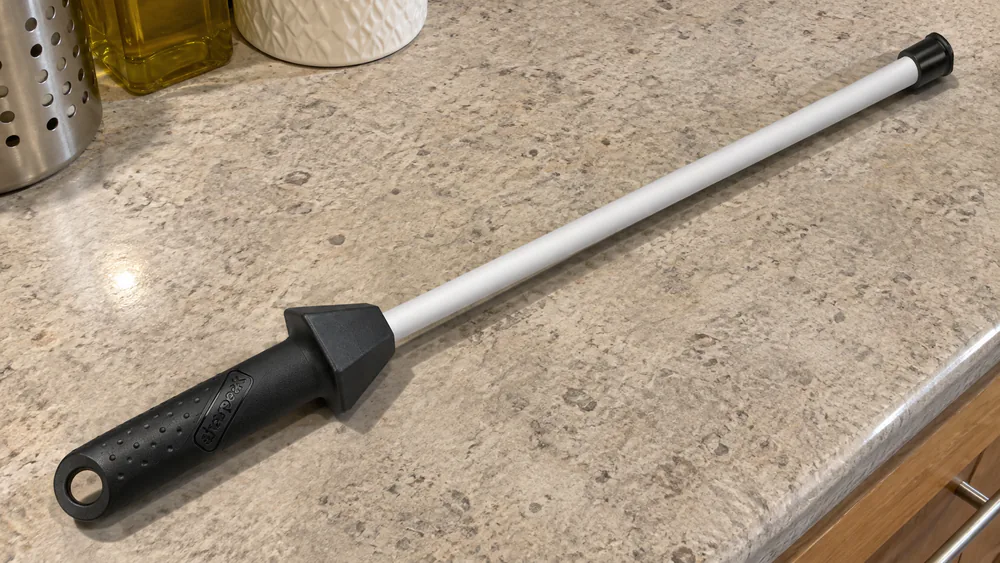
The Sharpeak is the long rod in this group. The ceramic itself is 12 inches, and with the handle it measures 17.5 inches overall, so even a long slicer fits end to end in one stroke. The built-in angle guides give a visual reference that keeps strokes consistent, and it does well on Japanese knives.
Pros
12 inches of ceramic for long blades
Angle guides keep strokes consistent
Hexagonal guard and removable rubber cap
3-year warranty
Cons
Very fine grit does little for a worn edge
Long, and awkward on small knives
The 3000 grit is very fine, so it polishes rather than corrects. A hexagonal hand guard, a removable rubber cap and a 3-year warranty round it out.
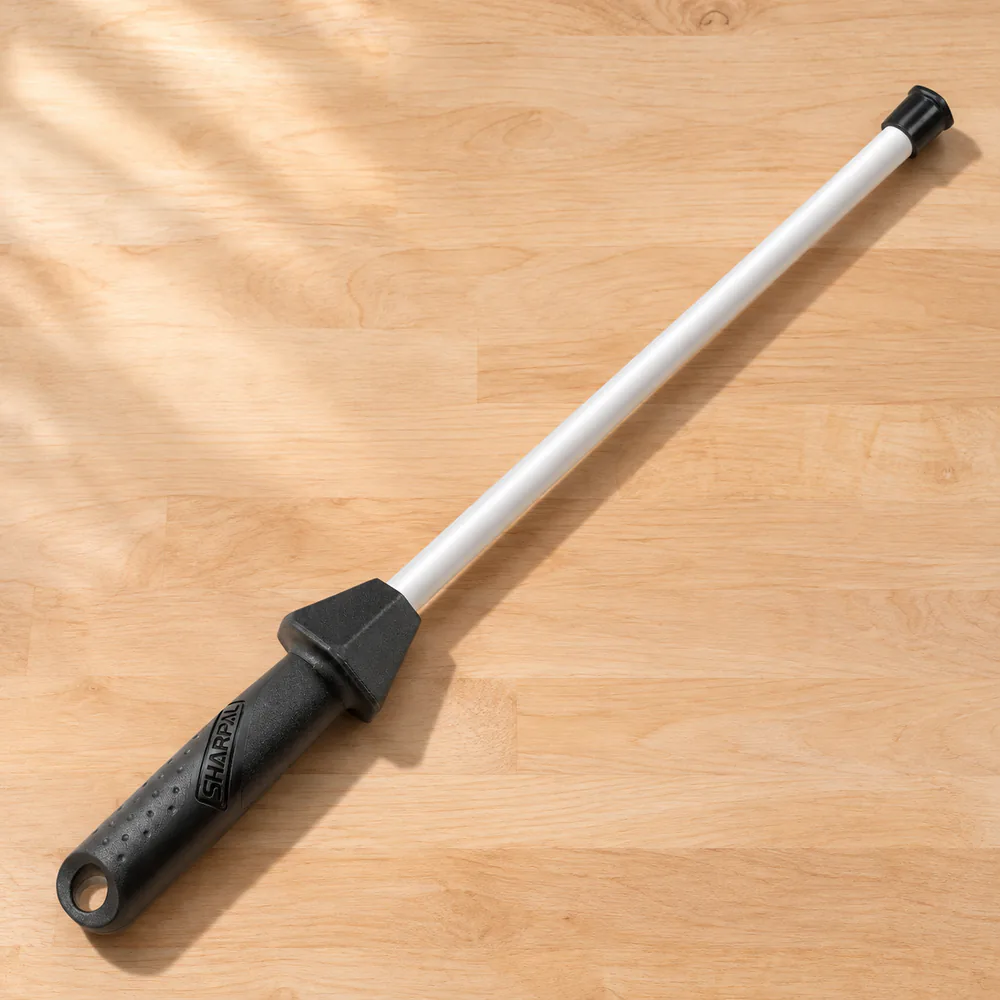
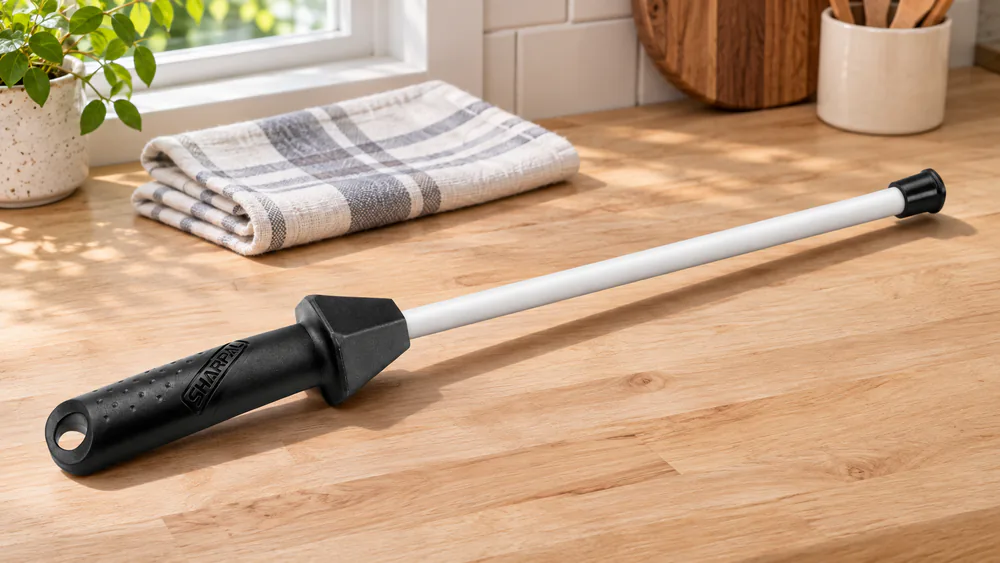
The SHARPAL 118H works best as a final polish after regular sharpening, particularly on utility knives. It is a 3000 grit fine ceramic rod with built-in 20-degree angle guides, a hexagonal hand guard that stops it rolling, and a removable rubber cap.
Pros
3000 grit gives a polished, razor-sharp finish
20-degree angle guides
Hexagonal guard stops it rolling
Rust-free, non-toxic ceramic
Cons
Cleanup is not always easy
Still breaks if dropped
Too fine to restore a dull edge
Its specifications match the Sharpeak closely, so choose between them on the guard design and the warranty. Cleanup is not always easy, and ceramic still breaks if dropped even with the cap. The rod comes with a three-year warranty.
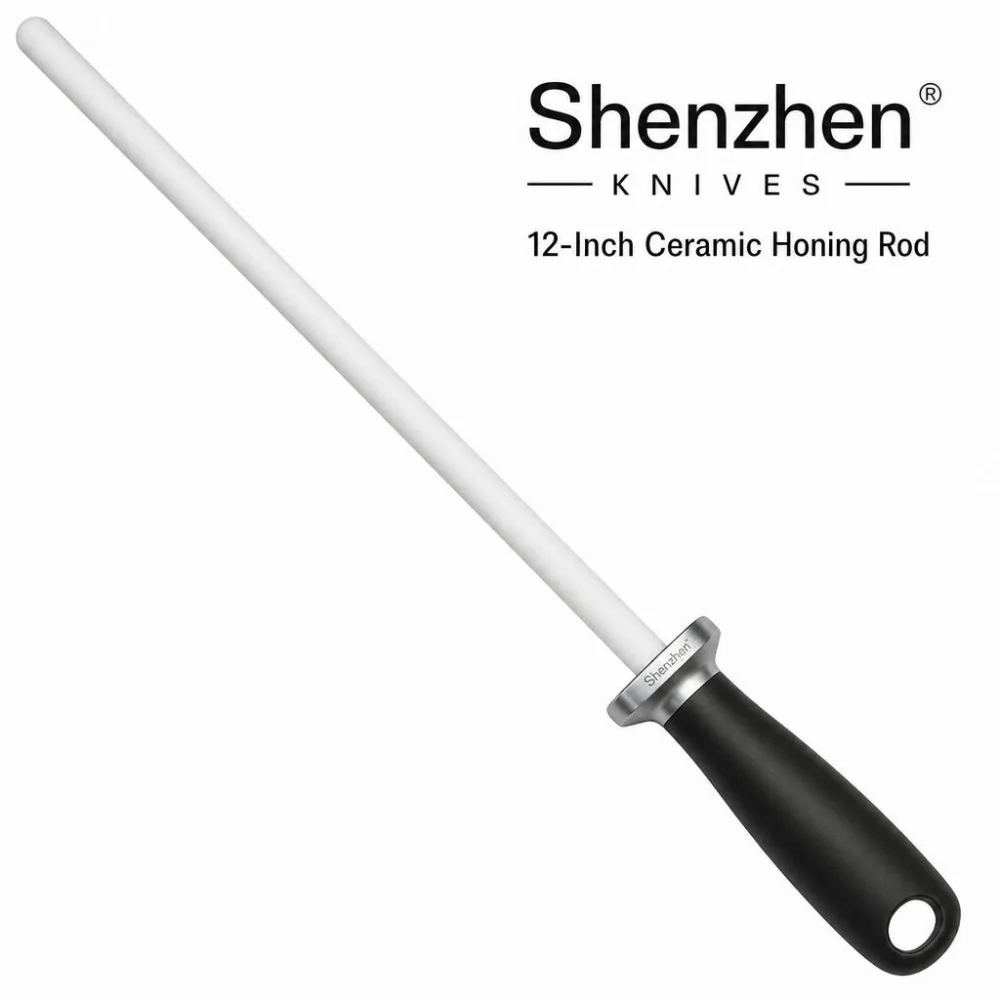
The Shenzhen is our pick for harder steels. It is a 12-inch rod with a 5-inch nylon handle, built from HRC 68 alumina ceramic at 1000 grit, which makes it the coarsest and most assertive rod here. It leaves straight-edge knives razor-sharp, and it works on harder steels including carbon.
Pros
HRC 68 ceramic works on hard and carbon steels
Zinc-alloy guard stops rolling
12-inch rod handles large knives
Solid build
Cons
Straight-edge knives only
Durability varies from rod to rod
Long for small knives
The solid ceramic build feels reassuring, though durability varies: some rods last for years while others snap. The full length can feel long on small knives, and it is for straight edges only, so skip serrated blades.
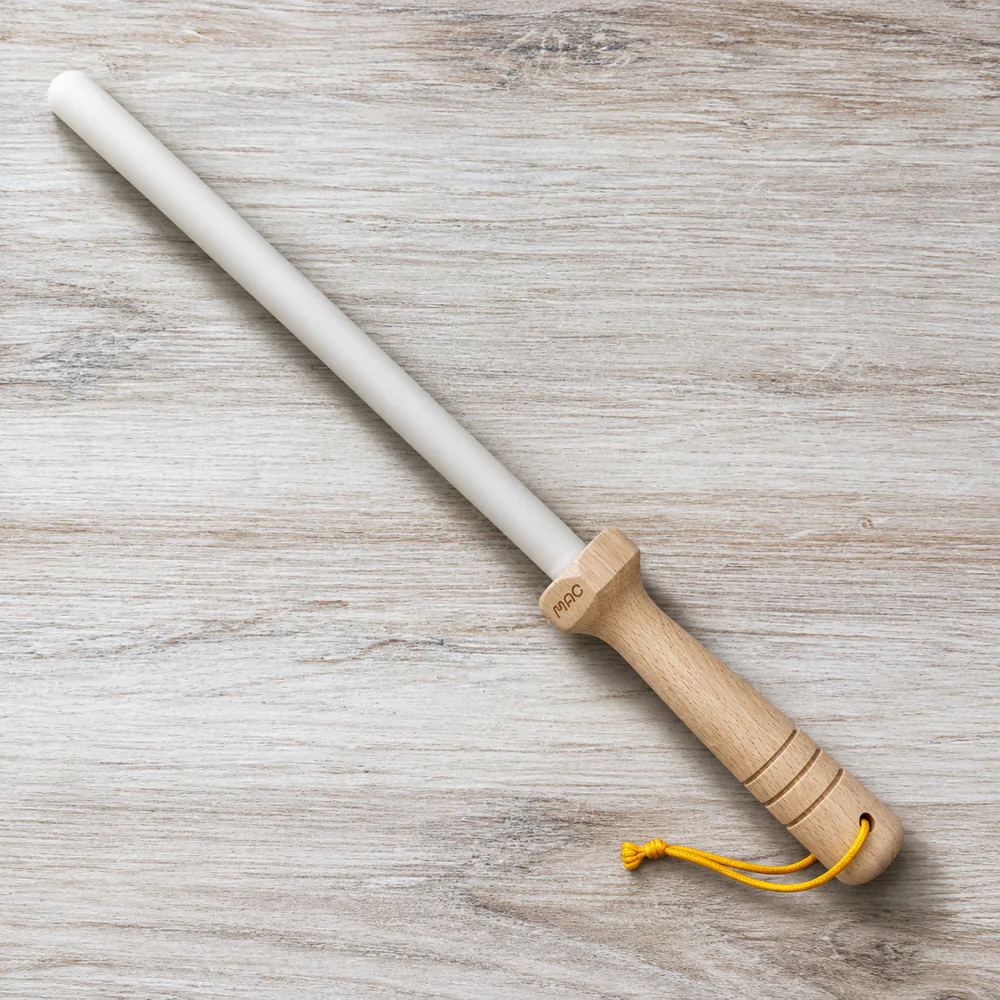
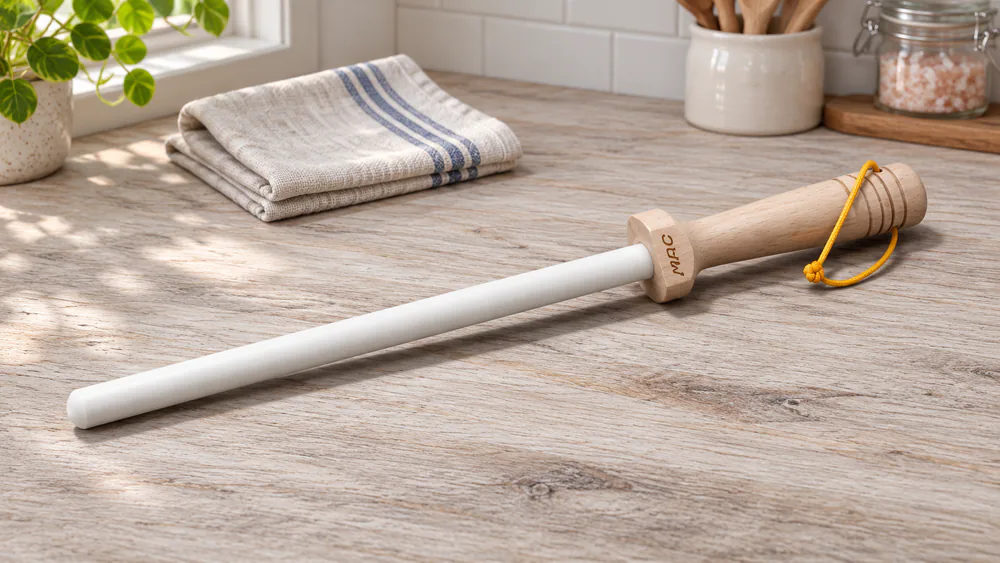
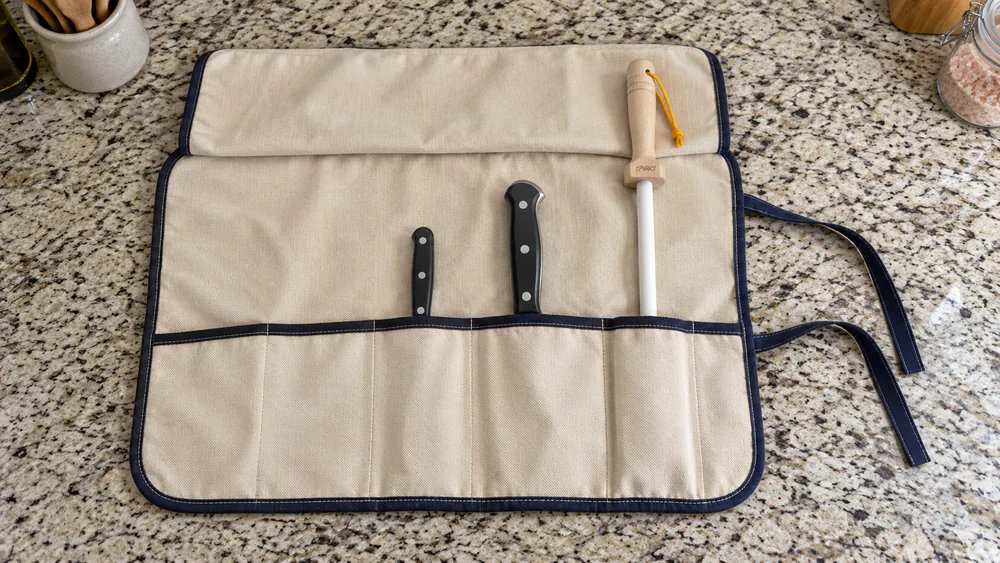
The MAC keeps knives very sharp with little effort, and it fits a knife roll, which no other rod here can claim. It is Made in Japan, 1200 grit, and hand wash only. It hones and does not sharpen.
Pros
Fits a knife roll or small drawer
Keeps knives very sharp with little effort
Made in Japan, 1200 grit
Cons
Feels short for long blades
Bumpy surface is fussy to clean
Shatters on a hard surface
At 8-1/2 inches it feels short for long blades, and the surface is covered in tiny bumps that make cleaning a little fussier. Like all ceramic, it breaks if dropped, and it will shatter on a hard surface.
The compact rod is the only one that fit a knife-roll pocket.
How to Choose a Ceramic Honing Rod
Choosing comes down to five traits. Weigh them against the knives you actually use, not the longest spec sheet.
Grit (1000 vs 1500 vs 3000)
Grit tells you how aggressive the rod is. A 1000 grit rod such as the Shenzhen cuts more, a 1200 to 1500 grit rod such as the MAC or Green Elephant sits in the useful middle, and a 3000 grit rod polishes. The middle range suits weekly knife maintenance; use 3000 grit for finishing between sharpening sessions.
Length and Diameter
A rod should be at least as long as your longest blade, and a little longer is better. That is why the 11-inch Green Elephant and the 12-inch Sharpeak handle chef's knives and slicers easily. The 7-inch ceramic on the Arkansas AC46 and the 8-1/2-inch MAC feel short on big knives. Choose compact only if your blades are short.
Handle and Guard
A guard protects your hand and keeps the knife from sliding onto the handle. The hexagonal guards on the Sharpeak and SHARPAL also stop the rod rolling off a counter. A silicone seal and end cap, as on the Green Elephant, matter more than most buyers expect because they absorb drop shock.
Angle Guides vs Freehand
Angle guides remove the guesswork. A 20-degree guide suits many Western and Japanese kitchen knives, and the Work Sharp, Sharpeak and SHARPAL all build one in. Freehand rods like the Green Elephant reward a steady wrist, and they are more flexible if your knives use different angles. Beginners tend to get cleaner results with a guide.
Ceramic Hardness and Fragility
Hardness is the reason ceramic works so well on hard knife steel and the reason it breaks. The Shenzhen is rated at HRC 68, and the Green Elephant is 9 Mohs. A rod this hard can outlast a steel rod for years, yet a single drop on tile can end it. Pick a rod with drop protection, and store it where nothing falls on it.
A ceramic rod hones, it does not rescue. Buy it to keep a good edge good, not to revive a dull knife.
Ceramic vs Steel vs Diamond Honing Rods
We keep this short because we cover steel in depth in a separate guide. Ceramic is harder than a steel rod, so it works better on hard Japanese steel and it realigns an abused edge in about five to ten passes without the chipping steel can cause.
Steel is tougher and almost impossible to break, which suits a busy line cook. Diamond rods remove more metal per stroke than ceramic and are less forgiving on thin Japanese blades under heavy pressure, so they sit closer to sharpening than honing. If your knives are very dull, a diamond rod or a stone is the right tool, and ceramic is the finishing step.
How to Hone With a Ceramic Rod and Keep It Clean
Hold the rod steady, tip down on a folded towel, and lay the knife heel against it at the angle your knife is ground to. Draw the blade down in one sweep from heel to tip with very light pressure, then repeat on the other side. Five to ten strokes per side is the usual range. For a step-by-step walkthrough, see how to use a honing rod.
The ceramic rod rests on a folded towel during honing.
Cleaning is simple but needs care. Wipe the rod with a damp cloth and a drop of dish soap, and clean any grey metal residue with a scouring pad. Never put a ceramic rod in the dishwasher. Hand wash, air dry, and store it in a drawer slot or a sleeve of its own.
Frequently Asked Questions
What should I do if I drop a ceramic rod?
Check it before you use it again. Ceramic is brittle, and a drop on tile or stone can crack or snap it. A rod with a silicone seal and end cap, like the Green Elephant, absorbs more of the shock, but any rod that looks chipped or cracked should be replaced rather than used on a good knife.
How often should I hone with ceramic?
Hone lightly before each cooking session, or every two to three uses, with five to ten strokes per side. Honing keeps a good edge straight between sharpening sessions, and more strokes do not help.
Do ceramic rods work on serrated knives?
Only some. The Work Sharp and the Arkansas AC46 suit serrated and paring knives, while the Shenzhen is for straight edges only. Long rods like the Sharpeak are awkward on small serrated blades.
Can I use ceramic on Japanese or serrated knives?
Yes for Japanese knives, which respond very well to ceramic. For serrated knives choose a rod built for them, such as the Work Sharp or the Arkansas AC46, and avoid the Shenzhen, which is for straight edges only.
How long does a ceramic honing rod last?
With care it can last for years, but durability varies and a drop can end it in a second. Choose a rod with a silicone seal or rubber cap, keep it off hard surfaces, and hand wash it.
Which grit should I choose?
A 1200 to 1500 grit rod suits most home cooks, 1000 grit suits harder steels that need a bit more bite, and 3000 grit is a finishing step for already sharp knives.
Final Verdict
Buy the Green Elephant 11-inch rod if you want one rod for every knife in the block. Choose the Arkansas AC46 when budget matters most and your blades are short, the Work Sharp or Sharpeak when you want an angle guide, and the Shenzhen for hard or carbon steel. The SHARPAL 118H earns a spot as a finishing polish, and the MAC wins whenever the rod has to ride in a knife roll.
Whichever you pick, remember the rule that matters most: ceramic hones, and it never replaces a proper sharpening. Keep it light, keep it away from the floor, and your knives will stay sharp for longer.