As an Amazon Associate we earn from qualifying purchases. We may earn a commission from links on this page, at no extra cost to you. Learn more.
We judged every Cuckoo here the way a busy kitchen uses a rice cooker: how the rice turns out, how much dry rice a batch really takes, and how painful the cleanup is afterward. The answers differ a lot from one model to the next. Cuckoo sells pressure cookers, plain heating-plate cookers, and an induction model, and the names look almost identical on the shelf.
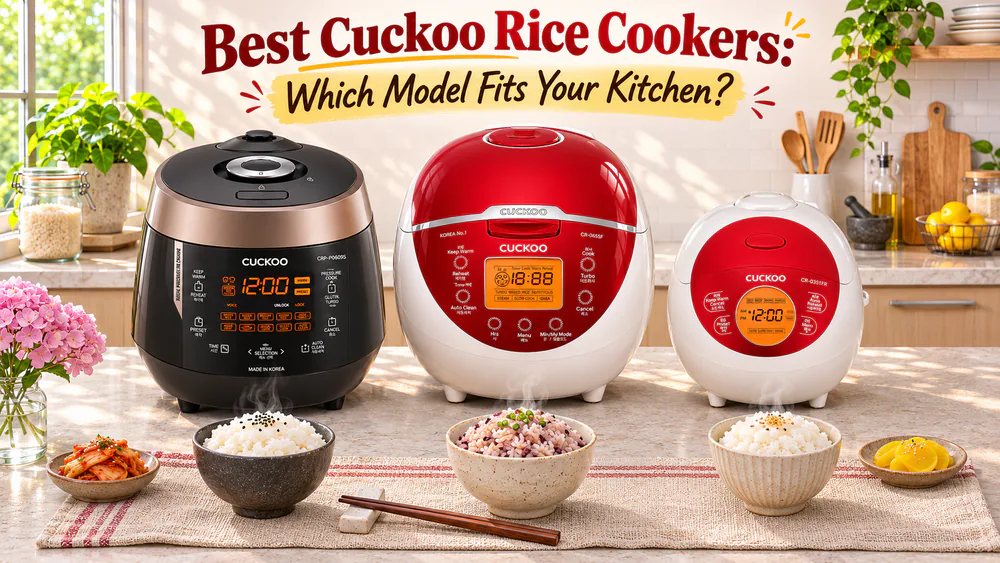
This guide covers six models we think suit six different households, from a compact three-cup cooker to a ten-cup family workhorse. If you are still deciding on the brand itself, our rice cooker reviews cover the wider field, and the Best Zojirushi rice cookers are the closest rival. Each pick has a clear reason behind it, plus the trade-off you should know about before you buy.
How We Tested These Cuckoo Rice Cookers
We started with the question that matters at home: what does this cooker do on an ordinary weeknight? Fancy menus do not help if the controls slow you down at 6 p.m. So we looked at the rice first, then the buttons, then the cleanup.
We base our judgments on each model's published specifications and the hands-on findings we gathered, giving the most weight to what matters in a family kitchen.
Every pick is a different buyer-need slot rather than a ranking of six rivals. The awards are our editorial judgment about who each model fits best. They are not measured scores, and we do not publish a numerical rating because we do not have a scoring method we would stand behind across six different machines.
Rice Types, Capacity and Everyday Use
We judged each cooker against the rice households actually buy: short-grain white rice, which Cuckoo cookers tend to turn glossy and cohesive, plus brown rice and mixed grains where the model offers a dedicated setting.
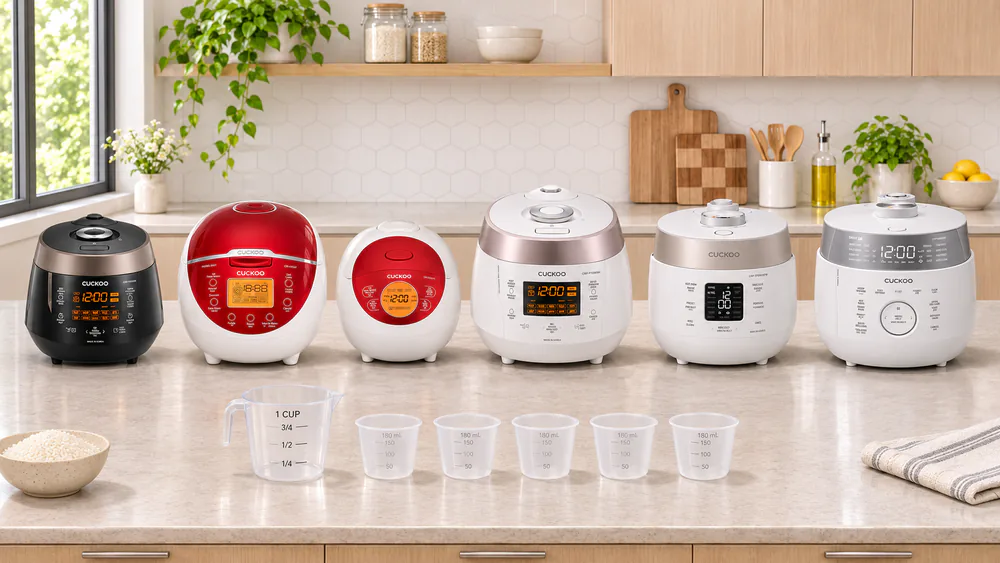
Capacity gets its own attention here. A supplied Cuckoo rice cup holds 180 mL, which is smaller than a US measuring cup. Because of that, "6 cups" on the box means six of the small cups that come in the package, not six standard cups from your kitchen drawer. We kept every capacity number in those supplied cups and noted the advertised cooked yield separately.
Texture is the first thing we weigh when the lid lifts. We look for grains that held together, a bottom layer that had not scorched, and a surface that was not wet or gummy. A good cooker should give you the same result on the second night as on the first, without you needing to fiddle with water levels.
We also paid attention to minimum batches. A big cooker can feel clumsy when you only want rice for two, and a small one gets frustrating when you cook for a crowd.
Features, Cleaning and Value
For features, we asked whether a setting earns its place on the panel. A GABA setting or scorched rice mode matters to some cooks and means nothing to others.
Cleaning counts for a lot in a family kitchen. The inner pot is coated, so it should be washed by hand with the supplied paddle or a nonmetal utensil. Pressure models also have removable lid parts and a steam component, and those add steps beyond washing the bowl.
Noise and steam came into it too. Pressure cookers release steam at the end of a cycle, and in a quiet kitchen that moment is easy to notice. Counter footprint mattered as well, since a cooker that crowds the toaster and the kettle tends to get put away and then forgotten.
On value, we compared what each model offers against its place in the lineup. Tiers matter more than numbers here, since prices shift with promotions. Our budget pick is the simpler heating-plate model, and the premium pick is the only induction cooker in the group.
The supplied rice cup sits beside a standard US measuring cup.
Best Cuckoo Rice Cookers at a Glance
Here is the shortlist in one place. Each model name is the full model code, because Cuckoo uses near-identical names for very different machines.
Rank
Product
Best for
Uncooked capacity
Buy
1
CUCKOO CRP-P0609S
Best for Most Households
Pressure-cooked rice for a family of three to five
Heating method and pressure capability are two separate choices, so the table keeps them in separate columns. Micom or fuzzy logic describes the electronic control. The heat source is either a heating plate or induction. Pressure is a different capability again.
Model
Intended buyer
Uncooked capacity
Heating method
Pressure options
Principal trade-off
CRP-P0609S
Most households wanting pressure rice
6 cups (12 cooked)
Conventional heating plate, fuzzy-logic control
High pressure
More lid maintenance and menu learning
CR-0655F
Budget daily rice
6 cups (12 cooked)
Heating plate, Micom control
Non-pressure
Slower routine and a confusing countdown
CR-0351FR
Small batches
3 cups (6 cooked)
Heating plate, Micom control
Non-pressure
Too small for a rice-heavy family dinner
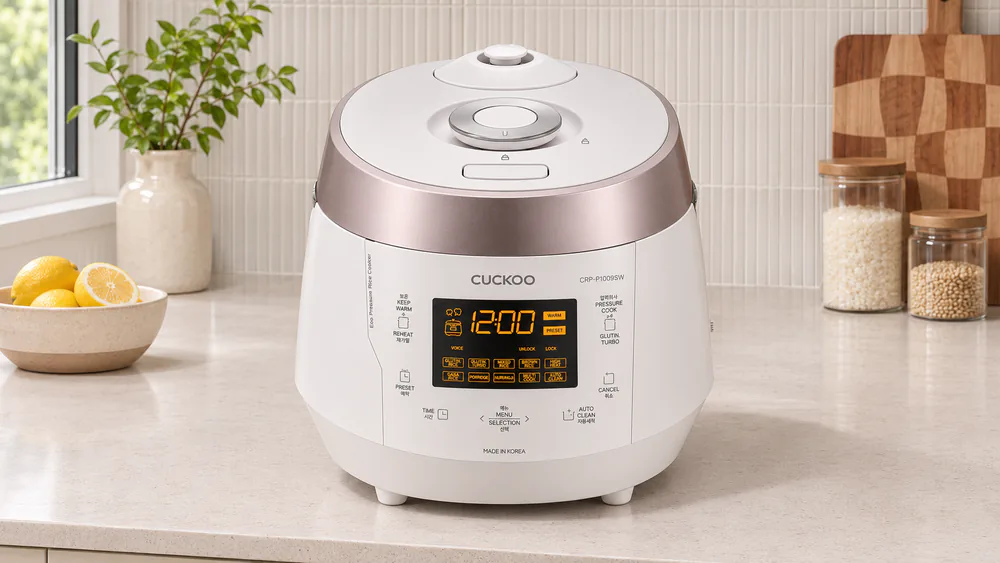
CRP-P1009SW
Large families
10 cups (20 cooked)
Conventional heating plate, electronic control
High pressure
Bulk and a firm, chewy texture risk
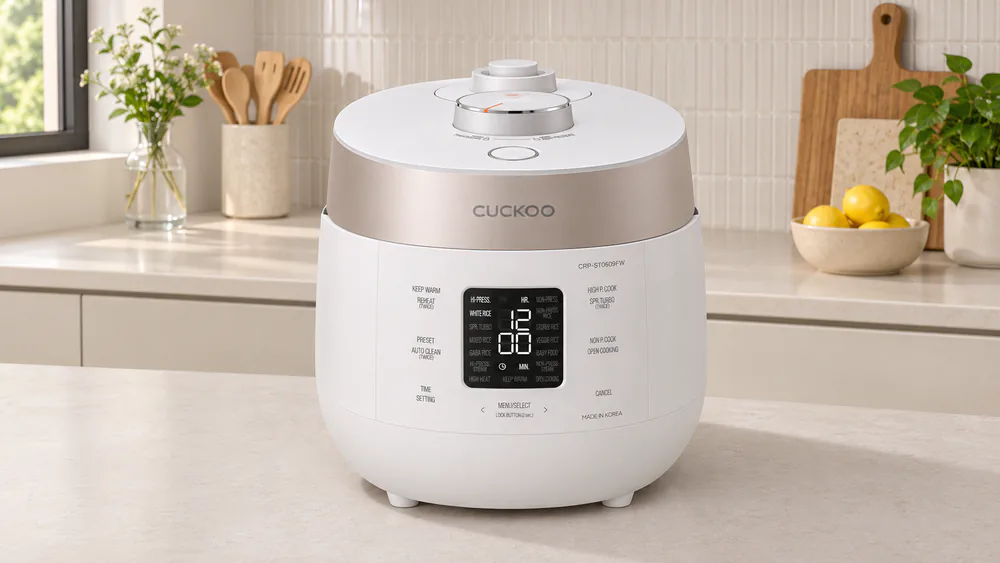
CRP-ST0609FW
Twin Pressure flexibility
6 cups (12 cooked)
Heating plate, electronic control
High or non-pressure
Small touch labels and a springy lid
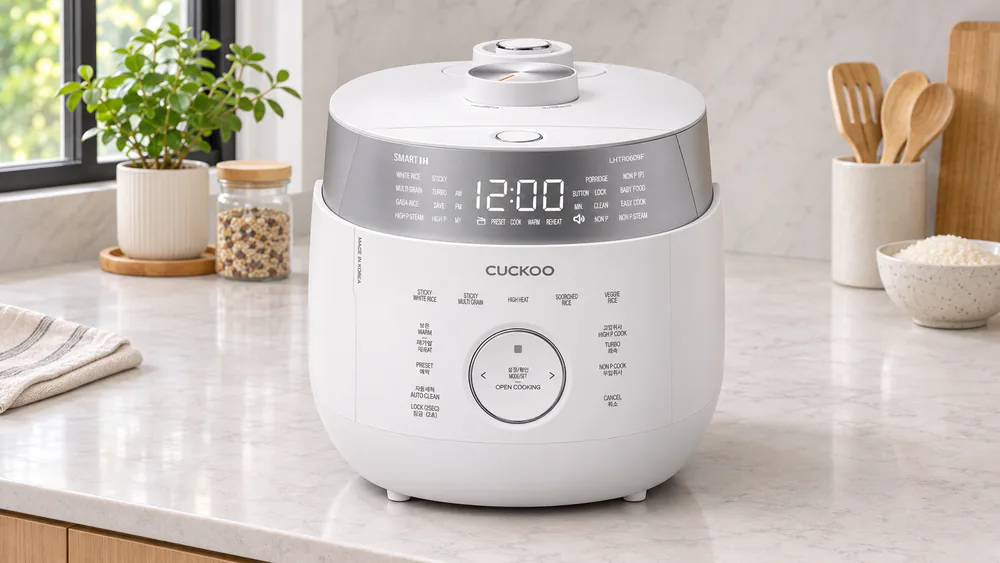
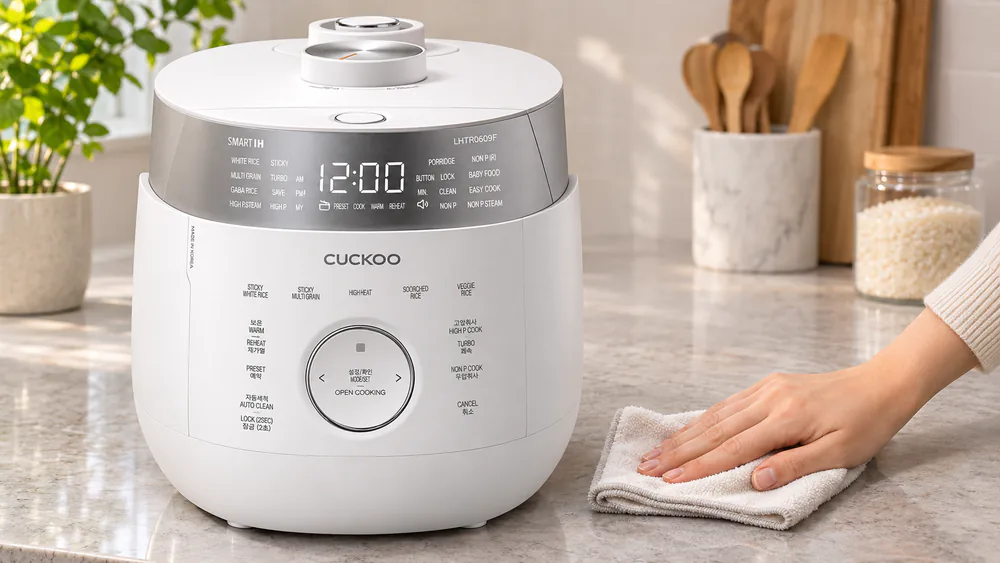
CRP-LHTR0609FW
Premium induction
6 cups (12 cooked)
Induction, electronic control
High or non-pressure
Cost, size and menu complexity
Note. Every capacity figure here counts supplied cups of dry rice. It is not a promise of a set number of adult servings. Brown rice, mixed grains and porridge have lower maximums than white rice. Check the manual for your exact model before you plan a big batch.
Our Cuckoo Rice Cooker Picks
Each pick below names the exact model code, the buyer it suits, and the compromise that comes with it.
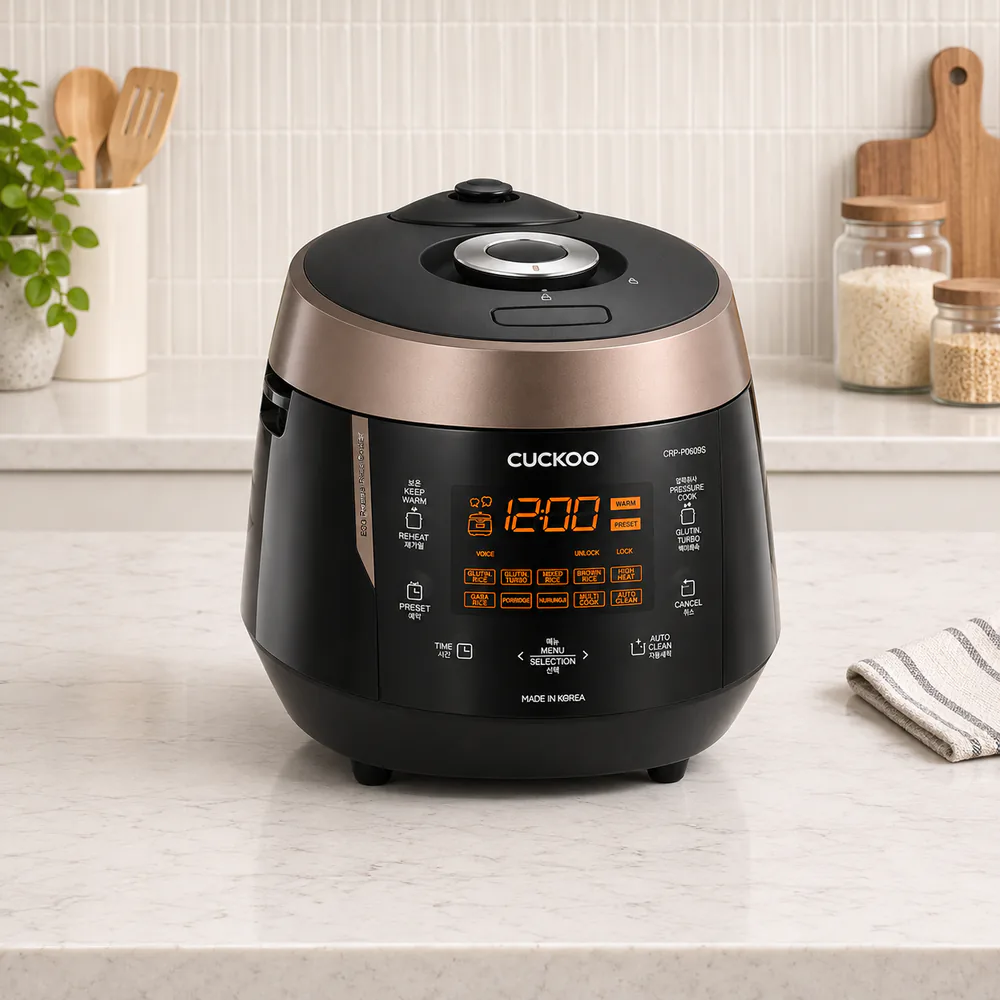
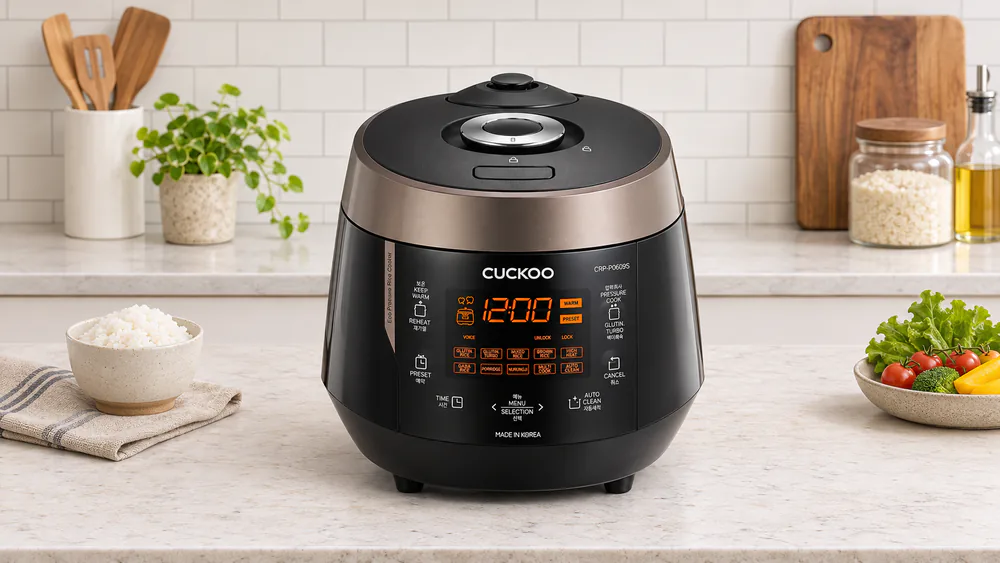
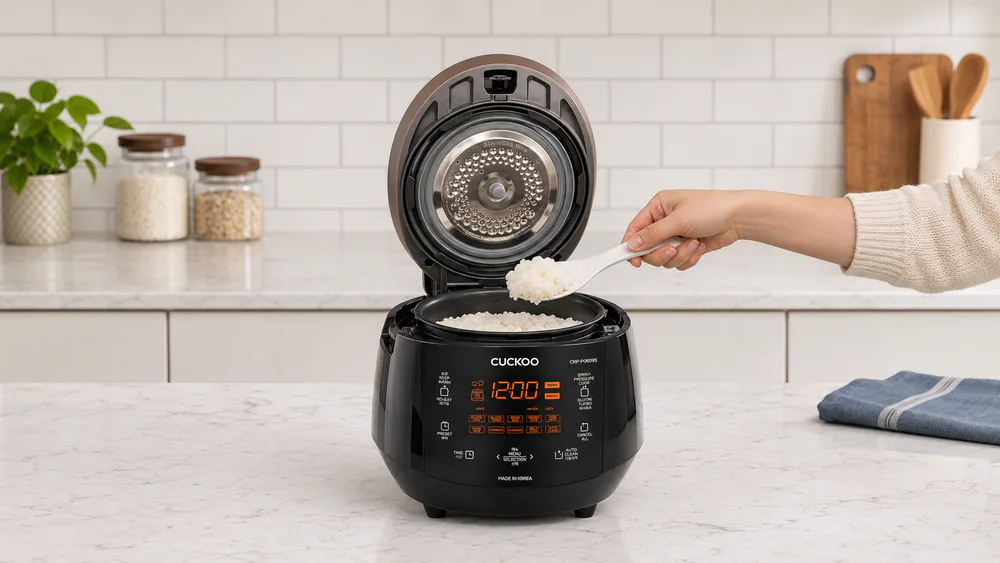
The CRP-P0609S is the cooker we would hand to most families who want pressure-cooked rice. Short-grain rice comes out cohesive and glossy. It holds together on chopsticks, which is exactly what people buy a Cuckoo to get.
Wide menu with brown, GABA, porridge and scorched rice
Steam plate included, plus voice guidance in three languages
Cons
Menus take practice before they feel quick
Lid and steam parts add washing steps
Steam release is noticeable in a quiet kitchen
No option to cook rice without pressure
It holds 6 cups of dry rice and yields 12 cups cooked. It sits in the middle of this group on cost. The body measures 14 x 11 x 10.5 inches and weighs 14.3 lb. That weight is reassuring on the counter, but you will not want to carry it back to a cabinet every day.
The heat source is a conventional heating plate with fuzzy-logic control. The pressure is high pressure. There is no Twin Pressure choice here. The menu covers white, turbo white, mixed, brown, GABA, porridge and scorched rice. It adds multi-cook, reheat and keep-warm. Voice guidance comes in English, Korean and Chinese.
This one is for cooks who will read the manual once and then enjoy the payoff. Give it a few dinners before you judge it. The steam plate in the box is a handy extra.
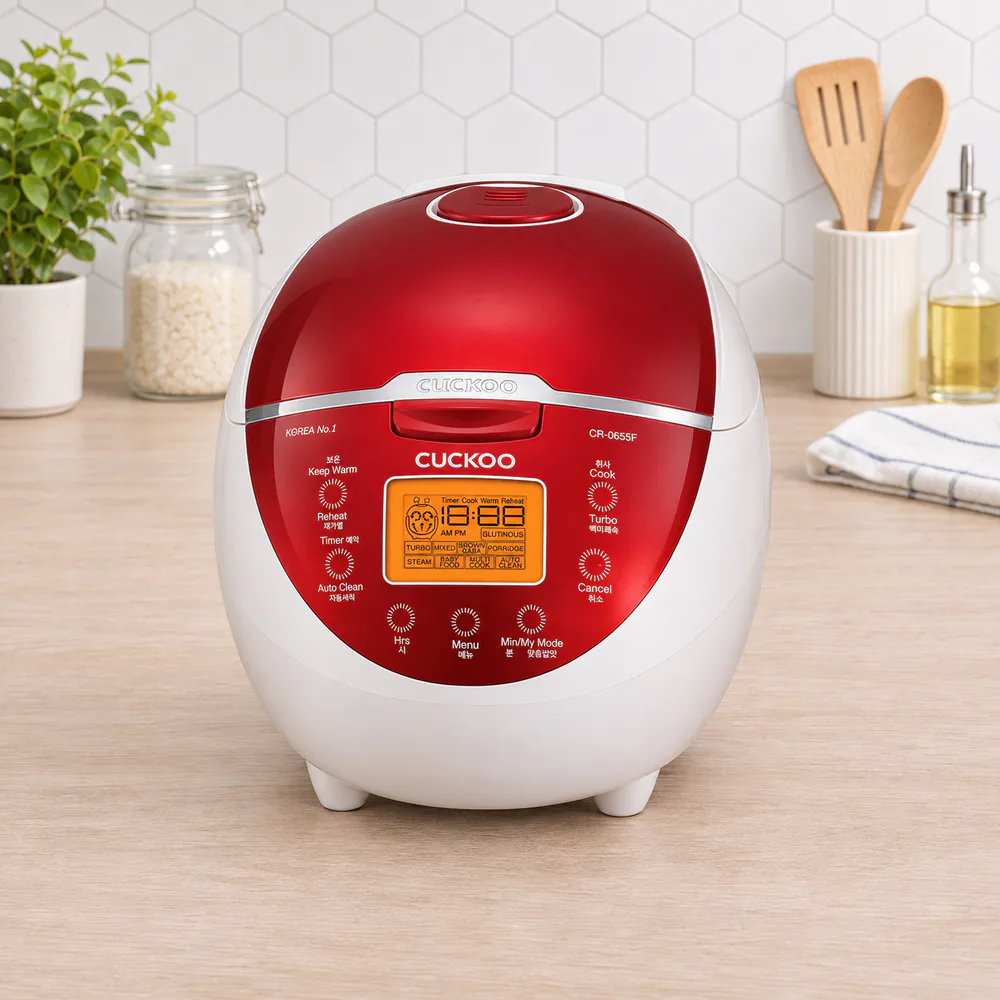
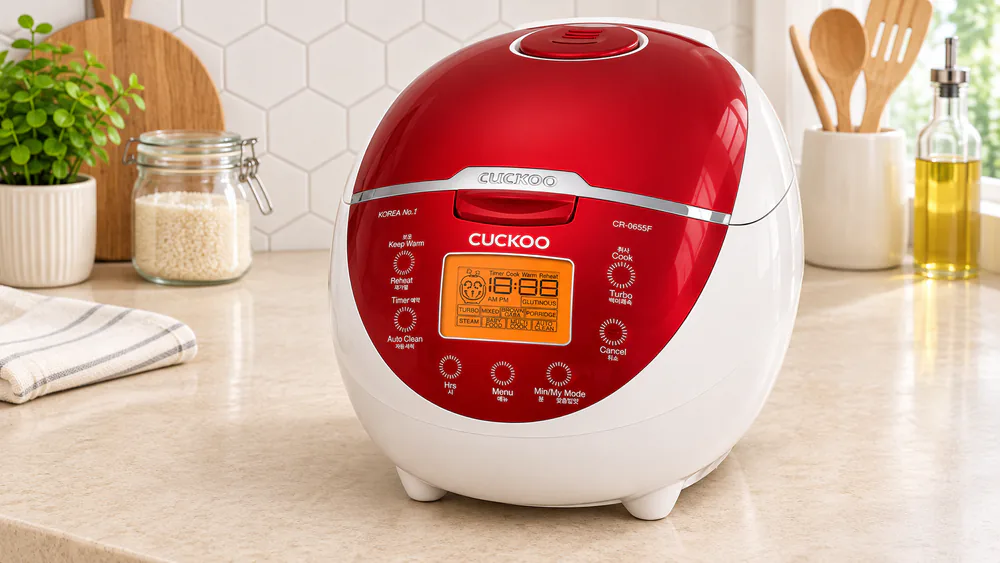
Where the CRP-P0609S demands pressure and patience, the CR-0655F skips both. Cleanup is the best part. The nonstick bowl releases residue readily with a soft sponge. The removable cover and drain dish are simple compared with the pressure models.
Pros
Easy cleanup, with a bowl that releases residue with a soft sponge
My Mode adjusts rice firmer or softer
Compact footprint at 13.0 x 9.4 x 8.7 inches
Lowest-cost six-cup option in this group
Cons
No pressure cooking
Controls take learning, and the final countdown can confuse
Brown rice and GABA are capped at 4 cups
Long warm holds can crust the edges
My Mode is the feature we liked most. It gives useful control over firmer and softer textures. That matters when everyone in the house wants their rice a little different. It is the budget pick for a reason, and you give up nothing you need for daily rice.
It holds 6 cups of dry rice and 12 cups cooked. It uses a heating plate with Micom control. The body measures 13.0 x 9.4 x 8.7 inches, which is compact enough for a standard counter. It also costs less than any pressure model on this list.
The white-rice range runs from 2-6 supplied cups. You can cook a modest batch for two without a sad scatter of grains across the bottom. Mixed or brown rice and GABA run from 2 to 4 cups. Porridge takes just 1 to 1.5 cups. Plan around those limits, since the headline 6 cups only applies to white rice.
Expect a short learning period on the controls. This is a cooker for people who want rice without a project.
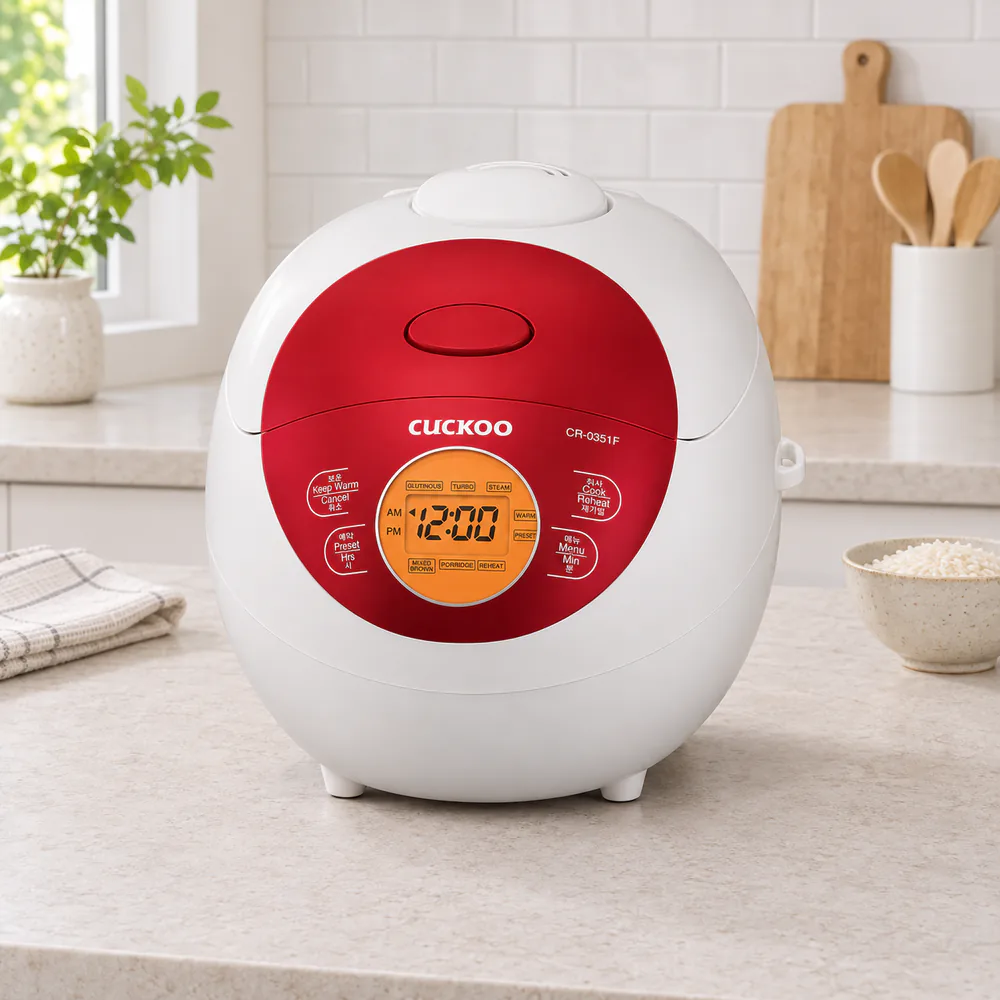
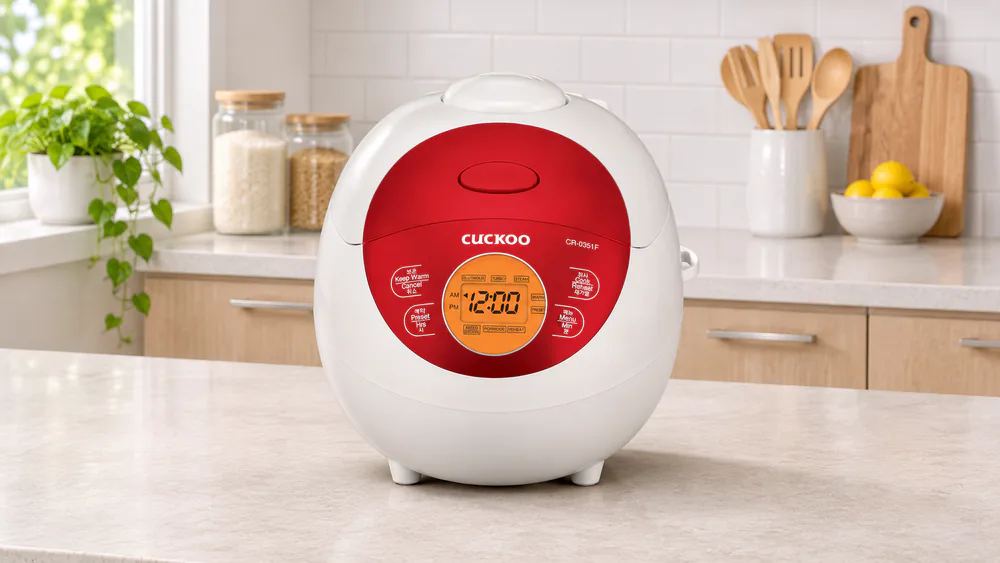
The CR-0351FR is a better fit for one or two people than the six-cup models. It holds 3 cups of dry rice and 6 cups cooked. It handles small batches from 0.5-3 supplied cups of white rice. That is a wide, forgiving range for a compact cooker.
Pros
Compact body is easy to store between meals
Handles batches as small as half a cup
Simple non-pressure Micom operation
Turbo mode for quicker white rice
Cons
Three cups is too small for a rice-heavy family dinner
Display is hard to read under some lighting
No immediate full countdown
No dedicated GABA menu
At 425W it is the lowest-powered model here. The body measures 29.3 x 22.5 x 19.8 cm. That compact shape is easier to put away between meals than the larger pressure cookers. It matters in a small kitchen where every cabinet is spoken for.
It is a non-pressure heating-plate cooker with Micom control. The modes are white, turbo, steam, mixed or brown, and porridge. It adds My Mode, preset scheduling, keep-warm and reheat. The manual lists mixed or brown but no separate germination menu, so we would not promise a dedicated GABA cycle. Turbo is quick, but the time depends on the batch and conditions.
Buy it for individual meals and couples, not for a rice-heavy family dinner. Read the display in the lighting of your own kitchen before you rely on it.
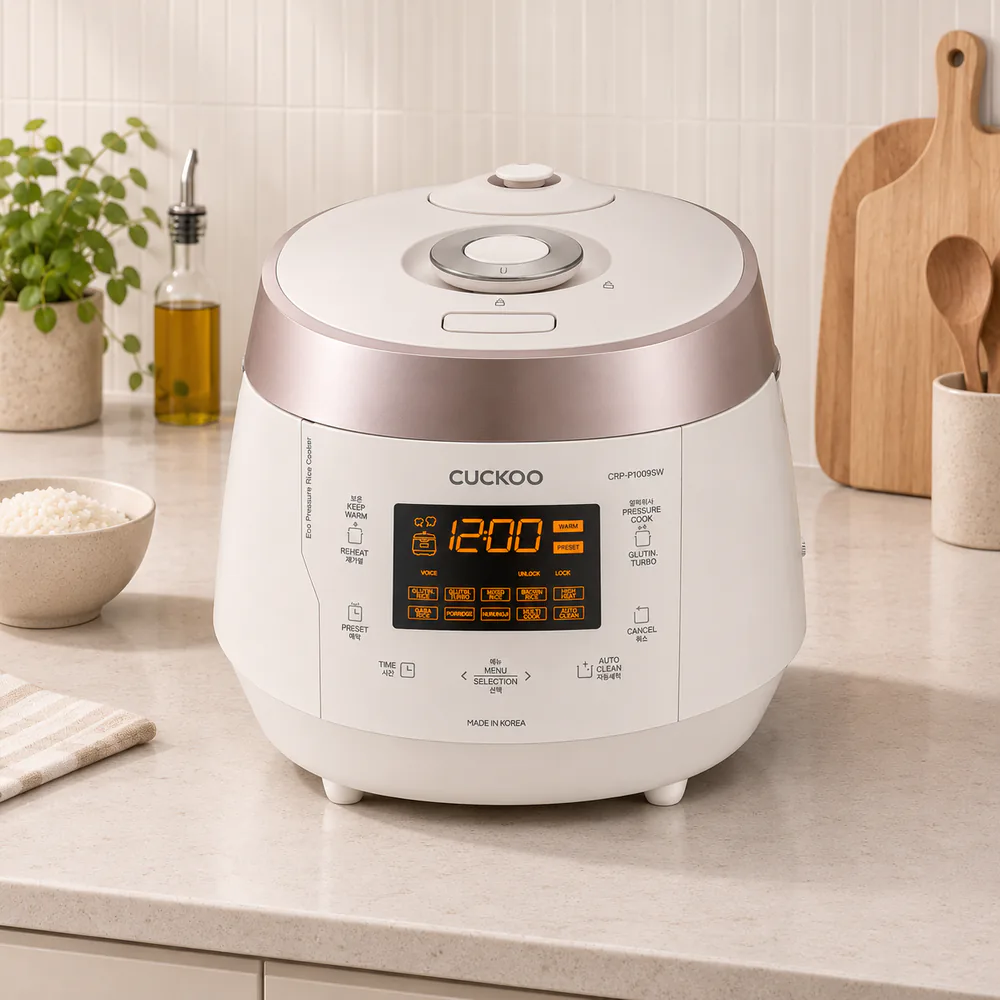
Where the little CR-0351FR hides in a cabinet, the CRP-P1009SW takes a permanent spot on the counter. It draws 1150W and measures 15.6 x 11.6 x 11.4 inches. Treat it as an appliance you leave out, not one you stow after dinner.
Pros
Ten-cup capacity for big families and guests
High-pressure cooking with a full grain menu
Steam plate included
1150W power for large batches
Cons
Bulky enough to need a permanent counter spot
Rice can come out firm and chewy
Lid has several pieces to wash
Menu takes practice to operate quickly
In return it is the only Cuckoo here that keeps up when the table seats six or more. It holds 10 cups of dry rice and 20 cups cooked. That covers big dinners and leaves room for guests. The heat source is conventional heating pressure with electronic control, not induction, whatever the page title on some listings says.
The feature set mirrors the six-cup pressure model. You get white and turbo, mixed, brown, GABA, porridge and scorched rice. It adds multi-cook, steam cleaning, reheat, keep-warm and a preset timer. A steam plate comes in the box. Voice guidance speaks English, Korean and Chinese.
Rice texture can run firm and chewy. That is a real preference risk, not a guarantee of fluffy grains. Cooks who like soft rice should adjust water and settings. Lid cleanup asks for some dexterity, so this suits a household that cooks rice most nights and does not mind the routine.
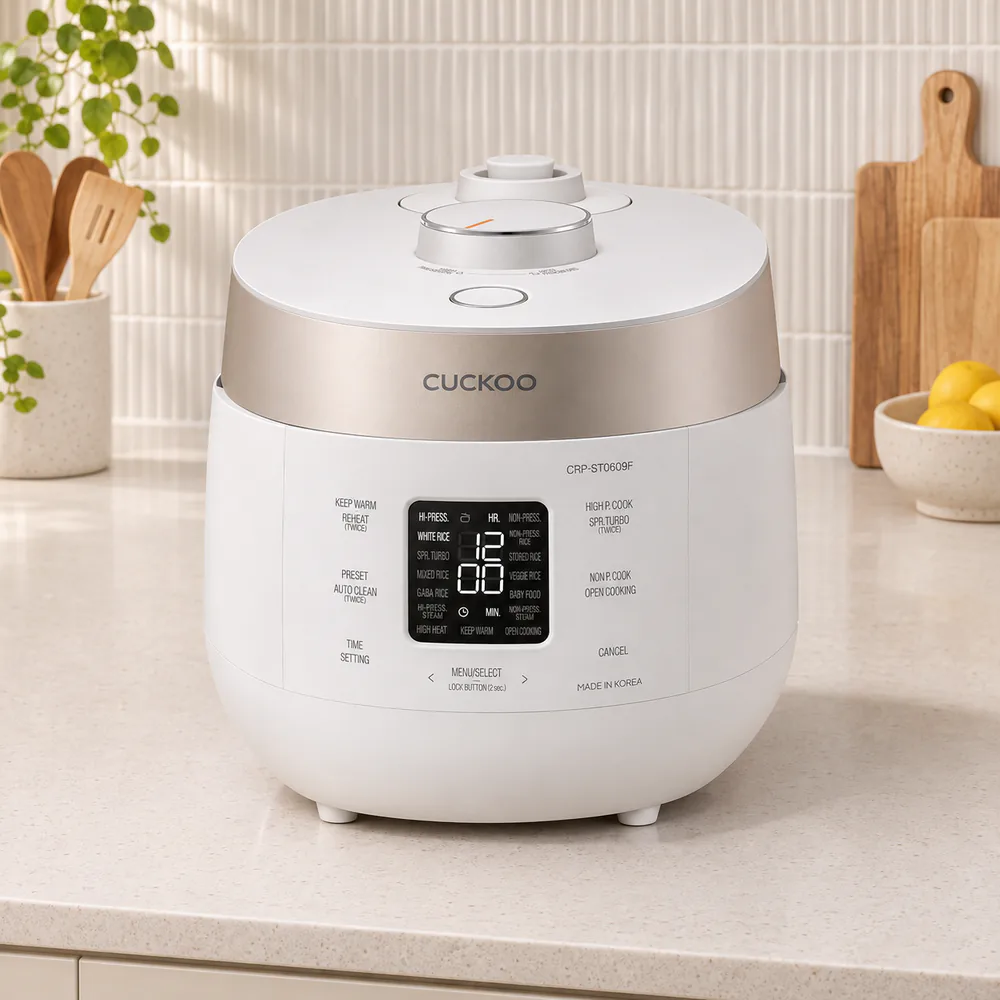
The CRP-ST0609FW suits cooks who want to choose between pressure and non-pressure cooking, an option the CRP-P1009SW does not offer. It cooks either way. The difference is noticeable: pressure and non-pressure cooking give different levels of grain cohesion. You can match the rice to the meal.
Pros
Choose high-pressure or non-pressure rice
Noticeably different grain cohesion between the two modes
Nonstick bowl wipes clean easily
Includes veggie rice, stored rice and baby food modes
Cons
Small touch labels make menu selection fiddly
Lid spring can shift the cooker when released
No dedicated porridge menu
No steam plate in the included accessories
It holds 6 cups of dry rice and 12 cups cooked. It runs at 880W and uses a conventional heating plate with smart electronic control. The menu includes white, Super Turbo, mixed, GABA, stored rice, veggie rice and baby food. It adds pressure and non-pressure steam, open cooking, reheat, keep-warm, a timer and auto-clean. There is no dedicated porridge menu. The manufacturer points cooks to the baby-food instructions in non-pressure mode instead.
Fit needs a check. Published depth is 13.9 inches, but width and height differ across specification sheets. Leave extra clearance for the lid and steam rather than trusting a tight cabinet measurement.
On the plus side, the nonstick bowl wipes clean easily. The steam-clean cycle does not replace routine washing, though. Hold the base steady when you release the lid, and give the touch panel a slow first week.
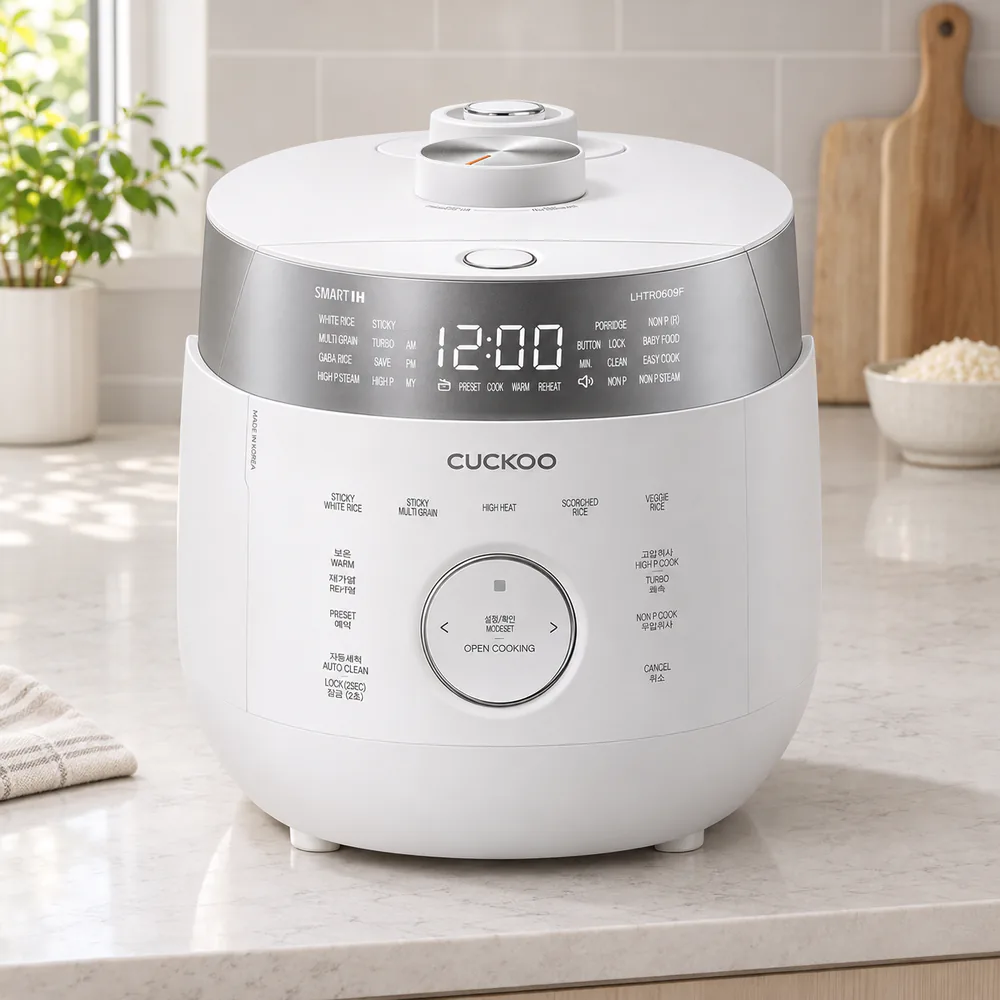
The CRP-LHTR0609FW builds on the cooking flexibility of the CRP-ST0609FW with more options for grains. Brown rice has several distinct preparation choices, which makes texture adjustment a real strength. The menu also adds multigrain, GABA, savory, turbo, porridge, baby food, veggie rice, scorched rice, open cooking, steam, My Mode, preset, reheat and auto-clean. Counts of the total modes vary between sources, so we list the useful ones.
Pros
Induction heating with high and non-pressure rice
Several distinct brown rice preparation choices
Broad grain menu including multigrain, GABA and savory
Steam plate included
Cons
The most expensive Cuckoo on this list
Large body can force rearranging nearby appliances
Touch panel takes time to learn and reacts while being wiped
Setup complexity for everyday white rice
It is the splurge, and the only true induction cooker in this group. It combines induction heating with both high-pressure and non-pressure rice. It adds fuzzy logic and automatic keep-warm in a 6-cup, 12-cup-cooked cooker.
It draws 1090W and measures 15.1 x 10.2 x 10.3 inches. Measure the counter first, because the larger outer body can force some rearranging. The included pot is an Xwall Black Shine nonstick-coated pot. It is not compatible with the full-stainless replacement sold for a different model.
This is a cooker for grain hobbyists who enjoy the menu. Everyone else will find the setup heavy for plain white rice. Keep the manual nearby for the first few weeks.
How to Choose a Cuckoo Rice Cooker
Choosing well comes down to a handful of decisions. Work through them in order and the right model usually becomes obvious.
Capacity: Uncooked Cups, Cooked Cups and Minimum Batches
Choose capacity by the dry rice you use per meal, with extra room for guests. Do not start from the cooked-cup number, because it overstates what most households need in a single pot.
A three-cup cooker suits one or two people. A six-cup cooker covers most families of three to five, and the ten-cup model is for big households. Grain-specific maximums can be lower than the white-rice capacity. A brown rice dinner for a crowd needs more headroom than the box suggests.
Minimum batches are the quiet problem. A large cooker is awkward for a small portion. That is one more reason the budget six-cup model, with its 2-6 cup white-rice range, is easier to live with than it first appears.
Micom, Conventional Heating and Induction Heating
These terms describe two separate things. Micom, fuzzy logic and electronic control describe how the cooker thinks. A heating plate or induction describes where the heat comes from.
Most Cuckoo models heat from a plate on the bottom. Induction heats the pot itself. That is why the LHTR model suits brown rice and grains. Some product pages call pressure models induction. The specification tables list them as conventional heating-pressure cookers, and we follow the tables.
Non-Pressure, High Pressure and Twin Pressure
Pressure is a separate capability from heating. A non-pressure cooker is simpler, and a high-pressure cooker produces the glossy, cohesive texture many Korean-style cooks want. Twin Pressure lets you pick.
Pros
High pressure gives glossy, cohesive grain
Twin Pressure lets one cooker handle both textures
Non-pressure models are simpler and easier to clean
Cons
Pressure models add lid and steam parts to wash
High pressure alone cannot make looser, separate grains
Twin Pressure menus are fiddlier to operate
If you prefer rice that holds together on chopsticks, pressure is worth the extra cleanup. If you like separate, fluffy grains, a non-pressure model or the Twin Pressure setting is the better path. We cannot give a pressure figure in PSI, because the published numbers for the CRP-P0609S disagree with each other.
Rice Texture, Brown Rice and GABA Settings
Texture is a preference, not a spec. One cook's perfect bowl is another cook's mush, so decide what you want before you shop. The same cooker can turn out firm rice or soft rice depending on water, grain and the setting you choose.
For brown rice, look at how many preparation choices the cooker offers. The induction model has the most. GABA is a germinated-brown-rice program, and it is not on every model. The CR-0351FR, for example, has mixed and brown rice but no separate GABA menu.
Every model with a rich menu has a learning curve. Plan on keeping the manual nearby for the first few meals, and remember that touch panels can be fiddlier than buttons.
Voice guidance speaks English, Korean and Chinese on the pressure models. That helps if family members prefer another language. Counter space matters just as much. The CRP-P1009SW and the induction model are bulky. Treat them as permanent residents on the counter.
Think about where the cooker will live, too. The lid needs clearance above it. Steam needs a clear path out. Tucking any of these under a low cabinet is a bad idea. Measure the shelf height before you commit.
Hot steam and hot inner parts also need adult supervision around children, so keep the vent clear and let parts cool before washing. In a house with young cooks, that is a real factor.
Cleaning, Replacement Parts and US Warranty Support
Cleanup decides whether a cooker gets used every week or sits in the cabinet. The basic heating-plate models are the easiest. You wash the pot, the cover and the drain dish. Pressure models add a removable inner cover and steam parts. Expect a few extra minutes at the sink after every batch.
Wash coated inner pots by hand. Dishwasher cleaning can damage the coating. Metal utensils scratch it, so use the supplied paddle. The auto-clean cycle is a steam cycle. It is not a replacement for washing the bowl, cover, vent and condensation collector.
Coated pots are a maintenance consideration, and no appliance has a universal lifespan. When you need a replacement pot or seal, match the full model code. The part number CCP-DH06 is identified for the ST0609F and LHTR0609F.
Warranty coverage needs a careful read. Product pages advertise a one-year limited warranty. Eligibility depends on the seller, your region and the exclusions. The current US policy excludes third-party purchases, inner pots, packing, drain dishes, vents, wear and cosmetic damage. Confirm coverage for the seller you buy from. Keep your proof of purchase.
Heating method and pressure are two different decisions, so choose them separately.
Which Cuckoo Rice Cooker Should You Buy?
Three questions narrow the field fast. How many people eat rice at a typical dinner? Do you want the glossy, cohesive texture that pressure delivers? And how much counter space can you give the cooker every day? Your answers point to one of the six models almost every time.
If you want the simplest route, buy the CR-0655F. If you cook for one or two, the CR-0351FR is the one to tuck away. Large families should go for the CRP-P1009SW. Cooks who cannot decide on texture should look at the CRP-ST0609FW. The CRP-LHTR0609FW only makes sense if grains are a serious hobby.
Key takeaway. Keep-warm is a quality limit, not a storage plan. The Micom manuals recommend holding rice warm for less than 12 hours and discourage warming mixed or brown rice. Plan the cook so the rice is ready close to mealtime.
Common mistakes to avoid
The most common error is reading "6 cups" as six standard cups. Another is assuming a Micom cooker is a pressure cooker, or that pressure and induction are the same thing. Finally, shoppers often put the inner pot in the dishwasher, which can wear out the coating.
Another slip is expecting the same rice from every recipe. Water, grain and personal taste all change the result, so give yourself a couple of batches to dial in your ratio before you judge a cooker.
Another slip is buying the biggest cooker "just in case." A ten-cup machine is a poor fit for a household that cooks two cups of rice at a time, and it takes up counter space every day. Size to the dry rice you cook most nights, not to the biggest dinner you host once a year.
It also helps to match the full model code when you shop. Cuckoo uses near-identical names, and a similar-looking listing can be a different generation with different parts. The LHTR and LHTAR lines, for example, are separate models, and their pots are not interchangeable. Check the code on the box, the manual and the listing before you pay.
Washing the rice is another step people skip. Rinse short-grain rice until the water runs mostly clear. Drain it well before it goes into the pot. Loose surface starch makes the top layer sticky, and that is easy to blame on the cooker.
Resting matters too. Let the rice sit with the lid closed for a few minutes after the cycle ends. The moisture settles, and the bottom layer firms up. Then fluff it gently with the supplied paddle so the grains stay whole.
Store the paddle and the cup with the cooker so they never wander off to another drawer. A missing cup makes every water line harder to read. Also plan the week, not just one dinner. A cooker that fits Monday's rice but not Saturday's gathering will frustrate you. Think about the busiest night you cook for, then pick the model that handles it without overflowing.
If you share the kitchen with several cooks, keep one printed copy of your model's key settings taped inside a cabinet door. It saves a lot of guessing.
Last, do not skip the manual. The menus on these cookers are deep, and the first week goes much better if you read the section on your most-used setting before the first batch.
Cuckoo Rice Cooker FAQs
Are Cuckoo rice cookers worth the money?
They are worth it if rice is a staple in your house and you value texture control. The budget CR-0655F covers daily rice without pressure, while the pressure models cost more and add maintenance. If you only cook rice now and then, a simpler cooker is enough.
Is Cuckoo or Zojirushi better for your rice preferences?
There is no brand-wide winner. Compare grain texture, adjustments and pressure capability by model. Cuckoo pressure cookers lean toward glossy, cohesive rice, while the right pick for you depends on the texture you like. Our Best Zojirushi rice cookers guide covers the other side.
Can Cuckoo rice cookers cook grains other than white rice?
Yes, on models with mixed, brown, GABA, multigrain or porridge settings. The induction CRP-LHTR0609FW has the widest grain range, while the CR-0351FR has mixed and brown but no separate GABA menu. Grain maximums are often lower than white rice, so check the manual for the exact model.
What should you check about the keep-warm function?
Check the manual for your model. The CR-0655F and CR-0351FR manuals recommend keeping rice warm for less than 12 hours for quality and discourage warming mixed or brown rice. A long hold can also leave a little crust at the edges. If you plan to hold rice for a long stretch, set the cooker to switch off or reheat later instead of leaving it on warm all day.