As an Amazon Associate we earn from qualifying purchases. We may earn a commission from links on this page, at no extra cost to you. Learn more.
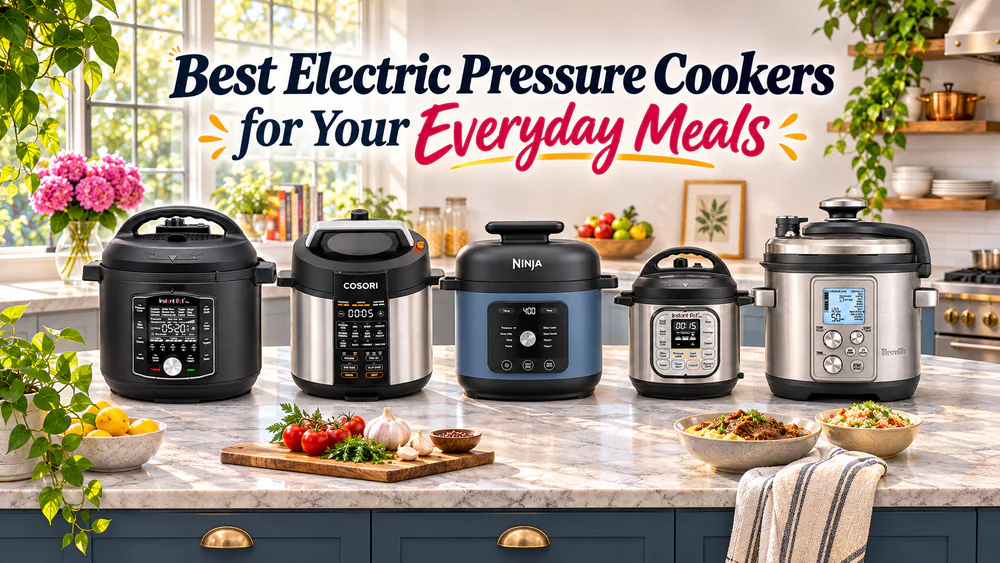
An electric pressure cooker seals in steam and manages the heat for you, so tough cuts, beans and rice finish in a fraction of the usual time. Our best overall pick is the Instant Pot Pro 6-quart, and the COSORI 6-quart is the budget alternative that cooks nearly as well. On capacity, a 6-quart cooker suits most households of three to four people. Step down to the 3-quart Instant Pot Duo Mini if you cook for one or two. We cover every model below, and you can find more in our pressure cooker reviews.
Best Electric Pressure Cookers at a Glance
Five electric models made our shortlist, each suited to a different need. The table lays out the trade-offs side by side so you can jump straight to the review that fits your kitchen. We left stovetop pressure cookers out of the ranking on purpose, because they work differently and deserve their own comparison.
Product
Award / Best for
Capacity
Inner pot
Standout feature
Main tradeoff
Instant Pot Pro
Best Overall
6-quart
Stainless steel
Anti-spin handles and a stovetop-compatible pot
Rice can stick; lid needs detailed cleaning
COSORI 6-quart
Best Budget Pick
6-quart
Ceramic-coated nonstick
Easy cleanup and broad functions
Vegetables can overcook
Ninja HyperHeat
Best for Beginners
6.5-quart
Ceramic-coated aluminum
Wide searing surface and a clear dial
Coating needs gentle utensils
Instant Pot Duo Mini
Best Small
3-quart
Stainless steel
Compact storage
Recipe scaling; rice cleanup
Breville Fast Slow Pro
Best for Advanced Controls
6-quart
Ceramic-coated bowl
Automatic release and 1.5-12 psi adjustment
Lid alignment; costs the most here
How We Tested the Electric Pressure Cookers
We asked the same three questions of every cooker: how well does it cook real dinners, how easy is it to run, and how painful is cleanup. We cooked stews, rice, beans, pork and chicken, and judged each pot on how well it browned meat. Searing matters because a cooker that cannot brown leaves you dirtying a second pan.
Sources, selection criteria, and evidence limits
We shortlisted models that are sold as electric multicookers with a pressure setting and a real lineup of recipes behind them. Capacity, inner-pot material, release design and controls decided who made the cut. We did not rank a large-capacity model. We looked at the 8-quart Instant Pot Duo Plus, but we could not confirm a matching buy link for the current version, so it appears only in the buying guide.
How we compared cooking performance, usability, and value
Every rating is our own score out of 5. Cooking results carry the most weight, followed by ease of use and cleanup, then value for the model's price tier. We never copy scores from other sites or from store listings. We also check the warranty and whether the maker catalogs replacement parts, since a seal or pot you cannot replace shortens the life of the cooker.
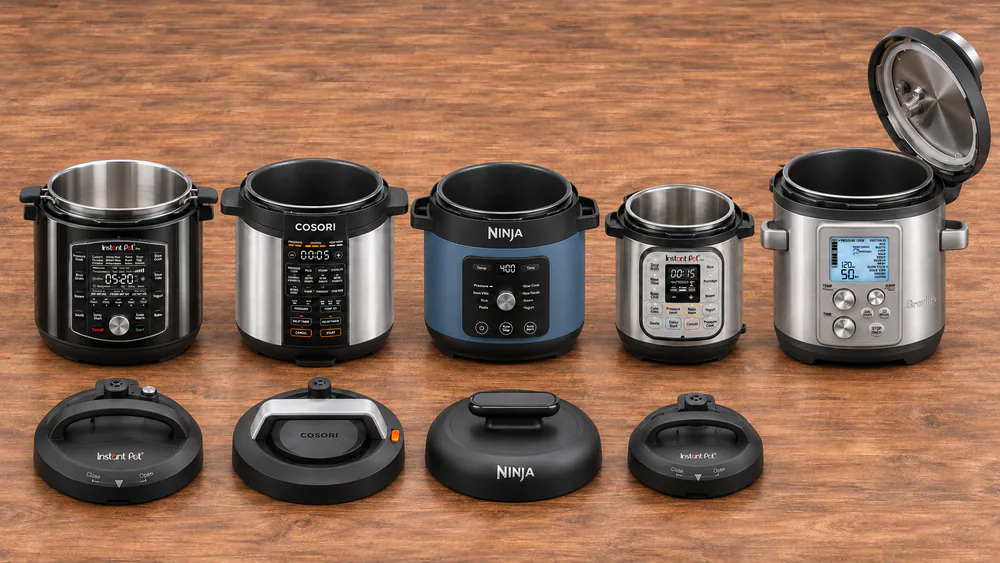
The five cookers we compared, with inner pots showing the stainless and ceramic-coated options.
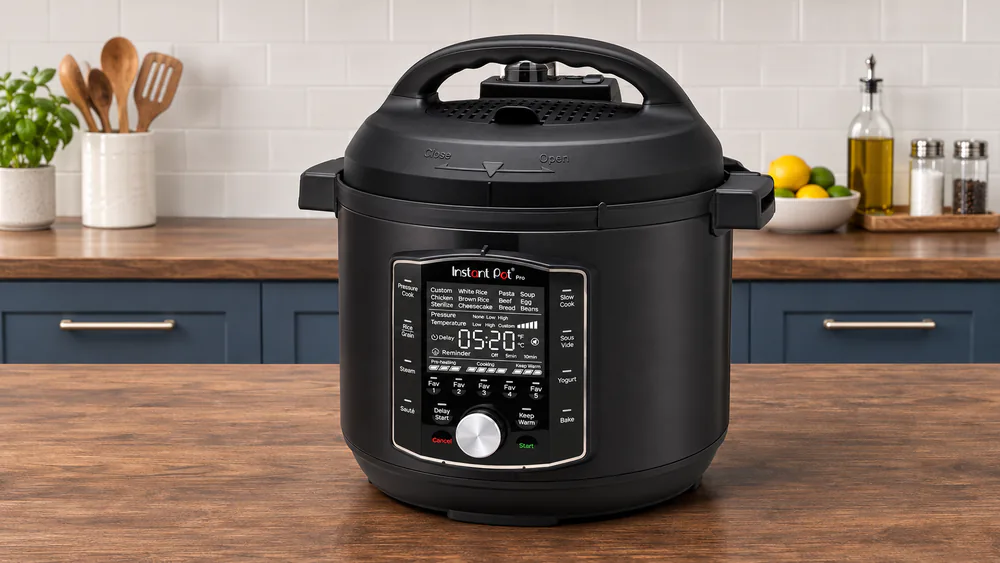
The Instant Pot Pro is the cooker we would buy again for everyday family dinners. The handles keep the stainless pot steady while we stir and make lifting it out easier, and the smooth steel releases stuck food readily at the sink. It covers pressure cooking, slow cooking, sous vide, saute, rice and more, and a favorites memory saves the settings you use most.
Pros
Pot handles resist spinning while you stir
Stainless pot cleans up easily and works on compatible electric, induction and ceramic stovetops
Diffused steam release, dishwasher-safe lid and pot, plus a spare ring and rack
1200W power and a 1-year limited warranty
Cons
Rice can cling to the stainless bottom
Lid crevices and silicone parts take more effort to clean than the pot
Strong seasoning odors can linger around the sealing ring
Cooking performance and everyday usability
Stainless steel gives you browning flexibility that coated pots cannot match, and the Pro's pot can leave the base and sit on a compatible stovetop. Searing is the weak spot of most electric cookers, and brisket can stick when seared inside the base. The Pro's stovetop-compatible pot gives you a way around that, because you can sear on a burner. The favorites memory is a real convenience if you repeat the same few recipes each week.
The published dimensions differ across product records, so allow clearance around the cooker and confirm the unit's size before you buy for a tight shelf.
Who the Instant Pot Pro suits
It suits a family that wants one reliable cooker for the whole week and likes to sear in the pot. It also fits cooks who run an induction or ceramic stovetop and want the pot to move between base and burner.
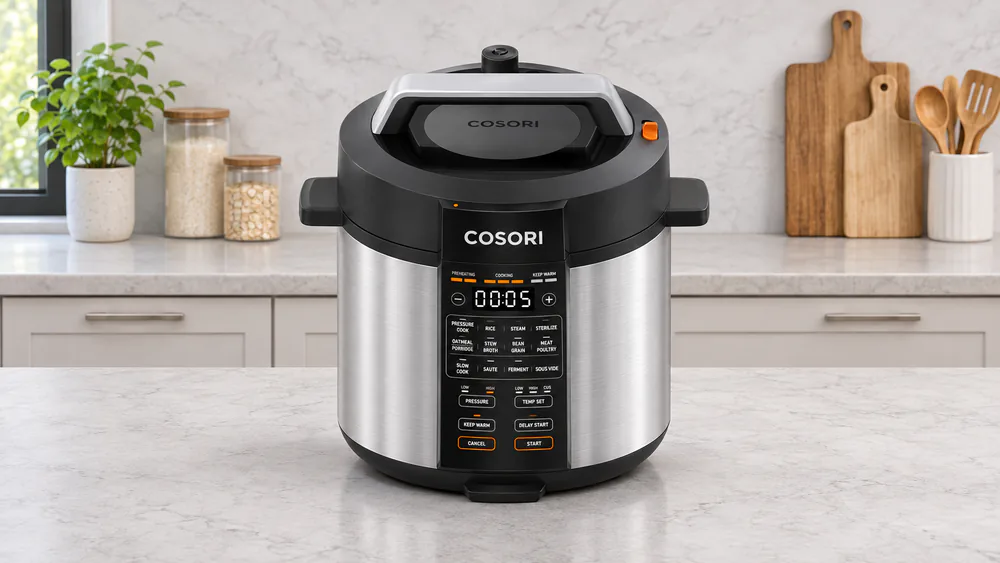
The COSORI delivers most of what the Pro does at the lowest cost tier on our list, though its coated pot cannot leave the base for stovetop searing. We cooked pork and chicken in it and both finished tender without extra pressure-cooking time. Rice cooked evenly across the pot. The grains felt sticky while we stirred but were tender and separate when we ate them.
Pros
Beef stew becomes fork-tender
Nonstick pot and clear cleaning instructions make cleanup straightforward
2-year limited warranty and a 30-day direct-store money-back guarantee
Separate vent button with a 30-degree backward-angled steam release
Cons
Vegetables can soften too far in the same cycle as stew
Browning is weaker at the rear of the pot
Replacement pot and seal inventory is unconfirmed
What you get for the price
You get a 6-quart cooker that runs on 1100W, with a ceramic-coated nonstick pot, a removable lid and overheat protection. It covers pressure, rice, steam, slow cook, saute, sous vide and more. The nine-in-one label and the thirteen menu choices count different things, so judge the cooker by its actual functions, not the totals. The footprint measures 12.8 x 12.8 x 14.4 inches.
The steam release angles backward at 30 degrees, which sends the plume away from your hands and cabinets.
Is the COSORI right for you?
Yes, if you want strong results without paying for premium extras, or if you dislike scrubbing. It is a good fit for stews, pork and chicken on busy weeknights.
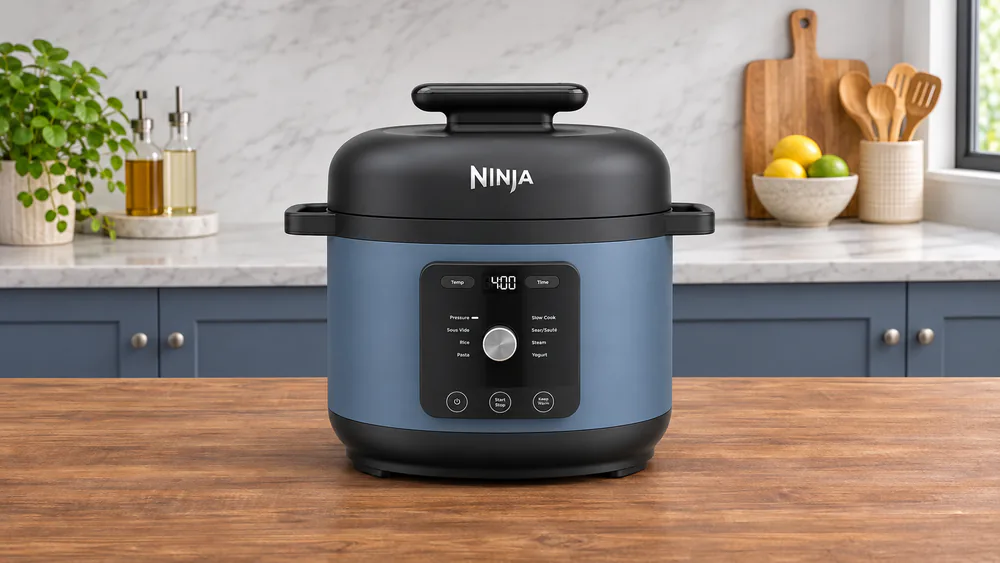
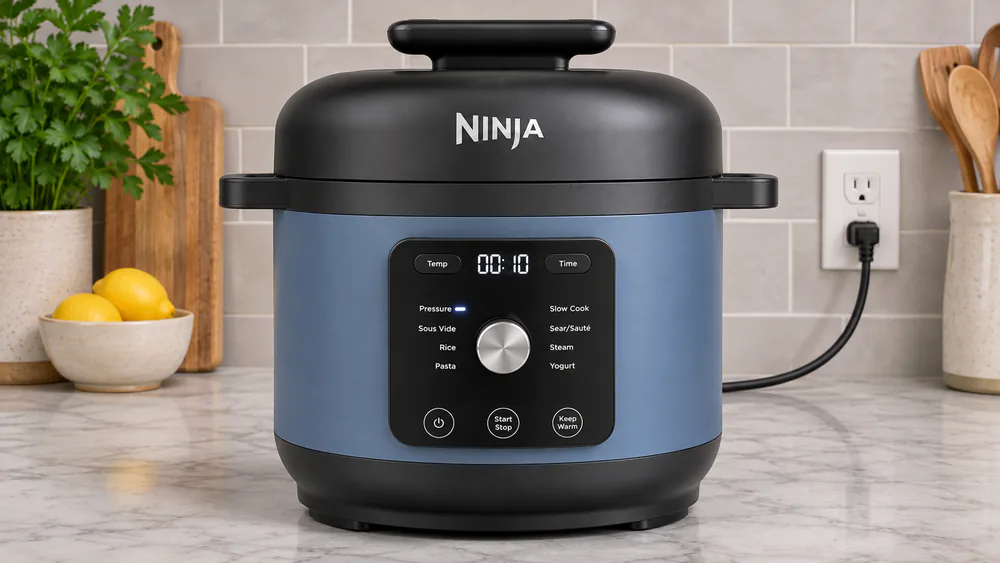
The Ninja HyperHeat is the cooker we hand to someone who has never pressure cooked, even though the Pro offers more cooking modes. Dried beans softened well in our tests. The dial, clear labels and progress display are easy to navigate, and the completion chime is brief and unobtrusive. The broad 9.5-inch cooking surface sears meat deeply, and pressure cooking softens dried beans well.
Pros
Dial controls with clear labels and a progress display
Wide cooking surface that sears meat deeply
Ceramic lining makes washing easier
Searing then slow-cooking in the same pot reduces washing up
Cons
Ceramic coating needs utensils that will not scratch it
Stock of replacement parts is not guaranteed
No air-fry function
Controls, lid handling, and steam release
The dial makes the controls easy to learn. You turn to a mode, set the time and watch the progress display move through heat-up, pressure and release. Nothing is hidden behind menu layers. With a nominal capacity of 6.5 quarts and 1200W of power, it is also the largest of our ranked cookers. Official catalog entries exist for the pressure valve, condensation collector, silicone ring set and glass lid, though stock is not guaranteed.
It is for anyone who wants a gentle start and plans to sear often. It comes with a 1-year limited warranty. The published width and weight records conflict, so confirm the size of your color and regional model before planning a tight storage space.
The dial and progress display make the HyperHeat the easiest cooker here to read at a glance.
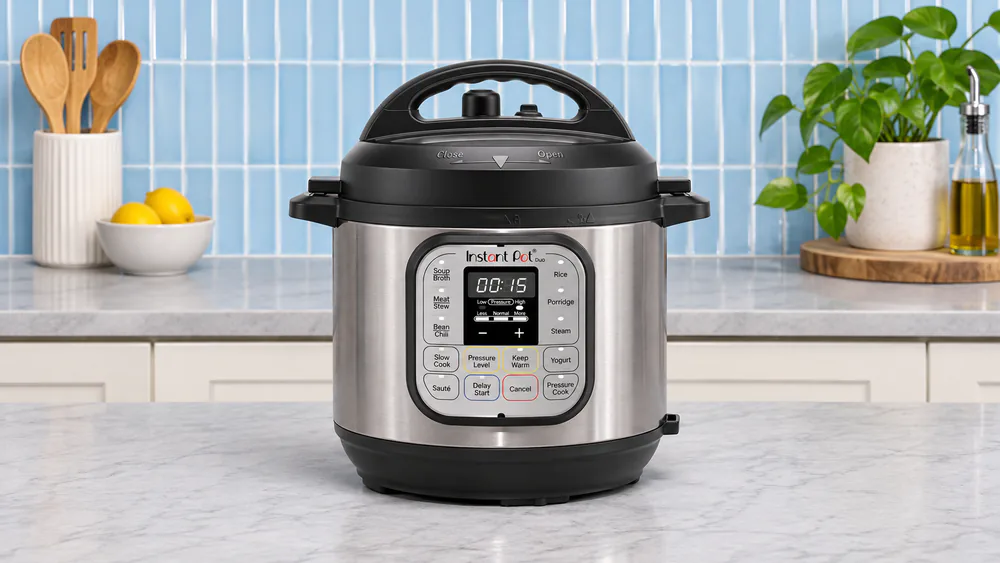
Best Small Electric Pressure Cooker: Instant Pot Duo Mini 3-quart
The Duo Mini is the right size for small kitchens and small households, but it gives up the batch capacity of the 6-quart models. In our kitchen the compact body stores easily and works well for small batches, and it handled risotto, soups and side dishes without fuss. Sauteed vegetables kept appealing color and texture.
Pros
Compact body that stores easily
Stainless tri-ply-bottom pot with dishwasher-safe lid and pot
Cooking functions that suit risotto, soups and side dishes
A genuine replacement sealing ring is cataloged
Cons
Ribs need recipe adjustment to avoid toughness
Rice can stick to the bottom and need soaking before scrubbing
The screen alternates its on indicator with the timer, so remaining time is harder to check
Capacity, counter space, and cooking flexibility
Three quarts is small. It feeds one or two people, or makes a side dish while the main course cooks elsewhere. Power is 700W, and the footprint is approximately 11.4 x 11.2 x 10 inches, so check the orientation when you measure your storage spot. It offers pressure, slow cook, saute, steam, rice, yogurt and keep warm, with a removable gasket and a steam rack. It has no air frying. Preset counts differ between versions, so check the controls on the exact model you buy.
Who should pick the Duo Mini
This one is for a dorm, a small apartment or a household of one or two. If you batch cook or want leftovers, step up to a 6-quart model instead. It carries a 1-year limited warranty.
Best for Advanced Controls: Breville Fast Slow Pro
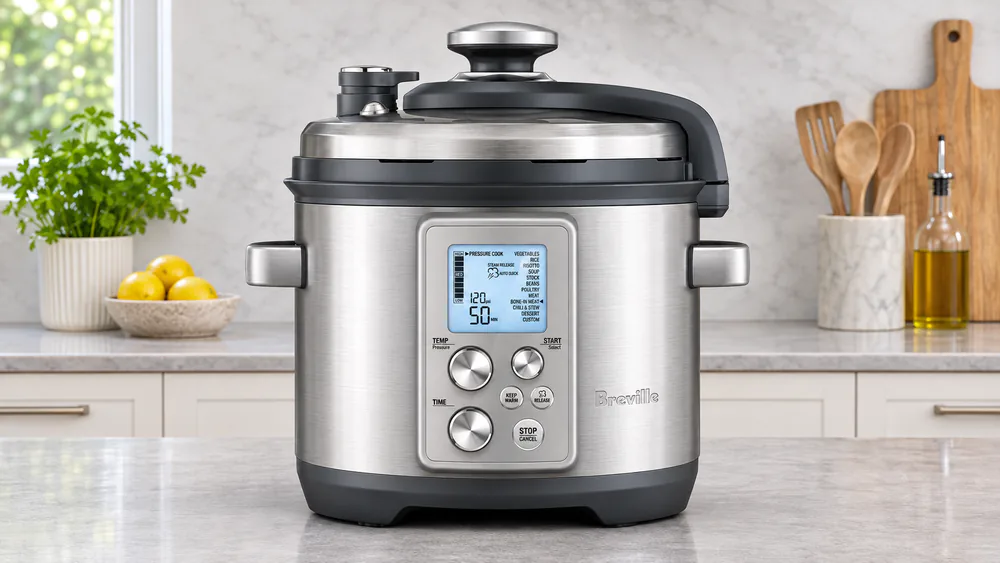
The Breville is the cooker for people who like to fine-tune, though it asks more attention than the Ninja or the COSORI. We made risotto in it and it turned creamy without scorching. The beans kept a pleasant bite. Stew meat and vegetables cooked tender in a rich broth, and the coated bowl cleaned easily after pork and chicken dishes.
Pros
Pressure settings span 1.5-12 psi
Risotto and beans cook gently without scorching
LCD and knobs are intuitive despite the extensive adjustments
Automatic quick, pulse or natural release and a dishwasher-safe lid
Cons
The locking pin takes care to align
Steam release can feel slow
Premium cost tier, the highest on our list
Pressure settings and features worth paying for
The 1.5-12 psi range lets you drop pressure for delicate foods like beans and custards, then raise it for tough cuts. Dual top and bottom sensors regulate heat, and the cooker can release steam automatically by quick, pulse or natural release. The 6-quart bowl is ceramic-coated, and the LCD and knobs are intuitive despite the extensive adjustments. Power is 1100W.
Who gets the most from the Breville
Cooks who enjoy dialing in a recipe and want the gentlest results on delicate foods get the most from it. The 1-year replacement warranty is shorter than COSORI's. Published exterior measurements differ, so allow extra lid clearance and confirm the size for your model before choosing a storage location.
How to Choose an Electric Pressure Cooker
Start with how many you cook for, then decide how much you care about searing and cleanup. Everything else is a refinement.
Capacity, usable cooking volume, and storage
Rated capacity is not the amount you can fill. Pressure cooking has a marked maximum line, and expanding foods like beans and rice need a lower limit. A 6-quart cooker is the sweet spot for most families. The 3-quart size suits one or two people. If you routinely cook for more than four, the 8-quart Instant Pot Duo Plus is the size to look at. The body is bulky and needs dedicated storage at 14.53 x 14.53 x 13.98 inches. Measure your shelf, including the height with the lid on.
Inner-pot material, searing, and cleaning
Stainless steel browns better and lasts longer, but food can stick. Ceramic-coated nonstick pots clean faster and ask for gentle utensils. If you sear often, a wide pot like the Ninja's or a stovetop-compatible pot like the Pro's saves you a pan. Check the dishwasher rating of the lid and pot, and inspect the sealing ring during cleaning, since rings absorb odors and can discolor. Replace a worn ring only with the exact compatible part.
Tip. Keep a second sealing ring: use one for savory dishes and one for sweet foods or yogurt, so strong flavors do not carry over.
Lid design, steam release, and safety features
Look for a lid that locks clearly, a steam release you can operate without reaching over the plume, and overheat protection. Quick release vents steam through the valve, and natural release lets pressure fall as the contents cool. Avoid quick release for thick, fatty, starchy or expanding foods, and follow your model's manual. Our guide on how to use a pressure cooker walks through release step by step.
Warning. Never force a lid open while the pin is up or steam is still venting. Wait until the cooker is fully depressurized.
Electric or stovetop: which should you buy?
The choice comes down to how much attention you want to give. An electric cooker handles the heat on its own, so it suits busy weeknights and anyone new to pressure cooking. A stovetop model rewards cooks who are comfortable watching a burner and want the strongest browning. Every pick here is electric.
Cooking functions, controls, and smart features
More modes do not mean better cooking. Count the functions you will use: pressure, slow cook, rice, saute and keep warm cover nearly everyone. A dial or labeled screen beats a deep menu. A progress display, as on the Ninja and Pro, tells you whether the cooker is heating, cooking or releasing, which saves you from guessing.
Pick the cooker you will actually clean and use every week, not the one with the longest function list.
Replacement parts, support, and warranty
A warranty period is not a service life. Warranty remedies depend on regional terms, authorized purchase and exclusions. What matters more is whether the maker catalogs the sealing ring, valve and pot, since you will replace them. Instant Pot and Ninja both list parts, though stock can vary. Always check the model number before ordering.
Pull the sealing ring after strongly seasoned dishes and wash it separately.
Which Electric Pressure Cooker Should You Buy?
Choose the Instant Pot Pro if you want one dependable cooker for family dinners, and the COSORI if you want the lowest cost of entry. Pick the Ninja HyperHeat to learn on, the Duo Mini for a small household, and the Breville Fast Slow Pro if you enjoy tuning every setting.
Electric Pressure Cooker FAQs
Is an electric pressure cooker different from an Instant Pot?
Instant Pot is a brand of electric pressure cookers, so every Instant Pot is an electric pressure cooker, but not every electric pressure cooker is an Instant Pot. COSORI, Ninja and Breville make their own versions with different pots, controls and release designs.
Should you choose an electric or stovetop pressure cooker?
Electric models regulate heat automatically and are simpler to run, while stovetop pressure cookers need burner adjustments and offer stronger searing potential. Pick electric for convenience and stovetop if you want maximum browning. See our guide to the best pressure cookers, electric and stovetop for both types.
How much time does pressure cooking take from start to finish?
Longer than the number on the recipe. Total time includes preparation, heat-up, time at pressure and depressurization, so the programmed interval is not your total dinner time. Plan for extra minutes before and after the cooking interval.
What is the difference between natural and quick pressure release?
Natural release lets pressure fall as the contents cool, which suits meat, beans and foamy foods. Quick release vents steam through the valve and stops cooking fast, which suits vegetables. Avoid quick release for thick, fatty or starchy foods.
Can an electric pressure cooker replace a slow cooker or rice cooker?
For most households, yes. All five cookers here slow cook, and each has a rice mode, though results vary, and rice can stick in the stainless pots. A dedicated rice cooker is still gentler on grains.
Can you use an electric pressure cooker for pressure canning?
No. Do not use USDA pressure-canning schedules in these electric multicookers. Reaching a pressure setting does not prove heat is reaching the center of the jars. Use a canner built and tested for canning instead.