
Recipes
20 Best Juicer Juice Recipes to Make at Home

As an Amazon Associate we earn from qualifying purchases. We may earn a commission from links on this page, at no extra cost to you. Learn more.

Juicing is simply pressing the liquid out of fruits and vegetables and leaving most of the fiber behind. What you get is a bright, fast-drinking glass of concentrated flavor and nutrients that goes down easier than a plate of raw vegetables ever would. For a beginner, that is the whole appeal: a way to work more produce into a busy day without much fuss.
We built this roundup the way we build everything in our test kitchen, by actually making each juice, tasting it, and noting what worked. We ran these recipes through weeks of real mornings, juicing before the school run and cleaning up before coffee. The recipes that made this list are the ones we would happily make again tomorrow.
A few honest notes up front. Fresh juice is best drunk right away, and greens behave very differently depending on your machine. We will walk you through the gear, then hand you 20 recipes worth keeping, then cover prep, storage, and the questions beginners actually ask.
What You Need to Get Started
You do not need a professional setup to make great juice at home. You need one machine, a cutting board, and a little planning. Getting the equipment right first will save you frustration later, especially with leafy greens.
Choosing the right juicer / equipment needed
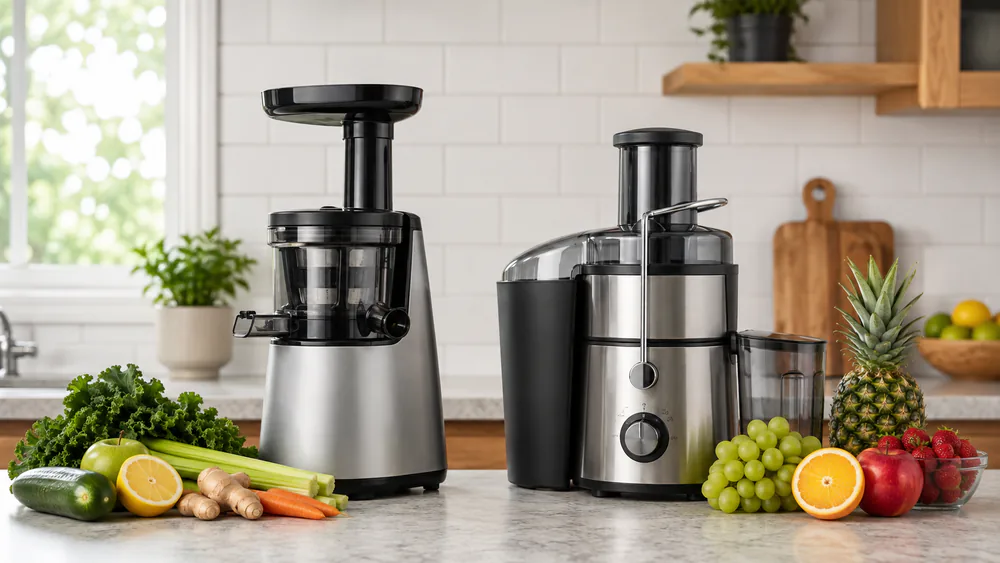
There are two main juicer styles, and the difference matters more than the price tag. Centrifugal juicers are fast and affordable, spinning produce against a blade at high speed. They foam more and work best with hard produce and soft vegetables. If you are juicing mostly carrots, apples, and citrus, a centrifugal machine is plenty.
Masticating juicers, also called cold-press, run slower and crush produce instead of spinning it. They handle leafy greens far better and squeeze out a higher-yield, more nutrient-dense juice. In our kitchen the difference was obvious with kale. A centrifugal machine spat out damp, barely-pressed leaves and left yield on the table, while the masticating machine wrung the same kale nearly dry.
No juicer yet? A high-speed blender plus a nut-milk bag or cheesecloth works in a pinch. You blend the produce with a little water, then strain out the pulp by hand. It is messier and slower, but it gets you juicing tonight.
One thing worth knowing before you start: up to 90% of the fiber is removed during juicing, depending on the machine. That is what makes juice feel light, and it is also why juice complements a diet rather than replacing whole produce.
20 Best Juicer Juice Recipes to Make at Home
These are ordered roughly from the gentlest, most crowd-pleasing blends to the more assertive ones. Start near the top if you are brand new, then work your way down as your palate adjusts.
Classic green juice (kale, cucumber, apple, ginger)
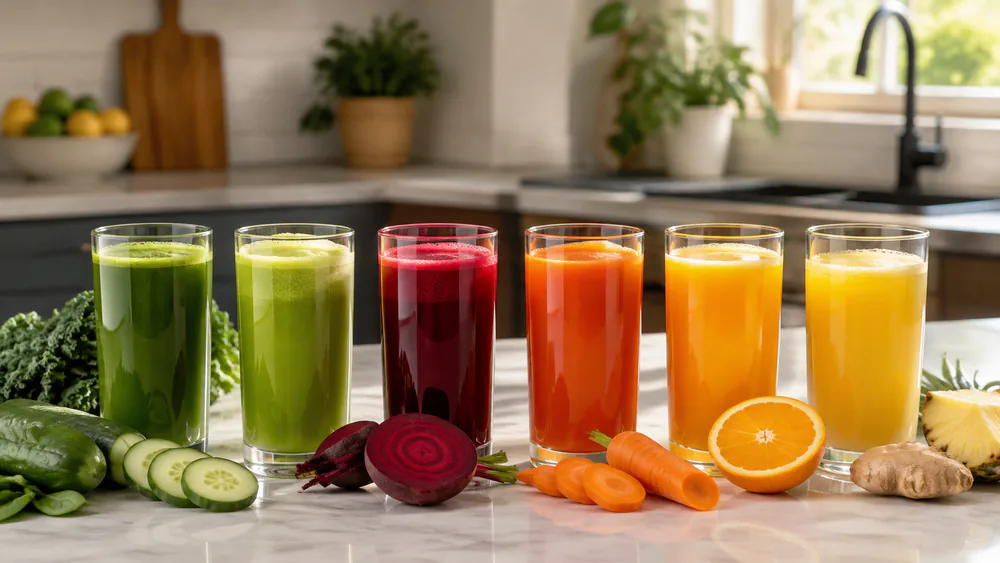
This is the recipe we tell every beginner to make first. Juice 1 bunch of curly kale, 1 large cucumber, 2 large Granny Smith apples, 4 celery stalks, 1 peeled lemon, and 1 inch of ginger. It makes about 4 cups and lands at around 83 calories per cup, though green-juice calories swing widely with how much apple and how large the pour, so treat the number as recipe-specific.
The flavor is grassy and tart-sweet, with the apple keeping the kale from tasting like a lawn. One tip from our mornings: strain it through a fine sieve. A smoother, less pulpy juice is one beginners keep down more easily.
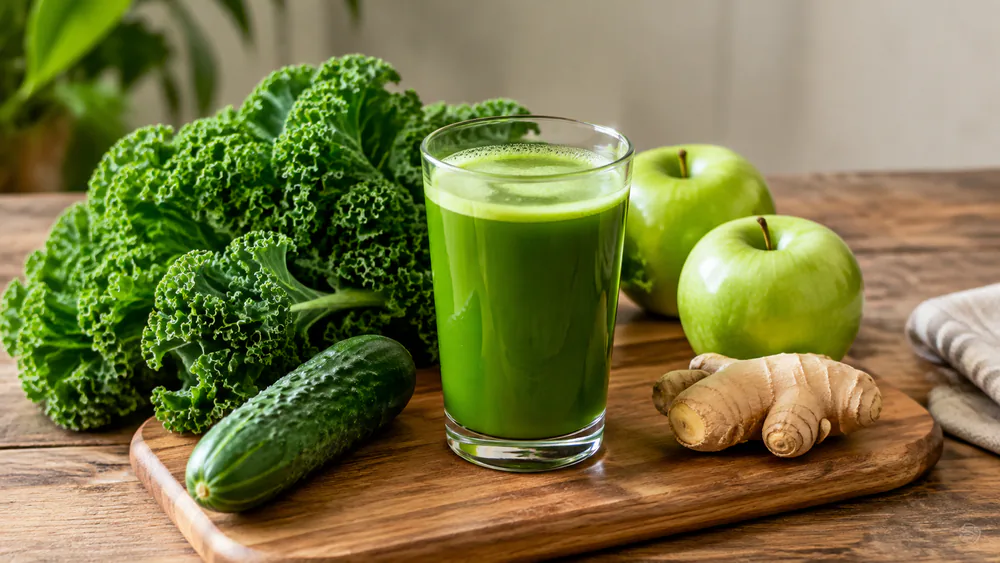
Tip. Green juice separates fast. The pour you drink 20 minutes after juicing already tastes flatter and looks browner than the first glass, so drink it fresh.
Celery juice
Celery juice has a savory, salty edge that surprises people. Juice 2 bunches of celery, with an optional squeeze of lime to brighten it. Two bunches yield about 32 ounces, which is roughly 4 servings, and a single 4-ounce serving runs about 42 calories with 7.2g of sugar.
Be warned about yield. One bunch of celery only gives about a cup and a half of juice, so celery-heavy recipes burn through produce faster than beginners expect. Buy more than you think you need.
Carrot ginger juice
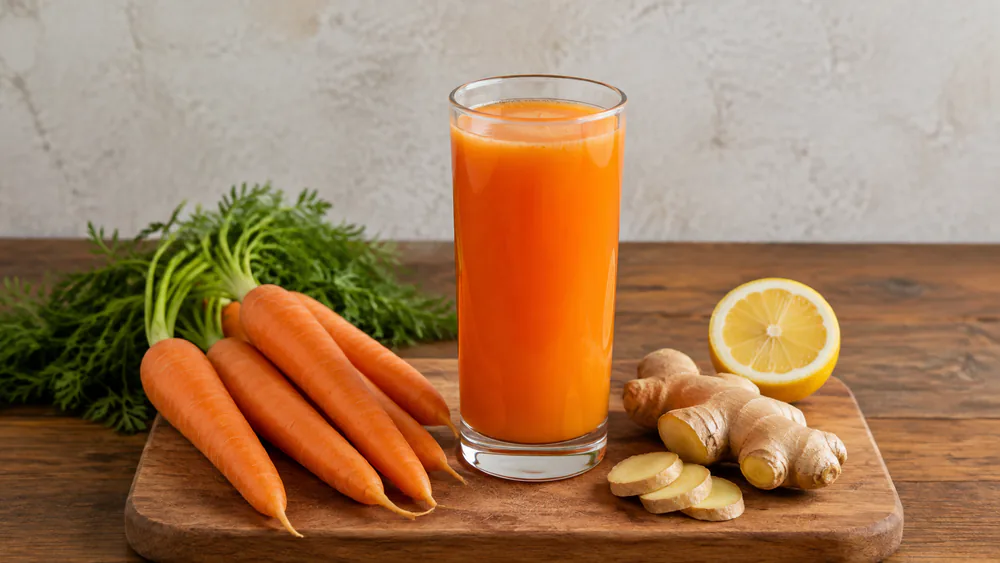
Sweet, warming, and forgiving, this is a great gateway juice. Juice 3 large peeled carrots, 1 cored apple, and half an inch of fresh ginger, then finish with the juice of half a lemon. It comes to about 90 calories per serving with roughly 23g of carbs.
The ginger gives it a gentle heat that makes it feel almost like a tonic. Carrots juice cleanly on either machine, so this one is a safe bet even on a basic centrifugal juicer.
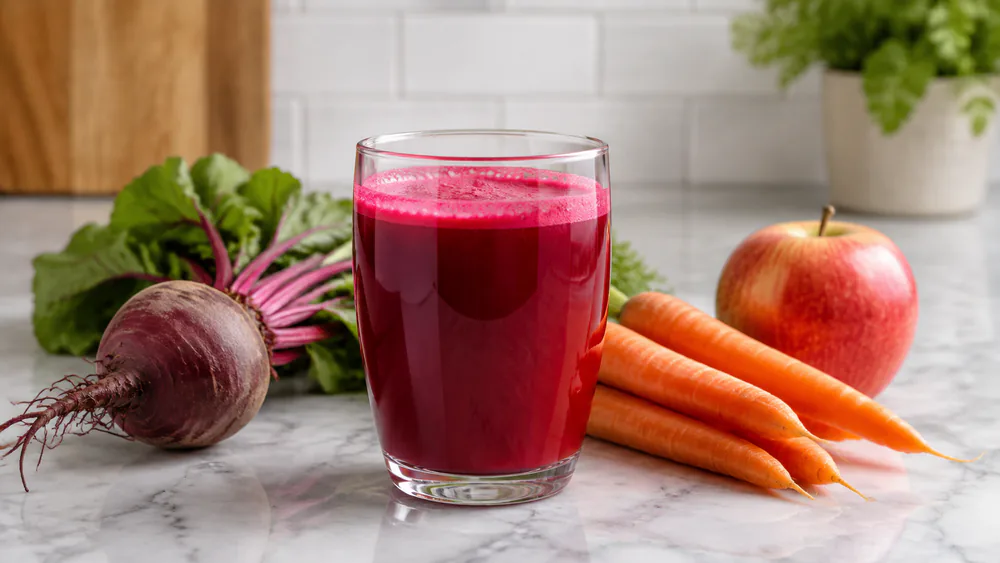
Beet ABC juice (apple, beet, carrot)
The classic ABC blend is beet, carrot, and apple, rounded out with ginger and lemon. Juice 2 medium beets, 2 large carrots, 2 cored apples, half an inch of ginger, and a thin slice of lemon. The color alone is worth the effort.
Here is the honest truth we learned the hard way: beet juice on its own is punishingly earthy. The carrot, apple, and lemon are what make it drinkable. Keep the beet as the accent, not the star, and this blend turns out sweet and deeply satisfying.
Ginger wellness shot
Sometimes you want a small, fiery hit rather than a full glass. Juice a generous 2-inch knob of ginger with 1 lemon and, if you like heat, a pinch of cayenne. It yields a couple of concentrated ounces you knock back like an espresso.
Ginger is prized for a reason, and if you want to read up on the health benefits of ginger it is worth a look. For juicing, the practical tip is prep: peel and freeze ginger in batches so you can drop it straight into the machine without wrestling sticky knobs every morning.
Cucumber mint cooler
Light and hydrating, this is the juice we reach for on hot afternoons. Juice 2 large cucumbers, 1 green apple, a handful of fresh mint, and half a lime. It is barely sweet and endlessly refreshing.
Mint does more than freshen the flavor, and the benefits of fresh mint make it a nice everyday add-in. Add the leaves last so they do not get lost in the machine.
Pineapple orange sunrise
A pure crowd-pleaser for anyone easing into juicing. Juice half a fresh pineapple with 2 peeled oranges for a tropical, sunny glass. It is sweet enough that kids will drink it without complaint.
Because it leans sweet, we treat this one as a treat rather than a daily staple. A squeeze of lime cuts the sugar and keeps it from tasting cloying.
Watermelon lime refresher
Summer in a glass, and almost effortless. Juice about 4 cups of cubed watermelon with the juice of 1 lime. Watermelon is mostly water, so the yield is generous and the flavor is clean.
Tip. Watermelon juice oxidizes and separates quickly. Give it a stir right before drinking and serve it over ice for the best texture.
Apple celery cucumber
A mild, green-adjacent juice that eases beginners toward vegetables. Juice 2 apples, 4 celery stalks, and 1 cucumber. The apple carries it while the celery and cucumber keep it light.
This is the blend we suggest for anyone who finds full green juice too intense. It is a gentle stepping stone toward the kale-forward recipes.
Carrot orange turmeric
Warm, golden, and a little spicy, this juice feels restorative. Juice 3 carrots, 2 peeled oranges, and turmeric to taste. Sources disagree on the exact amount, so treat it as a taste call: about a 1 inch piece of fresh turmeric root, or roughly 1/4 to 1/2 teaspoon ground turmeric per serving. Start on the low side, since the fresh-root and ground forms land differently in the glass. A pinch of black pepper is traditional alongside turmeric.
If you are curious about what turmeric may do for inflammation, the science is genuinely interesting. In the glass, it simply adds an earthy warmth that plays beautifully with sweet carrot and citrus.
Beetroot berry
A deep magenta juice that tastes like a garden. Juice 1 medium beet, 1 cup of strawberries, and 1 apple, with a little lemon to lift it. The berries soften the beet's earthiness.
Berries do not yield much juice, so expect a small, intense pour. Consider it a concentrated treat rather than a tall glass.
Green apple spinach
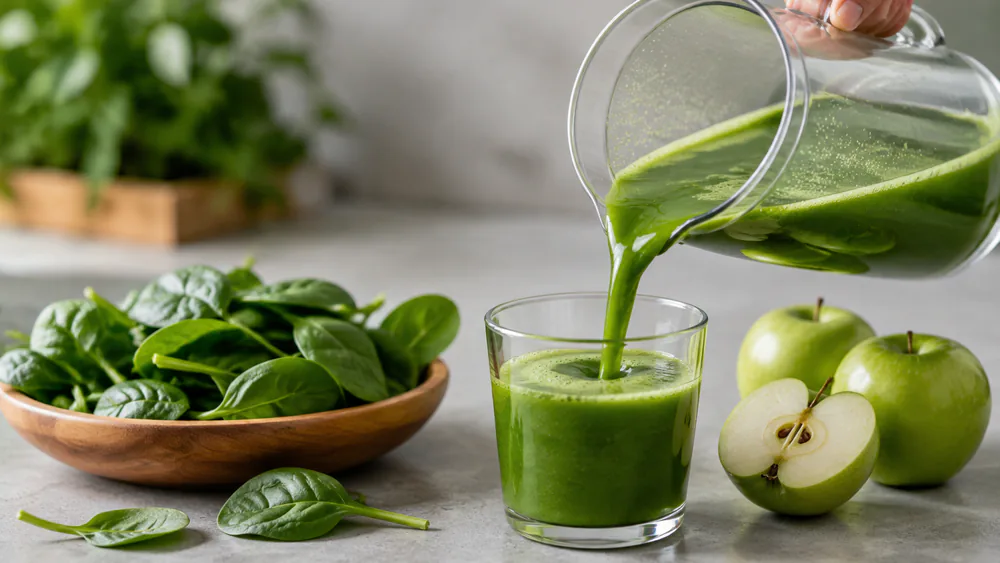
Spinach is the mildest leafy green, which makes it ideal for green-juice beginners. Juice 2 cups of spinach, 2 green apples, and 1 cucumber. The result is sweet and grassy without the bitterness kale can bring.
Leafy greens are worth including in moderation, and part of the appeal is why magnesium matters in a diet built around greens. Spinach juices best through a masticating machine.
Pear fennel
An elegant, slightly unexpected blend for adventurous beginners. Juice 2 ripe pears with half a fennel bulb. The fennel brings a soft licorice note that the sweet pear tames.
We love this one as an after-dinner juice. It feels almost like a light dessert.
Grapefruit carrot
Tart meets sweet in a bright, wake-up glass. Juice 1 peeled grapefruit with 3 carrots. The carrot rounds off the grapefruit's sharp edge.
If grapefruit alone is too bitter for you, this is how to enjoy it. Add a thin slice of ginger for extra lift.
Kale pineapple
Proof that green juice can taste tropical. Juice 1 bunch of kale, half a pineapple, and half a cucumber. The pineapple's sweetness completely disguises the kale.
This is our favorite trick for converting green-juice skeptics. Nobody guesses how much kale is in the glass.
Savory tomato vegetable
Not every juice needs to be sweet. Juice 3 ripe tomatoes, 2 celery stalks, half a cucumber, and a handful of parsley, with a pinch of salt and a squeeze of lemon. It drinks like a light, fresh gazpacho.
This is the juice we make when we want something that feels like a meal starter rather than a smoothie. A dash of hot sauce makes it downright brunch-worthy.
Sweet potato carrot apple
Sweet potato may sound odd, but it juices into a mellow, naturally sweet base. Juice 1 small peeled sweet potato, 2 carrots, and 1 apple. The result is thick, golden, and comforting.
Sweet potato is dense, so run it slowly and alternate it with the softer produce. A centrifugal machine handles it fine.
Bell pepper cucumber green
Red bell pepper adds a surprising sweetness to a savory-leaning green juice. Juice 1 red bell pepper, 1 cucumber, 2 celery stalks, and a handful of spinach. It is light, hydrating, and low in sugar.
This is a good example of juicing mostly vegetables with just enough natural sweetness to stay pleasant. No fruit required.
Cucumber celery green tonic
A clean, minimal green juice for daily drinking. Juice 1 cucumber, 4 celery stalks, and a small handful of parsley, finished with lemon. It is about as low-sugar as juice gets.
We keep this one in rotation on days when the sweeter blends feel like too much. It is refreshing rather than indulgent.
Lemon ginger detox
We will skip the detox hype and just say this juice is bright and invigorating. Juice 2 apples, 1 inch of ginger, 1 whole lemon, and 1 cucumber. The ginger and lemon give it a real kick.
Note. No single juice detoxes your body; your liver and kidneys handle that. What juice does well is add water, vitamins, and flavor to your day.
Juicing Tips & Prep for Beginners
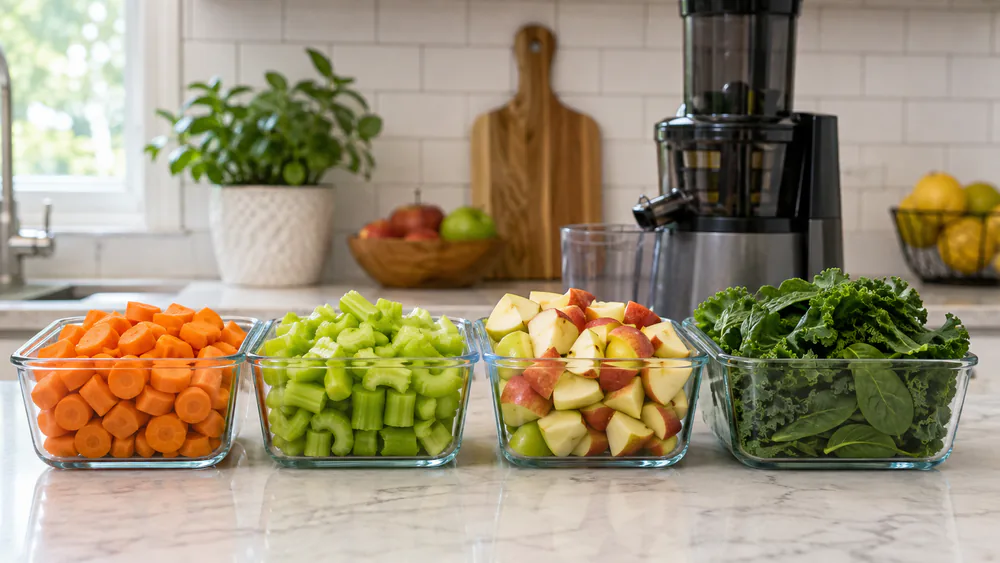
The habit lives or dies on prep. Our single biggest lesson from weeks of morning juicing is that chopping produce the night before turns a morning juice into a five-minute job instead of a chore. Wash, chop, and store everything in a container overnight, and the machine does the rest at dawn.
Sugar is worth watching. Fruit juice adds up fast, and apple juice alone runs about 13 grams of sugar and 60 calories per 3.9 ounces. The fix is simple: juice mostly vegetables and add a small piece of fruit for sweetness to keep the sugar down.
Not everything belongs in a juicer. The best candidates are apples, beets, carrots, cucumber, citrus, celery, sweet potatoes, and bell peppers, with leafy greens in moderation. Avoid bananas, avocados, figs, rhubarb, and coconut, which give too little juice or the wrong texture. Go easy on cruciferous vegetables and very large amounts of dark leafy greens.
Tip. Freeze peeled ginger in a batch. You can grate or drop it straight into the juicer without peeling sticky knobs every single morning.
Do not throw away the pulp. We stir leftover pulp into smoothies, soups, stews, muffins, quick breads, and crackers instead of tossing it. It is free fiber you already paid for.
How to Store Fresh Juice
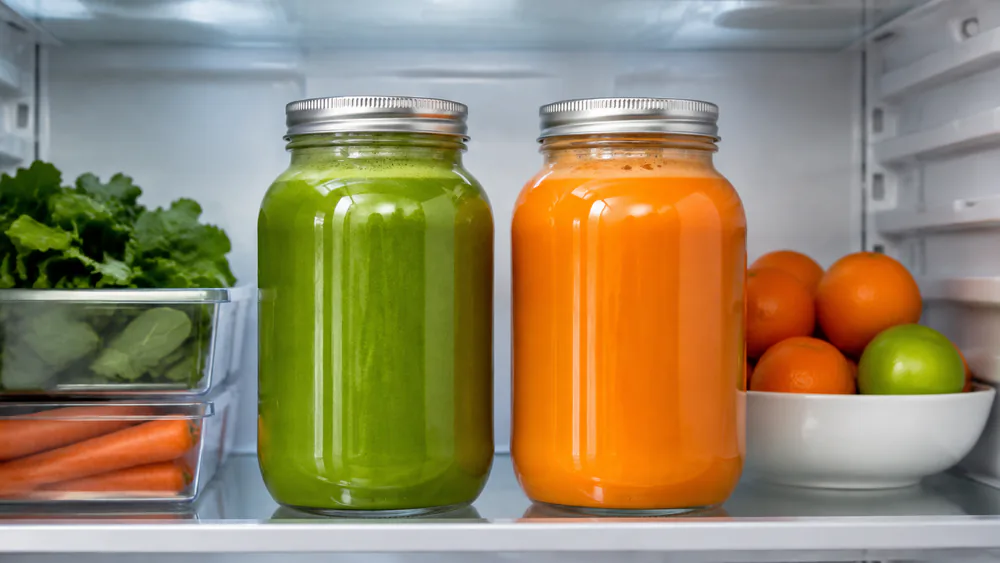
Fresh juice is happiest the moment it is made. Nutrients start declining within about 15 minutes, and flavor fades soon after, which is why we always drink the first glass right away.
When you do need to store it, keep it in an airtight container filled to the very top to limit oxidation. Shelf life depends on the juicer and your storage, so treat it as a window rather than a fixed number. Centrifugal juice is best drunk within about 24 hours, while cold-pressed juice can hold for 3 days. For longer storage you can freeze juice for up to 3 months.
Note. Filling the jar to the brim really does help. Less trapped air means slower oxidation, so the juice stays brighter and tastes fresher for longer.
Juicing FAQs
Do you need a juicer, or can you use a blender?
You can use a high-speed blender. Blend your produce with a little water, then strain it through a nut-milk bag or cheesecloth to separate the juice from the pulp. It takes more effort than a dedicated juicer, but the result is real juice.
Should I choose a masticating or centrifugal juicer for these recipes?
For leafy greens, a masticating (cold-press) machine is worth it, since it presses more juice from kale and spinach. For hard produce, carrots, and citrus, an affordable centrifugal juicer works well and runs much faster.
How long does fresh juice last, and how do I store it?
Drink it fresh whenever you can. Refrigerated in an airtight container filled to the top, centrifugal juice keeps for about 24 hours and cold-pressed juice for up to 3 days. You can also freeze juice for up to 3 months.
Should I peel produce before juicing?
Peel citrus, ginger skin if it is tough, and any waxed or thick-skinned produce. Thin-skinned items like cucumbers, apples, and carrots can go in with the skin on after a good wash.
How do I reduce the sugar or balance the greens?
Juice mostly vegetables and add just a small piece of fruit for sweetness. A little apple, lemon, or ginger balances bitter greens without turning the glass into a sugar bomb.
What fruits and vegetables should I avoid juicing?
Skip bananas, avocados, figs, rhubarb, and coconut, which yield too little juice or the wrong texture. Go easy on cruciferous vegetables and very large amounts of dark leafy greens.
Final Thoughts
Juicing does not have to be complicated or expensive to be genuinely good. The recipes that stuck with us are the simple ones, the classic green juice, the carrot ginger, and the ABC beet blend, because they taste good enough to make again the next morning. That repeatability is what turns juicing from a fad into a habit.
Start with one or two recipes near the top of this list, get your prep routine down, and let your palate lead you toward the greener, less sweet blends over time. Buy a little more produce than you expect to need, drink your juice fresh, and save the pulp. Do that, and you are already juicing like someone who has been at it for years.
Read next
Ready to start juicing at home?
Pick one gentle recipe, prep your produce tonight, and pour your first fresh glass tomorrow morning.