Helping you create a kitchen you love.

Knives & Cutlery

Best Kai Chef Knives: Which Kai Line Should You Buy? (7 Picks)

As an Amazon Associate we earn from qualifying purchases. We may earn a commission from links on this page, at no extra cost to you. Learn more.

Best Kai Chef Knives: Which Kai Line Should You Buy? (7 Picks)

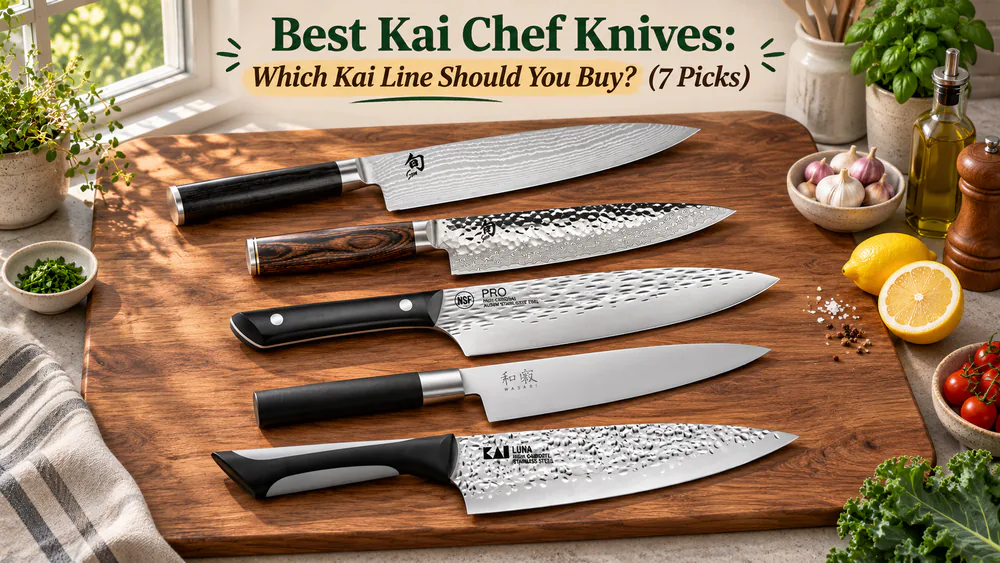
Kai has been forging blades in Seki City since 1908. It owns Shun and sells simpler lines under its own name: PRO, Wasabi, Luna and Seki Magoroku. Our pick for most home cooks is the Kai PRO 8-inch. It sharpens back easily, it is easy to live with, and it costs far less than a Shun.

Skip Kai if you want a razor edge that lasts a month between honing sessions. In that case the Shun Classic is the better buy. For everyone else, the right Kai depends on handle, blade length and how rough your kitchen is on knives.

Edge hold, handle comfort and how easily each one sharpens back are what separate these lines.

Our Top Picks at a Glance

RankProductBest forBladeRatingBuy
1

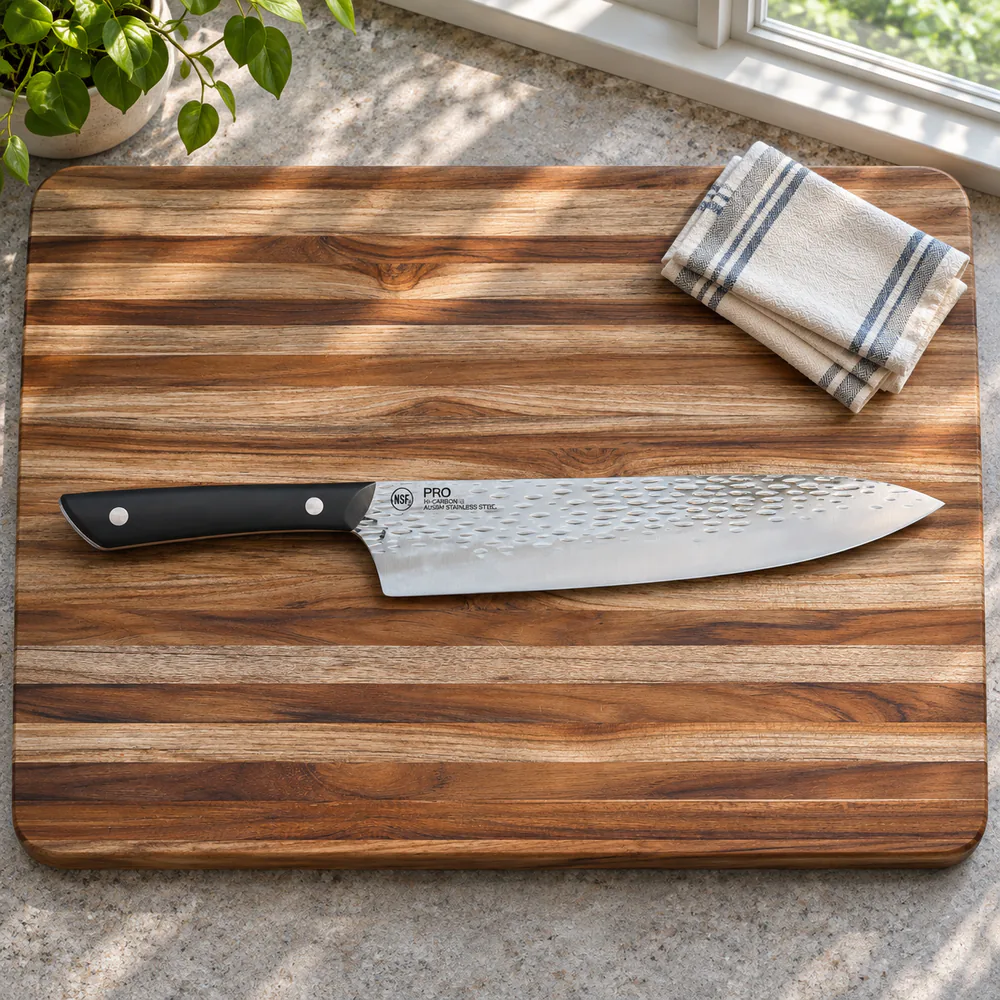
Kai PRO 8-Inch Chef's Knife

Best Overall
Most home cooks 8 in, AUS6M 4.6 View on Amazon
2

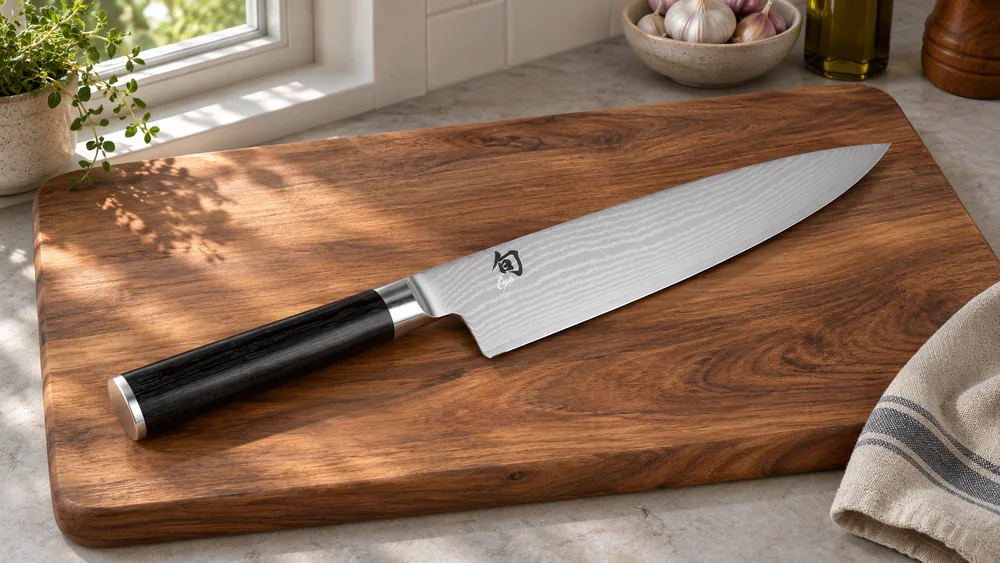
Shun Classic 8-Inch Chef's Knife

Best Premium Pick
Cooks who want a lasting edge 8 in, VG-MAX 4.5 View on Amazon
3

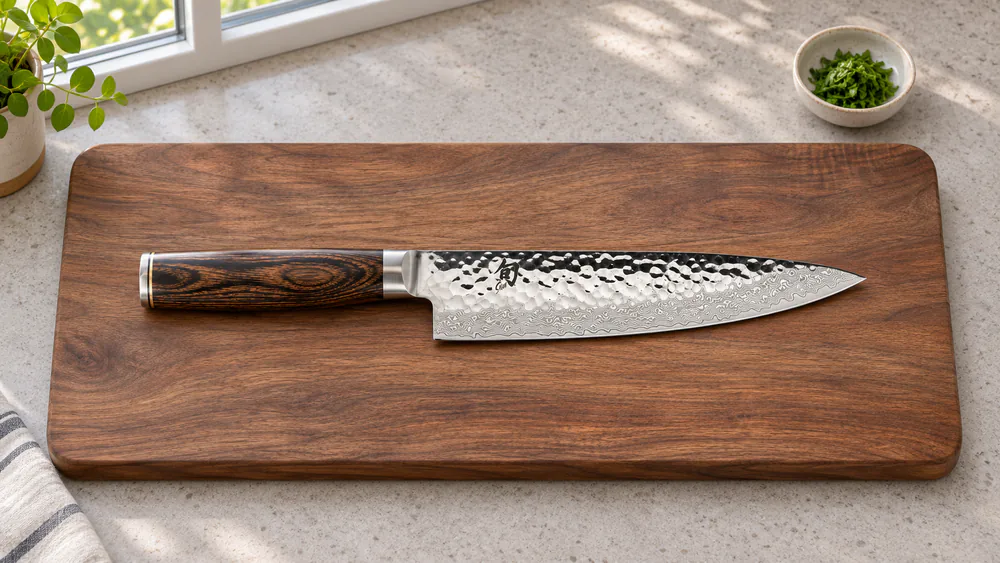
Shun Premier 8-Inch Chef's Knife

Best for Looks and Feel
Gift buyers and Japanese-knife newcomers 8 in, VG-MAX 4.4 View on Amazon
4

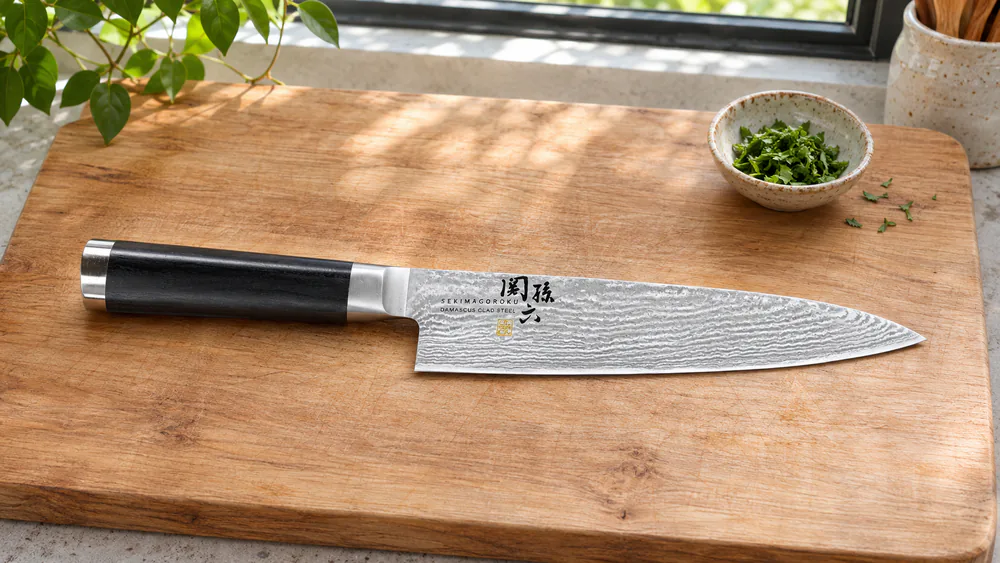
Kai Seki Magoroku Gyuto 180mm

Best Made in Japan
Push-cut cooks who want Japanese production 180mm gyuto 4.2 View on Amazon
5

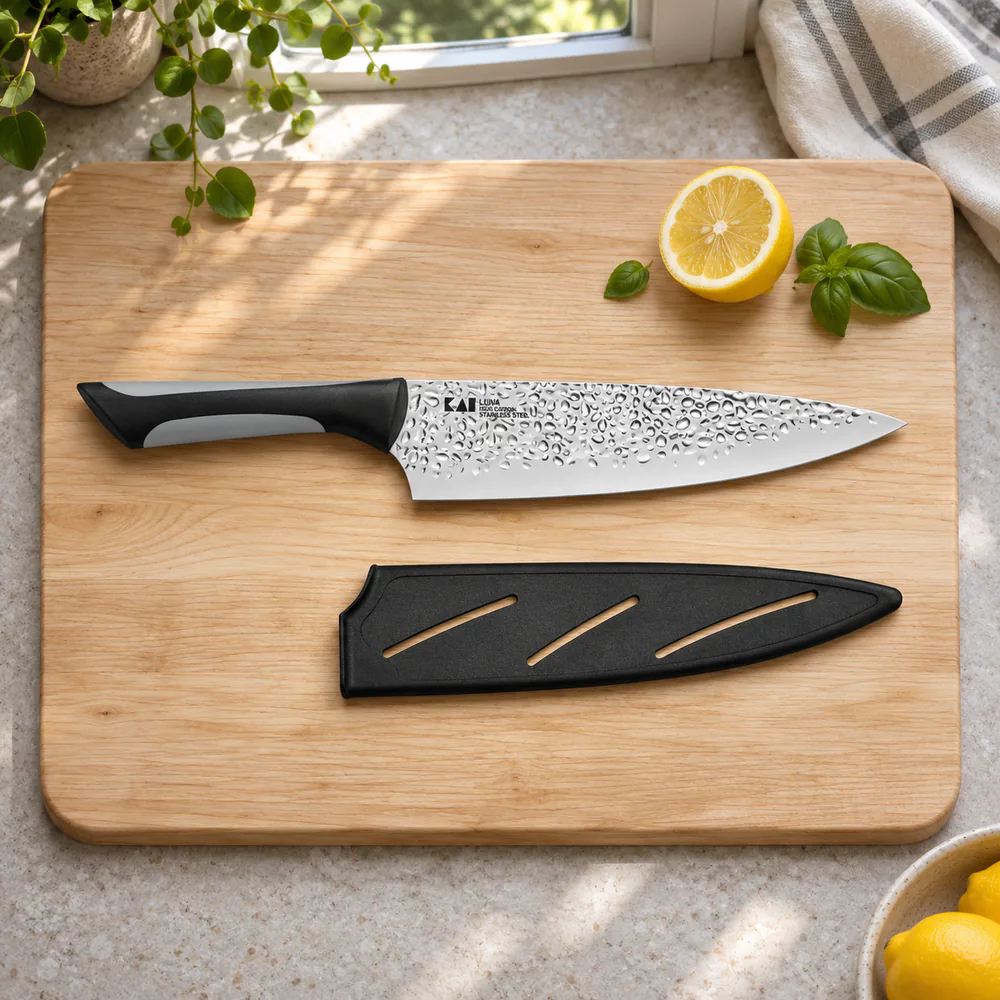
Kai Luna 8-Inch Chef's Knife

Best Budget
First apartments and rough households 8 in, DIN 1.4116 4.0 View on Amazon
6

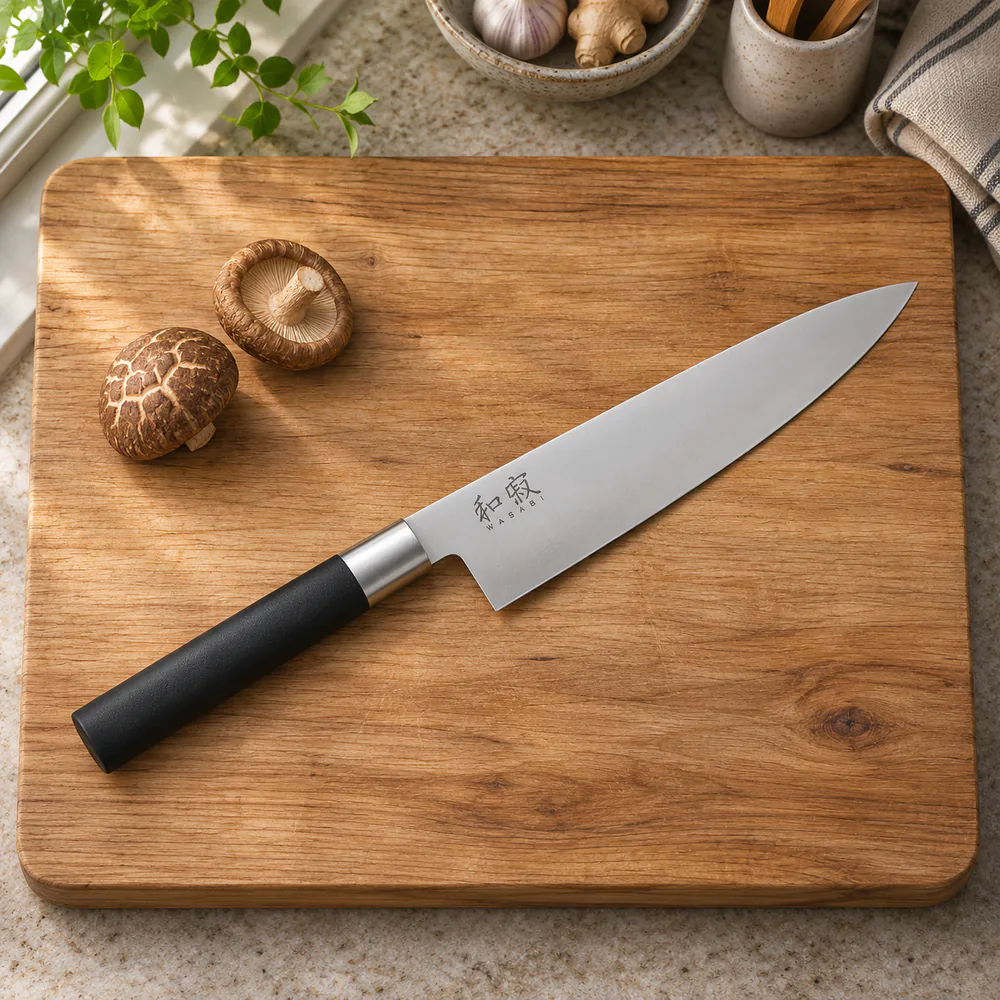
Kai Wasabi 8-Inch Chef's Knife

Best Japanese-Style Handle
Light, ambidextrous handling 8 in, 7.8 oz 3.9 View on Amazon
7

Kai PRO 10-Inch Chef's Knife

Best for Large Cutting Jobs
Roasts and big produce 10 in, 12.6 oz 3.8 View on Amazon

We earn a commission if you make a purchase, at no additional cost to you.

See full comparison table

How We Tested Kai Chef Knives

We judge a knife the way a working kitchen does. Out-of-box sharpness matters less than how the edge holds after a week of prep, how the handle feels in hour three, and whether the steel takes a fresh edge easily on a home sharpener. Every knife was scored on those three things: edge hold, handle comfort and ease of sharpening back to new.

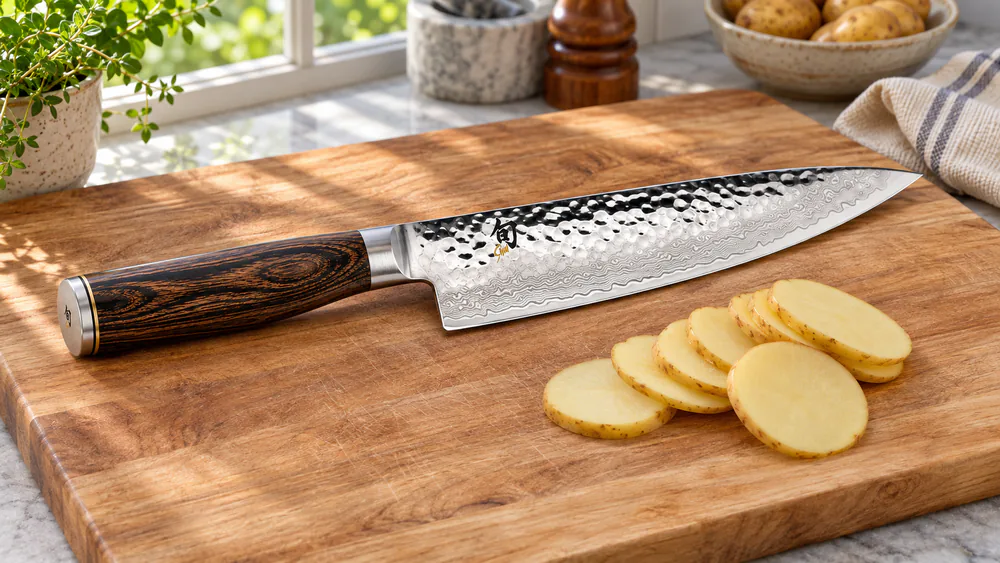
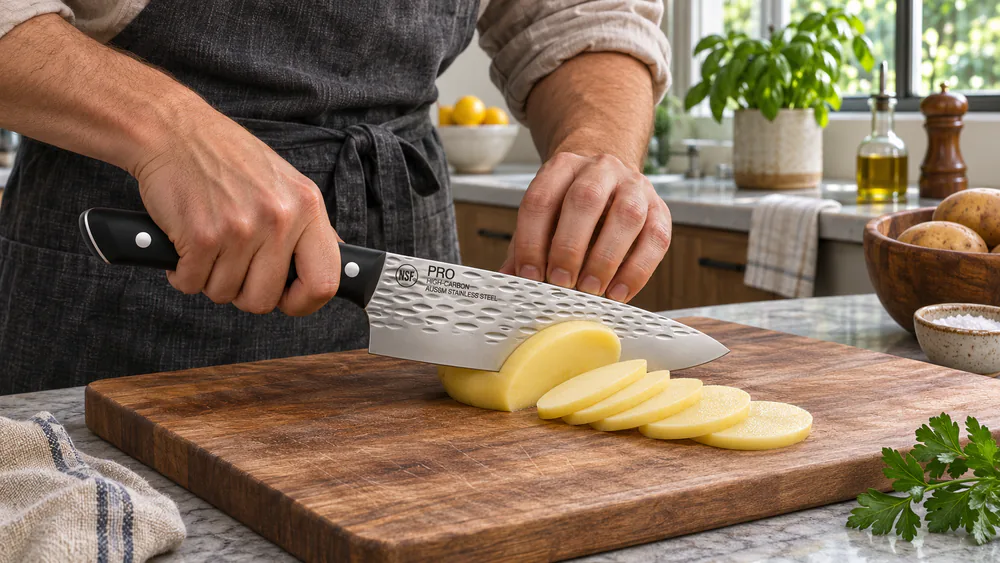
Potatoes were the clearest test: the hammered PRO and the tsuchime Premier released their slices, while the smooth Classic needed them shaken off.

We only quote specs the maker actually publishes. Where a number is not published, such as the edge angle on the Wasabi and Seki, we say so.

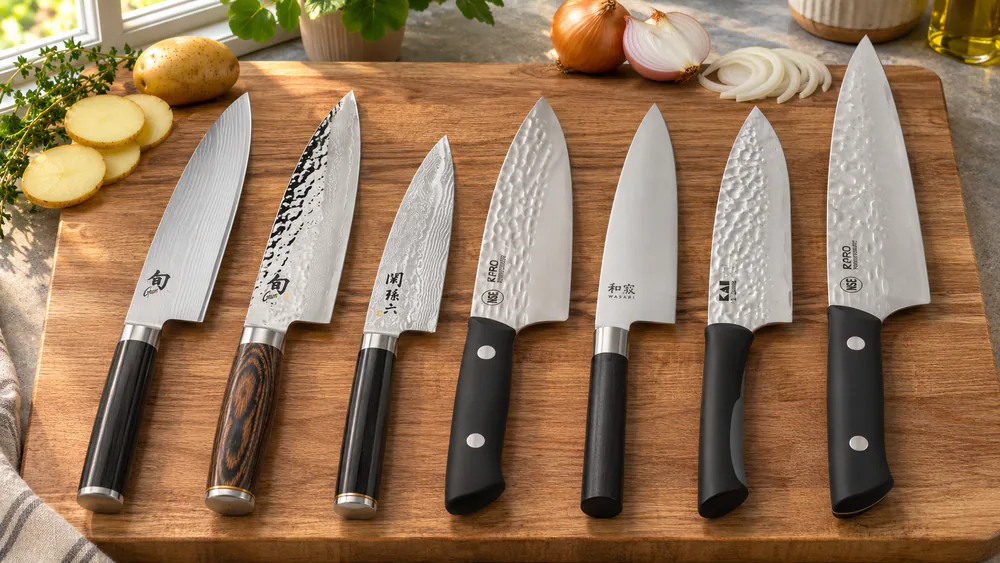
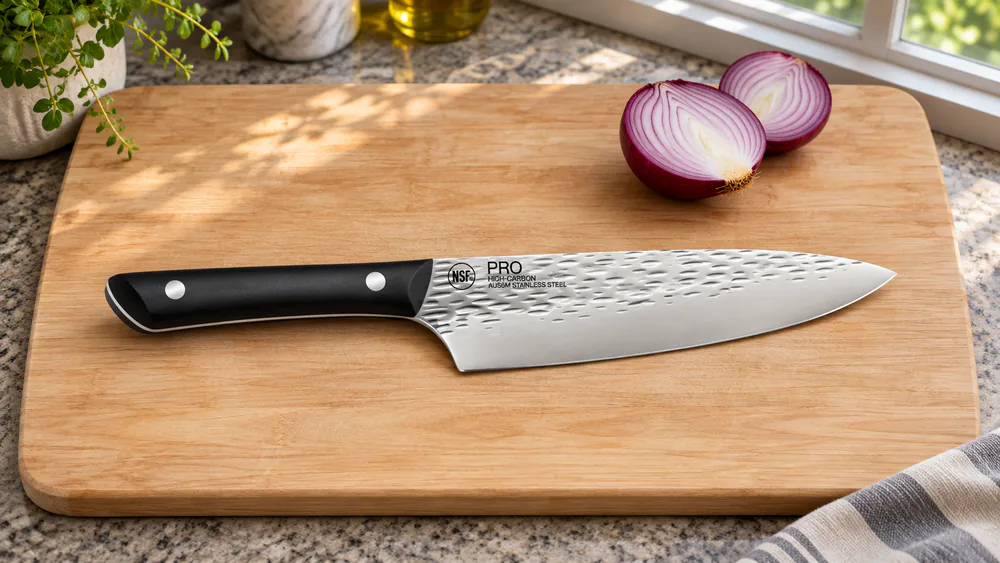
The seven Kai and Shun chef knives reviewed here laid in a row on a wooden cutting board with sliced potatoes and onions beside them
The lineup before the first prep session.
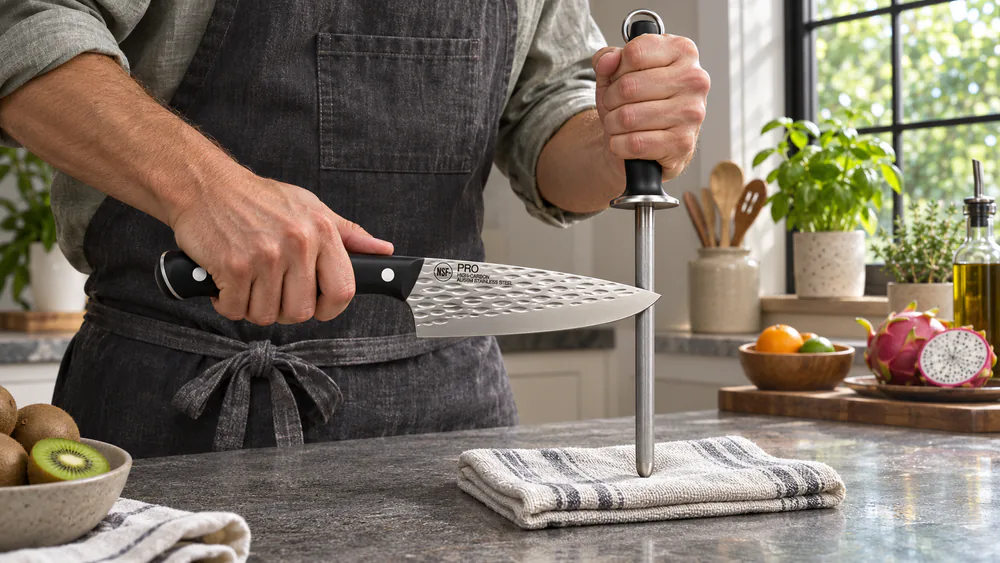
A cook honing a Kai PRO 8-inch chef knife on a steel honing rod over a kitchen counter
Weekly honing keeps the PRO edge sharp.

Tip. Buy one good chef's knife, a board that will not dull it, and learn ten minutes of sharpening. That combination beats any upgrade in steel.

1. Kai PRO 8-Inch Chef's Knife: Best Overall

Kai PRO 8-Inch Chef's Knife
1

Kai PRO 8-Inch Chef's Knife

Best Overall
Check Price on Amazon
4.6/5

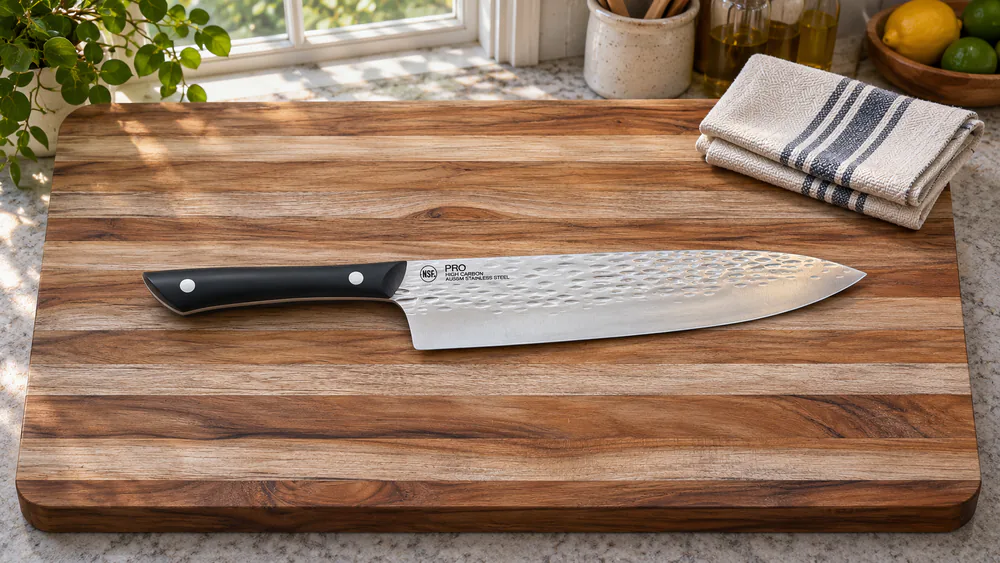
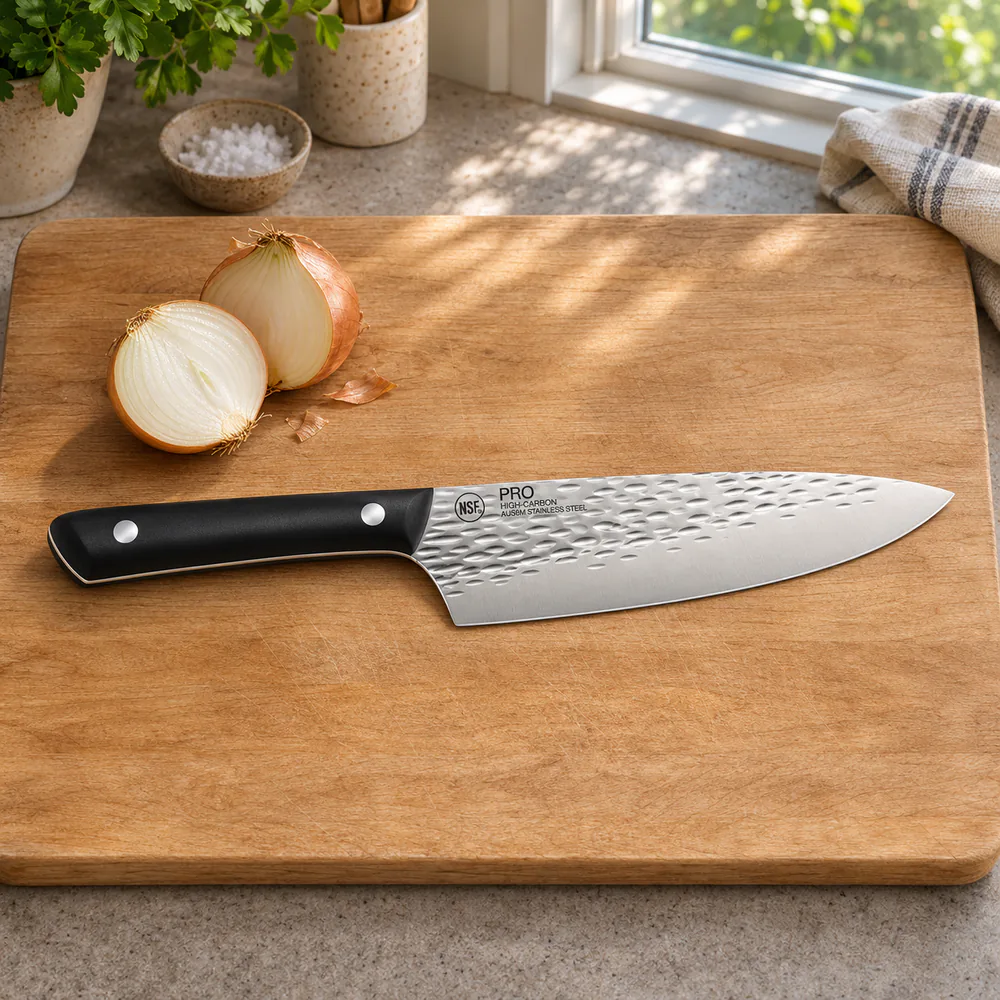
The PRO is the Kai we would hand to a friend who asks for one knife. The AUS6M steel is soft enough that the edge rolls rather than chips, so a honing rod restores it and a home sharpener takes it back to new without a fight. When we sliced potatoes, the hammered dimples stopped the slices from clinging to the blade, and the riveted handle felt more planted in the hand than the lighter Wasabi's. After a week or two of regular prep the edge needed a pass on the honing rod, and one pass brought it back.

The specs are straightforward. The steel is AUS6M, which the vendor describes as high-carbon stainless, with a hand-sharpened 16 degree double bevel (32 degrees comprehensive). The handle is riveted POM on a full tang, the weight is roughly 7 to 8 ounces, and the knife is NSF certified for commercial kitchens. The edge does need honing every week or two, and it loses its edge sooner than a Shun or a MAC.

Pros

  • AUS6M edge rolls instead of chipping and resharpens easily
  • Hammered finish helps food release
  • Riveted full-tang POM handle feels secure and planted
  • NSF certified, with free sharpening and honing support from Kai

Cons

  • Needs honing every week or two
  • Loses its edge sooner than a Shun or MAC
  • Country of manufacture is not confirmed
  • Rust spots can appear with heavy dishwasher exposure
Who should buy it

Buy the PRO if you cook most nights, want a Japanese-style 16-degree edge without the premium cost, and will hone it regularly. We describe the design as Japanese-style and leave the origin open.

Kai PRO 8-inch chef knife with hammered dimples slicing potatoes on a wooden board, slices falling away from the blade

2. Shun Classic 8-Inch Chef's Knife: Best Premium Pick

Shun Classic 8-Inch Chef's Knife
2

Shun Classic 8-Inch Chef's Knife

Best Premium Pick
Check Price on Amazon
4.5/5

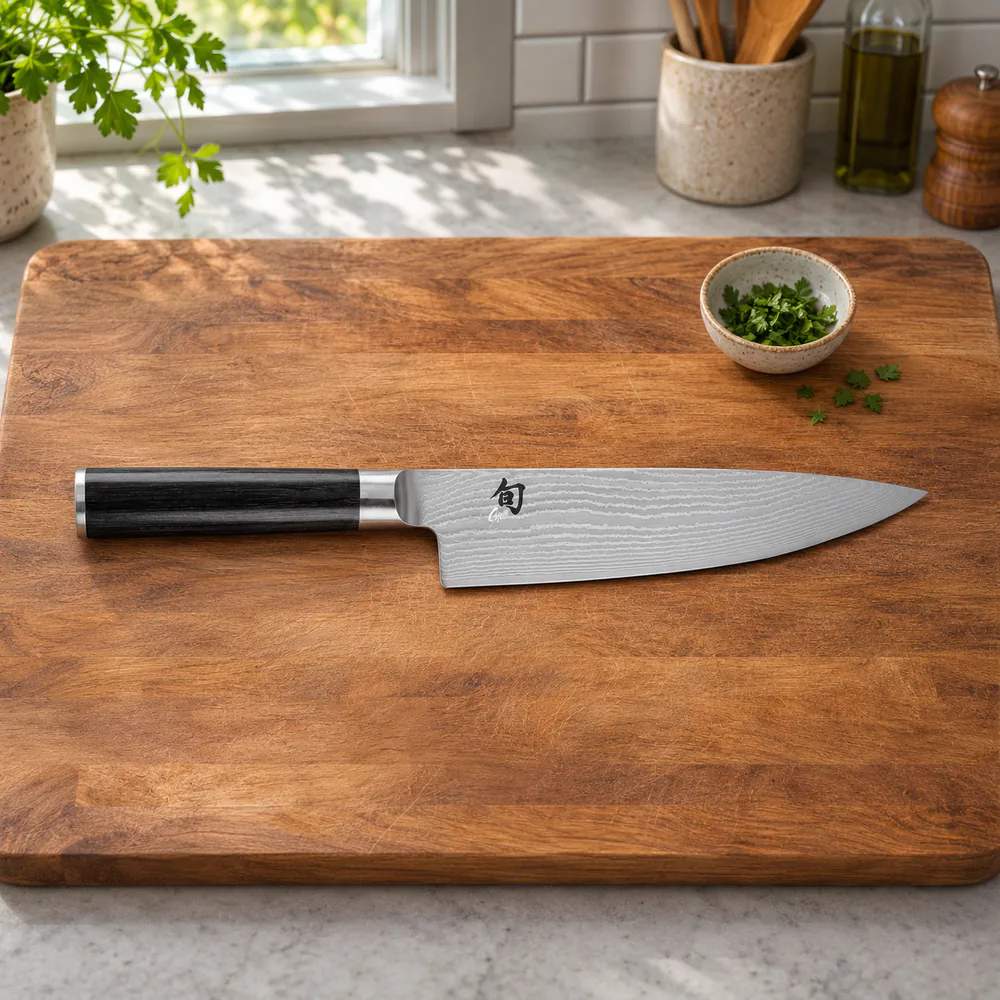
Where the PRO wants honing every week or two, the Shun Classic edge held up for about three weeks of heavy daily use. Then we gave it a touch-up on a 1000/6000 whetstone, and the steel, hard enough to resist rolling, sharpened without a fight. The D-shaped handle suits either hand, and in long chopping sessions it felt light and well balanced, without tiring the hand.

The blade is a VG-MAX core wrapped in 68 layers of Damascus cladding, at about 60-61 Rockwell with a 16-degree edge per side. It weighs roughly 7.5 ounces, is handcrafted in Seki, Japan, and carries a limited lifetime warranty with free sharpening and honing. The smooth Classic needs every other potato slice shaken off, and the Damascus pattern mostly adds looks.

Pros

  • Hard VG-MAX edge holds longer than the Kai PRO
  • Light, balanced and comfortable for long prep
  • D-shaped Pakkawood handle suits left and right hands
  • Handcrafted in Seki, Japan, with free sharpening and honing

Cons

  • Thin, very hard blade can chip on bone or when twisted through hard food
  • Not a knife for the sink or the dishwasher
  • Damascus layering is mostly looks, and bits can stick to it
  • Premium tier cost

3. Shun Premier 8-Inch Chef's Knife: Best for Looks and Feel

Shun Premier 8-Inch Chef's Knife
3

Shun Premier 8-Inch Chef's Knife

Best for Looks and Feel
Check Price on Amazon
4.4/5

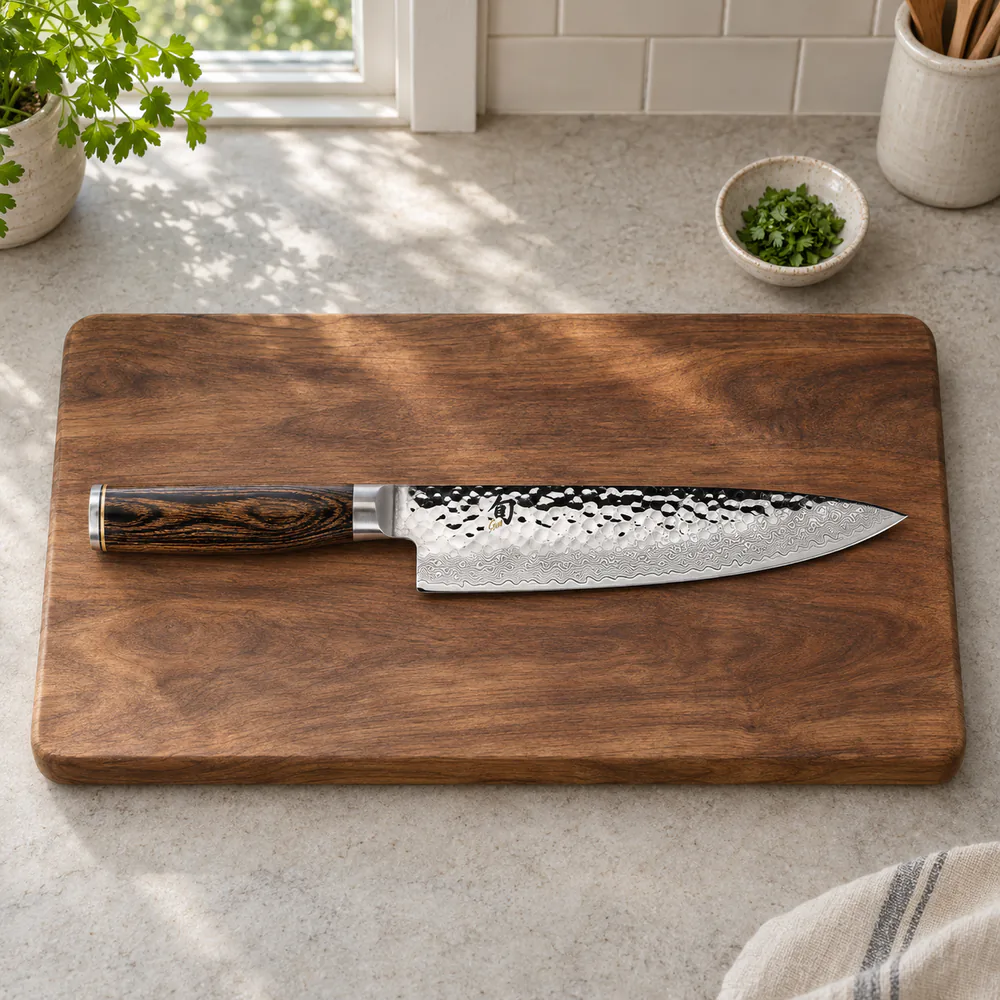
The Premier shares the Classic's core, but its tsuchime finish made a difference when we sliced potatoes. It released a pound of slices cleanly, while the smooth Classic needed every other slice shaken off. The thin blade moved through food with little drag. Coming from a Wusthof-style knife, the switch is obvious, and the curve of the belly gave us a comfortable rocking chop.

Under the finish it is the same core as the Classic: VG-MAX with 68 layers of Damascus cladding and a 16-degree edge. The handle is contoured Pakkawood in a walnut tone, and it weighs about 7.5 to 8 ounces. It is handcrafted in Seki, Japan, with a limited lifetime warranty. The edge stayed sharp through a month of five-days-a-week use.

Pros

  • Hammered tsuchime finish releases food well
  • Thin blade glides with little drag
  • Contoured handle and belly curve make rocking easy
  • Handcrafted in Seki, Japan

Cons

  • Costs more than the Classic, the splurge tier here
  • Same chip risk as any thin, very hard VG-MAX blade
Shun Premier 8-inch chef knife with hammered tsuchime blade beside a pile of cleanly released potato slices on a board
The hammered finish let the potato slices fall away.

4. Kai Seki Magoroku Gyuto 180mm: Best Made in Japan

Kai Seki Magoroku Gyuto 180mm
4

Kai Seki Magoroku Gyuto 180mm

Best Made in Japan
Check Price on Amazon
4.2/5

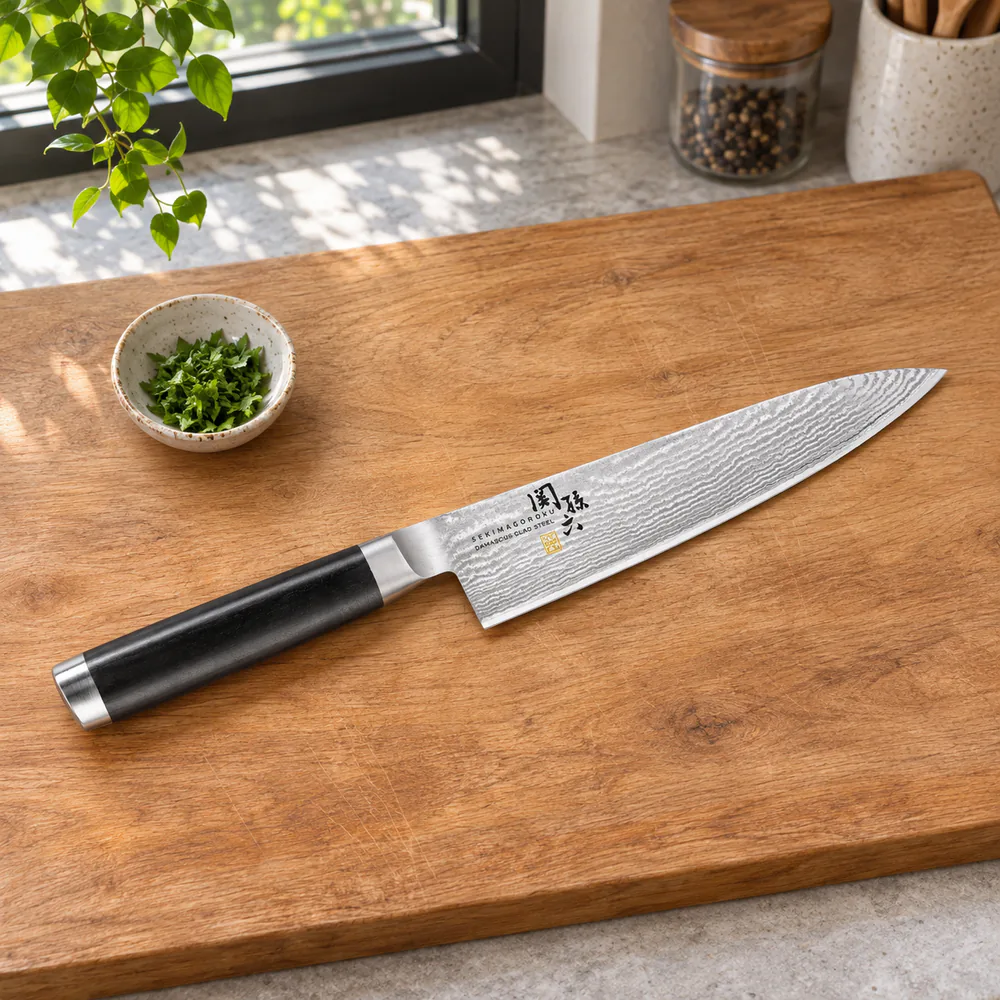
Step away from the Shun and PRO rocking chop and the Seki Magoroku makes its case: it is a great all-around knife that stayed sharp through a full shift. The longer, flatter blade suits push cuts better than rocking, so it rewards a cook who slices rather than rocks. Blade durability is mixed, and some chipping shows up with hard use, so treat it as a slicer and not a cleaver.

It is a 180mm (7.1 inch) gyuto with a Damascus-pattern blade, a laminated reinforced wood handle and a welded stainless base that keeps moisture out. It weighs 9.8 ounces (283 g), so it is the heaviest 8-inch class knife of the group, and it is made in Japan. Kai does not publish the core steel or the edge angle, so we do not name them. Kai's free US sharpening support may not cover this imported line.

Pros

  • Made in Japan with a moisture-sealed welded base
  • Stays sharp through a full shift
  • Flat profile excels at push cuts

Cons

  • Flat blade is less comfortable for rocking
  • Some chipping with hard use
  • Core steel and edge angle are not published

5. Kai Luna 8-Inch Chef's Knife: Best Budget

Kai Luna 8-Inch Chef's Knife
5

Kai Luna 8-Inch Chef's Knife

Best Budget
Check Price on Amazon
4.0/5

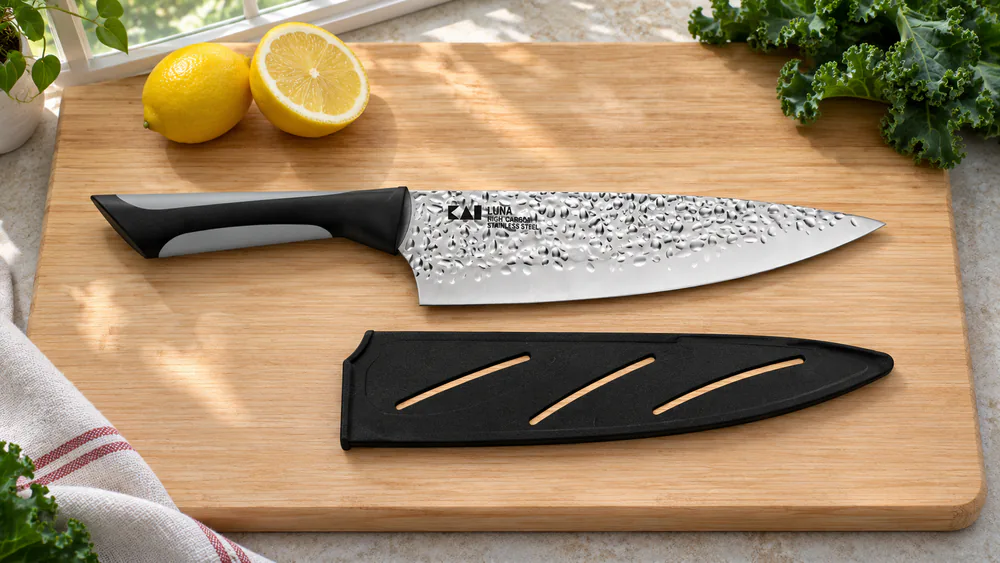
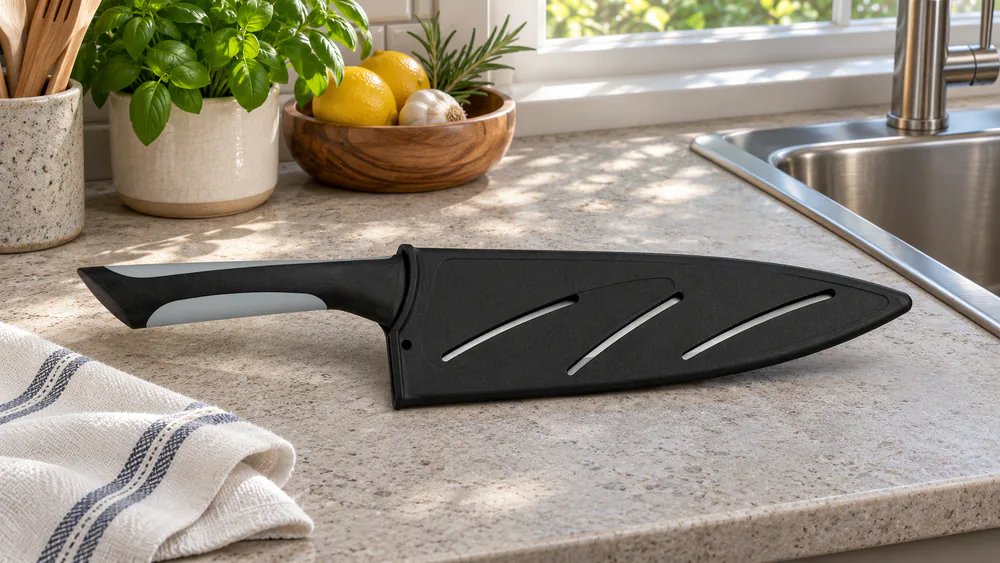
Coming down to the budget end, the Luna is the friendliest Kai for a first apartment or a rough household. When we unboxed it the sheath was tight, and at 8 inches it is about the longest blade that fits a standard sink. The steel is soft German DIN 1.4116 at about 56-57 HRC, hand-sharpened to 16 degrees per side, and the Luna is made in China. Soft steel means the edge fades faster than on a PRO or a Shun, so plan to hone it often.

Pros

  • Lowest price of the Kai picks
  • Soft-grip handle is comfortable for beginners
  • Comes with a polymer sheath
  • Soft steel is forgiving of rough use

Cons

  • Softer steel loses its edge fastest
  • Made in China
Kai Luna 8-inch chef knife in its polymer sheath on a counter next to a standard kitchen sink

6. Kai Wasabi 8-Inch Chef's Knife: Best Japanese-Style Handle

Kai Wasabi 8-Inch Chef's Knife
6

Kai Wasabi 8-Inch Chef's Knife

Best Japanese-Style Handle
Check Price on Amazon
3.9/5

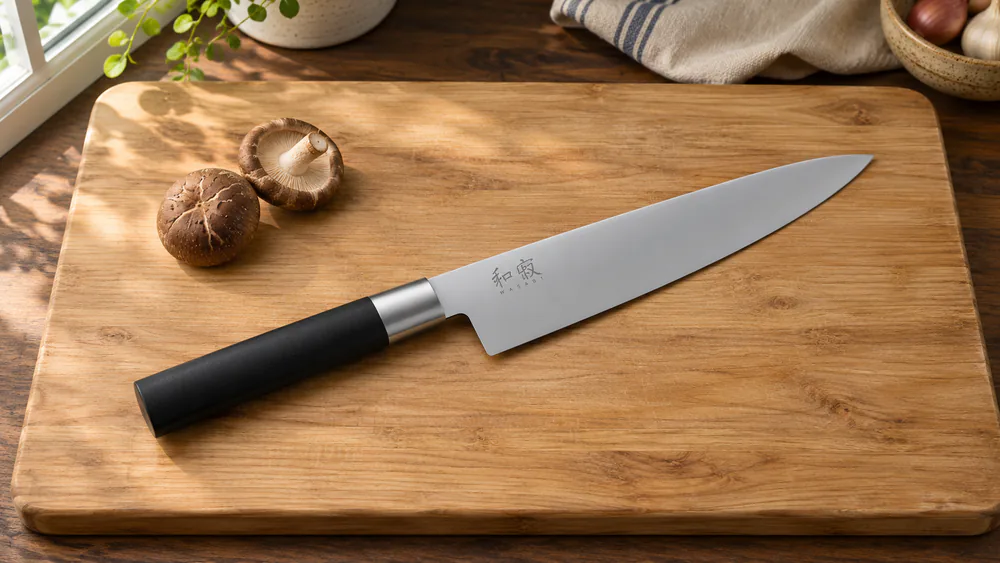
Next to the Luna, the Wasabi is the lighter, more Japanese-feeling handle: symmetrical, comfortable in either hand, and at 7.8 oz it stays sharp for an entry-level knife. It has no bolster, which lets you use the full edge but gives the heel less protection. Beside the PRO it felt less planted, which is why it ranks below it. The vendor says only high-carbon stainless, so we do not name a grade, and no edge angle is published.

Pros

  • Light, symmetrical handle works for left and right hands
  • Full tang and no bolster, so the whole edge is usable
  • Stays sharp for an entry-level knife

Cons

  • Less planted in the hand than the PRO
  • No bolster gives the heel less protection
  • Steel grade and edge angle are not published

7. Kai PRO 10-Inch Chef's Knife: Best for Large Cutting Jobs

Kai PRO 10-Inch Chef's Knife
7

Kai PRO 10-Inch Chef's Knife

Best for Large Cutting Jobs
Check Price on Amazon
3.8/5

The 10-inch PRO shares the 8-inch model's AUS6M steel, 16 degree double bevel, hammered finish, riveted POM handle and NSF certification. At 12.6 oz, though, it feels like a different tool. On a roast it has the reach the 8 cannot match, and the handle stayed grippy over a long session. Its length can be awkward on smaller home cutting boards and for some hands, which puts it last in this general-purpose ranking.

Pros

  • Reach for roasts, melons and large produce
  • Grippy riveted handle over long sessions
  • Same easy-to-sharpen AUS6M build as the 8-inch

Cons

  • Too long for some boards and hands
  • At 12.6 oz it tires the wrist sooner
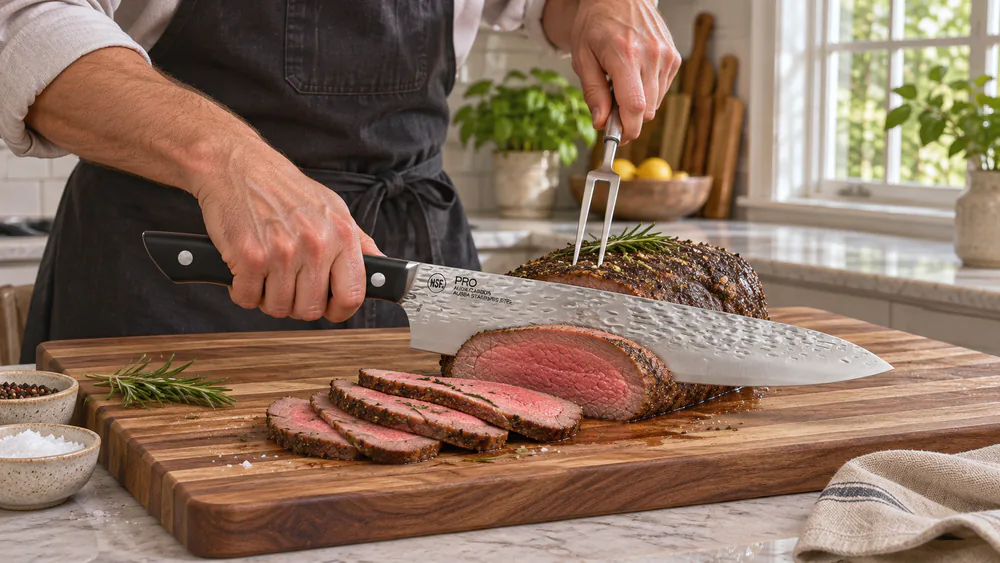
Kai PRO 10-inch chef knife slicing through a roast on a large wooden cutting board with the long blade extending past the meat

What to Know About Kai Knives Before You Buy

Kai has made blades in Seki City, Japan since 1908, and the company owns Shun. If you want more of the Japanese-knife category, our Japanese knife reviews cover the other makers worth comparing.

Kai and Shun: how the brands relate

Think of Shun as Kai's premium line and the Kai-branded knives as the plainer ones. Kai offers free US sharpening support on the PRO, Wasabi, Luna and Shun lines, but not necessarily the imported Seki Magoroku.

Kai lines compared (PRO, Luna, Wasabi, Seki Magoroku, Shun)

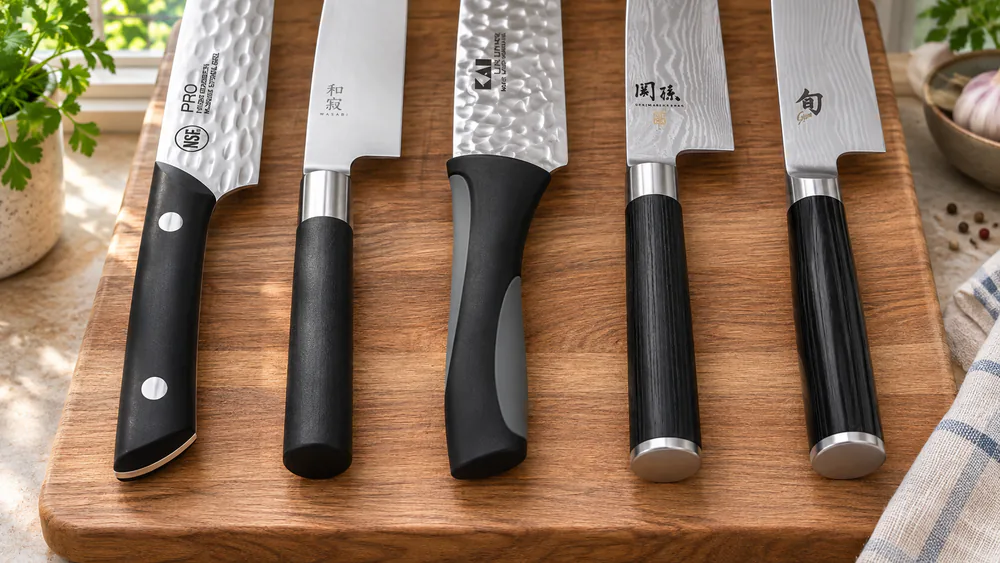
Handles of the Kai PRO, Wasabi, Luna, Seki Magoroku and Shun Classic lined up side by side to show different handle shapes
ProductSteelEdge angleHandleMade inBest for
Shun ClassicVG-MAX, 68-layer Damascus16-degreeD-shaped PakkawoodJapanPremium all-rounder
Shun PremierVG-MAX, 68-layer Damascus, tsuchime16-degreeContoured walnut PakkawoodJapanLooks and feel
Kai PROAUS6M16Riveted POM, full tangNot confirmedMost home cooks
Kai WasabiHigh-carbon stainlessNot publishedPolypropylene-bamboo, symmetricalNot confirmedJapanese-style handle
Kai Seki MagorokuDamascus-pattern blade, core not publishedNot publishedLaminated reinforced woodJapanMade in Japan
Kai LunaDIN 1.411616Molded resin soft gripChinaBudget

What Kai does well and where it falls short

Pros

  • Easy-to-sharpen steels across the PRO, Luna and Wasabi
  • Free sharpening and honing support on most US lines

Cons

  • Origin varies by line, and some are made in China
  • The Kai-branded steels fade sooner than Shun's VG-MAX
  • Seki Magoroku warranty and support differ by region

How to Choose a Kai Chef Knife

Start with how you cook and how you treat knives. The steel decides how often you hone, and the handle decides how the knife feels in hour three.

Blade length: 6, 8 or 10 inches

Eight inches is the right default and about the longest length that fits a standard sink. The 10-inch PRO suits roasts and big produce, but it is too long for some home cutting boards.

Steel and edge angle

Most picks here share a 16-degree edge per side. The difference is steel hardness. The Luna's DIN 1.4116 at about 56-57 HRC is the softest and fades fastest. The PRO's AUS6M rolls rather than chips. The Shun VG-MAX at about 60-61 Rockwell holds longest but chips if twisted through hard food.

Handle style

The Wasabi's symmetrical handle suits either hand, and the PRO's riveted POM feels more planted. Shun's Pakkawood handles are D-shaped on the Classic and contoured on the Premier.

Budget tiers

Luna, Wasabi and the PRO 8 are the budget tier. The PRO 10 and Seki Magoroku are mid-priced, the Shun Classic is premium, and the Premier is the splurge pick.

Warning. Hand wash every one of these knives and dry it right away. Rust spots can appear on Kai PRO with heavy dishwasher exposure, and the thin Shun blades are not dishwasher or sink knives at all.

Buy for the steel you are willing to maintain, not the one with the best spec sheet.

Care and Sharpening

The softer Kai steels reward regular honing. A honing rod restores a PRO edge, and a Shun Classic does well on a 1000/6000 whetstone. Cut on a board that will not dull the edge, and use the free sharpening and honing support Kai offers on its US lines.

Kai vs Other Brands

Kai vs Shun

Shun is Kai's own premium line, so this is really Kai's budget lines against its best. Shun wins on hardness and edge hold, while the Kai PRO wins on easy resharpening and cost. For a deeper look at the premium line, see our full Shun chef knife roundup.

Kai vs Victorinox

Victorinox is a plainer budget alternative. If you want a Japanese-style 16-degree edge, the Kai PRO is the better match, and the Luna is the nearest Kai on cost.

Kai vs Tramontina

Tramontina is another budget-minded name. The Kai PRO adds a hammered finish, a full-tang riveted handle and NSF certification.

Frequently Asked Questions

Are Kai knives good quality?

Yes, for the price tier. The PRO is a step up from generic stainless, sharpens easily and is NSF certified.

Are Kai knives made in Japan?

It depends on the line. The Shun Classic and Premier are handcrafted in Seki, Japan, and the Seki Magoroku is made in Japan. The Luna is made in China, and the PRO's origin is not confirmed.

Does Kai sharpen my knife for free?

Kai offers free sharpening and honing support in the US on the PRO, Wasabi, Luna and Shun lines. We have no published claim steps to quote, so check Kai's support page before you ship a knife, and confirm coverage first if you buy the imported Seki Magoroku.

How can I tell the PRO from the Seki Magoroku?

The PRO is an 8-inch knife with a hammered blade and a riveted POM handle. The Seki Magoroku is a 180mm gyuto with a Damascus-pattern blade, a laminated reinforced wood handle and a welded stainless base, and it weighs 9.8 ounces.

Is a 10-inch PRO a good choice for a small cook?

Usually not. It weighs 12.6 ounces against roughly 7 to 8 for the 8-inch, and it is too long for some home boards and hands. A small cook who wants reach for roasts should try one in hand first.

Final Verdict

The PRO 8-inch remains the knife we would recommend first, but there is one nuance. If you cook five nights a week and are happy to hand wash, the Shun Classic repays the extra cost with an edge that lasts about three weeks of heavy use. If you are buying for a rough household or a first kitchen, the Luna is the one to pick. Block and starter sets only make sense if you need several knives at once.

Read next

Ready to upgrade your kitchen?

Pick the Kai that fits how you cook, then keep it sharp.