As an Amazon Associate we earn from qualifying purchases. We may earn a commission from links on this page, at no extra cost to you. Learn more.
If your knives skate off a tomato skin, a guided Lansky clamp is the cheapest way back to a real edge. The system locks the blade in place and fixes the angle, so your hands only have to manage a steady stroke instead of a steady wrist. We judge sharpeners by what they do to the edge, and the guide on a Lansky genuinely earns its keep.
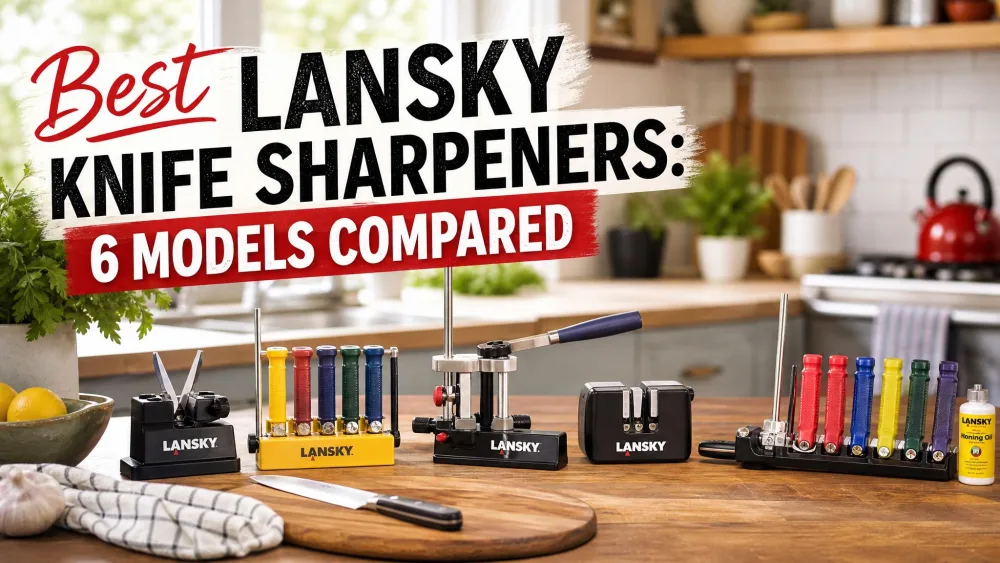
The range is confusing, because the diamond kits, ceramic kit, pull-through, pocket tool, and crock-stick box solve different problems. This guide ranks the six models we would point you to, and it sits alongside the rest of our knife sharpener reviews if you want to see how Lansky stacks up against other brands.
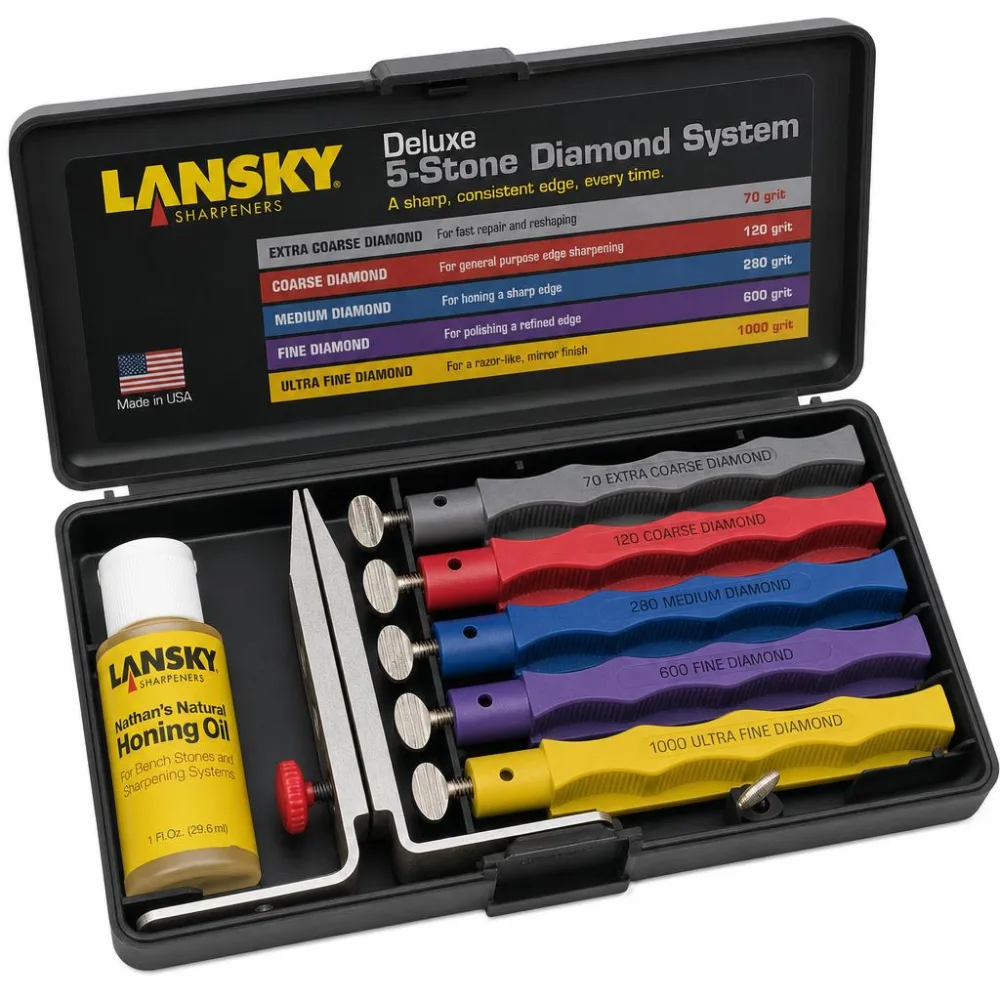
Best Overall: Lansky Deluxe 5-Stone Diamond System
It is the only kit here that covers a rolled, chipped, or badly dull edge and then finishes it fine.
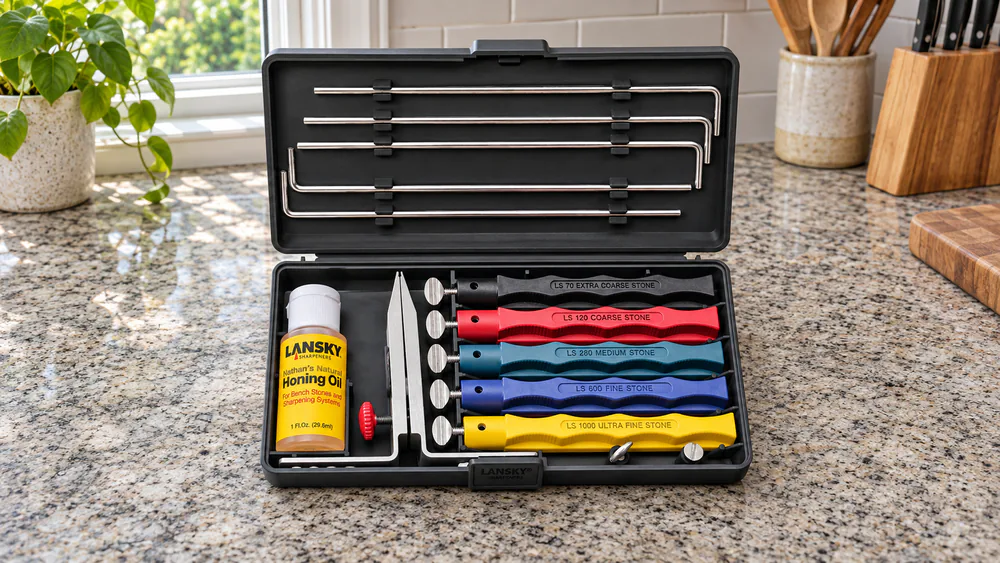
Best Ceramic: Lansky Deluxe 5-Stone Ceramic Kit
Choose it when you want a forgiving, full progression of stones for kitchen knives.
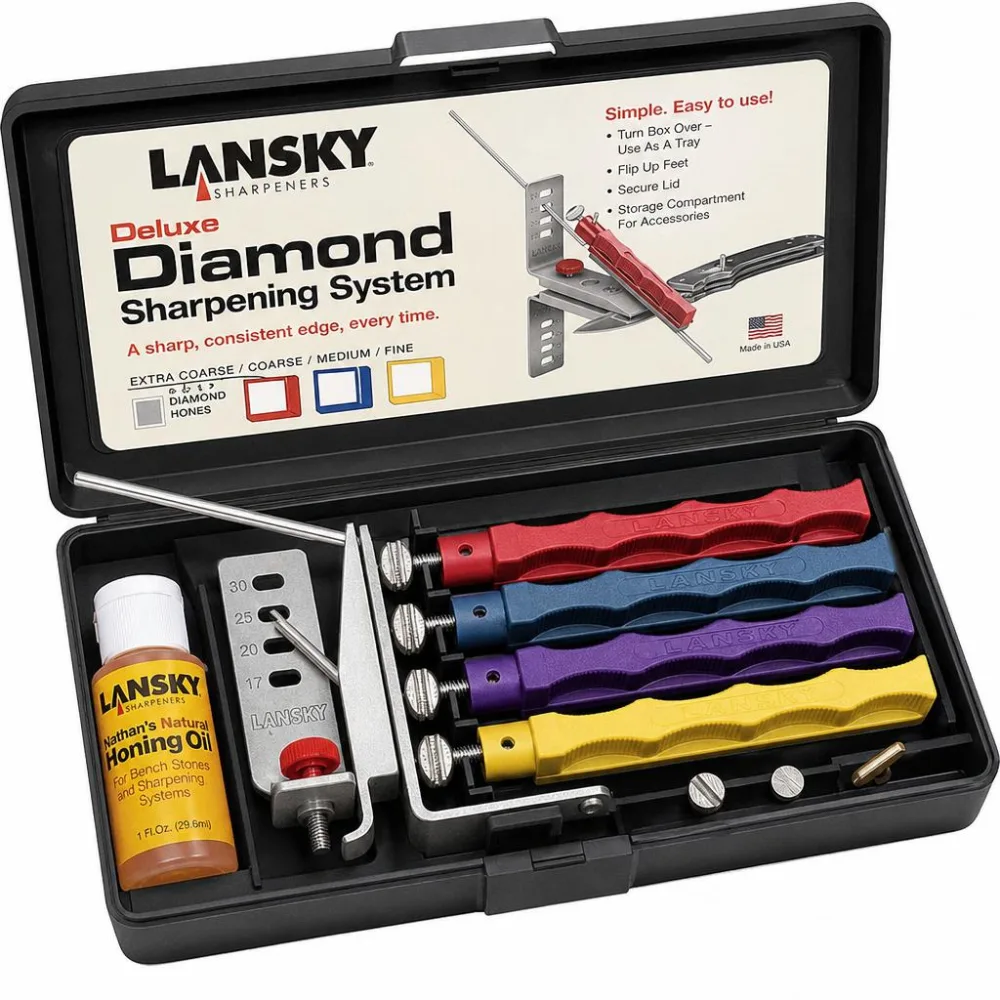
Best Value: Lansky 4-Stone Deluxe Diamond System
You give up the finest hone and keep nearly everything else the diamond flagship does.
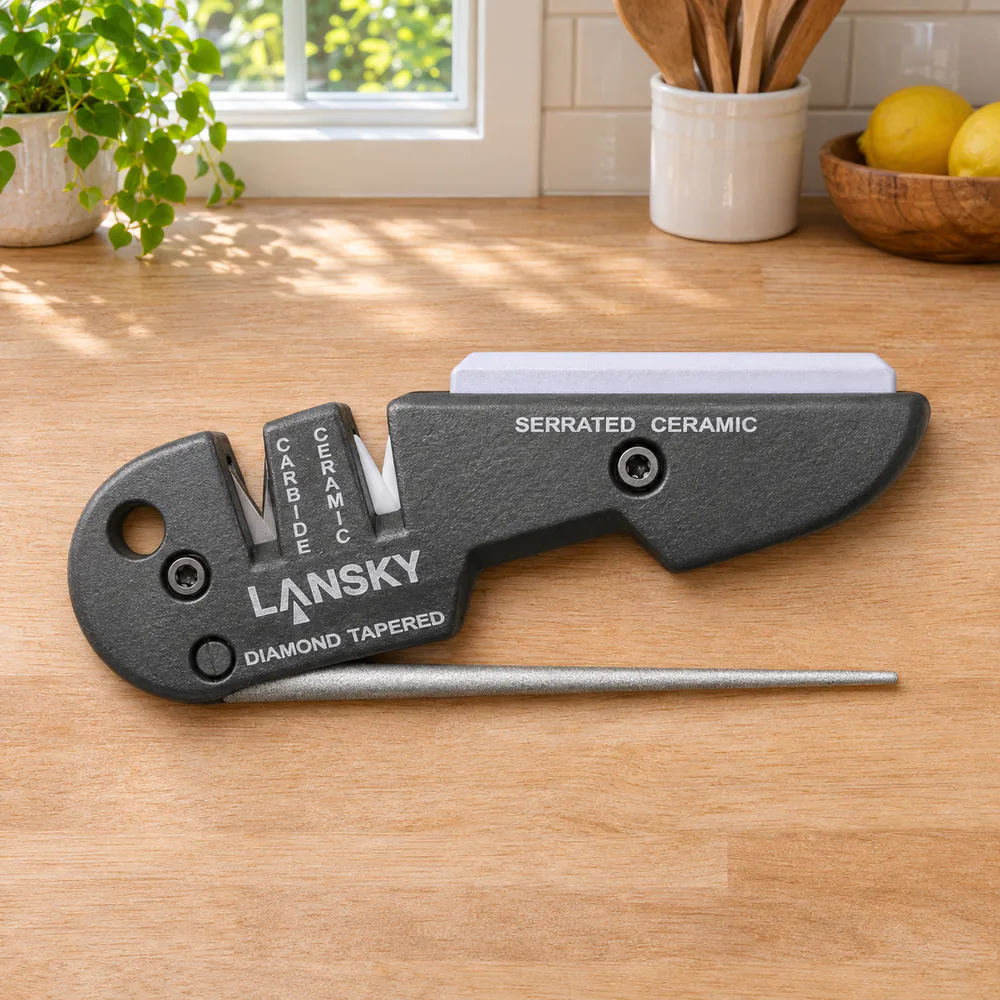
Best Portable: Lansky Blade Medic
It fits a tackle box, and it needs no skill at all.
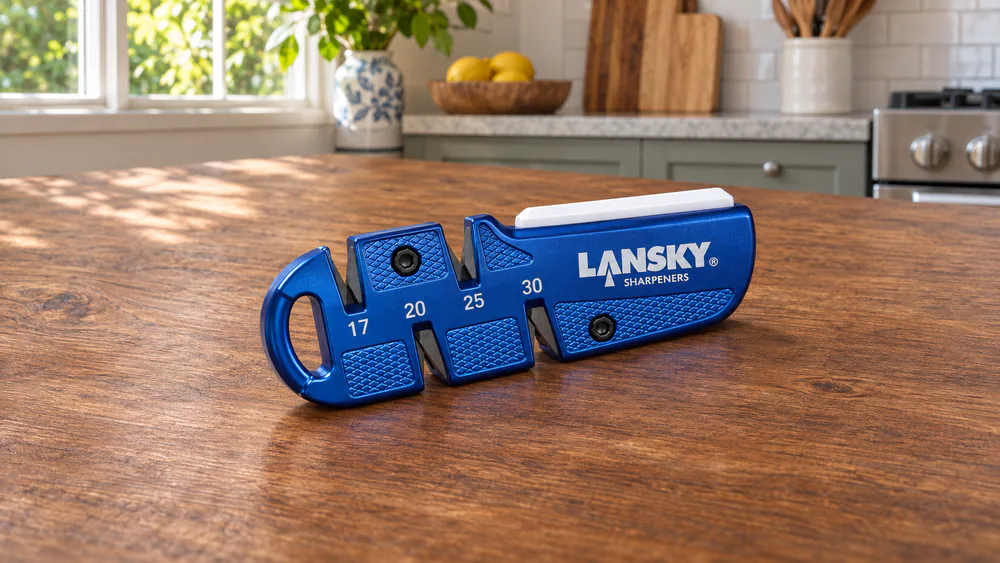
Best Pull-Through: Lansky QuadSharp
Four preset angles and no clamp to fuss with make it the quick option.
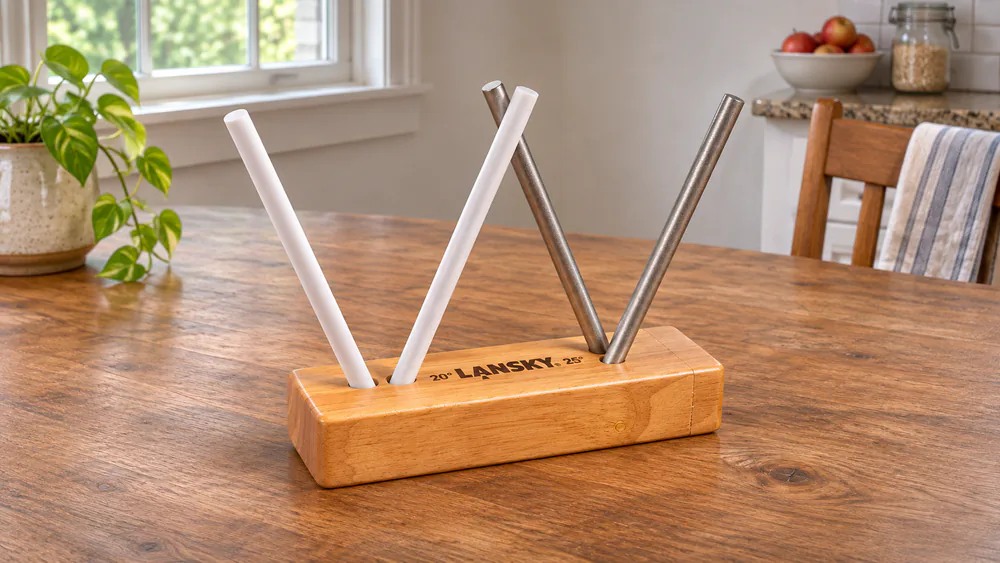
Best for Fine Finish: Lansky Diamond/Ceramic TurnBox
It keeps an already good edge keen between real sharpenings.
How We Rate
We judge each Lansky the way we judge every sharpener: by what it does to the edge. That means how the burr forms on the stone, whether a tomato skin still resists the blade, and how repeatable the angle is from one session to the next.
We also assess clamp stability and setup time, since both affect whether a kit gets regular use or stays in its case.
A paper-slice test is the quick check we use on any edge.
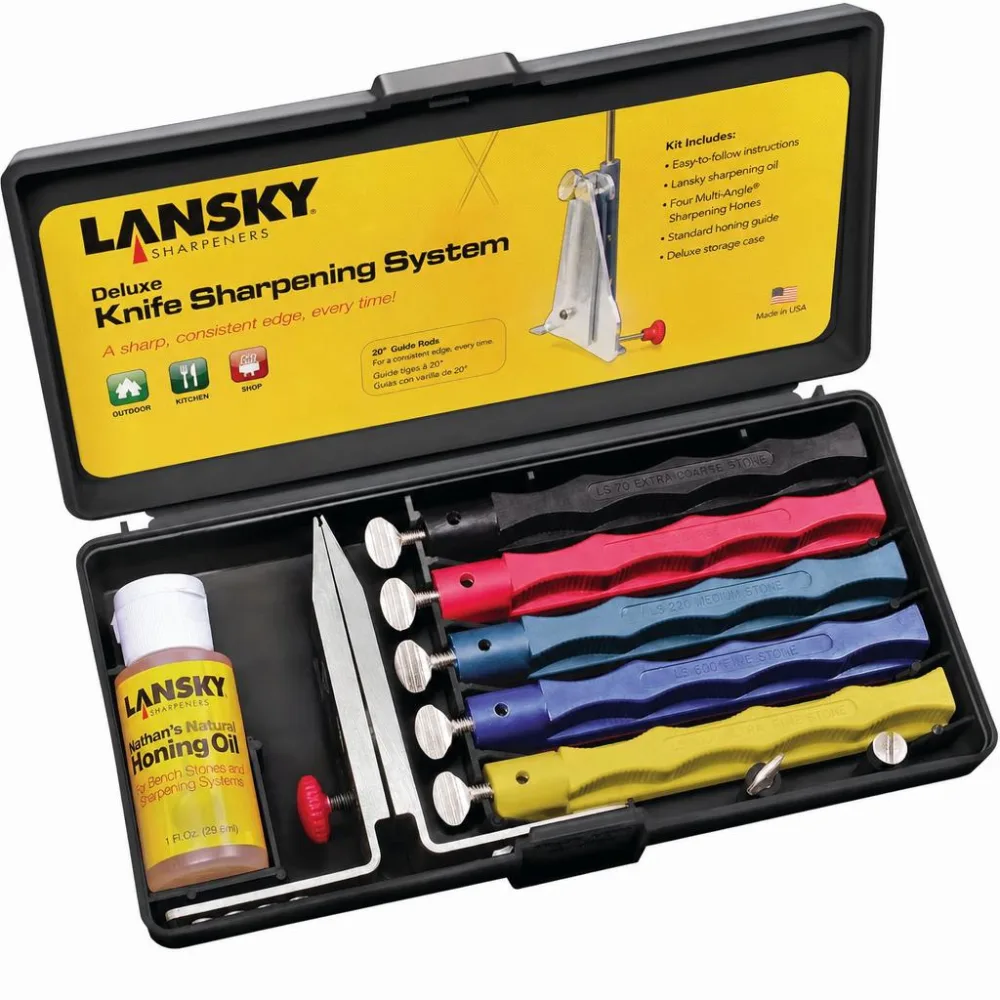
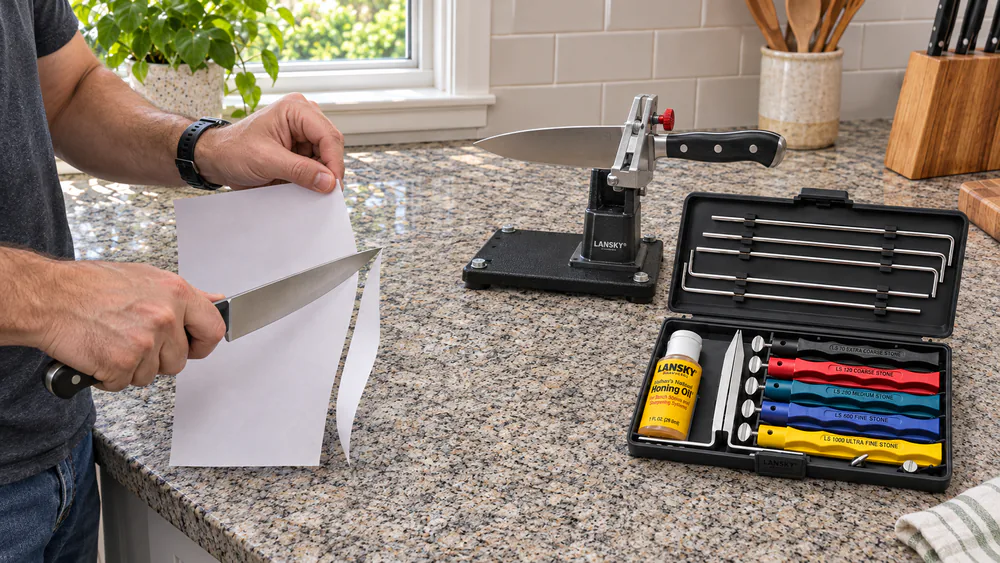
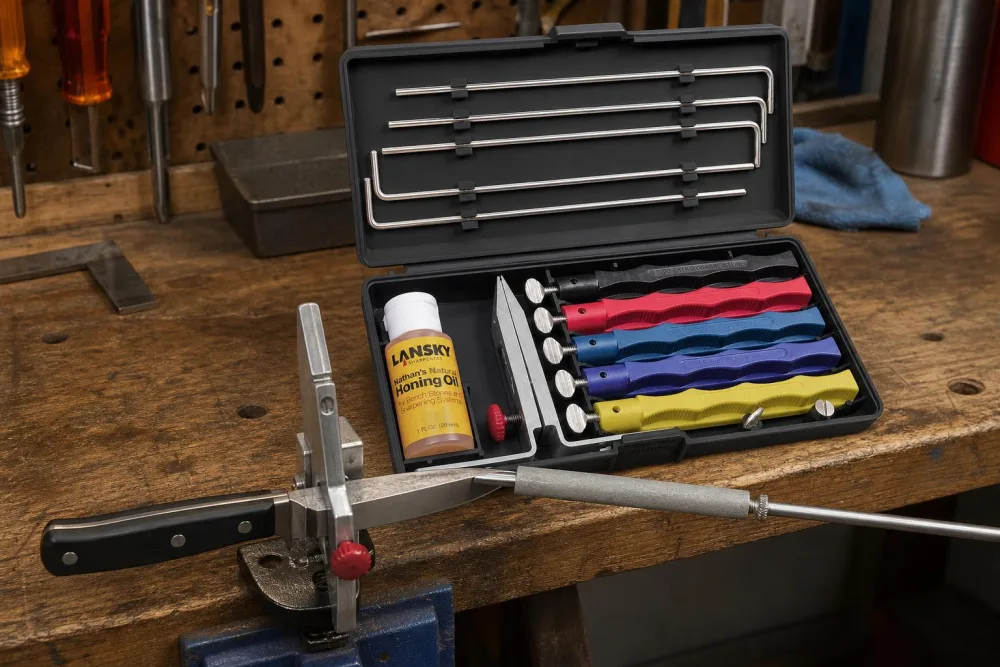
This is the Lansky we would buy first, and it is the only kit here that rebuilds a rolled edge in minutes and then finishes it glass-smooth on the last hone. The multi-angle clamp lets you match a Western chef's knife or a thinner pocket blade. Setup takes time and bench space, which makes it poor for a quick touch-up, but for a real sharpening day it is the one we reach for.
Pros
Five diamond hones from 100 to 1000 grit cover repair and finishing
Four angle options from 17 to 30 degrees
Cleaning brush and storage case included
Cons
Slow to set up, so poor for quick touch-ups
Needs bench space and works best on a table mount
A long chef's blade is awkward to clamp end to end
The guided clamp is what makes it suited to reprofiling. You can check the grind angle and hold it, which diamond or ceramic rods simply cannot do. Mounting the system to a table clamp makes it far steadier than holding the base by hand, and the kit works best that way. The table mount is sold separately.
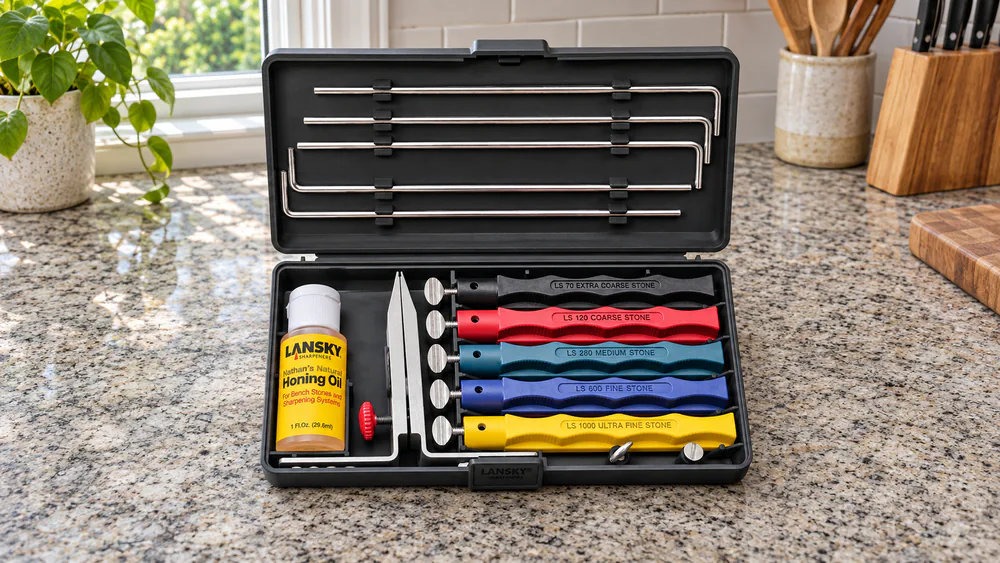
If the diamond flagship feels like overkill, the ceramic kit is the gentler route: work through every stone in order and there is very little guesswork. The five hones run from extra-coarse alumina oxide up to an extra-fine ceramic stone. The coarsest stone shows slight wear because it does the most aggressive work.
Pros
Simple full progression with very little guesswork
Angle options of 17, 20, 25 and 30 degrees
Honing oil and a molded case included
Cons
Clamp is rough aluminum and can slip on a blade
Ceramic needs more strokes and wears faster than diamond
Cheap thumbscrews hurt angle repeatability
The weak point is the clamp. It is rough, unpolished aluminum and does not always grip a blade securely, so check the blade is seated before every pass. The guide-rod thumbscrews feel cheaply made. Mark each rod and its matching stone to improve angle repeatability from session to session. Adding a leather strop with white and green compound after the fine stone turns the edge scalpel-sharp.
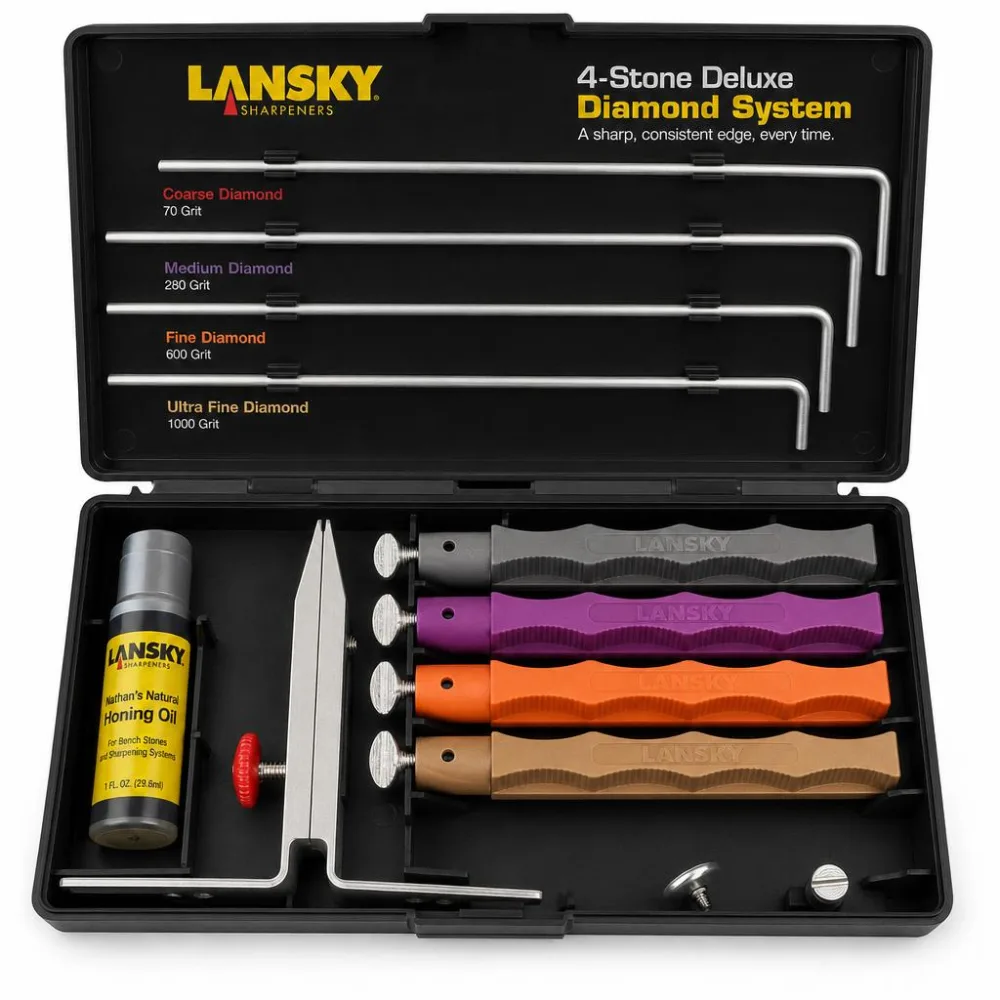
Stepping down from the flagship, the 4-stone system still brings an edge back on a very dull blade, which is the job most people buy a Lansky for. It includes four diamond hones from extra-coarse to fine, four guide rods, a clamp with an angle selector, a nylon cleaning brush and a molded travel case. It lacks the ultra-fine hone included with the 5-stone diamond kit, so its finish stops at fine rather than glassy.
Pros
Four diamond hones handle very dull blades
Four angle options and an angle selector clamp
Travel case and cleaning brush included
Lower cost than the 5-stone diamond
Cons
No ultra-fine hone, so the finish stops at fine
The clamp-and-rod routine feels like a chore
Needs bench space like the other guided kits
The clamp-and-rod routine feels like a chore to some cooks, and it rewards patience. If you sharpen a couple of times a year, the fine hone is plenty.
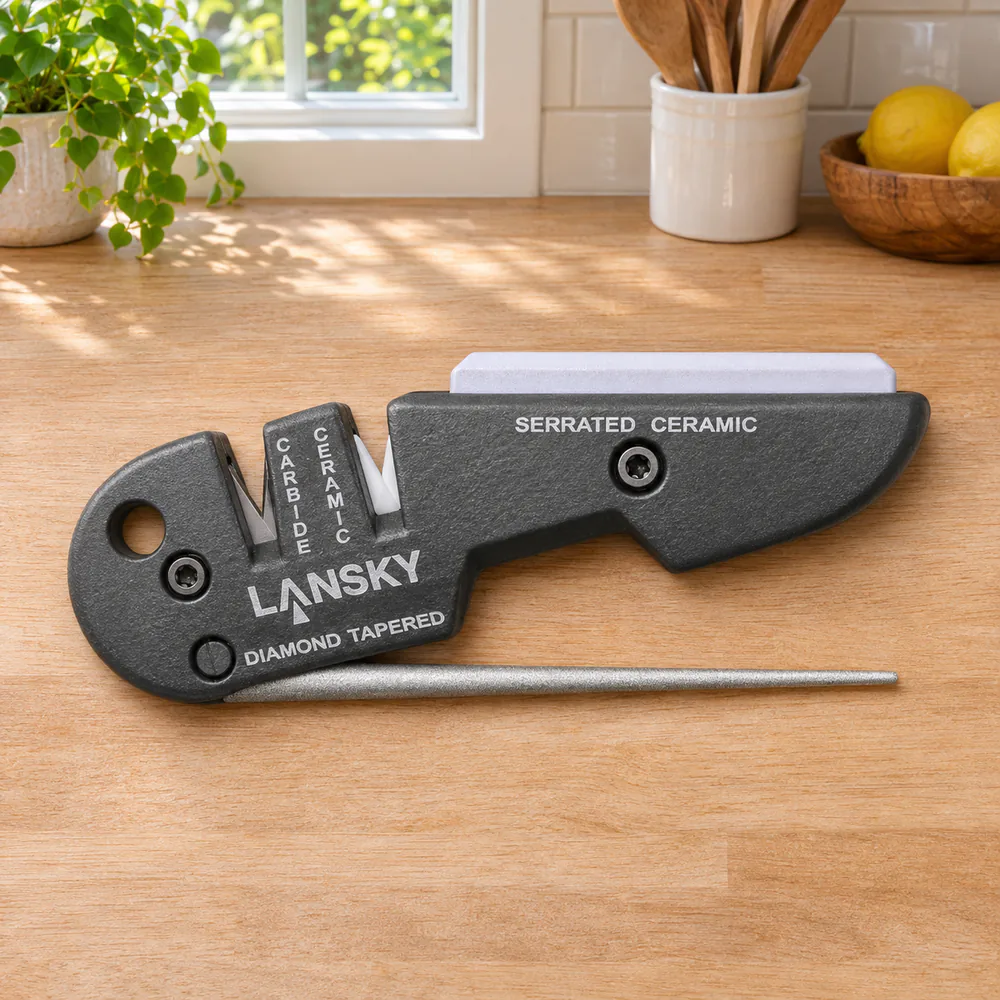
Start with what the Blade Medic cannot do: it will not hold an angle for you, and it strains on thick or damaged blades. What it offers instead is a 4-in-1 tool about the size of a small pocketknife that needs no skill. It combines a tungsten carbide draw-through, a ceramic draw-through, a ceramic serration rod, and a tapered diamond serration rod that holds closed magnetically. Three or four strokes on the carbide slot restore a usable edge, and the tapered diamond rod gets into serrations, which most guided kits handle poorly.
Pros
Pocket-sized with a metal body
Restores a usable edge in a few carbide strokes
Tapered diamond rod reaches serrations
Needs no skill
Cons
Fixed angles give little control
Strains on thick or damaged blades
Not suited to reprofiling a chef's knife
The angles are fixed, so it is not for reprofiling. It lives in a tackle box or a drawer, and for a hunting knife or a pocket folder that is exactly right. For your best chef's knife, it is the wrong tool.
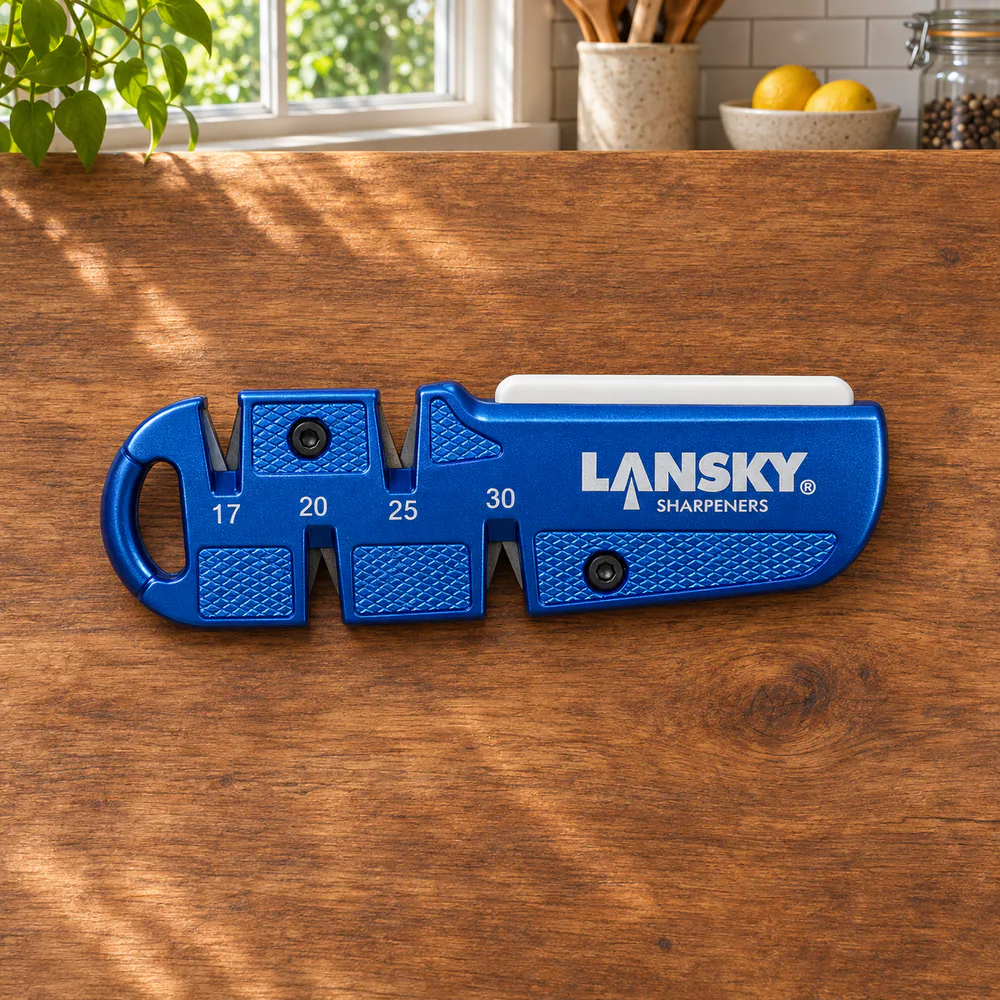
Moving from pocket tool to pull-through, the QuadSharp brings a dull blade back in a few passes through the carbide slots, and the ceramic stone polishes afterward. It offers four preset angles at 17, 20, 25 and 30 degrees, with carbide slots that sharpen in 3-4 strokes. The rugged metal body is compatible with Lansky kits and accessories.
Pros
Four preset angles from 17 to 30 degrees
Carbide slots sharpen in 3-4 strokes
Ceramic stone polishes the edge
Compatible with Lansky kits and accessories
Cons
Removes steel quickly, so not for prized knives
Preset slots limit your control over the edge
Less refined than a guided diamond system
With no clamp to set, it is the quickest Lansky to pick up. The slot chooses the angle, though, and carbide removes steel quickly, so use it on a working knife.
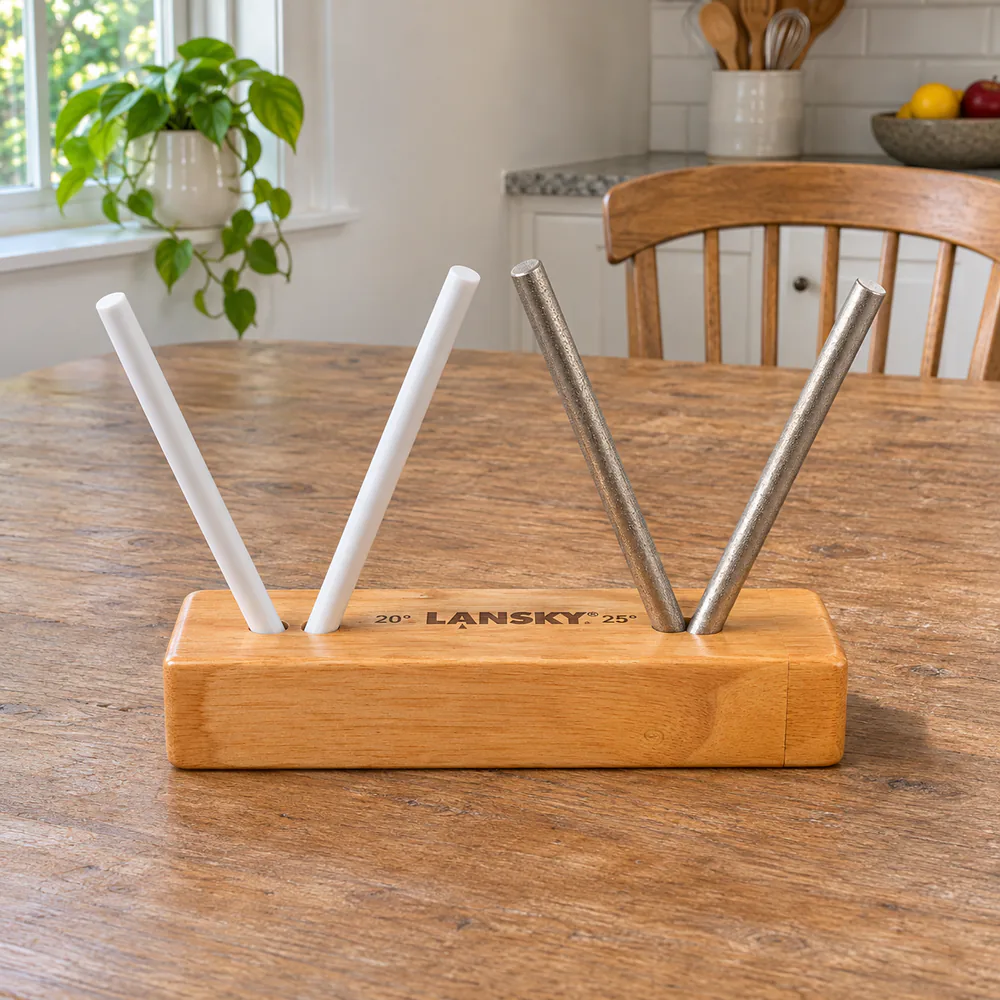
Check which TurnBox model you are buying: rod materials and grits vary across the ceramic, diamond and combination versions. The TurnBox suits daily honing and finishing and keeps a kitchen edge up between real sharpenings. A hardwood base is pre-drilled for 20 and 25 degree rod holes, and the whole box breaks down flat for a drawer. Crock sticks work well on small knives in regular steel, and the TurnBox is a budget alternative to the Spyderco Sharpmaker.
Pros
Hardwood base with 20 and 25 degree rod holes
Good for daily honing and touch-ups
Breaks down flat for a drawer
Budget-friendly maintenance tool
Cons
Cannot rebuild a damaged edge
Fixed angles limit non-standard grinds
Rod type varies by model
It cannot rebuild a damaged edge, and the fixed angles limit it for non-standard grinds. Treat it as a maintenance tool.
How to Choose the Right Lansky Sharpener
The right Lansky depends on what is wrong with your knives and how often you want to sharpen.
Guided System vs Pull-Through vs Rod
A guided system clamps the blade and holds the angle with a rod, so it can reprofile and repair. A pull-through such as the QuadSharp is faster but leaves the angle to a fixed slot. Rods and crock sticks, including the TurnBox, are for maintenance only. If your knives are truly dull, start with a guided kit. If they are merely tired, a rod box is enough.
A guide fixes the angle, but only the stones decide how good the edge gets.
Grit Range and Stone Material
Diamond cuts faster and wears slowly, so it suits reprofiling. Ceramic cuts more gently and needs more strokes. A wider grit range gives a finer finish, which is why the 5-stone diamond edges out the 4-stone.
Angle Options and Blade Types
Every guided Lansky here offers 17, 20, 25 and 30 degrees. Lower angles cut cleanly for kitchen work, and higher angles hold up on rougher outdoor tasks. The 17 degree minimum matters if you own Japanese-style knives, which are often ground thinner than that.
Warning. The guided clamp suits small and medium knives best. A long chef's blade is awkward to clamp and sharpen end to end, so expect extra repositioning on an 8 inch or longer knife.
Portability and Storage
The guided kits ship in molded cases but want bench space and ideally a table mount. The Blade Medic and QuadSharp go in a pocket, and the TurnBox breaks down flat for a drawer.
How to Use a Lansky System (Step by Step)
Here is how we run a guided kit from start to finish.
Mount the base to a table clamp or stand, so it does not shift under pressure.
Choose the angle on the clamp that matches your knife, and seat the blade firmly so the clamp cannot slip.
Fit the appropriate starting hone to its guide rod. Use diamond hones without oil; clean them with dish soap, water and a soft nylon brush, then rinse and dry them. For the alumina-oxide hones in the ceramic kit, use honing oil to lift filings when the surface becomes clogged.
Work the stone across the edge in even strokes, one side at a time, until a burr forms along the full length.
Step up through each finer stone in order, repeating on both sides.
Finish with the finest hone, then wipe the blade clean and test it on paper.
Tip. Mark each guide rod and its stone with a dab of paint or a sticker so the matched pairs stay together every session. It improves angle repeatability noticeably.
For care, brush the hones clean after each session and wipe the clamp dry before you pack the case. Our broader walkthrough is in How to Use a Knife Sharpener if you are new to sharpening in general.
Lansky vs Alternatives (Work Sharp Precision Adjust)
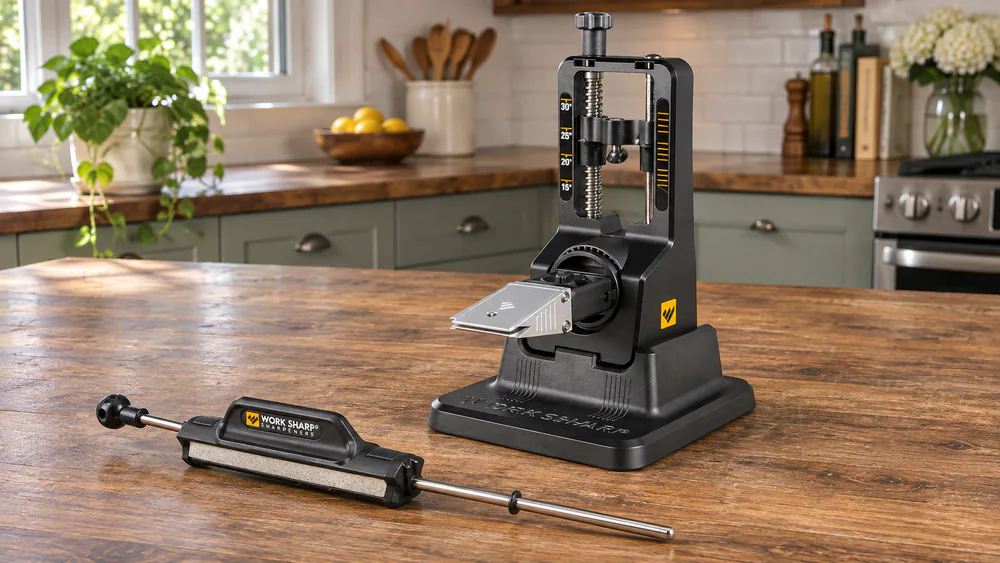
The closest rival is the Work Sharp Precision Adjust, which uses a similar clamp-and-set-angle design. The Elite version adjusts from 15 to 30 degrees and includes five diamond grits (220, 320, 400, 600 and 800), fine ceramic, a leather strop, a ceramic serration rod and a carrying case. That 15 degree setting is the main reason to choose it, because it catches Japanese-style knives that Lansky's 17 degree minimum does not.
Lansky wins on stone choice and covers pocket jobs Work Sharp does not. If most of your knives are thin Japanese blades, look at Work Sharp; for everything else, a Lansky guided kit is more flexible.
FAQs
Which Lansky sharpener is best for beginners?
The 4-stone diamond system is the friendliest start. It gives you guided angles and enough stones to repair a dull knife, and you skip the extra-fine hone you would rarely use at first.
How often should I resharpen with a Lansky?
Use the guided kit only when a knife stops biting a tomato skin, then keep the edge up with a rod box or a few light passes between sessions. Frequent heavy sharpening removes steel you do not need to lose.
Can I use a Lansky on a bread knife?
The guided kits are built for straight edges, so a serrated bread knife is a job for the Blade Medic's tapered rod instead, and a long blade is awkward in the clamp either way.
What angle should I use for kitchen knives?
Start with 20 degrees for most Western chef's knives and use 17 degrees for thinner kitchen blades. Reserve 25 and 30 degrees for rougher outdoor work. Keep the angle consistent from one session to the next.
Final Thoughts
Pairing matters more than picking one winner. Pair a guided diamond kit with a TurnBox or a QuadSharp and you get a bench repair kit plus a quick daily touch-up. Buy the Blade Medic only if you carry a pocket knife.