
Helping you create a kitchen you love.

Knives & Cutlery

Best Natural Sharpening Stones for Knives: Which Type Should You Buy?

As an Amazon Associate we earn from qualifying purchases. We may earn a commission from links on this page, at no extra cost to you. Learn more.

Best Natural Sharpening Stones for Knives: Which Type Should You Buy?

A natural sharpening stone is a block of quarried rock that grinds steel slowly and leaves a smooth, refined edge. For kitchen knives, a hard Arkansas stone is the best all-round choice, Belgian Blue offers slurry-controlled sharpening with water, and the selected hard Ohira natural stone is a fine finisher.

Natural stones are not the quickest way to sharpen a dull knife. They reward patience, and the slow pace gives you control and a razor-sharp finish.

We rank natural stones on how fast each cuts, how fine the edge feels, and how much upkeep each one demands. If you are still choosing a sharpening method, our guide to knife sharpeners covers the other options.

Top Picks at a Glance

RankProductBest forSizeRatingBuy
1

Dan's Whetstone Hard Arkansas Bench Stone

Best Overall
Chef's knives and everyday kitchen edges 8" x 2" x 1/2" 4.7 View on Amazon
2

Dan's Whetstone Translucent Arkansas Pocket Stone

Best for Razor-Fine Finishing
Polishing a final edge 3" x 1" x 1/4" 4.5 View on Amazon
3

Dan's Whetstone Soft Arkansas Pocket Stone

Best Fast-Cutting Stone
First pass on a dull edge 3" x 1" x 1/4" 4.4 View on Amazon
4

Ardennes-Coticule Belgian Blue 8-inch (ARD611)

Best Belgian Stone
Razors and fine kitchen edges Water stone, slurry-driven 4.4
5

Ohira Natural Stone Type 24

Best Japanese Natural Stone
Mirror finishing on fine blades Water stone, finishing grade 4.2
6

Dan's Whetstone Hard Arkansas Slip Stone

Best Slipstone
Gouges, carving tools and curved blades 4" x 1 5/8" contoured 4.0 View on Amazon
7

Dan's Whetstone Hard Arkansas Pocket Stone

Best Budget Pick
Pocket knives, shears and small blades 3" x 1" x 1/4" 4.3 View on Amazon

We earn a commission if you make a purchase, at no additional cost to you.

See full comparison table

How We Tested Natural Sharpening Stones

We score every stone on four criteria: cutting speed, edge fineness, beginner forgiveness and upkeep.

Cutting speed matters because natural stones have no exact grit rating. Washita is the only type with a published estimate here, at roughly 800-1500 JIS, so we compare stones by feel and by the edge they leave rather than by a number on a box.

Our scores reflect how each stone is designed to work on kitchen steel. Slow, quiet stones score well for forgiveness; stones that wear or hollow quickly lose points for upkeep.

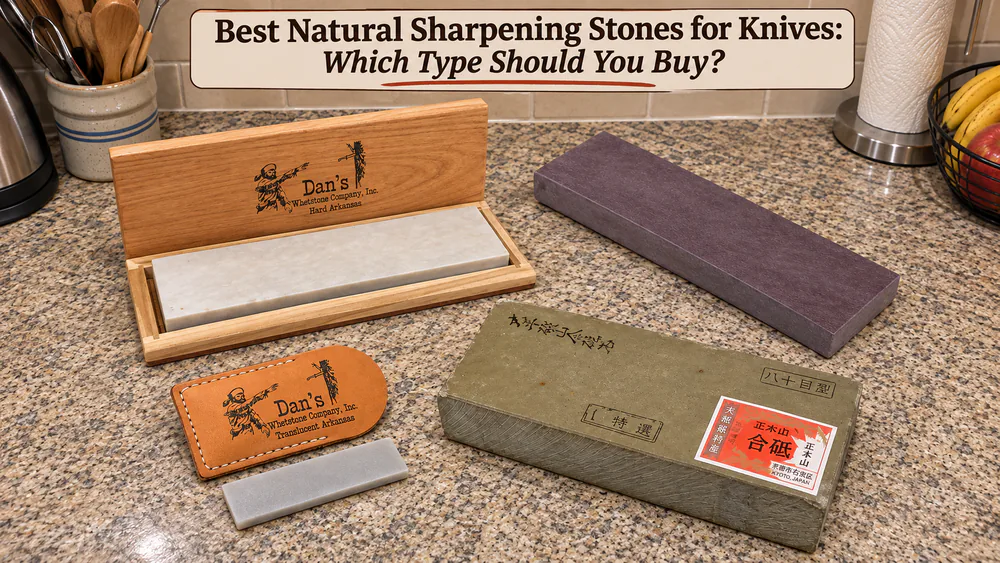
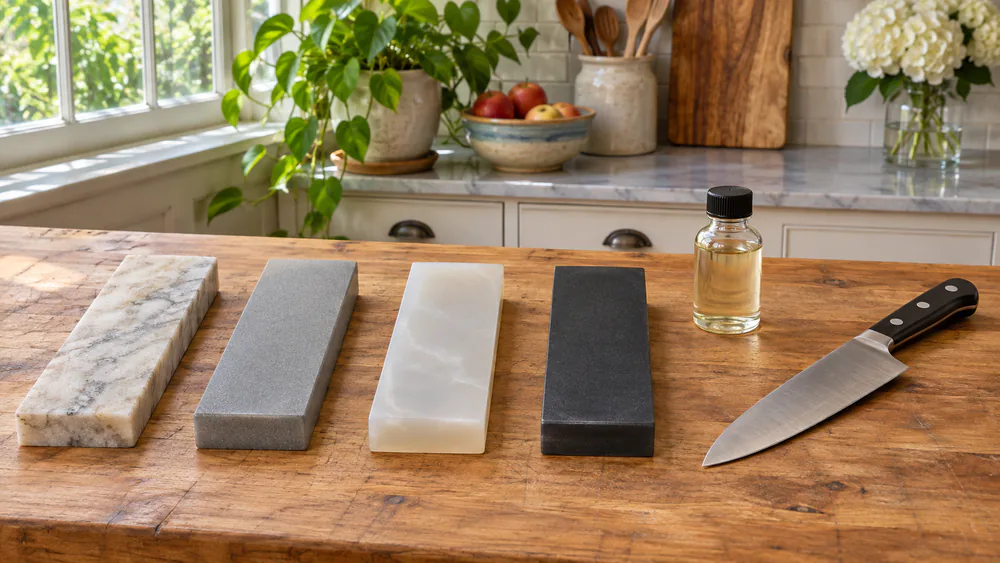
Four natural sharpening stones lined up on a wooden bench beside a bottle of honing oil and a chef's knife
Natural stones lined up with honing oil.

Best Natural Sharpening Stones

Best Overall: Hard Arkansas Stone

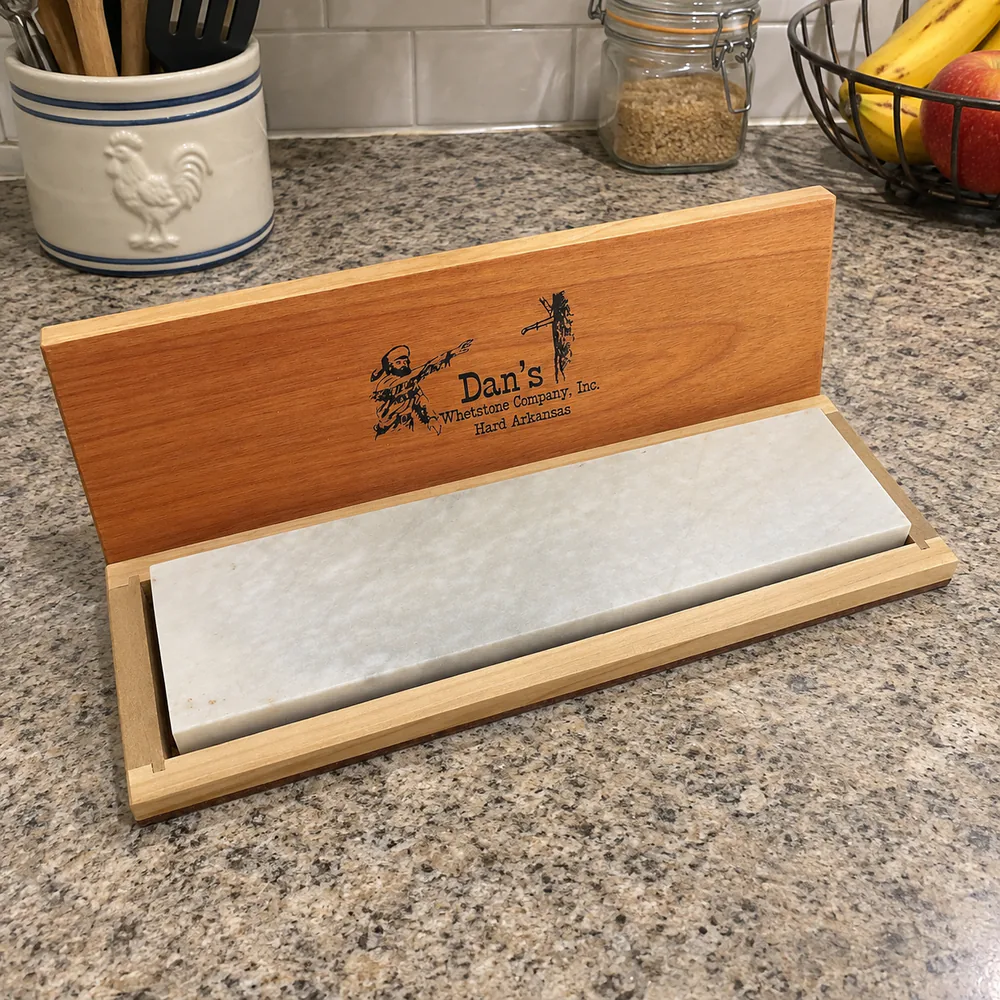
Dan's Whetstone Hard Arkansas Bench Stone
1

Dan's Whetstone Hard Arkansas Bench Stone

Best Overall
Check Price on Amazon
4.7/5

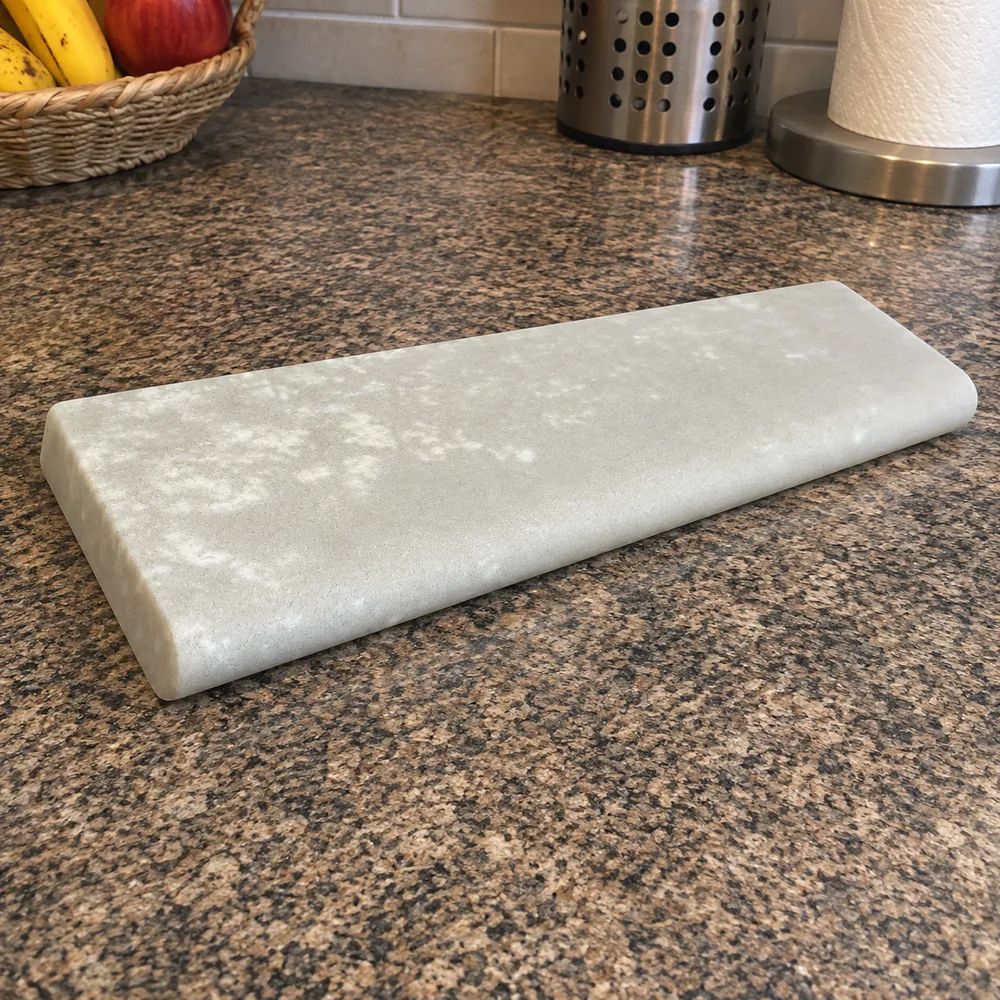
The 8-inch Hard Arkansas bench stone is the one we would buy first, and it is our single recommendation for most kitchens. It arrives flat and ready to use, and its length suits a full chef's knife stroke from heel to tip. Its slow cutting action makes heavy-pressure mistakes less likely, which helps beginners. It works especially well on chisels and plane blades too, and on knives it puts a finer edge than a coarse stone can.

Pros

  • Long 8-inch face suits full chef's knife strokes
  • Arrives flat and ready to use
  • Slow cutting is forgiving for beginners
  • Leaves a refined edge on kitchen knives

Cons

  • Too slow for a badly damaged edge
  • Smoothness impressions vary from stone to stone
  • Needs honing oil and regular wiping

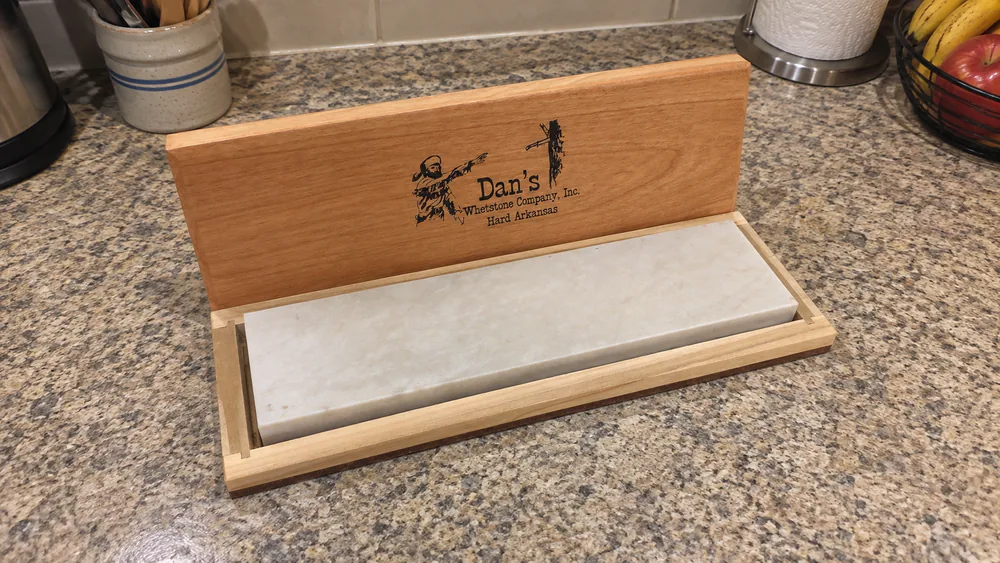
The stone is quarried in the Ouachita Mountains of central Arkansas from novaculite, a rock that is nearly pure silica. It measures 8" x 2" x 1/2" and comes in a wood box. It is one of 4 grades Arkansas stone is sold in, and the Hard (Fine) grade is the one that establishes and maintains a keen edge.

Pair it with a coarse synthetic stone if your knife is badly chipped, because Arkansas is too slow to repair damage.
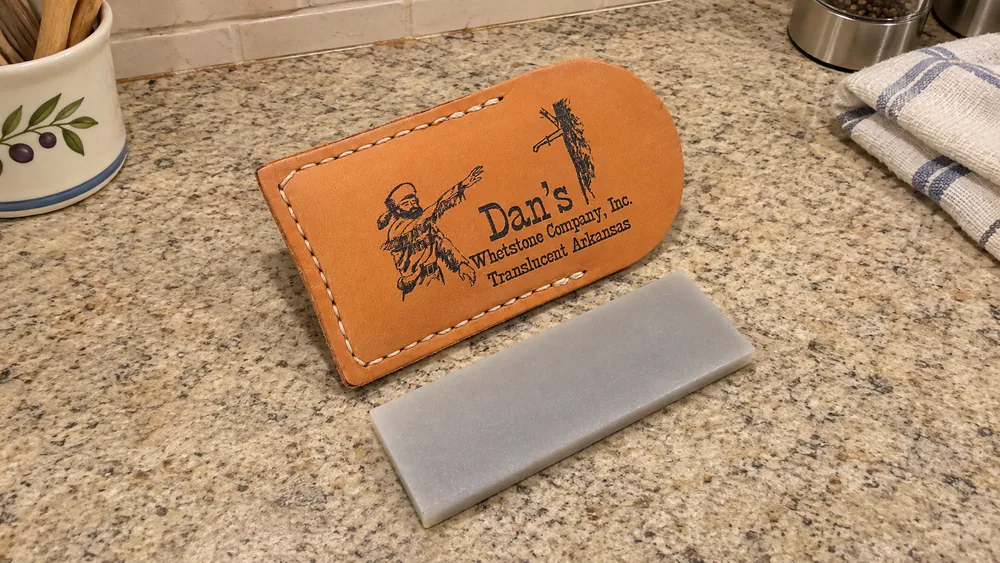
Best for Razor-Fine Finishing: Translucent or Black Arkansas

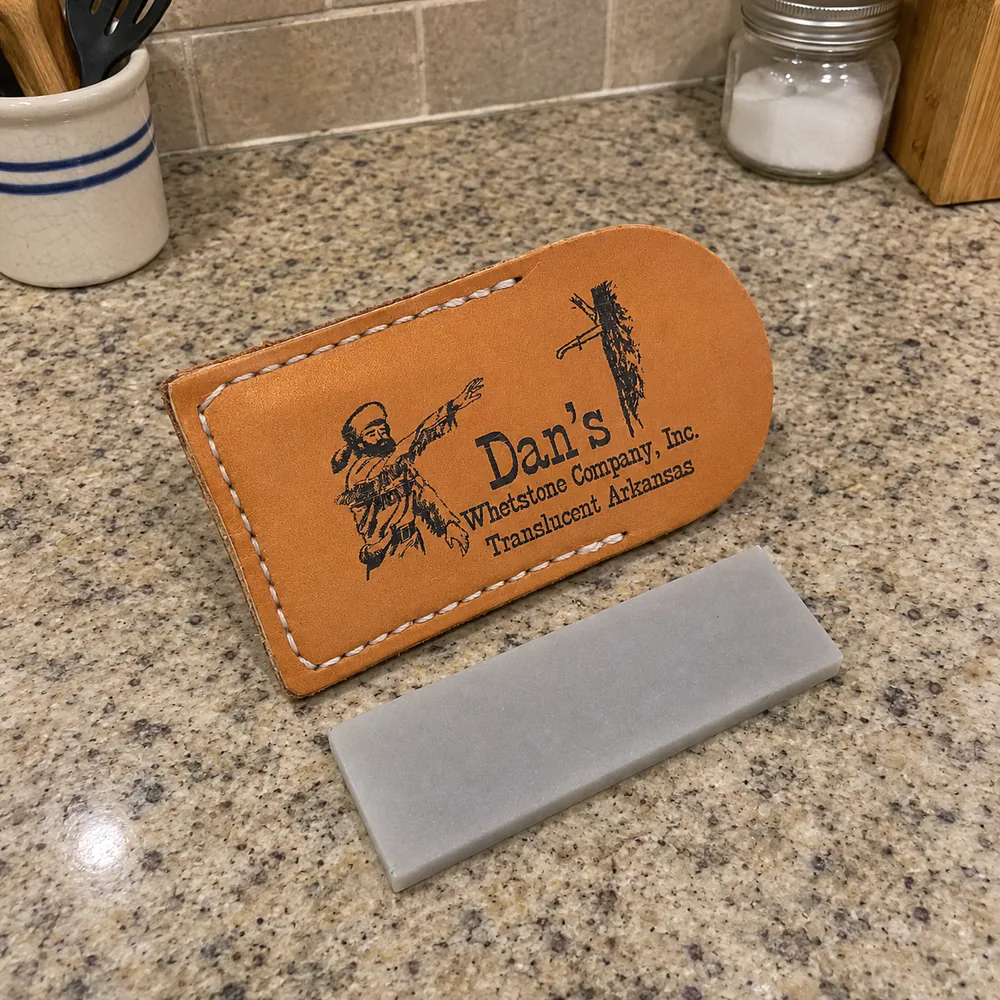
Dan's Whetstone Translucent Arkansas Pocket Stone
2

Dan's Whetstone Translucent Arkansas Pocket Stone

Best for Razor-Fine Finishing
Check Price on Amazon
4.5/5

The bench stone maintains an everyday edge; the translucent Arkansas stone polishes an edge that is already sharp. It is harder than the Soft, Hard or True Hard grades, and it puts a polished, razor-sharp edge on knives and tools. It is a finishing-only stone: the Hard grade is already close to too fine for kitchen work, so the translucent grade polishes a pre-sharpened edge rather than building one.

Pros

  • Harder than the Soft and Hard grades
  • Polished, razor-sharp finish
  • Pocket size travels easily

Cons

  • Slow to cut
  • Three inches is short for a chef's knife
  • Not a stone for repairing dull edges

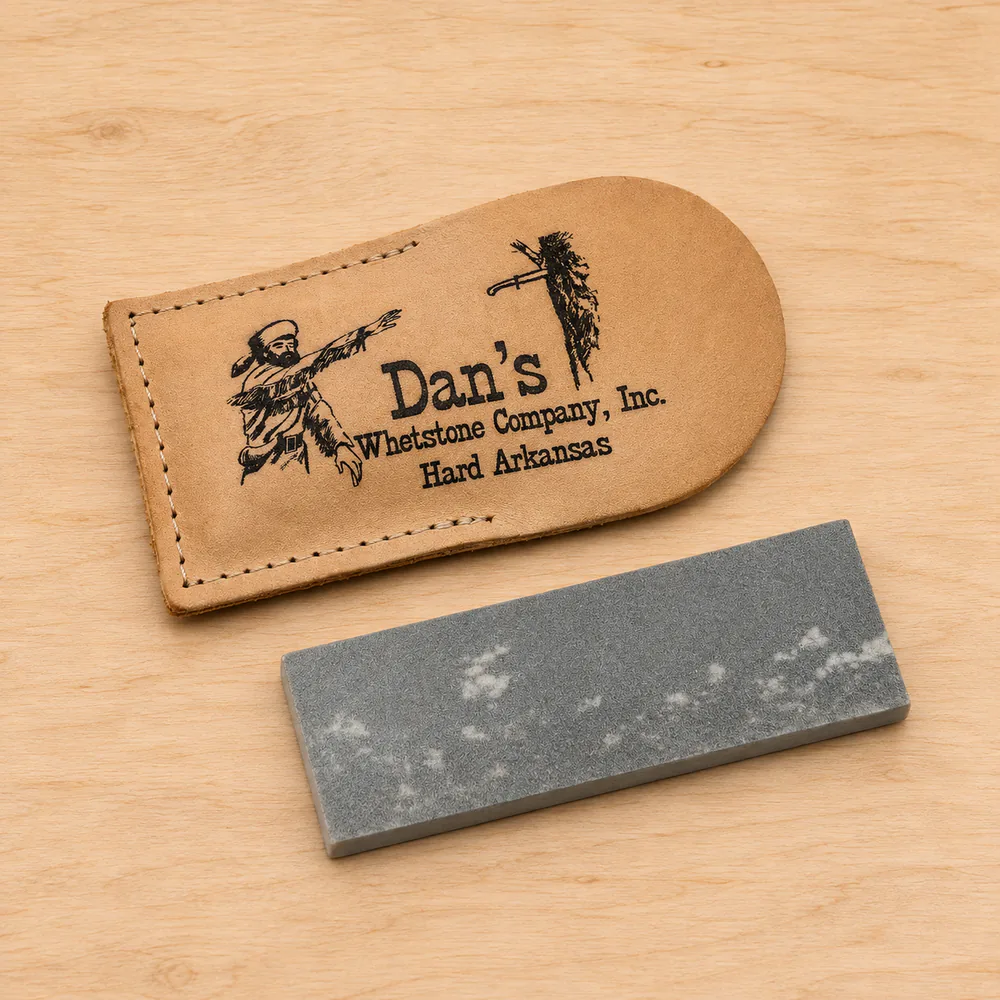
It measures 3" x 1" x 1/4" and arrives in a leather pouch. That small size is the trade-off. Three inches is short for a long kitchen blade, so it suits paring knives, pocket knives and shears better than an 8-inch chef's knife.

The Black Surgical Arkansas stone goes further still. It is the hardest Arkansas grade, rated ultra fine, and it is traditionally used for dental tools and scalpels. It gives very fine edges, but its small pocket size and slow cutting leave some cooks unimpressed. Choose black only if you already own a larger stone and want the last bit of polish.

Best Fast-Cutting Stone: Washita or Soft Arkansas

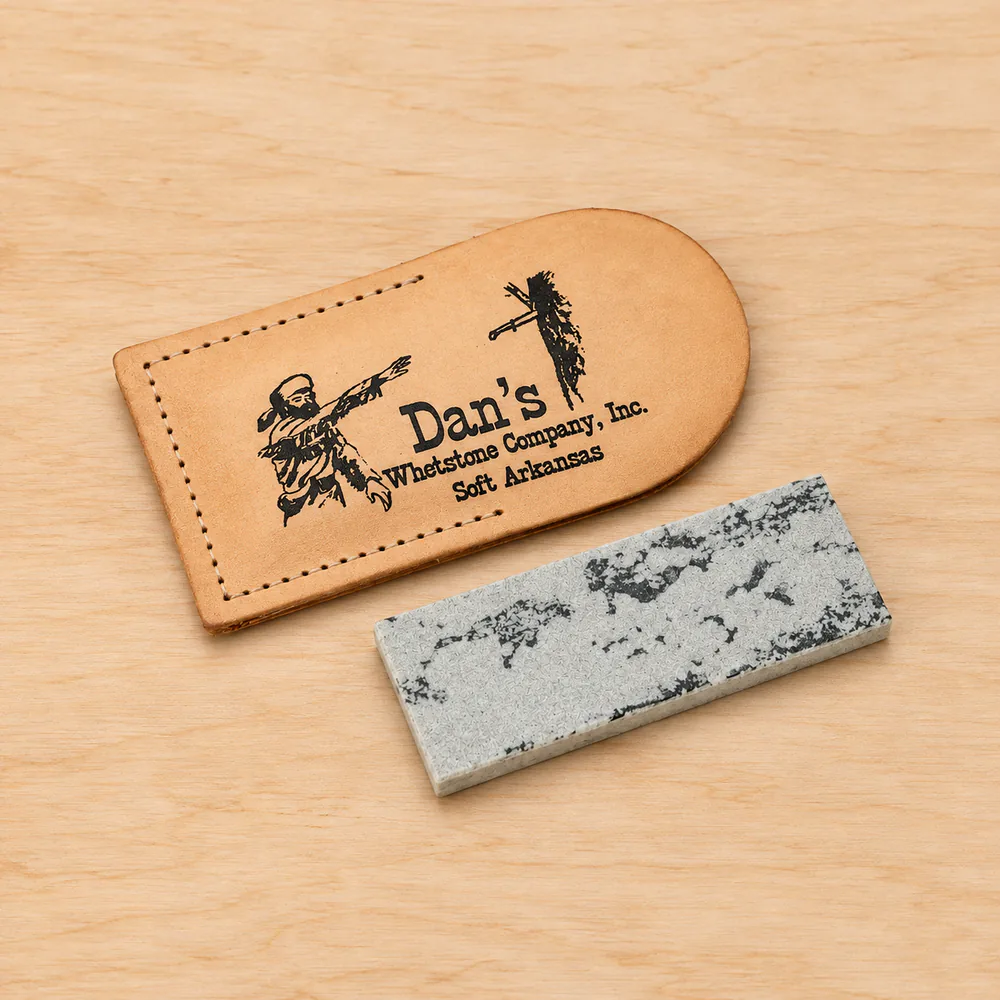
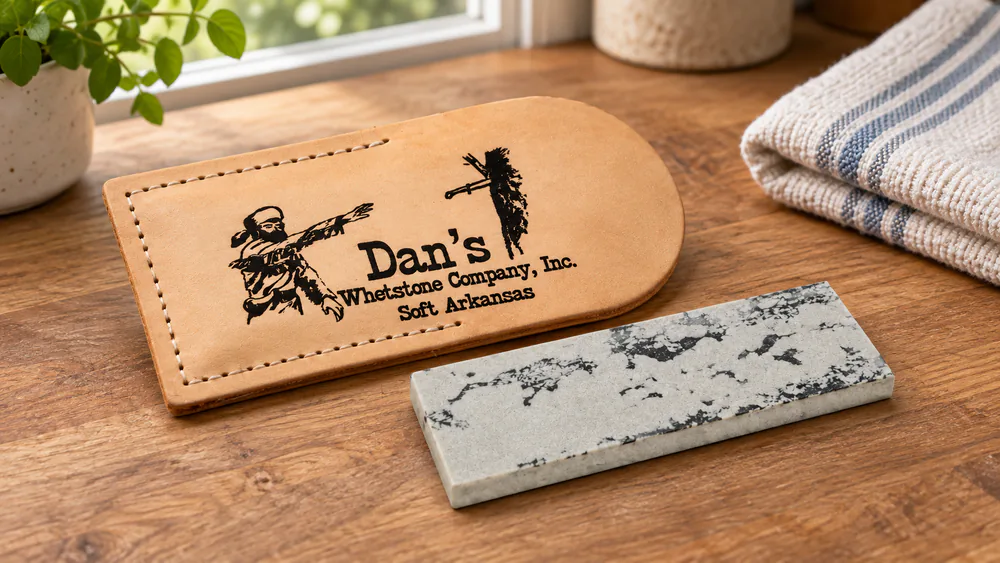
Dan's Whetstone Soft Arkansas Pocket Stone
3

Dan's Whetstone Soft Arkansas Pocket Stone

Best Fast-Cutting Stone
Check Price on Amazon
4.4/5

In contrast to the polish-only translucent grade, the Soft Arkansas stone is the coarsest of the Arkansas grades, and that is exactly why it earns a place. It is the stone you use first because it cuts faster, and it establishes a sharp edge before you move to a harder stone. It cuts faster than the Hard grade and stays gentle on the steel.

Pros

  • Coarsest Arkansas grade, cuts fastest
  • Good first step before a Hard stone
  • Compact and easy to carry

Cons

  • Small size makes a chef's knife awkward
  • Leaves a coarser edge than the harder grades
  • Leather pouch gets mixed marks for build

It measures 3" x 1" x 1/4" and comes in a leather pouch, so the same size caveat applies. Short stones make it hard to sharpen an 8-inch chef's knife evenly, which favors long bench stones for kitchen work. Treat this one as a small first-pass stone, or as a travel stone for shorter blades.

For a fast full-size natural stone, look at Washita, estimated at 800-1500 JIS. We found no Washita listing we could verify, so it is a type to hunt for, not a pick.

Best Belgian Stone: Ardennes-Coticule Belgian Blue 8-inch (ARD611)

Ardennes-Coticule Belgian Blue 8-inch (ARD611)
4

Ardennes-Coticule Belgian Blue 8-inch (ARD611)

Best Belgian Stone
4.4/5

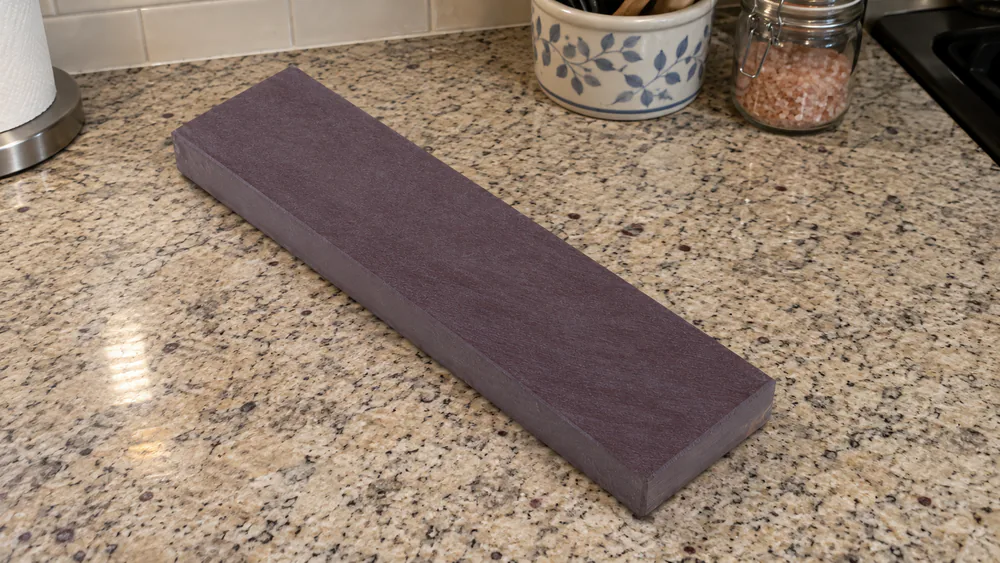
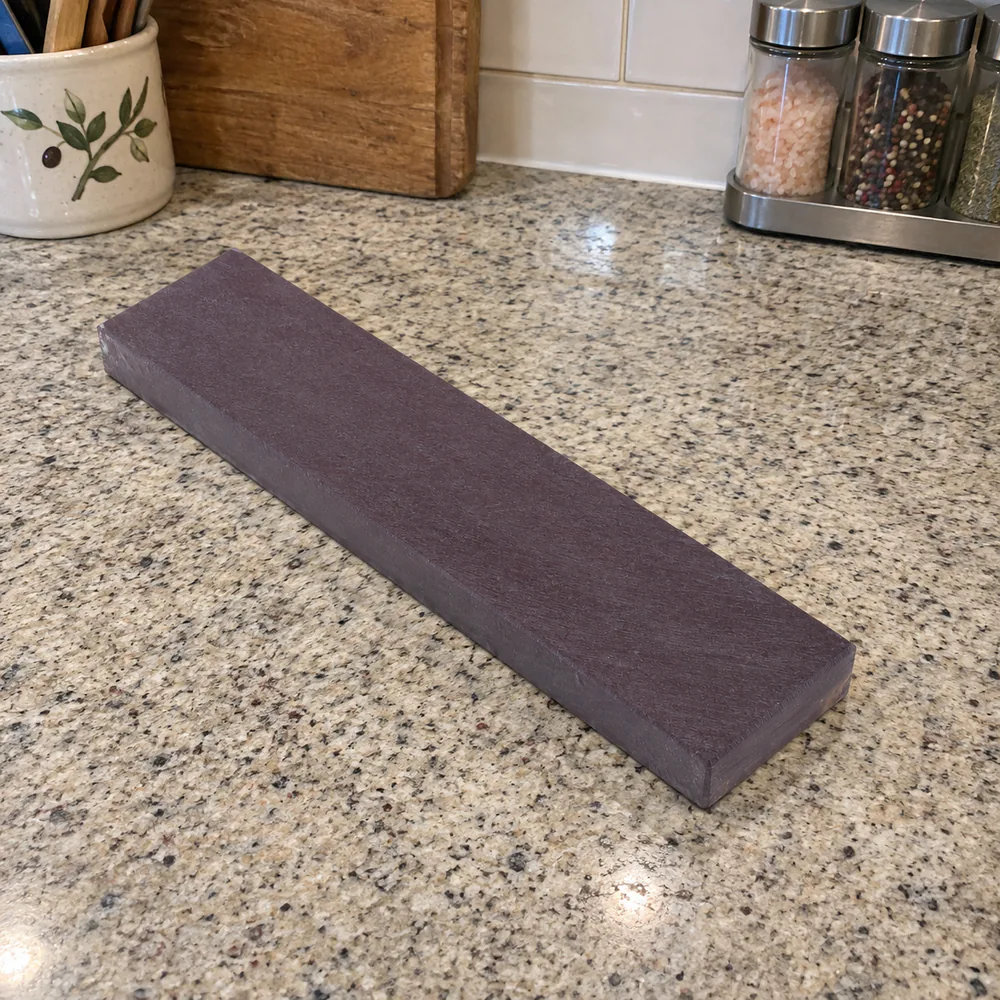
Our selected Belgian stone is the blue-purple Ardennes-Coticule ARD611, measuring approximately 8 x 2 x 5/8 inches. It uses garnet particles and water for sharpening. Belgian Blue and yellow Coticule are related but distinct stones; this entry and its photos show Belgian Blue.

Pros

  • Very fine edge with water only
  • Slurry-driven cutting is moderate in speed
  • Favored for razors and fine polishing

Cons

  • Natural size and composition vary
  • Single source mine limits supply
  • Genuine stones need careful checking

Use Belgian Blue with water, never oil; it does not need soaking. A thicker slurry gives more aggressive cutting, while adding water and reducing pressure produces a finer finish. Sharpening Supplies compares it approximately with 4000-6000-grit water stones, but a natural stone has no exact synthetic grit equivalent.

The linked specialist listing identifies the selected 8-inch Belgian Blue as ARD611; check the selected size before ordering.

Best Japanese Natural Stone: Ohira Type 24

Ohira Natural Stone Type 24
5

Ohira Natural Stone Type 24

Best Japanese Natural Stone
4.2/5

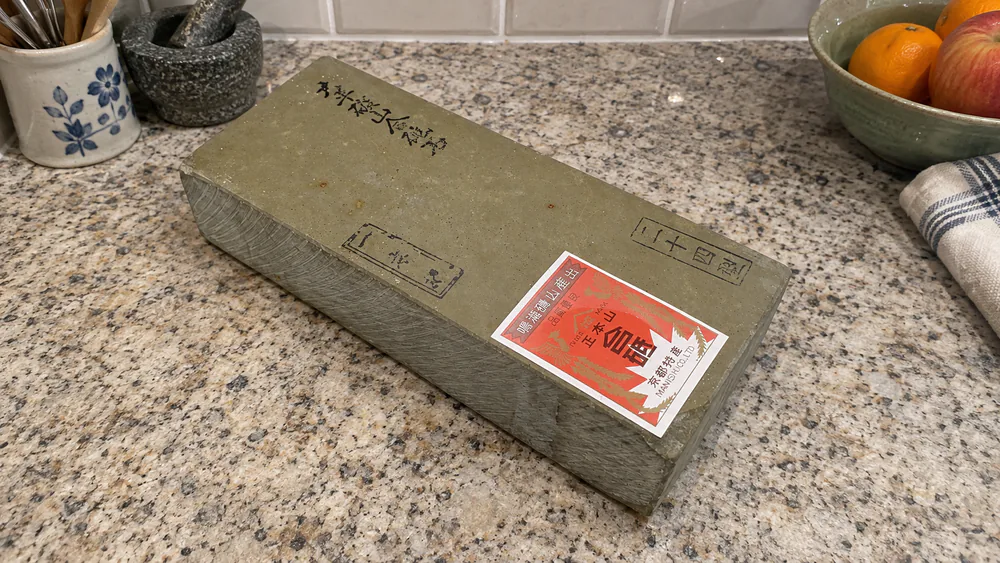
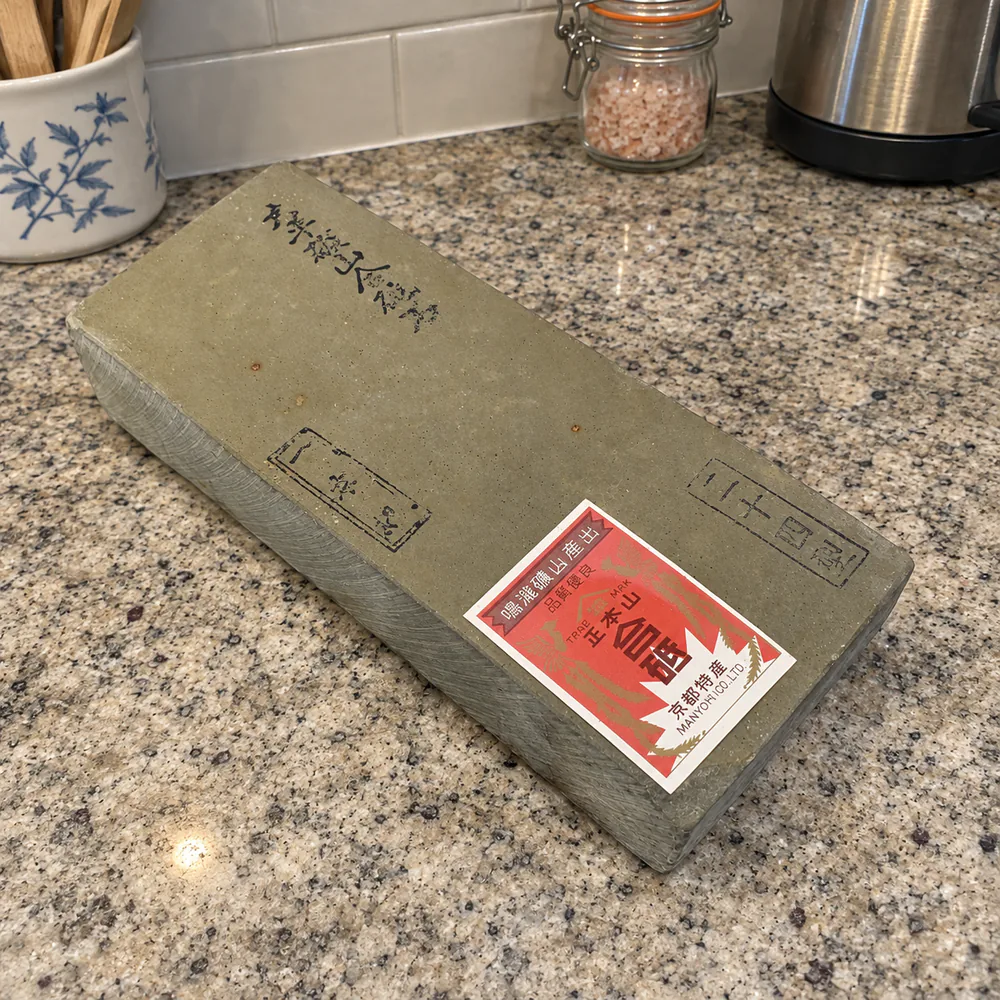
The selected Japanese finisher is Seisuke Knife's Ohira Natural Stone Type 24, SKU Ohira-24. The seller describes a hard finishing stone and gives an approximate 9000-12000-grit comparison, while emphasizing that each natural stone varies. The photos illustrate the seller's sample; individual stones can differ in color and shape.

Pros

  • Very fine finishing grit
  • Hard natural stone for fine finishing
  • Water only, no oil mess

Cons

  • Wears faster and needs regular flattening
  • Genuine stones are hard to source
  • Not a first stone for beginners

Use this stone with water. The selected Ohira is hard and can cut more slowly than softer natural stones; wear and flattening needs depend on the individual specimen.

A nagura can help raise slurry on a hard natural stone. Keep the working face flat and follow the seller's care guidance for the particular specimen.

The linked Seisuke Knife listing identifies the Ohira Type 24; ask the seller about the individual stone if hardness or dimensions are critical.

Best Slipstone or Pocket Stone

Dan's Whetstone Hard Arkansas Slip Stone
6

Dan's Whetstone Hard Arkansas Slip Stone

Best Slipstone
Check Price on Amazon
4.0/5

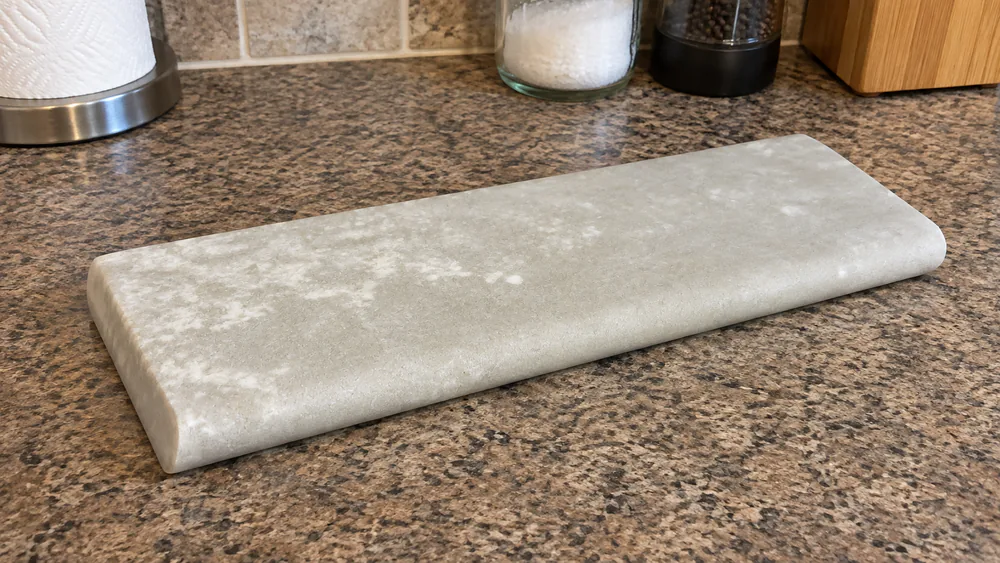
Unlike the flat bench and pocket stones, the slipstone is a specialist tool. Its contoured edges suit gouges, carving tools and curved or serrated blades more than flat chef's knives, and it works well on wood gouges and carving tools. For a plain chef's knife, the bench stone is the better buy.

Pros

  • Radius edges reach into curves
  • Works well on carving tools
  • Hard Arkansas finish

Cons

  • Poor fit for flat kitchen knives
  • Listed dimensions may differ from the stone received
  • A niche, single-purpose stone

The listed size is 4 x 1 5/8 inches with 1/8 inch and 5/16 inch radius edges. Listed dimensions may not match the stone received, so measure before buying for a specific gouge.

Best Budget Pick

Dan's Whetstone Hard Arkansas Pocket Stone
7

Dan's Whetstone Hard Arkansas Pocket Stone

Best Budget Pick
Check Price on Amazon
4.3/5

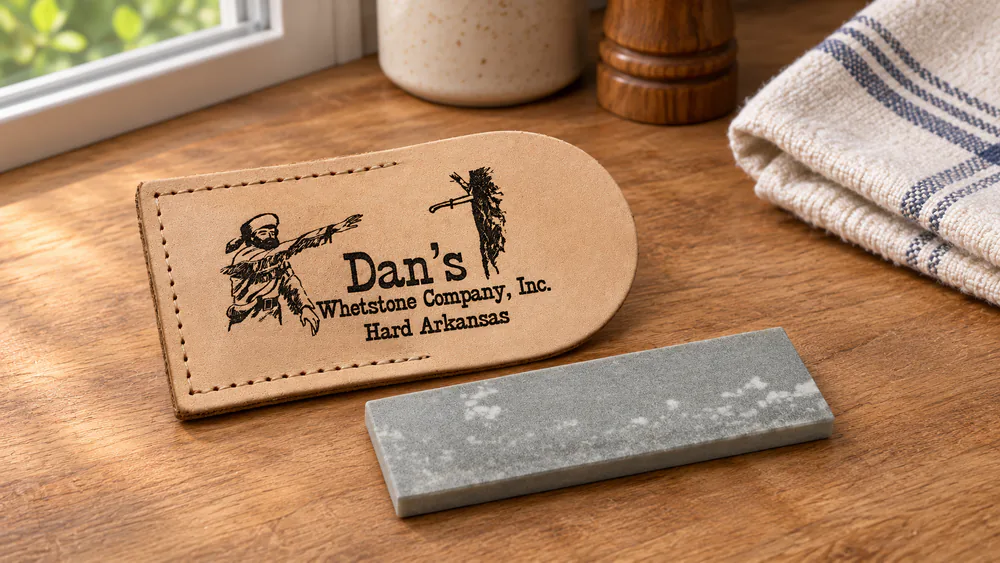
This is the cheapest genuine Hard Arkansas stone in our lineup, with the same Hard grade as our top pick in a smaller size. It measures 3" x 1" x 1/4" and arrives in a leather pouch. The 3-inch stone is very small for a long kitchen blade, but it is easy to carry for pocket knives and shears. The leather pouch gets mixed marks for build.

Pros

  • Cheapest genuine Hard Arkansas here
  • Easy to carry
  • Same grade as the top pick

Cons

  • Very small for a long kitchen blade
  • Pouch build is mixed
  • Needs oil like any Arkansas stone

Buy it for small blades or travel. With a full chef's knife, spend more on the 8-inch bench stone.

What Are Natural Sharpening Stones?

Natural sharpening stones are slabs of rock cut from a quarry or mine. Unlike synthetics, they are not made to a grit standard, so two stones of one type can feel different.

Arkansas stones are novaculite, a name drawn from the Latin for sharp knife. It is quarried in Arkansas, Texas and Oklahoma, and has been used for sharpening since the 1800s. Coticule gets its bite from garnet.

Natural stones last a long time and remove metal slowly, which gives a refined edge. They also cut slower than synthetics and vary stone to stone, and their grit is not precisely rated.

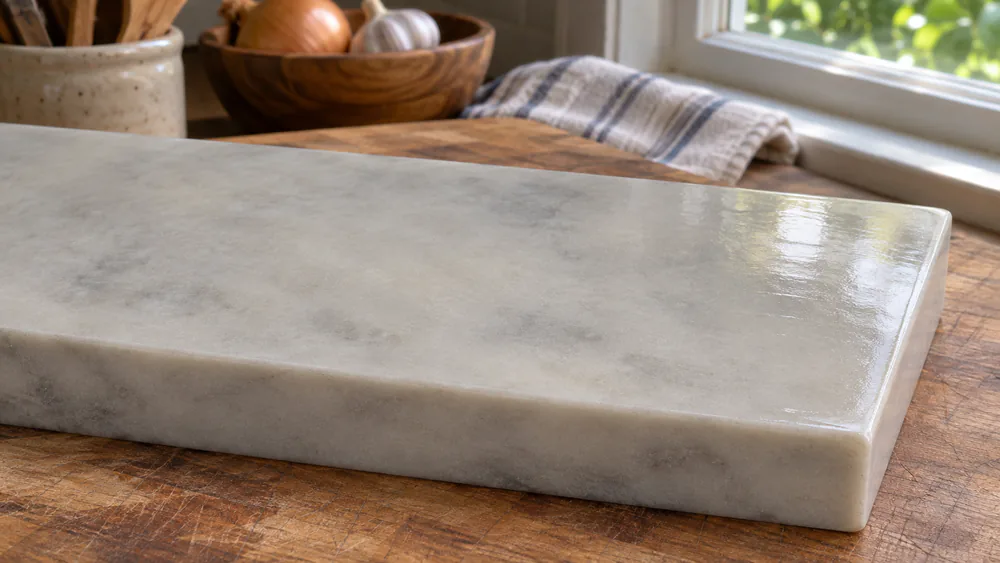
Close-up of the fine, even surface of a Hard Arkansas novaculite stone with a thin film of honing oil
A hard Arkansas stone has a very fine, even surface.

Natural Stone Types Compared

The table lines up the main types. Fineness is relative, since natural stones have no exact grit ratings.

Stone typeFinenessCutting speedLubricantBest for
Soft ArkansasMediumFastest ArkansasOilFirst pass
Hard ArkansasFineModerateOilEveryday kitchen edge
Translucent ArkansasExtra fineSlowOilPolish
Black ArkansasUltra fineSlowestOilRazor finish
WashitaCoarser, est. 800-1500 JISFastOil or waterQuick edge
Belgian Blue ARD611Very fineModerate, slurry-drivenWaterRazors, fine kitchen
Ohira Type 24Fine to finishingSlower than softer naturalsWaterFinishing

Arkansas Stones (Soft, Hard, Black, Translucent)

Arkansas stones are sold in 4 grades, ranked by density: soft, hard, translucent and black. Soft cuts fastest, Hard maintains a keen edge, and translucent and black are finishers. For kitchen knives, Hard in a long bench format matters most.

Japanese Natural Water Stones

Japanese natural stones vary widely in hardness and cutting speed. The selected Ohira Type 24 is a hard water-lubricated finisher, so it should not be described as a soft, fast-cutting stone.

Belgian Blue and Coticule

Coticule is quarried at one open mine in Belgium. Its garnet makes a slurry that does much of the sharpening, with water as the lubricant.

Washita and Other Novaculite Stones

Washita is the quick cousin of Arkansas. It cuts fast and uniformly, and works with oil or water.

How to Choose a Natural Sharpening Stone

Grit and Finish

Use a faster stone to set an edge, then a finer one to refine it. Choose by role: soft or Washita for speed, hard for everyday upkeep, and translucent, black, coticule or Japanese for a final polish.

Stone Size and Format

Short stones make it hard to sharpen an 8-inch chef's knife evenly, which favors long bench stones for kitchen work. A 3-inch pocket stone is a fine travel stone only.

Knife Steel and Blade Type

An Arkansas stone gives a refined edge on most kitchen steel. If your knife is badly damaged, start on a coarse synthetic and finish on the Arkansas.

Authenticity and Where to Buy

Natural stones are easy to mislabel. Choose sellers who name the quarry, such as the Ouachita Mountains for Arkansas stone, and who list the grade clearly.

Natural stones reward patience: they cut slowly, but a slow stone is a forgiving one, and the edge it leaves is hard to beat.

How to Use a Natural Sharpening Stone

Set the stone on a damp cloth, hold a steady angle, and make long, even strokes from heel to tip. Light pressure is all you need.

Oil or Water

Arkansas stones are traditionally oil stones used with honing oil. Oil is the standard, but water also works on Arkansas stone, and once you have oiled a stone, stay with oil. Japanese stones and most European natural stones, including coticule, use water. Washita works with either.

Warning. Do not switch a stone between oil and water. Once oil has soaked into the surface, water will not work properly on it.

Flattening and Maintenance

An Arkansas stone lasts many years if you wipe it clean after use and store it dry. The 8-inch bench stone arrives flat, so it needs no flattening at the start. Japanese water stones wear faster and need regular flattening on a lapping plate. We have no hard number for how many years any stone lasts, because that depends on how often you sharpen.

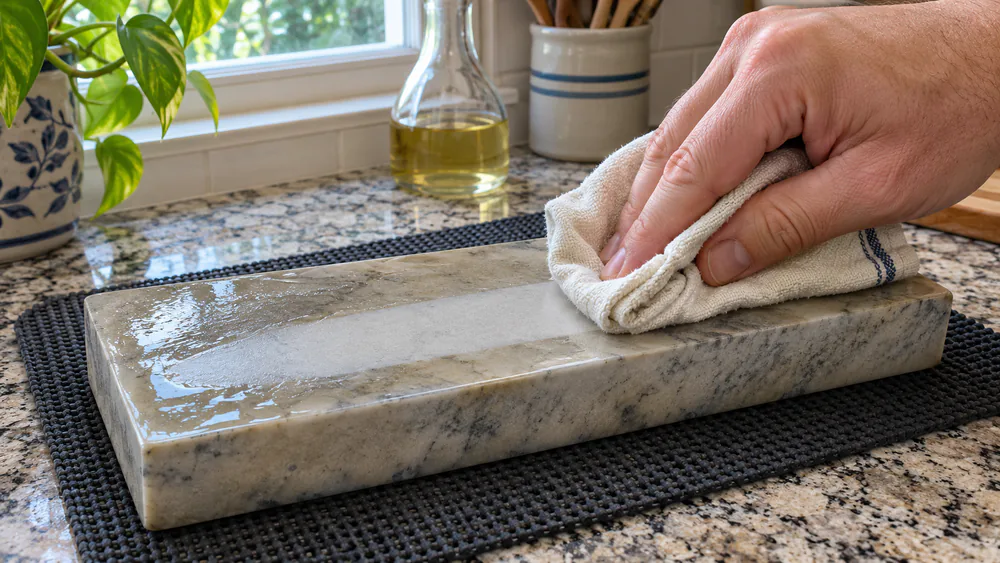
A hand wiping a hard Arkansas bench stone clean with a rag after sharpening, oil film visible on the surface
Wipe the stone clean and store it dry after each session.

Natural vs Synthetic Stones

Synthetic stones are made to a stated grit, so they are predictable and better for repairing a damaged edge. We pair them: a coarse synthetic to set the edge, then a natural stone to finish it.

If you want predictable grit and fast results, read our guide to the best diamond sharpening stone before you commit to natural.

FAQs

Do I need a nagura for a Japanese natural stone?

For finishing-grade stones, yes. They are hard enough that a nagura stone is needed to raise slurry. They also hollow with use, so flatten them regularly and rinse thoroughly afterward.

Is a Washita worth it over a Soft Arkansas stone?

Washita is estimated at 800-1500 JIS and cuts fast and uniformly, and it works with oil or water. Soft Arkansas is the fastest Arkansas grade but uses oil. Washita suits a quick edge on a full-size stone, though we could not verify a specific listing.

Can I use water on an Arkansas stone I have already oiled?

Not reliably. Once oil has soaked into the surface, water will not work properly on it, so keep using oil on that stone.

How can you spot a fake natural stone?

Buy from sellers who name the quarry and the grade. Arkansas stone comes from the Ouachita Mountains of central Arkansas, and coticule from one open mine in the Ardennes. Be cautious if a listing is vague on origin.

Final Verdict

After the first stone, add a coarse synthetic for chips and repairs, then a translucent Arkansas or coticule stone once you want a finer polish. Skip the pocket stones and slipstone unless you sharpen small blades or carving tools.

Read next

Ready to upgrade your kitchen?

Browse our buying guides to find the right gear for the way you cook.