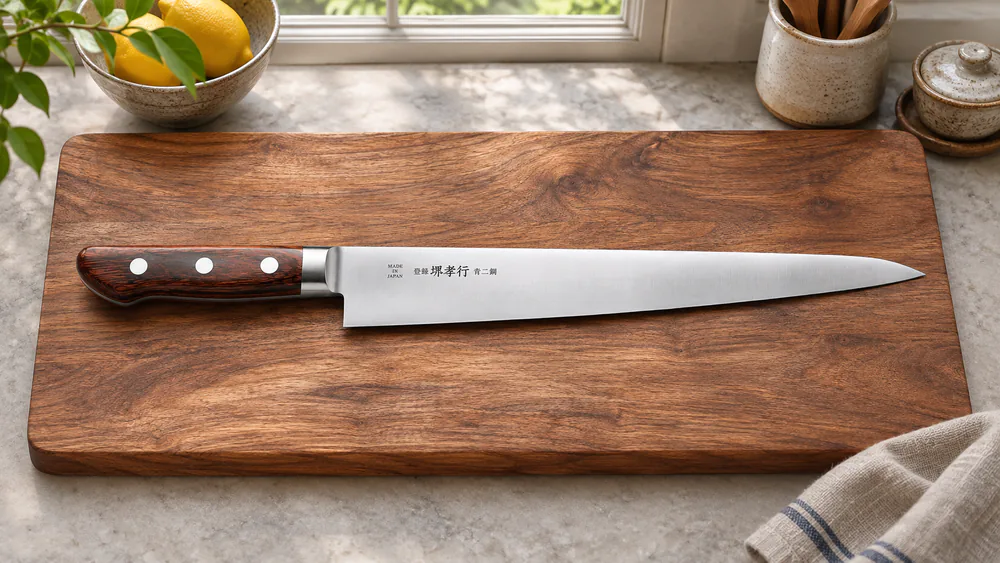
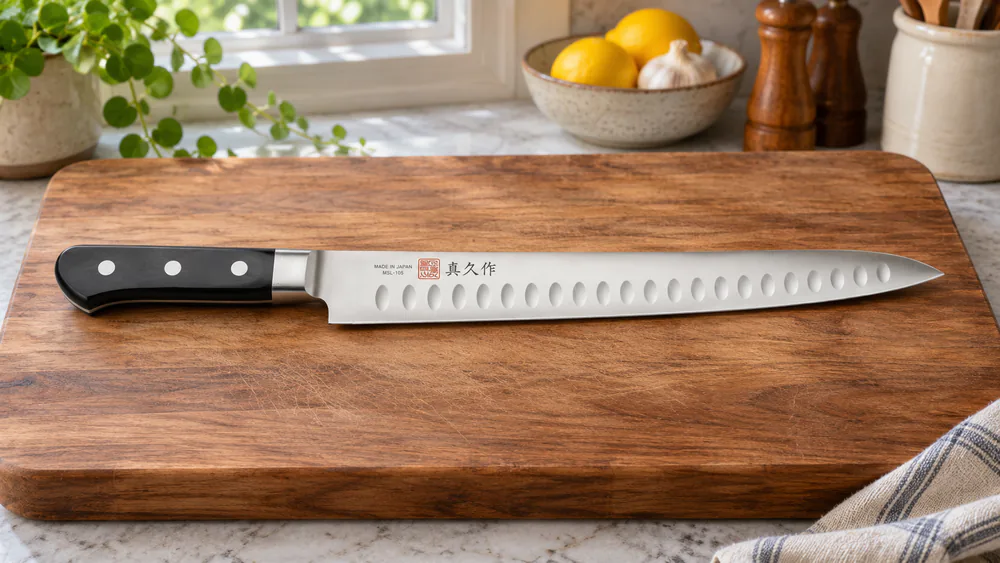
Focus on length, steel and handle; each affects both convenience and capability. Get those right and the rest is detail.
Blade length: 240mm vs 270mm vs 300mm
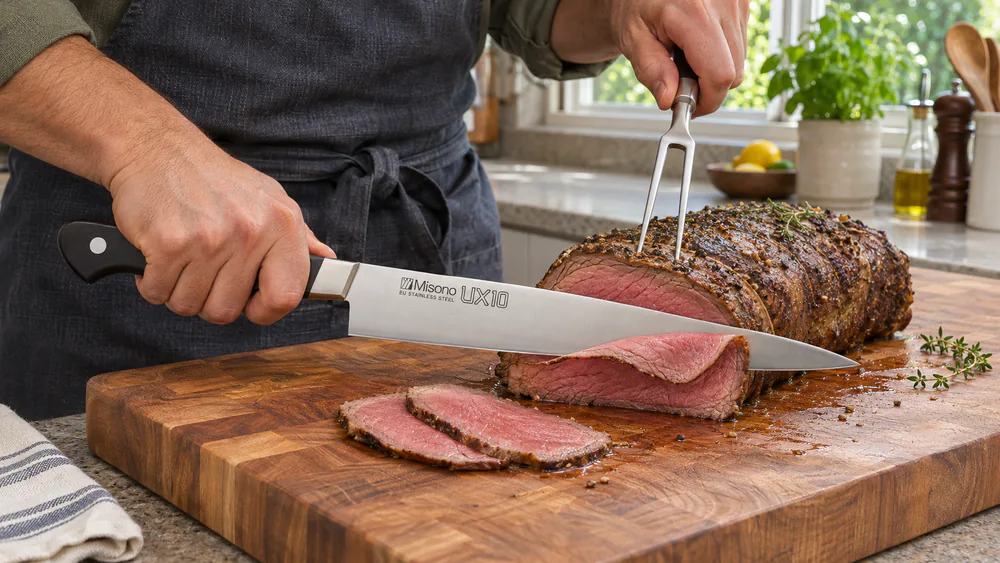
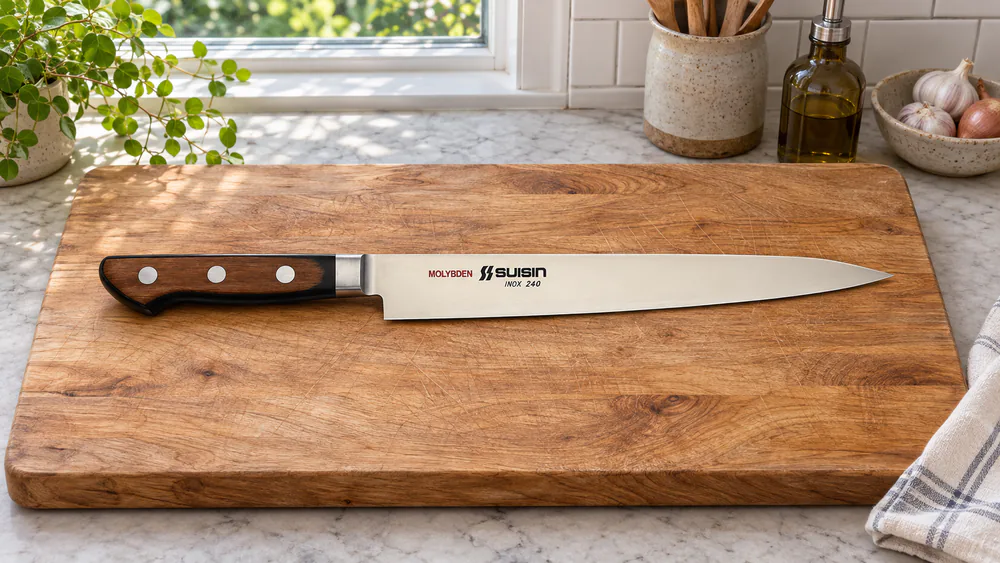
A 240mm blade is the sweet spot for turkey breast and most home roasts. It is easy to store and quick to sharpen. A 270mm blade suits prime rib and ham, and the 300mm class is for a whole packer brisket. If you cook one big roast a year, choose 240mm. If brisket is a regular event, pay for the extra length. A longer blade needs more board and drawer space and takes a little longer to sharpen, so choose only the length you will use.
Steel: stainless vs carbon vs Damascus-clad
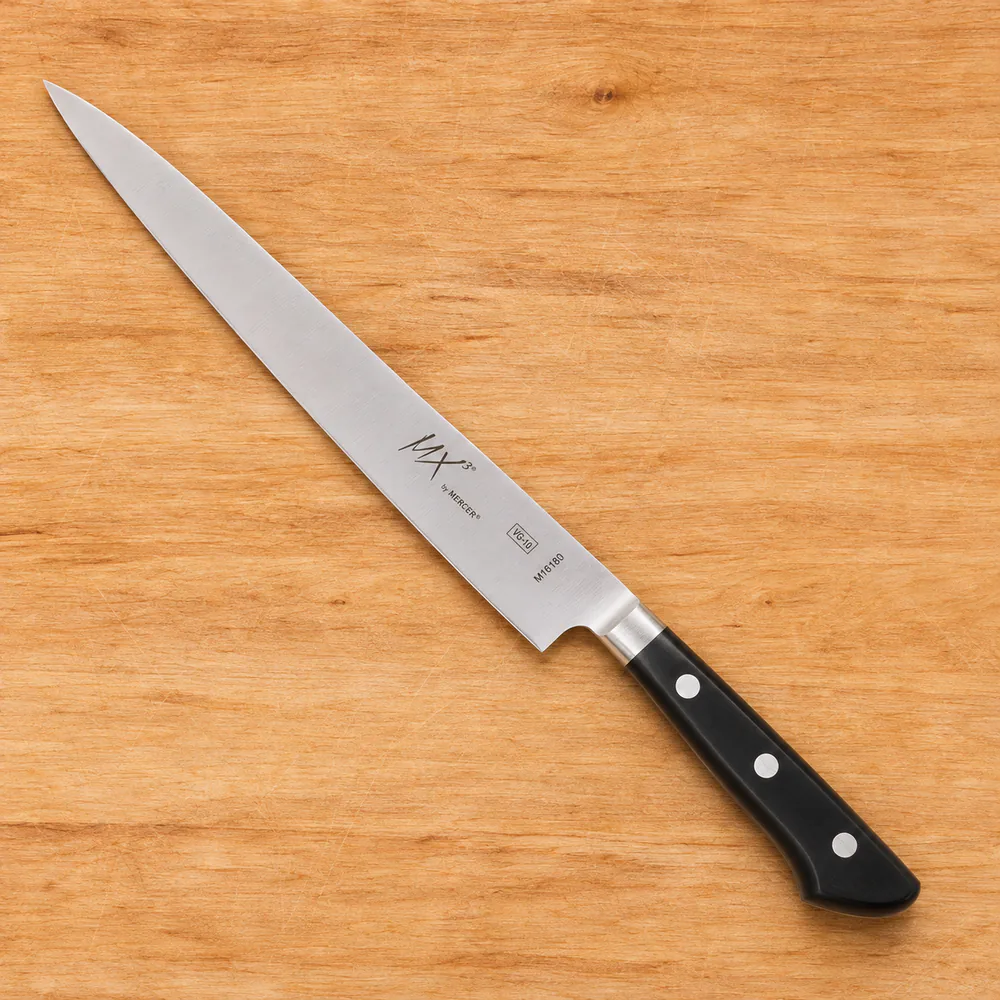
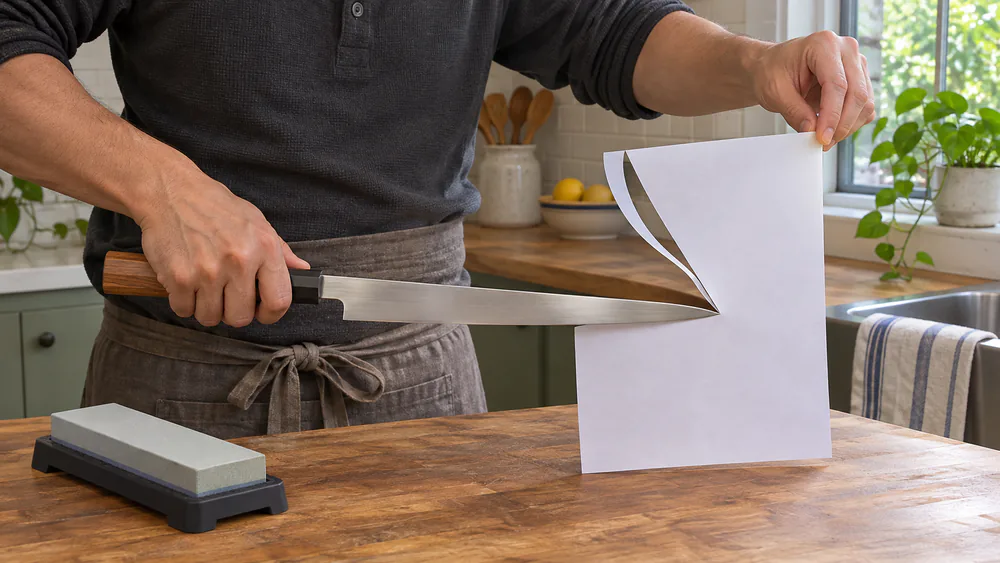
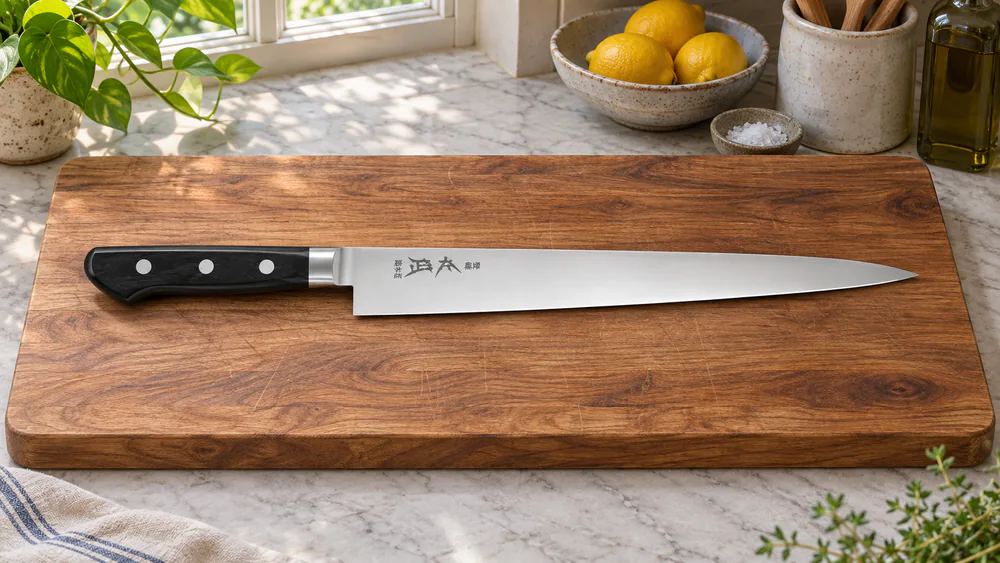
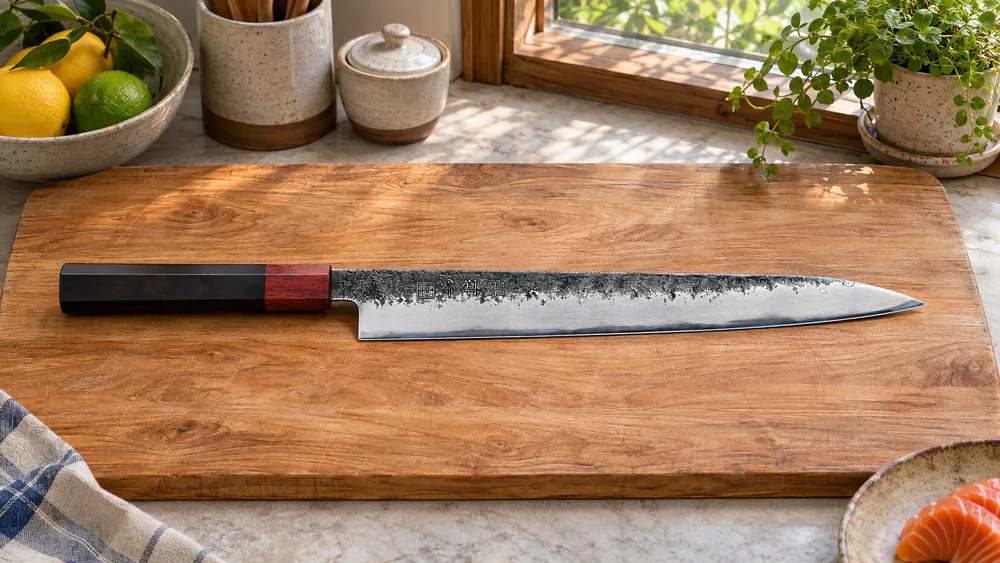
Stainless such as VG-10 or AUS-8 needs little rust care and is the right start for most cooks. Carbon steel like Aogami #2 takes a finer edge but needs drying, and fatty meat makes it the low-risk way into reactive steel. Damascus-clad knives look striking, and the hammered face can lessen food sticking. The Yoshihiro 46-layer, for example, stays shaving-sharp, though a pull-through sharpener fights hammered Damascus, so water stones are the right route.
Handle: wa-handle vs Western handle
A wa handle is lighter and puts the balance near the blade, which suits a pinch grip. A riveted Western handle is heavier and feels familiar if you grew up on German knives. Neither is better, so choose the one that feels natural in your hand. Match it to how you hold the knife. If you can, hold a friend's knife in each style before you commit, because a handle that feels slightly wrong becomes tiring over a whole roast.
Left-handed and beginner considerations
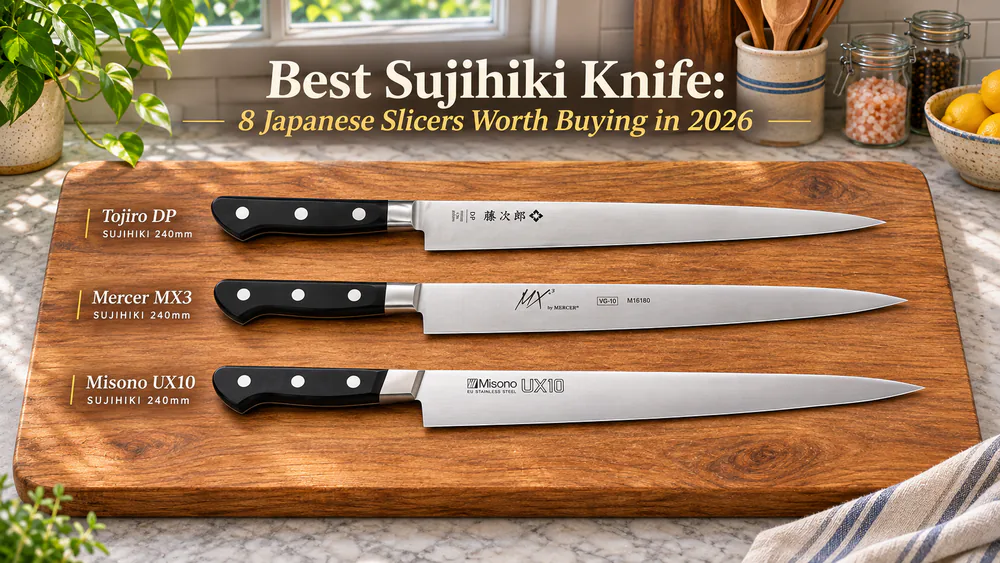
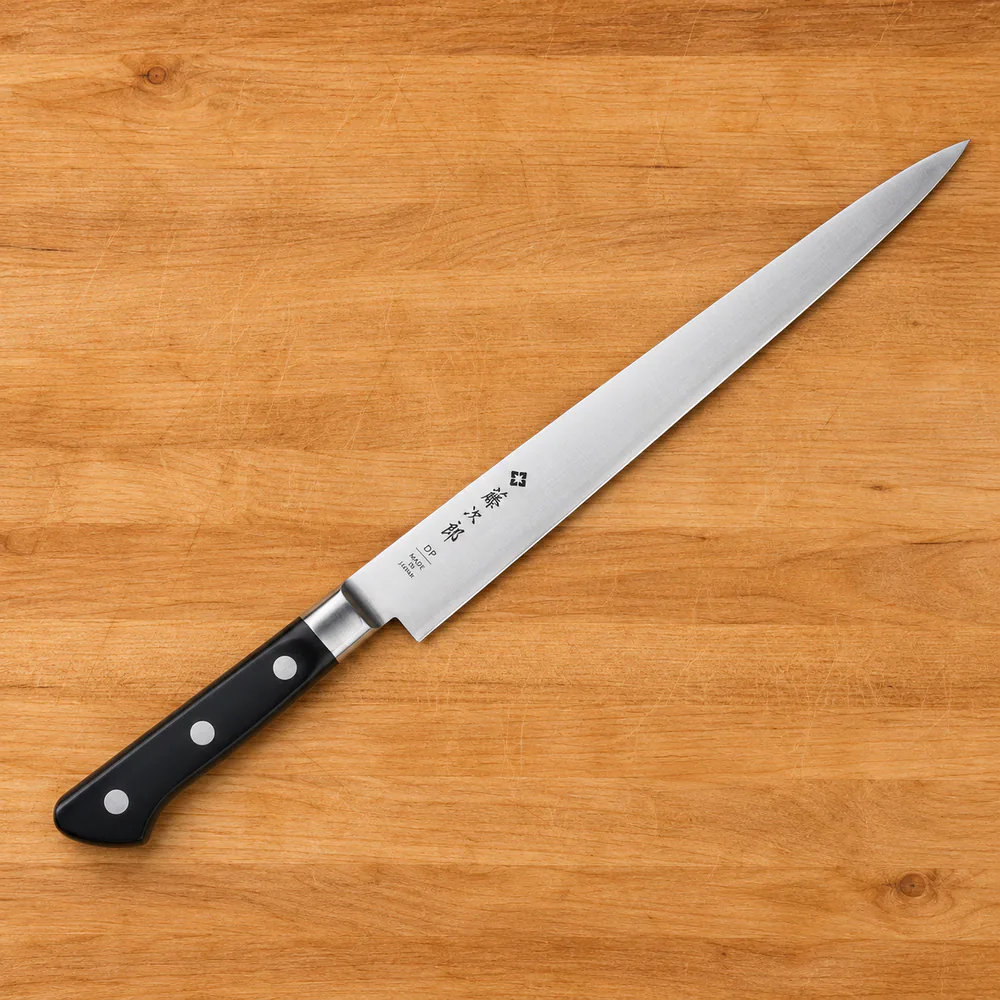
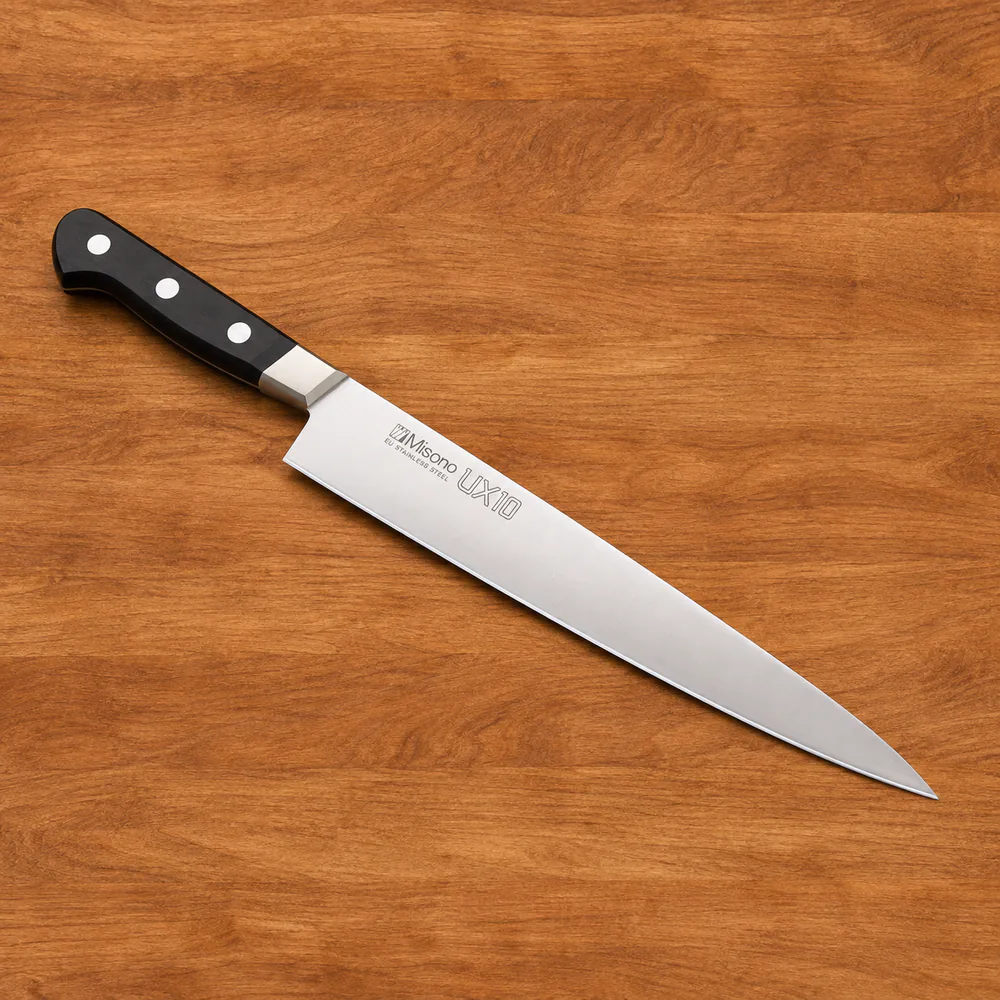
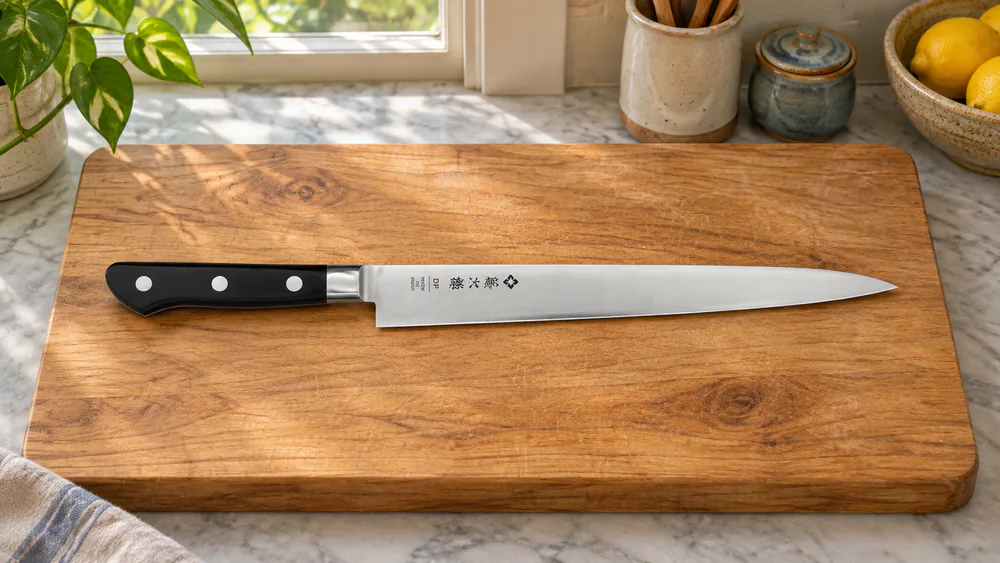
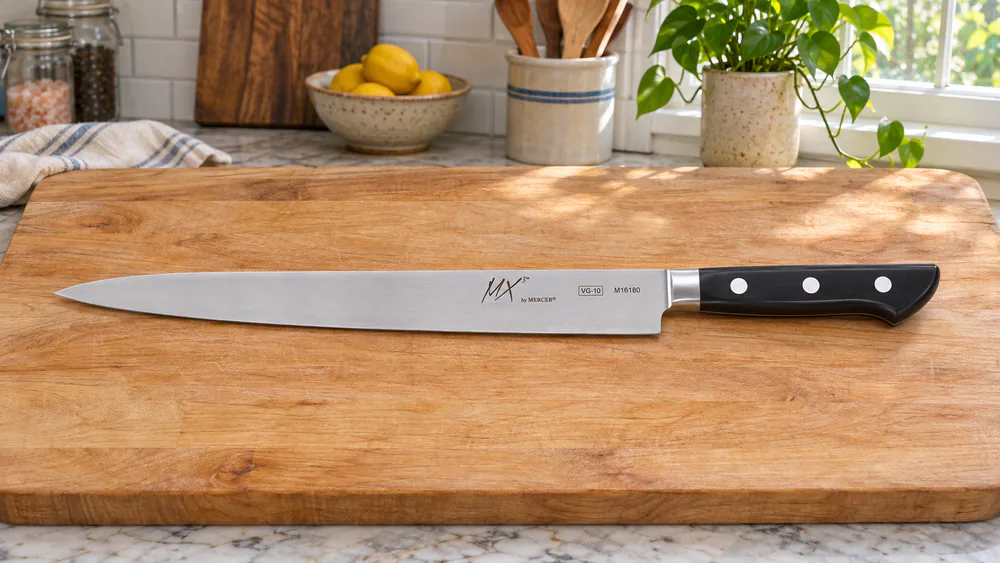
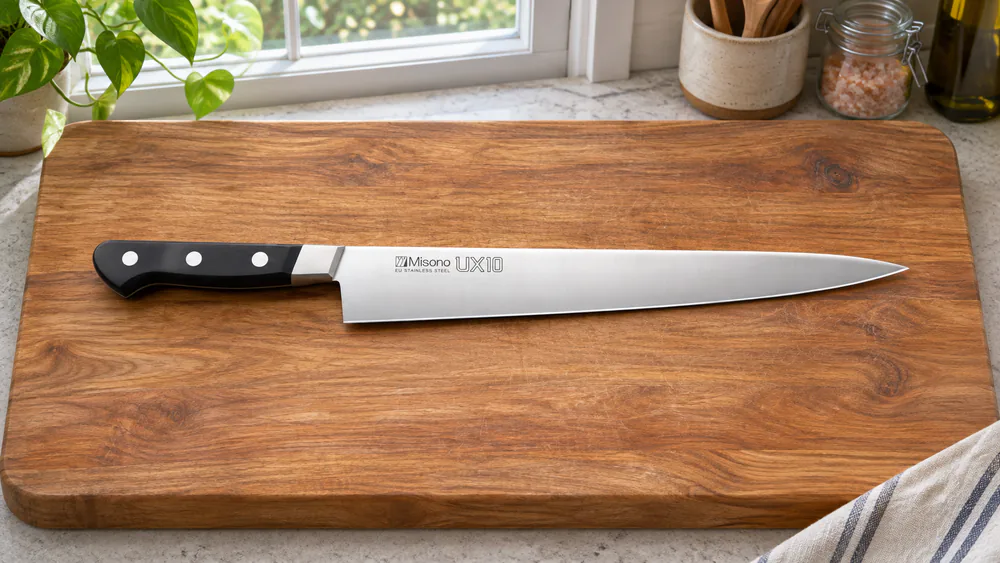
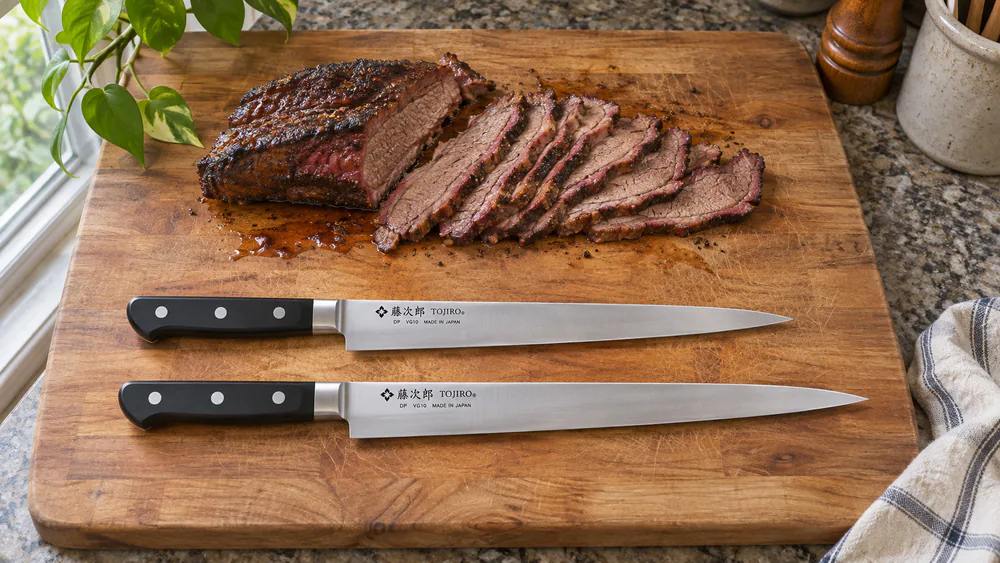
A symmetrical 50/50 edge, like the Tojiro and Mercer, works for both hands. Asymmetrical bevels such as the Misono 70/30 and Takayuki 60/40 are set for right-handed cooks. If you are new to Japanese knives, start with stainless, a 240mm blade and a 50/50 edge.