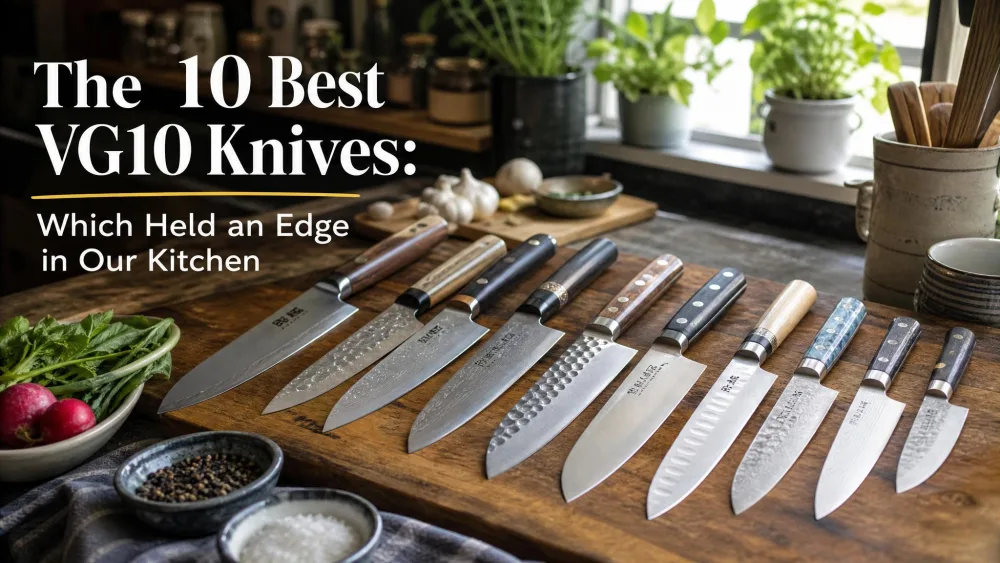
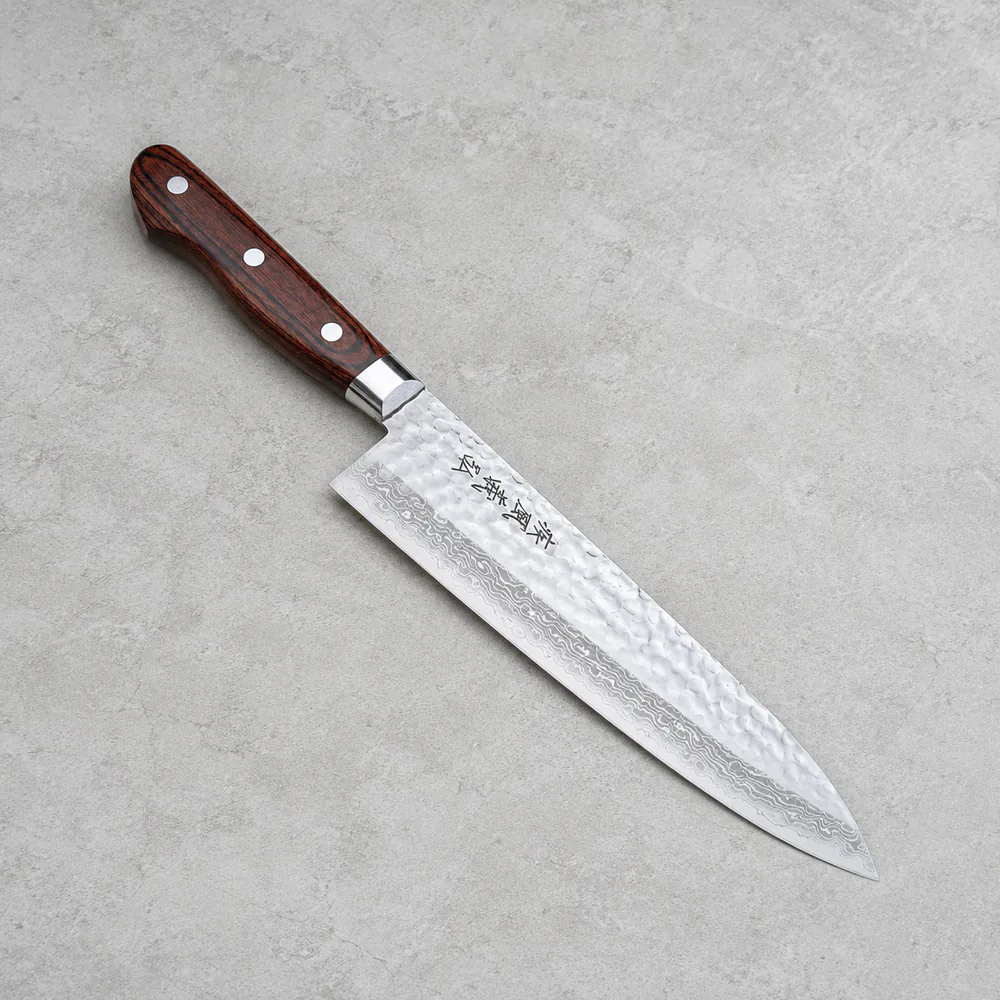
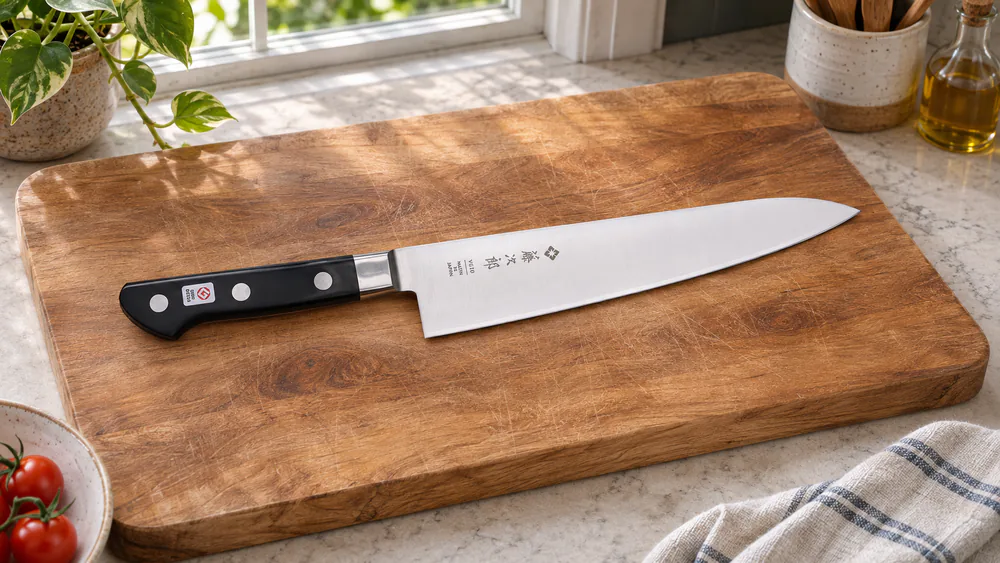
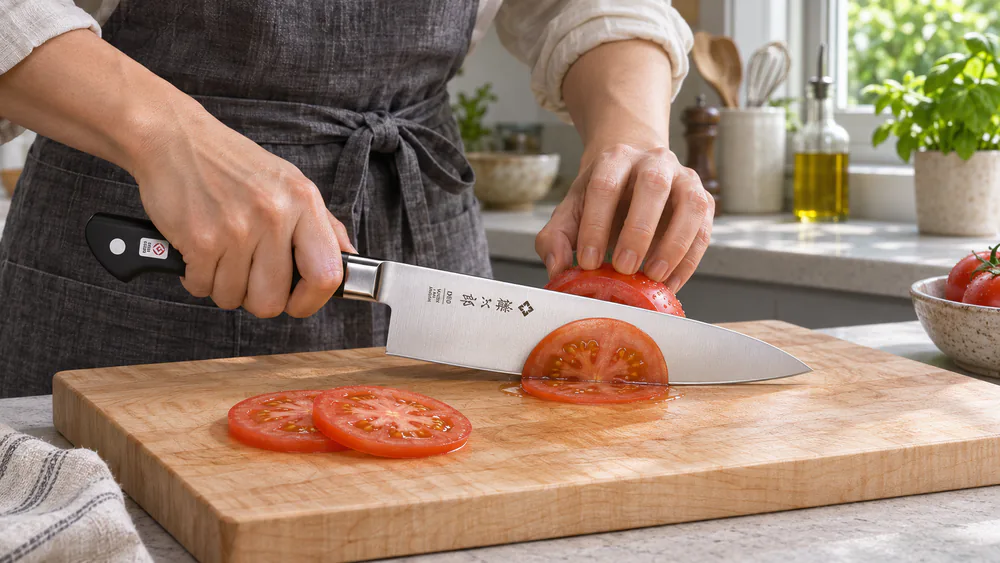
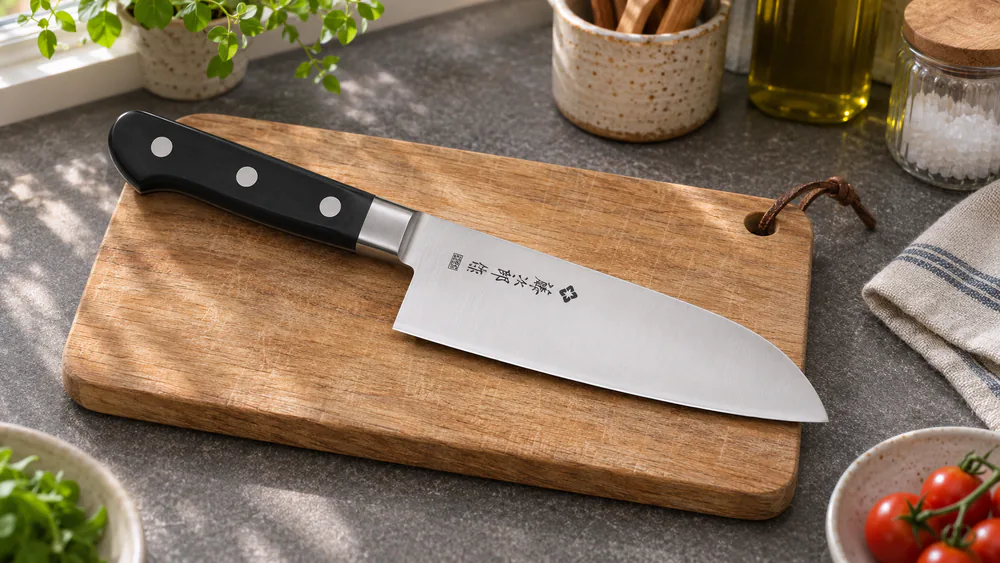
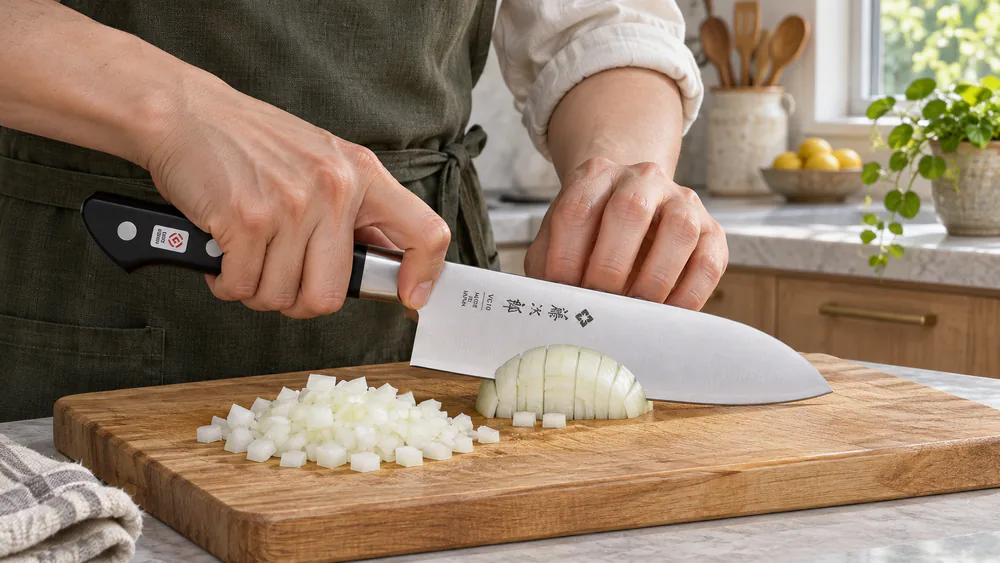
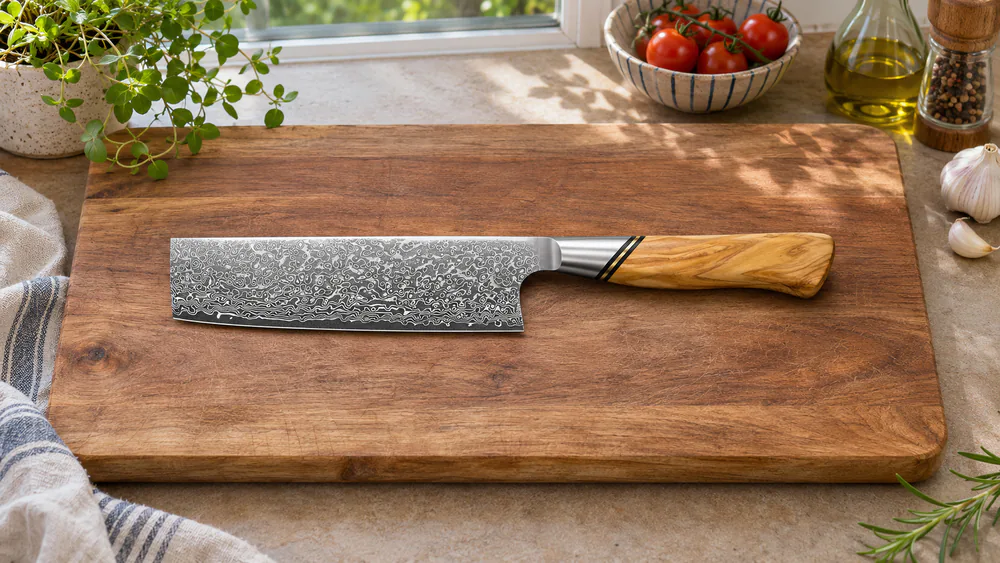
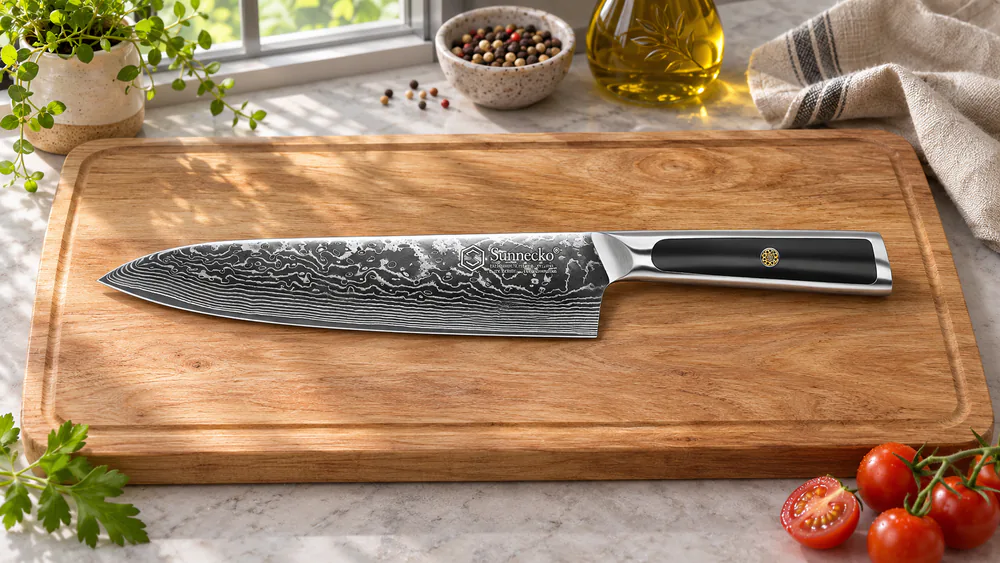
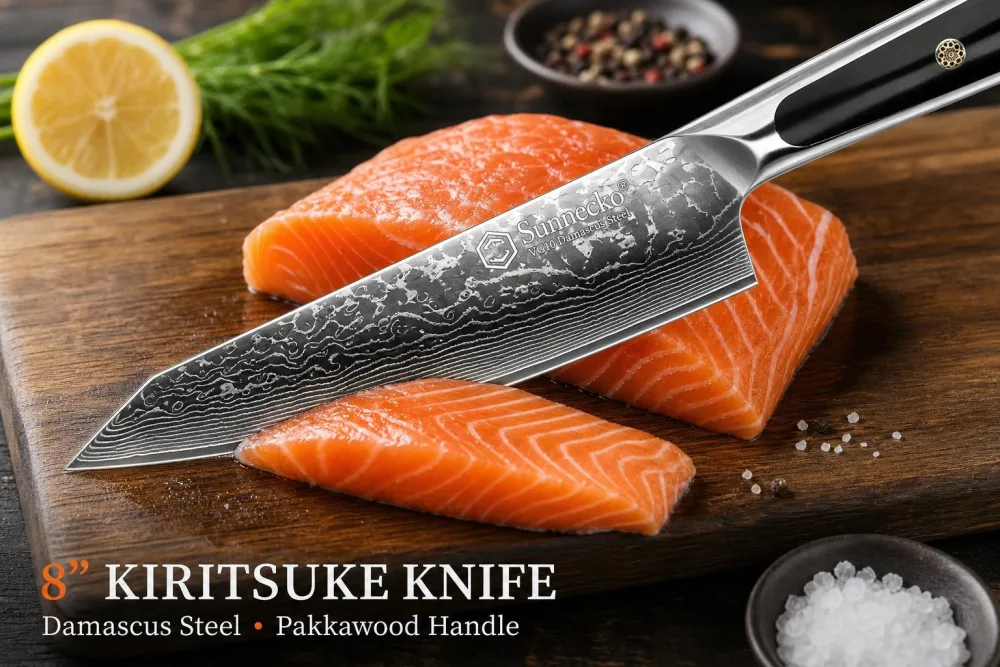
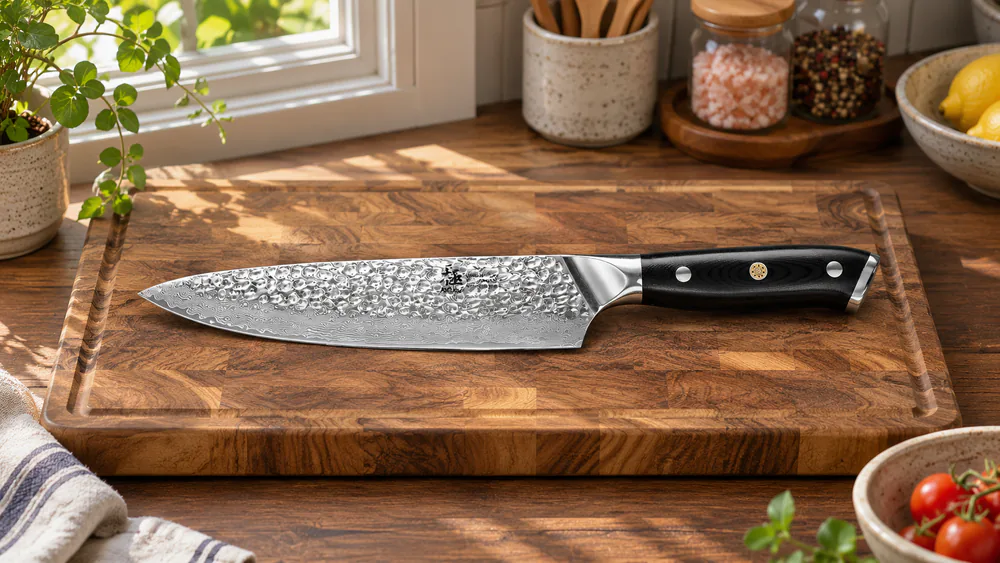
Choosing a VG10 knife is mostly about matching the shape and the care level to how you cook. Start with the knife type. An 8-inch gyuto or chef knife is the all-rounder, a santoku is a shorter and more compact option, a nakiri is for vegetables, and a kiritsuke suits long, clean slicing strokes. If you only buy one, buy the gyuto.
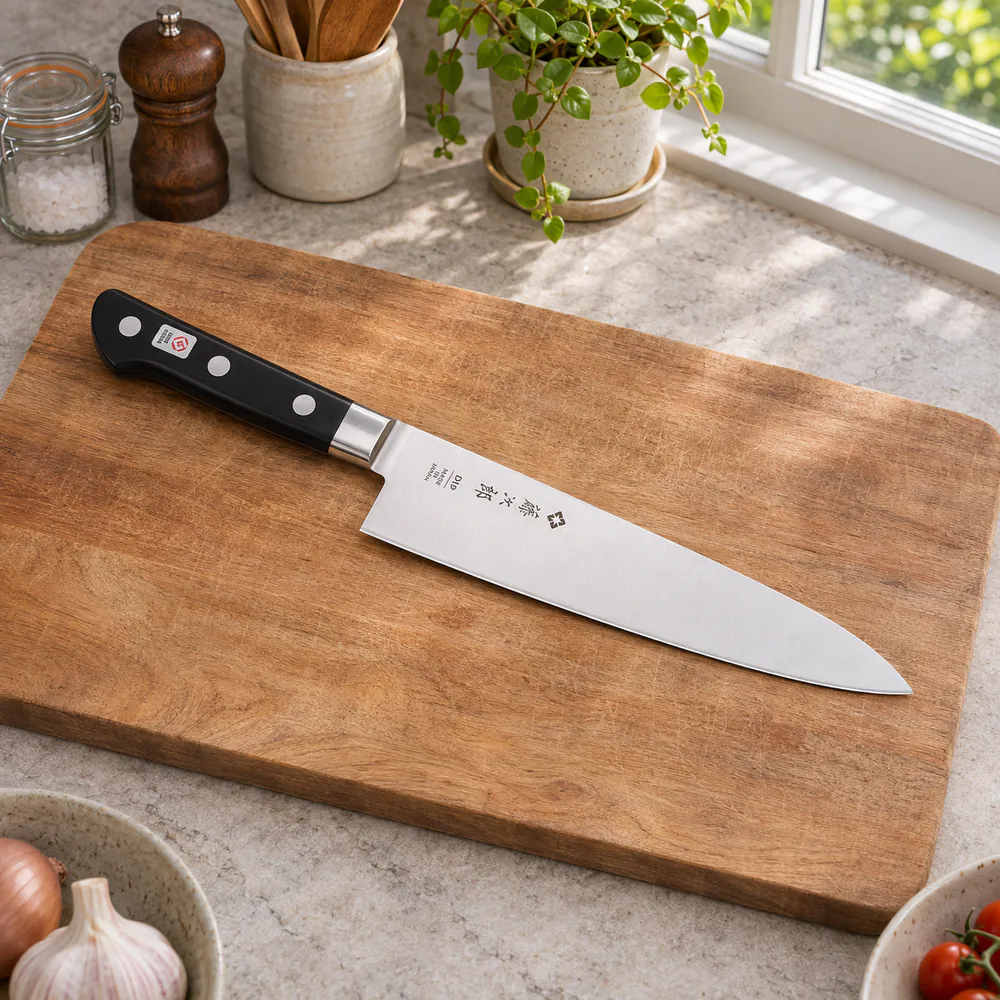
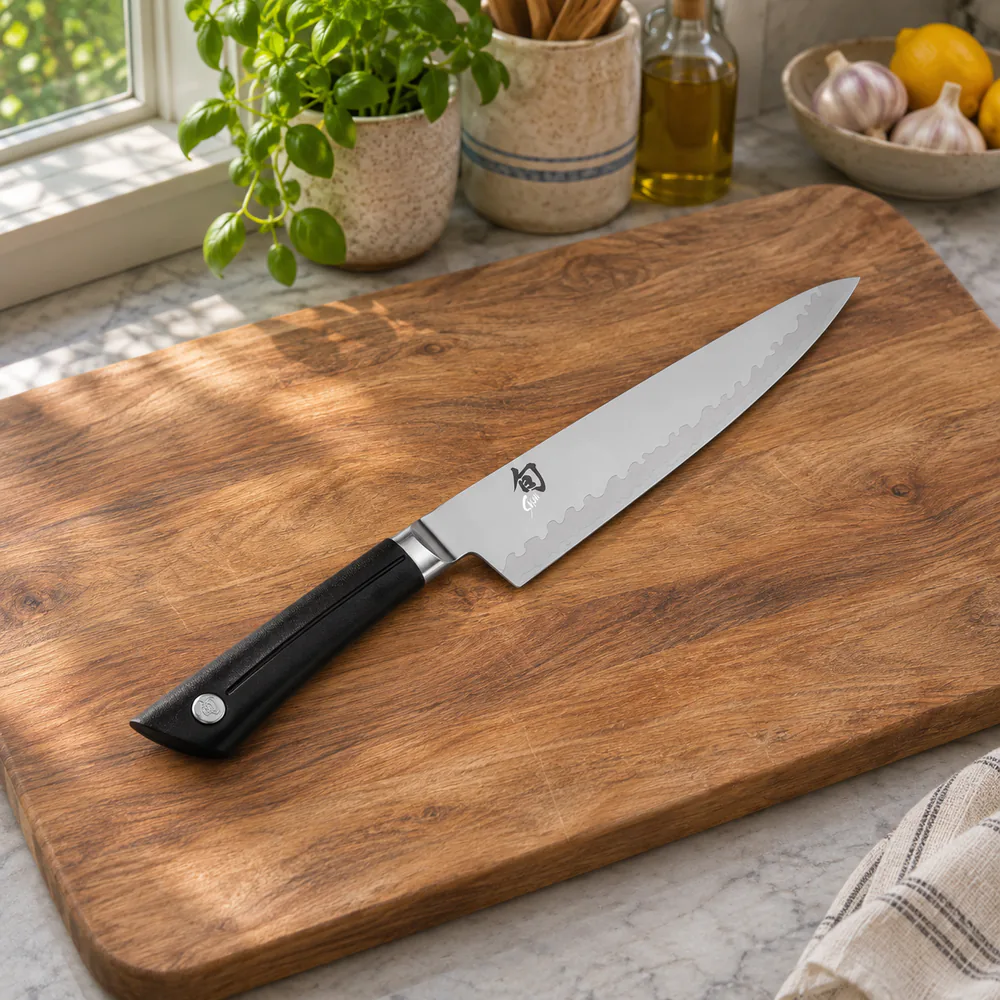
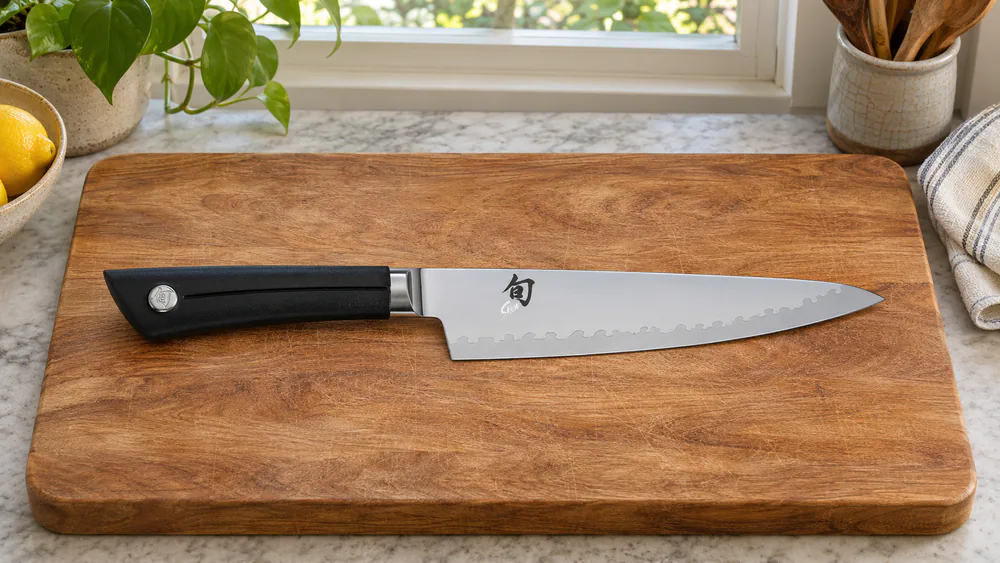
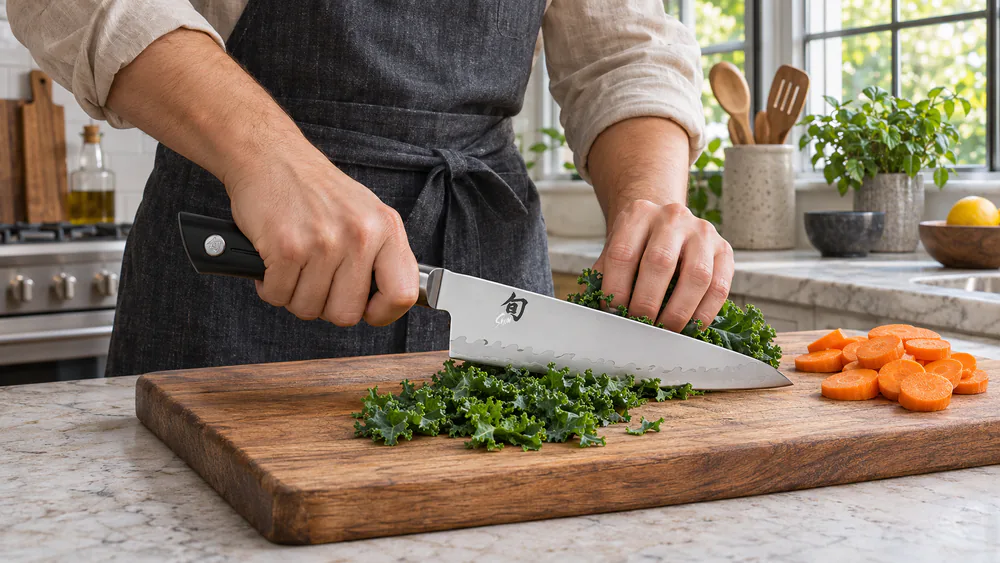
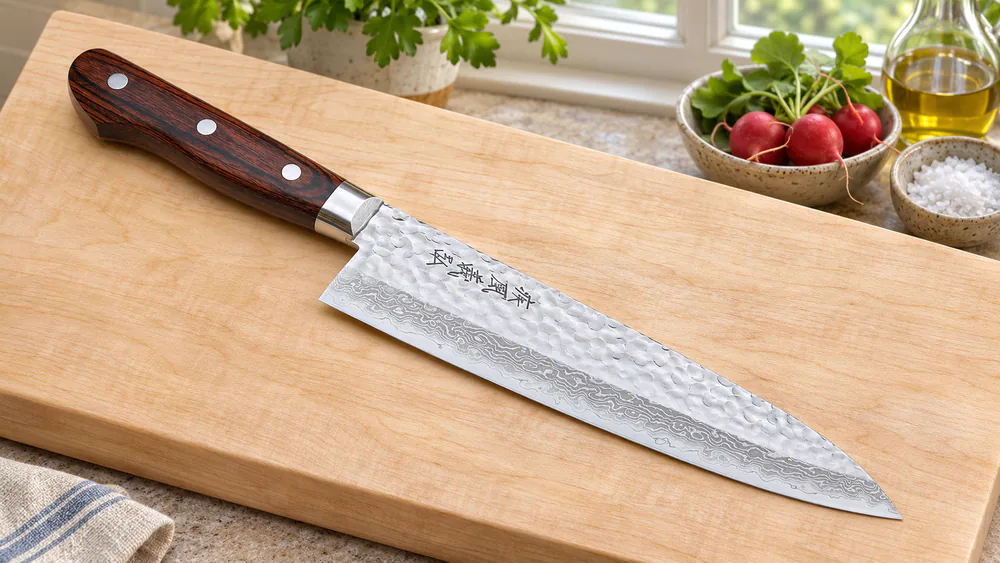
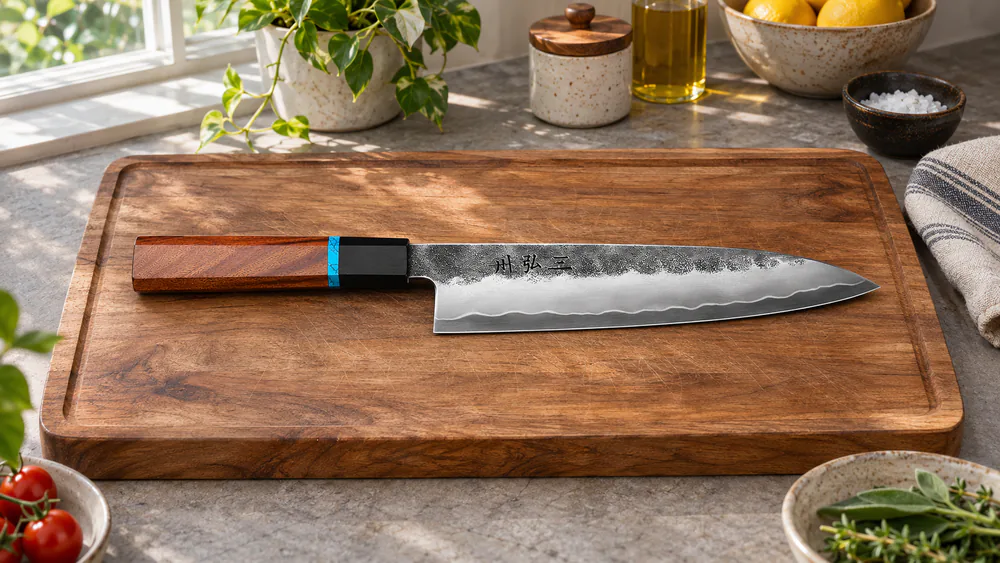
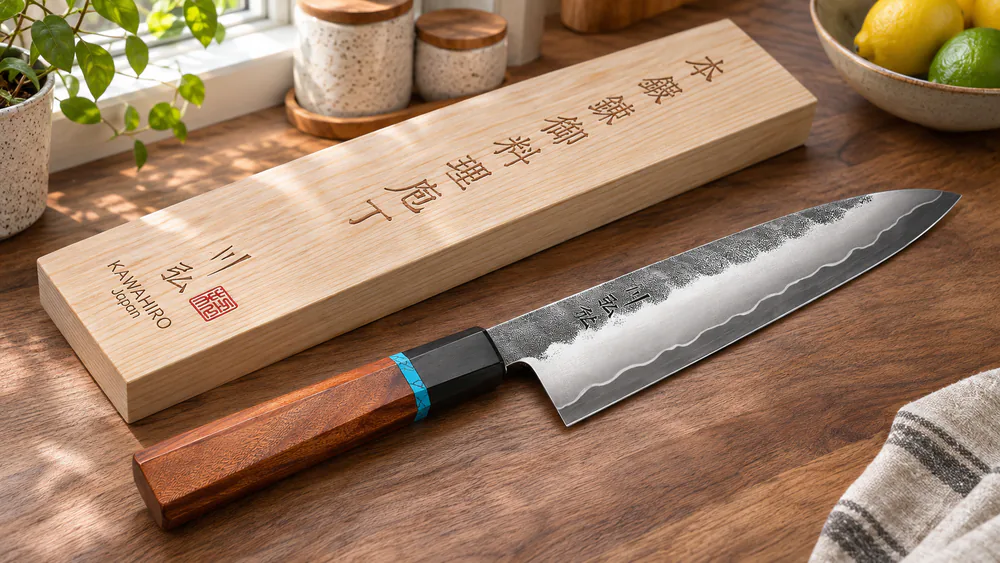
Next comes the handle. Western-style handles, like the Tojiro's laminated wood or the Shun's polymer, feel familiar to anyone who grew up with German knives. Wa handles, like the KAWAHIRO's octagonal grip, shift the balance point forward and suit a pinch grip. Neither is better; the right one is the one that does not tire your hand by hour three.
Weight and balance come after that. A lighter knife, such as the Tojiro or the KAWAHIRO, feels agile and reduces fatigue. A heavier one, like the KYOKU, lets the blade do more of the work but can wear on small wrists.
Sharpening skill matters as much as the steel when you choose. A cook who owns a stone and enjoys using it can live happily with the Yoshihiro's thin edge. A cook who has never sharpened a knife is better served by the Tojiro or the Shun, whose slightly more tolerant edges forgive a rough first session. Whichever you pick, learn to hold a steady angle before you worry about grit numbers.
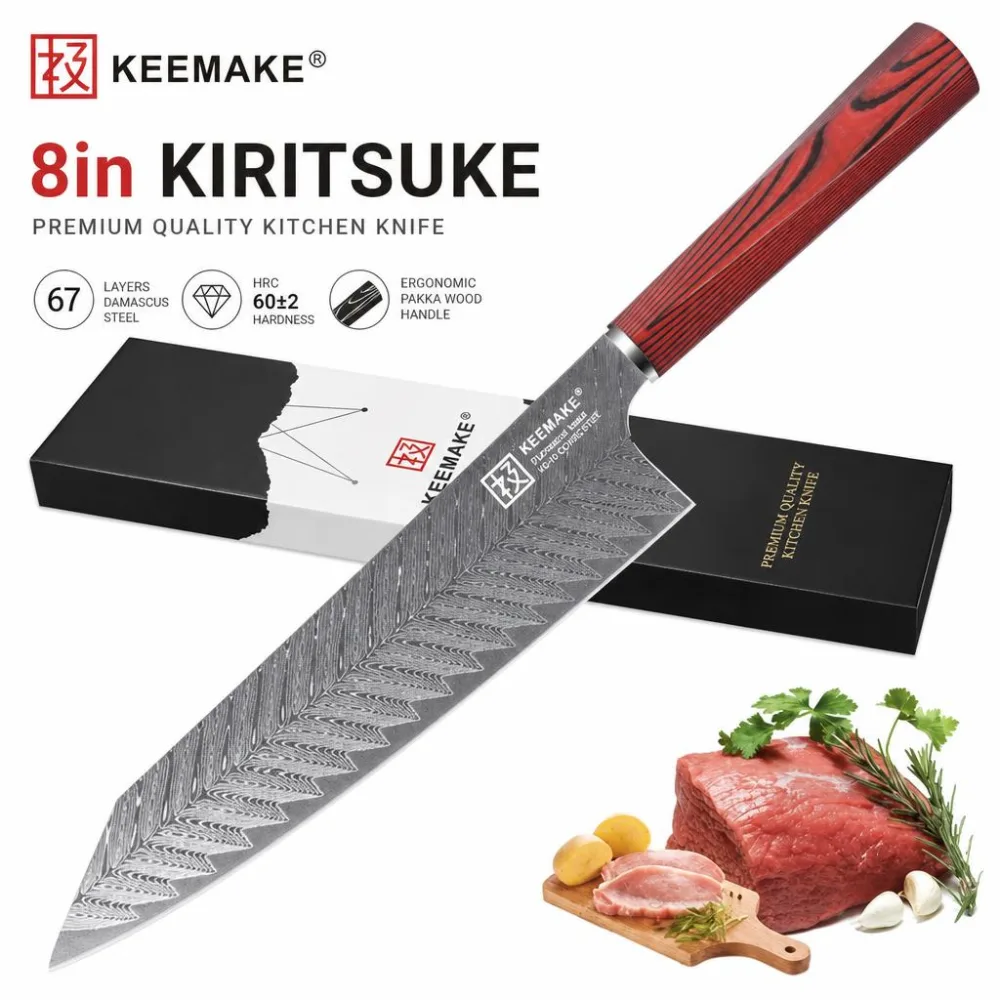
Storage and care habits belong in the decision too. If your kitchen runs on a drawer full of loose utensils, a sheath or a magnetic strip protects a thin edge far better than tossing the knife in with everything else. The KEEMAKE and KYOKU both come with a sheath, which is a real advantage if you have nowhere safe to keep a sharp blade.
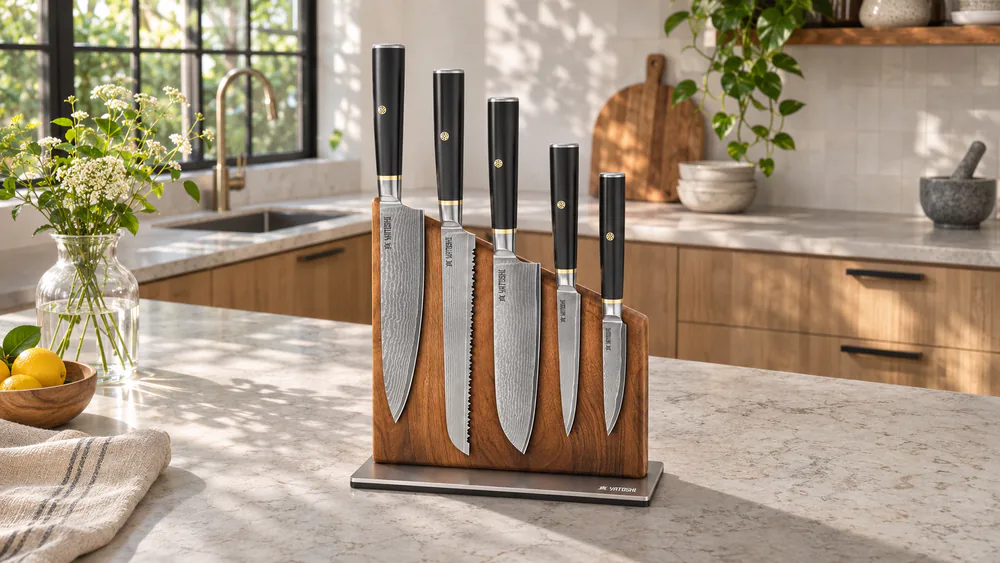
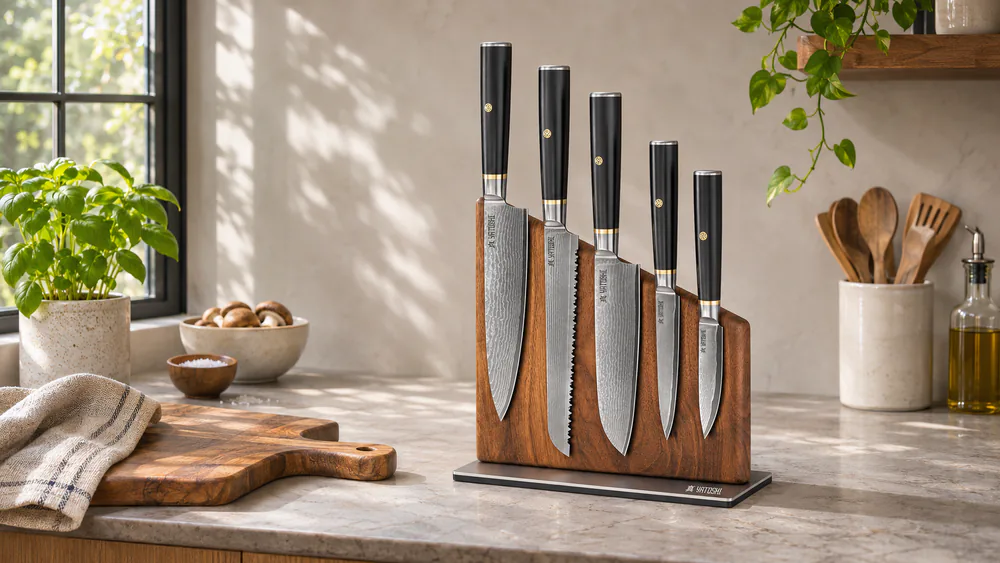
Finally, match the number of knives to how you cook. Most home cooks do nearly everything with one gyuto and a paring knife. Add a nakiri only if vegetables dominate your prep, and add a santoku only if you want a shorter blade for a small board. A block set looks like value, but it only pays off if you will use every piece.
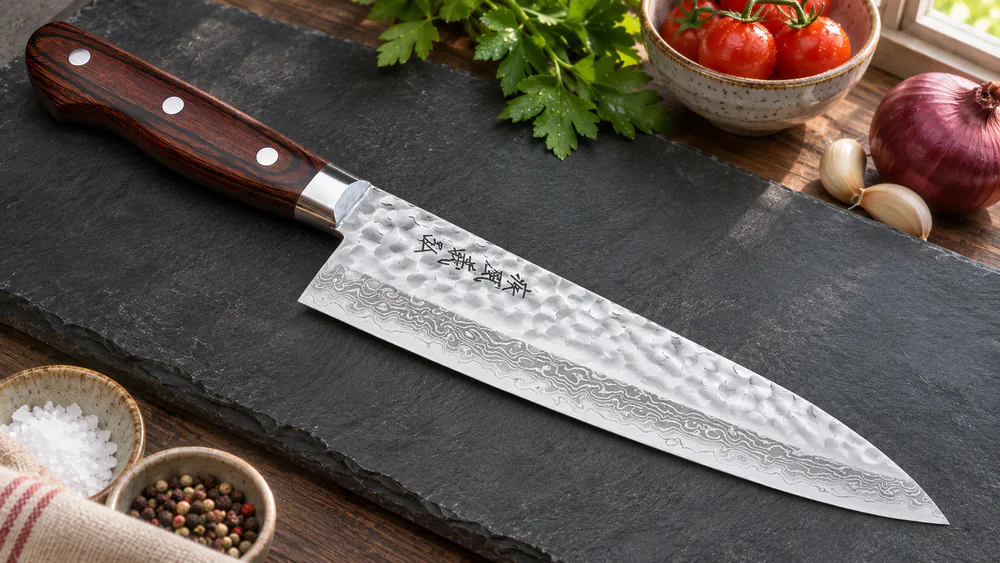
Finally, look closely at the Damascus claims. A pattern is cosmetic. It does not make the steel cut better, and it does not tell you who made the blade.
Genuine Japanese-Made VG10 vs Generic Damascus Marketing
Not every knife that says VG10 was made by a Japanese bladesmith. In our lineup, Tojiro, Shun, and Yoshihiro state that they are made in Japan. Sunnecko, KAWAHIRO, KEEMAKE, TIVOLI, and Yatoshi do not name a maker or country of origin, and the KYOKU's "made in Japan" language is about the steel rather than the whole knife. That does not make them bad knives. It means you should buy them for what they do in the hand, not for a heritage story the brand does not tell.
A few red flags help: a 67-layer pattern that looks etched, a brand that gives no hardness figure, and a name that appears and disappears each season. Brands that state a warranty, name a maker, and offer sharpening support are usually the safer purchase.