Helping you create a kitchen you love.

Kitchen Appliances

Choice Prep Manual Heavy-Duty Citrus Juicer Review: 7 Things to Know

As an Amazon Associate we earn from qualifying purchases. We may earn a commission from links on this page, at no extra cost to you. Learn more.

Choice Prep Manual Heavy-Duty Citrus Juicer Review: 7 Things to Know

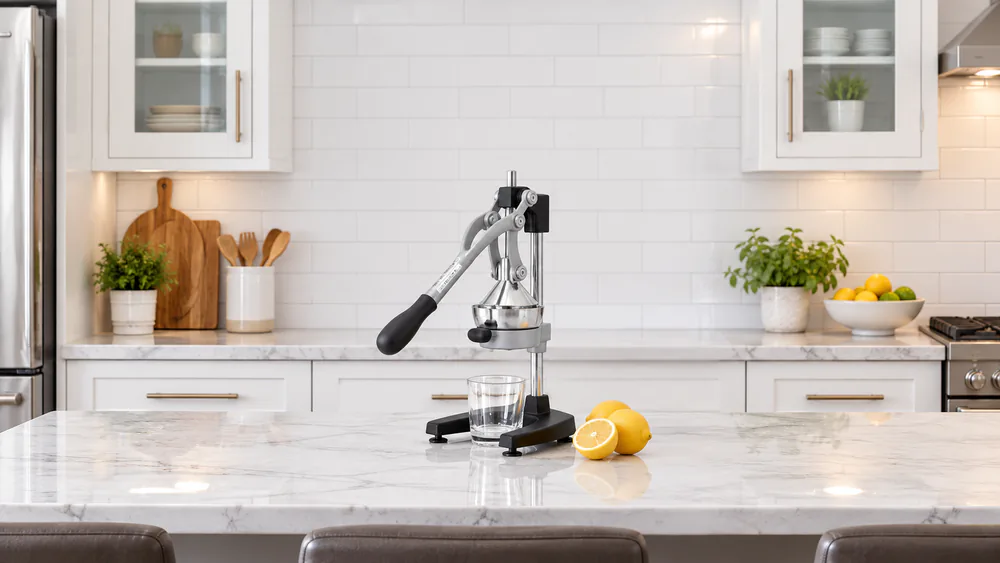
The Choice Food Prep MCJ2 (item 407MCJ2) is a cast iron, lever-style manual press built for lemons, limes, and oranges. In our kitchen it presses lemons quickly and sits solidly on the counter. It suits cooks who juice citrus every week and want a sturdy tool. It is a poor fit for big grapefruit or for anyone who wants a dishwasher-safe machine. We judged it on pressing effort, stability, fit, cleanup, and parts support.

If you want more context on the category, browse our juicer reviews for electric and manual options side by side.

Choice Food Prep MCJ2 Manual Heavy-Duty Citrus Juicer
1

Choice Food Prep MCJ2 Manual Heavy-Duty Citrus Juicer

Our Rating: Solid Lemon Press
Check Price on Amazon
4.0/5

The MCJ2 presses lemons quickly, the suction base grips firmly, and the lever takes the strain off your wrist. We gave it 4.0 out of 5, scoring it on stability, leverage, and how much upkeep it asks for.

  • Quick, low-effort lemon and lime pressing
  • Suction base that grips a flat counter
  • Removable stainless steel strainer and funnel
  • Tall when raised, so check cabinet clearance

Specifications

Mechanism
3-pinion lever
Frame
Cast iron
Footprint
7 x 8 in
Raised height
29 in
Cleaning
Hand wash only

Pros

  • Presses lemons and limes fast with little wrist effort
  • Suction base and cast iron frame feel solid on the counter
  • Quiet, with no motor noise
  • Removable strainer and funnel are easy to wash
  • Repair parts such as the cone, lever, and rubber grip are cataloged

Cons

  • Larger grapefruit press less efficiently
  • Hand wash only, and the fixed upper dome is harder to clean
  • Joints can loosen and need tightening with an Allen wrench
  • The upper assembly can drop unexpectedly, so keep fingers clear
  • Heavy to lift into storage, and some repair parts may be out of stock

Fruit Fit and Juice Extraction

The MCJ2 is a lemon, lime, and orange press first. The reamer and lever work best with those fruits.

Citrus sizes and grapefruit limitations

Lemons and limes are the sweet spot. Halved fruit sits on the reamer, the lever comes down, and the juice runs out quickly. Oranges work as well, though they take a longer, steadier pull.

Grapefruit is where we hold back. Larger grapefruits may press less efficiently, and a big one gives the frame more work than it was designed for. The same caution applies to the lighter MCJ-1, where a large grapefruit can overload the press and cause breakage. If grapefruit is your main fruit, look at a different machine.

Juice yield, pulp, and seeds

We can't give you a measured yield, and we won't invent one. We have no defensible numbers for fruit per minute, pulp percentage, or seed capture. What we can say is that the stainless steel strainer and funnel catch seeds and larger pieces, and the press handles routine lemon squeezing with a simple manual workflow.

If you hate pulp, pour the juice through a fine sieve afterward. Don't expect pulp-free juice straight from the spout. A manual press of this type also leaves some juice in a squeezed half, so a second press on a stubborn orange is normal.

Leverage, Stability, and Everyday Use

Leverage is the reason to buy a press like this. A long handle and a 3-pinion lever mechanism turn a short pull into real pressure on the fruit.

Handle effort and repeated pressing

Pressing lemons for a pitcher of lemonade is where the lever pays off. We pressed the suction base onto a flat, dry counter, set a halved lemon cut side down on the reamer, and brought the handle down. The juice ran out quickly, the base stayed put under the pull, and our wrist never took the strain. The MCJ2 can reduce the wrist effort of squeezing citrus compared with pressing fruit by hand. You push down with your body weight instead of gripping, and the rubberized lever grip stays comfortable through a long batch.

The press is quiet. There is no motor, so the only sound is the fruit giving up its juice and the lever moving. That is a real benefit if you juice early in the morning.

Heavy use is the open question. A load-bearing part can break during sustained drink-service use, which makes parts availability important for busy bars. We can't tell you how often that happens. For a home cook pressing a few fruits at a time, the risk is much smaller than for a cafe.

Take one safety note seriously. The upper pressing assembly can drop unexpectedly, so keep your fingers clear of the pressing area. Use the stabilizing hand only to hold the base, and remove the supporting hand from the fruit before you press, as the manual directs.

Base grip and practical setup

The MCJ2 has suction feet, and in use the base grips firmly on a flat, dry counter. Press the suction base down before you start. Then twist the notched bowl and the straining funnel into their locked positions. Place halved fruit cut side down on the reamer and pull the handle.

A wet or textured counter weakens the grip, so wipe the spot dry first. Granite with a rough finish and tile with deep grout lines are poor places for suction. A smooth laminate or sealed stone surface works best.

The press is heavy, which helps stability and hurts portability. Lifting it in and out of a cabinet every day gets old fast. We would leave it on the counter if you use it more than a couple of times a week.

Choice Food Prep MCJ2 Specifications and Counter Fit

Check the dimensions carefully: the press is tall, and you need to supply a collection cup that fits beneath it.

Model identity, materials, and included parts

The MCJ2 is the heavy-duty manual citrus press sold under item 407MCJ2. It has a cast iron frame, a black finish, a rubberized lever grip, suction feet, and a removable stainless steel strainer and funnel. It carries ETL sanitation certification and runs purely by hand. A separate collection vessel is required, so plan on buying a cup or pitcher.

Choice Food Prep MCJ2 (407MCJ2) specifications
Footprint7 inches wide by 8 inches deep
Height, handle down17 inches in current specifications (an older specification gives 18 inches)
Height, handle raised29 inches
Cup clearance6 1/2 inches, collection cup sold separately
Mechanism3-pinion lever
FrameCast iron with a black finish
Fruit-contact partsRemovable stainless steel strainer and funnel
OperationManual
CareHand wash only
Shipping weight14.89 lb. (shipping weight, not net product weight)
Warranty90-day limited, eligible original commercial purchasers only

Be careful with the weight. The 14.89 lb. figure is the shipping weight. It is not the weight of the press itself, which we have not verified. The press will be a little lighter on your counter than that figure suggests, but it is still a heavy tool.

Counter space, handle clearance, and cup fit

The footprint is small, at 7 inches wide and 8 inches deep. That fits beside a stove or on a cramped prep counter. Height is the bigger concern. With the handle down, the current specification gives 17 inches, but an older specification lists 18 inches. If you are fitting it under a tight cabinet, measure carefully and check the dimensions of any older unit.

Raised, the handle reaches 29 inches. Many standard upper cabinets sit about 18 inches above the counter, so you need open space above the press to use it. Pressing under a low shelf is not an option.

The collection cup is the other piece to plan. The press offers 6 1/2 inches of cup clearance, which is enough for most short glasses, small pitchers, and measuring cups. Tall tumblers will not fit under the spout. Measure the vessel you plan to use before you buy.

Value and Relevant Alternatives

With the specs settled, the MCJ2 sits in the mid-priced range among countertop presses. It costs more than the light-duty model and well above a basic handheld squeezer.

MCJ2 versus the Choice MCJ-1 light-duty model

The MCJ-1 is the lighter, cheaper sibling. It has chrome-plated light-duty construction, an ergonomic lever, non-skid feet, and an automatic return for the handle and fruit pusher. It measures 7 inches wide, 11 inches deep, and 19 1/2 inches high, and it accepts a collection container up to 4 inches wide. That 4-inch figure is width, not height clearance, so don't treat it as a cup-fit guarantee. Its shipping weight is 9.2 lb.

The MCJ-1 juices citrus well and feels sturdy during ordinary pressing. It is also easy to clean. But bending and misalignment can occur even with modest lemon use, and a large grapefruit can overload it. The MCJ2 is the one to pick if you press often or want more margin. The MCJ-1 fits a light, occasional home user who wants a smaller, cheaper press.

Do not transfer MCJ2 details to the MCJ-1. Its raised height, cup clearance, and warranty terms are unverified, and its care routine is different. The MCJ-1 manual calls for mineral oil on the rack and pinion as needed, which we would not apply to the MCJ2 without checking its manual.

When a handheld squeezer or another lever press fits better

A handheld lemon and lime squeezer is the lower-cost route for occasional small-citrus pressing. Choose a bowl sized to your fruit, in aluminum or stainless steel. There is no countertop tower, no suction base, and no cabinet clearance to worry about. It stores in a drawer.

The tradeoff is effort. You squeeze with your hand, so a big batch tires your wrist. If you juice a lemon or two a day, a handheld is enough. If you press for a crowd, the MCJ2 is worth its counter space.

Another lever press, or one of the models in our guide to the best manual juicer presses, may fit better if you need to extract from large fruit regularly. Our list of the best orange juicers covers electric options if you want to skip the manual work altogether.


Cleaning and Long-Term Maintenance

Cleaning is the most demanding part of the MCJ2's routine. It is hand wash only, and the manual says so plainly. Ignore any claim that it is dishwasher safe.

Removable parts and washing instructions

Remove the reamer and the strainer bowl and wash them with mild soap and warm water. Wipe the frame with a damp, soft cloth and sanitizer. Dry every part before you put the press back together.

The removable lower pieces rinse clean quickly. The fixed upper dome is harder, because you can't take it off the way you can the lower parts. It collects pulp and sugar in the crevices, so rinse it soon after you finish pressing instead of letting it dry.

We would not promise that every fruit-contact part comes off without tools. The current upper dome configuration is not confirmed, so check your unit rather than assuming.

Frame care and replacement parts

The cast iron frame needs a wipe, not a soak. Keep it dry between uses. Corrosion and coating debris can develop around the funnel support, where the funnel rubs against the surrounding part. Watch that spot, and wipe it clean when you see residue.

The joints can also loosen with repeated use and need tightening with an Allen wrench. Check them now and then, especially if you press a lot. A load-bearing part can also break under heavy use, as the next section covers.

The replacement catalog covers the cone, straining cup, lever, rubber grip, foot, base cup cover, screw, squeezer, and washer. That is a good sign for repair. But repair parts are cataloged, and some are unavailable. Confirm that the part you need is in stock before you count on a fix.

The warranty is narrow. It is a 90-day limited warranty for eligible original commercial purchasers, and residential use is excluded. Equipment installed in or on a food truck or trailer gets 30-day coverage. It is nontransferable and requires purchase from an authorized dealer.

Wear and Durability

Long-term durability is another consideration.

Where the wear shows

We see wear at the moving parts. The strength of the MCJ2 is the stable base and fast lemon pressing, and the weak points sit where the metal moves. Corrosion and coating debris can build near the funnel support, where the funnel rubs against the surrounding part, so wipe that spot clean when you see residue.

What we can and cannot say

We can't give you a failure rate or a lifespan, and we have no ranking against other presses. A load-bearing part can break under sustained bar use, but we don't know which component or alloy is involved. Heavy and light-duty presses are different machines, so don't carry MCJ-1 wear over to the MCJ2.

Final Verdict: Who Should Buy the Choice MCJ2?

For a home cook, the MCJ2 is the sturdier pick, but its warranty excludes residential use, so treat it as a no-warranty purchase and lean on cataloged parts instead.

Best-fit buyers and use cases

Buy it if you juice lemons, limes, and oranges often and want to save your wrists. It suits home cooks who make lemonade, cocktails, or dressings in batches, and small cafes with light volume. You need a permanent counter spot with clear space above it, a vessel that fits under 6 1/2 inches, and the patience to hand wash.

Buying from the retailer listed on the spec sheet, returns generally qualify within 30 days if the press is unused and in its original packaging. You pay return shipping, and restocking fees are 30% for residential addresses and 20% for commercial ones. A return is not a trial period, so measure your space first.

Reasons to choose a different juicer

Pick something else if grapefruit is your main fruit, if you want dishwasher-safe parts, or if you have low cabinets. Choose a handheld squeezer for occasional small-citrus use. Choose the MCJ-1 only for light, occasional pressing. If you run a busy bar, plan for parts support before you buy.

Read next

Ready to press more lemons with less effort?

Browse our buying guides for more tools that fit your kitchen routine.