
Welcome to my kitchen! If you love pumpkin pie as much as I do, you’re in for a real treat today. I’m going to share Claire Saffitz’s incredible caramelized honey pumpkin pie recipe. This isn’t just another pumpkin pie. It’s a game-changer that will make you rethink everything you know about this classic Thanksgiving dessert.
Table of Contents
I first discovered Claire’s recipe a few years ago, and it quickly became my go-to for the holidays. What makes this pie so special? Instead of using plain brown sugar like most recipes, Claire caramelizes honey and browns butter to create layers of deep, complex flavor that you just can’t get any other way.
Let me walk you through exactly how to make this stunning pie, plus I’ll share all the tips and tricks I’ve learned along the way to help you avoid common problems like cracking, soggy crusts, and watery filling.
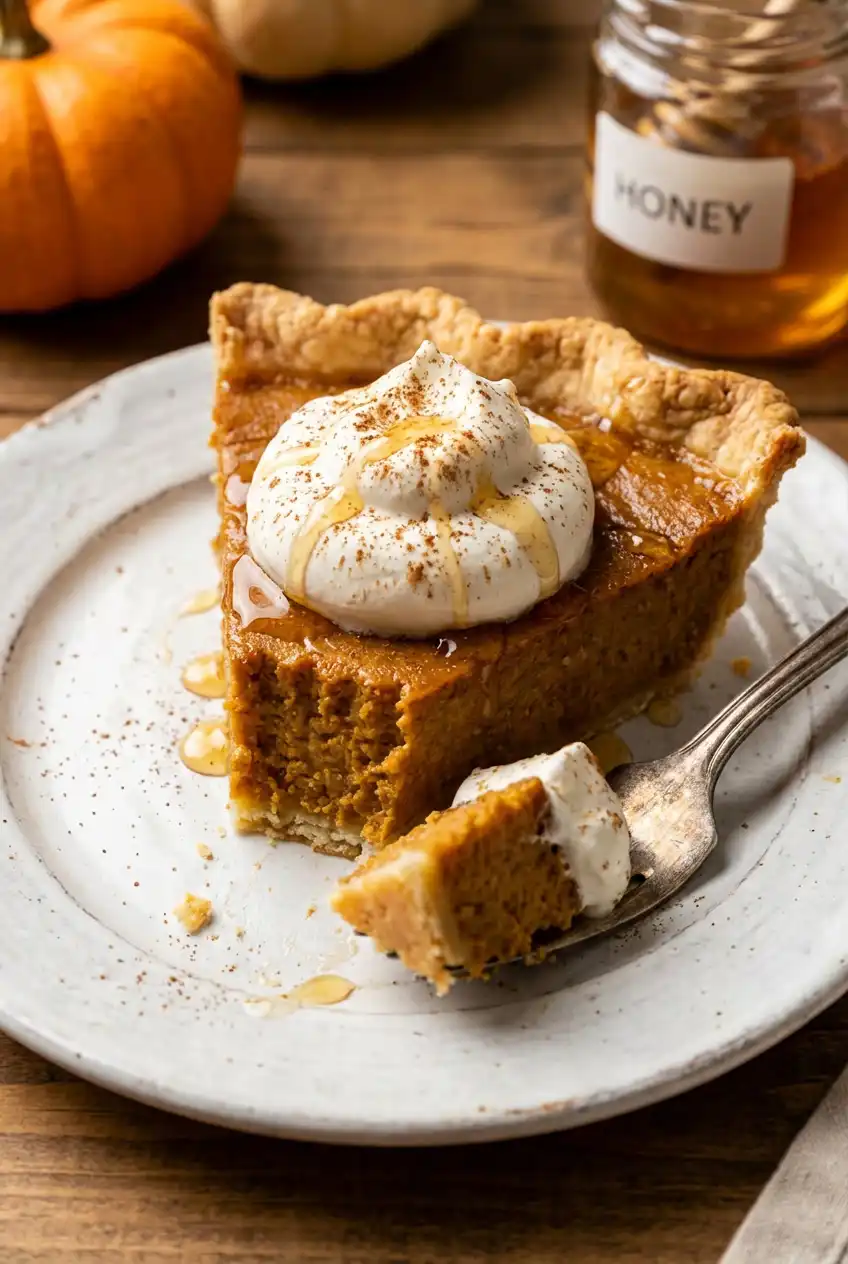
What is Claire Saffitz’s Pumpkin Pie?
Claire Saffitz is a Harvard graduate who trained in classical pastry at École Grégoire-Ferrandi in Paris. She’s also the author of two New York Times bestselling cookbooks: Dessert Person and What’s for Dessert. Her pumpkin pie recipe appears in Dessert Person, and it reflects her technique-driven approach to baking.
This recipe stands apart because it focuses on building flavor through technique rather than just mixing ingredients together. Claire uses caramelized honey, browned butter, and a slow cooling method to create a pie that’s silky smooth, deeply flavored, and crack-free.
If you’ve been making the same pumpkin pie year after year, this recipe will feel like a breath of fresh air. It’s still recognizably pumpkin pie, but with a sophistication that makes it memorable.
Why This Recipe is Different
Most pumpkin pie recipes follow a pretty standard formula: mix pumpkin puree with sugar, spices, eggs, and cream, then bake. Claire’s approach is more intentional.
First, she caramelizes honey instead of using brown sugar. When you heat honey, its sugars break down and develop new flavor compounds that taste nutty, toasty, and almost butterscotch-like. This adds incredible depth to the filling.
Second, she browns the butter. Browning butter creates that beautiful nutty aroma and flavor that makes everything taste richer. Combined with the caramelized honey, you get layers of flavor that traditional pumpkin pies just don’t have.
Third, Claire’s recipe uses a slow cooling technique. The pie cools gradually in a turned-off oven with the door slightly open. This prevents the sudden temperature change that causes most pumpkin pies to crack.
The result? A pie with a silky-smooth custard texture, complex flavor, and a beautiful crack-free surface.
Claire Saffitz Pumpkin Pie Ingredients
Let me break down everything you’ll need for this recipe. I’ve organized the ingredients by component to make it easier to follow.
For the Crust
- 1 1/4 cups all-purpose flour (156g)
- 1/2 teaspoon salt
- 1 tablespoon sugar
- 10 tablespoons cold unsalted butter, cut into pieces (142g)
- 3 to 4 tablespoons ice water
For the Honey Mixture
- 1/3 cup honey (113g)
- 4 tablespoons unsalted butter (57g)
For the Pumpkin Filling
- 1 can (15 oz) pumpkin puree (I always use Libby’s)
- 1 cup heavy cream (240ml)
- 3 large eggs, at room temperature
- 1 teaspoon ground cinnamon
- 1/2 teaspoon ground ginger
- 1/4 teaspoon ground nutmeg
- 1/8 teaspoon ground cloves
- 1/2 teaspoon salt
A quick note on measurements: I always weigh my flour and butter when I can. It makes a big difference in consistency. But if you don’t have a kitchen scale, the cup measurements will work just fine.
Step-by-Step Instructions
Let me walk you through each step of this recipe. Take your time and don’t rush. Good pie takes patience, but it’s worth every minute.
Prepare & Parbake the Crust
Start by making your pie dough. You can make it ahead and let it rest overnight in the fridge, but one hour is fine if you’re making it the same day.
Put a little flour on your work surface. If you try to roll out cold dough right away, it will crack. Here’s a trick I learned: beat the dough with your rolling pin while rotating it with your other hand. This makes the butter pliable but keeps it cold.
Once the dough is less than half an inch thick, you can start rolling it out. Roll it to about an eighth of an inch thick.
To line up the pie plate, roll the dough onto your rolling pin, then unroll it over the plate. Press it very firmly into the pie plate. This step is important. If you don’t press firmly, the crust can shrink during baking.
Leave about a one-inch overhang around the edges. If some spots have more than that, just trim them off with scissors.
For crimping, fold that edge underneath and tuck it inside the lip of the plate all the way around. Push in with your thumb and out with your two fingers on the other hand. Press firmly so it anchors to the lip of the pie plate.
Pop the crust into the freezer for about 15 minutes. The butter needs to get cold again.
Preheat your oven to 425°F.
The crust has a tendency to puff up during baking, so we need to weight it down. Line the frozen crust with parchment paper or foil, then fill it with pie weights, dried beans, or rice.
Bake for 15 minutes until it starts to look dry around the edges. Then carefully remove the weights and parchment. Bake for another 5 to 7 minutes until the crust looks dry and lightly golden.
Brush a thin layer of beaten egg over the bottom of the crust. Put it back in the oven for just a minute or two until the egg sets. This creates a barrier that helps prevent a soggy crust.
Let the crust cool completely while you make the filling.
Caramelize Honey & Butter
This is where the magic happens. In a medium saucepan, combine the honey and butter over medium-high heat.
The mixture will come to a boil very fast because sugar heats up quickly. Once it boils, turn the heat down to medium-high and let it cook for 3 to 5 minutes.
You’re looking for the honey to darken slightly and smell toasty. You’ll see big puffs of steam as the water evaporates. The mixture should reduce in volume.
Here’s my tip: watch it carefully. Honey can go from perfectly caramelized to burnt in seconds. When it smells nutty and looks a shade darker, it’s ready.
Add the heavy cream in three additions, whisking after each one. The mixture will bubble up, so be careful. Whisk until you have a smooth mixture that’s warm but not hot.
Let this cool slightly while you prepare the rest of the filling.
Create the Pumpkin Filling
Reduce your oven temperature to 350°F.
In a large bowl, whisk together the pumpkin puree, eggs, cinnamon, ginger, nutmeg, cloves, and salt.
I’ve tried making pumpkin pies with my own puree from roasted pumpkin or squash, and somehow it still doesn’t turn out as good as one made with Libby’s canned pumpkin. The texture is just perfect.
Make sure your eggs are at room temperature. This helps everything blend together smoothly and prevents the filling from splitting.
Slowly whisk in the warm honey-butter-cream mixture. Whisk until everything is completely smooth with no lumps.
Fill & Bake
Pour the filling into your parbaked crust. It’s okay if the filling is still slightly warm.
Lightly tap the pie on the counter a few times to pop any air bubbles. You want a really nice, flat surface.
Carefully transfer the pie to the oven. Bake for 45 to 60 minutes.
How do you know when it’s done? This is the most important part. The edges should be set, but the center should still have a gentle wobble when you shake the pan. It should jiggle like jello, not slosh like liquid.
If you have an instant-read thermometer, the center should register about 175°F. Don’t overbake it. The custard will continue to set as it cools.
Cool Properly (This Prevents Cracking!)
Here’s Claire’s genius technique for preventing cracks: turn off the oven and crack the door open slightly. Let the pie cool in the oven for 30 minutes.
This gradual cooling prevents the sudden temperature change that causes most pumpkin pies to crack.
After 30 minutes, remove the pie from the oven and let it cool completely on a wire rack. This takes about 2 hours.
Once it’s at room temperature, cover it loosely with plastic wrap and refrigerate for at least 4 hours, or ideally overnight. The filling needs time to fully set.
How to Know Your Pie is Done & Cooling Method
The wobble test is your best friend here. When you gently shake the pie, the center should jiggle softly but hold its shape. Think of a barely set custard or panna cotta.
If the center looks liquidy or sloshes around, it needs more time. If the whole pie is completely firm with no wobble at all, you’ve overbaked it slightly. It will still taste good, but the texture might be a bit grainy.
The slow cooling method is what prevents cracking. When hot custard hits cold air, the sudden temperature drop causes the proteins to contract quickly, which creates cracks. By cooling the pie gradually in the warm oven, you avoid this problem.
I can’t stress this enough: this one technique has completely eliminated cracking in my pies. It’s a game changer.

Claire Saffitz’s Caramelized Honey Pumpkin Pie
Ingredients
Equipment
Method
- Make the crustMix flour, salt, sugar, and cold butter until crumbly. Add ice water slowly to form dough. Chill, roll out, place in a 9-inch pie plate, and crimp edges.
- Parbake the crustFreeze crust 15 minutes. Bake at 425°F (220°C) with pie weights for 15 minutes. Remove weights and bake 5–7 minutes more. Brush with egg wash and bake 1–2 minutes. Cool.
- Caramelize honeyHeat honey and butter in a saucepan over medium-high heat. Boil 3–5 minutes until darker and nutty-smelling. Slowly whisk in cream. Let cool slightly.
- Make the fillingLower oven to 350°F (175°C). Whisk pumpkin, eggs, spices, and salt. Slowly whisk in the warm honey mixture until smooth.
- Fill and bakePour filling into cooled crust. Bake 45–60 minutes until edges are set and center gently jiggles.
- Cool properlyTurn oven off and crack the door open. Let pie cool inside for 30 minutes. Remove and cool completely, then refrigerate at least 4 hours before slicing.
Video
Notes
- Crack-Free Tip: Always cool the pie slowly in the turned-off oven with the door slightly open.
- Doneness Check: Center should gently wobble, not look liquid or fully firm.
- Best Texture: Chill at least 4 hours before slicing for a clean cut.
- Pumpkin Choice: Use 100% canned pumpkin purée, not pumpkin pie filling.
- Flavor Boost: Fresh spices and real honey make a noticeable difference.
- Make Ahead: Pie tastes even better the next day—perfect for holidays.
- Storage: Keep refrigerated; consume within 3–4 days.
Common Pumpkin Pie Problems & Claire’s Solutions
Let me help you troubleshoot the most common issues people face with pumpkin pie.
Why Your Pie Cracks
Cracking happens when the custard is overbaked or cools too quickly. The proteins in the eggs tighten up and split the surface.
To prevent this, use the wobble test to check doneness. Don’t bake until the center is completely firm. And always use the slow cooling method I described above.
If your pie does crack, don’t worry. You can cover it with whipped cream and no one will know!
Soggy Crust Prevention
A soggy crust usually means the bottom didn’t get hot enough or wasn’t sealed properly.
Always parbake your crust until it’s completely dry. The egg wash creates a protective barrier that keeps the filling from soaking into the crust.
Also, make sure you’re baking on the lower third of your oven. This puts the crust closer to the heat source so it gets nice and crispy.
Watery Filling Solution
If your filling looks watery or separates, it’s usually because of too much moisture in the pumpkin or underbaking.
If you use fresh pumpkin instead of canned, you need to drain it really well. Fresh pumpkin has way more water than canned. I recommend sticking with Libby’s for consistent results.
Also, make sure you bake the pie long enough. The filling should be set around the edges with just a slight wobble in the center.
Grainy Texture Fix
Grainy texture happens when the eggs overcook. To avoid this, bake at 350°F (not higher) and watch for that wobble in the center.
Also, make sure your cream mixture isn’t too hot when you add it to the eggs. If it’s boiling hot, it can scramble the eggs and create a grainy texture.
Underbaked Pie Recovery
If you cut into your pie and realize it’s underbaked, you can actually put it back in the oven. Cover the crust edges with foil to prevent burning, and bake at 325°F for 10 to 15 minutes.
Check it again with the wobble test. It should set up nicely.
Ingredient Substitutions & Variations
Let me share some substitutions that actually work well with this recipe.
Heavy Cream Alternatives
You can use half-and-half instead of heavy cream. Your pie will be slightly thinner and less rich, but it will still taste great.
Evaporated milk is another option. It’s actually the traditional choice for pumpkin pie and gives you a custard that’s similar to the Libby’s recipe on the can.
For a dairy-free version, coconut cream works beautifully. Use the thick cream from the top of a chilled can of full-fat coconut milk. The pie will have a subtle coconut flavor that actually pairs nicely with the pumpkin and spices.
Pumpkin Alternatives
Fresh roasted pumpkin can work, but you need to drain it really well. Roast your pumpkin until soft, puree it, then place it in a fine-mesh strainer lined with cheesecloth. Let it drain for at least an hour to remove excess moisture.
Butternut squash makes a great substitute. It has a similar texture and sweetness. Roast it the same way you would pumpkin.
Sweet potato creates a slightly different flavor, but it’s delicious. Just know that it will taste more like sweet potato pie than traditional pumpkin pie.
Honey Alternatives
Maple syrup is a wonderful substitute for honey. The caramelization point is slightly different, so watch it carefully. It will darken faster than honey.
If you want to use brown sugar and skip the caramelization step entirely, use 1/2 cup packed dark brown sugar. You’ll lose some of that deep caramelized flavor, but the pie will still be delicious.
Spice Variations
You can use 2 teaspoons of pumpkin pie spice instead of the individual spices. It’s a time-saver and works perfectly.
If you love spice, feel free to double the amounts. Some people like a really spicy pumpkin pie.
Freshly ground spices make a noticeable difference. If you have whole spices, grind them yourself. The flavor is much brighter.
Dietary & Vegan Variations
I’ve tested several dietary variations of this recipe, and here’s what works.
Vegan Pumpkin Pie
Replace the eggs with a flax egg mixture or aquafaba. For flax eggs, mix 3 tablespoons ground flaxseed with 9 tablespoons water. Let it sit for 5 minutes until it’s gel-like.
Use coconut cream instead of heavy cream. Replace the butter with vegan butter or coconut oil.
The texture will be slightly different, but it’s still creamy and delicious.
Gluten-Free Crust
Use a gluten-free all-purpose flour blend with xanthan gum. Bob’s Red Mill 1-to-1 Baking Flour works great.
You can also make an almond flour crust. Mix 2 cups almond flour, 1/4 cup melted coconut oil, 2 tablespoons maple syrup, and a pinch of salt. Press it into your pie plate and parbake at 350°F for 10 minutes.
Lower Sugar Version
You can reduce the honey to 1/4 cup if you want a less sweet pie. The pumpkin and spices have natural sweetness, so it will still taste balanced.
For a sugar-free version, use a sugar-free honey substitute or erythritol. Just know that some sugar substitutes can affect the texture slightly.
Keto Version
Use almond flour for the crust and sweeten it with erythritol or monk fruit sweetener.
For the filling, replace the honey with a keto-friendly sweetener. The caramelization step is tricky with sugar substitutes, so you might want to skip it and just add the sweetener directly to the filling.
Each slice will have about 8 net carbs if you use a keto crust and sweetener.
Equipment & Pro Tips for Success
Let me talk about the tools that make this recipe easier.
Best Pie Plate
I prefer a glass pie plate because you can see the bottom crust and know when it’s done. Glass also conducts heat evenly. I’ve been using the Pyrex 9-inch glass pie plate for years, and it’s never let me down.
Ceramic pie plates look beautiful and work well too. They hold heat longer, so your pie stays warm.
Metal pans brown the crust quickly. If you use metal, watch the edges carefully so they don’t burn.
Whatever you use, make sure it’s a standard 9-inch pie plate. This recipe is designed for that size.
Oven Positioning
Always bake your pie on the lower third of the oven. This ensures the bottom crust gets enough heat to crisp up properly.
If you bake in the middle or upper rack, the filling will set before the crust is done, and you’ll end up with a soggy bottom.
Thermometer Guidance
An instant-read thermometer is optional but helpful. The center of the pie should reach 175°F when it’s done. I keep a ThermoPro Digital Instant Read Thermometer in my kitchen drawer for moments like this.
Don’t rely only on the thermometer though. The wobble test is still your best indicator of doneness.
Blind Baking Tools
Pie weights are great if you have them. I use stainless steel pie weights because they’re heavy for their size and work really well.
If you don’t have pie weights, dried beans or rice work perfectly. Just pour them into the parchment-lined crust.
You can reuse the same beans or rice for blind baking over and over. Just store them in a jar labeled “pie weights” so you don’t accidentally cook with them.
Spice Freshness
This is important: check the date on your spices. Old spices lose their flavor and can taste dusty.
If your spices are more than a year old, replace them. Fresh spices make a huge difference in pumpkin pie.
Whole spices that you grind yourself are even better. The flavor is so much brighter.
Cream Quality
Use heavy cream with at least 35% fat content. The higher the fat, the richer and creamier your filling will be.
Don’t use light cream or half-and-half unless you’re okay with a thinner custard.
Make-Ahead & Storage Guide
Pumpkin pie is perfect for making ahead, which is great for Thanksgiving planning.
Preparation Timeline
You can make the crust up to 2 days ahead. Wrap it tightly in plastic wrap and keep it in the fridge. Let it sit at room temperature for 10 minutes before rolling.
The parbaked crust can be made 1 day ahead. Just cover it loosely once it’s cool.
The whole pie can be baked 1 to 2 days before serving. In fact, it tastes even better after sitting overnight in the fridge. The flavors have time to meld together.
Freezing Instructions
You can freeze the unbaked pie. Assemble it completely, cover it tightly with plastic wrap and foil, and freeze for up to 1 month.
Bake it straight from frozen. Add 15 to 20 minutes to the baking time.
You can also freeze a baked pie. Let it cool completely, then wrap it tightly. Freeze for up to 2 months.
Thawing & Reheating
Thaw a frozen pie overnight in the refrigerator.
To serve it warm, reheat individual slices in the microwave for 20 to 30 seconds. Or reheat the whole pie in a 325°F oven for 15 minutes.
Don’t overheat it, or the custard can break and become watery.
Shelf Life
A baked pumpkin pie keeps in the refrigerator for 3 to 4 days. Cover it loosely with plastic wrap or foil.
Don’t leave it at room temperature for more than 2 hours. The egg custard needs to stay cold to be safe.
Thanksgiving Hosting Strategy
If you’re making multiple desserts for Thanksgiving, bake your pumpkin pie the day before. This frees up oven space on the big day.
Make your whipped cream (if you’re serving it) the morning of Thanksgiving. It stays fresh in the fridge for several hours.
Time your pie to come out of the oven at least 6 hours before serving. This gives it enough time to chill completely.
And if you’re planning a special breakfast before the big feast, these authentic Dutch pancakes are a family favorite that everyone will love.
Frequently Asked Questions
Let me answer the questions I get asked most often about this recipe.
Why does my pumpkin pie crack?
Cracking happens when the custard is overbaked or cools too quickly. Use the wobble test to check doneness, and always cool the pie slowly in the turned-off oven with the door cracked open.
Why is my pumpkin pie watery?
This usually means you used fresh pumpkin with too much moisture, or the pie was underbaked. Stick with canned pumpkin for consistent results, and bake until the edges are set with just a slight wobble in the center.
Why isn’t my pie setting?
If your pie is still liquidy after the recommended baking time, your oven temperature might be off. Use an oven thermometer to check. The pie should reach 175°F in the center.
Why is my crust soggy?
A soggy crust means it wasn’t parbaked long enough or wasn’t sealed with egg wash. Always parbake until the crust is completely dry and lightly golden.
How do I parbake the crust?
Line the frozen crust with parchment and pie weights. Bake at 425°F for 15 minutes. Remove the weights and bake for 5 to 7 more minutes until dry. Brush with egg wash and bake for 1 to 2 minutes.
How do I caramelize honey without burning it?
Cook the honey and butter over medium-high heat. Watch it carefully. When it smells nutty and looks a shade darker (about 3 to 5 minutes), it’s ready. Don’t walk away from the stove.
How do I know when it’s done?
The edges should be set, and the center should have a gentle wobble when you shake the pan. It should jiggle like jello. An instant-read thermometer should register 175°F in the center.
How do I prevent cracking?
Turn off the oven when the pie is done. Crack the door open and let the pie cool in the oven for 30 minutes. This gradual cooling prevents cracks.
Can I use half-and-half instead of heavy cream?
Yes, but your pie will be slightly thinner and less rich. It will still taste good though.
Can I use fresh pumpkin?
You can, but it’s tricky. Fresh pumpkin has a lot more water than canned. You need to roast it, puree it, and drain it really well in a fine-mesh strainer for at least an hour.
Can I caramelize the honey ahead of time?
Yes. You can caramelize the honey mixture up to 3 days ahead. Store it in the fridge and gently reheat it before adding to the filling.
Can I make this pie vegan?
Yes. Use flax eggs or aquafaba instead of eggs, coconut cream instead of heavy cream, and vegan butter. The texture will be slightly different but still delicious.
Should I make the crust from scratch?
Homemade crust tastes better and has a better texture. But if you’re short on time, a store-bought crust works fine. Just parbake it before filling.
Can I freeze pumpkin pie?
Yes. You can freeze it baked or unbaked. Wrap it tightly in plastic wrap and foil. It keeps for up to 2 months.
What’s the best way to reheat pumpkin pie?
Reheat individual slices in the microwave for 20 to 30 seconds, or reheat the whole pie in a 325°F oven for 15 minutes. Don’t overheat it or the custard can break.
Claire Saffitz vs. Traditional Pumpkin Pie Comparison
If you’re wondering how Claire’s recipe compares to a traditional pumpkin pie, let me break it down.
Ingredient Differences
Traditional pumpkin pie uses brown sugar, regular melted butter, and often evaporated milk. Claire’s recipe uses caramelized honey, browned butter, and heavy cream. These ingredient choices create a richer, more complex flavor.
Technique Differences
Traditional recipes just mix everything together and bake. Claire’s method involves caramelizing the honey, browning the butter, and using a slow cooling technique. These extra steps take more time, but they make a huge difference in the final result.
Texture & Flavor Results
Traditional pumpkin pie is good, don’t get me wrong. But Claire’s version has a silky-smooth texture and layers of flavor that make it special. The caramelized honey adds depth, the browned butter adds nuttiness, and the custard is incredibly creamy.
If you want a quick, easy pumpkin pie, stick with the traditional Libby’s recipe. But if you want to make something memorable that your guests will rave about, try Claire’s version. It’s worth the extra effort.
Serving Suggestions & Toppings
This pie is beautiful on its own, but here are some ideas for dressing it up.
Fresh whipped cream is classic. Whip 1 cup heavy cream with 2 tablespoons powdered sugar and 1/2 teaspoon vanilla extract until soft peaks form.
Maple whipped cream is amazing with this pie. Add 2 tablespoons maple syrup to your whipped cream along with the sugar.
A sprinkle of freshly grated nutmeg on top adds a pop of flavor and looks pretty.
Candied pecans or walnuts give you a nice crunchy contrast to the creamy filling.
A drizzle of caramel sauce echoes the caramelized honey in the filling.
Vanilla ice cream is always a hit, especially if you serve the pie slightly warm.
If you’re looking for more dessert inspiration, try my Ina Garten’s baby lemon pies for a bright, citrusy option that’s perfect for spring gatherings.
Final Thoughts
There you have it. Claire Saffitz’s caramelized honey pumpkin pie with complete step-by-step instructions, troubleshooting tips, and variations. This recipe has transformed the way I think about pumpkin pie.
The caramelized honey and browned butter create layers of flavor that you just can’t get with a traditional recipe. And the slow cooling technique means you’ll never have a cracked pie again.
Yes, this recipe takes a little more effort than opening a can and mixing everything together. But I promise you, it’s worth every minute. Your family and friends will be amazed.
Give this recipe a try this Thanksgiving. I think it might just become your new tradition, just like it did for me.
Let me know how your pie turns out in the comments! I’d love to hear your thoughts or any tweaks you made. And if you have questions, ask away. I’m here to help you make the best pumpkin pie of your life.
Happy baking!

Yeasin Sorker is a culinary professional with 10 years of hands-on kitchen experience. A graduate and current associate of Beacon Academy Bangladesh, Yeasin specializes in recipe development and kitchen optimization. Through Mr. Kitchen Adviser, he translates professional techniques into accessible tips for home cooks. When he’s not at the Academy, he’s in his test kitchen experimenting with new flavors to share with his global community.