If most knives in your drawer qualify for the service, the three-minute packing job makes mail-in sharpening an easy choice.
Helping you create a kitchen you love.

Knives & Cutlery
As an Amazon Associate we earn from qualifying purchases. We may earn a commission from links on this page, at no extra cost to you. Learn more.
We packed a beaten-up chef's knife into a prepaid envelope, dropped it in the mailbox, and half expected never to see it again. It came back about a week later and cut with almost no resistance, reminding us how it felt when it was new. If you want a lot of knives sharpened with very little effort, and you are willing to skip the odd specialty blade, our knife sharpener reviews put Knife Aid near the top of the mail-in options. The results are good, not flawless.
Key takeaway. Our rating is 4.0 out of 5. Knife Aid sharpens most kitchen knives well, the process is easy, and the wait is short. It loses points for full-bolster chef's knives that came back uneven and for turning away single-bevel knives.
We judged the service the way a working kitchen would: by what the knives did on the board afterward. We looked at how easy the kit was to use, how long the round trip took, and how each knife type cut tomatoes, leeks, parsley, chicken skin and bread once it returned.
Knife Aid's package options run from 4 up to 14 knives, and the envelope is sized by the knife count you enter on the website. Sets reviewed by Blade Magazine and Wired went out in sturdy prepaid envelopes with adhesive blade guards and came back in about a week, so we judged turnaround against that range.
We scored on four things: sharpness, how well the original shape was preserved, turnaround, and how the company handled a poor result. A bevel is the angled face that forms the edge.
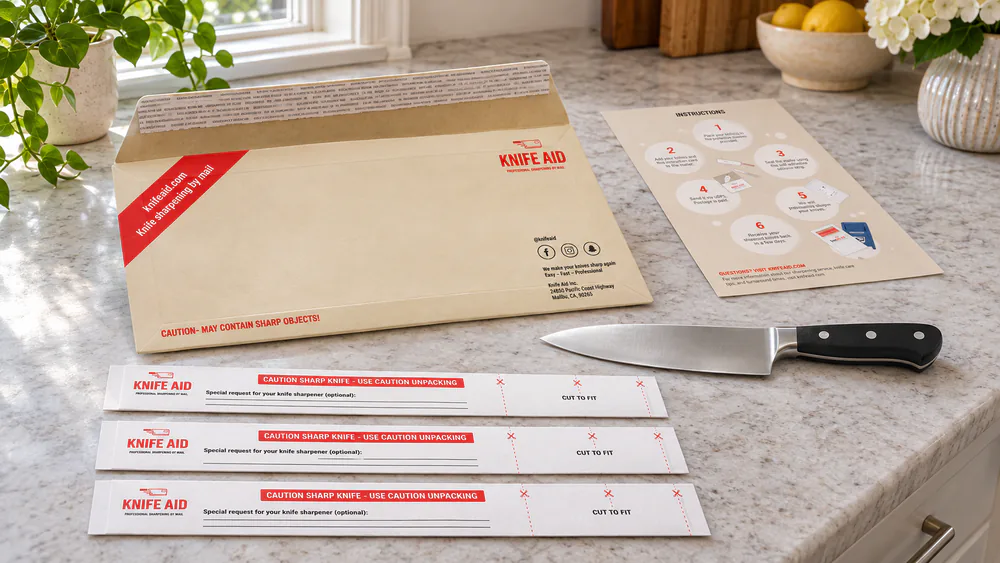
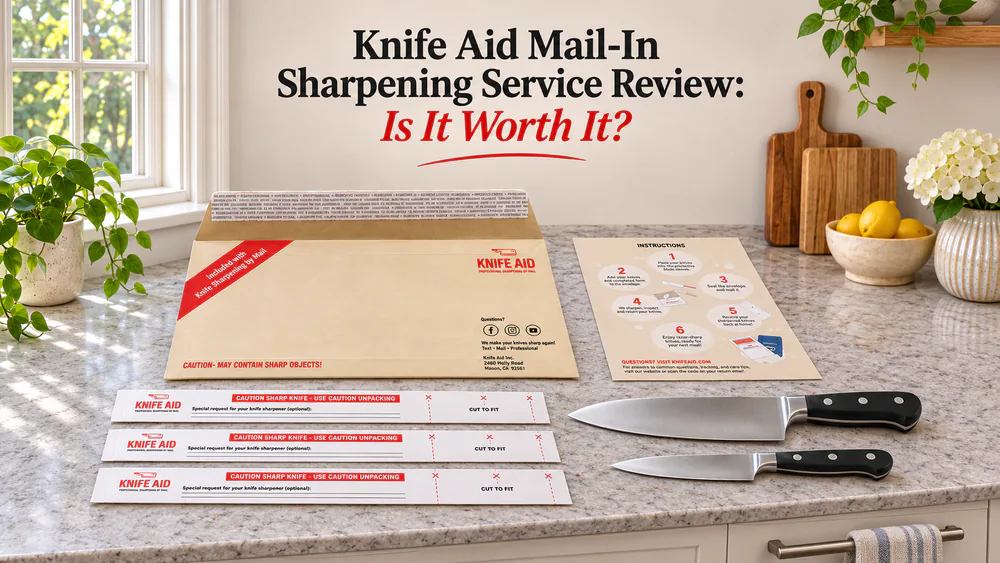
You pick a package size, and the company sends a sturdy envelope with prepaid postage, a self-adhesive cardboard guard for each knife, instructions and a box for special instructions. Packages come in sizes from four knives up to 14 knives, and blades up to 16 inches fit the envelope. Your knives travel to a facility near Los Angeles, where they are sharpened by hand-guided passes on air-cooled ceramic belts with varied grits, then deburred and polished.
Packing took about three minutes. Each blade gets a guard, the envelope goes in the mail, and there is no weighing because the postage is prepaid. Shipping is free both ways, insured and trackable. Email status updates arrived through the whole process, so the knives never felt lost.
Tip. Use the special-instructions box. You can request a sharpening angle there, and it is the place to flag anything unusual about a knife.
Expect a round trip of roughly five days to about a week, and a little longer if you live far from California. Our round trip took closer to a week, including a holiday. Send the knives before a vacation and you will barely notice the wait. Keep a spare chef's knife handy.
The cost per knife falls as the package size increases, making a full 14-knife box the most economical option. It sits in the mid-priced range: more than a skilled local sharpener charges, and far less than replacing knives. Chip and tip repair is available for a small surcharge, and ceramic knives cost extra.
| Package sizes | 4, 5, 7, 10 or 14 knives |
|---|---|
| Shipping | Free both ways, insured and trackable |
| Longest blade | 16 inches |
| Round trip | About a week, longer by location |
| Repairs | Chip and tip repair for a small surcharge |
Most of them came back very sharp. A dull boning knife cut pork belly in one pull, where its unsharpened twin needed several strokes. A santoku went through a tomato in two slices, against six for a dull chef's knife. Chicken breast skin cut without tearing, and baguettes sawed through in a stroke or two.
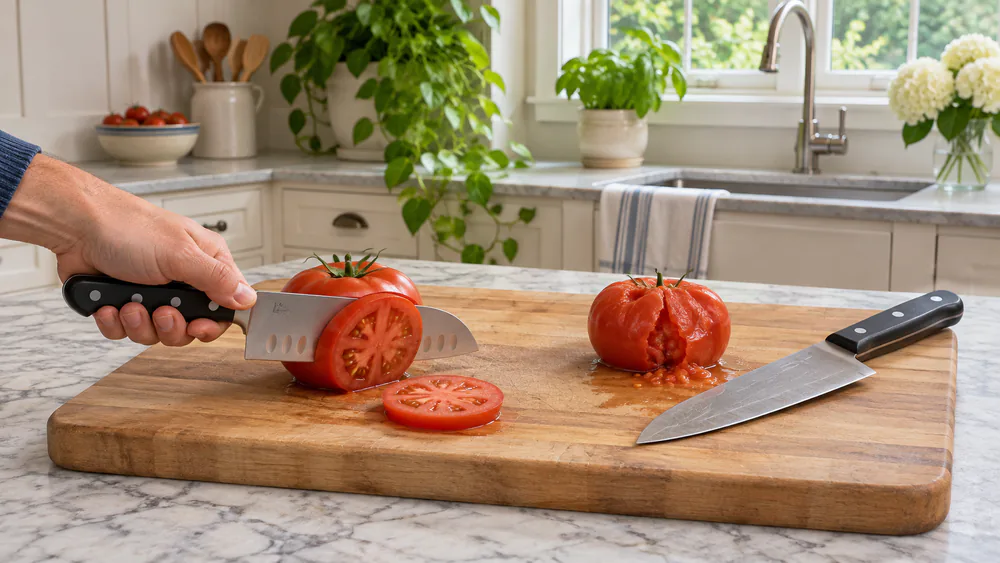
This is where the results split. The beaten-up chef's knife came back with near-zero resistance in the cut. Chips and tiny dings were ground out of a santoku and a slicer, and the original curve of the blade was preserved. Four full-bolster chef's knives told a different story. They passed the newsprint test but kept a swale near the heel, because the bolster was not ground down enough. Parsley and leeks did not cut cleanly through the last inch of the blade. Knives with hollow bolsters were worked on without a call first, and they ended up as beater knives. A phone or email check before tricky work would have helped.
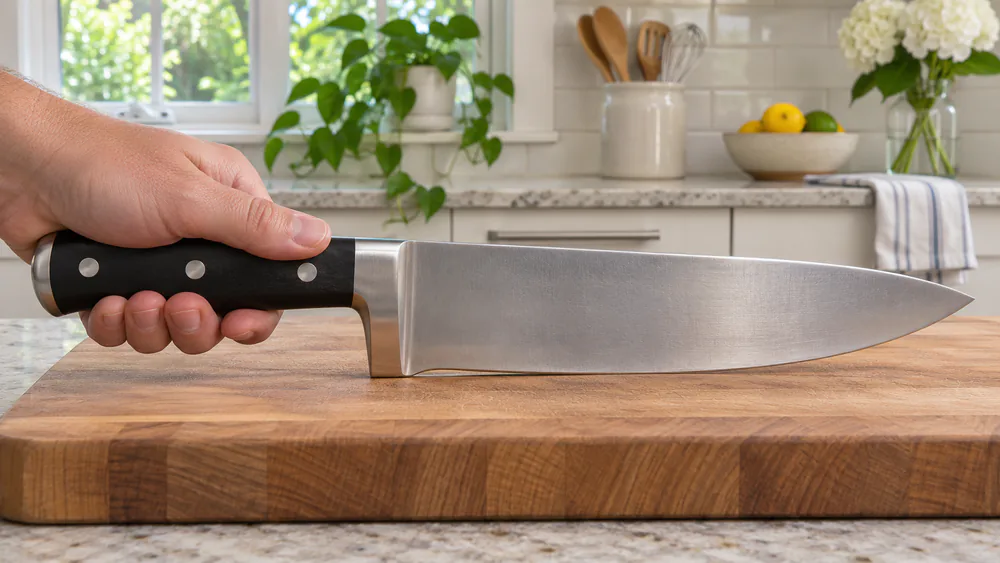
Smaller and simpler blades did best. A serrated bread knife came back like new, and shears cut better than they did out of the box. One thing to know: belt grinding removes a little more metal than stones do, so the serrations looked slightly smaller afterward and a boning knife looked slightly narrower. It cuts well, but it is not a service for knives you want to keep untouched.
Warning. Do not mail a knife you could not afford to lose. Postal insurance is unreliable, so keep collectibles and sentimental pieces at home.
Knife Aid does not accept single-bevel knives, daggers, swords, switchblades, straight razors, tweezers or anything over 16 inches. That rules out traditional Japanese yanagiba and deba knives, which need hand stones. Hollow-bolster knives are a second group to think twice about, since grinding the bolster too far exposes the hollow and makes the knife hard to resharpen later. Ask before you send one.
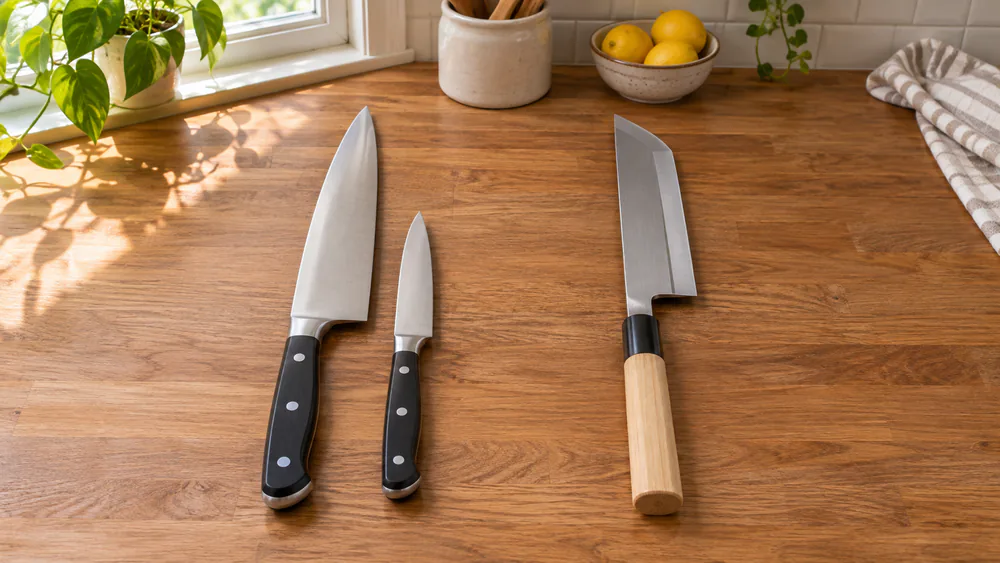
If most knives in your drawer qualify for the service, the three-minute packing job makes mail-in sharpening an easy choice.
Vivront sharpens by hand on stones at a Minnesota shop and handles Japanese and single-bevel knives, which Knife Aid does not. The Williams Sonoma mail-in kit takes about two weeks, and the in-store pull-through grinder usually declines serrated knives. A skilled local sharpener costs less per knife and can get an edge sharper, but mail-in wins on convenience.
| Option | Method | Serrated and scissors | Japanese and single-bevel | Convenience |
|---|---|---|---|---|
| Knife Aid | Hand-guided ceramic belts | Yes | Single-bevel not accepted | Prepaid kit, shipped |
| Vivront | Hand, stones for Japanese | Yes | Yes | Shipped |
| Local sharpener | Varies, often stones | Varies | Usually yes | Drop-off trip |
Sharpening at home costs nothing once you own a stone, and our best knife sharpening technique at home guide shows how.
Some cooks are better served elsewhere. If you own a single-bevel Japanese knife or a prized hollow-bolster chef's knife, use a hand sharpener and keep those at home. If a skilled local sharpener is nearby and you do not mind a drop-off trip, that route costs less per knife. For a drawer of everyday knives, support offered a free re-sharpen for the one poor result we reported, which made the risk easy to accept.
Plan on roughly five days to about a week round trip, and a few more days if you live far from California. Mailing days and holidays change the total.
Blade guards and a sturdy envelope protect the knives in transit, and shipping is insured and trackable. Postal insurance can still be slow to pay, so send only knives you could afford to lose.
Serrated knives are accepted and came back like new. Single-bevel knives are not accepted, so many traditional Japanese knives are out. Double-bevel Japanese knives are worth a question before you send them.
The company advertises a Razor Sharp Guarantee, though its terms are not visible on the home page. When we sent photos of a poor result, support apologized and offered a free re-sharpen.
Browse our tested buying guides and find the right tool for your drawer.