
Recipes
Murgh Curry Recipe: Tender Chicken in a Rich Spiced Gravy

As an Amazon Associate we earn from qualifying purchases. We may earn a commission from links on this page, at no extra cost to you. Learn more.
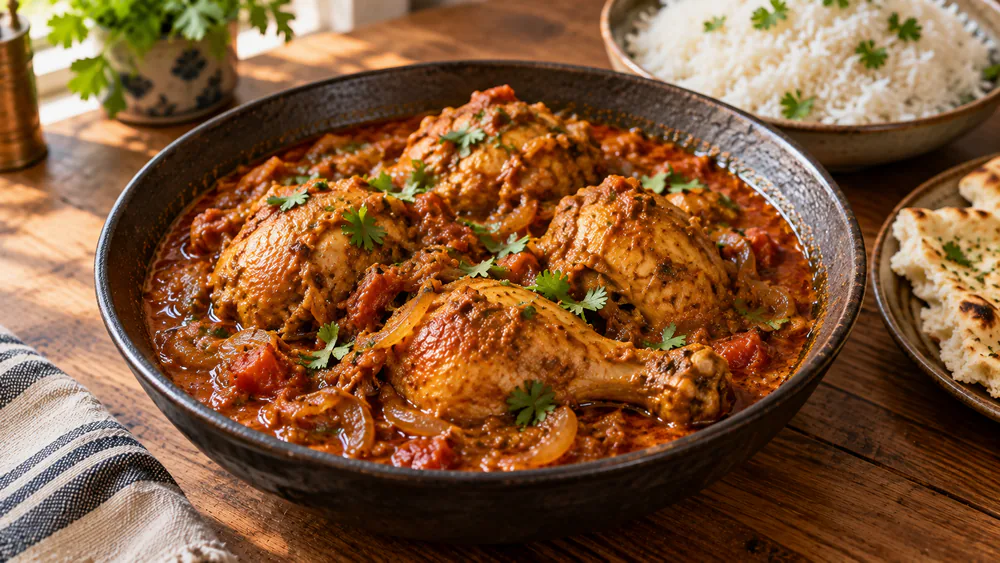
In our test kitchen, murgh curry is the dish we turn to when we want a big, comforting pot that feeds everyone and tastes even better the next day. We batch-cook for a family of five, so a recipe has to hold up to a Tuesday scramble and still deliver real depth of flavor. This one does. Tender chicken sits in a rich, spiced gravy built from onions, tomatoes, and a warm masala, and it comes together in about 45 minutes.
We have made this curry with breast, with thighs, and with bone-in pieces, and we have learned where it goes wrong and how to keep it right. Below you get the exact method we use, the swaps that actually work, and the mistakes worth avoiding.
We cooked this murgh curry eight times across about six weeks: some nights as a fast weeknight dinner for our family of five, other weekends as a bigger batch-cook session portioned into containers for the week ahead. Those make-ahead runs are how we know the flavor deepens by the next day and that the curry reheats and freezes cleanly for meal prep.
What Is Murgh Curry?
Murgh is simply the Hindi and Urdu word for chicken, so murgh kari means chicken curry. When you see murgh curry, murgh kari, or murgh masala on a menu, you are looking at the same family of North Indian home-style dishes: chicken simmered in an onion and tomato gravy loaded with warm spices. There is no single "correct" version. Each family and region tunes the heat, the fat, and the finish.
What ties them together is the technique. You build a masala base, bloom your spices, then let the chicken cook gently in that sauce until it is tender and coated. Get those steps right and the dish tastes authentic whether you use yogurt or coconut milk as the body of the sauce.
Why You'll Love This Recipe
This is a weeknight-friendly curry that still feels special. The gravy is rich without being heavy, the spice level is easy to dial up or down, and the whole thing scales cleanly when you want to cook once and eat twice.
It is also forgiving. The recipe takes swaps well: you can double the spice for more heat or stir in vegetables like zucchini or bell pepper without the sauce falling apart. That flexibility is why it earns a permanent spot in our meal-prep rotation.
Ingredients for Murgh Curry
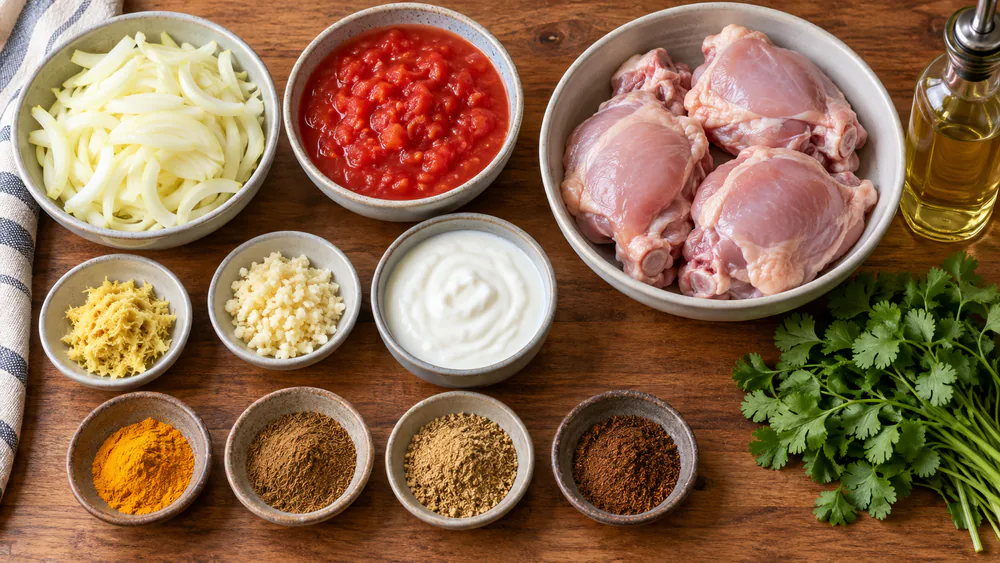
You need pantry spices, a few fresh aromatics, and your chicken. Exact spice amounts belong in the recipe card at the end, but here is what goes in and why, plus the swaps we trust.
For the Chicken and Marinade
- Chicken (about 2 lbs): Boneless breast is quick and lean, boneless thighs stay juicier, and bone-in curry cuts add the most flavor from collagen during a slower simmer. More on that choice below.
- Full-fat yogurt: A short marinade in yogurt tenderizes the meat and gives the sauce its body. Bring it to room temperature first.
- Ginger and garlic: The backbone of the marinade, grated or made into a paste.
- Lemon juice and salt: A little acid brightens everything and helps the marinade grip.
For the Curry Base
- Onions: Thinly sliced, browned slowly. This is where color and body come from, so do not rush it.
- Crushed tomatoes: The tang that balances the richness. Fresh pureed tomatoes work too.
- Cooking oil or ghee: Ghee gives a rounder, more traditional flavor; a neutral oil is fine.
- Full-fat yogurt (again) or coconut milk: Yogurt is the classic body; full-fat coconut milk makes it dairy-free and a little richer.
Spices and Aromatics
- Ground spices: Cumin, turmeric, coriander, cayenne, and curry powder do the heavy lifting.
- Garam masala: Stirred in at the very end, not the start, to keep its aroma.
- Fresh cilantro: Chopped, off the heat, as a bright green finish.
Note. Yogurt versus coconut milk is a real fork in the road, not a shortcut. Yogurt gives the tangy, traditional gravy; full-fat coconut milk makes a dairy-free, slightly sweeter, richer sauce. Both are considered authentic, so pick by the meal you want.
Equipment You'll Need
You do not need special gear, just a few reliable pieces. A heavy-bottomed pan or a Dutch oven holds heat evenly, which matters when you are browning onions and simmering chicken. A sharp knife makes quick work of the onions and the ginger-garlic prep, and a wooden spoon lets you scrape the fond off the bottom without scratching the pan.
If you want a faster route on a busy night, a pressure cooker can shorten the simmer considerably. We still prefer the Dutch oven when we have the time, because the open simmer concentrates the sauce.
How to Make Murgh Curry (Step-by-Step)
Here is the exact sequence we follow: marinate, brown the aromatics, build the tomato masala, bloom the spices, simmer the chicken, and finish. Read it through once before you start so the fast steps do not catch you off guard. Start to finish, the weeknight version takes about 45 minutes, with roughly 20 minutes of prep and 40 minutes of cooking if you let it simmer long.
Step 1: Marinate the Chicken
Cut your chicken into even pieces so it cooks at the same rate. Toss it with room-temperature yogurt, the ginger-garlic paste, lemon juice, and salt, then let it sit while you prep everything else. Even 20 minutes makes a difference in tenderness. If you have time, an hour in the fridge is better, just bring it back toward room temperature before it hits the pan.
Step 2: Brown the Onions and Aromatics
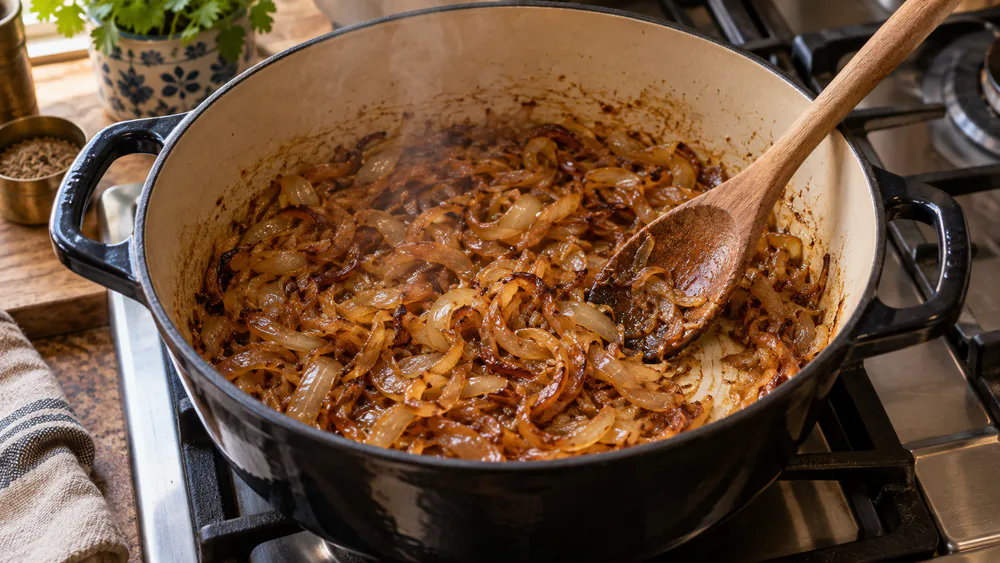
This is the step that decides your sauce. Heat your oil or ghee, add the sliced onions, and let them go golden brown over medium heat for roughly 9-12 minutes without over-stirring. Rushing the onions leaves the masala pale and thin. Taking the full browning time is what gives the sauce its color, its body, and its depth of flavor. Onion, ginger, and garlic are the holy trinity here, so add the aromatics once the onions are well on their way.
Step 3: Build the Tomato Masala Base
Add the crushed tomatoes and let them cook down until the oil starts to separate at the edges of the pan. That visual cue tells you the raw tomato taste has cooked off and the base is ready. Stir now and then, scraping up anything stuck to the bottom, because that fond is pure flavor.
Step 4: Bloom the Spices
Push the base to make a little room, add your ground spices to the hot fat, and stir for about 1 minute until they smell deeply fragrant, before you add any liquid. Blooming ground spices in hot fat wakes them up and spreads their flavor through the whole dish. Keep the garam masala aside for now; it goes in later.
Tip. Blooming spices takes only about a minute, but it is the difference between a flat curry and a fragrant one. If the pan looks dry, add a spoonful of oil so the spices sizzle instead of scorch.
Step 5: Simmer the Chicken
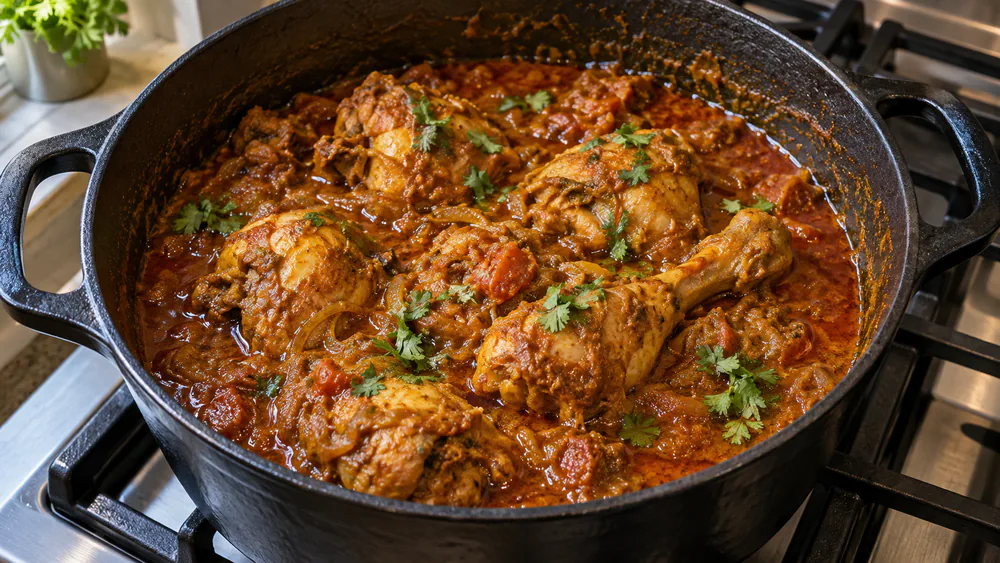
Add the marinated chicken and stir to coat every piece in the masala. Pour in enough water or stock to reach the consistency you want, then bring it to a gentle simmer. If you are using yogurt for the body of the sauce, this is the moment to be careful (see the next step). Let boneless pieces cook until just done; bone-in pieces need longer but reward you with more flavor. Chicken is safely cooked at 165 F internal temperature, so pull breast pieces as soon as they reach it.
Warning. Boneless breast overcooks and turns dry fast in a simmering curry. The reliable fix is to pull it right at 165 F, or switch to thighs, which stay juicy even if the pot sits a few extra minutes.
Step 6: Final Touches and Garnish
Now bring the sauce home. If you are finishing with yogurt, take the pot off high heat, make sure the yogurt is at room temperature, and stir it in gradually. Adding cold yogurt straight to a hot pan makes the sauce split into grainy curds, so this gentle approach keeps the gravy smooth. Stir in the garam masala at the very end, because adding it early cooks off its aroma. Taste for salt, scatter chopped cilantro over the top, and it is ready.
Expert Tips for the Best Murgh Curry
A few habits separate a good pot from a great one. Brown the onions fully; it is the single biggest lever on flavor. Keep your yogurt at room temperature and stir it in off the heat. Save the garam masala for the end so its aroma survives.
If your gravy comes out thin, do not just boil it down and risk overcooking the chicken. Letting a potato break down into the sauce, or stirring in a spoonful of instant potato, thickens it without diluting the flavor. It is a quiet trick that has saved more than one of our batches.
Brown the onions like you mean it. Everything good about this curry, its color, its body, its depth of flavor, starts in that pan.
Common Mistakes to Avoid
The most common miss is impatience with the onions. Pale onions make a pale, thin masala, and no amount of spice fixes it later. Give them the full browning time.
The second is curdled yogurt. Cold yogurt hitting a boiling pot splits every time, leaving grainy curds instead of a silky sauce. Bring it to room temperature and add it gradually with the heat down.
The third is dry chicken. Breast meat goes from tender to stringy in minutes once it passes doneness, so watch your temperature or lean on thighs. And do not dump garam masala in early; its aroma is delicate and cooks right off.
Variations (Restaurant-Style, Dairy-Free, Pressure Cooker)
Restaurant-style: For a sauce that tastes closer to what you get out, reach for bone-in curry cuts. They release collagen and juices during the simmer and taste noticeably richer than boneless breast. A little extra ghee and a splash of cream at the end push it further.
Dairy-free: Swap the yogurt for full-fat coconut milk. It makes a dairy-free, slightly richer sauce. Coconut cream is thicker still and can be diluted with a little water to the consistency you want.
Pressure cooker: Do your onion browning and spice blooming on the saute setting, then pressure-cook the chicken briefly for a fast weeknight version. Finish with garam masala and cilantro as usual once the pressure releases.
Add vegetables: The sauce is sturdy, so you can stir in zucchini or bell pepper, or double the spice for more heat, without it falling apart.
Serving Suggestions
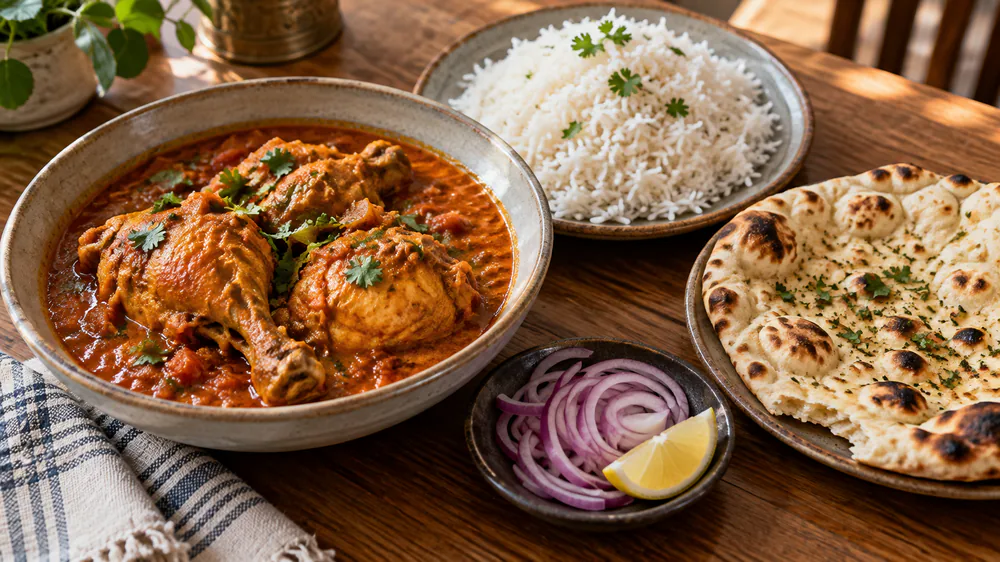
Murgh curry wants something to catch the gravy. Steamed basmati rice is the easy default, and it lets the sauce shine. Warm naan or roti turns dinner into the kind of meal you eat with your hands, scooping up chicken and sauce together.
Round out the plate with a cooling side: a simple cucumber raita, sliced red onion with lemon, or a crisp salad tames the heat. For a bigger spread, add a lentil dal and you have a full Indian dinner without much extra work.
Storage, Reheating & Make-Ahead Tips
This is a strong make-ahead dish. The curry tastes better the next day after the spices meld overnight, which is exactly why it lives in our batch-cook rotation. Cook it on Sunday and the Monday portion is even better.
Stored in an airtight container, it keeps refrigerated for up to 4 days. To freeze, cool it to room temperature before portioning, then freeze for up to 3 months. Reheat gently on the stovetop over low heat, adding a splash of water if the sauce has thickened in the fridge. Avoid a hard boil on reheat, especially with a yogurt-based sauce, so it stays smooth.
Tip. Portion the cooled curry into single-serving containers before it goes in the fridge or freezer. It reheats faster, thaws evenly, and makes grabbing a weekday lunch effortless.
Nutrition Overview
Murgh curry is a protein-forward main, and its numbers swing widely with the base you choose. A yogurt-and-breast version is comparatively lean, while a coconut-milk build runs considerably richer and higher in calories per serving. Published murgh and chicken-curry recipes land anywhere from roughly 340 to 920 calories per serving, with protein around 20 to 46 grams, depending on the cut, how much oil you use, and whether the base is yogurt or coconut milk. Because that spread is so wide, no single figure fits every build, so read the exact calories and macros off your own finalized recipe card once you settle on the cut and base.
To keep it lighter, use yogurt rather than coconut milk, lean on boneless breast or trimmed thighs, and go easy on added ghee and cream. To make it more indulgent, the coconut-milk restaurant-style route is the way. Either way, serving it with rice and vegetables makes it a balanced plate.
Frequently Asked Questions
Should I use chicken thighs or breast for murgh curry?
Both work. Boneless breast is quick and lean but dries out fast, so pull it right at 165 F. Boneless thighs stay juicier and are more forgiving, and bone-in curry cuts add the most flavor of all during a longer simmer. Choose by your priority: speed favors breast, while juiciness and flavor favor thighs or bone-in.
What does murgh mean, and how is it different from murgh masala?
Murgh is the Hindi and Urdu word for chicken, so murgh kari means chicken curry. Murgh masala is essentially the same style of dish, a chicken curry in a spiced onion-tomato gravy. The names overlap far more than they differ.
Can I make murgh curry ahead or freeze it?
Yes, and it is one of the best things about this recipe. The flavor improves overnight, it keeps in the fridge for up to 4 days, and it freezes well for up to 3 months. Cool it to room temperature before portioning, then reheat gently so the sauce stays smooth.
How do I make it milder or spicier?
For a milder curry, cut back the cayenne and use full-fat yogurt or coconut milk to round off the heat. For a spicier one, double the ground chili or add fresh green chilies with the aromatics. The sauce handles the extra spice without falling apart.
Can I use coconut milk instead of yogurt?
Absolutely. Full-fat coconut milk makes a dairy-free, slightly richer sauce and is a great swap for anyone avoiding dairy. Add it in place of the yogurt and skip the off-the-heat tempering step, since coconut milk will not curdle.
What should I serve with murgh curry?
Steamed basmati rice or warm naan are the classics, one for soaking up gravy and one for scooping. Add a cooling raita, sliced onions, or a simple salad to balance the spice.
Read next
Ready to upgrade your kitchen?
Get more tested recipes and honest gear picks that make weeknight cooking easier.