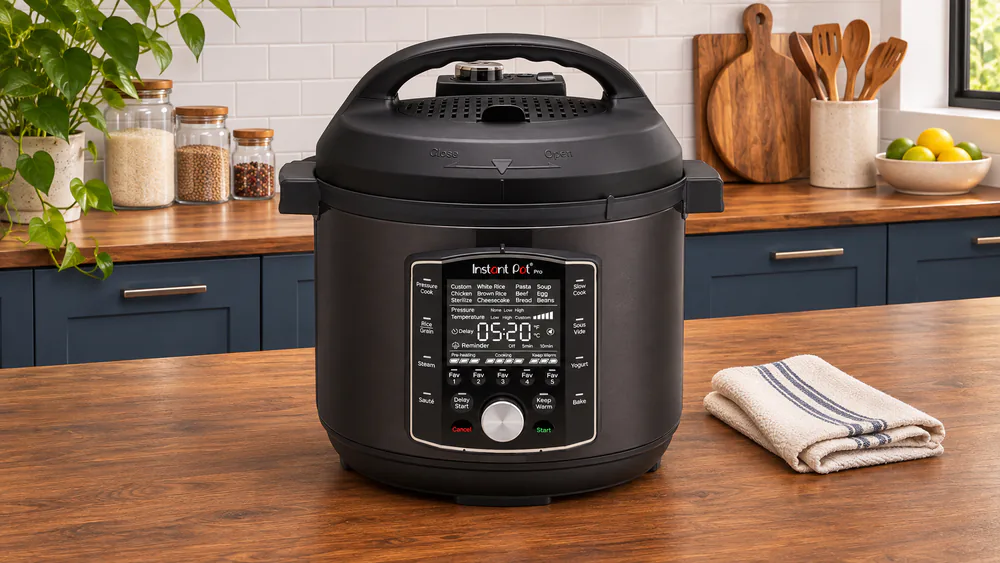
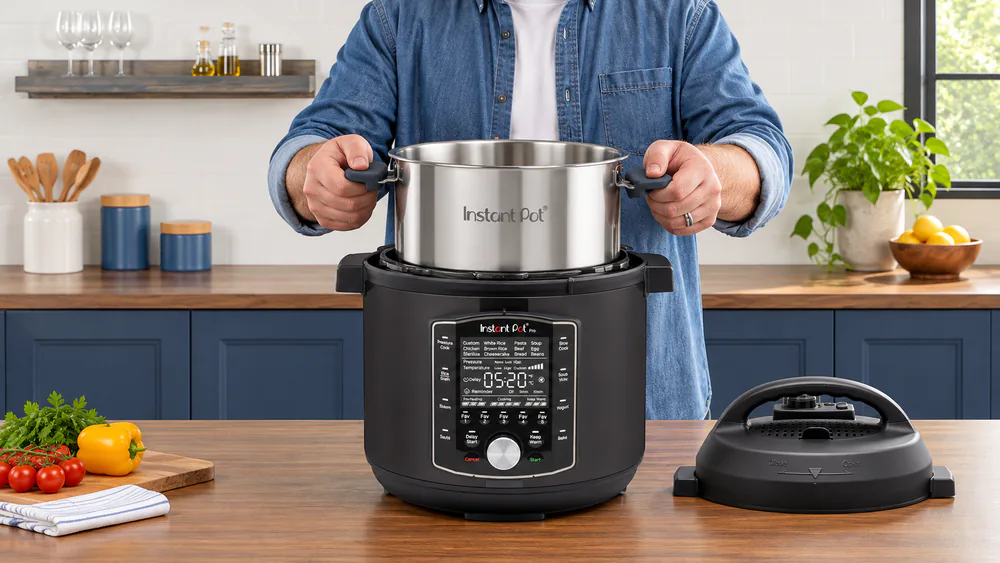
The Instant Pot Pro is the model we would buy again. The handled stainless pot stays put while we stir and lifts out far more easily than a handleless insert. It sears well, and pressure cooking makes meat easy to shred.
Helping you create a kitchen you love.

Kitchen Appliances

As an Amazon Associate we earn from qualifying purchases. We may earn a commission from links on this page, at no extra cost to you. Learn more.
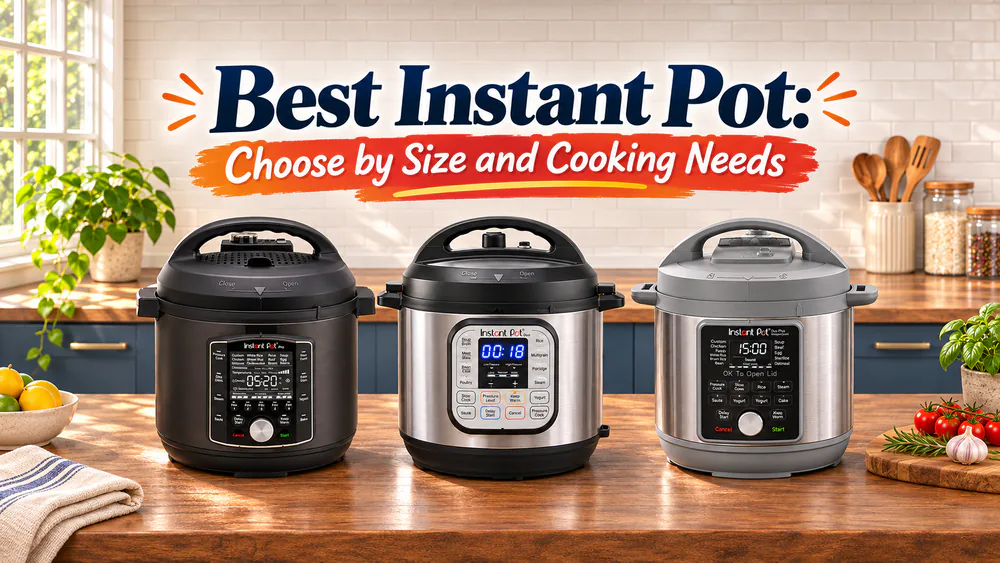
An Instant Pot is an electric multi-cooker that pressure cooks, slow cooks, sautes, steams and makes rice in a single stainless steel pot. Every model here carries the same brand name, so the real decision is about size, how the pot handles when you stir and lift it, and whether the controls and steam release suit the way you cook.
We compared six current US models across the full range of pressure cookers, from a compact four-quart cooker to a wide 7.5-quart batch machine and a Wi-Fi smart model. Each one earns its place for a specific kind of kitchen.
Six picks cover nearly every kitchen, and the table below shows how they differ at a glance. None of the six is an air-fryer combination.
| Model | Best fit | Capacity | Distinguishing control | Main trade-off |
|---|---|---|---|---|
| Instant Pot Pro 6-Quart | Best overall | 6-quart | 28 programs and 5 favorite settings | More controls to learn; saute heat needs attention |
| Instant Pot Duo 6-Quart | Best budget | 6-quart | 13 programs; high and low pressure | Unanchored pot; fewer convenience features |
| Instant Pot Duo Plus WhisperQuiet 6-Quart | Best for beginners | 6-quart | 25 presets with guided messages | No inner-pot lifting handles; bulky for storage |
| Instant Pot RIO Mini 4-Quart | Best small | 4-quart | Simple progress lights; short body | Smaller batches; no quiet-release diffuser or pot handles |
| Instant Pot RIO Wide 7.5-Quart | Best for large batches | 7.5-quart | 13 programs; broad searing area | Large counter footprint; no inner-pot lifting handles |
| Instant Pot Pro Plus Wi-Fi 6-Quart | Best smart | 6-quart | App monitoring and steam-release control | Pairing and interface learning; value depends on app use |
We approached the question the way a home cook does: which of these would we still enjoy using in a year? We compared how easily each pot lifts, how steady it stays during stirring, and how clearly its controls read. We also assessed steam release, usable browning space and cleanup.
The picks below follow that order of priorities. Performance comes first, then handling and cleanup, then how well a model suits a particular kitchen.
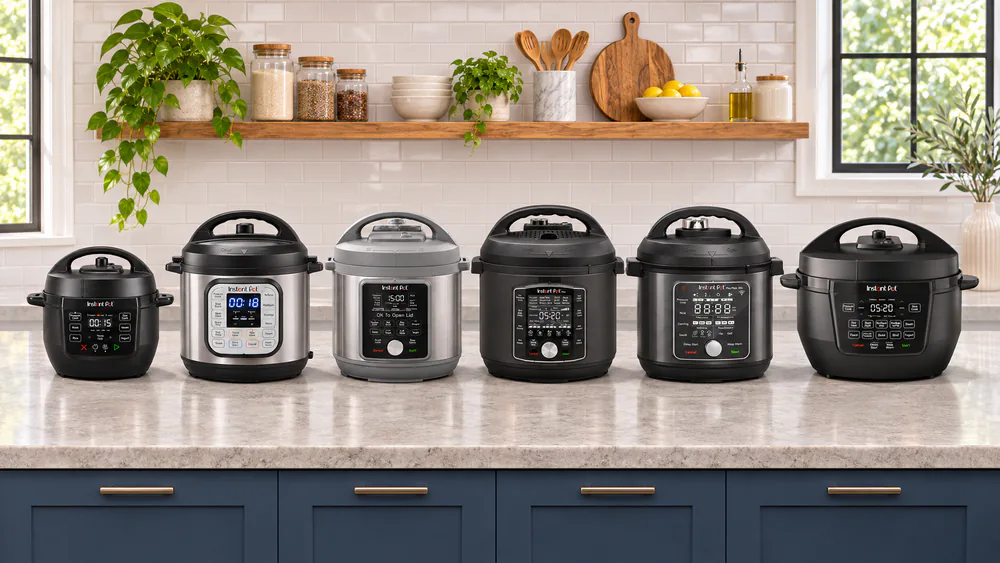
We limited the list to current US versions with distinct jobs. The Pro, Duo, Duo Plus WhisperQuiet, RIO Mini, RIO Wide and Pro Plus all have a clear place, and we did not manufacture a seventh pick to pad the list. Specifications come from the manufacturer's own product pages and manuals, and we use rounded figures where published numbers disagree.
We also kept the exact version in mind throughout. The beginner pick is the WhisperQuiet Duo Plus, not the older Duo Plus. The small pick is the stainless steel RIO Mini, and the large-batch pick is the RIO Wide, not the RIO Wide Plus.
We placed each model in a value tier (budget, mid-priced, premium or splurge) and asked whether the extra features justified the step up. We deliberately leave dollar amounts out because retail offers move constantly, so check the buy button for the current offer. Usability meant lifting the pot, reading the display, finding the start button, releasing steam and washing up.
We left out the ceramic-coated Chef Series, the RIO Wide Plus and the Pro Max, because each differs from the exact versions we cover and we did not want to blur the specs. We also skipped air-fryer combination lids, which we discuss in the buying guide below. If you want to see everything the brand makes in one place, every Instant Pot we cover sits on one page.
The Instant Pot Pro is the model we would buy again. The handled stainless pot stays put while we stir and lifts out far more easily than a handleless insert. It sears well, and pressure cooking makes meat easy to shred.
We pressure cooked a 6-quart load of meat meant for leftovers, and it shredded easily with a fork. That is the weeknight job the Pro is sized for. When we seared first, we started the saute on a lower heat and adjusted from there, because it can run hot enough to catch vegetables on the bottom.
Cleanup was mostly painless, since stuck-on food released readily. Starchy short-grain rice was the exception, clinging to the stainless base and taking extra scrubbing. Stainless also means there is no cooking-surface coating to wear out the way a nonstick pot eventually does.
| Capacity | 6-quart |
|---|---|
| Power | 1200W |
| Dimensions | 13.0 x 12.7 x 12.8 inches (L x W x H) |
| Weight | About 13 pounds |
| Warranty | 1-year limited |
| Functions | Pressure cook, slow cook, sous vide, saute, sterilize, yogurt, rice, bake, steam, keep warm |
Buy the Pro if you cook family meals several times a week and want its gentle steam release and wide choice of programs. Skip it if you mostly want a slow cooker. We found that the slow-cook mode can sit in preheat without delivering the result you expect, so do not assume it replaces a familiar slow cooker without checking the recipe and program. Cleaning around the silicone lid components also takes more effort than washing the insert, and strong spice odors can linger.
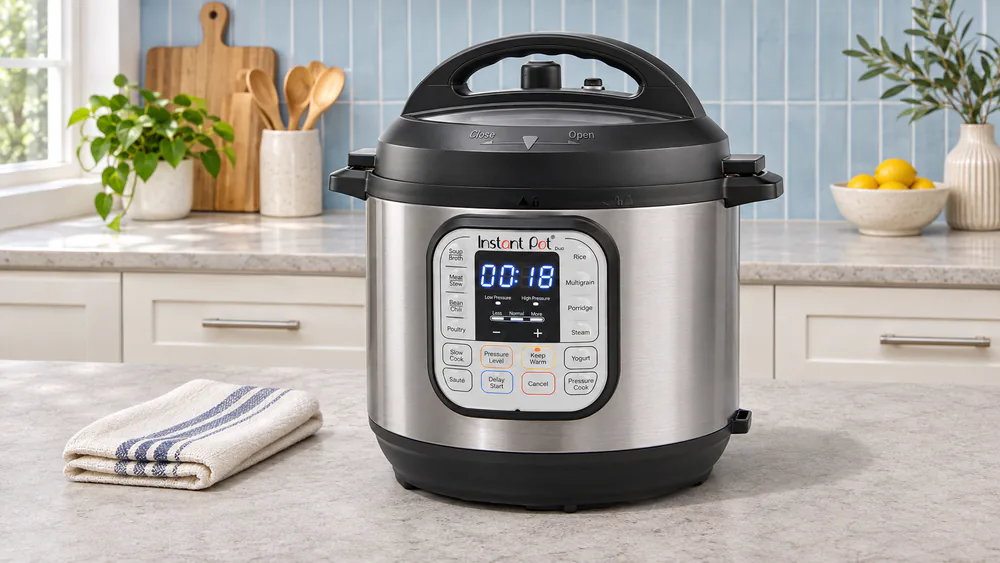
Where the Pro asks you to learn more controls, the Duo is the one to buy if you want the classic Instant Pot experience without paying for extras. The controls are straightforward, the removable stainless pot is easy to wash, and beans, meat and starchy vegetables suit its pressure-cooking workflow and finish tender.
The Duo covers the essentials: pressure cook, slow cook, saute, steam, rice, yogurt and keep warm, across 13 programs with high and low pressure. It runs on 1000W, measures 13.4 x 12.2 x 12.5 inches, and carries a 1-year limited warranty like the rest of the line.
When we cooked rice in it, the grains came out tender without turning mushy, but we had to wait through a substantial natural pressure release before we could open the lid. That wait is the trade for the simplicity, since you give up the guided messages. For most people who want to try pressure cooking, that trade is a good one.
If you plan to saute a lot, step up to the Pro or the RIO Wide, which sear far better. Cooks who make savory dishes often keep a spare sealing ring on hand, so the curry never meets the dessert.
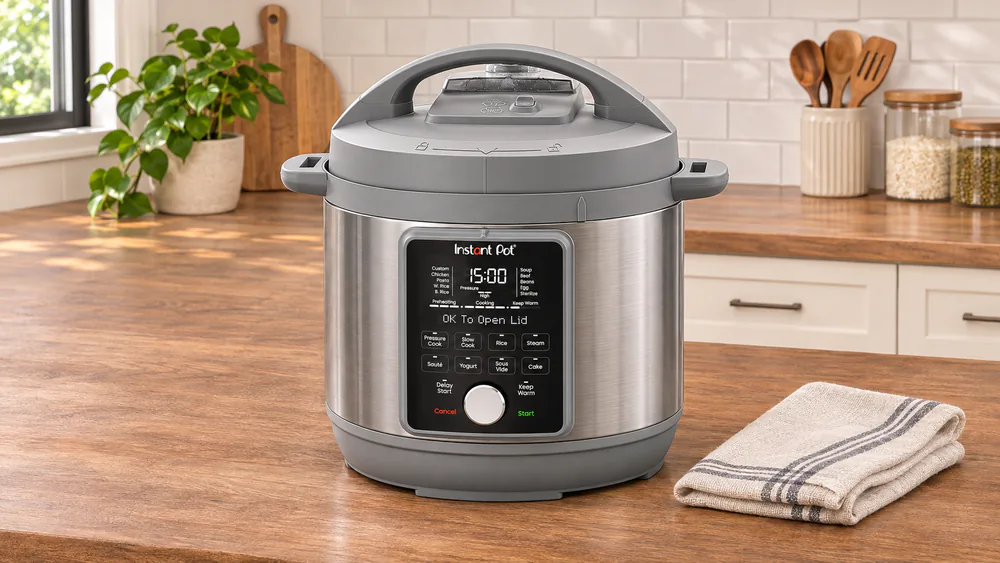
Next to the Duo's bare-bones panel, the Duo Plus WhisperQuiet is the friendlier start for a new cook. Guided messages and a readable screen make the cooking stages easier to follow, and the dial is pleasant to adjust.
This model has 25 presets with guided messages and an angled display with a progress bar, so you always know whether the pot is preheating, cooking or warming. The dark start button is easy to overlook the first time, but once you find it the interface is the least intimidating on this list.
Venting is quieter than on the Duo, but it is not silent. The separate steam-release button and diffuser also keep the plume from shooting straight up. Sauteing onions and then pressure cooking soup in the same pot cuts down on separate cookware, which is exactly what a new user wants. It runs on 1000W and measures 13.43 x 13.35 x 12.76 inches.
Rice presets still need recipe adjustment here, because too much water can give soft, mushy results. If storage is tight, the RIO Mini is easier to live with, and if you want a handled pot, the Pro is the better step.
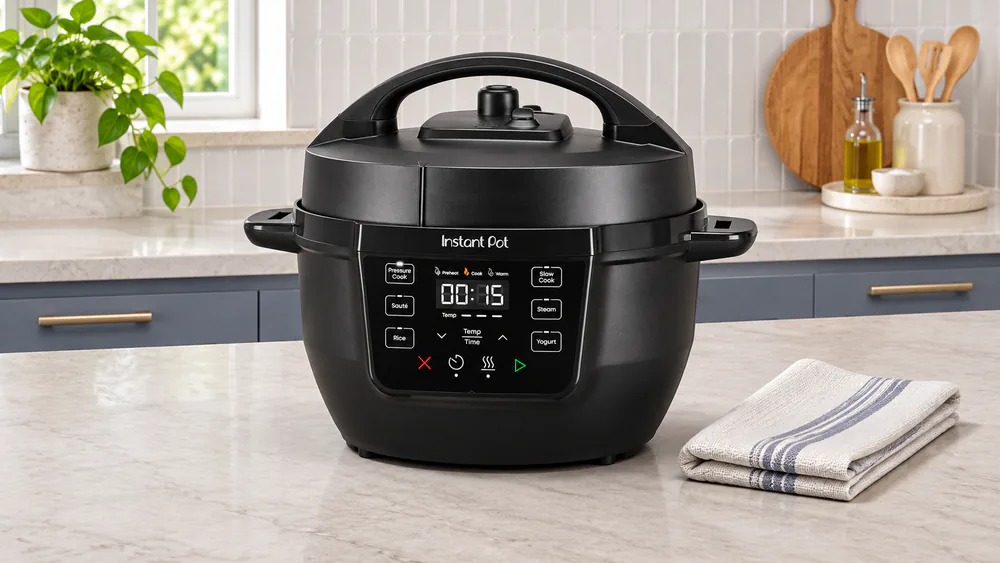
The RIO Mini cannot feed a crowd, and it will not vent quietly the way the WhisperQuiet does, but it is still the sweet spot for small kitchens. The short body is easier to store and the controls are easy to navigate.
The RIO Mini holds 4-quart, draws 800W and measures 12.52 x 13.82 x 10.08 inches, with a stainless steel anti-spin pot, a steam rack and a dishwasher-safe lid and pot. It fits under standard cabinets, and the nearly 14-inch figure is exterior width, not the inner-pot diameter.
We put it to work on chickpeas and a squash. The chickpeas turned soft enough for smooth hummus, and the slow-cooked squash was easy to mash. Preheating added noticeable time before either job began.
If you regularly feed three or more people, or like leftovers, step up to a 6-quart model. Otherwise, brown in small batches, since ingredients slide across the smooth base.
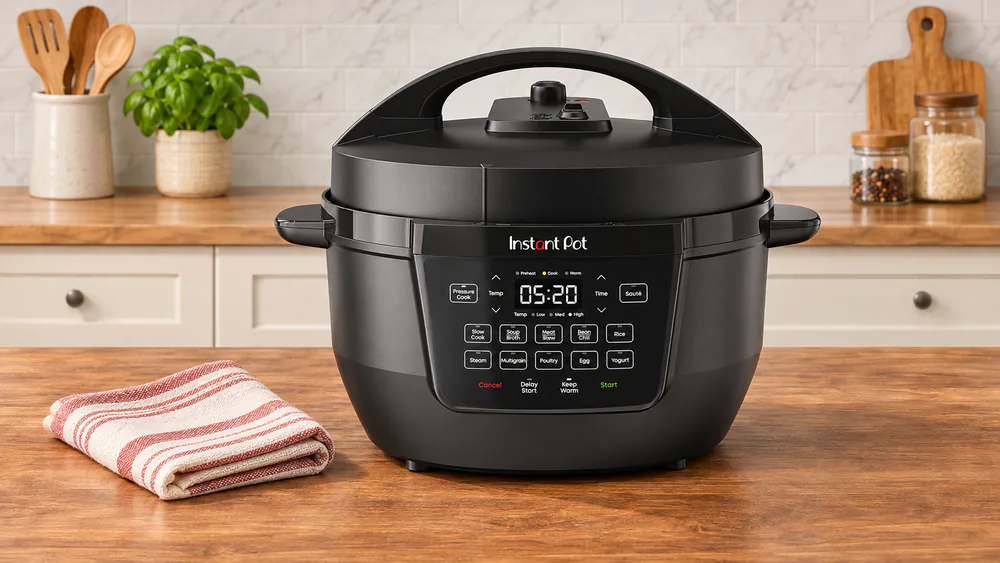
Where the Mini is built for one or two, the RIO Wide is built for crowds. When we browned onions and sausage, they colored evenly across the broad surface without crowding, and the stew we built on top of them developed tender meat and a flavorful broth.
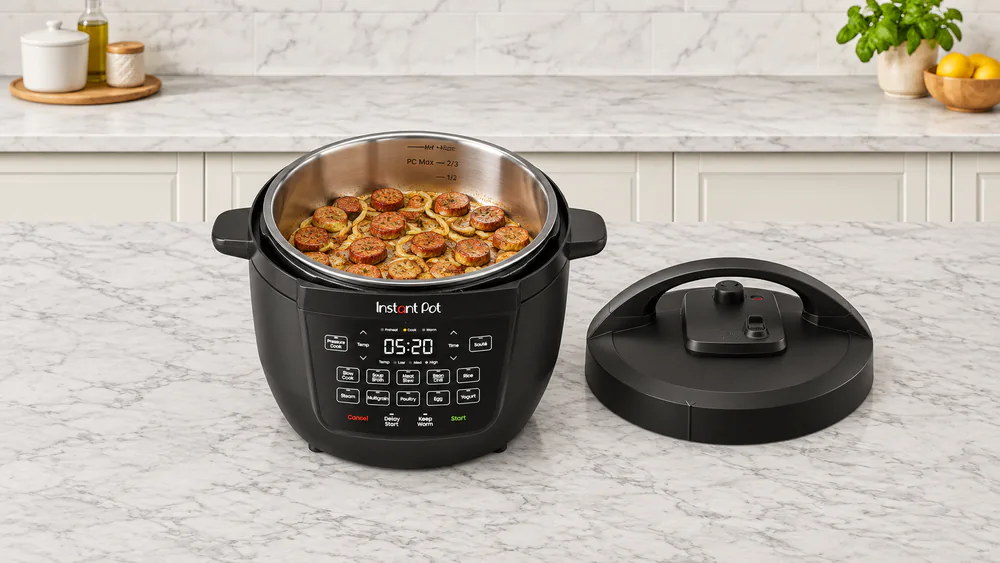
| Capacity | 7.5-quart |
|---|---|
| Pot | Wide tri-ply anti-spin stainless |
| Max pressure-cooking fill | 2/3 line (1/2 line for rice and dried vegetables) |
| Counter footprint | Body roughly 16 inches wide; published dimensions vary |
This is a large machine, so check the exact model measurements before you buy. Instead of stacking ingredients in a tall column, you spread them across a broad surface, so searing works more like a Dutch oven than a deep pot. Choose it only if you regularly cook for a crowd. The plastic shell feels less substantial than the Pro body, but that impression is not evidence of a failure.
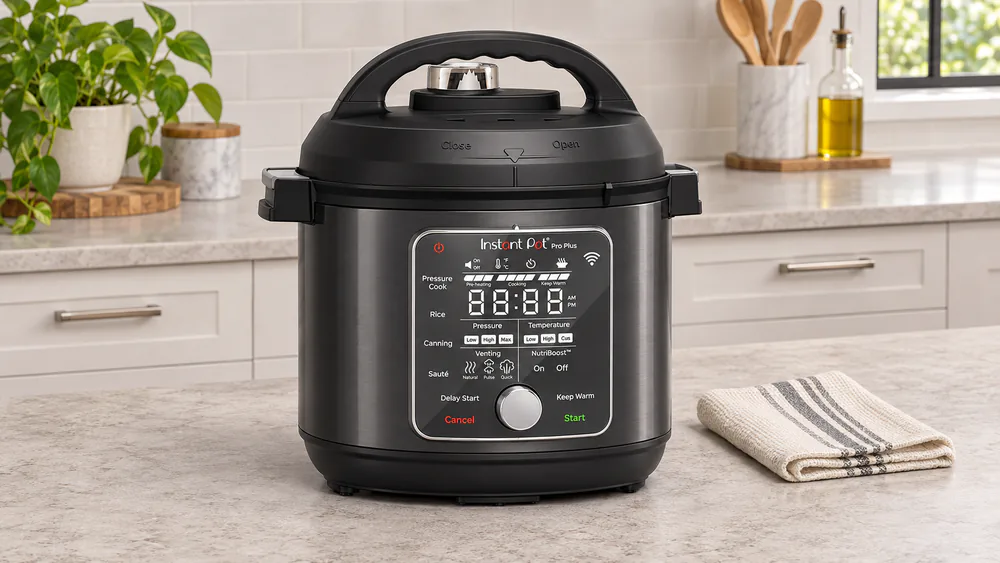
Unlike the RIO Wide, which wins on sheer volume, the Pro Plus is the splurge for people who will actually use the app. We pressure cooked beef in it and the meat came out tender and evenly cooked.
The Pro Plus pairs a touchscreen with Wi-Fi and the Instant Connect app, which gives you guided cooking, monitoring from another room and programmed or app-controlled steam release. It measures 13.2 x 13.0 x 12.7 inches and has a 6-quart pot with an aluminum core, plus extra sealing ring and steam rack. The extra functions include sous vide and NutriBoost.
Results are good rather than transformative. After the beef we ran dried beans, which softened successfully, and rice released cleanly from the pot. The extra spend buys convenience, not better cooking.
Choose it if you like to start a pot from the couch, follow guided recipes or release steam on a schedule. If you only pressure cook from the front panel, the Pro gives you the handled pot and most of the cooking quality for less.
Match the pot to the people you feed. A 4-quart cooker suits one or two people, 6-quart is the sweet spot for most households, and 7.5-quart is for batch cooking and crowds. Nominal quarts are not usable volume, though. For pressure cooking, fill only to the 2/3 line, and keep expanding foods such as rice and dried vegetables below the 1/2 line. We do not promise a servings count, because ingredients expand and portions vary.
Instant Pot names can be confusing because similar-sounding models are quite different. The Duo is the classic budget cooker, the Duo Plus adds a better display and a diffuser, and the RIO line is a simpler, lower-footprint family. For a closer comparison, read our guide to Instant Pot Duo vs Duo Plus. Always match the exact name and capacity when buying accessories, since a pot or ring for one family may not fit another.
Most cooks use pressure cooking, saute and slow cook, with rice and steam close behind. Sous vide, yogurt, cake and sterilize modes sound impressive but are rarely a deciding factor. The Pro's sous vide mode is less dependable than a dedicated immersion circulator, so we would not buy any model for that alone. A canning-labelled program on some models is not a recommendation for home preservation, and we do not advise using any of these cookers that way.
Three details shape daily comfort: how steam leaves the cooker, how the controls read, and how the pot behaves in your hands. Diffused release, as on the Pro and the Duo Plus WhisperQuiet, is gentler and quieter than the front release on the RIO Mini. Follow the recipe and your manual for the release method, and never quick-release thick, oily, starchy or expanding foods, or put your hands or face over the vent.
Warning. Pressure cookers release hot steam. Keep your hands and face clear of the vent, and use natural release for thick, starchy or foamy foods unless the recipe says otherwise.
A handled, anti-spin pot is a real quality-of-life upgrade, because the pot stays put while you stir and is simpler to lift when it is hot and full.
Every pick here has a dishwasher-safe lid and inner pot. Wipe the electrical base with a barely damp cloth and let all parts dry before storage. Replace a stretched, deformed or damaged sealing ring promptly, and inspect it before every cook. Because routine intervals differ, follow the model manual. The official accessory catalogue includes sealing rings, glass lids and replacement stainless steel pots, but match the exact cooker family and capacity first, and check availability for your specific model before you rely on a spare.
The right Instant Pot is the one whose pot you can lift, whose controls you will actually read, and which fits in your cupboard.
None of the six picks here air fries, and that is deliberate. Extra lids and baskets require cupboard space, and changing cooking modes adds handling steps. If you already own an air fryer, a combination unit rarely pays its way. If counter space is the real problem, it is worth a look, but it is a different purchase from a pressure cooker.
Start with how many people you feed. One or two cooks with a tight cupboard are well served by a 4-quart model, most households land on 6-quart, and only a regular crowd justifies 7.5-quart. Within the 6-quart tier, the clearest reason to move from the Duo to the Pro is the saved favorite settings: if you repeat the same few recipes weekly, five stored programs save real fiddling. If you are torn between the two, read Instant Pot Pro vs Duo.
Yes, if you cook often. The Pro adds a handled pot that does not spin while you stir, a gentler steam-release switch and 28 programs with 5 favorite settings. If you only pressure cook occasionally, the Duo does the core job. We compare them in detail in Instant Pot Pro vs Duo.
The Duo is the classic, simple cooker. The Duo Plus WhisperQuiet adds guided messages, a clearer display and a diffuser for quieter venting. The RIO models are the Mini for small kitchens and the Wide for large batches. See Instant Pot Duo vs Duo Plus for the head-to-head.
Often, but check first. Slow-cook mode on the Pro can sit in preheat without delivering the expected result, so follow the recipe and your model's program. Pressure cooking is far faster for stews and beans. Our Instant Pot vs slow cooker comparison goes deeper.
A spare sealing ring is the most useful, especially if you cook curry or other strong dishes. A glass lid helps with slow cooking, and a steam rack is already included with most models. Match the exact cooker family and capacity before ordering anything.
Explore more buying guides to find the right tools for the way you cook.