As an Amazon Associate we earn from qualifying purchases. We may earn a commission from links on this page, at no extra cost to you. Learn more.
We judge a Japanese knife on three things: how sharp it is out of the box, how willingly the steel returns to a fine edge on a whetstone, and how much care it asks for week to week.
Masamoto gyuto knives range from forgiving stainless steel to hand-forged carbon, with different care needs. A gyuto is a double-bevel Japanese chef knife designed for the same jobs as a Western chef knife. This guide ranks seven of them by series and size so you can match the steel to the way you cook.
Here is how we score a gyuto. The benchmark jobs are ordinary home prep: tomatoes, onions, squash, a ribeye, shallots and garlic. We consider the pressure these tasks should require and how food moves against the blade, alongside the published steel, hardness and handle specifications.
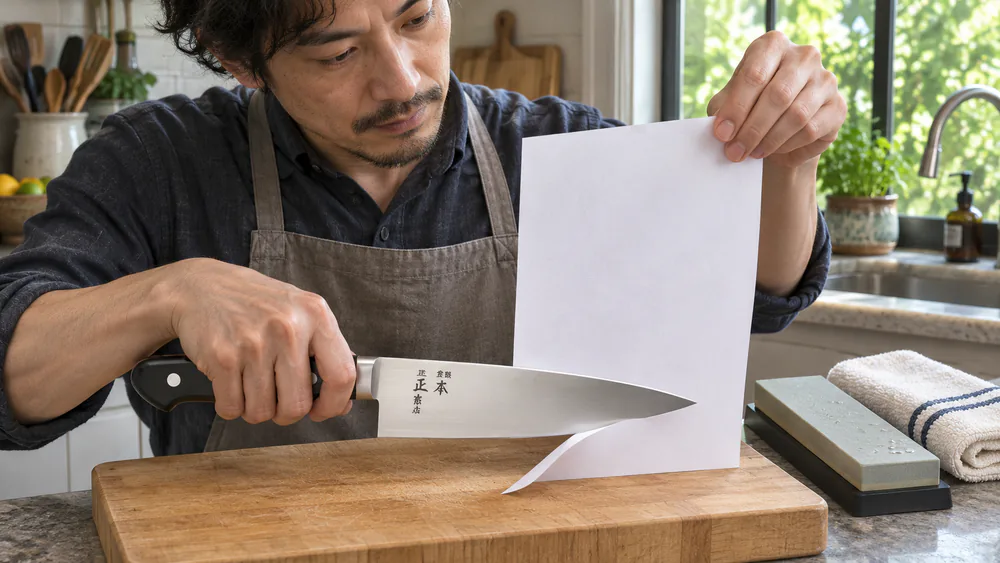
The whetstone question matters most. A steel that returns to a fine edge in a ten-minute session is one you will keep sharp, while one that fights the stone gets dull and stays dull. The VG 210mm, AT, KS, VG 180mm and CT reviews include hands-on notes; the VG 240mm and HC reviews rely mainly on specifications.
Each knife is scored on sharpness out of the box, how well the edge lasts, balance, and how much upkeep it asks for. Gyuto knives are the focus here, so single-bevel Masamoto blades like the yanagiba and deba stay out of this ranking. If you are curious about the wider category, our Japanese knife reviews cover other makers.
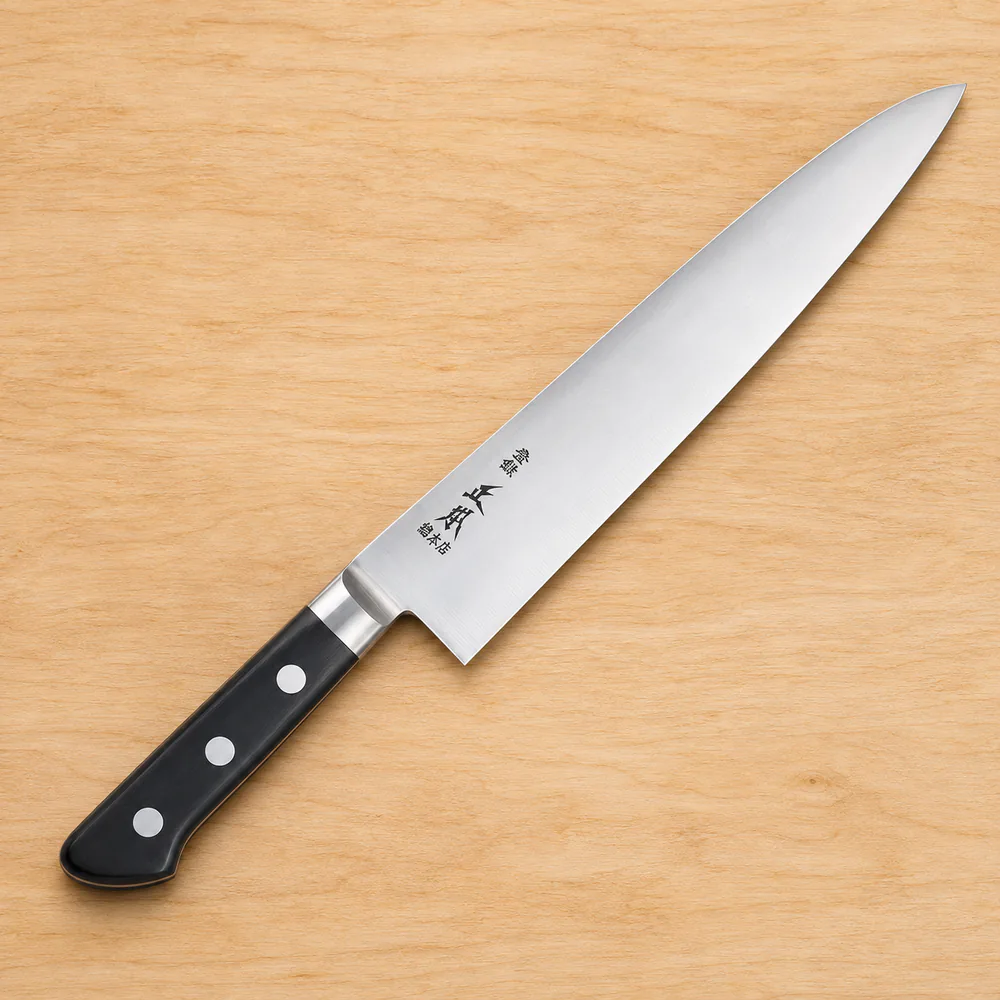
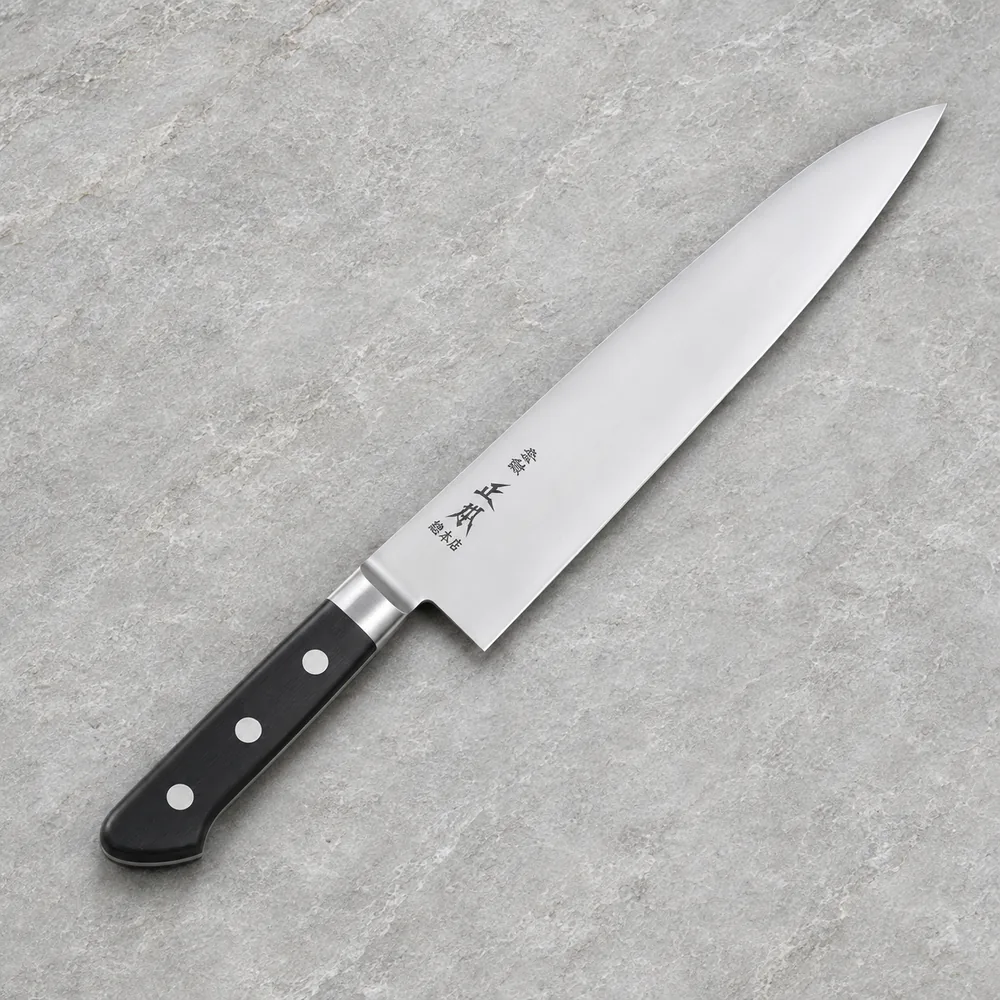
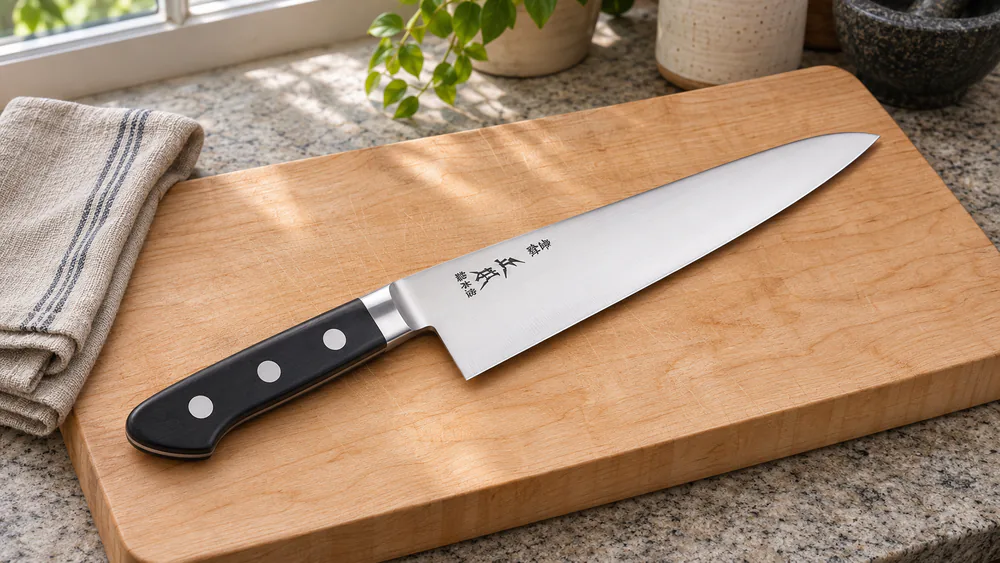
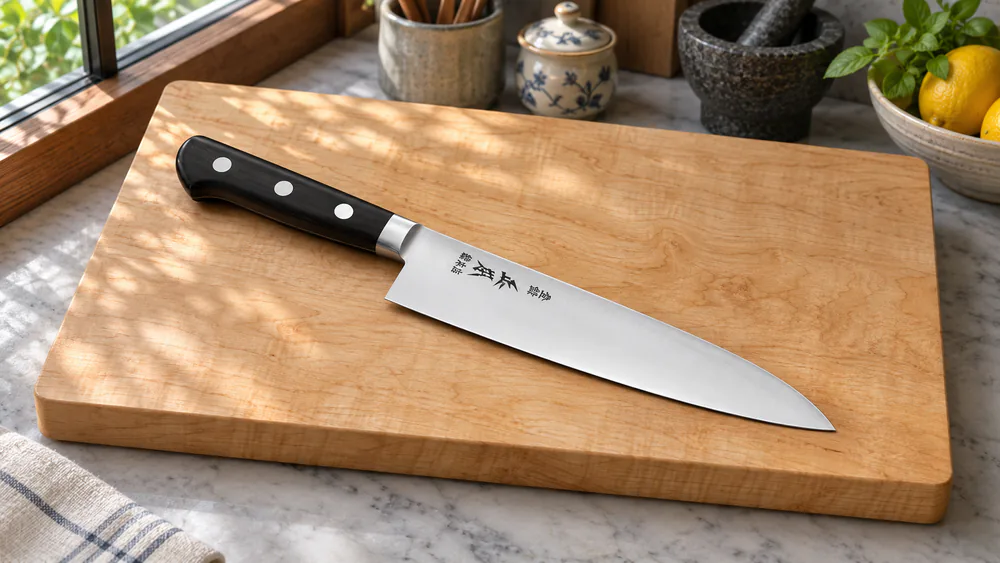
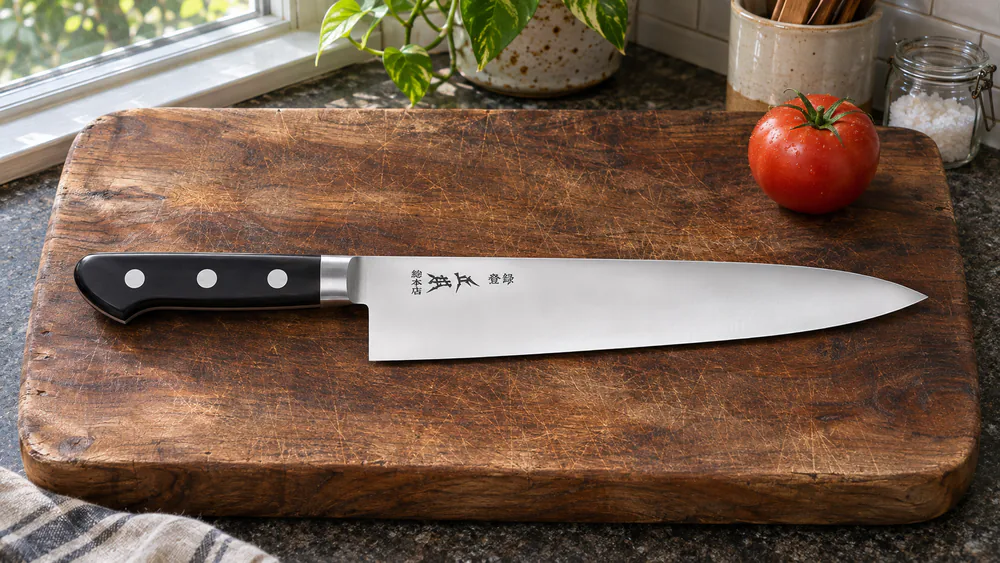
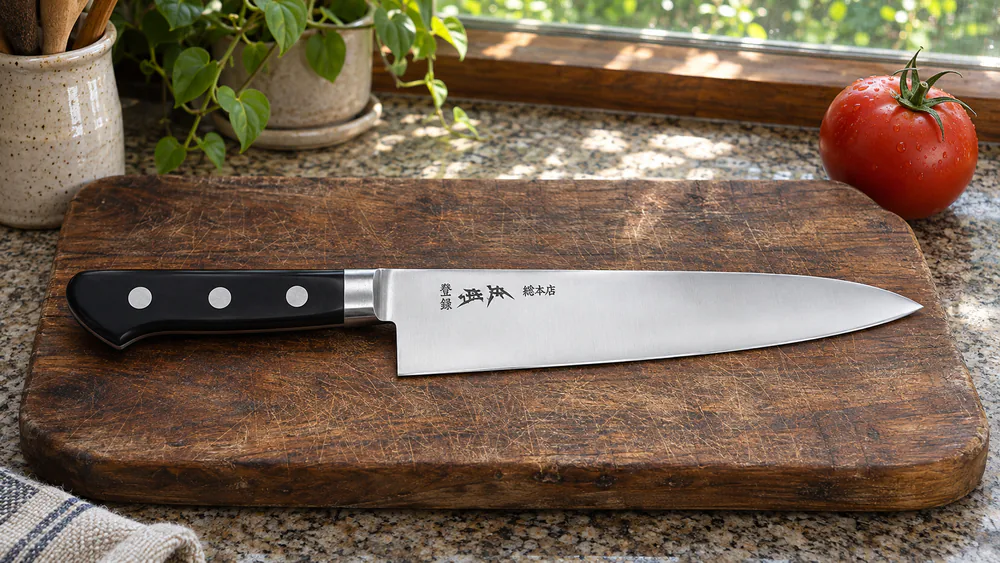
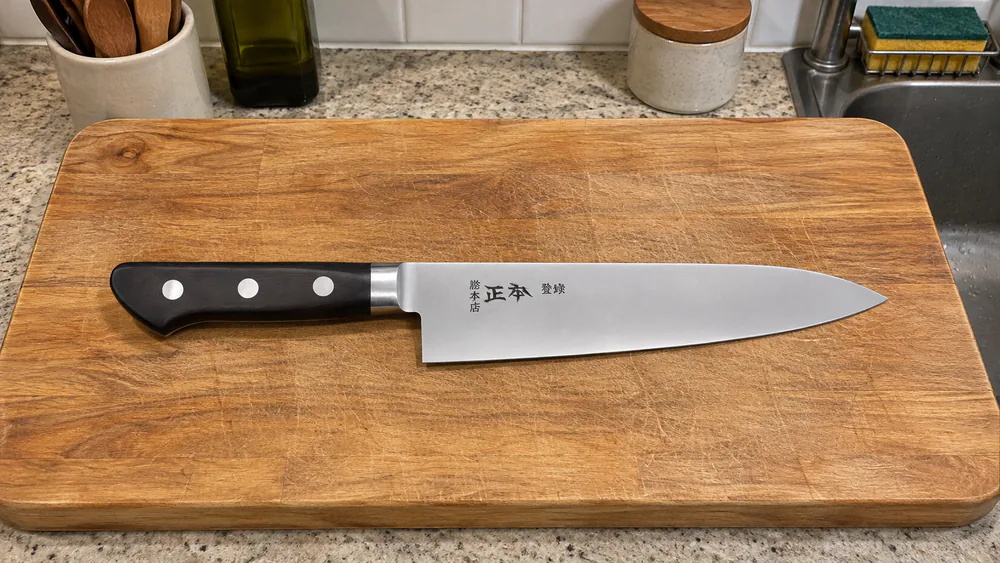
With the criteria above in mind, the VG 210mm sets the bar. It bites into tomatoes, onions, squash and ribeye with almost no pressure, and the spine is thin enough for tip work. It is light and balanced next to German chef knives and many high-end Japanese ones, and the grip feels smooth in hand. If we could keep only one Masamoto gyuto, this is the one we would pick.
Hyper Molybdenum Vanadium stainless steel at HRC 58-59
Thin blade geometry with an easy-to-use tip
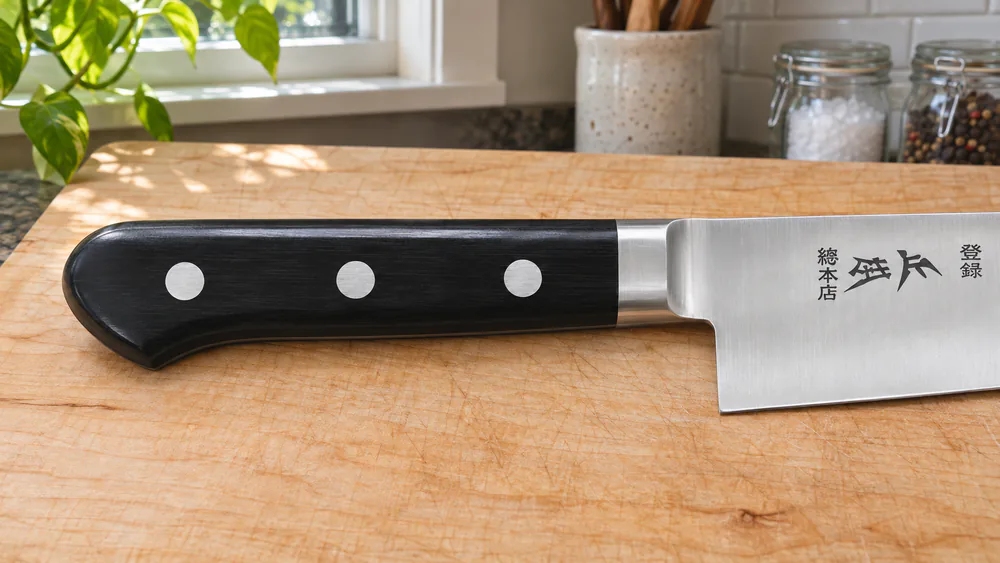
Full tang with a stainless bolster
Western handle, so no learning curve for most cooks
Specifications
Blade length
210mm (8.3 inch)
Steel
Hyper Molybdenum Vanadium stainless
Hardness
HRC 58-59
Handle
Black Duracon POM, western
Origin
Made in Japan
Pros
Cuts through firm and soft food with very little pressure
Light, balanced and comfortable for long sessions
Stain-resistant stainless steel, much easier than carbon
Takes a fine edge quickly on a 1000/6000 stone
Cons
Food clings to the flat of the blade on cooked meats and slow slicing
Factory edge can vary, so expect to hone it in the first week
Needs regular stone work to hold its bite
Who It Suits
This is the knife for a cook who wants a real step up from a Western chef knife without taking on carbon-steel chores. The profile suits large hands especially well. The tall heel keeps knuckles off the board, while the belly stays shallow enough to avoid drag in big vegetables and proteins. The 70/30 grind felt better to us than most other Japanese gyutos we have used.
The knife arrives with a protective oil coating to wipe off. Do that first, then give it a quick hone, since the factory edge can vary a little from knife to knife.
Care and Maintenance Level
Care is medium. VG steel is stain-resistant, not stain-proof, so hand wash it and dry it right away, and never put it in the dishwasher. At HRC 58-59, the edge wants a 1000/6000 stone about every two weeks to keep its factory bite. A ten-minute session does it. A cook who sharpens once a year will feel the edge round over.
The VG holds up through weeks of daily home use. Some cooks get by with a professional sharpening roughly once a year, while others touch it up often on a small stone. We lean toward the stone, because short, regular sessions are easier than a big repair.
2. Masamoto AT Gyuto 8.3" (210mm): Best Value Stainless
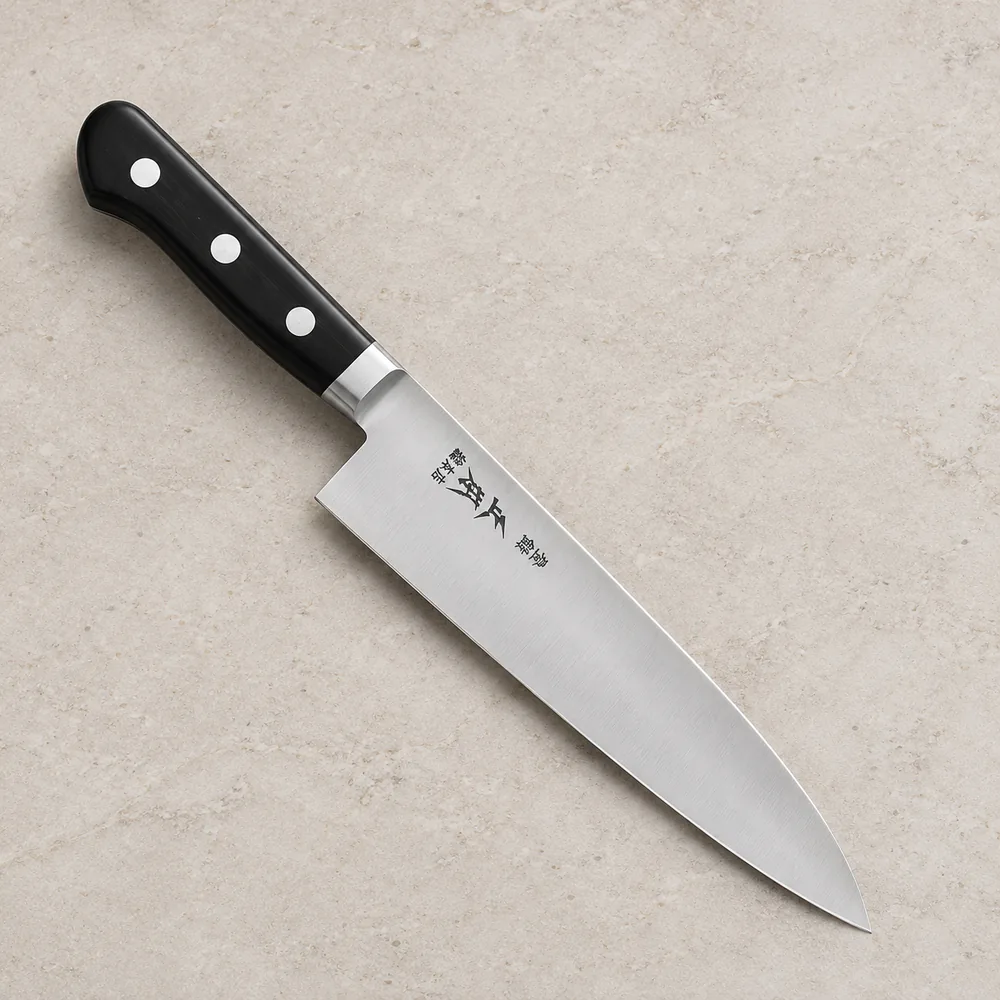
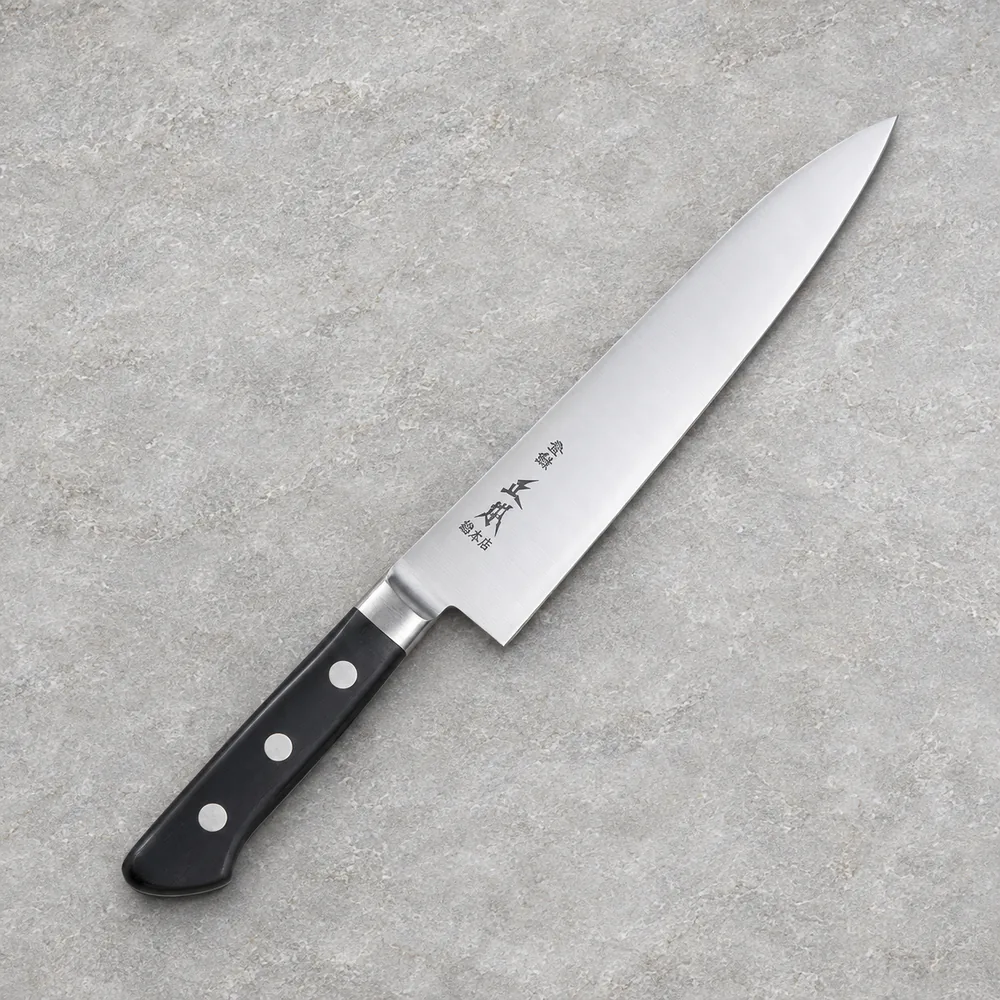
Where the VG is thin and refined, the AT is the plainer, cheaper stainless option. It arrives sharp, holds its edge longer than HRC 57 suggests, and the geometry takes a stone easily. It cuts a notch below the VG through onions and tomatoes, and the handle shape is plainer, but it delivers most of the Masamoto experience for much less. If you are coming from a Wusthof Classic, it will feel familiar in hand.
Molybdenum Vanadium stainless steel at HRC 57
Full tang with a stainless bolster
Black pakkawood handle sold as a home-kitchen line
Budget entry to a genuine Masamoto
Specifications
Blade length
210mm (8.3 inch)
Steel
Molybdenum Vanadium stainless
Hardness
HRC 57
Handle
Black pakkawood, western
Pros
Cheapest way into a genuine Masamoto gyuto
Sharp out of the box and easy to bring back on a stone
Western handle feels familiar to anyone coming from German knives
Low-to-medium upkeep for a Japanese blade
Cons
Cuts a little less freely than the VG or KS
Pakkawood handle is full and slightly heavy over a long prep day
Individual units vary a little, so inspect it on arrival
Who It Suits
The AT suits a home cook buying a first Japanese knife, or anyone who wants Masamoto steel without paying for a pro-tier finish. It is a good bridge for people whose hands are used to a Wusthof or Henckels.
Check tip alignment, edge symmetry and handle centering the day it arrives. A ten-minute touch-up on a 1000-grit stone resets any factory variation. The pakkawood handle feels full and round, and a little heavy over eight-hour prep days. The feel in hand is not as refined as a wa handle, though it is perfectly fine for dinner at home.
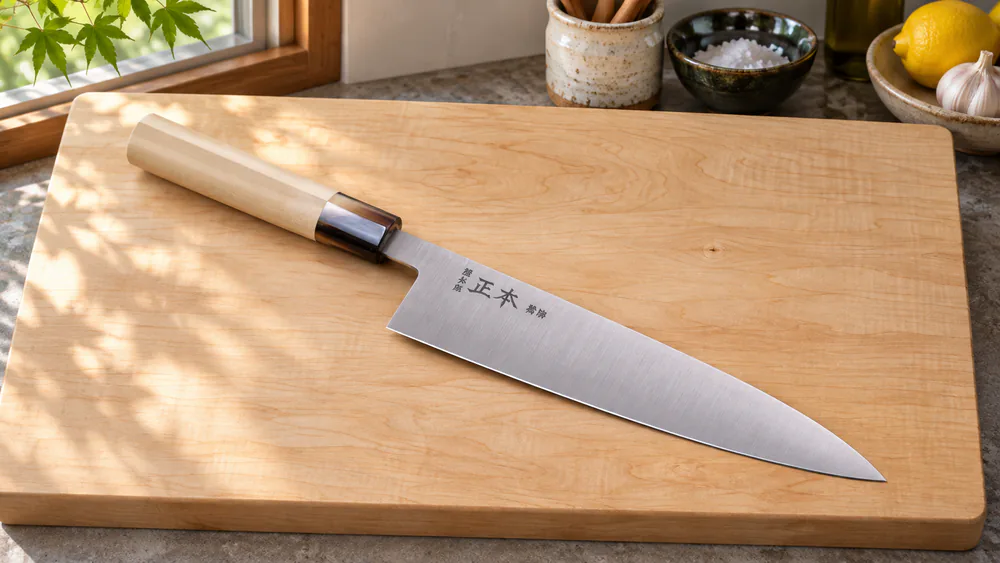
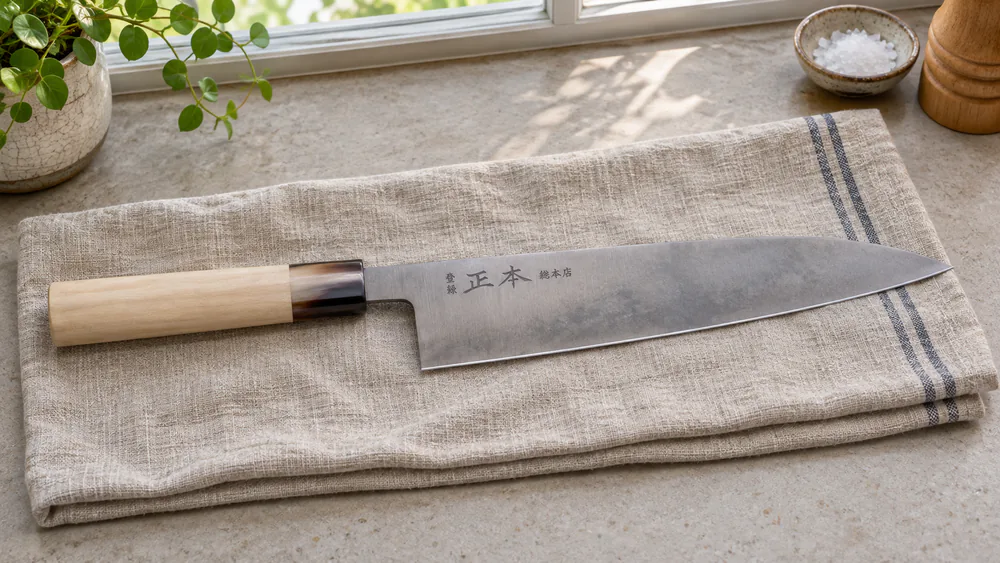
3. Masamoto KS Gyuto 9.4" (240mm): Best Premium Carbon Steel
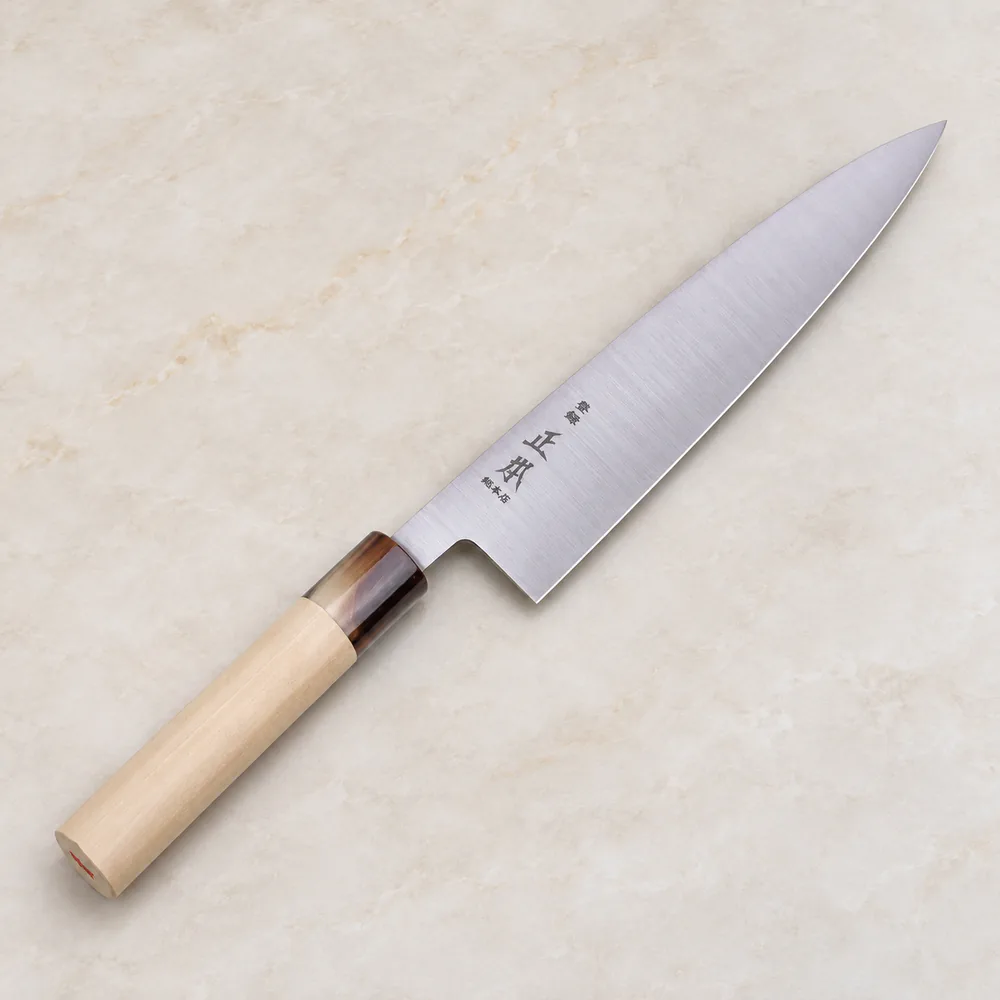
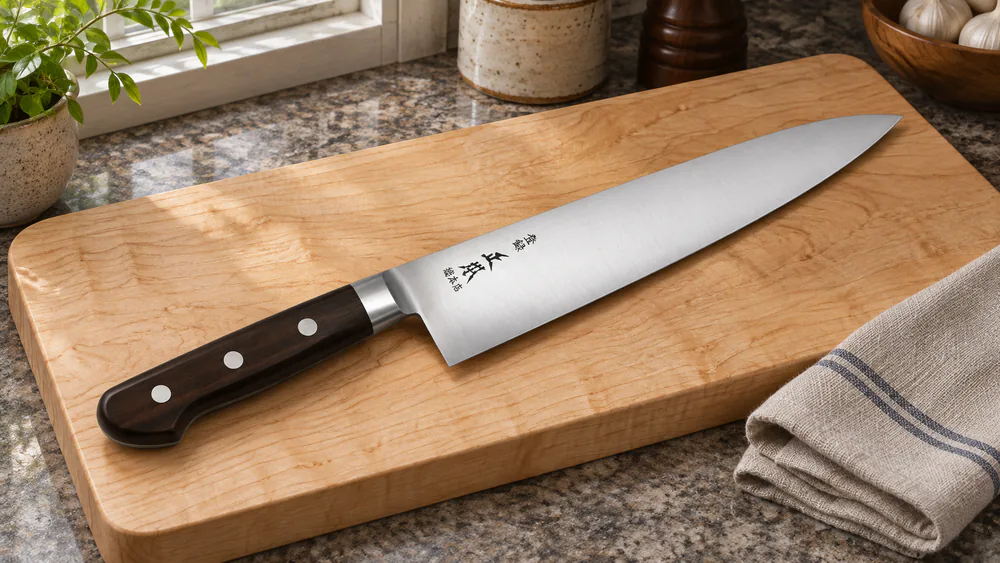
Where the VG and AT are stainless and forgiving, the KS is carbon and demanding. It has the best tip control for shallots and garlic of any Masamoto gyuto, and the wa handle makes it nimble despite its 240mm length. It also asks the most of you. The blade rusts, discolors and reacts with onion and lemon, so it needs wiping mid-task. For the right cook, nothing else in this lineup feels as alive on the board.
Solid White #2 carbon steel
Hardness of HRC 62-63
Wa handle in magnolia wood
Hand-forged Hon Kasumi construction
Specifications
Blade length
240mm
Core steel
White #2 carbon
Hardness
HRC 62-63
Handle
Wa, magnolia wood
Construction
Solid White #2 steel (monosteel)
Pros
Best tip control of the gyuto line
Very hard edge that sharpens to a keen finish
Wa handle keeps a long blade nimble
Carbon steel develops a patina that many cooks love
Cons
Rusts and discolors, and reacts with onion and lemon
Lacquer coating strips off during the first prep sessions
The most expensive pick here, roughly double the VG
Standard gyuto sayas do not fit it
Hon Kasumi Construction
The KS3124 gyuto is solid White #2 carbon steel, unlike the iron-clad KS2924. Its White #2 steel is easy to sharpen, develops a patina and holds a very fine edge at HRC 62-63. That hardness is why the KS sharpens to a finer edge than the stainless picks.
The KS arrives with a lacquer coating that strips off during prep, so the first cuts can feel dull until a session on a 1000-grit stone brings the edge back. After that, the blade behaves. Wipe it dry, keep it away from lemon and onion juice sitting on the steel, and it will repay you. Some cooks force a patina with mustard, which helps protect the carbon steel and looks handsome.
Buy it for the sharpening practice and the feel, not for convenience. If you want low maintenance, pick the VG.
The cladding darkens with use, which is part of the appeal.
4. Masamoto VG Gyuto 9.4" (240mm): Best Length for Pros
The 240mm VG uses the same steel and handle as the 210mm. The 240mm blade measures about 9.4 inches, and the extra length suits cooks who break down large cuts or work a long board. It is the pick for a professional kitchen where reach matters more than a small footprint.
Same VG steel at HRC 58-59 as the 210mm
POM handle, western style
240mm blade length (9.4 inch)
Wooden magnolia saya sold separately, and it fits this size
Specifications
Blade length
240mm (9.4 inch)
Steel
Hyper Molybdenum Vanadium stainless
Hardness
HRC 58-59
Handle
Black Duracon POM, western
Pros
Long edge for big proteins, melons and long slicing strokes
Same easy-care VG steel as our top pick
Fewer strokes per task for pros on a full board
Cons
Needs a large board and some counter confidence
Overkill for small kitchens and light home use
Less nimble for shallots than the 180mm
On paper the 240mm VG is the 210mm with more reach: same steel, same hardness, same handle. The longer blade trades some agility for that reach on big items, and a shorter blade is easier to wield if you prefer less length. Go 240mm if you cook for crowds or prep in volume.
5. Masamoto VG Gyuto 7.1" (180mm): Best Compact Gyuto
Where the 240mm gives reach, the 180mm gives control. It gives the best tip direction for shallots, garlic and trimming, and it fits a 15 inch board without overhang. The geometry is identical to the 210mm, just shorter. It cuts the same way, only with less reach, which is ideal in a small kitchen.
180mm (7.1 inch) blade, about 12 inch overall
Same VG steel at HRC 58-59
POM handle matches the larger sizes
Fits a 15 inch board without overhang
Specifications
Blade length
180mm (7.1 inch)
Steel
Hyper Molybdenum Vanadium stainless
Hardness
HRC 58-59
Handle
Black Duracon POM, western
Pros
Precise tip work on shallots, garlic and trimming
Fits small boards and small counters
Same grind and steel as the best-overall pick
Cons
Less reach for large vegetables and proteins
Not a replacement for a full-size chef knife in a busy kitchen
What It Can't Do
A 180mm gyuto makes a fine second knife next to a longer one. It also works as a main knife for a cook with a tiny board and no desire for a blade that swallows the counter.
6. Masamoto CT Gyuto 8.3" (210mm): Best Carbon Steel for Daily Use
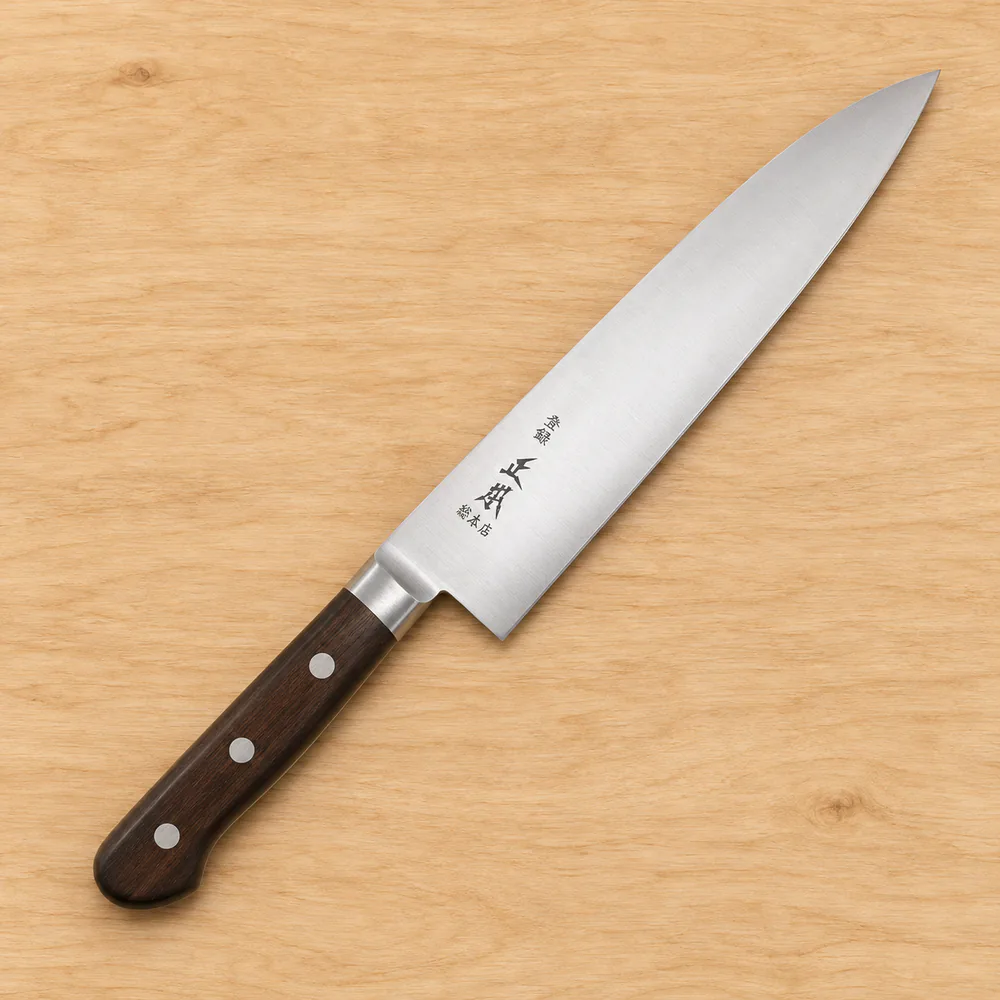
Carbon CT needs drying after use but keeps a very keen edge and resharpens easily on stones. That makes it a friendlier introduction to carbon steel than the hand-forged KS. It sits between the stainless picks and the premium KS for upkeep.
Carbon steel at HRC 58-59
Rosewood handle, western style
210mm (8.3 inch) blade
Affordable carbon line
Specifications
Blade length
210mm (8.3 inch)
Steel
Carbon
Hardness
HRC 58-59
Handle
Rosewood, western
Pros
Very keen edge that lasts
Resharpens easily on stones
Carbon performance without the KS price
Cons
Needs drying after every use to avoid rust
More upkeep than any stainless pick
Less polished than the hand-forged KS
Some brand material says the blade carries a protective coating against rust. The product copy stresses rust care, so dry it anyway. We treat CT as a carbon knife, because it behaves like one.
7. Masamoto HC-5021 Gyuto 210mm: Carbon Steel Alternative
7
Masamoto HC-5021 Gyuto
Carbon Steel Alternative
4.0/5
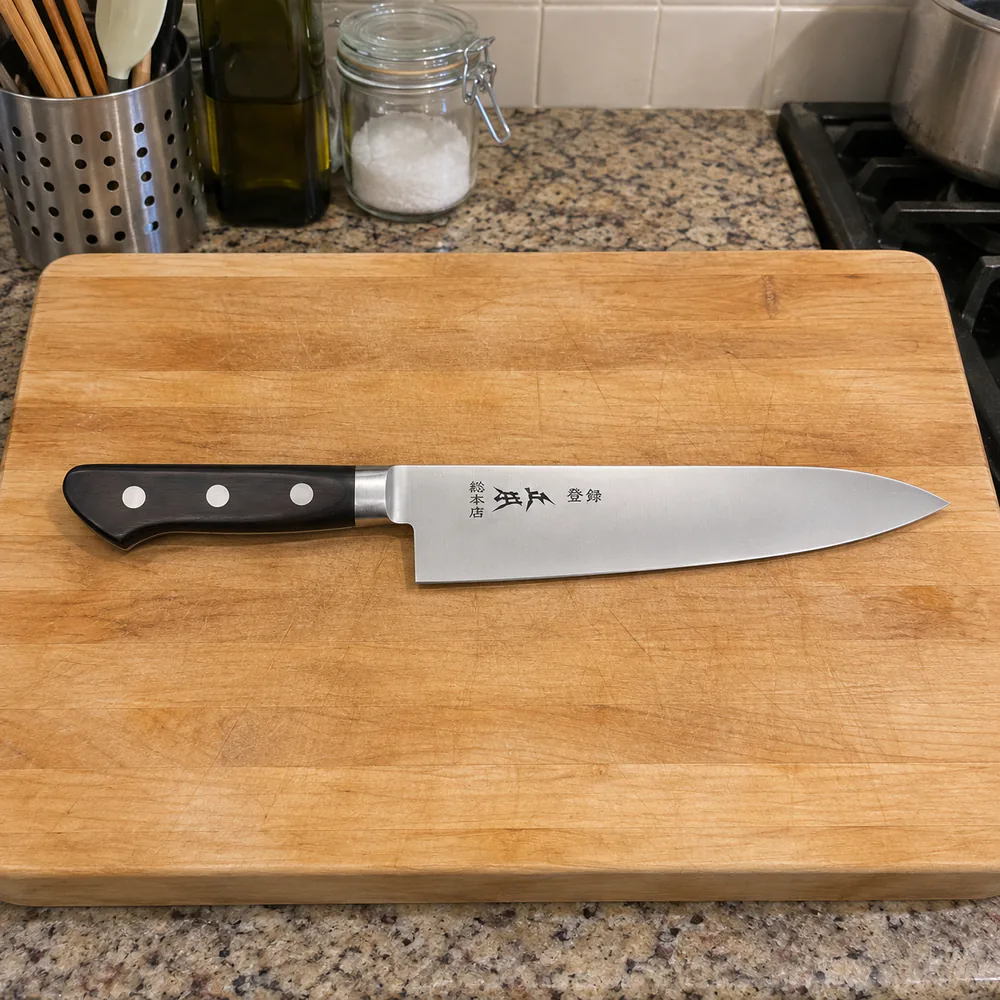
The HC-5021 is a verified 210mm carbon-steel alternative with a Western handle. Japanese Chefs Knife specifies virgin carbon steel at HRC 61-62, a full tang and black pakkawood scales. This entry is based on published specifications, not a hands-on test.
Virgin carbon steel, full-tang construction
Hardness of HRC 61-62
Black pakkawood Western handle with stainless bolster
Listed weight: 174g
Specifications
Blade length
210mm (8.2 inch)
Steel
Virgin carbon steel
Construction
Full tang, stainless bolster
Hardness
HRC 61-62
Weight
174g (seller specification)
Pros
Published virgin-carbon-steel construction
HRC 61-62 hardness specified by the seller
Full-tang handle and stainless bolster
Cons
Carbon blade can rust and develop a patina
Standard 70/30 edge favors right-handed use
No hands-on verdict for this selected model
We have no hands-on verdict on the HC-5021. Consider it if you want a carbon gyuto with a Western handle and can wash and dry it promptly; choose a stainless model if easy rust care matters more. The seller offers a left-handed edge option separately.
Masamoto Series Compared: KS vs VG vs AT vs CT vs HC
Masamoto sells many lines, and the letters on the blade tell you most of what you need to know. KS uses white steel, VG and AT are stainless, and CT and HC are carbon lines. The table below lines up what we could verify.
Series
Steel
Hardness (HRC)
Construction
Handle
Maintenance
Best for
KS
White #2 carbon
62-63
Solid White #2 steel (monosteel)
Wa, magnolia
High (rust, patina)
Enthusiasts who sharpen
VG
Hyper Molybdenum Vanadium stainless
58-59
Thin stainless blade
Western, POM
Medium
Most home cooks and pros
AT
Molybdenum Vanadium stainless
57
Stainless blade
Western, pakkawood
Low to medium
A budget first Japanese knife
CT
Carbon
58-59
Carbon blade
Western, rosewood
Medium to high (rust care)
Daily carbon users
HC
Virgin carbon steel
61-62
Carbon
Western, pakkawood
Medium to high
Carbon fans
The HC-5021 now represents the HC line in the ranked picks. Japanese Chefs Knife lists virgin carbon steel, HRC 61-62, black pakkawood and a 70/30 double-bevel edge; its carbon blade needs prompt washing and drying.
How to Choose a Masamoto Chef Knife
With the series and sizes compared above, the advice here is simpler than people expect. A thinner, harder knife cuts beautifully but asks for more care. Decide how much upkeep you want, then match the series and size.
A thinner, harder knife cuts beautifully, but it asks for more care.
Steel: Stainless vs Carbon
Stainless steel, like VG and AT, resists rust and forgives a wet board. Carbon steel, like KS, CT and HC, takes a finer edge and sharpens easily, but it rusts and reacts with acidic food. If you want a knife you can leave on the counter for ten minutes, buy stainless. If you enjoy the ritual of wiping a blade, carbon rewards you.
Tip. With any carbon blade, wipe it during prep when you cut onion, lemon or tomato, and dry it fully before it goes back in the block or saya. A film of rust forms faster than you expect.
Series Tier
The AT is the entry point, the VG is the all-rounder, and the KS is the premium hand-forged choice. CT and HC are further options for cooks who want carbon steel. A first Japanese knife usually belongs in the AT or VG tier. Move up to the KS once you already sharpen on stones.
Blade Length
A 210mm gyuto suits most home kitchens. It covers a whole chicken or a watermelon without fighting a small board. A 270mm gyuto is overkill for most home cooks. Choose 180mm for tight counters and 240mm for pros who prep in volume.
Handle: Wa vs Western
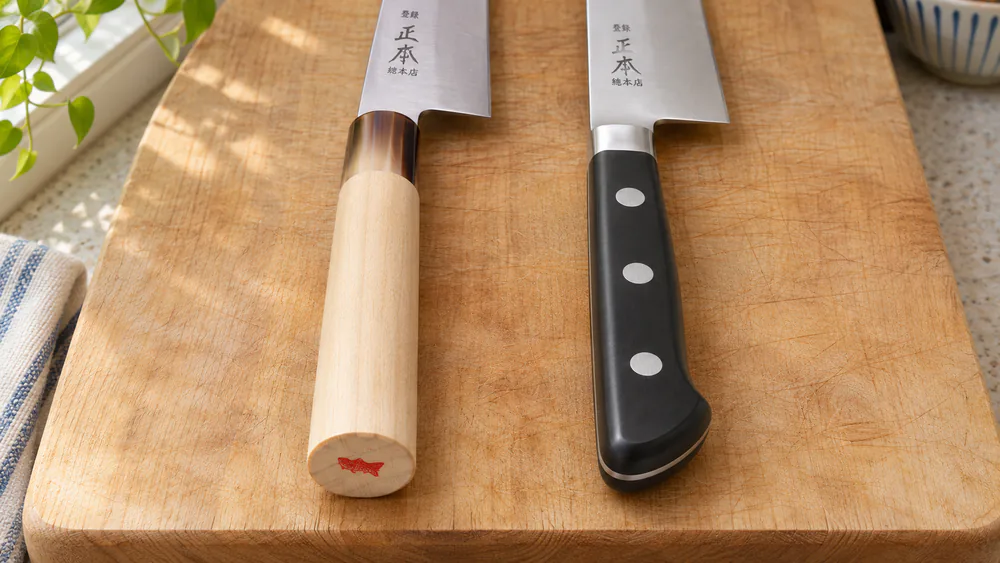
A wa handle is the lightweight Japanese style, usually magnolia wood, and it pushes the balance point forward for nimble work. Western handles, such as the VG's POM and the AT's pakkawood, feel heavier and fuller than wa handles and will be familiar to cooks used to German knives. Pakkawood is a resin-laminated wood, and it feels a touch heavier than magnolia over long prep days.
Wa handle on the left, western handle on the right.
Which Masamoto Is Real? Brand Confusion Explained
Masamoto Sohonten has made knives since 1866, founded by Minosuke Matsuzawa, and the company is now in its sixth generation. Its reputation rests on single-bevel yanagiba, deba and usuba, while the gyuto is a double-bevel blade.
The confusion starts because more than one Tokyo business uses the Masamoto name. Masamoto Sohonten and Tsukiji Masamoto are separate businesses, and we would not claim a family link in either direction. Knock-off listings also use the Masamoto name loosely.
Warning. A real Masamoto listing names the maker, the steel grade, the hardness, the handle material and the blade length. Vague wording like "Japanese-inspired" is a warning sign. If a listing cannot tell you the steel, move on.
Masamoto is less mainstream than Shun or Global and sits at specialist shops and the professional tier. That is partly why the name gets borrowed, and it is why we prefer buying a listed, named series like the ones in this guide.
Masamoto vs Shun, Global and Sakai Takayuki
Shun and Global are easy to find at a big retailer, while Masamoto is a specialist-shop brand with a professional tier. That makes Masamoto a better fit for a cook who already knows what a thin, hard edge asks of them.
The Masamoto VG is a thin, light, western-handle stainless gyuto, so it suits cooks who want Japanese geometry without a wa handle. Sakai Takayuki sits in the same professional space as Masamoto, so the choice often comes down to handle feel and which series fits your care habits.
Whichever series you pick, good care is mostly habit. Hand wash every Masamoto and dry it right away, and never use the dishwasher. Stainless is stain-resistant, not stain-proof, and carbon will rust if you leave it wet.
Keep the edge alive on stones. A 1000/6000 stone every couple of weeks suits the VG, and a ten-minute touch-up on a 1000-grit stone resets a factory edge on the AT. Carbon knives resharpen willingly, which is a quiet advantage over harder steels.
Store the knife in a saya or on a magnet away from other blades. Saya sizes vary by series. The magnolia saya for the AT and VG 240mm does not fit KS, which needs a wa-gyuto-specific saya.
Use a soft wood or good plastic board. The board matters almost as much as the steel, and a glass or stone surface will dull even a hard edge in a few cuts.
FAQs
Is Masamoto a good knife brand?
Yes. Masamoto Sohonten has made knives since 1866, and its professional reputation is built on Japanese kitchen knives. The gyuto lineup runs from beginner-friendly stainless to hand-forged carbon.
Are Masamoto knives worth it?
The stainless VG and AT give thin geometry and a hard edge with little fuss. Carbon KS and CT are worth it only if you enjoy upkeep.
What is the difference between Masamoto KS and VG?
KS is a hand-forged white #2 carbon blade with a wa handle at HRC 62-63, and it rusts without care. VG is stainless at HRC 58-59 with a western POM handle, and it is much easier to live with.
Which Masamoto is best for a home cook?
Start with the 210mm stainless gyuto reviews above. Choose the AT if you want to spend less, and the 180mm VG if your board is small.
Where is Masamoto made?
The VG is made in Japan. Masamoto Sohonten is a Tokyo maker with a six-generation history, though more than one business uses the name.
Conclusion
The VG review above has our pick. The AT is the right call if you want to find out whether you like Japanese knives before committing. The KS is for the cook who already sharpens on stones and wants the finest tip control in the line.
Whatever you pick, buy a named series from a seller that states the steel and the blade length, and keep a stone nearby.