
Knives & Cutlery
How to Remove Rust from a Knife

As an Amazon Associate we earn from qualifying purchases. We may earn a commission from links on this page, at no extra cost to you. Learn more.
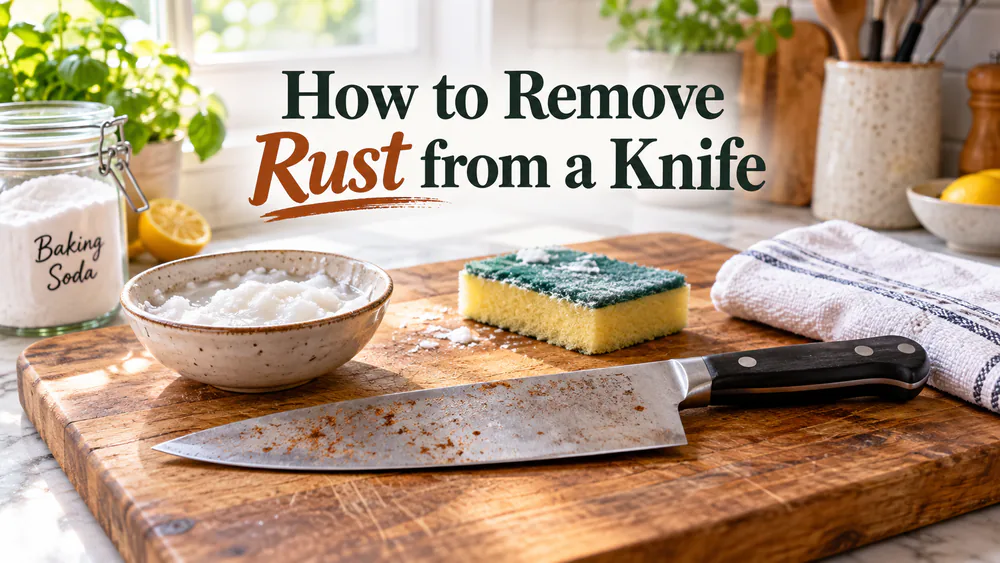
Orange spots on a good blade are alarming, but the good news is that surface rust usually comes off with supplies you already own. The right method depends on two things: what the blade is made of, and how deep the damage goes. Light spots on bare steel respond to a baking soda paste. Stubborn patches may need a rust eraser or a cleaner your knife maker approves. Pitted blades are a different story, and we will show you where to stop.
Before You Start: Check the Rust and Blade
Spend two minutes looking before you scrub. The same cleaner that rescues one blade can dull the finish on another, and a quick check tells you which path to take. If you came here after sharpening trouble instead, our guides on sharpening a knife cover that side of the job.
Surface Rust, Patina, or Deep Pitting?
Orange or reddish-brown spots and flaky deposits are rust. They sit on top of the steel and usually wipe or scrub away. A gray, blue, or dark tint on a carbon blade is different. That darkening is often normal patina, and it can actually help the steel resist rust. You do not need to polish it off just to get the blade bright again.
Pits are the third case. A pit is a tiny cavity where steel has been eaten away, so it is not a color you can remove. Cleaning can expose pits that the rust was hiding. If your fingernail catches in a rough patch after the first pass, you are dealing with pitting, not stain.
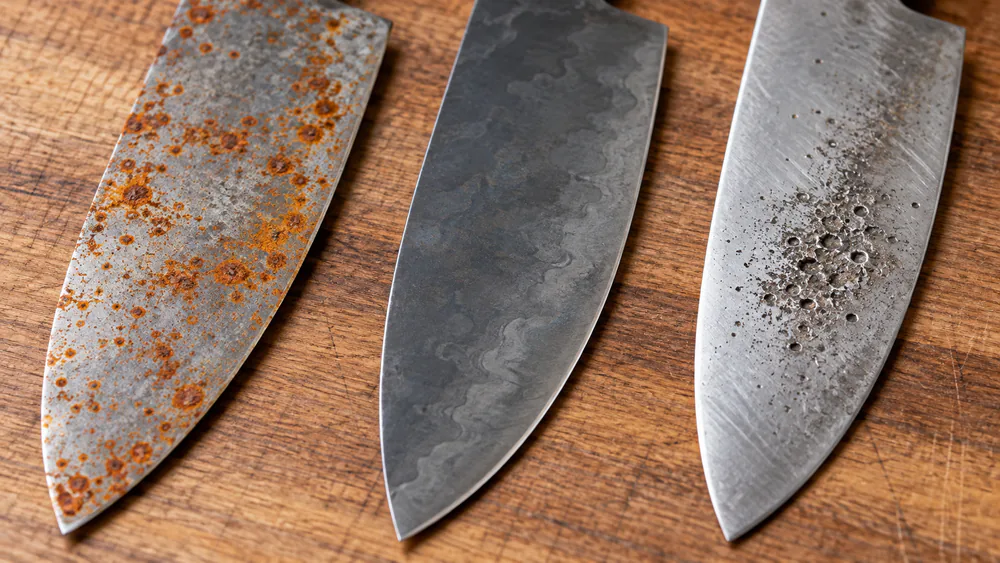
Stainless Steel, Carbon Steel, and Coated Blades
Stainless steel resists rust, but it can still corrode. A knife left in a wet sink or put away damp can rust even when the steel is stainless. Carbon steel rusts faster and needs prompt drying, which is the trade-off for the sharp edge many cooks love.
Coated, black, decorated, and mirror-polished blades need extra care. A black blade may carry a coating or a different surface treatment, so its color tells you nothing about what it can handle. An acid or abrasive that suits bare steel may change a coating, a decoration, or an existing patina. Check the maker's care instructions first. If you cannot find them, choose the gentlest method and test it on a small spot near the heel.
Choose a Rust-Removal Method and Gather Supplies
Start with the mildest method that fits your blade and work upward. We have laid out the four options below. These are our editorial assessments of the methods, rather than results from a timed comparison.
| Method | Best for | Blade compatibility | Key limitation |
|---|---|---|---|
| Baking soda paste | Light surface spots | Start gently; check delicate finishes | Scrubbing may not clear deep corrosion |
| White vinegar | Rust on bare steel that tolerates acid | Needs maker approval, especially for carbon steel and special finishes | Can discolor or etch the steel |
| Rust eraser | Local, stubborn spots | Abrasion can change polish or patina | Cannot replace missing steel or promise a scratch-free finish |
| Blade-approved cleaner | Rust stains on a specifically compatible blade | Approval must cover the blade material and finish | General rust-remover claims do not prove knife compatibility |
Whatever you pick, gather a soft sponge, warm water, dish soap, and a clean dry towel. Wear gloves if you use an acid or a cleaner, and keep the handle out of any liquid, especially wood.
Warning. Hold the knife by the handle with the edge pointing away from you, and never scrub toward your fingers. A wet, slippery blade and a sharp edge are a bad pairing.
Method 1: Remove Rust with Baking Soda Paste
Baking soda is the gentlest place to begin, so it is where we start with light spots. Mix it with just enough water to make a thick paste. Spread it over the rust, and let it sit. A published baking soda method leaves the paste for at least 1 hour before gentle scrubbing. That is a method instruction, not a guaranteed removal time.
After the wait, work the paste with a soft sponge, moving along the blade rather than across the edge. Rinse, wash with dish soap, and dry thoroughly.
Baking soda cleaning can lift visible rust from an old butcher knife, but the blade will not come out polished. Polishing and edge restoration are separate jobs. Heavy, neglected corrosion can also resist baking soda, and repeated household treatments do not guarantee a full restoration.
Method 2: Treat Rust with White Vinegar
White vinegar works faster as an acid treatment, but it requires more care. Expose only the rusted steel and keep the handle dry. A cloth soaked in vinegar and wrapped around the spot, or a shallow dish for a short dip, both work. Then gently remove the loosened rust with a soft sponge, wash, rinse, and dry.
Timing is where people go wrong. Published advice ranges from about five minutes to overnight, and no soak time is safe for every knife. Use brief, monitored exposure, and only when the maker permits acid cleaning. Steel, finish, acid strength, and how bad the rust is all change the risk of discoloration and etching. An overnight soak is not a general kitchen-knife instruction.
The risks are real. Leaving a blade in vinegar for a long soak can remove steel along with the rust. Even a short treatment can leave a pale or altered finish, and hand polishing afterward takes extra effort. If you try vinegar, check the blade every minute or two instead of walking away.
Method 3: Use a Knife Rust Eraser
A rust eraser is a small abrasive block made for spot treatment. It suits stubborn patches that baking soda could not shift. Wet the eraser, then follow the visible grain of the steel with gentle strokes. Treat only the rusted area, rinse, and dry the blade fully.
Light pressure matters. An eraser can alter the surface because it is abrasive. How noticeable that change is depends on pressure, grit, and finish. Do not promise yourself a scratch-free result. Rubbing too hard or too long can leave a dull patch that looks worse than the rust did. Stop as soon as the spot clears.
On a mirror-polished or coated blade, skip this method altogether. A rust eraser also cannot give back steel that is already gone, so it will not fix pits.
Method 4: Use a Cleaner Approved for Your Blade
Some cleaners are made for stainless utensils and can handle rust stains on compatible blades. An oxalic-acid cleanser used with a wet, nonabrasive sponge or soft cloth is one example. Rinse thoroughly, wash with warm soapy water, and dry immediately.
Contact time is the rule that matters most. Bar Keepers Friend must not remain on utensils longer than 1 minute, and that is the manufacturer's maximum, not a required soak. Longer recipes you may see online do not override the label.
Choose a cleaner your blade maker approves and follow that label exactly. A general rust-remover claim does not tell you the product is safe for knives. Some makers also support a fine metal polish for light surface rust, which is a milder option worth checking first.
Clean, Dry, and Check the Blade After Rust Removal
Finish every method the same way. Rinse well, wash with warm water and dish soap to remove any paste, acid, or cleaner, and dry the blade completely with a towel. Leftover residue and leftover moisture are both ways rust gets a second chance.
Inspect the Edge and Remaining Pits
Hold the clean blade under bright light and turn it. Look for pits, rough patches, and any nicks along the edge. Dark stains that remain may be pits or discoloration, not rust. A stain alone does not mean the blade is ruined.
Once the blade is clean and dry, the edge may need attention too. Rust near the edge can leave it dull or uneven, and our walkthrough on how to use a whetstone is a good next step.
When to Stop and Seek Professional Restoration
Cleaning can expose pits that were hiding under the rust, so look before you decide the job is done. Depth, location, edge loss, and overall condition decide whether restoration is practical. We cannot give you a safe pit depth or count, and no cleaning method restores missing steel.
Stop home treatment and have the knife assessed if you see severe edge damage, cracks, or a loose handle, or if repeated treatments change nothing. Do not keep escalating to harsher chemicals. Each round risks more damage than the last.
How to Keep Your Knife from Rusting Again
Prevention is mostly moisture control. Rust needs water and time, so the aim is to keep both away from the steel.
Washing, Drying, and Storage
Hand-wash promptly with dish soap and warm water, then dry carefully. Skip the dishwasher, since food residue and harsh dishwasher conditions can cause corrosion. A knife left in a wet sink or put away wet can rust even when the steel is stainless.
In prep, make drying part of the work. Wipe the blade as you cook and dry it before you put it away. That habit keeps moisture under control throughout food prep, rather than leaving all the drying until the end of the night. Store knives dry in a block, sheath, or on a magnetic strip, and never in a damp drawer.
For nearby sharpening gear, browse our knife sharpener guides once the blade is clean.
Rust needs water and time. Take away the water, and the time stops mattering.
Protective Oil for Carbon Steel Knives
Carbon steel earns a little extra care. After washing and drying, wipe on a thin film of food-grade mineral oil, then store the knife dry. Use a food-grade blade oil. WD-40 Multi-Use Product is not food grade and is not intended for food-preparation areas.
Tip. Let carbon steel keep its patina. A dark gray blade is protecting itself, so do not scrub it bright just to match a new knife.
Frequently Asked Questions
Do Lemon, Salt, or Potatoes Remove Rust?
They can, but they are not our first choice. Lemon juice supplies acid and salt adds abrasion, yet the treatment leaves acid and salt on the steel that you must wash off afterward. Long lemon-and-salt soaks are not suitable for every blade, since acid can discolor reactive steel and compatibility varies with the finish.
A cut potato dipped in baking soda or salt is a published household approach, followed by rinsing and thorough drying. Treat it as an optional trick for light spots. A potato treatment can remove some rust yet leave a persistent dark stain instead of a bright blade, and it will not clear heavy corrosion.
Why is my stainless steel knife rusting?
Stainless steel resists rust but is not rustproof. The usual causes are sitting wet in a sink, being put away damp, and dishwasher cycles with food residue left on the blade. Wash by hand, dry right away, and the spots should stop coming back.
Can vinegar damage a knife blade?
Yes. Vinegar can discolor or etch steel, and a long soak can remove steel along with the rust. Use it only when the maker allows acid cleaning, keep exposure short, and avoid vinegar on coated or specially finished blades.
Can I use steel wool or WD-40 on a kitchen knife?
We would skip both. Knife makers advise against steel wool and abrasive sponges for kitchen knives because they scratch the blade. WD-40 Multi-Use Product is not food grade, so choose a food-grade blade oil if you want protection.
Is the dark stain left after cleaning still rust?
Not always. Dark marks can be patina, a stain, or pits. Rust is orange or reddish-brown and flaky, while a pit is a cavity you can feel. A stain on its own does not mean the knife is finished.
Read next
Ready to upgrade your kitchen?
Browse more kitchen guides or subscribe for practical knife-care advice.