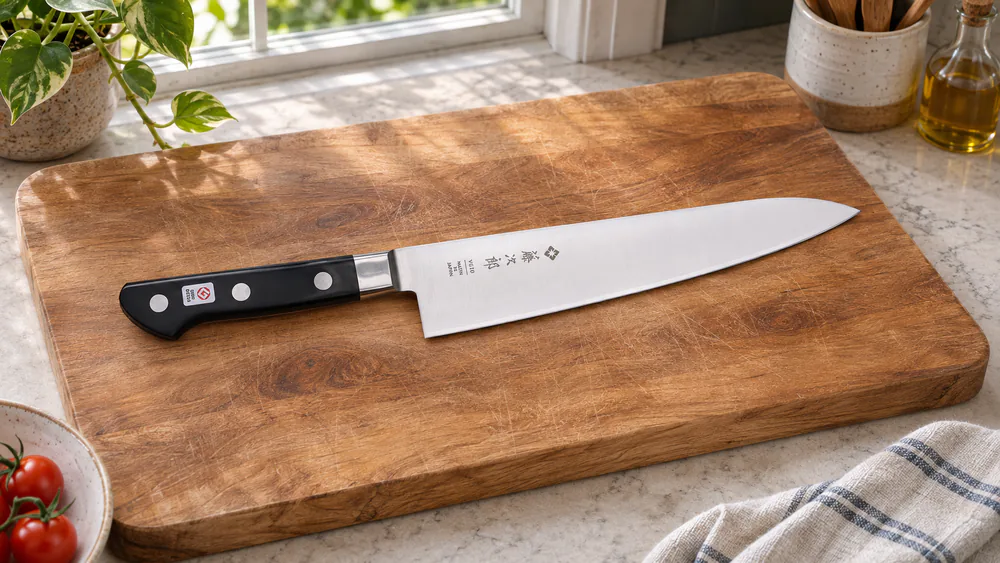
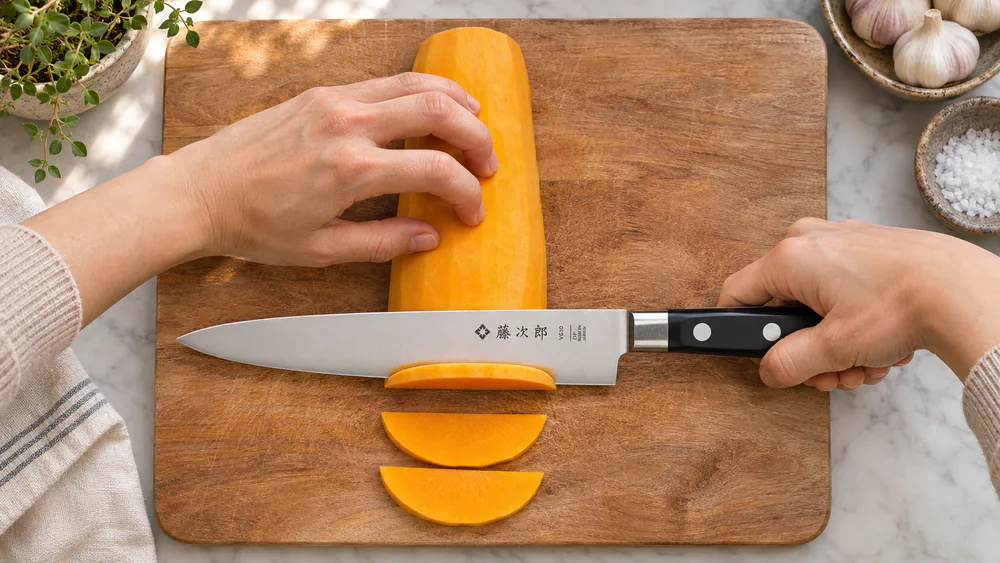
The steel is the reason to buy this knife, and the geometry is the reason it cuts the way it does. If you want background on the profile, Japanese kitchen knife styles and the gyuto profile are worth a read before you compare it with a German chef's knife.
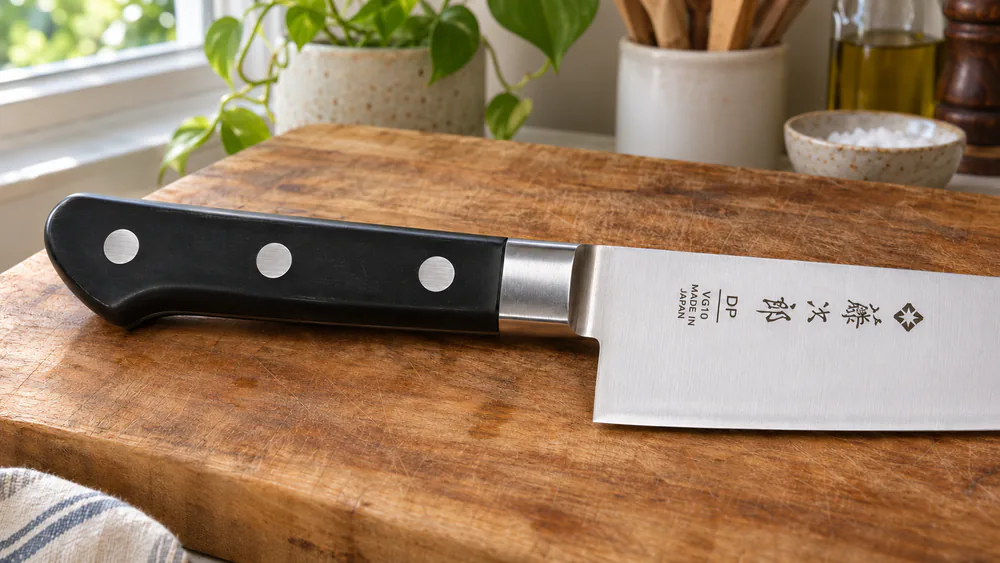
VG10 core and 3-layer construction
The core is VG10, a hard stainless steel that takes a fine edge. Tojiro clads it between two softer 13-chrome stainless layers, which protects the hard core and makes the knife easier to live with. At about 60 HRC, the core is harder than a typical German knife, and how the Rockwell hardness test works explains why that number translates into longer edge life and a greater risk of chipping.
The Shun Classic uses a VG-MAX core with 34-layer Damascus cladding at about 60-61 HRC, so the two knives are close in hardness. The Wusthof Classic is forged X50CrMoV15 at about 58 HRC, a softer and tougher steel.
Edge angle, profile and thickness
The factory edge sits at about 15 degrees per side, between the Shun at 16 and the Wusthof at 14. The spine is thin, roughly 2 mm, and that thinness is what we notice most in the cut.
The profile flattens toward the tip. Push-cutting is excellent, rock chopping is weaker than on a Wusthof, and fine tip work needs a little relearning if you are used to a curved German belly.