Helping you create a kitchen you love.

Knives & Cutlery

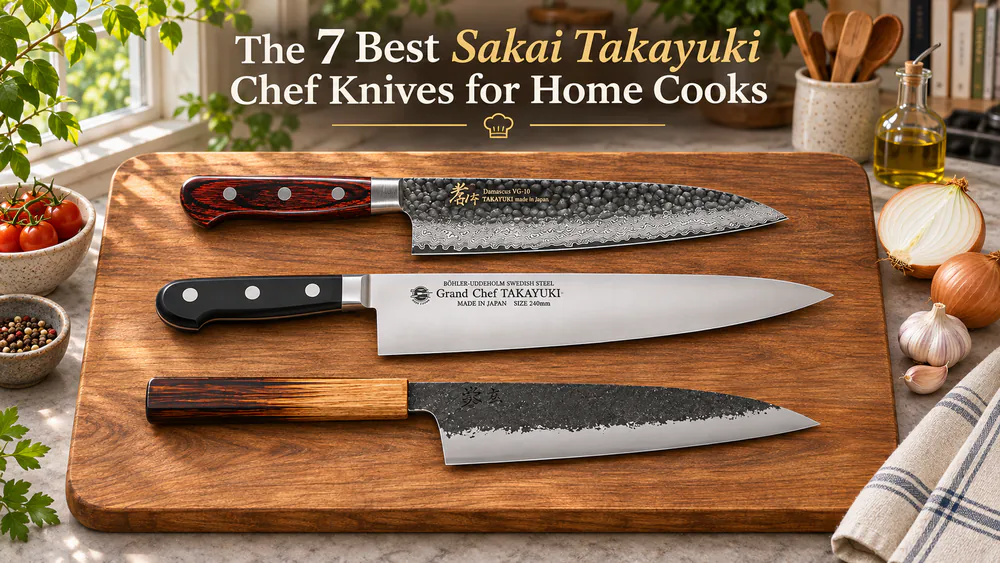
The 7 Best Sakai Takayuki Chef Knives for Home Cooks

As an Amazon Associate we earn from qualifying purchases. We may earn a commission from links on this page, at no extra cost to you. Learn more.

The 7 Best Sakai Takayuki Chef Knives for Home Cooks

Sakai Takayuki is the flagship knife brand of Aoki Hamono, a maker based in Sakai, Osaka, with over 70 years of knifemaking behind it. It sells one family of knives built on many different steels, from forgiving Swedish stainless to hammered VG10 Damascus, powder steel and traditional carbon. Our verdict is simple. The 33-layer VG10 hammered gyuto at 210mm is the knife we would buy first, because it balances edge life, comfort and easy home sharpening better than anything else in the range.

The rest of this guide sorts the lines so you can match a steel to your habits. If you are still deciding between makers, our Japanese knife reviews put this brand next to its rivals.

Quick Picks

RankProductBest forLengthRatingBuy
1

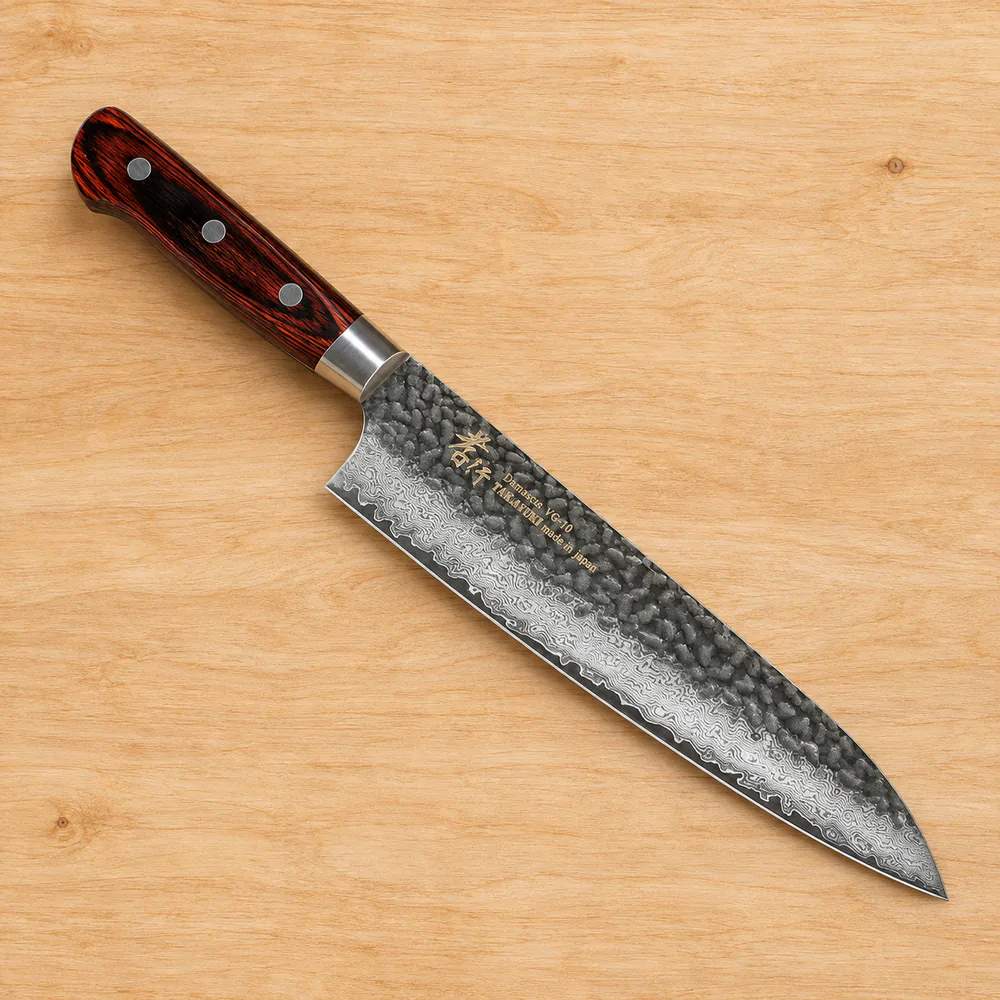
Sakai Takayuki 33-Layer VG10 Hammered Gyuto 210mm

Best Overall
Daily cooking at home 210mm 4.7 View on Amazon
2

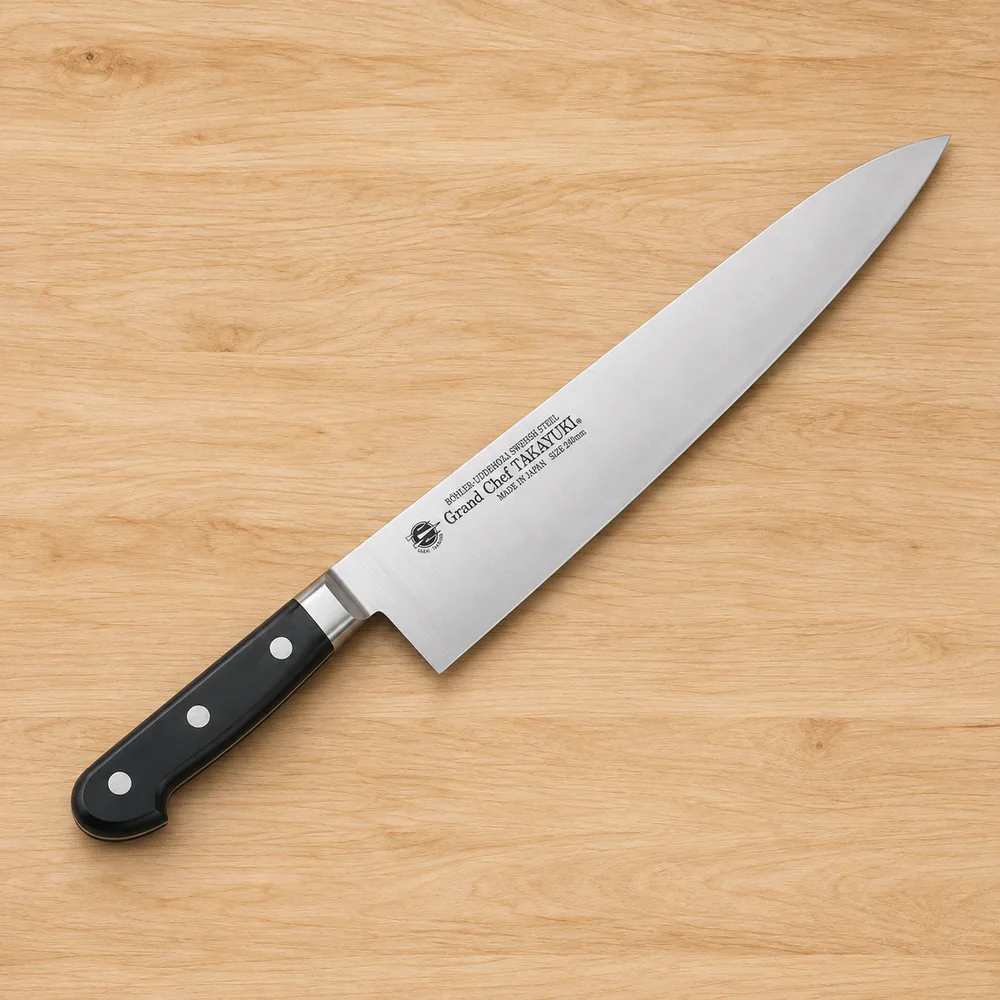
Sakai Takayuki Grand Chef Gyuto 240mm

Best for Beginners
Low-fuss stainless 240mm 4.5 View on Amazon
3

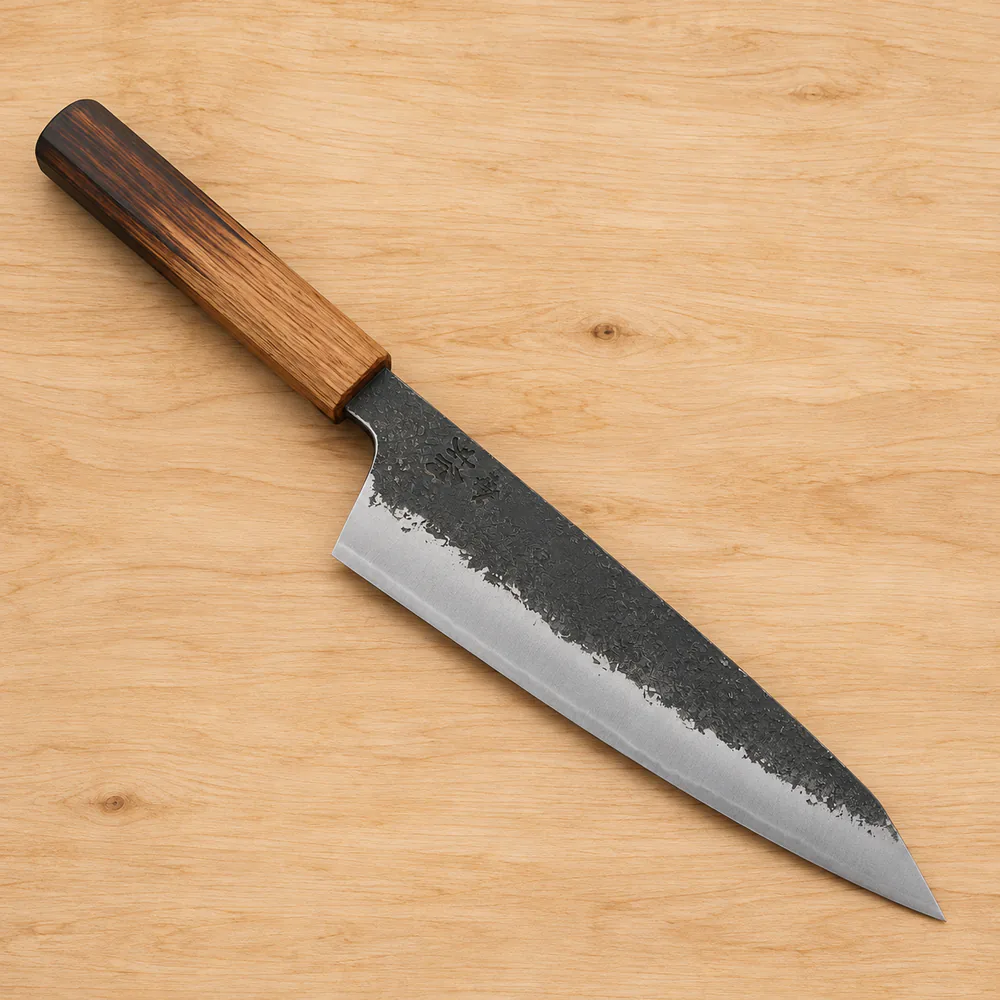
Sakai Takayuki Homura Guren Aogami 2 Kurouchi Gyuto

Best Carbon Steel
Keen edge, careful upkeep Gyuto 4.3 View on Amazon
4

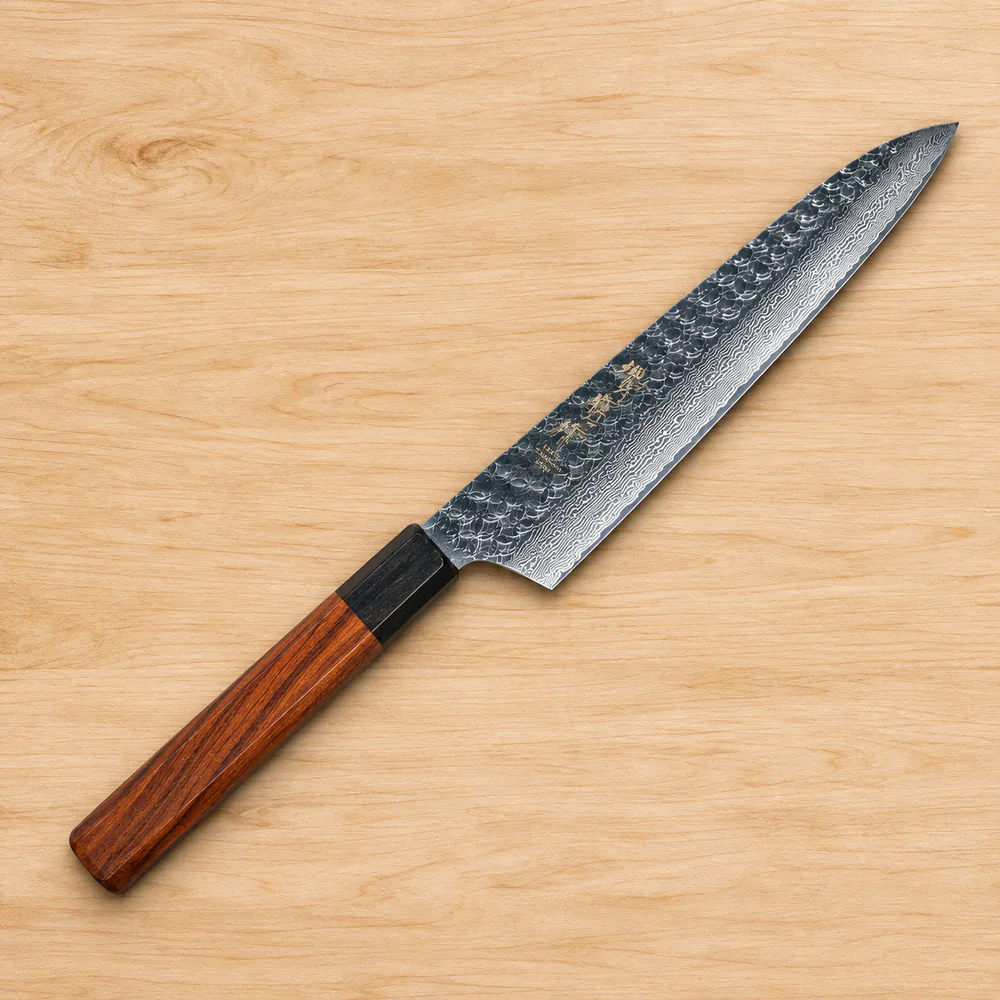
Sakai Takayuki SPG2 Hammered Damascus Wa Gyuto 210mm

Best Premium
Longest edge life 210mm 4.4 View on Amazon
5

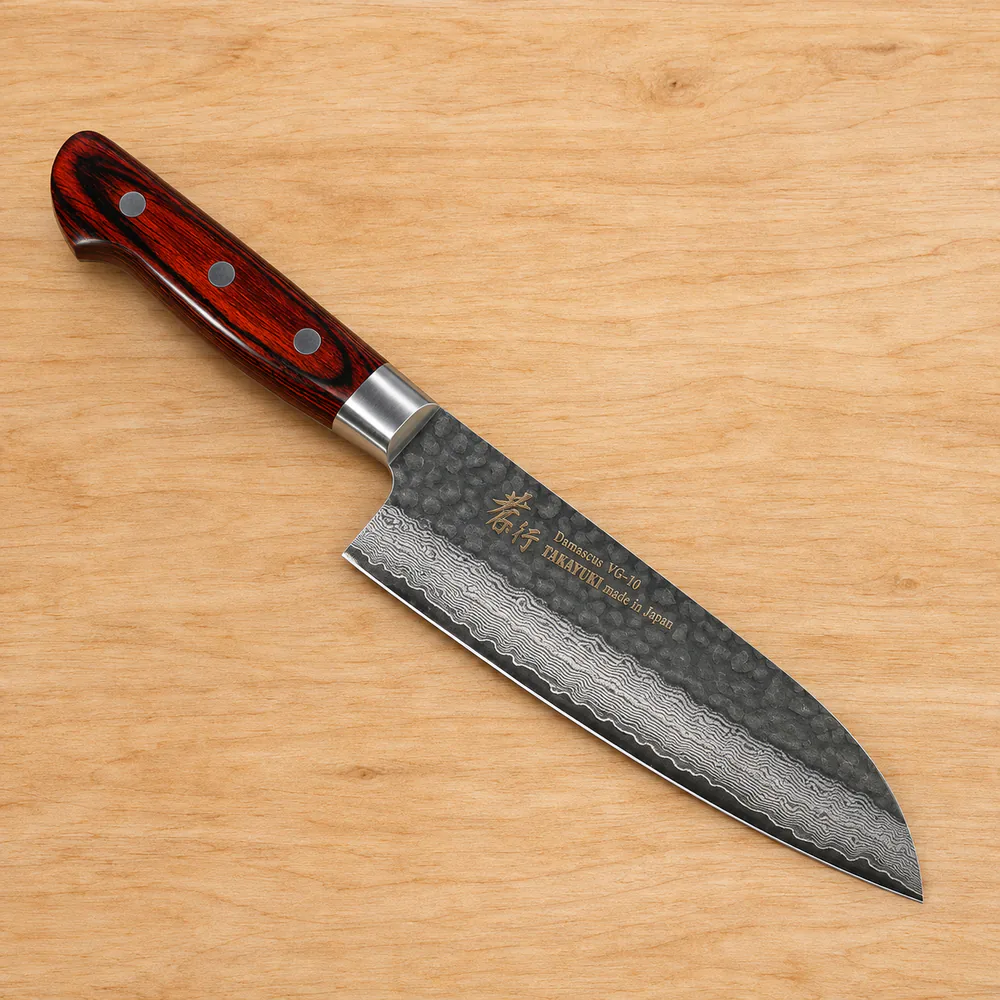
Sakai Takayuki 33-Layer VG10 Hammered Santoku 180mm

Best Santoku
Vegetable prep 180mm 4.5 View on Amazon
6

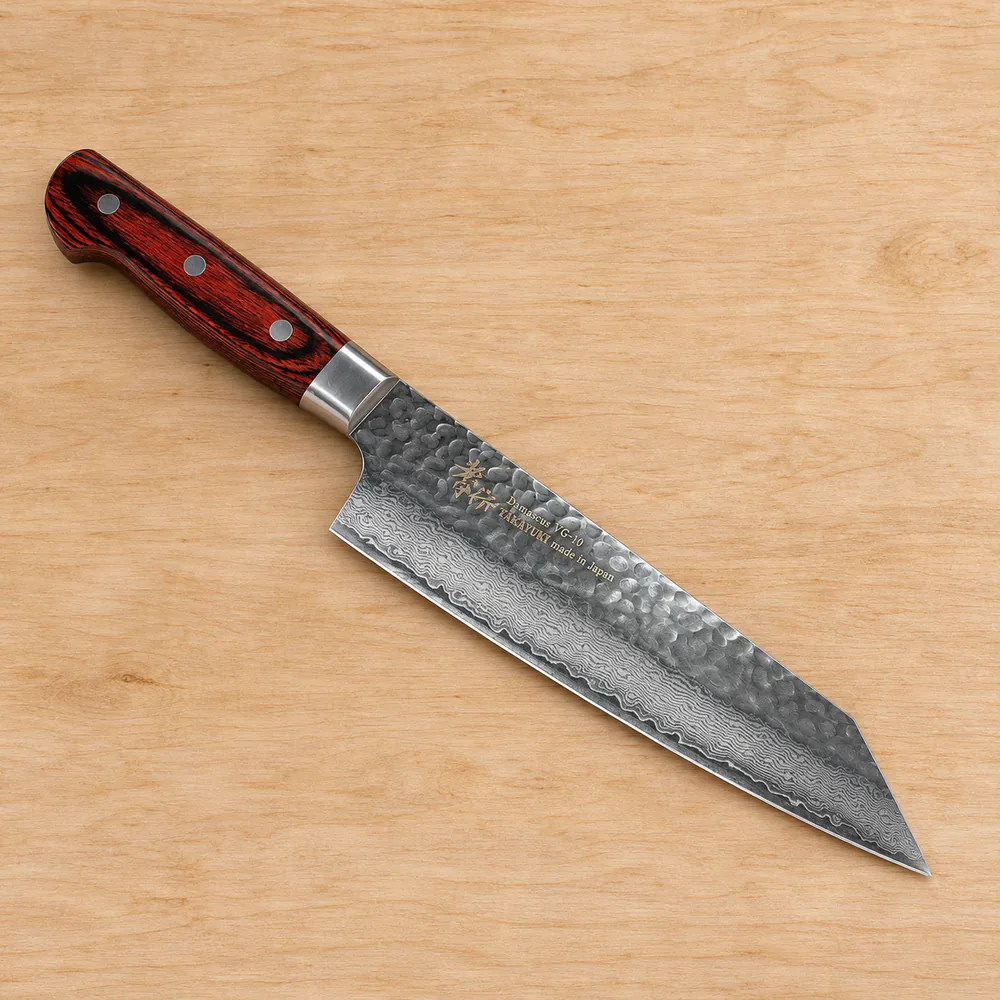
Sakai Takayuki 33-Layer VG10 Kengata Gyuto 190mm

Best Compact
Small boards and kitchens 190mm 4.3 View on Amazon
7

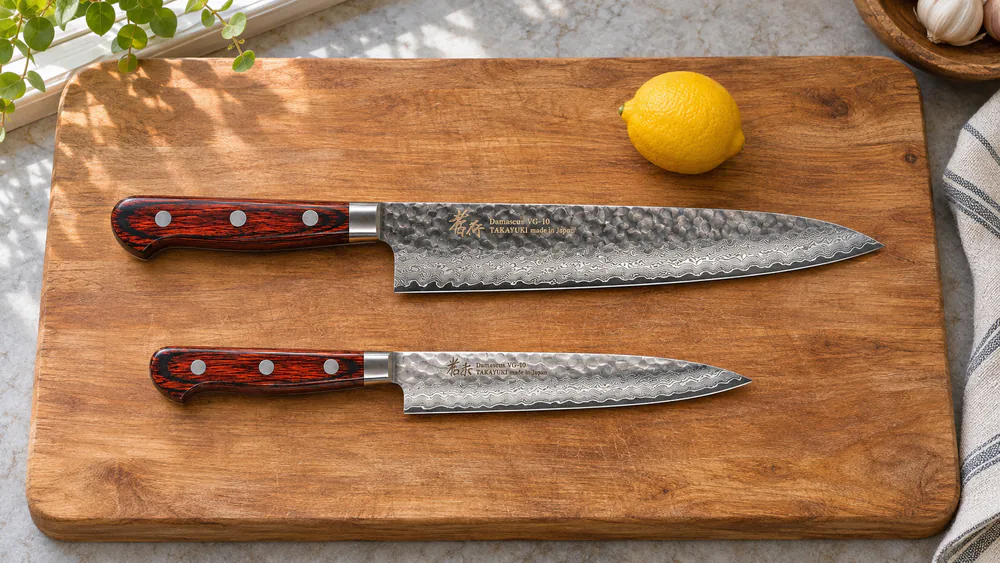
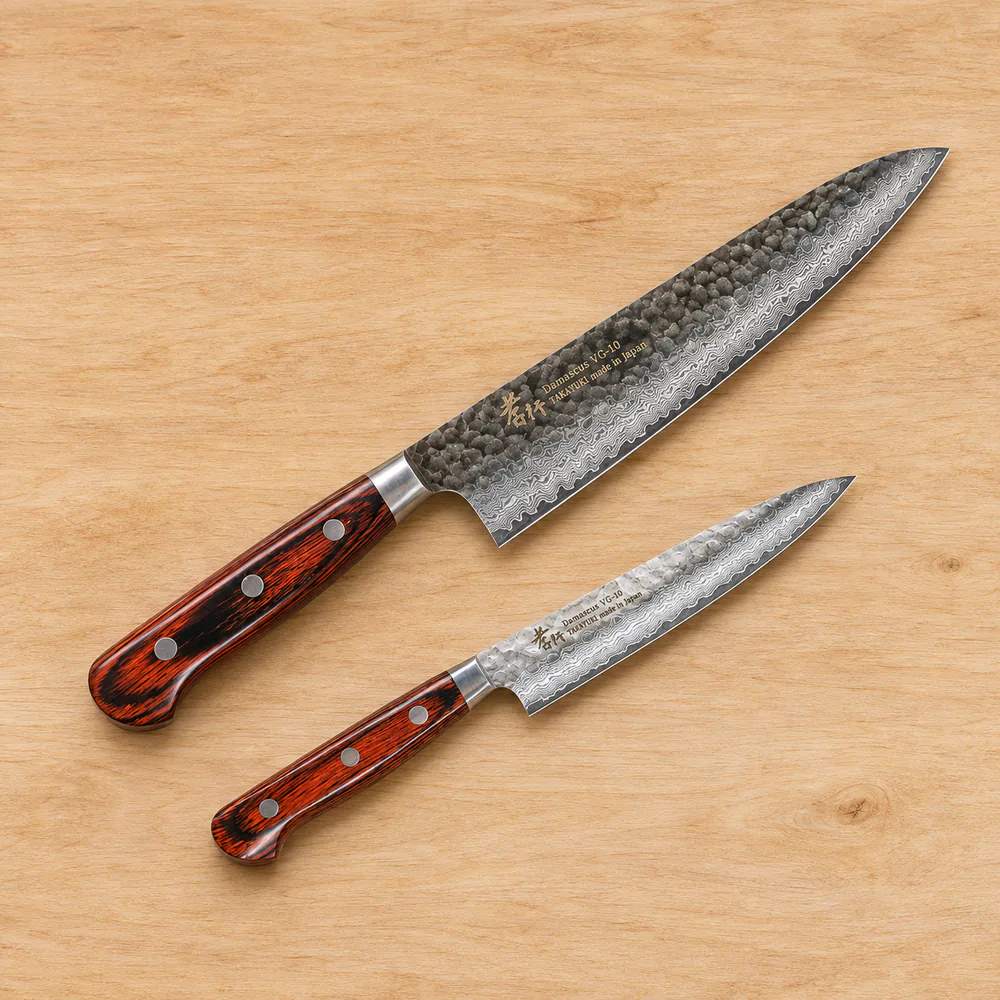
Sakai Takayuki VG10 Hammered Gyuto and Petty Set

Best Value Set
Two-knife starter kit Gyuto + 150mm petty 4.4 View on Amazon

We earn a commission if you make a purchase, at no additional cost to you.

See full comparison table

How We Tested Sakai Takayuki Knives

We buy our knives ourselves and score three practical qualities: edge retention through large batches of prep, handle comfort during long sessions, and how easily a standard whetstone restores the edge.

Care counts as part of the verdict too. None of these knives is dishwasher-safe, so we hand wash and dry each one immediately; steels that best tolerate this routine score higher for everyday use.

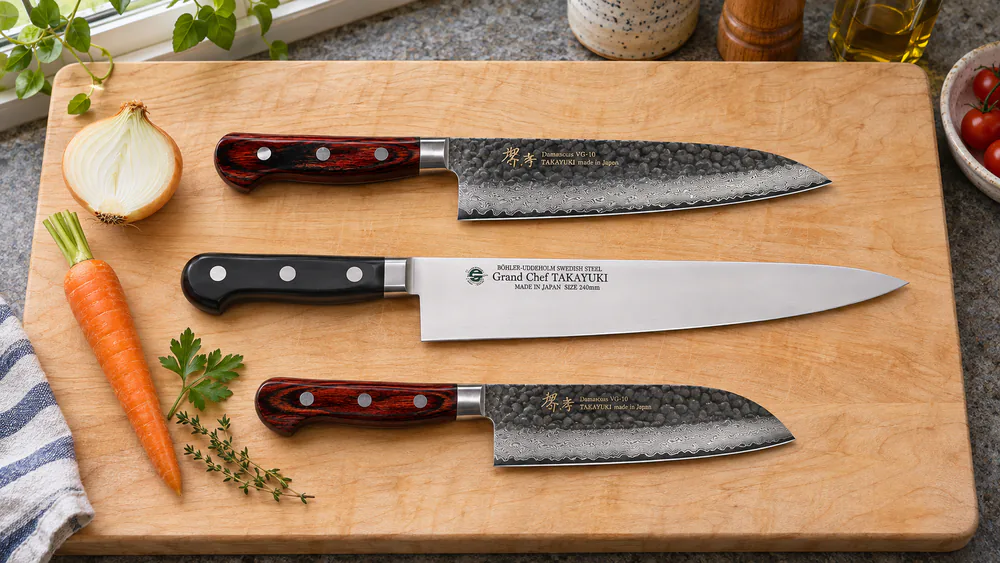
Several Sakai Takayuki gyuto and santoku knives lined up on a maple cutting board beside onions, carrots and herbs
Several Sakai Takayuki gyuto and santoku knives on a maple board.

Why Sakai Takayuki?

Sakai has forged blades for centuries, and the city's craft is recognised in Japan as a tradition worth protecting. You can read more about the history of knifemaking in Sakai if the background interests you.

Who Makes Sakai Takayuki Knives

Aoki Hamono Seisakusho owns the brand. Sakai tradition splits the work in two: a forging blacksmith shapes the blade, and a separate sharpening specialist grinds the edge. The brand then handles design, handle fitting and assembly. Named craftsmen include the blacksmiths Itsuo Doi and Kenji Togashi, with the Yamatsuka family of sharpeners on the edge work.

That division of labour is why one name covers such a wide spread of knives. Entry stainless and hand-forged carbon come from the same house but behave very differently in the kitchen.

Which Sakai Takayuki Line Should You Choose?

The catalogue is large and the variants are easy to confuse, so start with the steel family. The lines run from entry INOX stainless and Grand Chef through Silver-3, 33-layer and 45-layer VG10 Damascus, SG2/R2 powder steel, ZA-18 Ginga, and single-bevel white and blue carbon.

Stainless: Grand Chef, INOX, Silver-3

Grand Chef is the top Western-style line, made from Swedish stainless. The Grand Chef gyuto is the low-fuss option: very sharp out of the box, rust-resistant and forgiving of rough upkeep. INOX is the entry molybdenum stainless line.

Silver-3 (Ginsan) is a stainless steel that takes a keen, carbon-like edge and resists rust. It is the line to look at if you want sharpness without carbon's daily babysitting.

Hammered Damascus and Powder Steel

The 33-layer VG10 line is the heart of the brand. VG-10 is a Takefu stainless with about 1% carbon and 15% chromium, and it works at HRC 60-61.

SPG2 (SG2/R2) powder steel sits above it, running in the low 60s to 64 HRC and holding an edge longest, though it costs you in chip risk and sharpening skill.

Carbon and Traditional Single-Bevel

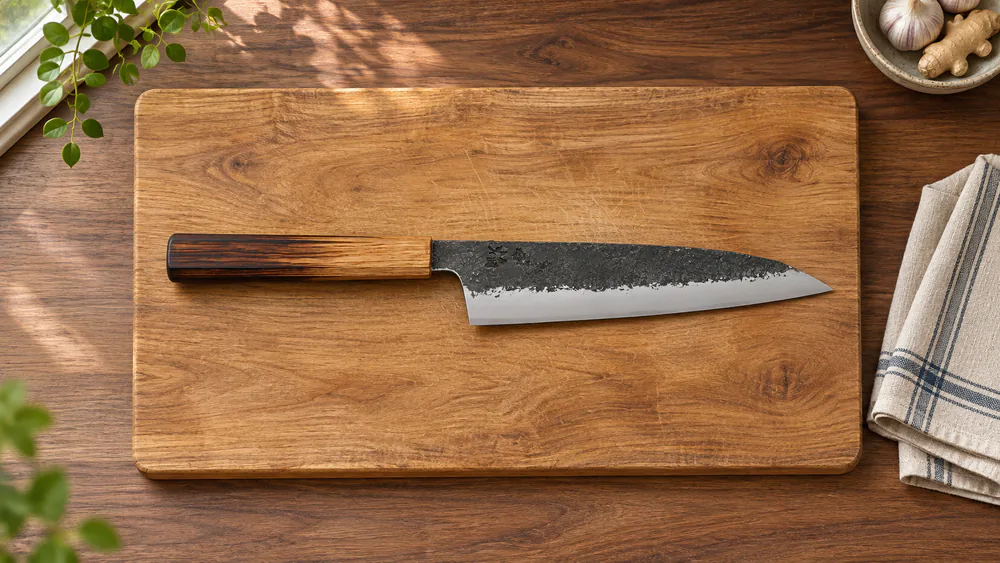
White (Shirogami) and blue (Aogami) carbon take an exceptionally keen edge and sharpen easily. They rust or patina fast unless wiped dry each time, and single-bevel sharpening is a separate skill. The Homura Guren Aogami 2 kurouchi gyuto is the double-bevel carbon entry point.

Comparison Table

Knife / lineSteelBevelLengthHandleBest forOur rating
33-Layer VG10 Hammered Gyuto VG-10 core, 33-layer Damascus Double 210mm Western Pakka/mahogany Daily cooking 4.7
Grand Chef Gyuto Swedish stainless Double 240mm Pressed wood or POM (varies) Beginners 4.5
Homura Guren Gyuto Aogami 2 carbon, kurouchi Double Gyuto Varies by model Carbon fans 4.3
SPG2 Wa Gyuto SPG2 powder steel Damascus Double 210mm Wa Edge life 4.4
VG10 Santoku VG-10 core, 33-layer Damascus Double 180mm Western Pakka/mahogany Vegetables 4.5
VG10 Kengata Gyuto VG-10 core, 33-layer Damascus Double 190mm Western Pakka/mahogany Compact kitchens 4.3
VG10 Gyuto and Petty set VG-10 core, 33-layer Damascus Double 210mm + 150mm Western Pakka/mahogany Starter kit 4.4

The 7 Best Sakai Takayuki Chef Knives

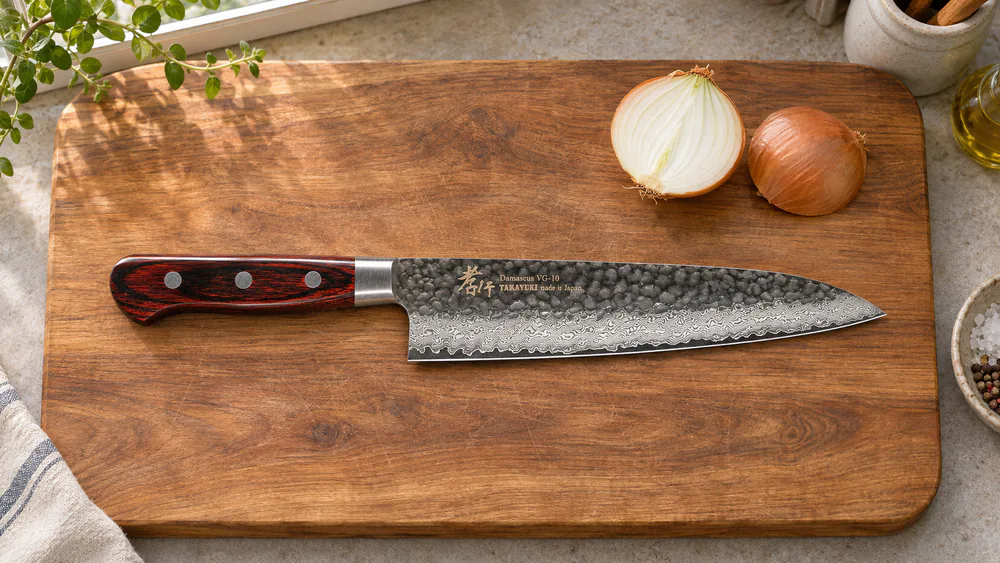
Sakai Takayuki 33-Layer VG10 Hammered Gyuto 210mm
1

Sakai Takayuki 33-Layer VG10 Hammered Gyuto 210mm

Best Overall
Check Price on Amazon
4.7/5

At about 21 cm and 191g, this gyuto feels just right in the hand, and the comfortable handle kept our grip steady and cut fatigue over long prep sessions. The hammered finish helped food release from the blade, and the edge stayed sharp through big batches of prep, with cleaner cuts and fewer strokes. At about 60 HRC, the VG-10 core sits in the middle: clearly better edge retention than entry steels, yet still easy to bring back on a whetstone (1000 grit to maintain, 3000 to 6000 to polish).

Pros

  • Balanced weight and a handle that stays comfortable late in a session
  • Hammered face releases food well
  • Sharpens back at home on a standard whetstone

Cons

  • Hand wash only
  • Hammering and grinding can leave faint scratch lines, a cosmetic trait rather than a defect
Sakai Takayuki Grand Chef Gyuto 240mm
2

Sakai Takayuki Grand Chef Gyuto 240mm

Best for Beginners
Check Price on Amazon
4.5/5

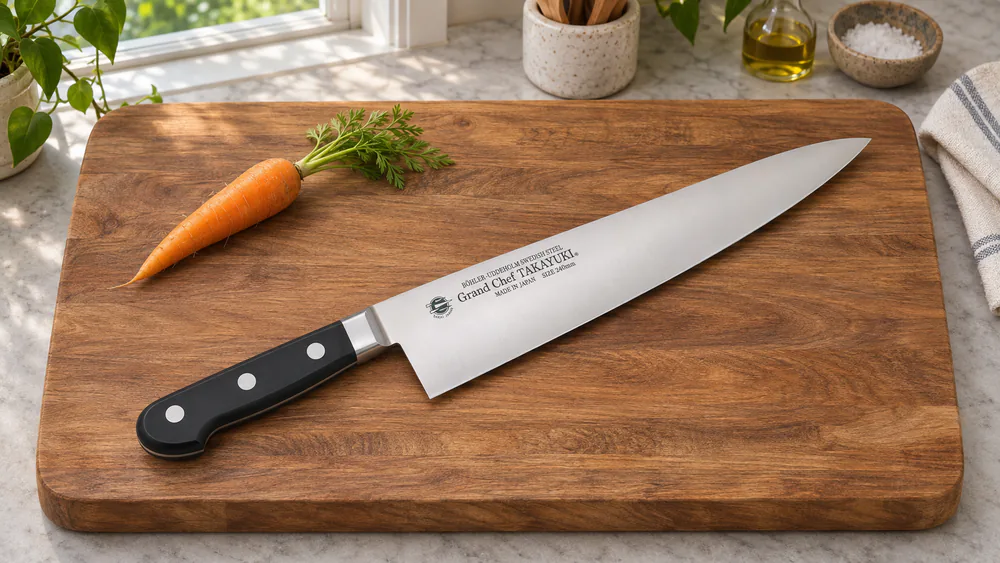
Where the VG10 gyuto rewards a little care, the Grand Chef suits the cook who will not baby a knife, which is why we point first-timers here. The 240mm gyuto is light and balanced, and the long blade handles big cuts of meat and large vegetables well. The tradeoff is a long edge that takes more board space and a steel we would not call exciting.

Pros

  • Very sharp out of the box
  • Rust-resistant and forgiving of rough upkeep
  • Light and balanced for its length

Cons

  • 240mm is long for small boards
  • Steel grade and handle material vary by listing
Sakai Takayuki Homura Guren Aogami 2 Kurouchi Gyuto
3

Sakai Takayuki Homura Guren Aogami 2 Kurouchi Gyuto

Best Carbon Steel
Check Price on Amazon
4.3/5

Step up from stainless to carbon and the edge gets keener, but the care gets stricter. Carbon takes an exceptionally keen edge and sharpens easily, and the Homura Guren is the one we would pick: Aogami 2 (Blue-2) clad carbon with a black kurouchi finish, forged by Itsuo Doi. The price of that edge is upkeep, because it rusts and patinas fast unless wiped dry each time. We left the traditional single-bevel white and blue knives off the pick list because they need a separate sharpening skill.

Pros

  • Exceptionally keen edge
  • Sharpens easily
  • Develops a patina you can live with

Cons

  • Rusts unless wiped dry each time
  • Not a knife for a busy shared sink
Sakai Takayuki SPG2 Hammered Damascus Wa Gyuto 210mm
4

Sakai Takayuki SPG2 Hammered Damascus Wa Gyuto 210mm

Best Premium
Check Price on Amazon
4.4/5

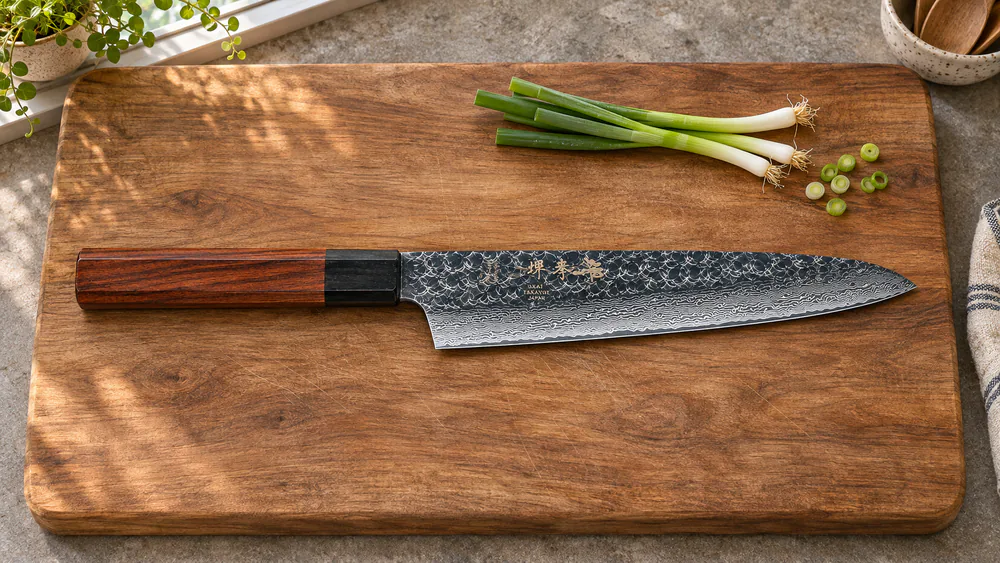
Carbon asks for daily care, and SPG2 asks for skill instead. It holds an edge longest of anything here, but at low-60s HRC it chips if it meets bones, frozen food or a glass board, and it takes more skill to sharpen. The 210mm wa-handle gyuto suits cooks who already sharpen on stones and use a wood or good composite board. The ZA-18 Ginga and Silver-3 Fugaku pieces sit above this, but we could not confirm their specs, so we left them off the list.

Pros

  • Longest edge life in the range
  • Hammered Damascus finish
  • Wa handle suits a pinch grip

Cons

  • Chips on bone, frozen food or hard boards
  • Harder to sharpen
  • Costs more than the VG10 knives
Sakai Takayuki 33-Layer VG10 Hammered Santoku 180mm
5

Sakai Takayuki 33-Layer VG10 Hammered Santoku 180mm

Best Santoku
Check Price on Amazon
4.5/5

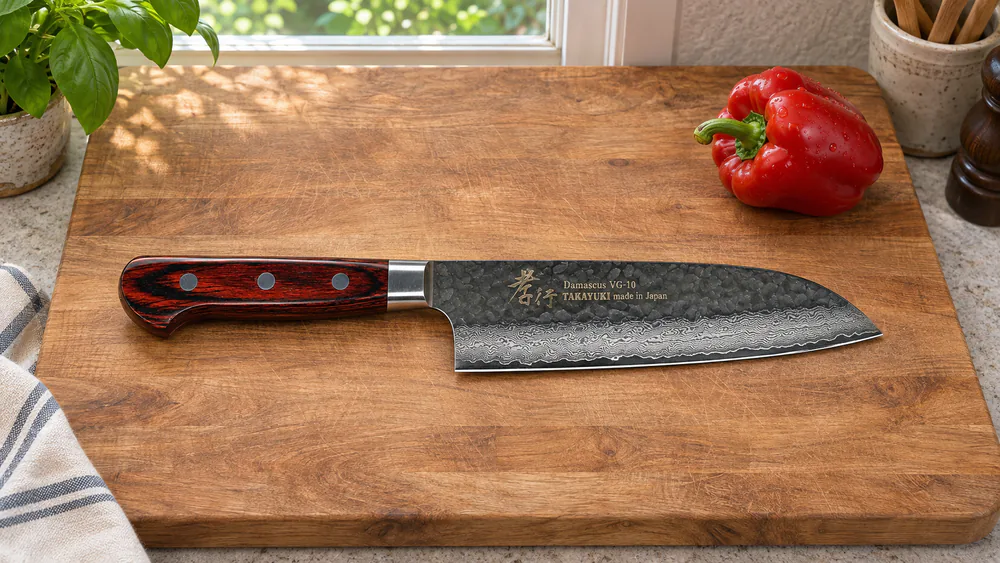
After the demands of SPG2, this santoku is a relief: the same VG-10 steel and 33-layer construction as our top pick in a shorter 180mm blade. We reach for a santoku when the job is vegetable prep because it is easier to control, though the gyuto handles larger cuts of meat better. If most of your cooking is vegetables, rice bowls and fish, this is the one to choose.

Pros

  • Short blade is easy to control
  • Same steel and finish as the best-overall gyuto
  • Sharpens on a standard whetstone

Cons

  • Less reach for big roasts
  • Hand wash only
Sakai Takayuki 33-Layer VG10 Kengata Gyuto 190mm
6

Sakai Takayuki 33-Layer VG10 Kengata Gyuto 190mm

Best Compact
Check Price on Amazon
4.3/5

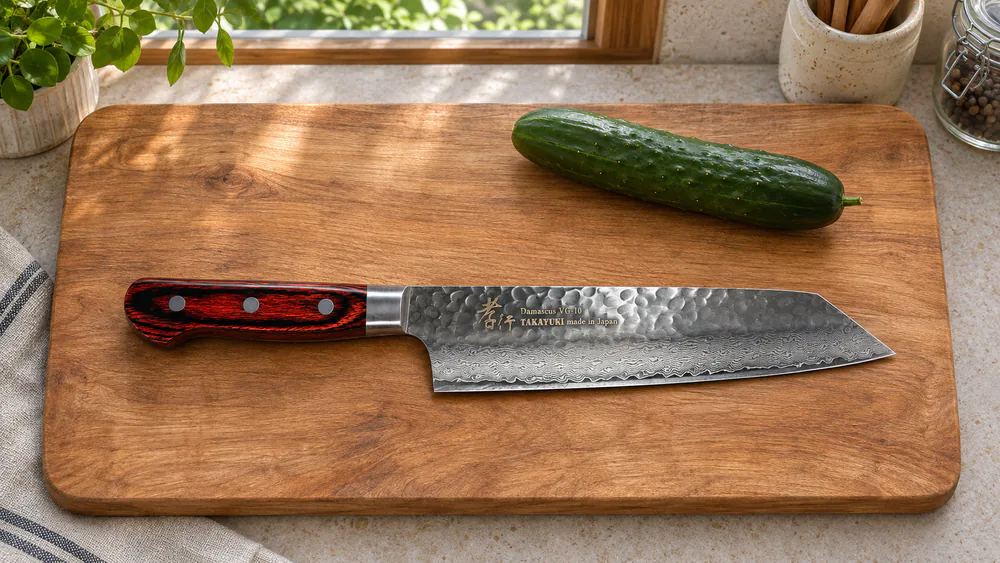
Where the santoku trades length for control, the Kengata keeps the gyuto shape in a 190mm VG10 blade with a shorter, angular profile. It suits a compact counter where a 240mm blade feels unwieldy; for trimming and peeling, a 120 to 150mm petty is still more practical than a full gyuto.

Pros

  • Short blade fits small boards
  • Same VG-10 core and hammered finish
  • Handles most everyday tasks

Cons

  • Angular profile takes a little adjusting
  • Less belly for rocking cuts
Sakai Takayuki VG10 Hammered Gyuto and Petty Set
7

Sakai Takayuki VG10 Hammered Gyuto and Petty Set

Best Value Set
Check Price on Amazon
4.4/5

If one knife is not enough, the set pairs a gyuto with a 150mm petty in the same VG10 hammered line. The gyuto handles the main prep and the petty handles trimming and peeling, covering nearly every task a starter kit needs to tackle.

Pros

  • Covers large and small tasks
  • Matching steel and handles
  • One purchase covers both jobs

Cons

  • Fewer length options than buying individually
  • Hand wash only

Gyuto vs. Santoku vs. Petty

A gyuto is the all-purpose chef's knife, with a long blade for meat, fish and vegetables. A santoku is shorter and easier to control on vegetables. A petty is a small utility knife for trimming and peeling.

Sakai Takayuki sizes run from 180 to 240mm for gyuto, 165 to 180mm for santoku and 120 to 150mm for petty. If you only buy one, make it a gyuto. If you buy two, add a petty.

Steel Comparison: VG-10 vs. Silver-3 vs. Carbon

Steel at a glance
VG-10Stainless, about 60 HRC, balanced edge life and easy sharpening
Silver-3 (Ginsan)Stainless, keen carbon-like edge, rust resistant
SPG2Powder steel, low 60s to 64 HRC, longest edge, chips more easily
Carbon (white or blue)Exceptionally keen, sharpens easily, rusts without drying

VG-10 is the safest choice for most kitchens, while Silver-3 suits cooks who want a carbon-like edge without the rust worry and carbon rewards those willing to give it care. More Damascus layers do not make a better knife, because the core steel and heat treatment drive performance.

How to Choose a Sakai Takayuki Knife

Pick by habit first: if you wash up late and sometimes leave a knife wet, choose Grand Chef or VG10, and if you sharpen on stones and cook carefully, SPG2 or carbon will reward you. TUS high-carbon stainless gives up its edge sooner than VG-10 and spots if left wet, but it forgives imprecise sharpening, so it suits a first knife on a tight budget.

Tip. A wood or good composite board suits all of these knives. Hard-hit boards and bone work are what chip high-hardness steel.

Care and Sharpening

Hand wash and dry immediately, since none of these knives is dishwasher-safe and carbon will rust if you leave it damp.

For VG10, use a 1000 grit stone to maintain the edge and 3000 to 6000 grit to polish, and know that carbon sharpens easily too while powder steel and single-bevel knives need more skill.

Warning. Never put a Sakai Takayuki knife in the dishwasher, and keep it away from bones, frozen food and glass boards.

How to Spot an Authentic Sakai Takayuki

The catalogue is large, and several unofficial sites carry the brand name, so buy from a specialist retailer that lists the exact steel, line and blade length. Check that the maker is named as Aoki Hamono and that the model detail matches what you receive.

More layers do not make a better knife. The core steel and heat treatment do.

Final Recommendations

Think of the range as a ladder. Stainless sits on the bottom rung for cooks who value forgiveness, VG10 in the middle for balance, and SPG2 and carbon at the top for people who already sharpen on stones. We would skip the single-bevel white and blue knives unless you want to learn that skill, and we would skip any listing that does not name its steel and line.

Browse our other maker guides too: Shun, Tojiro and Miyabi.

Frequently Asked Questions

Are Sakai Takayuki knives good?

Yes. The brand has over 70 years of experience, and the VG10 and Grand Chef lines are well suited to home cooks. Pick the line that matches your upkeep habits.

Where are Sakai Takayuki knives made?

They are made in Sakai, Osaka Prefecture, Japan, by Aoki Hamono Seisakusho.

Is the Grand Chef steel and handle the same on every listing?

Not always. Sources name the Grand Chef steel differently and describe the handle as pressed wood or POM resin, so check the listing and say only "Swedish stainless" until it names more.

Will the hammered finish scratch?

Hammered Damascus blades can show slight scratch lines from the hammering and grinding process. That is a cosmetic trait rather than a defect.

How do I confirm a seller is authorised?

We found no published verification markings, so rely on the listing detail: a named maker, the exact steel, line and blade length, and a specialist retailer.

Read next

Ready to upgrade your kitchen?

Browse our buying guides and find the right knife for the way you cook.